Cracking a skill-specific interview, like one for Climbing and Tree Trimming, requires understanding the nuances of the role. In this blog, we present the questions you’re most likely to encounter, along with insights into how to answer them effectively. Let’s ensure you’re ready to make a strong impression.
Questions Asked in Climbing and Tree Trimming Interview
Q 1. Describe your experience with various climbing techniques (e.g., SRT, DdRT).
My climbing experience encompasses a wide range of techniques, crucial for both tree care and other climbing disciplines. Single Rope Technique (SRT) is my primary method for accessing trees, offering efficiency and control. It involves using a single rope to ascend and descend, relying on friction devices like ascenders and descenders. I’m also proficient in Double Rope Technique (DdRT), which uses two ropes for increased redundancy and safety, particularly useful in complex or high-risk situations. Think of SRT as your everyday workhorse, reliable and efficient, while DdRT is the safety net for more challenging scenarios. For instance, SRT is ideal for routine pruning of smaller trees, while DdRT might be necessary when working on a large, leaning tree near power lines. I’ve also had extensive training in advanced techniques like ascending and rappelling, and working with various types of climbing gear. My experience includes working in different environments, from dense forests to urban settings, requiring adaptable skills and risk assessment for each unique scenario.
Q 2. Explain the different types of pruning cuts and when to use each.
Pruning cuts are crucial for tree health and safety. There are three main types: thinning cuts, reduction cuts, and cleaning cuts. Thinning cuts remove entire branches back to their point of origin, improving air circulation and light penetration within the tree’s canopy. Imagine it like thinning out a forest; this improves the overall health of the remaining trees. This is ideal for removing dead, diseased, or crossing branches. Reduction cuts shorten the length of a branch, reducing its weight and potential for damage. This is a more delicate procedure, often requiring two cuts to prevent bark tearing. Think of it as shaping a bonsai tree, reducing its size while maintaining its form. We use these for branches that are too long or heavy for the tree to support easily. Finally, cleaning cuts remove small, dead branches, typically less than an inch in diameter. These are minor maintenance cuts that improve the tree’s appearance and overall health. Think of it as a spring cleaning for your tree. The choice of cut depends entirely on the tree’s condition and the desired outcome. Proper cut selection minimizes stress on the tree and prevents future problems.
Q 3. How do you assess the risk associated with a tree before climbing?
Assessing risk before climbing a tree is paramount. My process involves a thorough visual inspection, considering factors like the tree’s species, its overall health (looking for signs of disease, decay, or insect infestation), and its structural integrity (checking for cracks, cavities, leaning, etc.). I also analyze the surrounding environment, assessing potential hazards like power lines, buildings, and obstacles that could impact the climb. I assess the soil conditions to determine stability and look at the weather; strong winds, rain or ice are obvious red flags. I would use specialized tools to assess the internal condition of a tree, for example a Resistograph, which helps to assess the condition of the wood in the trunk and branches. Based on this comprehensive assessment, I can determine the appropriate climbing techniques, safety measures, and equipment needed to mitigate the identified risks. If the risk is too high, I will not climb the tree and will recommend alternative solutions.
Q 4. What safety equipment is essential for tree climbing and trimming?
Safety is my top priority. Essential equipment includes a climbing harness, rope(s) (dynamic and static), ascenders and descenders, a helmet, gloves, eye protection, and appropriate footwear. I always use a chainsaw lanyard, which is a safety tether, and a full-body harness with a dedicated fall protection system. For larger trees, I might use a rigging system with additional ropes and pulleys. I also carry a first-aid kit and a communication device. Each piece of equipment is carefully inspected before each climb to ensure its functionality and safety. Regular maintenance and replacement are crucial to minimize risks and prevent accidents.
Q 5. Describe your experience with different types of saws and their applications.
My experience includes working with various saws, each suited for specific applications. I regularly use chainsaws for larger branches and trunk sections, selecting the appropriate size and bar length for optimal performance and safety. Pole saws are invaluable for reaching high branches without climbing, reducing the need for difficult and risky maneuvers. Hand saws, like pruning saws and bow saws, are perfect for finer cuts and detailed pruning work. The selection depends on factors such as branch size, accessibility, and the desired precision of the cut. I always ensure all saws are properly sharpened and maintained for optimal performance and safety. A dull saw is far more dangerous than a sharp one. I’m also experienced with using specialized tools such as pole pruners for precise pruning from the ground. Safety is paramount, and I make sure that all my tools are in excellent condition.
Q 6. How do you identify different tree species and their vulnerabilities?
Identifying tree species is crucial for informed decision-making. I rely on a combination of visual cues like leaf shape, bark texture, branching patterns, and overall tree structure to identify the species. Knowledge of common tree diseases and vulnerabilities specific to each species is critical. For example, I know that American Elms are particularly susceptible to Dutch Elm Disease and need special care, while Oak trees are prone to certain types of wood decay. This knowledge allows me to assess the tree’s overall health and identify potential weaknesses that might pose risks during climbing or pruning. A combination of field guides, online resources and prior experience are useful in aiding identification.
Q 7. Explain your understanding of tree biology and its impact on trimming practices.
Understanding tree biology is fundamental to responsible tree care. Knowledge of growth patterns, stress responses, and wound healing processes informs my trimming practices. For instance, understanding the tree’s cambium layer (the living tissue just under the bark) helps me make precise cuts that minimize damage and promote proper healing. I know that improper pruning can lead to stress, disease, and structural weakness. Understanding the tree’s growth habit helps determine the best way to shape the crown, while avoiding cuts that could harm the structural integrity of the tree. I prioritize techniques that promote the tree’s natural form and overall health. Incorrect pruning techniques can make the tree more susceptible to diseases, insects, and damage from wind or snow. I strive to ensure all my trimming practices promote the long-term health and vitality of the tree.
Q 8. How do you handle unexpected situations while climbing a tree?
Unexpected situations while tree climbing are the norm, not the exception. My approach hinges on meticulous planning and proactive risk assessment, but adaptability is key. For example, if I encounter a hidden decay in a branch I’m about to cut, I immediately stop and reassess. This might involve using a different cutting technique, re-rigging my ropes for a different anchor point, or even abandoning the cut entirely if it becomes too risky. I always have backup plans; this could be a different access route or alternative pruning method. Communication is vital; I always have a ground crew to communicate with, who can assist with spotting or retrieving equipment. My training emphasizes problem-solving under pressure, and regular practice drills help me handle unforeseen circumstances calmly and efficiently.
Imagine finding a hidden cavity while ascending. Instead of panicking, I’d carefully inspect it, adjust my ascent plan, and perhaps use a different climbing technique like a double rope technique for added redundancy. I’d also relay this information to my ground crew to ensure they’re aware of the changed risk profile.
Q 9. What are the common hazards associated with tree climbing and trimming?
Tree climbing and trimming present numerous hazards. The most obvious are falls from height – this is mitigated by proper rope systems, harnesses, and adherence to safety protocols. Then there are the risks from the tree itself: broken branches, unstable limbs, hidden decay, and insect infestations (like carpenter ants weakening the wood). Equipment failure is another concern, so regular inspection and maintenance are paramount. Weather conditions, such as high winds or rain, add another layer of complexity. Finally, there’s the risk of striking power lines, which requires careful planning and often the involvement of utility companies.
- Falls: The most significant hazard. Mitigated by proper PPE (Personal Protective Equipment) and techniques.
- Entanglement: Getting caught in branches or equipment.
- Electrical Hazards: Contact with power lines – necessitates awareness and communication with utility companies.
- Weather: High winds, rain, and ice significantly increase the risk.
- Equipment Failure: Ropes, harnesses, and saws need regular inspection and maintenance.
Q 10. Describe your experience with rigging and lowering large branches or trees.
Rigging and lowering large branches or entire trees is a specialized skill requiring extensive training and experience. I’ve handled numerous situations involving complex rigging systems – often involving multiple ropes, pulleys, and snatch blocks – to safely lower heavy sections of trees. The process begins with a thorough assessment of the tree’s structure and the best way to section it. This often involves making strategic cuts to control the direction and trajectory of the falling wood. Then, a robust rigging system is established, using high-quality, inspected equipment. We always consider the potential impact zone and clear it of obstacles and personnel. Lowering is done slowly and methodically, with constant communication between the climber and ground crew. For very large trees or those in congested areas, specialized equipment like a crane might be necessary. I have experience with various rigging techniques, adapting to each tree’s unique characteristics. For example, a complex branch might require a three-point rigging system to ensure a controlled descent.
For instance, lowering a large oak limb, I’d use a combination of a ‘doubled’ rope system for added safety, attaching it high up the branch with a bowline knot, then feeding the lines through a series of pulleys on a sturdy anchor point. The controlled descent would be managed by my ground crew, ensuring a smooth, safe lowering.
Q 11. How do you ensure the safety of yourself and others during tree work?
Safety is paramount. It’s a multifaceted approach. Firstly, I always conduct a thorough risk assessment before commencing any work, identifying potential hazards and developing mitigation strategies. This includes checking the stability of the tree, assessing weather conditions, and planning escape routes. I then use appropriate personal protective equipment (PPE), including a climbing harness, helmet, gloves, eye protection, and chainsaw chaps. This is complemented by using the correct climbing and cutting techniques. Communication with my ground crew is critical; we use a system of hand signals and verbal communication to ensure everyone is aware of what’s happening and potential hazards. Finally, establishing a safe working zone and excluding unauthorized personnel are vital safety measures. Regular training and adherence to industry best practices are essential.
A clear example is the use of a designated ‘hazard zone’ marked off around the tree during operations. No one, including the ground crew, is allowed within this zone until the lowering procedure is fully completed.
Q 12. What are the legal and regulatory requirements for tree work in your area?
Legal and regulatory requirements for tree work vary by location but generally involve obtaining necessary licenses and permits, adhering to worker safety regulations, and ensuring compliance with environmental protection laws. In my area, this includes holding a valid arborist certification, complying with OSHA (Occupational Safety and Health Administration) standards for fall protection and chainsaw operation, and obtaining any necessary permits from the local municipality, especially if working near power lines or in protected areas. I’m also familiar with insurance requirements, ensuring I have appropriate liability coverage. It’s my responsibility to stay up-to-date on all relevant regulations and ensure my practices comply.
This might involve obtaining specific permits to work near utility lines, following local ordinances on tree removal within specific zones, or adhering to environmental regulations regarding protected species.
Q 13. How do you maintain your climbing equipment and ensure its functionality?
Maintaining my climbing equipment is a crucial part of my safety protocols. I inspect all my equipment before each job, checking for wear and tear, fraying, or damage. I follow manufacturer’s recommendations for inspection and replacement schedules. Ropes are particularly important and should be checked for abrasions, cuts, or weakness. Harnesses are regularly inspected for stitching, buckles, and webbing condition. I keep detailed records of equipment inspections and replacements to track their lifespan and ensure they’re within their operational limits. I also undergo regular equipment maintenance training to keep my skills current and efficient, and I use specialized cleaning products to preserve equipment longevity.
For example, my ropes are inspected meticulously after every use, with a thorough examination carried out every six months and replaced according to the manufacturer’s guidelines, regardless of use.
Q 14. Describe your experience with aerial lifts and other mechanized equipment.
I have extensive experience with aerial lifts (bucket trucks) and other mechanized equipment, including chippers and stump grinders. Aerial lifts are valuable for accessing trees in situations where climbing might be impractical or excessively risky, especially for larger trees or those with difficult access points. Safety protocols are equally important here: pre-operational checks of the lift, ensuring stable ground conditions, and careful operation of the controls. Understanding the limitations of the equipment is essential. I use aerial lifts in conjunction with climbing techniques sometimes; for example, I might use a lift to reach the upper branches and then climb down to complete the work. However, I always prioritize climber safety, selecting the safest and most effective method for each situation. Mechanized ground equipment such as chippers and stump grinders are used for efficient post-pruning cleanup, and safety protocols include maintaining proper distances and using appropriate PPE.
One instance involved utilizing a bucket truck to reach a high branch on a large maple tree that was partially overhanging a building. From the bucket, I was able to safely assess and prune the branches without the need for a potentially dangerous rope climb.
Q 15. How do you communicate effectively with your team and clients during a job?
Effective communication is the cornerstone of any successful tree care operation. With my team, I prioritize clear, concise instructions, ensuring everyone understands their roles and responsibilities before we begin any task. This includes pre-job briefings where we discuss potential hazards, safety protocols, and the specific techniques required for the job. For instance, before a complex removal, we’ll discuss rigging plans, escape routes, and hand signals. With clients, I focus on active listening, understanding their needs and concerns, and explaining the process in a way they easily understand, avoiding technical jargon whenever possible. I use visual aids like diagrams or photos to illustrate complex procedures. For example, when explaining crown reduction, I’ll show them pictures of proper cuts to avoid damaging the tree. Open communication, both before and after the job, helps build trust and ensures everyone is on the same page.
Career Expert Tips:
- Ace those interviews! Prepare effectively by reviewing the Top 50 Most Common Interview Questions on ResumeGemini.
- Navigate your job search with confidence! Explore a wide range of Career Tips on ResumeGemini. Learn about common challenges and recommendations to overcome them.
- Craft the perfect resume! Master the Art of Resume Writing with ResumeGemini’s guide. Showcase your unique qualifications and achievements effectively.
- Don’t miss out on holiday savings! Build your dream resume with ResumeGemini’s ATS optimized templates.
Q 16. How do you handle difficult or challenging tree situations?
Challenging tree situations require a methodical approach. My first step is a thorough assessment of the tree, considering its species, size, health, location, and surrounding environment. I look for signs of disease, decay, or structural weakness. For example, a leaning tree near a power line requires a different strategy than a dead tree in an open field. Once the assessment is complete, I develop a detailed plan, often involving multiple techniques. This might include specialized climbing gear, rigging systems, or the use of a crane. Safety is paramount; I always prioritize the safety of my team and the surrounding property. I may choose to bring in additional expertise if the situation is beyond my capabilities, such as a structural arborist for a severely compromised tree. Careful planning and risk mitigation are key to handling challenging situations successfully and safely.
Q 17. What is your experience with using ropes and other climbing gear?
I have extensive experience with a wide range of ropes and climbing gear, including dynamic ropes, static ropes, climbing harnesses, ascenders, descenders, and various types of anchors. I’m proficient in various climbing techniques such as SRT (Single Rope Technique) and DRT (Double Rope Technique), adapting my approach based on the specific circumstances. My experience includes working at heights of over 100 feet and managing complex rigging systems. I’m meticulous about gear inspection, ensuring everything is in top condition before each climb. Regular maintenance and replacement of worn-out gear are essential for safety. I’m also certified in arboricultural safety practices. For example, I understand the importance of proper knot tying and the different strengths of different ropes and how to choose the appropriate gear based on the specific tree and job requirements.
Q 18. Describe your knowledge of tree diseases and pests.
My knowledge of tree diseases and pests is comprehensive. I can identify common diseases like oak wilt, Dutch elm disease, and various fungal infections, as well as pests like emerald ash borers, gypsy moths, and aphids. I understand the life cycles of these pests and the various methods of control and prevention. This includes proper pruning techniques to enhance tree health and reduce susceptibility to disease, as well as the application of appropriate insecticides or fungicides when necessary. For example, identifying the tell-tale signs of oak wilt early on is crucial in preventing its spread. My approach is always preventative, aiming to maintain the overall health of the tree to improve its resilience against diseases and pests.
Q 19. How do you plan and execute a tree removal safely and efficiently?
Safe and efficient tree removal begins with meticulous planning. This includes a thorough assessment of the tree and its surroundings, considering factors like size, location, potential hazards (power lines, buildings), and access. I develop a detailed plan outlining the steps involved, including the type of equipment needed (chainsaws, rigging gear, chipper), the sequence of cuts, and the disposal method for the debris. Safety is always the top priority. This involves setting up a safe work zone, using appropriate personal protective equipment (PPE), and employing proper rigging techniques. The tree is taken down in a controlled manner, using specific cuts to direct the fall. For example, I’d use a hinge cut to guide the tree in a specific direction. Efficient removal involves minimizing damage to the surrounding area, and a systematic approach to limb removal and trunk sectioning to speed up the process.
Q 20. What is your understanding of proper pruning techniques to promote tree health?
Proper pruning is crucial for maintaining tree health and vitality. It involves removing dead, diseased, or damaged branches, reducing the crown size (when necessary), and shaping the tree to improve its structure. I employ various pruning techniques, including thinning, reduction, and raising the crown. The goal is to make cuts that promote healing and prevent stress on the tree. Understanding the tree’s species and growth patterns is essential for effective pruning. For example, I wouldn’t prune a flowering tree during its blooming period. Incorrect pruning can lead to disease, structural weakness, and even tree death. I always prioritize making clean cuts to minimize the risk of infection, and aim for cuts that mimic the natural shape of the tree.
Q 21. Describe your experience with stump grinding and removal.
I have extensive experience with stump grinding and removal. Stump grinding uses a specialized machine that grinds the stump below ground level, leaving behind wood chips that can be used as mulch. This is the most common method for stump removal. This is an efficient way to remove stumps, but I understand the limitations of the equipment in terms of access to the stump. Sometimes, for very large or deeply rooted stumps, additional excavation may be necessary. After grinding, I’ll often remove the remaining wood chips, leaving a clean and level area. In some instances, complete stump removal is preferred, where the stump is fully dug out. I’m experienced in both methods and choose the most suitable one based on the size and location of the stump. Safety protocols, including wearing appropriate safety gear, are strictly followed during stump grinding and removal.
Q 22. How do you handle emergency situations, such as equipment failure or injury?
Safety is paramount in both climbing and tree trimming. My emergency response protocol begins with prevention – thorough pre-job inspections, using redundant safety systems (like two independent ropes for climbing), and ensuring all equipment is in top condition. If an emergency does occur, my training kicks in.
- Equipment Failure: If a climbing rope shows signs of wear or snaps, I have backup systems in place. For example, I might be using an ascender and a separate belay device, providing redundancy. If a tool malfunctions, I have a backup or a safe method of descending.
- Injury: First aid and emergency response are crucial. I carry a comprehensive first-aid kit and have received advanced first-aid training. Depending on the severity, I would assess the situation, administer first aid, and immediately contact emergency services (911). My team is trained in lowering an injured person safely from heights using appropriate rescue techniques.
- Communication: Clear communication is key. I always work with a spotter who can alert emergency services if needed. We use radio communication to maintain constant contact, especially when working at heights.
I regularly participate in refresher courses covering emergency procedures and high-angle rescue techniques to stay proficient.
Q 23. What is your experience with working in confined spaces or at heights?
Years of experience in climbing and tree care have provided me with extensive training and practical experience working at heights and in confined spaces. I’m fully certified in confined space entry and high-angle rescue techniques.
In tree work, virtually every job involves working at heights. My experience includes using various climbing techniques, including SRT (single rope technique) and DRT (double rope technique), employing ropes, harnesses, ascenders, and descenders. For confined space work, such as removing a tree that’s fallen across a building or working within a dense tree canopy, I carefully assess the risks and utilize the appropriate safety gear and procedures, including air monitoring, ventilation, and rescue plans.
I understand the importance of proper risk assessment, including identifying potential hazards like overhead power lines, unstable branches, and the risk of falling objects. Detailed planning, employing appropriate safety measures and regularly inspecting my equipment, are non-negotiable parts of my approach.
Q 24. How do you manage and dispose of tree debris responsibly?
Responsible disposal of tree debris is critical for environmental protection and safety. My approach involves a multi-step process:
- Sorting: I carefully sort debris, separating reusable wood from waste. Healthy branches can be chipped and used as mulch, while diseased wood needs to be disposed of properly.
- Chipping and Mulching: Using industrial-grade chippers, we reduce larger branches and trunks into smaller pieces for mulch, reducing landfill waste.
- Recycling and Repurposing: Where possible, I aim to recycle or repurpose the wood. This could involve donating usable lumber to local organizations or crafting usable items.
- Disposal: Any remaining waste is disposed of at an approved landfill or through a licensed waste removal service that adheres to all local regulations. I maintain accurate records of waste disposal to ensure compliance.
This method minimizes environmental impact while adhering to all safety and legal requirements.
Q 25. Describe your knowledge of different soil types and their impact on tree health.
Understanding soil types is crucial for assessing tree health and predicting potential issues. Different soil types affect drainage, nutrient availability, and root growth, impacting a tree’s overall vigor.
- Sandy Soil: Well-draining but low in nutrients, requiring more frequent fertilization. Trees in sandy soil might struggle during droughts.
- Clay Soil: Poor drainage, leading to waterlogging and root rot. Trees require careful watering and aeration to thrive in clay soil.
- Loamy Soil: The ideal mix – well-draining, retains moisture, and rich in nutrients, promoting healthy tree growth.
- Rocky Soil: Poor drainage, limited nutrient availability, and restricted root growth. Trees in rocky soil may require specific planting techniques and potentially supplemental watering.
I assess the soil type before recommending any tree planting or care plan. A simple soil test can provide valuable insights into pH, nutrient levels, and drainage characteristics, informing the best course of action for the tree’s health and long-term survival.
Q 26. How do you determine the appropriate pruning method for a given tree?
Pruning techniques depend on the tree species, its age, health, and the desired outcome. There are various methods:
- Thinning: Removing entire branches back to the branch collar (the slightly swollen area at the base of a branch) to improve air circulation and sunlight penetration. This is ideal for mature trees needing shaping or to improve their structure.
- Reduction: Shortening branches to reduce the overall size of the tree. It’s crucial to avoid creating stubs (leaving only a small portion of the branch), as this can damage the tree.
- Cleaning: Removing dead, diseased, or damaged branches to improve tree health and prevent disease spread. This is a standard part of most tree care.
- Raising the Crown: Removing lower branches to increase clearance under the canopy. This is frequently requested for trees near buildings or walkways.
I thoroughly assess each tree before selecting the appropriate pruning method, considering its specific needs and the desired aesthetic outcome. The goal is always to promote long-term tree health and safety.
Q 27. What experience do you have with using specialized tools like chippers and wood splitters?
I’m proficient in operating and maintaining a variety of specialized equipment used in tree care, including chippers and wood splitters.
- Chippers: I can operate various sized chippers, ensuring safe and efficient processing of tree debris into usable mulch. Regular maintenance, including blade sharpening and safety checks, is vital for safe operation. I’m familiar with different chipper types, including those appropriate for different debris sizes.
- Wood Splitters: These are useful for processing larger pieces of wood for firewood or other purposes. Safety is paramount; I ensure proper use and maintenance to prevent injuries. I’m knowledgeable about various types of splitters – hydraulic, gas-powered, etc., and select the appropriate one based on the job’s requirements.
Understanding the limitations and safety protocols of these tools is crucial for preventing accidents and ensuring efficient work flow.
Q 28. Describe a time you had to adapt your approach to a challenging tree situation.
I once encountered a large oak tree with a significant lean, partially overhanging a house. The initial plan was to remove the entire tree, but the proximity to the house and underground utilities presented significant risks.
Instead of a complete removal, I developed an alternative approach. Using specialized climbing and rigging techniques, we selectively removed branches to reduce the tree’s weight and shift its center of gravity. We then used cabling to reinforce the remaining structure, reducing the risk of further leaning and improving its stability. This adaptive approach minimized the environmental impact by preserving a substantial portion of the mature tree and significantly reduced the risk of damage to the house and infrastructure.
This experience highlighted the importance of adaptability, creative problem-solving, and a thorough understanding of tree mechanics and safety protocols.
Key Topics to Learn for Climbing and Tree Trimming Interview
- Safety Procedures and Regulations: Understanding OSHA regulations, proper use of safety equipment (harnesses, ropes, helmets), and risk assessment techniques are paramount. Practical application includes demonstrating knowledge of emergency procedures and fall protection systems.
- Tree Identification and Assessment: Knowing different tree species, recognizing signs of disease or structural weakness, and assessing the overall health of a tree is crucial for safe and effective trimming. Practical application involves explaining how to determine the best pruning techniques based on tree type and condition.
- Climbing Techniques and Equipment: Mastering various climbing techniques (e.g., rope climbing, using ascenders and descenders), understanding the functionality of different ropes and harnesses, and knowing how to properly inspect and maintain equipment are essential. Practical application involves describing different climbing scenarios and the appropriate equipment and techniques for each.
- Pruning and Trimming Techniques: Understanding different pruning cuts (e.g., thinning, heading, reduction), knowing how to create a balanced crown, and understanding the impact of pruning on tree health are crucial. Practical application includes explaining the proper techniques for removing branches of various sizes and locations.
- Equipment Maintenance and Repair: Knowing how to inspect, maintain, and repair climbing and cutting equipment is vital for safety and efficiency. Practical application includes describing preventative maintenance schedules and troubleshooting common equipment problems.
- Problem-Solving and Decision-Making: The ability to assess challenging situations (e.g., unexpected weather, difficult access, unforeseen tree conditions) and make informed decisions quickly and safely is critical. This includes demonstrating adaptability and resourcefulness in various scenarios.
Next Steps
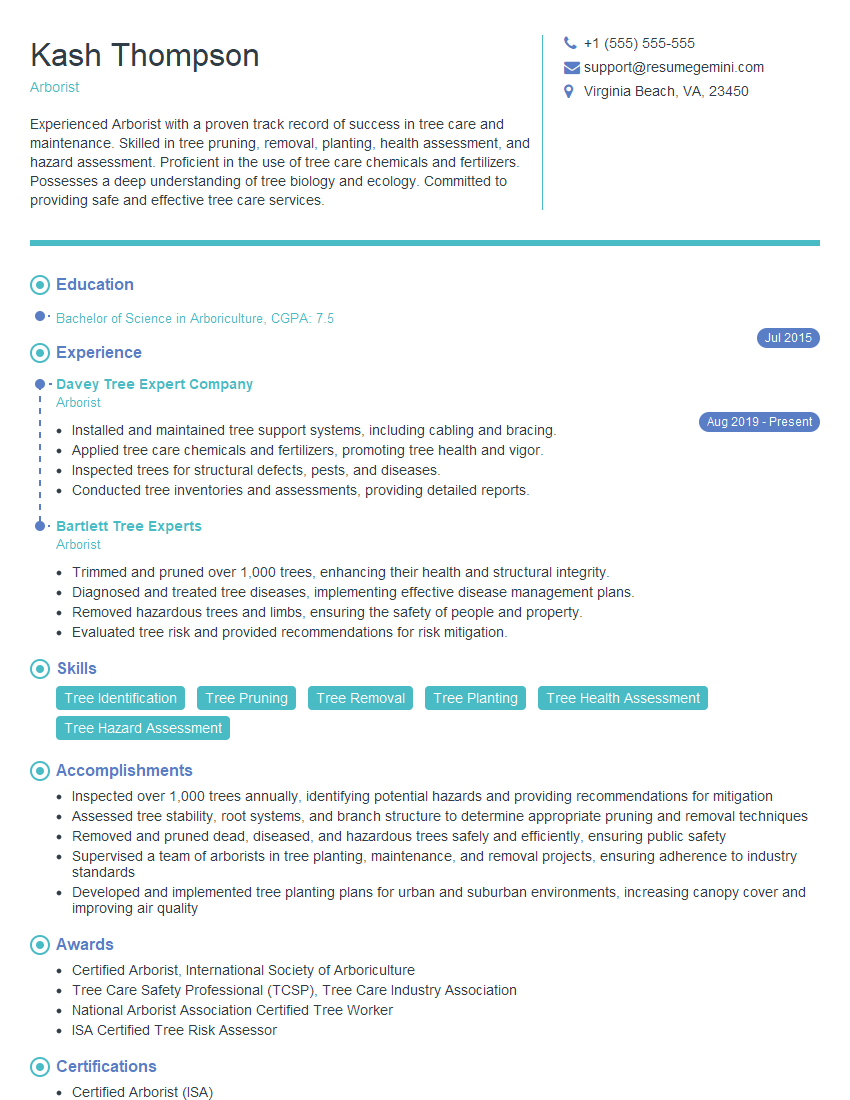
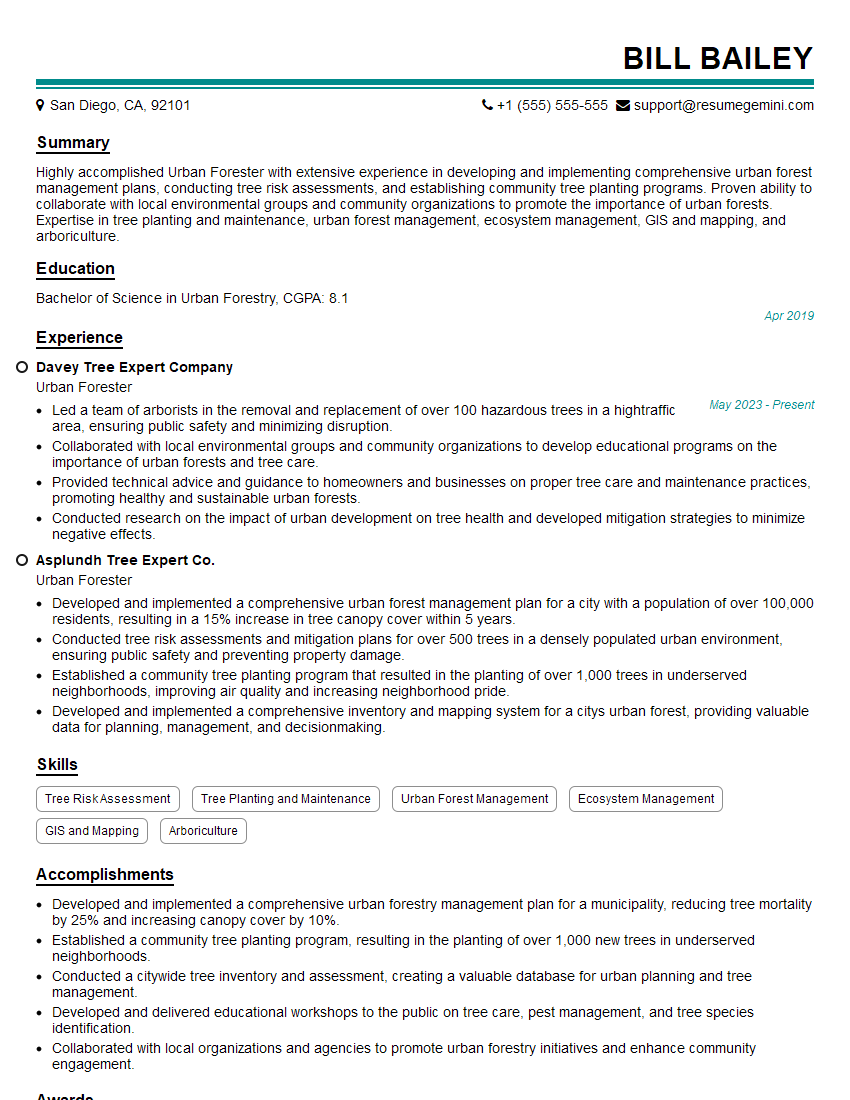
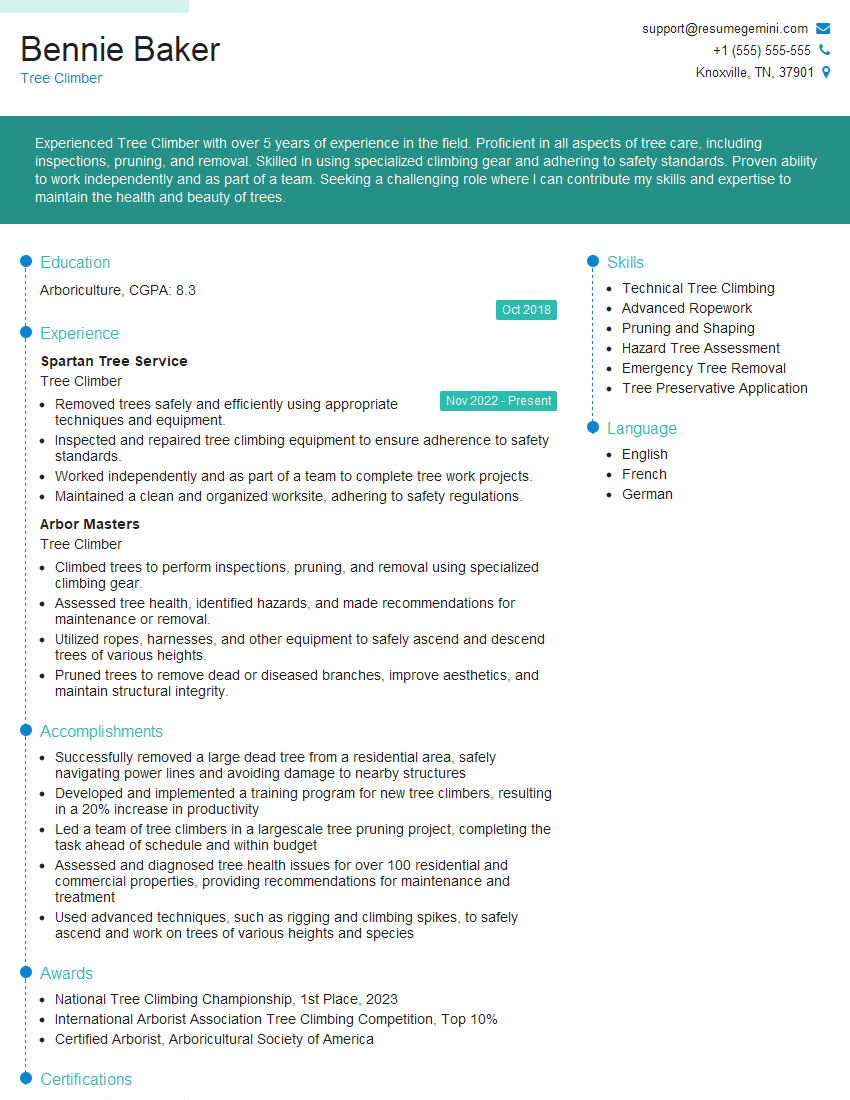
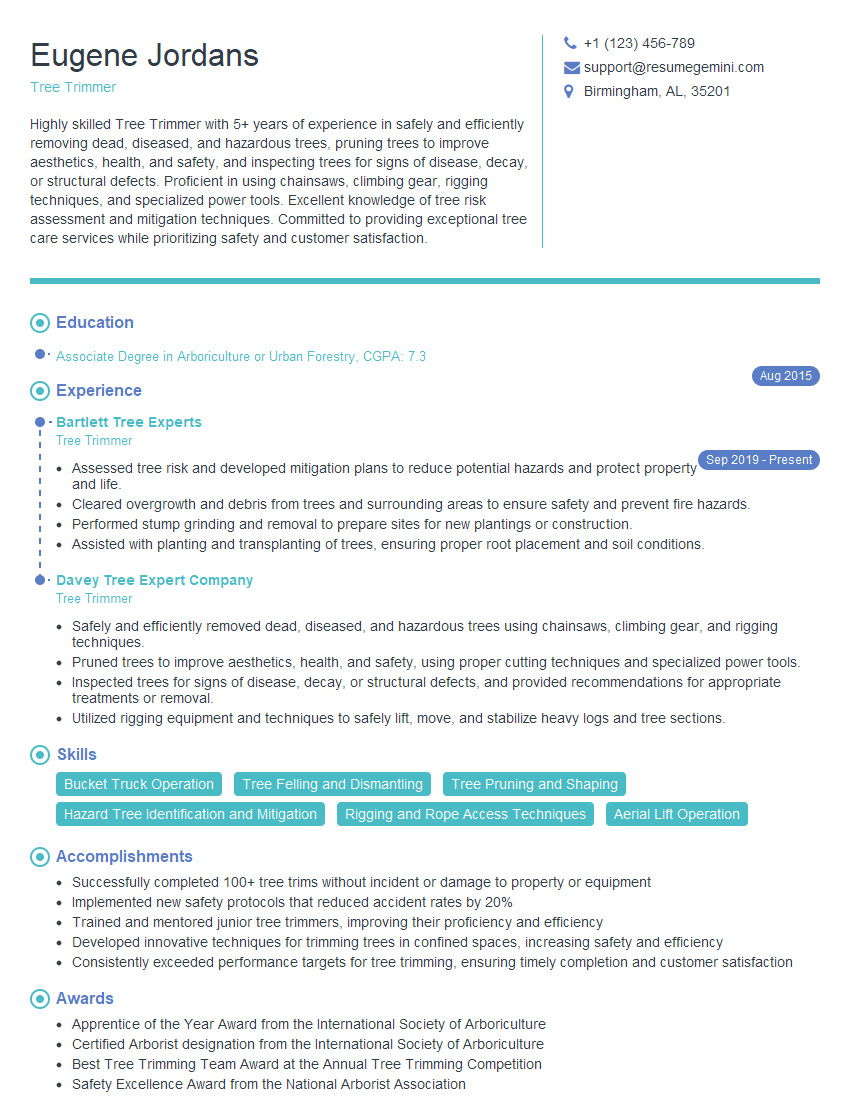
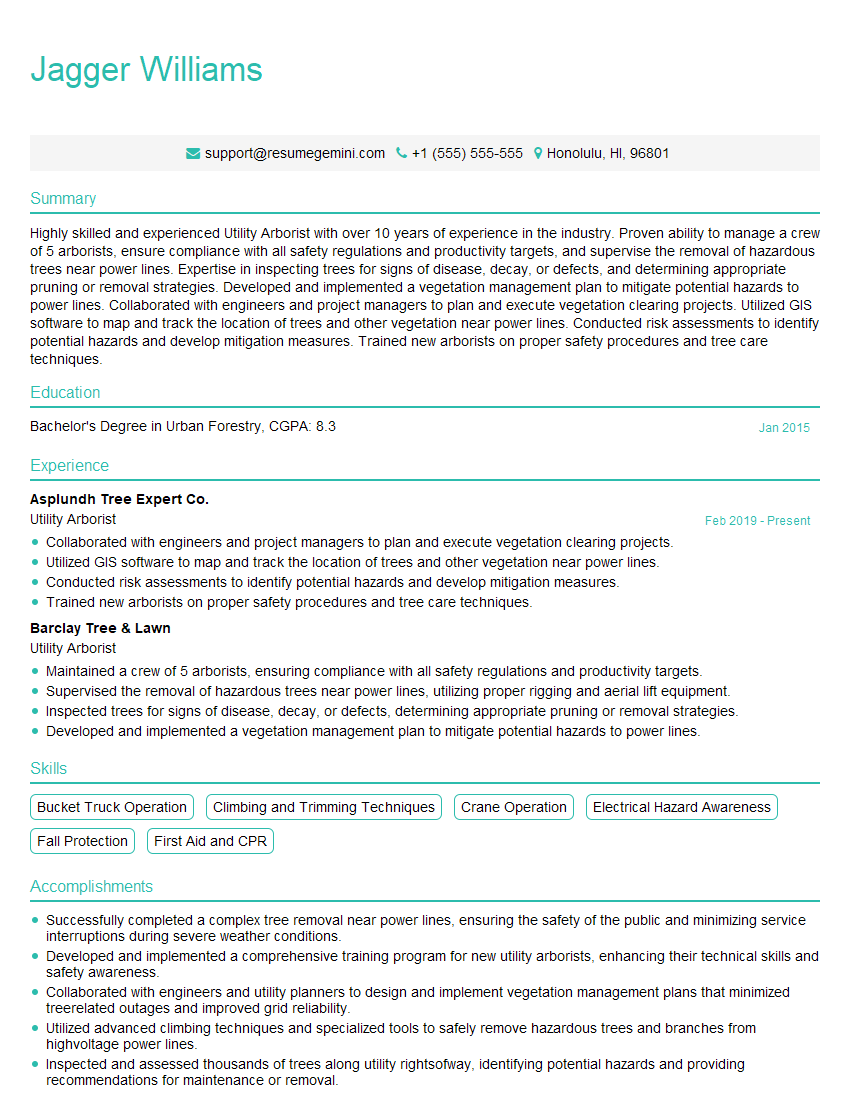
Mastering the skills and knowledge of climbing and tree trimming opens doors to a rewarding and challenging career with excellent growth potential. A strong resume is key to showcasing your expertise and landing your dream job. Creating an ATS-friendly resume increases your chances of getting noticed by potential employers. To help you craft a professional and impactful resume, we recommend using ResumeGemini. ResumeGemini offers a user-friendly platform and provides examples of resumes tailored specifically to the Climbing and Tree Trimming industry to help you stand out from the competition.



Explore more articles
Users Rating of Our Blogs
Share Your Experience
We value your feedback! Please rate our content and share your thoughts (optional).
What Readers Say About Our Blog
Attention music lovers!
Wow, All the best Sax Summer music !!!
Spotify: https://open.spotify.com/artist/6ShcdIT7rPVVaFEpgZQbUk
Apple Music: https://music.apple.com/fr/artist/jimmy-sax-black/1530501936
YouTube: https://music.youtube.com/browse/VLOLAK5uy_noClmC7abM6YpZsnySxRqt3LoalPf88No
Other Platforms and Free Downloads : https://fanlink.tv/jimmysaxblack
on google : https://www.google.com/search?q=22+AND+22+AND+22
on ChatGPT : https://chat.openai.com?q=who20jlJimmy20Black20Sax20Producer
Get back into the groove with Jimmy sax Black
Best regards,
Jimmy sax Black
www.jimmysaxblack.com
Hi I am a troller at The aquatic interview center and I suddenly went so fast in Roblox and it was gone when I reset.
Hi,
Business owners spend hours every week worrying about their website—or avoiding it because it feels overwhelming.
We’d like to take that off your plate:
$69/month. Everything handled.
Our team will:
Design a custom website—or completely overhaul your current one
Take care of hosting as an option
Handle edits and improvements—up to 60 minutes of work included every month
No setup fees, no annual commitments. Just a site that makes a strong first impression.
Find out if it’s right for you:
https://websolutionsgenius.com/awardwinningwebsites
Hello,
we currently offer a complimentary backlink and URL indexing test for search engine optimization professionals.
You can get complimentary indexing credits to test how link discovery works in practice.
No credit card is required and there is no recurring fee.
You can find details here:
https://wikipedia-backlinks.com/indexing/
Regards
NICE RESPONSE TO Q & A
hi
The aim of this message is regarding an unclaimed deposit of a deceased nationale that bears the same name as you. You are not relate to him as there are millions of people answering the names across around the world. But i will use my position to influence the release of the deposit to you for our mutual benefit.
Respond for full details and how to claim the deposit. This is 100% risk free. Send hello to my email id: lukachachibaialuka@gmail.com
Luka Chachibaialuka
Hey interviewgemini.com, just wanted to follow up on my last email.
We just launched Call the Monster, an parenting app that lets you summon friendly ‘monsters’ kids actually listen to.
We’re also running a giveaway for everyone who downloads the app. Since it’s brand new, there aren’t many users yet, which means you’ve got a much better chance of winning some great prizes.
You can check it out here: https://bit.ly/callamonsterapp
Or follow us on Instagram: https://www.instagram.com/callamonsterapp
Thanks,
Ryan
CEO – Call the Monster App
Hey interviewgemini.com, I saw your website and love your approach.
I just want this to look like spam email, but want to share something important to you. We just launched Call the Monster, a parenting app that lets you summon friendly ‘monsters’ kids actually listen to.
Parents are loving it for calming chaos before bedtime. Thought you might want to try it: https://bit.ly/callamonsterapp or just follow our fun monster lore on Instagram: https://www.instagram.com/callamonsterapp
Thanks,
Ryan
CEO – Call A Monster APP
To the interviewgemini.com Owner.
Dear interviewgemini.com Webmaster!
Hi interviewgemini.com Webmaster!
Dear interviewgemini.com Webmaster!
excellent
Hello,
We found issues with your domain’s email setup that may be sending your messages to spam or blocking them completely. InboxShield Mini shows you how to fix it in minutes — no tech skills required.
Scan your domain now for details: https://inboxshield-mini.com/
— Adam @ InboxShield Mini
support@inboxshield-mini.com
Reply STOP to unsubscribe
Hi, are you owner of interviewgemini.com? What if I told you I could help you find extra time in your schedule, reconnect with leads you didn’t even realize you missed, and bring in more “I want to work with you” conversations, without increasing your ad spend or hiring a full-time employee?
All with a flexible, budget-friendly service that could easily pay for itself. Sounds good?
Would it be nice to jump on a quick 10-minute call so I can show you exactly how we make this work?
Best,
Hapei
Marketing Director
Hey, I know you’re the owner of interviewgemini.com. I’ll be quick.
Fundraising for your business is tough and time-consuming. We make it easier by guaranteeing two private investor meetings each month, for six months. No demos, no pitch events – just direct introductions to active investors matched to your startup.
If youR17;re raising, this could help you build real momentum. Want me to send more info?
Hi, I represent an SEO company that specialises in getting you AI citations and higher rankings on Google. I’d like to offer you a 100% free SEO audit for your website. Would you be interested?
Hi, I represent an SEO company that specialises in getting you AI citations and higher rankings on Google. I’d like to offer you a 100% free SEO audit for your website. Would you be interested?