Interviews are opportunities to demonstrate your expertise, and this guide is here to help you shine. Explore the essential Coil Binding interview questions that employers frequently ask, paired with strategies for crafting responses that set you apart from the competition.
Questions Asked in Coil Binding Interview
Q 1. What are the different types of coil binding machines?
Coil binding machines come in various types, primarily categorized by their mechanism for inserting the coil. The most common are:
- Manual Coil Binding Machines: These are hand-operated and ideal for small-scale projects or occasional use. They are generally more affordable but require more manual effort.
- Electric Coil Binding Machines: These machines automate the coil insertion process, significantly increasing speed and efficiency. They’re suitable for larger projects and frequent use. Electric models often have features like adjustable punching depth and coil size settings.
- Heavy-Duty Electric Coil Binding Machines: Designed for high-volume production, these machines are robust and built for continuous operation. They often incorporate advanced features like automatic feeding and punch alignment systems.
The choice depends on your project volume, budget, and desired level of automation. For instance, a small office might choose a manual machine for occasional reports, while a print shop would invest in a heavy-duty electric model.
Q 2. Explain the process of setting up a coil binding machine for a specific project.
Setting up a coil binding machine involves several steps to ensure a clean, professional finish. First, you need to select the correct coil size and pitch based on the document’s thickness (detailed in the next answer). Then:
- Adjust the Punching Margin: Set the machine’s margins to match your document size. This ensures the holes are punched correctly without cutting into the text.
- Adjust the Punching Depth: This setting determines how deep the punches go, impacting the security of the binding. Too shallow, and the coils won’t hold; too deep, and it damages the pages.
- Select the Correct Coil Size and Pitch: Insert the correct coil into the machine. Many machines have indicators or guides to assist with this.
- Test Punch: Before starting on the actual document, always perform a test punch on a few scrap sheets. This confirms the settings and prevents mistakes on your final project.
- Punch the Document: Carefully feed the document into the machine, following the manufacturer’s instructions. For large documents, work in sections to avoid jams.
- Insert the Coil: Once punched, carefully insert the coil using the machine’s mechanism, ensuring it’s securely locked in place.
Proper setup minimizes errors and ensures a professional outcome. Always consult the machine’s manual for detailed instructions.
Q 3. How do you determine the correct size and pitch of coils for a document?
Determining the correct coil size and pitch is crucial for a neat and secure binding. The coil diameter (size) is dictated by the document’s thickness; a thicker document requires a larger diameter coil to accommodate the pages. The pitch refers to the distance between the holes. A smaller pitch is generally preferred for thinner documents, while a larger pitch suits thicker ones to prevent the coil from stressing the paper.
Most coil binding machine manufacturers provide charts or guidelines correlating document thickness with coil diameter and pitch. For example, a 100-page document might use a 1/2″ diameter coil with a 4:1 pitch, while a 300-page document might require a 1″ diameter coil with a 5:1 pitch. Experimentation and experience play a vital role in selecting the ideal coil size and pitch.
Q 4. Describe the process of punching holes for coil binding.
Punching holes for coil binding involves using a hole punch, either manual or electric, that creates evenly spaced holes along the spine of the document. Here’s a step-by-step process:
- Align the Document: Ensure the document is properly aligned before punching to maintain consistent hole placement.
- Select the Punching Setting: Set the machine to the correct number of holes and the appropriate margin. This setting depends on the coil size and document thickness.
- Feed the Document: Carefully feed the document into the punch, ensuring it’s straight and even to avoid misaligned holes.
- Punch the Holes: Once aligned, activate the punch. For large documents, carefully punch one section at a time, ensuring the holes align between sections.
- Inspect the Holes: After punching, inspect the holes to ensure they are accurately placed and clean. Any discrepancies can impede proper coil insertion.
A consistent punching process is key to achieving a professional-looking and securely bound document. Using a high-quality punch with adjustable settings greatly enhances the outcome.
Q 5. What are common issues encountered during coil binding and how do you troubleshoot them?
Common coil binding issues include misaligned holes, jammed pages, and improperly sized coils. Here’s how to troubleshoot them:
- Misaligned Holes: This often results from incorrectly adjusted margins or uneven feeding of the document into the punch. Re-check the margin settings and carefully feed the document again.
- Jammed Pages: This can occur with excessive paper or improper alignment of the pages. Ensure the machine is clean and free of debris. Feed the pages one section at a time to avoid jams.
- Improperly Sized Coils: Using a coil too small for the document’s thickness can cause the spine to bulge, while a coil too large will leave excess space. Consult sizing charts or guidelines to select the correct coil.
- Difficult Coil Insertion: This can be caused by misaligned holes or a coil that’s slightly too large. Gently try to insert the coil using the machine’s mechanism.
Regular maintenance and proper use of the machine minimize these issues. Refer to the machine’s manual for specific troubleshooting advice.
Q 6. How do you ensure accurate alignment of pages during coil binding?
Accurate page alignment is critical for a professional-looking bound document. The most effective way to achieve this is through careful preparation before punching.
- Collate Pages: Accurately collate pages in the correct order. Any missing or misplaced pages will throw off the alignment.
- Square the Edges: Ensure the edges of the document are square before punching. This can be done by carefully trimming or using a cutting guide to achieve straight and even edges.
- Use a Clamping Device (if available): Some punching machines offer clamping mechanisms to hold the document securely in place during punching, minimizing movement and guaranteeing accurate alignment.
- Check Alignment After Punching: After punching, visually check for any significant misalignments before proceeding with coil insertion.
By meticulously preparing the document before punching, you can minimize page misalignment and produce a high-quality bound project.
Q 7. What safety precautions are necessary when operating a coil binding machine?
Safety should be a top priority when operating coil binding machines. Key safety precautions include:
- Proper Training: Always receive proper training before operating any coil binding machine. Understanding the machine’s functions and safety features is crucial.
- Clear the Area: Keep the work area clear of obstructions and ensure enough space to safely operate the machine.
- Use Safety Guards: Never bypass or remove any safety guards on the machine. These are designed to protect you from moving parts.
- Keep Hands Away from Moving Parts: Avoid placing your hands near moving parts during operation. Use tools or guides provided to assist with feeding and coil insertion.
- Use Appropriate Protective Gear: Consider using safety glasses to protect your eyes from debris.
- Regular Maintenance: Regularly inspect and maintain the machine to prevent malfunctions that could lead to injuries.
Prioritizing safety prevents accidents and ensures a safe working environment.
Q 8. How do you handle different paper weights and thicknesses during coil binding?
Handling different paper weights and thicknesses in coil binding is crucial for a professional finish. The key is to select the appropriate coil size and pitch (distance between coil loops) to accommodate the document’s thickness. Thicker papers require larger diameter coils and potentially a wider pitch to ensure the pages lie flat and the coil doesn’t overstress or bend. For instance, a 200-page document with heavy cardstock might need a 1/2-inch coil, while a 50-page booklet with standard 20lb paper could manage with a smaller, 3/8-inch coil. The binding machine itself often has adjustable settings for different paper thicknesses; you might need to adjust the punching depth or the coil insertion mechanism accordingly. Incorrect settings can lead to uneven punching, difficult coil insertion, or pages tearing.
I always conduct a test punch on a sample page before processing the entire document, ensuring the punch is clean and doesn’t damage the paper. This helps me determine the ideal settings for the specific paper weight and thickness.
Q 9. What are the advantages and disadvantages of coil binding compared to other binding methods?
Coil binding offers several advantages over other binding methods, making it a popular choice for many applications. Its primary advantage is its flexibility; the pages lay completely flat when open, allowing for easy reading and writing. This makes it excellent for calendars, notebooks, and reports where frequent reference and annotation are needed. The coils are also relatively inexpensive, making it a cost-effective solution. Furthermore, the binding process is relatively quick and straightforward, even for large volumes.
However, coil binding does have limitations. It isn’t suitable for documents that require a highly sophisticated or formal appearance. It’s also not ideal for documents that need to withstand a lot of rough handling as the coils can be easily bent or removed. Compared to perfect binding or case binding, it’s generally considered less durable. Finally, the spine width is limited by the coil diameter, restricting its use for very thick documents.
Q 10. How do you calculate the required number of coils for a document of a given length?
Calculating the required number of coils depends on the document’s length and the chosen coil pitch. It’s not a simple calculation but rather a practical assessment. First, you must know the thickness of your document. Then, consider the coil pitch: the greater the distance between the coils, the fewer coils needed. Most coil binding machines have coil pitch settings; manufacturers will provide this information. We can use a simplified formula as an approximation:
Number of Coils ≈ (Document Thickness) / (Coil Pitch)However, this is a rough estimate. Practical experience teaches you the optimal number, factoring in the paper type, coil size, and desired appearance. In my experience, it’s always better to slightly overestimate the coil quantity rather than underestimate, as it prevents issues. Using a test run helps fine-tune the number. For example, if my document is 1 inch thick, and my coil pitch is 1/8 inch, a simple calculation shows I’d need 8 coils, however, I would add one extra to prevent issues.
Q 11. Explain the process of cleaning and maintaining a coil binding machine.
Regular cleaning and maintenance are crucial for optimal performance and longevity of a coil binding machine. After each use, I remove any paper scraps or dust from the punching mechanism using a brush and compressed air. I also check the alignment of the punching needles to ensure consistent punching. Lubrication is key; I use an appropriate machine oil on moving parts like the punching mechanism and coil insertion mechanism. This reduces friction and prevents wear and tear.
Periodically (depending on usage frequency), I perform a more thorough cleaning, including removing the punching dies and cleaning them individually. I also check the belts and gears for any signs of wear or damage and replace them as necessary. Following the manufacturer’s maintenance instructions is vital to avoid voiding the warranty and maintain the machine’s efficiency. Preventive maintenance saves time, money and avoids larger future repairs.
Q 12. How do you identify and address jams in a coil binding machine?
Jams in a coil binding machine can stem from several causes, such as paper misfeeds, damaged punching dies, or improperly inserted coils. My troubleshooting approach is systematic. First, I turn off the machine and carefully examine the punching area for any obstructions. If there’s a paper jam, I gently remove the jammed sheets, ensuring not to damage the machine’s components. Next, I check the punching dies for damage or misalignment; bent or damaged dies are common causes of jams. If the dies are damaged, I either replace them or get them professionally repaired.
If the problem persists, I inspect the coil insertion mechanism. Improperly aligned guides or a malfunctioning coil insertion mechanism can cause jams. This might require more advanced troubleshooting and potentially professional service. A detailed log of problems and solutions is extremely helpful in my workflow.
Q 13. What are the different types of coils used in coil binding?
Several coil types are used in coil binding, each with its characteristics and applications. The most common are:
- Plastic coils: These are the most prevalent, available in a wide range of colors, sizes, and pitches. They are relatively inexpensive and provide a professional look.
- Metal coils: These offer greater durability than plastic coils, ideal for high-usage documents. However, they are more expensive.
- Wire-O coils (sometimes called twin-loop): While technically a different binding method, Wire-O’s distinct shape and feel are sometimes grouped with coil binding. These are a more premium option, offering a very clean, flat lay.
The choice of coil depends on the project’s requirements—budget, durability, and aesthetic considerations.
Q 14. Describe your experience with different coil binding machine brands and models.
Throughout my career, I’ve worked extensively with various coil binding machine brands and models. I’ve had experience with high-volume industrial machines from manufacturers like [Manufacturer Name 1] and [Manufacturer Name 2], known for their reliability and efficiency in high-speed production environments. These machines usually require specific maintenance procedures that I’m well-versed in. For smaller-scale operations, I’ve used machines from brands like [Manufacturer Name 3] and [Manufacturer Name 4], prioritizing their ease of use and cost-effectiveness. I’ve found that the specific features – such as automated coil insertion and adjustable punching depth – significantly impact efficiency and the quality of the finished product. My experience allows me to tailor my approach to the specific capabilities and limitations of each machine.
One memorable experience involved troubleshooting a recurring jam on a [Specific Model Name] machine. After meticulously reviewing the machine’s manual and conducting several tests, I discovered a small piece of debris causing the issue. This incident highlighted the importance of regular cleaning and preventative maintenance.
Q 15. How do you ensure the quality and consistency of coil binding?
Ensuring quality and consistency in coil binding is paramount. It’s a multi-faceted process starting even before the binding itself. We begin by carefully inspecting the document’s pages for any inconsistencies – uneven cuts, loose sheets, or damaged pages. This initial quality control step prevents problems from propagating through the binding process.
Next, we carefully select the appropriate coil size and pitch based on the document’s thickness and desired aesthetic. The punching process itself needs precision; a misaligned punch can create gaps, making the document look unprofessional and potentially damaging the binding mechanism. We regularly calibrate our punching machines to maintain accuracy. Finally, after the coil is inserted, we perform a final quality check to ensure the pages lay flat and the coil is securely fastened. This often involves a ‘spine check’ to verify evenness and a ‘page turn’ check to identify any binding issues. We meticulously document any quality control issues to continuously improve our process.
Career Expert Tips:
- Ace those interviews! Prepare effectively by reviewing the Top 50 Most Common Interview Questions on ResumeGemini.
- Navigate your job search with confidence! Explore a wide range of Career Tips on ResumeGemini. Learn about common challenges and recommendations to overcome them.
- Craft the perfect resume! Master the Art of Resume Writing with ResumeGemini’s guide. Showcase your unique qualifications and achievements effectively.
- Don’t miss out on holiday savings! Build your dream resume with ResumeGemini’s ATS optimized templates.
Q 16. How do you handle different coil sizes and pitches?
Handling diverse coil sizes and pitches is a critical aspect of coil binding, as it directly impacts the final product’s appearance and functionality. Coil size depends primarily on the document’s thickness; thicker documents require larger coils to provide adequate support. The pitch, or the distance between coils, influences the overall look and feel – a tighter pitch offers a more compact and professional appearance, while a looser pitch might be preferable for documents needing easy page turning. We maintain a comprehensive inventory of various coil sizes and pitches (e.g., 5/16”, 3/8”, 1/2” diameter coils, with different pitches like 2:1, 3:1) to cater to a wide range of client needs. Our binding machines are versatile enough to accommodate this range. If a specific size or pitch isn’t in stock, we have established relationships with suppliers to ensure timely procurement. We often consult with clients on the optimal coil choice, considering both the aesthetics and functionality of the final bound document.
Q 17. What are the best practices for storing coils?
Proper coil storage is vital to prevent damage and maintain quality. Coils should be stored in a cool, dry environment, away from direct sunlight and moisture. Exposure to humidity can cause coils to rust, especially those made of metal. We store coils vertically in organized racks to prevent bending or warping. Each rack is clearly labeled with coil size and pitch for easy identification and retrieval. We regularly inspect our coil storage to identify and remove any damaged or compromised coils. This helps to ensure that only high-quality coils are used in our binding process, preventing issues like binding inconsistencies, and reducing waste.
Q 18. How do you manage large volume coil binding projects?
Managing large-volume coil binding projects requires meticulous planning and efficient workflow management. We employ a project management system that breaks down large projects into smaller, manageable tasks with assigned deadlines. We use sophisticated scheduling software that helps us efficiently allocate resources (personnel, machinery) based on the project’s scope and timeline. For instance, if we’re binding 10,000 documents, we might divide the project into batches of 1,000, assigning each batch to a dedicated team. Regular communication and progress monitoring are key to ensuring projects remain on track. We utilize quality control checkpoints at various stages of the process to catch any errors early on, reducing rework and potential delays. This systematic approach ensures timely delivery and maintains consistent quality, even with large volumes.
Q 19. How do you handle different paper types and sizes during coil binding?
Different paper types and sizes require careful consideration during coil binding. Thicker papers, like cardstock, might require a larger coil size and potentially a different punch configuration to ensure a clean, even punch. Conversely, thinner papers may be more prone to tearing during the punching process, requiring adjustments to the punch pressure. We always perform test punches on a sample page before proceeding with the full document to ensure the settings are optimal for the specific paper type and thickness. The paper size also affects the coil choice and the positioning of the punched holes. We have detailed process guidelines for various paper types and sizes, including recommended coil sizes, pitch, and punch settings to maintain consistency and prevent damage. We also handle oversized documents or documents with unusual dimensions using specialized jigs and adjustments to ensure proper binding.
Q 20. Describe your experience working with different types of coil binding equipment.
My experience encompasses a wide array of coil binding equipment, from manual hand-cranked punchers to fully automated high-speed binding machines. I’m proficient in operating both electric and pneumatic punchers, which allows us to handle various project volumes and demands efficiently. I’ve worked with different brands of equipment, each having its unique features and maintenance requirements. This experience helps me troubleshoot equipment issues swiftly and efficiently. Furthermore, my experience includes working with equipment that supports various coil types (plastic, metal), accommodating diverse client needs and project requirements. I understand the importance of regular equipment maintenance and calibration to ensure consistent performance and quality. I’ve even participated in training new team members on the safe and efficient operation of different binding machines.
Q 21. How do you prioritize tasks in a fast-paced bindery environment?
In a fast-paced bindery environment, efficient task prioritization is crucial. We utilize a combination of methods to manage our workload. Firstly, we employ a job ticketing system, assigning each project a priority level based on factors like deadlines, order volume, and client importance. Urgent rush jobs receive immediate attention, while less time-sensitive jobs are scheduled accordingly. Secondly, we prioritize tasks based on the equipment availability. For instance, if a machine requires a lengthy setup for a specific job, we’ll schedule that job accordingly to optimize machine utilization and reduce idle time. We also utilize a Kanban-style workflow, visually tracking the progress of each job to identify bottlenecks and allocate resources accordingly. Finally, effective communication within the team is key, ensuring everyone is aware of priorities and potential delays, allowing for proactive problem-solving and efficient resource allocation.
Q 22. What is your experience with quality control in coil binding?
Quality control in coil binding is paramount to ensuring a professional and aesthetically pleasing final product. My approach is multifaceted, starting even before the binding process begins. I meticulously inspect the document’s pages for any inconsistencies – ensuring proper page order, checking for any damage or misprints, and verifying that the paper stock is suitable for coil binding. During the binding process itself, I monitor the pitch (distance between coils) and the coil insertion to ensure they are consistent and secure. Finally, post-binding, I conduct a thorough quality check for any loose pages, crooked coils, or damage incurred during the process. This involves visually inspecting the spine and checking the overall flatness and lay-flat capability of the document. I utilize checklists and detailed logs to document every step, aiding in identifying potential areas for improvement and ensuring consistent quality across all projects. For example, if I detect a recurring issue such as consistently misaligned coils, I would analyze the machine settings, the paper stock, and even the operator technique to pinpoint the root cause and implement corrective actions.
Q 23. How do you work effectively as part of a team in a bindery setting?
In a bindery setting, teamwork is crucial. I thrive in collaborative environments, understanding that efficiency and quality depend on seamless coordination. I actively communicate with fellow team members, sharing information about project requirements, potential challenges, and available resources. I’m adept at assisting colleagues, offering guidance on techniques, troubleshooting problems, and sharing my knowledge to ensure everyone is working at peak efficiency. For instance, if one team member is struggling with a complex binding job, I’ll proactively offer support, demonstrating the proper techniques and helping them resolve the issue quickly. This collaborative approach ensures a smooth workflow, a higher quality output, and a more positive work environment.
Q 24. How do you handle customer requests or specifications for coil binding?
Handling customer requests and specifications requires meticulous attention to detail and clear communication. I start by actively listening to the client’s needs, clarifying any ambiguities, and ensuring a complete understanding of their expectations. This includes discussing the document’s size, page count, paper stock, desired coil color and size, and the overall aesthetic they envision. I then translate these requirements into precise instructions for the binding process, ensuring all team members are aware of the specific specifications. If a customer requests a non-standard coil size or color, for instance, I’ll research the feasibility, source the necessary materials, and clearly communicate any potential cost implications or timeline adjustments. I believe in proactive communication, keeping the client updated on the progress of their project and addressing any concerns promptly.
Q 25. Describe a time you had to troubleshoot a coil binding issue. What was the problem, and how did you solve it?
In one instance, we encountered an issue where the coils were consistently jamming in the binding machine. This resulted in significant downtime and affected project deadlines. My troubleshooting process began by systematically examining each component of the machine, starting with the simplest potential causes. We checked for any obstructions in the coil feed mechanism, inspected the coil’s condition for any imperfections or misalignments, and verified the machine’s settings were accurate. We eventually discovered that the problem was a worn-out part within the coil insertion mechanism. The solution involved replacing the damaged part and recalibrating the machine. This incident underscored the importance of preventative maintenance and thorough machine inspections to avoid such disruptions. The experience also reinforced the value of a systematic approach to troubleshooting, starting with the most likely causes and progressively investigating more complex possibilities.
Q 26. What are your strengths and weaknesses related to coil binding?
My strengths in coil binding include my proficiency in operating various binding machines, my meticulous attention to detail ensuring consistent quality, and my effective problem-solving skills. I’m also adept at working efficiently and collaboratively within a team environment. However, like everyone, I have areas for improvement. While I’m proficient with most binding machines, I could enhance my expertise with newer, more advanced models through additional training. I am actively seeking opportunities to broaden my knowledge in this area.
Q 27. Where do you see yourself in 5 years in the print finishing industry?
In five years, I envision myself as a highly skilled and knowledgeable print finishing specialist, potentially in a supervisory or training role. I aspire to contribute significantly to process optimization and efficiency improvements within a leading print finishing company. My goal is to leverage my expertise not only in coil binding, but also to expand my knowledge base across various print finishing techniques. I’m particularly interested in exploring the latest technological advancements and sustainable practices within the industry. My long-term objective is to become a resource for others, sharing my knowledge and contributing to the continued growth and success of the print finishing sector.
Key Topics to Learn for Coil Binding Interview
- Coil Binding Machines: Understanding different types (manual, electric, automatic), their functionalities, and maintenance procedures. Practical application: Troubleshooting common machine malfunctions and performing preventative maintenance.
- Coil Binding Materials: Knowledge of various coil types (plastic, metal), sizes, and their suitability for different projects. Practical application: Selecting the appropriate coil for a specific job based on page count, paper thickness, and desired aesthetic.
- Punching Techniques: Mastering accurate and efficient punching techniques to ensure proper coil alignment and consistent hole placement. Practical application: Minimizing paper waste and producing high-quality, professional-looking bound documents.
- Finishing and Quality Control: Understanding the importance of final inspection for accurate coil insertion and overall document presentation. Practical application: Identifying and rectifying defects before delivery, ensuring client satisfaction.
- Production Planning and Efficiency: Optimizing workflow to maximize production speed while maintaining quality. Practical application: Estimating job completion times accurately and managing materials effectively.
- Safety Procedures and Regulations: Adherence to safety protocols while operating machinery and handling materials. Practical application: Identifying and mitigating potential hazards in the workplace.
- Cost Estimation and Budgeting: Calculating material costs and labor efficiently to provide accurate pricing for clients. Practical application: Understanding profit margins and optimizing pricing strategies.
Next Steps
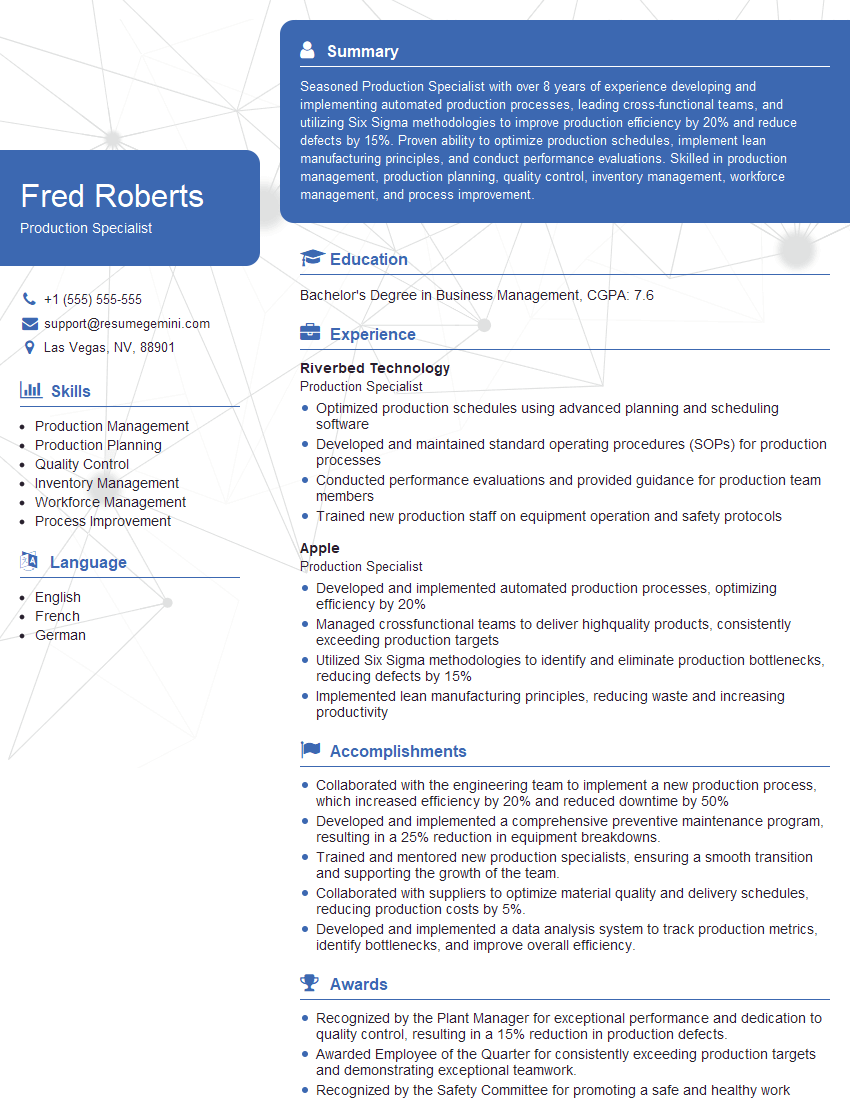
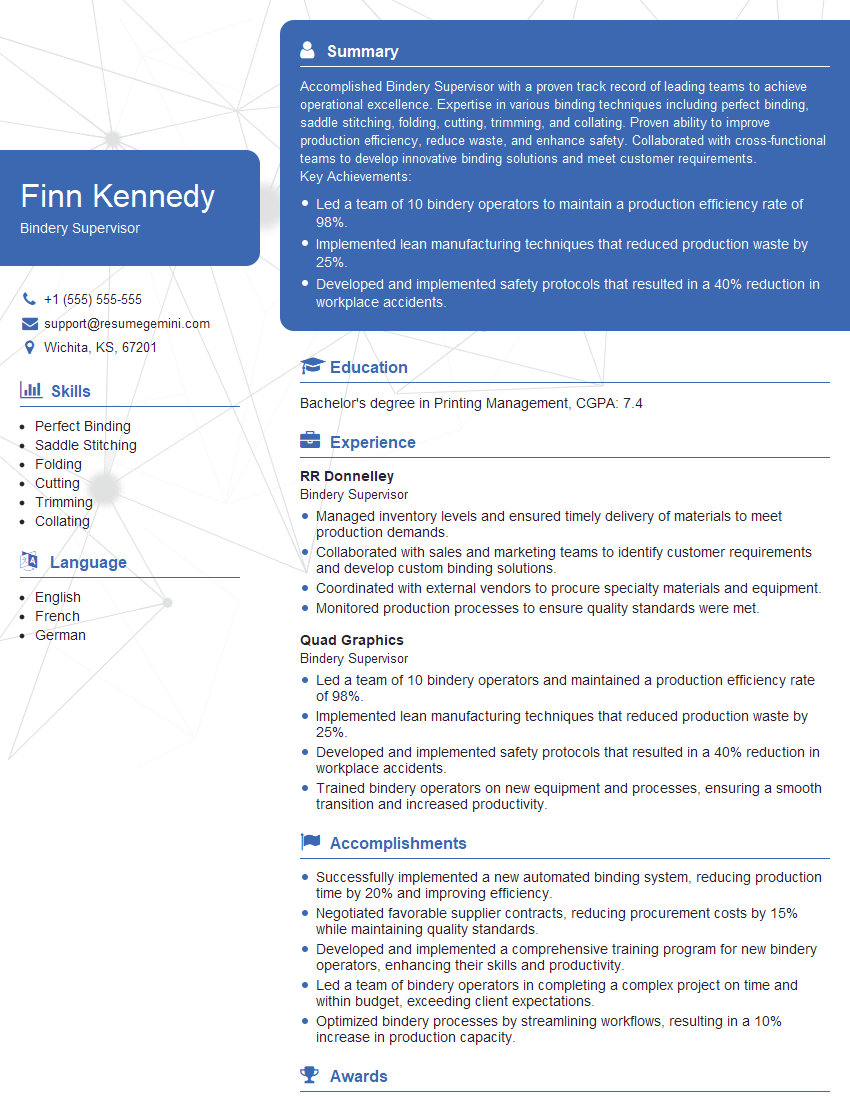
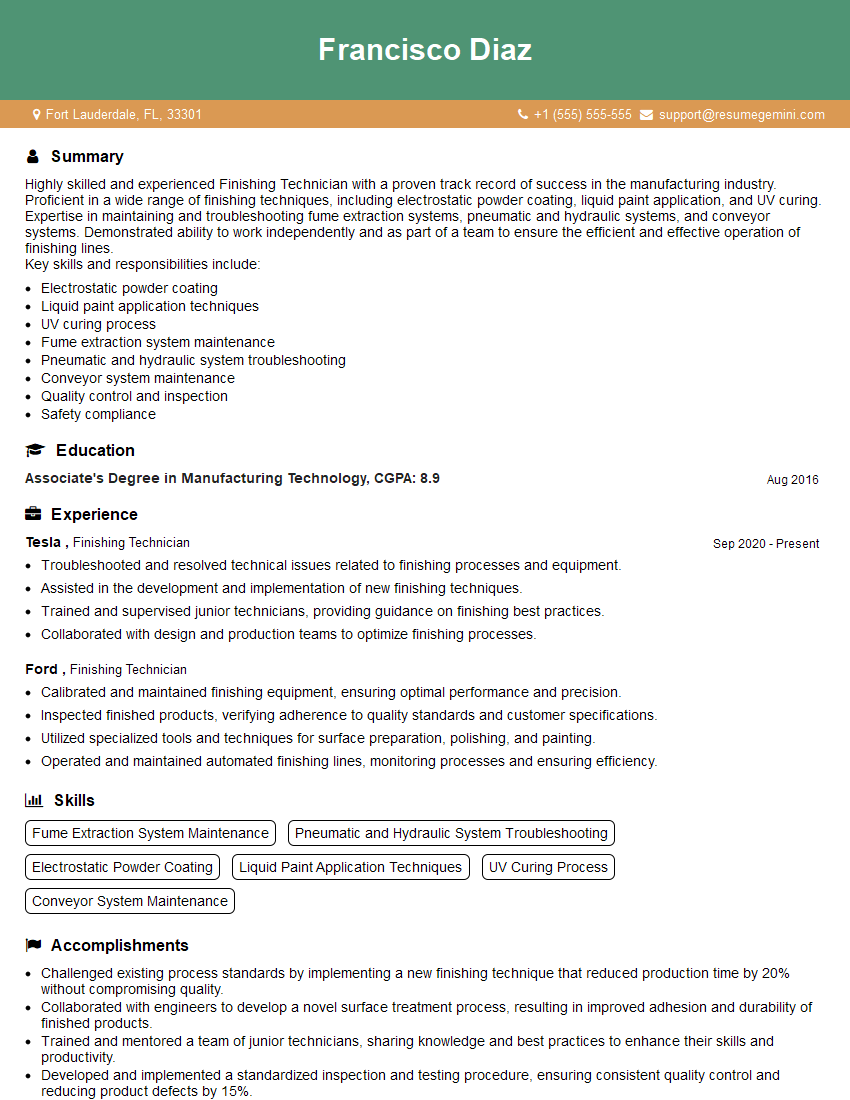
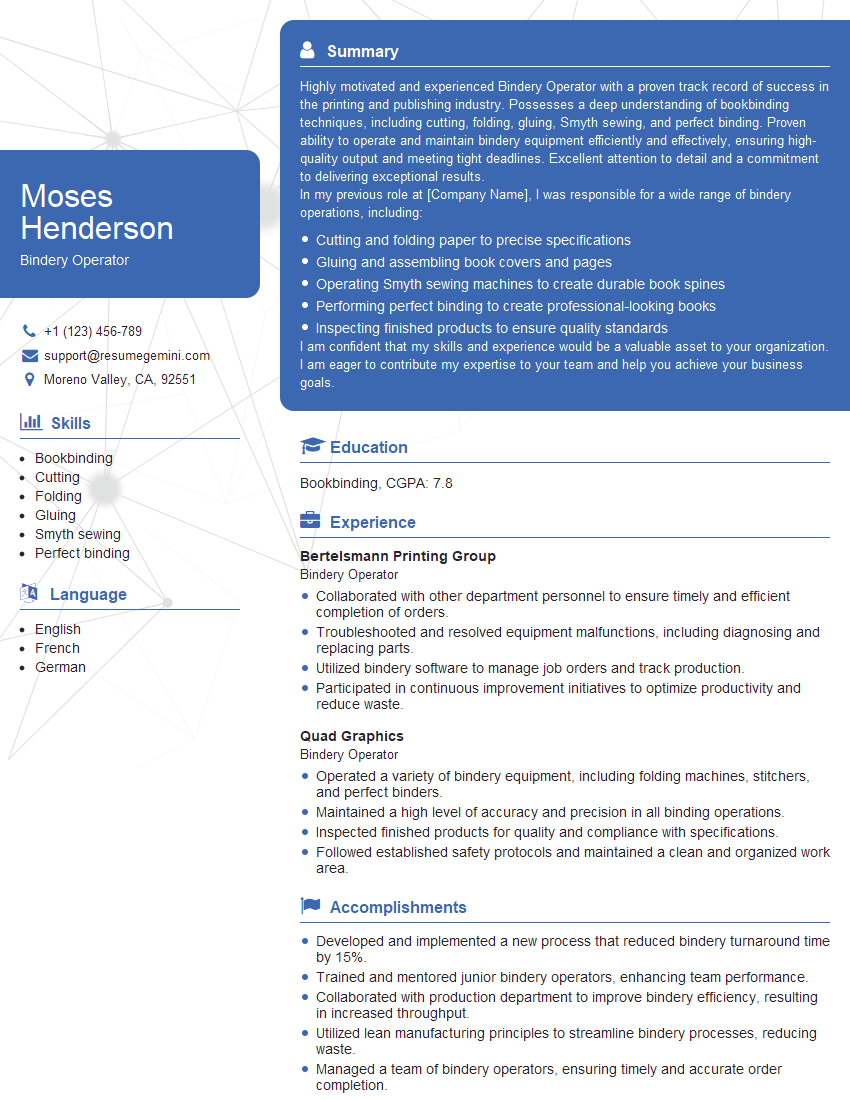
Mastering coil binding opens doors to diverse opportunities in print finishing, document production, and related industries. A strong understanding of these techniques is highly valuable and will significantly enhance your career prospects. To maximize your chances of landing your dream job, create an ATS-friendly resume that highlights your skills and experience effectively. We strongly recommend using ResumeGemini to build a professional and impactful resume. ResumeGemini offers tools and examples specifically tailored to the Coil Binding industry, helping you present your qualifications in the best possible light. Examples of resumes tailored to Coil Binding are available within the ResumeGemini platform.
Explore more articles
Users Rating of Our Blogs
Share Your Experience
We value your feedback! Please rate our content and share your thoughts (optional).
What Readers Say About Our Blog
Hello,
we currently offer a complimentary backlink and URL indexing test for search engine optimization professionals.
You can get complimentary indexing credits to test how link discovery works in practice.
No credit card is required and there is no recurring fee.
You can find details here:
https://wikipedia-backlinks.com/indexing/
Regards
NICE RESPONSE TO Q & A
hi
The aim of this message is regarding an unclaimed deposit of a deceased nationale that bears the same name as you. You are not relate to him as there are millions of people answering the names across around the world. But i will use my position to influence the release of the deposit to you for our mutual benefit.
Respond for full details and how to claim the deposit. This is 100% risk free. Send hello to my email id: [email protected]
Luka Chachibaialuka
Hey interviewgemini.com, just wanted to follow up on my last email.
We just launched Call the Monster, an parenting app that lets you summon friendly ‘monsters’ kids actually listen to.
We’re also running a giveaway for everyone who downloads the app. Since it’s brand new, there aren’t many users yet, which means you’ve got a much better chance of winning some great prizes.
You can check it out here: https://bit.ly/callamonsterapp
Or follow us on Instagram: https://www.instagram.com/callamonsterapp
Thanks,
Ryan
CEO – Call the Monster App
Hey interviewgemini.com, I saw your website and love your approach.
I just want this to look like spam email, but want to share something important to you. We just launched Call the Monster, a parenting app that lets you summon friendly ‘monsters’ kids actually listen to.
Parents are loving it for calming chaos before bedtime. Thought you might want to try it: https://bit.ly/callamonsterapp or just follow our fun monster lore on Instagram: https://www.instagram.com/callamonsterapp
Thanks,
Ryan
CEO – Call A Monster APP
To the interviewgemini.com Owner.
Dear interviewgemini.com Webmaster!
Hi interviewgemini.com Webmaster!
Dear interviewgemini.com Webmaster!
excellent
Hello,
We found issues with your domain’s email setup that may be sending your messages to spam or blocking them completely. InboxShield Mini shows you how to fix it in minutes — no tech skills required.
Scan your domain now for details: https://inboxshield-mini.com/
— Adam @ InboxShield Mini
Reply STOP to unsubscribe
Hi, are you owner of interviewgemini.com? What if I told you I could help you find extra time in your schedule, reconnect with leads you didn’t even realize you missed, and bring in more “I want to work with you” conversations, without increasing your ad spend or hiring a full-time employee?
All with a flexible, budget-friendly service that could easily pay for itself. Sounds good?
Would it be nice to jump on a quick 10-minute call so I can show you exactly how we make this work?
Best,
Hapei
Marketing Director
Hey, I know you’re the owner of interviewgemini.com. I’ll be quick.
Fundraising for your business is tough and time-consuming. We make it easier by guaranteeing two private investor meetings each month, for six months. No demos, no pitch events – just direct introductions to active investors matched to your startup.
If youR17;re raising, this could help you build real momentum. Want me to send more info?
Hi, I represent an SEO company that specialises in getting you AI citations and higher rankings on Google. I’d like to offer you a 100% free SEO audit for your website. Would you be interested?
Hi, I represent an SEO company that specialises in getting you AI citations and higher rankings on Google. I’d like to offer you a 100% free SEO audit for your website. Would you be interested?
good