Interviews are more than just a Q&A session—they’re a chance to prove your worth. This blog dives into essential Command and Control Techniques interview questions and expert tips to help you align your answers with what hiring managers are looking for. Start preparing to shine!
Questions Asked in Command and Control Techniques Interview
Q 1. Describe your experience with different Command and Control architectures.
My experience encompasses a wide range of Command and Control (C2) architectures, from centralized systems to highly distributed and decentralized models. I’ve worked with hierarchical C2, where a clear chain of command exists with progressively higher levels of authority making decisions; peer-to-peer C2, where nodes operate with more autonomy and communicate directly; and hybrid models blending both approaches. For instance, I was involved in a project where a centralized system managed high-level strategic objectives while allowing individual teams to employ decentralized C2 for tactical operations. This hybrid model enhanced responsiveness and adaptability. Another significant experience involved designing a C2 architecture based on a publish-subscribe model, providing flexibility and scalability. Understanding the strengths and weaknesses of each architecture is crucial for selecting the right one for specific operational needs. The choice heavily depends on factors like the scale of the operation, the level of autonomy required by individual units, and the network infrastructure available.
Q 2. Explain the concept of a distributed command and control system.
A distributed command and control system involves distributing the C2 functionality across multiple nodes or locations, rather than concentrating it in a single point. Think of it like a network of interconnected brains, each responsible for a specific task or area of responsibility, but all working towards a common goal. Each node retains a degree of autonomy but communicates and coordinates with other nodes to maintain overall situational awareness. This architecture offers several advantages, including increased resilience – if one node fails, the system continues operating – and enhanced scalability to accommodate expanding operations. For example, a military operation spanning multiple geographical zones might use a distributed C2 system to manage separate units in each zone while maintaining overall coordination. This architecture is particularly useful in situations where communication links may be unreliable or subject to disruptions.
Q 3. What are the key challenges in designing a scalable C2 system?
Designing a scalable C2 system presents several key challenges. First is maintaining consistent performance as the number of nodes and data volume increase. This often necessitates employing robust network infrastructure and efficient data processing techniques. Second, ensuring interoperability among different systems and platforms is critical, particularly in heterogeneous environments. This requires careful standardization of communication protocols and data formats. Third, managing complexity becomes increasingly difficult with scale. This necessitates well-defined modular designs and clear procedures for system management and troubleshooting. Finally, security concerns become more pronounced, requiring robust mechanisms for authentication, authorization, and data encryption to protect against unauthorized access or manipulation. To address these challenges, we often utilize micro-services architectures, cloud-based solutions, and advanced security technologies.
Q 4. How do you ensure data integrity and security in a C2 environment?
Data integrity and security are paramount in a C2 environment. We employ a multi-layered approach, including robust encryption protocols (such as AES-256) to protect data in transit and at rest. Digital signatures and certificates ensure authenticity and non-repudiation. Access control mechanisms, based on role-based access control (RBAC) or attribute-based access control (ABAC), limit access to sensitive information to authorized personnel only. Regular security audits, penetration testing, and vulnerability assessments help identify and mitigate potential weaknesses. Moreover, rigorous logging and monitoring of system activity help detect and respond to security incidents promptly. A well-defined incident response plan is also crucial, outlining steps to take in case of a security breach. Data integrity is maintained through checksums, version control, and redundancy mechanisms to protect against data corruption or loss.
Q 5. What are the common communication protocols used in C2 systems?
Common communication protocols used in C2 systems vary depending on the specific application and requirements. However, some prevalent options include TCP/IP for reliable data transmission, UDP for faster but less reliable communication, and specialized protocols like SIP (Session Initiation Protocol) for real-time communication. In military applications, secure communication protocols like Link 16 are often employed. The choice of protocol is influenced by factors such as bandwidth availability, latency requirements, security needs, and the need for real-time communication. For example, a system managing unmanned aerial vehicles (UAVs) might utilize a low-latency protocol like UDP for control commands, while TCP/IP might be used for exchanging large amounts of sensor data. The increasing use of MQTT is also notable for its lightweight and publish-subscribe capabilities in Internet of Things (IoT) contexts within larger C2 systems.
Q 6. Explain your understanding of situational awareness in a C2 context.
Situational awareness in a C2 context refers to the comprehensive understanding of the operational environment, including friendly and enemy forces, the terrain, and other relevant factors. It’s the basis for effective decision-making. A robust C2 system provides tools to collect, process, and disseminate information to create a shared understanding among commanders and operators. This involves integrating data from various sources, such as sensors, intelligence reports, and communications intercepts, and presenting it in a clear and concise manner. Imagine it like a dynamic, interactive map providing real-time updates on the battlefield or a network showing the status of various systems in an IT infrastructure. Maintaining accurate and up-to-date situational awareness is critical for planning effective actions and responding to changing circumstances. Tools such as geographic information systems (GIS), data fusion algorithms, and collaborative platforms contribute significantly to developing and maintaining this crucial aspect of C2.
Q 7. Describe your experience with C2 system monitoring and troubleshooting.
My experience with C2 system monitoring and troubleshooting involves employing a range of techniques, from basic log analysis to sophisticated performance monitoring tools. I’m proficient in using network monitoring tools to identify bottlenecks and security breaches. I employ root cause analysis techniques to investigate system failures and implement corrective actions. I have experience in developing automated alerts and dashboards to proactively identify potential problems and minimize downtime. For example, in one project, I developed an automated system to detect anomalies in network traffic patterns, which significantly reduced the time it took to respond to security incidents. Effective troubleshooting often requires a systematic approach, starting from identifying symptoms, isolating the problem, and verifying the solution. This process often involves collaborating with other technical specialists to gain diverse perspectives and address complex issues efficiently. Continuous system monitoring and proactive maintenance are crucial for preventing outages and ensuring high system availability.
Q 8. How do you handle conflicting information in a C2 environment?
Handling conflicting information in a C2 (Command and Control) environment is crucial for maintaining situational awareness and making effective decisions. It’s like trying to assemble a jigsaw puzzle with some pieces missing or even duplicates that seem contradictory. My approach involves a multi-step process:
- Verification and Validation: I’d first attempt to verify the source and credibility of each piece of information. This might involve checking multiple independent sources, assessing the reputation and track record of the information providers, and comparing the information against known facts and intelligence.
- Data Fusion and Reconciliation: Once verified as much as possible, I’d use data fusion techniques to integrate the different information streams. This might involve using algorithms to identify inconsistencies or overlaps. For example, if one sensor reports a target location and another provides slightly different coordinates, I would attempt to reconcile these based on the reliability and accuracy of each sensor.
- Prioritization and Risk Assessment: I would prioritize the information based on its relevance, timeliness, and potential impact. High-priority information that suggests an immediate threat would be addressed first. A risk assessment is then undertaken to determine the potential consequences of acting on or ignoring conflicting information.
- Decision-Making and Communication: Based on the fused and prioritized information, I would make a well-informed decision, ensuring that the decision-making process is transparent and documented. Any assumptions made or uncertainties would be clearly communicated to relevant stakeholders.
- Continuous Monitoring and Refinement: The situation is constantly evolving. I’d continue to monitor the incoming information and refine the initial assessment based on new data and feedback. This might involve updating the priority of actions or adjusting the resource allocation to reflect the changing situation.
For instance, in a cyber-security C2 context, if multiple intrusion detection systems report suspicious activity from different sources, but the nature of the threat differs, I’d verify the alerts, correlate them, and prioritize based on the potential impact on critical assets.
Q 9. Explain your experience with different C2 system visualization tools.
My experience encompasses a range of C2 system visualization tools, from simple map-based interfaces to sophisticated 3D simulations and network topology viewers. I’ve worked with tools like those found in many commercial platforms (omitting specific vendor names to maintain neutrality), as well as custom-built applications.
For example, I have extensive experience with tools that display real-time data feeds from various sources, allowing for dynamic visualization of assets, threats, and communication links. These tools often allow for customized views and filters, helping analysts to focus on the most critical information. In some cases, we’ve even integrated machine learning algorithms to automatically highlight potential anomalies or threats based on patterns detected in the visualized data.
I’ve also worked with tools that support collaborative visualization, allowing multiple users to view and interact with the same C2 environment simultaneously. This is crucial for effective coordination during complex operations.
The effectiveness of a visualization tool depends heavily on its ability to translate complex data into easily understandable representations. A good tool balances detail with simplicity, avoiding information overload.
Q 10. Describe your understanding of human-machine interaction in C2 systems.
Human-machine interaction (HMI) in C2 systems is paramount. The effectiveness of the system depends on how easily and efficiently operators can understand the information presented, interact with the system, and make decisions. A poorly designed HMI can lead to delays, errors, and ultimately, mission failure.
Good HMI design considers several factors:
- Intuitive Interfaces: The system should be easy to learn and use, even under stress. Clear icons, intuitive controls, and consistent layout are crucial.
- Information Presentation: Critical information must be easily identifiable and presented in a clear and concise manner. This may involve the use of color-coding, visual cues, and different levels of detail.
- Workload Management: The system should manage the operator’s workload efficiently, preventing information overload and ensuring that critical events are not missed.
- Feedback Mechanisms: Clear feedback mechanisms should be in place to let the operator know the system is receiving and processing their inputs.
- Error Prevention: The design should minimize opportunities for human error, perhaps including double-check mechanisms or clear warnings.
For instance, a well-designed HMI in a battlefield C2 system would allow commanders to quickly assess the situation, issue orders, and monitor the progress of their troops, all while avoiding confusion or missed information. Poor HMI design could lead to critical delays in reacting to threats or friendly fire incidents.
Q 11. What are the key performance indicators (KPIs) for a C2 system?
Key Performance Indicators (KPIs) for a C2 system vary depending on the specific application, but some common ones include:
- Situational Awareness: How quickly and accurately does the system provide operators with a comprehensive understanding of the environment?
- Decision-Making Time: How long does it take operators to make critical decisions?
- Command and Control Efficiency: How efficiently are commands transmitted and actions coordinated?
- Resource Utilization: How effectively are resources (personnel, equipment, etc.) allocated and utilized?
- System Uptime and Reliability: How reliable is the system and how often is it unavailable?
- Accuracy of Information: How accurate is the information provided by the system?
- Communication Latency: How much delay is there in information transmission?
- Security and Integrity of data: How well does the system safeguard its data from malicious actors or unauthorized access.
Tracking these KPIs helps identify areas for improvement and ensure that the C2 system is meeting its objectives. For example, consistently long decision-making times might indicate a need for improved HMI design or more efficient data presentation.
Q 12. How do you prioritize tasks and allocate resources in a C2 environment?
Prioritizing tasks and allocating resources in a C2 environment requires a structured approach. Think of it like a battlefield commander managing their troops and supplies. My approach typically involves:
- Threat Assessment: Identify and assess all incoming tasks and requests, determining their urgency and potential impact.
- Prioritization Matrix: Use a prioritization matrix (e.g., urgency/importance matrix) to rank tasks based on their urgency and importance.
- Resource Allocation: Allocate resources (personnel, equipment, budget) to the highest-priority tasks first, considering resource constraints.
- Dynamic Adjustment: Continuously monitor the situation and adjust priorities and resource allocation as needed. This is critical because the situation is dynamic and priorities may shift rapidly.
- Communication and Coordination: Ensure clear communication and coordination among team members to ensure everyone understands the priorities and their roles.
For example, in a network security C2 context, prioritizing a critical system compromise over less urgent vulnerabilities is essential. This might require temporarily diverting resources from other tasks to mitigate the immediate threat.
Q 13. Explain your experience with C2 system testing and validation.
C2 system testing and validation are critical to ensuring the system’s reliability, security, and effectiveness. My experience includes various testing methodologies:
- Unit Testing: Testing individual components of the system to ensure they function correctly.
- Integration Testing: Testing the interaction between different components to ensure they work together seamlessly.
- System Testing: Testing the entire system as a whole to ensure it meets requirements.
- Acceptance Testing: Testing the system to ensure it meets the user’s needs and expectations.
- Performance Testing: Evaluating the system’s performance under various loads and conditions.
- Security Testing: Evaluating the system’s vulnerability to various threats and attacks.
I’ve also participated in simulations and wargames to test the system’s effectiveness in realistic scenarios. This involves using simulated data to test the system’s ability to handle various situations and to assess the human factors involved in the use of the system.
Comprehensive testing and validation are essential to building confidence in the system’s reliability and to identify and correct any defects before deployment.
Q 14. What are the ethical considerations in the design and implementation of C2 systems?
Ethical considerations are paramount in the design and implementation of C2 systems. The power to control and direct resources, especially in sensitive domains like military or law enforcement, brings significant ethical responsibilities.
- Privacy: C2 systems often handle sensitive personal information. Protecting this information from unauthorized access is critical, necessitating robust security measures and adherence to privacy regulations.
- Accountability: Clear lines of accountability must be established for actions taken based on information provided by the C2 system. This includes clear procedures for decision-making and audit trails to track actions.
- Bias and Fairness: The algorithms and data used in C2 systems should be carefully examined for potential biases that could lead to unfair or discriminatory outcomes.
- Transparency: The system’s operation and decision-making processes should be as transparent as possible, ensuring that users understand how the system works and the basis for its recommendations.
- Human Oversight: While automation can improve efficiency, it’s crucial to retain human oversight to prevent unintended consequences and ensure ethical considerations are always prioritized.
For example, the use of AI in C2 systems for autonomous decision-making raises ethical concerns about the potential for unintended harm if the AI system malfunctions or is biased. Careful consideration of these ethical implications is crucial to ensure the responsible and beneficial use of these technologies.
Q 15. Describe your experience with different C2 system integration methods.
Integrating different C2 systems requires a deep understanding of their architectures and communication protocols. I’ve worked with several methods, including:
- API Integration: This involves using Application Programming Interfaces to allow systems to exchange data and commands programmatically. For example, integrating a sensor network’s C2 system with a higher-level command center using a RESTful API. This allows automated reporting and streamlined command dissemination.
- Middleware Solutions: These act as intermediaries, translating data between disparate systems with different communication protocols. I’ve utilized message brokers like RabbitMQ or Kafka to facilitate communication between a legacy C2 system and a newer, more modern one. This allows seamless data flow even when the underlying systems are fundamentally different.
- Data Replication: In some cases, we’ve used data replication techniques where data from one C2 system is mirrored to another, ensuring redundancy and shared situational awareness. This is particularly useful for critical systems requiring high availability. A database replication system is a good example of this in practice.
- Custom Integration: For unique system requirements, custom integration solutions are often needed. This might involve developing specialized software modules to bridge the gap between different platforms. For instance, I once had to develop a custom module to integrate a bespoke drone control system with a standard military C2 system.
The choice of integration method depends heavily on factors like the systems’ capabilities, security requirements, and budget constraints.
Career Expert Tips:
- Ace those interviews! Prepare effectively by reviewing the Top 50 Most Common Interview Questions on ResumeGemini.
- Navigate your job search with confidence! Explore a wide range of Career Tips on ResumeGemini. Learn about common challenges and recommendations to overcome them.
- Craft the perfect resume! Master the Art of Resume Writing with ResumeGemini’s guide. Showcase your unique qualifications and achievements effectively.
- Don’t miss out on holiday savings! Build your dream resume with ResumeGemini’s ATS optimized templates.
Q 16. How do you ensure the interoperability of different C2 systems?
Ensuring interoperability between C2 systems is crucial for effective command and control. My approach involves a multi-faceted strategy:
- Standardization: Adhering to common data formats and communication protocols (e.g., using standardized messaging protocols like TCP/IP or DDS) is fundamental. This reduces the complexity of integration and improves compatibility.
- Data Transformation: When standardization isn’t possible, data transformation tools and techniques are used to convert data from one format to another before it’s shared. This might involve creating custom scripts or using ETL (Extract, Transform, Load) tools.
- Testing and Validation: Rigorous testing is crucial. We conduct interoperability testing using simulated scenarios to validate the seamless exchange of information between systems. This verifies that each system correctly interprets and acts upon the data it receives.
- Modular Design: Design systems with loosely coupled, modular components to minimize the impact of changes in one system on others. Each module can be updated or replaced independently, improving flexibility and interoperability.
- Interface Control Documents: Formal documentation of the interfaces between systems provides a shared understanding and facilitates smoother integration. These documents outline data formats, communication protocols, and error handling procedures.
Think of it like building with LEGO bricks—standardized components make assembly much easier and more robust.
Q 17. What are the key differences between centralized and decentralized C2 systems?
Centralized and decentralized C2 systems differ significantly in their architecture and functionality:
- Centralized C2: All command and control functions reside in a single location. This offers better overall situational awareness and control, but it’s highly vulnerable to single points of failure. A classic example is an air traffic control center coordinating all flights in a region.
- Decentralized C2: Control functions are distributed across multiple locations or nodes. This increases robustness and resilience, but might lead to inconsistencies in information sharing and a lack of overall situational awareness. Imagine military units operating autonomously in different geographical locations, each with their own command structure but linked through a network for communication.
The choice depends on the mission’s complexity, security requirements, and the environment. A highly interconnected system might benefit from a centralized architecture, whereas a geographically dispersed operation might favour a decentralized approach, or even a hybrid solution.
Q 18. Explain your experience with developing C2 system requirements.
Developing C2 system requirements is a critical and iterative process. I usually start by:
- Identifying Stakeholders: Understanding the needs and expectations of all stakeholders (commanders, operators, maintenance personnel, etc.) is paramount. This involves conducting interviews, workshops, and surveys.
- Defining Operational Needs: This involves specifying the system’s functionalities, the type of information it needs to process, and how it should respond to different scenarios. We create use cases, depicting the expected interactions and workflows.
- Defining Performance Requirements: This stage addresses aspects like processing speed, data transmission rates, and system availability. Key performance indicators (KPIs) are defined to measure the system’s effectiveness.
- Security Requirements: Security is a top priority. Requirements related to access control, data encryption, and system resilience are meticulously defined. We often employ threat modeling techniques to identify potential vulnerabilities.
- Technical Requirements: This encompasses the hardware and software specifications, integration requirements with other systems, and the overall system architecture. We outline the technological standards to be followed.
The requirements document is then reviewed, validated, and refined through several iterations to ensure it accurately reflects the needs of the users and the capabilities of the technology. This is a collaborative process, involving all stakeholders and technical experts.
Q 19. How do you manage risks and uncertainties in a C2 environment?
Managing risks and uncertainties in a C2 environment requires a proactive and multi-layered approach:
- Risk Assessment: Identifying potential risks (technical failures, cyberattacks, human error, etc.) and analyzing their likelihood and impact is the first step. This involves using risk assessment methodologies such as HAZOP (Hazard and Operability Study).
- Mitigation Strategies: Developing and implementing strategies to reduce or eliminate identified risks. This might include redundancy, fail-safe mechanisms, security protocols, and training programs.
- Contingency Planning: Creating backup plans for critical systems and procedures to maintain operations in case of failure or disruption. This involves defining recovery time objectives (RTO) and recovery point objectives (RPO).
- Monitoring and Alerting: Continuously monitoring system performance and security, and establishing alerts for unusual activity or potential problems. This allows for early detection and timely response to incidents.
- Incident Response Plan: Developing a structured plan for handling incidents, outlining procedures for identifying the root cause, containing the impact, and restoring normal operations.
Imagine a pilot encountering unexpected turbulence—a robust C2 system, like a well-equipped aircraft, provides the tools and procedures to safely navigate the unforeseen.
Q 20. Describe your experience with the implementation of C2 security policies.
Implementing C2 security policies involves a comprehensive strategy encompassing:
- Access Control: Restricting access to sensitive information and system functionalities based on the principle of least privilege. This uses role-based access control (RBAC) and other authentication mechanisms.
- Data Encryption: Protecting data both in transit and at rest using encryption techniques to prevent unauthorized access or modification. This is particularly crucial for sensitive operational data.
- Network Security: Implementing firewalls, intrusion detection/prevention systems, and other security measures to protect the C2 network from external threats. Regular penetration testing helps identify vulnerabilities.
- Vulnerability Management: Proactively identifying and addressing security vulnerabilities in hardware, software, and network infrastructure. This includes regular patching and updating.
- Security Awareness Training: Educating users about security threats and best practices to prevent human error and insider threats. This often includes simulations and regular training modules.
Security is not a one-time event; it’s an ongoing process that requires vigilance and adaptation to evolving threats. It’s like having a layered security system for your home, with multiple safeguards to deter intruders.
Q 21. How do you handle system failures and disruptions in a C2 environment?
Handling system failures and disruptions in a C2 environment requires a robust and well-rehearsed plan:
- Redundancy and Failover: Implementing redundant systems and failover mechanisms to ensure continued operation in the event of a failure. This might involve having backup servers, network paths, and power sources.
- Fault Tolerance: Designing systems to be tolerant to individual component failures. This relies on robust architecture and error handling mechanisms.
- Automated Recovery: Implementing automated recovery procedures to minimize downtime and manual intervention. This might include automated restart scripts and self-healing mechanisms.
- Manual Intervention Procedures: Having clear and well-defined procedures for manual intervention in cases where automated recovery is not possible. This involves clearly defined roles and responsibilities.
- Post-Incident Analysis: Conducting thorough post-incident analysis to identify the root cause of failures and to implement corrective actions to prevent future occurrences. This helps improve the overall resilience of the system.
Think of it like a hospital emergency room—having multiple backup systems and procedures in place ensures that operations can continue even during peak demand or unexpected events.
Q 22. Explain your understanding of the different levels of command authority in a C2 system.
Command authority in a C2 system is hierarchical, mirroring a military chain of command or a corporate organizational structure. It dictates who can issue orders, who receives them, and the level of decision-making autonomy at each level. Think of it like a pyramid. At the apex is the highest authority, often a commander or CEO, capable of issuing strategic directives. Below, you’ll find various echelons, each with progressively more limited authority but greater responsibility for executing specific tasks.
- Strategic Level: This level sets the overall goals and objectives, determining the ‘big picture’ strategy. They may not be directly involved in tactical execution but provide the framework for lower levels.
- Operational Level: This level translates the strategic goals into actionable plans and coordinates the various units or teams. They decide *how* to achieve the strategic objectives.
- Tactical Level: This is the ‘boots on the ground’ level, where individual teams or units carry out the operational plans. They focus on the immediate execution and report directly to the operational level.
For example, in a cyber-security incident response, the strategic level might determine the overall containment and recovery strategy, the operational level might coordinate the various teams (forensics, remediation, etc.), while the tactical level executes the specific technical tasks.
Q 23. What are the benefits of using AI/ML in modern C2 systems?
AI/ML offers significant advantages in modern C2 systems, primarily by automating tasks, improving decision-making, and enhancing situational awareness. Think of it as a supercharged assistant to the human commander.
- Automated Threat Detection and Response: AI can analyze vast quantities of data in real-time to identify threats and trigger automated responses, significantly reducing reaction times.
- Predictive Analytics: ML models can predict future threats and system vulnerabilities, allowing for proactive mitigation strategies.
- Optimized Resource Allocation: AI can optimize the allocation of resources (personnel, equipment, budget) based on real-time needs and predicted scenarios, ensuring efficiency and effectiveness.
- Improved Situational Awareness: AI can fuse data from diverse sources (sensors, intelligence feeds, social media) to create a comprehensive and accurate picture of the operational environment.
For instance, an AI-powered C2 system in a military context could automatically detect incoming missile launches, predict their trajectory, and recommend optimal countermeasures, all before a human operator could even react.
Q 24. How do you ensure the maintainability and upgradeability of a C2 system?
Maintainability and upgradeability are critical for long-term C2 system success. It’s like building a house – you need a solid foundation and modular design for easy renovations. These are achieved through:
- Modular Design: Breaking down the system into independent modules facilitates easier upgrades and maintenance. Replacing or updating one module doesn’t necessitate a complete system overhaul.
- Version Control: Maintaining meticulous version control for software and hardware components allows for easy rollback if upgrades cause issues and streamlined updates.
- Comprehensive Documentation: Detailed documentation including architecture diagrams, code comments, and operational procedures is vital for troubleshooting and upgrades. This acts as a guide.
- Regular Testing and Validation: Rigorous testing at each upgrade stage ensures functionality and prevents unforeseen issues in the live environment.
- Robust Training Programs: Well-trained personnel are crucial. Providing regular training on system updates and maintenance procedures ensures smooth operations.
Think of it like maintaining a car. Regular servicing, timely part replacements, and updates to ensure optimal performance.
Q 25. What are your experiences with different command and control platforms?
My experience spans a range of C2 platforms, from legacy systems utilizing primarily radio communication to modern, AI-integrated systems using cloud-based architectures. I’ve worked with platforms for both military and civilian applications. I’m familiar with platforms utilizing various communication protocols such as SIP, VoIP, and secure data links. The specific names of proprietary systems I’ve worked with are confidential, but I can highlight my experience with different architectural styles, including client-server, peer-to-peer, and distributed systems. My experience also covers the integration of various sensor data sources including satellite imagery and radar data into C2 decision support systems.
Q 26. Describe a situation where you had to make a critical decision under pressure in a C2 environment.
During a large-scale cyberattack against a critical infrastructure network, we faced an escalating situation where several systems were compromised and spreading the attack laterally. Under immense pressure, with limited resources and a rapidly evolving threat landscape, I had to make a critical decision. We had two options: Attempt to contain the attack incrementally, system by system, which risked further spread, or take a more aggressive approach, shutting down large portions of the network to prevent further damage. While the latter option would cause significant disruption, it was the only way to prevent complete network collapse. I opted for the more aggressive approach, clearly communicating the risks and benefits to all stakeholders, and implemented the shutdown. While causing significant short-term disruption, this strategy ultimately prevented far greater long-term damage.
Q 27. Explain how you ensure effective communication and collaboration within a C2 team.
Effective communication and collaboration are paramount in a C2 environment. It’s all about clear, concise, and timely information sharing. We utilize a multi-pronged approach:
- Standardized Communication Protocols: We establish and adhere to strict communication protocols, ensuring everyone understands the format and meaning of messages.
- Dedicated Communication Channels: Different channels are used for different purposes (e.g., secure channels for sensitive information, public channels for general updates).
- Regular Briefings and Updates: Frequent briefings and situation reports keep everyone informed of the current state and progress.
- Collaborative Tools: We leverage collaborative tools such as shared whiteboards and digital mapping systems for real-time information sharing and task management.
- Clear Roles and Responsibilities: Defining clear roles and responsibilities eliminates confusion and ensures accountability.
Think of it as a well-orchestrated orchestra, where each section plays its part but works in harmony with the others to achieve the symphony’s overall goal.
Q 28. What are your preferred methods for reporting and documenting C2 system events?
Reporting and documentation are critical for accountability, analysis, and future improvements. We employ a combination of methods:
- Centralized Logging System: A centralized system records all significant events, providing a comprehensive audit trail.
- Automated Reporting Tools: Automated tools generate regular reports on key performance indicators and system status.
- Incident Reports: Detailed incident reports document the circumstances, actions taken, and outcomes for significant events. These reports often follow a standardized format.
- Data Visualization: Data visualization techniques (graphs, charts, maps) are used to summarize complex information and provide clear insights.
- Version Control for Documentation: Documentation itself is version controlled so everyone is aware of the most up-to-date procedure or system architecture information.
This allows for comprehensive post-incident analysis and continuous improvement.
Key Topics to Learn for Command and Control Techniques Interview
- Situational Awareness and Decision Making: Understanding the importance of real-time information gathering, analysis, and its impact on strategic decision-making in command and control environments. Consider practical scenarios involving resource allocation and risk mitigation.
- Communication and Coordination: Mastering effective communication protocols and strategies across multiple platforms and stakeholders. Explore the challenges of coordinating diverse teams and managing information flow under pressure.
- System Architecture and Integration: Familiarize yourself with the different components of a command and control system, including data acquisition, processing, and dissemination. Understand how these components interact and the implications of system failures.
- Cybersecurity in Command and Control: Explore the vulnerabilities and threats associated with command and control systems and the strategies for mitigating these risks. Consider practical examples of cyberattacks and defensive measures.
- Human-Machine Interaction (HMI) and Automation: Understand how human operators interact with command and control systems, including the design principles of effective interfaces and the role of automation in enhancing efficiency and reducing human error.
- Modeling and Simulation: Learn about the use of models and simulations in training, planning, and evaluating command and control strategies. Understand the strengths and limitations of different modeling techniques.
- Data Analytics and Visualization: Explore how data analytics techniques are used to extract insights from large datasets within command and control systems and how this information is effectively visualized for decision-makers.
Next Steps
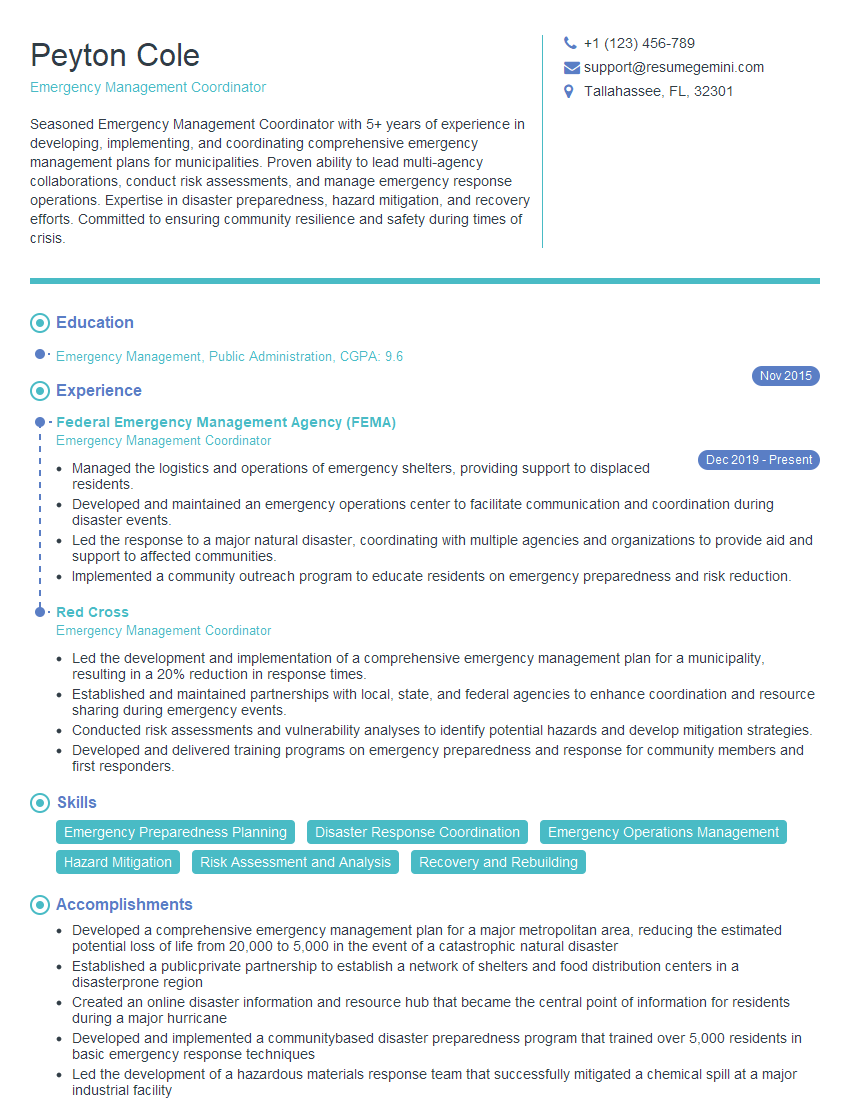
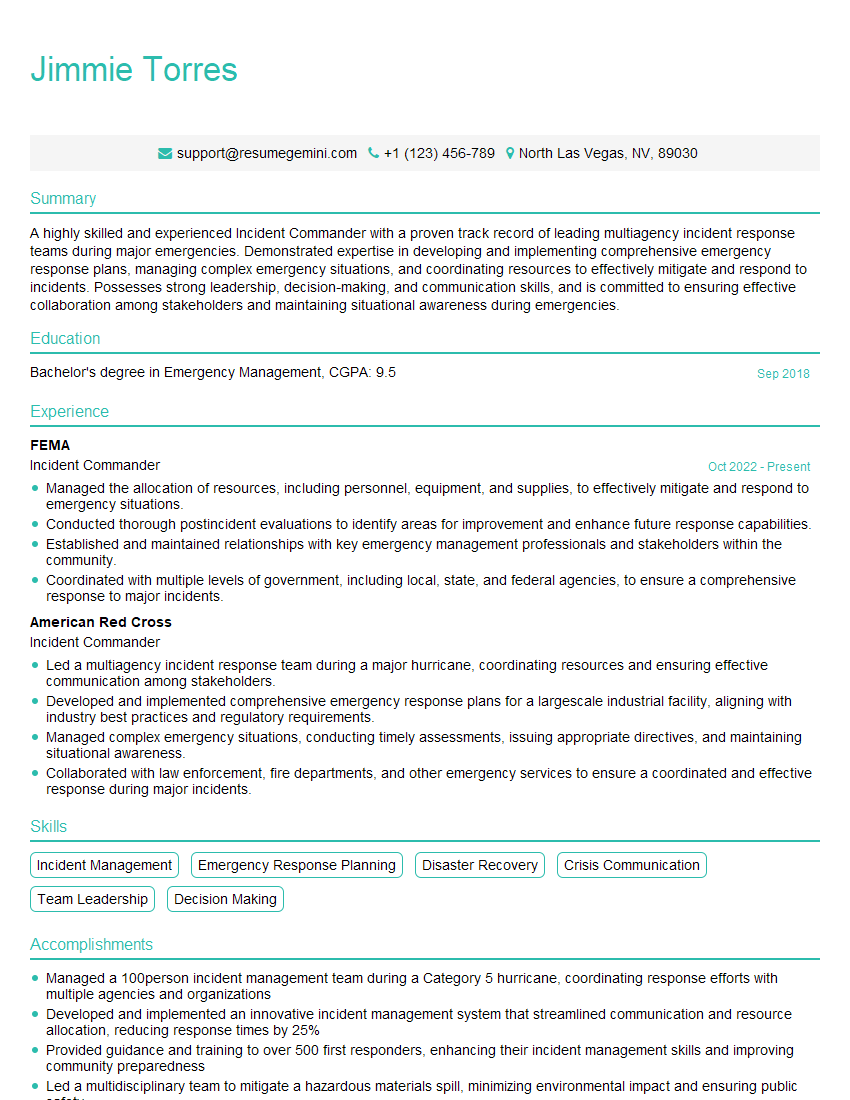
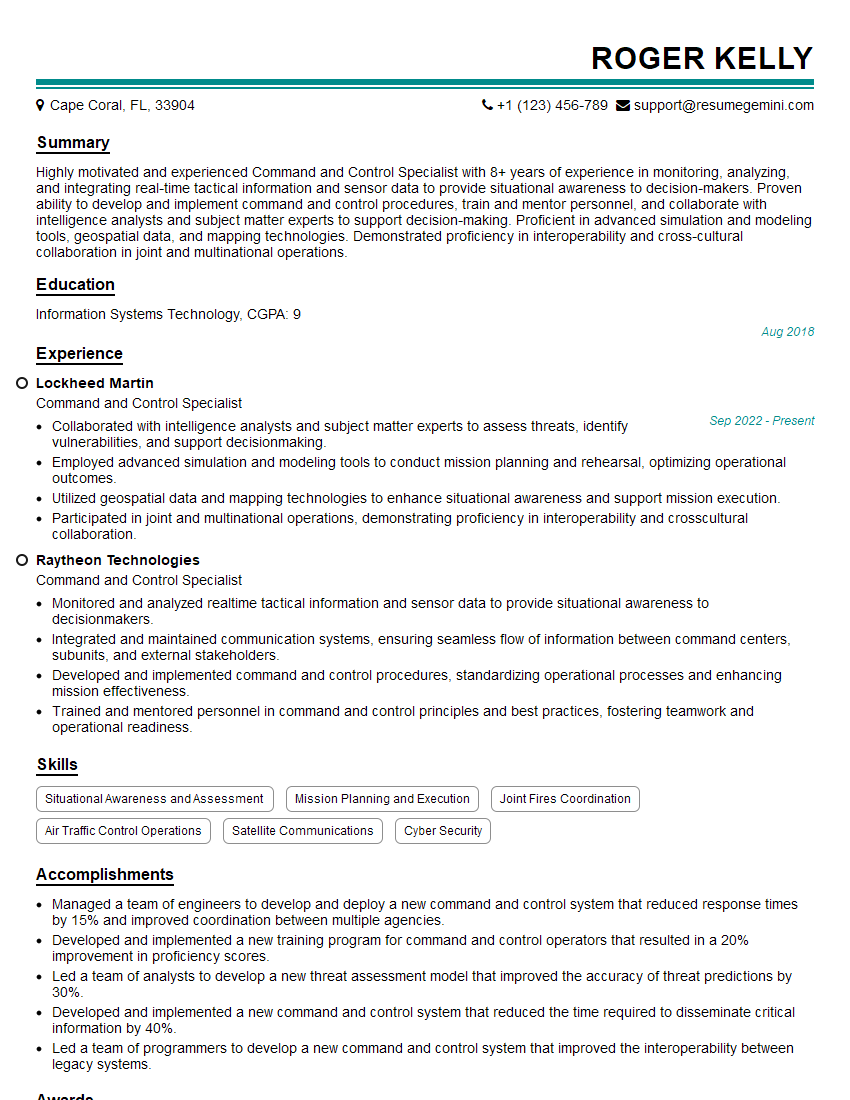
Mastering Command and Control Techniques is crucial for career advancement in today’s rapidly evolving technological landscape. These skills are highly sought after across various sectors, opening doors to challenging and rewarding opportunities. To significantly boost your job prospects, focus on crafting a compelling and ATS-friendly resume that highlights your expertise. ResumeGemini is a trusted resource to help you build a professional and impactful resume that showcases your unique skills and experience. Examples of resumes tailored to Command and Control Techniques are available within ResumeGemini to provide you with valuable guidance and inspiration.
Explore more articles
Users Rating of Our Blogs
Share Your Experience
We value your feedback! Please rate our content and share your thoughts (optional).
What Readers Say About Our Blog
Hello,
we currently offer a complimentary backlink and URL indexing test for search engine optimization professionals.
You can get complimentary indexing credits to test how link discovery works in practice.
No credit card is required and there is no recurring fee.
You can find details here:
https://wikipedia-backlinks.com/indexing/
Regards
NICE RESPONSE TO Q & A
hi
The aim of this message is regarding an unclaimed deposit of a deceased nationale that bears the same name as you. You are not relate to him as there are millions of people answering the names across around the world. But i will use my position to influence the release of the deposit to you for our mutual benefit.
Respond for full details and how to claim the deposit. This is 100% risk free. Send hello to my email id: [email protected]
Luka Chachibaialuka
Hey interviewgemini.com, just wanted to follow up on my last email.
We just launched Call the Monster, an parenting app that lets you summon friendly ‘monsters’ kids actually listen to.
We’re also running a giveaway for everyone who downloads the app. Since it’s brand new, there aren’t many users yet, which means you’ve got a much better chance of winning some great prizes.
You can check it out here: https://bit.ly/callamonsterapp
Or follow us on Instagram: https://www.instagram.com/callamonsterapp
Thanks,
Ryan
CEO – Call the Monster App
Hey interviewgemini.com, I saw your website and love your approach.
I just want this to look like spam email, but want to share something important to you. We just launched Call the Monster, a parenting app that lets you summon friendly ‘monsters’ kids actually listen to.
Parents are loving it for calming chaos before bedtime. Thought you might want to try it: https://bit.ly/callamonsterapp or just follow our fun monster lore on Instagram: https://www.instagram.com/callamonsterapp
Thanks,
Ryan
CEO – Call A Monster APP
To the interviewgemini.com Owner.
Dear interviewgemini.com Webmaster!
Hi interviewgemini.com Webmaster!
Dear interviewgemini.com Webmaster!
excellent
Hello,
We found issues with your domain’s email setup that may be sending your messages to spam or blocking them completely. InboxShield Mini shows you how to fix it in minutes — no tech skills required.
Scan your domain now for details: https://inboxshield-mini.com/
— Adam @ InboxShield Mini
Reply STOP to unsubscribe
Hi, are you owner of interviewgemini.com? What if I told you I could help you find extra time in your schedule, reconnect with leads you didn’t even realize you missed, and bring in more “I want to work with you” conversations, without increasing your ad spend or hiring a full-time employee?
All with a flexible, budget-friendly service that could easily pay for itself. Sounds good?
Would it be nice to jump on a quick 10-minute call so I can show you exactly how we make this work?
Best,
Hapei
Marketing Director
Hey, I know you’re the owner of interviewgemini.com. I’ll be quick.
Fundraising for your business is tough and time-consuming. We make it easier by guaranteeing two private investor meetings each month, for six months. No demos, no pitch events – just direct introductions to active investors matched to your startup.
If youR17;re raising, this could help you build real momentum. Want me to send more info?
Hi, I represent an SEO company that specialises in getting you AI citations and higher rankings on Google. I’d like to offer you a 100% free SEO audit for your website. Would you be interested?
Hi, I represent an SEO company that specialises in getting you AI citations and higher rankings on Google. I’d like to offer you a 100% free SEO audit for your website. Would you be interested?
good