Are you ready to stand out in your next interview? Understanding and preparing for Compliance Auditing and Inspection interview questions is a game-changer. In this blog, we’ve compiled key questions and expert advice to help you showcase your skills with confidence and precision. Let’s get started on your journey to acing the interview.
Questions Asked in Compliance Auditing and Inspection Interview
Q 1. Explain the difference between compliance auditing and inspection.
While both compliance auditing and inspection aim to verify adherence to regulations and standards, they differ significantly in scope and depth. Think of an inspection as a quick check-up, focusing on specific areas or immediate concerns, while an audit is a more comprehensive health examination covering the entire system.
- Inspection: Typically narrower in scope, focusing on a specific area, process, or regulation. It might involve a visual check or a limited review of documentation to ensure immediate compliance. For example, an inspector might check the safety equipment in a factory or the proper labeling of hazardous materials.
- Audit: A systematic and independent examination of a system to determine whether it conforms to established criteria and objectives. Audits are broader, often covering multiple areas and involve detailed reviews of processes, documentation, and controls. An audit might encompass reviewing all safety procedures across a facility, including training records, maintenance logs, and emergency response plans.
In essence, an inspection is often a component of a broader compliance audit, acting as a quick check before or after a more in-depth evaluation.
Q 2. Describe your experience with ISO 9001, ISO 14001, or other relevant standards.
I have extensive experience with ISO 9001 (Quality Management Systems) and ISO 14001 (Environmental Management Systems). In my previous role at Acme Corporation, I led internal audits for both standards, ensuring compliance across our manufacturing facilities. For ISO 9001, this included verifying the effectiveness of our quality control processes, from raw material inspection to finished product testing and customer feedback mechanisms. I developed and delivered training programs for employees on these standards, addressing specific gaps identified during audits. For ISO 14001, I focused on environmental aspects and impacts, reviewing waste management practices, energy consumption, and compliance with relevant environmental regulations. I collaborated with various departments – including production, engineering, and procurement – to implement corrective and preventive actions to address nonconformities and enhance our environmental performance. This required a deep understanding of both the standards themselves and their practical application within a manufacturing setting. I also have experience with other relevant standards like OHSAS 18001 (now ISO 45001) for occupational health and safety.
Q 3. How do you identify and assess compliance risks?
Identifying and assessing compliance risks is a proactive process involving multiple steps. Think of it like a detective investigation, building a case to prevent potential future problems.
- Risk Identification: This involves reviewing relevant legislation, regulations, industry best practices, and internal policies. We also use tools like risk assessments, stakeholder interviews, and process mapping to identify potential areas of vulnerability.
- Risk Analysis: This involves evaluating the likelihood and impact of each identified risk. We consider factors like the severity of potential non-compliance, the probability of occurrence, and the potential financial, legal, or reputational consequences.
- Risk Prioritization: This involves ranking risks based on their likelihood and potential impact. We prioritize those risks posing the greatest threat to compliance and focus our resources accordingly. We might use a risk matrix to visualize and prioritize our findings.
For example, in a financial institution, a significant compliance risk might be inadequate anti-money laundering (AML) procedures. By analyzing the likelihood of a regulatory breach and the potential fines or reputational damage, we can prioritize this risk and recommend corrective actions.
Q 4. What are the key steps involved in a typical compliance audit?
A typical compliance audit involves a systematic approach structured in several key steps:
- Planning: Defining the scope, objectives, and methodology of the audit. This involves identifying the areas to be audited, the relevant regulations and standards, and the audit team.
- Documentation Review: Reviewing relevant policies, procedures, records, and other documentation to assess compliance.
- On-site Observation: Observing processes and activities to assess compliance with established criteria.
- Interviews: Interviewing personnel to gather information and assess their understanding of compliance requirements.
- Testing: Performing tests to verify the effectiveness of controls and processes.
- Reporting: Documenting the audit findings, including observations, evidence, and conclusions.
- Follow-up: Monitoring the implementation of corrective actions and verifying their effectiveness.
Each step is crucial in ensuring a thorough and objective assessment of compliance.
Q 5. How do you document your audit findings?
Audit findings are meticulously documented to ensure clarity, accuracy, and traceability. We use a standardized reporting template that includes:
- Audit Scope and Objectives: Clearly defining the areas covered by the audit and its goals.
- Findings: Detailed descriptions of observations, including supporting evidence such as photographs, interview transcripts, and test results.
- Evidence: References to specific documents or observations supporting each finding.
- Root Causes: Identification of underlying causes contributing to non-compliance.
- Severity Rating: Assessment of the severity of each finding, typically using a standardized scale.
- Recommendations: Proposed corrective and preventive actions to address identified non-conformities.
This structured approach ensures that the audit findings are clear, objective, and easy to understand, facilitating the development of effective corrective actions.
Q 6. How do you communicate audit findings to management?
Communicating audit findings to management requires a clear, concise, and objective approach. We typically present our findings in a formal report, supplemented by a verbal presentation. The report is tailored to the management’s level of understanding and includes:
- Executive Summary: A high-level overview of the key findings and recommendations.
- Detailed Findings: A more in-depth analysis of each finding, including root causes and recommendations.
- Action Plan: A clear plan for implementing corrective and preventive actions, including timelines and responsibilities.
- Visual Aids: Charts and graphs to visually represent key findings and trends.
The verbal presentation allows for a Q&A session, clarifying any uncertainties and ensuring that management fully understands the implications of the findings.
Q 7. Describe a time you identified a significant compliance issue. What actions did you take?
During an audit of a data center’s security protocols, I discovered a significant vulnerability. A critical server was accessible via a default password that had never been changed. This posed a serious risk of data breaches and unauthorized access. My immediate actions included:
- Immediate Mitigation: I immediately reported the vulnerability to the IT manager and recommended disabling access to the server until the password was changed. This was a priority to prevent immediate risks.
- Documentation: I meticulously documented the vulnerability, including screenshots and logs, providing irrefutable evidence.
- Root Cause Analysis: I investigated the root cause of the issue. It turned out that the server had been set up by a contractor who had not followed established security protocols.
- Corrective Actions: I collaborated with IT to implement corrective actions, including a mandatory password reset policy, strengthened security protocols, and employee training on secure server configurations.
- Follow-up: I followed up on the implementation of the corrective actions to ensure they were effective in eliminating the vulnerability.
This experience highlighted the importance of comprehensive security audits and the need for robust processes to prevent similar vulnerabilities in the future. This case also emphasized the significance of effective communication and collaboration to address critical security issues.
Q 8. What is your experience with internal control frameworks (e.g., COSO)?
My experience with internal control frameworks, particularly the Committee of Sponsoring Organizations of the Treadway Commission (COSO) framework, is extensive. COSO provides a widely accepted model for evaluating and improving an organization’s internal controls. I’ve used it throughout my career to assess the effectiveness of controls across various organizations and industries. This involves understanding and applying its five components: Control Environment, Risk Assessment, Control Activities, Information and Communication, and Monitoring Activities.
For example, in a recent audit of a financial institution, I used the COSO framework to assess their controls over financial reporting. This involved reviewing their policies and procedures, interviewing key personnel, and testing the design and operating effectiveness of their controls. I identified weaknesses in their segregation of duties and recommended improvements to mitigate the associated risks. I’m proficient in using COSO to not only identify weaknesses but also to help organizations develop remediation plans and enhance their overall control environment. I’m also familiar with the updates and changes to the framework over the years.
Q 9. How do you handle conflicts of interest during an audit?
Handling conflicts of interest is paramount to maintaining the integrity of an audit. My approach is proactive and transparent. Before undertaking any audit, I disclose any potential conflicts of interest, even perceived ones, to my supervisor and the client. This includes any prior relationships with the company, its employees, or any related entities. If a conflict arises during the audit, I immediately report it to the appropriate parties and recuse myself from any aspects of the audit affected by the conflict to ensure impartiality.
For instance, if I had previously worked for a company I was now auditing, I would disclose this upfront. If a conflict arises unexpectedly, such as discovering a close personal relationship with a key employee, I would document the conflict, immediately inform my supervisor and the audit committee, and then arrange for another auditor to take over that specific area of the audit. Objectivity and independence are non-negotiable principles.
Q 10. What is your experience with data analytics in compliance auditing?
Data analytics plays a crucial role in modern compliance auditing. My experience encompasses using various data analytics tools and techniques to enhance the efficiency and effectiveness of audits. This includes using data to identify anomalies, trends, and patterns that might indicate compliance violations or internal control weaknesses.
For example, I recently utilized data analytics to analyze a large dataset of transactions to identify potential instances of fraud. By applying statistical analysis and machine learning algorithms, I was able to pinpoint specific transactions that warranted further investigation. This approach was far more efficient than traditional manual review methods, allowing us to identify potentially significant issues quickly and accurately. I’m proficient in several data analytics tools and comfortable working with large and complex datasets.
Q 11. Describe your experience with regulatory reporting and compliance.
I have significant experience with regulatory reporting and compliance across numerous industries. This includes assisting organizations in understanding and complying with relevant regulations, preparing regulatory reports, and conducting compliance assessments. I am familiar with various regulations such as Sarbanes-Oxley (SOX), HIPAA, GDPR, and industry-specific regulations.
For example, I helped a healthcare provider comply with HIPAA regulations by reviewing their data security policies and procedures, conducting risk assessments, and developing remediation plans to address any identified vulnerabilities. My role involved not only ensuring compliance but also helping the organization develop a robust compliance program that integrated regulatory requirements into their daily operations. This often involves working closely with legal teams and internal compliance officers.
Q 12. How do you ensure the objectivity and independence of your audits?
Maintaining objectivity and independence is fundamental to the success of any audit. I achieve this through several key mechanisms. Firstly, I follow strict ethical guidelines and adhere to professional auditing standards. Secondly, I ensure that my audit plans and procedures are free from bias and are designed to thoroughly assess the client’s controls and compliance posture. Thirdly, I maintain open communication with my audit team, supervisor, and client, and ensure any concerns are raised and addressed promptly. Lastly, I am often part of a larger audit team, providing a system of checks and balances to maintain our collective objectivity.
For instance, if I were auditing a company in which I held investments, I would immediately recuse myself from the audit to avoid any appearance of a conflict of interest. The principle is clear: unwavering independence guarantees that the audit results are credible and reliable.
Q 13. What is your familiarity with different audit methodologies?
My familiarity with different audit methodologies is broad. I am experienced in various approaches, including risk-based auditing, compliance auditing, financial auditing, operational auditing, and IT auditing. I understand the strengths and weaknesses of each methodology and can tailor my approach based on the specific audit objectives, the client’s risk profile, and the available resources.
Risk-based auditing, for instance, focuses on identifying and assessing the most significant risks facing the organization. This allows for a more efficient allocation of audit resources, focusing on areas with the highest potential impact. Conversely, a compliance audit focuses on determining adherence to specific regulations and legal requirements. Selecting the correct methodology is crucial for a successful and effective audit.
Q 14. How do you stay current with changes in compliance regulations?
Staying current with changes in compliance regulations requires ongoing effort. I utilize several methods to ensure I remain up-to-date. This includes subscribing to professional journals and newsletters, attending industry conferences and webinars, participating in professional development courses, and actively networking with colleagues and regulatory experts. Additionally, I monitor regulatory agency websites and announcements for updates and changes to relevant regulations.
Thinking about something like GDPR, for example, required continuous monitoring for changes and updates, not just at its initial release. The ever-evolving regulatory landscape demands a proactive and diligent approach to maintain knowledge and expertise.
Q 15. How do you prioritize audit areas based on risk?
Prioritizing audit areas based on risk is crucial for efficient and effective compliance auditing. It’s like deciding which areas of a house to inspect first – you’d check the electrical wiring before the paint color. We use a risk-based approach, typically involving a combination of inherent risk assessment and control risk assessment.
- Inherent Risk: This assesses the likelihood and potential impact of a compliance failure before considering any existing controls. For example, handling sensitive customer data has a higher inherent risk than managing office supplies.
- Control Risk: This evaluates the effectiveness of existing controls designed to mitigate the inherent risk. If controls are weak or absent, control risk is high. For example, weak access controls for sensitive data increase control risk.
We often use a risk matrix, plotting likelihood against impact. Areas with high likelihood and high impact are prioritized. This prioritization ensures that the audit resources are focused on the areas posing the greatest threat to compliance. We might use a scoring system or a heatmap to visually represent this risk profile. This allows for a clear and transparent justification for the audit plan.
Career Expert Tips:
- Ace those interviews! Prepare effectively by reviewing the Top 50 Most Common Interview Questions on ResumeGemini.
- Navigate your job search with confidence! Explore a wide range of Career Tips on ResumeGemini. Learn about common challenges and recommendations to overcome them.
- Craft the perfect resume! Master the Art of Resume Writing with ResumeGemini’s guide. Showcase your unique qualifications and achievements effectively.
- Don’t miss out on holiday savings! Build your dream resume with ResumeGemini’s ATS optimized templates.
Q 16. What is your experience with remediation and follow-up activities after an audit?
Remediation and follow-up are critical post-audit activities; they ensure that identified issues are addressed and prevent recurrence. Think of it as a doctor diagnosing an illness and prescribing treatment – the follow-up ensures the treatment is effective.
My experience involves:
- Developing a remediation plan: This involves collaborating with the auditee to define corrective actions, timelines, and responsibilities. It’s crucial to create a clear, achievable plan. We utilize project management techniques to keep track of progress.
- Monitoring remediation progress: Regular follow-up ensures timely completion of corrective actions. This might involve reviewing documentation, conducting interviews, or re-testing controls. We use tracking systems and dashboards to ensure transparency.
- Evaluating the effectiveness of remediation: Once remediation is complete, we verify whether the identified issues are resolved. This often involves a follow-up audit to ensure that the implemented changes have been effective. This step is important to make sure there aren’t any unintended consequences.
- Documenting the entire process: A comprehensive audit trail documents the findings, remediation plans, progress, and final outcomes. This provides transparency and accountability.
In one instance, we identified a weakness in a client’s access control system. We collaborated with their IT team to implement multi-factor authentication and provided training to staff. Through consistent follow-up, we ensured the remediation was fully implemented and effective.
Q 17. Describe your experience with audit sampling techniques.
Audit sampling is a technique used to select a representative subset of the population to test, rather than examining every single item. This is because auditing the entire population is often impractical and time-consuming.
I have extensive experience with various sampling techniques, including:
- Random sampling: Every item has an equal chance of being selected, ensuring unbiased results. This is like drawing names from a hat.
- Stratified sampling: The population is divided into sub-groups (strata) and samples are randomly selected from each stratum. This is useful when there are different categories, for instance, transactions by value or department.
- Systematic sampling: Items are selected at a fixed interval, for example, every 10th transaction. This is a simple but effective method.
- Monetary unit sampling: This is commonly used for financial audits, where the sampling is weighted by the value of items. Larger transactions have a higher probability of selection.
The choice of sampling technique depends on the audit objective, the nature of the population, and the desired level of assurance. Properly applied sampling techniques allow us to draw statistically valid conclusions about the entire population based on the sample results. We always carefully document our sampling methodology to maintain auditability and transparency.
Q 18. How do you handle resistance from auditees?
Handling resistance from auditees requires tact, diplomacy, and a strong understanding of the audit process. It’s about building trust and collaboration, not confrontation.
My approach involves:
- Clear communication: Explaining the audit’s purpose, objectives, and scope upfront is essential. I emphasize that the audit is not a blame game but an opportunity for improvement.
- Professionalism: Maintaining a respectful and professional demeanor is crucial, even in the face of resistance. Active listening and empathy are key.
- Building rapport: Establishing a positive working relationship with auditees fosters cooperation. Understanding their concerns and addressing them appropriately is crucial.
- Escalation: In cases where resistance persists despite these efforts, it’s necessary to escalate the matter to management. This ensures that the audit can proceed effectively and without compromising the integrity of the findings.
In one situation, a department initially resisted providing access to certain documents. By patiently explaining the importance of the data to the audit’s overall goal and demonstrating how the information would help improve their processes, we were able to gain their cooperation. Transparency and demonstrating the benefits to the auditee often dissolve resistance.
Q 19. How do you manage audit scope creep?
Scope creep, the uncontrolled expansion of an audit’s scope, is a common challenge. It’s like starting to renovate a bathroom and ending up remodeling the whole house!
My strategy for managing scope creep includes:
- Clearly defined scope statement: A well-defined scope statement, agreed upon at the beginning of the audit, is crucial. This document acts as a roadmap.
- Regular communication: Frequent communication with stakeholders helps identify any potential scope changes early. This allows us to assess their impact on the timeline and resources.
- Change management process: Any proposed scope changes should follow a formal change management process, requiring justification, impact analysis, and approval from appropriate authorities. This prevents uncontrolled expansion.
- Time management: Effective time management and prioritization ensure the audit stays on track. We use project management techniques to track progress and identify potential delays.
By proactively addressing potential scope changes and adhering to a formal change management process, we can minimize disruptions and ensure that the audit remains focused and effective. It helps to remember that every addition to the scope consumes more time and resources. Maintaining a tight rein on the scope will ensure both efficiency and successful completion of the audit within allocated resources.
Q 20. What is your understanding of Sarbanes-Oxley Act (SOX) compliance?
The Sarbanes-Oxley Act (SOX) of 2002 is a US federal law designed to protect investors by improving the accuracy and reliability of corporate disclosures. It’s a significant piece of legislation affecting publicly traded companies.
My understanding of SOX compliance encompasses:
- Internal controls over financial reporting (ICFR): SOX requires companies to establish and maintain effective ICFR. This involves documenting and testing internal controls to ensure the reliability of financial reporting.
- Section 302: This section requires corporate executives to certify the accuracy of financial reports. This places ultimate responsibility on top management.
- Section 404: This section requires management to assess and report on the effectiveness of ICFR. This involves a rigorous process of documentation, testing, and reporting.
- Auditing standards: SOX compliance necessitates adherence to specific auditing standards, such as PCAOB standards for public companies.
SOX compliance is a complex undertaking requiring a comprehensive understanding of financial reporting, internal controls, and auditing procedures. A SOX audit aims to provide reasonable assurance that a company’s financial reporting is reliable. Non-compliance can lead to significant financial penalties and reputational damage.
Q 21. Describe your experience with conducting root cause analysis of compliance failures.
Root cause analysis (RCA) is crucial for identifying the underlying reasons for compliance failures. It’s about digging deeper than just identifying the symptoms; it’s like diagnosing the root of a disease, not just treating the symptoms.
My experience with RCA involves using various methodologies, including:
- The ‘5 Whys’ technique: This involves repeatedly asking ‘why’ to drill down to the root cause. For example, ‘Why was the deadline missed? Because of a lack of resources. Why was there a lack of resources? Because the budget wasn’t approved on time.’ And so on until the fundamental reason is identified.
- Fishbone diagrams (Ishikawa diagrams): These visual tools help identify potential causes categorized by different factors such as people, processes, equipment, and materials. This helps provide a structured view.
- Fault tree analysis: This method uses a tree-like structure to visually represent the possible causes of an event, helping identify the most likely causes and potential cascading effects.
The choice of technique depends on the complexity of the situation. Regardless of the methodology used, a thorough RCA requires gathering data from various sources, including interviews, document review, and system logs. The goal is to identify corrective actions that address the root cause, preventing future occurrences. Effective RCA prevents repeating past mistakes.
Q 22. What is your experience with using audit software and tools?
My experience with audit software and tools is extensive. I’m proficient in using a range of industry-standard tools, including ACL, IDEA, and TeamMate. These tools are crucial for efficiently analyzing large datasets, identifying anomalies, and automating many aspects of the audit process. For example, using ACL, I’ve successfully identified fraudulent transactions by analyzing patterns in financial data that would have been impossible to detect manually. Furthermore, I’m familiar with data extraction and import tools to streamline the data gathering process. My experience extends to using cloud-based audit management platforms, facilitating collaboration and document management throughout the audit lifecycle. I am adept at configuring and customizing these tools to meet specific audit requirements, enhancing efficiency and accuracy.
Q 23. How do you ensure the confidentiality of audit information?
Confidentiality of audit information is paramount. I adhere strictly to professional codes of conduct and relevant data protection regulations like GDPR and CCPA. This involves securing access to sensitive data using strong passwords, encryption, and access controls. Only authorized personnel are granted access to audit information on a need-to-know basis. All audit documentation is securely stored, both electronically and physically, with appropriate measures to prevent unauthorized access or disclosure. For sensitive data, I implement robust encryption methods both in transit and at rest. Furthermore, I maintain detailed logs of all data access and maintain a strict policy of data destruction after the completion of the audit and retention periods are met, ensuring that all confidential information is handled responsibly.
Q 24. How do you measure the effectiveness of compliance programs?
Measuring the effectiveness of compliance programs requires a multi-faceted approach. I typically use key performance indicators (KPIs) to track progress. These KPIs can include the number of compliance incidents, the time taken to remediate issues, the level of employee awareness through training assessments, and the frequency of internal audits. A key aspect is assessing the design and operational effectiveness of the controls. I use a risk-based approach, focusing on areas posing the highest risks to the organization. For example, if a company handles sensitive customer data, I will heavily scrutinize its data protection policies and procedures. Ultimately, effectiveness is judged not only by the absence of violations but also by the robustness and resilience of the compliance program in preventing future violations. Regular reporting and review mechanisms are essential to track performance against predefined objectives and make necessary adjustments.
Q 25. What is your experience with developing and implementing compliance training programs?
I have significant experience in developing and implementing compliance training programs. My approach is to tailor training to the specific needs and roles of employees, ensuring it’s relevant and engaging. I incorporate various learning methods, including online modules, workshops, and interactive simulations. For instance, I developed a program for a financial institution that included interactive scenarios to teach employees how to identify and report suspicious activity. After program completion, I measure its effectiveness through assessments and track employee performance and compliance rates. Feedback is actively solicited to make improvements and ensure the training remains current and effective. Continuous improvement and updating are essential for these programs to remain relevant in the ever-evolving regulatory landscape.
Q 26. Describe your experience with performing financial statement audits.
My experience in performing financial statement audits is substantial, encompassing audits of various sizes and industries. I’m familiar with auditing all major financial statement components, including revenue recognition, inventory valuation, and debt and equity accounting. I’m proficient in applying generally accepted auditing standards (GAAS) and International Standards on Auditing (ISA). I leverage various audit techniques, including analytical procedures, substantive testing, and internal control testing, to obtain sufficient and appropriate audit evidence. A recent example included an audit of a publicly traded company where I identified a material misstatement in the valuation of their intangible assets. This involved extensive testing and collaboration with the client’s management to arrive at a fair valuation and adjust the financial statements accordingly.
Q 27. How do you deal with audit findings that challenge established practices?
When audit findings challenge established practices, my approach is professional, objective, and collaborative. I present my findings clearly and factually, providing detailed evidence and supporting documentation. I avoid accusatory language and focus on the risks associated with the identified practices. I facilitate open dialogue with management to discuss potential solutions and the impact on compliance. My goal is to reach a mutually agreeable solution that addresses the risks while maintaining a positive working relationship. In some cases, this may require suggesting revised processes or enhanced controls. However, if risks remain unmitigated after reasonable discussion, I’ll clearly document my concerns and escalate them as appropriate within the reporting structure, ensuring that the risks are properly addressed and disclosed.
Q 28. What is your experience with environmental, social, and governance (ESG) reporting and compliance?
My experience with Environmental, Social, and Governance (ESG) reporting and compliance is growing rapidly, reflecting the increasing importance of these factors for businesses. I understand the various ESG reporting frameworks, including the Global Reporting Initiative (GRI) standards and the Sustainability Accounting Standards Board (SASB) standards. I assist organizations in assessing their ESG risks and opportunities, developing ESG reporting strategies, and ensuring their compliance with relevant regulations and voluntary guidelines. My work involves reviewing ESG data, assessing the completeness and accuracy of disclosures, and identifying areas needing improvement. This often involves working with different departments within an organization to gather the necessary information and ensure alignment with ESG reporting requirements. Understanding stakeholder expectations and materiality is crucial in this area, and I focus on identifying and addressing issues that are most relevant to each specific organization.
Key Topics to Learn for Compliance Auditing and Inspection Interview
- Regulatory Frameworks: Understanding relevant laws, regulations, and industry standards (e.g., SOX, HIPAA, GDPR). Practical application: Analyzing company policies and procedures against regulatory requirements.
- Internal Controls: Assessing the effectiveness of internal controls designed to mitigate risks and ensure compliance. Practical application: Developing and executing test plans to evaluate the design and operating effectiveness of controls.
- Risk Assessment and Management: Identifying, analyzing, and evaluating compliance risks. Practical application: Prioritizing risks based on likelihood and impact, and recommending mitigation strategies.
- Auditing Techniques: Mastering various audit methodologies, including sampling techniques, data analysis, and documentation procedures. Practical application: Performing walkthroughs, conducting interviews, and reviewing supporting documentation.
- Reporting and Communication: Effectively communicating audit findings and recommendations to management. Practical application: Preparing clear, concise, and well-supported audit reports.
- Data Analytics for Compliance: Utilizing data analysis tools and techniques to identify compliance trends and anomalies. Practical application: Analyzing large datasets to detect potential compliance violations.
- Fraud Detection and Prevention: Understanding fraud schemes and implementing controls to prevent and detect fraudulent activities. Practical application: Developing and implementing fraud risk assessments and investigations.
- Ethical Considerations and Professional Standards: Adhering to professional codes of conduct and ethical principles. Practical application: Maintaining objectivity and independence throughout the audit process.
Next Steps
Mastering Compliance Auditing and Inspection opens doors to exciting career opportunities with significant growth potential. In today’s competitive job market, a strong resume is crucial. Creating an ATS-friendly resume optimized for applicant tracking systems significantly increases your chances of landing an interview. We highly recommend leveraging ResumeGemini, a trusted resource for building professional, impactful resumes. ResumeGemini offers examples of resumes specifically tailored to Compliance Auditing and Inspection, providing you with a valuable head-start in your job search. Invest in your future; craft a resume that showcases your skills and experience effectively.
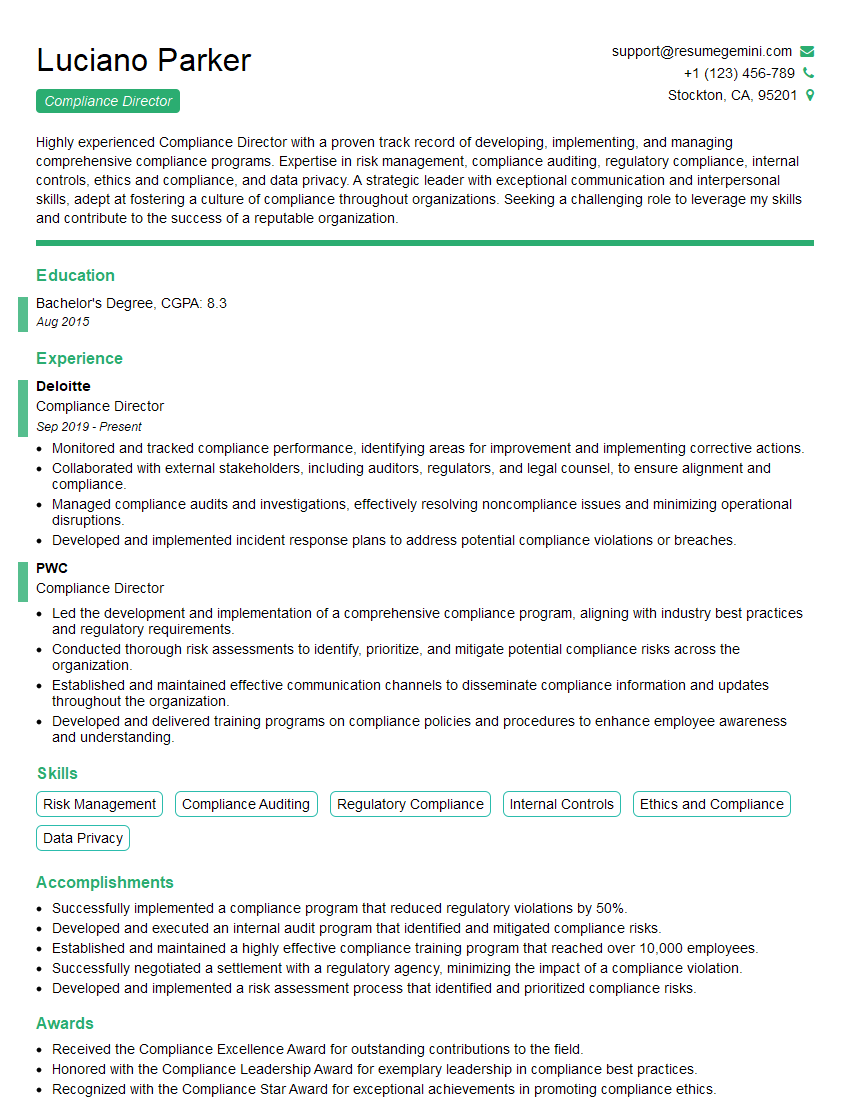
Compliance Director Resume Sample
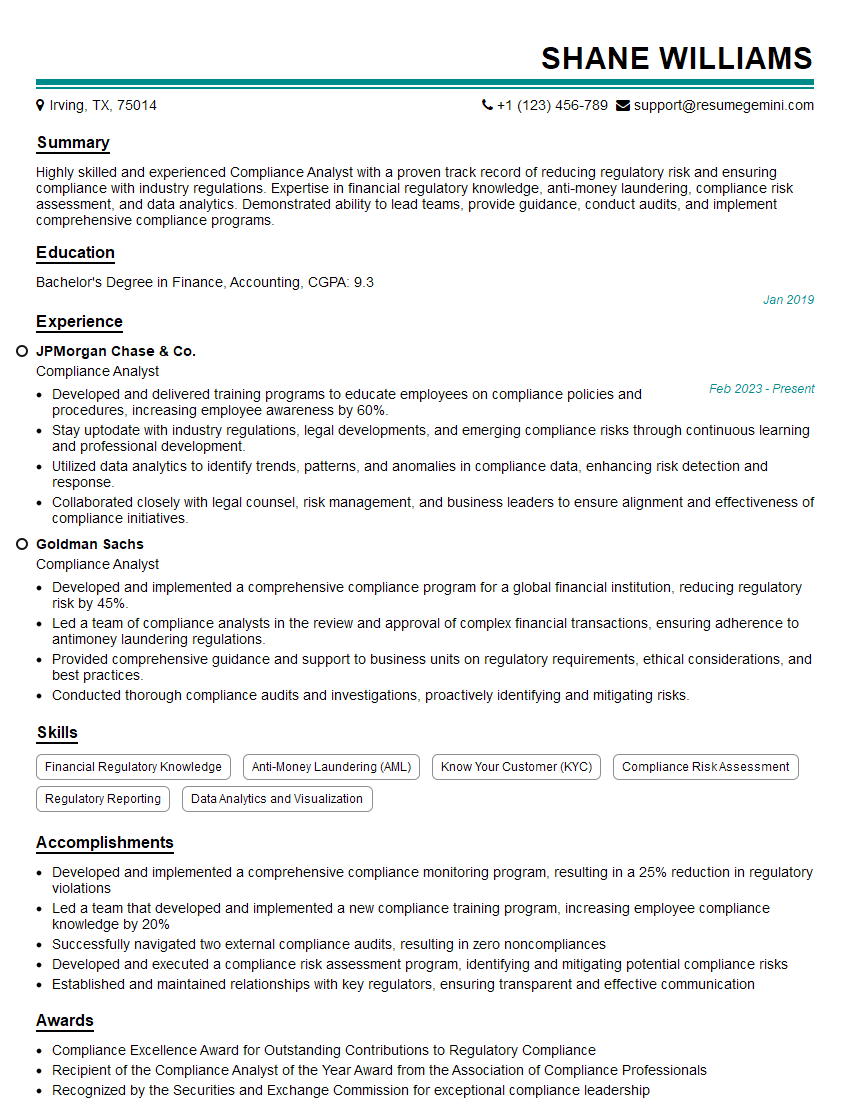
Compliance Analyst Resume Sample
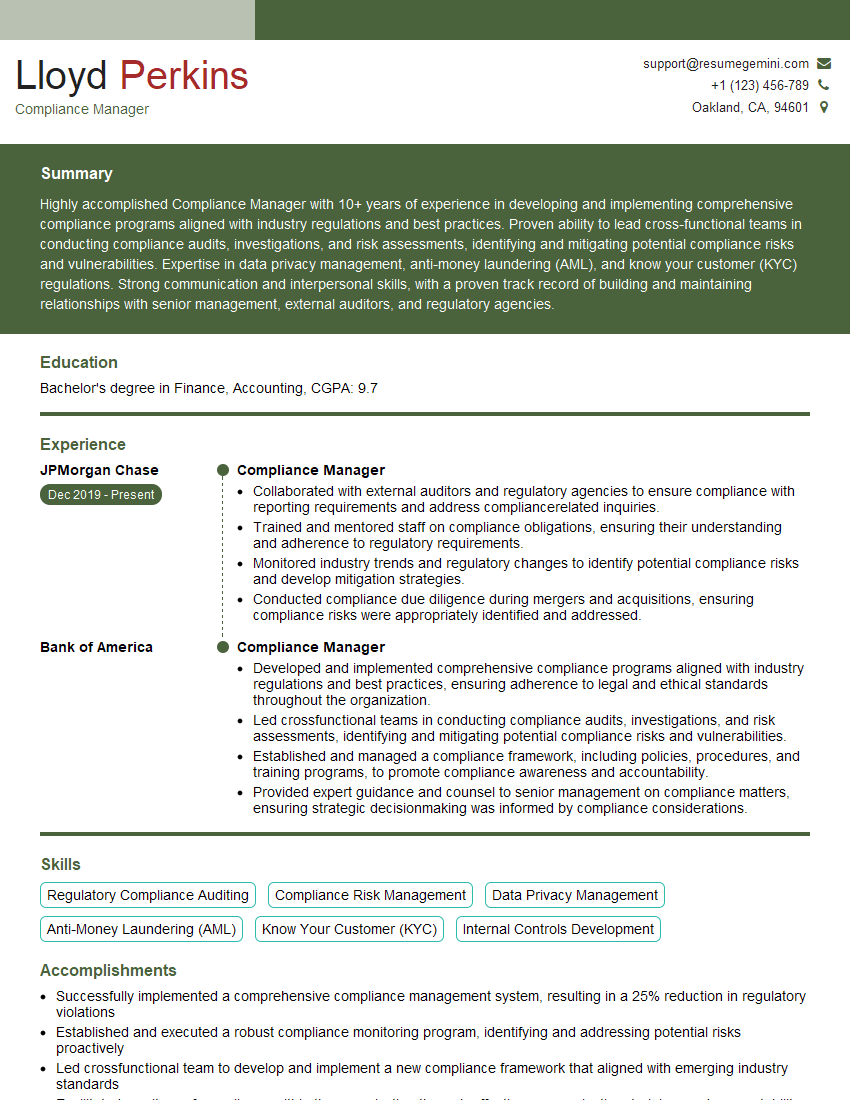
Compliance Manager Resume Sample
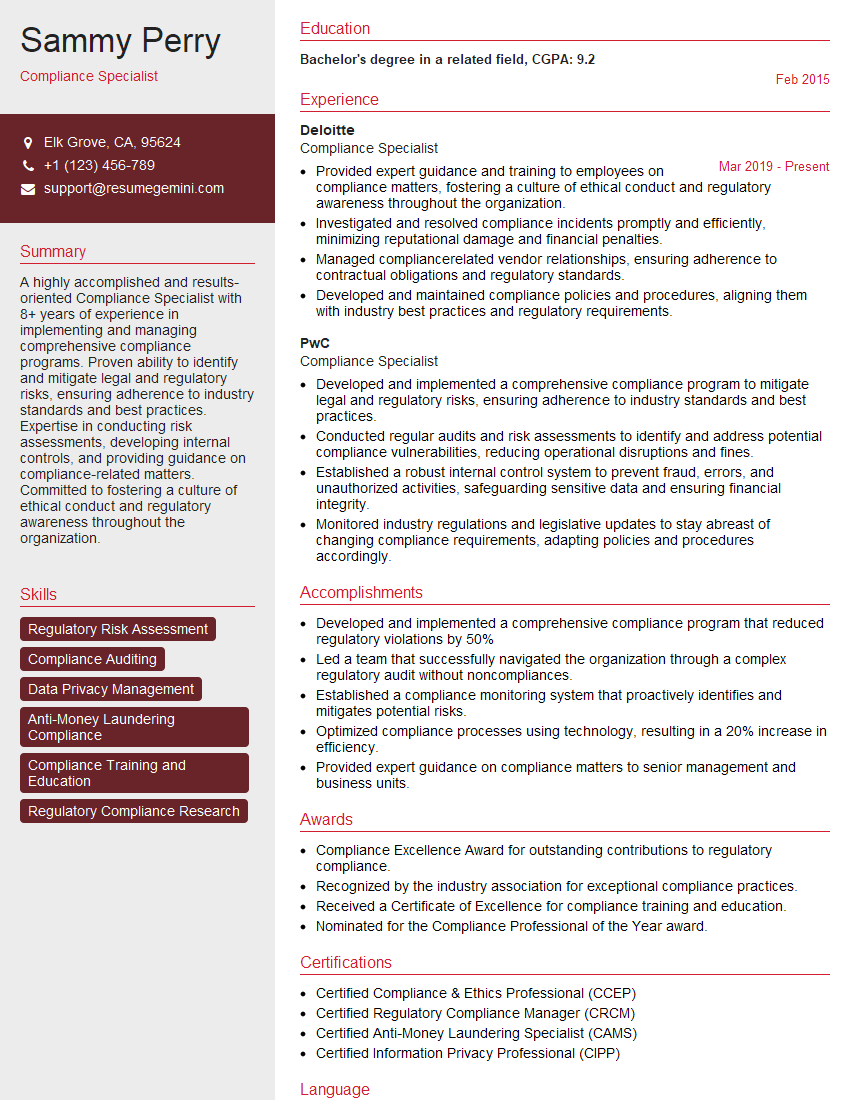
Compliance Specialist Resume Sample
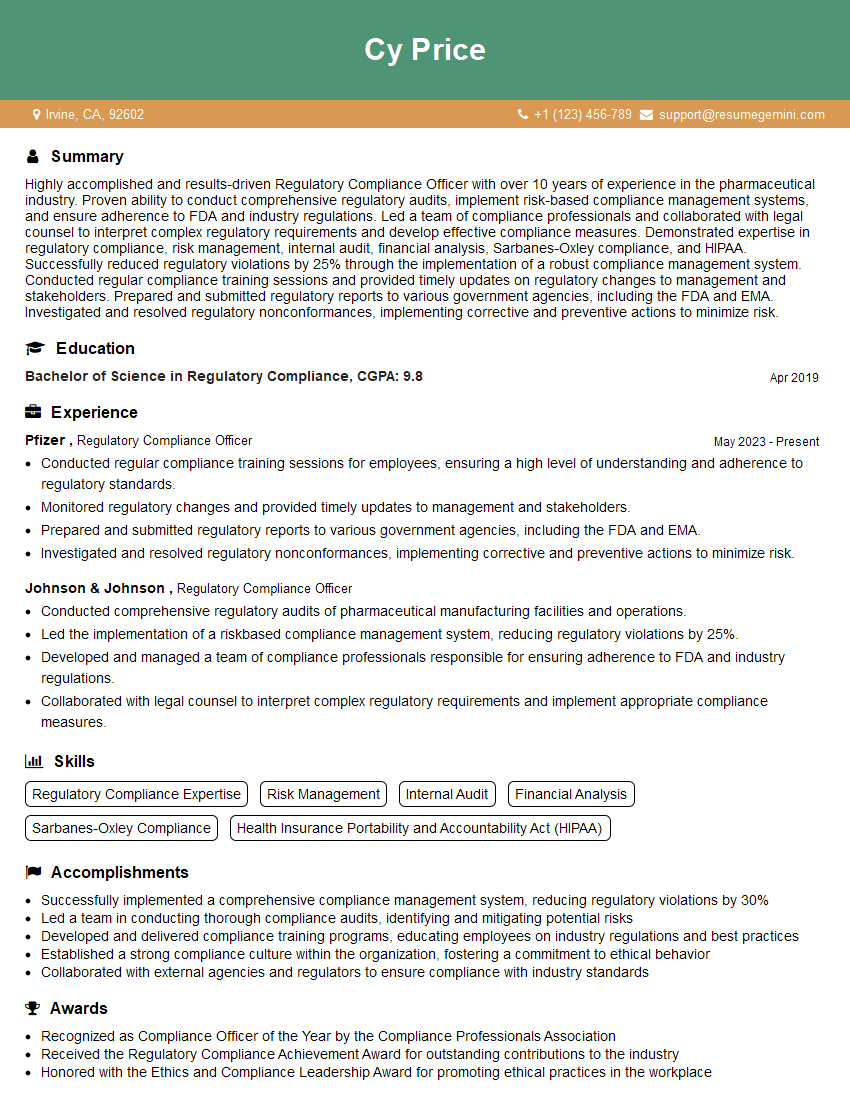
Regulatory Compliance Officer Resume Sample
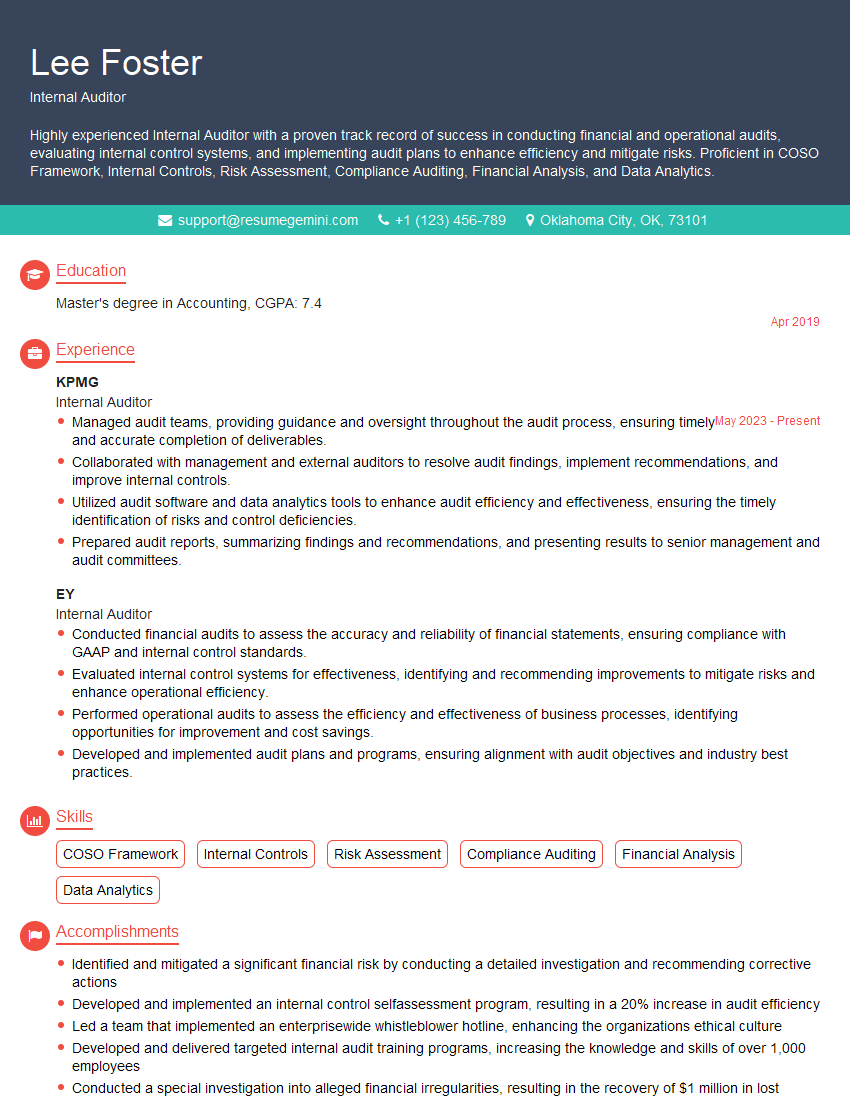
Internal Auditor Resume Sample
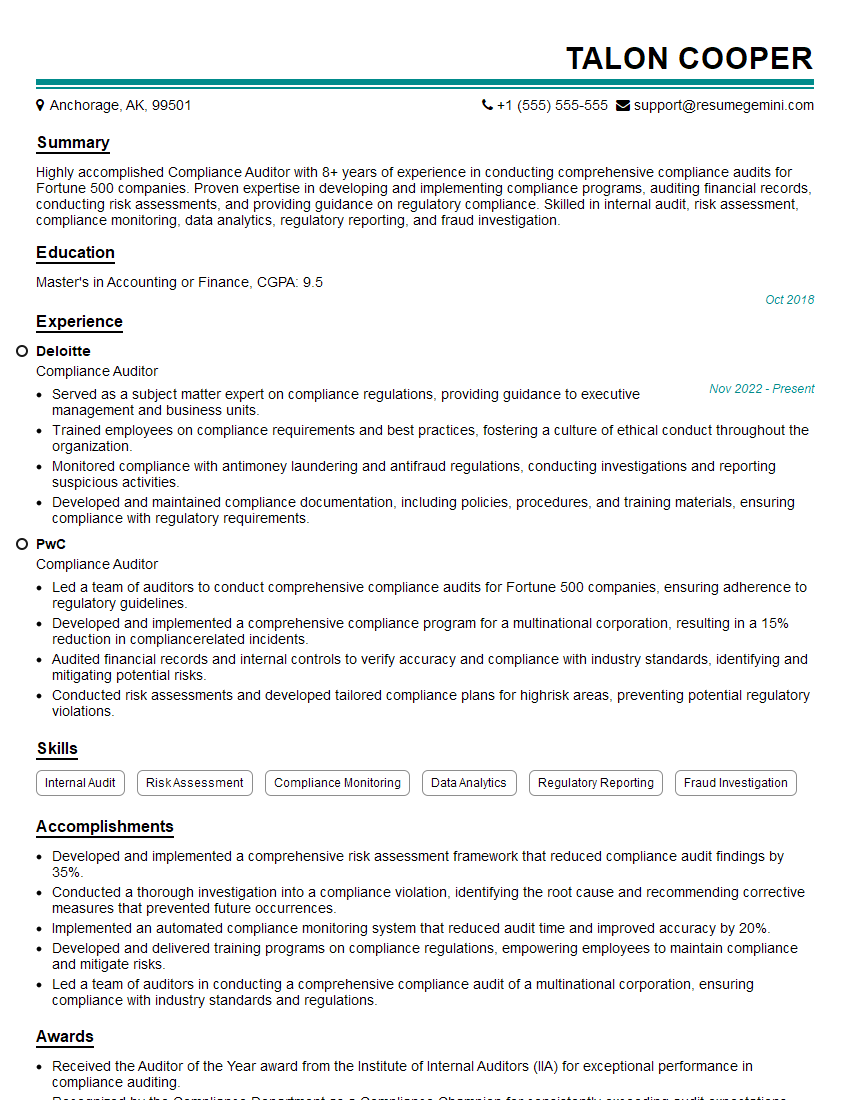
Compliance Auditor Resume Sample
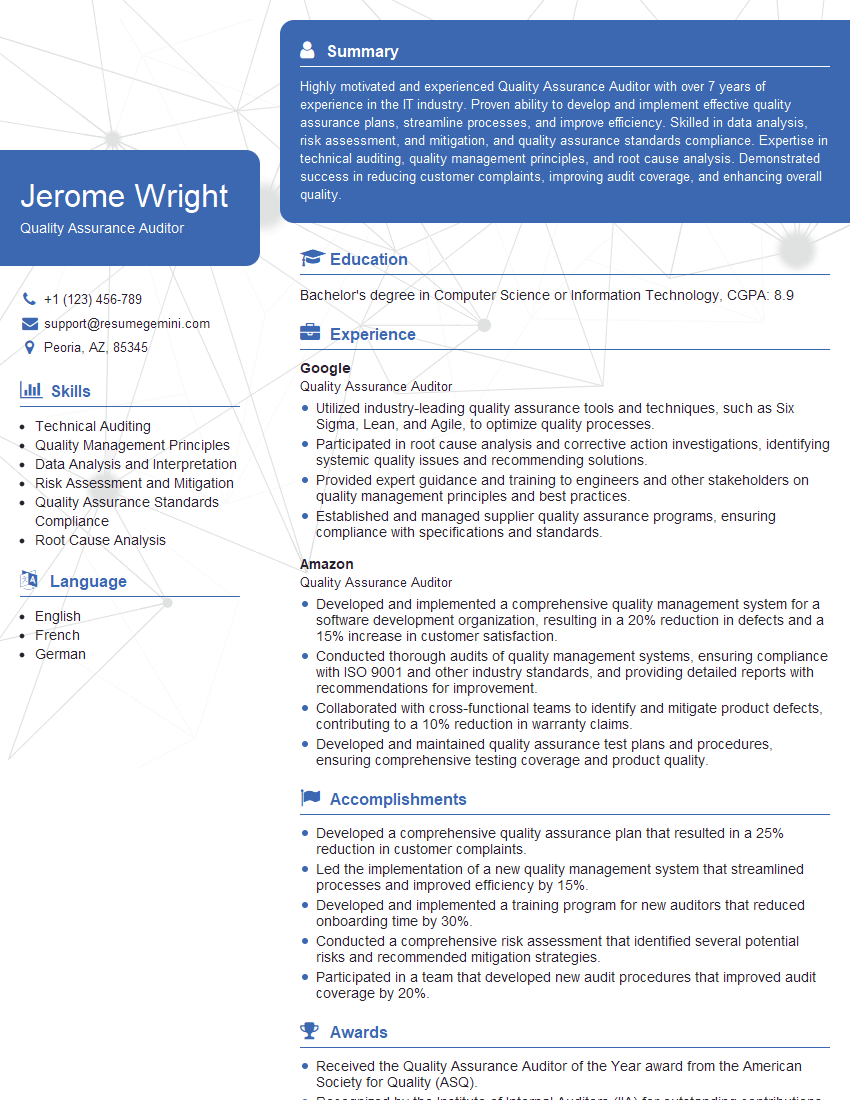
Quality Assurance Auditor Resume Sample
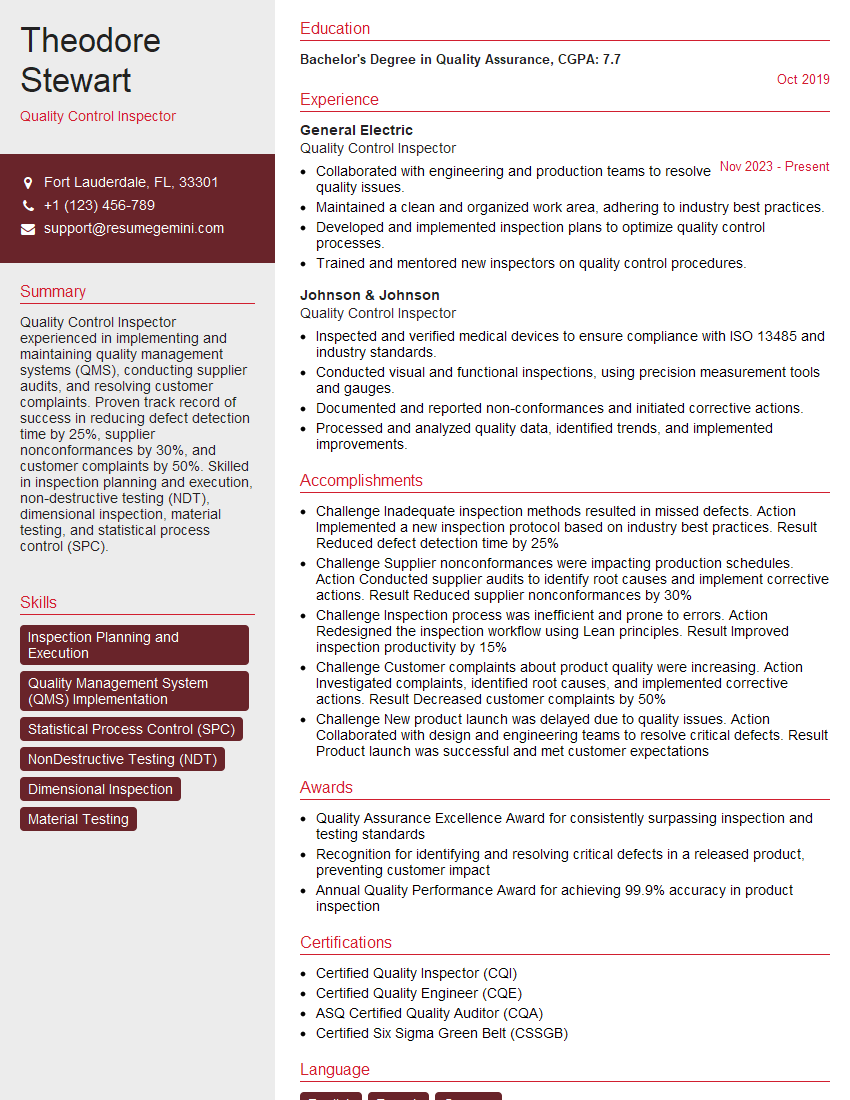
Quality Control Inspector Resume Sample
Explore more articles
Users Rating of Our Blogs
Share Your Experience
We value your feedback! Please rate our content and share your thoughts (optional).
What Readers Say About Our Blog
Attention music lovers!
Wow, All the best Sax Summer music !!!
Spotify: https://open.spotify.com/artist/6ShcdIT7rPVVaFEpgZQbUk
Apple Music: https://music.apple.com/fr/artist/jimmy-sax-black/1530501936
YouTube: https://music.youtube.com/browse/VLOLAK5uy_noClmC7abM6YpZsnySxRqt3LoalPf88No
Other Platforms and Free Downloads : https://fanlink.tv/jimmysaxblack
on google : https://www.google.com/search?q=22+AND+22+AND+22
on ChatGPT : https://chat.openai.com?q=who20jlJimmy20Black20Sax20Producer
Get back into the groove with Jimmy sax Black
Best regards,
Jimmy sax Black
www.jimmysaxblack.com
Hi I am a troller at The aquatic interview center and I suddenly went so fast in Roblox and it was gone when I reset.
Hi,
Business owners spend hours every week worrying about their website—or avoiding it because it feels overwhelming.
We’d like to take that off your plate:
$69/month. Everything handled.
Our team will:
Design a custom website—or completely overhaul your current one
Take care of hosting as an option
Handle edits and improvements—up to 60 minutes of work included every month
No setup fees, no annual commitments. Just a site that makes a strong first impression.
Find out if it’s right for you:
https://websolutionsgenius.com/awardwinningwebsites
Hello,
we currently offer a complimentary backlink and URL indexing test for search engine optimization professionals.
You can get complimentary indexing credits to test how link discovery works in practice.
No credit card is required and there is no recurring fee.
You can find details here:
https://wikipedia-backlinks.com/indexing/
Regards
NICE RESPONSE TO Q & A
hi
The aim of this message is regarding an unclaimed deposit of a deceased nationale that bears the same name as you. You are not relate to him as there are millions of people answering the names across around the world. But i will use my position to influence the release of the deposit to you for our mutual benefit.
Respond for full details and how to claim the deposit. This is 100% risk free. Send hello to my email id: lukachachibaialuka@gmail.com
Luka Chachibaialuka
Hey interviewgemini.com, just wanted to follow up on my last email.
We just launched Call the Monster, an parenting app that lets you summon friendly ‘monsters’ kids actually listen to.
We’re also running a giveaway for everyone who downloads the app. Since it’s brand new, there aren’t many users yet, which means you’ve got a much better chance of winning some great prizes.
You can check it out here: https://bit.ly/callamonsterapp
Or follow us on Instagram: https://www.instagram.com/callamonsterapp
Thanks,
Ryan
CEO – Call the Monster App
Hey interviewgemini.com, I saw your website and love your approach.
I just want this to look like spam email, but want to share something important to you. We just launched Call the Monster, a parenting app that lets you summon friendly ‘monsters’ kids actually listen to.
Parents are loving it for calming chaos before bedtime. Thought you might want to try it: https://bit.ly/callamonsterapp or just follow our fun monster lore on Instagram: https://www.instagram.com/callamonsterapp
Thanks,
Ryan
CEO – Call A Monster APP
To the interviewgemini.com Owner.
Dear interviewgemini.com Webmaster!
Hi interviewgemini.com Webmaster!
Dear interviewgemini.com Webmaster!
excellent
Hello,
We found issues with your domain’s email setup that may be sending your messages to spam or blocking them completely. InboxShield Mini shows you how to fix it in minutes — no tech skills required.
Scan your domain now for details: https://inboxshield-mini.com/
— Adam @ InboxShield Mini
support@inboxshield-mini.com
Reply STOP to unsubscribe
Hi, are you owner of interviewgemini.com? What if I told you I could help you find extra time in your schedule, reconnect with leads you didn’t even realize you missed, and bring in more “I want to work with you” conversations, without increasing your ad spend or hiring a full-time employee?
All with a flexible, budget-friendly service that could easily pay for itself. Sounds good?
Would it be nice to jump on a quick 10-minute call so I can show you exactly how we make this work?
Best,
Hapei
Marketing Director
Hey, I know you’re the owner of interviewgemini.com. I’ll be quick.
Fundraising for your business is tough and time-consuming. We make it easier by guaranteeing two private investor meetings each month, for six months. No demos, no pitch events – just direct introductions to active investors matched to your startup.
If youR17;re raising, this could help you build real momentum. Want me to send more info?
Hi, I represent an SEO company that specialises in getting you AI citations and higher rankings on Google. I’d like to offer you a 100% free SEO audit for your website. Would you be interested?
Hi, I represent an SEO company that specialises in getting you AI citations and higher rankings on Google. I’d like to offer you a 100% free SEO audit for your website. Would you be interested?