The right preparation can turn an interview into an opportunity to showcase your expertise. This guide to Composting Techniques interview questions is your ultimate resource, providing key insights and tips to help you ace your responses and stand out as a top candidate.
Questions Asked in Composting Techniques Interview
Q 1. Explain the different methods of composting (e.g., aerobic, anaerobic, vermicomposting).
Composting relies on the decomposition of organic matter, and the method employed significantly impacts the process’s speed and end product. There are primarily three main methods:
Aerobic Composting:
This is the most common method, mimicking nature’s process. It requires plenty of oxygen. Think of a well-ventilated compost bin where microorganisms thrive, breaking down organic material rapidly through oxidation. This generates heat, often reaching temperatures above 130°F (54°C), which helps kill pathogens. This method produces a nutrient-rich, dark brown compost in a relatively short timeframe (a few months).
Anaerobic Composting:
This method happens in the absence of oxygen. It’s slower than aerobic composting and results in a different kind of compost. Anaerobic decomposition produces methane, a potent greenhouse gas, and often has an unpleasant odor. While some anaerobic digestion systems are used industrially for biogas production, this method is generally less desirable for home composting due to the smell and the potential environmental impact.
Vermicomposting:
This technique utilizes worms, typically red wigglers (Eisenia fetida), to break down organic matter. Worms accelerate the decomposition process, creating a high-quality compost known for its fine texture and rich nutrients. Vermicomposting is ideal for smaller spaces and requires less turning compared to other methods. The worms themselves are a valuable source of castings, which are worm excrements high in nutrients.
Q 2. Describe the ideal carbon-to-nitrogen ratio for effective composting.
The ideal carbon-to-nitrogen (C:N) ratio for effective composting is crucial for optimal microbial activity. A ratio between 25:1 and 40:1 is generally considered optimal. This balance ensures that microorganisms have enough energy (carbon) to break down the nitrogen-rich materials. Too much nitrogen can lead to foul odors and slow decomposition, while too much carbon will result in a slow and inefficient process.
Think of it like baking a cake: you need the right balance of ingredients. Carbon-rich materials are like the flour and sugar, providing the energy source, while nitrogen-rich materials are like the eggs and baking powder, aiding in the breakdown.
Examples of carbon-rich materials include brown leaves, straw, and shredded paper. Nitrogen-rich materials include green grass clippings, vegetable scraps, and coffee grounds.
Q 3. What are the key factors influencing composting temperature and how do you monitor them?
Composting temperature is a key indicator of microbial activity and decomposition rate. Several factors influence it:
C:N Ratio:
A balanced ratio fosters optimal microbial activity and heat generation.
Moisture Content:
Sufficient moisture is essential for microbial activity, impacting heat production.
Pile Size:
Larger piles retain heat better due to insulation, resulting in higher temperatures.
Aeration:
Adequate oxygen supply is critical for aerobic decomposition and heat generation.
Monitoring temperature is easily done with a compost thermometer inserted into the pile at various depths. Ideally, you should aim for a thermophilic (heat-loving) phase where temperatures reach 130-160°F (54-71°C) for a period of time to help kill off weed seeds and pathogens. A significant drop in temperature usually signals a need to address moisture or aeration.
Q 4. How do you manage moisture content in a compost pile?
Maintaining optimal moisture content is crucial for successful composting. The pile should feel like a wrung-out sponge – moist but not soggy. Too little moisture slows down microbial activity, while excessive moisture leads to anaerobic conditions and foul odors.
To manage moisture, you can:
Add Water:
If the pile is too dry, add water gradually, ensuring it penetrates the pile evenly.
Cover the Pile:
On hot, sunny days, cover the pile with a tarp or shade cloth to prevent excessive water loss.
Turn the Pile:
Turning helps distribute moisture evenly and improves aeration, counteracting overly wet conditions.
Q 5. Explain the role of microorganisms in the composting process.
Microorganisms are the workhorses of the composting process. Bacteria, fungi, actinomycetes, and protozoa are the primary players, breaking down organic matter through enzymatic action. Different microorganisms thrive at different stages of decomposition, with some preferring higher temperatures (thermophiles) and others cooler temperatures (mesophiles).
Bacteria are the initial decomposers, breaking down simpler compounds. Fungi play a vital role in breaking down more complex compounds like lignin and cellulose in woody materials. Actinomycetes contribute to humus formation, while protozoa feed on bacteria and other microorganisms, helping to regulate the microbial population.
In essence, this diverse microbial community works in a synergistic manner, transforming organic waste into stable humus.
Q 6. What are the common signs of a poorly managed compost pile?
Several signs indicate a poorly managed compost pile:
Foul Odors:
A strong ammonia or rotten egg smell suggests anaerobic conditions (lack of oxygen).
Low Temperature:
Temperatures consistently below 90°F (32°C) indicate insufficient microbial activity.
Excessive Moisture:
Soggy or waterlogged compost indicates poor drainage and anaerobic conditions.
Presence of Uncomposted Material:
Large pieces of organic matter remaining after several months indicate insufficient breakdown, possibly due to an imbalanced C:N ratio or poor aeration.
Pest Infestation:
An abundance of flies or other pests can indicate poor management practices.
Q 7. How do you identify and address issues such as foul odors or anaerobic conditions?
Addressing foul odors or anaerobic conditions requires improving aeration and moisture management:
Aerate the Pile:
Turn the compost pile thoroughly to introduce oxygen. Use a pitchfork or compost aerator to break up compacted areas.
Adjust Moisture:
If the pile is too wet, spread it out to dry. Add dry carbon-rich materials to absorb excess moisture. If the pile is too dry, add water.
Adjust C:N Ratio:
Add carbon-rich materials if the pile is high in nitrogen, resulting in ammonia odor. Add nitrogen-rich materials if the pile is excessively dry and decomposition is slow.
Remove Uncomposted Material:
Remove large chunks of uncomposted material and chop them into smaller pieces for better decomposition.
For persistent foul odors, you might need to completely rebuild the pile, ensuring proper layering and adequate aeration from the start. It is sometimes necessary to start a new pile entirely.
Q 8. Describe your experience with turning or aerating compost piles.
Turning, or aerating, a compost pile is crucial for successful composting. It’s like giving your compost pile a good workout! It introduces oxygen, which is essential for the aerobic microorganisms – bacteria and fungi – that break down organic matter. Without sufficient oxygen, the process becomes anaerobic, leading to foul smells and a slower decomposition rate.
My experience includes turning piles of various sizes, from small backyard bins to large-scale agricultural compost systems. I’ve used various methods, including manual turning with a pitchfork (great for smaller piles), and mechanized turners (essential for large-scale operations). The frequency of turning depends on several factors including the pile’s size, material composition, and ambient temperature. Generally, smaller piles might need turning weekly, while larger piles can be turned every few weeks. I always monitor the pile’s temperature and moisture levels to guide my turning schedule. If the pile gets too hot (over 160°F/71°C), it could kill beneficial microbes; if it’s too cold, decomposition slows down. I also ensure that the turned material from the center is moved to the outside, and vice-versa, to ensure even aeration.
Q 9. What safety precautions are necessary when working with compost?
Safety is paramount when working with compost. Think of it as working with any other organic material – precautions are needed to avoid potential hazards. The biggest concerns are:
- Sharp objects: Always wear sturdy gloves to protect your hands from broken glass, sharp metal, or thorns. Carefully inspect materials before adding them to the pile.
- Bacterial exposure: While composting generally isn’t dangerous, avoid contact with compost if you have open wounds. Wash your hands thoroughly after handling compost.
- Animal encounters: Rodents and other animals may be attracted to compost piles. Keep the pile away from buildings and ensure it’s well-contained to avoid attracting unwanted guests.
- Allergic reactions: Some individuals may have allergic reactions to certain compost materials. It’s important to know your own sensitivities and wear protective equipment if necessary.
- Heavy lifting: When turning large compost piles, use proper lifting techniques to avoid injury. Consider using tools that minimize strain.
Following these simple safety measures ensures a safe and enjoyable composting experience.
Q 10. How do you ensure the quality and maturity of the finished compost?
Ensuring the quality and maturity of finished compost involves several key steps. The compost should be dark brown or black in color, crumbly in texture, and have an earthy smell – it shouldn’t smell like rotting food anymore. A good way to test maturity is the ‘smell test’, checking for the absence of pungent or unpleasant odors. If the material smells strongly of ammonia, it often means the process was too wet or anaerobic. I frequently use a thermometer to monitor the temperature. A stable temperature near ambient indicates maturity. Furthermore, I use visual inspection to check for the absence of recognizable organic matter. If you still see large pieces of food scraps or yard waste, the compost isn’t fully broken down. Finally, I often test the compost’s pH. The ideal pH is typically between 6 and 8.
The process can be significantly sped up using forced aeration systems, which efficiently introduce oxygen into the pile and increase microbial activity. Once the compost is mature, I allow it to cure or age. This period allows any remaining organic matter to fully decompose, and the final product to stabilize.
Q 11. What are the different types of compostable materials and their suitability for composting?
A wide range of materials are suitable for composting, broadly categorized into ‘browns’ (carbon-rich) and ‘greens’ (nitrogen-rich). A good balance of both is crucial for optimal decomposition.
- Browns: Dried leaves, shredded paper, cardboard (remove tape and labels), wood chips, straw, twigs.
- Greens: Grass clippings, fruit and vegetable scraps, coffee grounds and filters, tea bags, food waste (avoid meat, dairy, and oily foods), animal manure (herbivores only).
Suitability: While many materials are suitable, some require more attention. For example, wood chips decompose more slowly than grass clippings. Meat, dairy, and oily foods should be avoided or used in small quantities to prevent attracting pests and causing foul odors due to slower decomposition.
It’s important to chop or shred larger items to speed up decomposition and ensure a homogenous mix. I usually try to maintain a 30:70 carbon-to-nitrogen ratio (browns to greens) for efficient composting.
Q 12. How do you handle contaminants in compost materials (e.g., plastics, metals)?
Contaminants like plastics, metals, and glass are detrimental to the composting process. Their presence inhibits decomposition, and some can pose risks to the environment if used in agriculture. Preventing contaminants from entering the compost pile is the best strategy. Careful sorting of materials is crucial. I always meticulously inspect materials before adding them to the pile.
If contaminants are discovered during composting, the best course of action is to remove them carefully. For large-scale operations, this may involve specialized equipment and manual sorting. While I thoroughly examine all materials at the start of the process, this extra step helps maintain the quality and integrity of the final product. Removing these contaminants ensures we are producing high quality compost suitable for use in different applications.
Q 13. Explain the process of screening and sizing finished compost.
Screening and sizing finished compost are essential steps for producing a uniform product suitable for various uses. Screening removes any remaining undecomposed material, such as large pieces of wood or twigs, ensuring a consistent texture. Sizing involves separating the compost into different particle sizes using various methods like screens with different mesh sizes. This allows for customized compost use based on the application. For example, finer compost is ideal for potting mixes, while coarser compost might be better suited for soil amendment in agricultural fields.
I typically use rotary screens for this process, with different mesh sizes depending on the desired final product. The unprocessed material is then often composted further.
Q 14. What are the benefits of using compost in agriculture and horticulture?
Compost offers numerous benefits in agriculture and horticulture:
- Improved soil structure: Compost improves soil aeration, drainage, and water retention, leading to healthier plant growth. Think of it as adding fluffy texture and resilience to the soil.
- Increased nutrient content: It provides essential nutrients like nitrogen, phosphorus, and potassium, reducing the need for synthetic fertilizers. It acts like a natural, slow-release fertilizer.
- Enhanced microbial activity: Compost introduces beneficial microorganisms to the soil, promoting healthy root development and disease suppression. It’s like adding beneficial bacteria and fungi to the soil’s ecosystem.
- Reduced erosion: The improved soil structure helps reduce soil erosion, protecting topsoil from wind and water damage. It strengthens the soil, making it more resistant to erosion.
- Improved crop yields: The combined effects of better soil structure, increased nutrients, and enhanced microbial activity often result in increased crop yields. Farmers and gardeners often find that using compost leads to healthier and more abundant plants.
I’ve seen firsthand the transformative effect of compost on plant growth, leading to healthier, more vigorous plants and higher yields in both small-scale gardening and large-scale agricultural settings.
Q 15. Describe the differences between compost and mulch.
Compost and mulch are both beneficial for soil health, but they differ significantly in their composition and function. Think of compost as the end product of a decomposition process, while mulch is more of an amendment applied to the soil’s surface.
Compost is the result of organic matter decomposition, a stable humus-like material rich in nutrients. It’s created through a controlled process involving microbial breakdown of various organic materials like food scraps, yard waste, and manure. The resulting compost is dark, crumbly, and earthy-smelling.
Mulch, on the other hand, is a layer of organic or inorganic material spread over the soil surface. Examples include wood chips, straw, shredded bark, or even plastic. While some mulches decompose slowly and contribute nutrients to the soil over time, their primary function is to retain moisture, suppress weeds, regulate soil temperature, and improve the soil structure on the surface.
In essence, compost improves the overall soil quality, while mulch primarily focuses on surface soil conditions.
Career Expert Tips:
- Ace those interviews! Prepare effectively by reviewing the Top 50 Most Common Interview Questions on ResumeGemini.
- Navigate your job search with confidence! Explore a wide range of Career Tips on ResumeGemini. Learn about common challenges and recommendations to overcome them.
- Craft the perfect resume! Master the Art of Resume Writing with ResumeGemini’s guide. Showcase your unique qualifications and achievements effectively.
- Don’t miss out on holiday savings! Build your dream resume with ResumeGemini’s ATS optimized templates.
Q 16. How do you assess the maturity of compost using testing methods?
Assessing compost maturity involves a combination of visual inspection and simple tests. Mature compost is stable, meaning it won’t continue to heat up significantly, and is dark, crumbly, and relatively odorless (a slightly earthy smell is acceptable).
Visual Inspection: Look for a uniform dark brown or black color, with no visible pieces of the original materials. A crumbly texture is ideal, resembling good topsoil. The absence of strong odors (except perhaps a faint earthy aroma) is a good sign.
Simple Tests:
- Temperature: Use a thermometer to check the compost pile’s temperature. Mature compost should have a temperature similar to the surrounding ambient air.
- The ‘Smell Test’: A pungent, foul odor suggests decomposition is still underway. A pleasant, earthy smell signifies maturity.
- The ‘Float Test’: A small amount of compost placed in water should sink quickly. Floating pieces indicate incomplete decomposition.
- Weed Seed Germination Test: Although less precise, planting weed seeds in the compost can help determine the effectiveness of pathogen reduction. Little to no germination indicates a mature compost.
While sophisticated laboratory testing can provide a more precise analysis of nutrient content and pathogen levels, these simple methods provide a practical assessment in most situations.
Q 17. What are the different applications of compost (e.g., soil amendment, land reclamation)?
Compost finds widespread application in various fields, enhancing soil fertility, restoring degraded land, and improving environmental sustainability.
Soil Amendment: This is the most common application. Compost enriches soil structure, increases water retention, improves aeration, and boosts the nutrient content, leading to healthier plant growth. Think of it as a natural fertilizer and soil conditioner all in one.
Land Reclamation: Compost plays a crucial role in restoring degraded or contaminated lands. It aids in soil stabilization, reduces erosion, and improves the overall soil health, creating a suitable environment for vegetation to grow, even in challenging conditions like mine sites or areas affected by pollution.
Landscaping and Horticulture: Compost is used in potting mixes, as a topdressing for lawns and gardens, and as a soil amendment for various plants and landscaping projects.
Agriculture: Compost is a valuable resource in sustainable agriculture, improving soil fertility, reducing reliance on synthetic fertilizers, and enhancing crop yields.
Other Applications: Compost can be used in wetland restoration projects, for erosion control, and in certain bioremediation processes.
Q 18. How do you determine the nutrient content of compost?
Determining the nutrient content of compost requires laboratory analysis. Simple home tests can offer a general idea but lack precision.
Laboratory Analysis: A soil testing laboratory can perform a comprehensive analysis to determine the levels of macronutrients (nitrogen (N), phosphorus (P), potassium (K)), micronutrients (like iron, zinc, manganese), and other essential elements. This involves sophisticated techniques like spectrophotometry and atomic absorption spectroscopy. The results are usually expressed in parts per million (ppm) or percentage.
Home Testing Kits: While less accurate, home soil testing kits can provide a general indication of NPK levels. These kits often rely on colorimetric methods, comparing the color change of a solution after reacting with the soil sample to a standardized chart. These tests should be viewed as estimates, not precise measurements.
Important Note: The nutrient content of compost varies significantly depending on the source materials and composting process. It’s essential to have a reliable laboratory analysis, especially for large-scale applications or when precise nutrient management is critical.
Q 19. Describe your experience with vermicomposting.
Vermicomposting, or composting using worms (typically red wiggler worms, Eisenia fetida), is an efficient method for processing organic waste in smaller settings. My experience with vermicomposting encompasses both personal-scale setups and advising on small-scale community initiatives.
I’ve found that vermicomposting offers several advantages over traditional methods: it results in a high-quality, nutrient-rich compost, it requires less space, and it produces less odor. I’ve also worked on optimizing the process using different bedding materials (such as shredded newspaper or coconut coir) and monitoring moisture levels for optimal worm activity.
A key challenge in vermicomposting is maintaining the right balance of moisture and aeration to avoid anaerobic conditions, which can lead to foul odors and reduced worm activity. Successfully managing these parameters is crucial for efficient decomposition and worm health. For example, I’ve developed and implemented strategies involving layering materials and ensuring proper drainage in the bins. Proper species selection of worms is also critical. Red wiggler worms are particularly well suited for this process.
Q 20. What are the environmental benefits of composting?
Composting offers numerous environmental benefits, contributing significantly to waste reduction and resource conservation.
Reduced Landfill Waste: Composting diverts organic waste from landfills, decreasing the volume of waste that decomposes anaerobically (without oxygen). Anaerobic decomposition in landfills generates methane, a potent greenhouse gas.
Greenhouse Gas Reduction: By diverting organic waste from landfills, composting reduces methane emissions and mitigates climate change. Compost itself helps in carbon sequestration by improving soil carbon content.
Soil Enrichment and Reduced Fertilizer Use: Compost enriches the soil with essential nutrients, reducing the need for synthetic fertilizers, thereby minimizing the environmental impact associated with their production and transportation.
Reduced Water Pollution: Compost reduces runoff of nutrients into waterways, minimizing the risks of eutrophication (excessive nutrient enrichment that harms aquatic life).
Improved Soil Health and Biodiversity: Compost promotes healthier and more resilient ecosystems by improving soil structure, water retention, and microbial diversity.
Q 21. How do you design and manage a composting facility?
Designing and managing a composting facility involves careful planning and execution, adapting to the scale of operation and the type of waste being processed. Key aspects include:
Site Selection: The location should have appropriate access for delivery of waste and removal of finished compost, with sufficient space for operations and storage. Local regulations regarding odor control and potential environmental impacts should be carefully considered.
Infrastructure: The facility design would depend on the scale of operation. Small facilities might employ windrows or in-vessel composting systems, while larger facilities may use more sophisticated technologies. This includes equipment for turning windrows, conveying material, and managing leachate (liquid that drains from the compost). Adequate infrastructure for stormwater management is vital.
Process Management: Maintaining optimal conditions for decomposition—temperature, moisture, aeration, and carbon-to-nitrogen ratio—is crucial. Regular monitoring of these parameters using sensors and regular testing is important. Turning or mixing the compost ensures proper aeration and uniform decomposition.
Quality Control: Regular testing for maturity, nutrient content, and pathogen levels ensures the final product meets quality standards and is safe for use.
Waste Management: Careful handling of leachate and other byproducts is essential to prevent environmental pollution. This often involves collection and treatment systems to meet environmental regulations.
Safety and Occupational Health: Implementing proper safety procedures, providing appropriate personal protective equipment, and ensuring regular worker training are essential aspects of facility management.
Q 22. What are the challenges associated with large-scale composting operations?
Large-scale composting presents unique challenges beyond those encountered in smaller operations. One major hurdle is managing the volume of incoming materials. Efficient logistics are crucial, including transportation, storage, and the consistent flow of materials through the composting process. This requires careful planning and often significant investment in infrastructure.
Another key challenge is maintaining consistent quality control. Variations in the composition of the feedstock – the organic materials being composted – can significantly affect the composting process. Too much nitrogen can lead to unpleasant odors and potentially harmful leachate (liquid that drains from the compost pile), while too little can slow down decomposition. Regular monitoring of temperature, moisture, and the carbon-to-nitrogen ratio is essential to ensure proper decomposition and a high-quality end product.
Furthermore, regulatory compliance at a larger scale becomes more complex. Meeting stringent environmental standards for air and water quality necessitates more sophisticated monitoring systems and potentially higher operational costs. Finally, market fluctuations can impact profitability, necessitating strategic planning to ensure consistent demand for the finished compost.
Q 23. What are your strategies for troubleshooting problems in composting processes?
Troubleshooting composting issues requires a systematic approach. My strategy begins with thorough observation. I carefully assess the physical characteristics of the compost pile: temperature, moisture content, odor, and the visual appearance of the material (e.g., presence of undigested materials).
Next, I analyze the chemical properties, measuring parameters like pH, carbon-to-nitrogen ratio, and nutrient levels. This helps determine whether imbalances in the feedstock are contributing to problems.
Based on these observations, I adjust the process accordingly. For example, if the pile is too dry, I add water; if it’s too wet, I may aerate more aggressively using turning equipment. If odors are present, I might adjust the carbon-to-nitrogen ratio or incorporate bulking agents (like wood chips) to improve aeration. In some cases, I may need to analyze the specific microbial communities present to understand the root cause of a slow decomposition rate.
My approach is data-driven. I maintain detailed records of all parameters throughout the composting process, allowing me to track trends and identify recurring issues. This historical data is invaluable in preventing future problems.
Q 24. What is your experience with different composting equipment?
My experience encompasses a wide range of composting equipment. I’ve worked with both static and in-vessel systems. Static systems, such as windrows (long piles of compost turned regularly), are cost-effective but require more land and labor. I’ve used various windrow turners, from simple tractor-pulled implements to sophisticated automated systems that optimize turning frequency and depth. In-vessel systems offer better control over the composting process and often lead to faster decomposition rates and a more consistent end product. These systems can be aerated using forced air or through other mechanisms.
I also have experience with various screening and separation equipment used to refine the finished compost, removing any larger, undecomposed materials. My expertise extends to the use of conveyors, crushers, and other materials handling equipment necessary in large-scale operations.
I’m familiar with the pros and cons of each type of equipment and can select the most appropriate technology based on the specific needs of the project, such as available land, budget, and the type of waste being composted. For example, I would choose in-vessel composting for a high-throughput operation with limited space in an urban setting while using windrow systems for a large rural operation.
Q 25. How do you comply with relevant regulations and standards for composting?
Compliance with regulations is paramount. This involves adhering to local, state, and federal environmental standards regarding air emissions, water quality, and the final product’s quality. I’m intimately familiar with regulations related to pathogen reduction, ensuring the compost is safe for various applications, from landscaping to agriculture. I’ve worked directly with regulatory agencies to obtain permits and ensure continuous compliance.
My approach includes rigorous monitoring of environmental parameters, maintaining detailed records, and implementing best management practices to minimize environmental impact. This includes monitoring leachate quality, managing odors, and controlling runoff. Regular internal audits help ensure adherence to internal standards that exceed regulatory requirements.
Furthermore, we engage in continuous training to stay updated on any regulatory changes and advancements in composting technology that enhance compliance.
Q 26. How do you manage the marketing and sales of compost products?
Marketing and sales of compost products require a multi-pronged approach. We focus on establishing strong relationships with potential buyers, including landscaping companies, nurseries, farmers, and municipalities. Direct sales, often coupled with educational outreach, are a primary strategy.
We also utilize digital marketing, creating a website and utilizing social media to reach potential customers and showcase the benefits of our compost. Highlighting the product’s quality and its positive environmental impact are key selling points. We actively participate in industry trade shows and events to network and increase brand awareness.
Price-setting involves considering production costs, market demand, and competitor pricing, while ensuring the compost remains a competitive and valuable product. Offering different compost grades or formulations tailored to specific applications, such as vegetable gardens or tree planting, can broaden the market reach.
Q 27. Describe your experience with composting different types of waste streams (e.g., yard waste, food waste).
My experience spans various waste streams. With yard waste (leaves, grass clippings, branches), the focus is on achieving optimal carbon-to-nitrogen ratios and managing moisture to ensure efficient decomposition. Food waste composting presents its challenges; it’s typically higher in nitrogen and moisture, requiring careful management to avoid odor and leachate problems. We often blend food waste with carbonaceous materials (e.g., wood chips) to improve aeration and balance the carbon-to-nitrogen ratio.
I’ve also worked with other materials such as agricultural residues (e.g., crop stalks), animal manure, and even certain types of industrial organic wastes, always considering their specific characteristics and potential impacts on the composting process. In each case, a thorough understanding of the feedstock’s composition and the subsequent adaptation of the composting method are essential for achieving optimal results.
For example, composting high-moisture materials like food waste requires more frequent turning and aeration than composting dryer materials like wood chips. Understanding these differences is crucial in optimizing the process and achieving a high-quality end product.
Q 28. What are your future goals and aspirations in the field of composting?
My future goals center around advancing the field of composting through innovation and sustainability. I aim to explore and implement more efficient and environmentally friendly composting technologies, particularly those designed to reduce greenhouse gas emissions and minimize resource consumption. This includes research into optimizing microbial communities for faster and more efficient decomposition.
I also aspire to contribute to the development of more comprehensive and scalable composting systems that address the growing need for sustainable waste management in urban and rural areas. This involves exploring techniques for treating challenging waste streams and increasing the economic viability of large-scale composting operations. Ultimately, I want to expand the adoption of composting as a critical component of a circular economy.
Key Topics to Learn for Composting Techniques Interview
- Types of Composting: Understanding the differences between various composting methods (e.g., aerobic, anaerobic, vermicomposting) and their respective applications.
- Material Selection and Preparation: Knowing which materials are suitable for composting, how to properly prepare them (e.g., size reduction, moisture content adjustment), and identifying contaminants.
- The Composting Process: A deep understanding of the biological and chemical processes involved, including microbial activity, decomposition stages, and nutrient cycling.
- Monitoring and Management: Practical skills in monitoring temperature, moisture, and aeration levels; troubleshooting common problems such as odor control and pest management.
- End-Product Analysis: Knowing how to assess the quality of the compost (e.g., maturity, nutrient content, pathogen levels) and its suitability for various applications.
- Compost Applications: Understanding the practical applications of compost in agriculture, horticulture, landscaping, and soil remediation.
- Sustainability and Environmental Impact: Awareness of the environmental benefits of composting, its role in waste reduction, and its contribution to a circular economy.
- Troubleshooting and Problem Solving: Ability to identify and solve common issues encountered during the composting process, such as anaerobic conditions, insufficient aeration, or undesirable microbial growth.
- Safety Procedures: Understanding safe handling practices for compost materials and finished products.
- Regulations and Best Practices: Familiarity with relevant regulations and best practices in composting, depending on the region or industry.
Next Steps
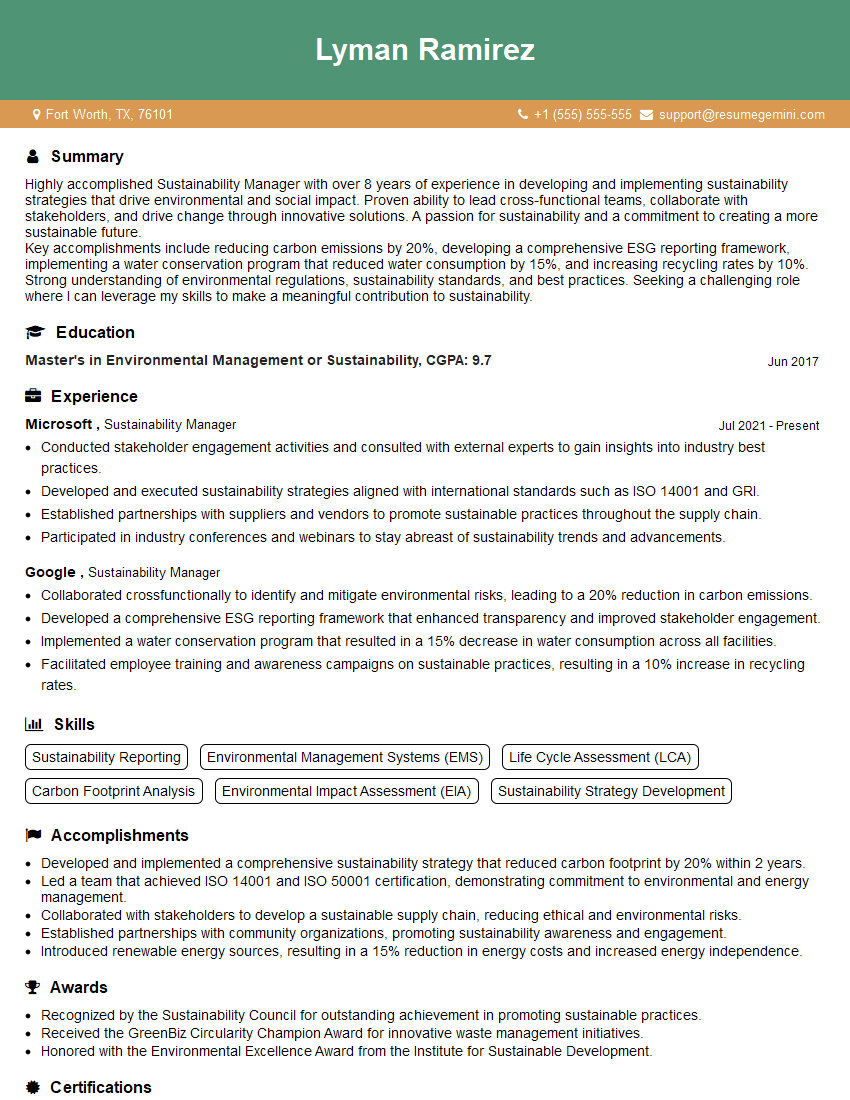
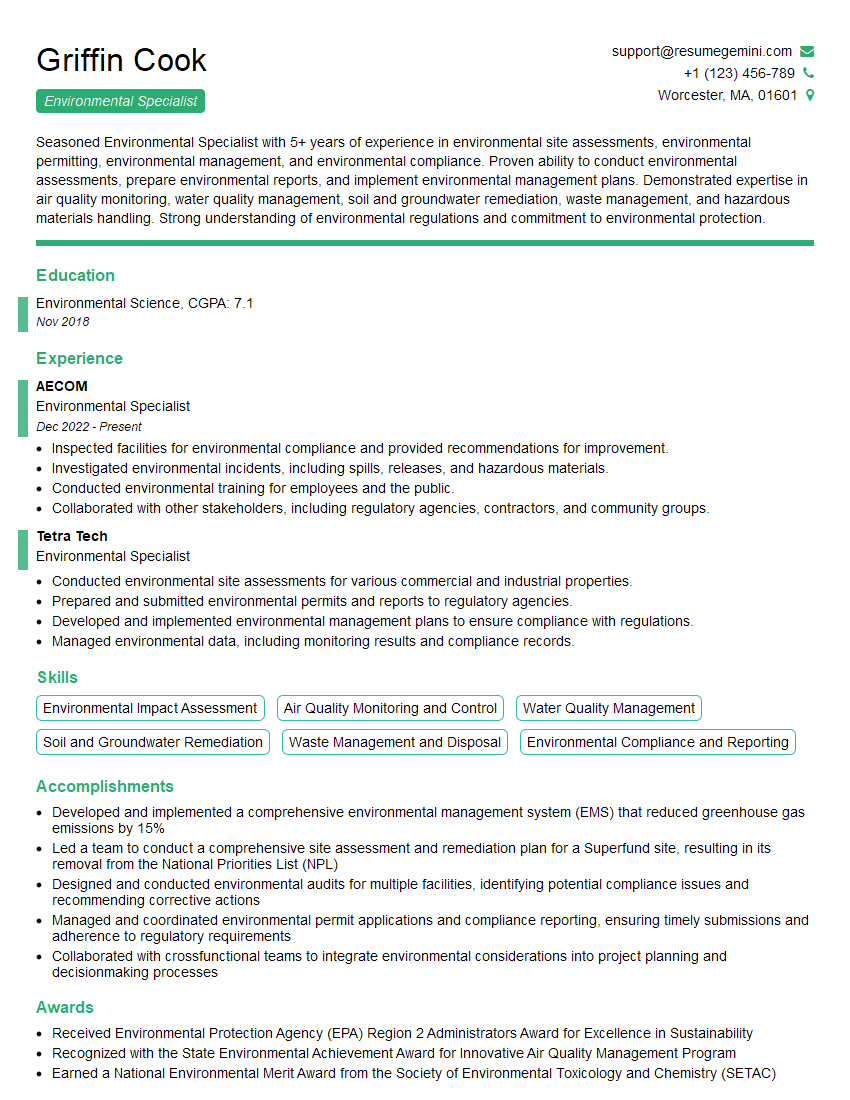
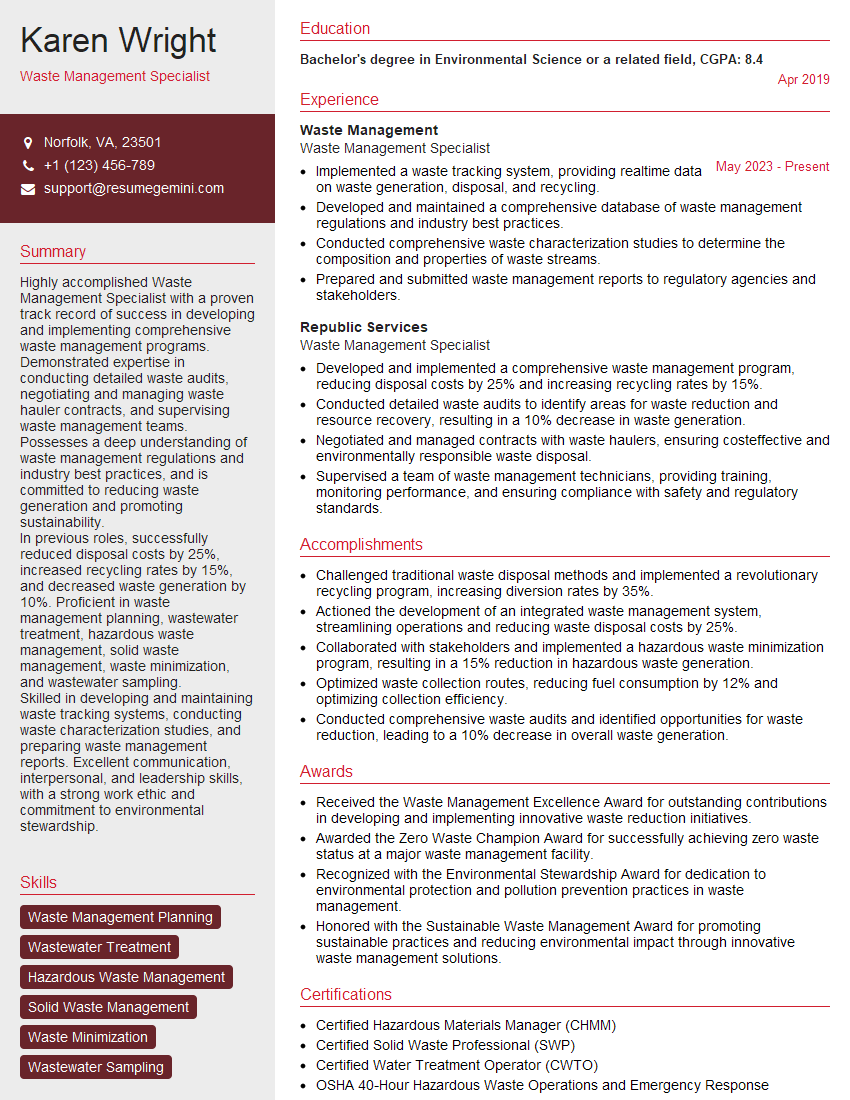
Mastering composting techniques is crucial for a successful career in environmental science, agriculture, horticulture, and waste management. A strong understanding of these concepts will significantly enhance your job prospects and allow you to contribute meaningfully to sustainable practices. To stand out to potential employers, creating an ATS-friendly resume is essential. We highly recommend leveraging ResumeGemini to build a professional and effective resume that highlights your skills and experience. ResumeGemini offers numerous examples of resumes tailored to the Composting Techniques field to help you craft the perfect application.
Explore more articles
Users Rating of Our Blogs
Share Your Experience
We value your feedback! Please rate our content and share your thoughts (optional).
What Readers Say About Our Blog
Attention music lovers!
Wow, All the best Sax Summer music !!!
Spotify: https://open.spotify.com/artist/6ShcdIT7rPVVaFEpgZQbUk
Apple Music: https://music.apple.com/fr/artist/jimmy-sax-black/1530501936
YouTube: https://music.youtube.com/browse/VLOLAK5uy_noClmC7abM6YpZsnySxRqt3LoalPf88No
Other Platforms and Free Downloads : https://fanlink.tv/jimmysaxblack
on google : https://www.google.com/search?q=22+AND+22+AND+22
on ChatGPT : https://chat.openai.com?q=who20jlJimmy20Black20Sax20Producer
Get back into the groove with Jimmy sax Black
Best regards,
Jimmy sax Black
www.jimmysaxblack.com
Hi I am a troller at The aquatic interview center and I suddenly went so fast in Roblox and it was gone when I reset.
Hi,
Business owners spend hours every week worrying about their website—or avoiding it because it feels overwhelming.
We’d like to take that off your plate:
$69/month. Everything handled.
Our team will:
Design a custom website—or completely overhaul your current one
Take care of hosting as an option
Handle edits and improvements—up to 60 minutes of work included every month
No setup fees, no annual commitments. Just a site that makes a strong first impression.
Find out if it’s right for you:
https://websolutionsgenius.com/awardwinningwebsites
Hello,
we currently offer a complimentary backlink and URL indexing test for search engine optimization professionals.
You can get complimentary indexing credits to test how link discovery works in practice.
No credit card is required and there is no recurring fee.
You can find details here:
https://wikipedia-backlinks.com/indexing/
Regards
NICE RESPONSE TO Q & A
hi
The aim of this message is regarding an unclaimed deposit of a deceased nationale that bears the same name as you. You are not relate to him as there are millions of people answering the names across around the world. But i will use my position to influence the release of the deposit to you for our mutual benefit.
Respond for full details and how to claim the deposit. This is 100% risk free. Send hello to my email id: lukachachibaialuka@gmail.com
Luka Chachibaialuka
Hey interviewgemini.com, just wanted to follow up on my last email.
We just launched Call the Monster, an parenting app that lets you summon friendly ‘monsters’ kids actually listen to.
We’re also running a giveaway for everyone who downloads the app. Since it’s brand new, there aren’t many users yet, which means you’ve got a much better chance of winning some great prizes.
You can check it out here: https://bit.ly/callamonsterapp
Or follow us on Instagram: https://www.instagram.com/callamonsterapp
Thanks,
Ryan
CEO – Call the Monster App
Hey interviewgemini.com, I saw your website and love your approach.
I just want this to look like spam email, but want to share something important to you. We just launched Call the Monster, a parenting app that lets you summon friendly ‘monsters’ kids actually listen to.
Parents are loving it for calming chaos before bedtime. Thought you might want to try it: https://bit.ly/callamonsterapp or just follow our fun monster lore on Instagram: https://www.instagram.com/callamonsterapp
Thanks,
Ryan
CEO – Call A Monster APP
To the interviewgemini.com Owner.
Dear interviewgemini.com Webmaster!
Hi interviewgemini.com Webmaster!
Dear interviewgemini.com Webmaster!
excellent
Hello,
We found issues with your domain’s email setup that may be sending your messages to spam or blocking them completely. InboxShield Mini shows you how to fix it in minutes — no tech skills required.
Scan your domain now for details: https://inboxshield-mini.com/
— Adam @ InboxShield Mini
support@inboxshield-mini.com
Reply STOP to unsubscribe
Hi, are you owner of interviewgemini.com? What if I told you I could help you find extra time in your schedule, reconnect with leads you didn’t even realize you missed, and bring in more “I want to work with you” conversations, without increasing your ad spend or hiring a full-time employee?
All with a flexible, budget-friendly service that could easily pay for itself. Sounds good?
Would it be nice to jump on a quick 10-minute call so I can show you exactly how we make this work?
Best,
Hapei
Marketing Director
Hey, I know you’re the owner of interviewgemini.com. I’ll be quick.
Fundraising for your business is tough and time-consuming. We make it easier by guaranteeing two private investor meetings each month, for six months. No demos, no pitch events – just direct introductions to active investors matched to your startup.
If youR17;re raising, this could help you build real momentum. Want me to send more info?
Hi, I represent an SEO company that specialises in getting you AI citations and higher rankings on Google. I’d like to offer you a 100% free SEO audit for your website. Would you be interested?
Hi, I represent an SEO company that specialises in getting you AI citations and higher rankings on Google. I’d like to offer you a 100% free SEO audit for your website. Would you be interested?