Interviews are more than just a Q&A session—they’re a chance to prove your worth. This blog dives into essential Concrete Flatwork Finishing interview questions and expert tips to help you align your answers with what hiring managers are looking for. Start preparing to shine!
Questions Asked in Concrete Flatwork Finishing Interview
Q 1. Explain the different types of concrete finishes.
Concrete finishes are as diverse as the projects themselves! The final look and feel of a concrete surface depend heavily on the chosen finish. We can broadly categorize them into several types:
- Smooth Finish: Achieved using power trowels, resulting in a very smooth, polished surface ideal for interior floors and areas requiring easy cleaning.
- Broom Finish: Created by dragging a stiff broom across the surface while it’s still slightly wet, this provides a textured, slip-resistant surface commonly used for driveways and walkways. The broom pattern itself can vary depending on the broom type and technique.
- Exposed Aggregate Finish: This involves washing away the cement paste from the surface, exposing the decorative aggregate (stones, pebbles) underneath. It’s very durable and visually appealing, often seen in high-end residential projects or commercial spaces.
- Stamped Concrete: This decorative technique uses stamps to imprint patterns into the concrete surface while it’s still workable, creating the appearance of brick, stone, or other materials. Color hardeners are often used to enhance the effect.
- Stained Concrete: Applying stains to the concrete surface after it’s cured allows for a wide range of color options and artistic expression. Acid stains react chemically with the concrete, while water-based stains are more of a surface application.
- Polished Concrete: This involves grinding and polishing the concrete surface to a high sheen, revealing the aggregates and creating a reflective, visually stunning finish. It’s ideal for high-traffic areas needing durability and aesthetic appeal.
The choice of finish is driven by factors like the intended use of the concrete, the aesthetic requirements, and the budget.
Q 2. Describe the process of preparing a concrete surface for finishing.
Preparing the concrete surface for finishing is crucial for achieving a high-quality, durable result. It’s like prepping a canvas before painting a masterpiece! This involves several key steps:
- Subgrade Preparation: Ensuring a stable, compacted base is fundamental. Any soft spots or unevenness will translate into problems later. This often involves excavating, compacting the soil, and potentially adding a base layer.
- Formwork Installation: Forms are temporary structures that hold the concrete in place until it sets. Precise alignment and secure bracing are key to prevent misalignment and leakage.
- Reinforcement Placement: Reinforcement bars (rebar) are added to increase the strength and durability of the concrete slab, especially for larger or heavily loaded areas. Proper spacing and covering are essential.
- Concrete Placement and Consolidation: The concrete must be placed evenly and consolidated to remove air pockets. Techniques include vibration using specialized equipment to ensure a dense, strong slab.
- Surface Cleaning: Before finishing, any laitance (a weak layer of cement paste on the surface) must be removed using a broom or other appropriate tools.
Skipping any of these steps can compromise the final finish and the structural integrity of the concrete.
Q 3. What are the common tools and equipment used in concrete flatwork finishing?
Concrete flatwork finishing requires a range of tools and equipment, each playing a specific role. The selection depends on the desired finish and the scale of the project.
- Hand Tools: Bull floats, darbies, hand trowels, edgers, groovers, brooms, and magnesium floats are used for achieving specific textures and smoothing the concrete surface. These are essential for smaller projects or detail work.
- Power Tools: Power trowels (both ride-on and walk-behind) are indispensable for achieving smooth, level surfaces, especially on large areas. They increase efficiency and consistency significantly. Concrete saws are used for cutting control joints to prevent cracking.
- Other Equipment: This includes wheelbarrows for transporting concrete, hoses for water curing, and measuring tools for ensuring accurate dimensions. A laser level can be crucial for ensuring a perfectly level surface.
Maintaining and properly using these tools is key to achieving a professional finish. Regular maintenance is necessary to keep everything in optimal working condition.
Q 4. How do you ensure proper concrete consolidation?
Proper concrete consolidation is vital for achieving a strong, durable, and aesthetically pleasing concrete surface. It’s about removing air pockets and ensuring a dense, homogenous mix. Think of it like squeezing out air bubbles from dough before baking – it impacts the final product’s quality.
Consolidation methods include:
- Vibration: Using internal or external vibrators, this method is highly effective in removing trapped air and ensuring the concrete flows into all areas of the formwork. Over-vibration can lead to segregation, however, so experience and judgement are key.
- Rodding: A simpler, manual method involves poking long rods into the fresh concrete to release air. It is less effective than vibration, however, suitable for smaller projects or hard-to-reach areas.
The level of consolidation required depends on the concrete mix design and the project requirements. Monitoring the concrete consistency during placement helps ensure effective consolidation.
Q 5. What are the different methods for finishing concrete surfaces (e.g., hand troweling, power troweling)?
Various methods are used to finish concrete surfaces, each resulting in a different aesthetic and functional outcome. The selection depends largely on the desired finish and the project’s scale.
- Hand Troweling: A labor-intensive method ideal for smaller areas or intricate details. Hand trowels are used to achieve a smooth, level surface. It requires skill and experience to create a uniform finish.
- Power Troweling: Power trowels (walk-behind or ride-on) are highly efficient for creating smooth, polished surfaces on large areas. Multiple passes are usually required to achieve the desired level of smoothness. The blades’ speed and type can affect the resulting texture.
- Floating: Bull floats are used to level the surface and remove high points, preparing the concrete for the next finishing step.
- Screeding: The initial process of levelling the concrete to the correct thickness and grade is using a screed board. This ensures a consistent top surface level.
Each method requires specific skills and techniques, and choosing the right method greatly impacts the final result.
Q 6. How do you achieve a specific texture or finish (e.g., broom finish, stamped concrete)?
Achieving a specific texture or finish requires careful planning and execution. The techniques used depend heavily on the desired aesthetic.
- Broom Finish: Achieved by dragging a stiff broom across the surface while the concrete is still workable. The direction and pressure applied determine the texture. Different brooms produce varied patterns.
- Stamped Concrete: Requires specialized stamps pressed onto the concrete surface while it is still workable. Color hardeners and release agents are often used to enhance the appearance and prevent sticking. The selection of stamps dictates the final pattern.
- Exposed Aggregate: Requires careful washing away of the cement paste from the surface, revealing the aggregates. Timing is crucial to avoid damaging the exposed stones.
- Textured Roller Finish: Using a textured roller adds a unique surface texture. The roller design directly impacts the resulting texture and pattern. This can mimic stone or other materials.
Each technique requires specific tools, materials, and expertise to achieve a quality result. Practicing on a test area before tackling the main project is highly recommended.
Q 7. Explain the importance of proper curing techniques for concrete.
Proper curing is absolutely essential for the long-term strength, durability, and performance of concrete. It’s the process of maintaining the moisture and temperature of the concrete for a sufficient period to allow the hydration process to complete.
Improper curing leads to weaker, more prone to cracking, and less durable concrete. Think of it like baking a cake – you need the right time and temperature for the best result.
Curing methods include:
- Water Curing: Keeping the concrete surface continuously moist by spraying water or covering it with wet burlap or plastic sheeting. This is the most common and effective method.
- Membrane-Forming Compounds: Applying a liquid compound that forms a protective barrier, reducing moisture loss.
- Curing Blankets: Using specialized blankets to maintain temperature and moisture levels, particularly useful in colder conditions.
The duration of curing depends on factors like the concrete mix design, temperature, and humidity. Following the recommendations of the concrete supplier is key for optimal curing.
Q 8. How do you address common finishing problems such as cracking, scaling, or dusting?
Cracking, scaling, and dusting in concrete flatwork are common problems stemming from various factors, including improper mixing, inadequate curing, and poor substrate preparation. Addressing these issues requires a multi-pronged approach focusing on prevention and repair.
Cracking: Cracks can be caused by shrinkage (plastic shrinkage cracks form during early drying), temperature changes (thermal cracks), or settlement of the base. Prevention involves using appropriate admixtures to control shrinkage, placing control joints to accommodate movement, and ensuring a stable base. Repair involves cleaning the crack, filling it with an appropriate epoxy or polyurethane resin, and sealing it to prevent further water ingress. For larger cracks, a saw cut might be necessary to control cracking propagation.
Scaling: This is surface deterioration, often caused by freeze-thaw cycles, de-icing salts, or aggressive chemicals. Prevention involves using air-entraining admixtures to improve the concrete’s resistance to freezing and thawing, proper curing to prevent rapid moisture loss, and selecting a concrete mix design suited for the exposure conditions. Repair might involve removing the scaled areas and applying a concrete patching compound or a protective sealant.
Dusting: A powdery surface layer indicates weak concrete, often due to insufficient curing, use of low-quality cement, or excessive abrasion. Prevention focuses on proper curing practices—keeping the concrete moist for an extended period—and using high-quality materials. Repair could involve applying a hardener or densifier to improve surface durability, grinding the surface to remove the dusty layer, and then applying a sealant.
Remember, diagnosing the root cause is crucial before implementing any repair. For example, a network of fine cracks might indicate a poor base, while localized cracking could suggest an overloaded area.
Q 9. Describe your experience with different types of concrete admixtures.
My experience with concrete admixtures is extensive. I’ve worked with a wide range, each impacting the concrete’s properties in distinct ways.
Air-entraining admixtures: These create microscopic air bubbles, improving the concrete’s resistance to freeze-thaw cycles and enhancing workability. I often use these in outdoor applications subject to harsh winters.
Water reducers/superplasticizers: These reduce the water needed for a given slump, increasing strength and durability while improving workability. They’re essential when dealing with high-performance concrete or when working in hot weather.
Accelerators: These speed up the setting time, beneficial for projects with tight deadlines or cold weather. However, careful consideration is needed to avoid premature setting.
Retarders: These slow down the setting time, valuable in hot weather or for large pours where maintaining workability is crucial. This prevents the concrete from setting before it’s fully placed and finished.
Shrinkage-reducing admixtures: These minimize shrinkage cracking, important for large slabs or areas prone to cracking. I always use these on large, exposed flatwork.
Choosing the right admixture depends on the project’s specific needs, environmental conditions, and desired concrete properties. It’s crucial to understand the interaction between different admixtures and to follow the manufacturer’s recommendations precisely.
Q 10. How do you determine the appropriate amount of water to use in a concrete mix?
Determining the appropriate water-cement ratio is paramount in achieving the desired concrete strength and durability. Too much water weakens the concrete, while too little makes it difficult to work with.
I typically use a combination of methods:
Mix Design Calculations: Engineers often provide detailed mix designs specifying the water-cement ratio based on the project’s requirements. I meticulously follow these specifications.
Slump Test: This is an on-site test measuring the consistency of the concrete. The slump cone method helps determine if the mix is workable and requires adjustments to water content. A target slump range is often specified in the project plans.
Experience and Observation: With years of experience, I can visually assess the concrete’s consistency and make subtle adjustments to the water content based on the mix’s texture and workability. This is a skill refined over time and always in conjunction with the slump test.
It’s crucial to remember that even small variations in water content can significantly impact the final concrete product. Accurate measurement and consistent monitoring are essential.
Q 11. What safety precautions do you take when working with concrete?
Safety is my top priority. Working with concrete involves various hazards, and I rigorously adhere to safety protocols.
Personal Protective Equipment (PPE): This includes safety glasses, gloves, steel-toed boots, and respirators, especially when working with dry cement. I ensure everyone on my team uses the appropriate PPE for the task.
Fall Protection: Working at heights necessitates fall protection measures like harnesses and guardrails. I never compromise on this aspect, especially when pouring concrete on elevated structures.
Respiratory Protection: Concrete dust is hazardous to respiratory health. Respirators are mandatory, especially when working with dry cement or grinding tools.
Proper Handling of Materials: We follow safe lifting procedures for heavy bags of cement and other materials. Machinery operation is done only by trained personnel.
Hazard Communication: I ensure all team members are aware of the potential hazards and understand the safety procedures. Regular safety briefings are crucial.
Safety is not just a checklist; it’s a culture. I foster a safe work environment where everyone feels empowered to identify and report potential hazards.
Q 12. How do you manage a team of concrete finishers on a project?
Managing a team of concrete finishers involves clear communication, delegation, and fostering teamwork.
Clear Communication: I provide detailed instructions, ensuring everyone understands their roles and responsibilities. Regular updates and open communication channels are vital.
Delegation: I assign tasks based on each finisher’s skills and experience. This ensures efficient workflow and allows me to focus on overseeing the overall project.
Teamwork and Collaboration: I encourage collaboration and mutual support among team members. A strong team dynamic leads to increased efficiency and improved quality of work. This includes celebrating successes and addressing challenges collaboratively.
Quality Control: I regularly inspect the work to ensure it meets the project specifications. I provide constructive feedback and address any issues promptly.
Motivation and Recognition: I acknowledge and reward good performance to maintain team morale and encourage excellence.
Leading by example is crucial. I always maintain a high standard of work and show respect for my team. A positive and supportive work environment yields the best results.
Q 13. How do you read and interpret concrete plans and specifications?
Reading and interpreting concrete plans and specifications requires meticulous attention to detail and a strong understanding of construction drawings. I’m proficient in interpreting various plan elements:
Dimensions and Elevations: I accurately measure and verify dimensions, ensuring the concrete placement aligns perfectly with the plans. I’m adept at working with both metric and imperial units.
Reinforcement Details: I understand how to place and properly cover reinforcing steel (rebar) to meet structural requirements. This includes verifying bar sizes, spacing, and placement according to the plans.
Tolerances and Allowances: I understand the acceptable variations in dimensions and levels. This ensures compliance with the specifications without over-engineering.
Material Specifications: I carefully review the specified concrete mix design, including compressive strength, slump, and admixtures required. I’ll also verify finishing specifications such as surface texture and tolerances.
Control Joints and Expansion Joints: I understand the placement and configuration of these vital elements, ensuring the concrete’s longevity.
I always clarify any ambiguities with the engineers or architects before commencing work to prevent errors and ensure the project’s success. Mistakes on this stage can be very costly to correct.
Q 14. What is your experience with different types of concrete repair techniques?
Concrete repair techniques vary based on the nature and extent of the damage. My experience encompasses several methods:
Small Cracks: For hairline cracks, epoxy or polyurethane injection is often effective. This fills the cracks, restoring structural integrity and preventing water ingress.
Larger Cracks: More substantial cracks may require a saw cut to create a clean, controlled crack, followed by filling with a suitable repair mortar or epoxy. This prevents further cracking.
Spalling and Surface Damage: Removing the damaged concrete and replacing it with a patching compound is usually the solution. The patch needs to be well-bonded to the existing concrete and properly cured.
D-Cracking: This requires specialized techniques involving undercutting and filling the crack with a suitable material, preventing further propagation and restoring strength.
Deteriorated Surfaces: Surface treatments, such as grinding, applying hardeners or densifiers, or sealants can improve durability and appearance. Grinding can level the surface or remove a damaged top layer.
Selecting the appropriate technique necessitates a thorough assessment of the damage, considering the cause, extent, and location. I prioritize long-term solutions that address the root cause of the problem, not just the symptoms.
Q 15. Describe your experience with different types of jointing techniques.
Jointing techniques are crucial for controlling cracking in concrete flatwork, preventing unsightly random cracks and ensuring structural integrity. I’m experienced in several methods, each suited to different project scales and aesthetic goals.
Control Joints: These are planned breaks in the concrete, created during the pour using tools like a groover or by inserting pre-molded joint filler. They allow the concrete to crack predictably along these lines, reducing stress and damage. I’ve used this extensively on large patios and driveways, strategically placing joints to accommodate expected thermal expansion and contraction. For example, on a large warehouse floor, I’d space control joints every 10-15 feet, depending on the concrete thickness and anticipated load.
Isolation Joints: These separate the concrete slab from other structures like walls or foundations, preventing transfer of movement and stress. I’ve used these frequently around building perimeters to prevent cracking as the building settles. We’d typically use a resilient material like foam backer rod to create this separation.
Construction Joints: These are unavoidable breaks in the pour caused by pausing the work for curing or other reasons. I ensure that these are properly prepared and sealed to maintain strength and prevent water ingress. Careful planning is crucial here – properly keyed surfaces and the use of bonding agents are essential for a seamless continuation.
Career Expert Tips:
- Ace those interviews! Prepare effectively by reviewing the Top 50 Most Common Interview Questions on ResumeGemini.
- Navigate your job search with confidence! Explore a wide range of Career Tips on ResumeGemini. Learn about common challenges and recommendations to overcome them.
- Craft the perfect resume! Master the Art of Resume Writing with ResumeGemini’s guide. Showcase your unique qualifications and achievements effectively.
- Don’t miss out on holiday savings! Build your dream resume with ResumeGemini’s ATS optimized templates.
Q 16. What is your experience with measuring and mixing concrete?
Accurate measuring and mixing are fundamental for achieving the desired concrete strength and workability. I use a combination of experience and precise tools to ensure this.
Measuring: I utilize calibrated measuring tools like wheelbarrows with volume markings and accurate scales for aggregates (gravel, sand). Precise measurement of water is equally crucial. Even small variations can significantly alter the final product. I always double-check my measurements before mixing, and maintain detailed records.
Mixing: I am proficient with both batch and central-mix concrete. Batch mixing, done on-site, requires careful attention to the sequence of adding materials. I ensure thorough mixing, using a mixer to prevent segregation and achieve a uniform consistency. The goal is a workable but not overly wet mix to avoid segregation and ensure a strong, durable finish. I adjust water content based on the type of cement and aggregates. For example, hotter weather might require slightly less water to prevent rapid setting.
Q 17. How do you ensure the proper slope and drainage of a concrete surface?
Proper slope and drainage are essential to prevent water pooling, which can lead to damage and safety hazards. This is achieved through careful planning and execution during the pour.
Planning: Before pouring, I establish the required slope using string lines and a transit level. A typical slope is 1/4 inch per foot, but this can vary depending on the application (e.g., steeper for driveways). I use screeds and bull floats to maintain consistent slope during the finishing process.
Execution: During pouring, I work methodically, constantly checking the slope using a level and adjusting the concrete as needed. I use a combination of hand tools and power tools to achieve a smooth, consistently sloped surface. I ensure that all low points are eliminated to promote proper drainage and avoid water accumulation.
Q 18. What are the different types of concrete pavements?
Concrete pavements come in various types, each designed for specific applications and load-bearing requirements:
Plain Concrete Pavement: This is the simplest type, suitable for low-traffic areas. It’s cost-effective but less durable than reinforced options.
Reinforced Concrete Pavement: Steel reinforcement (rebar) is embedded within the concrete slab to enhance its strength and crack resistance. This is commonly used for high-traffic areas like roads and parking lots.
Jointed Concrete Pavement (JCP): Control joints are incorporated to manage shrinkage and thermal stresses, reducing cracking. I have extensive experience in designing and constructing JCP pavements for various applications.
Prestressed Concrete Pavement: Tensioned steel strands are embedded in the concrete during casting, creating internal compression that counteracts stresses and improves durability. This is especially useful for heavy-duty applications.
Q 19. Describe your experience with concrete sawing and cutting.
Concrete sawing and cutting is essential for creating controlled joints, removing sections of concrete, and achieving specific shapes. I am proficient in using various sawing equipment, understanding the safety precautions associated with each.
Types of Saws: I’m experienced with walk-behind saws, hand-held saws, and specialized saws for intricate cuts. The choice of saw depends on the thickness and type of concrete, as well as the desired cut.
Safety: Safety is paramount. I always use appropriate personal protective equipment (PPE), including eye protection, hearing protection, and dust masks. I’m familiar with all relevant safety regulations and procedures for concrete sawing.
Applications: I’ve used sawing for creating expansion joints in large slabs, cutting out damaged sections of concrete, and shaping concrete for specialized applications.
Q 20. What is your experience with concrete grinding and polishing?
Concrete grinding and polishing transforms plain concrete into a highly durable and aesthetically pleasing surface. It involves a multi-step process using progressively finer diamond abrasives.
Grinding: This initial step levels the surface and removes imperfections. It’s important to use the right grinding equipment and techniques to achieve a smooth and even surface.
Polishing: This involves using increasingly finer diamond pads to achieve a glossy finish. Multiple passes are needed to achieve the desired level of shine. I’m experienced in achieving various finishes, from a matte look to a high gloss.
Sealers: After polishing, sealers are applied to protect the concrete and enhance its durability and appearance. I am familiar with various sealers and choose the appropriate one based on the specific application and client requirements.
Q 21. Explain your knowledge of concrete finishing standards and regulations.
My work adheres strictly to relevant concrete finishing standards and regulations. These ensure quality, safety, and longevity of the finished product. I’m familiar with the standards set by organizations like the American Concrete Institute (ACI) and local building codes.
ACI 302.1R: This guide covers concrete consolidation and finishing, providing detailed information on proper procedures and techniques. I regularly refer to this guide to ensure my work meets the highest standards.
Local Building Codes: I am familiar with all applicable local building codes and regulations for concrete construction and finishing. Compliance is critical for ensuring the safety and structural integrity of the completed work.
For example, I know the correct slump requirements for different applications, ensure proper curing procedures, and understand the importance of using the appropriate reinforcement and jointing strategies. My goal is not only to produce aesthetically pleasing results but also to build durable and safe concrete surfaces.
Q 22. Describe your experience with different types of concrete sealers.
My experience with concrete sealers is extensive, encompassing various types for different applications and aesthetic goals. We commonly use acrylic sealers for their ease of application, good UV protection, and relatively low cost. They’re perfect for enhancing color and providing a durable, breathable finish on residential driveways or patios. For heavier-duty applications like industrial floors that need to withstand significant wear and tear, I frequently specify epoxy sealers. These are incredibly strong and resistant to chemicals and abrasion, ideal for warehouses or workshops. Then there are penetrating sealers, which soak into the concrete rather than forming a surface film. These are excellent for improving concrete’s resistance to staining and weathering while maintaining a natural look. Finally, I’ve also worked with polyurethane sealers, which offer exceptional durability and gloss, making them suitable for high-traffic commercial areas needing a sleek finish.
Choosing the right sealer depends entirely on the project’s specific requirements – the level of traffic, the exposure to the elements, the desired aesthetic, and the budget. I always discuss these factors with the client before making a recommendation, ensuring the sealer perfectly matches their needs.
Q 23. How do you calculate the amount of concrete needed for a project?
Calculating the amount of concrete needed is crucial for efficient project management and cost control. It begins with accurately measuring the area to be poured. For rectangular areas, it’s simply length multiplied by width. For more complex shapes, we often break them down into smaller, simpler shapes and calculate each area individually. Once we have the total area in square feet, we need to determine the thickness of the pour in inches. This depends on the project – a patio might be 4 inches thick, while a foundation could require 8 inches or more.
Next, we convert the measurements into cubic yards, the standard unit for concrete ordering. The formula is:
(Length x Width x Thickness (in inches)) / 324For example, a 10ft x 10ft patio with a 4-inch thickness requires:
(10ft x 10ft x 4in) / 324 ≈ 1.23 cubic yardsIt’s always prudent to add an extra 5-10% to account for waste and unforeseen circumstances. This ensures we have enough concrete to complete the job without delays. I emphasize accurate measurements and careful calculations to avoid costly over-ordering or disruptive shortages.
Q 24. What are the signs of a poorly finished concrete surface?
A poorly finished concrete surface is immediately noticeable and can significantly detract from a project’s overall quality and longevity. Common signs include unevenness, spalling (chipping or breaking away of the concrete surface), discoloration, cracks, and an inconsistent surface texture. These imperfections can stem from various factors, including insufficient compaction, improper finishing techniques, inadequate curing, or the use of low-quality materials.
- Unevenness: Creates tripping hazards and an aesthetically displeasing surface. Often caused by insufficient screeding or floating.
- Spalling: Indicates issues with the concrete mix, improper curing, or exposure to de-icing salts.
- Discoloration: May result from oil or chemical stains, or uneven application of color hardeners.
- Cracks: Suggests problems with the base preparation, insufficient reinforcement, or rapid drying.
- Inconsistent Texture: Can arise from uneven troweling, improper brooming, or inconsistent finishing techniques.
Identifying these imperfections is key to learning from mistakes and to properly plan and execute future projects. Paying attention to details during every stage of the process is essential for delivering a high-quality result.
Q 25. What are the factors affecting the setting time of concrete?
The setting time of concrete is a crucial factor determining the timing of the finishing process and the overall project schedule. Several factors influence how quickly it sets:
- Temperature: Higher temperatures accelerate setting, while lower temperatures slow it down. Extreme heat can cause rapid setting and cracking, while extreme cold can lead to prolonged setting and poor strength development.
- Water-cement ratio: A higher water-cement ratio results in a slower setting time but potentially weaker concrete, while a lower ratio leads to faster setting but stronger concrete. Finding the right balance is critical.
- Type of cement: Different types of cement have varying setting times. Type III (high early strength) sets much faster than Type I (normal).
- Admixtures: Chemical admixtures can significantly affect setting time. Accelerators speed up setting, while retarders slow it down. We carefully choose these based on project-specific conditions.
- Relative Humidity: High humidity can slightly slow down the drying process but doesn’t significantly affect the setting time itself.
Understanding these factors helps us adjust the concrete mix design, the timing of finishing operations, and the protection measures during the crucial curing period. Proper planning minimizes potential issues and ensures optimal concrete strength and durability.
Q 26. Describe your experience working with different types of substrates.
My experience spans a wide range of substrates, each requiring a unique approach to ensure proper bonding and long-term performance of the concrete overlay. We’ve worked over existing concrete, asphalt, compacted earth, and even prepared gravel bases. Each has its own challenges and solutions.
- Existing Concrete: Requires careful surface preparation to ensure a clean, sound base free of dust, debris, oil stains, and loose material. Often, we use shot blasting or diamond grinding to achieve the necessary profile for proper bonding.
- Asphalt: Needs a thorough evaluation for stability and moisture content. A stable, dry asphalt base is necessary; otherwise, we might need to incorporate additional layers or utilize specialized bonding agents.
- Compacted Earth: Requires careful compaction and potentially a layer of base material such as gravel or crushed stone to provide stability and prevent settlement.
- Gravel Bases: Need proper compaction and levelling before the concrete pour. The size and gradation of the gravel are important considerations to provide a good base for the concrete.
Thorough substrate preparation is paramount to the success of any flatwork project. Cutting corners here inevitably leads to problems like cracking, settling, and premature failure. We always prioritize a comprehensive assessment and appropriate preparation to ensure a durable and lasting finished product.
Q 27. How do you troubleshoot problems during the concrete finishing process?
Troubleshooting is a vital aspect of concrete finishing. Problems can arise at any stage, requiring quick thinking and decisive action. My approach involves a systematic process:
- Identify the problem: Carefully assess the issue – is it cracking, discoloration, surface imperfections, or something else?
- Determine the cause: Consider factors like concrete mix design, weather conditions, substrate preparation, and finishing techniques. Was there insufficient curing? Was the concrete too dry or too wet?
- Develop a solution: Based on the cause, develop a practical solution. This might involve repairing cracks, grinding down high spots, applying a sealer, or even removing and replacing sections of the concrete.
- Implement the solution: Execute the chosen solution carefully, following best practices to avoid exacerbating the issue.
- Monitor the results: Observe the repaired area to ensure the solution was effective and that no new problems have arisen.
Examples include using crack repair epoxy for hairline cracks, and grinding to level out minor inconsistencies. For larger problems, such as extensive cracking, sometimes the best approach is a complete replacement section. My experience allows me to efficiently diagnose and rectify a wide range of issues, minimizing disruption and ensuring project success.
Q 28. What is your experience with using laser screeds?
I have significant experience using laser screeds for large-scale concrete projects. Laser screeds offer unparalleled precision and efficiency in achieving level, consistent surfaces, particularly on expansive areas. They dramatically reduce labor costs and improve the overall quality of the finish compared to traditional methods.
Operating a laser screed involves careful setup and calibration of the laser level, selection of the appropriate screed settings (depending on the concrete mix and desired finish), and skilled operation of the machine to ensure even distribution of the concrete. We typically use them for projects involving large floor slabs, industrial warehouses, and airport runways.
However, it’s crucial to understand the limitations. Laser screeds aren’t suitable for very small or intricate projects. Proper training and expertise are essential for effective operation to avoid damaging the machine or producing subpar results. We always ensure our team is adequately trained before using this equipment.
Key Topics to Learn for Concrete Flatwork Finishing Interview
- Surface Preparation: Understanding the importance of proper substrate preparation, including cleaning, patching, and priming, for optimal bond and finish.
- Concrete Placement and Consolidation: Mastering techniques for achieving the desired concrete slump and effectively consolidating the mix to eliminate air pockets and ensure a uniform surface.
- Finishing Techniques: Developing proficiency in various finishing methods like screeding, floating, troweling, and brooming, understanding their applications and achieving different surface textures (e.g., smooth, broom-finished, stamped).
- Controlling Concrete Properties: Knowing how factors like water-cement ratio, admixtures, and curing methods influence the final concrete properties, strength, and durability.
- Joint Design and Construction: Understanding the purpose and proper construction of control joints, expansion joints, and isolation joints to prevent cracking and ensure long-term structural integrity.
- Troubleshooting Common Issues: Developing problem-solving skills to address issues like surface imperfections, cracking, dusting, and scaling, and implementing corrective measures.
- Safety Procedures and Regulations: Demonstrating awareness and adherence to relevant safety regulations and procedures related to concrete work, including personal protective equipment (PPE) and handling hazardous materials.
- Tools and Equipment: Familiarizing yourself with the various tools and equipment used in concrete flatwork finishing, understanding their operation and maintenance.
- Estimating and Project Management: Understanding basic principles of estimating material quantities, labor costs, and project timelines.
- Quality Control and Inspection: Knowing the methods used to ensure the quality of the finished concrete surface meets project specifications and industry standards.
Next Steps
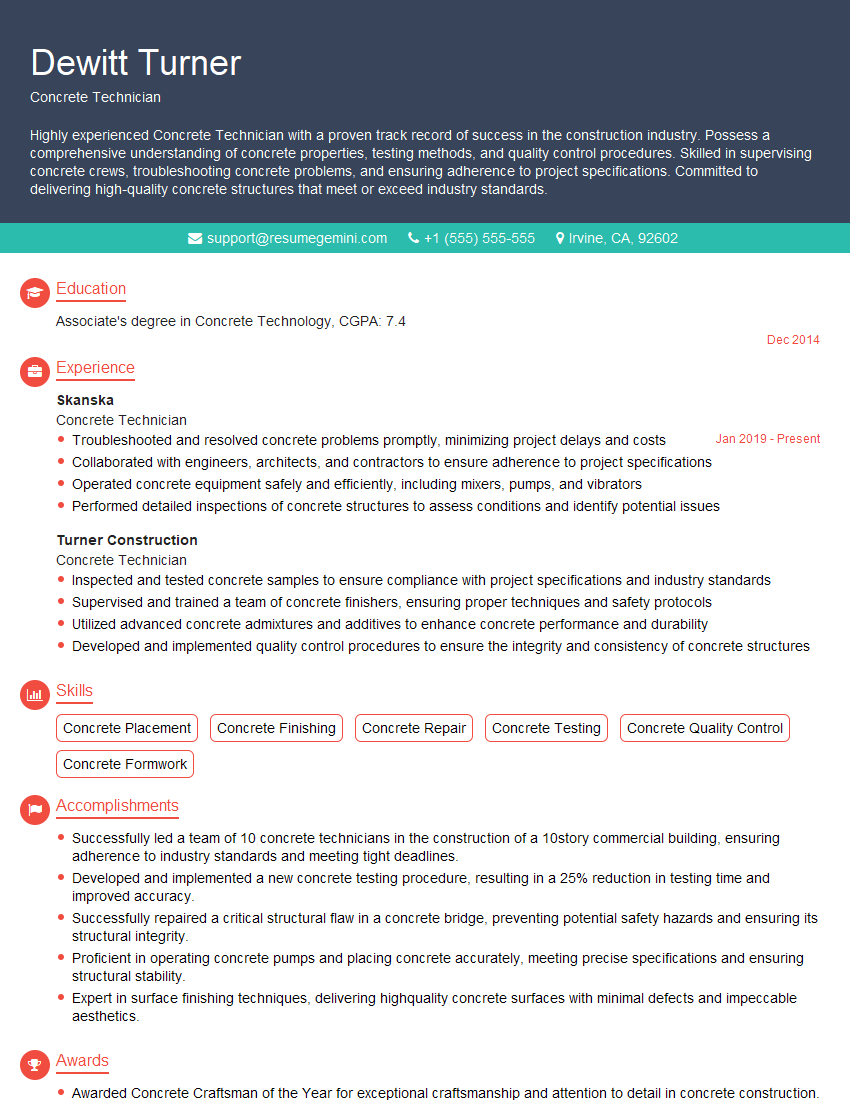
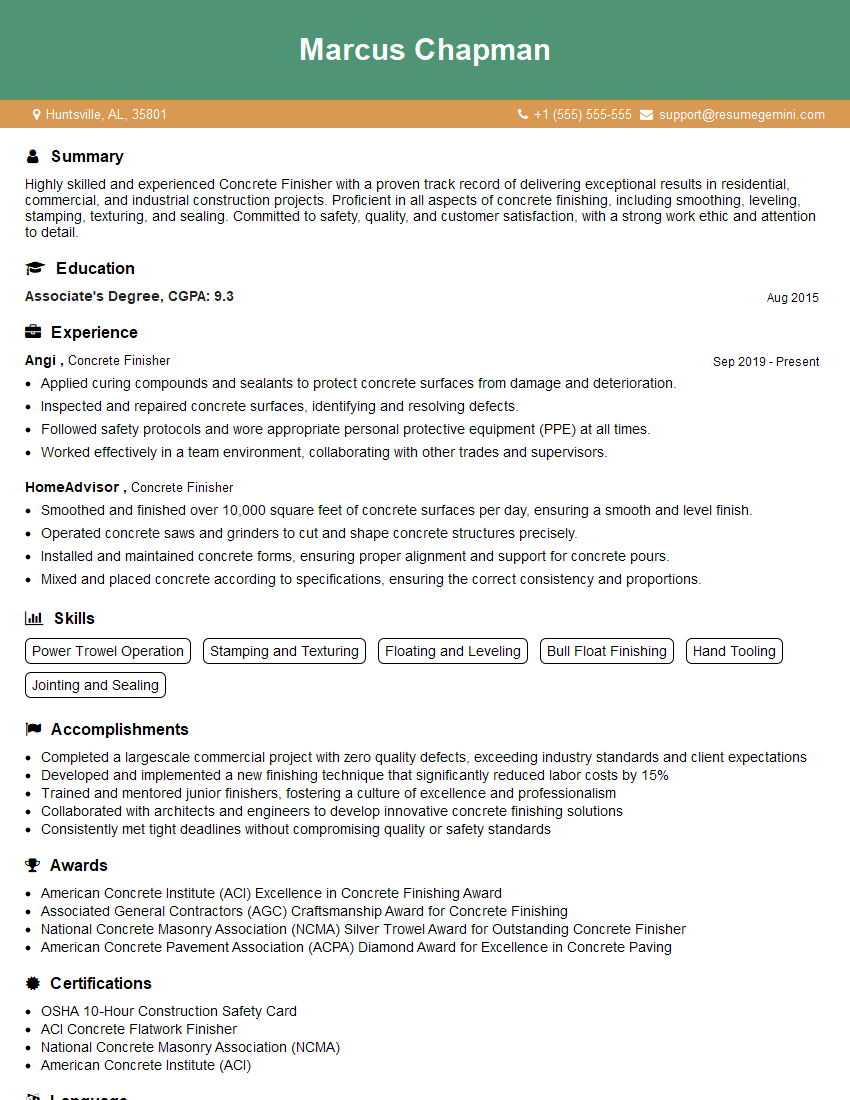
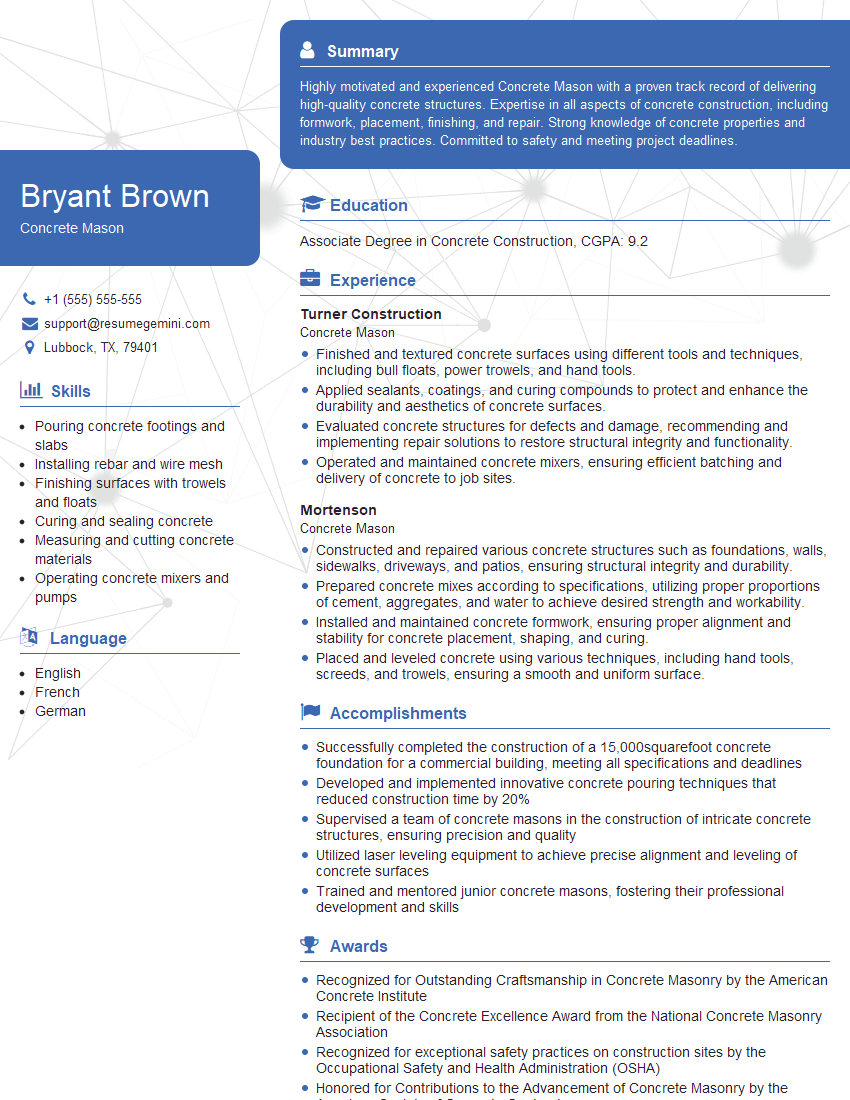
Mastering Concrete Flatwork Finishing opens doors to rewarding career opportunities with excellent earning potential and opportunities for advancement. To maximize your job prospects, creating a strong, ATS-friendly resume is crucial. ResumeGemini can significantly enhance your resume-building experience, ensuring your skills and experience shine through to potential employers. ResumeGemini provides examples of resumes tailored to Concrete Flatwork Finishing to help guide you. Take the next step towards your dream career today!
Explore more articles
Users Rating of Our Blogs
Share Your Experience
We value your feedback! Please rate our content and share your thoughts (optional).
What Readers Say About Our Blog
Attention music lovers!
Wow, All the best Sax Summer music !!!
Spotify: https://open.spotify.com/artist/6ShcdIT7rPVVaFEpgZQbUk
Apple Music: https://music.apple.com/fr/artist/jimmy-sax-black/1530501936
YouTube: https://music.youtube.com/browse/VLOLAK5uy_noClmC7abM6YpZsnySxRqt3LoalPf88No
Other Platforms and Free Downloads : https://fanlink.tv/jimmysaxblack
on google : https://www.google.com/search?q=22+AND+22+AND+22
on ChatGPT : https://chat.openai.com?q=who20jlJimmy20Black20Sax20Producer
Get back into the groove with Jimmy sax Black
Best regards,
Jimmy sax Black
www.jimmysaxblack.com
Hi I am a troller at The aquatic interview center and I suddenly went so fast in Roblox and it was gone when I reset.
Hi,
Business owners spend hours every week worrying about their website—or avoiding it because it feels overwhelming.
We’d like to take that off your plate:
$69/month. Everything handled.
Our team will:
Design a custom website—or completely overhaul your current one
Take care of hosting as an option
Handle edits and improvements—up to 60 minutes of work included every month
No setup fees, no annual commitments. Just a site that makes a strong first impression.
Find out if it’s right for you:
https://websolutionsgenius.com/awardwinningwebsites
Hello,
we currently offer a complimentary backlink and URL indexing test for search engine optimization professionals.
You can get complimentary indexing credits to test how link discovery works in practice.
No credit card is required and there is no recurring fee.
You can find details here:
https://wikipedia-backlinks.com/indexing/
Regards
NICE RESPONSE TO Q & A
hi
The aim of this message is regarding an unclaimed deposit of a deceased nationale that bears the same name as you. You are not relate to him as there are millions of people answering the names across around the world. But i will use my position to influence the release of the deposit to you for our mutual benefit.
Respond for full details and how to claim the deposit. This is 100% risk free. Send hello to my email id: lukachachibaialuka@gmail.com
Luka Chachibaialuka
Hey interviewgemini.com, just wanted to follow up on my last email.
We just launched Call the Monster, an parenting app that lets you summon friendly ‘monsters’ kids actually listen to.
We’re also running a giveaway for everyone who downloads the app. Since it’s brand new, there aren’t many users yet, which means you’ve got a much better chance of winning some great prizes.
You can check it out here: https://bit.ly/callamonsterapp
Or follow us on Instagram: https://www.instagram.com/callamonsterapp
Thanks,
Ryan
CEO – Call the Monster App
Hey interviewgemini.com, I saw your website and love your approach.
I just want this to look like spam email, but want to share something important to you. We just launched Call the Monster, a parenting app that lets you summon friendly ‘monsters’ kids actually listen to.
Parents are loving it for calming chaos before bedtime. Thought you might want to try it: https://bit.ly/callamonsterapp or just follow our fun monster lore on Instagram: https://www.instagram.com/callamonsterapp
Thanks,
Ryan
CEO – Call A Monster APP
To the interviewgemini.com Owner.
Dear interviewgemini.com Webmaster!
Hi interviewgemini.com Webmaster!
Dear interviewgemini.com Webmaster!
excellent
Hello,
We found issues with your domain’s email setup that may be sending your messages to spam or blocking them completely. InboxShield Mini shows you how to fix it in minutes — no tech skills required.
Scan your domain now for details: https://inboxshield-mini.com/
— Adam @ InboxShield Mini
support@inboxshield-mini.com
Reply STOP to unsubscribe
Hi, are you owner of interviewgemini.com? What if I told you I could help you find extra time in your schedule, reconnect with leads you didn’t even realize you missed, and bring in more “I want to work with you” conversations, without increasing your ad spend or hiring a full-time employee?
All with a flexible, budget-friendly service that could easily pay for itself. Sounds good?
Would it be nice to jump on a quick 10-minute call so I can show you exactly how we make this work?
Best,
Hapei
Marketing Director
Hey, I know you’re the owner of interviewgemini.com. I’ll be quick.
Fundraising for your business is tough and time-consuming. We make it easier by guaranteeing two private investor meetings each month, for six months. No demos, no pitch events – just direct introductions to active investors matched to your startup.
If youR17;re raising, this could help you build real momentum. Want me to send more info?
Hi, I represent an SEO company that specialises in getting you AI citations and higher rankings on Google. I’d like to offer you a 100% free SEO audit for your website. Would you be interested?
Hi, I represent an SEO company that specialises in getting you AI citations and higher rankings on Google. I’d like to offer you a 100% free SEO audit for your website. Would you be interested?