Cracking a skill-specific interview, like one for Concrete Placing and Finishing, requires understanding the nuances of the role. In this blog, we present the questions you’re most likely to encounter, along with insights into how to answer them effectively. Let’s ensure you’re ready to make a strong impression.
Questions Asked in Concrete Placing and Finishing Interview
Q 1. Explain the different types of concrete finishes.
Concrete finishes are crucial for aesthetics, durability, and functionality. The choice depends on the intended use and desired appearance of the structure. Common types include:
- Broomed Finish: A textured finish created by brushing the concrete surface with a broom while it’s still wet. This provides slip resistance and is often used for driveways and patios. Think of it like brushing a cake with frosting to create a textured surface.
- Float Finish: A smooth finish achieved by using a long-handled tool called a float to level and smooth the surface. This is a common choice for interior floors and areas requiring a smooth, even surface.
- Trowel Finish: A very smooth finish created by using a steel trowel to further smooth the surface after floating. This results in a highly polished and reflective surface, often used for high-end interior applications.
- Exposed Aggregate Finish: A decorative finish where the aggregates (stones and pebbles) are exposed by washing away the cement paste from the surface. This creates a unique and visually appealing texture. Imagine revealing the beautiful gems embedded in a rough stone.
- Stamped Finish: A decorative finish achieved by stamping patterns onto the concrete surface while it’s still wet. This allows for the creation of various designs, mimicking brick, stone, or other materials.
- Stained Finish: Color is added to the concrete through staining, providing a wide range of aesthetic choices.
The selection of the appropriate finish is made during the planning phase of the project, considering factors such as budget, desired aesthetic, and the structural demands of the application.
Q 2. Describe the process of placing concrete using a pump.
Concrete pumping is a highly efficient method for placing concrete, especially in areas with difficult access or large pours. The process typically involves these steps:
- Setup: The pump, usually a boom pump or a line pump, is positioned strategically to reach all parts of the pour area. Careful consideration is given to the location of the pump to avoid obstructing access and ensure easy maneuverability.
- Hosing: High-pressure hoses are connected to the pump and strategically placed to reach the designated areas for pouring.
- Pumping: The concrete is pumped from the ready-mix truck through the hoses to the placement point. The placement team needs to carefully manage the flow of concrete to avoid segregation (separation of the aggregate and cement).
- Placement and Consolidation: As the concrete is pumped, the placement team works to spread it evenly, using vibrators to consolidate the concrete and remove air pockets. This step is crucial to ensure the concrete’s strength and prevent voids.
- Finishing: Once the concrete is placed, finishing techniques, such as floating, troweling, or brooming, are applied to create the desired surface finish.
Safety is paramount throughout the process, requiring proper training, personal protective equipment (PPE), and careful attention to potential hazards.
Q 3. How do you ensure proper consolidation of concrete?
Proper consolidation is vital for achieving a high-quality, durable concrete structure. It involves removing trapped air and ensuring a dense, homogeneous mix. This is achieved primarily through the use of internal vibrators. These are powerful vibrating tools inserted into the fresh concrete. The vibrations work to release air bubbles and settle the aggregate, resulting in a denser, stronger concrete.
The process requires careful attention: The vibrator should not be left in one spot for too long, to avoid over-vibration and segregation. Over-vibration can also cause surface cracking. The frequency and duration of vibration should be adjusted depending on the concrete mix design and the size of the placement. Visual cues, such as the release of air bubbles and the smooth flow of concrete, indicate adequate consolidation.
In addition to internal vibrators, methods like surface vibration (using vibrating screeds) or rodding (for smaller pours) can help ensure proper consolidation.
Q 4. What are the common causes of concrete cracking?
Concrete cracking is a common problem with various underlying causes. They can broadly be categorized as:
- Shrinkage Cracking: This occurs due to the loss of moisture from the concrete as it cures. Rapid drying can exacerbate this. Think of it like a mud puddle cracking as it dries in the sun.
- Plastic Cracking: Cracks that form while the concrete is still plastic (wet). This can be caused by early loading, temperature changes, or insufficient consolidation.
- Temperature Cracking: Extreme temperature fluctuations during placement and curing can induce stress, leading to cracking. This is particularly relevant in hot or cold weather concreting.
- Settlement Cracking: Uneven settlement of the underlying soil can cause stress in the concrete, leading to cracking. Poor soil compaction is a major contributor.
- Reinforcement Issues: Insufficient reinforcement or improperly placed reinforcement can lead to cracking under stress.
Preventing cracking involves careful planning, proper mix design, appropriate curing methods, and the correct use of reinforcement.
Q 5. How do you handle cold weather concreting?
Cold weather concreting presents unique challenges. Freezing temperatures can damage the concrete before it sets, leading to significant strength reduction. Several strategies are used to mitigate these risks:
- Heating Aggregates and Mixing Water: Pre-heating the materials can help prevent freezing during placement and early curing.
- Using Admixtures: Certain admixtures can lower the freezing point of the concrete, allowing it to set at lower temperatures. These are chemical additives that modify the concrete’s properties.
- Insulation: Covering the concrete with insulation materials, like blankets or straw, can help slow down the cooling rate and prevent freezing.
- Protecting from Wind: Wind chill can accelerate cooling; windbreaks can help protect the concrete.
- Early Curing: Ensuring proper curing at the earliest stages is critical to prevent damage.
The exact methods used depend on the severity of the cold and the concrete mix design. It’s crucial to consult the local climate guidelines and concrete mix specifications to determine the appropriate cold weather concreting measures.
Q 6. How do you handle hot weather concreting?
Hot weather concreting presents different challenges. High temperatures can cause rapid drying and evaporation, leading to shrinkage, cracking, and reduced strength. Strategies to overcome these challenges include:
- Using Cold Materials: Using cold aggregates and mixing water can help reduce the initial temperature of the concrete.
- Adding Retarding Admixtures: These admixtures slow down the setting time of the concrete, allowing for better control over placement and finishing.
- Protecting from Sun: Shading the freshly placed concrete with tarps or other coverings can significantly reduce sun exposure and slow down drying.
- Curing Compounds: Applying curing compounds helps retain moisture in the concrete, reducing shrinkage and improving strength.
- Frequent Watering: Regularly watering the concrete surface helps maintain moisture content and prevent cracking.
Proper planning and implementation of these measures are essential for ensuring the quality and durability of the concrete in hot weather conditions.
Q 7. Explain the importance of proper curing of concrete.
Proper curing is critical for the strength, durability, and longevity of concrete. Curing is the process of maintaining moisture and temperature control to allow the hydration of cement to proceed efficiently.
Without proper curing, the cement will not fully hydrate, resulting in a weaker, more porous, and less durable concrete. This can lead to increased susceptibility to cracking, freeze-thaw damage, and reduced lifespan.
Curing methods include:
- Water Curing: Keeping the concrete surface continuously moist by ponding, spraying, or covering with wet burlap.
- Membrane Curing: Applying a curing compound to form a moisture-retentive barrier on the concrete surface.
- Steam Curing: Using steam to accelerate the curing process, often in precast concrete production.
The duration of curing depends on factors like the type of cement, the ambient temperature, and the thickness of the concrete element. Following the recommended curing period ensures the concrete reaches its designed strength and durability.
Q 8. What are the different types of concrete admixtures and their uses?
Concrete admixtures are chemical compounds added to the concrete mix to modify its properties. They’re like secret ingredients that enhance the final product! Different admixtures serve various purposes. Let’s explore some key types:
- Water reducers: These reduce the amount of water needed for a given consistency, resulting in stronger, more durable concrete. Think of it like a magic potion that lets you use less water but still get the same creamy consistency.
- Superplasticizers: High-range water reducers that significantly increase workability, allowing for easier placement and finishing, especially in congested areas or intricate forms. They’re like the superhero of admixtures, boosting workability without compromising strength.
- Accelerators: These speed up the setting and hardening process, crucial for projects with tight deadlines or cold weather conditions. Imagine them as turbochargers for your concrete, speeding up the whole process.
- Retarders: These slow down the setting time, useful for large pours or hot weather conditions where rapid setting could be problematic. They’re like the brakes on your concrete, slowing it down so you can work at your own pace.
- Air-entraining agents: These incorporate tiny air bubbles into the concrete, enhancing its resistance to freeze-thaw cycles and improving its overall durability. They’re like adding tiny air pockets for insulation to protect the concrete from the elements.
- Pozzolans: Supplementary cementitious materials that enhance the long-term durability and strength of the concrete. They’re like adding extra reinforcement to ensure a strong foundation.
The choice of admixture depends heavily on the project’s specific requirements, climate, and desired concrete properties.
Q 9. Describe the process of finishing a concrete slab.
Finishing a concrete slab is a crucial step that determines its final appearance and performance. It’s a multi-stage process, akin to preparing a delicious cake – each step matters! The process typically includes:
- Screeding: Using a screed (a long, straight board) to level the concrete to the desired thickness and elevation. This is like smoothing the cake batter before baking.
- Bull floating: Using a bull float to further smooth the surface and consolidate the concrete, removing any high spots. This is similar to gently patting the cake batter to remove air bubbles.
- Darbying: Using a darby (a smaller, hand-held float) to create a smoother, more even surface. This is like frosting the cake to achieve a smooth and even finish.
- Troweling: Using a power trowel to achieve a smooth, polished finish, if that is desired. This is like polishing the cake to add a glossy touch.
- Edging: Using an edging tool to create neat, finished edges along the perimeter of the slab. This is like creating a neat edge around the cake.
- Texturing (Optional): Applying textures like brooming, stamping, or other techniques for desired aesthetics and slip resistance. This step adds visual appeal and functional properties, like adding sprinkles or decorative designs to your cake.
The exact steps and tools used may vary depending on the desired finish and project specifications.
Q 10. How do you achieve a smooth concrete finish?
Achieving a smooth concrete finish involves meticulous attention to detail and the right techniques. It’s like creating a mirror-smooth surface! Key elements are:
- Proper mixing and placing: Consistent concrete mix and careful placement are fundamental. Irregularities in the mix or sloppy placement will lead to an uneven surface.
- Effective consolidation: Vibration using a concrete vibrator removes air pockets, essential for a smooth, strong surface.
- Multiple passes with floating and troweling: Multiple passes with floating and troweling tools ensure a consistently smooth finish. Multiple steps produce the best results.
- Use of appropriate tools: Power trowels are generally used for the smoothest finishes. Choosing the right tool is crucial.
- Proper curing: Correct curing prevents cracking and ensures a smooth surface remains intact. Proper care after the finishing process is vital.
Remember, patience and precision are key to achieving that perfect, mirror-smooth finish.
Q 11. How do you achieve a broom-finished concrete surface?
A broom-finished concrete surface offers a textured, slip-resistant finish. It’s practical and visually appealing, much like a well-designed outdoor patio! It’s created by dragging a stiff-bristled broom across the concrete surface after floating and before it sets completely. The timing is critical; too early, and the broom won’t leave a mark; too late, and the concrete is too hard. The angle and pressure applied while brooming also influences the texture and pattern. You can achieve various patterns by changing the broom’s angle and direction of dragging. Some common patterns include straight lines, crosshatching, or circular patterns.
This technique is commonly used for driveways, patios, and walkways where slip resistance is essential.
Q 12. How do you repair damaged concrete?
Repairing damaged concrete depends on the extent and type of damage. It’s like patching a hole in a wall – the approach depends on the size and nature of the damage. Here’s a general approach:
- Assessment: Determine the type and extent of the damage (cracks, spalling, holes). Is the area small enough to repair or is it better to replace?
- Preparation: Clean the area thoroughly, removing loose debris and unsound concrete. This ensures proper bonding.
- Repair: Use appropriate repair material, such as patching compound, epoxy, or concrete mix. This choice depends on the damage extent and structural needs.
- Curing: Protect the repair from environmental factors like temperature extremes and drying out. Proper curing ensures its longevity.
For larger repairs or structural damage, it’s advisable to consult a structural engineer. A minor crack can often be addressed with a patching compound, while larger spalling or structural damage may require more extensive repairs or replacement.
Q 13. What are the safety precautions involved in concrete placing and finishing?
Safety is paramount in concrete placing and finishing. It’s like working in a kitchen – following safety protocols ensures both productivity and wellbeing. Key precautions include:
- Personal Protective Equipment (PPE): Always wear safety glasses, hard hats, gloves, steel-toed boots, and high-visibility clothing.
- Fall protection: Use harnesses and safety lines when working at heights.
- Proper lifting techniques: Use lifting equipment and follow proper techniques to avoid injuries. Avoid back strain!
- Vibration exposure: Minimize exposure to vibrations from power tools. Take breaks to avoid hand-arm vibration syndrome (HAVS).
- Chemical exposure: Handle admixtures carefully, following manufacturer’s instructions and using appropriate PPE.
- Wet and slippery surfaces: Be aware of wet and slippery surfaces and take precautions to avoid slips and falls.
- Proper training and supervision: Ensure all personnel are properly trained and supervised. Expertise prevents mistakes.
A safe work environment is essential for efficiency and preventing workplace injuries. Remember, safety is a shared responsibility.
Q 14. What tools and equipment are used in concrete placing and finishing?
Concrete placing and finishing requires a range of tools and equipment. It’s like having the right tools in a workshop – each tool performs a specific function, ensuring productivity and accuracy.
- Concrete mixers: For mixing concrete (stationary or portable).
- Wheelbarrows: For transporting concrete.
- Concrete pumps: For pumping concrete to higher levels or inaccessible areas.
- Vibrators: For consolidating concrete to remove air pockets.
- Screeds: For leveling concrete.
- Bull floats: For smoothing concrete surfaces.
- Darbys: For smoothing concrete surfaces.
- Power trowels: For achieving smooth, polished finishes.
- Edging tools: For creating neat edges.
- Brooms: For creating broom-finished surfaces.
- Hand floats: For detailed finishing work.
- Measuring tapes and levels: For accurate measurements.
The specific tools used will depend on the project’s scale, complexity, and the desired finish.
Q 15. How do you determine the amount of concrete needed for a project?
Determining the amount of concrete needed for a project is crucial for efficient resource management and cost control. It involves a precise calculation based on the project’s design and specifications. The process typically starts with calculating the volume of the concrete structure. This is usually done by breaking down the structure into smaller, manageable geometric shapes (cubes, cylinders, etc.) and calculating their individual volumes, then summing them up. For example, a simple rectangular foundation would involve calculating its length, width, and depth to obtain the volume. More complex structures may require specialized software or estimations from experienced professionals.
Once the total volume is determined, you need to consider factors like waste and shrinkage. Concrete often experiences some loss during placement and consolidation; a typical allowance is 5-10%, depending on the project’s complexity and the placing methods used. Finally, the volume calculation needs to be converted into the desired units (usually cubic yards or cubic meters) based on the concrete supplier’s measurement standards. This final figure represents the amount of concrete to order. Improper calculation could result in delays, cost overruns, and even structural weakness if there’s insufficient concrete or wasted materials if the order is too large.
For instance, let’s say we are pouring a rectangular slab that’s 10 feet long, 5 feet wide, and 6 inches (0.5 feet) deep. The volume would be 10ft * 5ft * 0.5ft = 25 cubic feet. Converting this to cubic yards (1 cubic yard = 27 cubic feet), we get approximately 0.93 cubic yards. Adding a 10% waste factor, we’d need to order roughly 1.02 cubic yards of concrete. Always round up to the nearest whole number for ordering to ensure sufficient material.
Career Expert Tips:
- Ace those interviews! Prepare effectively by reviewing the Top 50 Most Common Interview Questions on ResumeGemini.
- Navigate your job search with confidence! Explore a wide range of Career Tips on ResumeGemini. Learn about common challenges and recommendations to overcome them.
- Craft the perfect resume! Master the Art of Resume Writing with ResumeGemini’s guide. Showcase your unique qualifications and achievements effectively.
- Don’t miss out on holiday savings! Build your dream resume with ResumeGemini’s ATS optimized templates.
Q 16. Explain the importance of slump testing.
Slump testing is a critical quality control measure in concrete placement. It assesses the consistency and workability of the freshly mixed concrete. The slump test measures the flow of the concrete mixture, indicating its water content and overall mix proportions. A slump cone, a metal cone with specific dimensions, is filled with concrete, then carefully lifted; the amount the concrete settles is the slump. The slump value is then compared to the specified range in the project plans.
The importance of slump testing lies in ensuring the concrete is workable enough to be placed and consolidated properly without excessive segregation (separation of components). Too high a slump indicates excessive water, leading to weakness and cracking. Conversely, a slump that’s too low indicates a stiff, unworkable mix, making it difficult to achieve proper consolidation. A proper slump ensures that the concrete can be efficiently placed and compacted to achieve the desired density and strength.
For example, a slump of 3-4 inches might be ideal for most structural applications, allowing for easy placement and consolidation without excessive segregation. However, a slump of 6-7 inches might indicate a weak, overly wet mix prone to segregation and cracking. Consistent slump testing throughout the concrete pour helps to maintain uniformity and ensures the final product meets the required strength and durability standards.
Q 17. What are the different types of concrete forms?
Concrete forms are temporary structures that hold the concrete in place until it hardens. The choice of form type depends on the project’s complexity and budget. Several types are commonly used:
- Timber Forms: These are commonly used for smaller projects due to their cost-effectiveness and ease of construction. They’re typically made from plywood or lumber and are relatively easy to assemble and dismantle.
- Steel Forms: Steel forms offer greater strength and durability, making them suitable for larger projects with complex geometries. They can be reused multiple times, reducing long-term costs, but initial investment is higher. Steel forms are often favored where high precision and surface finish are required.
- Aluminum Forms: Lighter than steel forms, offering improved handling and maneuverability. Their strength-to-weight ratio makes them suitable for projects requiring frequent form reconfiguration.
- Insulating Concrete Forms (ICFs): These are hollow blocks made from foam plastic that serve as both insulation and formwork. ICFs offer significant energy efficiency and speed up construction, but can be more expensive initially.
- Slip Forms: Used for large-scale, continuous pours such as walls, bridge piers and columns. The forms rise continuously as the concrete is placed, improving efficiency for high volume pours.
The selection process involves considering factors like project size, complexity, required surface finish, budget, and reusability. For example, a small residential foundation might use timber forms, while a large commercial building might opt for steel or aluminum forms for their durability and precision.
Q 18. How do you read and interpret concrete plans?
Reading and interpreting concrete plans requires a thorough understanding of architectural and engineering drawings. The plans provide detailed information on the dimensions, reinforcement details (rebar), concrete mix design requirements, and placement procedures. They typically include:
- Plans and Sections: These show the overall layout, dimensions, and location of concrete elements such as foundations, walls, slabs, and beams.
- Details: These drawings enlarge specific areas to provide detailed information about formwork, reinforcement patterns, and connections.
- Schedules: Tables that summarize the quantity and type of reinforcement, concrete mix designs, and other relevant data.
- Specifications: A written document providing detailed instructions and requirements for materials, workmanship, and testing procedures.
Understanding symbols and conventions is crucial. For instance, specific symbols represent different types and sizes of rebar, concrete cover (distance between the rebar and the surface), and dimensions. Accurately interpreting these elements is vital to ensure the poured concrete meets the design requirements. A misinterpretation can result in significant defects or failures.
For example, you might find a section showing the thickness of a slab, the spacing and size of rebar, and the concrete cover required. You’d then use this information to determine how much rebar is needed, how the forms should be built, and verify the quantities of concrete specified.
Q 19. Explain the concept of concrete strength and its importance.
Concrete strength refers to its ability to resist compressive forces, expressed as compressive strength in pounds per square inch (psi) or megapascals (MPa). It is a critical factor influencing the structural integrity and durability of concrete structures. Concrete strength is determined through laboratory testing of hardened concrete samples (cylinders or cubes) where a compressive load is applied until failure.
The importance of concrete strength stems from the fact that it dictates the load-bearing capacity of a structure. Achieving the required concrete strength ensures the structure can safely support its intended loads without failure. Using concrete with inadequate strength would compromise structural integrity, potentially leading to collapse or significant damage. This strength is influenced by many factors including the water-cement ratio, the type of cement used, the aggregate type and size, curing methods, and even the ambient temperature during and after the placement.
For example, a highway bridge requires much higher concrete strength (say 5000 psi or more) compared to a simple residential sidewalk (which might only need 3000 psi). Specifying and achieving the correct concrete strength is crucial for safety, durability, and the long-term performance of any concrete structure.
Q 20. Describe your experience with different types of concrete.
Throughout my career, I’ve worked extensively with various types of concrete, each with unique properties and applications:
- Normal-strength concrete (NSC): This is the most common type, typically used for general construction purposes like foundations, walls, and slabs. Its strength is typically in the 3000-5000 psi range.
- High-strength concrete (HSC): HSC has a compressive strength exceeding 6000 psi and offers superior durability and load-bearing capabilities. This is frequently used in high-rise buildings, bridges, and other demanding applications.
- High-performance concrete (HPC): HPC exhibits superior performance in multiple areas, including strength, durability, workability, and even resistance to chemicals. It’s used where extreme conditions or specialized properties are required.
- Lightweight concrete: This type incorporates lightweight aggregates, reducing the overall weight of the concrete structure while maintaining sufficient strength. This is advantageous for minimizing foundation loads and is often used in building construction.
- Fiber-reinforced concrete (FRC): This incorporates fibers (steel, synthetic) into the concrete mix, enhancing its crack resistance and tensile strength. FRC is advantageous for applications that are subjected to impact or cracking forces.
My experience encompasses not only the use of these different concrete types but also includes careful consideration of the environmental factors involved in each application, such as proper curing procedures to ensure the required strength development, temperature control, and proper mix design to achieve the expected outcomes.
Q 21. What are the common problems encountered in concrete work and how do you address them?
Several common problems can arise during concrete work. Addressing these issues promptly is crucial for ensuring the quality and integrity of the structure:
- Cold weather concreting: Low temperatures can hinder the hydration process, slowing down strength development and increasing the risk of frost damage. This can be addressed by using admixtures like calcium chloride, heating the concrete, or protecting the concrete during curing.
- Plastic shrinkage cracking: Rapid surface evaporation of water from freshly placed concrete can lead to shrinkage and cracking. This can be mitigated by using proper curing techniques (e.g., keeping the concrete moist), applying curing compounds, or using windbreaks.
- Segregation: Separation of the concrete components (aggregate, cement, water) during placement. This reduces the strength and uniformity of the concrete. Proper concrete mixing, placing, and consolidation are essential to prevent segregation.
- Honeycombing: The presence of voids or air pockets within the concrete matrix. Thorough consolidation is crucial using vibration equipment to remove trapped air and achieve a dense, strong structure.
- Surface defects: Poor surface finish, such as dusting, scaling, or discoloration. Proper formwork design, quality control and concrete finishing techniques are crucial to avoid such defects.
My approach to resolving these problems involves a combination of preventive measures (proper planning, material selection, and execution), and corrective actions (repairs, remedial measures, and quality control checks) depending on the severity and nature of the defect. For example, in the case of plastic shrinkage cracking, I might implement a comprehensive curing plan, including continuous moisture retention. For honeycombing, I would emphasize proper vibration and consolidation during placement.
Q 22. How do you ensure the quality of concrete work?
Ensuring quality concrete work involves a meticulous approach starting from the initial design phase and extending throughout the entire construction process. It’s not just about the final finish; it’s about every step leading up to it.
Material Quality Control: This begins with specifying the exact concrete mix design, ensuring the correct proportions of cement, aggregates, and water are used. We rigorously check the quality of delivered materials—testing for slump, air content, and compressive strength to ensure it meets the project specifications. Any deviation requires immediate action, such as adjusting the mix or rejecting a batch.
Proper Placement and Consolidation: Correct placement techniques are crucial. We ensure the concrete is placed in layers, properly consolidated to eliminate air pockets using vibrators, and avoid segregation (separation of the aggregate from the cement paste). This prevents honeycombing (voids in the concrete) and ensures uniform strength throughout the structure.
Meticulous Finishing: This involves various techniques depending on the desired finish (e.g., broom finish, power trowel finish). We use the appropriate tools and techniques to achieve the specified surface texture, ensuring a level, smooth, and aesthetically pleasing result. This requires attention to detail and consistent effort.
Curing: After placing the concrete, proper curing is essential to allow it to gain its designed strength. This usually involves keeping the concrete moist for a specified period (often several days) to prevent rapid drying and cracking. Methods can include water curing, membrane curing, or the use of curing compounds. Failure to cure properly can significantly weaken the concrete, leading to premature deterioration.
Quality Control Testing: Throughout the process, we conduct regular testing, such as compressive strength tests on core samples, to verify that the concrete meets the required standards. This provides objective evidence of the quality of our work and allows us to make adjustments as needed.
Q 23. What is your experience with different types of concrete finishing tools?
My experience with concrete finishing tools is extensive, encompassing a wide range of equipment used to achieve various surface finishes and textures. I’m proficient in using both hand tools and power tools.
Hand Tools: I’m skilled in using bull floats, hand floats, edgers, and groovers to create initial leveling and shaping. These tools demand precision and a feel for the material.
Power Tools: I have extensive experience with power trowels (both ride-on and walk-behind), which are used to achieve a smooth, polished finish. I’m also familiar with power screeds for larger-scale projects, ensuring a level surface before finishing. Understanding the different speeds and settings for these tools is critical for achieving optimal results.
Specialized Tools: I’ve also worked with specialized tools like concrete saws for cutting expansion joints, and various texturing tools to create patterns like broom finishes or stamped concrete effects. The choice of tool depends heavily on the project specifications and desired aesthetic.
My experience allows me to select and effectively use the right tool for any given task, maximizing efficiency and quality.
Q 24. How do you maintain your equipment and tools?
Maintaining equipment and tools is paramount for safety and efficiency. A well-maintained toolset translates to better quality work and reduces downtime.
Daily Cleaning: After every job, I thoroughly clean all tools, removing any concrete residue. This prevents hardening and makes future use easier.
Regular Inspection: I regularly inspect tools for wear and tear. This includes checking for damaged blades, loose parts, or worn-out components. Any issues are addressed promptly.
Lubrication and Maintenance: Power tools require regular lubrication to ensure smooth operation and prevent premature wear. I follow the manufacturer’s recommendations for maintenance schedules.
Proper Storage: Tools are stored in a clean, dry place, protected from the elements. This prevents corrosion and damage.
Preventative Maintenance: For power tools, I schedule regular preventative maintenance, such as blade sharpening or motor servicing, to extend their lifespan and performance.
This proactive approach ensures that our equipment is always in optimal working condition, leading to higher productivity and superior results.
Q 25. Describe a time you had to solve a problem on a concrete jobsite.
On a recent project, we encountered unexpected high temperatures during the concrete pour. This posed a significant challenge because rapid evaporation could lead to cracking and reduced strength.
Problem: The high temperatures were causing the concrete to set much faster than anticipated. We were at risk of not being able to finish the pour before the concrete became unworkable.
Solution: I immediately implemented several strategies: Firstly, we increased the water-cement ratio (within allowable limits) to slow down the setting time. Secondly, we used additional shading to protect the freshly poured concrete from direct sunlight. Thirdly, we worked in smaller batches, placing and finishing each batch swiftly. Finally, we employed more personnel to speed up the process and minimize the time concrete was exposed to the heat.
By coordinating these efforts, we successfully completed the pour without any significant issues related to the high temperatures. The final product met the required specifications, demonstrating our ability to adapt and solve problems effectively under pressure.
Q 26. How do you handle challenging work conditions?
Challenging work conditions are a common part of concrete work. Whether it’s extreme temperatures, inclement weather, or difficult terrain, adaptability is key.
Extreme Temperatures: During hot weather, we adjust our work schedules to avoid the hottest parts of the day and ensure adequate hydration for the team. In cold weather, we take precautions to prevent the concrete from freezing, such as using accelerators or employing protective measures.
Inclement Weather: Rain delays pours, so we have contingency plans in place. We protect already-poured concrete with tarps or other coverings. We also closely monitor weather forecasts to schedule pours strategically.
Difficult Terrain: We use appropriate equipment, such as specialized pumps or conveyor belts, to efficiently handle concrete placement in challenging locations. Safety procedures are rigorously followed in difficult areas.
Ultimately, handling challenging conditions involves careful planning, appropriate safety measures, and a flexible approach to meet the demands of each project.
Q 27. What are your strengths and weaknesses as a concrete worker?
My strengths lie in my precision, attention to detail, and problem-solving abilities. I’m adept at quickly assessing situations and finding practical solutions to ensure the successful completion of any project. My experience allows me to effectively lead and train teams, fostering a collaborative environment focused on safety and quality. I’m also physically fit and capable of handling the demanding physical aspects of the job.
My weakness, if I had to identify one, would be impatience when facing unexpected setbacks. However, I’m actively working on improving my patience by practicing mindful approaches to problem-solving. I believe in continuous learning, always seeking opportunities to improve my skills and knowledge.
Q 28. Why are you interested in this concrete placing and finishing position?
I’m highly interested in this position because it offers an opportunity to utilize my extensive experience in concrete placing and finishing within a challenging and rewarding environment. I’m particularly drawn to [Company Name]’s reputation for high-quality work and commitment to safety. My skill set aligns perfectly with the requirements of this role, and I’m confident I can make a significant contribution to your team.
I’m eager to learn from experienced professionals and contribute my expertise to future projects. I believe my dedication to quality and my commitment to continuous improvement would make me a valuable asset to your organization.
Key Topics to Learn for Concrete Placing and Finishing Interview
- Concrete Properties and Mix Design: Understanding the impact of water-cement ratio, aggregate type, and admixtures on concrete strength, workability, and durability. Practical application: Explaining how to adjust a mix design to achieve desired slump and strength for a specific project.
- Formwork and Placement Techniques: Proper formwork construction and preparation, including bracing, alignment, and sealing. Safe and efficient methods for concrete placement, including pumping, conveying, and hand methods. Practical application: Describing the challenges of placing concrete in confined spaces or at significant heights, and the solutions employed.
- Finishing Techniques: Mastering various finishing methods like screeding, floating, troweling, and power-floating to achieve desired surface texture and smoothness. Understanding the importance of proper consolidation and finishing techniques to prevent defects. Practical application: Explaining the differences between various finishing methods and when each is appropriate.
- Curing and Protection: Importance of proper curing methods to achieve design strength and durability. Understanding different curing techniques (water curing, membrane curing, etc.) and their effectiveness. Practical application: Describing a situation where improper curing led to problems and how it could have been prevented.
- Quality Control and Testing: Understanding methods for quality control, including slump tests, air content tests, and compressive strength testing. Identifying and addressing potential concrete defects. Practical application: Explaining how to interpret test results and make necessary adjustments to the concrete mix or placement process.
- Safety Procedures and Regulations: Adherence to OSHA regulations and best practices for safety on the job site. Understanding the use of personal protective equipment (PPE) and safe handling procedures for concrete. Practical application: Describing a situation where a safety issue arose and how it was addressed.
- Troubleshooting and Problem Solving: Identifying and resolving common concrete placing and finishing problems, such as segregation, bleeding, cracking, and surface defects. Practical application: Developing solutions for common concrete problems encountered in various job site conditions.
Next Steps
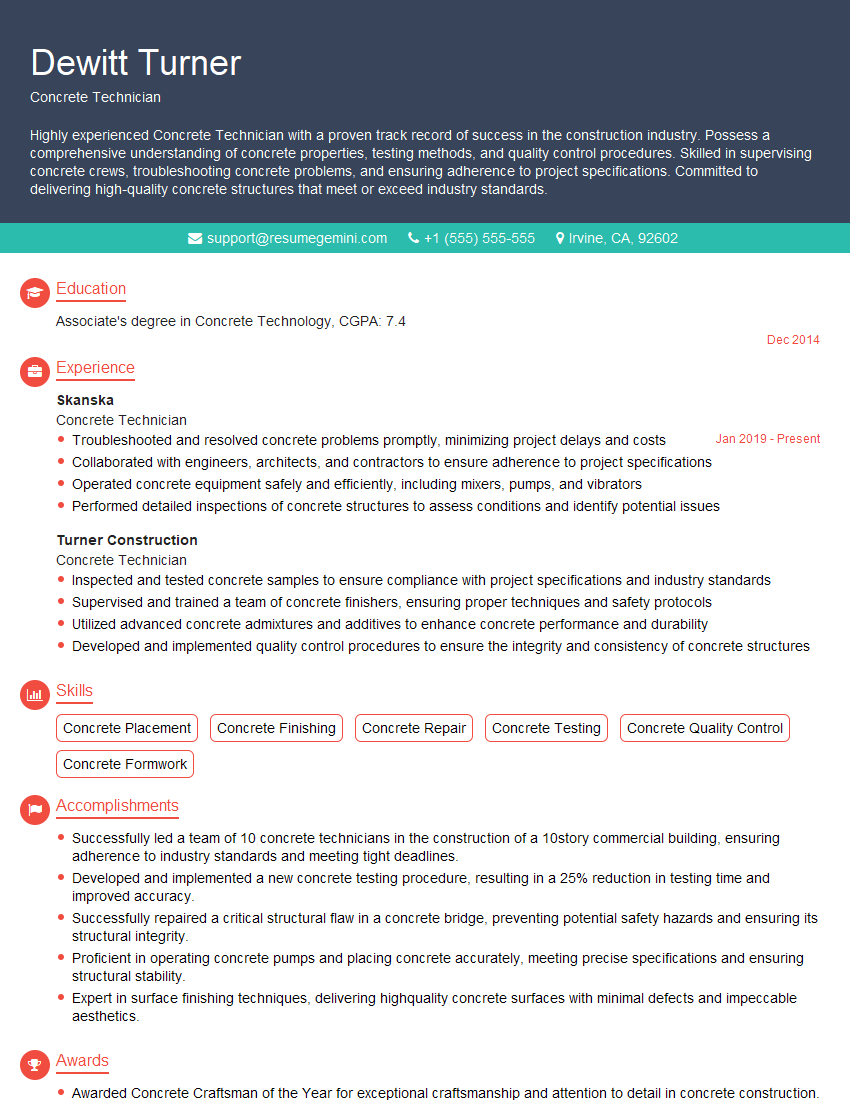
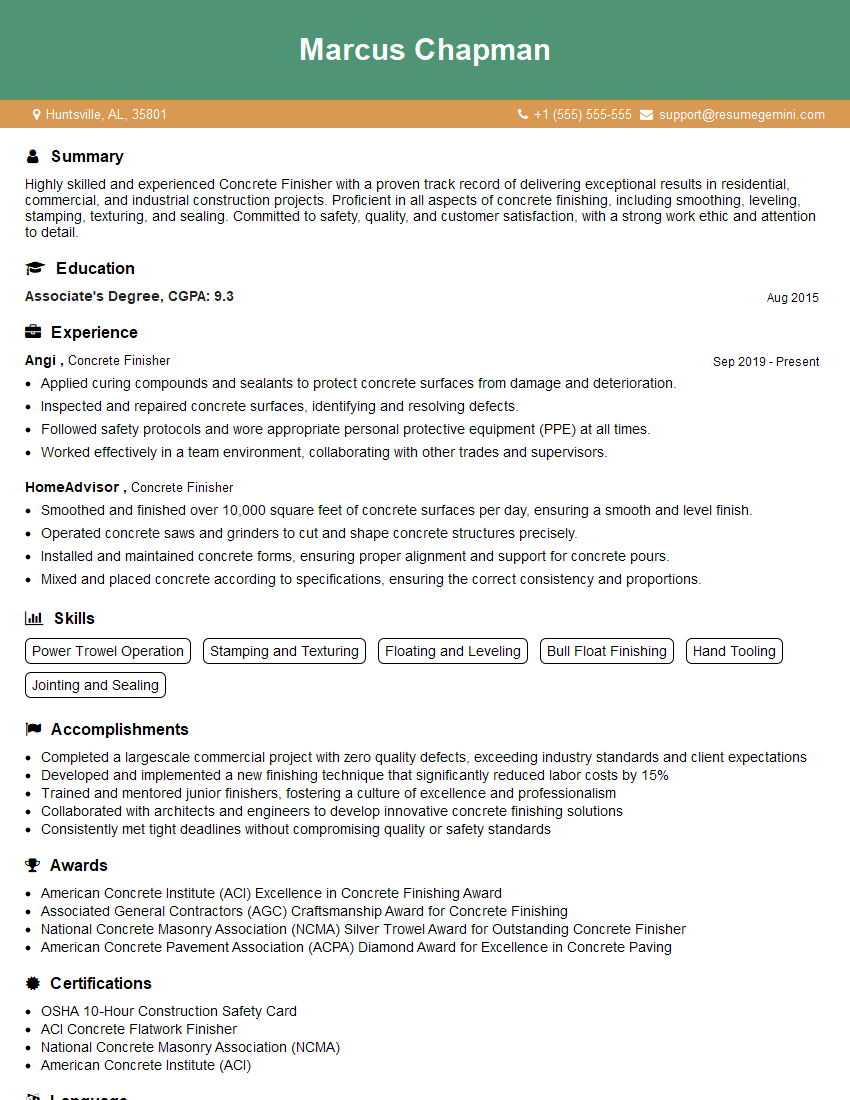
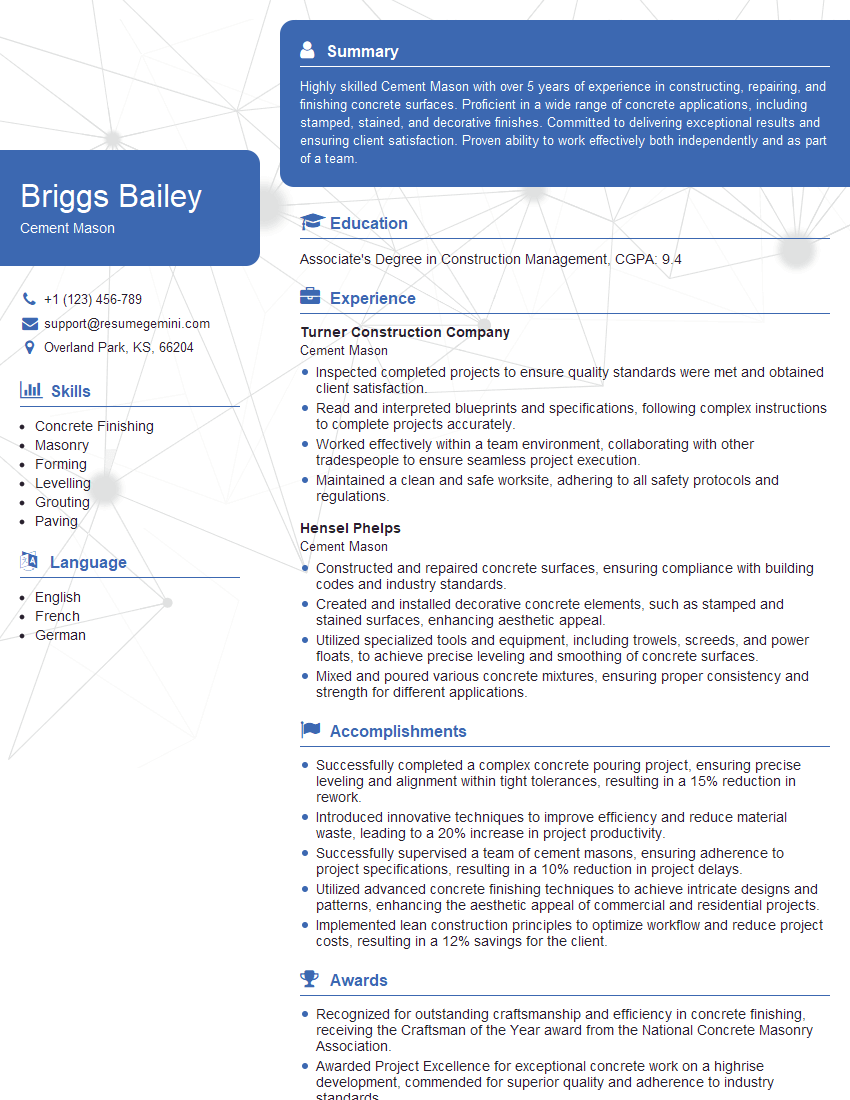
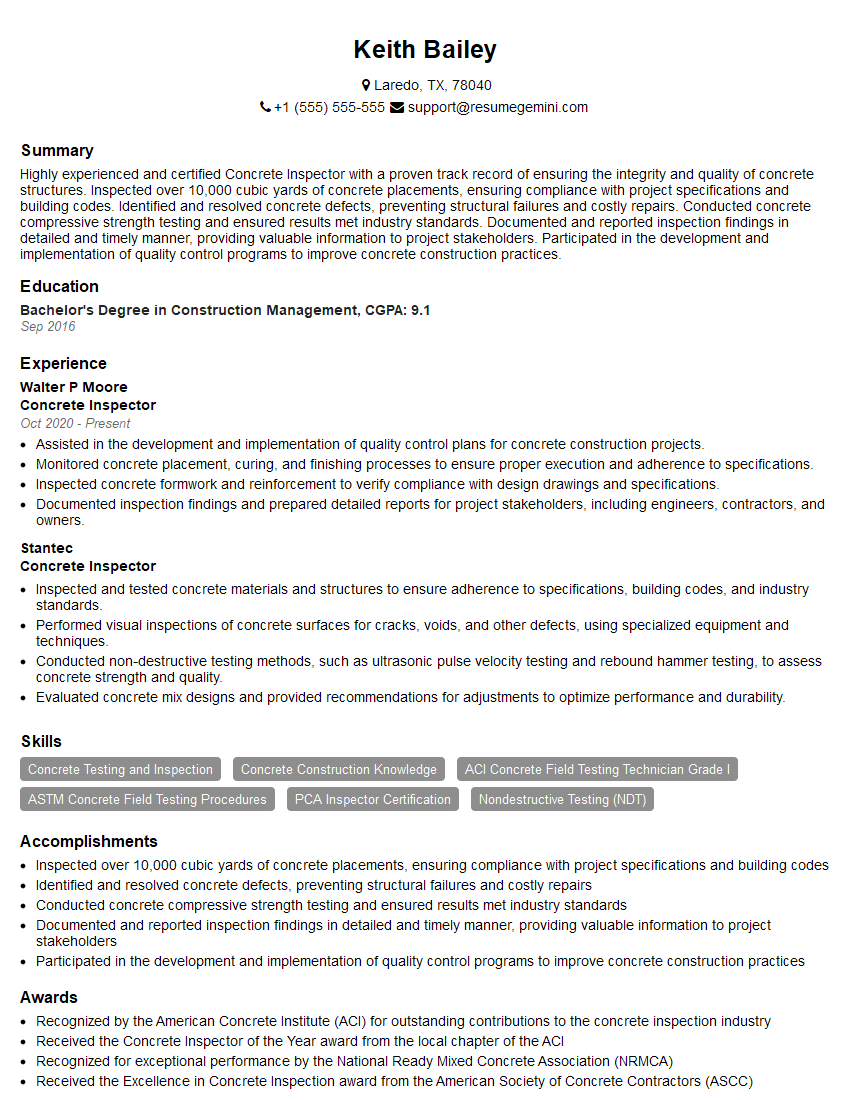
Mastering Concrete Placing and Finishing opens doors to a rewarding career with excellent growth potential, offering opportunities for specialization and advancement. To maximize your job prospects, invest in crafting an ATS-friendly resume that highlights your skills and experience effectively. ResumeGemini is a trusted resource that can help you build a professional and impactful resume. They offer examples of resumes tailored specifically to the Concrete Placing and Finishing field to help you showcase your qualifications effectively. Take the next step toward your dream career today!


Explore more articles
Users Rating of Our Blogs
Share Your Experience
We value your feedback! Please rate our content and share your thoughts (optional).
What Readers Say About Our Blog
Attention music lovers!
Wow, All the best Sax Summer music !!!
Spotify: https://open.spotify.com/artist/6ShcdIT7rPVVaFEpgZQbUk
Apple Music: https://music.apple.com/fr/artist/jimmy-sax-black/1530501936
YouTube: https://music.youtube.com/browse/VLOLAK5uy_noClmC7abM6YpZsnySxRqt3LoalPf88No
Other Platforms and Free Downloads : https://fanlink.tv/jimmysaxblack
on google : https://www.google.com/search?q=22+AND+22+AND+22
on ChatGPT : https://chat.openai.com?q=who20jlJimmy20Black20Sax20Producer
Get back into the groove with Jimmy sax Black
Best regards,
Jimmy sax Black
www.jimmysaxblack.com
Hi I am a troller at The aquatic interview center and I suddenly went so fast in Roblox and it was gone when I reset.
Hi,
Business owners spend hours every week worrying about their website—or avoiding it because it feels overwhelming.
We’d like to take that off your plate:
$69/month. Everything handled.
Our team will:
Design a custom website—or completely overhaul your current one
Take care of hosting as an option
Handle edits and improvements—up to 60 minutes of work included every month
No setup fees, no annual commitments. Just a site that makes a strong first impression.
Find out if it’s right for you:
https://websolutionsgenius.com/awardwinningwebsites
Hello,
we currently offer a complimentary backlink and URL indexing test for search engine optimization professionals.
You can get complimentary indexing credits to test how link discovery works in practice.
No credit card is required and there is no recurring fee.
You can find details here:
https://wikipedia-backlinks.com/indexing/
Regards
NICE RESPONSE TO Q & A
hi
The aim of this message is regarding an unclaimed deposit of a deceased nationale that bears the same name as you. You are not relate to him as there are millions of people answering the names across around the world. But i will use my position to influence the release of the deposit to you for our mutual benefit.
Respond for full details and how to claim the deposit. This is 100% risk free. Send hello to my email id: lukachachibaialuka@gmail.com
Luka Chachibaialuka
Hey interviewgemini.com, just wanted to follow up on my last email.
We just launched Call the Monster, an parenting app that lets you summon friendly ‘monsters’ kids actually listen to.
We’re also running a giveaway for everyone who downloads the app. Since it’s brand new, there aren’t many users yet, which means you’ve got a much better chance of winning some great prizes.
You can check it out here: https://bit.ly/callamonsterapp
Or follow us on Instagram: https://www.instagram.com/callamonsterapp
Thanks,
Ryan
CEO – Call the Monster App
Hey interviewgemini.com, I saw your website and love your approach.
I just want this to look like spam email, but want to share something important to you. We just launched Call the Monster, a parenting app that lets you summon friendly ‘monsters’ kids actually listen to.
Parents are loving it for calming chaos before bedtime. Thought you might want to try it: https://bit.ly/callamonsterapp or just follow our fun monster lore on Instagram: https://www.instagram.com/callamonsterapp
Thanks,
Ryan
CEO – Call A Monster APP
To the interviewgemini.com Owner.
Dear interviewgemini.com Webmaster!
Hi interviewgemini.com Webmaster!
Dear interviewgemini.com Webmaster!
excellent
Hello,
We found issues with your domain’s email setup that may be sending your messages to spam or blocking them completely. InboxShield Mini shows you how to fix it in minutes — no tech skills required.
Scan your domain now for details: https://inboxshield-mini.com/
— Adam @ InboxShield Mini
support@inboxshield-mini.com
Reply STOP to unsubscribe
Hi, are you owner of interviewgemini.com? What if I told you I could help you find extra time in your schedule, reconnect with leads you didn’t even realize you missed, and bring in more “I want to work with you” conversations, without increasing your ad spend or hiring a full-time employee?
All with a flexible, budget-friendly service that could easily pay for itself. Sounds good?
Would it be nice to jump on a quick 10-minute call so I can show you exactly how we make this work?
Best,
Hapei
Marketing Director
Hey, I know you’re the owner of interviewgemini.com. I’ll be quick.
Fundraising for your business is tough and time-consuming. We make it easier by guaranteeing two private investor meetings each month, for six months. No demos, no pitch events – just direct introductions to active investors matched to your startup.
If youR17;re raising, this could help you build real momentum. Want me to send more info?
Hi, I represent an SEO company that specialises in getting you AI citations and higher rankings on Google. I’d like to offer you a 100% free SEO audit for your website. Would you be interested?
Hi, I represent an SEO company that specialises in getting you AI citations and higher rankings on Google. I’d like to offer you a 100% free SEO audit for your website. Would you be interested?