Unlock your full potential by mastering the most common Coordinated Air Operations interview questions. This blog offers a deep dive into the critical topics, ensuring you’re not only prepared to answer but to excel. With these insights, you’ll approach your interview with clarity and confidence.
Questions Asked in Coordinated Air Operations Interview
Q 1. Describe the process of developing an Air Tasking Order (ATO).
Developing an Air Tasking Order (ATO) is a complex, iterative process that culminates in a detailed plan for all air operations within a specific time frame. Think of it as a meticulously crafted symphony score for air power. It begins with a thorough understanding of the operational environment, including the enemy’s capabilities, friendly force locations, and the overall strategic objectives. This intelligence drives the initial planning stages.
Mission Analysis: This phase involves defining the objectives, identifying the necessary air assets, and determining the optimal tactics to achieve the desired outcomes. For instance, we might need close air support for ground troops, suppression of enemy air defenses (SEAD) to protect our assets, or reconnaissance missions to gather intelligence.
Concept Development: Here, planners create a high-level plan outlining how air power will be employed. This might involve defining specific routes, timings for strikes, and coordination with other forces. We would consider factors like weather, terrain, and potential threats to ensure the successful execution of the plan.
ATO Production: This involves translating the high-level plan into a detailed, executable document. The ATO specifies each aircraft’s mission, route, weapons load, time-on-target, and communication frequencies. It also includes crucial information about refueling locations, contingency plans, and deconfliction measures.
Dissemination and Execution: Once finalized, the ATO is disseminated to all participating units. Real-time adjustments may be made during execution based on changing circumstances, utilizing available communication channels.
Throughout this process, collaboration is key. Planners must work closely with ground forces, intelligence analysts, and other air assets to ensure a unified effort and avoid unintended consequences. For example, a change in the ground troop’s location might necessitate a change in CAS (Close Air Support) targeting.
Q 2. Explain the role of an Airborne Warning and Control System (AWACS) in coordinated air operations.
The Airborne Warning and Control System (AWACS) is the ‘eyes and ears’ of coordinated air operations. Imagine it as a giant air traffic controller, but instead of managing civilian planes, it manages military aircraft in a contested environment. Its primary role is to provide real-time surveillance, identification, and tracking of airborne and surface threats. This information is crucial for situational awareness, enabling commanders to make informed decisions about the employment of air power.
Surveillance and Tracking: AWACS uses powerful radar to detect aircraft and surface targets at long ranges, providing early warning of enemy attacks or movements. It can track many targets simultaneously, offering a comprehensive view of the battlespace.
Identification and Command & Control (C2): It doesn’t just detect targets; it helps identify them—friend or foe—using various electronic support measures. This allows it to direct fighter aircraft to engage threats and coordinate them, improving their effectiveness and reducing friendly fire incidents. Think of it as a central nervous system directing the actions of various fighter jets.
Communication Relay: AWACS acts as a critical communication relay station, allowing airborne and ground units to communicate more effectively. In areas with limited communications, the AWACS can serve as the conduit.
During a large-scale air campaign, for instance, an AWACS could simultaneously track enemy fighters, guide friendly fighters to intercept them, and direct friendly bombers to their targets, while maintaining coordination with ground forces. Its contribution is invaluable in maintaining air superiority and supporting ground operations.
Q 3. What are the key challenges in coordinating air operations in a complex, contested environment?
Coordinating air operations in a complex, contested environment presents several formidable challenges. The environment itself can be an adversary, adding layers of complexity to the already intricate dance of air power. These difficulties are amplified when facing a sophisticated enemy.
Enemy Air Defenses (EAD): Sophisticated enemy air defenses, including surface-to-air missiles (SAMs) and anti-aircraft artillery (AAA), pose a constant threat to friendly aircraft. Planners must carefully navigate these threats, often employing suppression of enemy air defenses (SEAD) assets and sophisticated tactics to minimize risk.
Electronic Warfare (EW): Enemy EW capabilities, such as jamming and deception, can significantly degrade the effectiveness of friendly sensors and communications. This necessitates redundancy in systems and robust communication protocols.
Cyber Warfare: Attacks against our command and control systems can disrupt communication and coordination, hindering effective operations. Cybersecurity needs to be prioritized at the highest level.
Environmental Conditions: Weather conditions such as cloud cover, rain, and wind can significantly impact mission success. Flexibility and contingency planning become vital.
Interoperability: Coordinating operations between different nations or branches of the military can be complicated by variations in equipment, communication protocols, and doctrine.
These challenges highlight the need for robust planning, sophisticated technology, highly trained personnel, and constant adaptation to the ever-evolving battlefield.
Q 4. How do you prioritize multiple competing air missions?
Prioritizing competing air missions requires a systematic approach based on a clear understanding of the overall strategic objectives and the relative importance of each mission. We utilize a framework that combines urgency, impact, and feasibility.
Urgency: Missions with immediate and critical needs, like close air support for troops in contact or intercepting incoming enemy aircraft, take precedence.
Impact: Missions with a significant impact on the overall mission, such as destroying a high-value target or securing a critical asset, are highly prioritized.
Feasibility: Missions that are realistically achievable with available assets and resources are given higher priority than those with a low probability of success.
Often, this involves a dynamic prioritization process. For example, if an urgent close air support mission arises, it might temporarily supersede a planned strike mission, even if that strike has high potential impact. A constantly updated threat assessment is vital, allowing for near real-time adjustments.
Decision support tools and sophisticated simulations help planners evaluate the trade-offs between competing missions, ensuring that resources are allocated effectively and that overall operational objectives are met.
Q 5. Describe your experience with Air Support Operations Centers (ASOCs) or similar entities.
I have extensive experience working within Air Support Operations Centers (ASOCs) and similar entities, specifically during Operation Enduring Freedom. The ASOC acts as the central hub for coordinating air support to ground forces. It’s a fast-paced, high-pressure environment requiring constant communication and coordination with multiple units.
Joint Operations: I’ve been involved in operations where the ASOC coordinates air support across multiple branches of the military, ensuring seamless integration of air and ground efforts. This often involves working closely with different nations and forces.
Decision Making Under Pressure: We frequently face time-critical situations that demand quick and effective decisions. A recent example was responding to a ground force in dire need of immediate close air support while also managing the threat from enemy air defenses. Rapid assessment, coordination, and precise execution are paramount.
Technological Proficiency: My experience encompasses utilizing advanced communication and planning tools. We leverage advanced systems for threat assessment, target identification, and real-time tracking. Proficiency with these technologies is essential for effective operations.
Working within an ASOC has provided invaluable experience in understanding the challenges of coordinating complex air operations, prioritizing competing missions, and making critical decisions under immense pressure. The teamwork and collaborative nature of this work are crucial for success.
Q 6. What are the key communication systems used in coordinated air operations?
Coordinated air operations rely on a diverse set of communication systems to ensure seamless information flow between different units and platforms. These systems must be robust, secure, and capable of handling large amounts of data in real-time. Imagine it as a complex web of interconnected communication channels forming a unified voice.
Link 16: This is a tactical data link that provides secure, high-speed data exchange between airborne and ground units. It allows the sharing of crucial information like target locations, threats, and friendly force positions in a timely manner.
HF/VHF Radios: These are essential for voice communication, especially for quick coordination and urgent instructions. These are highly reliable, though bandwidth is limited compared to digital data links.
Satellite Communications: Satellite communication systems are vital for long-range communication, enabling contact with aircraft beyond the range of ground-based systems. They provide connectivity across vast distances, enhancing interoperability.
Data Links (Various): Different data links are employed depending on the platform and mission. For example, specific data links are utilized for coordinating the actions of unmanned aerial vehicles (UAVs) or communicating with airborne early warning (AEW) platforms like AWACS.
The effective use of these communication systems ensures that all participants have the most up-to-date information, minimizing confusion, maximizing coordination, and improving overall mission effectiveness.
Q 7. Explain the concept of ‘deconfliction’ in air operations.
Deconfliction in air operations is the process of preventing collisions or unintended encounters between friendly aircraft or other assets. It’s a critical aspect of safety and operational efficiency, particularly in busy or contested airspace. It’s like choreographing a complex air ballet, ensuring each aircraft maintains its own airspace and avoids any unwanted proximity to other friendly assets.
Air Traffic Control (ATC): ATC plays a critical role in deconfliction, providing separation between aircraft and managing traffic flow. In military scenarios, this role is often augmented by AWACS and other command and control systems.
Flight Planning: Careful flight planning, including the use of pre-determined routes and altitudes, is essential to minimize the potential for conflicts.
Real-time Monitoring: Continuous monitoring of aircraft positions and movements is crucial. AWACS systems, for example, provide real-time tracking that enables proactive deconfliction measures.
Communication Coordination: Clear and timely communication between pilots and air controllers is crucial for successful deconfliction. Pilots must be aware of their surroundings and coordinate their actions with other aircraft in the area.
Failure to deconflict effectively can lead to serious accidents, disrupting operations and jeopardizing personnel. Robust procedures, sophisticated technology, and disciplined personnel are crucial for maintaining safe and efficient air operations.
Q 8. How do you manage risk during air operations?
Managing risk in air operations is a multifaceted process that involves proactive planning, meticulous execution, and constant reassessment. It’s like navigating a complex flight simulator; you need to anticipate potential problems and have contingency plans in place. We employ a layered approach:
- Risk Assessment: Before any mission, we conduct a thorough risk assessment, identifying potential hazards like weather, enemy threats, and mechanical failures. This involves reviewing intelligence reports, weather forecasts, and aircraft maintenance records.
- Mitigation Strategies: Based on the assessment, we develop mitigation strategies. For example, if bad weather is anticipated, we might adjust the flight path or postpone the mission. If enemy threats are high, we might increase the number of escort fighters or utilize electronic warfare capabilities.
- Contingency Planning: We develop detailed contingency plans for various scenarios, such as an aircraft malfunction, an unexpected enemy encounter, or a change in weather conditions. These plans outline procedures to ensure the safety of personnel and the successful completion of the mission or a safe return.
- Real-time Monitoring and Adjustment: During the operation, we constantly monitor the situation, using real-time data from various sources. If new risks emerge, we adjust our strategies accordingly. This requires excellent communication and decision-making capabilities.
- Post-Mission Debriefing: After the mission, we conduct a thorough debriefing to identify lessons learned and areas for improvement in risk management. This helps us refine our processes and improve future operations.
For instance, during a recent operation over a contested airspace, we anticipated heavy anti-aircraft fire. Our mitigation strategy included deploying electronic jamming equipment and utilizing terrain masking to reduce our vulnerability. The contingency plan outlined procedures for downed aircraft recovery and personnel rescue.
Q 9. Describe your experience with air-to-air refueling operations.
Air-to-air refueling (AAR) is crucial for extending the range and endurance of our aircraft, enabling them to reach distant targets and remain airborne for extended periods. It’s like giving a plane a blood transfusion in mid-flight. I’ve participated in numerous AAR operations involving both receiver and tanker aircraft. The process requires precision, coordination, and excellent communication.
My experience includes coordinating AAR for various aircraft types, from fighter jets to bombers. This involves careful planning of refueling tracks, considering wind conditions, aircraft speeds and fuel requirements. Safety is paramount and involves strict adherence to established procedures. We use specialized equipment and highly-trained personnel to ensure safe and efficient refueling. AAR is significantly impacted by weather; strong winds or turbulence can make the process difficult and potentially dangerous.
One memorable experience involved refueling a squadron of fighters during a long-range strike mission. The mission extended over several hours; AAR was critical to ensure the fighters could successfully complete their objective and return to base.
Q 10. How do you integrate different types of aircraft (e.g., fighters, bombers, transports) into a coordinated air operation?
Integrating different aircraft types into a coordinated air operation requires meticulous planning and flawless execution. It’s like conducting a complex symphony orchestra; each instrument (aircraft) plays a unique role, yet all must work in harmony to achieve a common objective. We achieve this through:
- Mission Planning: Each aircraft type has unique capabilities and limitations. During mission planning, we assign roles based on their strengths. For example, fighters provide air superiority and close air support, bombers deliver precision strikes, and transports provide logistical support.
- Data Sharing: Effective communication and data sharing are crucial. We use sophisticated communication systems to ensure all units have the necessary information. This information can range from tactical updates to real-time threat assessments.
- Air Control: A dedicated air control unit coordinates the movement and actions of all aircraft, ensuring separation and preventing collisions. They manage the airspace and ensure each unit operates in the correct location and time to achieve the overall objective.
- Standardized Procedures: We adhere to standardized operating procedures to minimize ambiguity and maximize interoperability. This is especially important when working with allied forces that might use different aircraft and communication systems.
In a recent operation, we integrated fighters, bombers, and tankers. The fighters provided air superiority, the bombers carried out the main strike, and the tankers refueled the fighters and bombers, allowing for extended flight time.
Q 11. Explain the importance of Intelligence, Surveillance, and Reconnaissance (ISR) in coordinated air operations.
Intelligence, Surveillance, and Reconnaissance (ISR) are the eyes and ears of any coordinated air operation. Without it, we would be flying blind. It provides the critical information needed for effective planning and execution. Think of it as a crucial foundation; without it, the whole mission is at risk.
ISR assets, such as satellites, drones, and airborne early warning aircraft, collect information on enemy positions, activities, and defenses. This intelligence is then analyzed and disseminated to air units, enabling them to make informed decisions. ISR data helps us to:
- Target Selection: Identify high-value targets and plan effective strikes.
- Route Planning: Avoid enemy defenses and select the safest and most efficient flight paths.
- Threat Assessment: Assess the level of enemy threat and develop appropriate mitigation strategies.
- Battle Damage Assessment: Evaluate the effectiveness of strikes after they are completed.
For example, in a recent mission, ISR assets identified a heavily defended enemy command center. This information allowed us to plan a precise strike, minimizing civilian casualties and maximizing the impact on the enemy.
Q 12. Describe your experience with using Air Tasking Orders (ATO) for mission planning.
Air Tasking Orders (ATO) are the backbone of mission planning in coordinated air operations. They are detailed instructions, essentially a complex instruction manual, outlining each unit’s role, tasks, and objectives. It’s a meticulously crafted document; every detail is crucial for mission success.
My experience with ATOs involves developing, reviewing, and distributing them for various missions. This includes coordinating with different air units to ensure everyone understands their tasks and responsibilities. ATO development is an iterative process that involves input from various stakeholders, including intelligence analysts, mission planners, and aircrew.
An ATO includes information such as:
- Mission Objectives: The overall goals of the operation.
- Target Information: Location, type, and priority of targets.
- Aircraft Assignments: Specific aircraft and units assigned to each task.
- Route Planning: Detailed flight paths and altitudes.
- Communication Procedures: Frequencies and call signs to be used.
- Contingency Plans: Procedures for various scenarios such as emergencies or unexpected events.
We typically use specialized software to create and manage ATOs, ensuring clarity and consistency. It’s critical that every unit is aware of and understands every detail of the ATO so that the mission can be successful.
Q 13. What are the different types of air missions and their respective roles?
Air missions are categorized into several types, each with a specific role. It’s like a team, where each member specializes in a specific task. Here are some common types:
- Air Superiority: Establishing and maintaining control of the airspace, neutralizing enemy air power.
- Close Air Support (CAS): Providing direct air support to ground troops.
- Interdiction: Attacking enemy forces and supplies en route to the battlefield.
- Strategic Attack: Striking high-value targets deep within enemy territory.
- Reconnaissance: Gathering intelligence on enemy positions and activities.
- Combat Search and Rescue (CSAR): Rescuing downed aircrew and other personnel.
- Airlift: Transporting troops, equipment, and supplies.
- Electronic Warfare (EW): Employing electronic countermeasures to disrupt enemy communication and radar.
The specific types of missions employed will vary depending on the overall objective of the operation and the specific capabilities of the available air assets. A well-planned air campaign might include a combination of these mission types to achieve the desired strategic and tactical outcomes.
Q 14. How do you ensure effective communication and coordination between different air units?
Effective communication and coordination between air units are paramount for success. It’s like a well-oiled machine, with each part working in perfect synchronization. We achieve this through a combination of:
- Standardized Communication Procedures: Using established communication protocols, frequencies, and call signs to ensure clear and concise communication.
- Data Links: Employing sophisticated data links to share real-time information, such as position, heading, and sensor data, between aircraft and ground control.
- Air Control Centers: Utilizing air control centers to coordinate the actions of different air units, managing airspace, and resolving conflicts.
- Joint Training and Exercises: Regularly participating in joint training exercises to hone our communication and coordination skills. This ensures everyone is familiar with procedures and each other’s roles.
- Clear and Concise Language: Employing clear and concise language to avoid misunderstandings. Abbreviations and jargon are minimized to reduce the potential for errors.
In one recent exercise, we used data links to share real-time information on enemy positions and threat levels between fighter squadrons and ground control. This enabled us to dynamically adjust our tactics and respond efficiently to changing conditions.
Q 15. Describe your experience with air defense coordination.
Air defense coordination is the crucial process of integrating various air defense systems and assets to provide comprehensive protection against enemy air threats. It involves the careful planning, execution, and monitoring of actions to detect, identify, track, and neutralize hostile aircraft, missiles, and unmanned aerial systems (UAS).
My experience encompasses coordinating air defense operations in both peacetime exercises and simulated wartime scenarios. This includes working with diverse sensor systems, from ground-based radars to airborne early warning and control (AEW&C) platforms, ensuring seamless information sharing and efficient allocation of interceptor aircraft and missile batteries. For example, in one exercise, I was responsible for synchronizing the actions of Patriot missile batteries and F-16 fighter squadrons to intercept a simulated ballistic missile threat. Successful coordination depended on precise timing, clear communication, and accurate threat assessment.
A key aspect of this is understanding the limitations of each system and coordinating to cover weaknesses. A ground-based radar might have limited range, but an AEW&C aircraft can extend that reach significantly. Efficient coordination mitigates these limitations for a cohesive defense.
Career Expert Tips:
- Ace those interviews! Prepare effectively by reviewing the Top 50 Most Common Interview Questions on ResumeGemini.
- Navigate your job search with confidence! Explore a wide range of Career Tips on ResumeGemini. Learn about common challenges and recommendations to overcome them.
- Craft the perfect resume! Master the Art of Resume Writing with ResumeGemini’s guide. Showcase your unique qualifications and achievements effectively.
- Don’t miss out on holiday savings! Build your dream resume with ResumeGemini’s ATS optimized templates.
Q 16. Explain the role of Joint Air Operations Planning in a multi-national operation.
Joint Air Operations Planning (JAOP) in a multinational operation is a complex undertaking requiring meticulous coordination between participating nations. It’s all about harmonizing diverse doctrines, procedures, communication systems, and equipment to achieve a unified air campaign objective. This includes aligning national interests, defining roles and responsibilities, and establishing clear lines of authority and communication.
The process typically begins with a detailed assessment of the operational environment, including potential threats, friendly forces, and civilian considerations. Then, joint objectives are established and translated into specific air tasks assigned to different nations or coalition partners. Careful consideration is given to airspace management, deconfliction procedures, and the integration of national air defense systems.
Think of it like a complex orchestra; each section (nation) has its own unique instruments and expertise. JAOP acts as the conductor, ensuring each part plays its role in perfect harmony to achieve a single, powerful melody (campaign objective). Misunderstandings, especially in the use of terminologies, can lead to catastrophic errors, so standardization is essential.
Q 17. How do you deal with unexpected events or emergencies during an air operation?
Dealing with unexpected events during air operations demands swift, decisive action based on a well-rehearsed plan and adaptable mindset. My approach involves a structured process:
- Immediate Assessment: Quickly analyze the nature and severity of the unexpected event. This might range from equipment malfunction to an unanticipated enemy action.
- Risk Evaluation: Determine the impact on mission objectives and friendly forces.
- Decision Making: Based on the assessment and risk evaluation, make informed decisions to mitigate the threat and adjust the plan as necessary. This might involve rerouting aircraft, requesting additional assets, or implementing emergency procedures.
- Communication: Maintain clear and constant communication with all relevant parties – aircrews, ground controllers, and higher headquarters – to keep everyone informed and coordinated.
- Post-Incident Review: After the emergency subsides, conduct a thorough review to identify lessons learned and improve future procedures. This analysis is crucial for continuous improvement.
For example, during a training exercise, a simulated engine failure on a participating aircraft required immediate action to ensure the pilot’s safe return while minimizing disruption to the overall operation. By following this process, we safely recovered the aircraft and adjusted the training plan to incorporate the unexpected event into future scenarios.
Q 18. Describe your understanding of the Air Operations Center (AOC) structure and functions.
The Air Operations Center (AOC) is the central nervous system of airpower, responsible for planning, directing, coordinating, and assessing air operations. Its structure is typically organized into functional branches, each with specialized responsibilities. These include:
- Combat Plans (CP): Develops and refines air campaign plans.
- Air Mobility (AM): Manages airlift and air refueling assets.
- Intelligence Surveillance Reconnaissance (ISR): Coordinates intelligence gathering and dissemination.
- Combat Operations (CO): Directs real-time execution of air operations.
- Air Support Operations Center (ASOC) Integrates air support with ground forces
- Systems Operations (SO): Manages the AOC’s communication and information systems.
The AOC’s functions extend to ensuring the efficient employment of air assets, maintaining situational awareness, and managing all aspects of the air campaign. Each branch works collaboratively within a hierarchical structure to create a seamless and efficient process. The AOC’s effectiveness relies on robust communication systems and skilled personnel capable of working in a fast-paced, high-pressure environment.
Q 19. How do you ensure compliance with rules of engagement (ROE) during air operations?
Ensuring compliance with Rules of Engagement (ROE) during air operations is paramount for maintaining legal and ethical standards. This involves a multi-layered approach:
- Pre-Mission Briefing: Thorough briefing of aircrews and ground controllers on the applicable ROE, emphasizing the specific context of the mission and potential legal considerations.
- Real-Time Monitoring: Close monitoring of air operations to ensure compliance through various means such as live feeds, communications intercepts, and post-mission debriefings.
- Clear Communication Channels: Establish clear and effective communication channels to report any potential ROE violations or ambiguous situations promptly.
- Legal Advisors: Involvement of legal advisors who can provide timely guidance and assess potential legal implications in real-time.
- Post-Mission Debriefing: Conduct comprehensive post-mission debriefings to review the mission’s execution, focusing particularly on ROE compliance.
The ROE are not merely a set of regulations; they are a cornerstone of responsible military action. Ignoring or violating them can lead to legal repercussions and damage international relations. Continual education and strict adherence are critical to upholding the integrity of air operations.
Q 20. Describe your experience in managing air assets in a contested environment.
Managing air assets in a contested environment presents significant challenges. It requires a deep understanding of adversary capabilities, sophisticated planning, and robust risk mitigation strategies. My experience in this area includes developing and implementing plans to penetrate enemy air defenses, protect friendly aircraft, and achieve operational objectives despite enemy opposition.
This involves utilizing a range of tactics, including employing stealth technology, electronic warfare, and suppression of enemy air defenses (SEAD). Understanding the enemy’s Order of Battle (OB) – including their radar capabilities, missile systems, and fighter aircraft – is critical for selecting appropriate routes, altitudes, and tactics. The coordination between different types of aircraft, such as fighter jets, bombers, and support aircraft, is paramount for success. It also includes planning for potential losses and having contingency plans in place.
One particular scenario involved coordinating a strike mission against a heavily defended target. The planning phase meticulously accounted for enemy radar coverage, anti-aircraft artillery positions, and the potential for surface-to-air missiles. The result was a successful strike with minimal losses, showcasing the importance of detailed planning and effective coordination in a contested environment.
Q 21. What are some of the limitations of air power, and how do you mitigate them?
Air power, while a potent force, has limitations. These limitations must be understood and mitigated through careful planning and coordination with other military branches.
- Vulnerability to Air Defenses: Advanced air defense systems can pose significant threats to aircraft, particularly in contested airspace. Mitigation involves using stealth technology, electronic warfare, and suppression of enemy air defenses.
- Weather Dependency: Adverse weather conditions can severely restrict air operations, delaying or even preventing missions. Mitigation includes careful weather forecasting and the use of all-weather aircraft and precision-guided munitions.
- Limited Reach in Some Environments: Air power may be less effective in environments with complex terrain or dense urban areas, limiting visibility and creating challenges for navigation and targeting. Coordination with ground forces and the use of precision-guided munitions can help mitigate this.
- Public Opinion: Civilian casualties can significantly affect public support for air operations, which impacts decision-making and long-term strategy. Precision targeting, strict adherence to ROE and comprehensive damage assessment are crucial in mitigating this.
Effective mitigation strategies require a comprehensive approach, considering the limitations of air power in relation to the overall operational context and employing strategies to minimize the impact of these limitations.
Q 22. How do you use technology to improve efficiency and effectiveness in air operations?
Technology is absolutely crucial for efficient and effective air operations. Think of it as the nervous system of a complex, high-stakes endeavor. We leverage a range of technologies, from sophisticated command and control systems to advanced data analytics, to enhance situational awareness, streamline decision-making, and optimize resource allocation.
- Command and Control (C2) Systems: These systems, such as the Advanced Air Operations Center (AAOC) systems, integrate data from diverse sources – radar, satellite imagery, sensor networks, and even social media – providing a real-time, holistic picture of the battlespace. This allows commanders to track friendly and enemy assets, assess threats, and plan missions with unparalleled precision. For example, a C2 system might instantly alert a pilot of a newly detected threat, enabling immediate evasive action or a preemptive strike.
- Modeling and Simulation: Before any operation, we use sophisticated simulations to test various scenarios, optimize mission plans, and identify potential vulnerabilities. These models allow us to rehearse complex scenarios, train personnel, and assess the potential impact of different weapon systems and tactics without risking human lives or resources.
- Data Analytics and Predictive Modeling: Big data analytics are increasingly important. Analyzing vast amounts of data from various sources allows us to identify trends, predict enemy movements, and optimize our response. For example, we might identify patterns in enemy activity that reveal their intentions or logistics routes, guiding preemptive strikes or resource deployments.
- Unmanned Aerial Systems (UAS) and Remotely Piloted Aircraft (RPA): These systems provide critical reconnaissance, surveillance, and targeting information, minimizing risk to manned aircraft. RPAs can also deliver precision strikes with minimal collateral damage, expanding our operational capabilities significantly.
In essence, these technologies dramatically improve our speed, accuracy, and overall effectiveness, minimizing risk and maximizing impact in air operations.
Q 23. Describe your familiarity with different types of air-to-ground weapons and their effects.
My familiarity with air-to-ground weapons encompasses a wide range of systems, each designed for specific targets and effects. Understanding these nuances is crucial for mission success and minimizing civilian casualties.
- Precision-Guided Munitions (PGMs): These weapons, like Joint Direct Attack Munitions (JDAMs) and Paveway series bombs, use GPS or laser guidance to hit targets with pinpoint accuracy, significantly reducing collateral damage. Imagine surgically removing a tumor instead of blasting the whole body with conventional explosives – that’s the difference PGMs make.
- General Purpose Bombs (GPBs): These are unguided bombs with widespread destructive power. While less precise than PGMs, they remain useful for certain tasks, such as destroying large structures or disrupting enemy movements. These require careful targeting to minimize civilian harm.
- Rockets and Missiles: This category includes a variety of systems, from unguided rockets to sophisticated cruise missiles. Each has its own range, accuracy, and payload capacity, influencing their tactical application. Examples include the Hydra 70 rocket and the AGM-86 air-launched cruise missile.
- Cluster Munitions: These weapons release multiple smaller submunitions over a wide area. While effective against large formations, they pose a significant risk to civilians due to the potential for unexploded ordnance and their wide area of effect. Their use is increasingly controversial due to humanitarian concerns.
Choosing the right weapon for the specific target and situation is paramount. We always prioritize minimizing collateral damage and adhering to the laws of armed conflict.
Q 24. How do you assess the effectiveness of an air operation?
Assessing the effectiveness of an air operation is multifaceted and requires a comprehensive approach. It’s not just about hitting targets; it’s about achieving the broader operational objectives. We use a combination of quantitative and qualitative methods.
- Quantitative Measures: This involves analyzing hard data such as the number of targets hit, the amount of enemy equipment destroyed, and the number of enemy casualties. We also track the damage inflicted on enemy infrastructure, the disruption of enemy supply lines, and the impact on enemy morale.
- Qualitative Measures: This is just as important. We consider the overall strategic impact of the operation. Did it achieve its intended objectives? Did it weaken the enemy’s ability to wage war? Did it influence the political or military situation? We analyze after-action reports, intelligence reports, and feedback from ground forces to paint a comprehensive picture.
- Collateral Damage Assessment: A critical component of effectiveness is evaluating collateral damage. We carefully assess the impact on civilian populations and infrastructure, and this information feeds directly into future planning and operational adjustments. Minimizing civilian harm is paramount.
By combining these quantitative and qualitative assessments, we can build a comprehensive picture of the operation’s success and identify areas for improvement.
Q 25. What are the ethical considerations involved in coordinated air operations?
Ethical considerations are paramount in coordinated air operations. The potential for civilian casualties, the use of force, and the impact on the environment all demand careful consideration and a commitment to adhering to the highest ethical standards.
- Minimizing Civilian Casualties: This is our absolute top priority. We use precision-guided munitions whenever possible, employ careful targeting procedures, and meticulously assess potential risks before initiating any operation. We also constantly strive to improve our intelligence gathering and analysis to enhance target identification and reduce the risk of civilian harm.
- Proportionality of Force: The force used must be proportional to the military advantage gained. We carefully weigh the military objectives against the potential civilian harm, ensuring that the means used are appropriate to the ends.
- Distinction Between Combatants and Non-combatants: We must carefully distinguish between military targets and civilian populations. This requires rigorous intelligence gathering and adherence to the laws of armed conflict.
- Transparency and Accountability: Maintaining transparency and accountability in our operations is essential. This includes documenting our actions, conducting thorough post-operation assessments, and engaging in open dialogue about the ethical implications of our decisions.
Ethical conduct is not just a matter of rules and regulations; it’s a fundamental element of our professional responsibility.
Q 26. Explain your understanding of airspace management in a joint or coalition environment.
Airspace management in a joint or coalition environment is a complex undertaking, requiring meticulous planning and coordination. It involves controlling and regulating the use of airspace to ensure safety, efficiency, and operational effectiveness.
- Airspace Control Agencies: Various agencies, such as air defense, air traffic control, and operational control centers, work together to manage the airspace. Clear lines of authority and communication protocols are crucial to avoid conflicts and ensure the safe operation of all air assets.
- Airspace Control Orders (ACOs): These orders define the boundaries of airspace control sectors, allocation of airspace to various users, and operational restrictions. ACO’s ensure that friendly and enemy forces, as well as civilian aircraft, operate within designated areas to minimize risk of collisions or interference.
- De-confliction Procedures: To prevent conflicts between aircraft from different nations or services, robust de-confliction procedures are established. This may involve establishing communication channels, coordinating flight plans, and implementing separation standards to maintain safe distances.
- Data Sharing and Integration: Effective airspace management hinges on the seamless integration of data from various sources. Data sharing among coalition partners is essential to build a common operational picture and ensure everyone operates with the same information.
Airspace management is not merely about preventing accidents; it’s a key enabler of successful joint operations, allowing air power to achieve its objectives safely and efficiently.
Q 27. How do you incorporate lessons learned from previous air operations into future planning?
Incorporating lessons learned is critical to continuous improvement in air operations. We analyze past operations rigorously to identify successes, failures, and areas for improvement.
- After-Action Reviews (AARs): Thorough AARs are conducted following every significant operation. These reviews involve all participants, from pilots and maintainers to planners and commanders. They identify what worked well, what could have been done better, and what changes are needed to improve future operations.
- Data Analysis: We analyze detailed data from various sources, including flight data recorders, sensor data, and intelligence reports, to objectively assess the performance of different systems and tactics. This quantitative analysis can identify patterns and trends that might otherwise go unnoticed.
- Dissemination of Lessons Learned: It’s crucial to share lessons learned across the force. This is done through formal reports, training exercises, and informal discussions to ensure that lessons are not only learned but applied in practice. The goal is to create a culture of continuous learning and improvement.
- Updating Tactics, Techniques, and Procedures (TTPs): Based on the lessons learned, we update our TTPs to reflect best practices and adapt to changing operational environments. This ensures that we’re always prepared for future challenges.
Essentially, our approach is iterative and data-driven, focusing on continuous improvement through the analysis of past performance and the proactive adoption of new methods and technologies.
Q 28. Describe your experience with airpower integration in a combined arms operation.
Airpower integration in a combined arms operation is not simply about dropping bombs; it’s about seamlessly coordinating air assets with ground, maritime, and special operations forces to achieve a common objective. Effective integration requires deep understanding of each service’s capabilities and limitations, and the ability to effectively communicate and collaborate across branches.
- Close Air Support (CAS): CAS is perhaps the most direct form of integration. Airpower directly supports ground troops by engaging enemy forces, suppressing enemy fire, or destroying enemy equipment. This requires precise communication and coordination between air and ground forces to ensure that air strikes are accurate and do not endanger friendly troops.
- Air Interdiction (AI): AI focuses on disrupting enemy supply lines and movement, thereby weakening their ability to wage war. AI operations frequently target enemy logistical hubs, transportation networks, and command and control centers, supporting ground operations by weakening the enemy’s capacity.
- Battlefield Air Interdiction (BAI): BAI is a more specialized form of AI that focuses on targets that are directly relevant to an ongoing ground engagement. These are targets that have a near-immediate impact on the effectiveness of the ground battle.
- Joint Fires Coordination: Coordinating air strikes with other weapons systems, such as artillery and naval gunfire, requires a shared understanding of targeting procedures and the ability to avoid fratricide. This requires the close collaboration of air, ground, and maritime forces.
Successful combined arms operations require more than just coordination; they demand deep integration and mutual trust between different branches. It’s a matter of thinking holistically, understanding the strengths and weaknesses of different forces, and working together to achieve common objectives.
Key Topics to Learn for Coordinated Air Operations Interview
- Air Tasking Order (ATO) Process: Understanding the creation, dissemination, and execution of ATOs, including the roles of different personnel and systems involved. Practical application: Explain how you would troubleshoot a discrepancy in an ATO.
- Air Combat Maneuvering (ACM): Knowledge of basic and advanced ACM tactics, including both offensive and defensive maneuvers. Practical application: Describe a scenario requiring a specific ACM technique and how you’d assess its effectiveness.
- Command and Control (C2) Systems: Familiarity with various C2 systems used in coordinated air operations, their capabilities, and limitations. Practical application: Explain how different C2 systems interact and how information is shared between them.
- Air-to-Air Refueling (AAR): Understanding the procedures and techniques involved in AAR, including safety considerations and logistical implications. Practical application: Discuss the challenges and solutions involved in coordinating AAR in a complex operational environment.
- Joint Operations and Interoperability: Knowledge of how air operations integrate with other branches of the military (land, sea, space), emphasizing effective communication and collaboration. Practical application: Describe a situation where successful interoperability was crucial to mission success.
- Situational Awareness and Decision-Making: Developing strong analytical skills to process information from various sources and make informed decisions under pressure. Practical application: Explain your approach to maintaining situational awareness during a complex air operation.
- Mission Planning and Execution: Deep understanding of the phases of mission planning, from initial concept to post-mission debrief. Practical application: Detail your experience in contributing to a successful mission planning cycle.
Next Steps
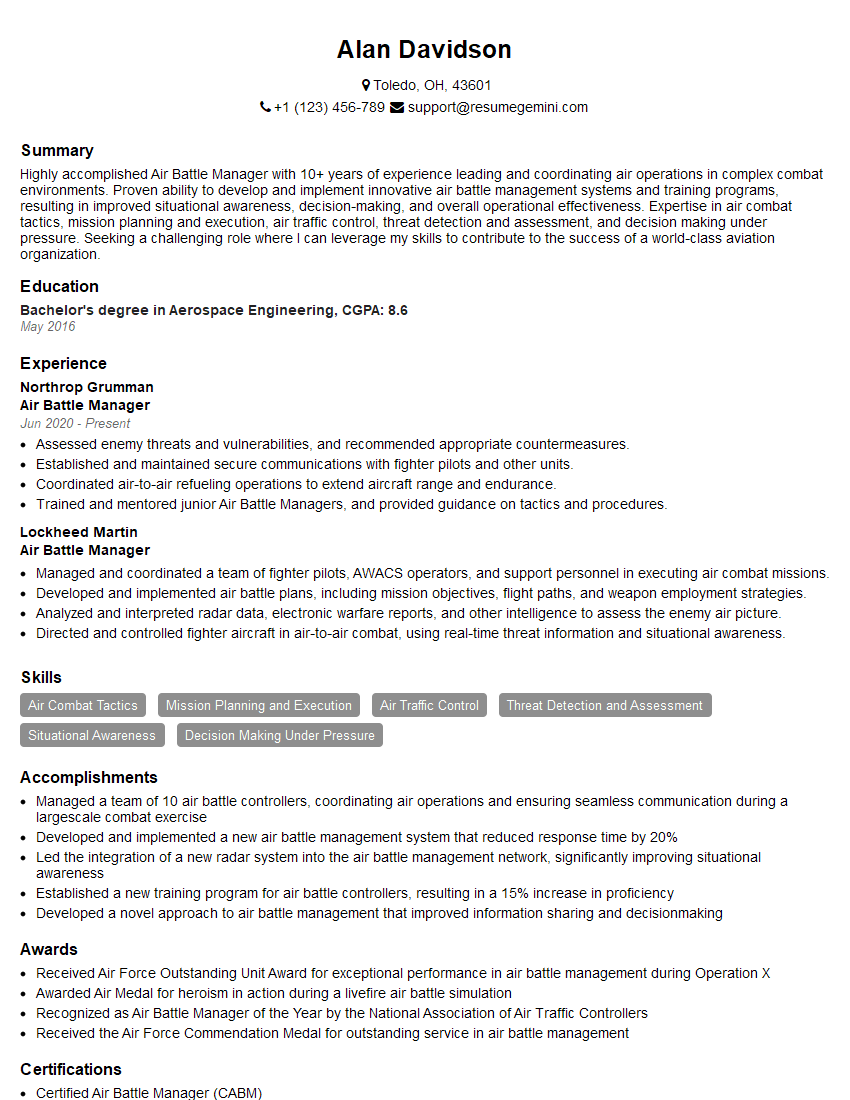
Mastering Coordinated Air Operations opens doors to exciting career advancements and leadership opportunities within the aviation field. A strong resume is crucial for showcasing your expertise and securing your dream role. Creating an ATS-friendly resume is paramount to getting your application noticed. ResumeGemini is a trusted resource to help you build a professional and impactful resume that highlights your unique skills and experience. Examples of resumes tailored to Coordinated Air Operations are available to guide you through the process. Invest time in crafting a compelling narrative that reflects your qualifications and showcases your passion for this dynamic field. Your dedication and preparation will significantly improve your chances of success.
Explore more articles
Users Rating of Our Blogs
Share Your Experience
We value your feedback! Please rate our content and share your thoughts (optional).
What Readers Say About Our Blog
Attention music lovers!
Wow, All the best Sax Summer music !!!
Spotify: https://open.spotify.com/artist/6ShcdIT7rPVVaFEpgZQbUk
Apple Music: https://music.apple.com/fr/artist/jimmy-sax-black/1530501936
YouTube: https://music.youtube.com/browse/VLOLAK5uy_noClmC7abM6YpZsnySxRqt3LoalPf88No
Other Platforms and Free Downloads : https://fanlink.tv/jimmysaxblack
on google : https://www.google.com/search?q=22+AND+22+AND+22
on ChatGPT : https://chat.openai.com?q=who20jlJimmy20Black20Sax20Producer
Get back into the groove with Jimmy sax Black
Best regards,
Jimmy sax Black
www.jimmysaxblack.com
Hi I am a troller at The aquatic interview center and I suddenly went so fast in Roblox and it was gone when I reset.
Hi,
Business owners spend hours every week worrying about their website—or avoiding it because it feels overwhelming.
We’d like to take that off your plate:
$69/month. Everything handled.
Our team will:
Design a custom website—or completely overhaul your current one
Take care of hosting as an option
Handle edits and improvements—up to 60 minutes of work included every month
No setup fees, no annual commitments. Just a site that makes a strong first impression.
Find out if it’s right for you:
https://websolutionsgenius.com/awardwinningwebsites
Hello,
we currently offer a complimentary backlink and URL indexing test for search engine optimization professionals.
You can get complimentary indexing credits to test how link discovery works in practice.
No credit card is required and there is no recurring fee.
You can find details here:
https://wikipedia-backlinks.com/indexing/
Regards
NICE RESPONSE TO Q & A
hi
The aim of this message is regarding an unclaimed deposit of a deceased nationale that bears the same name as you. You are not relate to him as there are millions of people answering the names across around the world. But i will use my position to influence the release of the deposit to you for our mutual benefit.
Respond for full details and how to claim the deposit. This is 100% risk free. Send hello to my email id: lukachachibaialuka@gmail.com
Luka Chachibaialuka
Hey interviewgemini.com, just wanted to follow up on my last email.
We just launched Call the Monster, an parenting app that lets you summon friendly ‘monsters’ kids actually listen to.
We’re also running a giveaway for everyone who downloads the app. Since it’s brand new, there aren’t many users yet, which means you’ve got a much better chance of winning some great prizes.
You can check it out here: https://bit.ly/callamonsterapp
Or follow us on Instagram: https://www.instagram.com/callamonsterapp
Thanks,
Ryan
CEO – Call the Monster App
Hey interviewgemini.com, I saw your website and love your approach.
I just want this to look like spam email, but want to share something important to you. We just launched Call the Monster, a parenting app that lets you summon friendly ‘monsters’ kids actually listen to.
Parents are loving it for calming chaos before bedtime. Thought you might want to try it: https://bit.ly/callamonsterapp or just follow our fun monster lore on Instagram: https://www.instagram.com/callamonsterapp
Thanks,
Ryan
CEO – Call A Monster APP
To the interviewgemini.com Owner.
Dear interviewgemini.com Webmaster!
Hi interviewgemini.com Webmaster!
Dear interviewgemini.com Webmaster!
excellent
Hello,
We found issues with your domain’s email setup that may be sending your messages to spam or blocking them completely. InboxShield Mini shows you how to fix it in minutes — no tech skills required.
Scan your domain now for details: https://inboxshield-mini.com/
— Adam @ InboxShield Mini
support@inboxshield-mini.com
Reply STOP to unsubscribe
Hi, are you owner of interviewgemini.com? What if I told you I could help you find extra time in your schedule, reconnect with leads you didn’t even realize you missed, and bring in more “I want to work with you” conversations, without increasing your ad spend or hiring a full-time employee?
All with a flexible, budget-friendly service that could easily pay for itself. Sounds good?
Would it be nice to jump on a quick 10-minute call so I can show you exactly how we make this work?
Best,
Hapei
Marketing Director
Hey, I know you’re the owner of interviewgemini.com. I’ll be quick.
Fundraising for your business is tough and time-consuming. We make it easier by guaranteeing two private investor meetings each month, for six months. No demos, no pitch events – just direct introductions to active investors matched to your startup.
If youR17;re raising, this could help you build real momentum. Want me to send more info?
Hi, I represent an SEO company that specialises in getting you AI citations and higher rankings on Google. I’d like to offer you a 100% free SEO audit for your website. Would you be interested?
Hi, I represent an SEO company that specialises in getting you AI citations and higher rankings on Google. I’d like to offer you a 100% free SEO audit for your website. Would you be interested?