Preparation is the key to success in any interview. In this post, we’ll explore crucial Cotton Pest Management Techniques interview questions and equip you with strategies to craft impactful answers. Whether you’re a beginner or a pro, these tips will elevate your preparation.
Questions Asked in Cotton Pest Management Techniques Interview
Q 1. Explain the principles of Integrated Pest Management (IPM) in cotton production.
Integrated Pest Management (IPM) in cotton production is a holistic approach that aims to minimize pest damage while minimizing the environmental impact and economic costs associated with pest control. It’s not about eliminating pests entirely – that’s often impossible and environmentally damaging – but about keeping pest populations below the economic threshold, meaning the level at which pest damage outweighs the cost of control.
- Monitoring and Scouting: Regularly checking cotton fields for pest presence and damage is the cornerstone of IPM. This helps to identify problems early and allows for targeted interventions.
- Economic Thresholds: IPM relies on establishing economic thresholds. This is the pest population level at which control measures become economically justified. Treatment is only initiated if this threshold is surpassed.
- Cultural Control: This involves using agricultural practices to minimize pest populations. Examples include crop rotation, using pest-resistant varieties, proper irrigation and fertilization, and maintaining field sanitation.
- Biological Control: This leverages natural enemies of pests, such as beneficial insects, to control pest populations. Introducing natural predators or parasitoids can significantly reduce reliance on pesticides.
- Chemical Control: Pesticides are considered a last resort in IPM, used only when other methods fail to keep pest populations below the economic threshold. The goal is to use the least toxic and most effective pesticide at the lowest possible dose.
Imagine a farmer using IPM: Instead of routinely spraying pesticides, they meticulously scout their fields, identifying early signs of bollworms. If the population is low, they might employ cultural controls like adjusting irrigation to favor beneficial insects. Only if the bollworm population threatens significant yield loss, would they consider a targeted pesticide application.
Q 2. Describe common cotton pests and their life cycles.
Cotton is susceptible to a wide range of pests. Here are some common ones and their life cycles:
- Boll Weevil (Anthonomus grandis): Adults overwinter in debris. Females lay eggs in cotton squares, and larvae feed inside, developing into pupae and emerging as adults. This cycle repeats throughout the growing season.
- Pink Bollworm (Pectinophora gossypiella): This pest overwinters as larvae within cotton bolls or debris. Moths emerge, laying eggs on squares and bolls. Larvae bore into the bolls, feeding on seeds and fibers, completing their development inside the bolls.
- Cotton Aphid (Aphis gossypii): Aphids reproduce rapidly, both sexually and asexually. They feed on plant sap, weakening the plant and transmitting viral diseases.
- Spider Mites (Tetranychus urticae): These tiny mites feed on the underside of leaves, causing stippling and discoloration. They reproduce rapidly under warm, dry conditions.
- Whiteflies (Bemisia tabaci): Whiteflies suck plant sap and excrete honeydew, fostering the growth of sooty mold. They also transmit viruses.
Understanding these life cycles is crucial for effective pest management. For instance, knowing that boll weevils overwinter in debris helps guide strategies for field sanitation to reduce the initial population the following season.
Q 3. What are the key scouting techniques for identifying cotton pests?
Effective scouting is essential for successful IPM. It involves systematically inspecting cotton fields to detect pests and assess their damage. Here are key techniques:
- Visual Inspection: Carefully examine cotton plants, paying close attention to squares, bolls, leaves, and stems. Look for signs of pest feeding, damage, and the pests themselves.
- Beat Sheet Sampling: Use a white sheet to collect insects that fall from plants when they are tapped. This provides a quantitative estimate of pest populations.
- Sweep Net Sampling: A sweep net can capture flying insects such as aphids and whiteflies in the field, helping to estimate their abundance.
- Yellow Sticky Traps: These traps are effective for monitoring flying insects like whiteflies and thrips.
- Regularity and Consistency: Scouting should be done regularly, at least weekly, and ideally more frequently during periods of high pest pressure. Consistent scouting helps build a historical data set for your field.
For instance, a farmer might use a beat sheet in a specific area of the field to estimate the number of bollworms, then use this data alongside economic thresholds to decide on appropriate control actions.
Q 4. How do you determine economic thresholds for pest control in cotton?
Economic thresholds (ET) represent the pest population level at which the cost of control equals the value of the crop saved. Determining ET involves several factors:
- Pest Density: How many pests are present in the field.
- Crop Growth Stage: The vulnerability of the cotton plant to pest damage varies with its developmental stage.
- Price of Cotton: The economic impact of pest damage is directly related to the market value of cotton.
- Cost of Control: The cost of implementing control measures, including labor, equipment, and pesticides.
- Yield Loss Potential: The estimated yield reduction caused by the pest at different population densities.
Determining the ET is not an exact science and often involves using established guidelines and local expertise. For example, a higher cotton price might justify controlling a pest population at a lower density than when prices are low. Farmers often use tables and software provided by agricultural extension services or consultants to estimate ET for their specific circumstances.
Q 5. Explain different pesticide application methods and their suitability for cotton.
Several methods exist for applying pesticides in cotton, each with its own advantages and disadvantages:
- Ground Application: This involves using sprayers mounted on tractors or other ground equipment. It’s cost-effective for large fields but may have less precise application compared to other methods.
- Aerial Application: Aerial application uses airplanes or helicopters for spraying. This is very effective for large fields and hard-to-reach areas, but weather conditions can significantly influence its effectiveness and requires specialized equipment and expertise.
- Drip/In-furrow Application: This method delivers pesticides directly to the soil, potentially reducing environmental impact, but this method is mainly suitable for certain soil-borne pests. It is less effective for foliar pests.
The choice of application method depends on factors like field size, topography, pest type, pesticide formulation, and environmental regulations. For instance, aerial application is often favored for large-scale cotton production, while ground application might be preferred in smaller fields or areas with sensitive ecosystems.
Q 6. Discuss the importance of pesticide resistance management in cotton.
Pesticide resistance management is crucial for the long-term effectiveness of chemical control in cotton. Resistance occurs when pests develop the ability to survive pesticide exposure. Here are key strategies:
- Rotating Pesticides: Using different pesticide classes with different modes of action prevents the selection of resistant pest populations.
- Integrated Pest Management (IPM): Minimizing pesticide use through IPM reduces selection pressure and delays the development of resistance.
- Refugia: Creating areas within the field where pesticides are not applied provides a refuge for susceptible insects, helping to maintain a population of non-resistant pests.
- Monitoring for Resistance: Regularly monitoring for resistance through bioassays or other methods helps to detect resistance development early.
- High-Dose/Short-Interval Spraying: This approach is sometimes used strategically against susceptible pest populations.
Consider a farmer who repeatedly uses the same insecticide against bollworms. Over time, bollworm populations resistant to that insecticide will proliferate, rendering the chemical ineffective. A good resistance management program would involve rotating pesticides, integrating cultural practices, and closely monitoring the effectiveness of the applied treatment.
Q 7. What are the environmental considerations in cotton pest management?
Environmental considerations are paramount in cotton pest management. Improper pesticide use can have significant negative impacts on non-target organisms, water quality, and soil health.
- Reduced Pesticide Use: IPM strategies aim to minimize pesticide application, reducing the risk of environmental contamination and harm to beneficial insects and other organisms.
- Targeted Pesticide Application: Precise application techniques, such as nozzle selection and boom height adjustment, minimize pesticide drift and off-target effects.
- Buffer Zones: Establishing buffer zones around sensitive areas such as water bodies and wetlands further minimizes the risk of contamination.
- Proper Pesticide Disposal: Following proper pesticide disposal procedures helps to protect soil and water resources.
- Beneficial Insect Conservation: Protecting and enhancing populations of beneficial insects through habitat management reduces the reliance on chemical control.
For example, a farmer might choose to use a biopesticide with reduced environmental impact instead of a broad-spectrum insecticide, or implement integrated pest management principles, including cultural and biological controls, to reduce the need for pesticides.
Q 8. How do you assess the impact of various pest control strategies on beneficial insects?
Assessing the impact of pest control strategies on beneficial insects is crucial for sustainable cotton production. We need to minimize harm to these natural allies, which help control pests and pollinate crops. This assessment involves several methods.
- Visual Surveys: Regularly inspect the field to observe the presence and abundance of beneficial insects like ladybugs, lacewings, and predatory mites. A decline in their numbers might indicate a negative impact of the chosen strategy.
- Sampling Techniques: Employ techniques like sweep netting or pitfall trapping to quantitatively assess beneficial insect populations before, during, and after pesticide application. Comparing these numbers reveals the impact of the control method.
- Toxicity Testing: Laboratory tests can measure the direct toxicity of pesticides on beneficial insects. This helps us choose the least harmful options. For instance, selective insecticides target specific pests while minimizing harm to beneficial species.
- Monitoring Key Prey/Predator Relationships: Observe the interaction between beneficial insects and their prey (pest insects). A decline in pest populations alongside a healthy beneficial insect population suggests an effective and environmentally friendly strategy.
For example, if we observe a significant drop in ladybug populations after applying a broad-spectrum insecticide, it signals that the strategy needs adjustments to protect these beneficial insects. We might explore alternative, more targeted approaches, like biological control or integrated pest management (IPM).
Q 9. Describe the role of biological control in cotton pest management.
Biological control plays a significant role in cotton pest management by utilizing natural enemies to suppress pest populations. This eco-friendly approach reduces reliance on synthetic pesticides, minimizing environmental impact and promoting biodiversity.
- Predators: Introducing or conserving predatory insects like ladybugs, lacewings, and spiders that feed on cotton pests.
- Parasitoids: Utilizing parasitic wasps or flies that lay their eggs inside or on pest insects, eventually killing them. These are particularly effective against certain cotton pests.
- Pathogens: Employing naturally occurring bacteria, fungi, or viruses that infect and kill pest insects. Bacillus thuringiensis (Bt) is a well-known example used in genetically modified Bt cotton.
- Conservation Biological Control: This focuses on protecting and enhancing existing beneficial insect populations within the cotton field through habitat management. Providing nesting sites and food sources helps maintain their numbers.
Imagine a cotton field struggling with aphids. Introducing lacewings that prey on aphids can drastically reduce their numbers without resorting to chemical insecticides. This approach is more sustainable and less harmful to the environment compared to widespread pesticide use.
Q 10. What are the key factors influencing the efficacy of insecticides in cotton?
The effectiveness of insecticides in cotton depends on several interconnected factors:
- Insecticide Properties: The chemical’s toxicity, persistence, and mode of action greatly influence its efficacy. Some insecticides work by contact, others through ingestion, and some by disrupting the insect’s nervous system.
- Pest Biology: Factors such as the pest’s life cycle stage, behavior, and resistance level determine how well an insecticide works. A highly resistant pest might require a higher dose or a different insecticide.
- Environmental Conditions: Temperature, humidity, rainfall, and wind speed affect insecticide application, persistence, and effectiveness. High temperatures can degrade some insecticides, while heavy rain can wash them away.
- Application Method: The technique used (e.g., aerial spraying, ground application) impacts the distribution and coverage of the insecticide. Proper calibration and timing are key for optimal results.
- Pest Density: Insecticides are most effective when pest populations are relatively low. High pest densities might overwhelm the insecticide’s effect.
For example, using an insecticide on a resistant pest population won’t yield desired results. Similarly, applying an insecticide during heavy rain would reduce its effectiveness due to runoff.
Q 11. How do you monitor pesticide application for efficacy and environmental safety?
Monitoring pesticide application for efficacy and environmental safety is crucial for responsible pest management. This involves a multi-pronged approach:
- Pre-Application Checks: Ensuring proper calibration of equipment, correct pesticide mixing, and suitable weather conditions before application.
- Post-Application Assessments: Visual inspections of treated areas to ensure uniform coverage and assess immediate mortality of pests.
- Residue Analysis: Sampling cotton plants and soil at various time intervals after application to measure pesticide residue levels. This helps determine if the application is effective and doesn’t exceed safety limits.
- Water and Soil Sampling: Monitoring water bodies and soil surrounding the cotton field to detect pesticide runoff or leaching, preventing contamination.
- Beneficial Insect Monitoring: Assessing the impact of the pesticide on non-target organisms, including beneficial insects and pollinators.
A practical example includes using traps to monitor pest populations after pesticide application to determine if the treatment was successful. Regular soil testing ensures we haven’t exceeded recommended pesticide limits, protecting the environment and human health.
Q 12. Explain the importance of record-keeping in cotton pest management.
Record-keeping is fundamental in cotton pest management. It provides a detailed history of pest activity, control measures, and their effectiveness, enabling informed decision-making and optimizing future strategies.
- Pest Monitoring Data: Detailed records of pest scouting, including date, location, pest type, and population density.
- Control Measures Implemented: Documentation of insecticides, biological control agents, or other management tactics used, including the application rate and date.
- Weather Data: Recording temperature, rainfall, and humidity during the growing season, as these factors impact pest activity and insecticide efficacy.
- Yield Data: Tracking crop yields over time to assess the impact of pest management on productivity.
- Economic Analysis: Calculating the costs and benefits of different pest management strategies to optimize resource allocation.
Imagine you’ve implemented a new pest management strategy. Without detailed records, it’s hard to evaluate its success. Comprehensive record-keeping provides data to compare this strategy to past methods, helping you improve your approach over time.
Q 13. How do you interpret pest monitoring data to make informed management decisions?
Interpreting pest monitoring data involves a systematic approach to translate raw numbers into informed management decisions. This often includes using thresholds to determine when intervention is necessary.
- Economic Thresholds: These define the pest population level at which economic losses from pest damage outweigh the cost of control measures. If the population exceeds the threshold, action is warranted.
- Injurious Thresholds: These denote the population level where pest damage significantly affects plant health and yield, even if economic losses haven’t yet reached the economic threshold.
- Data Analysis: Using statistical tools to analyze trends in pest population dynamics, helping predict future outbreaks and refine management strategies.
- Integration with Other Factors: Considering factors like weather patterns, crop growth stage, and the presence of beneficial insects when making decisions.
- Decision Support Systems: Utilizing computer models or software programs that integrate various data sources to provide tailored pest management recommendations.
For instance, if monitoring data reveals that the bollworm population in a cotton field is rapidly approaching the economic threshold, we can implement appropriate control measures to prevent significant yield loss. By combining population data with weather forecasts, we can even predict potential outbreaks and take preventive measures.
Q 14. Discuss the challenges of managing resistant pests in cotton.
Managing resistant pests in cotton presents a major challenge. Overuse of insecticides leads to the evolution of resistant populations, rendering conventional control methods ineffective.
- Resistance Monitoring: Regularly testing pest populations for resistance to different insecticide classes. This requires specific laboratory assays to check for resistance mechanisms.
- Integrated Pest Management (IPM): Emphasizing a diversified approach that minimizes insecticide reliance. This includes using biological control agents, cultural practices (e.g., crop rotation), and host plant resistance.
- Resistance Management Strategies: Employing tactics like insecticide rotation, alternating insecticide modes of action, and tank mixing insecticides with different mechanisms to slow down the development of resistance.
- Refugia Strategy: In the context of Bt cotton, ensuring the presence of non-Bt cotton plants in the field to provide a refuge for susceptible pest populations, slowing down the spread of resistance.
- New Insecticide Development: Research and development of new insecticides with novel modes of action to overcome existing resistance mechanisms.
For example, if a cotton field experiences recurring outbreaks of bollworms resistant to pyrethroids, it’s crucial to switch to an insecticide with a different mode of action and incorporate IPM strategies to prevent the further development of resistance.
Q 15. What are the best practices for preventing pesticide drift and runoff?
Preventing pesticide drift and runoff is crucial for environmental protection and human health. It involves a multi-pronged approach focusing on application techniques, equipment, and weather conditions.
- Proper Nozzle Selection: Using nozzles that produce larger droplets reduces drift significantly. Smaller droplets are more easily carried by wind.
- Reduced Spray Pressure: Lowering spray pressure minimizes droplet size and drift. Think of it like a water hose – higher pressure means a finer spray.
- Appropriate Timing: Avoid spraying during windy conditions, high temperatures, or when inversions (temperature increases with altitude) are present. These conditions promote drift.
- Buffer Zones: Establishing buffer zones around sensitive areas such as waterways, residential areas, and other crops protects them from pesticide exposure. This creates a physical barrier.
- Proper Equipment Maintenance: Regularly inspect and maintain spray equipment to ensure it’s functioning correctly. Leaking nozzles or faulty pumps can lead to excessive drift and application.
- No-Till Farming and Cover Crops: Implementing no-till farming and cover crops can improve soil health and reduce runoff by enhancing water infiltration.
For example, a farmer in a windy region might choose to spray early morning or evening, when winds are typically calmer. They’d also ensure their spray equipment is calibrated for optimal droplet size and pressure to minimise drift onto neighboring crops or water bodies.
Career Expert Tips:
- Ace those interviews! Prepare effectively by reviewing the Top 50 Most Common Interview Questions on ResumeGemini.
- Navigate your job search with confidence! Explore a wide range of Career Tips on ResumeGemini. Learn about common challenges and recommendations to overcome them.
- Craft the perfect resume! Master the Art of Resume Writing with ResumeGemini’s guide. Showcase your unique qualifications and achievements effectively.
- Don’t miss out on holiday savings! Build your dream resume with ResumeGemini’s ATS optimized templates.
Q 16. How do you integrate pest management strategies with other crop management practices?
Integrated Pest Management (IPM) in cotton isn’t about pesticides alone; it’s a holistic approach integrating various practices to minimize pest damage while preserving the environment and farmer profitability. It’s about understanding the bigger picture.
- Crop Rotation: Rotating cotton with non-host crops disrupts pest life cycles, reducing pest populations in subsequent cotton seasons. Think of it like changing the menu at a restaurant – pests get used to a consistent diet.
- Soil Health Management: Healthy soils support strong cotton plants, making them more resilient to pests. Techniques like cover cropping and no-till farming improve soil structure and nutrient availability.
- Water Management: Proper irrigation practices reduce stress on plants, making them less susceptible to pest attack. Stressed plants are weaker and more vulnerable.
- Nutrient Management: Balanced fertilization provides plants with the nutrients they need to grow robustly and resist pests. Think of it like a healthy diet for humans – better nutrition equals better resistance to diseases.
- Biological Control: Introducing beneficial insects, such as ladybugs that prey on aphids, provides a natural means of pest control. This is like adding a natural predator to the ecosystem.
Imagine a farmer using resistant cotton varieties, carefully monitoring pest populations with pheromone traps, and only applying pesticides when necessary, based on economic thresholds. This is a clear example of successful IPM integration.
Q 17. Describe the use of pheromone traps in cotton pest monitoring.
Pheromone traps use synthetic sex pheromones to attract and trap male insects, allowing farmers to monitor pest populations and time pesticide applications more effectively. It’s a smart way to detect problems before they escalate.
These traps are strategically placed within cotton fields. The pheromone lures males to the traps, where they get stuck or killed. By counting the number of trapped insects, farmers can get an estimate of the pest population density. This data helps determine if pest numbers have reached the economic threshold (the point where the cost of pest control outweighs the cost of crop damage). Only then would chemical intervention be necessary, making it more cost-effective and environmentally sound.
For example, monitoring bollworm populations using pheromone traps can help farmers to predict outbreaks and apply pesticides only when they’re truly needed, thus avoiding unnecessary pesticide applications and their associated environmental and health costs.
Q 18. What are the regulatory requirements for pesticide use in your region?
Regulatory requirements for pesticide use vary significantly by region and are frequently updated. It is critical to consult your local Agricultural Extension Service or relevant regulatory agency for the most up-to-date information. General requirements often include:
- Pesticide Licensing: Individuals applying pesticides usually require a license or certification demonstrating competency in safe handling and application.
- Registration: Pesticides must be registered with the relevant regulatory bodies before they can be legally used.
- Labeling and Usage Instructions: Farmers are legally bound to follow all instructions on pesticide labels, including application rates, safety precautions, and restrictions on use.
- Record Keeping: Detailed records of pesticide applications, including the type of pesticide, application date, rate, and area treated, are usually mandatory.
- Personal Protective Equipment (PPE): The use of appropriate PPE, including gloves, masks, and protective clothing, is required when handling and applying pesticides to protect the applicator’s health.
- Worker Protection Standards: Regulations exist to protect workers from pesticide exposure during and after application.
Failing to comply with these regulations can lead to penalties, including fines and legal action.
Q 19. How do you handle pesticide spills or emergencies?
Handling pesticide spills or emergencies requires a swift and organized response to minimize environmental damage and protect human health. The steps involved are:
- Immediate Containment: Prevent further spread of the spill by using absorbent materials like sand or clay. This is the first line of defense.
- Emergency Notification: Report the spill immediately to the appropriate authorities (e.g., local emergency services, environmental agencies). This ensures proper assistance and documentation.
- Personal Safety: Ensure the safety of yourself and others by wearing appropriate PPE, evacuating the area if necessary, and seeking medical attention if exposure occurs. Safety is paramount.
- Spill Cleanup: Follow the instructions provided on the pesticide label or by emergency responders for proper cleanup procedures. This often involves specialized techniques and equipment.
- Documentation: Maintain thorough records of the spill, cleanup procedures, and any actions taken. This is essential for compliance and future reference.
A well-rehearsed emergency plan, including clear communication protocols and readily available spill kits, is essential for effective response. Preparation is key.
Q 20. Discuss the impact of climate change on cotton pest populations.
Climate change significantly impacts cotton pest populations through altered temperatures, rainfall patterns, and humidity levels. These changes can lead to:
- Range Expansion: Warmer temperatures allow pests to expand their geographic range, potentially introducing new pests into cotton-growing regions.
- Increased Generation Numbers: Longer growing seasons and milder winters can result in more pest generations per year, increasing their populations.
- Altered Life Cycles: Changes in temperature and humidity can alter pest life cycles, impacting their development rates and making them more difficult to manage.
- Increased Susceptibility to Pests: Stress caused by extreme weather events (droughts, floods) can weaken cotton plants, making them more vulnerable to pests.
- Changes in Pest Behavior: Some pests may exhibit changes in their feeding habits, host preferences, or reproductive strategies in response to climate change.
For example, increased temperatures might allow the cotton bollworm to thrive in previously unsuitable areas, necessitating adaptations in pest management strategies.
Q 21. Explain the use of resistant cotton varieties in pest management.
Resistant cotton varieties play a significant role in integrated pest management by reducing reliance on chemical pesticides. These varieties possess genetic traits that confer resistance to specific pests, essentially making them less susceptible to attack.
This resistance can be achieved through several mechanisms:
- Bt Cotton: Bacillus thuringiensis (Bt) cotton contains genes from the bacterium Bacillus thuringiensis that produce proteins toxic to certain pests, such as the bollworm. It’s like building-in a natural insecticide.
- Insect Resistance Genes: Other resistant varieties possess genes that provide resistance to specific insect pests, reducing the need for pesticide application.
- Host Plant Resistance: Some cotton varieties exhibit characteristics that make them less attractive or palatable to certain pests. Think of it like making the cotton less appealing to the pest.
However, it’s crucial to emphasize that reliance on a single resistance mechanism can lead to the development of pest resistance. Therefore, a combination of resistant varieties and other IPM practices is vital for sustainable pest management. This requires continuous monitoring and adapting to pest evolution.
Q 22. What are the economic implications of pest infestations in cotton?
Pest infestations in cotton can have devastating economic consequences. Yield losses are the most direct impact, significantly reducing the farmer’s income. A severe infestation can lead to complete crop failure, resulting in substantial financial losses. Beyond yield reduction, pest damage can impact the quality of the cotton fiber, lowering its market value. This might mean reduced length, strength, or color, making it less desirable for textile manufacturers. Furthermore, the costs associated with pest management itself – including insecticides, application equipment, labor, and monitoring – can significantly erode profit margins. Farmers may need to invest in multiple control strategies, adding up to substantial expenses that could outweigh the final profits if the infestation is not effectively managed. The indirect costs, such as potential damage to farm equipment, are also factors to consider. For instance, a boll weevil infestation could reduce yields by 50% or more, leaving a farmer with a severely diminished harvest and a significant financial burden.
Q 23. How do you communicate pest management recommendations to growers?
Communicating effectively with growers is crucial for successful pest management. I employ a multi-pronged approach. Firstly, I utilize clear, concise language, avoiding technical jargon unless absolutely necessary and explaining any specialist terms. I tailor my recommendations to the specific conditions of each farm, considering factors like the field’s history, the current weather patterns, and the grower’s individual circumstances and risk tolerance. Secondly, I utilize various communication channels. This includes face-to-face meetings where I can directly address their concerns and provide personalized advice. I also utilize educational workshops and online resources such as informative brochures and videos to reach a wider audience. Regular email updates and timely alerts about pest outbreaks are another important tool. Finally, I strongly emphasize the importance of accurate scouting and record-keeping. This is where we work together; they provide the data, I interpret it and build a management strategy. Regular feedback from the grower allows me to assess the effectiveness of the recommendations and make adjustments as needed. For example, I might provide a visual guide on identifying different cotton pests and their damage symptoms, making it easier for the grower to accurately assess the situation.
Q 24. Describe your experience with using precision agriculture technologies for pest management.
My experience with precision agriculture technologies in cotton pest management has been extensive and highly rewarding. I’ve worked extensively with GPS-guided sprayers that allow for targeted insecticide application, minimizing chemical usage and environmental impact. This significantly reduces pesticide drift, saving costs and protecting non-target organisms. I’ve also leveraged remote sensing technologies, particularly aerial imagery and drone surveys, to accurately assess pest infestations across large fields. These technologies allow for early detection and precise mapping of pest hotspots, allowing for timely and strategic interventions. For instance, using multispectral imagery, we can identify areas under stress before symptoms are visible to the naked eye, allowing for preemptive treatment before widespread damage occurs. The data acquired through these technologies is then integrated into Geographic Information Systems (GIS) for better visualization and management decisions. In one project, using drone-based imagery and machine learning algorithms, we successfully identified and treated localized infestations of cotton aphids, preventing a widespread outbreak and saving a significant yield.
Q 25. Explain the role of data analysis in optimizing cotton pest management strategies.
Data analysis plays a vital role in optimizing cotton pest management strategies. By systematically collecting and analyzing data from various sources, we can create a detailed picture of pest populations and their dynamics over time. This includes historical pest data, weather information, soil conditions, and the effectiveness of past control measures. Using statistical modeling and predictive analytics, we can forecast potential pest outbreaks, enabling timely and effective interventions. For instance, we might use historical weather data and pest population trends to build a model that predicts the likelihood of an aphid infestation in a specific region during a particular time of year. This information allows farmers to preemptively prepare and minimize the economic impact. Furthermore, data analysis can help evaluate the efficacy of different pest management strategies and optimize their use. We might compare the effectiveness of different insecticides against specific pests, helping us select the most cost-effective and environmentally friendly approach. This data-driven approach ensures sustainable and cost-effective pest management practices.
Q 26. What are the latest advancements in cotton pest management technologies?
Recent advancements in cotton pest management have significantly improved our ability to control pests in a more sustainable and effective way. These include: the development of resistant cotton varieties, deploying biological control agents such as beneficial insects that prey on harmful pests; advances in precision application techniques like drone technology for targeted pesticide application; improved monitoring systems using remote sensing and artificial intelligence (AI) for faster and more accurate detection of pest outbreaks, as well as; the development of pheromone traps and mating disruption techniques that interfere with the pests’ reproductive cycle. The use of AI and machine learning for image recognition to automatically identify pests and assess the extent of damage is also transforming pest management. Integrating all these advanced technologies allows for a more proactive and precise approach to cotton pest control, minimizing environmental impact while maximizing yield and quality.
Q 27. How do you stay updated on the latest research and best practices in cotton pest management?
Staying current in the field of cotton pest management requires a multifaceted approach. I actively participate in professional organizations such as the Entomological Society of America, attending conferences and workshops to learn about the latest research and best practices. I regularly read peer-reviewed scientific journals and industry publications to stay abreast of new developments in pest control technologies and strategies. Online resources, databases, and webinars also play a crucial role in my continuous learning. I also collaborate with other experts in the field through networking and knowledge sharing. This includes participating in research projects and collaborating with universities and research institutions to stay informed about the latest research findings. Maintaining these connections is crucial for staying ahead in this rapidly evolving field.
Q 28. Describe a time you had to solve a challenging pest management problem in cotton.
One particularly challenging case involved a severe outbreak of cotton bollworms in a large cotton field during a prolonged period of hot, dry weather. The conventional insecticide applications were not effective. The initial approach focused on intensive chemical control, but the pest population rebounded quickly. This suggested resistance to the chemicals. This situation required a shift in strategy. I worked closely with the grower, using detailed scouting reports and combining data from pheromone traps and visual inspection to understand the pest’s behavior and population dynamics. We implemented an integrated pest management (IPM) approach combining biological control (introducing predatory insects) with targeted insecticide use only in specific high-density areas identified by the precision mapping. Furthermore, we adjusted irrigation techniques to alleviate the stress on the cotton plants, making them less susceptible to pest attacks. This combined approach significantly reduced the bollworm population within three weeks. It highlighted the importance of adaptive management, monitoring, and the integration of diverse control strategies for effective pest management in challenging circumstances. The key was to understand the underlying factors contributing to the outbreak and to adapt the management strategy accordingly.
Key Topics to Learn for Cotton Pest Management Techniques Interview
- Integrated Pest Management (IPM) Strategies: Understanding the principles of IPM, including monitoring, economic thresholds, and the use of various control methods (biological, cultural, chemical).
- Major Cotton Pests: In-depth knowledge of common cotton pests (e.g., bollworms, aphids, spider mites) including their life cycles, damage patterns, and preferred host plants.
- Pest Identification and Diagnosis: Developing skills in accurately identifying pests through visual inspection and understanding the symptoms of pest infestations.
- Chemical Control Methods: Familiarity with different insecticides, their modes of action, application techniques, and safety precautions. Understanding resistance management strategies is crucial.
- Biological Control: Knowledge of beneficial insects, microbial agents, and other biological control methods used in cotton pest management.
- Cultural Control Practices: Understanding how cultural practices such as crop rotation, tillage, and planting dates can influence pest populations.
- Monitoring and Scouting Techniques: Proficiency in using various monitoring tools and techniques (e.g., pheromone traps, visual scouting) to assess pest populations and make informed management decisions.
- Economic Thresholds and Decision Making: Ability to interpret data from pest monitoring and make economically sound decisions regarding pest control interventions.
- Regulatory Compliance and Safety: Understanding relevant regulations and safety protocols related to pesticide application and handling.
- Sustainable Pest Management Practices: Familiarity with environmentally friendly approaches to cotton pest management, minimizing negative impacts on the environment and human health.
Next Steps
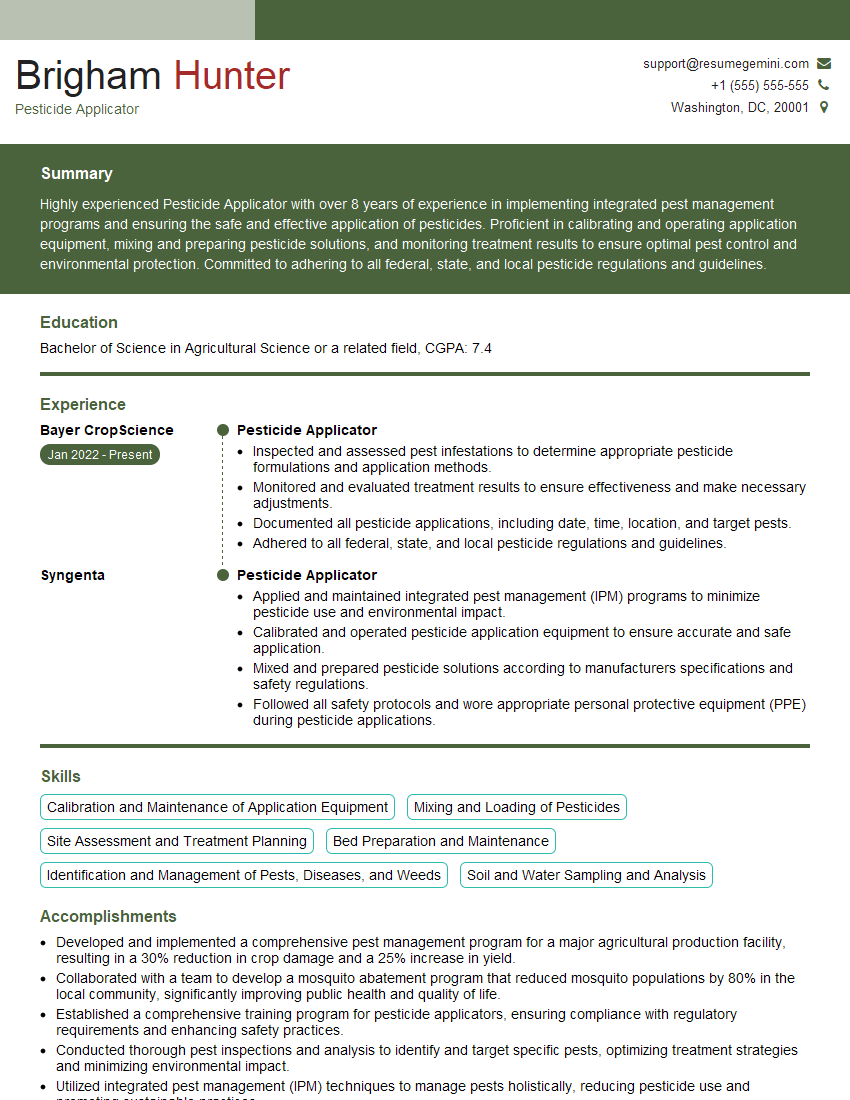
Mastering Cotton Pest Management Techniques is vital for a successful and rewarding career in agriculture. A strong understanding of these principles demonstrates expertise and commitment to sustainable practices, making you a highly sought-after candidate. To significantly boost your job prospects, create an ATS-friendly resume that effectively showcases your skills and experience. ResumeGemini is a trusted resource that can help you build a professional and impactful resume. We provide examples of resumes tailored to Cotton Pest Management Techniques to help you get started.
Explore more articles
Users Rating of Our Blogs
Share Your Experience
We value your feedback! Please rate our content and share your thoughts (optional).
What Readers Say About Our Blog
Hello,
we currently offer a complimentary backlink and URL indexing test for search engine optimization professionals.
You can get complimentary indexing credits to test how link discovery works in practice.
No credit card is required and there is no recurring fee.
You can find details here:
https://wikipedia-backlinks.com/indexing/
Regards
NICE RESPONSE TO Q & A
hi
The aim of this message is regarding an unclaimed deposit of a deceased nationale that bears the same name as you. You are not relate to him as there are millions of people answering the names across around the world. But i will use my position to influence the release of the deposit to you for our mutual benefit.
Respond for full details and how to claim the deposit. This is 100% risk free. Send hello to my email id: [email protected]
Luka Chachibaialuka
Hey interviewgemini.com, just wanted to follow up on my last email.
We just launched Call the Monster, an parenting app that lets you summon friendly ‘monsters’ kids actually listen to.
We’re also running a giveaway for everyone who downloads the app. Since it’s brand new, there aren’t many users yet, which means you’ve got a much better chance of winning some great prizes.
You can check it out here: https://bit.ly/callamonsterapp
Or follow us on Instagram: https://www.instagram.com/callamonsterapp
Thanks,
Ryan
CEO – Call the Monster App
Hey interviewgemini.com, I saw your website and love your approach.
I just want this to look like spam email, but want to share something important to you. We just launched Call the Monster, a parenting app that lets you summon friendly ‘monsters’ kids actually listen to.
Parents are loving it for calming chaos before bedtime. Thought you might want to try it: https://bit.ly/callamonsterapp or just follow our fun monster lore on Instagram: https://www.instagram.com/callamonsterapp
Thanks,
Ryan
CEO – Call A Monster APP
To the interviewgemini.com Owner.
Dear interviewgemini.com Webmaster!
Hi interviewgemini.com Webmaster!
Dear interviewgemini.com Webmaster!
excellent
Hello,
We found issues with your domain’s email setup that may be sending your messages to spam or blocking them completely. InboxShield Mini shows you how to fix it in minutes — no tech skills required.
Scan your domain now for details: https://inboxshield-mini.com/
— Adam @ InboxShield Mini
Reply STOP to unsubscribe
Hi, are you owner of interviewgemini.com? What if I told you I could help you find extra time in your schedule, reconnect with leads you didn’t even realize you missed, and bring in more “I want to work with you” conversations, without increasing your ad spend or hiring a full-time employee?
All with a flexible, budget-friendly service that could easily pay for itself. Sounds good?
Would it be nice to jump on a quick 10-minute call so I can show you exactly how we make this work?
Best,
Hapei
Marketing Director
Hey, I know you’re the owner of interviewgemini.com. I’ll be quick.
Fundraising for your business is tough and time-consuming. We make it easier by guaranteeing two private investor meetings each month, for six months. No demos, no pitch events – just direct introductions to active investors matched to your startup.
If youR17;re raising, this could help you build real momentum. Want me to send more info?
Hi, I represent an SEO company that specialises in getting you AI citations and higher rankings on Google. I’d like to offer you a 100% free SEO audit for your website. Would you be interested?
Hi, I represent an SEO company that specialises in getting you AI citations and higher rankings on Google. I’d like to offer you a 100% free SEO audit for your website. Would you be interested?
good