Preparation is the key to success in any interview. In this post, we’ll explore crucial Countering interview questions and equip you with strategies to craft impactful answers. Whether you’re a beginner or a pro, these tips will elevate your preparation.
Questions Asked in Countering Interview
Q 1. Explain the difference between active and passive countermeasures.
Active and passive countermeasures represent two fundamentally different approaches to threat mitigation. Think of it like this: active countermeasures are like actively fighting off an attacker, while passive countermeasures are like building a strong castle to prevent attacks in the first place.
Active countermeasures directly engage with and neutralize threats. This could involve things like intrusion detection systems (IDS) that identify malicious activity and automatically block it, or deploying honeypots to lure attackers away from critical systems. For example, an IDS detecting a port scan might automatically block the source IP address. Another example is a firewall actively dropping malicious packets.
Passive countermeasures focus on preventing attacks before they can occur. They don’t actively respond to threats but create obstacles. Examples include strong passwords, access control lists, and data encryption. A robust firewall configuration, acting as a barrier to unauthorized access, is a classic passive countermeasure. Similarly, implementing multi-factor authentication adds an extra layer of passive protection.
Q 2. Describe your experience with threat modeling and its role in countering threats.
Threat modeling is a crucial part of any robust security strategy. It’s essentially a structured process of identifying potential threats and vulnerabilities within a system, application, or infrastructure. I’ve extensively used various threat modeling methodologies, including STRIDE (Spoofing, Tampering, Repudiation, Information Disclosure, Denial of Service, Elevation of Privilege) and PASTA (Process for Attack Simulation and Threat Analysis), in past engagements.
In my previous role, we used threat modeling to analyze a new e-commerce platform before its launch. By systematically identifying potential attack vectors, such as SQL injection vulnerabilities or cross-site scripting (XSS) flaws, we were able to proactively implement countermeasures, including input validation and output encoding, significantly reducing the platform’s attack surface. The process helped us prioritize security efforts and allocate resources effectively, saving considerable time and cost downstream.
Q 3. How do you prioritize countermeasures based on risk assessment?
Prioritizing countermeasures requires a thorough risk assessment. This involves identifying potential threats, analyzing their likelihood, and estimating the potential impact if they were to occur. I typically use a risk matrix that maps likelihood and impact to assign a risk score to each threat.
For instance, a threat with a high likelihood and high impact (like a ransomware attack targeting critical data) would receive a higher priority than a threat with low likelihood and low impact (like a denial-of-service attack from a single, easily blocked IP address). The risk matrix helps to objectively prioritize countermeasures based on quantifiable risk, allowing for efficient allocation of resources to address the most critical vulnerabilities first. This prioritization may involve focusing on patching critical vulnerabilities, implementing stronger access controls for sensitive data or upgrading outdated systems.
Q 4. What are the key components of a robust incident response plan for countering cyberattacks?
A robust incident response plan is critical for minimizing the damage caused by a cyberattack. It’s not just about reacting; it’s about having a well-defined, pre-planned process to follow. Key components include:
- Preparation: Defining roles and responsibilities, establishing communication channels, identifying critical systems, and creating backups.
- Detection and Analysis: Establishing monitoring systems to detect incidents and procedures for analyzing their scope and impact.
- Containment: Isolating affected systems to prevent further damage and lateral movement of the attacker.
- Eradication: Removing the threat from the system and restoring functionality.
- Recovery: Restoring systems to their pre-incident state, testing their functionality, and updating security measures.
- Post-Incident Activity: Conducting a thorough review of the incident to identify areas for improvement and updating the incident response plan.
Regular drills and testing are essential to ensure the plan’s effectiveness and team readiness.
Q 5. Explain your understanding of the CIA triad (Confidentiality, Integrity, Availability) and how it relates to countering threats.
The CIA triad – Confidentiality, Integrity, and Availability – forms the cornerstone of information security. It’s a framework for understanding and managing security risks.
- Confidentiality: Ensuring that only authorized individuals have access to sensitive information. Countermeasures include encryption, access control lists, and data loss prevention (DLP) tools.
- Integrity: Guaranteeing the accuracy and completeness of information and preventing unauthorized modification. Countermeasures include version control, digital signatures, and intrusion detection systems.
- Availability: Ensuring that information and resources are accessible to authorized users when needed. Countermeasures include redundancy, failover systems, and disaster recovery planning.
Countering threats often involves strengthening all three aspects of the CIA triad. For example, protecting against ransomware attacks (a threat to Availability and Integrity) might involve strong backups (Availability), intrusion prevention (Integrity), and encryption at rest and in transit (Confidentiality).
Q 6. What are some common techniques used in social engineering, and how can they be countered?
Social engineering exploits human psychology to manipulate individuals into divulging sensitive information or performing actions that compromise security. Common techniques include:
- Phishing: Deceptive emails or messages designed to trick users into revealing login credentials or other sensitive data.
- Baiting: Offering something enticing (like free software or a gift card) to lure users into a trap.
- Pretexting: Creating a false scenario or context to gain the target’s trust and obtain information.
- Quid Pro Quo: Offering a service or favor in exchange for information or access.
Countering social engineering relies heavily on user education and awareness training. This includes teaching employees to identify suspicious emails, verify requests before granting access, and be wary of unsolicited offers. Technical countermeasures such as email filtering and anti-phishing software also play a critical role.
Q 7. Describe your experience with vulnerability scanning and penetration testing.
Vulnerability scanning and penetration testing are essential components of a comprehensive security assessment. I have significant experience with both.
Vulnerability scanning involves using automated tools to identify known vulnerabilities in systems and applications. This provides a broad overview of potential weaknesses, prioritizing them by severity. Tools like Nessus and OpenVAS are commonly used. For example, a vulnerability scan might reveal an outdated version of a web server, known to contain exploitable vulnerabilities.
Penetration testing, also known as ethical hacking, goes a step further by simulating real-world attacks to assess the effectiveness of security controls. This involves attempting to exploit identified vulnerabilities to determine the system’s resilience. A penetration test might involve attempting to exploit the outdated web server vulnerability discovered during the vulnerability scan to determine if an attacker can gain unauthorized access to sensitive data.
By combining these two approaches, I can identify and prioritize vulnerabilities, assess the effectiveness of existing countermeasures, and provide actionable recommendations for strengthening security.
Q 8. How do you stay current with the latest threats and vulnerabilities?
Staying current in the cybersecurity landscape requires a multi-pronged approach. It’s not a one-time task but a continuous process of learning and adaptation.
- Threat Intelligence Feeds: I subscribe to several reputable threat intelligence feeds (e.g., from security vendors, government agencies, and open-source communities) that provide real-time updates on emerging threats, vulnerabilities, and attack techniques. This gives me advance warning of potential threats and helps me proactively adjust our defenses.
- Security Conferences and Webinars: Attending industry conferences (like Black Hat, RSA Conference) and participating in webinars allows me to learn from leading experts, network with peers, and gain insights into the latest research and trends.
- Vulnerability Databases and Scanners: I regularly use vulnerability databases (like the National Vulnerability Database – NVD) and automated vulnerability scanners (e.g., Nessus, OpenVAS) to identify and prioritize weaknesses in our systems. This helps me understand our attack surface and focus remediation efforts where they’re most needed.
- Professional Certifications and Training: Continuously pursuing advanced certifications (like CISSP, CISM) and engaging in relevant training programs keeps my skills sharp and ensures I’m up-to-date with the latest best practices and technologies.
- Following Security News and Blogs: Staying informed about current events through reputable security news sources and blogs helps me understand the evolving threat landscape and anticipate potential attacks.
For example, recently, I learned about a new zero-day exploit targeting a widely used web server through a security alert from a threat intelligence feed. This allowed us to quickly patch our systems and prevent a potential breach before it could happen.
Q 9. Explain your familiarity with various security frameworks (e.g., NIST, ISO 27001).
I’m very familiar with several leading security frameworks, including NIST Cybersecurity Framework and ISO 27001. Understanding these frameworks is crucial for building a robust and compliant security posture.
- NIST Cybersecurity Framework (CSF): The NIST CSF provides a flexible, adaptable approach to managing cybersecurity risk. Its five functions – Identify, Protect, Detect, Respond, and Recover – offer a comprehensive structure for developing and implementing effective cybersecurity strategies. I use the CSF to guide our risk assessment processes, define our security controls, and measure the effectiveness of our security programs.
- ISO 27001: This international standard defines a framework for establishing, implementing, maintaining, and continually improving an information security management system (ISMS). It’s particularly useful for organizations that need to demonstrate compliance with regulatory requirements. I leverage the ISO 27001 principles to define our information security policies, procedures, and controls, ensuring consistent adherence to best practices.
For instance, when implementing new security controls, I often reference the NIST CSF’s recommendations on specific security controls aligned to each of its five functions. Similarly, when conducting an internal audit, I use ISO 27001 clauses to check compliance with our defined security policies and procedures.
Q 10. Describe your experience with intrusion detection and prevention systems (IDS/IPS).
Intrusion Detection and Prevention Systems (IDS/IPS) are critical components of any robust security architecture. They play a vital role in detecting and preventing malicious network activity.
- IDS: An IDS passively monitors network traffic for suspicious patterns or activities, generating alerts when potential threats are detected. Think of it as a security guard who observes and reports suspicious behavior but doesn’t intervene directly.
- IPS: An IPS actively monitors network traffic and takes action to block or mitigate malicious activity. This is like a security guard who not only observes but also has the power to stop the threat.
My experience includes deploying and managing both network-based and host-based IDS/IPS solutions. I’ve used tools like Snort, Suricata, and commercially available IPS appliances. A key aspect of my work involves configuring and tuning these systems to minimize false positives while ensuring that legitimate threats are accurately detected and prevented. This often involves analyzing logs, adjusting rulesets, and integrating the IDS/IPS with other security tools like SIEM (Security Information and Event Management) systems for centralized monitoring and analysis.
For example, I once identified a sophisticated SQL injection attack attempt by analyzing IDS logs and was able to trace the source and implement preventive measures to protect our database servers.
Q 11. How would you respond to a phishing attack targeting your organization?
Responding to a phishing attack requires a swift and coordinated effort. My response would involve several key steps:
- Immediate Containment: I would immediately initiate a security incident response plan, isolating affected systems and accounts to prevent further damage. This might involve blocking malicious links or disabling compromised accounts.
- Investigation and Analysis: A thorough investigation would be launched to determine the extent of the attack, the source of the phishing emails, and the number of users impacted. This might involve analyzing email headers, reviewing system logs, and conducting forensic analysis.
- User Notification and Education: Affected users would be notified, provided with guidance on how to identify and avoid future phishing attempts, and educated on security best practices. A company-wide communication would reinforce these lessons and emphasize reporting any suspicious emails or activities.
- Remediation and System Hardening: Vulnerabilities exploited by the attackers would be addressed through patching, system updates, and security configuration changes. This includes strengthening email filtering, implementing multi-factor authentication, and educating employees on phishing awareness.
- Post-Incident Review: After the immediate response, a post-incident review would be conducted to analyze the incident, identify lessons learned, and improve our security posture to prevent similar attacks in the future. This review would involve documenting the incident response process, assessing the effectiveness of existing security controls, and updating our security policies and procedures.
In one particular incident, a well-crafted phishing email targeting our finance department was intercepted. Our quick response, thanks to proactive security awareness training and strong incident response procedures, minimized the damage significantly. We contained the attack quickly, identified affected systems, and educated employees, preventing a potential financial loss.
Q 12. Explain your understanding of data loss prevention (DLP) measures.
Data Loss Prevention (DLP) measures aim to prevent sensitive data from leaving the organization’s control without authorization. It’s a crucial aspect of protecting confidential information.
- Data Classification and Inventory: The foundation of any effective DLP program is a thorough understanding of the organization’s data assets. This includes classifying data based on its sensitivity and identifying where it is stored and accessed.
- Access Control: Implementing strong access control mechanisms, such as role-based access control (RBAC) and least privilege access, limits who can access sensitive data. Multi-factor authentication adds an extra layer of security.
- Data Encryption: Encrypting sensitive data both in transit and at rest protects it from unauthorized access, even if a breach occurs.
- DLP Technologies: Utilizing DLP technologies, both network-based and endpoint-based, helps identify and prevent sensitive data from being transmitted outside the organization’s network or stored in unauthorized locations. These tools often monitor data movement, email content, and file transfers.
- Monitoring and Auditing: Regular monitoring and auditing of data access and movement provide insights into potential vulnerabilities and help identify suspicious activities.
For instance, we use a DLP tool to monitor outbound email traffic for sensitive information like credit card numbers or social security numbers. The tool automatically flags suspicious emails and allows us to intervene before the data leaves our network.
Q 13. How do you assess the effectiveness of existing countermeasures?
Assessing the effectiveness of existing countermeasures requires a systematic approach. I use a combination of methods to evaluate their performance:
- Vulnerability Assessments and Penetration Testing: Regularly conducting vulnerability assessments and penetration testing simulates real-world attacks to identify weaknesses in our security controls. This helps measure the effectiveness of our countermeasures in preventing or mitigating attacks.
- Security Audits and Compliance Checks: Internal and external security audits assess our compliance with relevant standards and regulations and identify gaps in our security controls. They also verify the proper implementation and configuration of our countermeasures.
- Security Information and Event Management (SIEM): Analyzing logs from various security tools using a SIEM system allows me to identify trends, detect anomalies, and evaluate the effectiveness of our threat detection capabilities. It also helps track the performance of our security countermeasures over time.
- Metrics and Key Performance Indicators (KPIs): Monitoring relevant KPIs, such as the number of security incidents, mean time to detection (MTTD), and mean time to response (MTTR), provides quantitative measures of the effectiveness of our countermeasures.
- Red Teaming Exercises: Engaging a red team to simulate sophisticated attacks against our systems provides valuable insights into the effectiveness of our security controls in the face of advanced threats.
For example, we recently conducted a penetration test which revealed a vulnerability in our web application firewall (WAF). This prompted us to update the WAF rules and re-test to ensure the vulnerability was adequately addressed. The results demonstrated the improved effectiveness of our countermeasures after the remediation.
Q 14. What metrics do you use to measure the success of countermeasures?
Measuring the success of countermeasures requires a comprehensive approach that combines qualitative and quantitative metrics. I use several key metrics:
- Number and Type of Security Incidents: Tracking the number of security incidents (e.g., phishing attempts, malware infections, denial-of-service attacks) and their types helps assess the effectiveness of our preventative measures.
- Mean Time to Detection (MTTD): This metric measures the time it takes to detect a security incident after it occurs. A lower MTTD indicates more effective detection mechanisms.
- Mean Time to Response (MTTR): This metric measures the time it takes to respond to a security incident after it is detected. A lower MTTR indicates faster and more efficient response capabilities.
- False Positive Rate: This metric indicates the rate at which security systems generate alerts for non-malicious events. A lower false positive rate is crucial for effective threat detection.
- Cost of Security Incidents: Tracking the financial impact of security incidents (e.g., lost revenue, remediation costs, legal fees) helps justify investments in security countermeasures and measure their return on investment (ROI).
- User Awareness and Training Effectiveness: Measuring user participation in security awareness training and their ability to identify and report phishing attempts provides insights into the effectiveness of these crucial preventative measures.
By regularly monitoring these metrics, I can identify areas for improvement and demonstrate the overall effectiveness of our security countermeasures. This data is crucial for making informed decisions on resource allocation and refining our security strategies.
Q 15. Describe your experience with security information and event management (SIEM) systems.
SIEM systems are the cornerstone of modern security operations. They aggregate and analyze security logs from various sources – firewalls, servers, databases, endpoint devices – to provide a unified view of an organization’s security posture. My experience spans several years working with leading SIEM platforms like Splunk and QRadar. I’ve been involved in everything from initial deployment and configuration to developing custom dashboards and alerts, conducting threat hunting, and incident response.
For instance, I once used Splunk to investigate a series of suspicious login attempts. By correlating log data from our authentication servers and firewalls, I was able to identify a botnet targeting weak passwords. We implemented multi-factor authentication and password complexity policies as a direct result of this investigation. This highlights the proactive and reactive capabilities of SIEM in threat detection and remediation. Beyond basic alert generation, I’ve leveraged advanced analytics to identify anomalous behavior patterns, predicting potential threats before they materialize. This predictive capability is crucial for minimizing security risks.
Career Expert Tips:
- Ace those interviews! Prepare effectively by reviewing the Top 50 Most Common Interview Questions on ResumeGemini.
- Navigate your job search with confidence! Explore a wide range of Career Tips on ResumeGemini. Learn about common challenges and recommendations to overcome them.
- Craft the perfect resume! Master the Art of Resume Writing with ResumeGemini’s guide. Showcase your unique qualifications and achievements effectively.
- Don’t miss out on holiday savings! Build your dream resume with ResumeGemini’s ATS optimized templates.
Q 16. How do you handle sensitive information and maintain confidentiality?
Handling sensitive information requires a multi-layered approach, starting with strict adherence to company policies and industry regulations like GDPR and CCPA. This includes implementing access control lists (ACLs), data loss prevention (DLP) tools, and encryption both in transit and at rest. I always follow the principle of least privilege, ensuring users only have access to the data necessary for their roles.
Beyond technical controls, maintaining confidentiality also relies on strong security awareness training and a culture of data security. I regularly emphasize the importance of secure password management, phishing awareness, and responsible data handling practices to all team members. In practical terms, this might involve conducting regular security awareness training, implementing secure email gateways, and ensuring all sensitive data is encrypted and stored securely.
Q 17. Explain your understanding of different types of malware and how to counter them.
Malware encompasses a broad range of malicious software, including viruses, worms, Trojans, ransomware, spyware, and adware. Each type has its own unique characteristics and attack vectors. For example, viruses require a host program to replicate, worms propagate autonomously across networks, and ransomware encrypts data demanding a ransom for release.
Countering malware involves a multi-faceted approach. This begins with strong preventative measures like regularly updated antivirus software, robust firewall configurations, and secure software development practices. Detection involves using endpoint detection and response (EDR) solutions, intrusion detection systems (IDS), and SIEMs to identify malicious activity. Response includes isolating infected systems, performing forensic analysis to understand the attack, and implementing remediation steps such as data recovery and system restoration. Furthermore, proactive threat intelligence, staying abreast of emerging threats and vulnerabilities, is essential. For instance, regularly updating software and utilizing sandboxing environments to test suspicious files can prevent malware infections.
Q 18. What are your strategies for detecting and responding to insider threats?
Insider threats – malicious or negligent actions by employees or contractors – can be devastating. My strategy for detecting and responding to these threats involves a combination of technical controls and behavioral analysis. Technically, we utilize access control logs, data loss prevention (DLP) systems, and user and entity behavior analytics (UEBA) tools to monitor user activity for anomalies. UEBA, in particular, is valuable in identifying unusual patterns that might indicate malicious intent.
Behaviorally, we emphasize a strong security culture, regular security awareness training, and robust background checks for employees. We also regularly review user access rights, ensuring that individuals only have the necessary privileges for their roles. A clear incident response plan is crucial, outlining steps for investigation, containment, and remediation in the event of a suspected insider threat. For instance, if an employee accesses sensitive data outside of normal working hours, this triggers an alert. We’d then investigate the reason for this access, potentially involving interviews and reviewing security logs for further evidence.
Q 19. How do you evaluate the effectiveness of different authentication methods?
Evaluating authentication methods involves considering several factors: security, usability, and cost. Factors such as multi-factor authentication (MFA) strength, password complexity requirements, biometric authentication accuracy, and the overall user experience are crucial. A strong authentication method should balance security with ease of use to avoid user frustration and circumventing security measures.
I evaluate methods by considering the risk profile of the asset being protected. For high-value assets, stronger methods like MFA with a combination of something you know (password), something you have (smart card), and something you are (biometrics) are preferred. For lower-value assets, a simpler method like a strong password might suffice. Cost-benefit analysis is also essential. While MFA offers stronger security, it might increase the cost of implementation and user training. The evaluation process often involves risk assessments, user feedback, and security audits to determine the optimal balance between security and usability for each system and application.
Q 20. Explain your understanding of network security protocols (e.g., TLS, VPN).
Network security protocols are essential for securing data in transit. TLS (Transport Layer Security), formerly known as SSL (Secure Sockets Layer), encrypts communication between a client and a server, protecting sensitive data like credit card numbers or login credentials from eavesdropping. VPNs (Virtual Private Networks) create a secure, encrypted connection over a public network, effectively extending a private network across a public infrastructure, such as the internet. This is crucial for protecting data when using public Wi-Fi or accessing corporate resources remotely.
I have extensive experience in configuring and troubleshooting both TLS and VPNs. For example, I’ve implemented TLS certificates for securing web servers, ensuring compliance with industry standards like PCI DSS. In configuring VPNs, I’ve addressed issues like slow connection speeds, ensuring optimal performance and security. Understanding the intricacies of these protocols, including certificate management, key exchange mechanisms, and encryption algorithms, is vital for building a robust security infrastructure. Selecting the appropriate encryption cipher suite, for example, can significantly impact the security and performance of a TLS connection. Regular audits and updates to these protocols are essential to maintain optimal security levels.
Q 21. Describe your experience with security auditing and compliance.
Security auditing and compliance involve regularly assessing an organization’s security controls to ensure they meet regulatory requirements and industry best practices. This includes vulnerability assessments, penetration testing, and security audits to identify weaknesses and gaps in security posture. Compliance involves adhering to specific regulations like PCI DSS (for payment card data), HIPAA (for healthcare data), and GDPR (for personal data).
My experience includes conducting security audits, generating compliance reports, and developing remediation plans based on audit findings. For example, I’ve performed penetration tests to identify vulnerabilities in web applications, network infrastructure, and databases. This has included identifying and mitigating SQL injection vulnerabilities, cross-site scripting (XSS) flaws, and other common web application vulnerabilities. I’ve also worked on developing and implementing security policies to address audit findings and ensure ongoing compliance. This includes documenting security controls, establishing monitoring processes, and regularly reviewing security policies to ensure they are up to date and effective. The objective is to maintain a strong security posture, minimize risks, and ensure regulatory compliance.
Q 22. How do you collaborate with other teams to implement and maintain countermeasures?
Effective countermeasure implementation and maintenance require seamless collaboration across various teams. This involves regular communication, shared responsibility, and a unified approach. Think of it like a well-oiled machine – each part (team) plays a crucial role, and smooth operation depends on their coordinated efforts.
- With security teams: I collaborate closely to integrate countermeasures into existing security infrastructure, ensuring compatibility and avoiding conflicts. For example, a new intrusion detection system needs to be properly configured and integrated with existing logging and alerting systems, a process requiring joint planning and testing.
- With IT operations teams: I work with them to implement and maintain countermeasures, ensuring minimal disruption to services. Deploying a new firewall, for example, necessitates coordinated downtime and thorough testing to prevent service outages.
- With development teams: I advise on secure coding practices and integrate security features into applications, helping to prevent vulnerabilities from emerging in the first place. This is like building a house with reinforced concrete – proactive measures are far more effective than patching cracks later.
- With legal and compliance teams: We ensure that all countermeasures comply with relevant laws and regulations, mitigating legal risks. This is crucial for maintaining trust and adhering to legal obligations.
This collaborative approach, facilitated by regular meetings, shared documentation, and incident response planning, ensures a robust and effective countermeasures program.
Q 23. What are some common challenges in implementing countermeasures, and how do you overcome them?
Implementing countermeasures presents several challenges. Resource constraints, resistance to change, and the ever-evolving threat landscape are major hurdles.
- Resource Constraints: Limited budgets and staffing can hinder the implementation of comprehensive countermeasures. We overcome this by prioritizing countermeasures based on risk assessment, focusing on the most critical vulnerabilities first. This is similar to a doctor who focuses on life-threatening injuries before treating less urgent ailments.
- Resistance to Change: Users and departments may resist implementing new security measures due to inconvenience or perceived performance impacts. We mitigate this by clearly demonstrating the benefits of the countermeasures and providing thorough training and support. Clear communication and empathy are key.
- Evolving Threat Landscape: The constant emergence of new threats and vulnerabilities requires continuous adaptation of countermeasures. To address this, we employ a proactive threat intelligence program, monitoring emerging threats and vulnerabilities, and promptly updating our defenses.
- Integration Complexity: Integrating various security tools and technologies can be complex and time-consuming, requiring expertise and careful planning to avoid conflicts and ensure seamless operation.
Proactive planning, effective communication, and a flexible approach allow us to overcome these challenges and maintain a robust security posture.
Q 24. Explain your understanding of the legal and ethical considerations related to countering threats.
Legal and ethical considerations are paramount when implementing countermeasures. We must ensure that all actions are lawful, ethical, and respect individual privacy. Ignoring these can lead to legal repercussions and damage to an organization’s reputation.
- Data Privacy: Countermeasures involving data monitoring and analysis must comply with regulations like GDPR and CCPA. We ensure data minimization, anonymization where possible, and transparent data handling practices.
- Employee Monitoring: Monitoring employee activity must be conducted responsibly and transparently, with clear policies and employee consent (where legally required). We focus on protecting the organization without infringing on employee rights.
- Lawful Interception: Any actions involving interception of communications must adhere to legal frameworks and obtain necessary warrants or approvals.
- Proportionality: Countermeasures must be proportionate to the threat. Overly aggressive measures can be counterproductive and may have unintended consequences.
A strong ethical framework and strict adherence to legal regulations are essential for responsible threat countering.
Q 25. Describe your experience with using security tools and technologies.
I have extensive experience with a wide range of security tools and technologies, including intrusion detection/prevention systems (IDS/IPS), firewalls, endpoint detection and response (EDR) solutions, security information and event management (SIEM) systems, vulnerability scanners, and data loss prevention (DLP) tools.
- IDS/IPS: I’ve deployed and managed IDS/IPS systems to detect and prevent network intrusions, using tools such as Snort and Suricata.
Example: Configuring Snort rules to detect specific attack signatures. - Firewalls: I’ve configured and maintained firewalls (both network and application firewalls) to control network access and prevent unauthorized connections.
Example: Implementing firewall rules to allow only authorized traffic to specific ports. - EDR: I’ve leveraged EDR solutions like CrowdStrike and Carbon Black to detect and respond to endpoint threats, conducting incident investigations and remediation.
- SIEM: I’ve used SIEM systems like Splunk and QRadar to collect, analyze, and correlate security logs from various sources to identify and respond to security incidents.
My experience extends to utilizing these technologies to build and maintain a strong security posture, proactively identifying and mitigating threats.
Q 26. How do you adapt your countermeasures to evolving threats and vulnerabilities?
Adapting to evolving threats requires a proactive and dynamic approach. It’s not a one-time fix; it’s an ongoing process.
- Threat Intelligence: We actively monitor threat feeds and security advisories to stay abreast of emerging threats and vulnerabilities. This is like a doctor constantly updating their medical knowledge to treat new diseases.
- Vulnerability Management: Regular vulnerability scanning and penetration testing help identify weaknesses in our systems. We prioritize patching critical vulnerabilities promptly and implement compensating controls for those that cannot be immediately addressed.
- Security Awareness Training: Keeping employees informed about current threats and best security practices is crucial. This reduces the risk of human error, a major cause of security breaches.
- Adaptive Security Architectures: Employing technologies that automatically adapt to changing threats, such as machine learning-based security systems, is vital.
Continuous monitoring, assessment, and adaptation are essential for maintaining a robust security posture in the face of constantly evolving threats.
Q 27. What is your approach to continuous improvement in countering threats?
Continuous improvement in countering threats is achieved through a cycle of assessment, improvement, and measurement. This is similar to the scientific method – constantly testing and refining our approach.
- Regular Security Audits: Conducting regular security audits and penetration tests helps identify weaknesses and areas for improvement. This provides a snapshot of our current security state.
- Incident Response Reviews: Analyzing past incidents helps us understand weaknesses and improve our response capabilities. This is learning from our mistakes.
- Metrics and KPIs: Tracking key performance indicators (KPIs) like mean time to detect (MTTD) and mean time to respond (MTTR) allows us to measure the effectiveness of our countermeasures and identify areas for improvement.
- Feedback Loops: Establishing feedback mechanisms allows for continuous learning and improvement. This ensures that the system adapts to new challenges and learns from its experiences.
This iterative approach, driven by data and feedback, ensures that our countermeasures remain effective and adapted to the changing threat landscape.
Q 28. Describe a situation where you had to implement a countermeasure under pressure.
During a recent ransomware attack, we faced immense pressure to contain the spread and restore affected systems. The attackers had already encrypted critical servers, and the situation required immediate action.
Our response involved several key steps:
- Immediate Containment: We quickly isolated the affected systems from the network to prevent further spread. This was a crucial first step to limit the damage.
- Incident Response Team Activation: The incident response team was immediately mobilized, following our established incident response plan. Clear communication and collaboration were essential.
- Forensic Analysis: A thorough forensic analysis was conducted to understand the attack vector, the extent of the damage, and to gather evidence for future investigation.
- Data Recovery: We leveraged our backups to restore critical systems and data. Regular and tested backups proved invaluable in this scenario.
- Vulnerability Remediation: Following the incident, we identified and remediated the vulnerabilities that allowed the attack to occur. This included patching systems and updating security configurations.
Despite the high-pressure situation, our coordinated response and proactive security measures minimized the impact and ensured a swift recovery. This experience underscored the importance of having a well-defined incident response plan, regular backups, and a team that is well-trained and prepared to handle such situations.
Key Topics to Learn for Countering Interview
- Understanding the Threat Landscape: Develop a strong understanding of various threats and vulnerabilities relevant to countering strategies. This includes identifying potential adversaries and their methods.
- Strategic Countering Approaches: Explore different frameworks and methodologies for developing effective countering strategies. Consider both proactive and reactive approaches.
- Risk Assessment and Mitigation: Learn how to conduct thorough risk assessments to identify vulnerabilities and prioritize mitigation strategies. Practice applying different risk management frameworks.
- Technological Countermeasures: Familiarize yourself with various technologies and tools used in countering operations, and be prepared to discuss their strengths and limitations.
- Legal and Ethical Considerations: Understand the legal and ethical implications of countering actions and the importance of adhering to relevant regulations and guidelines.
- Communication and Collaboration: Discuss your experience collaborating with diverse teams and communicating complex technical information effectively to both technical and non-technical audiences.
- Case Studies and Problem-Solving: Prepare to discuss real-world scenarios and demonstrate your ability to analyze complex problems and develop effective solutions. Practice applying theoretical concepts to practical situations.
- Data Analysis and Interpretation: Demonstrate your ability to analyze data, identify patterns, and draw conclusions relevant to countering strategies. This includes understanding different data sources and analytical methods.
Next Steps
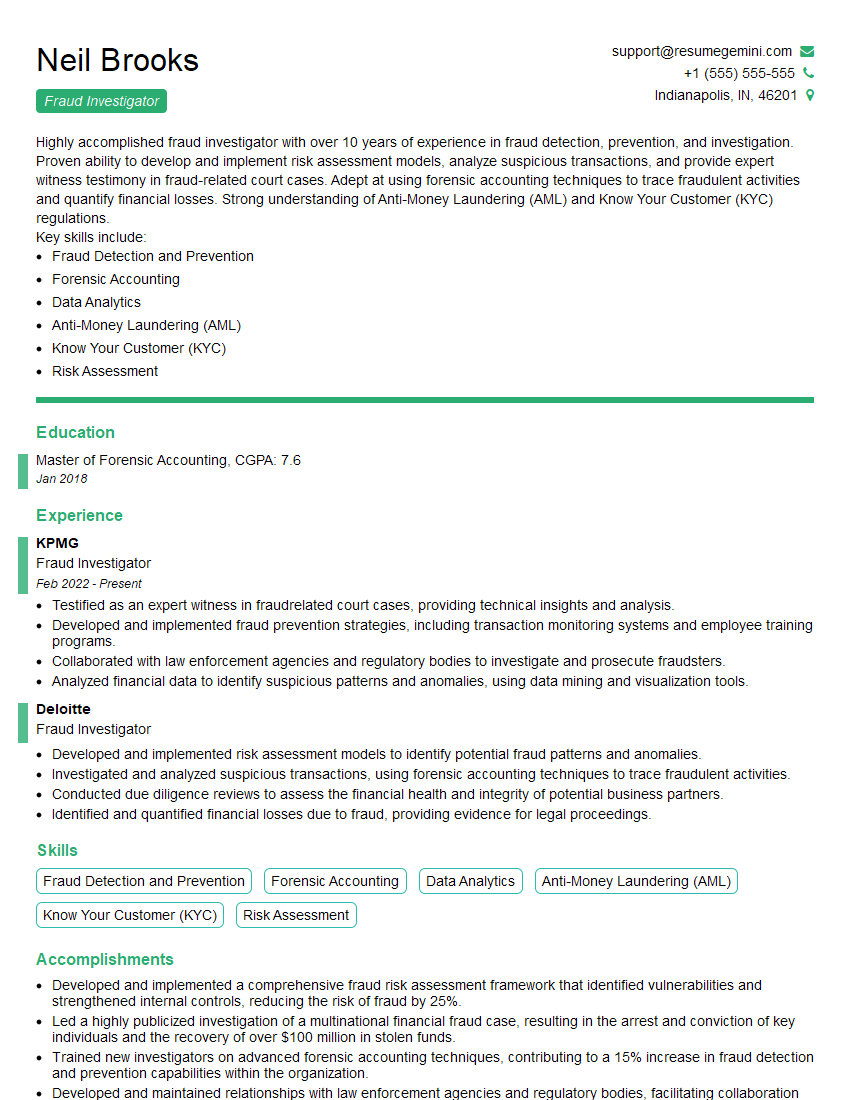
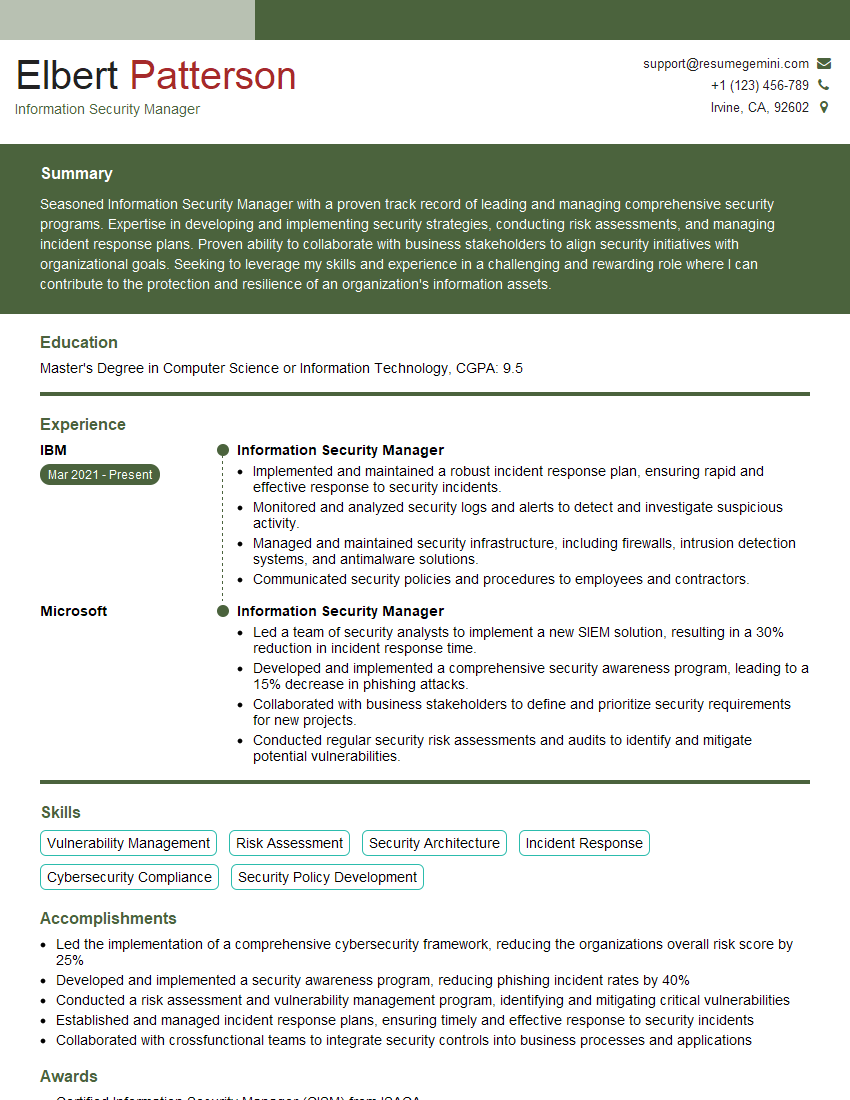
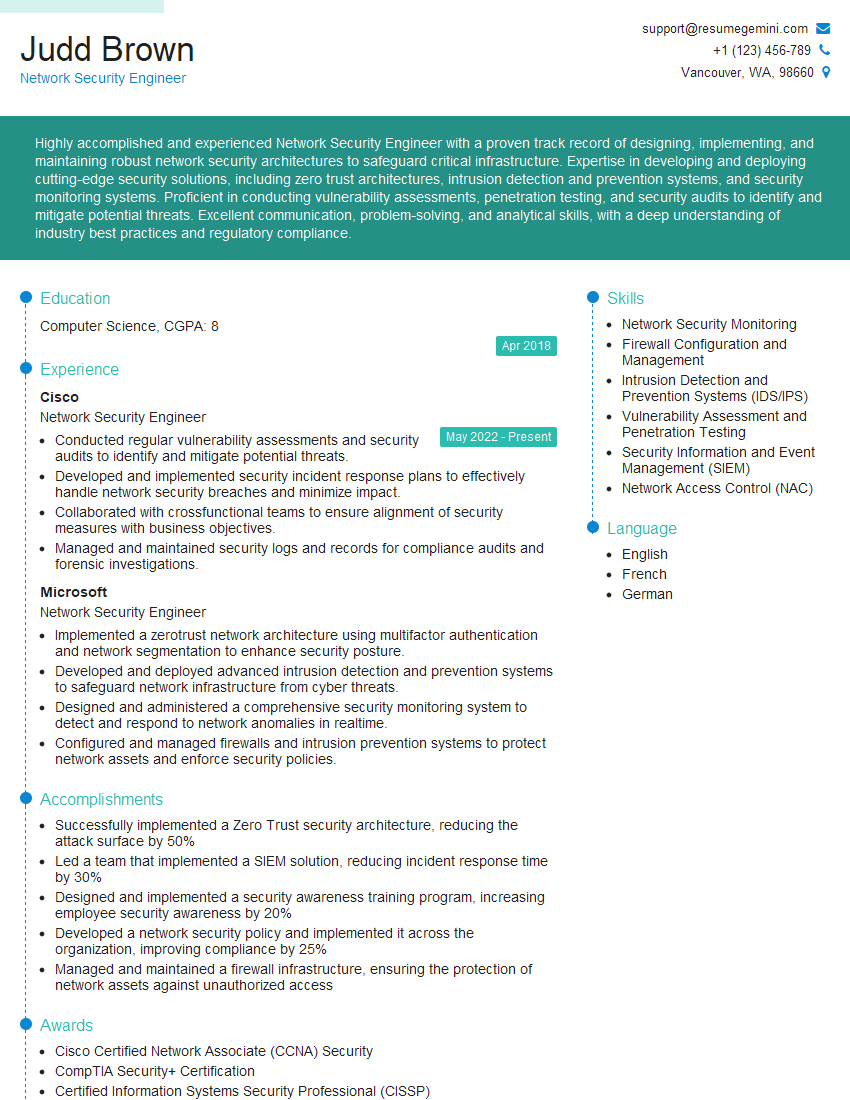
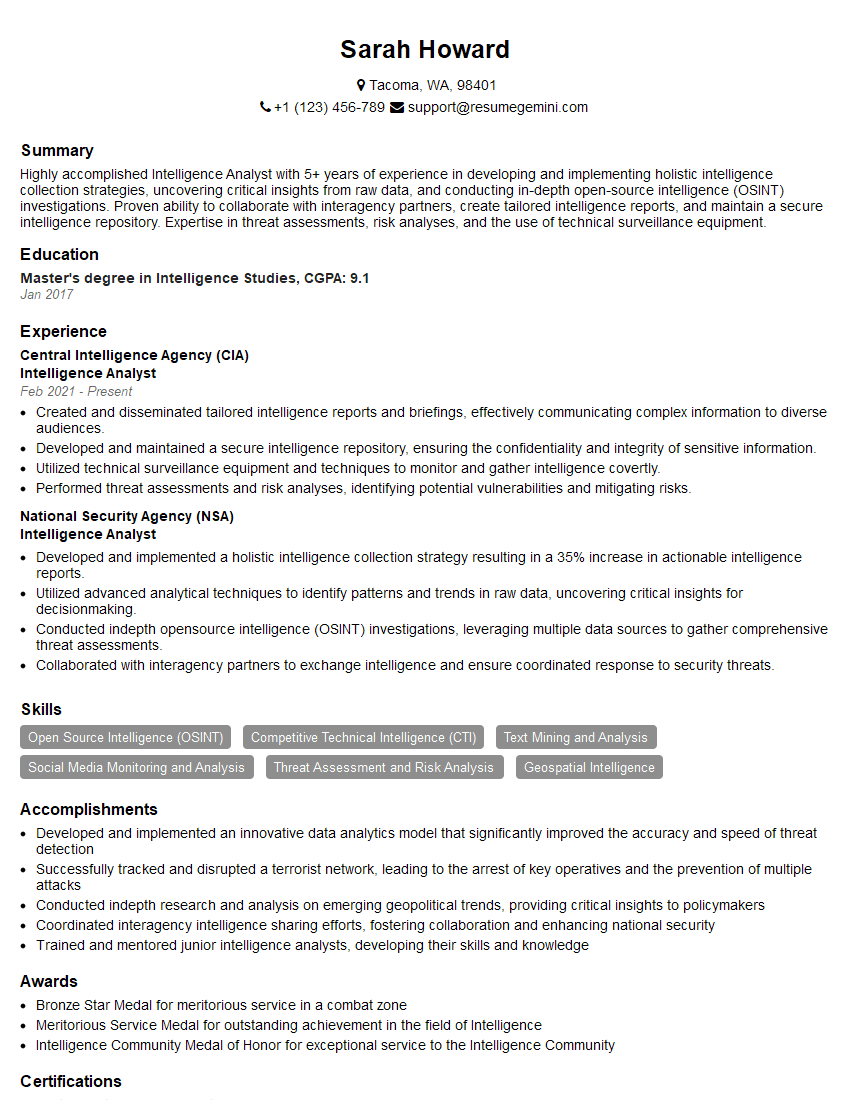
Mastering the principles of Countering opens doors to exciting and impactful career opportunities in a rapidly evolving field. To maximize your job prospects, focus on creating a compelling and ATS-friendly resume that highlights your skills and experience effectively. ResumeGemini is a trusted resource that can help you build a professional resume tailored to the Countering field. We provide examples of resumes specifically designed for Countering roles to guide you in crafting a winning application. Take the next step in your career journey – build a resume that makes you stand out!
Explore more articles
Users Rating of Our Blogs
Share Your Experience
We value your feedback! Please rate our content and share your thoughts (optional).
What Readers Say About Our Blog
Attention music lovers!
Wow, All the best Sax Summer music !!!
Spotify: https://open.spotify.com/artist/6ShcdIT7rPVVaFEpgZQbUk
Apple Music: https://music.apple.com/fr/artist/jimmy-sax-black/1530501936
YouTube: https://music.youtube.com/browse/VLOLAK5uy_noClmC7abM6YpZsnySxRqt3LoalPf88No
Other Platforms and Free Downloads : https://fanlink.tv/jimmysaxblack
on google : https://www.google.com/search?q=22+AND+22+AND+22
on ChatGPT : https://chat.openai.com?q=who20jlJimmy20Black20Sax20Producer
Get back into the groove with Jimmy sax Black
Best regards,
Jimmy sax Black
www.jimmysaxblack.com
Hi I am a troller at The aquatic interview center and I suddenly went so fast in Roblox and it was gone when I reset.
Hi,
Business owners spend hours every week worrying about their website—or avoiding it because it feels overwhelming.
We’d like to take that off your plate:
$69/month. Everything handled.
Our team will:
Design a custom website—or completely overhaul your current one
Take care of hosting as an option
Handle edits and improvements—up to 60 minutes of work included every month
No setup fees, no annual commitments. Just a site that makes a strong first impression.
Find out if it’s right for you:
https://websolutionsgenius.com/awardwinningwebsites
Hello,
we currently offer a complimentary backlink and URL indexing test for search engine optimization professionals.
You can get complimentary indexing credits to test how link discovery works in practice.
No credit card is required and there is no recurring fee.
You can find details here:
https://wikipedia-backlinks.com/indexing/
Regards
NICE RESPONSE TO Q & A
hi
The aim of this message is regarding an unclaimed deposit of a deceased nationale that bears the same name as you. You are not relate to him as there are millions of people answering the names across around the world. But i will use my position to influence the release of the deposit to you for our mutual benefit.
Respond for full details and how to claim the deposit. This is 100% risk free. Send hello to my email id: [email protected]
Luka Chachibaialuka
Hey interviewgemini.com, just wanted to follow up on my last email.
We just launched Call the Monster, an parenting app that lets you summon friendly ‘monsters’ kids actually listen to.
We’re also running a giveaway for everyone who downloads the app. Since it’s brand new, there aren’t many users yet, which means you’ve got a much better chance of winning some great prizes.
You can check it out here: https://bit.ly/callamonsterapp
Or follow us on Instagram: https://www.instagram.com/callamonsterapp
Thanks,
Ryan
CEO – Call the Monster App
Hey interviewgemini.com, I saw your website and love your approach.
I just want this to look like spam email, but want to share something important to you. We just launched Call the Monster, a parenting app that lets you summon friendly ‘monsters’ kids actually listen to.
Parents are loving it for calming chaos before bedtime. Thought you might want to try it: https://bit.ly/callamonsterapp or just follow our fun monster lore on Instagram: https://www.instagram.com/callamonsterapp
Thanks,
Ryan
CEO – Call A Monster APP
To the interviewgemini.com Owner.
Dear interviewgemini.com Webmaster!
Hi interviewgemini.com Webmaster!
Dear interviewgemini.com Webmaster!
excellent
Hello,
We found issues with your domain’s email setup that may be sending your messages to spam or blocking them completely. InboxShield Mini shows you how to fix it in minutes — no tech skills required.
Scan your domain now for details: https://inboxshield-mini.com/
— Adam @ InboxShield Mini
Reply STOP to unsubscribe
Hi, are you owner of interviewgemini.com? What if I told you I could help you find extra time in your schedule, reconnect with leads you didn’t even realize you missed, and bring in more “I want to work with you” conversations, without increasing your ad spend or hiring a full-time employee?
All with a flexible, budget-friendly service that could easily pay for itself. Sounds good?
Would it be nice to jump on a quick 10-minute call so I can show you exactly how we make this work?
Best,
Hapei
Marketing Director
Hey, I know you’re the owner of interviewgemini.com. I’ll be quick.
Fundraising for your business is tough and time-consuming. We make it easier by guaranteeing two private investor meetings each month, for six months. No demos, no pitch events – just direct introductions to active investors matched to your startup.
If youR17;re raising, this could help you build real momentum. Want me to send more info?
Hi, I represent an SEO company that specialises in getting you AI citations and higher rankings on Google. I’d like to offer you a 100% free SEO audit for your website. Would you be interested?
Hi, I represent an SEO company that specialises in getting you AI citations and higher rankings on Google. I’d like to offer you a 100% free SEO audit for your website. Would you be interested?