Cracking a skill-specific interview, like one for Creative Direction and Vision, requires understanding the nuances of the role. In this blog, we present the questions you’re most likely to encounter, along with insights into how to answer them effectively. Let’s ensure you’re ready to make a strong impression.
Questions Asked in Creative Direction and Vision Interview
Q 1. Describe your approach to developing a creative brief.
Developing a robust creative brief is the cornerstone of any successful creative project. It’s more than just a list of requirements; it’s a collaborative document that clearly defines the project’s goals, target audience, and desired outcomes. My approach involves a structured process:
- Understanding the Client’s Needs: This begins with in-depth conversations with the client, asking probing questions to uncover their underlying business objectives, not just their surface-level requests. For example, instead of simply asking ‘What color should the logo be?’, I’d delve into their brand values, target market, and competitive landscape to understand the *why* behind the logo’s design.
- Defining Target Audience: A thorough understanding of the target audience—their demographics, psychographics, and online behavior—is crucial. This helps us tailor the creative strategy to resonate effectively. Creating detailed buyer personas is a valuable tool here.
- Establishing Clear Objectives and KPIs: We define measurable goals, such as increased brand awareness, website traffic, or sales conversions. This ensures the project’s success can be objectively assessed. For example, instead of ‘increase brand awareness’, we might aim for a ‘20% increase in social media engagement within three months’.
- Creative Strategy & Direction: This section outlines the overall tone, style, and message. We discuss mood boards, competitor analysis, and relevant design trends to establish a cohesive creative vision.
- Deliverables and Timeline: We clearly outline the project deliverables, milestones, and deadlines to ensure transparency and efficient workflow. This section also includes details about revisions and approvals.
The final brief is a living document, subject to revisions and refinements as the project progresses, ensuring everyone remains aligned throughout the creative process.
Q 2. How do you define and measure the success of a creative project?
Defining and measuring the success of a creative project goes beyond simply completing the deliverables. It requires a clear understanding of the project’s objectives and the establishment of Key Performance Indicators (KPIs). Success is measured against pre-defined goals, both qualitative and quantitative.
- Qualitative Measures: These assess the subjective aspects of the project, such as brand perception, emotional response, and the overall impact on the audience. We gather this information through user feedback, focus groups, and social media sentiment analysis.
- Quantitative Measures: These involve measurable data, like website traffic, sales figures, social media engagement, and brand mentions. These metrics offer tangible evidence of the project’s success.
For example, a successful website redesign might be measured by a significant increase in conversion rates (quantitative) and a positive shift in user feedback regarding site usability and aesthetics (qualitative). The combination of these metrics provides a holistic view of the project’s overall impact.
Q 3. Explain your process for managing creative teams and deadlines.
Managing creative teams and deadlines effectively requires a blend of strong leadership, clear communication, and efficient project management techniques. My process involves:
- Clearly Defined Roles and Responsibilities: Each team member understands their role and how their work contributes to the overall project. This helps to avoid duplication of effort and promotes accountability.
- Regular Check-ins and Feedback: Regular meetings, both one-on-one and team-wide, facilitate open communication and provide opportunities for feedback and adjustments. This prevents issues from escalating.
- Agile Methodology: I often employ an agile approach, breaking down the project into smaller, manageable tasks or sprints. This allows for flexibility and adaptability to changing circumstances.
- Utilizing Project Management Tools: Tools like Asana or Trello help visualize the workflow, track progress, and manage deadlines effectively. This offers transparency to the team and clients.
- Proactive Problem-Solving: I anticipate potential roadblocks and address them proactively, preventing delays and ensuring the project stays on track.
Maintaining a positive and collaborative work environment is also critical. Open communication and mutual respect ensure that everyone feels valued and contributes their best work.
Q 4. How do you handle conflicting creative visions within a team?
Conflicting creative visions within a team are inevitable, but they can be productive if managed effectively. My approach focuses on fostering collaboration and finding common ground:
- Open Dialogue and Active Listening: Creating a safe space for team members to express their ideas freely and respectfully is paramount. Actively listening to each perspective is crucial to understanding the root of the conflict.
- Identifying Shared Goals: Refocusing the discussion on the project’s overarching goals helps to re-align the team and find areas of agreement.
- Brainstorming and Compromise: Encouraging brainstorming sessions allows the team to explore diverse ideas and find innovative solutions that incorporate elements from various perspectives.
- Data-Driven Decision-Making: Where possible, using data and research to support creative choices can help resolve disagreements objectively.
- Mediation (if needed): If necessary, I act as a mediator to facilitate constructive conversations and guide the team toward a consensus.
The goal is not to force a single vision, but to create a cohesive and compelling creative solution that leverages the strengths and insights of each team member.
Q 5. Describe a time you had to defend a creative concept to stakeholders.
During a rebranding project for a tech startup, I proposed a minimalist logo design that deviated significantly from the client’s initial preference for a more complex and illustrative approach. My rationale was that a minimalist design would better reflect the company’s innovative and clean technology, creating a more modern and memorable brand identity. The initial response from the stakeholders was hesitant, as they were attached to their initial concept.
To defend my concept, I presented a comprehensive presentation that included:
- Market Research: I showed examples of successful tech brands using minimalist logos and the positive impact it had on their brand recognition.
- Target Audience Analysis: I demonstrated how a minimalist logo would better resonate with their tech-savvy target audience.
- Long-term Brand Strategy: I explained how the minimalist design would be more scalable and adaptable as the company grew and expanded into new markets.
- Mockups and Prototypes: I provided various mockups showcasing the logo in different applications, such as website banners, social media profiles, and merchandise.
Ultimately, the stakeholders were persuaded by the data and strategic reasoning behind my proposal. The minimalist logo design was implemented and has since become an integral part of the company’s successful brand identity.
Q 6. How do you stay current with design trends and industry best practices?
Staying current with design trends and industry best practices is an ongoing process that requires consistent effort and a multi-faceted approach:
- Following Design Publications and Blogs: I regularly read industry publications, blogs, and online resources such as Awwwards, Behance, and Dribbble to stay updated on the latest design trends and innovative approaches.
- Attending Industry Conferences and Workshops: Participating in conferences and workshops provides valuable opportunities for networking, learning from leading experts, and gaining exposure to emerging technologies and techniques.
- Exploring Design Communities: Engaging with online design communities, such as Reddit’s r/design or specific platform communities, offers exposure to peer insights, critiques, and discussions.
- Experimentation and Personal Projects: Experimenting with new design tools and techniques through personal projects allows me to maintain my creative skills and discover new possibilities.
- Analyzing Successful Case Studies: Studying successful design projects and case studies provides a valuable understanding of how different design principles have been applied effectively.
This multi-pronged strategy ensures I remain adaptable and informed about evolving design landscapes.
Q 7. Explain your understanding of brand identity and its role in creative projects.
Brand identity is the foundation upon which all creative projects are built. It encompasses the visual and verbal elements that communicate a brand’s personality, values, and mission to its target audience. It’s far more than just a logo; it’s a comprehensive system that includes:
- Logo Design: The visual symbol that represents the brand.
- Typography: The selection of fonts that reflects the brand’s personality.
- Color Palette: Colors evoke specific emotions and associations, contributing to brand recognition.
- Imagery and Photography: Visual elements that reinforce the brand’s message and values.
- Brand Voice and Tone: The language and style of communication used by the brand.
In creative projects, a strong brand identity ensures consistency and cohesion across all touchpoints. It guides design choices, ensuring that every element aligns with the overall brand strategy and enhances brand recognition and customer loyalty. A weak brand identity can lead to inconsistent messaging and dilute brand recognition, hindering its potential for success.
Q 8. How do you incorporate user feedback into the creative process?
User feedback is the lifeblood of any successful creative project. It allows us to refine our vision and ensure the final product resonates with its intended audience. I incorporate feedback through a multi-stage process. Firstly, I actively solicit feedback at various stages of the project—concept development, prototypes, and final iterations—using methods like surveys, focus groups, and individual interviews, tailored to the project’s needs. Secondly, I analyze the feedback, categorizing it by themes and identifying recurring patterns or major concerns. This helps avoid getting bogged down in individual opinions and instead focuses on overarching trends. Finally, I prioritize the feedback, weighing its importance against project goals and constraints. Not all feedback is created equal; some may be more critical than others. For example, feedback on usability issues in a website design would naturally take precedence over comments on a minor stylistic element. This approach ensures that the feedback enhances the project without causing unnecessary delays or diversions. I recently worked on a mobile app redesign where user testing revealed navigation difficulties. Based on this feedback, we iterated the app’s information architecture, resulting in a significant improvement in user satisfaction.
Q 9. Describe your experience with different design software and tools.
My proficiency spans a wide range of design software and tools, reflecting my commitment to staying current with industry best practices. I’m highly proficient in Adobe Creative Suite (Photoshop, Illustrator, InDesign), which forms the foundation of my workflow for image manipulation, vector graphics, and layout design. I also have extensive experience with Figma and Sketch for collaborative design and prototyping, particularly useful in agile development environments. For motion graphics and video editing, I use Adobe After Effects and Premiere Pro. Beyond these core tools, I’m comfortable using other software as required, such as Cinema 4D for 3D modeling (though I often collaborate with specialists for complex 3D projects) and various prototyping tools depending on the project’s specifics. My experience extends to utilizing project management software like Asana or Trello for streamlining workflows and ensuring timely delivery of creative assets. Finally, I’m adept at using different image optimization and web development tools to prepare assets for final deployment. This broad skillset enables me to tackle diverse creative challenges efficiently and effectively.
Q 10. How do you approach problem-solving in a creative context?
Problem-solving in a creative context requires a blend of intuition, analytical skills, and a willingness to experiment. My approach involves several key steps. First, I thoroughly define the problem, ensuring I understand its scope and underlying challenges. This often involves discussions with stakeholders to gather all relevant information. Second, I brainstorm potential solutions, encouraging diverse perspectives and avoiding premature judgment. Techniques like mind-mapping and sketching help to visualize different approaches. Third, I prioritize and refine these ideas, considering factors such as feasibility, cost-effectiveness, and alignment with the project’s overall goals. This stage often involves prototyping and testing to evaluate the effectiveness of different solutions. Finally, I iterate and refine the chosen solution based on feedback and results. For example, on a recent branding project, the client was dissatisfied with the initial logo concepts. By systematically analyzing the feedback and exploring alternative visual approaches, we arrived at a design that fully satisfied their requirements and effectively communicated the brand’s essence.
Q 11. Explain your experience with budgeting and resource allocation for creative projects.
Budgeting and resource allocation are critical for successful project execution. My experience involves creating detailed budget proposals, outlining all anticipated costs (personnel, materials, software licenses, etc.). I break down project tasks into manageable components, assigning costs to each phase. This granular approach ensures transparency and allows for proactive cost management. I leverage project management software to track expenses against the budget, identifying potential overruns early on. Resource allocation involves considering the skills and availability of team members, ensuring the right individuals are assigned to the appropriate tasks. This necessitates careful planning to maximize efficiency and avoid bottlenecks. For instance, on a recent campaign, I meticulously tracked every expense, enabling us to stay within budget while delivering high-quality creative assets. This involved negotiating favorable rates with vendors and optimizing resource allocation to prevent unnecessary spending.
Q 12. How do you delegate tasks and responsibilities within a creative team?
Delegation is key to effective team management in creative projects. I believe in assigning tasks based on individuals’ strengths and interests, fostering ownership and motivation. My process involves clearly defining roles and responsibilities, establishing clear deadlines and expectations, and ensuring everyone has access to the necessary resources. I use project management tools to track progress and provide ongoing support, offering guidance and feedback as needed. Regular team meetings are crucial for communication and problem-solving. I emphasize open communication, encouraging team members to raise concerns and share their ideas. A recent project involved a large team of designers, writers, and developers. By delegating tasks strategically and facilitating open communication, we successfully completed the project on time and within budget, producing exceptional results.
Q 13. Describe your process for providing constructive criticism and feedback.
Constructive criticism is essential for growth and improvement. My approach emphasizes specificity and a focus on the work, not the person. I start by acknowledging the positive aspects of the work before addressing areas for improvement. I frame feedback in a positive and helpful manner, offering concrete suggestions rather than vague criticisms. For example, instead of saying “This design is boring,” I might say, “While the design is clean, consider incorporating more vibrant colors or textures to enhance visual interest.” I encourage dialogue and collaboration, aiming to create a safe space where team members can openly discuss their work without fear of judgment. I believe in focusing on solutions, empowering individuals to learn and improve their skills. This fosters a culture of mutual respect and continuous improvement.
Q 14. How do you foster a collaborative and innovative work environment?
Fostering a collaborative and innovative work environment requires a multifaceted approach. First, I prioritize open communication, creating a space where team members feel comfortable sharing ideas and voicing concerns. Regular team meetings, brainstorming sessions, and informal discussions encourage collaboration and idea generation. Second, I encourage experimentation and risk-taking, celebrating successes and learning from failures. This creates a culture of trust and psychological safety, allowing team members to push creative boundaries without fear of judgment. Third, I provide opportunities for professional development, encouraging team members to learn new skills and explore their potential. This can involve workshops, conferences, or mentorship programs. Finally, I recognize and reward individual and team accomplishments, reinforcing positive behaviors and motivating continuous improvement. This creates a positive and supportive environment where creativity can thrive. A recent project saw the team brainstorming outside of typical workspaces, leading to surprisingly creative and effective solutions.
Q 15. Describe your experience with presenting creative work to clients or stakeholders.
Presenting creative work is as much about storytelling as it is about showcasing the visuals. I approach each presentation by first understanding the client’s goals and priorities. Then, I structure my presentation to clearly articulate how our creative solutions directly address those needs. I start with a compelling narrative outlining the creative strategy, followed by a visual showcase of the work itself. Crucially, I leave ample time for feedback and questions, ensuring a two-way dialogue rather than a one-sided presentation. For example, when presenting a new website design to a tech startup, I wouldn’t just show the mockups; I’d highlight the user journey improvements, explain the rationale behind the design choices (e.g., color palette, typography), and demonstrate how the design increases conversion rates. I also prepare data-backed insights, such as user testing results or competitor analysis, to support my claims. Finally, I always tailor my presentation style to the client; a formal presentation for a large corporation differs greatly from a brainstorming session with a smaller agency.
Career Expert Tips:
- Ace those interviews! Prepare effectively by reviewing the Top 50 Most Common Interview Questions on ResumeGemini.
- Navigate your job search with confidence! Explore a wide range of Career Tips on ResumeGemini. Learn about common challenges and recommendations to overcome them.
- Craft the perfect resume! Master the Art of Resume Writing with ResumeGemini’s guide. Showcase your unique qualifications and achievements effectively.
- Don’t miss out on holiday savings! Build your dream resume with ResumeGemini’s ATS optimized templates.
Q 16. How do you manage creative differences and conflicts among team members?
Creative differences are inevitable, and I view them as opportunities for innovation. My approach involves fostering an environment of open communication and mutual respect. I encourage team members to openly express their ideas and concerns, using active listening to understand each perspective. We then engage in constructive discussion, focusing on the merits of each approach rather than personal opinions. If a consensus cannot be reached, I facilitate a structured decision-making process, often employing a weighted voting system or utilizing data from user testing to guide the final choice. For instance, if designers disagree on the color palette for a marketing campaign, we’d conduct A/B testing with different color variations to determine which one performs best with the target audience. Ultimately, the goal is to arrive at a solution that’s both creatively compelling and strategically sound, even if it requires compromise from all involved parties.
Q 17. How do you ensure the consistency and cohesiveness of a brand’s visual identity?
Maintaining brand consistency is paramount. I achieve this through meticulous brand guideline development and implementation. This involves creating a comprehensive style guide that dictates every aspect of the brand’s visual identity – from logo usage and color palettes to typography, imagery style, and even tone of voice. These guidelines are then shared with all team members and stakeholders, ensuring everyone understands and adheres to the same standards. Furthermore, I utilize design system tools and technologies (e.g., Figma, Storybook) to create a centralized repository for brand assets and design components, enabling easy access and reuse across different projects. Regular reviews and updates of these guidelines are crucial to adapt to evolving brand needs and market trends. For example, a consistent brand identity might involve using the same font family across all platforms (website, social media, print materials), maintaining a consistent color scheme, and applying a similar photographic style for all visuals. This ensures a cohesive and memorable brand experience for the customer.
Q 18. Explain your experience with A/B testing and data-driven design decisions.
A/B testing and data-driven design are crucial aspects of my workflow. I frequently incorporate A/B testing into my projects, particularly for digital marketing campaigns and website design. This involves creating two or more variations of a design element (e.g., different headlines, button colors, or layouts) and measuring their performance against key metrics like click-through rates, conversion rates, and engagement. The data gathered from these tests informs subsequent design iterations, enabling us to optimize for maximum impact. For example, we might A/B test two different versions of a landing page, one with a prominent call-to-action button and another with a subtler approach. By analyzing the data, we can identify which version drives better results and apply those learnings to future designs. This data-driven approach ensures that our creative decisions are not solely based on intuition but are supported by empirical evidence. Using tools like Google Analytics and Optimizely helps quantify these results.
Q 19. How do you measure the ROI of creative campaigns?
Measuring the ROI of creative campaigns requires a multi-faceted approach. It goes beyond simply looking at immediate sales figures. We establish clear, measurable goals at the outset of a campaign, such as increased brand awareness, lead generation, or website traffic. We then track relevant metrics throughout the campaign’s lifecycle. This might include website analytics (traffic, engagement, conversions), social media analytics (reach, engagement, sentiment), sales data, and even brand awareness surveys. By comparing these post-campaign metrics to pre-campaign baselines, we can assess the impact of the creative work and calculate the return on investment. For example, if a campaign aimed to increase website traffic by 20%, we’d measure the actual increase and compare it to the campaign’s cost. This allows us to demonstrate the value of the creative work in tangible terms.
Q 20. Describe your understanding of accessibility in design.
Accessibility in design is not just a matter of compliance; it’s a fundamental principle of inclusivity. It involves creating designs that are usable and enjoyable for everyone, regardless of their abilities or disabilities. This encompasses various aspects, including ensuring sufficient color contrast for users with visual impairments, providing alternative text for images (alt text), using keyboard navigation for those who cannot use a mouse, and designing for users with cognitive disabilities by employing clear and concise language. I leverage tools and techniques like WCAG (Web Content Accessibility Guidelines) to ensure our designs meet accessibility standards. We also conduct accessibility audits throughout the design process to identify and address potential issues early on. This means considering font sizes, color contrast, and keyboard navigation from the initial design stages, rather than as an afterthought. For example, ensuring sufficient color contrast between text and background, providing captions and transcripts for videos, and using ARIA attributes in web development are all crucial for accessibility.
Q 21. How do you adapt your creative approach to different target audiences?
Adapting my creative approach to different target audiences requires a deep understanding of their demographics, psychographics, and needs. I start by conducting thorough audience research, using tools like surveys, focus groups, and competitor analysis to gather insights into their preferences, motivations, and pain points. This information then informs all aspects of the creative process, from the selection of visuals and messaging to the choice of platforms and channels. For example, a marketing campaign targeting young adults on social media would differ significantly from one aimed at older professionals on LinkedIn. The visuals, language, and overall tone would be adjusted to resonate with each audience’s unique characteristics. Employing personas—detailed representations of target audience segments—can streamline this process and ensure all creative work remains relevant and impactful for its intended audience.
Q 22. Explain your experience with various design methodologies (e.g., Agile, Waterfall).
My experience spans both Agile and Waterfall methodologies, and my approach is adaptable to the project’s specific needs. Waterfall, with its linear progression through defined phases (requirements, design, implementation, testing, deployment), suits projects with clearly defined scopes and minimal anticipated change. I’ve used this successfully for several branding projects where the core message and visual identity needed to be meticulously planned upfront.
Agile, on the other hand, with its iterative and incremental approach, is ideal for projects requiring flexibility and adaptation. Its emphasis on collaboration and continuous feedback allows for adjustments throughout the process. A recent website redesign project benefited immensely from Agile; client feedback incorporated mid-process led to a more effective and user-friendly final product. We used sprints, daily stand-ups, and regular reviews to ensure we stayed on track and met evolving needs.
Ultimately, I select the methodology that best aligns with the project’s complexity, client involvement, and the need for adaptability. I find that hybrid approaches, leveraging the strengths of both, are often the most effective.
Q 23. How do you balance creative vision with business objectives?
Balancing creative vision with business objectives is paramount. It’s not a compromise, but a synthesis. I begin by thoroughly understanding the client’s business goals – their target audience, market position, and key performance indicators (KPIs). Then, I translate those objectives into a creative brief, ensuring that the desired aesthetic and messaging directly support these goals.
For example, for a startup tech company aiming for a young, innovative image, I wouldn’t propose a traditional, corporate design. Instead, I’d focus on a modern, minimalist aesthetic with bold colors and interactive elements. Data-driven insights, like user testing and A/B testing, play a crucial role in validating creative choices and ensuring they contribute to achieving business objectives. The success is measured not just by aesthetic appeal, but also by its effectiveness in driving sales, brand awareness, or whatever the client’s KPIs are.
Q 24. Describe a time you had to overcome a significant creative challenge.
During a rebranding project for a long-established financial institution, we faced the challenge of modernizing their image without alienating their loyal, older client base. Their existing branding was outdated and lacked appeal to a younger demographic, yet they worried that a radical shift would negatively impact their established trust and brand recognition.
To overcome this, we adopted a phased approach. We started with subtle refinements to their logo and color palette, gradually introducing more contemporary design elements in subsequent marketing materials. We conducted extensive market research to gauge audience reactions at each stage, allowing us to adapt our approach based on real-time feedback. The result was a successful rebranding that modernized their image while retaining the sense of stability and trust associated with the institution.
Q 25. How do you handle criticism of your creative work?
I view criticism as an opportunity for growth and improvement. I approach it with an open mind, actively listening to the feedback and seeking to understand the perspective offered. I believe that constructive criticism, when delivered respectfully, is invaluable for refining creative work. I differentiate between subjective opinions and objective critiques. Subjective opinions, while valuable for understanding different viewpoints, don’t always need direct implementation. Objective critiques pointing to inconsistencies or flaws in the design, however, are crucial.
My response depends on the type of feedback. If it’s constructive, I engage in a dialogue to understand the rationale and explore potential solutions. If it’s purely subjective and doesn’t align with the project’s goals, I explain my creative choices and rationale, offering data or research to support my decisions. Ultimately, my goal is to use criticism to enhance the final product, not to be defensive.
Q 26. Explain your experience with project management software and tools.
I’m proficient in various project management software and tools, including Asana, Trello, and Monday.com. My choice depends on the project’s size and complexity, and the client’s preferences. Asana, with its robust task management features and reporting capabilities, is ideal for larger, complex projects. Trello’s kanban-style interface is useful for smaller projects with a focus on visual workflow management. Monday.com offers a good balance between the two, with customizability for diverse project needs.
Beyond task and workflow management, I also utilize tools for communication (Slack, Microsoft Teams), file sharing (Google Drive, Dropbox), and design collaboration (Figma, Adobe Creative Cloud). My skill lies not just in using these tools, but in strategically deploying them to foster seamless communication, efficient workflow, and effective project delivery.
Q 27. How do you maintain a high level of creativity and innovation?
Maintaining a high level of creativity and innovation requires a multi-faceted approach. I prioritize continuous learning by exploring new design trends, attending workshops, and staying updated on industry advancements. I actively seek inspiration from diverse sources – art, nature, travel, even everyday conversations. I make time for experimentation and personal projects that allow me to explore new ideas and techniques without the constraints of client work. This helps to keep my creative skills sharp and prevents stagnation.
Collaboration plays a crucial role as well. Engaging in brainstorming sessions with colleagues sparks new perspectives and innovative solutions. I also find that stepping away from the computer and engaging in activities unrelated to work can often lead to breakthroughs. A clear mind is essential for creative thinking. Balancing work and life, fostering personal well-being, are critical to maintaining creative energy and passion.
Q 28. Describe your approach to leading and mentoring junior creative team members.
My approach to leading and mentoring junior creative team members centers around fostering a supportive and collaborative environment. I believe in leading by example, demonstrating a strong work ethic and a commitment to excellence. I encourage open communication and provide constructive feedback regularly, offering guidance without stifling their creativity. I also value delegation – entrusting junior members with responsibilities that challenge them and allow them to develop their skills.
Mentorship involves not only technical guidance but also professional development. I help them to develop their critical thinking skills, problem-solving abilities, and time-management techniques. Regular check-ins and one-on-one meetings allow me to understand their individual strengths and weaknesses, tailoring my support to their specific needs. Ultimately, my aim is to nurture their talent, fostering their growth and empowering them to become successful creative professionals.
Key Topics to Learn for Your Creative Direction and Vision Interview
- Understanding Brand Identity: Developing and articulating a brand’s visual language, tone, and personality. Explore how this translates into practical design decisions.
- Concept Development & Storytelling: Turning abstract ideas into compelling visual narratives. Practice translating briefs into strong creative concepts.
- Visual Communication Strategies: Mastering the use of imagery, typography, and color to effectively communicate a message. Analyze examples of successful and unsuccessful campaigns.
- Art Direction & Collaboration: Leading and guiding design teams, providing constructive feedback, and fostering a collaborative environment. Consider how you’d handle conflicting creative visions.
- Design Trends & Innovation: Staying current with design trends and identifying opportunities for innovation within the field. Showcase your understanding of emerging design technologies and methodologies.
- Project Management & Time Management: Effectively managing time, resources, and client expectations throughout the design process. Develop strategies for prioritizing tasks and meeting deadlines.
- Client Communication & Presentation Skills: Presenting design concepts confidently and persuasively to clients. Practice articulating your creative choices and justifying your design decisions.
- Problem-Solving & Critical Thinking: Applying creative problem-solving skills to overcome design challenges and develop innovative solutions. Be prepared to discuss your approach to tackling complex design briefs.
Next Steps
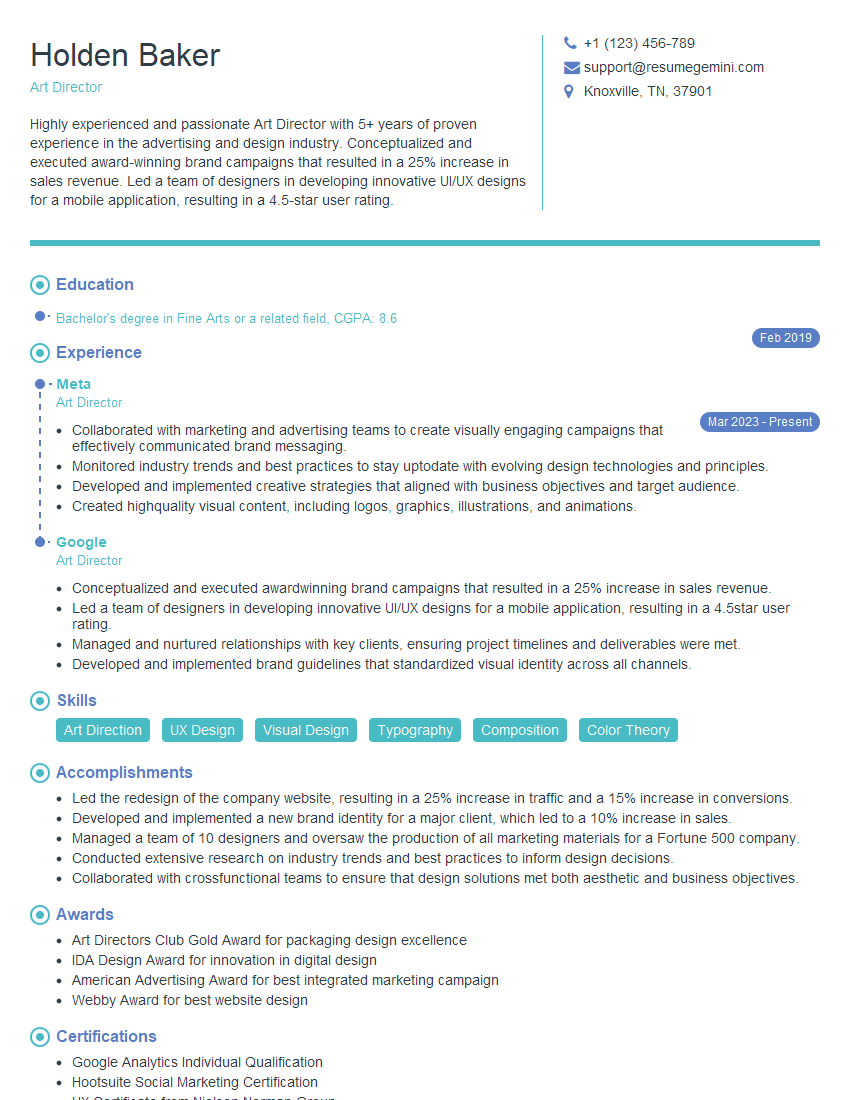
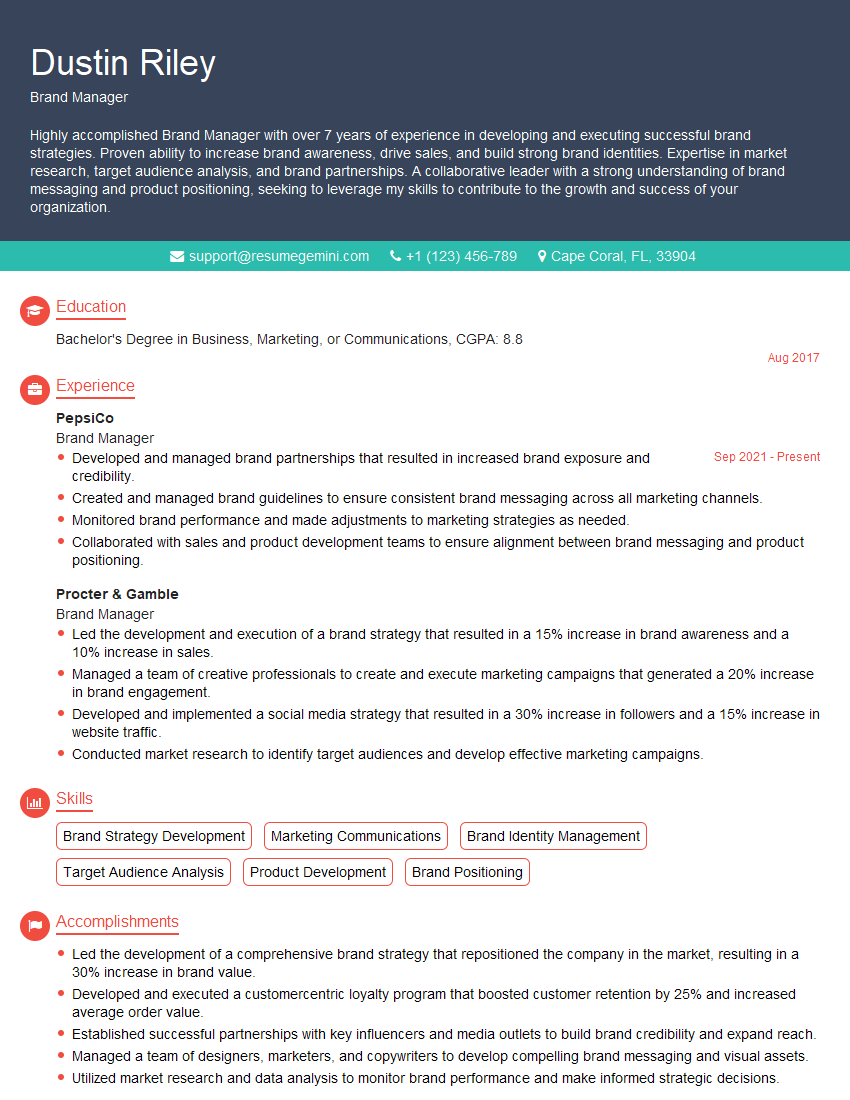
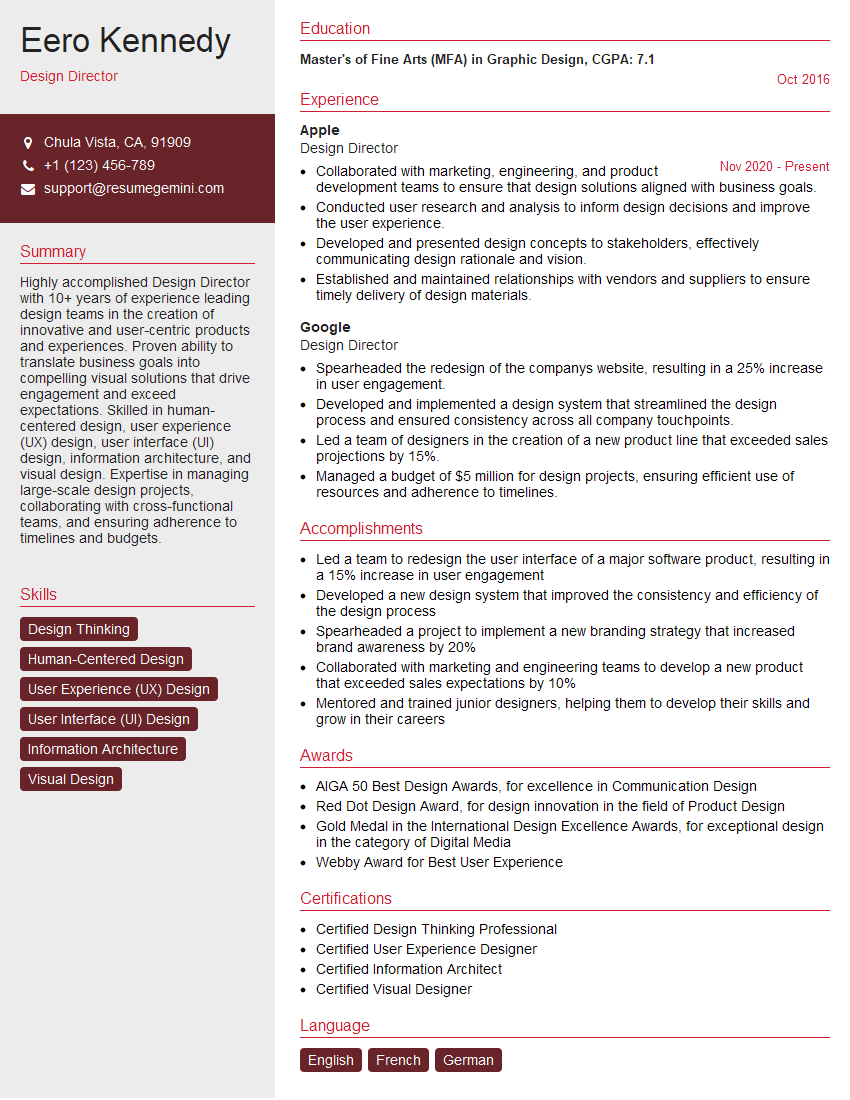
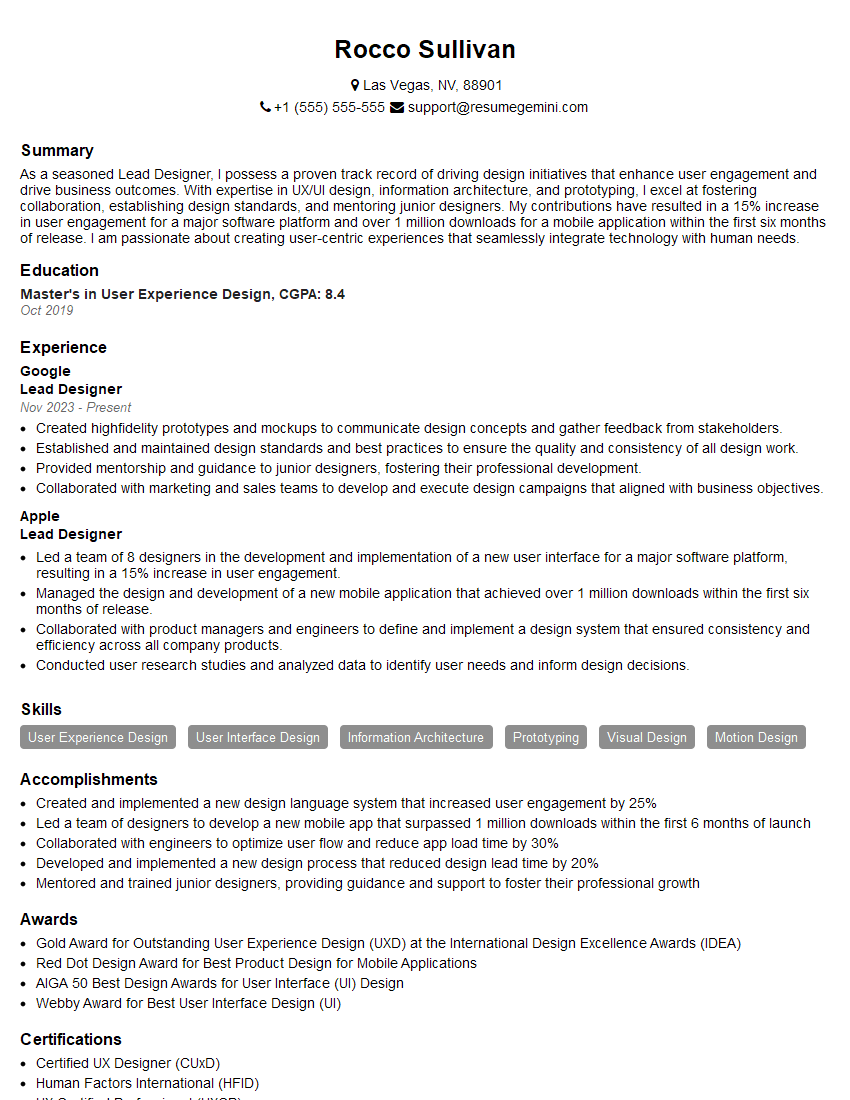
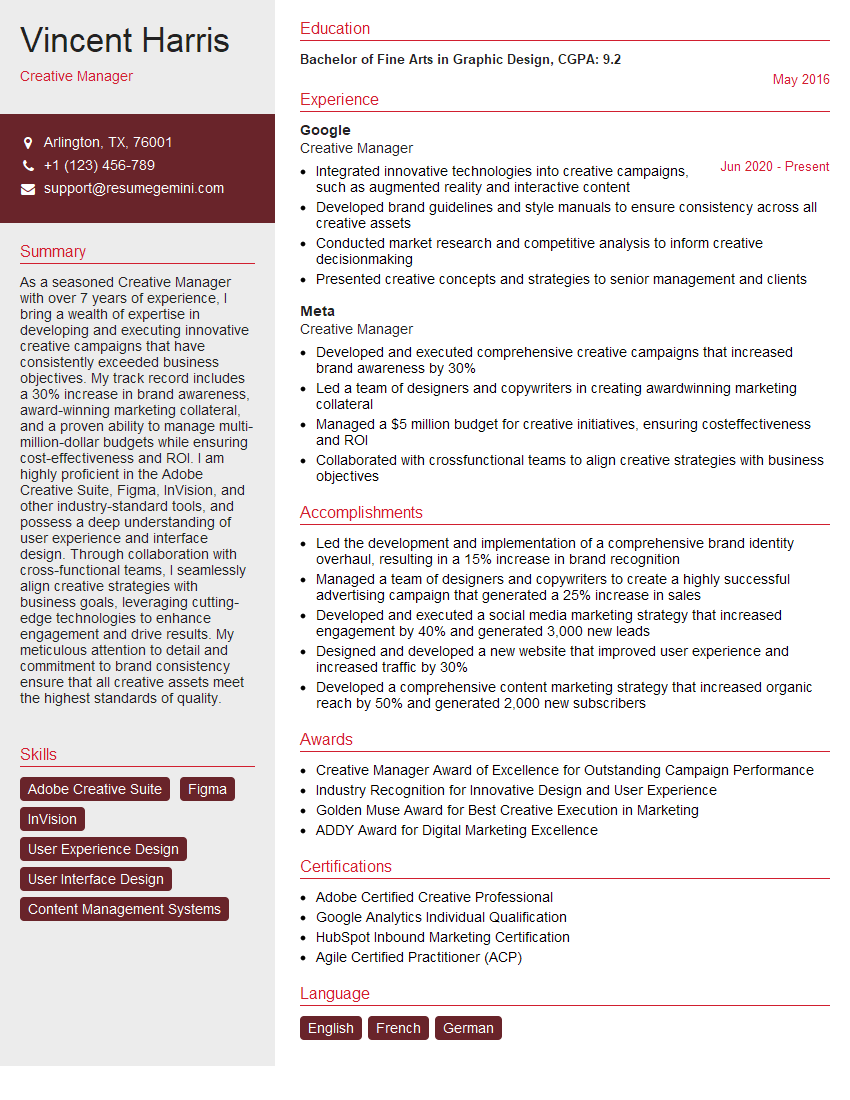
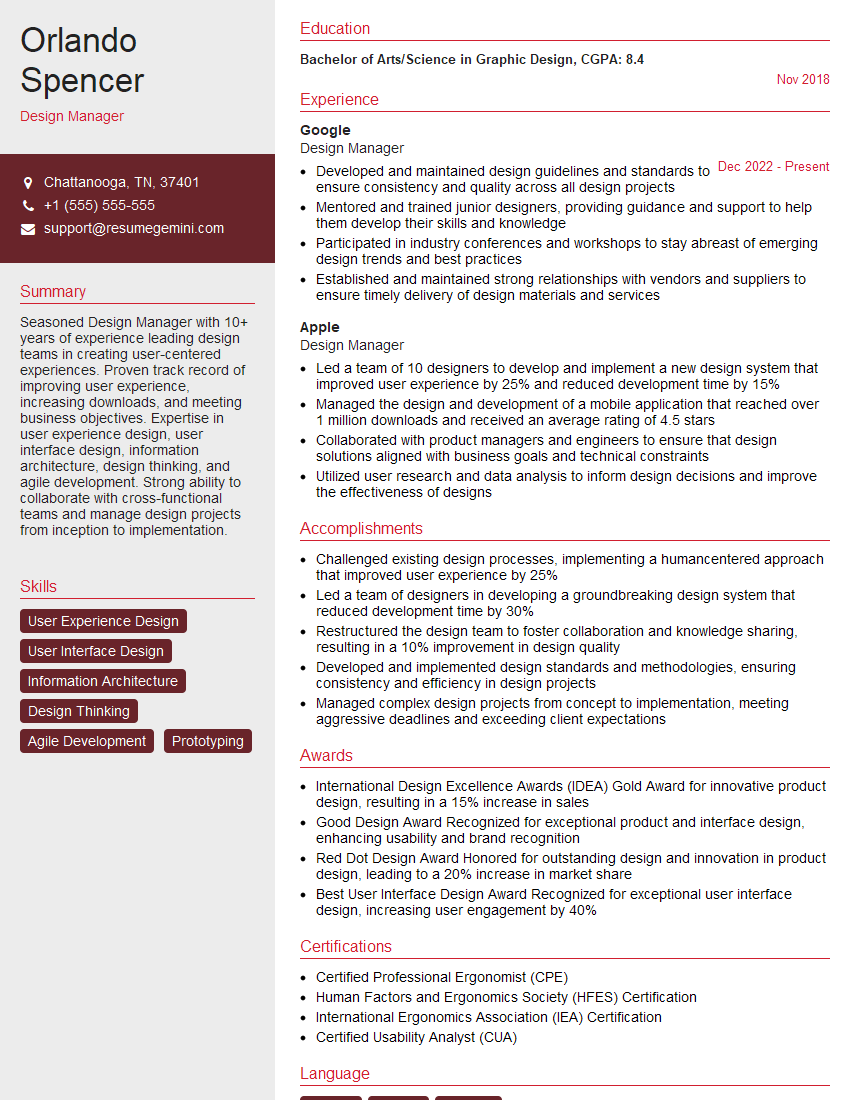
Mastering Creative Direction and Vision is crucial for career advancement in the creative industry. It opens doors to leadership roles, increased earning potential, and the opportunity to shape the visual landscape of brands and organizations. To maximize your job prospects, crafting a strong, ATS-friendly resume is essential. ResumeGemini is a trusted resource to help you build a compelling resume that showcases your skills and experience effectively. We provide examples of resumes tailored specifically to Creative Direction and Vision roles to guide you in this process.

Explore more articles
Users Rating of Our Blogs
Share Your Experience
We value your feedback! Please rate our content and share your thoughts (optional).
What Readers Say About Our Blog
Attention music lovers!
Wow, All the best Sax Summer music !!!
Spotify: https://open.spotify.com/artist/6ShcdIT7rPVVaFEpgZQbUk
Apple Music: https://music.apple.com/fr/artist/jimmy-sax-black/1530501936
YouTube: https://music.youtube.com/browse/VLOLAK5uy_noClmC7abM6YpZsnySxRqt3LoalPf88No
Other Platforms and Free Downloads : https://fanlink.tv/jimmysaxblack
on google : https://www.google.com/search?q=22+AND+22+AND+22
on ChatGPT : https://chat.openai.com?q=who20jlJimmy20Black20Sax20Producer
Get back into the groove with Jimmy sax Black
Best regards,
Jimmy sax Black
www.jimmysaxblack.com
Hi I am a troller at The aquatic interview center and I suddenly went so fast in Roblox and it was gone when I reset.
Hi,
Business owners spend hours every week worrying about their website—or avoiding it because it feels overwhelming.
We’d like to take that off your plate:
$69/month. Everything handled.
Our team will:
Design a custom website—or completely overhaul your current one
Take care of hosting as an option
Handle edits and improvements—up to 60 minutes of work included every month
No setup fees, no annual commitments. Just a site that makes a strong first impression.
Find out if it’s right for you:
https://websolutionsgenius.com/awardwinningwebsites
Hello,
we currently offer a complimentary backlink and URL indexing test for search engine optimization professionals.
You can get complimentary indexing credits to test how link discovery works in practice.
No credit card is required and there is no recurring fee.
You can find details here:
https://wikipedia-backlinks.com/indexing/
Regards
NICE RESPONSE TO Q & A
hi
The aim of this message is regarding an unclaimed deposit of a deceased nationale that bears the same name as you. You are not relate to him as there are millions of people answering the names across around the world. But i will use my position to influence the release of the deposit to you for our mutual benefit.
Respond for full details and how to claim the deposit. This is 100% risk free. Send hello to my email id: [email protected]
Luka Chachibaialuka
Hey interviewgemini.com, just wanted to follow up on my last email.
We just launched Call the Monster, an parenting app that lets you summon friendly ‘monsters’ kids actually listen to.
We’re also running a giveaway for everyone who downloads the app. Since it’s brand new, there aren’t many users yet, which means you’ve got a much better chance of winning some great prizes.
You can check it out here: https://bit.ly/callamonsterapp
Or follow us on Instagram: https://www.instagram.com/callamonsterapp
Thanks,
Ryan
CEO – Call the Monster App
Hey interviewgemini.com, I saw your website and love your approach.
I just want this to look like spam email, but want to share something important to you. We just launched Call the Monster, a parenting app that lets you summon friendly ‘monsters’ kids actually listen to.
Parents are loving it for calming chaos before bedtime. Thought you might want to try it: https://bit.ly/callamonsterapp or just follow our fun monster lore on Instagram: https://www.instagram.com/callamonsterapp
Thanks,
Ryan
CEO – Call A Monster APP
To the interviewgemini.com Owner.
Dear interviewgemini.com Webmaster!
Hi interviewgemini.com Webmaster!
Dear interviewgemini.com Webmaster!
excellent
Hello,
We found issues with your domain’s email setup that may be sending your messages to spam or blocking them completely. InboxShield Mini shows you how to fix it in minutes — no tech skills required.
Scan your domain now for details: https://inboxshield-mini.com/
— Adam @ InboxShield Mini
Reply STOP to unsubscribe
Hi, are you owner of interviewgemini.com? What if I told you I could help you find extra time in your schedule, reconnect with leads you didn’t even realize you missed, and bring in more “I want to work with you” conversations, without increasing your ad spend or hiring a full-time employee?
All with a flexible, budget-friendly service that could easily pay for itself. Sounds good?
Would it be nice to jump on a quick 10-minute call so I can show you exactly how we make this work?
Best,
Hapei
Marketing Director
Hey, I know you’re the owner of interviewgemini.com. I’ll be quick.
Fundraising for your business is tough and time-consuming. We make it easier by guaranteeing two private investor meetings each month, for six months. No demos, no pitch events – just direct introductions to active investors matched to your startup.
If youR17;re raising, this could help you build real momentum. Want me to send more info?
Hi, I represent an SEO company that specialises in getting you AI citations and higher rankings on Google. I’d like to offer you a 100% free SEO audit for your website. Would you be interested?
Hi, I represent an SEO company that specialises in getting you AI citations and higher rankings on Google. I’d like to offer you a 100% free SEO audit for your website. Would you be interested?