Are you ready to stand out in your next interview? Understanding and preparing for Crimping and Splicing interview questions is a game-changer. In this blog, we’ve compiled key questions and expert advice to help you showcase your skills with confidence and precision. Let’s get started on your journey to acing the interview.
Questions Asked in Crimping and Splicing Interview
Q 1. Explain the difference between crimping and splicing.
Crimping and splicing are both methods of joining wires or cables, but they differ significantly in their approach. Crimping uses a compression tool to secure a connector onto the end of a wire, creating a mechanical connection. Think of it like squeezing a metal clamp around a wire and connector. Splicing, on the other hand, involves directly joining two or more wires together, often using techniques that involve twisting, soldering, or specialized connectors. It’s like weaving two strands of yarn together to make a single, stronger thread.
In essence, crimping is about terminating a cable with a connector, while splicing is about joining two separate cable ends.
Q 2. What are the common types of crimping tools used?
The types of crimping tools vary depending on the connector and wire gauge. Some common types include:
- Hand Crimping Tools: These are manually operated and are ideal for smaller projects or field repairs. They are relatively inexpensive and easy to use.
- Ratchet Crimping Tools: These tools provide a more consistent crimp, ensuring proper connection every time. The ratchet mechanism ensures the jaws fully close, preventing incomplete crimps. They’re ideal for professional use where consistency and reliability are crucial.
- Hydraulic Crimping Tools: These are used for larger gauge wires and heavy-duty connectors, delivering significantly greater crimping force than hand or ratchet tools. They’re often found in industrial settings.
- Crimping Machines: Automated crimping machines are typically used for high-volume applications in manufacturing. These machines provide exceptional consistency and speed.
Q 3. Describe the process of crimping a connector onto a cable.
Crimping a connector involves several steps:
- Prepare the Cable: Strip the outer jacket and any insulation from the cable, ensuring the correct length for the connector.
- Insert the Wire: Carefully insert the stripped wire into the connector, ensuring proper alignment. Pay close attention to how the wire needs to be positioned to achieve the correct crimp.
- Position in Crimping Tool: Place the connector and wire assembly into the crimping tool, aligning it with the appropriate die for the connector type and wire gauge. Ensure that you are using the right die set; it will usually be clearly indicated.
- Crimp: Squeeze or activate the crimping tool firmly and consistently to create the crimp. If using a ratchet tool, ensure the ratchet mechanism has fully released before removing the connector.
- Inspection: Visually inspect the crimp to ensure it’s complete and that the connector is securely attached to the wire. Look for any signs of damage or incomplete crimps.
It’s crucial to always use the correct crimping tool and die for the connector and wire size. Using the wrong tool can lead to poor connections and potential failure.
Q 4. What are the different types of cable splices?
Cable splices can be broadly categorized as:
- Mechanical Splices: These utilize compression connectors or other mechanical devices to join wires together. They are easy to use and require minimal specialized tools.
- Soldered Splices: These involve soldering the wire ends together after they’ve been prepared. It’s a very strong, permanent splice, but requires more skill and equipment.
- Crimped Splices: Similar to mechanical splices, but they employ a crimping action to join wires, frequently using a specialized connector.
- Twist-on Connectors: These are a simpler type of mechanical splice, often used for lower-current applications. They involve twisting the wires together and securing them with a connector that twists onto the ends.
The choice of splice depends on factors like the wire gauge, application requirements, and environmental conditions.
Q 5. Explain the steps involved in making a mechanical splice.
Making a mechanical splice usually involves:
- Prepare the Wires: Strip the insulation from the ends of the wires to be joined. The amount of stripped wire depends on the specific connector being used.
- Insert into Connector: Insert the prepared wire ends into the mechanical splice connector. Make sure each wire is fully seated and securely positioned.
- Crimp (if applicable): If using a crimped style mechanical connector, use an appropriate crimping tool to secure the connector onto the wires. If not crimped, you may tighten the connector with hand tools.
- Inspect: Visually inspect the splice to ensure the wires are fully seated, and the connection is secure. Test the connection’s integrity with a multimeter, if applicable. Check for continuity and ensure there’s no significant resistance in the joint.
Q 6. How do you ensure a proper crimp connection?
Ensuring a proper crimp connection requires attention to detail at every stage:
- Use the Correct Tools: Employ the right crimping tool and die for the specific connector and wire size.
- Proper Wire Preparation: Cleanly strip the wire insulation to the recommended length, avoiding nicking or damaging the conductors.
- Correct Insertion: Ensure the wire is fully and correctly inserted into the connector.
- Complete Crimp: Apply sufficient crimping force to create a solid, secure connection. A fully closed ratchet on a ratchet crimper is a good indicator, but visual inspection is still needed.
- Visual Inspection: Always visually inspect the crimp. The crimp should be fully formed, and the wire should be securely held within the connector.
- Testing: Conduct continuity and resistance testing using a multimeter to ensure a good electrical connection.
Proper crimping avoids issues such as poor contact, high resistance leading to overheating and possible fires, and ultimately, connection failures.
Q 7. What are the potential problems with improper crimping?
Improper crimping can lead to several problems:
- Poor Electrical Contact: This results in increased resistance, heat generation, signal degradation, and potential failure of the connection. This is a common cause of intermittent failures.
- Wire Breakage: An incomplete or poorly executed crimp can damage the wire, leading to breakage, which necessitates a complete replacement of the cable.
- Connector Failure: The connector itself can fail due to excessive stress or an improper crimp, leading to disconnection.
- Intermittent Connections: These are frustrating to diagnose and can cause significant downtime in any network or system. A poorly crimped connection can create intermittent issues, resulting in connectivity issues coming and going.
- Safety Hazards: In high-current applications, a poor crimp can lead to overheating, fire, or even electric shock.
Prevention of these problems relies heavily on using the right tools, following the correct procedure, and performing thorough inspection after every crimp.
Q 8. What are the safety precautions when working with crimping tools?
Safety is paramount when working with crimping tools. These tools exert considerable force, and improper use can lead to injuries. Always wear safety glasses to protect your eyes from flying debris or tool malfunction. Ensure the tool is properly maintained and in good working order; a damaged tool can malfunction and cause injury. Never crimp wires that are too small for the connector, as this could damage the tool or create an unsafe connection. Always use the correct crimping die for the specific connector and wire gauge. Incorrect dies can crush the wire, create a poor connection, and even result in the connector separating from the wire. Finally, never force the tool; if it feels difficult to crimp, check your technique and ensure you’re using the correct tool and die. Think of it like this: A crimping tool is a powerful tool; treating it with respect and caution ensures both a good connection and your safety.
Q 9. What are the different types of connectors used in crimping?
The world of crimping connectors is vast, but some common types include:
- RJ45 connectors: Used for Ethernet networking cables.
- BNC connectors: Used for coaxial cables in applications like video surveillance and RF systems.
- USB connectors: Commonly used for data transfer and power.
- F-type connectors: Used for coaxial cables in cable television and satellite systems.
- Terminal blocks: For connecting wires within electrical panels and equipment.
- DT connectors: Used in various applications, including automotive and industrial electronics.
The choice depends heavily on the application and the type of cable being used. For instance, you wouldn’t use an RJ45 connector with a coaxial cable.
Q 10. How do you select the correct connector for a specific cable type?
Selecting the right connector is crucial for reliable connections. This involves matching the connector’s specifications to the cable’s properties. First, identify the cable type: Is it a shielded or unshielded twisted pair (STP or UTP)? Is it coaxial, fiber optic, or a different type? Second, determine the cable’s gauge (diameter of the conductors). This is vital because connectors are designed to fit specific gauges. Finally, consider the connector’s intended application and the environment it will be used in (e.g., indoor or outdoor). A connector designed for harsh outdoor environments will offer better durability than one meant for internal applications. Always consult the connector manufacturer’s specifications to ensure compatibility. Imagine trying to fit a square peg in a round hole – it won’t work, and neither will using an incompatible connector.
Q 11. What is the importance of proper cable preparation before crimping?
Proper cable preparation is the foundation of a successful crimp. Neglecting this step often leads to poor connections and potential failures. For most connectors, the process involves stripping the outer jacket of the cable to expose the necessary conductors. It’s crucial to strip only the required amount, being careful not to nick or damage the inner conductors. For twisted-pair cables, ensuring the conductors are untwisted only near the connector prevents signal interference. Moreover, using a wire stripper appropriate for the cable gauge prevents damage. Think of it as preparing ingredients for a meal; if you don’t prepare them well, the dish will be poorly made. Thorough cable preparation ensures a clean, reliable crimp.
Q 12. Explain the process of fusion splicing fiber optic cables.
Fusion splicing is a high-precision method for joining fiber optic cables. It involves using a fusion splicer, a specialized machine that precisely aligns the two fiber ends before applying intense heat to melt and fuse them together. The process begins with careful cleaning and preparation of the fiber ends. A precision cleaver is used to create perfectly perpendicular ends to ensure accurate alignment. The cleaver must create clean, smooth cuts to prevent signal loss. The fusion splicer then aligns the fibers using cameras and lasers. Once the alignment is perfect, an electric arc is generated, creating a strong, seamless fusion. Post-fusion, the splicer checks the quality of the splice using an optical loss meter to evaluate signal loss. This process produces a permanent connection with minimal signal degradation. It’s akin to precision welding at a microscopic level.
Q 13. What are the advantages and disadvantages of different splicing techniques?
Various splicing techniques, including mechanical splicing and fusion splicing, each have advantages and disadvantages:
- Fusion Splicing:
- Advantages: High strength, low loss, and long lifespan.
- Disadvantages: Requires specialized equipment, relatively high initial cost.
- Mechanical Splicing:
- Advantages: Relatively inexpensive equipment, simpler procedure.
- Disadvantages: Higher signal loss, less durable, and prone to environmental factors.
The best technique depends on factors such as budget, required signal quality, and the expected lifespan of the connection. For high-bandwidth applications where signal loss must be minimized, fusion splicing is preferred. In less critical applications or where cost is a primary factor, mechanical splicing might be chosen.
Q 14. How do you test the quality of a crimped or spliced connection?
Testing the quality of a crimped or spliced connection is crucial to ensure functionality and longevity. For crimped connections, a visual inspection is initially undertaken to check for any obvious defects like bent pins or incomplete crimps. Next, a continuity tester verifies whether an electrical path exists between the connected wires. For spliced fiber optic cables, an optical loss meter measures the amount of light loss at the splice point. An acceptable loss depends on the system specifications. Low light loss indicates a good quality splice. High light loss suggests a problem like poor alignment or contamination. Finally, using a cable tester allows you to check the entire cable’s performance, identifying any issues between the devices and the connection point. Just like a doctor examines a patient, testing ensures the health and performance of the connection.
Q 15. Describe the troubleshooting steps for a faulty crimp connection.
Troubleshooting a faulty crimp connection involves a systematic approach. First, visually inspect the connection. Look for obvious signs of damage like a poorly formed crimp, crushed insulation, or exposed conductors. A properly crimped connection should have a smooth, uniform appearance, with the connector fully seated and the insulation undamaged.
- Check the Crimp Tool: Ensure your crimping tool is properly calibrated and in good working order. A damaged or improperly calibrated tool can lead to inconsistent crimps.
- Examine the Connector: Inspect the connector for defects, ensuring it’s the correct type and size for the wire gauge. A mismatch can result in a weak connection.
- Test Continuity: Use a multimeter to check for continuity between the conductors within the crimp. Lack of continuity indicates a broken connection.
- Inspect the Wire: Check the wire itself for any damage, fraying, or corrosion before crimping. Damaged wire will compromise the connection regardless of the crimp quality.
- Retest: After addressing any identified issues, retest the connection to verify it’s working correctly. If problems persist, consider replacing the connector and wire.
For example, I once encountered a faulty crimp on a network cable causing intermittent network drops. Upon closer examination, the crimping tool was slightly misaligned, leading to inconsistent pressure. After recalibrating the tool, the problem was resolved.
Career Expert Tips:
- Ace those interviews! Prepare effectively by reviewing the Top 50 Most Common Interview Questions on ResumeGemini.
- Navigate your job search with confidence! Explore a wide range of Career Tips on ResumeGemini. Learn about common challenges and recommendations to overcome them.
- Craft the perfect resume! Master the Art of Resume Writing with ResumeGemini’s guide. Showcase your unique qualifications and achievements effectively.
- Don’t miss out on holiday savings! Build your dream resume with ResumeGemini’s ATS optimized templates.
Q 16. What are the common causes of fiber optic splice failures?
Fiber optic splice failures can stem from several sources. The most common include:
- Poor Splice Quality: Improper alignment, insufficient fusion, or contamination within the splice can all significantly weaken the connection. Imagine trying to perfectly join two glass rods – even a tiny imperfection compromises the strength.
- Environmental Factors: Exposure to moisture, extreme temperatures, or vibrations can damage the splice over time. Think of the physical stresses a splice might experience in an outdoor environment exposed to sun, rain and wind.
- Microbending: Excessive bending of the fiber optic cable near the splice can lead to signal loss. Imagine the cable as a delicate glass thread – too much bending can break it.
- Contamination: Dust, dirt, or oil on the fiber ends before splicing can disrupt signal transmission. This is why clean working conditions are paramount when working with fiber optics.
- Incorrect Fusion Parameters: Fusion splicers have settings that must be calibrated for the type of fiber. Incorrect settings can lead to a weak or incomplete fusion.
For instance, I once encountered numerous splice failures in an underground cable during a fiber optic restoration project. After thorough investigation, we found the problem stemmed from water ingress into the splice protection tubes. The solution was replacing the affected splice tubes and sealing all points of entry carefully.
Q 17. How do you maintain crimping and splicing tools?
Maintaining crimping and splicing tools is crucial for reliable connections. This includes:
- Regular Cleaning: Keep the tools clean and free of debris. Use appropriate cleaning agents and tools, and always refer to the manufacturer’s recommendations.
- Calibration: Crimping tools, especially, require regular calibration using specialized gauges to ensure consistent crimp force. This guarantees proper connection and prevents damage to wires.
- Inspection: Periodically inspect the tools for damage, wear, and tear. Replace worn or damaged parts as needed.
- Storage: Store the tools in a clean, dry location to prevent corrosion and damage. A dedicated tool case can help safeguard them.
- Lubrication: Some tools may require lubrication as specified in the manufacturer’s manual. This will improve their functionality and extend their lifespan.
For example, neglecting to calibrate a crimping tool can lead to inconsistent crimps, resulting in unreliable connections that may require rework, potentially causing project delays and additional costs.
Q 18. What are the industry standards and regulations related to crimping and splicing?
Industry standards and regulations for crimping and splicing vary depending on the application and geographic location. However, some common standards and best practices include:
- TIA/EIA standards: These standards (e.g., TIA-568) provide guidelines for structured cabling systems, including crimping and termination of various cable types.
- IEC standards: International Electrotechnical Commission (IEC) standards offer global guidance on electrical installations, including wiring techniques and safety.
- National Electrical Codes (NEC): These codes vary by country and provide detailed requirements for electrical installations, often covering cable splicing and termination practices.
- Manufacturer specifications: Always follow the manufacturer’s recommendations and specifications for connectors, tools, and materials.
Compliance with these standards ensures safety, reliability, and compatibility within the system, avoiding potential hazards and ensuring the long-term performance of the installations. Non-compliance could lead to significant issues ranging from safety violations to system failures.
Q 19. Explain the importance of proper grounding when working with cables.
Proper grounding is essential when working with cables to prevent electrical shocks, equipment damage, and signal interference. Grounding provides a low-resistance path for electrical current to flow to the earth, preventing dangerous voltage build-up.
Imagine a scenario where a cable experiences a fault and becomes energized. If the cable is not properly grounded, this energized cable poses a serious risk of electric shock to anyone who touches it. A good grounding system diverts the current safely to the earth, mitigating this danger.
Furthermore, grounding minimizes electromagnetic interference (EMI) and radio frequency interference (RFI), which can disrupt signal integrity in sensitive applications like telecommunications and data transmission. It’s a fundamental safety precaution and crucial for the reliable operation of cable systems.
Q 20. Describe different types of cable insulation and their impact on splicing.
Different cable insulations impact splicing techniques. The type of insulation dictates the tools and methods required for stripping, preparation and joining.
- PVC (Polyvinyl Chloride): Common, relatively easy to strip and splice. Requires careful heat management during splicing to avoid damaging the insulation.
- PE (Polyethylene): More flexible than PVC. Requires sharp tools to avoid damaging the underlying conductor.
- XLPE (Cross-linked Polyethylene): Excellent heat and moisture resistance, but more difficult to strip and requires specialized tools. A strong, sharp blade is crucial.
- Teflon (PTFE): High temperature and chemical resistance. Requires specific tools and techniques to avoid damaging the insulation.
Consider the challenge of splicing a high-voltage cable with XLPE insulation versus low-voltage wire with PVC insulation. The former requires more care and specific tooling to avoid insulation breakdown and potential hazards.
Q 21. How do you handle different cable gauges when crimping?
Handling different cable gauges during crimping necessitates using the correct crimping tool and connector for the specific gauge. Each gauge has an optimal crimp depth and pressure to ensure a secure connection. Using an incorrect tool or connector can result in a loose or damaged crimp.
Think of it like fitting a puzzle piece – using a tool designed for a larger wire gauge on a smaller one can crush the wire, while using a tool intended for a smaller gauge on a larger wire will result in an inadequate crimp, leading to poor electrical connectivity.
Always consult the crimping tool and connector manufacturers’ specifications to identify the suitable tools and connectors for each cable gauge. Using a proper gauge-specific crimping die and applying the correct crimp force with a calibrated tool is critical for a strong and reliable connection.
Q 22. What are the differences between mechanical and fusion splicing?
Mechanical splicing and fusion splicing are two primary methods for joining optical fibers. Mechanical splicing uses a precision alignment mechanism to physically connect the fiber ends, relying on a small gap between the fibers and index-matching gel to minimize signal loss. Fusion splicing, on the other hand, uses an electric arc to melt and fuse the fiber ends together, creating a single, continuous piece of glass.
- Mechanical Splicing: Simpler, faster, and generally less expensive. Suitable for situations where speed and cost are prioritized and slightly higher signal loss is acceptable. Requires precision alignment to minimize losses.
- Fusion Splicing: Provides superior performance with lower signal loss and higher reliability. The process is more complex, requiring specialized equipment and training. It’s preferred for long-haul networks and applications demanding maximum signal integrity. Ideal for applications that require minimal signal loss.
Think of it like this: mechanical splicing is like joining two pieces of wood with strong glue, while fusion splicing is like melting two pieces of plastic together so they become one seamless piece. Both work, but the latter provides a stronger, more consistent joint.
Q 23. What safety measures are crucial when working with high-voltage cables?
Safety is paramount when working with high-voltage cables. Negligence can lead to serious injury or death. Crucial safety measures include:
- Lockout/Tagout Procedures: Before any work begins, the power must be completely isolated and locked out using a lockout/tagout system to prevent accidental energization. This is the most critical step.
- Personal Protective Equipment (PPE): This includes insulated gloves, safety glasses, arc-flash protective clothing (if appropriate for the voltage level), and safety footwear. The PPE must be regularly inspected and certified.
- Grounding and Bonding: All cables and equipment must be properly grounded to eliminate stray voltage and prevent electric shock. Bonding ensures that different metal parts are at the same electrical potential.
- Voltage Testing: Before beginning any work, and again after grounding, the cable should be rigorously tested with a non-contact voltage tester to confirm that it is de-energized. This should be done by a qualified person.
- Training and Certification: Only trained and certified personnel should work on high-voltage cables. They should be familiar with all relevant safety procedures and equipment.
- Emergency Procedures: A clear understanding and plan for emergency situations, including CPR and first aid procedures, is vital.
Following these procedures reduces the risk, however, it is important to remember that working with high voltage is inherently dangerous. Never compromise on safety.
Q 24. How do you identify different types of cables?
Identifying different cable types requires careful observation and knowledge of industry standards. Key factors include:
- Color Coding: Many cables use color-coding systems to indicate voltage, conductor type, or other characteristics. This varies greatly by region and application.
- Marking and Labeling: Manufacturers typically mark cables with identifiers specifying voltage rating, conductor size (AWG or mm²), insulation type, and other relevant information.
- Physical Characteristics: The cable’s size, construction, sheath material, and the presence or absence of armor (metallic shielding) provide clues about its intended use.
- Testing: Using a cable tester can verify the cable’s characteristics such as continuity, insulation resistance, and other vital metrics.
For example, a high-voltage power cable will likely be much thicker and have a different insulation material than a low-voltage communication cable. Understanding industry standards and consulting cable documentation are crucial for correct identification.
Q 25. Describe your experience with different crimping and splicing techniques.
My experience encompasses a wide range of crimping and splicing techniques, including:
- Compression Crimping: Used extensively for connecting terminals and connectors to wires. I’m proficient with various hand and hydraulic crimp tools, ensuring proper die selection for the specific terminal and wire gauge.
- Insulation Displacement Connectors (IDC): These connectors rely on a sharp cutting edge to displace the insulation of the wire and establish a solid electrical connection. I have experience with various IDC connectors and their application in data and communication cabling.
- Splicing techniques: My skills involve various splicing methods, including Western Union, twist-on connectors, and various heat-shrink tubing applications, ensuring secure and durable connections. I have experience with both copper and fiber-optic cable splicing.
- Soldering: Although less commonly used for high-volume work due to the time intensive nature, I am well-versed in soldering techniques for specific applications needing a high level of precision.
I always prioritize selecting the appropriate technique based on the cable type, required performance, and environmental conditions.
Q 26. Explain how to diagnose and fix common crimping errors.
Diagnosing crimping errors often involves visual inspection and testing. Common errors include:
- Incomplete Crimp: The connector isn’t fully seated or the crimp isn’t properly formed, leading to poor contact and potential failure. This is often visible as a mis-shaped crimp or a loose connection. Solution: Recrimp with the correct tool and die set.
- Over-Crimping: Excessive force crushes the conductor, reducing its conductivity or breaking the wire. This might be visible as a flattened or damaged conductor. Solution: Use the correct crimping tool and appropriate force. Incorrect die selection will also cause this.
- Under-Crimping: Insufficient force results in a loose connection. The connection may appear normal, but the resistance will be high and prone to intermittent operation. Solution: Recrimp with correct force using the proper die set.
- Incorrect Die Selection: Using an incorrect die for the terminal or wire gauge results in poor crimps. Solution: Consult the crimp tool and connector manufacturers’ specifications to determine the proper die set for the job.
Testing with a multimeter can confirm poor connections by measuring resistance. High resistance indicates a faulty connection that needs attention.
Q 27. What software or tools do you use to plan and document your work?
For planning and documenting my work, I utilize a combination of software and tools:
- AutoCAD: For creating detailed cable schematics and drawings to precisely document cable layouts and installations.
- Visio: A valuable tool for creating network diagrams, illustrating the connectivity between different cable segments and equipment.
- Spreadsheet software (Excel, Google Sheets): For organizing and tracking cable inventory, materials, and project details.
- Specialized cable management software: This helps in calculating cable lengths, optimizing routing, and managing cable pathways in complex systems.
- Digital photography and documentation: I take detailed photographs before, during, and after each project to provide a visual record of the work, along with written notes in a log book, detailing the cable specifications, connection points, and any challenges encountered.
Careful documentation is essential for troubleshooting, maintenance, and future modifications.
Q 28. Describe a challenging crimping or splicing project you have completed and how you overcame the challenges.
One challenging project involved splicing fiber-optic cables in a harsh, underwater environment during a subsea cable repair. The sea conditions were rough, causing significant sway in the cable laying vessel and limited visibility due to high turbidity. The project required quick action and precise work to ensure network connectivity was restored quickly.
We overcame this by using a specialized underwater remotely operated vehicle (ROV) equipped with precision fiber-optic splicing tools. This allowed us to work remotely with great precision even in difficult conditions. A combination of meticulous planning, specialized equipment, and a skilled team ensured we successfully completed the splicing within the required timeframe, minimizing downtime for the telecommunications network.
This project highlighted the need for adaptability, resourcefulness, and collaboration in high-pressure, demanding circumstances. The successful outcome demonstrated the importance of advanced tools and specialized training in resolving complex problems in challenging environments.
Key Topics to Learn for Your Crimping and Splicing Interview
- Crimping Techniques: Understanding various crimping methods (e.g., hand crimping, hydraulic crimping), appropriate tools, and the importance of proper crimp quality. Explore different crimp styles and their suitability for various applications.
- Splicing Techniques: Mastering different splicing methods (e.g., butt splicing, Western Union splice) for various cable types and sizes. Understand the factors influencing splice strength and longevity.
- Cable Types and Properties: Develop a strong understanding of different cable types (coaxial, fiber optic, shielded twisted pair), their construction, and how these properties influence crimping and splicing techniques.
- Troubleshooting and Diagnostics: Learn to identify common crimping and splicing defects (e.g., cold crimps, incomplete splices), their causes, and effective troubleshooting strategies.
- Safety Procedures and Regulations: Familiarize yourself with relevant safety regulations and best practices for working with crimping and splicing tools and materials. This includes understanding potential hazards and mitigation techniques.
- Practical Application: Be ready to discuss real-world scenarios where you have applied or would apply your crimping and splicing skills. Consider examples from past projects or hypothetical situations.
- Tools and Equipment: Demonstrate familiarity with different crimping and splicing tools, their proper usage, maintenance, and limitations.
Next Steps: Unlock Your Career Potential
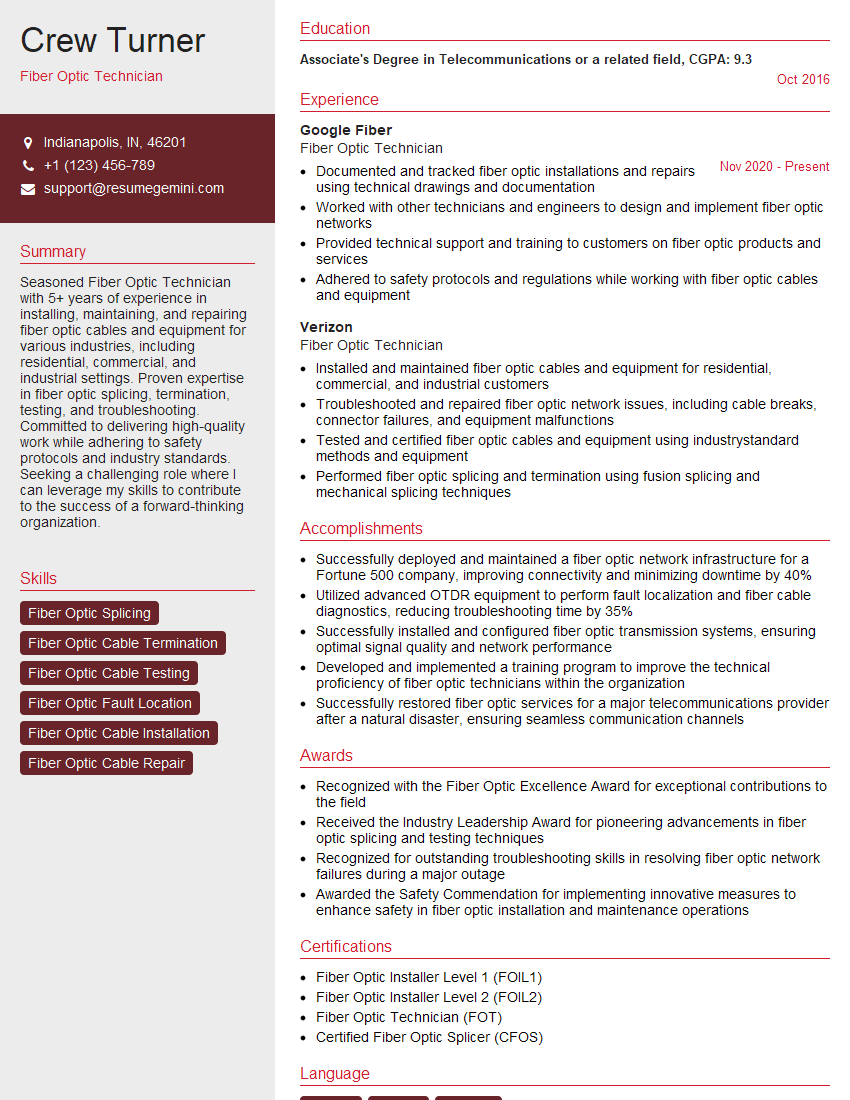
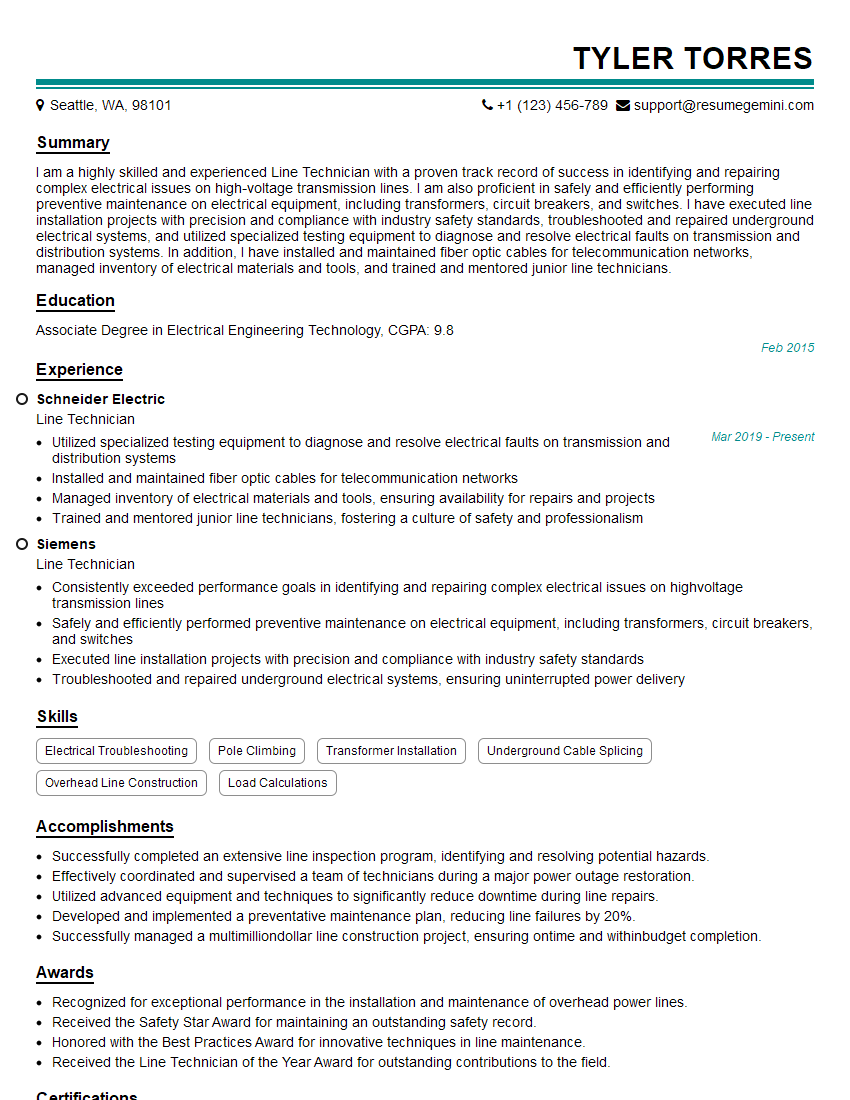
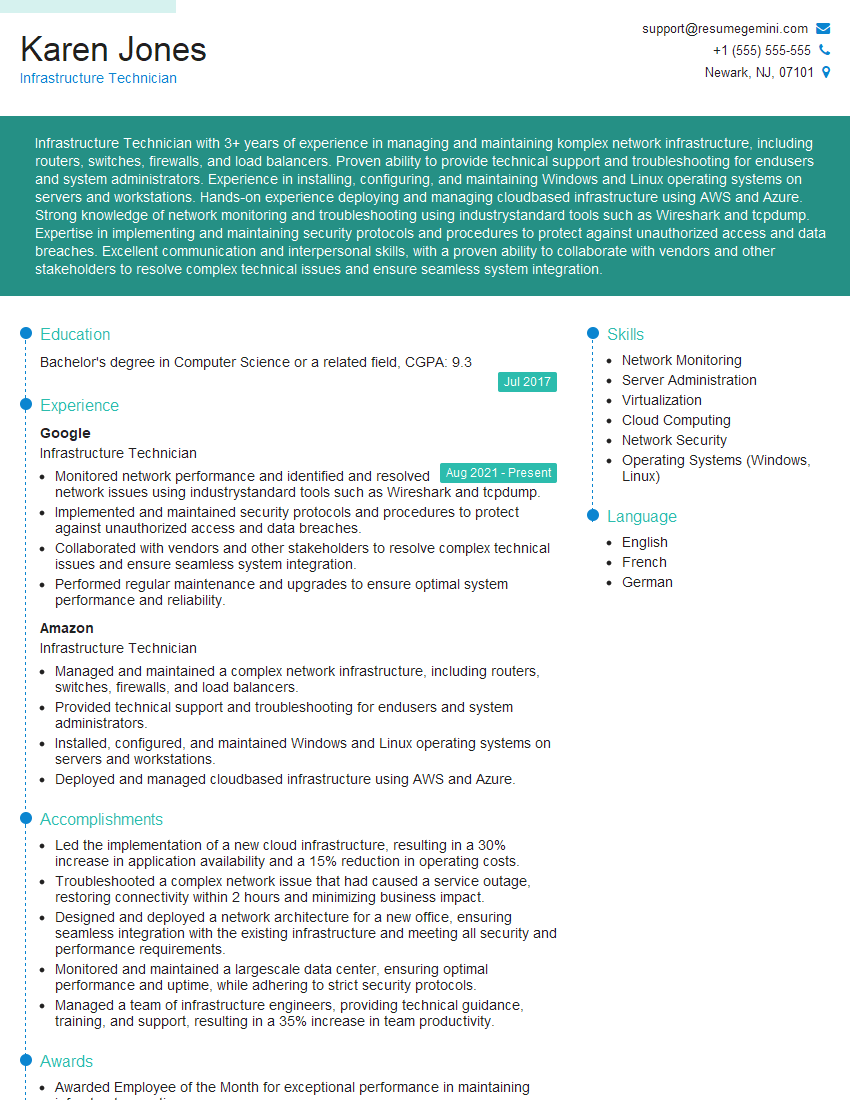
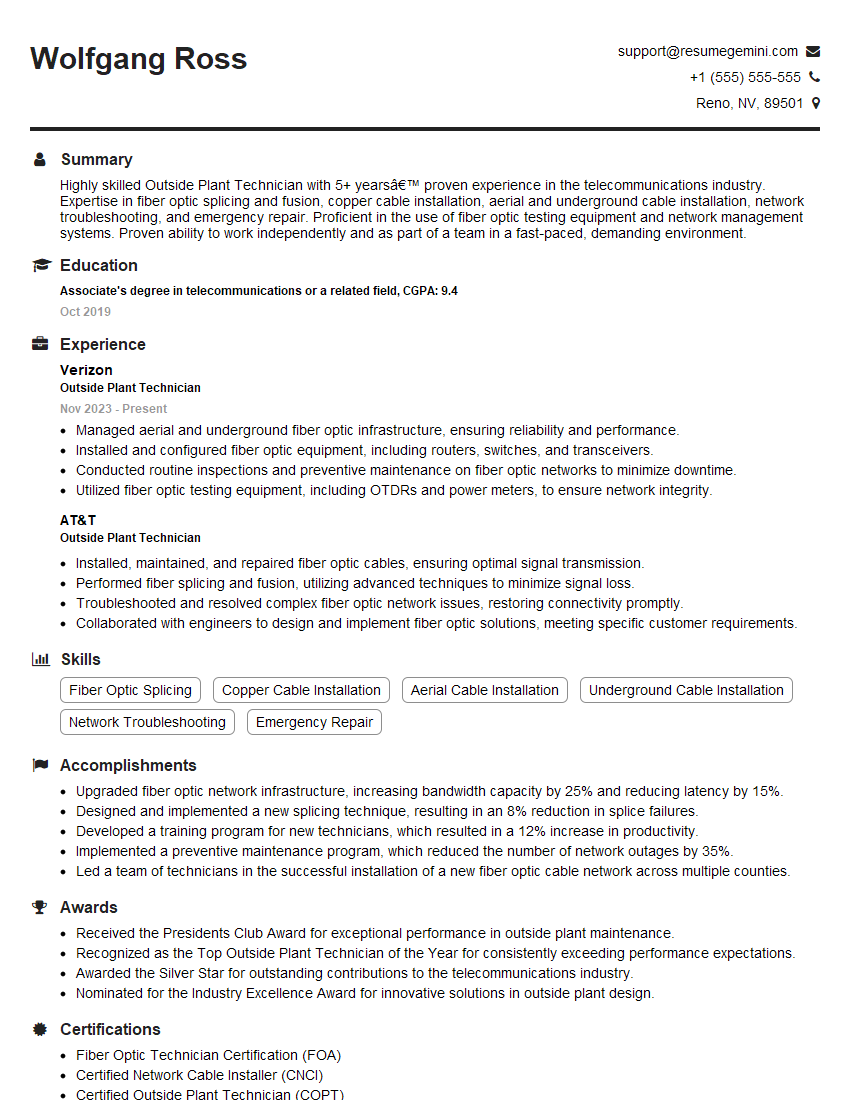
Mastering crimping and splicing opens doors to exciting opportunities in various industries, from telecommunications and aerospace to manufacturing and renewable energy. To maximize your chances of landing your dream job, it’s crucial to present yourself effectively. Creating an ATS-friendly resume is key to getting your application noticed. ResumeGemini is a trusted resource that can help you build a professional and impactful resume, tailored to highlight your skills in crimping and splicing. We offer examples of resumes specifically designed for this field to guide you. Take the next step towards a successful career in Crimping and Splicing – build your best resume with ResumeGemini today!

Explore more articles
Users Rating of Our Blogs
Share Your Experience
We value your feedback! Please rate our content and share your thoughts (optional).
What Readers Say About Our Blog
Attention music lovers!
Wow, All the best Sax Summer music !!!
Spotify: https://open.spotify.com/artist/6ShcdIT7rPVVaFEpgZQbUk
Apple Music: https://music.apple.com/fr/artist/jimmy-sax-black/1530501936
YouTube: https://music.youtube.com/browse/VLOLAK5uy_noClmC7abM6YpZsnySxRqt3LoalPf88No
Other Platforms and Free Downloads : https://fanlink.tv/jimmysaxblack
on google : https://www.google.com/search?q=22+AND+22+AND+22
on ChatGPT : https://chat.openai.com?q=who20jlJimmy20Black20Sax20Producer
Get back into the groove with Jimmy sax Black
Best regards,
Jimmy sax Black
www.jimmysaxblack.com
Hi I am a troller at The aquatic interview center and I suddenly went so fast in Roblox and it was gone when I reset.
Hi,
Business owners spend hours every week worrying about their website—or avoiding it because it feels overwhelming.
We’d like to take that off your plate:
$69/month. Everything handled.
Our team will:
Design a custom website—or completely overhaul your current one
Take care of hosting as an option
Handle edits and improvements—up to 60 minutes of work included every month
No setup fees, no annual commitments. Just a site that makes a strong first impression.
Find out if it’s right for you:
https://websolutionsgenius.com/awardwinningwebsites
Hello,
we currently offer a complimentary backlink and URL indexing test for search engine optimization professionals.
You can get complimentary indexing credits to test how link discovery works in practice.
No credit card is required and there is no recurring fee.
You can find details here:
https://wikipedia-backlinks.com/indexing/
Regards
NICE RESPONSE TO Q & A
hi
The aim of this message is regarding an unclaimed deposit of a deceased nationale that bears the same name as you. You are not relate to him as there are millions of people answering the names across around the world. But i will use my position to influence the release of the deposit to you for our mutual benefit.
Respond for full details and how to claim the deposit. This is 100% risk free. Send hello to my email id: lukachachibaialuka@gmail.com
Luka Chachibaialuka
Hey interviewgemini.com, just wanted to follow up on my last email.
We just launched Call the Monster, an parenting app that lets you summon friendly ‘monsters’ kids actually listen to.
We’re also running a giveaway for everyone who downloads the app. Since it’s brand new, there aren’t many users yet, which means you’ve got a much better chance of winning some great prizes.
You can check it out here: https://bit.ly/callamonsterapp
Or follow us on Instagram: https://www.instagram.com/callamonsterapp
Thanks,
Ryan
CEO – Call the Monster App
Hey interviewgemini.com, I saw your website and love your approach.
I just want this to look like spam email, but want to share something important to you. We just launched Call the Monster, a parenting app that lets you summon friendly ‘monsters’ kids actually listen to.
Parents are loving it for calming chaos before bedtime. Thought you might want to try it: https://bit.ly/callamonsterapp or just follow our fun monster lore on Instagram: https://www.instagram.com/callamonsterapp
Thanks,
Ryan
CEO – Call A Monster APP
To the interviewgemini.com Owner.
Dear interviewgemini.com Webmaster!
Hi interviewgemini.com Webmaster!
Dear interviewgemini.com Webmaster!
excellent
Hello,
We found issues with your domain’s email setup that may be sending your messages to spam or blocking them completely. InboxShield Mini shows you how to fix it in minutes — no tech skills required.
Scan your domain now for details: https://inboxshield-mini.com/
— Adam @ InboxShield Mini
support@inboxshield-mini.com
Reply STOP to unsubscribe
Hi, are you owner of interviewgemini.com? What if I told you I could help you find extra time in your schedule, reconnect with leads you didn’t even realize you missed, and bring in more “I want to work with you” conversations, without increasing your ad spend or hiring a full-time employee?
All with a flexible, budget-friendly service that could easily pay for itself. Sounds good?
Would it be nice to jump on a quick 10-minute call so I can show you exactly how we make this work?
Best,
Hapei
Marketing Director
Hey, I know you’re the owner of interviewgemini.com. I’ll be quick.
Fundraising for your business is tough and time-consuming. We make it easier by guaranteeing two private investor meetings each month, for six months. No demos, no pitch events – just direct introductions to active investors matched to your startup.
If youR17;re raising, this could help you build real momentum. Want me to send more info?
Hi, I represent an SEO company that specialises in getting you AI citations and higher rankings on Google. I’d like to offer you a 100% free SEO audit for your website. Would you be interested?
Hi, I represent an SEO company that specialises in getting you AI citations and higher rankings on Google. I’d like to offer you a 100% free SEO audit for your website. Would you be interested?