The right preparation can turn an interview into an opportunity to showcase your expertise. This guide to Crisis Negotiations interview questions is your ultimate resource, providing key insights and tips to help you ace your responses and stand out as a top candidate.
Questions Asked in Crisis Negotiations Interview
Q 1. Describe the phases of a typical crisis negotiation.
Crisis negotiation isn’t a linear process, but generally follows distinct phases. Think of it like carefully navigating a river: you need to understand the current before you can safely reach the other side.
- Pre-Incident Planning: This involves understanding the potential crisis situations your team may face, developing protocols, and ensuring everyone is trained and equipped. It’s like studying a map of the river before embarking on your journey.
- Initial Contact & Rapport Building: The first interaction is crucial. The goal is to establish a connection, showing empathy and understanding while gaining information about the situation and the person in crisis. Think of it as carefully approaching the riverbank, assessing the flow and looking for a safe entry point.
- Information Gathering & Needs Assessment: This phase focuses on active listening to fully grasp the individual’s concerns, motivations, and needs. It’s about understanding the ‘currents’ influencing their behavior.
- Negotiation & De-escalation: This is where you actively work towards resolving the crisis, using communication strategies to reduce tension and find mutually acceptable solutions. This is where you begin navigating the river, carefully adjusting your course to avoid obstacles.
- Resolution & Post-Incident Analysis: The crisis is resolved, and the individual is safely removed from harm. This final stage involves reviewing what worked, what didn’t, and identifying areas for improvement for future situations. It’s the careful examination of your journey once you’ve reached the other side.
Q 2. Explain the importance of active listening in crisis negotiations.
Active listening is the cornerstone of successful crisis negotiation. It’s not just about hearing words; it’s about understanding the emotions and perspectives behind them. It’s about truly grasping the ‘why’ behind their actions.
Imagine a person shouting angrily. Instead of immediately responding, active listening means focusing on their words, their body language, and their tone. It involves reflecting their emotions back to them (‘It sounds like you’re feeling very frustrated right now’). This shows empathy and encourages them to open up, building trust and providing valuable insights into their motivations.
Active listening helps in identifying underlying needs, assessing risks, and building rapport. It shows respect, reducing defensiveness, and paving the way for a peaceful resolution. It’s like letting the river guide you; you are responsive to its flow and adapt accordingly.
Q 3. How do you build rapport with a distressed individual during a crisis?
Building rapport in a crisis situation requires empathy, patience, and genuine concern. It’s about connecting with the individual on a human level, recognizing their pain and understanding their perspective.
A crucial technique is mirroring and matching – subtly matching their body language or tone (within reason!). This creates subconscious connection and trust. For example, if they are speaking softly, you might lower your voice as well. However, avoid mimicking aggressive behavior. Instead, maintaining a calm and reassuring demeanor can be even more effective.
Validating their feelings, even if you don’t agree with their actions, is key. Phrases like ‘I understand you’re feeling overwhelmed’ or ‘I can see why you might react this way’ can make a difference. It’s like offering a helping hand to someone struggling to stay afloat in the river’s current.
Q 4. What communication strategies do you employ to de-escalate tense situations?
De-escalation involves using calm, clear, and concise communication. The goal is to lower tension, reduce aggression, and create an atmosphere conducive to negotiation.
- Using a calm and reassuring tone: A soothing voice can diffuse anger.
- Employing empathy and understanding: Acknowledging their feelings validates their experience.
- Giving options and choices: Offering alternatives gives them a sense of control.
- Active listening: Showing that you understand helps to build trust.
- Patience and persistence: De-escalation takes time. Don’t rush the process.
- Using clear and simple language: Avoid jargon or complex sentences.
Imagine you’re trying to calm a scared animal. You wouldn’t shout; you would approach slowly and speak softly, offering reassurance and creating a safe space. De-escalation is similar—a slow, careful approach that prioritizes safety and understanding.
Q 5. How do you handle resistance or manipulative tactics from a subject?
Resistance and manipulative tactics are common in crisis negotiations. The key is to remain calm, professional, and persistent. Never take the bait; it’s crucial to remain focused on your objectives and the safety of everyone involved.
One approach is to acknowledge their resistance and attempt to understand its root cause. Phrases such as ‘I understand you’re hesitant, can we talk about why that is?’ can open a dialogue. Another tactic is to calmly reiterate the desired outcome and the positive consequences of cooperating.
If manipulation is suspected, verify information with other sources, and be prepared to involve other resources like law enforcement if the situation requires it. It’s a delicate balance of firmness and empathy, ensuring you’re always prepared to escalate or de-escalate as the situation demands.
Q 6. Describe your understanding of the ‘tactical empathy’ approach.
Tactical empathy is not about agreeing with the subject’s behavior; it’s about understanding their perspective and motivations. It’s about stepping into their shoes, even for a moment, to comprehend the emotions and drivers behind their actions.
For example, imagine someone threatening suicide. Tactical empathy would involve considering their life circumstances: job loss, relationship breakdown, financial difficulties. Understanding these factors helps to address their underlying needs and tailor your negotiation strategy accordingly. This isn’t condoning their actions, but trying to understand the context of their desperation.
It’s a powerful tool that helps build rapport and find common ground, leading to a more effective resolution. It’s about seeing the person as a whole, not just a threat.
Q 7. What are some common barriers to effective communication during a crisis?
Many barriers can hinder effective communication during a crisis. These include:
- Emotional barriers: Fear, anger, and grief can cloud judgment and impair communication.
- Cognitive barriers: Stress, trauma, and mental illness can impact cognitive processing and comprehension.
- Cultural barriers: Language differences, cultural misunderstandings, and differing communication styles can lead to misinterpretations.
- Environmental barriers: Noise, distractions, and poor visibility can impede communication.
- Technological barriers: Poor phone connections, equipment malfunctions, or lack of access to technology can disrupt communication.
Overcoming these barriers requires careful planning, training, and adaptability. It’s crucial to be aware of these potential roadblocks and have strategies in place to mitigate their impact. Like navigating a river with rapids and rocks, it requires skill and careful planning to ensure a safe journey.
Q 8. How do you assess the risk level in a crisis situation?
Assessing risk in a crisis situation is a crucial first step, determining the potential for harm and guiding our strategic approach. We use a multi-faceted approach, considering factors like:
- Subject’s behavior: Is the subject exhibiting signs of escalating aggression, such as heightened vocal tone, erratic movements, or weapon possession?
- Environment: Are there hostages involved? What are the environmental barriers and escape routes? Is the location public or private? This impacts the urgency and options for intervention.
- Subject’s history: Prior incidents, mental health history, and any known substance use can help anticipate behavior patterns.
- Available resources: This includes the number and training of negotiators, SWAT team readiness, and access to specialized equipment.
We often employ a risk matrix, plotting the level of threat against the subject’s vulnerability. This allows for a tailored response – a highly volatile subject in a public place demands immediate action, while a barricaded subject with no hostages might allow for more time to build rapport.
Q 9. Explain the importance of understanding a subject’s motivations and needs.
Understanding a subject’s motivations and needs is paramount. It’s about moving beyond the immediate crisis and seeing the person’s underlying issues. Their actions, however destructive, often stem from unmet needs – be it financial desperation, relationship breakdown, or mental health struggles.
Imagine a man holding a bank hostage. His demands might seem irrational, but digging deeper, we might find that he’s facing foreclosure and is overwhelmed with despair. Addressing his financial distress – even temporarily – can significantly improve our chances of a peaceful resolution. Active listening, empathetic communication, and asking open-ended questions are crucial in uncovering these underlying factors. We strive to validate their feelings, even if we don’t condone their actions. This shows respect and creates trust, fostering collaboration towards a solution.
Q 10. How do you manage your own emotions and stress during a negotiation?
Managing emotions and stress during a negotiation is critical for effectiveness. High-stakes situations demand self-awareness and controlled responses. I utilize several techniques:
- Self-reflection: Recognizing my own emotional triggers allows me to anticipate and manage them.
- Breathing exercises: Deep, controlled breaths help regulate my heart rate and calm my nerves.
- Team support: Regular briefings with my team provide a space to debrief, share concerns, and support one another.
- Debriefing after the event: Thoroughly reviewing the negotiation helps process the experience and learn from any mistakes.
Maintaining composure is not about suppressing emotions, but about managing them so they don’t interfere with rational decision-making. It’s about remaining calm and focused, even when facing extreme pressure.
Q 11. How do you work effectively within a team during a crisis?
Effective teamwork in a crisis is essential. Clear communication, defined roles, and a shared understanding of goals are key. We use a collaborative approach, with each member contributing their expertise.
For example, one team member might focus on rapport-building with the subject, while another monitors the situation remotely, coordinating with law enforcement. A third might be responsible for analyzing intelligence gathered, suggesting strategies, and maintaining communication channels. We also employ a designated ‘team leader’ who coordinates the group’s efforts and ensures clear communication with command. Regular briefings and debriefings are crucial for maintaining situational awareness and coordinating our actions.
Q 12. Describe a time you successfully de-escalated a tense situation.
During a hostage situation involving a distraught father threatening self-harm, we realized he was deeply troubled by custody issues. Rather than focusing solely on the immediate threat, we actively listened to his concerns. We validated his feelings, emphasizing his love for his child. We then facilitated a conversation between him and child protective services, offering a pathway to resolve his concerns. He was receptive because he felt heard and understood. This led to him releasing the hostages and seeking professional help. This experience underscores the power of empathy and understanding in de-escalation.
Q 13. What are the ethical considerations involved in crisis negotiation?
Ethical considerations are paramount in crisis negotiation. Our actions must be guided by principles of fairness, respect, and integrity. Key ethical considerations include:
- Truthfulness: While employing tactical empathy, we never knowingly mislead the subject.
- Confidentiality: We must protect the privacy of the subject and other individuals involved.
- Respect for human dignity: We treat all individuals with respect, regardless of their actions.
- Impartiality: We remain objective in our approach, avoiding bias or prejudice.
- Proportionality: We employ the least restrictive means necessary to resolve the situation.
Ethical dilemmas frequently arise, requiring careful consideration and potentially consultation with supervisors or ethical review boards. Striking a balance between safety and the subject’s rights is an ongoing challenge.
Q 14. How do you handle a situation where negotiations fail?
Negotiation failure is a possibility, but it doesn’t equate to complete failure. We prepare for various outcomes. If negotiations break down, we transition to a plan B, often involving specialized tactical teams.
This transition must be smooth and carefully planned to minimize risk. We thoroughly review what went wrong and document it for future learning. Even in situations requiring force, we strive to minimize harm and remain committed to de-escalation as a primary goal, even during a tactical response. After the incident, thorough debriefing helps our team learn and adapt, improving our strategies and understanding of what worked or what didn’t in this specific situation.
Q 15. What strategies do you use to manage time effectively during a crisis?
Effective time management in a crisis is paramount. It’s not about cramming more into less time, but prioritizing actions to maximize impact. We use a tiered approach:
- Immediate Actions (Minutes): Focus on securing the scene, ensuring the safety of all involved (hostage, negotiators, public), and establishing initial communication with the subject. This might involve deploying a rapid response team or activating emergency services.
- Short-Term Goals (Hours): Gather intelligence – what are the subject’s demands? What’s their history? What are their motivations? We build rapport, explore potential de-escalation strategies, and begin implementing them.
- Long-Term Strategy (Days): Develop a comprehensive negotiation plan that includes contingency plans for various scenarios. This phase often involves working with mental health professionals and collaborating with other agencies. Regular time-outs are crucial for the team to debrief and strategize.
Think of it like a fire: First, you extinguish the immediate flames (immediate actions). Then you prevent the fire from spreading (short-term goals). Finally, you investigate the cause and prevent future incidents (long-term strategy).
Career Expert Tips:
- Ace those interviews! Prepare effectively by reviewing the Top 50 Most Common Interview Questions on ResumeGemini.
- Navigate your job search with confidence! Explore a wide range of Career Tips on ResumeGemini. Learn about common challenges and recommendations to overcome them.
- Craft the perfect resume! Master the Art of Resume Writing with ResumeGemini’s guide. Showcase your unique qualifications and achievements effectively.
- Don’t miss out on holiday savings! Build your dream resume with ResumeGemini’s ATS optimized templates.
Q 16. Explain your understanding of non-verbal communication in crisis negotiations.
Non-verbal communication is often more revealing than verbal communication during a crisis. It’s crucial to understand and interpret body language, facial expressions, and vocal tones. For example, clenched fists might indicate aggression, while fidgeting could signify anxiety or deception.
- Mirroring and Matching: Subtly mirroring the subject’s posture and tone can build rapport and trust. But be cautious—too overt an imitation can be perceived as mocking.
- Active Listening: Pay close attention not just to what the subject is saying, but *how* they’re saying it. Observe their micro-expressions for clues to their true emotional state.
- Personal Space: Maintain a safe and respectful distance. Invasive body language can escalate the situation. We adapt our approach based on the subject’s comfort level.
During a negotiation with an armed subject, for instance, observing their hand movements, the direction of their gaze, and the tension in their shoulders can give vital clues about their intent, helping us make informed decisions about our approach.
Q 17. How do you gather information effectively in a crisis?
Information gathering is a continuous process throughout a negotiation. We use a multi-pronged approach:
- Initial Information Gathering: This involves gathering immediate details like the location, number of people involved, any visible weapons, and the nature of the demands (if any). First responders and dispatchers provide invaluable information in this stage.
- Subject Background Check: Once the immediate danger is mitigated, we quickly conduct background checks to understand the subject’s history, mental health status, relationships, and any potential triggers. This could involve reviewing police records, interviewing family and friends, and using any available social media information.
- Active Listening and Questioning: During the negotiation itself, active listening and strategic questioning are crucial. Open-ended questions like “Tell me more about that” encourage the subject to share information, revealing their motivations, fears, and potential solutions.
Imagine a situation where a person barricades themselves in a building, threatening self-harm. Gathering information about their personal history, past traumas, and current stressors is crucial to understanding their mindset and finding a peaceful resolution.
Q 18. Describe your experience with using different negotiation styles.
Negotiation styles are adapted to the specific situation and subject. There is no one-size-fits-all approach. We may use a combination of styles:
- Problem-Solving: This collaborative approach focuses on finding mutually acceptable solutions. It’s effective when the subject is open to collaboration and willing to compromise. Example: Working with a disgruntled employee to address their grievances.
- Principled Negotiation: This approach emphasizes focusing on the underlying interests and values rather than just stated positions. Example: Negotiating a hostage release, focusing on the well-being of the hostages and the subject’s underlying needs.
- Compromise: A middle-ground approach where both parties give something up to reach an agreement. Useful when time is of the essence or the subject isn’t receptive to more nuanced strategies.
- Assertive Negotiation: When necessary, a firm, assertive stance may be required to ensure safety and prevent further escalation. But this should always be balanced with empathy and understanding.
In a hostage situation, I’ve used a combination of problem-solving and principled negotiation to find a mutually acceptable solution, focusing on the needs of both the hostage-taker and the hostages. Sometimes, a more assertive approach may be necessary to prevent imminent harm.
Q 19. How do you document the process of a negotiation for later review?
Documentation is critical for both legal and learning purposes. We maintain meticulous records throughout the negotiation:
- Audio and Video Recordings: These provide a complete record of the interaction, including verbal and non-verbal cues. They are extremely useful for review and analysis.
- Detailed Written Logs: These logs track the timeline of events, key decisions made, and the strategies employed. They note the time, actions taken, outcomes, and any observed behavioral changes in the subject.
- Debriefing Reports: After the negotiation, the team participates in a thorough debriefing, documenting lessons learned, areas for improvement, and potential modifications to our protocols.
This comprehensive documentation allows for thorough post-incident analysis, continuous improvement, and potential use as evidence in legal proceedings.
Q 20. How do you handle media relations during a crisis?
Media relations during a crisis require a carefully coordinated strategy. Transparency and accuracy are paramount, but releasing information prematurely can have devastating consequences.
- Designated Spokesperson: A single designated spokesperson ensures consistent messaging and prevents conflicting information from being disseminated. This person must be experienced and trained in crisis communication.
- Controlled Information Release: Information is released only when it is accurate and verified. We avoid speculation or assumptions and stick to factual information that doesn’t jeopardize ongoing negotiations.
- Strategic Communication: Our messaging aims to reassure the public, provide updates without causing panic, and protect the integrity of the ongoing negotiation.
In a large-scale crisis, a well-managed media strategy is crucial for managing public perception, maintaining calm, and assisting in the negotiation process.
Q 21. Explain the importance of collaboration with other agencies.
Collaboration with other agencies is essential for successful crisis negotiation. A collaborative approach leverages diverse expertise and resources. Key partners might include:
- Law Enforcement: Provides security, tactical support, and scene control.
- Emergency Medical Services: Provides medical assistance and support for both the subject and the negotiating team.
- Mental Health Professionals: Provides expert assessment of the subject’s psychological state and recommends strategies for de-escalation.
- Family and Friends of the Subject: Can provide valuable insights into the subject’s motivations, history, and relationships.
For example, in a suicidal crisis, collaboration with mental health professionals is critical. Their expertise helps in assessing the subject’s mental state and developing strategies for de-escalation, alongside law enforcement securing the scene and providing support.
Q 22. Describe your experience with different types of crisis situations.
My experience encompasses a wide range of crisis situations, from hostage situations and barricaded subjects to suicide interventions and active shooter incidents. I’ve worked with individuals experiencing acute mental health crises, those driven by domestic disputes, and those motivated by political or ideological reasons. Each situation presents unique challenges, demanding a flexible and adaptable approach. For instance, a hostage situation requires a different tactical approach than a suicide intervention, demanding specialized techniques in communication and de-escalation. In one case, I successfully negotiated the release of hostages from a bank robbery by building rapport with the perpetrator, understanding his grievances, and offering a viable path towards surrender without compromising the safety of the hostages. In another, I worked with a suicidal individual who had been isolated for an extended period. Understanding his deep-seated feelings of loneliness and hopelessness was paramount to helping him connect with crisis resources.
- Hostage situations: Requires careful listening and tactical communication.
- Suicidal individuals: Empathy, active listening, and building a connection are key.
- Barricaded subjects: Requires patience, trust-building, and potentially utilizing specialized equipment.
- Active shooter incidents: Close collaboration with law enforcement is essential and immediate action for safety is prioritised.
Q 23. How do you prioritize competing demands during a crisis?
Prioritizing competing demands during a crisis is a critical skill. It’s often a matter of life or death. My approach involves a structured decision-making process using a framework that prioritizes:
- Immediate threats to life and safety: This is always the top priority. Securing the safety of hostages, the subject, and first responders takes precedence over all other concerns.
- Information gathering: While prioritizing safety, I simultaneously gather information about the subject, their motivations, and the situation. This is crucial to understanding the underlying issues.
- Negotiation and de-escalation: Building rapport and finding common ground is essential. This process balances immediate safety concerns with the long-term goal of a peaceful resolution.
- Resource allocation: I coordinate with other agencies and personnel efficiently, ensuring resources are deployed strategically and effectively.
Imagine a situation where a barricaded subject threatens suicide while also threatening to harm nearby residents. The immediate threat to life and safety of the residents would require the strategic allocation of police resources while simultaneously engaging in negotiation with the subject to de-escalate the immediate threat of suicide. The framework enables me to rapidly switch priorities based on the evolving situation.
Q 24. What is your experience with crisis planning and prevention?
Crisis planning and prevention are crucial to mitigating the impact of future crises. My experience includes developing and implementing crisis management plans for various organizations, including schools and government agencies. This involves identifying potential risks, developing protocols for response, and providing training to staff. Prevention, in my view, is just as important as response. It involves building strong relationships within the community, providing mental health resources and early intervention for those at risk. For example, I’ve worked with schools to implement active shooter drills and develop communication plans to ensure a coordinated response during an emergency. For a local government, we developed a comprehensive crisis plan that outlines communication strategies, resource allocation, and post-incident recovery.
- Risk assessment: Identifying potential threats and vulnerabilities.
- Protocol development: Creating standardized procedures for various scenarios.
- Training and education: Equipping personnel with the necessary skills and knowledge.
- Community engagement: Fostering strong relationships to address potential issues proactively.
Q 25. Explain your understanding of legal considerations in crisis negotiation.
Legal considerations are paramount in crisis negotiation. Every action taken must be within the bounds of the law. My understanding encompasses:
- Miranda Rights: Ensuring that subjects are informed of their rights, especially in criminal investigations.
- Search and seizure laws: Understanding the legal requirements for obtaining warrants and conducting searches.
- Use of force: Knowing the legal limits of force employed by law enforcement in crisis situations.
- Evidence preservation: Maintaining the integrity of evidence gathered during and after a crisis.
- Chain of custody: Maintaining documentation and accountability for all evidence collected.
In practice, I ensure all actions taken during a negotiation are documented, reviewed with legal counsel, and adhere to relevant statutes. For example, if I’m negotiating with a suspect in a robbery, my approach must avoid any actions that could compromise the admissibility of evidence in court. This necessitates close coordination with law enforcement personnel responsible for the legal aspects of the case.
Q 26. How do you use technology to support crisis negotiation?
Technology plays a significant role in modern crisis negotiation. Tools such as:
- Secure communication systems: Encrypted phones and video conferencing allow for private and secure communication with subjects.
- Surveillance technology: Remote cameras and drones can provide critical situational awareness without jeopardizing negotiator safety.
- Data analysis: Accessing and analyzing social media posts and other online data can provide valuable insights into the subject’s state of mind and motivations.
- Mapping and GIS software: These tools aid in understanding and navigating the geographical context of the crisis scene.
For instance, in a hostage situation, secure video conferencing allows for a visual connection with the subject, building rapport and enabling better communication. Surveillance technology helps in assessing the immediate environment, and provides a real-time situational awareness which assists significantly in informed decision-making. Data analysis can prove useful in identifying possible triggers or indicators of distress.
Q 27. Describe your understanding of cultural sensitivity in crisis negotiation.
Cultural sensitivity is crucial. Negotiations must consider the subject’s cultural background, beliefs, and values. Misinterpretations due to cultural differences can have catastrophic consequences. My approach includes:
- Understanding cultural norms: Researching the subject’s background to avoid inadvertently causing offense or misunderstanding.
- Using interpreters: Employing qualified interpreters to ensure accurate communication when necessary.
- Respectful communication: Using language and tone appropriate to the subject’s cultural context.
- Awareness of non-verbal cues: Understanding that non-verbal cues can vary widely across cultures.
For example, a direct, assertive approach that might be effective in one culture could be highly offensive in another. In a negotiation with someone from a culture that values indirect communication and saving face, I would adapt my style to be more indirect and respectful, focusing on building trust and exploring solutions collaboratively.
Q 28. How do you evaluate the effectiveness of a crisis negotiation?
Evaluating the effectiveness of a crisis negotiation involves several key metrics:
- Successful resolution: Did the negotiation lead to a peaceful resolution without further harm? This is the primary measure.
- Subject’s well-being: Was the subject’s physical and emotional well-being protected during and after the negotiation?
- Hostage safety: Were hostages released unharmed?
- Time taken: Although speed is important, a longer negotiation that leads to a safer outcome is preferable to a rushed and risky resolution.
- Post-incident analysis: A thorough review of the negotiation process identifies areas for improvement.
Beyond immediate outcomes, long-term follow-up with the subject and those involved (when possible and appropriate) helps assess the long-term impact of the negotiation, and informs better crisis response strategies for the future.
Key Topics to Learn for Crisis Negotiations Interview
- Active Listening & Empathy: Understanding the nuances of verbal and nonverbal communication to accurately assess the situation and build rapport with the individual in crisis.
- Communication Strategies: Employing various techniques like paraphrasing, summarizing, and reflecting feelings to de-escalate tensions and foster cooperation. Practical application: Role-playing scenarios to practice effective communication under pressure.
- Crisis Assessment & Risk Management: Evaluating the immediate threats and potential risks involved, prioritizing safety, and developing a strategic plan for resolution. Practical application: Analyzing case studies to identify critical factors and potential interventions.
- Negotiation Tactics & Techniques: Utilizing various negotiation strategies such as collaborative problem-solving, compromise, and building mutually acceptable solutions. Practical application: Developing a negotiation plan for different types of crisis situations.
- Ethical Considerations & Legal Frameworks: Understanding the ethical implications of interventions, respecting individual rights, and adhering to relevant legal boundaries. Practical application: Analyzing ethical dilemmas in crisis negotiation scenarios.
- Post-Incident Debriefing & Evaluation: Reflecting on the effectiveness of the negotiation process, identifying areas for improvement, and learning from both successes and failures. Practical application: Creating a detailed post-incident report and analysis.
- Self-Care & Stress Management: Recognizing the emotional toll of crisis negotiation and implementing strategies for self-care and stress management to maintain professional well-being. Practical application: Implementing mindfulness and de-stressing techniques.
Next Steps
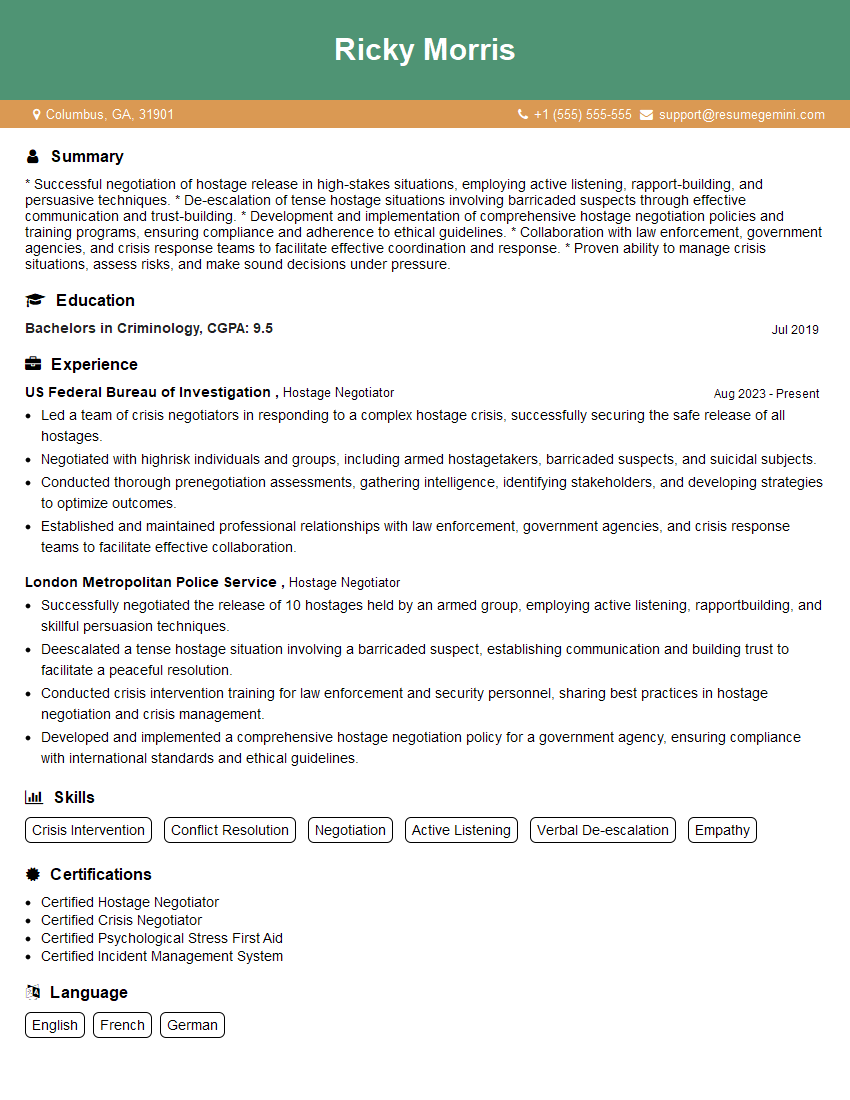
Mastering crisis negotiation skills opens doors to rewarding and impactful careers in law enforcement, mental health, and conflict resolution. To significantly boost your job prospects, crafting a compelling and ATS-friendly resume is crucial. ResumeGemini is a trusted resource that can help you build a professional resume that highlights your unique skills and experience. We provide examples of resumes tailored to the Crisis Negotiations field to help guide your preparation. Invest time in creating a strong resume; it’s your first impression on potential employers.

Explore more articles
Users Rating of Our Blogs
Share Your Experience
We value your feedback! Please rate our content and share your thoughts (optional).
What Readers Say About Our Blog
Very informative content, great job.
good