The thought of an interview can be nerve-wracking, but the right preparation can make all the difference. Explore this comprehensive guide to Cyber Intelligence interview questions and gain the confidence you need to showcase your abilities and secure the role.
Questions Asked in Cyber Intelligence Interview
Q 1. Explain the difference between strategic and tactical cyber intelligence.
Strategic and tactical cyber intelligence differ primarily in their scope and objectives. Think of it like military strategy versus tactics. Strategic cyber intelligence focuses on long-term threats, analyzing geopolitical landscapes, identifying emerging threat actors, and predicting future cyberattack trends. It informs high-level decision-making about resource allocation, policy development, and overall cybersecurity posture. For example, a strategic intelligence report might analyze the capabilities of a nation-state actor and assess their potential to disrupt critical infrastructure. Tactical cyber intelligence, on the other hand, focuses on immediate threats. It involves analyzing specific attack campaigns, identifying vulnerabilities, and providing actionable intelligence for immediate incident response. A tactical intelligence report might detail the technical indicators of compromise (IOCs) associated with a specific ransomware attack, guiding defenders on how to detect and mitigate it. Essentially, strategic intelligence sets the stage, while tactical intelligence helps fight the battles.
Q 2. Describe the process of developing a cyber threat intelligence report.
Developing a cyber threat intelligence report is a methodical process. It begins with data collection from various sources (discussed later). This data is then processed and analyzed to identify patterns, trends, and indicators of compromise (IOCs). Crucially, this involves contextualization – understanding the ‘who,’ ‘what,’ ‘when,’ ‘where,’ ‘why,’ and ‘how’ of the threat. This stage may involve threat modeling, vulnerability analysis, and attribution efforts. Next, the findings are synthesized into a structured report, highlighting key findings, threats, and potential impacts. The report should include actionable recommendations for mitigation, prevention, and response. Finally, the report is disseminated to the relevant stakeholders, and its effectiveness is evaluated through feedback and its impact on security posture. Imagine investigating a data breach. The report would detail the attacker’s techniques, the compromised systems, the stolen data, and recommend steps to prevent future breaches, such as patching vulnerabilities or implementing multi-factor authentication.
Q 3. What are the key components of a cyber threat intelligence program?
A robust cyber threat intelligence program requires several key components: A clearly defined mission and scope; a dedicated team with the necessary skills and experience; established processes for data collection, analysis, and dissemination; reliable data sources; robust technology for collecting, analyzing, and storing data; a feedback loop to ensure the program’s effectiveness; and integration with other security functions like incident response and vulnerability management. Think of it as a well-oiled machine with each part essential for its smooth functioning. Without a dedicated team, strong processes, or reliable data sources, the program won’t be effective.
Q 4. How do you prioritize cyber threats?
Prioritizing cyber threats requires a structured approach. We often employ a framework based on likelihood and impact. A simple matrix can be used, plotting the likelihood of a threat occurring against its potential impact on the organization. Threats in the high-likelihood/high-impact quadrant receive immediate attention. Additionally, consider the criticality of assets targeted by the threat. For instance, a threat targeting customer data might be prioritized over a threat targeting a less sensitive system. Finally, the feasibility of mitigation is a key factor. Threats easily mitigated are prioritized lower than those requiring extensive resources or changes. Imagine a scenario where you have a high likelihood of a phishing attack impacting your customer data. This would be a top priority due to its high likelihood and potential for significant financial and reputational damage.
Q 5. What are the common sources of cyber threat intelligence?
Cyber threat intelligence comes from diverse sources. Open-source intelligence (OSINT) includes publicly available information from news articles, social media, forums, and code repositories. Closed-source intelligence includes proprietary threat feeds from security vendors, government agencies, and private intelligence firms. Internal sources involve log analysis, security information and event management (SIEM) systems, vulnerability scans, and incident response reports. Human intelligence (HUMINT) involves direct interaction with sources, such as engaging with researchers or threat actors. Each source offers unique insights, and a comprehensive program leverages them all. For instance, analyzing OSINT might reveal a new malware variant, while a threat feed might provide IOCs associated with that variant’s activity.
Q 6. Explain the concept of the kill chain and how it applies to threat hunting.
The kill chain is a model that depicts the stages of a cyberattack, from initial reconnaissance to the final objective, such as data exfiltration. It’s a valuable framework for understanding attacker behavior and identifying opportunities for defense. The stages typically include reconnaissance, weaponization, delivery, exploitation, installation, command and control (C2), and actions on objectives. Threat hunting uses the kill chain to proactively search for attacker activity within an organization’s network. By understanding the various stages, security teams can develop detection strategies at each point, focusing their efforts on the most critical stages, like exploitation or C2 communication. If you observe suspicious network traffic during the C2 phase, it suggests a successful compromise, enabling a quick response. Identifying unusual activity during the reconnaissance phase can potentially prevent the attack entirely.
Q 7. How do you use open-source intelligence (OSINT) in your work?
OSINT is a powerful tool in cyber intelligence. I use it for various purposes, including: Identifying emerging threats: Monitoring online forums and dark web sites for discussions about new malware or attack techniques. Tracking threat actors: Analyzing social media profiles, forums, and websites to understand their capabilities and motivations. Assessing vulnerabilities: Identifying publicly disclosed vulnerabilities that might be exploited by attackers. Building threat profiles: Gathering information from various sources to create comprehensive profiles of threat actors and their methods. Conducting competitive intelligence: Analyzing the security postures of competitors to identify potential vulnerabilities. Ethical considerations are paramount, and I always ensure my OSINT gathering respects privacy and legal frameworks.
Q 8. What are some common indicators of compromise (IOCs)?
Indicators of Compromise (IOCs) are pieces of evidence that suggest a system or network has been compromised. Think of them as breadcrumbs left behind by attackers. They can be anything from suspicious network activity to unusual file changes. Identifying and analyzing IOCs is crucial for incident response and threat hunting.
- Network IOCs: These include suspicious IP addresses, domains, URLs, or unusual network traffic patterns (e.g., high volume of connections to a known malicious server). For example, detecting a large number of connections originating from your network to a command-and-control (C2) server in a known malicious botnet would be a strong indicator.
- Host-based IOCs: These reside on the compromised system itself. Examples include unusual process activity (e.g., a process running with administrator privileges that shouldn’t be), registry key modifications, unusual file creation or deletion, and the presence of malicious files or executables. Finding a newly created file with a suspicious name and extension (.exe, .dll) in a system directory would be a classic example.
- Malware IOCs: These are specific characteristics of malicious software, such as its hash value (MD5, SHA-1, SHA-256), its file size, or specific strings within its code. These are particularly useful for identifying and blocking known malware samples. For instance, identifying the SHA-256 hash of a ransomware sample will allow for immediate detection and blocking on other systems.
- Email IOCs: These involve suspicious email headers, sender addresses, attachments, or URLs within emails. For example, an email with an unfamiliar sender claiming to be from your bank and containing a link to a phishing site is a clear IOC.
Understanding and effectively using IOCs is fundamental to identifying and mitigating cyber threats. They serve as the building blocks for threat intelligence gathering and analysis.
Q 9. Describe your experience with threat modeling.
Threat modeling is a crucial proactive security practice where we systematically identify potential threats and vulnerabilities within a system or application. It’s like playing a game of ‘what if’ to anticipate potential attack vectors. My experience involves employing various threat modeling methodologies, such as STRIDE (Spoofing, Tampering, Repudiation, Information disclosure, Denial of service, Elevation of privilege) and PASTA (Process for Attack Simulation and Threat Analysis).
In my previous role, I was responsible for threat modeling a new e-commerce platform. We used STRIDE to identify potential threats at each stage of the application’s architecture. For example, we identified vulnerabilities related to SQL injection (Tampering), session hijacking (Spoofing), and unauthorized access to sensitive customer data (Information Disclosure). This allowed us to implement appropriate security controls, such as input validation, secure session management, and data encryption, before the system went live, significantly reducing the risk of future attacks. I’m proficient in documenting threat models, prioritizing risks, and communicating findings to both technical and non-technical stakeholders.
Q 10. How do you validate cyber threat intelligence?
Validating cyber threat intelligence is critical to ensure its accuracy and reliability. We can’t just accept information at face value; it must be verified through multiple sources and techniques. The process generally involves these steps:
- Source Validation: Assessing the credibility and reputation of the intelligence source. Is it a known reputable organization, or an anonymous source with potential biases? This involves verifying the source’s track record and understanding any potential motivations.
- Data Validation: Checking the accuracy and consistency of the intelligence. Does the information align with other intelligence sources? Are the IOCs verifiable and traceable? We often use tools and techniques to independently verify information (e.g., cross-referencing IP addresses with threat intelligence feeds, malware analysis).
- Contextual Validation: Evaluating the relevance and applicability of the intelligence to our specific environment and assets. Threat intelligence that’s relevant to a financial institution might not be applicable to a healthcare provider. The context is paramount.
- Timeliness Validation: Determining whether the intelligence is still relevant. Threat landscapes change rapidly, so timely validation is essential. Old data might not accurately reflect the current threat landscape.
By rigorously validating threat intelligence, we can improve our decision-making, resource allocation, and overall security posture. Failing to validate intelligence can lead to wasted resources, missed threats, or even worse, incorrect security decisions.
Q 11. What are some common cyber threat actors and their motivations?
The cyber threat landscape is populated by a diverse range of actors, each with varying motivations. Here are some common examples:
- Nation-State Actors (Advanced Persistent Threats – APTs): These are state-sponsored groups often pursuing espionage, sabotage, or political goals. They typically have sophisticated capabilities and resources, often focusing on long-term, targeted attacks.
- Organized Crime Groups: These financially motivated groups conduct cybercrimes like data breaches, ransomware attacks, and fraud for monetary gain. They focus on maximizing profit with minimal risk of detection. Their attacks are often large-scale and indiscriminate.
- Hacktivists: These are individuals or groups motivated by political or ideological beliefs, targeting organizations to make a statement or cause disruption. Their attacks can range from defacement to data leaks.
- Insider Threats: These are malicious or negligent employees or contractors who compromise organizational security. Their access and knowledge of internal systems make them particularly dangerous.
- Lone Wolf Attackers: These are individuals acting independently, often driven by personal grievances or ideological motivations. Their attacks are usually less sophisticated than those of organized groups.
Understanding the motivations of different threat actors allows us to tailor our security strategies more effectively. Knowing the likely targets and tactics of each group helps us allocate resources and implement appropriate defenses.
Q 12. Explain different types of malware and their attack vectors.
Malware is malicious software designed to disrupt, damage, or gain unauthorized access to computer systems. There’s a wide range of malware types, each using different attack vectors:
- Viruses: Self-replicating programs that attach themselves to other files or programs. They spread by infecting other files. Attack vectors include email attachments, infected websites, or removable media.
- Worms: Self-replicating programs that spread independently across networks without needing a host program. Common attack vectors include network vulnerabilities and email.
- Trojans: Malicious programs disguised as legitimate software. Users are tricked into installing them, often through social engineering techniques (phishing emails, malicious websites). Once installed, they can perform various malicious actions such as stealing data, installing other malware, or enabling remote access.
- Ransomware: Malware that encrypts a victim’s data, demanding a ransom for its release. It often spreads through phishing emails, drive-by downloads, or exploit kits.
- Spyware: Malware that secretly monitors user activity and collects sensitive information, often sending it to a remote server. It can be installed through drive-by downloads, malicious advertisements, or deceptive software bundles.
- Rootkits: Malware that hides its presence on a system, often granting attackers persistent access. Attack vectors may include vulnerabilities or social engineering.
Understanding the different types of malware and their attack vectors helps us develop effective prevention and detection strategies. This includes employing anti-malware software, user education, network security measures, and regular security patching.
Q 13. Describe your experience with security information and event management (SIEM) systems.
Security Information and Event Management (SIEM) systems are crucial for collecting, analyzing, and correlating security logs from various sources across an organization’s IT infrastructure. My experience with SIEM systems includes implementing, configuring, and managing them to detect and respond to security incidents. I’ve worked with various SIEM platforms, including Splunk, QRadar, and LogRhythm.
In a previous role, I was responsible for configuring a SIEM system to monitor critical systems for suspicious activity. This included defining rules and alerts for events such as failed login attempts, unusual access patterns, and malware activity. We also used the SIEM system for incident response, allowing us to quickly identify the source and scope of security incidents and take timely action. Furthermore, I’ve developed custom dashboards and reports to provide security leadership with clear and concise visualizations of security posture.
Q 14. How do you use vulnerability scanning and penetration testing results to inform intelligence gathering?
Vulnerability scanning and penetration testing are invaluable tools for identifying weaknesses in IT systems and applications. The results from these assessments are vital sources of intelligence for proactive threat hunting and incident response.
For example, vulnerability scanning reveals known vulnerabilities in software and configurations. Penetration testing provides insight into how attackers could exploit those vulnerabilities. By analyzing both, we can develop a comprehensive understanding of the potential attack vectors and their severity. This intelligence informs our prioritization of remediation efforts and shapes our security strategies. High-risk vulnerabilities identified through scanning and confirmed through penetration testing become immediate priorities for patching or mitigation. Understanding the success of penetration testing techniques informs the potential attack vectors we anticipate from real-world adversaries.
The findings also enhance our threat modeling by providing concrete evidence of existing vulnerabilities. This allows us to improve future threat models by including specific attack vectors discovered during the testing process. In essence, vulnerability scanning and penetration testing help bridge the gap between theoretical threats and real-world risks, providing actionable intelligence for improved security.
Q 15. How familiar are you with various intelligence gathering techniques (e.g., social engineering, network analysis)?
Intelligence gathering is the cornerstone of cyber intelligence, and I’m proficient in a wide array of techniques. It’s like being a detective, but instead of fingerprints, we look for digital footprints.
- Social engineering: This involves manipulating individuals to divulge confidential information. Think of phishing emails or pretexting – creating a believable scenario to gain access. I’ve used this knowledge to design training programs to help employees identify and avoid social engineering attacks. For example, I’ve created simulated phishing campaigns to assess employee awareness and improve response rates.
- Network analysis: This involves examining network traffic and infrastructure to identify vulnerabilities and malicious activity. Tools like Wireshark and tcpdump allow me to dissect packets and uncover hidden connections. A recent project involved analyzing network logs to identify a sophisticated malware infection that had bypassed traditional security measures. I was able to trace the attacker’s activity and identify the point of compromise.
- Open-source intelligence (OSINT): This involves gathering information from publicly available sources like social media, forums, and websites. It’s like piecing together a puzzle using publicly available clues. This is crucial for identifying potential threats and understanding the motivations of adversaries. I successfully used OSINT techniques to identify a potential competitor’s planned market entry, allowing my company to proactively adjust its strategy.
- Malware analysis: This involves dissecting malicious software to understand its functionality, origins, and capabilities. I’m experienced in both static and dynamic analysis, using tools like IDA Pro and Ghidra. I’ve reversed engineered several malware samples to identify their command-and-control servers and uncover their attack vectors.
These techniques are often used in combination, building a comprehensive understanding of the threat landscape.
Career Expert Tips:
- Ace those interviews! Prepare effectively by reviewing the Top 50 Most Common Interview Questions on ResumeGemini.
- Navigate your job search with confidence! Explore a wide range of Career Tips on ResumeGemini. Learn about common challenges and recommendations to overcome them.
- Craft the perfect resume! Master the Art of Resume Writing with ResumeGemini’s guide. Showcase your unique qualifications and achievements effectively.
- Don’t miss out on holiday savings! Build your dream resume with ResumeGemini’s ATS optimized templates.
Q 16. Describe your experience working with threat intelligence platforms (TIPs).
Threat intelligence platforms (TIPs) are the central nervous system of a cybersecurity operation. I have extensive experience working with several leading TIPs, including [mention specific TIPs, e.g., IBM QRadar, Splunk Enterprise Security, etc.].
My experience includes ingesting, correlating, and analyzing threat data from diverse sources. This involves configuring the platform to receive feeds from various sources, establishing relationships between indicators of compromise (IOCs), and developing custom rules and alerts to detect suspicious activity. For example, I once used a TIP to correlate a series of seemingly unrelated security events, revealing a sophisticated spear-phishing campaign targeting our organization. The platform’s automated analysis and visualization capabilities allowed me to quickly identify the threat actor, their tactics, and their objectives. The ability to quickly visualize these relationships saved significant time and resources during the incident response. I also regularly maintain and update the threat intelligence feeds within the TIP to ensure accuracy and timeliness of information.
Q 17. What is your experience with STIX and TAXII?
STIX (Structured Threat Information eXpression) and TAXII (Trusted Automated eXchange of Intelligence Information) are crucial for sharing threat intelligence effectively. STIX provides a standardized language for describing cyber threats, while TAXII defines the mechanisms for securely exchanging this information.
I have hands-on experience using both STIX and TAXII. I’ve developed scripts to parse STIX data, integrate it into our TIP, and automate the sharing of threat intelligence with our partners. For instance, I’ve developed custom scripts to automate the ingestion of STIX threat intelligence feeds, significantly reducing manual effort and improving the timeliness of our threat response.
Understanding STIX and TAXII is essential for collaborative threat intelligence, allowing organizations to share information seamlessly and efficiently, strengthening collective security posture.
Q 18. How do you assess the credibility of different intelligence sources?
Assessing the credibility of intelligence sources is paramount. It’s not enough to just have information; you need to know if it’s reliable. I employ a multi-faceted approach:
- Source reputation: I consider the track record and expertise of the source. Is it a known reputable organization, or an anonymous source with potentially biased information?
- Data validation: I independently verify information whenever possible using multiple sources. This reduces the risk of relying on false or misleading information.
- Data correlation: I compare information from different sources to identify inconsistencies or patterns. If multiple reliable sources corroborate the same information, it increases the confidence level.
- Contextual analysis: I consider the context in which the information was gathered and the potential motivations of the source.
- Technical verification: For technical intelligence, I utilize various tools and techniques to validate the accuracy of indicators of compromise (IOCs) and malware signatures.
A rigorous assessment ensures that we base our decisions on reliable intelligence, avoiding costly mistakes or ineffective countermeasures.
Q 19. Explain the concept of attribution in cyber intelligence.
Attribution in cyber intelligence refers to the process of identifying the perpetrators of a cyberattack. It’s like solving a crime, but in the digital realm. It’s often challenging due to the anonymity and sophistication of cyberattacks.
The process typically involves analyzing various data points, including network logs, malware samples, and open-source intelligence. Technical indicators like IP addresses, domain names, and code signatures can provide clues. However, often attackers employ techniques to obfuscate their identity and origin. Building a strong case requires careful analysis of all available evidence, often combining different intelligence sources to identify a likely attacker. Even with strong evidence, definitive attribution can be difficult and often requires high confidence based on the weight of evidence.
Successful attribution is crucial for holding attackers accountable, preventing future attacks, and informing defensive strategies.
Q 20. How do you communicate cyber threat intelligence to both technical and non-technical audiences?
Communicating cyber threat intelligence effectively is critical, irrespective of the audience’s technical expertise. I tailor my communication style to ensure clarity and understanding.
For technical audiences: I provide detailed technical reports, including IOCs, malware analysis findings, and attack vectors. This level of detail is crucial for immediate response and remediation efforts. I may include technical diagrams and code snippets to illustrate vulnerabilities and attack methods.
For non-technical audiences: I use clear and concise language, avoiding jargon. I focus on the impact of the threat, the potential risks, and the necessary actions to mitigate those risks. I may use analogies and visualizations to simplify complex concepts. For example, I might compare a malware infection to a virus that needs to be quarantined to prevent further spread.
Regardless of the audience, I ensure transparency, providing clear context and supporting evidence for my assessments. Effective communication is crucial for building trust and fostering cooperation across teams and stakeholders.
Q 21. Describe a situation where you had to analyze a complex cybersecurity incident.
I once investigated a sophisticated supply chain attack targeting our organization. The initial compromise wasn’t immediately apparent. We detected unusual network activity stemming from a seemingly legitimate third-party vendor.
My analysis involved:
- Network traffic analysis: I examined network logs to pinpoint the compromised systems and trace the attacker’s activity.
- Malware analysis: I analyzed the malware samples to understand its capabilities and its command-and-control infrastructure.
- Vulnerability assessment: I identified vulnerabilities in our systems that the attacker exploited.
- Threat intelligence gathering: I gathered threat intelligence from various sources to understand the attack tactics, techniques, and procedures (TTPs).
The investigation revealed that the attacker had compromised the vendor’s systems, gaining access to our network through a backdoor in their software update. We worked with the vendor to patch the vulnerability and isolate the affected systems. We implemented stronger security controls to prevent future attacks.
This case highlighted the importance of thorough incident response, comprehensive threat intelligence, and strong collaboration with third-party vendors. It also showed that attackers may exploit vulnerabilities in the software supply chain.
Q 22. What is your experience with incident response procedures?
Incident response procedures are the steps taken to identify, analyze, contain, eradicate, recover from, and learn from a cybersecurity incident. My experience encompasses the entire lifecycle, from initial detection (often through SIEM alerts or vulnerability scanning) to post-incident activity, including root cause analysis and remediation recommendations.
For example, I was involved in an incident where a phishing email led to malware infection on several workstations. My role involved coordinating with various teams – IT, legal, and public relations – to isolate affected systems, contain the malware’s spread, recover compromised data, and implement preventive measures like enhanced security awareness training. This involved using tools like memory forensics, network traffic analysis, and endpoint detection and response (EDR) solutions. The entire process was meticulously documented, adhering to best practices and relevant regulations.
Another example involved a ransomware attack. Here, my focus was on understanding the attacker’s tactics and techniques, negotiating with the threat actor (where appropriate and safe), and developing a recovery plan leveraging backups and potentially data restoration services.
Q 23. How do you measure the effectiveness of a cyber threat intelligence program?
Measuring the effectiveness of a cyber threat intelligence (CTI) program is crucial for demonstrating its value and ensuring continuous improvement. We don’t just focus on the number of reports generated, but rather on tangible outcomes. Key metrics include:
- Reduced Mean Time To Detect (MTTD): How quickly we identify threats compared to before implementing the CTI program.
- Reduced Mean Time To Respond (MTTR): How quickly we react and mitigate threats once identified.
- Decrease in security incidents: A direct measure of the program’s impact on reducing breaches and compromises.
- Improved threat awareness among staff: Assessed through phishing simulations and security awareness training effectiveness.
- Improved accuracy of threat predictions: How well our intelligence predicted actual attacks.
- Cost savings due to prevention:Quantifying the financial benefits of averting attacks.
These metrics are tracked and analyzed regularly using dashboards and reporting tools. Regular review of these metrics allows for adjustment and improvement of our threat intelligence strategies and processes.
Q 24. Describe your experience with automation and scripting in cyber intelligence.
Automation and scripting are fundamental to efficient cyber intelligence operations. I have extensive experience using Python for tasks like automating threat intelligence feeds ingestion, parsing log data, building custom threat hunting tools, and creating visualizations for security dashboards.
For instance, I developed a Python script that automatically collects data from various threat intelligence platforms (e.g., VirusTotal, MISP), correlates the information, and generates customized reports highlighting emerging threats relevant to our organization. This script significantly reduced manual effort and improved the timeliness of our threat analysis.
# Example Python snippet for threat intelligence feed processing
import requests
# ... (code to fetch data from various threat intelligence feeds) ...
# ... (code to parse and correlate data) ...
# ... (code to generate a report) ...
I also use scripting to automate security tasks such as vulnerability scanning, penetration testing, and incident response procedures, optimizing efficiency and reducing the potential for human error.
Q 25. What are some emerging cyber threats you’re currently monitoring?
The threat landscape is constantly evolving. Currently, I’m closely monitoring:
- Sophisticated ransomware attacks: These are becoming increasingly targeted, using techniques like double extortion (data encryption and data leak threats) and leveraging vulnerabilities in cloud infrastructure.
- AI-powered attacks: Malicious actors are increasingly using AI and machine learning for automating attacks, crafting more convincing phishing emails, and evading traditional security controls.
- Supply chain attacks: Compromising software supply chains to infect a large number of organizations simultaneously is a major concern.
- IoT device vulnerabilities: The growing number of connected devices presents a significant attack surface, making them attractive targets for botnets and data breaches.
- Nation-state actors: State-sponsored attacks continue to be a significant threat, targeting critical infrastructure and intellectual property.
Staying ahead of these threats requires proactive monitoring of threat intelligence feeds, vulnerability databases, and security research communities.
Q 26. How do you stay up-to-date with the latest cybersecurity threats and trends?
Staying current in cybersecurity requires a multi-faceted approach. I regularly:
- Follow reputable threat intelligence feeds: This includes subscribing to feeds from organizations like SANS Institute, Recorded Future, and ThreatConnect.
- Attend industry conferences and webinars: Events like Black Hat and RSA Conference provide invaluable insights into emerging threats and best practices.
- Read security blogs and research papers: Staying informed through publications like KrebsOnSecurity and academic research keeps me updated on the latest techniques and vulnerabilities.
- Participate in online security communities: Engaging in discussions on platforms like Reddit (r/cybersecurity) helps to share knowledge and learn from others’ experiences.
- Complete relevant certifications: Maintaining certifications (e.g., CISSP, CEH) ensures my knowledge remains current and aligned with industry standards.
Continuous learning is essential in this rapidly evolving field.
Q 27. What are your experience with cloud security and cloud threat intelligence?
Cloud security and cloud threat intelligence are critical components of modern cybersecurity. My experience includes working with various cloud platforms (AWS, Azure, GCP) and integrating cloud-native security tools into our overall security posture. I understand the unique challenges of cloud environments, such as shared responsibility models, API security, and the dynamic nature of cloud resources.
Specifically, I’ve worked on implementing cloud security posture management (CSPM) tools to monitor and assess the security configuration of cloud resources, and have used cloud access security brokers (CASBs) to monitor and control access to cloud applications. I’m also proficient in analyzing cloud logs and audit trails to detect and respond to threats. We leverage cloud threat intelligence feeds to understand emerging threats specific to the cloud environments and proactively harden our cloud infrastructure accordingly.
Understanding the shared responsibility model is key; this means understanding what security aspects are handled by the cloud provider versus the organization. Proactive mitigation strategies are crucial in cloud environments, because a compromised cloud service can have severe consequences.
Q 28. Explain your experience with data analytics and visualization in cyber intelligence.
Data analytics and visualization are vital for making sense of the vast amounts of security data generated in today’s environment. My experience involves using tools like Splunk, ELK stack, and Tableau to analyze security logs, threat intelligence feeds, and vulnerability scan data to identify patterns, anomalies, and potential threats.
For example, I’ve used Splunk to create dashboards that visualize key security metrics like the number of security incidents, MTTD, MTTR, and the sources of threats. These dashboards provide real-time insights into the organization’s security posture, enabling proactive threat hunting and incident response. Data visualization allows for quick identification of trends and outliers that might indicate a significant security event. We use these visualizations to communicate findings to both technical and non-technical audiences, improving overall understanding of security risks and enabling better decision-making.
Furthermore, I have experience using machine learning algorithms to detect anomalies and predict potential security incidents, greatly enhancing our proactive security capabilities. This predictive analysis helps us to allocate resources effectively and mitigate risks before they can result in significant damage.
Key Topics to Learn for Cyber Intelligence Interview
- Threat Intelligence Platforms & Analysis: Understanding how to utilize various platforms for data collection, analysis, and reporting. Practical application: Analyzing threat actor TTPs (Tactics, Techniques, and Procedures) to predict future attacks.
- Cybersecurity Frameworks & Standards (NIST, MITRE ATT&CK): Knowing these frameworks helps you understand the landscape of cyber threats and best practices for mitigation. Practical application: Applying framework knowledge to assess organizational vulnerabilities and develop security strategies.
- Data Analysis & Visualization: The ability to extract meaningful insights from large datasets is crucial. Practical application: Creating dashboards and reports to communicate threat intelligence effectively to stakeholders.
- Incident Response & Forensics: Understanding the incident response lifecycle and digital forensics techniques is essential. Practical application: Participating in incident response exercises and applying forensic methodologies to investigate cyberattacks.
- Vulnerability Management & Penetration Testing: Knowledge of common vulnerabilities and penetration testing methodologies. Practical application: Identifying and mitigating vulnerabilities in systems and applications.
- Malware Analysis & Reverse Engineering: Understanding malware behavior and techniques used to analyze malicious code. Practical application: Identifying malware characteristics and developing countermeasures.
- Network Security & Protocols: Strong understanding of network protocols and security mechanisms. Practical application: Analyzing network traffic to detect malicious activity.
- Legal & Ethical Considerations: Understanding the legal and ethical implications of cyber intelligence work. Practical application: Ensuring compliance with relevant laws and regulations.
Next Steps
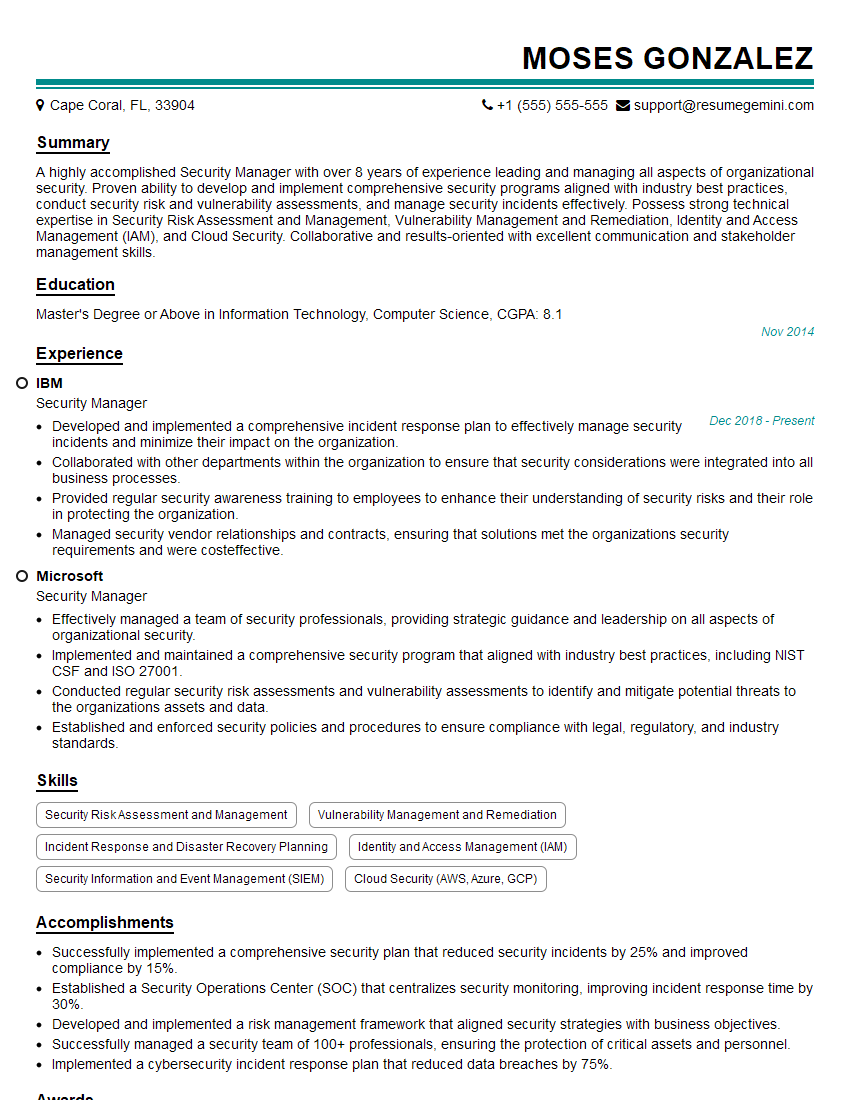
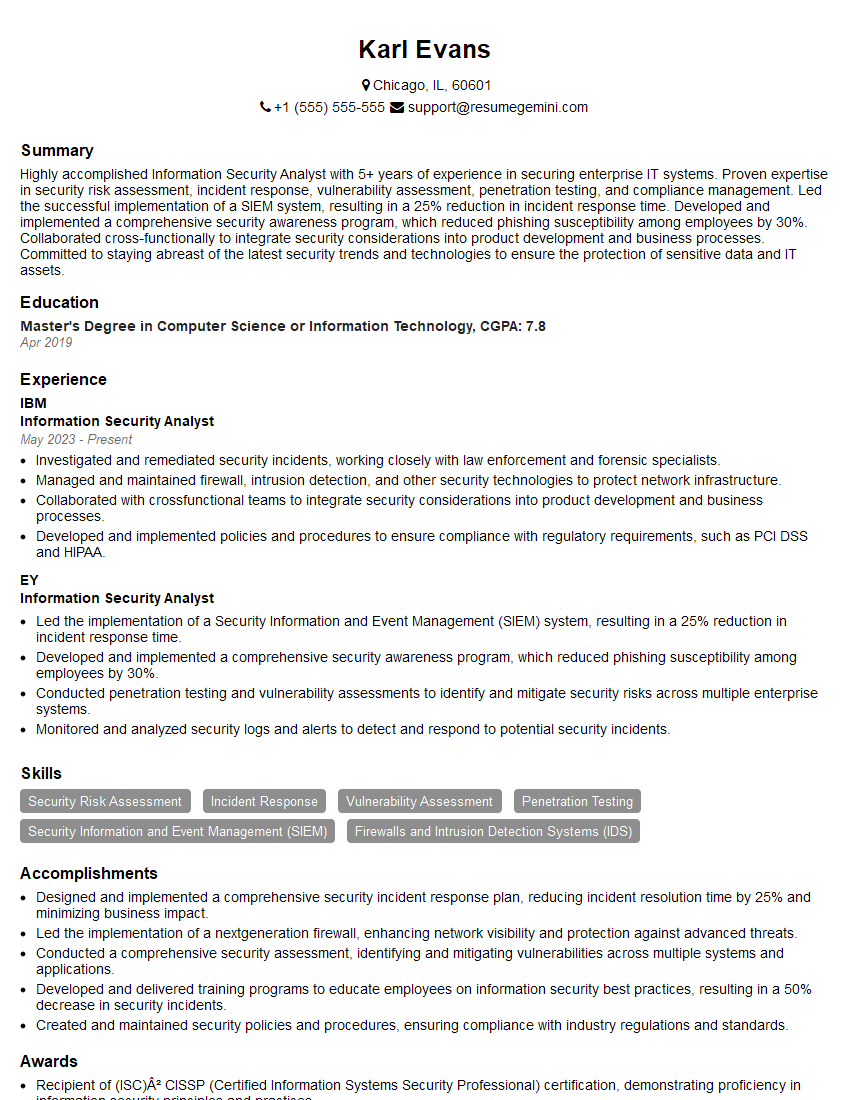
Mastering Cyber Intelligence opens doors to exciting and impactful careers, offering high demand and significant growth potential. To maximize your job prospects, a well-crafted, ATS-friendly resume is paramount. ResumeGemini is a trusted resource that can help you build a professional and impactful resume tailored to the Cyber Intelligence field. Examples of resumes specifically designed for Cyber Intelligence roles are available to guide you. Invest time in crafting a compelling resume – it’s your first impression to potential employers.
Explore more articles
Users Rating of Our Blogs
Share Your Experience
We value your feedback! Please rate our content and share your thoughts (optional).
What Readers Say About Our Blog
Attention music lovers!
Wow, All the best Sax Summer music !!!
Spotify: https://open.spotify.com/artist/6ShcdIT7rPVVaFEpgZQbUk
Apple Music: https://music.apple.com/fr/artist/jimmy-sax-black/1530501936
YouTube: https://music.youtube.com/browse/VLOLAK5uy_noClmC7abM6YpZsnySxRqt3LoalPf88No
Other Platforms and Free Downloads : https://fanlink.tv/jimmysaxblack
on google : https://www.google.com/search?q=22+AND+22+AND+22
on ChatGPT : https://chat.openai.com?q=who20jlJimmy20Black20Sax20Producer
Get back into the groove with Jimmy sax Black
Best regards,
Jimmy sax Black
www.jimmysaxblack.com
Hi I am a troller at The aquatic interview center and I suddenly went so fast in Roblox and it was gone when I reset.
Hi,
Business owners spend hours every week worrying about their website—or avoiding it because it feels overwhelming.
We’d like to take that off your plate:
$69/month. Everything handled.
Our team will:
Design a custom website—or completely overhaul your current one
Take care of hosting as an option
Handle edits and improvements—up to 60 minutes of work included every month
No setup fees, no annual commitments. Just a site that makes a strong first impression.
Find out if it’s right for you:
https://websolutionsgenius.com/awardwinningwebsites
Hello,
we currently offer a complimentary backlink and URL indexing test for search engine optimization professionals.
You can get complimentary indexing credits to test how link discovery works in practice.
No credit card is required and there is no recurring fee.
You can find details here:
https://wikipedia-backlinks.com/indexing/
Regards
NICE RESPONSE TO Q & A
hi
The aim of this message is regarding an unclaimed deposit of a deceased nationale that bears the same name as you. You are not relate to him as there are millions of people answering the names across around the world. But i will use my position to influence the release of the deposit to you for our mutual benefit.
Respond for full details and how to claim the deposit. This is 100% risk free. Send hello to my email id: lukachachibaialuka@gmail.com
Luka Chachibaialuka
Hey interviewgemini.com, just wanted to follow up on my last email.
We just launched Call the Monster, an parenting app that lets you summon friendly ‘monsters’ kids actually listen to.
We’re also running a giveaway for everyone who downloads the app. Since it’s brand new, there aren’t many users yet, which means you’ve got a much better chance of winning some great prizes.
You can check it out here: https://bit.ly/callamonsterapp
Or follow us on Instagram: https://www.instagram.com/callamonsterapp
Thanks,
Ryan
CEO – Call the Monster App
Hey interviewgemini.com, I saw your website and love your approach.
I just want this to look like spam email, but want to share something important to you. We just launched Call the Monster, a parenting app that lets you summon friendly ‘monsters’ kids actually listen to.
Parents are loving it for calming chaos before bedtime. Thought you might want to try it: https://bit.ly/callamonsterapp or just follow our fun monster lore on Instagram: https://www.instagram.com/callamonsterapp
Thanks,
Ryan
CEO – Call A Monster APP
To the interviewgemini.com Owner.
Dear interviewgemini.com Webmaster!
Hi interviewgemini.com Webmaster!
Dear interviewgemini.com Webmaster!
excellent
Hello,
We found issues with your domain’s email setup that may be sending your messages to spam or blocking them completely. InboxShield Mini shows you how to fix it in minutes — no tech skills required.
Scan your domain now for details: https://inboxshield-mini.com/
— Adam @ InboxShield Mini
support@inboxshield-mini.com
Reply STOP to unsubscribe
Hi, are you owner of interviewgemini.com? What if I told you I could help you find extra time in your schedule, reconnect with leads you didn’t even realize you missed, and bring in more “I want to work with you” conversations, without increasing your ad spend or hiring a full-time employee?
All with a flexible, budget-friendly service that could easily pay for itself. Sounds good?
Would it be nice to jump on a quick 10-minute call so I can show you exactly how we make this work?
Best,
Hapei
Marketing Director
Hey, I know you’re the owner of interviewgemini.com. I’ll be quick.
Fundraising for your business is tough and time-consuming. We make it easier by guaranteeing two private investor meetings each month, for six months. No demos, no pitch events – just direct introductions to active investors matched to your startup.
If youR17;re raising, this could help you build real momentum. Want me to send more info?
Hi, I represent an SEO company that specialises in getting you AI citations and higher rankings on Google. I’d like to offer you a 100% free SEO audit for your website. Would you be interested?
Hi, I represent an SEO company that specialises in getting you AI citations and higher rankings on Google. I’d like to offer you a 100% free SEO audit for your website. Would you be interested?