Are you ready to stand out in your next interview? Understanding and preparing for Data Analysis and Performance Monitoring interview questions is a game-changer. In this blog, we’ve compiled key questions and expert advice to help you showcase your skills with confidence and precision. Let’s get started on your journey to acing the interview.
Questions Asked in Data Analysis and Performance Monitoring Interview
Q 1. Explain the difference between descriptive, predictive, and prescriptive analytics.
The three types of analytics – descriptive, predictive, and prescriptive – represent a progression in data analysis sophistication. Think of them as answering different levels of questions about your data.
- Descriptive Analytics: This is all about summarizing what has happened. It involves using past data to understand trends, patterns, and key performance indicators (KPIs). Imagine analyzing website traffic data to see how many visitors you had last month, their geographic location, and which pages were most popular. Tools like dashboards and simple SQL queries are commonly used. This is the foundational level of analysis.
- Predictive Analytics: This moves beyond simply describing the past; it attempts to forecast what might happen in the future. This involves building models using statistical techniques, machine learning algorithms, or even simpler forecasting methods based on historical data. For example, predicting customer churn based on their usage patterns or forecasting future sales based on past trends. Techniques like regression analysis and time series analysis are utilized here.
- Prescriptive Analytics: This is the most advanced form, focusing on what should be done to optimize outcomes. It combines descriptive and predictive insights to recommend actions. For example, a prescriptive analytics model might suggest the optimal pricing strategy to maximize revenue based on predicted demand or recommend the best marketing campaign to reach a specific customer segment, potentially using optimization algorithms and simulation techniques.
In essence, descriptive analytics tells you what happened, predictive analytics tells you what might happen, and prescriptive analytics tells you what you should do.
Q 2. Describe your experience with A/B testing and its application in performance analysis.
A/B testing, also known as split testing, is a crucial method for performance analysis. It involves comparing two versions (A and B) of something – a webpage, an email, an ad – to see which performs better based on a specific metric. This is all about controlled experimentation.
In my experience, I’ve used A/B testing extensively to optimize website conversion rates. For example, I once worked on a project where we tested two different call-to-action button designs on a landing page. Version A used a green button, while version B used a blue button. By splitting traffic randomly between the two versions, we measured the click-through rate for each. Version B, with the blue button, significantly outperformed version A, resulting in a measurable increase in conversions. This data allowed us to make informed decisions about the optimal design element.
The application in performance analysis is broad. We can use it to assess the impact of code changes on application speed, evaluate the effectiveness of different database query optimizations, or compare the performance of different server configurations. The key is to define a clear metric for success (e.g., conversion rate, page load time, error rate) and to conduct the test rigorously, ensuring statistically significant results.
Q 3. How do you identify performance bottlenecks in a database system?
Identifying performance bottlenecks in a database system requires a systematic approach. I typically use a combination of techniques:
- Query Analysis: Start by examining slow-running queries. Database management systems (DBMS) usually provide tools to monitor query execution times and resource consumption (CPU, memory, I/O). Identifying the queries that consume the most resources is the first step. Tools like database profilers can be invaluable.
- Index Analysis: Inefficient indexes can significantly hamper database performance. I’d check if the necessary indexes exist on frequently queried columns and if those indexes are effectively utilized. A poorly designed index can sometimes be worse than no index at all.
- Lock Contention: High lock contention can cause significant performance degradation. Analyzing lock wait times and identifying which queries are frequently waiting for locks helps pinpoint concurrency issues.
- I/O Bottlenecks: Monitor disk I/O performance. Slow disk read/write speeds can severely impact database response times. Tools often provide metrics on disk utilization, latency, and queue lengths.
- Memory Usage: Excessive memory usage can lead to swapping, which dramatically slows down the system. Monitor memory usage of the database server to ensure that enough memory is allocated and that memory leaks are not present.
- Hardware Limitations: Consider limitations of the hardware itself. Insufficient CPU power, limited memory, or a slow storage subsystem can all contribute to performance problems.
Often, it’s a combination of these factors. For example, a slow query might be caused by a missing index, leading to excessive I/O operations, while concurrency issues might exacerbate the problem. A careful analysis of the database logs, monitoring tools, and performance metrics is key to diagnosing the root cause.
Q 4. What are common performance monitoring tools you have used?
Throughout my career, I’ve used a variety of performance monitoring tools, depending on the specific system and context. Some of the most common include:
- New Relic: A comprehensive application performance monitoring (APM) tool that provides deep insights into application behavior, including database performance, transaction traces, and error rates.
- Datadog: Similar to New Relic, Datadog offers a wide range of monitoring capabilities, including infrastructure, application, and log monitoring. It’s particularly strong in its ability to integrate with various technologies.
- Prometheus & Grafana: An open-source monitoring stack. Prometheus is a time-series database that collects metrics, while Grafana provides dashboards and visualizations for analysis. This is a popular choice for cloud-native environments.
- Nagios/Zabbix: Infrastructure monitoring tools that focus on system health, network performance, and resource utilization. They are often used for proactive alerts and system maintenance.
- Database-specific monitoring tools: Most major DBMSs (e.g., Oracle, MySQL, PostgreSQL) have their own monitoring and performance analysis tools built-in. These provide detailed information specific to the database system itself.
The choice of tool depends heavily on the specific needs of the project, budget constraints, and the existing infrastructure.
Q 5. Explain your experience with SQL queries for data analysis.
SQL is the foundation of my data analysis work. My experience encompasses a wide range of SQL queries, from simple data retrievals to complex joins and aggregations. I’m proficient in writing efficient and optimized queries to extract meaningful insights from relational databases.
For example, I’ve used SQL to:
- Perform aggregations: Calculating sums, averages, counts, and other aggregate functions to summarize data.
- Join tables: Combining data from multiple tables based on relationships between them to obtain a comprehensive view. I’m comfortable with various join types (inner, left, right, full outer).
- Filter data: Selecting subsets of data based on specific criteria using
WHEREclauses. - Group data: Grouping data based on specific columns using
GROUP BYto perform aggregations at different levels of granularity. - Subqueries: Embedding queries within other queries to perform complex data manipulation and filtering.
- Window functions: Using window functions to perform calculations across sets of rows related to the current row, such as calculating running totals or moving averages.
Example: SELECT COUNT(*) FROM users WHERE country = 'USA'; This simple query counts the number of users from the USA.
My focus is always on writing clean, readable, and efficient SQL. I understand the importance of indexing for query optimization and use techniques like query profiling to identify and resolve performance bottlenecks.
Q 6. How do you handle missing data in a dataset?
Handling missing data is crucial for accurate analysis. Ignoring missing data can lead to biased results. My approach depends on the nature and extent of the missing data, as well as the context of the analysis.
- Identify the cause: First, I attempt to understand why the data is missing. Is it due to random chance, systematic bias (e.g., certain demographics are less likely to provide information), or data entry errors? This understanding guides my approach.
- Deletion: If the amount of missing data is small and appears random, I might consider deleting the rows or columns with missing values. However, this approach is only suitable when deletion doesn’t significantly bias the dataset.
- Imputation: For larger amounts of missing data, imputation methods are more appropriate. These techniques involve filling in the missing values with estimated values. Common imputation methods include:
- Mean/Median/Mode imputation: Replacing missing values with the mean, median, or mode of the non-missing values in that column. Simple but can distort the distribution.
- Regression imputation: Predicting missing values using a regression model based on other variables.
- K-Nearest Neighbors (KNN) imputation: Finding the k-nearest data points with complete values and using them to estimate the missing value. This is particularly useful for non-linear relationships.
- Leave as is: In some cases, it’s appropriate to leave the missing values as they are, particularly when using algorithms that can handle missing data (e.g., tree-based models). This avoids potentially introducing bias by imputing values.
The best method always depends on the specific data and the analytical goals. I carefully evaluate the trade-offs of each method to ensure the results are reliable and meaningful.
Q 7. What are different methods for data cleaning and preprocessing?
Data cleaning and preprocessing is a fundamental step in any data analysis project. It ensures the data is consistent, accurate, and suitable for analysis. The process typically involves:
- Handling missing values: As discussed previously, this can involve deletion, imputation, or leaving values as is.
- Outlier detection and treatment: Outliers are extreme values that can skew results. I use methods like box plots, scatter plots, or statistical tests (e.g., Z-score) to identify outliers. Then, I may choose to remove them, transform them (e.g., log transformation), or cap them.
- Data transformation: This involves converting data into a more suitable format for analysis. This can include converting categorical variables into numerical ones (e.g., one-hot encoding), scaling variables (e.g., standardization, normalization), or applying transformations to improve normality (e.g., log transformation).
- Data reduction: This aims to reduce the size of the dataset while preserving important information. Techniques include dimensionality reduction (e.g., Principal Component Analysis – PCA) or feature selection.
- Data consistency checking: Checking for inconsistencies in the data. For example, identifying duplicate entries or values that violate data constraints. Data validation rules and automated checks are crucial here.
- Data standardization: Ensuring data is in a consistent format. This might involve converting units, correcting date formats, or cleaning up text data.
The specific cleaning and preprocessing steps will vary depending on the dataset and the analytical goals. This stage is crucial for ensuring the quality and reliability of the subsequent analysis.
Q 8. Explain your understanding of different data visualization techniques.
Data visualization is the graphical representation of information and data. It’s crucial for turning complex datasets into easily understandable insights. Effective visualization helps identify trends, patterns, and outliers that might be missed in raw data. There’s a wide array of techniques, each suited for different types of data and analytical goals.
- Bar charts and column charts: Ideal for comparing categorical data. For example, comparing sales figures across different product categories.
- Line charts: Excellent for showing trends over time, such as website traffic or stock prices. Think of tracking the growth of a social media following.
- Pie charts: Useful for displaying proportions of a whole, like market share distribution or the breakdown of a budget.
- Scatter plots: Show the relationship between two variables. A great choice for exploring correlation between factors like advertising spend and sales revenue.
- Histograms: Illustrate the frequency distribution of a single continuous variable, revealing data skewness and concentration. This is very useful in understanding customer age demographics, for example.
- Heatmaps: Represent data through color variations, showing relationships within a matrix. Think of visualizing website click-through rates on a page layout.
- Box plots (box and whisker plots): Summarize the distribution of data, showing median, quartiles, and outliers. Useful for quickly comparing distributions across multiple groups.
The choice of visualization technique depends heavily on the data and the story you want to tell. A poorly chosen visualization can obscure insights, while a well-chosen one can reveal critical information quickly and effectively.
Q 9. How would you approach analyzing a large dataset that doesn’t fit into memory?
Analyzing datasets too large for RAM requires techniques like distributed computing and sampling. I would typically employ a combination of approaches:
- Sampling: If the dataset is massive and representative sampling is sufficient, I would draw a random sample of the data that fits in memory. This allows for faster analysis, but we must be mindful of potential bias introduced by sampling.
- Data partitioning/Chunking: Splitting the data into smaller manageable chunks that can be processed individually. Each chunk can be analyzed separately, and the results then aggregated. This approach often utilizes tools like Hadoop or Spark.
- MapReduce framework (Hadoop, Spark): These frameworks are designed for processing large datasets across clusters of machines. The Map phase processes individual data chunks, while the Reduce phase combines the intermediate results.
- Database techniques: Leveraging database query optimization techniques and utilizing database functions for aggregation and summarization directly on the database server. This avoids loading unnecessary data into memory.
- Approximate Query Processing (AQP): Techniques like sketching or sampling can be employed to quickly obtain approximate answers to queries, particularly when speed is prioritized over exact precision.
The specific method depends on factors like the size of the dataset, available computing resources, acceptable error tolerance, and the type of analysis required. For instance, if an exact count is needed, sampling might be inappropriate; however, for exploratory analysis, sampling might be quite sufficient.
Q 10. Describe your experience with statistical modeling and hypothesis testing.
I have extensive experience with statistical modeling and hypothesis testing. This includes selecting appropriate models, fitting them to data, interpreting results, and drawing valid conclusions. My experience spans a variety of techniques, such as:
- Linear Regression: Modeling the relationship between a dependent variable and one or more independent variables. I’ve used this to predict sales based on advertising spend and market trends.
- Logistic Regression: Predicting categorical outcomes, such as customer churn or credit risk. This technique is essential for building predictive models in various business scenarios.
- Time Series Analysis (ARIMA, Prophet): Modeling data points collected over time. I’ve applied this for forecasting demand and identifying seasonal patterns.
- Hypothesis Testing (t-tests, ANOVA, Chi-square tests): Formally testing hypotheses about the population. For example, determining if a new marketing campaign significantly improved conversion rates.
In a recent project, I used A/B testing and t-tests to compare the effectiveness of two different website designs. The analysis clearly showed that one design led to a statistically significant increase in user engagement. I’m proficient in using statistical software packages such as R and Python (with libraries like scikit-learn and statsmodels) to perform these analyses.
Q 11. What metrics would you use to monitor the performance of a web application?
Monitoring web application performance requires a multifaceted approach, using key metrics categorized into several areas:
- Availability and uptime: Tracking the percentage of time the application is accessible to users. Tools like Pingdom or UptimeRobot are used for this.
- Response time/Latency: Measuring the time it takes for the application to respond to user requests. Slow response times can lead to poor user experience. New Relic and DataDog are good monitoring tools here.
- Error rate: Tracking the frequency of errors and exceptions encountered by users. High error rates indicate problems that need fixing quickly.
- Throughput/Requests per second (RPS): Measuring the number of requests the application can handle per second. This determines the application’s capacity.
- Resource utilization (CPU, memory, disk I/O): Monitoring the consumption of server resources by the application. High resource utilization may indicate bottlenecks or performance issues.
- Database performance: Monitoring query execution times, connection pool size, and database server resource utilization. Database slowdowns often cause application performance problems.
- User experience metrics: Tracking metrics like bounce rate, page load time, and conversion rates which are tied to the user’s direct interaction with the site.
Combining these metrics provides a holistic view of web application performance, enabling proactive identification and resolution of issues.
Q 12. How do you measure the effectiveness of a marketing campaign using data analysis?
Measuring marketing campaign effectiveness involves analyzing various key performance indicators (KPIs) and attributing results to the campaign. This requires a clear definition of campaign objectives (e.g., brand awareness, lead generation, sales) before commencing any analysis. Key metrics include:
- Website traffic: Tracking sources of traffic (organic, paid, social) to identify which channels are driving results. Google Analytics is often the go-to tool.
- Conversion rates: Measuring the percentage of website visitors who complete desired actions (e.g., making a purchase, filling out a form). A/B testing can be used to analyze what works better in driving this metric.
- Customer acquisition cost (CAC): Calculating the cost of acquiring a new customer through the campaign. This helps evaluate return on investment (ROI).
- Return on investment (ROI): Comparing the campaign’s cost with its revenue or other benefits (e.g., increased brand awareness). This is the ultimate success measurement for almost every campaign.
- Brand mentions and sentiment: Tracking social media mentions and analyzing sentiment to gauge brand perception.
- Attribution modeling: Determining which marketing touchpoints contributed most to conversions. This gets tricky and several approaches exist, from single-touch to multi-touch attribution models.
By carefully tracking these metrics, and leveraging the correct attribution model, a comprehensive understanding of campaign performance can be achieved, informing future marketing strategies.
Q 13. Explain your experience with time series analysis.
Time series analysis involves analyzing data points collected over time to identify patterns, trends, and seasonality. This is crucial for forecasting future values and understanding the underlying processes generating the data. My experience encompasses:
- Trend analysis: Identifying long-term patterns in the data, such as upward or downward trends. For example, tracking the growth of a business over several years.
- Seasonality detection: Identifying recurring patterns that repeat at regular intervals (e.g., daily, weekly, yearly). For example, noticing peaks in website traffic during holiday shopping seasons.
- Forecasting: Predicting future values based on historical data. For instance, forecasting sales for the next quarter using ARIMA or Prophet models.
- Anomaly detection: Identifying unusual or unexpected data points that deviate significantly from the established patterns. For example, a sudden spike in server errors.
- Model building (ARIMA, Exponential Smoothing, Prophet): Building and evaluating various time series models to accurately capture the dynamics of the data. Model selection depends on the characteristics of the time series.
I’ve utilized time series analysis to predict stock prices, forecast energy consumption, and optimize inventory management in various projects. The choice of model depends on the data’s characteristics (stationarity, trend, seasonality).
Q 14. What is your experience with different types of data (structured, unstructured, semi-structured)?
I have experience working with various data types: structured, unstructured, and semi-structured.
- Structured data: This is highly organized data stored in relational databases or spreadsheets. It’s characterized by predefined schemas with rows and columns. Examples include customer databases, financial transactions, and sensor readings. I’m proficient in querying and manipulating structured data using SQL.
- Unstructured data: This lacks predefined formats or organizational structures. Examples include text documents, images, audio, and video. Processing unstructured data requires techniques like natural language processing (NLP) for text, computer vision for images, and audio/video processing for multimedia. I’ve used NLP for sentiment analysis and topic modeling in the past.
- Semi-structured data: This data exhibits some organization but doesn’t conform to a rigid relational model. Examples include JSON and XML files. I’m experienced in parsing and extracting information from semi-structured data using appropriate programming languages and libraries.
Understanding the characteristics of different data types is crucial for selecting appropriate analytical techniques and tools. For example, analyzing unstructured text data would require different methods than analyzing structured sales data.
Q 15. How do you communicate complex data insights to a non-technical audience?
Communicating complex data insights to a non-technical audience requires translating technical jargon into plain language and utilizing visuals effectively. Think of it like explaining a complex recipe to someone who’s never cooked before – you wouldn’t start by listing ingredient chemical compositions! Instead, you’d focus on the end result and the simple steps to get there.
My approach involves:
- Focusing on the story: Instead of diving into statistical details, I frame the data around a narrative that highlights key findings and their implications. For example, instead of saying ‘the conversion rate improved by 15% due to a p-value of 0.01,’ I’d say, ‘Our recent campaign saw a significant 15% increase in customers completing their purchase, indicating a successful strategy.’
- Using visuals: Charts, graphs, and dashboards are invaluable tools. A well-designed chart can instantly communicate trends and patterns far more effectively than a dense table of numbers. I tailor the visualization type to the specific insight; for instance, a bar chart for comparing categories, a line chart for showing trends over time.
- Analogies and metaphors: Relating complex concepts to everyday scenarios helps build understanding. For example, I might explain standard deviation as the ‘spread’ of data points, much like the distribution of ages in a classroom.
- Iterative feedback: I always present initial findings and then actively solicit feedback to refine my communication. Asking questions like ‘Does this make sense?’ or ‘Can you explain this to someone else?’ ensures clarity and comprehension.
For instance, when presenting marketing campaign performance to executives, I might use a dashboard showing key metrics (e.g., impressions, clicks, conversions) with clear, concise annotations instead of lengthy reports filled with technical details.
Career Expert Tips:
- Ace those interviews! Prepare effectively by reviewing the Top 50 Most Common Interview Questions on ResumeGemini.
- Navigate your job search with confidence! Explore a wide range of Career Tips on ResumeGemini. Learn about common challenges and recommendations to overcome them.
- Craft the perfect resume! Master the Art of Resume Writing with ResumeGemini’s guide. Showcase your unique qualifications and achievements effectively.
- Don’t miss out on holiday savings! Build your dream resume with ResumeGemini’s ATS optimized templates.
Q 16. Explain your experience with data warehousing and ETL processes.
Data warehousing and ETL (Extract, Transform, Load) processes are foundational to any robust data analysis infrastructure. Think of a data warehouse as a central repository for all your organizational data, meticulously organized and readily accessible for analysis. ETL is the engine that gets the data there.
My experience spans various aspects of this process:
- Data Extraction: I’ve worked with various extraction methods, including database queries (SQL, NoSQL), APIs, and file imports (CSV, JSON, XML). I’m familiar with optimizing extraction processes for efficiency and minimizing downtime.
- Data Transformation: This phase involves cleaning, validating, and standardizing data. I’ve used tools like Informatica PowerCenter and Apache Spark to handle complex transformations, including data cleansing, deduplication, and data type conversions. For example, transforming inconsistent date formats into a standardized format is crucial for accurate analysis.
- Data Loading: I’ve loaded transformed data into various data warehouses, including cloud-based solutions (e.g., Snowflake, AWS Redshift) and on-premise systems. I’m experienced in optimizing loading processes for performance and scalability.
In a recent project, I designed and implemented an ETL pipeline that extracted customer data from multiple disparate sources (CRM, marketing automation platform, website analytics), transformed it into a consistent format, and loaded it into a Snowflake data warehouse. This enabled efficient reporting and analysis across various business functions.
Q 17. What are some common challenges in data analysis and how do you overcome them?
Data analysis isn’t always straightforward. Challenges are inevitable, but a structured approach can help mitigate them.
- Data quality issues: Inconsistent data formats, missing values, and outliers are common. My approach involves using data profiling techniques to identify these issues early on and applying appropriate cleaning and imputation methods. For example, I might use K-Nearest Neighbors to impute missing values based on similar data points.
- Data inconsistency: This can stem from different data sources using varying definitions or formats for the same data element. Addressing this requires careful data mapping and standardization, potentially using techniques like fuzzy matching for approximate string comparisons.
- Bias in data: Data can reflect existing societal or organizational biases. Recognizing and mitigating these biases is crucial for drawing fair and accurate conclusions. This often requires careful consideration of data selection methods and potentially employing techniques like stratified sampling.
- Interpreting results: Simply crunching numbers isn’t enough; correctly interpreting the results and drawing meaningful conclusions requires critical thinking and domain knowledge. This often involves explaining statistical significance and potential limitations.
For instance, encountering missing values in a customer survey, I would analyze the reason for missingness. If it’s random, I might use mean imputation. However, if there’s a pattern (e.g., only certain demographics consistently skip questions), I’d investigate further and potentially employ more sophisticated imputation techniques or adjust my analysis strategy.
Q 18. Describe your experience working with different database systems (e.g., SQL, NoSQL).
I have extensive experience with both SQL and NoSQL databases, understanding their strengths and weaknesses and choosing the appropriate one for the task at hand. It’s like choosing the right tool for a job – a hammer isn’t ideal for sawing wood.
- SQL (Relational Databases): I’m proficient in writing complex SQL queries to retrieve, manipulate, and analyze data from relational databases like MySQL, PostgreSQL, and SQL Server. I understand database normalization, indexing, and optimization techniques to enhance query performance.
- NoSQL (Non-Relational Databases): I have experience with various NoSQL databases, including MongoDB and Cassandra, understanding their suitability for handling large volumes of unstructured or semi-structured data. I’m familiar with query languages like MongoDB Query Language and understand the importance of schema flexibility in NoSQL systems.
For example, if I need to manage structured data with a well-defined schema (e.g., customer information), I would opt for a relational database. However, if I’m dealing with large volumes of unstructured data such as social media posts, a NoSQL database like MongoDB would be a better choice.
Q 19. How do you ensure data quality and integrity?
Data quality and integrity are paramount. Garbage in, garbage out – the saying holds true. My approach to ensuring data quality is multi-faceted.
- Data validation rules: I implement data validation rules at the source and during the ETL process to detect and correct errors early on. This includes checks for data types, ranges, and consistency.
- Data profiling: I regularly profile the data to identify inconsistencies, outliers, and missing values. This gives a comprehensive overview of data quality and informs cleaning strategies.
- Data governance policies: I advocate for establishing clear data governance policies that define data standards, access controls, and data quality metrics. This promotes accountability and helps maintain data integrity over time.
- Version control: Using version control systems (e.g., Git) for data and code ensures traceability and allows for easy rollback in case of errors.
For instance, if I identify a large number of duplicate customer records, I wouldn’t simply delete them. Instead, I would investigate the root cause – are there issues with data entry or merging data from different sources? Then, I would implement a deduplication process using appropriate matching algorithms and carefully document the steps involved.
Q 20. What is your experience with data mining techniques?
Data mining techniques are crucial for extracting valuable insights from large datasets. My experience encompasses various techniques.
- Association Rule Mining (Apriori): I’ve used Apriori and other algorithms to discover relationships between items in transactional data (e.g., market basket analysis to understand which products customers frequently buy together).
- Classification (Decision Trees, Naive Bayes): I’ve built classification models to predict categorical outcomes, such as customer churn or fraud detection, using algorithms like decision trees, Naive Bayes, and support vector machines.
- Clustering (K-Means): I’ve used clustering algorithms like K-Means to segment customers based on their purchasing behavior or demographics.
- Regression (Linear, Logistic): I’ve applied regression techniques to predict continuous or binary outcomes, such as sales forecasting or customer lifetime value.
In a previous role, I used association rule mining to identify product bundles that maximized sales revenue, leading to a targeted promotional campaign that significantly boosted sales.
Q 21. Describe your experience with performance testing methodologies.
Performance testing methodologies are crucial for ensuring applications can handle expected and peak loads. It’s like stress-testing a bridge before opening it to traffic.
My experience includes:
- Load Testing: Simulating expected user loads to evaluate application performance under normal conditions. I’ve used tools like JMeter and LoadRunner to conduct load tests and identify potential bottlenecks.
- Stress Testing: Pushing the application beyond its expected limits to determine its breaking point and identify performance degradation points. This helps determine scalability limits.
- Endurance Testing: Evaluating system stability over prolonged periods under sustained load. This uncovers issues like memory leaks or resource exhaustion that might not appear in shorter tests.
- Performance Monitoring: Using monitoring tools to track key performance indicators (KPIs) during testing, such as response times, error rates, and resource utilization. I’ve utilized tools like Prometheus and Grafana.
In a recent project, I conducted performance tests on a newly developed e-commerce platform. Using JMeter, I simulated thousands of concurrent users, identifying bottlenecks in the database layer. Optimizing database queries and implementing caching mechanisms significantly improved performance, ensuring the platform could handle peak traffic during sales events.
Q 22. How do you handle conflicting data sources?
Handling conflicting data sources requires a systematic approach focusing on data validation, reconciliation, and prioritization. It’s like being a detective investigating a crime – you need to gather evidence from multiple sources, assess their reliability, and find the truth.
- Data Validation: First, I’d rigorously check the accuracy and completeness of each data source. This involves examining data quality metrics such as completeness, consistency, and accuracy. Are there missing values? Are there outliers? Do the data types match? For example, if one source lists dates as mm/dd/yyyy and another as dd/mm/yyyy, that’s a conflict needing resolution.
- Data Reconciliation: Next, I’d try to identify and resolve the conflicts. This might involve using data profiling tools to compare the data sources and highlight discrepancies. Techniques like fuzzy matching can help identify records that are similar but not identical. If the discrepancies are minor and explainable (e.g., slight variations in measurement units), I’d standardize the data. If discrepancies are significant, I’d investigate the root cause. Perhaps one data source is outdated or inaccurate.
- Prioritization and Data Fusion: Finally, I’d prioritize the data sources based on their reliability and relevance to the analysis. This might involve assigning weights to different data sources based on factors like data quality, source credibility, and update frequency. I might use data fusion techniques, such as weighted averaging or machine learning models, to combine the data from multiple sources into a single, consistent dataset. For example, if I have data from two different CRM systems, I might use a weighted average to combine customer purchase data, prioritizing the source with fewer missing values.
Q 23. Explain your familiarity with different performance monitoring tools (e.g., Datadog, New Relic).
I’m proficient with several performance monitoring tools, including Datadog and New Relic. They’re like the dashboards of a spaceship, giving you a real-time view of your system’s health. Each has its strengths.
- Datadog: I appreciate Datadog’s comprehensive monitoring capabilities across various technologies (databases, servers, applications, cloud services). Its visualizations are excellent for identifying bottlenecks and trends. Its ability to correlate metrics across different services is crucial for understanding complex system behavior. For instance, if a web server is slow, Datadog can help you quickly see if the database is overloaded, causing the slowdown.
- New Relic: New Relic is strong in application performance monitoring (APM), providing deep insights into code-level performance. It’s useful for pinpointing slow queries, identifying memory leaks, and diagnosing other application-specific problems. I find its distributed tracing features particularly helpful in tracing requests across multiple microservices.
My experience goes beyond merely using these tools; I understand the importance of configuring them correctly for effective monitoring, setting up appropriate alerts to proactively identify issues, and creating custom dashboards tailored to specific business needs.
Q 24. What is your experience with capacity planning?
Capacity planning is all about ensuring your systems have the resources (CPU, memory, storage, network bandwidth) they need to handle current and future workloads. It’s like planning for a party – you need to estimate the number of guests and ensure you have enough food, drinks, and space to accommodate everyone comfortably.
My experience involves using historical data, forecasting techniques (e.g., exponential smoothing), and load testing to estimate future resource requirements. I’ve worked on projects where we used tools to model system behavior under various load conditions and identify potential bottlenecks. This helps prevent performance degradation or outages as the system scales. For example, I’ve helped plan for database upgrades by extrapolating growth from historical data and simulating future loads to ensure the new database can handle anticipated growth.
Q 25. How do you identify and resolve performance issues?
Identifying and resolving performance issues is a systematic process. I typically start by collecting data, analyzing it, and then implementing solutions. Think of it like diagnosing a car problem – you wouldn’t just start replacing parts randomly.
- Data Collection: I begin by gathering data from various monitoring tools and logs, focusing on metrics relevant to the performance issue (e.g., response times, CPU utilization, error rates). For example, if a web application is slow, I might check server response times, database query execution times, and network latency.
- Analysis: I analyze the data to identify trends and patterns. This might involve using statistical techniques to pinpoint the root cause. Visualizations like graphs and charts can help highlight areas of concern. For instance, a sudden spike in CPU utilization could indicate a resource bottleneck.
- Solution Implementation: Once the root cause is identified, I implement appropriate solutions. These might involve code optimization, database tuning, infrastructure upgrades, or even changes to application architecture. For example, a slow database query might be optimized by adding an index, while insufficient server memory might require adding more RAM.
- Monitoring and Validation: After implementing solutions, I closely monitor the system to ensure the problem is resolved and to prevent it from recurring. This involves checking key metrics and validating that the implemented solution has the desired effect.
Q 26. Describe your approach to root cause analysis of performance problems.
Root cause analysis is crucial for preventing performance issues from recurring. My approach typically follows a structured methodology, often using the 5 Whys technique. Imagine it as peeling an onion – you keep asking “why” until you reach the core problem.
For example, if a web application is slow, I might follow this process:
- Symptom: Slow web application response times.
- Why 1: High database query execution times.
- Why 2: Lack of appropriate database indexes.
- Why 3: Inadequate database schema design.
- Why 4: Insufficient requirements gathering during development.
- Why 5 (Root Cause): Lack of proper database planning and design during the initial development phase.
Once the root cause is identified, I can address the underlying problem instead of just treating the symptoms. This might involve improving the database design, adding necessary indexes, or implementing better processes during the development lifecycle.
Q 27. How do you prioritize performance improvements based on business impact?
Prioritizing performance improvements based on business impact requires a clear understanding of business goals and the impact of performance bottlenecks on key metrics. This is like choosing which project to tackle first—you’d pick the one that brings the most value to the company.
I typically use a framework that considers the following factors:
- Business Impact: How much revenue is being lost due to the performance issue? How does the performance problem affect user experience or customer satisfaction? Quantifying this impact is crucial for prioritization. For example, a slow checkout process could result in lost sales, making it a high priority.
- Technical Feasibility: How difficult and time-consuming is it to resolve the problem? Some performance improvements might require extensive engineering efforts, while others are simple fixes. I would prioritize quick wins where the business impact is high and the effort is low.
- Cost-Benefit Analysis: What is the cost of implementing the solution versus the potential benefits? This helps justify resource allocation for performance improvements.
I often use a matrix or a weighted scoring system to combine these factors and rank performance improvements accordingly.
Q 28. What is your experience with implementing monitoring alerts and dashboards?
Implementing monitoring alerts and dashboards is essential for proactive performance management. It’s like having a security system for your IT infrastructure – it warns you of potential problems before they become major issues.
My experience involves designing and implementing alerts based on critical metrics, ensuring they are not too sensitive or too insensitive. I use threshold-based alerts (e.g., if CPU utilization exceeds 90%, trigger an alert) and anomaly detection algorithms (e.g., if a metric deviates significantly from its historical pattern, trigger an alert). I also design dashboards that visualize key performance indicators (KPIs) in a clear and concise manner, making it easy for stakeholders to understand the system’s health and identify potential problems. For example, a dashboard might display CPU utilization, memory usage, database query response times, and error rates across various components of the system.
I strive to create alerts and dashboards that are actionable – they provide enough information to help quickly diagnose and resolve any issues. This often involves integrating the monitoring systems with incident management platforms to streamline the resolution process.
Key Topics to Learn for Data Analysis and Performance Monitoring Interview
- Descriptive Statistics & Data Visualization: Understanding measures of central tendency, variability, and distributions. Visualizing data effectively using charts and graphs to communicate insights.
- Inferential Statistics & Hypothesis Testing: Applying statistical methods to draw conclusions from data samples, including t-tests, ANOVA, and regression analysis. Interpreting p-values and confidence intervals.
- Data Wrangling & Cleaning: Techniques for handling missing data, outliers, and inconsistencies. Experience with data transformation and manipulation using tools like SQL or Python.
- Performance Metrics & KPIs: Defining and interpreting key performance indicators relevant to the specific industry or role. Understanding the relationship between various metrics and business objectives.
- Monitoring Tools & Technologies: Familiarity with monitoring platforms (e.g., Datadog, Grafana, Prometheus) and their use in collecting, analyzing, and visualizing performance data.
- Log Analysis & Troubleshooting: Extracting actionable insights from log files to identify performance bottlenecks and troubleshoot issues. Experience with log aggregation and analysis tools.
- Database Systems & SQL: Proficiency in querying and manipulating data from relational databases using SQL. Understanding database design principles and performance optimization techniques.
- Problem-Solving & Analytical Thinking: Demonstrating the ability to break down complex problems, identify root causes, and propose data-driven solutions.
- Communication & Presentation Skills: Effectively communicating technical findings and recommendations to both technical and non-technical audiences.
Next Steps
Mastering Data Analysis and Performance Monitoring is crucial for career advancement in today’s data-driven world. These skills are highly sought after, opening doors to exciting opportunities and higher earning potential. To maximize your job prospects, create a compelling and ATS-friendly resume that showcases your abilities. ResumeGemini is a trusted resource to help you build a professional and effective resume that highlights your qualifications. Examples of resumes tailored to Data Analysis and Performance Monitoring are available, providing you with valuable templates and guidance.
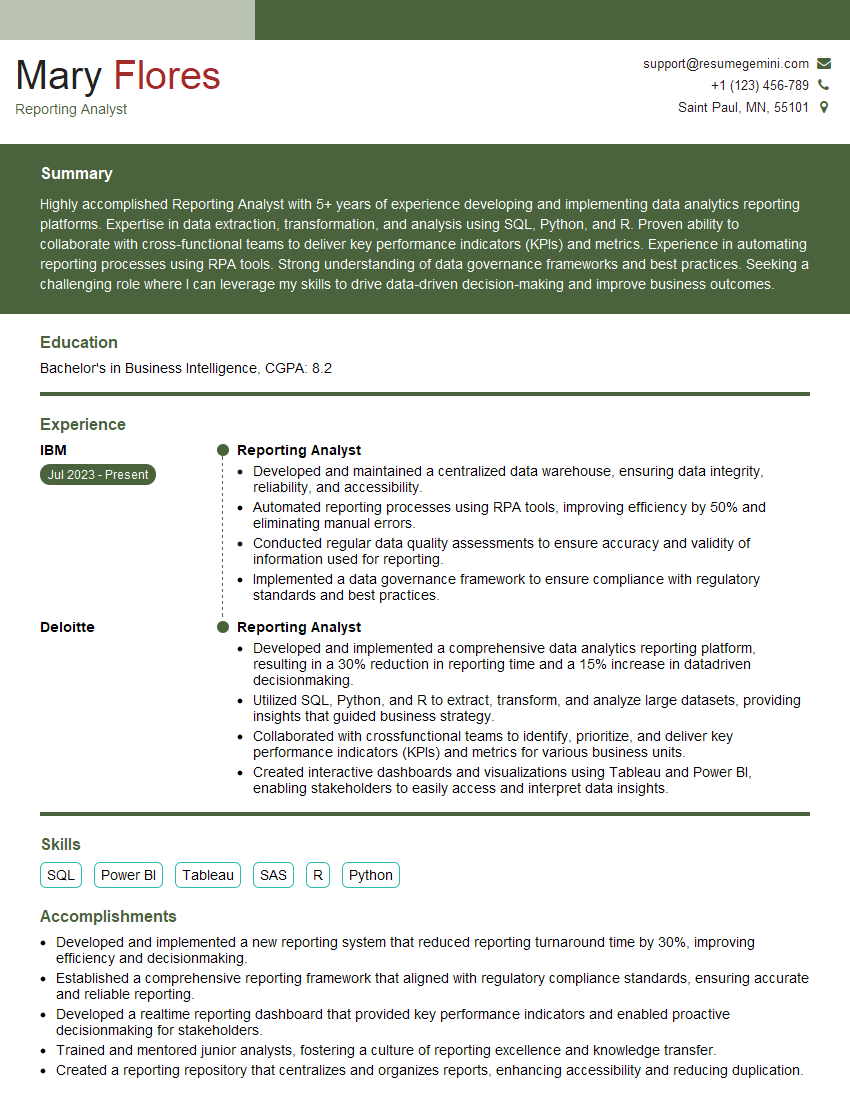
Reporting Analyst Resume Sample
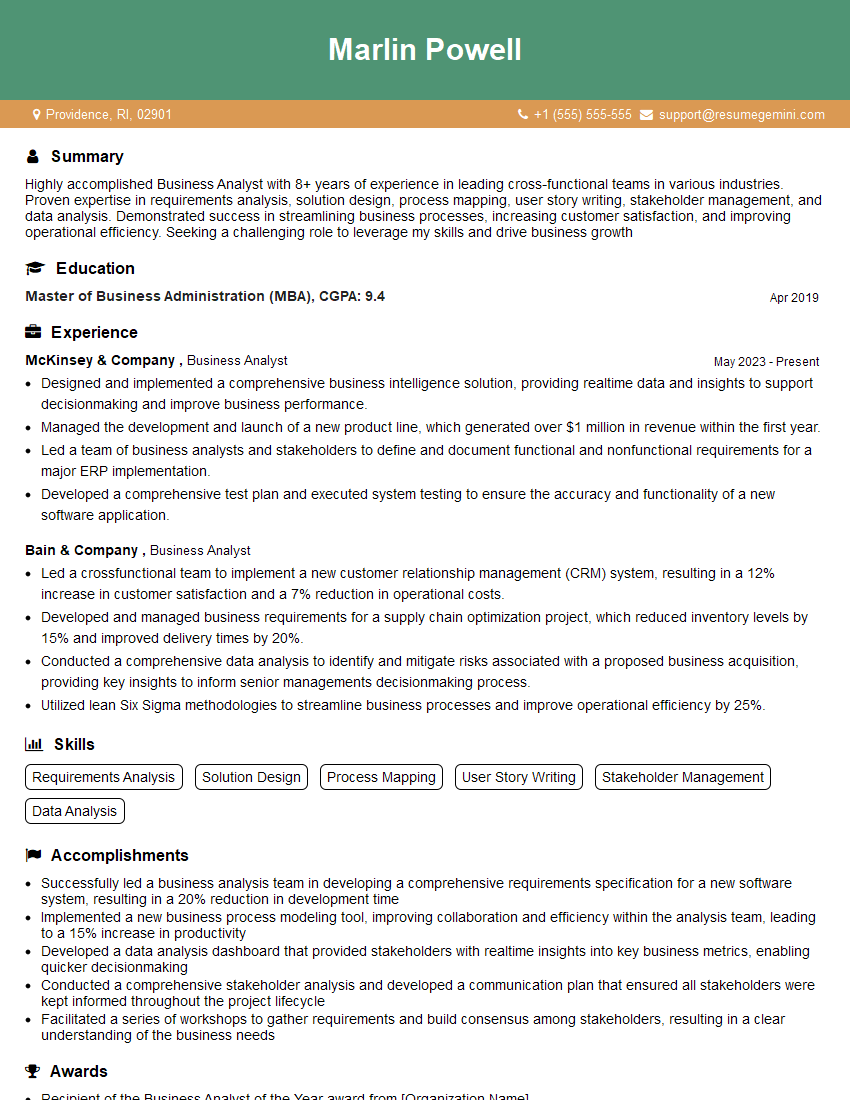
Business Analyst Resume Sample
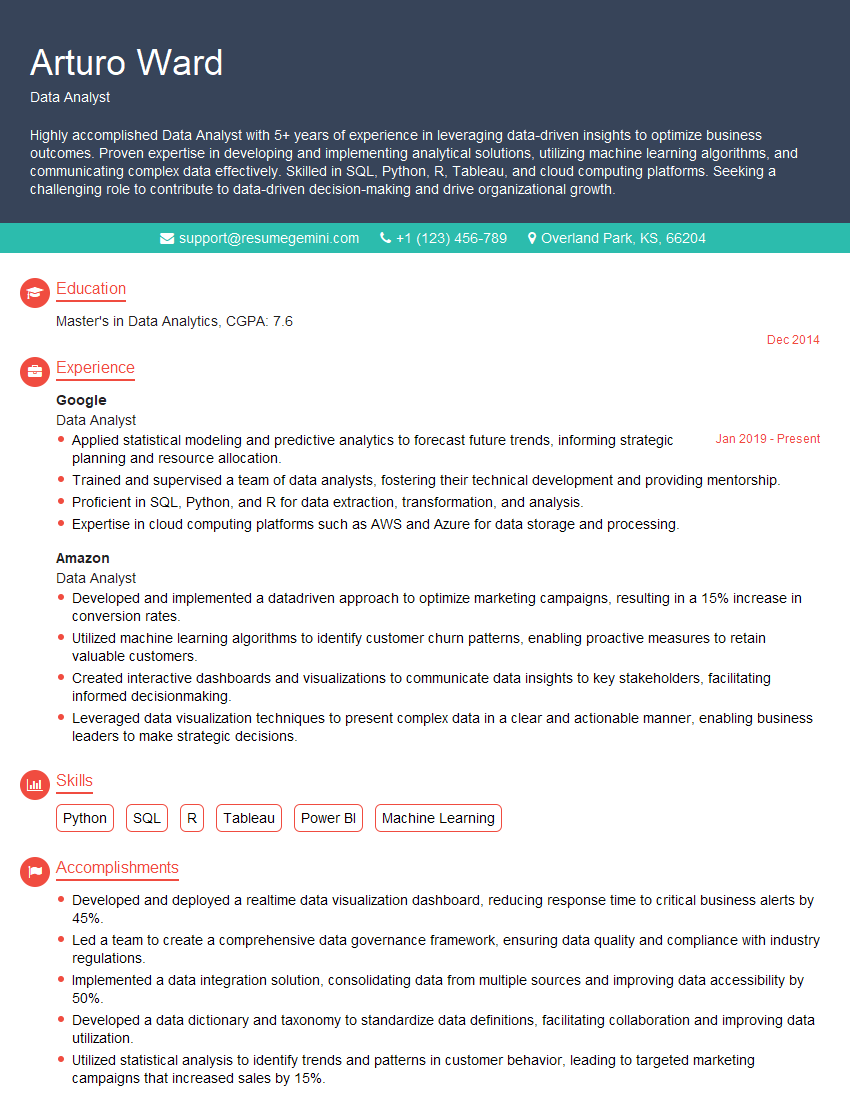
Data Analyst Resume Sample
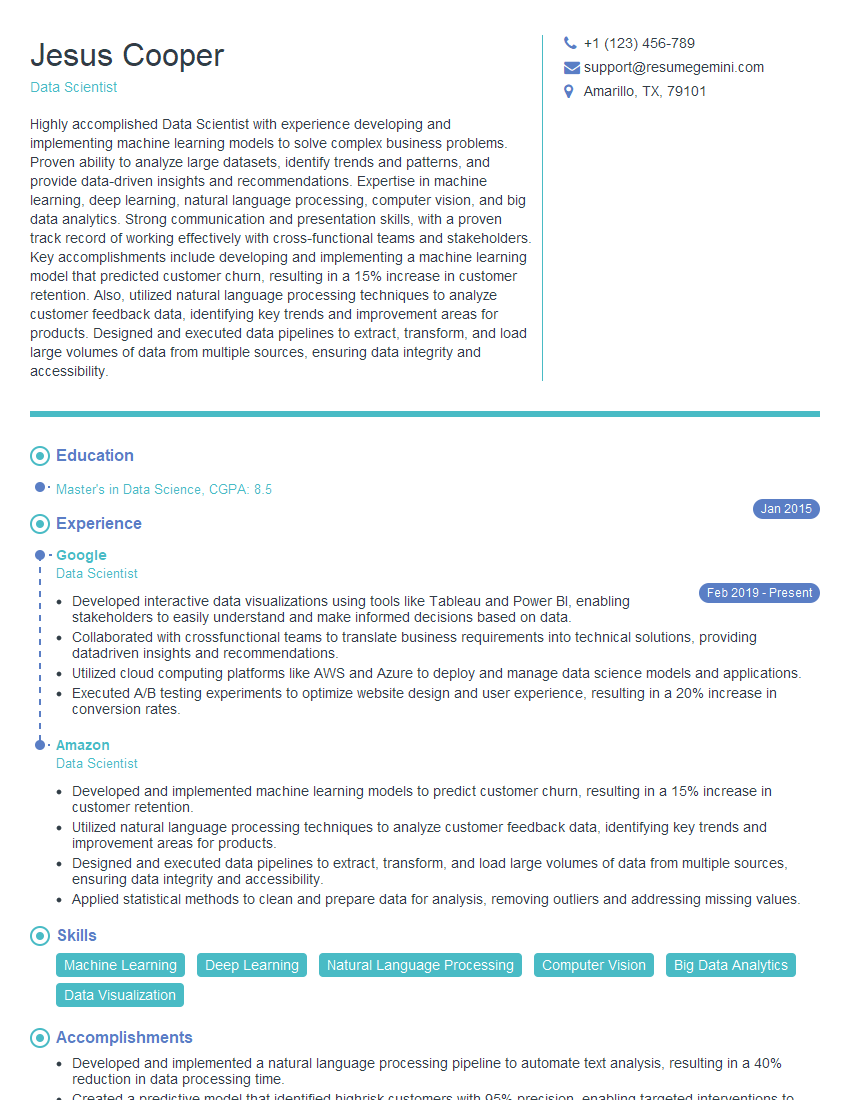
Data Scientist Resume Sample
Data Architect Resume Sample
Data Warehouse Architect Resume Sample
ETL Developer Resume Sample
Information Systems Manager Resume Sample
IT Manager Resume Sample
Database Administrator Resume Sample
DevOps Engineer Resume Sample
Machine Learning Engineer Resume Sample
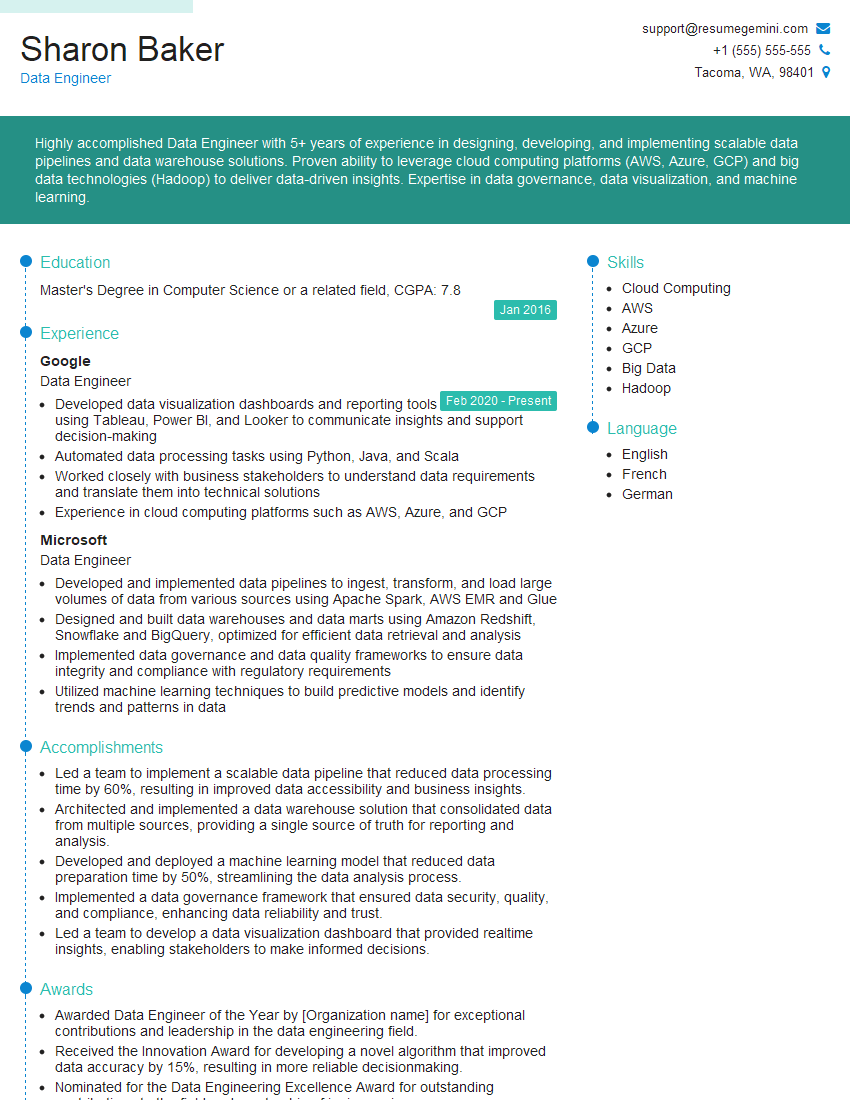
Data Engineer Resume Sample
Explore more articles
Users Rating of Our Blogs
Share Your Experience
We value your feedback! Please rate our content and share your thoughts (optional).
What Readers Say About Our Blog
Hello,
we currently offer a complimentary backlink and URL indexing test for search engine optimization professionals.
You can get complimentary indexing credits to test how link discovery works in practice.
No credit card is required and there is no recurring fee.
You can find details here:
https://wikipedia-backlinks.com/indexing/
Regards
NICE RESPONSE TO Q & A
hi
The aim of this message is regarding an unclaimed deposit of a deceased nationale that bears the same name as you. You are not relate to him as there are millions of people answering the names across around the world. But i will use my position to influence the release of the deposit to you for our mutual benefit.
Respond for full details and how to claim the deposit. This is 100% risk free. Send hello to my email id: [email protected]
Luka Chachibaialuka
Hey interviewgemini.com, just wanted to follow up on my last email.
We just launched Call the Monster, an parenting app that lets you summon friendly ‘monsters’ kids actually listen to.
We’re also running a giveaway for everyone who downloads the app. Since it’s brand new, there aren’t many users yet, which means you’ve got a much better chance of winning some great prizes.
You can check it out here: https://bit.ly/callamonsterapp
Or follow us on Instagram: https://www.instagram.com/callamonsterapp
Thanks,
Ryan
CEO – Call the Monster App
Hey interviewgemini.com, I saw your website and love your approach.
I just want this to look like spam email, but want to share something important to you. We just launched Call the Monster, a parenting app that lets you summon friendly ‘monsters’ kids actually listen to.
Parents are loving it for calming chaos before bedtime. Thought you might want to try it: https://bit.ly/callamonsterapp or just follow our fun monster lore on Instagram: https://www.instagram.com/callamonsterapp
Thanks,
Ryan
CEO – Call A Monster APP
To the interviewgemini.com Owner.
Dear interviewgemini.com Webmaster!
Hi interviewgemini.com Webmaster!
Dear interviewgemini.com Webmaster!
excellent
Hello,
We found issues with your domain’s email setup that may be sending your messages to spam or blocking them completely. InboxShield Mini shows you how to fix it in minutes — no tech skills required.
Scan your domain now for details: https://inboxshield-mini.com/
— Adam @ InboxShield Mini
Reply STOP to unsubscribe
Hi, are you owner of interviewgemini.com? What if I told you I could help you find extra time in your schedule, reconnect with leads you didn’t even realize you missed, and bring in more “I want to work with you” conversations, without increasing your ad spend or hiring a full-time employee?
All with a flexible, budget-friendly service that could easily pay for itself. Sounds good?
Would it be nice to jump on a quick 10-minute call so I can show you exactly how we make this work?
Best,
Hapei
Marketing Director
Hey, I know you’re the owner of interviewgemini.com. I’ll be quick.
Fundraising for your business is tough and time-consuming. We make it easier by guaranteeing two private investor meetings each month, for six months. No demos, no pitch events – just direct introductions to active investors matched to your startup.
If youR17;re raising, this could help you build real momentum. Want me to send more info?
Hi, I represent an SEO company that specialises in getting you AI citations and higher rankings on Google. I’d like to offer you a 100% free SEO audit for your website. Would you be interested?
Hi, I represent an SEO company that specialises in getting you AI citations and higher rankings on Google. I’d like to offer you a 100% free SEO audit for your website. Would you be interested?
good