Feeling uncertain about what to expect in your upcoming interview? We’ve got you covered! This blog highlights the most important Data Analytics and Optimization Techniques interview questions and provides actionable advice to help you stand out as the ideal candidate. Let’s pave the way for your success.
Questions Asked in Data Analytics and Optimization Techniques Interview
Q 1. Explain the difference between supervised and unsupervised machine learning.
The core difference between supervised and unsupervised machine learning lies in the nature of the data used for training. In supervised learning, the algorithm learns from a labeled dataset, meaning each data point is tagged with the correct answer or outcome. Think of it like a teacher supervising a student’s learning. The algorithm learns to map inputs to outputs based on this labeled data. Examples include image classification (where images are labeled with the objects they contain) and spam detection (where emails are labeled as spam or not spam). In contrast, unsupervised learning deals with unlabeled data. The algorithm is tasked with finding patterns, structures, or relationships within the data without any pre-defined answers. It’s more like exploring a new territory without a map. Examples include clustering (grouping similar data points together) and dimensionality reduction (reducing the number of variables while retaining important information).
To illustrate, imagine you’re building a model to predict house prices. In supervised learning, you’d have a dataset with features like size, location, and number of bedrooms, and each entry would also have the corresponding house price. In unsupervised learning, you might only have the features and would attempt to discover clusters of houses with similar characteristics, perhaps identifying different market segments.
Q 2. What are some common data visualization techniques, and when would you use each?
Data visualization is crucial for understanding and communicating insights from data. Several techniques exist, each suitable for different purposes:
- Bar charts: Ideal for comparing categorical data. For example, comparing sales across different product categories.
- Line charts: Best for showing trends over time, such as website traffic over a month.
- Scatter plots: Useful for exploring the relationship between two continuous variables, like the correlation between advertising spend and sales.
- Histograms: Show the distribution of a single continuous variable, highlighting frequency and potential outliers.
- Pie charts: Useful for showing proportions of a whole, like market share distribution.
- Heatmaps: Display correlations or other relationships between variables as a color-coded matrix.
The choice of visualization depends heavily on the type of data and the insights you want to convey. A bar chart is ineffective for showing trends, while a line chart would be unsuitable for comparing distinct categories. Effective visualization requires careful consideration of the audience and the message being communicated.
Q 3. Describe your experience with A/B testing and its application in optimization.
A/B testing, also known as split testing, is a powerful experimentation method used to compare two versions of something (e.g., a website, an email, an advertisement) to determine which performs better. It’s a cornerstone of data-driven optimization. In a typical A/B test, users are randomly assigned to either group A (control) or group B (variant), and their behavior is tracked. Statistical analysis is then used to determine if there’s a statistically significant difference in the key metrics (e.g., conversion rates, click-through rates) between the two groups.
I’ve used A/B testing extensively in various projects to optimize website conversion rates. For instance, in one project, we tested different button colors and placements to see which resulted in higher click-through rates on a call-to-action. Through careful A/B testing, we were able to identify a significantly better performing version, leading to a measurable increase in conversions and revenue. The key is to define clear success metrics, ensure a sufficient sample size, and conduct rigorous statistical analysis to draw reliable conclusions.
Q 4. How do you handle missing data in a dataset?
Handling missing data is a crucial step in data preprocessing. Ignoring missing data can lead to biased and unreliable results. Several approaches exist:
- Deletion: Simple but can lead to significant information loss. Listwise deletion removes entire rows with missing values, while pairwise deletion omits only the incomplete pairs of observations in analyses.
- Imputation: Replacing missing values with estimated ones. Common methods include mean/median/mode imputation (replacing with the average, median, or most frequent value), k-nearest neighbors imputation (using the values from similar data points), and multiple imputation (generating multiple plausible replacements for each missing value).
- Predictive modeling: Building a separate model to predict missing values based on other variables.
The best method depends on the nature of the missing data (e.g., missing completely at random (MCAR), missing at random (MAR), missing not at random (MNAR)), the percentage of missing data, and the size of the dataset. It’s vital to choose a method that minimizes bias and preserves the integrity of the data.
Q 5. What are the key assumptions of linear regression?
Linear regression assumes a linear relationship between the independent (predictor) variables and the dependent (outcome) variable. Several key assumptions underpin the validity of linear regression:
- Linearity: The relationship between the independent and dependent variables is linear.
- Independence: Observations are independent of each other.
- Homoscedasticity: The variance of the errors (residuals) is constant across all levels of the independent variable(s).
- Normality: The errors are normally distributed.
- No multicollinearity: Independent variables are not highly correlated with each other.
Violating these assumptions can lead to inaccurate and unreliable results. Diagnostic plots and statistical tests are used to assess the validity of these assumptions, and transformations or alternative modeling techniques might be necessary if assumptions are violated.
Q 6. Explain the bias-variance tradeoff.
The bias-variance tradeoff is a fundamental concept in machine learning that describes the relationship between model complexity and prediction error. Bias refers to the error introduced by approximating a real-world problem, which is often complex, by a simplified model. A high-bias model makes strong assumptions about the data and might miss important relationships, leading to underfitting. Variance refers to the model’s sensitivity to fluctuations in the training data. A high-variance model is overly complex and fits the training data too closely, capturing noise rather than underlying patterns, leading to overfitting.
The goal is to find a balance. A model with low bias and low variance is ideal, but this is often difficult to achieve. Increasing model complexity typically reduces bias but increases variance, and vice versa. Techniques like cross-validation and regularization help to manage this tradeoff and find an optimal balance between model complexity and prediction accuracy.
Q 7. What is regularization and why is it important in machine learning?
Regularization is a technique used to prevent overfitting in machine learning models. It works by adding a penalty term to the model’s loss function, discouraging the model from learning overly complex relationships and fitting the training data too closely. This penalty term constrains the model’s coefficients, reducing their magnitude.
Two common types of regularization are L1 (LASSO) and L2 (Ridge) regularization. L1 regularization adds a penalty proportional to the absolute value of the coefficients, while L2 regularization adds a penalty proportional to the square of the coefficients. L1 regularization tends to shrink some coefficients to zero, effectively performing feature selection, while L2 regularization shrinks all coefficients towards zero but rarely sets any exactly to zero.
Regularization is crucial because it improves the model’s ability to generalize to unseen data, leading to better prediction performance on new data points. It helps to mitigate the impact of noise and outliers in the training data and reduces the risk of overfitting, which is particularly important when dealing with high-dimensional data or limited training samples.
Q 8. Describe your experience with different optimization algorithms (e.g., gradient descent, stochastic gradient descent).
Optimization algorithms are the heart of many machine learning models, helping us find the best possible solution to a problem. Gradient descent and its variants are fundamental. Gradient descent iteratively adjusts model parameters to minimize a loss function. Imagine you’re trying to find the lowest point in a valley; gradient descent is like taking steps downhill, following the steepest slope.
Gradient Descent: This classic method calculates the gradient (slope) of the loss function using the entire dataset. It’s reliable but can be computationally expensive for massive datasets.
Stochastic Gradient Descent (SGD): SGD makes the process much faster by calculating the gradient using only a small subset (a ‘mini-batch’) of the data at each iteration. Think of it as taking a series of smaller, quicker steps downhill, rather than one big, slow step. This introduces some ‘noise’ – the steps aren’t always perfectly downhill – but it converges faster overall.
Other Variants: There are many variations, like mini-batch gradient descent (a compromise between GD and SGD), Adam (adaptive moment estimation), and RMSprop (root mean square propagation), each with their own strengths and weaknesses concerning convergence speed, computational cost, and sensitivity to parameter tuning.
In my experience, choosing the right algorithm depends heavily on the dataset size and complexity. For smaller datasets, gradient descent might suffice. However, for large-scale applications, SGD and its adaptive variants are generally preferred for their efficiency.
Q 9. What are some common performance metrics for classification and regression problems?
Performance metrics are crucial for evaluating how well a machine learning model is performing. They differ slightly between classification and regression tasks.
Classification Metrics: These assess the model’s ability to correctly categorize data points. Common examples include:
- Accuracy: The percentage of correctly classified instances.
- Precision: Out of all instances predicted as positive, what proportion was actually positive? It’s important when the cost of false positives is high.
- Recall (Sensitivity): Out of all actual positive instances, what proportion did the model correctly identify? Crucial when the cost of false negatives is high.
- F1-score: The harmonic mean of precision and recall, providing a balanced measure.
- AUC-ROC (Area Under the Receiver Operating Characteristic curve): Measures the model’s ability to distinguish between classes across different thresholds.
Regression Metrics: These evaluate the model’s ability to predict continuous values. Examples include:
- Mean Squared Error (MSE): The average squared difference between predicted and actual values. Sensitive to outliers.
- Root Mean Squared Error (RMSE): The square root of MSE; easier to interpret as it’s in the same units as the target variable.
- Mean Absolute Error (MAE): The average absolute difference between predicted and actual values; less sensitive to outliers than MSE.
- R-squared (R²): Represents the proportion of variance in the dependent variable explained by the model. Ranges from 0 to 1, with higher values indicating a better fit.
Q 10. How do you evaluate the performance of a machine learning model?
Evaluating a machine learning model’s performance is a multi-step process. It’s not just about looking at a single metric but rather a holistic assessment.
1. Data Splitting: First, we divide the data into training, validation, and testing sets. The training set is used to train the model, the validation set for tuning hyperparameters (e.g., the learning rate in gradient descent), and the test set for evaluating the final model’s performance on unseen data – a crucial step to avoid overestimating performance.
2. Choosing Appropriate Metrics: Select metrics relevant to the problem type (classification or regression) and business goals. For example, in medical diagnosis, recall (sensitivity) might be more critical than precision, as missing a positive case (false negative) is more costly than a false positive.
3. Cross-Validation: Employ techniques like k-fold cross-validation to get a more robust estimate of model performance by training and testing on different subsets of the data. This helps reduce the impact of data variability.
4. Error Analysis: Examine the model’s errors to understand its weaknesses. Are there specific types of instances where it consistently fails? This provides insights for improving the model (e.g., feature engineering, algorithm selection).
5. Compare to Baselines: Always compare your model’s performance against simpler baselines (e.g., a random classifier or a simple linear regression). This helps determine whether the model is actually adding value.
Q 11. Explain the concept of overfitting and underfitting.
Overfitting and underfitting are common challenges in machine learning, representing opposite ends of the spectrum of model complexity.
Overfitting: Occurs when a model learns the training data too well, including its noise and idiosyncrasies. It performs exceptionally well on the training data but poorly on unseen data. Imagine a student memorizing the answers to a practice test without understanding the underlying concepts; they’ll ace the practice test but fail the real exam. This is often caused by a model that’s too complex for the given data (e.g., too many parameters).
Underfitting: Happens when the model is too simple to capture the underlying patterns in the data. It performs poorly on both the training and testing data. Think of trying to fit a straight line to data that clearly follows a curve; you won’t get a good fit anywhere.
Techniques to address these issues include:
- Regularization: Adding penalties to the model’s complexity (e.g., L1 or L2 regularization) to prevent overfitting.
- Cross-validation: Helps detect overfitting early by evaluating performance on unseen data during model training.
- Feature selection/engineering: Selecting relevant features and creating new ones can improve model performance and reduce overfitting.
- Simplifying the model: Choosing a less complex model architecture can help avoid overfitting.
- Increasing training data: More data can help the model generalize better.
Q 12. How do you handle imbalanced datasets?
Imbalanced datasets, where one class significantly outweighs others, are a common problem. This can lead to models that are biased towards the majority class and perform poorly on the minority class. For example, in fraud detection, fraudulent transactions are typically a tiny fraction of all transactions.
Here are some strategies to handle this:
- Resampling: This involves adjusting the class distribution. Oversampling increases the number of instances in the minority class (e.g., by duplicating existing samples or using techniques like SMOTE – Synthetic Minority Over-sampling Technique). Undersampling reduces the number of instances in the majority class (e.g., by randomly removing samples). However, undersampling can lead to loss of information.
- Cost-sensitive learning: Assign higher weights or penalties to misclassifications of the minority class during model training. This encourages the model to pay more attention to the minority class.
- Ensemble methods: Combining multiple models trained on different subsets or with different weighting schemes can improve performance on imbalanced data.
- Anomaly detection techniques: If the minority class represents anomalies (e.g., fraud), specialized anomaly detection algorithms might be more appropriate than standard classification methods.
The best approach depends on the specific dataset and the problem. It often involves experimentation and careful consideration of the trade-offs between different methods.
Q 13. What is cross-validation, and why is it important?
Cross-validation is a powerful technique for evaluating a machine learning model’s performance and reducing the risk of overfitting. It involves splitting the data into multiple folds (subsets), training the model on some folds, and testing it on the remaining fold. This is repeated multiple times, with different folds used for testing each time.
k-fold cross-validation: The most common type, where the data is split into ‘k’ folds. The model is trained ‘k’ times, each time using a different fold as the test set and the remaining folds for training. The average performance across all ‘k’ folds provides a more robust estimate of the model’s generalization ability compared to a single train-test split.
Why it’s important:
- Reduces Overfitting Bias: By using multiple train-test splits, cross-validation gives a less biased estimate of the model’s performance than a single train-test split.
- Improves Model Selection: Helps in comparing different models objectively by providing a more reliable estimate of their performance on unseen data.
- Provides a More Generalizable Estimate: The average performance across multiple folds better reflects how the model will perform on completely new, unseen data.
Cross-validation is a critical step in the machine learning workflow, providing a more accurate and reliable assessment of model performance.
Q 14. What is the difference between precision and recall?
Precision and recall are crucial metrics for evaluating classification models, particularly when dealing with imbalanced datasets. They address different aspects of a model’s performance.
Precision: Focuses on the accuracy of the positive predictions. It answers the question: Out of all instances predicted as positive, what proportion was actually positive? A high precision means the model is making fewer false positive predictions. It’s relevant when the cost of false positives is high (e.g., wrongly diagnosing a patient with a serious illness).
Recall (Sensitivity): Focuses on the model’s ability to identify all actual positive instances. It answers the question: Out of all actual positive instances, what proportion did the model correctly identify? High recall means the model is missing fewer actual positive instances (fewer false negatives). It’s crucial when the cost of false negatives is high (e.g., failing to detect a fraudulent transaction).
Analogy: Imagine a fishing net. Precision measures how many of the fish caught are actually the type you want (high precision = fewer unwanted fish). Recall measures how many of the target fish in the pond you actually caught (high recall = fewer target fish missed).
The choice between precision and recall often depends on the specific application and the relative costs associated with false positives and false negatives.
Q 15. Explain the concept of feature scaling and its importance.
Feature scaling is a crucial preprocessing step in data analysis and machine learning where we transform the features of your dataset to a similar scale. Imagine you’re trying to build a model that predicts house prices based on size (in square feet) and the number of bedrooms. Square footage might range from 500 to 5000, while the number of bedrooms is typically between 1 and 6. These vastly different ranges can cause issues for algorithms that rely on distance calculations, like k-Nearest Neighbors or those using gradient descent, as the larger feature (square footage) will disproportionately influence the model. Feature scaling addresses this by normalizing or standardizing the features, bringing them to a comparable scale.
There are several common techniques:
- Min-Max Scaling (Normalization): This scales features to a range between 0 and 1. The formula is:
x_scaled = (x - x_min) / (x_max - x_min). This is useful when you want to maintain the original distribution of your data. - Standardization (Z-score normalization): This scales features to have a mean of 0 and a standard deviation of 1. The formula is:
x_scaled = (x - x_mean) / x_std. This is particularly helpful when your data doesn’t follow a normal distribution or you have outliers.
In my experience, choosing between Min-Max scaling and standardization often depends on the specific algorithm and the nature of the data. For instance, algorithms sensitive to outliers often benefit from standardization, while Min-Max scaling might be preferred for algorithms that assume a specific range, such as neural networks with sigmoid activation functions.
Career Expert Tips:
- Ace those interviews! Prepare effectively by reviewing the Top 50 Most Common Interview Questions on ResumeGemini.
- Navigate your job search with confidence! Explore a wide range of Career Tips on ResumeGemini. Learn about common challenges and recommendations to overcome them.
- Craft the perfect resume! Master the Art of Resume Writing with ResumeGemini’s guide. Showcase your unique qualifications and achievements effectively.
- Don’t miss out on holiday savings! Build your dream resume with ResumeGemini’s ATS optimized templates.
Q 16. What are some common feature selection techniques?
Feature selection aims to choose the most relevant features for your model, improving its performance and interpretability. Too many irrelevant features can lead to overfitting (the model performs well on training data but poorly on new data) and increased computational cost. Here are some common techniques:
- Filter methods: These methods rank features based on statistical measures without considering the learning algorithm. Examples include correlation coefficient, chi-squared test, and mutual information.
- Wrapper methods: These methods use a learning algorithm to evaluate different subsets of features. Recursive Feature Elimination (RFE) is a popular example, iteratively removing the least important features.
- Embedded methods: These methods incorporate feature selection as part of the model training process. LASSO (L1 regularization) and Ridge Regression (L2 regularization) are examples, where the regularization term penalizes the use of many features.
In a recent project predicting customer churn, I used a combination of filter methods (correlation analysis to identify initial candidates) and a wrapper method (RFE) to select the most predictive features. This reduced the feature set significantly while maintaining prediction accuracy, improving model interpretability, and reducing training time.
Q 17. What is dimensionality reduction, and why is it useful?
Dimensionality reduction is the process of reducing the number of random variables under consideration by obtaining a set of principal variables. In simpler terms, it’s about simplifying your data by reducing the number of features while preserving as much important information as possible. High-dimensional data (many features) can be computationally expensive, lead to overfitting, and make it difficult to visualize and understand the data. Dimensionality reduction techniques help overcome these challenges.
Common methods include:
- Principal Component Analysis (PCA): This linear transformation finds a new set of uncorrelated variables (principal components) that capture the maximum variance in the data. It’s often used for visualization and noise reduction.
- t-distributed Stochastic Neighbor Embedding (t-SNE): A nonlinear technique particularly effective for visualizing high-dimensional data in lower dimensions (e.g., 2D or 3D). It’s great for exploring data clusters but not for dimensionality reduction in model training.
For example, in image processing, PCA can be used to reduce the dimensionality of image data by representing each image with a smaller set of principal components, reducing storage space and computational cost without significant loss of image quality.
Q 18. Explain your experience with different data mining techniques.
My experience with data mining techniques is extensive, encompassing various approaches depending on the problem. I’ve worked with:
- Classification: Logistic Regression, Support Vector Machines (SVMs), Decision Trees, Random Forests, and Naive Bayes. In a fraud detection project, I used Random Forests to classify fraudulent transactions, achieving high accuracy and providing feature importance insights.
- Regression: Linear Regression, Polynomial Regression, Support Vector Regression (SVR), and Decision Tree Regression. I applied linear regression to predict sales based on marketing spend in a previous role.
- Clustering: K-Means, Hierarchical Clustering, and DBSCAN. I used K-Means to segment customers based on their purchasing behavior, which enabled targeted marketing campaigns.
- Association Rule Mining: Apriori algorithm. In a retail setting, I identified frequent item sets to optimize product placement and recommend related products.
I am proficient in selecting the appropriate technique based on the data characteristics and the problem’s objective, always focusing on model evaluation metrics to ensure optimal performance.
Q 19. Describe your experience working with SQL and NoSQL databases.
I have substantial experience with both SQL and NoSQL databases. My SQL experience spans various relational database management systems (RDBMS) like MySQL, PostgreSQL, and SQL Server. I am proficient in writing complex queries, optimizing database performance, and designing relational schemas. I regularly use SQL for data extraction, transformation, and loading (ETL) processes and data analysis.
My NoSQL experience focuses primarily on MongoDB and Cassandra. I use NoSQL databases when dealing with large volumes of unstructured or semi-structured data, particularly when scalability and flexibility are critical. For example, in a real-time analytics project involving streaming sensor data, I utilized Cassandra’s distributed nature to handle high-throughput data ingestion and querying.
I understand the trade-offs between SQL and NoSQL databases and choose the most appropriate solution based on project requirements.
Q 20. How familiar are you with cloud computing platforms (e.g., AWS, Azure, GCP)?
I’m familiar with all three major cloud computing platforms: AWS, Azure, and GCP. My experience includes designing and deploying data pipelines using AWS services such as S3, EC2, EMR, and Redshift. I’ve worked with Azure Blob Storage, Azure Databricks, and Azure SQL Database. On GCP, I’ve utilized Google Cloud Storage, Dataproc, and BigQuery. I understand the strengths and weaknesses of each platform and can adapt my approach based on project-specific needs, considering factors such as cost, scalability, and security.
In a recent project, we leveraged the scalability of AWS to process terabytes of data for a large-scale machine learning model. The choice of AWS was driven by its mature ecosystem and robust services for handling big data workloads.
Q 21. What is your experience with big data technologies (e.g., Hadoop, Spark)?
I have significant experience with big data technologies, particularly Hadoop and Spark. I’ve worked extensively with Hadoop Distributed File System (HDFS) for storing and managing large datasets, and MapReduce for parallel processing. I’m proficient in writing MapReduce jobs using Java or Python. Spark’s in-memory processing capabilities have been invaluable for improving the performance of data analytics tasks. I use PySpark and Spark SQL regularly for data manipulation and analysis.
For instance, in a project involving log file analysis, I leveraged Spark’s distributed computing capabilities to process a massive volume of logs, identifying patterns and anomalies much faster than traditional methods. The ability to handle large datasets efficiently is a key aspect of my work.
Q 22. Explain your experience with data wrangling and cleaning.
Data wrangling and cleaning is the crucial first step in any data analysis project. It involves transforming raw data into a usable format for analysis. Think of it like preparing ingredients before cooking – you wouldn’t start cooking without washing and chopping your vegetables, right? Similarly, raw data is often messy, incomplete, and inconsistent. My experience encompasses a wide range of techniques, including:
- Handling Missing Values: I’ve used various imputation techniques such as mean/median imputation, K-Nearest Neighbors imputation, and even more sophisticated methods based on the data’s characteristics and the context of the missing values. For example, in a customer dataset, if age is missing, using the average age might be misleading; instead, I’d explore whether other variables (like purchase history) could help predict the missing age.
- Outlier Detection and Treatment: I use box plots, scatter plots, and statistical methods like Z-scores or IQR (Interquartile Range) to identify and handle outliers. Depending on the context, outliers might be removed, transformed (e.g., log transformation), or winsorized. A crucial aspect here is understanding *why* an outlier exists; it could be an error or a genuinely significant observation.
- Data Transformation: This involves converting data into a more suitable format. I regularly use techniques like standardization (z-score normalization), min-max scaling, and one-hot encoding for categorical variables. For instance, converting categorical variables like ‘color’ (red, blue, green) into numerical representations is essential for many machine learning algorithms.
- Data Deduplication: Identifying and removing duplicate records is vital for data accuracy. I utilize various techniques depending on the data structure, such as using SQL queries with
GROUP BYandHAVINGclauses or Python libraries like Pandas to identify and handle duplicates. - Data Consistency: Ensuring consistent data formats and values is critical. For example, ensuring dates are in a consistent format (YYYY-MM-DD) and handling inconsistencies in text values (e.g., variations in spelling) are common tasks.
I am proficient in using tools like Python (with Pandas and NumPy), R, and SQL to perform these tasks efficiently and effectively. My experience ensures that the data I use for analysis is reliable and accurate, leading to more robust and meaningful results.
Q 23. Describe a time you had to troubleshoot a complex data problem.
In a previous project involving predicting customer churn for a telecom company, I encountered a perplexing issue. The initial model, a logistic regression, performed poorly, with significantly lower accuracy than expected. After thorough investigation, I discovered that the dataset contained a large number of seemingly random outliers in the ‘call duration’ variable. These outliers, initially dismissed as errors, were actually caused by a system glitch resulting in abnormally high call durations for a small subset of customers.
My troubleshooting involved the following steps:
- Data Exploration: I used visualization techniques like box plots and histograms to examine the distribution of the ‘call duration’ variable. This clearly highlighted the outliers.
- Root Cause Analysis: I collaborated with the engineering team to understand the origin of these outliers. This revealed the system glitch which was then fixed.
- Data Cleaning: After verifying the root cause, I considered multiple strategies for handling the outliers. Simple removal was considered but could lead to a bias in the model. I instead used winsorization, replacing extreme values with less extreme values within a defined percentile. I opted for this method since I suspect that the affected customers were experiencing an exceptional issue impacting call duration.
- Model Re-evaluation: After cleaning the data and re-running the model, the accuracy improved dramatically. The investigation also resulted in identifying a previously overlooked feature that significantly correlated with churn. That finding could have been masked by the flawed data.
This experience taught me the importance of a thorough understanding of the data’s origin and potential sources of error, emphasizing the iterative nature of data analysis and the value of cross-functional collaboration.
Q 24. How do you stay current with the latest advancements in data analytics and optimization?
Staying current in the rapidly evolving field of data analytics and optimization requires a multifaceted approach. I actively engage in several strategies to ensure I remain at the forefront:
- Online Courses and Workshops: Platforms like Coursera, edX, and Udacity offer excellent courses on advanced analytics and optimization techniques. I regularly enroll in relevant courses to deepen my knowledge and learn about new methodologies.
- Conferences and Webinars: Attending industry conferences (e.g., KDD, NeurIPS) and webinars provides exposure to cutting-edge research and real-world applications. These events are invaluable for networking and learning from experts.
- Publications and Research Papers: I regularly read research papers published in top journals and conferences like JMLR and ICML to stay updated on the latest advancements in algorithms and techniques.
- Industry Blogs and Newsletters: Following influential blogs and subscribing to newsletters from companies and organizations specializing in data analytics keeps me informed about industry trends and best practices. This provides a more practical, applied view of the field.
- Open Source Projects and Communities: Engaging with open-source projects on platforms like GitHub allows me to learn from the code and contributions of others and contribute my own expertise. Participating in online communities, forums, and discussions on platforms like Stack Overflow helps me gain insight and solve challenges collaboratively.
This continuous learning approach allows me to adapt to new technologies and methodologies, ensuring my skills remain relevant and effective in tackling complex data challenges.
Q 25. Explain your understanding of different optimization modeling techniques (e.g., linear programming, integer programming).
Optimization modeling involves finding the best solution from a set of feasible solutions that meet specified constraints. Several techniques exist, each with its strengths and weaknesses:
- Linear Programming (LP): LP models problems where the objective function and constraints are linear. It’s used to optimize resource allocation, production planning, and transportation problems. For example, a factory might use LP to determine the optimal production levels of different products to maximize profit given limited resources (raw materials, labor, machine time). The solution is typically found using the simplex method or interior-point methods.
- Integer Programming (IP): IP extends LP by requiring some or all variables to be integers. This is crucial when dealing with discrete quantities, like the number of employees or the number of units of a product. For instance, you can’t have 2.5 employees; it must be a whole number. IP problems are generally more difficult to solve than LP problems and often require specialized algorithms like branch and bound or cutting plane methods.
- Mixed-Integer Programming (MIP): MIP combines both continuous and integer variables. This is useful when modeling problems with both continuous and discrete decision variables. For instance, optimizing a supply chain network might involve continuous variables representing transportation costs and integer variables representing the number of warehouses to open.
- Nonlinear Programming (NLP): NLP deals with problems where the objective function or constraints are nonlinear. These problems are often more complex to solve and might require iterative methods like gradient descent or Newton’s method. An example includes portfolio optimization, where the return on investment is a nonlinear function of the portfolio composition.
I have practical experience using these techniques with solvers like CPLEX, Gurobi, and open-source options within Python libraries like PuLP and CVXOPT. The choice of technique depends heavily on the problem’s structure and complexity.
Q 26. Describe a project where you utilized optimization techniques to improve efficiency or profitability.
In a project for a logistics company, we aimed to optimize the delivery routes to minimize fuel consumption and delivery times. The problem was modeled as a Vehicle Routing Problem (VRP), a classic combinatorial optimization problem. We had a set of delivery locations, a fleet of vehicles with capacity constraints, and the goal was to find the optimal routes for each vehicle to service all locations while minimizing total distance and time.
We employed a combination of techniques:
- Data Preprocessing: We cleaned and prepared the data, including location coordinates and delivery time windows. This ensured accurate distance calculations and realistic constraints.
- Model Formulation: We formulated the VRP as a mixed-integer programming problem, using binary variables to represent whether a vehicle visits a particular location and continuous variables to represent the sequence of visits. The objective function aimed to minimize total travel distance and time.
- Optimization Solver: We used a commercial solver (Gurobi) to find the optimal solution. Due to the problem’s complexity, we also employed heuristic methods to find near-optimal solutions within a reasonable computation time. This balance between optimality and computational efficiency is crucial in real-world applications.
- Implementation and Monitoring: The optimized routes were integrated into the company’s delivery system. We continually monitored the system’s performance and made adjustments as needed. This iterative process and close collaboration with the operations team were crucial for the successful implementation of the optimization.
This project resulted in a significant reduction in fuel costs (approximately 15%) and delivery times (by 10%), demonstrating the tangible benefits of applying optimization techniques.
Q 27. What are some common challenges in implementing optimization solutions, and how have you addressed them?
Implementing optimization solutions can present several challenges:
- Data Quality: As mentioned earlier, poor data quality can significantly impact the accuracy and effectiveness of the solution. Inaccurate or incomplete data can lead to suboptimal or even infeasible solutions.
- Model Complexity: Complex optimization problems can be computationally expensive to solve, especially large-scale problems. Finding a balance between solution quality and computational tractability is crucial.
- Constraint Handling: Real-world problems often involve numerous complex constraints that need to be accurately represented in the model. Misrepresenting or overlooking constraints can lead to infeasible or unrealistic solutions.
- Solution Implementation and Adoption: Successfully implementing and adopting the optimized solution often requires close collaboration with stakeholders and addressing practical concerns within the organization.
- Model Validation and Monitoring: Continuously validating the model and monitoring its performance over time is vital for its long-term effectiveness. The model may need recalibration as conditions change.
To address these challenges, I employ several strategies:
- Rigorous Data Cleaning and Validation: Prioritizing data quality through thorough cleaning and validation steps is paramount.
- Approximation and Heuristics: For complex problems, employing approximation algorithms or heuristics can provide near-optimal solutions within a reasonable timeframe.
- Sensitivity Analysis: Performing sensitivity analysis helps to understand the impact of different parameters and uncertainties on the solution.
- Iterative Development and Testing: A phased approach to development and testing allows for feedback and refinement.
- Collaboration and Communication: Clearly communicating the model’s assumptions, limitations, and results to stakeholders is critical for successful implementation and buy-in.
By proactively addressing these challenges, I ensure the robustness and practicality of optimization solutions.
Q 28. Explain your experience with A/B testing and experimental design.
A/B testing, also known as split testing, is a crucial method for evaluating the effectiveness of different versions of a website, app, or marketing campaign. It involves randomly assigning users to two or more groups (A, B, etc.) and exposing each group to a different version. The results are then analyzed to determine which version performs better based on predefined metrics.
Experimental design is the overarching framework for planning and conducting experiments, including A/B tests. A well-designed experiment ensures reliable and unbiased results. Key aspects include:
- Defining Hypotheses: Clearly stating the hypotheses to be tested is the first step. For example, “Version B of our website will lead to a higher conversion rate than Version A.”
- Sample Size Determination: A sufficient sample size is crucial for statistically significant results. Power analysis helps determine the necessary sample size.
- Randomization: Randomly assigning users to groups ensures unbiased comparison.
- Metric Selection: Choosing appropriate metrics to measure the impact of the variations (e.g., conversion rate, click-through rate, time spent on site).
- Statistical Analysis: Using appropriate statistical tests (e.g., t-tests, chi-squared tests) to analyze the results and determine statistical significance.
My experience includes designing and conducting numerous A/B tests across different platforms. For instance, in a previous project for an e-commerce company, we A/B tested different website layouts and button placements. We used a statistical significance threshold of p < 0.05 to make decisions. Proper randomization, rigorous data collection, and careful statistical analysis allowed us to confidently identify the superior version and improve the conversion rate.
Beyond simple A/B tests, I’m familiar with more complex experimental designs like multivariate testing, which allows for simultaneous testing of multiple variations of different elements. Understanding the nuances of experimental design ensures that the conclusions drawn from the tests are valid and actionable.
Key Topics to Learn for Data Analytics and Optimization Techniques Interview
- Descriptive Statistics & Data Visualization: Understanding distributions, central tendencies, variability, and effectively communicating insights through charts and graphs. Practical application: Analyzing customer behavior trends from website data.
- Regression Analysis: Linear, logistic, and polynomial regression; interpreting coefficients, assessing model fit (R-squared, adjusted R-squared), and identifying potential biases. Practical application: Predicting sales based on marketing spend.
- Time Series Analysis: Forecasting techniques (ARIMA, Exponential Smoothing), trend identification, seasonality detection, and handling missing data. Practical application: Predicting future demand for a product.
- Optimization Algorithms: Linear Programming, Integer Programming, Gradient Descent, understanding the trade-off between exploration and exploitation. Practical application: Optimizing supply chain logistics or resource allocation.
- A/B Testing & Experiment Design: Understanding statistical significance, power analysis, and proper experimental design to draw valid conclusions. Practical application: Evaluating the effectiveness of different website designs.
- Data Mining & Machine Learning Techniques (relevant to optimization): Clustering algorithms (K-means, hierarchical), dimensionality reduction (PCA), and their application in preparing data for optimization models. Practical application: Segmenting customers for targeted marketing campaigns.
- Data Cleaning & Preprocessing: Handling missing values, outliers, and inconsistencies; data transformation and feature engineering techniques crucial for model accuracy. Practical application: Preparing transactional data for fraud detection.
- Model Evaluation & Selection: Understanding various metrics (precision, recall, F1-score, AUC), cross-validation, and model selection techniques. Practical application: Choosing the best model for a specific prediction task.
Next Steps
Mastering Data Analytics and Optimization Techniques is crucial for career advancement in today’s data-driven world. These skills are highly sought after across various industries, opening doors to exciting and challenging roles. To maximize your job prospects, create a strong, ATS-friendly resume that effectively highlights your qualifications and experience. ResumeGemini is a trusted resource to help you build a professional and impactful resume. We provide examples of resumes tailored specifically to Data Analytics and Optimization Techniques to guide you. Take the next step towards your dream career – build your best resume today!
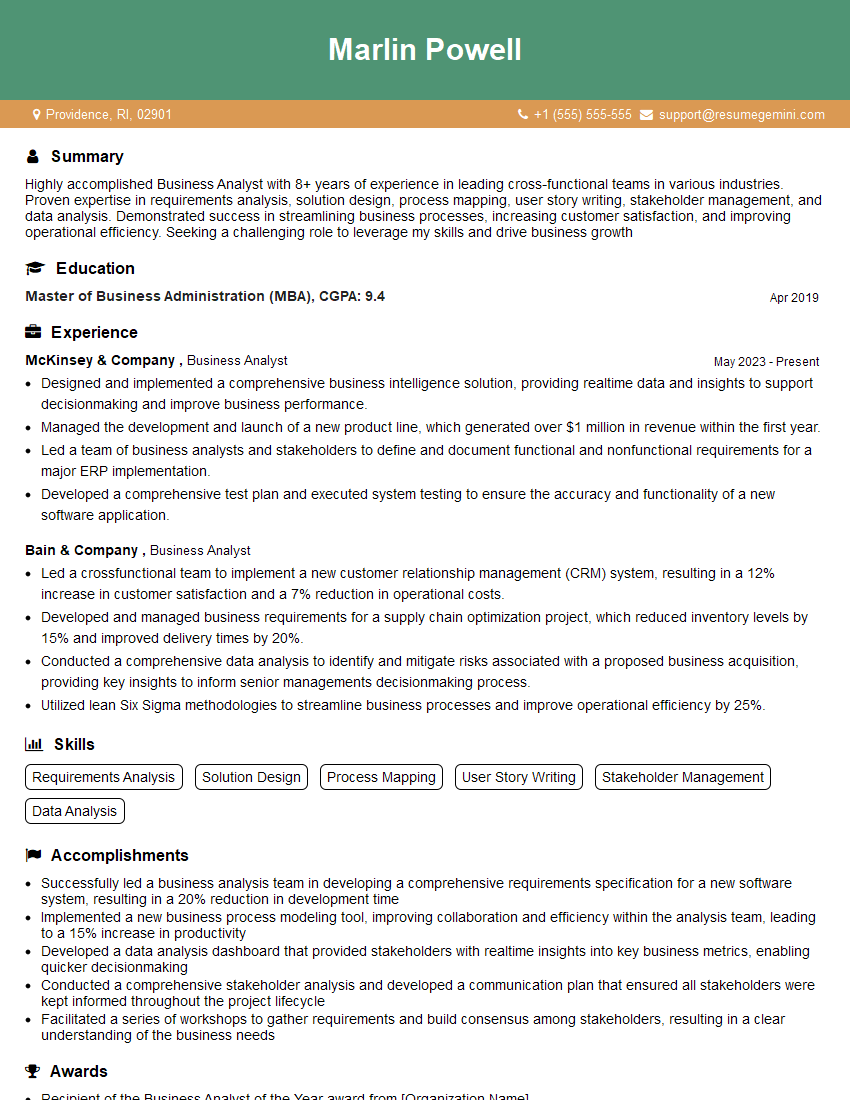
Business Analyst Resume Sample
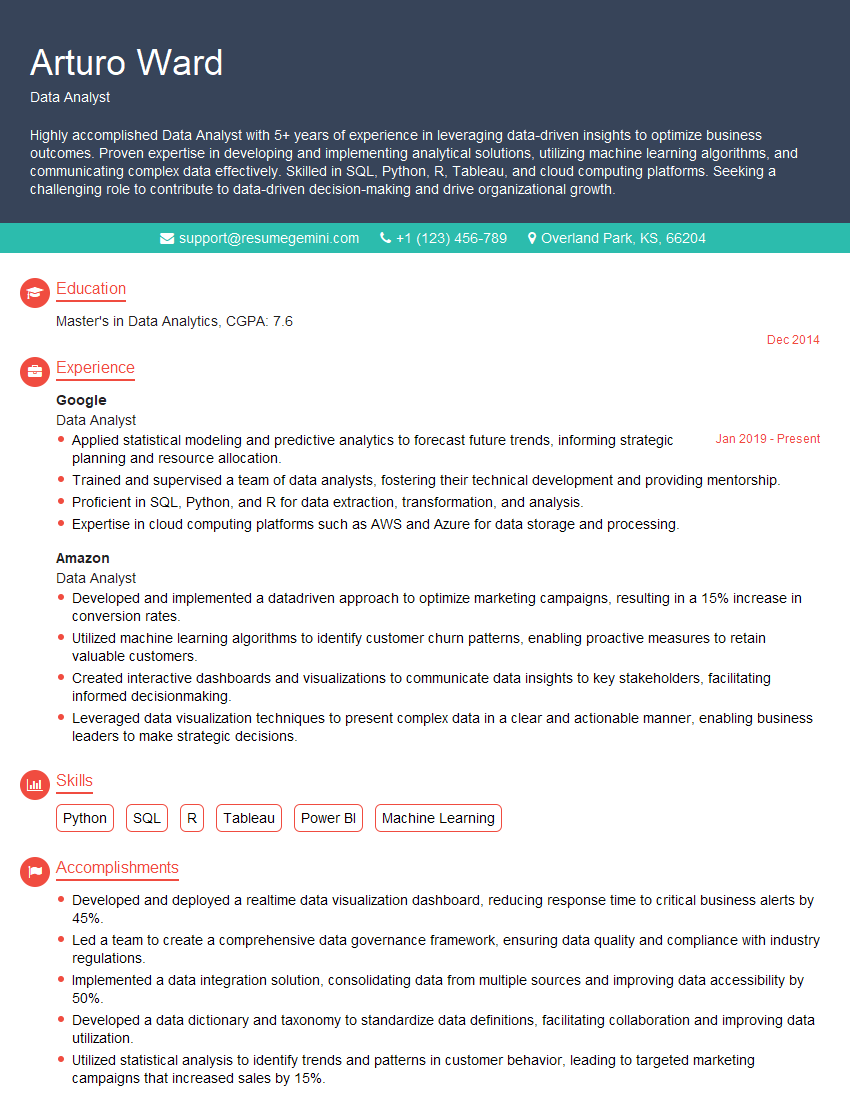
Data Analyst Resume Sample
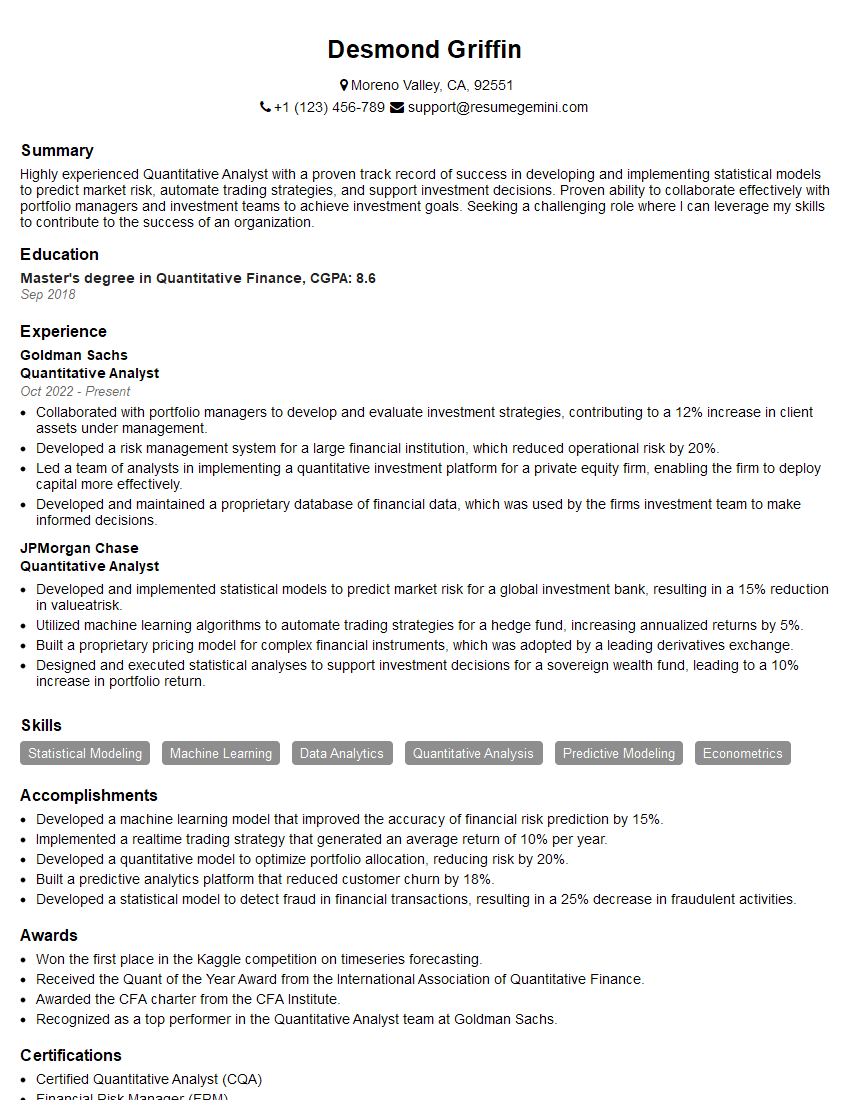
Quantitative Analyst Resume Sample
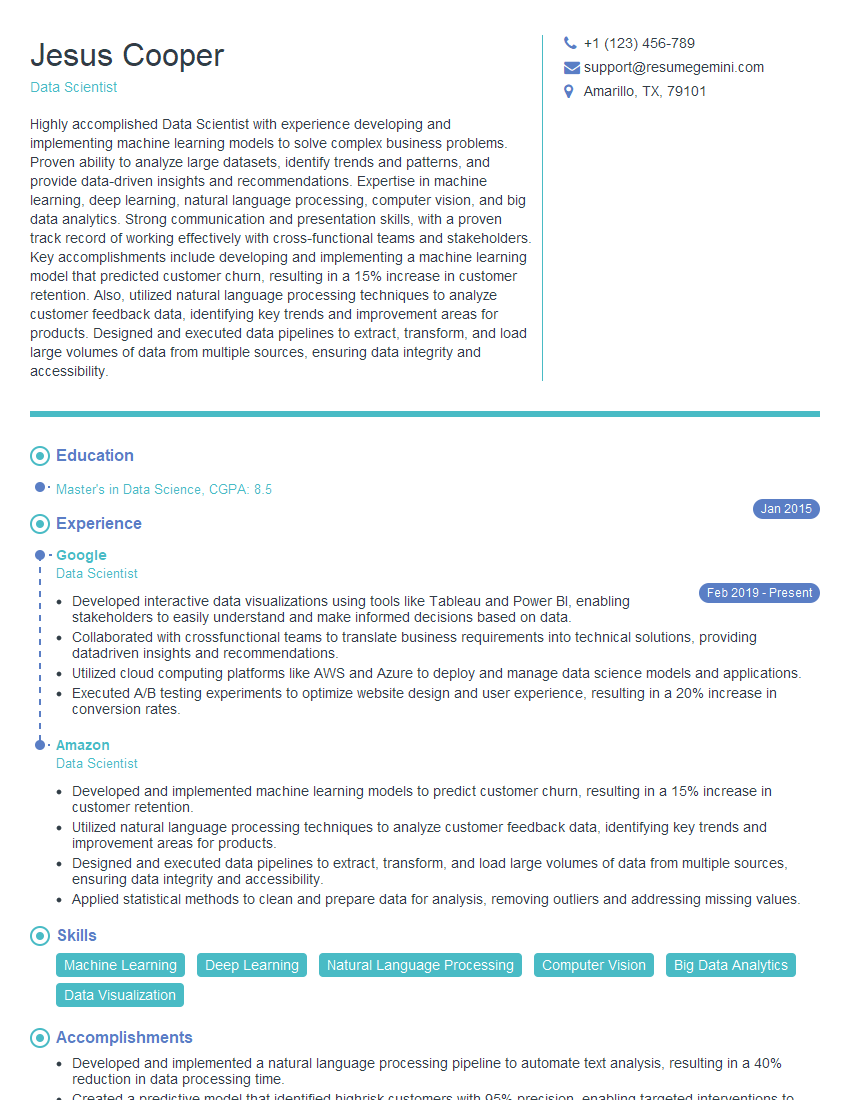
Data Scientist Resume Sample

Data Architect Resume Sample
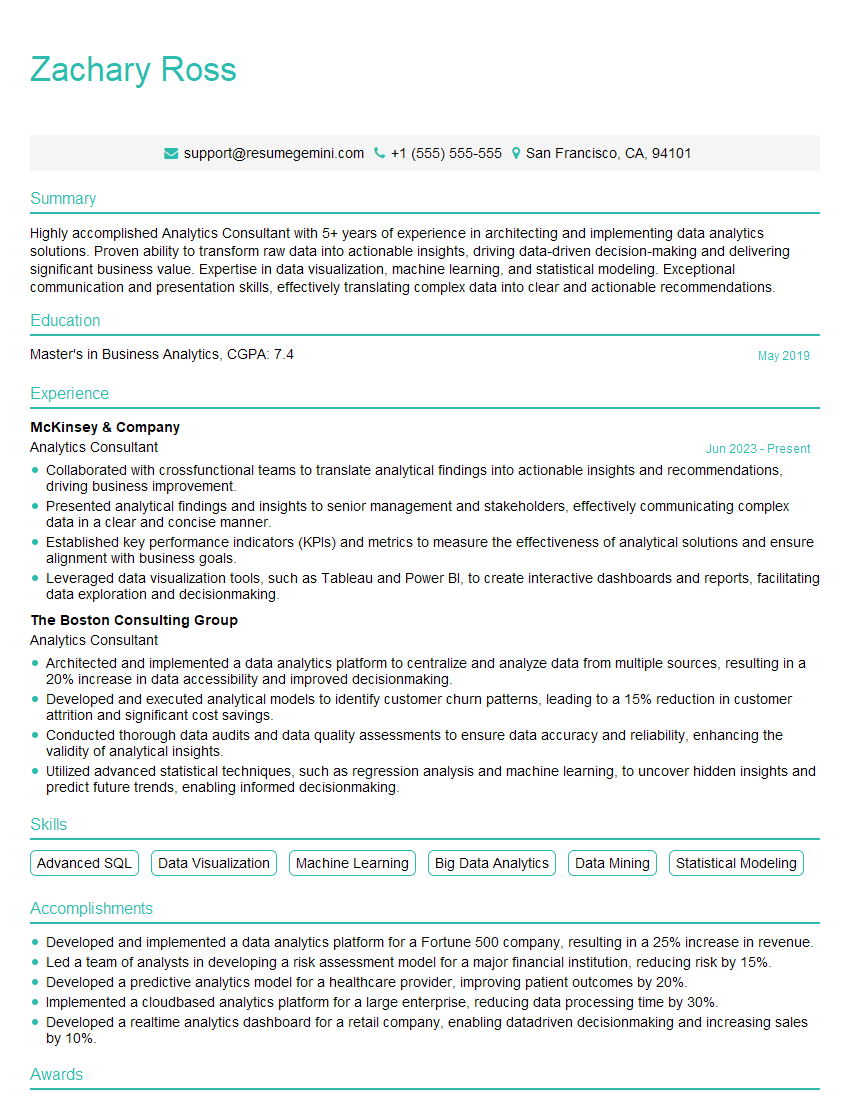
Analytics Consultant Resume Sample

Operations Research Analyst Resume Sample

Statistical Analyst Resume Sample

Machine Learning Engineer Resume Sample
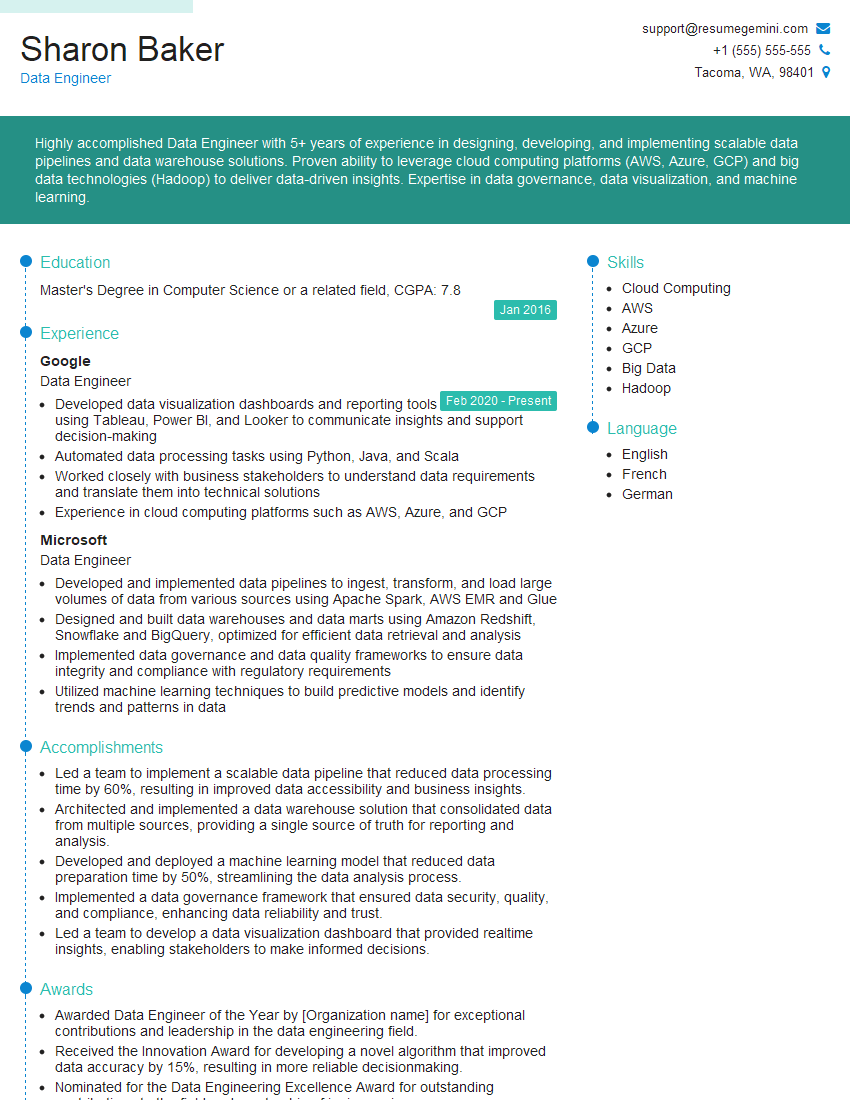
Data Engineer Resume Sample
Explore more articles
Users Rating of Our Blogs
Share Your Experience
We value your feedback! Please rate our content and share your thoughts (optional).
What Readers Say About Our Blog
Hello,
we currently offer a complimentary backlink and URL indexing test for search engine optimization professionals.
You can get complimentary indexing credits to test how link discovery works in practice.
No credit card is required and there is no recurring fee.
You can find details here:
https://wikipedia-backlinks.com/indexing/
Regards
NICE RESPONSE TO Q & A
hi
The aim of this message is regarding an unclaimed deposit of a deceased nationale that bears the same name as you. You are not relate to him as there are millions of people answering the names across around the world. But i will use my position to influence the release of the deposit to you for our mutual benefit.
Respond for full details and how to claim the deposit. This is 100% risk free. Send hello to my email id: [email protected]
Luka Chachibaialuka
Hey interviewgemini.com, just wanted to follow up on my last email.
We just launched Call the Monster, an parenting app that lets you summon friendly ‘monsters’ kids actually listen to.
We’re also running a giveaway for everyone who downloads the app. Since it’s brand new, there aren’t many users yet, which means you’ve got a much better chance of winning some great prizes.
You can check it out here: https://bit.ly/callamonsterapp
Or follow us on Instagram: https://www.instagram.com/callamonsterapp
Thanks,
Ryan
CEO – Call the Monster App
Hey interviewgemini.com, I saw your website and love your approach.
I just want this to look like spam email, but want to share something important to you. We just launched Call the Monster, a parenting app that lets you summon friendly ‘monsters’ kids actually listen to.
Parents are loving it for calming chaos before bedtime. Thought you might want to try it: https://bit.ly/callamonsterapp or just follow our fun monster lore on Instagram: https://www.instagram.com/callamonsterapp
Thanks,
Ryan
CEO – Call A Monster APP
To the interviewgemini.com Owner.
Dear interviewgemini.com Webmaster!
Hi interviewgemini.com Webmaster!
Dear interviewgemini.com Webmaster!
excellent
Hello,
We found issues with your domain’s email setup that may be sending your messages to spam or blocking them completely. InboxShield Mini shows you how to fix it in minutes — no tech skills required.
Scan your domain now for details: https://inboxshield-mini.com/
— Adam @ InboxShield Mini
Reply STOP to unsubscribe
Hi, are you owner of interviewgemini.com? What if I told you I could help you find extra time in your schedule, reconnect with leads you didn’t even realize you missed, and bring in more “I want to work with you” conversations, without increasing your ad spend or hiring a full-time employee?
All with a flexible, budget-friendly service that could easily pay for itself. Sounds good?
Would it be nice to jump on a quick 10-minute call so I can show you exactly how we make this work?
Best,
Hapei
Marketing Director
Hey, I know you’re the owner of interviewgemini.com. I’ll be quick.
Fundraising for your business is tough and time-consuming. We make it easier by guaranteeing two private investor meetings each month, for six months. No demos, no pitch events – just direct introductions to active investors matched to your startup.
If youR17;re raising, this could help you build real momentum. Want me to send more info?
Hi, I represent an SEO company that specialises in getting you AI citations and higher rankings on Google. I’d like to offer you a 100% free SEO audit for your website. Would you be interested?
Hi, I represent an SEO company that specialises in getting you AI citations and higher rankings on Google. I’d like to offer you a 100% free SEO audit for your website. Would you be interested?
good