Interviews are more than just a Q&A session—they’re a chance to prove your worth. This blog dives into essential Data Science and Machine Learning interview questions and expert tips to help you align your answers with what hiring managers are looking for. Start preparing to shine!
Questions Asked in Data Science and Machine Learning Interview
Q 1. Explain the bias-variance tradeoff.
The bias-variance tradeoff is a fundamental concept in machine learning that describes the relationship between the complexity of a model and its ability to generalize to unseen data. It’s a delicate balancing act: a model that’s too simple (high bias) won’t capture the underlying patterns in the data, leading to underfitting. Conversely, a model that’s too complex (high variance) will overfit the training data, memorizing noise instead of learning the true relationships. This leads to poor performance on new, unseen data.
Imagine you’re trying to fit a curve to a set of scattered points. A simple linear model (low complexity) might have high bias – it might not capture the curvature of the true relationship. A highly complex polynomial model (high complexity), on the other hand, could perfectly fit all the points, including the noise, resulting in high variance and poor generalization to new data points. The ideal model finds a sweet spot with low bias and low variance, achieving a good balance between fitting the training data and generalizing to unseen data.
In practice, we use techniques like cross-validation and regularization to find this optimal balance. We might try different model complexities (e.g., different polynomial degrees or numbers of hidden layers in a neural network) and evaluate their performance on a validation set. The model with the best performance on the validation set typically represents the best bias-variance tradeoff.
Q 2. What is regularization and why is it important?
Regularization is a technique used to prevent overfitting in machine learning models. It does this by adding a penalty term to the model’s loss function, discouraging the model from learning overly complex relationships. This penalty term is proportional to the magnitude of the model’s coefficients (weights).
There are two common types of regularization: L1 (Lasso) and L2 (Ridge). L1 regularization adds a penalty proportional to the absolute value of the coefficients, while L2 regularization adds a penalty proportional to the square of the coefficients.
L1: Loss = Original Loss + λ * Σ|θi|
L2: Loss = Original Loss + λ * Σθi²
where λ is the regularization parameter (a hyperparameter that controls the strength of the penalty), and θi represents the model’s coefficients. A larger λ leads to stronger regularization and simpler models.
The importance of regularization lies in its ability to improve the generalizability of a model. By preventing overfitting, regularization ensures that the model performs well not only on the training data but also on unseen data. This is crucial for building robust and reliable machine learning models that can be deployed in real-world applications. For example, in a medical diagnosis system, regularization would help prevent the model from making erroneous predictions on new patients based on quirks of the training dataset.
Q 3. Describe different types of data distributions.
Data distributions describe how data points are spread across a range of values. Several common types exist:
- Normal (Gaussian) Distribution: A bell-shaped curve, symmetric around the mean. Many natural phenomena follow this distribution (e.g., height, weight).
- Uniform Distribution: Each value within a given range has an equal probability of occurrence. Think of rolling a fair die – each outcome has a probability of 1/6.
- Binomial Distribution: Describes the probability of getting a certain number of successes in a fixed number of independent Bernoulli trials (e.g., flipping a coin multiple times).
- Poisson Distribution: Models the probability of a given number of events occurring in a fixed interval of time or space, given the average rate of occurrence (e.g., number of cars passing a point on a highway per hour).
- Exponential Distribution: Describes the time between events in a Poisson process (e.g., time until a machine fails).
- Skewed Distributions: Distributions where the data is clustered more towards one end of the range. A right-skewed distribution has a long tail on the right, while a left-skewed distribution has a long tail on the left.
Understanding the distribution of your data is crucial for choosing appropriate statistical methods and machine learning algorithms. For example, some algorithms assume a normal distribution, while others are more robust to deviations from normality. If your data is heavily skewed, you might need to apply transformations (e.g., log transformation) before modeling.
Q 4. Explain the difference between supervised, unsupervised, and reinforcement learning.
These are three main categories of machine learning:
- Supervised Learning: The algorithm learns from labeled data, where each data point is associated with a known outcome or target variable. The goal is to learn a mapping from inputs to outputs, allowing the model to predict outcomes for new, unseen inputs. Examples include image classification (where images are labeled with their corresponding classes) and regression (predicting house prices based on features like size and location).
- Unsupervised Learning: The algorithm learns from unlabeled data, where there are no known outcomes or target variables. The goal is to discover underlying patterns, structures, or relationships in the data. Examples include clustering (grouping similar data points together) and dimensionality reduction (reducing the number of variables while preserving important information).
- Reinforcement Learning: The algorithm learns through trial and error by interacting with an environment. The algorithm receives rewards or penalties based on its actions, and its goal is to learn a policy that maximizes its cumulative reward over time. Examples include game playing (e.g., AlphaGo) and robotics (learning to control a robot arm).
The choice of learning paradigm depends on the nature of the problem and the availability of labeled data. Supervised learning is suitable when you have labeled data and want to predict outcomes. Unsupervised learning is used when you have unlabeled data and want to discover patterns. Reinforcement learning is used when an agent needs to learn to interact with an environment to achieve a goal.
Q 5. What are some common evaluation metrics for classification and regression problems?
The choice of evaluation metric depends on the specific problem and goals. Here are some common ones:
- Classification:
- Accuracy: The proportion of correctly classified instances.
- Precision: The proportion of true positives among all predicted positives.
- Recall (Sensitivity): The proportion of true positives among all actual positives.
- F1-score: The harmonic mean of precision and recall.
- AUC-ROC (Area Under the Receiver Operating Characteristic Curve): Measures the ability of the classifier to distinguish between classes.
- Regression:
- Mean Squared Error (MSE): The average squared difference between predicted and actual values.
- Root Mean Squared Error (RMSE): The square root of MSE, providing the error in the same units as the target variable.
- Mean Absolute Error (MAE): The average absolute difference between predicted and actual values.
- R-squared (R²): Represents the proportion of variance in the target variable explained by the model.
Selecting the right metric is critical for evaluating model performance and making informed decisions. For example, in a medical diagnosis scenario, high recall (avoiding false negatives) might be more important than high precision. In fraud detection, high precision (minimizing false positives) might be prioritized.
Q 6. How do you handle missing data?
Handling missing data is a crucial preprocessing step in machine learning. The approach depends on the nature and extent of the missing data, as well as the characteristics of the dataset.
- Deletion:
- Listwise Deletion: Removing entire rows with missing values. This is simple but can lead to significant data loss if missingness is not random.
- Pairwise Deletion: Using available data for each analysis, which can lead to inconsistencies.
- Imputation: Replacing missing values with estimated values.
- Mean/Median/Mode Imputation: Replacing with the mean, median, or mode of the column. Simple but can distort the distribution if missingness is not random.
- K-Nearest Neighbors (KNN) Imputation: Imputing based on the values of similar data points. More sophisticated but computationally expensive.
- Multiple Imputation: Creating multiple imputed datasets and combining the results. Handles uncertainty associated with imputation.
In addition to these methods, understanding the reason for missing data (Missing Completely at Random (MCAR), Missing at Random (MAR), Missing Not at Random (MNAR)) is crucial. This informs the choice of imputation method and can influence model building decisions.
The best approach often involves a combination of techniques and careful consideration of the trade-offs. For instance, in a clinical trial with many missing values, multiple imputation might be preferred due to its ability to handle uncertainty in a principled way.
Q 7. Explain the concept of overfitting and underfitting.
Overfitting and underfitting are two common problems in machine learning that represent opposite ends of the model complexity spectrum.
- Overfitting: Occurs when a model learns the training data too well, including its noise and random fluctuations. This results in a model that performs exceptionally well on the training data but poorly on unseen data. Think of a student who memorizes the answers to a test without understanding the underlying concepts – they’ll ace that specific test but fail to apply the knowledge to a different exam.
- Underfitting: Occurs when a model is too simple to capture the underlying patterns in the data. It fails to learn the complexities of the training data and performs poorly on both training and unseen data. Imagine a student who only superficially studies the material – they won’t do well on any assessment.
Identifying overfitting and underfitting typically involves evaluating model performance on both training and validation sets. A large gap between training and validation performance suggests overfitting. Poor performance on both suggests underfitting. Techniques like cross-validation, regularization, and feature selection can help mitigate these issues.
For example, in image recognition, overfitting might manifest as a model that performs flawlessly on the training images but fails to classify new images correctly. Underfitting would result in poor performance on both training and testing images, irrespective of their novelty.
Q 8. What are some techniques for feature selection?
Feature selection is the process of choosing a subset of relevant features for building a machine learning model. Too many features can lead to overfitting (the model performs well on training data but poorly on unseen data), while too few can lead to underfitting (the model is too simple to capture the underlying patterns). We aim to find the optimal balance.
- Filter Methods: These methods use statistical measures to rank features based on their correlation with the target variable. Examples include chi-squared test, correlation coefficient, and mutual information. Think of it like a pre-screening process—we only keep features that show a strong initial relationship with what we’re trying to predict.
- Wrapper Methods: These methods evaluate subsets of features by training a model on them and assessing its performance. Recursive Feature Elimination (RFE) is a common example, iteratively removing the least important features. This is like trying different combinations of ingredients in a recipe to find the best one.
- Embedded Methods: These methods integrate feature selection into the model training process itself. Regularization techniques like L1 (LASSO) and L2 (Ridge) are examples. L1 regularization shrinks less important feature weights to zero, effectively performing feature selection. This is like having the recipe automatically adjust the ingredient amounts based on their impact on the final dish.
The choice of method depends on factors like the dataset size, the number of features, and the computational resources available. For high-dimensional data, filter methods are often preferred for their speed, while wrapper methods are generally more accurate but computationally expensive.
Q 9. How do you choose the right algorithm for a given problem?
Choosing the right algorithm is crucial for building a successful machine learning model. There’s no one-size-fits-all answer, but a structured approach can help. Consider these factors:
- Type of Problem: Is it classification (predicting categories), regression (predicting continuous values), clustering (grouping data points), or something else?
- Data Characteristics: What is the size of the dataset? Are the features numerical or categorical? Is the data linear or non-linear? Are there missing values or outliers?
- Interpretability vs. Accuracy: Do you need a highly accurate model, or is understanding the model’s decision-making process (interpretability) equally important? Linear models are often more interpretable than complex neural networks.
- Computational Resources: Some algorithms are more computationally intensive than others. Consider the available processing power and memory.
For example, for a large-scale image classification problem, a deep learning model like a Convolutional Neural Network (CNN) might be appropriate. For a smaller dataset with easily interpretable features, a simple linear regression or logistic regression model could suffice. Experimentation and model comparison are vital in this process.
Q 10. Explain the difference between precision and recall.
Precision and recall are metrics used to evaluate the performance of a classification model, particularly in scenarios with imbalanced classes (where one class has significantly more instances than another).
Precision answers the question: Of all the instances predicted as positive, what proportion was actually positive? It’s the ratio of true positives (correctly predicted positives) to the sum of true positives and false positives (incorrectly predicted positives). A high precision means the model is accurate in its positive predictions, minimizing false positives.
Recall answers the question: Of all the instances that are actually positive, what proportion did the model correctly identify? It’s the ratio of true positives to the sum of true positives and false negatives (incorrectly predicted negatives). A high recall means the model is good at finding all the positive instances, minimizing false negatives.
Imagine a spam filter. High precision means few legitimate emails are classified as spam (few false positives), while high recall means few spam emails are missed (few false negatives). The ideal scenario is to have both high precision and high recall, but there’s often a trade-off between them.
Q 11. What is a confusion matrix and how is it used?
A confusion matrix is a visual representation of a classification model’s performance. It’s a table that summarizes the counts of true positives, true negatives, false positives, and false negatives.
It’s typically structured as follows:
	Predicted Positive	Predicted Negative
Actual Positive	True Positive (TP)	False Negative (FN)
Actual Negative	False Positive (FP)	True Negative (TN)
From the confusion matrix, we can calculate various metrics such as precision, recall, accuracy ( (TP + TN) / Total), F1-score (harmonic mean of precision and recall), and more. The confusion matrix provides a comprehensive overview of where the model made correct and incorrect predictions, enabling a more nuanced evaluation than just overall accuracy.
For example, a confusion matrix for a medical diagnosis model could reveal if the model is better at identifying true positives (correctly diagnosing patients with the disease) or minimizing false positives (incorrectly diagnosing healthy patients).
Q 12. What is cross-validation and why is it important?
Cross-validation is a resampling technique used to evaluate the performance of a machine learning model and to prevent overfitting. Instead of splitting the data into just a training set and a testing set, cross-validation involves repeatedly partitioning the data into multiple subsets (folds).
k-fold cross-validation is a common approach. The data is split into k equal-sized folds. The model is trained on k-1 folds and tested on the remaining fold. This process is repeated k times, with each fold serving as the testing set once. The average performance across all k folds provides a more robust estimate of the model’s generalization ability than a single train-test split.
Cross-validation is crucial because it provides a more reliable assessment of how the model will perform on unseen data. It helps to prevent overfitting by using a larger portion of the data for training and evaluating the model, reducing the variance of the performance estimate.
Q 13. Explain the difference between L1 and L2 regularization.
L1 and L2 regularization are techniques used to prevent overfitting in machine learning models by adding a penalty term to the loss function. They both shrink the model’s weights, but they do so in different ways.
L1 regularization (LASSO): Adds a penalty term proportional to the absolute value of the weights. This penalty encourages sparsity, meaning that some weights will be driven to exactly zero. This effectively performs feature selection, as features with zero weights are removed from the model.
L2 regularization (Ridge): Adds a penalty term proportional to the square of the weights. This penalty shrinks the weights towards zero but doesn’t drive them to exactly zero. It helps to reduce the impact of individual features but retains all features in the model.
The choice between L1 and L2 depends on the specific problem and the desired outcome. If feature selection is a goal (e.g., to improve model interpretability or reduce dimensionality), L1 is often preferred. If all features are considered important and the goal is to reduce the overall complexity of the model, L2 is a good option. Elastic Net combines both L1 and L2 regularization.
Q 14. What is gradient descent and how does it work?
Gradient descent is an iterative optimization algorithm used to find the minimum of a function. In machine learning, this function is typically the loss function, which measures the difference between the model’s predictions and the actual values. The goal is to find the model parameters (weights and biases) that minimize this loss.
It works by iteratively updating the model parameters in the direction of the negative gradient of the loss function. The gradient points in the direction of the steepest ascent, so the negative gradient points in the direction of the steepest descent. The update rule is often expressed as:
θ = θ - α * ∇L(θ)
where:
- θ represents the model parameters.
- α is the learning rate (a hyperparameter controlling the step size).
- ∇L(θ) is the gradient of the loss function with respect to the parameters.
The algorithm starts with an initial guess for the parameters and repeatedly updates them using the gradient until it converges to a minimum (or a local minimum). Different variations of gradient descent exist, such as batch gradient descent, stochastic gradient descent, and mini-batch gradient descent, each with its own trade-offs in terms of computational cost and convergence speed.
Think of it as walking downhill. You look around to find the steepest slope downwards and take a step in that direction. You repeat this process until you reach the bottom of the valley (the minimum of the function).
Q 15. Explain different types of neural networks.
Neural networks are at the heart of deep learning, inspired by the biological neural networks in our brains. They consist of interconnected nodes (neurons) organized in layers that process information. Different types cater to specific tasks and data structures.
- Feedforward Neural Networks (FNNs): The simplest type, information flows in one direction – from input to output, without loops. Think of it like an assembly line; each layer processes the data and passes it to the next. Used for tasks like image classification and regression.
- Convolutional Neural Networks (CNNs): Excellent for image and video processing. They utilize convolutional layers to detect features (edges, corners, etc.) regardless of their location in the image. Think of it as a sliding window examining different parts of the image to identify patterns. Used extensively in image recognition, object detection, and image segmentation.
- Recurrent Neural Networks (RNNs): Designed to handle sequential data like text and time series. They have loops, allowing information to persist and influence future predictions. Imagine reading a sentence – you need to remember previous words to understand the meaning. Used in natural language processing, machine translation, and speech recognition.
- Long Short-Term Memory networks (LSTMs) and Gated Recurrent Units (GRUs): Advanced types of RNNs that address the vanishing gradient problem (difficulty in learning long-range dependencies in sequences). They have mechanisms to control the flow of information, allowing them to learn long-term patterns more effectively. Often preferred for tasks involving long sequences.
- Autoencoders: Used for dimensionality reduction and feature extraction. They learn a compressed representation of the input data, then reconstruct it. Imagine summarizing a long document into its key points.
- Generative Adversarial Networks (GANs): Consist of two networks – a generator that creates data and a discriminator that distinguishes between real and generated data. They compete against each other, improving the generator’s ability to produce realistic data. Used to generate images, videos, and even text.
The choice of neural network architecture depends on the specific problem and the nature of the data.
Career Expert Tips:
- Ace those interviews! Prepare effectively by reviewing the Top 50 Most Common Interview Questions on ResumeGemini.
- Navigate your job search with confidence! Explore a wide range of Career Tips on ResumeGemini. Learn about common challenges and recommendations to overcome them.
- Craft the perfect resume! Master the Art of Resume Writing with ResumeGemini’s guide. Showcase your unique qualifications and achievements effectively.
- Don’t miss out on holiday savings! Build your dream resume with ResumeGemini’s ATS optimized templates.
Q 16. What is backpropagation?
Backpropagation is the cornerstone of training neural networks. It’s an algorithm that calculates the gradient of the loss function with respect to the network’s weights. This gradient indicates the direction and magnitude of the adjustment needed to improve the network’s predictions.
Imagine you’re trying to hit a target with arrows. Backpropagation is like figuring out how much you need to adjust your aim (weights) based on how far your arrows landed from the target (loss). It does this by propagating the error back through the network, layer by layer, using the chain rule of calculus. This allows the algorithm to update the weights iteratively, minimizing the error and improving the network’s accuracy over time.
The process involves:
- Forward Pass: Input data is fed through the network to generate predictions.
- Loss Calculation: The difference between predictions and actual values is calculated using a loss function (e.g., mean squared error).
- Backward Pass: The gradient of the loss function is computed with respect to the weights using backpropagation. This involves applying the chain rule to propagate the error back through the network.
- Weight Update: Weights are updated using an optimization algorithm (e.g., gradient descent) based on the calculated gradients. This step aims to minimize the loss.
This process is repeated multiple times (epochs) until the network converges to an acceptable level of accuracy.
Q 17. How do you handle imbalanced datasets?
Imbalanced datasets, where one class significantly outnumbers others, are a common challenge in machine learning. This can lead to biased models that perform poorly on the minority class, the class we often care most about. Several techniques can mitigate this:
- Resampling:
- Oversampling: Increasing the number of instances in the minority class. Techniques include duplicating existing instances or generating synthetic samples using algorithms like SMOTE (Synthetic Minority Over-sampling Technique).
- Undersampling: Reducing the number of instances in the majority class. Random undersampling is simple but can lead to information loss. More sophisticated techniques, like Tomek links removal, aim to remove overlapping instances.
- Cost-Sensitive Learning: Assigning different misclassification costs to different classes. This penalizes the model more heavily for misclassifying the minority class, encouraging it to focus on this class during training. This can be achieved by adjusting class weights in algorithms like Support Vector Machines (SVMs) or decision trees.
- Ensemble Methods: Combining multiple models trained on different subsets of the data or using different resampling strategies. This can improve the overall performance and robustness of the model.
- Anomaly Detection Techniques: If the minority class represents anomalies or outliers, anomaly detection algorithms like One-Class SVM or Isolation Forest can be more suitable than traditional classification methods.
The best approach depends on the specific dataset and the problem. Often, a combination of techniques yields the best results.
Q 18. Explain the concept of dimensionality reduction.
Dimensionality reduction is the process of reducing the number of variables (features) in a dataset while retaining as much information as possible. High-dimensional data can lead to several problems, including the curse of dimensionality (increased computational cost, overfitting, and difficulty in visualizing data). Dimensionality reduction techniques aim to simplify the data, improve model performance, and reduce computational costs.
Imagine you have a picture described by the color of every single pixel. Dimensionality reduction would be like summarizing that picture with a few key characteristics, like its overall color palette or the presence of certain objects, while discarding less important details.
Q 19. What are some common techniques for dimensionality reduction?
Several techniques exist for dimensionality reduction, categorized broadly into feature selection and feature extraction:
- Feature Selection: Selecting a subset of the original features. Methods include:
- Filter methods: Rank features based on statistical measures like correlation or mutual information (e.g., chi-squared test).
- Wrapper methods: Evaluate subsets of features using a model’s performance (e.g., recursive feature elimination).
- Embedded methods: Integrate feature selection into the model training process (e.g., L1 regularization in linear models).
- Feature Extraction: Creating new features that are combinations of the original features. Methods include:
- Principal Component Analysis (PCA): Finds orthogonal principal components that capture the most variance in the data. It transforms data into a lower-dimensional space while maximizing variance retention.
- Linear Discriminant Analysis (LDA): Finds linear combinations of features that maximize the separation between classes. It’s specifically designed for supervised learning.
- t-distributed Stochastic Neighbor Embedding (t-SNE): A non-linear technique that maps high-dimensional data to a low-dimensional space, preserving local neighborhood structures. Useful for visualization.
- Autoencoders (as mentioned earlier): Neural networks that learn compressed representations of the data.
The best technique depends on the specific dataset and the problem. For instance, PCA is a popular choice for unsupervised learning, while LDA is better suited for supervised learning.
Q 20. What is the difference between batch, stochastic, and mini-batch gradient descent?
Batch, stochastic, and mini-batch gradient descent are optimization algorithms used to train machine learning models. They all aim to find the minimum of a loss function by iteratively adjusting model parameters, but they differ in how much data they use in each iteration:
- Batch Gradient Descent: Uses the entire training dataset to calculate the gradient in each iteration. It provides a precise gradient but can be computationally expensive for large datasets.
- Stochastic Gradient Descent (SGD): Uses only one data point to calculate the gradient in each iteration. This makes it much faster than batch gradient descent, but the updates are noisy and can lead to oscillations around the minimum.
- Mini-Batch Gradient Descent: A compromise between batch and stochastic gradient descent. It uses a small random subset (mini-batch) of the data to calculate the gradient in each iteration. This reduces the noise compared to SGD while still being computationally efficient.
Imagine you are walking down a mountain to find the lowest point. Batch GD is like carefully studying a detailed map of the entire mountain before taking each step, ensuring each step is perfectly downward. SGD is like taking steps blindly based on where you are at the moment. Mini-batch GD is like checking a small map section around you before deciding which way to step, balancing speed and precision.
Mini-batch gradient descent is often preferred due to its balance between computational efficiency and noise reduction. The optimal mini-batch size depends on the dataset and computational resources.
Q 21. Explain the concept of A/B testing.
A/B testing is a randomized controlled experiment used to compare two versions of something (e.g., a website, an app feature, an email) to determine which performs better. It’s a crucial technique for data-driven decision-making.
Let’s say you’re an e-commerce company and you’re designing two different versions of your website’s checkout page. Version A is your current page while Version B has a redesigned layout. In A/B testing, you’d randomly assign users to either Version A or Version B. By tracking key metrics (conversion rates, bounce rates, average order value), you can statistically determine which version performs better. This ensures that improvements aren’t just perceived but objectively proven.
Key aspects of a successful A/B test:
- Clearly defined hypothesis: What are you trying to improve?
- Randomization: Users are randomly assigned to the variations to avoid bias.
- Sufficient sample size: Enough users need to be in each group to detect statistically significant differences.
- Metric selection: Choose relevant metrics to track the effect of the changes.
- Statistical significance testing: Determine if observed differences are due to chance or a real effect.
A/B testing minimizes guesswork and helps companies make data-driven decisions, leading to better user experiences and improved business outcomes.
Q 22. How do you evaluate the performance of a machine learning model?
Evaluating a machine learning model’s performance is crucial for ensuring its reliability and effectiveness. It involves using appropriate metrics to assess how well the model generalizes to unseen data. The choice of metric depends heavily on the type of problem (classification, regression, clustering, etc.) and the business objectives.
For classification problems: We might use metrics like accuracy, precision, recall, F1-score, and the area under the ROC curve (AUC). Accuracy is simply the percentage of correctly classified instances. Precision measures the proportion of correctly predicted positive instances among all predicted positives. Recall (sensitivity) measures the proportion of correctly predicted positive instances among all actual positives. The F1-score balances precision and recall. AUC represents the probability that the model ranks a randomly chosen positive instance higher than a randomly chosen negative instance.
For regression problems: Common metrics include Mean Squared Error (MSE), Root Mean Squared Error (RMSE), Mean Absolute Error (MAE), and R-squared. MSE and RMSE measure the average squared and square root of squared differences between predicted and actual values, respectively. MAE measures the average absolute difference. R-squared indicates the proportion of variance in the dependent variable explained by the model.
Beyond single metrics: It’s important to consider multiple metrics together. A model with high accuracy might have poor recall in a critical application (e.g., fraud detection). A confusion matrix provides a detailed breakdown of true positives, true negatives, false positives, and false negatives, aiding in understanding model performance across different classes.
Cross-validation techniques: To avoid overfitting, we employ techniques like k-fold cross-validation, which splits the data into k subsets, training the model on k-1 subsets and testing on the remaining subset. This process is repeated k times, providing a more robust estimate of model performance.
Example: In a spam detection model, high precision is crucial to avoid flagging legitimate emails as spam, while high recall ensures that most spam emails are correctly identified. We might prioritize recall over precision if missing spam emails has a higher cost than incorrectly flagging legitimate emails.
Q 23. Describe your experience with different programming languages used in data science.
My primary programming language for data science is Python. Its rich ecosystem of libraries like Pandas, NumPy, Scikit-learn, TensorFlow, and PyTorch makes it incredibly versatile for data manipulation, analysis, and model building. I’m also proficient in R, particularly for statistical modeling and data visualization using packages like ggplot2. I have some experience with SQL for database management and data querying. Finally, I’ve used Java in a few projects involving large-scale data processing with Hadoop.
Python Example (Pandas):
import pandas as pd
data = pd.read_csv('data.csv')
data['new_column'] = data['column1'] * 2
This snippet shows how easily you can read a CSV file, create a new column based on existing data, all with a few lines of Python code using Pandas.
Q 24. Explain your experience with different data visualization tools.
I have extensive experience with various data visualization tools, tailoring my choice to the specific task and audience. Matplotlib and Seaborn are my go-to Python libraries for creating static plots like scatter plots, histograms, and bar charts. For more interactive and dynamic visualizations, I utilize Plotly and Bokeh. These are especially useful for dashboards and web applications. Tableau and Power BI are excellent tools for creating sophisticated dashboards and reports, particularly when working with large datasets and collaborating with non-technical stakeholders.
Example: If I need to quickly create a simple scatter plot to explore the relationship between two variables, I’d use Matplotlib. However, for a web application requiring interactive charts, I would use Plotly. For presenting findings to a business audience, I might leverage Tableau’s robust reporting capabilities.
Q 25. Describe your experience with big data technologies like Hadoop or Spark.
My experience with big data technologies centers around Apache Spark. I’ve used Spark for distributed data processing, machine learning, and graph processing on large datasets that wouldn’t fit in a single machine’s memory. Spark’s resilience and scalability make it ideal for handling terabytes or even petabytes of data. I’m familiar with its core components like Spark SQL, Spark MLlib (for machine learning), and GraphX. I understand the concepts of distributed computing, data partitioning, and fault tolerance that are essential for working with big data frameworks. While I haven’t worked extensively with Hadoop directly, I understand its role as a foundational distributed storage system and its relationship with Spark.
Example: I used Spark to train a large-scale recommendation model on a dataset of user interactions exceeding 100GB. Spark’s distributed nature allowed me to parallelize the training process, significantly reducing the overall runtime compared to using a single machine.
Q 26. Explain your experience with cloud computing platforms like AWS, Azure, or GCP.
I have practical experience with AWS (Amazon Web Services). I’ve deployed machine learning models using AWS SageMaker, leveraging its managed services for model training, deployment, and monitoring. I’m familiar with other AWS services like S3 (for data storage), EC2 (for compute instances), and RDS (for database management). While I haven’t worked extensively with Azure or GCP, I understand their core offerings and believe my skills are easily transferable between cloud platforms. The underlying principles of cloud computing, such as scalability, elasticity, and pay-as-you-go pricing, remain consistent across these platforms.
Example: In a recent project, I used SageMaker to train a deep learning model on a large dataset stored in S3. SageMaker’s managed infrastructure simplified the process of setting up and managing the necessary compute resources, allowing me to focus on model development and optimization.
Q 27. Describe a challenging data science project you worked on and how you overcame the challenges.
One challenging project involved building a fraud detection system for a financial institution. The challenge stemmed from the highly imbalanced nature of the data – fraudulent transactions were significantly fewer than legitimate ones. This imbalance led to models that performed well on the majority class (legitimate transactions) but poorly on the minority class (fraudulent transactions), which was the class we actually cared about.
To overcome this, I employed several strategies:
- Data augmentation: I used synthetic data generation techniques (SMOTE) to create more instances of fraudulent transactions, balancing the class distribution.
- Cost-sensitive learning: I adjusted the model’s cost function to penalize misclassifications of fraudulent transactions more heavily than misclassifications of legitimate transactions.
- Ensemble methods: I combined multiple models (e.g., Random Forest, Gradient Boosting) through techniques like bagging and boosting, which improved the overall robustness and performance.
- Feature engineering: I carefully engineered features that would better distinguish between fraudulent and legitimate transactions, considering factors such as transaction amounts, locations, times, and user behavior patterns.
By combining these techniques, I was able to significantly improve the model’s performance on detecting fraudulent transactions, reducing false negatives and ultimately mitigating financial losses for the institution.
Q 28. How do you stay up-to-date with the latest advancements in data science and machine learning?
Staying current in the rapidly evolving field of data science requires a multi-pronged approach.
- Reading research papers: I regularly read papers from top conferences like NeurIPS, ICML, and ICLR to learn about the latest advancements in algorithms and techniques. ArXiv is a great resource for pre-print papers.
- Following online courses and tutorials: Platforms like Coursera, edX, and fast.ai provide access to high-quality courses on various data science topics. I also explore YouTube channels and blogs from experts in the field.
- Attending conferences and workshops: In-person and online conferences offer invaluable opportunities to network with other professionals and learn about the latest trends and best practices.
- Participating in online communities: I actively participate in online forums, communities, and discussion groups like Stack Overflow and Reddit to learn from others and share my knowledge.
- Working on personal projects: I dedicate time to personal projects to apply new techniques and stay hands-on with the latest tools and technologies.
This continuous learning ensures I remain at the forefront of this dynamic field, adapting my skills and knowledge to meet evolving challenges and opportunities.
Key Topics to Learn for Data Science and Machine Learning Interviews
- Statistical Modeling: Understanding regression (linear, logistic), classification algorithms, and hypothesis testing. Practical application: Building predictive models for customer churn or fraud detection.
- Machine Learning Algorithms: Familiarize yourself with supervised (e.g., decision trees, support vector machines, random forests), unsupervised (e.g., clustering, dimensionality reduction), and reinforcement learning techniques. Practical application: Developing a recommendation system or image recognition model.
- Data Wrangling & Preprocessing: Mastering data cleaning, transformation, feature engineering, and handling missing data. Practical application: Preparing datasets for model training, ensuring data quality and accuracy.
- Data Visualization: Effectively communicating insights through charts, graphs, and dashboards using tools like Matplotlib, Seaborn, or Tableau. Practical application: Presenting model performance and key findings to stakeholders.
- Model Evaluation & Selection: Understanding metrics like precision, recall, F1-score, AUC-ROC, and choosing appropriate evaluation methods based on the problem. Practical application: Comparing different models and selecting the best performer for a given task.
- Big Data Technologies (Optional but advantageous): Exposure to tools like Spark, Hadoop, or cloud-based platforms (AWS, Azure, GCP) for handling large datasets. Practical application: Processing and analyzing massive datasets for advanced analytics.
- Deep Learning (Depending on the role): Understanding neural networks, convolutional neural networks (CNNs), and recurrent neural networks (RNNs). Practical application: Building complex models for image classification, natural language processing, or time series forecasting.
Next Steps
Mastering Data Science and Machine Learning opens doors to exciting and impactful careers, offering high earning potential and the opportunity to solve complex real-world problems. To maximize your job prospects, crafting a compelling and ATS-friendly resume is crucial. ResumeGemini can significantly enhance your resume-building experience, helping you present your skills and experience effectively. ResumeGemini provides examples of resumes tailored to Data Science and Machine Learning roles, ensuring your application stands out. Invest time in crafting a strong resume – it’s your first impression with potential employers.

Data Analyst Resume Sample
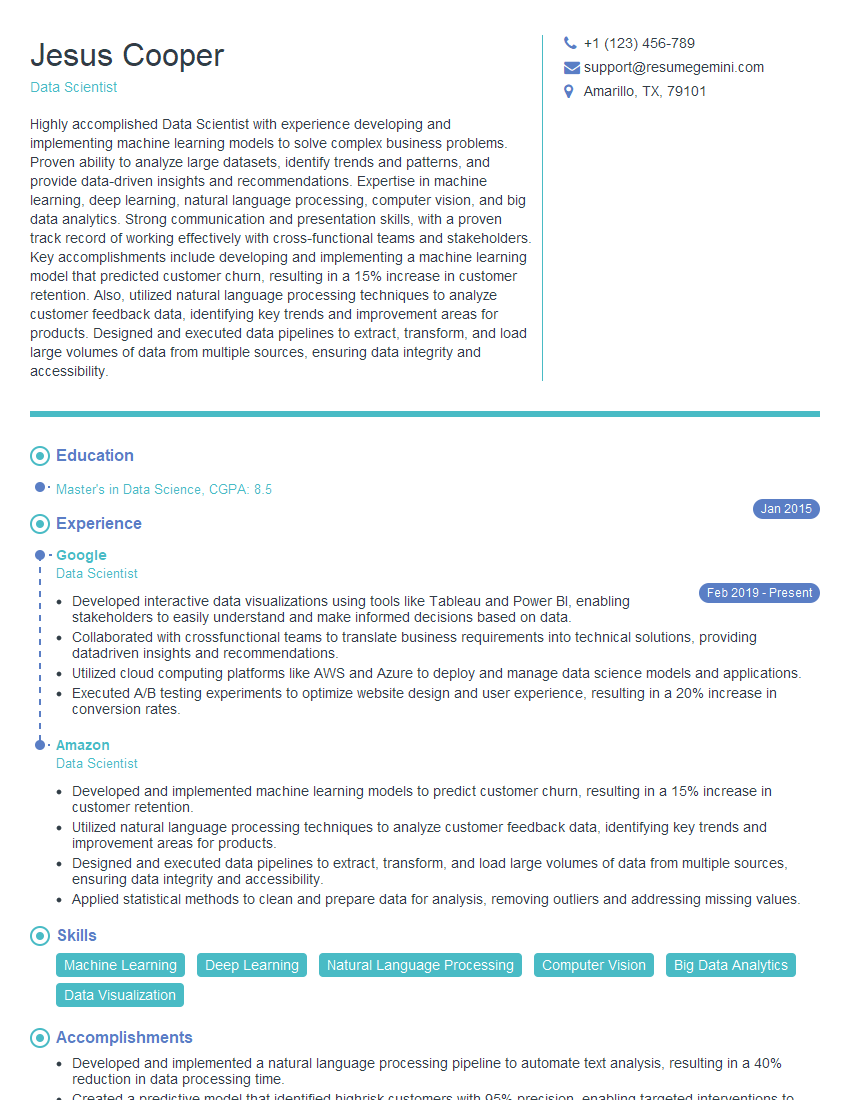
Data Scientist Resume Sample
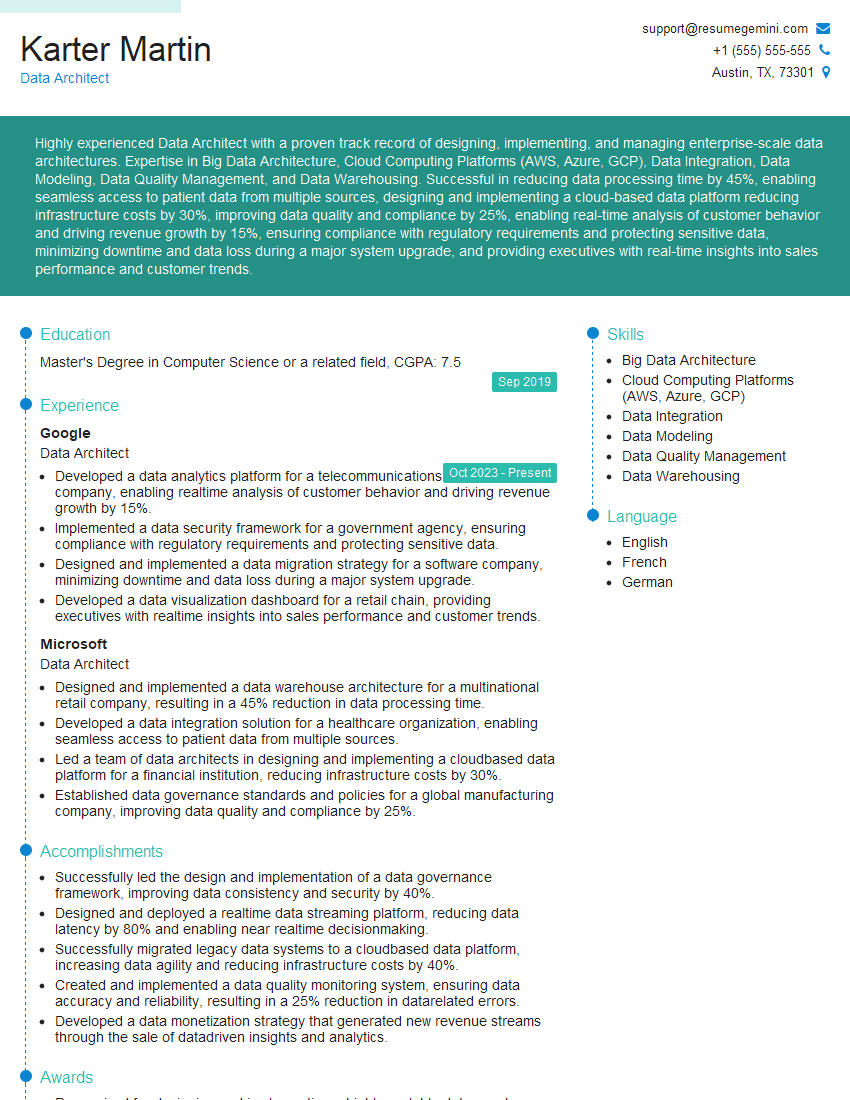
Data Architect Resume Sample
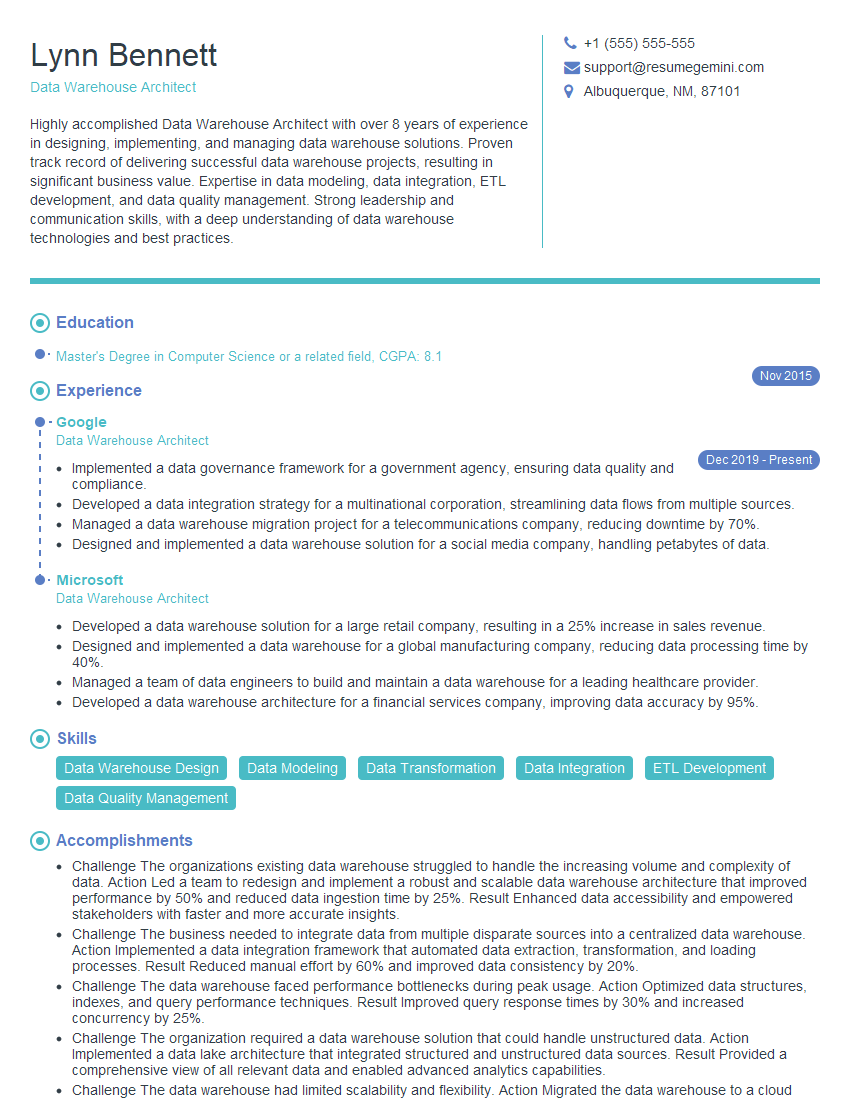
Data Warehouse Architect Resume Sample
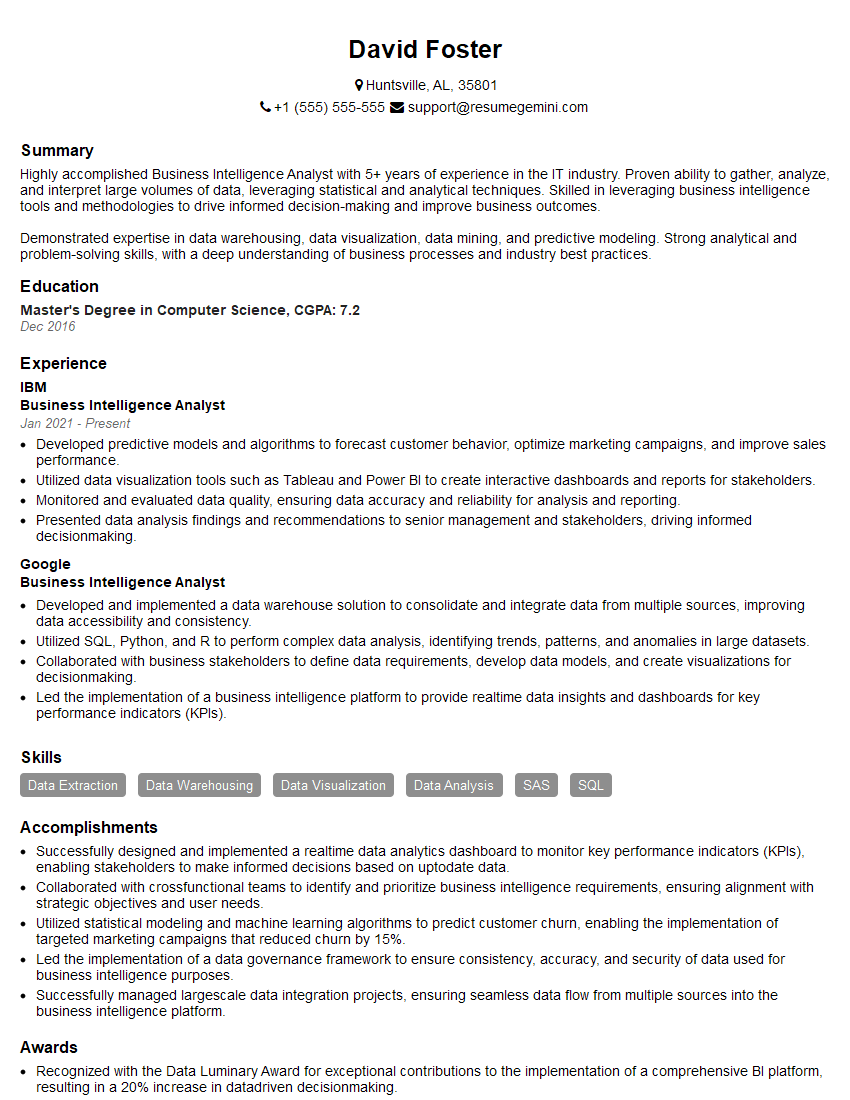
Business Intelligence Analyst Resume Sample
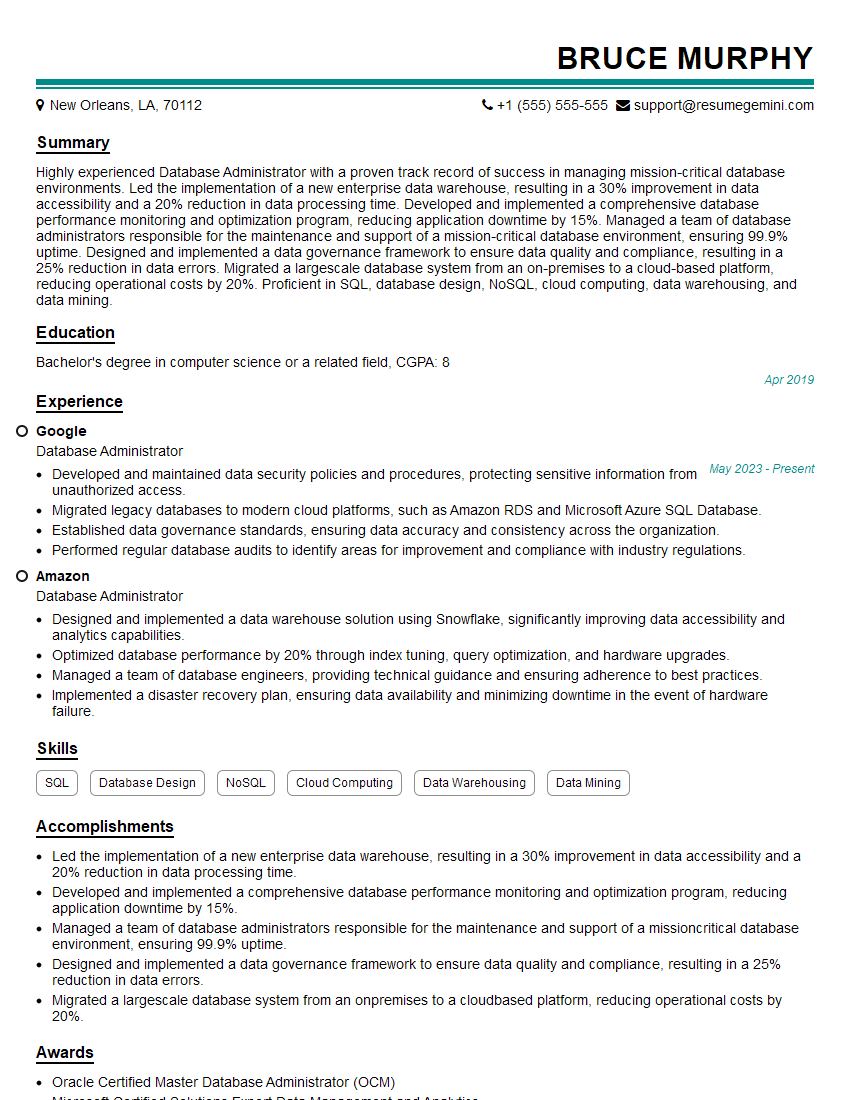
Database Administrator Resume Sample
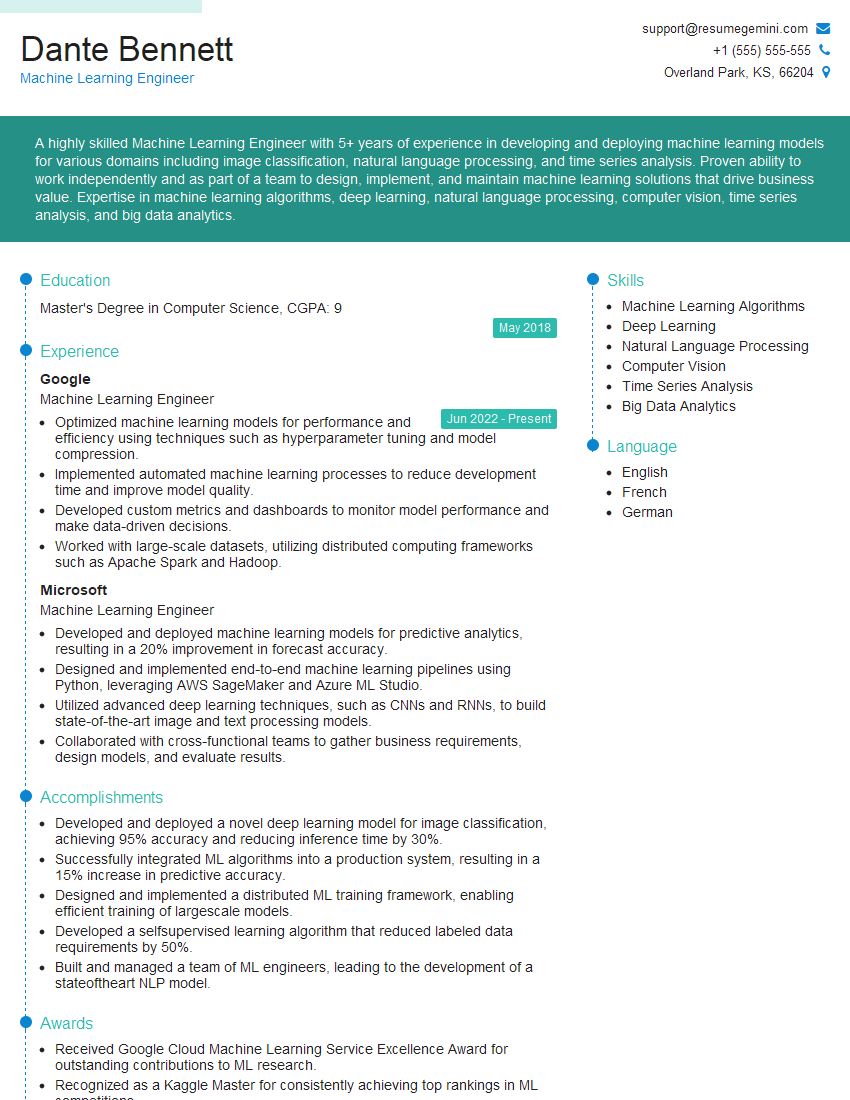
Machine Learning Engineer Resume Sample
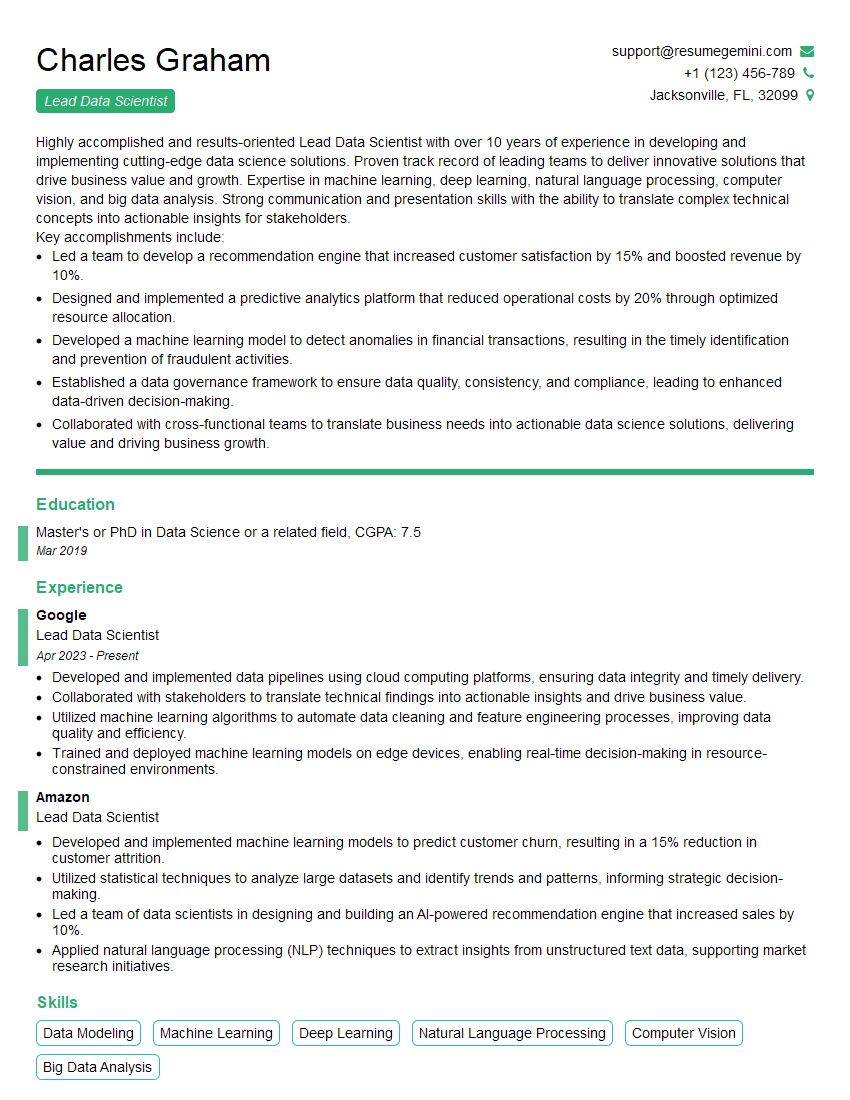
Lead Data Scientist Resume Sample
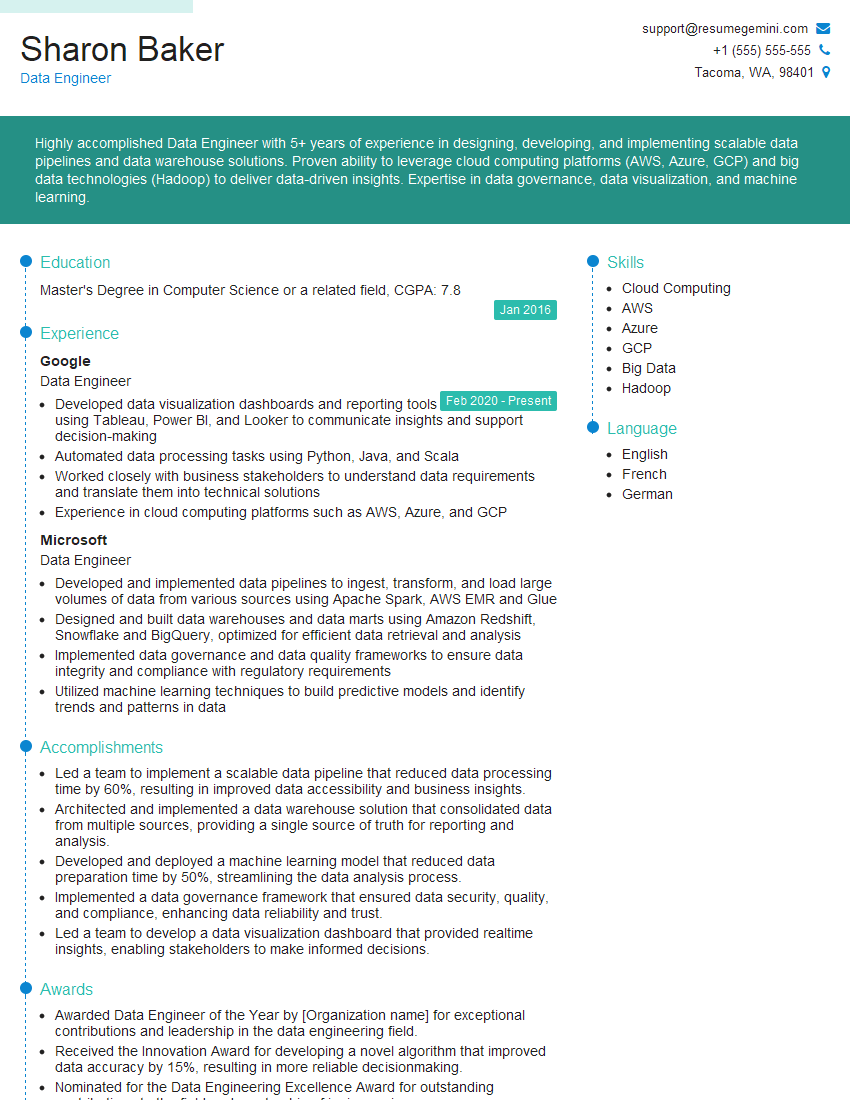
Data Engineer Resume Sample
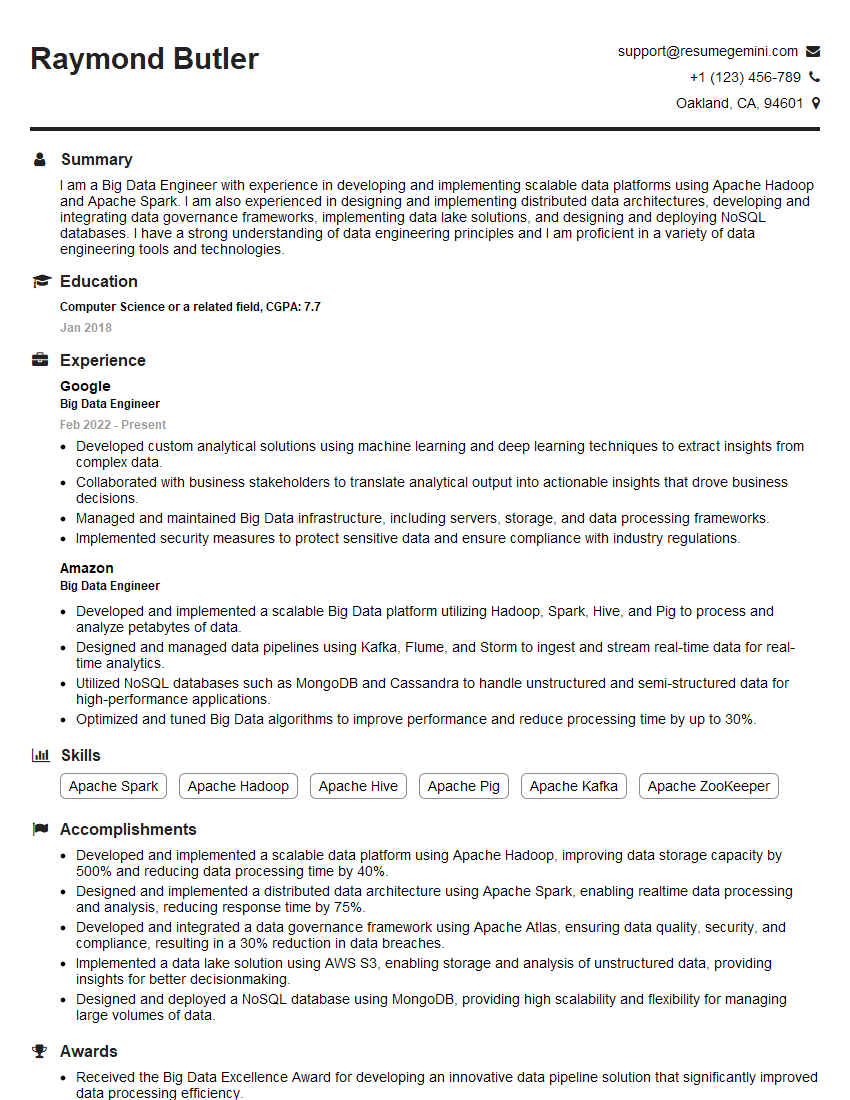
Big Data Engineer Resume Sample
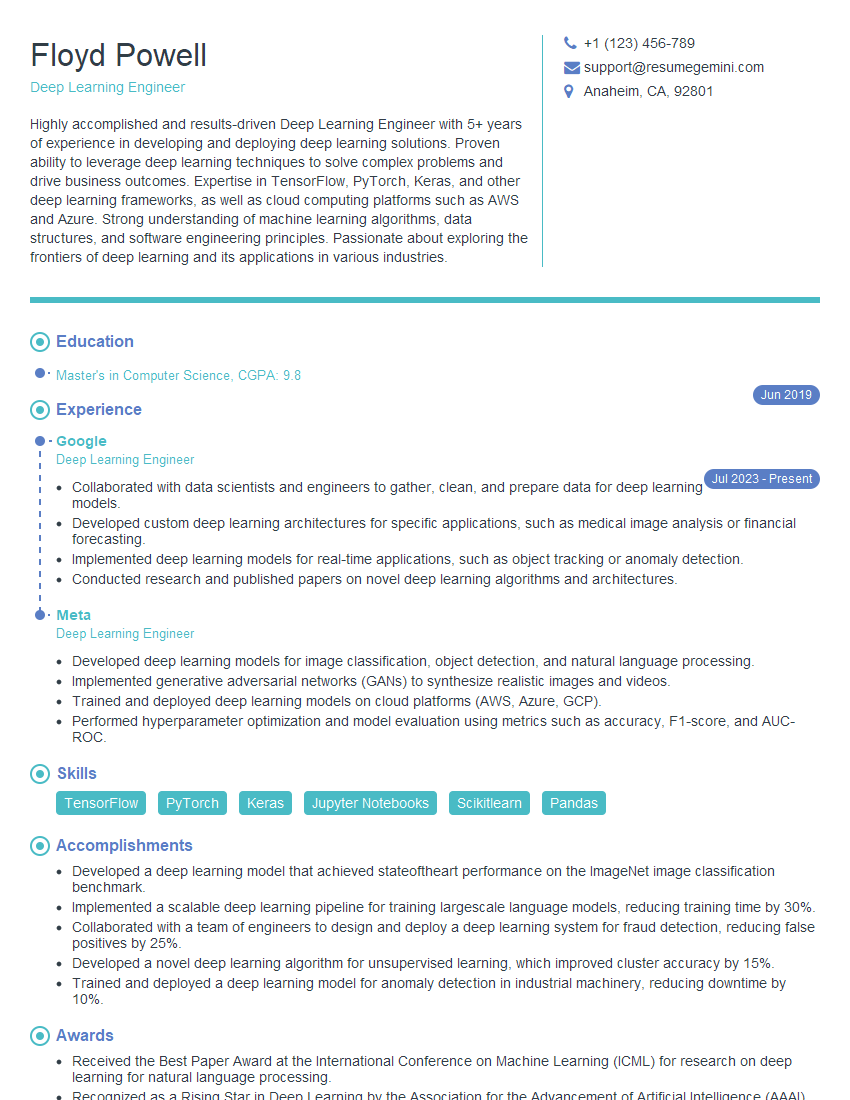
Deep Learning Engineer Resume Sample
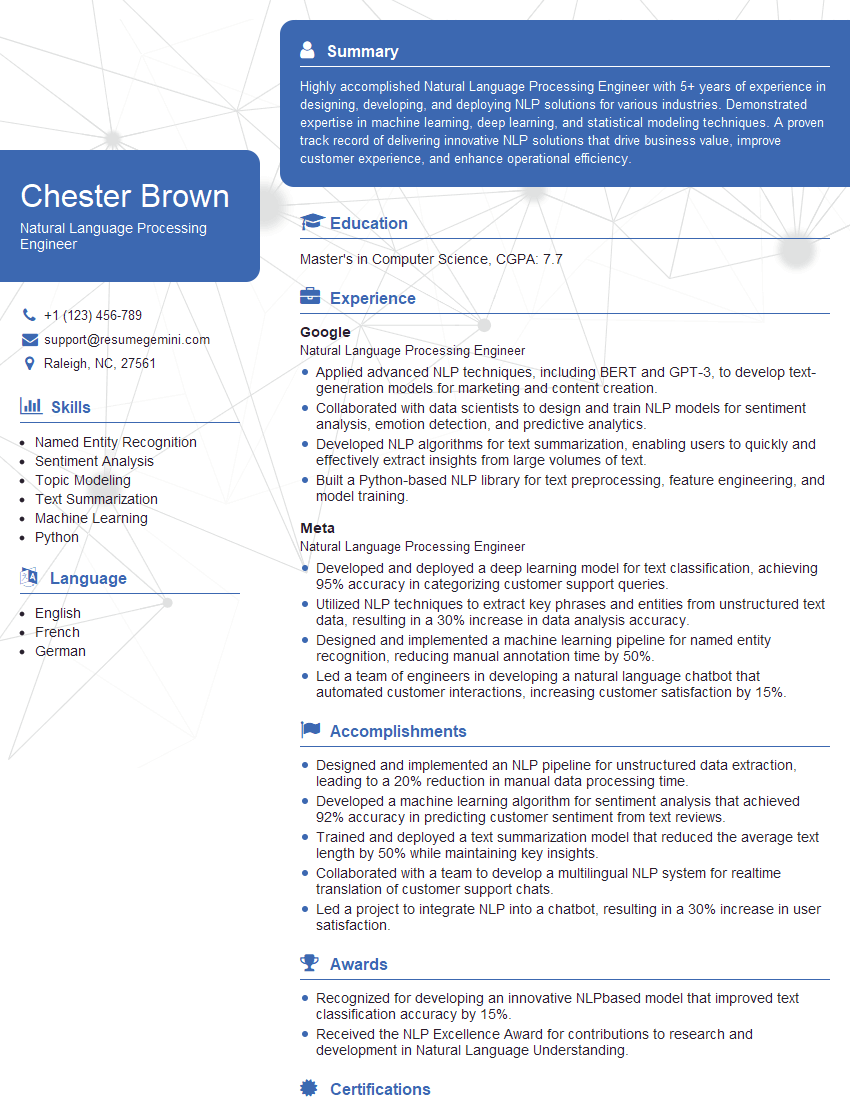
Natural Language Processing Engineer Resume Sample

Computer Vision Engineer Resume Sample
Explore more articles
Users Rating of Our Blogs
Share Your Experience
We value your feedback! Please rate our content and share your thoughts (optional).
What Readers Say About Our Blog
Hello,
we currently offer a complimentary backlink and URL indexing test for search engine optimization professionals.
You can get complimentary indexing credits to test how link discovery works in practice.
No credit card is required and there is no recurring fee.
You can find details here:
https://wikipedia-backlinks.com/indexing/
Regards
NICE RESPONSE TO Q & A
hi
The aim of this message is regarding an unclaimed deposit of a deceased nationale that bears the same name as you. You are not relate to him as there are millions of people answering the names across around the world. But i will use my position to influence the release of the deposit to you for our mutual benefit.
Respond for full details and how to claim the deposit. This is 100% risk free. Send hello to my email id: [email protected]
Luka Chachibaialuka
Hey interviewgemini.com, just wanted to follow up on my last email.
We just launched Call the Monster, an parenting app that lets you summon friendly ‘monsters’ kids actually listen to.
We’re also running a giveaway for everyone who downloads the app. Since it’s brand new, there aren’t many users yet, which means you’ve got a much better chance of winning some great prizes.
You can check it out here: https://bit.ly/callamonsterapp
Or follow us on Instagram: https://www.instagram.com/callamonsterapp
Thanks,
Ryan
CEO – Call the Monster App
Hey interviewgemini.com, I saw your website and love your approach.
I just want this to look like spam email, but want to share something important to you. We just launched Call the Monster, a parenting app that lets you summon friendly ‘monsters’ kids actually listen to.
Parents are loving it for calming chaos before bedtime. Thought you might want to try it: https://bit.ly/callamonsterapp or just follow our fun monster lore on Instagram: https://www.instagram.com/callamonsterapp
Thanks,
Ryan
CEO – Call A Monster APP
To the interviewgemini.com Owner.
Dear interviewgemini.com Webmaster!
Hi interviewgemini.com Webmaster!
Dear interviewgemini.com Webmaster!
excellent
Hello,
We found issues with your domain’s email setup that may be sending your messages to spam or blocking them completely. InboxShield Mini shows you how to fix it in minutes — no tech skills required.
Scan your domain now for details: https://inboxshield-mini.com/
— Adam @ InboxShield Mini
Reply STOP to unsubscribe
Hi, are you owner of interviewgemini.com? What if I told you I could help you find extra time in your schedule, reconnect with leads you didn’t even realize you missed, and bring in more “I want to work with you” conversations, without increasing your ad spend or hiring a full-time employee?
All with a flexible, budget-friendly service that could easily pay for itself. Sounds good?
Would it be nice to jump on a quick 10-minute call so I can show you exactly how we make this work?
Best,
Hapei
Marketing Director
Hey, I know you’re the owner of interviewgemini.com. I’ll be quick.
Fundraising for your business is tough and time-consuming. We make it easier by guaranteeing two private investor meetings each month, for six months. No demos, no pitch events – just direct introductions to active investors matched to your startup.
If youR17;re raising, this could help you build real momentum. Want me to send more info?
Hi, I represent an SEO company that specialises in getting you AI citations and higher rankings on Google. I’d like to offer you a 100% free SEO audit for your website. Would you be interested?
Hi, I represent an SEO company that specialises in getting you AI citations and higher rankings on Google. I’d like to offer you a 100% free SEO audit for your website. Would you be interested?
good