Interviews are opportunities to demonstrate your expertise, and this guide is here to help you shine. Explore the essential Design of Concrete Structures interview questions that employers frequently ask, paired with strategies for crafting responses that set you apart from the competition.
Questions Asked in Design of Concrete Structures Interview
Q 1. Explain the difference between working stress design and limit state design.
Working Stress Design (WSD) and Limit State Design (LSD) are two different approaches to designing concrete structures. WSD, an older method, focuses on preventing the structure from exceeding allowable stresses under service loads. It uses a factor of safety applied to material strengths to account for uncertainties. Think of it like setting a speed limit well below a car’s maximum speed to ensure safety. LSD, the more modern and widely adopted approach, considers various limit states – ultimate limit states (collapse), serviceability limit states (deflection, cracking), and fatigue limit states – to ensure the structure performs adequately throughout its life. It employs partial safety factors for materials, loads, and load combinations to account for uncertainties. Imagine designing a bridge with LSD; you consider not only its strength under maximum weight but also deflection under normal use and its resistance to cracking over time. In essence, WSD is simpler but less refined, while LSD offers a more comprehensive and reliable design.
Q 2. Describe the various types of concrete mixes and their applications.
Concrete mixes are categorized based on their strength, workability, and intended application. Common types include:
- Normal Strength Concrete (NSC): Used in general construction for elements with moderate stress levels, like pavements and foundations. Think of the standard concrete used for sidewalks.
- High-Strength Concrete (HSC): Offers higher compressive strength and durability, suited for high-performance structures like columns in skyscrapers or bridge piers. This allows for slenderer members and increased efficiency.
- High-Performance Concrete (HPC): A broad category encompassing mixes with enhanced properties like high strength, durability, and low permeability. It’s often employed in harsh environments, like marine structures or chemically aggressive conditions. For example, a concrete mix designed to resist seawater corrosion would fall under this category.
- Lightweight Concrete: Contains lightweight aggregates (e.g., expanded clay or shale), resulting in a lower density. It’s beneficial where weight reduction is critical, like in floor slabs or precast elements. Imagine using it in a high-rise building to lessen the overall load on the structure.
- Fiber-Reinforced Concrete (FRC): Incorporates fibers (steel, synthetic) to enhance its tensile strength, fracture toughness, and ductility. It’s particularly useful for preventing crack propagation and increasing impact resistance. Think of applications like pavements subject to heavy traffic or industrial floors.
Q 3. How do you select the appropriate reinforcement for a given concrete member?
Reinforcement selection involves considering several factors. First, you determine the required area of steel based on the design loads and stresses. This is usually determined from structural analysis and code provisions (e.g., ACI 318). Then, you choose the appropriate bar diameter and spacing to achieve that area. Consider the following:
- Strength requirements: The yield strength of the steel must be sufficient to resist the tensile forces. Common grades include Grade 60 and Grade 80.
- Spacing limitations: Codes specify maximum bar spacing to ensure proper concrete cover and effective confinement. The cover is important for corrosion protection.
- Bond characteristics: Ensure adequate bond between steel and concrete to prevent slippage. Hooks or special bar details are used at critical locations, such as ends of beams.
- Placement considerations: The selected bars must be easily placed and congested areas should be avoided.
- Durability: Consider the environment. For corrosive environments, epoxy-coated bars or increased concrete cover may be necessary.
A common design scenario involves calculating the required steel area using internal forces from analysis, and then selecting bar sizes and spacing to meet the requirement while observing code limitations.
Q 4. What are the key considerations for designing a concrete column?
Designing a concrete column involves several crucial considerations:
- Axial Load Capacity: The column must be able to withstand the vertical load applied to it. This includes both dead and live loads. The design process involves checking the column’s strength and stability.
- Slenderness Effects: Tall, slender columns are susceptible to buckling under load. Slenderness ratios need to be checked and potentially addressed through the use of extra reinforcement.
- Confinement: Lateral confinement reinforcement (ties or spirals) is essential for preventing brittle failure and enhancing ductility. The amount and spacing of confinement is dictated by code.
- Material Properties: The compressive strength of the concrete and the yield strength of the reinforcement significantly impact the column’s capacity. Accurate material testing is vital.
- Load Combinations: Design codes specify load combinations (dead load, live load, wind, seismic) to account for various load scenarios. The column must be safe under all plausible combinations.
- Fire Resistance: Depending on the building’s occupancy and fire safety requirements, additional fire protection may be necessary for the column.
Ignoring any of these can lead to structural failure.
Q 5. Explain the concept of cracking and its effects on concrete structures.
Cracking in concrete structures is inevitable due to the material’s low tensile strength. Tensile stresses from loading cause cracks to form, primarily in regions of high tensile stress. The effects of cracking include:
- Reduced stiffness and strength: Cracks reduce the overall load-carrying capacity and stiffness of the member.
- Increased permeability: Cracks allow water and other harmful substances (chlorides, etc.) to penetrate the concrete, potentially leading to corrosion of reinforcement and reduced durability.
- Aesthetic concerns: Visible cracks can be unsightly and affect the appearance of the structure.
- Serviceability issues: Excessive cracking can lead to unacceptable deflections or vibrations.
Effective design and control of cracking is therefore crucial. This involves providing sufficient reinforcement, controlling the concrete’s tensile stresses and using techniques like crack control detailing.
Q 6. How do you design for shear in reinforced concrete beams?
Shear design in reinforced concrete beams involves ensuring the beam can resist shear forces without failure. Shear failure can be brittle and catastrophic. The design process generally includes:
- Shear Capacity Calculation: Determining the beam’s nominal shear capacity considering concrete strength and reinforcement contribution. Codes provide formulas for this.
- Shear Reinforcement Design: If the calculated shear demand exceeds the concrete’s capacity, shear reinforcement (stirrups) must be provided to increase the shear strength. Stirrup spacing and size are determined to satisfy code requirements.
- Shear Stress Check: Verifying that the shear stresses in the concrete are within acceptable limits, even with shear reinforcement.
- Check for Shear Failure Modes: Ensuring the design prevents both brittle shear failure (diagonal tension cracking) and shear-compression failure.
It’s critical to use appropriate equations and procedures from design codes (like ACI 318) to ensure a safe and reliable design.
Q 7. Describe the different types of concrete failure modes.
Concrete structures can fail in various modes, depending on the loading and design:
- Flexural Failure: Failure due to bending moments, often characterized by tensile cracking in the concrete followed by yielding and fracture of the reinforcement.
- Shear Failure: Failure due to shear forces, resulting in diagonal tension cracks and eventual collapse. This can be brittle.
- Compression Failure: Failure due to excessive compressive stresses, leading to crushing of the concrete. This is more common in columns.
- Bond Failure: Failure due to the lack of sufficient bond between the reinforcement and the concrete. This leads to slip of the reinforcement within the concrete.
- Torsional Failure: Failure due to torsional moments, often accompanied by diagonal cracking. This is important in members subjected to twisting loads.
- Buckling Failure: Failure of slender columns due to instability under compression.
Understanding these failure modes helps engineers design robust and safe structures by ensuring that the design resists all potential failure mechanisms.
Q 8. What are the factors affecting the durability of concrete structures?
The durability of concrete structures, their ability to resist deterioration over time, is influenced by a complex interplay of factors. Think of it like building a house – you need strong materials, a good design, and proper maintenance to ensure longevity. Similarly, concrete’s lifespan depends on several key elements:
- Material Properties: The quality of cement, aggregates (sand, gravel), and water profoundly affects the concrete’s strength, porosity, and resistance to chemical attack. Using low-quality materials is like using weak bricks in your house; the structure will be vulnerable.
- Environmental Exposure: Harsh weather conditions such as freeze-thaw cycles (water freezing and expanding within the pores), de-icing salts, and exposure to aggressive chemicals (like sulfates in soil) significantly impact durability. Imagine coastal structures battling constant salt spray – they need extra protection.
- Design and Construction Practices: Proper mix design, adequate compaction during placement, and appropriate curing procedures are crucial. Poor compaction leaves voids, making the concrete weaker and more susceptible to damage. It’s like leaving gaps in your house’s foundation.
- Protection Measures: Applying surface treatments like coatings, sealants, or waterproofing membranes can significantly extend the life of concrete structures, particularly in aggressive environments. This is like adding a protective layer to your house’s exterior to prevent damage from rain and sun.
- Maintenance and Repair: Regular inspection and timely repair of cracks or damage are essential for preventing further deterioration. Ignoring small cracks is like ignoring a small leak in your roof – it will eventually cause significant damage.
Understanding and addressing these factors is key to designing durable and long-lasting concrete structures.
Q 9. How do you design for seismic loads in concrete structures?
Designing for seismic loads involves ensuring a structure can withstand earthquake forces without collapsing. This requires a thorough understanding of seismic design principles and the use of appropriate techniques. Imagine designing a building in an earthquake-prone area – it needs to be flexible and strong to resist the shaking.
- Seismic Analysis: We perform detailed analysis to determine the forces acting on the structure during an earthquake. This involves considering factors like the ground motion, building’s characteristics, and soil conditions.
- Ductile Design: The design emphasizes ductility – the ability of the structure to deform significantly without fracturing. This allows the structure to absorb earthquake energy and prevent brittle failure. We use reinforced concrete because of its inherent ductility.
- Strengthening Techniques: Techniques like shear walls, moment-resisting frames, and base isolation are employed to enhance the structure’s seismic resistance. Shear walls are like strong internal bracing, providing stability against lateral forces.
- Detailing for Confinement: Careful detailing of reinforcement, especially in columns and beams, is critical to ensure proper confinement of concrete and prevent shear failure. This involves providing sufficient transverse reinforcement to prevent the concrete from crushing under stress.
- Code Compliance: Designs must adhere to relevant seismic design codes and standards, which specify minimum requirements for seismic resistance based on the location’s seismic hazard.
Seismic design is not a simple matter; it’s a complex process requiring specialized knowledge and software. The goal is to ensure that the structure not only survives the earthquake but also remains functional afterward.
Q 10. Explain the importance of detailing in reinforced concrete design.
Detailing in reinforced concrete design refers to the precise specification of reinforcement placement, dimensions, and spacing. It’s the crucial link between the design calculations and the final constructed element. Think of it as a highly detailed architectural blueprint, but for the reinforcement within the concrete.
- Preventing Crack Formation: Proper detailing minimizes crack widths and prevents excessive cracking, which affects the structure’s aesthetics and durability. Consider a poorly detailed beam – it might crack excessively under load.
- Ensuring Structural Integrity: Accurate detailing ensures that the reinforcement effectively resists the anticipated forces, preventing failure. Poor detailing can lead to premature failure of the structure.
- Controlling Bond Stress: Detailing ensures proper anchorage of the reinforcement within the concrete, preventing bond failures. This is achieved by using proper hook details and lap lengths.
- Simplifying Construction: Clear and concise detailing simplifies construction and reduces the chances of errors on site. Ambiguous drawings lead to confusion and mistakes during construction.
- Meeting Code Requirements: Detailing must comply with relevant codes and standards, ensuring the structure meets minimum safety requirements. This often involves minimum reinforcement ratios and spacing requirements.
Effective detailing is not merely about satisfying minimum code requirements. It’s about creating a structurally sound and durable concrete element.
Q 11. What are the advantages and disadvantages of using pre-stressed concrete?
Prestressed concrete involves introducing internal compressive stresses into concrete members before applying external loads. Imagine stretching a rubber band before hanging a weight; it can hold more weight without breaking. Prestressed concrete similarly increases its load-carrying capacity.
- Advantages:
- Increased Strength and Span: Prestressed concrete allows for longer spans and higher loads compared to conventional reinforced concrete.
- Reduced Deflections: The prestressing force minimizes deflections under load, resulting in a stiffer and more stable structure.
- Improved Crack Control: The initial compression prevents or reduces cracking under service loads, improving durability.
- Lightweight Construction: For certain applications, prestressed concrete can result in lighter members.
- Disadvantages:
- Higher Initial Cost: Prestressed concrete involves specialized equipment and techniques, leading to higher initial costs compared to conventional reinforced concrete.
- Complex Design and Construction: The design and construction of prestressed concrete structures are more complex and require specialized expertise.
- Potential for Tendon Failure: Although rare, failure of the prestressing tendons can have catastrophic consequences.
- Susceptibility to Corrosion: Unprotected prestressing tendons are susceptible to corrosion, requiring careful protection.
The decision of whether to use prestressed concrete depends on several factors, including cost, structural requirements, and environmental considerations.
Q 12. How do you check for serviceability limit states in a concrete design?
Serviceability limit states refer to conditions under which a structure may not perform its intended function satisfactorily, even if it doesn’t collapse. Think of a floor that deflects too much under load, making it uncomfortable or even unsafe to walk on. This isn’t a structural failure but still needs to be addressed.
- Deflection: Checking for excessive deflection of beams and slabs under service loads. Excessive deflection can affect the aesthetic appearance and functionality of the structure.
- Crack Widths: Controlling crack widths to prevent damage to the structure’s appearance and durability. Excessive cracking can lead to corrosion of reinforcement.
- Vibration: Ensuring that vibrations from service loads are within acceptable limits. Excessive vibrations can be uncomfortable or even damaging to the structure.
- Appearance: Checking the overall aesthetic appearance of the structure, including crack widths and deflection. Unacceptable appearance may affect the value of the structure.
We use various methods like analysis and calculation to verify that our designs meet serviceability requirements. Codes and standards provide guidance and limitations on acceptable levels of deflection and crack widths.
Q 13. What are the common defects found in concrete structures, and how are they addressed?
Concrete structures can suffer from various defects, many stemming from poor design, construction, or material quality. Imagine a house built with weak foundations – it’s prone to problems.
- Cracking: Cracks can result from shrinkage, temperature changes, overloading, or poor detailing. Repair methods range from simple surface patching to more complex crack injection techniques.
- Corrosion of Reinforcement: Chlorides from de-icing salts or seawater can penetrate concrete and cause reinforcement corrosion, expanding cracks and weakening the structure. Repair might involve cathodic protection or replacement of corroded reinforcement.
- Spalling: This is the detachment of concrete from the surface, often caused by freeze-thaw cycles or alkali-aggregate reaction. Repair involves removing the spalled concrete and replacing it with new concrete.
- Honeycombing: Voids or porous areas within the concrete, often due to inadequate compaction during placement. Repair is usually not feasible and requires replacement of the affected areas.
- Efflorescence: White deposits of salts on the concrete surface, resulting from moisture migration and evaporation. This is generally cosmetic and can be addressed by cleaning.
Addressing defects requires a thorough investigation to determine the cause and selection of appropriate repair techniques. This often involves professional assessment and specialist contractors.
Q 14. Explain the different types of concrete testing.
Concrete testing is vital to ensure quality and performance. It’s like quality control in any manufacturing process – ensuring the product meets specifications.
- Compressive Strength Test: This is the most common test, determining the concrete’s resistance to crushing loads. Cylindrical or cubic specimens are tested to determine the strength at a specific age (e.g., 28 days).
- Flexural Strength Test: This test measures the concrete’s resistance to bending forces, often used for evaluating precast concrete elements.
- Slump Test: This test measures the consistency or workability of fresh concrete. A slump cone is used to assess the slump, indicating how easily the concrete can be placed and compacted.
- Air Content Test: Determining the amount of air entrained in the concrete, which affects its durability and resistance to freeze-thaw cycles.
- Durability Tests: These tests evaluate the concrete’s resistance to various environmental factors, including freeze-thaw cycles, sulfate attack, and chloride penetration.
- Non-Destructive Testing (NDT): Methods like ultrasonic pulse velocity, rebound hammer, and cover meter are used to evaluate the concrete’s quality and detect internal defects without damaging the structure.
Different testing methods are used at various stages of the project, from material testing at the plant to in-situ testing on the completed structure. This ensures the overall quality and durability of the concrete work.
Q 15. Describe the use of finite element analysis in concrete design.
Finite Element Analysis (FEA) is a powerful computational tool revolutionizing concrete design. Instead of relying solely on simplified formulas, FEA breaks down a structure into numerous smaller elements, allowing for a more accurate prediction of stress and strain distribution under various loading conditions. This is particularly useful for complex geometries, non-linear material behavior (like concrete cracking), and intricate loading scenarios.
For instance, imagine designing a complex bridge pier. Traditional methods might oversimplify the stress concentrations near the supports. FEA, however, allows us to model the exact geometry, including rebar placement, and analyze the stress distribution with much greater precision. This leads to more efficient designs and prevents potential failures. We can simulate different loading scenarios (dead load, live load, seismic activity) and optimize the design to meet safety and serviceability requirements.
FEA software considers concrete’s non-linear behavior, including cracking and crushing, resulting in a more realistic representation of the structural response. It’s essential to remember that FEA results are only as good as the input data and the chosen model. Experienced engineers must carefully validate the results and understand the limitations of the analysis.
Career Expert Tips:
- Ace those interviews! Prepare effectively by reviewing the Top 50 Most Common Interview Questions on ResumeGemini.
- Navigate your job search with confidence! Explore a wide range of Career Tips on ResumeGemini. Learn about common challenges and recommendations to overcome them.
- Craft the perfect resume! Master the Art of Resume Writing with ResumeGemini’s guide. Showcase your unique qualifications and achievements effectively.
- Don’t miss out on holiday savings! Build your dream resume with ResumeGemini’s ATS optimized templates.
Q 16. How do you design a concrete footing for a given column load?
Designing a concrete footing involves ensuring it can safely support a column load without excessive settlement or failure. The process generally includes these steps:
- Determine the column load: This includes dead load (weight of the column and supported structure) and live load (occupancy, equipment, etc.).
- Select the footing type: Common types include square, rectangular, and circular footings. The choice depends on the column load, soil conditions, and available space.
- Calculate the required footing area: This is done by dividing the total column load by the allowable bearing pressure of the soil. Allowable bearing pressure is determined from soil investigation reports.
- Determine the footing dimensions: Based on the required area, choose appropriate dimensions, often aiming for a square or nearly square shape for better load distribution. Consider factors such as constructability and available space.
- Design the reinforcement: Calculate the required reinforcement area to resist shear and bending moments. This involves using appropriate design codes (e.g., ACI 318) and considering factors like concrete strength and steel yield strength.
- Detail the reinforcement: Provide detailed drawings showing the placement and size of reinforcement bars, including bending schedules.
Example: Let’s say a column load is 1000 kN, and the allowable soil bearing pressure is 200 kPa. The required footing area would be 1000 kN / 200 kPa = 5 m². A 2.24m x 2.24m square footing would suffice. The next step would be to design the reinforcement to handle the bending moment and shear forces generated by the column load.
Q 17. How do you handle shrinkage and creep effects in concrete design?
Shrinkage and creep are time-dependent phenomena affecting concrete’s behavior. Shrinkage is the reduction in volume due to moisture loss, while creep is the gradual increase in strain under sustained stress. These effects can cause significant deformations and cracking if not properly accounted for.
Handling Shrinkage: We can mitigate shrinkage by:
- Using low-shrinkage concrete mixes: This involves carefully selecting the mix proportions and using admixtures that reduce shrinkage.
- Providing adequate curing: Proper curing helps retain moisture and minimize shrinkage.
- Employing shrinkage-reducing admixtures: These chemical additives decrease the volume change during drying.
- Designing for cracking: Incorporating sufficient reinforcement helps control crack width and prevent excessive cracking.
Handling Creep: Creep is addressed by:
- Using creep coefficients: These factors, derived from experimental data or codes, account for the long-term strain increase due to creep. This allows engineers to estimate the long-term deflections and stresses.
- Using high-strength concrete: High-strength concrete exhibits lower creep than lower-strength concrete.
- Proper analysis methods: Time-dependent analysis methods, often incorporated into FEA, accurately consider creep effects.
Ignoring shrinkage and creep can lead to significant discrepancies between predicted and actual behavior, potentially causing cracking and structural issues.
Q 18. Explain the design considerations for concrete in aggressive environments.
Designing concrete for aggressive environments requires special considerations to ensure its durability and longevity. Aggressive environments include those with exposure to de-icing salts, seawater, acidic soils, or industrial chemicals. The key aspects are:
- Selecting durable concrete mix: This involves using low water-cement ratio, high-strength cement, and appropriate admixtures to enhance resistance to chemical attack.
- Using protective coatings or linings: Coatings like epoxy or polyurethane can provide a barrier against aggressive substances.
- Employing corrosion inhibitors: These admixtures help reduce the corrosion rate of embedded steel reinforcement.
- Choosing suitable aggregates: Aggregates should be resistant to chemical attack and freezing-thawing cycles.
- Detailed design for drainage: Proper drainage prevents water ponding and reduces exposure to aggressive substances.
- Considering detailing for reinforcement: Sufficient concrete cover is crucial to protect reinforcement from corrosion. Overlapping rebar needs special attention to avoid corrosion cells.
Example: A marine structure would require a high-cement concrete mix with a low water-cement ratio, corrosion inhibitors, and possibly a protective coating to resist the aggressive action of seawater and chlorides.
Q 19. What are the different types of concrete admixtures and their uses?
Concrete admixtures are chemical additives that modify the properties of concrete. Common types include:
- Accelerators: Speed up the setting and hardening process, useful in cold weather or for faster construction.
- Retarders: Slow down the setting process, allowing more time for placement and finishing, especially beneficial in hot weather.
- Water reducers (superplasticizers): Increase workability without increasing water content, leading to higher strength and durability.
- Air-entraining admixtures: Introduce tiny air bubbles, improving resistance to freezing and thawing cycles and enhancing workability.
- Shrinkage-reducing admixtures: Minimize shrinkage cracking.
- Corrosion inhibitors: Reduce the corrosion rate of steel reinforcement.
- Pozzolans: Supplementary cementitious materials that enhance durability and reduce permeability.
The choice of admixture depends on the specific requirements of the project. For example, a superplasticizer would be used to improve workability in congested reinforcement areas, while an air-entraining admixture would be important in regions experiencing freeze-thaw cycles.
Q 20. How do you determine the effective depth of a reinforced concrete beam?
The effective depth (d) of a reinforced concrete beam is the distance from the extreme compression fiber to the centroid of the tensile reinforcement. It’s a critical parameter in beam design because it determines the lever arm of the internal forces and influences the moment capacity.
Determining d involves measuring from the top of the concrete section to the centroid of the tensile steel. The centroid of the steel is found by considering the area of each layer of steel and its location from the top. The concrete cover, diameter of the rebar, and the spacing of the bars all contribute to the calculation. For multiple layers of reinforcement, a weighted average is necessary. Design codes generally specify minimum concrete cover requirements based on the exposure environment.
Example: Consider a beam with 50mm concrete cover, 20mm diameter bars, and only one layer of rebar. The effective depth would be: d = Concrete Cover + Diameter of bar/2 = 50mm + 20mm/2 = 60mm. In reality, with multiple layers and potentially different diameter bars, the calculation becomes more involved and often requires the assistance of engineering software.
Q 21. Explain the concept of moment redistribution in concrete design.
Moment redistribution is a concept in concrete design that allows for a more efficient use of materials by acknowledging the concrete’s ability to redistribute moments after cracking. In elastic design, we assume a linear relationship between stress and strain. However, concrete’s behavior is non-linear, especially after cracking. Once cracking occurs in a section, the tensile stresses are redistributed to the adjacent sections through the compression zone and the reinforcement.
Design codes provide specific guidelines for moment redistribution, typically allowing a reduction in negative moments in continuous beams. This reduction is limited to prevent excessive cracking or yielding of reinforcement. The amount of redistribution allowed depends on the ductility of the section and the level of reinforcement. This redistribution enables more economical designs by potentially reducing the required reinforcement in the negative moment regions.
Example: In a continuous beam, negative moments usually occur at supports. After cracking, some of this moment can be transferred to the positive moment regions, allowing us to use slightly less reinforcement at the support regions. However, this process must be carefully controlled to ensure the structure remains safe and serviceable. The redistribution is restricted and should always be performed within the limits specified by design codes. Software tools assist engineers in this process, validating the redistribution and ensuring safe design limits aren’t exceeded.
Q 22. What are the different methods for estimating the ultimate strength of concrete?
Estimating the ultimate strength of concrete involves predicting its resistance to failure under load. Several methods exist, each with its own strengths and limitations. These methods primarily rely on the compressive strength of the concrete, determined through standardized cylinder tests.
- Empirical Methods: These methods utilize simplified equations based on experimental data, relating the compressive strength (typically denoted as f’c) to the ultimate strength in different failure modes. For example, a simple estimation for a beam’s ultimate moment capacity might use a formula based on the concrete’s compressive strength and the section dimensions. This approach is quick but less accurate for complex geometries.
- Code-Based Methods: Building codes (like ACI 318 or Eurocode 2) provide detailed procedures and design equations that incorporate safety factors and consider various failure mechanisms. These methods account for factors like material properties, geometry, and load distribution, providing a more reliable estimation. The code-based design usually involves calculating design strengths (reduced from ultimate strength) to account for uncertainty.
- Finite Element Analysis (FEA): For intricate geometries or complex loading scenarios, FEA is employed. This numerical method models the concrete structure and applies the loads to predict its behavior under various conditions. FEA can provide a highly detailed analysis but is more computationally intensive and requires specialized software.
The choice of method depends on the project’s complexity, the level of accuracy required, and available resources. For simple elements, empirical methods or code-based calculations suffice, while complex structures often necessitate FEA.
Q 23. How do you ensure the compatibility of concrete with other materials?
Ensuring compatibility between concrete and other materials is crucial for the structural integrity and durability of the whole system. It involves considering several factors:
- Material Properties: The thermal expansion coefficients, moisture absorption characteristics, and chemical compatibility should be compatible. For example, using incompatible materials might lead to cracking due to differential movement under temperature changes or moisture variations.
- Bond Strength: In reinforced concrete, the bond between concrete and steel is vital. The steel should have a sufficient bond strength to transfer tensile forces effectively. The type of reinforcement (e.g., deformed bars) significantly influences this bond.
- Interface Treatment: In some cases, specialized treatments are necessary to enhance the compatibility, such as using epoxy coatings to improve adhesion between concrete and other materials, or interlayers to handle thermal expansion mismatches.
- Construction Practices: Proper construction practices are essential. For instance, ensuring a clean surface before concreting and proper curing are crucial for good adhesion.
For instance, when incorporating precast concrete elements into a cast-in-place structure, ensuring proper surface preparation and adequate grout placement is critical to achieving good structural connectivity and preventing cracking at the interface.
Q 24. What is the significance of cover thickness in reinforced concrete members?
Cover thickness in reinforced concrete members refers to the minimum distance between the surface of the concrete and the nearest reinforcement. It’s of paramount importance for several reasons:
- Corrosion Protection: The cover protects steel reinforcement from the environment (air and moisture), significantly reducing the risk of corrosion. Chloride ions, present in de-icing salts and sea air, are particularly aggressive in promoting corrosion.
- Fire Resistance: The cover acts as a thermal barrier, delaying the increase in temperature of the reinforcement during a fire, thereby enhancing fire resistance. Thicker cover increases the fire-resistance rating of the member.
- Durability: Adequate cover reduces the likelihood of surface cracking and spalling due to freeze-thaw cycles, alkali-aggregate reactions, or other environmental factors.
- Bond and Stress Transfer: Sufficient cover is also required for effective bond between the concrete and steel, permitting stress transfer between the two materials.
Building codes specify minimum cover thicknesses based on the environment’s aggressiveness and the reinforcement’s diameter. For example, structures exposed to severe environmental conditions typically require thicker cover than those in mild environments.
Q 25. Explain the concept of bond strength between concrete and steel reinforcement.
Bond strength describes the capacity of the interface between concrete and steel reinforcement to transfer tensile forces. It’s primarily achieved through mechanical interlock and chemical adhesion.
- Mechanical Interlock: Deformed bars (rebar) with ribs and lugs create a mechanical grip with the surrounding concrete, resisting tensile forces by preventing slippage. The concrete flows into the bar’s deformations, creating a mechanical bond.
- Chemical Adhesion: A chemical bond is formed between the steel and the cement paste, further enhancing the interface’s strength. This bond is weaker than the mechanical interlock but adds to the overall strength.
Several factors influence bond strength, including concrete strength, rebar diameter, and the type of bar deformations. Poor bond can lead to premature failure of the reinforced concrete member, a situation that can manifest as bar pullout or splitting of the concrete.
Proper detailing, such as using sufficient anchorage length or employing hooks at bar ends, is essential to guarantee adequate bond strength and prevent premature failure.
Q 26. How do you design a concrete slab for a given loading condition?
Designing a concrete slab involves a step-by-step process, considering loads, material properties, and serviceability requirements.
- Determine Loads: Identify all loads acting on the slab, including dead loads (self-weight, finishes), live loads (occupancy loads, snow load), and any other relevant loads (wind, seismic).
- Choose Material Properties: Specify the concrete strength (f’c) and the yield strength of the reinforcement (fy).
- Select Slab Type: Choose the appropriate slab type: one-way, two-way, or waffle slab, depending on the span and support conditions.
- Perform Structural Analysis: Analyze the slab’s behavior under load using appropriate methods, like moment distribution or finite element analysis. This determines the bending moments and shear forces.
- Design for Bending and Shear: Design the slab’s thickness and reinforcement based on the calculated bending moments and shear forces, ensuring adequate strength and ductility.
- Check Deflections: Verify that the calculated deflections are within acceptable limits to prevent excessive sagging and serviceability issues.
- Detailing: Draw detailed reinforcement drawings, specifying bar sizes, spacing, and placement.
- Check Crack Width: Ensure that the predicted crack widths comply with code requirements to maintain durability and aesthetics.
Software such as SAP2000 or ETABS can simplify the analysis and design process, particularly for complex slab geometries.
Example: For a simple one-way slab spanning 4 meters, you might use simplified design equations based on the ultimate moment capacity and uniformly distributed load to determine the required reinforcement.
Q 27. Describe your experience with different concrete design software.
I have extensive experience using various concrete design software packages, including:
- SAP2000: A powerful, widely used software for structural analysis and design, capable of handling complex models and nonlinear analyses.
- ETABS: Another comprehensive structural analysis and design program, particularly well-suited for building analysis, including concrete structures.
- Autodesk Robot Structural Analysis: A robust software that combines analytical tools with visualization capabilities, aiding in the design and analysis of concrete structures.
- RISA-3D: A user-friendly software often used for the analysis and design of concrete structures, particularly suitable for smaller to mid-size projects.
My experience includes model creation, analysis, design optimization, and report generation using these software packages. I’m proficient in utilizing their advanced features, such as nonlinear analysis, dynamic analysis, and code-checking capabilities. I am also comfortable working with spreadsheets and custom scripts to streamline the design process.
Q 28. What are your strategies for managing complex concrete design projects?
Managing complex concrete design projects requires a systematic and organized approach. My strategies include:
- Detailed Project Planning: A comprehensive project plan with clear milestones, deadlines, and responsibilities ensures effective project execution. This includes a thorough breakdown of tasks and resource allocation.
- Team Collaboration: Effective communication and teamwork are essential, involving architects, structural engineers, contractors, and other stakeholders. Regular meetings and progress reviews enhance collaboration.
- Risk Management: Identifying and mitigating potential risks, such as unforeseen site conditions or material shortages, is crucial for project success. Implementing contingency plans helps manage uncertainties.
- Quality Control: Implementing stringent quality control measures throughout the design and construction phases ensures compliance with standards and design specifications. This includes regular inspections and review of design calculations.
- Software and Technology Utilization: Leveraging advanced software and technologies, including BIM (Building Information Modeling), simplifies the design process and improves accuracy. BIM enhances communication and coordination amongst design team members.
- Continuous Learning: Staying updated with the latest advancements in concrete technology, design standards, and software enhances my ability to tackle complex projects efficiently and effectively.
A recent project involved the design of a complex multi-story parking structure. Effective project planning, a well-coordinated team, and regular progress reviews were crucial for successfully completing this challenging project on time and within budget.
Key Topics to Learn for Design of Concrete Structures Interview
- Basic Properties of Concrete: Understanding compressive strength, tensile strength, modulus of elasticity, creep, and shrinkage is fundamental. This forms the basis for all design calculations.
- Design Codes and Standards: Familiarity with relevant building codes (e.g., ACI 318) and their application in practical design scenarios is crucial. Knowing how to interpret and apply these codes is essential.
- Reinforced Concrete Design Principles: Mastering the concepts of flexural, shear, and torsion design, including the design of beams, columns, and slabs. This includes understanding stress-strain relationships and the behavior of reinforced concrete members under load.
- Analysis Methods: Understanding various methods of structural analysis, including working stress design, ultimate strength design, and limit state design, is vital for accurate and safe designs.
- Practical Applications: Be prepared to discuss real-world examples of concrete structure design, including considerations for detailing, construction practices, and potential failure modes. Thinking about how theory translates to practical application is key.
- Advanced Topics (for Senior Roles): Depending on the seniority of the position, you may need to delve into topics such as prestressed concrete design, seismic design, durability design, and finite element analysis. This demonstrates a deeper understanding and expertise.
- Problem-Solving Approach: Practice solving design problems systematically. Demonstrate your ability to break down complex problems, identify critical parameters, and arrive at practical solutions. This is often more important than memorizing specific formulas.
Next Steps
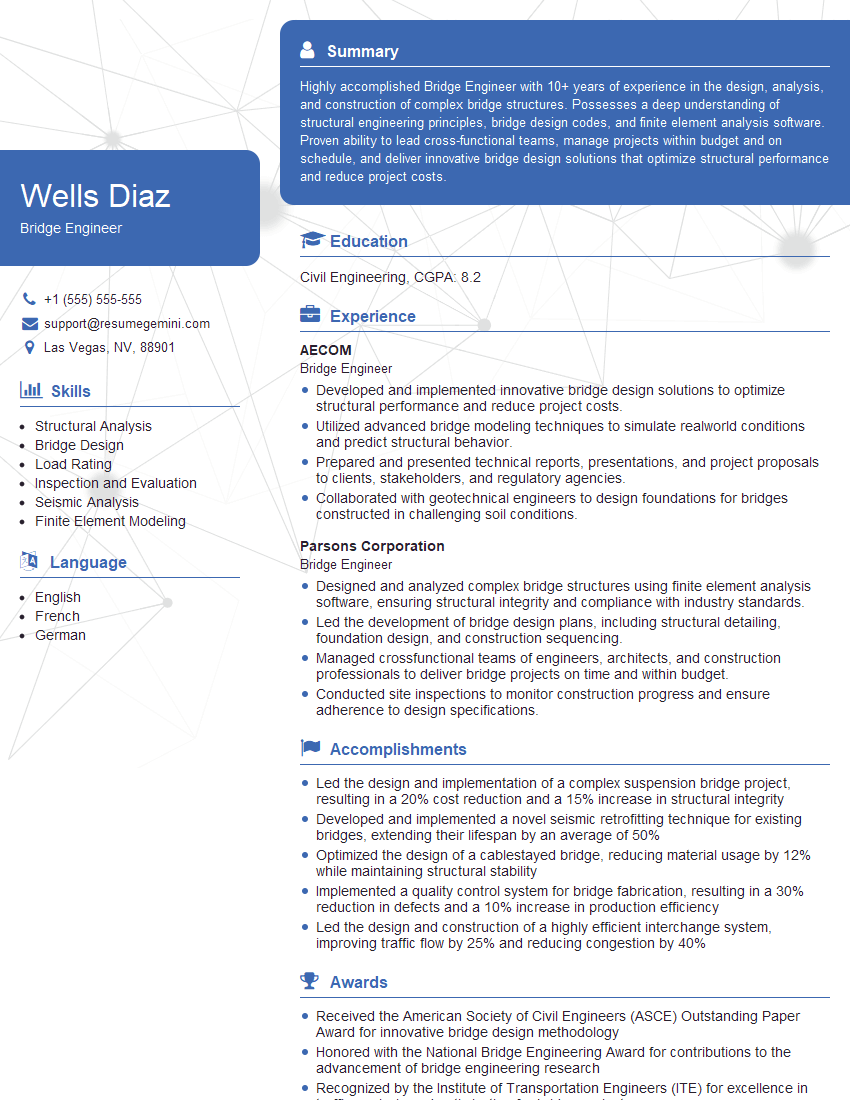
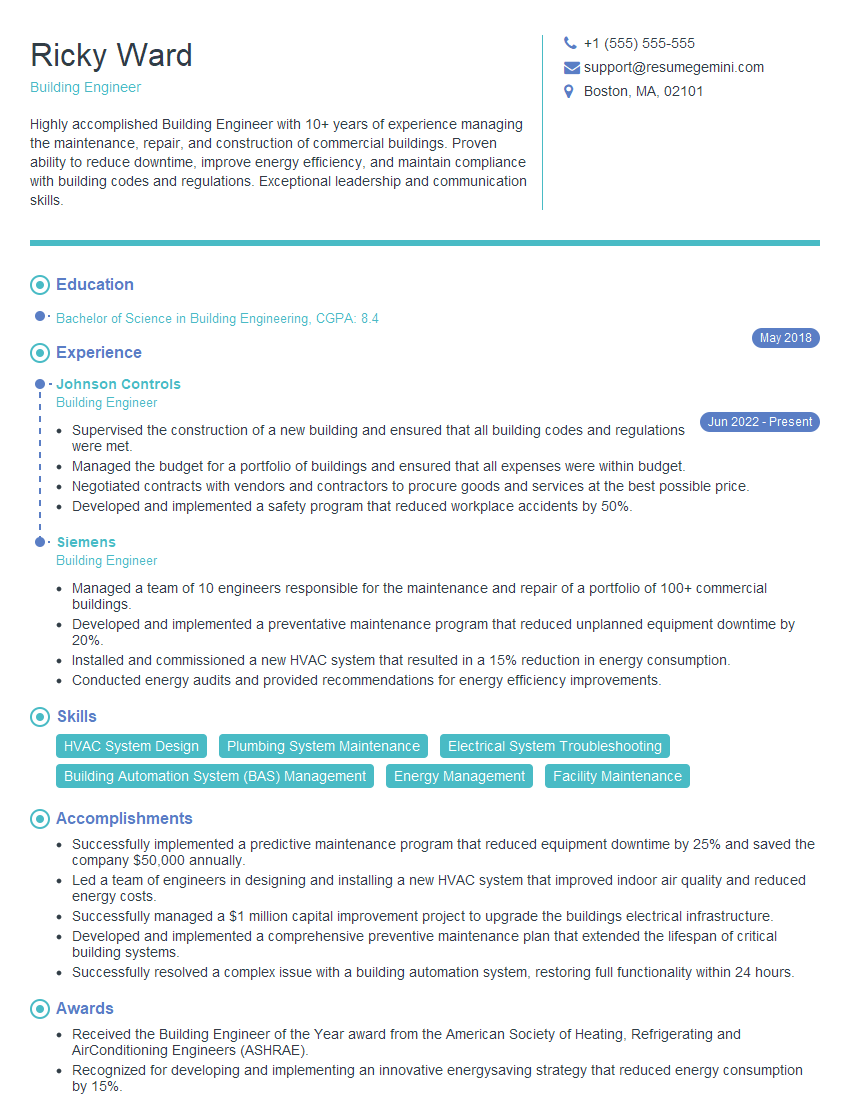
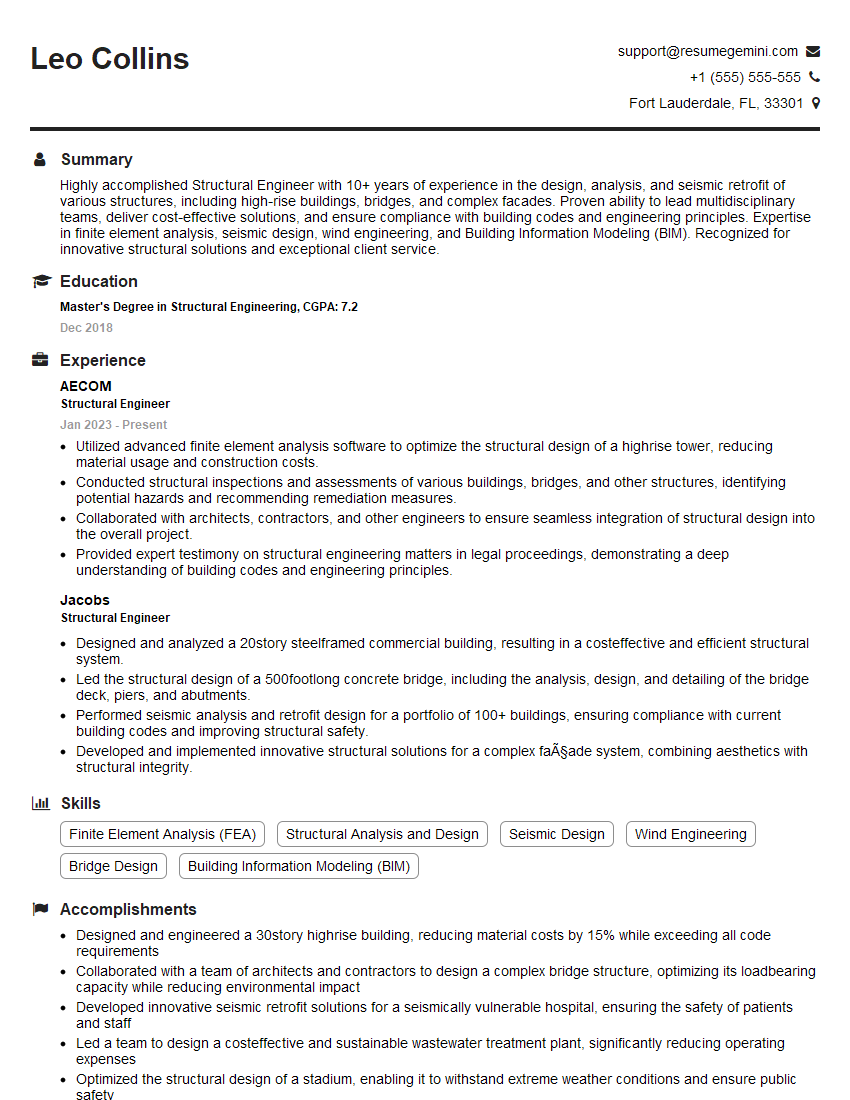
Mastering the design of concrete structures is paramount for a successful and rewarding career in structural engineering. It opens doors to exciting projects and positions of increasing responsibility. To maximize your job prospects, create an ATS-friendly resume that clearly highlights your skills and experience. ResumeGemini is a trusted resource that can help you build a professional and impactful resume, ensuring your qualifications shine. Examples of resumes tailored to Design of Concrete Structures are available to guide you. Invest time in crafting a compelling resume – it’s your first impression and crucial for securing an interview.



Explore more articles
Users Rating of Our Blogs
Share Your Experience
We value your feedback! Please rate our content and share your thoughts (optional).
What Readers Say About Our Blog
Very informative content, great job.
good