Feeling uncertain about what to expect in your upcoming interview? We’ve got you covered! This blog highlights the most important Drilling Permitting and Regulatory Compliance interview questions and provides actionable advice to help you stand out as the ideal candidate. Let’s pave the way for your success.
Questions Asked in Drilling Permitting and Regulatory Compliance Interview
Q 1. Explain the process of obtaining a drilling permit in [Specific State/Region].
Obtaining a drilling permit, let’s say in Texas, is a multi-step process involving various state and potentially federal agencies. It begins with pre-application consultations to determine the necessary permits and ensure project feasibility. This often includes geological surveys and environmental assessments. Next, a comprehensive application is submitted, meticulously detailing the proposed drilling location, methodology, and anticipated environmental impacts. This application typically includes:
- Site location map: Precise coordinates, proximity to sensitive areas (water bodies, protected habitats), etc.
- Drilling plan: Detailed description of the drilling method, equipment, and well design.
- Environmental impact assessment: Analysis of potential impacts on air, water, and land, including mitigation measures.
- Emergency response plan: Procedures to handle potential accidents or spills.
The regulatory agency, likely the Texas Railroad Commission (RRC), reviews the application, potentially requesting additional information or clarifications. Once satisfied, they issue the permit, subject to specific conditions and monitoring requirements. Failure to comply with these conditions can lead to penalties, suspension, or revocation of the permit. Post-drilling, regular reporting and well site inspections are often required to ensure ongoing compliance.
For example, a project near a sensitive aquifer would require more rigorous groundwater monitoring and stricter well casing specifications than one in a less environmentally sensitive area. The entire process can take several months, depending on the complexity of the project and the agency’s workload.
Q 2. Describe your experience with NEPA compliance in drilling operations.
My experience with the National Environmental Policy Act (NEPA) compliance spans over ten years. NEPA requires federal agencies to assess the environmental impacts of their actions, including those that indirectly affect drilling operations on federal lands. My involvement has included preparing Environmental Assessments (EAs) and Environmental Impact Statements (EISs) for various projects. This involves collaborating with environmental scientists, engineers, and regulatory agencies to conduct thorough environmental reviews, identify potential impacts, and develop mitigation strategies.
For instance, I’ve worked on projects requiring an EA where potential impacts were deemed minimal, and a more extensive EIS for projects with significant potential environmental effects. Preparing these documents requires a deep understanding of NEPA regulations, environmental science, and the specific project’s context. I have successfully navigated the NEPA process, securing necessary approvals, and ensuring that environmental concerns were addressed proactively.
A key aspect of NEPA compliance is public participation and transparency. I have experience engaging with local communities and stakeholders, addressing their concerns, and incorporating their input into the decision-making process. This collaborative approach is crucial for ensuring that NEPA reviews are thorough and effective.
Q 3. What are the key environmental regulations impacting drilling activities?
Numerous environmental regulations significantly impact drilling activities. Key legislation includes:
- Clean Water Act (CWA): Regulates the discharge of pollutants into navigable waters, including wastewater from drilling operations. It mandates the development and implementation of storm water pollution prevention plans (SWPPPs).
- Clean Air Act (CAA): Sets limits on air emissions from drilling activities, requiring the use of emission control technologies and monitoring programs. This includes volatile organic compounds (VOCs), methane, and other pollutants.
- Resource Conservation and Recovery Act (RCRA): Governs the management of hazardous waste generated during drilling, including proper storage, transportation, and disposal.
- Safe Drinking Water Act (SDWA): Protects underground sources of drinking water from contamination by drilling fluids and other substances.
These regulations vary by state and jurisdiction, adding layers of complexity to compliance. For example, states often have their own stricter regulations concerning wastewater discharge or air emissions. Keeping abreast of these regulations is crucial for ensuring compliance and mitigating potential environmental liabilities.
Q 4. How do you ensure compliance with air quality standards during drilling?
Ensuring compliance with air quality standards during drilling involves a multi-pronged approach. First, we select equipment with advanced emission control technologies, such as catalytic converters and vapor recovery systems to minimize VOC emissions. Secondly, we implement rigorous monitoring programs, using continuous emission monitoring systems (CEMS) to measure and track emissions in real-time. This data is used to fine-tune operations and identify areas for improvement. Thirdly, we adhere to established operating procedures and best practices to minimize fugitive emissions (emissions escaping from equipment leaks). This includes regular inspections and maintenance of equipment. Finally, comprehensive record-keeping is essential to document compliance with all applicable regulations.
For example, in regions with stricter air quality standards, we might employ more stringent emission control measures or choose low-emission equipment, like electric drilling rigs. A thorough air quality monitoring program allows us to demonstrate our commitment to compliance and quickly address any deviations from permitted emission levels.
Q 5. How do you manage potential risks associated with hazardous waste during drilling?
Managing hazardous waste generated during drilling requires meticulous planning and execution. This begins with proper identification and classification of hazardous waste according to RCRA guidelines. Next, we develop and implement a comprehensive hazardous waste management plan that outlines procedures for handling, storage, transportation, and disposal of all hazardous materials. This includes using properly labeled containers, implementing spill prevention measures, and ensuring that all waste is transported by licensed haulers to permitted disposal facilities.
We maintain meticulous records tracking the generation, handling, and disposal of all hazardous waste, including waste manifests and disposal certificates. Regular audits and inspections are crucial to ensuring adherence to the plan and identifying areas for improvement. Failure to comply with RCRA regulations can result in significant penalties and environmental liabilities.
For instance, drilling fluids containing heavy metals would require special handling and disposal procedures, unlike less hazardous drilling muds. Utilizing best practices in waste minimization, such as using less toxic materials and optimizing waste streams, is also paramount.
Q 6. What is your experience with spill prevention, control, and countermeasure (SPCC) plans?
My experience with Spill Prevention, Control, and Countermeasure (SPCC) plans is extensive. I’ve been involved in developing, implementing, and updating SPCC plans for various drilling operations. These plans are critical for preventing oil spills and other liquid releases into navigable waters. An effective SPCC plan includes:
- Facility description: Details of the drilling site, including storage capacity and location.
- Spill prevention measures: Procedures to prevent spills, such as regular inspections, maintenance of equipment, and secondary containment.
- Spill control measures: Procedures to control spills, such as the use of booms, absorbents, and other equipment.
- Spill countermeasures: Procedures to clean up spills, including emergency response plans and notification protocols.
Regular training of personnel is essential, along with conducting drills and exercises to ensure preparedness. The plan must be updated as needed, reflecting any changes in operations or regulatory requirements. Furthermore, compliance with the plan is continuously monitored, with records maintained to document adherence to all requirements and demonstrate preparedness for potential spills.
A real-world example includes updating an SPCC plan after an expansion of storage capacity at a drilling site. This would require reassessing the potential for spills and updating prevention and control measures accordingly.
Q 7. How familiar are you with the Clean Water Act and its implications for drilling?
The Clean Water Act (CWA) is fundamental to drilling operations, particularly regarding water discharge and the protection of water quality. The CWA prohibits the discharge of pollutants into navigable waters without a permit. For drilling operations, this means obtaining permits under the National Pollutant Discharge Elimination System (NPDES) for any wastewater discharges. This necessitates the development of a comprehensive storm water pollution prevention plan (SWPPP) to control runoff and prevent the discharge of pollutants into water bodies.
The CWA also establishes water quality standards, and drilling operations must ensure that their activities do not violate these standards. This might involve monitoring water quality parameters, conducting risk assessments, and employing appropriate pollution control technologies. My experience includes assisting in NPDES permit applications, developing SWPPPs, and ensuring that drilling operations are in compliance with the CWA’s stringent requirements. Non-compliance can lead to significant fines and legal repercussions, highlighting the critical importance of understanding and adhering to the CWA’s provisions.
A practical example is managing the discharge of produced water, which is often contaminated with chemicals and other substances. Proper treatment and disposal of produced water are essential to comply with CWA requirements and protect water quality.
Q 8. Describe your experience with preparing and submitting permit applications.
Preparing and submitting drilling permit applications is a meticulous process requiring a thorough understanding of applicable regulations and a keen eye for detail. It begins with a comprehensive site assessment to gather all necessary data, including geological information, proposed drilling parameters (depth, well type, casing program), surface use plans, and environmental impact assessments. This information forms the basis of the application. I’ve personally managed the preparation of hundreds of applications across various jurisdictions, including onshore and offshore projects. This involved compiling all necessary documents, ensuring they adhere to the specific formatting and submission requirements of each regulatory body, and submitting them through the appropriate channels, often electronically via dedicated portals. For instance, in one project involving a complex horizontal well in a sensitive environmental area, we had to prepare detailed hydrological assessments and mitigation plans, meticulously documenting how our operations would minimize environmental impact. Successful submission hinges on comprehensive planning and diligent attention to detail to ensure the application is complete and avoids delays.
- Gathering all necessary data and documentation
- Ensuring compliance with all applicable regulations and formatting requirements
- Submitting the application through the appropriate channels
- Following up with regulatory agencies on the application status
Q 9. How do you handle permit amendments or modifications?
Permit amendments or modifications are a common occurrence in drilling projects due to unforeseen circumstances or changes in plans. Handling these requires a proactive approach and clear communication with regulatory agencies. The process usually involves preparing a formal amendment request, detailing the proposed changes and justifying the need for modification. This often includes updated site plans, engineering reports, environmental impact assessments (if applicable), and any required supporting documentation. I have extensive experience in managing amendment requests, ranging from minor changes to significant alterations to the original permit. For example, in one project, unexpected geological formations necessitated a change in the casing program. We promptly prepared and submitted an amendment request, including revised engineering calculations and a detailed explanation of the necessity for the change. The key is clear and timely communication with the regulators; proactively addressing potential issues and providing sufficient justification for any changes greatly increases the likelihood of a smooth and efficient amendment process.
Q 10. What is your experience with interacting with regulatory agencies?
Interacting effectively with regulatory agencies is paramount for successful drilling operations. It requires building strong professional relationships based on trust, transparency, and open communication. This involves clearly understanding the agency’s requirements, proactively addressing their concerns, and responding promptly to any requests for information. My experience includes working extensively with multiple regulatory bodies, both at the state and federal level, engaging in regular communication to ensure compliance and address any potential issues. For instance, I’ve participated in numerous pre-application meetings to discuss project specifics and obtain feedback on the proposed plan before formal submission. This proactive approach can identify and address potential roadblocks early on, streamlining the permitting process. Successful interaction requires a balance between adhering to regulations and advocating for the project’s feasibility. I always aim for a collaborative relationship, viewing the regulatory agency not as an adversary, but as a partner in ensuring safe and environmentally responsible operations.
Q 11. Explain your understanding of well control regulations.
Well control regulations are critical for preventing catastrophic events such as well blowouts. These regulations outline the procedures, equipment, and training necessary to maintain control of the wellbore during all phases of drilling operations. A thorough understanding of well control principles, including the use of blowout preventers (BOPs), drilling fluids, and emergency response protocols, is essential. My knowledge spans various well control regulations, including those set by the API (American Petroleum Institute) and government agencies. This includes understanding the requirements for well control equipment testing, personnel training, and emergency response planning. A key component is the ability to interpret and apply well control procedures to various drilling scenarios. For instance, in one project involving challenging geological conditions, we had to implement a specific well control plan addressing the risk of high-pressure zones. We held rigorous training sessions to ensure personnel understood the protocols for handling potential well control incidents.
Q 12. How do you ensure compliance with safety regulations on a drilling site?
Ensuring compliance with safety regulations on a drilling site requires a multi-faceted approach. It starts with a robust safety management system (SMS), including comprehensive risk assessments, detailed safety procedures, and regular safety audits. This system covers all aspects of operations, from equipment maintenance and personal protective equipment (PPE) use to emergency response planning and hazard communication. I have experience implementing and overseeing SMS on multiple drilling sites. This includes developing site-specific safety plans, conducting regular safety training for personnel, and ensuring compliance with relevant regulations and industry best practices. Regular inspections of equipment, the implementation of safe work practices, and diligent monitoring of personnel are crucial. A critical aspect is fostering a strong safety culture—where safety is not just a set of rules, but a shared value among all personnel. For example, we established a system where employees were encouraged to report near misses and hazards without fear of retribution, facilitating continuous improvement in safety performance.
Q 13. Describe your experience with incident reporting and investigation procedures.
Incident reporting and investigation procedures are crucial for learning from mistakes and preventing future occurrences. A well-defined process is essential for accurately documenting incidents, identifying root causes, and implementing corrective actions. My experience encompasses investigating a wide range of incidents, from minor equipment malfunctions to more serious events. The process typically involves immediately securing the scene, providing necessary medical attention (if required), collecting evidence, documenting the events, and conducting thorough interviews with witnesses. A detailed investigation report is prepared outlining the incident’s circumstances, contributing factors, and recommended corrective actions. Following industry best practices, I have implemented corrective actions that range from improved equipment maintenance to revised operating procedures, ensuring these are implemented and effective to prevent recurrence. Transparency and a commitment to continuous improvement are central to effective incident management. A thorough and impartial investigation is not about assigning blame but about understanding the incident to prevent future occurrences.
Q 14. What is your experience with reviewing and interpreting environmental regulations?
Reviewing and interpreting environmental regulations is a critical aspect of drilling operations, ensuring projects comply with air quality, water quality, waste management, and habitat protection standards. This involves understanding the specific requirements of each relevant regulation, assessing potential environmental impacts, and developing mitigation strategies to minimize adverse effects. My experience includes interpreting a broad range of environmental regulations from different jurisdictions, including those relating to water discharge permits, air emission permits, and waste management plans. I have used this knowledge to prepare and implement comprehensive environmental management plans for numerous drilling projects. This includes conducting environmental assessments, developing mitigation plans, and monitoring environmental parameters throughout the project lifecycle. For example, in a project near a sensitive wetland, we implemented specific measures to prevent contamination and protect the delicate ecosystem, resulting in a positive environmental performance throughout the project.
Q 15. How do you stay up-to-date on changes in drilling regulations?
Staying current with drilling regulations requires a multi-pronged approach. It’s not a one-time task, but an ongoing commitment. I utilize several methods to ensure I’m always informed.
- Subscription to Regulatory Updates: I subscribe to newsletters and alerts from relevant agencies like the Bureau of Land Management (BLM), the Environmental Protection Agency (EPA), and state-level environmental and oil and gas regulatory bodies. These often provide summaries of new rules, proposed changes, and important deadlines.
- Professional Organizations: Active membership in organizations such as the Society of Petroleum Engineers (SPE) or the International Association of Drilling Contractors (IADC) provides access to industry publications, conferences, and webinars that discuss regulatory changes and best practices. Networking with other professionals at these events is invaluable.
- Direct Engagement with Regulatory Agencies: I regularly check the websites of relevant agencies for updates, participate in public comment periods on proposed regulations, and attend industry workshops conducted by these agencies. Building relationships with agency personnel can facilitate a more effective understanding of compliance requirements.
- Specialized Legal and Regulatory Consulting: For complex or rapidly evolving regulations, I often consult with specialized environmental law firms or regulatory compliance consultants. They provide in-depth analysis and help navigate intricate legal landscapes.
Think of it like this: staying updated isn’t just about reading documents; it’s about building a network and engaging actively with the regulatory environment. This proactive approach allows me to anticipate potential issues and ensure our operations remain compliant.
Career Expert Tips:
- Ace those interviews! Prepare effectively by reviewing the Top 50 Most Common Interview Questions on ResumeGemini.
- Navigate your job search with confidence! Explore a wide range of Career Tips on ResumeGemini. Learn about common challenges and recommendations to overcome them.
- Craft the perfect resume! Master the Art of Resume Writing with ResumeGemini’s guide. Showcase your unique qualifications and achievements effectively.
- Don’t miss out on holiday savings! Build your dream resume with ResumeGemini’s ATS optimized templates.
Q 16. Describe a situation where you had to address a regulatory non-compliance issue.
In a previous project, we encountered a non-compliance issue related to wastewater disposal. During a routine inspection, the regulatory agency noted discrepancies between our reported wastewater volumes and the actual measurements recorded at our disposal site. This was caused by a malfunctioning flow meter that hadn’t been properly calibrated. The discrepancy, though unintentional, constituted a violation.
My immediate response involved a three-step process:
- Immediate Corrective Action: We immediately shut down the affected operation, repaired or replaced the faulty equipment, and implemented stricter monitoring protocols. Accuracy and reliability were paramount.
- Full Disclosure and Cooperation: We promptly reported the non-compliance to the regulatory agency, providing a detailed explanation of the issue, the corrective actions taken, and a plan to prevent future occurrences. Transparency and cooperation are crucial in these situations.
- Development of a Corrective Action Plan (CAP): We developed a comprehensive CAP, which included enhanced training for personnel, regular equipment calibration schedules, and improved data management systems. This demonstrated our commitment to preventing similar issues in the future.
Fortunately, the agency appreciated our prompt and transparent response. The outcome was a warning and a requirement for submitting regular compliance reports for a specified period, highlighting the importance of proactive maintenance and rigorous record-keeping.
Q 17. What is your experience with conducting environmental site assessments?
My experience with environmental site assessments is extensive. I’ve been involved in numerous assessments for various drilling projects, ranging from preliminary Phase I assessments to detailed Phase II investigations. This work typically involves:
- Phase I Environmental Site Assessments (ESAs): These are historical reviews of the property to identify potential environmental concerns based on records review, site reconnaissance, and interviews with stakeholders. I’m proficient in interpreting historical data, including aerial photography and historical maps, to assess potential risks.
- Phase II ESAs: When Phase I identifies potential contamination, Phase II involves sampling and laboratory analysis of soil, groundwater, and other media to confirm the presence and extent of contamination. I’m experienced in overseeing sampling plans, managing laboratory analyses, and interpreting the results to inform remediation strategies.
- Remediation Oversight: I have experience overseeing remediation projects, ensuring that the chosen technology aligns with regulatory requirements and effectively addresses identified contamination. This often involves working with environmental contractors and monitoring the progress of the remediation efforts.
A key aspect is understanding the specific regulatory requirements for each assessment. For example, the requirements under the Comprehensive Environmental Response, Compensation, and Liability Act (CERCLA) differ from those under the Resource Conservation and Recovery Act (RCRA). My expertise spans both.
Q 18. How do you develop and implement a comprehensive regulatory compliance program?
Developing and implementing a comprehensive regulatory compliance program requires a structured approach. I typically use a risk-based methodology:
- Identify Applicable Regulations: This first step involves pinpointing all federal, state, and local regulations pertinent to our drilling operations, including air quality, water discharge, waste management, and endangered species protection.
- Risk Assessment: We assess the potential risks associated with each regulatory requirement. This involves considering factors like the severity of potential penalties, the likelihood of non-compliance, and the environmental impacts of potential violations. Prioritizing high-risk areas is key.
- Develop Compliance Procedures: We then craft detailed written procedures for each aspect of our operations to ensure compliance with identified regulations. These include Standard Operating Procedures (SOPs), checklists, and training materials.
- Implementation and Training: The procedures are implemented, and personnel are extensively trained on their use. Ongoing supervision and review are essential. Regular audits and inspections are necessary to monitor adherence to protocols.
- Monitoring and Reporting: A robust system is established for collecting data, generating reports, and documenting compliance. This includes maintaining accurate records, submitting required reports to regulatory agencies on time, and conducting internal audits to identify areas for improvement.
- Continuous Improvement: The program undergoes continuous review and improvement based on audit findings, regulatory updates, and lessons learned. This cyclical process is crucial for adaptation and optimal compliance.
This methodical approach ensures proactive compliance, minimizing risks and ensuring operational efficiency while protecting the environment.
Q 19. What are some of the key challenges in managing drilling permits and regulatory compliance?
Managing drilling permits and regulatory compliance presents several key challenges:
- Complex and Evolving Regulations: Regulations are often intricate, and changes occur frequently at various governmental levels (federal, state, local). Staying abreast of these updates and ensuring compliance is a continuous challenge.
- Permitting Delays: The permitting process can be lengthy and complex, involving multiple agencies and extensive documentation. Delays can significantly impact project timelines and budgets.
- Data Management: Effective compliance relies on meticulous data management and record-keeping. This requires robust systems to track permits, environmental data, and compliance activities.
- Stakeholder Engagement: Effectively engaging with stakeholders, including local communities, regulatory agencies, and environmental groups, is crucial for project success and regulatory compliance.
- Environmental Uncertainty: Unexpected environmental conditions or incidents can pose compliance challenges and require rapid response and adaptation.
- Cost and Resource Management: Maintaining compliance can be costly, requiring investments in personnel, training, technology, and environmental monitoring.
Addressing these challenges requires a proactive, flexible, and well-resourced approach. Prioritization, robust systems, and strong communication are essential ingredients for success.
Q 20. Describe your experience with stakeholder engagement on environmental issues.
Stakeholder engagement on environmental issues is critical for successful drilling projects. My approach emphasizes open communication, transparency, and mutual respect.
- Community Outreach: I’ve organized and participated in community meetings, public forums, and presentations to inform residents about project plans, address their concerns, and solicit feedback. Active listening is crucial here.
- Collaboration with NGOs: I’ve worked collaboratively with environmental NGOs (Non-Governmental Organizations) to address their concerns, incorporate their input into project design, and develop mutually agreeable mitigation strategies. This shows a commitment to shared solutions.
- Agency Coordination: Close coordination with regulatory agencies is essential to ensure compliance and address any concerns promptly and transparently. This fosters a relationship of trust and mutual understanding.
- Transparency and Data Sharing: Sharing relevant environmental data and project information with stakeholders proactively enhances trust and helps build consensus. Openness is key to effective engagement.
One successful example involved working with a local community concerned about potential water contamination. By proactively engaging in discussions, providing data on our water management plans, and agreeing to independent water quality monitoring, we were able to allay their concerns and secure community support for the project.
Q 21. How do you integrate environmental concerns into drilling project planning?
Integrating environmental concerns into drilling project planning is crucial for success and compliance. It shouldn’t be an afterthought but a fundamental element of the planning process. My approach incorporates the following:
- Early Environmental Assessment: A comprehensive environmental assessment is conducted early in the planning phase to identify potential environmental impacts and risks. This includes considering potential impacts on water resources, air quality, wildlife, and sensitive habitats.
- Environmental Impact Assessment (EIA): If required by regulation, an EIA is undertaken to systematically evaluate the potential environmental effects of the project. This detailed assessment helps identify potential mitigation measures and inform project design.
- Mitigation Measures: Based on the assessment, mitigation strategies are developed to reduce or eliminate potential environmental impacts. These could include measures such as water treatment, air pollution control, habitat restoration, and waste management plans.
- Environmental Monitoring Plan: A detailed monitoring plan is developed to track the effectiveness of mitigation measures and ensure compliance with environmental regulations. This plan typically includes regular sampling and analysis of water, air, and soil.
- Contingency Planning: A comprehensive contingency plan is in place to address potential environmental incidents or emergencies. This ensures a rapid and effective response to any unforeseen events.
By incorporating environmental considerations from the outset, projects are more likely to be environmentally sound, socially acceptable, and compliant with regulatory requirements, resulting in a more sustainable and responsible outcome.
Q 22. What software or tools do you use for managing drilling permits and compliance data?
Managing drilling permits and compliance data requires robust software solutions. We utilize a combination of tools depending on the project’s complexity and regulatory landscape. For example, we use dedicated Environmental Information Management Systems (EIMS) like Envirosuite or Intelex. These systems allow for centralized data storage, permit tracking, and reporting capabilities. We also leverage Geographic Information Systems (GIS) software, such as ArcGIS, to visualize permit areas, potential environmental impacts, and well locations. For smaller projects, we might use more streamlined solutions like cloud-based databases with customized tracking spreadsheets, ensuring all data is easily accessible and version-controlled.
These tools allow us to manage various document types, including permit applications, environmental reports, monitoring data, and correspondence with regulatory agencies. The integration capabilities of these systems are critical; they often interface with other software used for drilling operations, allowing for real-time data transfer and improved efficiency.
Q 23. What is your experience with environmental impact assessments (EIAs)?
My experience with Environmental Impact Assessments (EIAs) is extensive. I’ve been involved in EIAs across various projects, from onshore oil and gas development to offshore wind farm installations. My role typically involves gathering and analyzing environmental baseline data, identifying potential impacts, developing mitigation measures, and preparing the EIA report according to the requirements of the regulatory authorities. This includes assessing potential impacts on air quality, water resources, biodiversity, and socio-economic aspects.
For instance, in a recent project near a sensitive wetland, we employed advanced modeling techniques to predict the potential impact of drilling fluids on the water table and meticulously designed mitigation strategies like specialized containment systems and enhanced monitoring protocols to minimize risk. We’ve also worked with expert consultants – biologists, hydrologists, etc. – to ensure thorough and robust assessments.
Q 24. Describe your understanding of wetland protection regulations.
Wetland protection regulations are crucial and vary by jurisdiction, but generally aim to preserve these vital ecosystems. These regulations often involve restrictions on activities within and adjacent to wetlands, requiring permits for any work impacting them. Key aspects include delineating wetland boundaries using standardized methodologies, assessing the potential impact on wetland functions (water filtration, flood control, habitat provision), and implementing compensatory mitigation if unavoidable impacts occur.
For example, the Clean Water Act in the United States is a cornerstone of wetland protection, defining wetlands and outlining permitting requirements under Section 404. Similarly, other countries have their own legislation that may incorporate aspects of the Ramsar Convention, which focuses on the conservation and wise use of wetlands of international importance. Understanding these jurisdictional nuances is paramount in ensuring regulatory compliance.
Q 25. How do you handle potential conflicts between drilling operations and environmental regulations?
Conflicts between drilling operations and environmental regulations are inevitable, but proactively addressing them is key. Our approach involves a multi-faceted strategy. First, we conduct thorough due diligence during the planning phase, integrating environmental considerations early in the project lifecycle. This includes detailed site assessments, comprehensive stakeholder engagement, and early consultations with regulatory agencies. This proactive engagement allows us to identify potential conflicts early on and develop mitigation plans.
Should conflicts arise, we engage in constructive dialogue with regulators. We provide robust data and evidence to support our mitigation plans and propose alternative solutions that balance operational needs with environmental protection. Documenting all interactions, decisions, and mitigation measures is critical for transparency and accountability.
Q 26. What is your experience with endangered species regulations and their implications for drilling projects?
Endangered species regulations significantly impact drilling projects, requiring meticulous planning and execution. We work closely with qualified biologists to identify potential impacts on listed species and their habitats. This involves habitat assessments, species surveys, and developing avoidance and minimization plans to prevent harm or habitat disruption.
For instance, if a project falls within the range of an endangered bird species, we might need to adjust drilling schedules to avoid sensitive breeding periods or implement measures like noise reduction strategies or habitat restoration projects. We may also need to obtain permits under the Endangered Species Act (in the US) or similar legislation in other countries, demonstrating that the project will not jeopardize the continued existence of the listed species. Failure to comply can result in project delays, fines, or even project termination.
Q 27. How do you ensure data accuracy and integrity in drilling permit records and reporting?
Data accuracy and integrity are paramount in drilling permit records and reporting. We employ several strategies to ensure this. First, we use version-controlled databases that track all changes and document decisions, assigning responsibility for data entry. We also implement data validation checks within our software to identify inconsistencies or errors during input. Regular audits are conducted to review data accuracy and compliance with reporting requirements.
Moreover, we utilize a standardized data entry protocol and rigorous quality control procedures. Training programs ensure that all personnel understand the importance of data integrity and the procedures for handling and reporting data correctly. This layered approach minimizes errors, improves data reliability, and strengthens our ability to demonstrate compliance to regulatory agencies.
Key Topics to Learn for Drilling Permitting and Regulatory Compliance Interview
- Environmental Regulations: Understanding and applying relevant environmental laws and regulations (e.g., Clean Water Act, National Environmental Policy Act) to drilling operations.
- Permitting Processes: Navigating the complexities of obtaining drilling permits, including application preparation, agency interactions, and compliance monitoring.
- Regulatory Compliance Procedures: Developing and implementing robust compliance programs to ensure adherence to all applicable regulations and minimizing environmental impact.
- Well Control and Safety Regulations: Understanding and applying regulations related to well control, blowout prevention, and overall safety protocols on drilling sites.
- Risk Assessment and Mitigation: Identifying potential environmental and safety risks associated with drilling operations and developing strategies to mitigate these risks effectively.
- Data Management and Reporting: Maintaining accurate records, preparing comprehensive reports, and demonstrating proficiency in data analysis relevant to regulatory compliance.
- Stakeholder Engagement: Effectively communicating with regulatory agencies, landowners, and other stakeholders throughout the permitting and drilling process.
- Emergency Response Planning: Developing and executing emergency response plans to address potential environmental incidents or safety hazards.
- Audits and Inspections: Understanding the process of regulatory audits and inspections and preparing for them effectively.
- Emerging Technologies and Regulations: Staying current with the latest technologies and evolving regulations in the oil and gas industry.
Next Steps
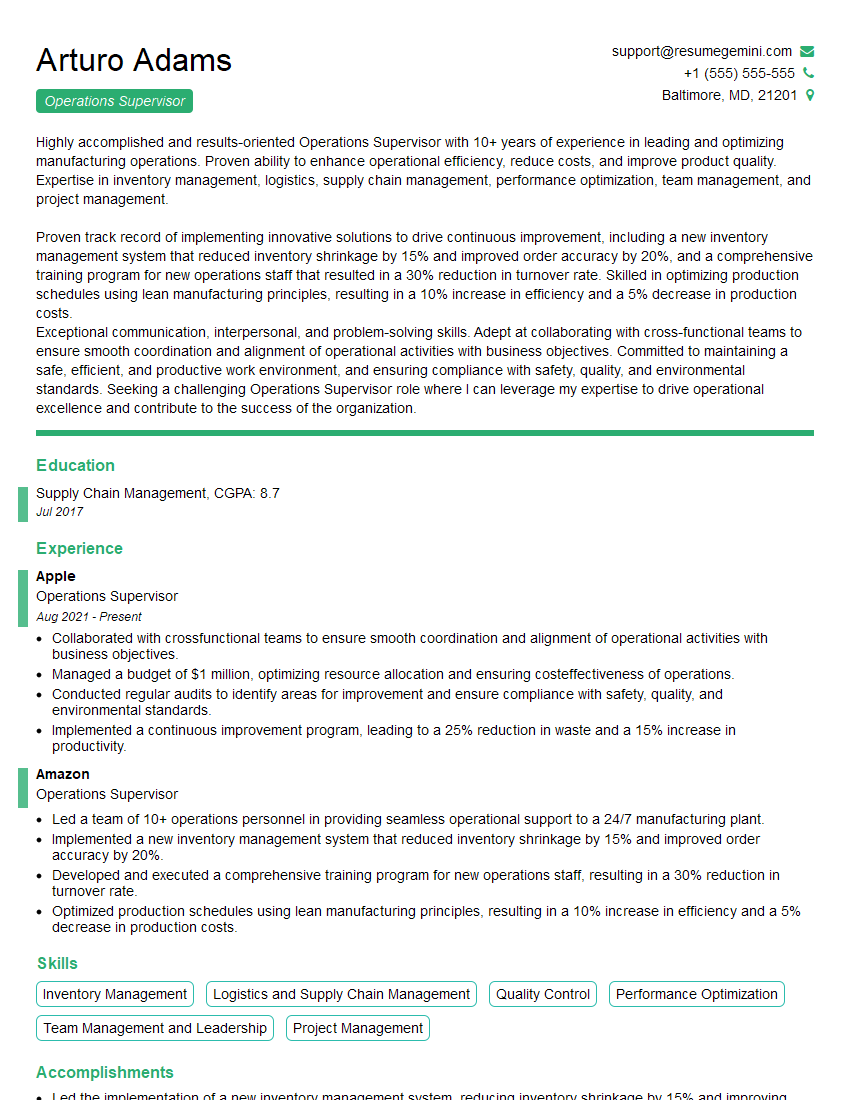
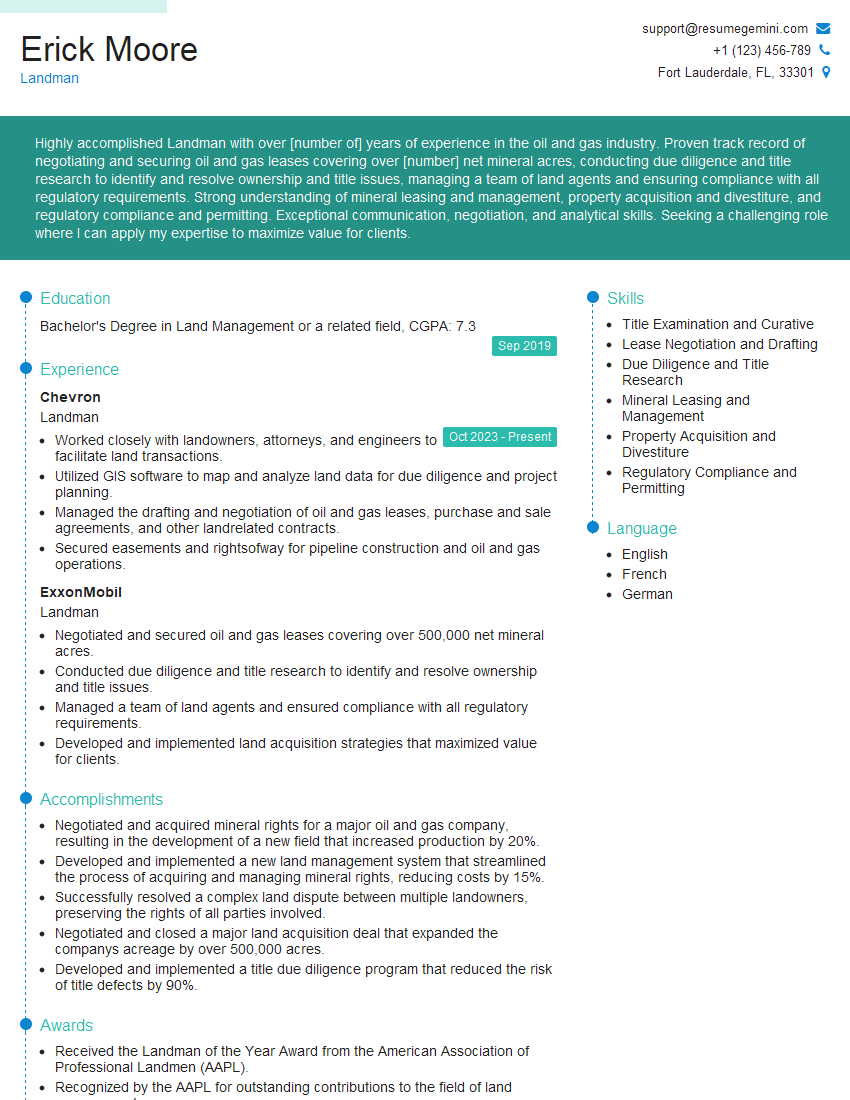
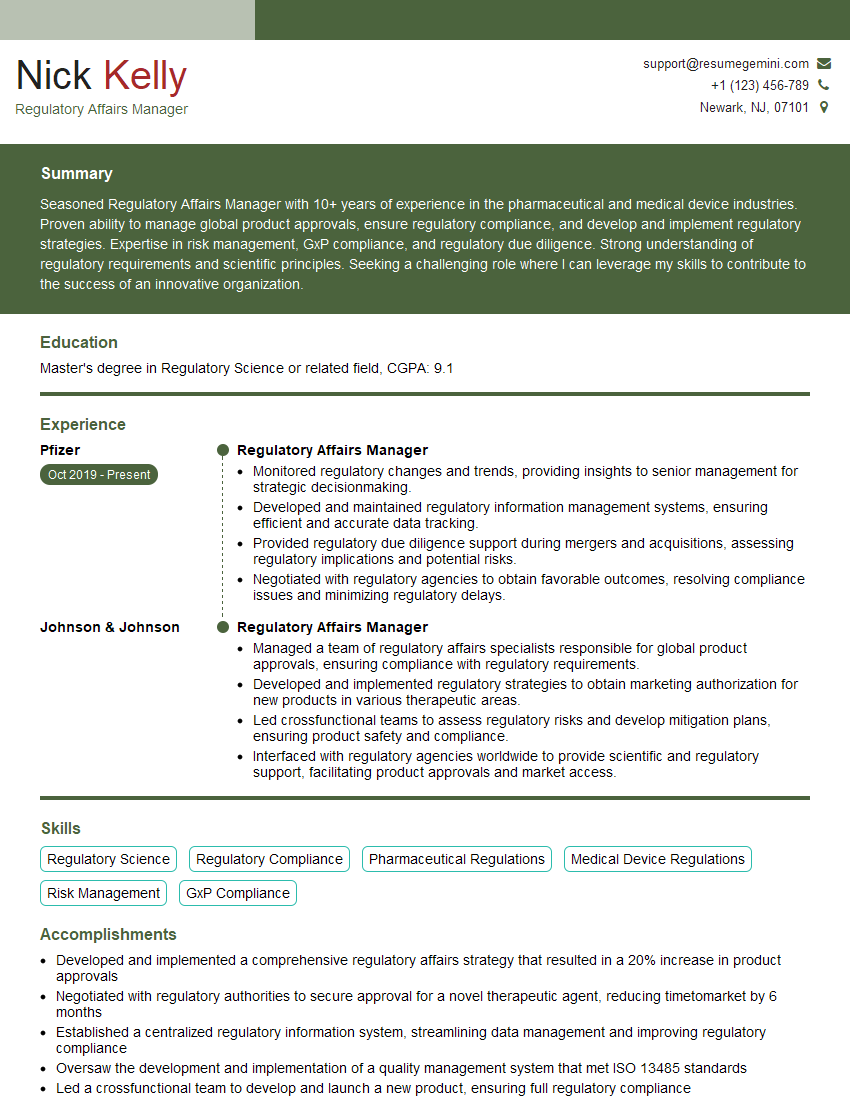
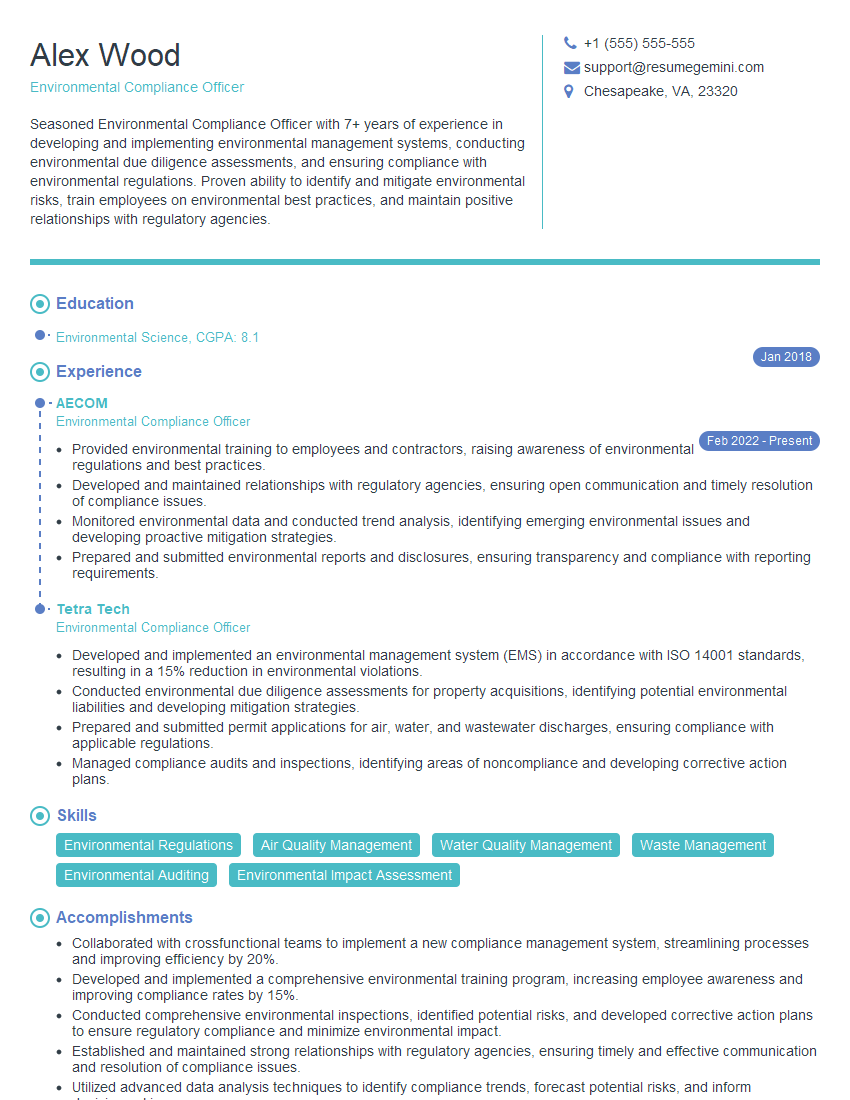
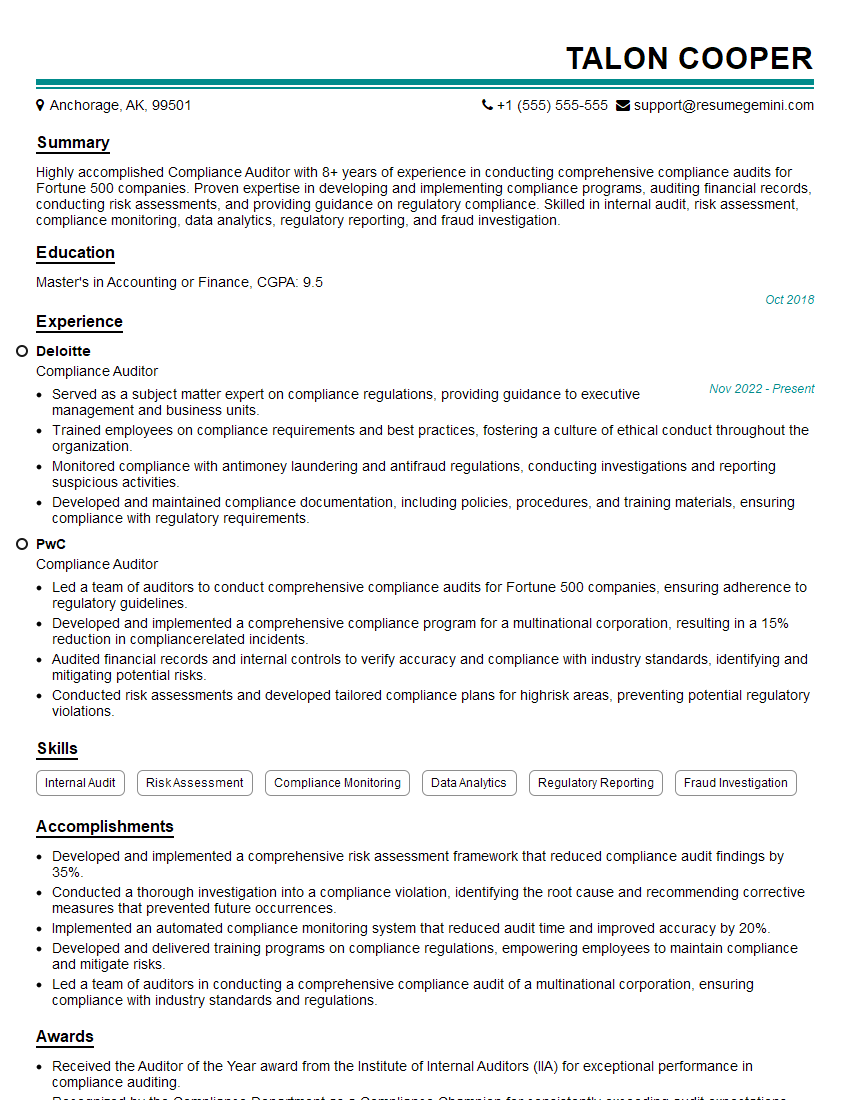
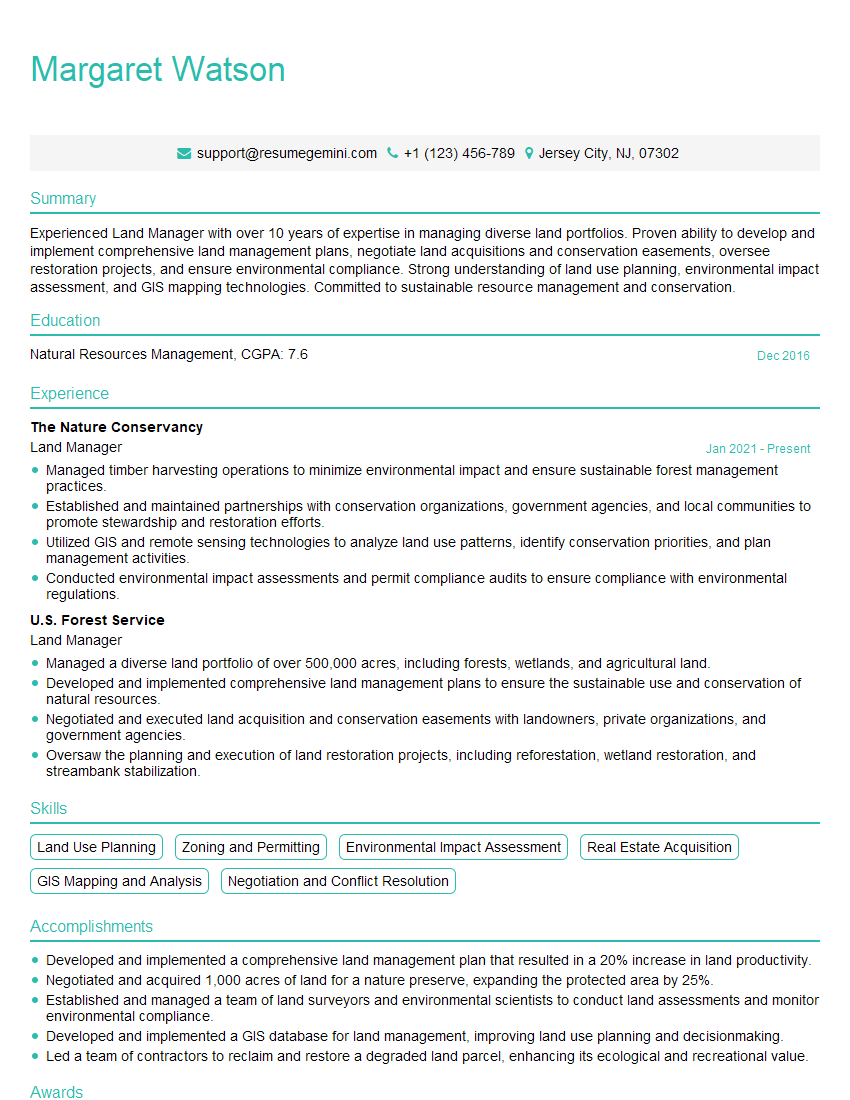
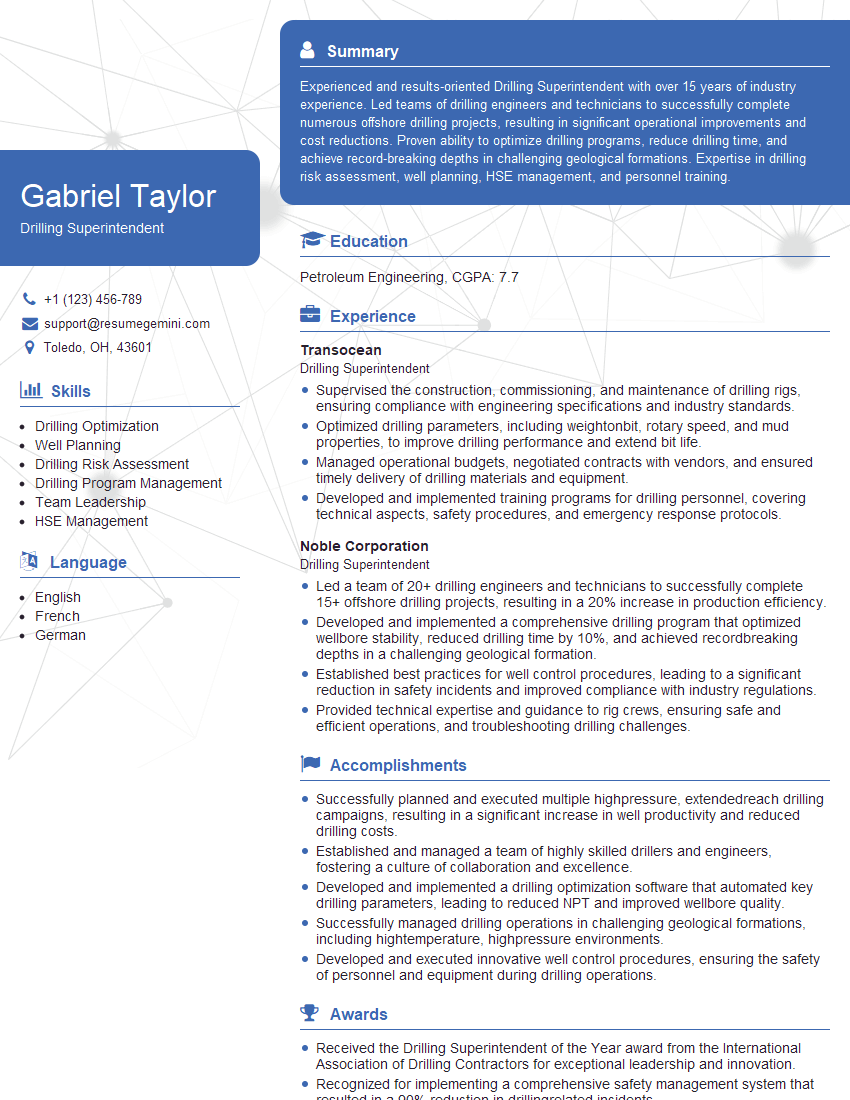
Mastering Drilling Permitting and Regulatory Compliance is crucial for career advancement in the energy sector, opening doors to senior roles with increased responsibility and compensation. A strong understanding of these principles demonstrates your commitment to safety and environmental stewardship, highly valued attributes in this industry. To significantly improve your job prospects, focus on crafting an ATS-friendly resume that highlights your relevant skills and experience. ResumeGemini is a trusted resource that can help you build a professional and impactful resume tailored to the energy industry. Examples of resumes specifically designed for Drilling Permitting and Regulatory Compliance professionals are available through ResumeGemini, giving you a head start in showcasing your qualifications effectively.
Explore more articles
Users Rating of Our Blogs
Share Your Experience
We value your feedback! Please rate our content and share your thoughts (optional).
What Readers Say About Our Blog
Attention music lovers!
Wow, All the best Sax Summer music !!!
Spotify: https://open.spotify.com/artist/6ShcdIT7rPVVaFEpgZQbUk
Apple Music: https://music.apple.com/fr/artist/jimmy-sax-black/1530501936
YouTube: https://music.youtube.com/browse/VLOLAK5uy_noClmC7abM6YpZsnySxRqt3LoalPf88No
Other Platforms and Free Downloads : https://fanlink.tv/jimmysaxblack
on google : https://www.google.com/search?q=22+AND+22+AND+22
on ChatGPT : https://chat.openai.com?q=who20jlJimmy20Black20Sax20Producer
Get back into the groove with Jimmy sax Black
Best regards,
Jimmy sax Black
www.jimmysaxblack.com
Hi I am a troller at The aquatic interview center and I suddenly went so fast in Roblox and it was gone when I reset.
Hi,
Business owners spend hours every week worrying about their website—or avoiding it because it feels overwhelming.
We’d like to take that off your plate:
$69/month. Everything handled.
Our team will:
Design a custom website—or completely overhaul your current one
Take care of hosting as an option
Handle edits and improvements—up to 60 minutes of work included every month
No setup fees, no annual commitments. Just a site that makes a strong first impression.
Find out if it’s right for you:
https://websolutionsgenius.com/awardwinningwebsites
Hello,
we currently offer a complimentary backlink and URL indexing test for search engine optimization professionals.
You can get complimentary indexing credits to test how link discovery works in practice.
No credit card is required and there is no recurring fee.
You can find details here:
https://wikipedia-backlinks.com/indexing/
Regards
NICE RESPONSE TO Q & A
hi
The aim of this message is regarding an unclaimed deposit of a deceased nationale that bears the same name as you. You are not relate to him as there are millions of people answering the names across around the world. But i will use my position to influence the release of the deposit to you for our mutual benefit.
Respond for full details and how to claim the deposit. This is 100% risk free. Send hello to my email id: lukachachibaialuka@gmail.com
Luka Chachibaialuka
Hey interviewgemini.com, just wanted to follow up on my last email.
We just launched Call the Monster, an parenting app that lets you summon friendly ‘monsters’ kids actually listen to.
We’re also running a giveaway for everyone who downloads the app. Since it’s brand new, there aren’t many users yet, which means you’ve got a much better chance of winning some great prizes.
You can check it out here: https://bit.ly/callamonsterapp
Or follow us on Instagram: https://www.instagram.com/callamonsterapp
Thanks,
Ryan
CEO – Call the Monster App
Hey interviewgemini.com, I saw your website and love your approach.
I just want this to look like spam email, but want to share something important to you. We just launched Call the Monster, a parenting app that lets you summon friendly ‘monsters’ kids actually listen to.
Parents are loving it for calming chaos before bedtime. Thought you might want to try it: https://bit.ly/callamonsterapp or just follow our fun monster lore on Instagram: https://www.instagram.com/callamonsterapp
Thanks,
Ryan
CEO – Call A Monster APP
To the interviewgemini.com Owner.
Dear interviewgemini.com Webmaster!
Hi interviewgemini.com Webmaster!
Dear interviewgemini.com Webmaster!
excellent
Hello,
We found issues with your domain’s email setup that may be sending your messages to spam or blocking them completely. InboxShield Mini shows you how to fix it in minutes — no tech skills required.
Scan your domain now for details: https://inboxshield-mini.com/
— Adam @ InboxShield Mini
support@inboxshield-mini.com
Reply STOP to unsubscribe
Hi, are you owner of interviewgemini.com? What if I told you I could help you find extra time in your schedule, reconnect with leads you didn’t even realize you missed, and bring in more “I want to work with you” conversations, without increasing your ad spend or hiring a full-time employee?
All with a flexible, budget-friendly service that could easily pay for itself. Sounds good?
Would it be nice to jump on a quick 10-minute call so I can show you exactly how we make this work?
Best,
Hapei
Marketing Director
Hey, I know you’re the owner of interviewgemini.com. I’ll be quick.
Fundraising for your business is tough and time-consuming. We make it easier by guaranteeing two private investor meetings each month, for six months. No demos, no pitch events – just direct introductions to active investors matched to your startup.
If youR17;re raising, this could help you build real momentum. Want me to send more info?
Hi, I represent an SEO company that specialises in getting you AI citations and higher rankings on Google. I’d like to offer you a 100% free SEO audit for your website. Would you be interested?
Hi, I represent an SEO company that specialises in getting you AI citations and higher rankings on Google. I’d like to offer you a 100% free SEO audit for your website. Would you be interested?