Interviews are opportunities to demonstrate your expertise, and this guide is here to help you shine. Explore the essential Electrical Construction Knowledge interview questions that employers frequently ask, paired with strategies for crafting responses that set you apart from the competition.
Questions Asked in Electrical Construction Knowledge Interview
Q 1. Explain the National Electrical Code (NEC) and its relevance to your work.
The National Electrical Code (NEC) is a comprehensive set of regulations and standards for the safe installation and maintenance of electrical systems in the United States. It’s essentially the rulebook for electrical work. My work is entirely governed by the NEC; every project I undertake must adhere to its stipulations. This includes everything from the size and type of wire used to the placement of outlets, the grounding methods employed, and the overall design of the electrical system. Failure to comply can result in dangerous situations, costly repairs, and legal liabilities.
For example, the NEC dictates the minimum wire gauge required for a specific amperage. Using undersized wire can lead to overheating and potential fires. Similarly, it mandates specific grounding techniques to protect against electrical shocks. Understanding and applying the NEC is critical for ensuring the safety and longevity of any electrical installation.
Q 2. Describe your experience with different types of electrical wiring (e.g., conduit, BX cable, MC cable).
I have extensive experience with various types of electrical wiring. Conduit, BX cable, and MC cable each have their own strengths and applications. Conduit, which is a hollow metal or plastic tubing, offers excellent protection against physical damage and environmental factors. I frequently use rigid conduit in industrial settings or where the wiring might be subject to heavy abuse. BX cable, also known as armored cable, has a metal sheath that provides both protection and grounding. I’ve used it extensively in renovations where running conduit is difficult or impractical. MC cable, or metal-clad cable, is similar to BX but typically offers a more flexible construction making it suitable for tighter spaces and less demanding applications. The choice of which to use depends heavily on the specific project requirements and environmental conditions, always keeping the NEC regulations in mind.
For example, in a commercial kitchen, where high heat and grease are present, I would opt for rigid conduit for superior protection against damage. In a residential remodel, where space is limited, BX or MC cable might be a better fit.
Q 3. How do you ensure compliance with safety regulations on a construction site?
Ensuring safety compliance on a construction site is paramount. My approach is multi-faceted and proactive. It begins with a thorough review of the project blueprints and specifications to identify potential hazards and ensure the electrical design adheres to the NEC. Before any work begins, I conduct a site safety inspection to identify any existing risks like exposed wiring or damaged equipment. I always insist on the use of appropriate personal protective equipment (PPE) including insulated gloves, safety glasses, and hard hats. Lockout/Tagout procedures are rigorously followed when working on live circuits, and regular safety meetings are held with the crew to reinforce safe work practices.
One time, a worker mistakenly used the wrong size wire, which could have caused overheating. Through our pre-work safety meeting and inspection, we identified this before the mistake resulted in a potential hazard. We corrected the issue immediately, emphasizing the importance of careful attention to detail. Beyond this, I’m always on the lookout for potential hazards, and if I see something that’s not up to code or appears unsafe, I immediately address it and halt work until it’s fixed, always prioritizing safety above all else.
Q 4. What are your experience with different types of electrical panels?
My experience encompasses a wide range of electrical panels, from small residential load centers to large industrial switchboards. I’m familiar with various panel types, including those with molded-case circuit breakers, fusible switches, and solid-state relays. I’ve worked with panels from numerous manufacturers, understanding the unique characteristics and capabilities of each. I’m also proficient in calculating load requirements, selecting appropriate breakers, and ensuring proper grounding and bonding within the panel. Understanding panel configurations is crucial for efficient circuit design and maintenance.
For instance, I recently worked on a project requiring a significant upgrade to an outdated panel in a commercial building. I carefully assessed the existing load, calculated the future needs of the building, selected a new panel with sufficient capacity, and meticulously wired all circuits and breakers according to NEC standards. The successful completion of this upgrade demonstrated my ability to handle complex panel installations and upgrades, maintaining adherence to safety regulations.
Q 5. Explain your experience with troubleshooting electrical faults and malfunctions.
Troubleshooting electrical faults is a critical skill that I’ve honed over years of experience. My approach is systematic and methodical. I begin by gathering information about the nature of the fault—what’s not working, when did it start, and what happened before it failed. Next, I visually inspect the affected circuits and equipment for any obvious problems like loose connections or damaged insulation. Then, I use testing equipment like multimeters and clamp meters to measure voltage, current, and resistance to pinpoint the fault location. I’ll then proceed with repair according to NEC guidelines.
I once encountered a situation where lights in a section of a building kept flickering. After a systematic investigation using a multimeter, I discovered a loose connection in a junction box causing intermittent contact. A simple tightening of the connection resolved the problem. My systematic approach, coupled with my knowledge of electrical principles and the NEC, ensures efficient and effective troubleshooting.
Q 6. Describe your familiarity with various electrical testing equipment (e.g., multimeters, meggers).
I’m proficient in using a variety of electrical testing equipment. Multimeters are essential for measuring voltage, current, and resistance. I use them daily for troubleshooting and ensuring circuit integrity. Meggers, on the other hand, are used to test insulation resistance, helping to identify potential problems in wiring before they cause failures or safety hazards. I also use clamp meters for non-invasive current measurements, which is helpful when working on live circuits. Other tools in my arsenal include voltage testers, wire strippers, and specialized tools for working with specific types of wiring and connectors. Proficiency with this equipment is crucial for diagnosing and resolving electrical problems accurately and safely.
For example, before connecting a newly installed motor, I use a megger to ensure the motor’s insulation resistance is within acceptable limits. This prevents potential short circuits and ensures safety. The proper usage of these instruments is critical to ensure both safety and efficiency.
Q 7. How do you interpret and apply electrical blueprints and schematics?
Interpreting electrical blueprints and schematics is a fundamental skill for any electrician. I’m highly proficient in reading and understanding these documents. I can decipher symbols, identify circuit components, trace wiring pathways, and understand the overall electrical design of a building or system. My understanding extends to one-line diagrams, panel schedules, and detailed wiring diagrams. The ability to translate these drawings into a practical installation is critical for successful project execution.
For example, I recently worked on a project with complex electrical schematics involving multiple sub-panels and specialized equipment. By carefully studying the blueprints, I was able to accurately plan the installation, coordinate with other trades, and execute the project efficiently and without errors. My ability to understand and interpret these documents is paramount in providing efficient and accurate installation plans and results.
Q 8. Explain your process for estimating material costs for an electrical project.
Accurately estimating material costs is crucial for successful electrical projects. My process involves a multi-step approach, starting with a thorough review of the project blueprints and specifications. This allows me to create a comprehensive list of all necessary materials, including wiring, conduits, boxes, fixtures, and other components. I then utilize multiple vendor quotes to compare pricing and ensure competitive bidding. For each item, I factor in waste, considering factors like conduit bending, wire cutting, and potential damage. For example, I wouldn’t order precisely the calculated length of conduit; I add a percentage to account for cuts and errors. I also incorporate a contingency buffer, typically 5-10%, to account for unforeseen circumstances or price fluctuations. Finally, I meticulously cross-reference quantities against the project’s scope to prevent over or under-ordering. Software like estimating programs help greatly in organizing and calculating material costs.
For instance, on a recent commercial project, I found that using a specific type of LED lighting fixture from a less common vendor resulted in a 15% cost saving without compromising quality. This illustrates the importance of thorough research and vendor comparison in optimizing material costs.
Q 9. How do you manage a team of electricians on a construction site?
Managing a team of electricians requires a blend of leadership, technical expertise, and effective communication. I foster a collaborative and safe work environment by clearly outlining project goals, expectations, and safety protocols. Daily toolbox talks address specific safety concerns and upcoming tasks. I utilize a system for assigning tasks based on each electrician’s skill set and experience, ensuring efficient workflow. Regular check-ins and open communication channels allow me to monitor progress, address any challenges, and provide necessary support. I lead by example, maintaining a professional attitude and adherence to safety regulations. Conflict resolution is crucial; I address disagreements promptly and fairly, focusing on solutions rather than blame. Ultimately, successful team management results in a smoothly run project, completed on time and within budget.
On one project, a disagreement arose about the best approach to wiring a complex panel. By facilitating a discussion, we arrived at a more efficient solution than either electrician had initially proposed. This showcased the importance of teamwork and open communication in overcoming challenges.
Q 10. Describe your experience with different types of lighting systems.
My experience encompasses a wide range of lighting systems, including incandescent, fluorescent, LED, and high-intensity discharge (HID) lighting. I’m familiar with their respective advantages and disadvantages, such as energy efficiency, lifespan, and light quality. For example, LEDs are highly energy-efficient and long-lasting, making them ideal for many applications, but their initial cost might be higher. Fluorescent lighting offers a good balance between cost and efficiency but has limitations in terms of dimming capabilities. HID systems provide high lumen output, suitable for large spaces, but often have longer warm-up times. I understand the importance of proper lighting design, considering factors such as ambient light levels, color rendering index (CRI), and appropriate fixture selection for the environment. I’m also knowledgeable about control systems, including dimming, occupancy sensors, and daylight harvesting, to optimize energy usage and enhance user experience.
Recently, I oversaw the installation of a sophisticated LED lighting system in a large office building, incorporating daylight harvesting and occupancy sensors to reduce energy consumption by over 30%. This exemplifies my ability to leverage advanced lighting technologies to achieve energy efficiency goals.
Q 11. Explain your experience with grounding and bonding techniques.
Grounding and bonding are fundamental for electrical safety. Grounding provides a low-impedance path for fault currents to flow back to the source, preventing dangerous voltage buildup. Bonding connects metal parts within an electrical system to ensure they are at the same electrical potential, preventing voltage differentials that could lead to shocks or fires. My experience includes various grounding techniques, such as using grounding rods, grounding electrodes, and grounding wires. I’m proficient in applying bonding techniques using bonding jumpers and ensuring proper connections. I’m also familiar with the National Electrical Code (NEC) requirements for grounding and bonding, ensuring compliance with all applicable regulations. Understanding soil resistivity is crucial for effective grounding design, as it impacts the effectiveness of the grounding system. I’ve worked on projects involving complex grounding schemes, such as those required for industrial facilities or high-rise buildings.
In one instance, I identified a potential grounding issue during an inspection, leading to a proactive solution that prevented a potentially hazardous situation. This highlights the importance of meticulous attention to detail and thorough understanding of grounding principles.
Q 12. How do you ensure the proper installation of electrical fixtures?
Proper installation of electrical fixtures is critical for safety and functionality. It begins with careful planning and review of the project specifications. I ensure that all fixtures are compatible with the electrical system and selected circuit breakers. I always verify that the fixtures are securely mounted and properly grounded. All wiring connections are made in accordance with the NEC, using appropriate connectors and ensuring that connections are tight and secure. I regularly inspect completed work to verify that fixtures are installed correctly, functioning properly, and comply with all relevant safety codes. I also pay close attention to the fixture’s intended use; for example, bathroom fixtures require GFCI protection, while outdoor fixtures need weatherproof designs. Following installation, I perform a thorough testing process to verify that the fixtures are operating safely and correctly.
I once discovered a poorly installed fixture during a routine inspection that could have led to a fire hazard. This incident reinforced the importance of thorough installation procedures and meticulous quality control.
Q 13. Describe your understanding of electrical power distribution systems.
Electrical power distribution systems are the backbone of any electrical installation, delivering power from the source to various loads. My understanding encompasses various system types, including low-voltage, medium-voltage, and high-voltage systems. I’m familiar with different distribution methods, such as radial, loop, and parallel systems. I’m proficient in designing and troubleshooting these systems, including selecting appropriate equipment, such as transformers, switchboards, and protective devices. Understanding the principles of voltage drop, load calculations, and short-circuit protection is vital. This includes sizing conductors appropriately for various loads and understanding the role of protective devices like fuses and circuit breakers. I have experience with both AC and DC distribution systems and possess the knowledge to determine the appropriate system for the given application.
For example, on a large industrial project, I was responsible for designing a complex medium-voltage distribution system that met the facility’s specific power requirements while ensuring optimal efficiency and safety. This required knowledge of several standards and calculations.
Q 14. What is your experience with motor control circuits?
Motor control circuits are essential in many industrial and commercial applications. My experience encompasses various control methods, including direct-on-line starters, across-the-line starters, reduced-voltage starters, and variable frequency drives (VFDs). I understand the principles of motor starting, overload protection, and safety interlocks. I’m familiar with different types of motor control components, such as contactors, relays, and overload relays. I’m capable of designing and troubleshooting motor control circuits, ensuring safe and efficient operation. Understanding the NEC requirements for motor control circuits is crucial for ensuring compliance with safety regulations. I also have experience with programmable logic controllers (PLCs) for more complex motor control applications.
One memorable project involved troubleshooting a malfunctioning motor control circuit in a manufacturing plant. By systematically analyzing the circuit and employing my knowledge of motor control principles, I was able to identify and rectify the issue, preventing significant production downtime. This highlights the importance of effective troubleshooting skills and a solid understanding of motor control circuitry.
Q 15. How do you handle unexpected challenges or delays on an electrical project?
Unexpected challenges and delays are inevitable in electrical construction. My approach focuses on proactive risk management and efficient problem-solving. First, I meticulously review project plans, identifying potential bottlenecks early on. This might involve analyzing the availability of materials, coordinating with other trades, and assessing the complexity of the electrical design.
When faced with an unexpected delay, for example, a late material delivery, I immediately initiate a chain of communication. I inform the project manager, the client (if necessary), and affected subcontractors. We collaboratively explore alternative solutions, such as substituting materials, re-sequencing tasks, or negotiating extended deadlines. Detailed documentation of the delay, including the cause, mitigation strategies, and revised timelines, is crucial for maintaining transparency and managing potential cost impacts. A recent project saw a supplier delay crucial conduit fittings. We quickly sourced an alternative from a different vendor, minimizing the overall project impact by only a day. This required careful coordination and a quick change order, but prevented a more significant delay.
For unforeseen technical challenges, like discovering unexpected wiring in a wall during demolition, my strong troubleshooting skills come into play. I utilize diagnostic tools, meticulously trace the wiring, and work closely with the design team to find a safe and compliant solution. This might involve rerouting cables or making adjustments to the original plan. The key is to adapt quickly, prioritize safety, and ensure all work conforms to code.
Career Expert Tips:
- Ace those interviews! Prepare effectively by reviewing the Top 50 Most Common Interview Questions on ResumeGemini.
- Navigate your job search with confidence! Explore a wide range of Career Tips on ResumeGemini. Learn about common challenges and recommendations to overcome them.
- Craft the perfect resume! Master the Art of Resume Writing with ResumeGemini’s guide. Showcase your unique qualifications and achievements effectively.
- Don’t miss out on holiday savings! Build your dream resume with ResumeGemini’s ATS optimized templates.
Q 16. Explain your experience with low-voltage systems (e.g., security systems, fire alarms).
I possess extensive experience with low-voltage systems, including security systems, fire alarms, and access control systems. My expertise covers the entire lifecycle, from design and installation to testing and commissioning. I’m proficient in designing and installing various types of security systems, including CCTV, intrusion detection systems, and access control systems. This includes selecting appropriate components, laying out wiring runs, and programming control panels. For fire alarm systems, I am familiar with various types, including conventional, addressable, and wireless systems. My knowledge extends to the installation of smoke detectors, heat detectors, and manual call points, ensuring they comply with relevant fire codes and safety standards.
One notable project involved integrating a comprehensive security and fire alarm system in a large commercial building. This required careful coordination with other trades, meticulous cable management, and rigorous testing to ensure seamless operation and compliance with local regulations. I’m experienced in programming various control panels, troubleshooting malfunctions, and providing ongoing maintenance and support. Understanding the intricacies of these systems, including network protocols and communication interfaces (like RS-485 or TCP/IP), is essential for efficient design and fault diagnosis.
Q 17. How do you maintain accurate records and documentation for electrical installations?
Maintaining accurate records and documentation is paramount in electrical installations. It’s not just about compliance; it’s about ensuring the long-term safety and maintainability of the system. My approach involves using a combination of digital and physical records.
Digitally, I utilize project management software to track materials, labor, and progress. This allows me to generate comprehensive reports and maintain a clear audit trail. All electrical drawings, specifications, and calculations are stored electronically, enabling easy access and version control. Physical records include as-built drawings, which meticulously document the final installation, including any deviations from the original plans. These drawings are marked up on-site to ensure accuracy. Furthermore, I maintain a detailed log of all inspections, tests, and certifications. This log includes dates, times, inspectors’ names, and any corrective actions taken. The use of barcodes and RFID tags on equipment can improve tracking and inventory control.
For example, on a recent hospital renovation, meticulous documentation was vital to ensure compliance with stringent healthcare regulations. Detailed as-built drawings were crucial, allowing future maintenance personnel to easily understand the system’s configuration and troubleshoot any issues.
Q 18. What is your experience with electrical inspections and code compliance?
Electrical inspections and code compliance are central to my work. I am well-versed in the National Electrical Code (NEC) and all relevant local codes. I proactively integrate code compliance into every stage of the project, from design review to final inspection. My experience encompasses various inspection types, including pre-wiring, rough-in, and final inspections. I work closely with inspectors, addressing any concerns promptly and efficiently.
I understand the importance of proper grounding, bonding, and overcurrent protection. I ensure all equipment is properly labeled and that all work is performed according to industry best practices and safety standards. My familiarity with testing equipment, like multimeters and insulation testers, allows me to verify the integrity of the electrical system. Documentation of all inspections and test results is meticulously maintained. For instance, if a minor discrepancy is found during an inspection, I immediately rectify it and obtain re-inspection before proceeding. This proactive approach avoids delays and ensures project completion to the highest standards.
Q 19. Explain your experience with different types of transformers.
My experience with transformers spans various types, including step-up, step-down, isolation, autotransformers, and more specialized types. I understand their operational principles, applications, and safety considerations.
Step-up transformers increase voltage, often used in power transmission to reduce line losses. Step-down transformers decrease voltage, commonly found in residential and commercial applications to provide safe voltage levels for equipment. Isolation transformers provide electrical isolation, protecting equipment from ground faults. Autotransformers provide a voltage change using a single winding, offering cost savings in certain applications. I am also familiar with different cooling methods, including oil-cooled, dry-type, and liquid-cooled transformers, and their impact on selection and installation. In a recent project involving a large industrial facility, selecting the appropriate transformer was critical. We needed to consider the load requirements, voltage levels, and environmental conditions to ensure reliable power distribution.
Q 20. How do you plan and coordinate electrical work with other trades on a construction site?
Coordination with other trades is crucial for efficient and safe construction. I actively participate in pre-construction meetings, reviewing plans with other trade supervisors to identify potential conflicts and schedule work accordingly. I maintain open communication channels, ensuring timely updates on our progress and any potential impacts on other trades. Clear marking of electrical work, such as conduit runs and cable trays, is essential to avoid damage from other trades during their work.
For example, in a multi-story building project, close collaboration with the HVAC and plumbing teams was necessary to avoid conflicts in routing pipes and cables. We coordinated our work to minimize disruptions and avoid damaging each other’s installations. This collaborative approach saves time, reduces costs, and ensures a safer work environment for everyone involved. Using a shared online project management platform facilitates effective communication and coordination with other teams.
Q 21. Describe your experience with working at heights and in confined spaces.
Safety is my top priority when working at heights and in confined spaces. I am certified in fall protection and confined space entry procedures. This includes using appropriate safety equipment, such as harnesses, lifelines, and respirators. I understand the potential hazards and am trained to mitigate risks through proper planning and execution. When working at heights, I meticulously inspect all equipment, using appropriate scaffolding or lifts. When working in confined spaces, I ensure adequate ventilation, gas detection, and emergency procedures are in place. I always adhere to all safety regulations and procedures.
A recent project involved installing lighting fixtures on a high ceiling. We used appropriate fall protection equipment and followed stringent safety protocols, ensuring the safety of our team. Working in confined spaces often requires careful planning and communication to coordinate access and egress safely and efficiently. Proper training and adherence to safety guidelines are essential for preventing accidents and ensuring a safe work environment.
Q 22. What are your experience with different types of conduit bending?
Conduit bending is a fundamental skill in electrical construction, ensuring proper cable routing and protection. My experience encompasses various bending techniques for different conduit materials and sizes, including rigid metal conduit (RMC), intermediate metal conduit (IMC), electrical metallic tubing (EMT), and flexible metallic conduit (FMC).
Rigid Metal Conduit (RMC): Requires specialized bending tools like a hickey and bender to achieve precise bends with minimal deformation. I’m proficient in using these tools to create standard 90°, 45°, and offsets, as well as saddle bends and back-to-back bends, all crucial for navigating complex layouts.
Electrical Metallic Tubing (EMT): This is typically bent using a hand bender or a hydraulic bender. The lighter gauge of EMT allows for more flexibility, but precise bending is still essential to avoid kinks or crushing, which could damage the cables within. I’m experienced in creating various bends for EMT, including those that incorporate offsets and complex geometries.
Flexible Metallic Conduit (FMC): This requires less precision bending compared to RMC or EMT. However, proper installation ensuring that the conduit isn’t overly stressed or kinked is paramount to avoid causing damage. I have extensive experience working with FMC in tight spaces and areas where rigid conduit is impractical.
My proficiency extends to understanding the NEC (National Electrical Code) requirements for conduit bends, ensuring that the minimum bend radius is maintained for each conduit type and preventing damage to the conductors. I regularly use bending springs to help create smooth, consistent bends, minimizing the risk of sharp kinks.
Q 23. How do you ensure quality control throughout the electrical construction process?
Quality control is paramount in electrical construction, ensuring safety, compliance, and longevity. My approach involves a multi-layered strategy:
Pre-Construction Planning: Thoroughly reviewing blueprints, specifications, and codes to identify potential issues before construction begins.
Material Inspection: Inspecting all incoming materials, such as conduit, wiring, and fittings, to verify quality and conformity to specifications.
Installation Process: Adhering strictly to the NEC and all relevant codes, ensuring proper grounding, bonding, and cable management. Regular self-checks throughout the installation process.
Testing and Inspection: Conducting rigorous testing, including continuity, insulation resistance, and ground fault circuit interrupter (GFCI) testing, to ensure the system’s integrity.
Documentation: Maintaining meticulous records, including inspection reports, test results, and as-built drawings, providing a comprehensive audit trail.
Continuous Improvement: Regularly reviewing processes and procedures to identify areas for improvement in quality control.
For example, during a recent project, I discovered a discrepancy in the conduit sizing specified in the blueprints. By proactively raising this issue early, we avoided potential problems with future installations and potential code violations.
Q 24. What software or tools are you proficient in using for electrical design or estimation?
I’m proficient in several software tools essential for electrical design and estimation. These include:
AutoCAD: For creating detailed electrical drawings, including schematics, panel layouts, and wiring diagrams. I can leverage AutoCAD to design complex electrical systems and produce professional, accurate documentation.
Revit: For building information modeling (BIM) in larger projects, allowing for coordinated design and efficient clash detection with other building systems. This helps prevent costly errors down the line.
Bluebeam Revu: For reviewing and marking up drawings, facilitating efficient communication and collaboration within the project team. This includes annotations and efficient document review processes.
Electrical Estimation Software (e.g., PlanSwift, Dialux): These tools help accurately estimate material costs, labor hours, and overall project budgets, allowing for more precise bidding and project management.
My experience extends to using these tools to generate accurate takeoffs, material lists, and cost breakdowns, enabling streamlined project execution and efficient resource allocation.
Q 25. Explain your experience with preventative maintenance of electrical systems.
Preventative maintenance is critical for extending the lifespan of electrical systems and preventing costly failures. My experience includes:
Regular Inspections: Conducting visual inspections of electrical panels, wiring, and equipment to identify potential problems early, such as loose connections, corrosion, or overheating.
Thermal Imaging: Utilizing thermal cameras to detect hotspots and potential overheating issues before they escalate into major problems. This is invaluable in preventative maintenance.
Testing and Measurement: Performing routine tests like insulation resistance, continuity, and ground fault circuit interrupter (GFCI) testing to ensure the safety and functionality of the system.
Cleaning and Lubrication: Cleaning electrical components and lubricating moving parts to ensure smooth operation and prevent premature wear.
Documentation: Maintaining detailed records of all preventative maintenance activities, facilitating tracking and planning future maintenance.
For example, during a preventative maintenance visit to an industrial facility, I used thermal imaging to identify a loose connection in a high-voltage switchgear that could have led to a significant fire hazard if left unattended. This early detection saved the client substantial costs and downtime.
Q 26. How do you prioritize tasks and manage your time effectively on a construction site?
Effective time and task prioritization on a construction site is crucial for staying on schedule and within budget. My approach involves:
Daily Planning: Starting each day with a clear plan, outlining tasks based on their urgency and importance. This might involve prioritizing safety-critical tasks first.
Communication and Coordination: Maintaining open communication with the project team, including subcontractors and supervisors, to ensure coordination and avoid delays.
Prioritization Matrix (Eisenhower Matrix): Utilizing a prioritization matrix to categorize tasks based on urgency and importance, focusing on high-impact, high-urgency tasks first. This helps in effective time management.
Flexibility and Adaptability: Adapting the daily plan as needed to accommodate unforeseen events or changing circumstances. Unexpected issues arise often on construction sites, and flexibility is key.
Delegation: Appropriately delegating tasks to qualified team members to maximize efficiency and ensure timely completion.
For example, on a recent project with tight deadlines, I used the Eisenhower Matrix to identify critical path tasks and ensure the timely completion of those before tackling less urgent, though important, tasks.
Q 27. Describe a time you had to solve a complex electrical problem. What was your approach?
During a large commercial project, we encountered a recurring short circuit in a newly installed lighting system. Initial troubleshooting pointed towards faulty wiring, but after several days of investigation, the problem remained unsolved. My approach involved a systematic troubleshooting process:
Gather Information: Reviewed all documentation, including the electrical drawings, specifications, and test results.
Isolate the Problem: Methodically traced the circuit, segmenting it to pinpoint the area of the fault. Using a voltage tester, I identified the section experiencing the short circuit.
Visual Inspection: Carefully examined the wiring and connections within the identified section, searching for signs of damage, such as abrasion or insulation breakdown. The problem was found to be within a junction box.
Advanced Testing: Employed a specialized clamp meter to accurately measure current draw at various points in the circuit, ultimately identifying the exact location of the short circuit within the junction box itself.
Solution and Repair: Once located, the faulty wire, which was chafing against a metal conduit, was repaired by re-routing it, ensuring proper insulation, and adding strain relief. All connections were carefully double-checked.
This systematic, methodical approach allowed us to quickly resolve the complex problem, preventing further delays and potential safety hazards. It highlighted the importance of thorough inspection and the use of specialized tools in electrical troubleshooting.
Q 28. How do you stay up-to-date with the latest advancements and changes in electrical codes and technology?
Staying current with advancements in electrical codes and technology is crucial for maintaining my expertise and ensuring safe, efficient installations. My methods include:
NEC Updates: Regularly reviewing the National Electrical Code (NEC) updates and attending workshops and training sessions on code changes and interpretations. NEC is constantly updated to reflect new technologies and safety considerations.
Industry Publications and Journals: Subscribing to professional journals and online resources that cover new technologies and best practices in electrical construction. Staying informed through relevant publications is crucial.
Professional Organizations: Active membership in professional organizations such as the IEEE (Institute of Electrical and Electronics Engineers) to network with other professionals and access their resources. Networking within the industry exposes me to current information and evolving best practices.
Manufacturer Training: Participating in training programs offered by manufacturers of electrical equipment and technologies. Staying familiar with manufacturers’ products helps me to ensure their correct application and utilization.
Continuing Education: Pursuing continuing education courses and workshops to stay abreast of new technologies and techniques. Remaining committed to continuous learning is a must for any successful professional in this field.
This multifaceted approach enables me to maintain my knowledge base and apply the most up-to-date practices to my work, contributing to safer and more efficient electrical installations.
Key Topics to Learn for Your Electrical Construction Knowledge Interview
Ace your next interview by mastering these fundamental areas of electrical construction. We’ve broken down the key concepts, their practical applications, and how to approach problem-solving scenarios.
- Electrical Codes and Standards: Understand and apply relevant national and local electrical codes (e.g., NEC). This includes safe work practices and regulatory compliance.
- Blueprint Reading and Interpretation: Translate electrical schematics, diagrams, and blueprints into practical construction plans. Practice identifying components and understanding their interconnections.
- Wiring Methods and Techniques: Demonstrate proficiency in various wiring methods (e.g., conduit bending, cable termination, splicing) and their appropriate applications based on project requirements.
- Electrical Power Systems: Grasp the fundamentals of AC/DC power systems, including transformers, circuit breakers, and protective devices. Be prepared to discuss voltage drops, power calculations, and system efficiency.
- Electrical Safety Procedures and Practices: Showcase your knowledge of lockout/tagout procedures, personal protective equipment (PPE), and safe working practices to prevent accidents and injuries on the job site.
- Troubleshooting and Diagnostics: Explain your approach to identifying and resolving electrical faults. This includes using appropriate testing equipment and understanding common electrical problems.
- Estimating and Cost Control: Understand the process of estimating materials, labor, and project costs. Be able to discuss cost-effective solutions and efficient project management.
- Project Management and Supervision: Demonstrate your ability to manage teams, schedule work, and ensure projects are completed on time and within budget.
Next Steps: Elevate Your Career with a Strong Resume
Mastering electrical construction knowledge is crucial for career advancement in this dynamic field. A well-crafted resume is your key to unlocking new opportunities. Make sure your resume is ATS-friendly to get past the initial screening process and showcase your skills effectively. To help you build a standout resume, consider using ResumeGemini. ResumeGemini provides a trusted platform to create professional resumes, and we offer examples specifically tailored to highlight expertise in Electrical Construction Knowledge. Invest the time in creating a compelling resume – it’s an investment in your future success.
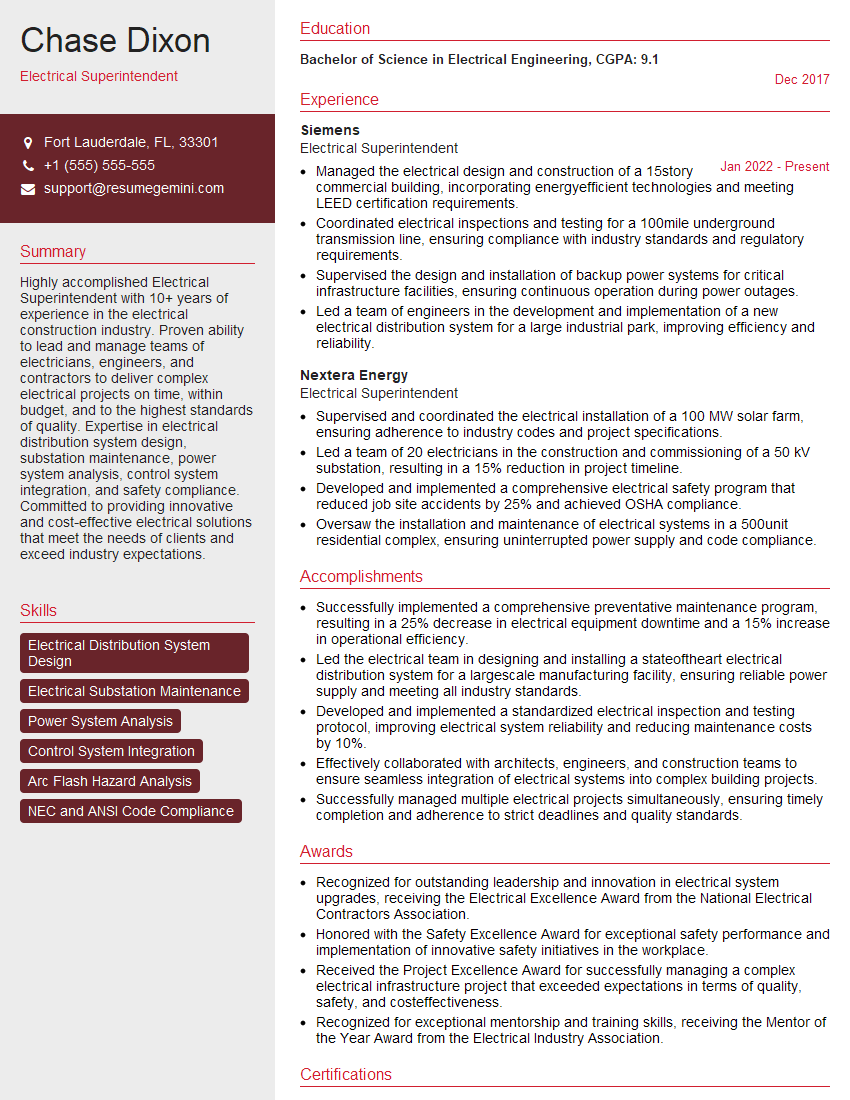
Electrical Superintendent Resume Sample
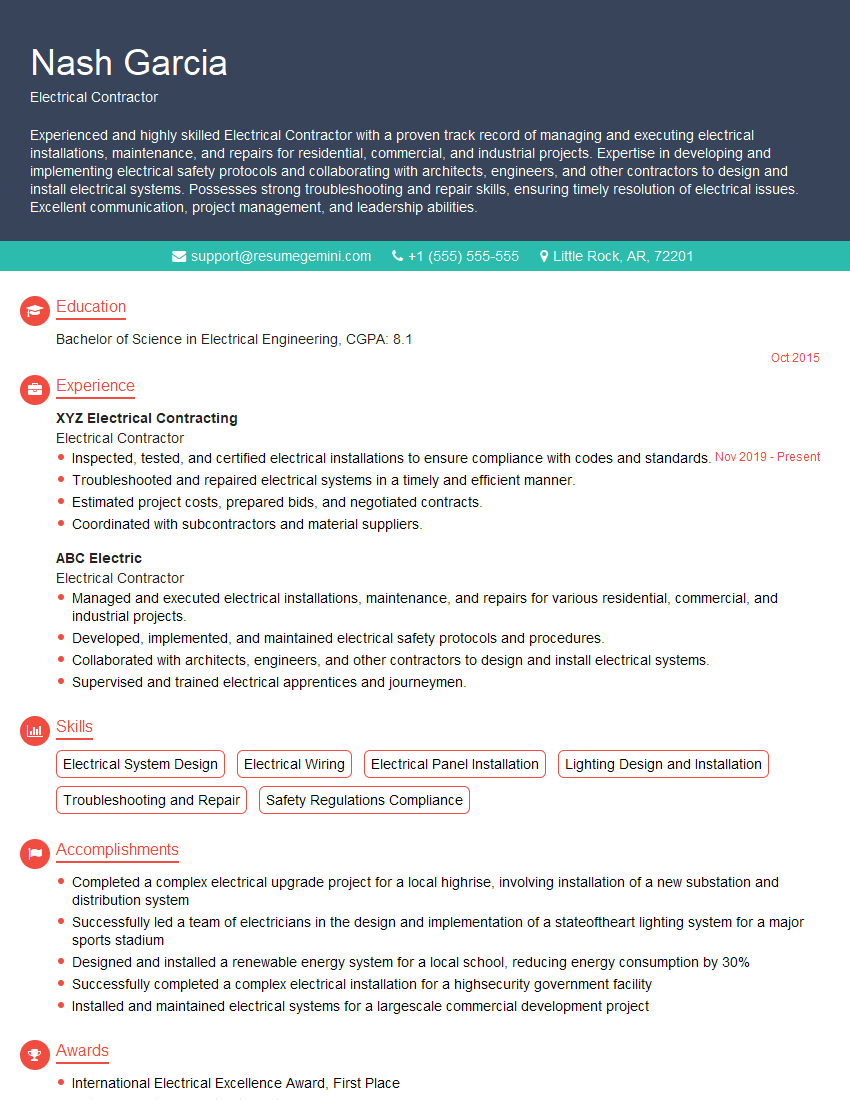
Electrical Contractor Resume Sample
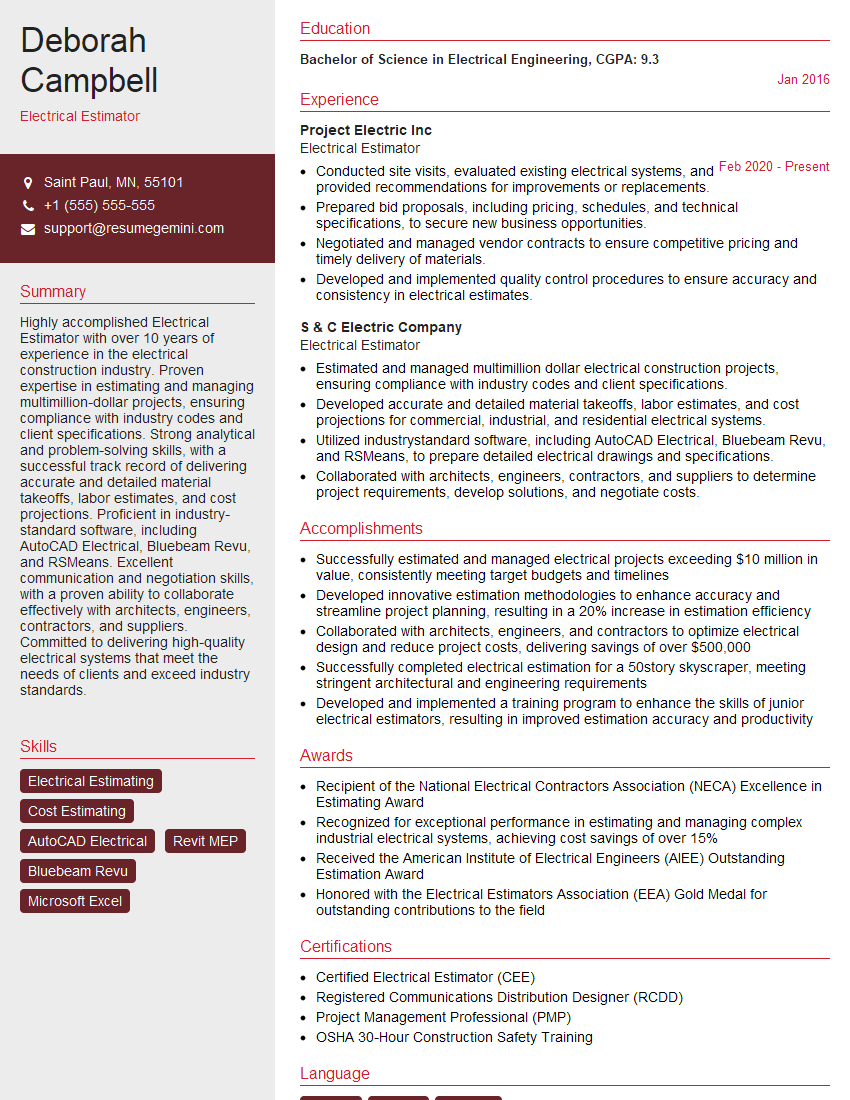
Electrical Estimator Resume Sample
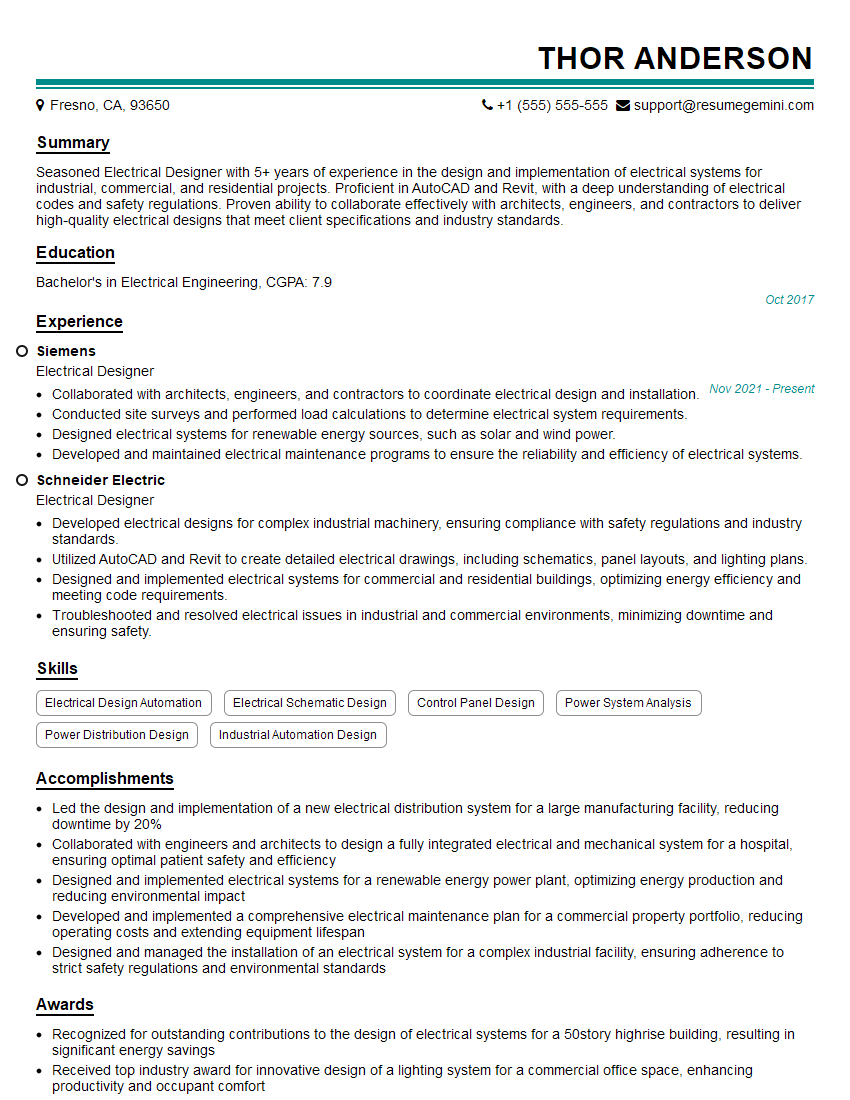
Electrical Designer Resume Sample
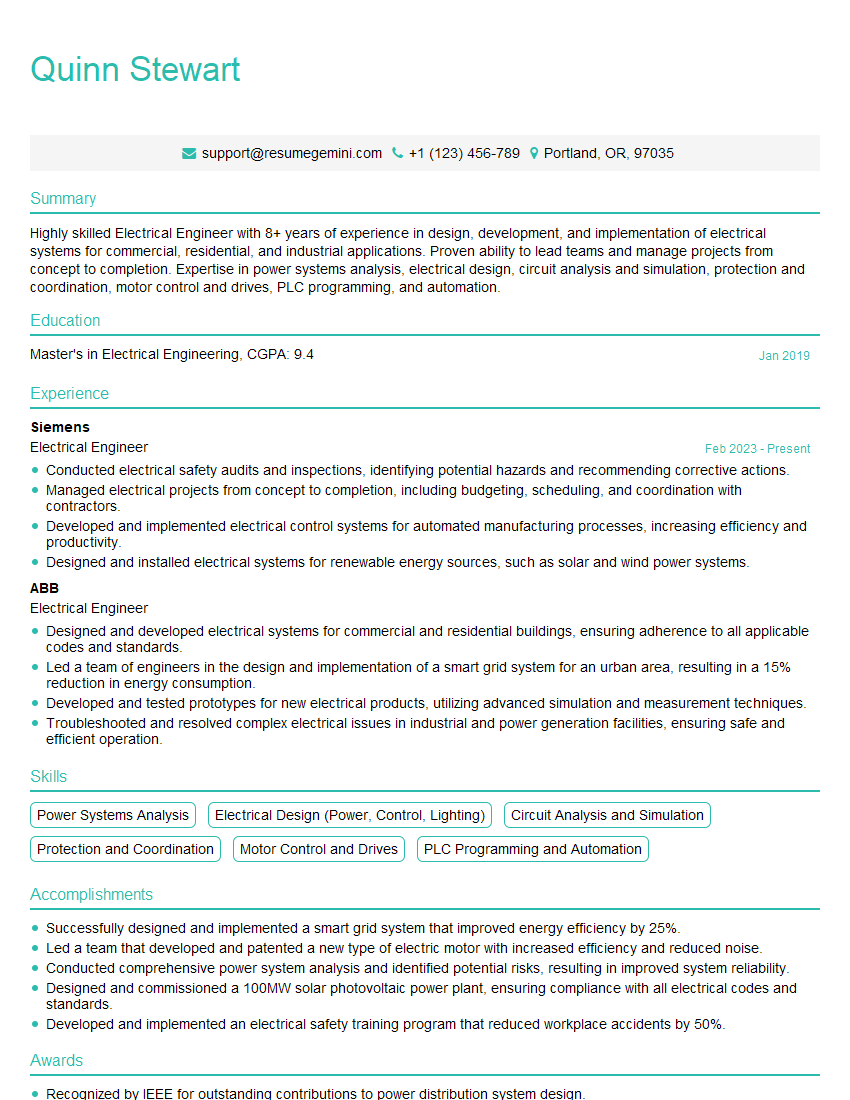
Electrical Engineer Resume Sample
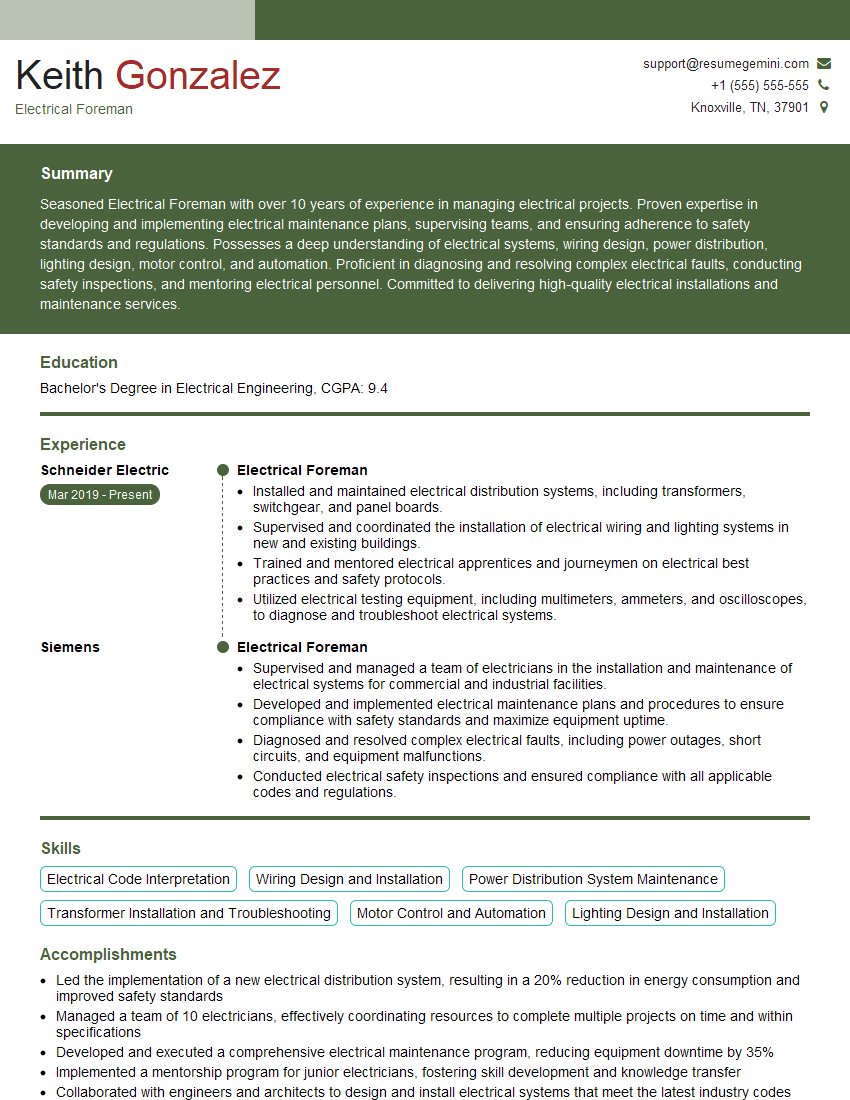
Electrical Foreman Resume Sample
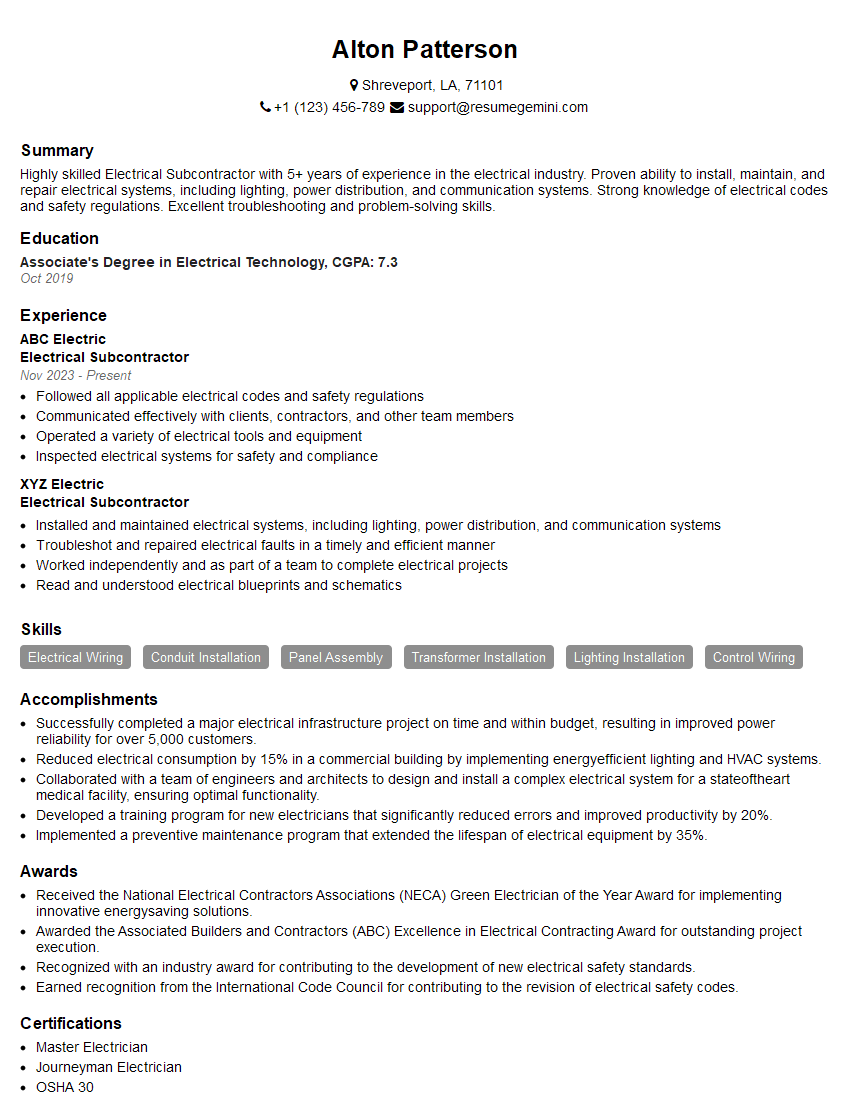
Electrical Subcontractor Resume Sample
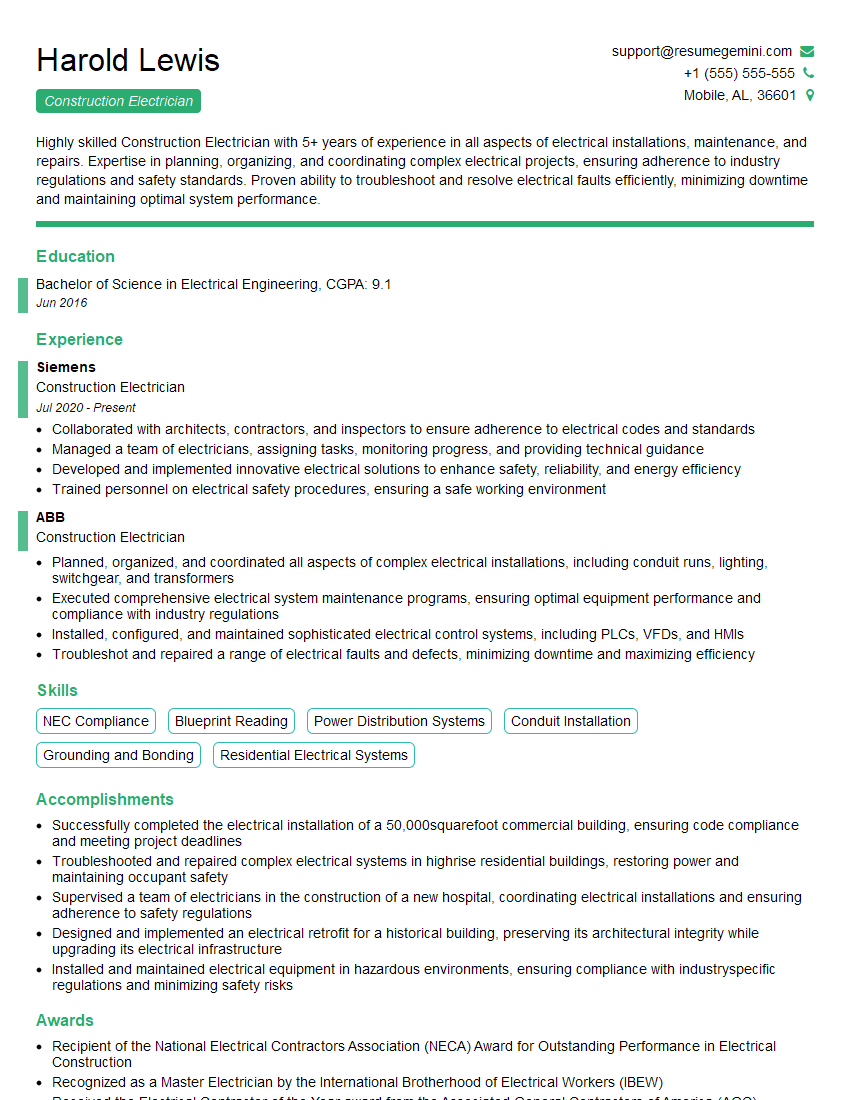
Construction Electrician Resume Sample
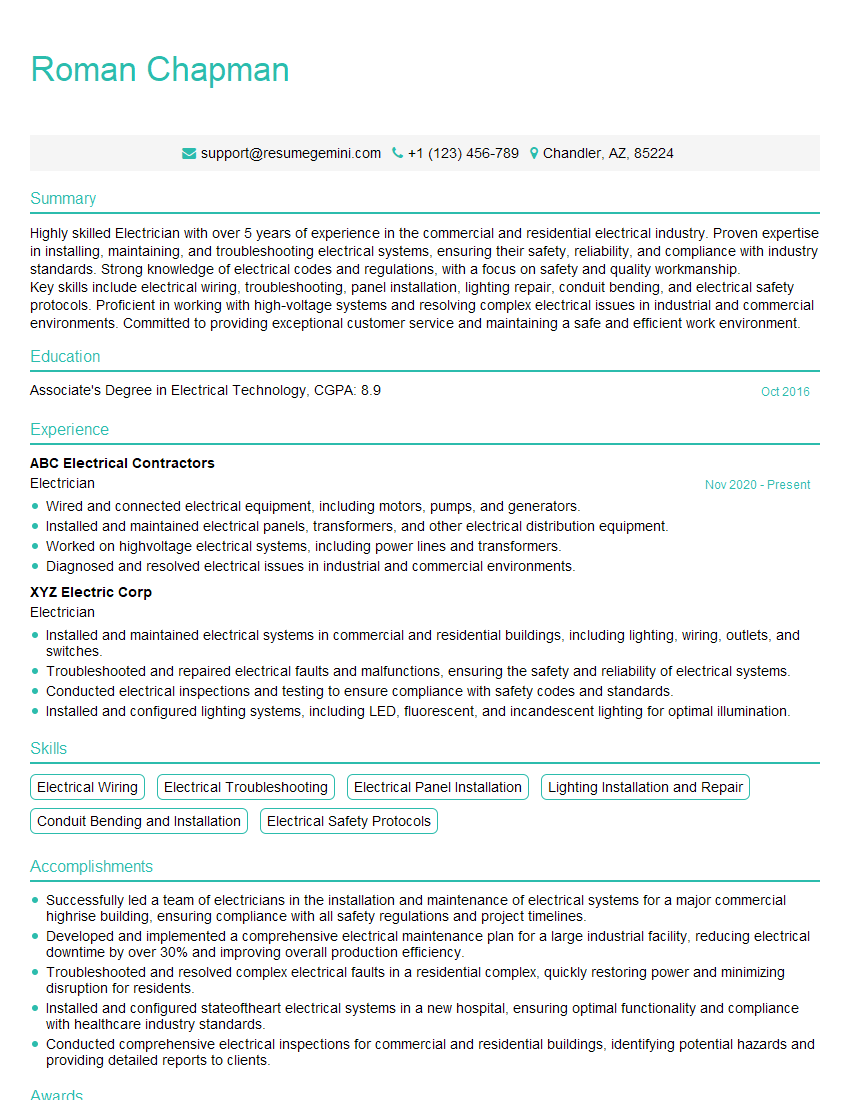
Electrician Resume Sample
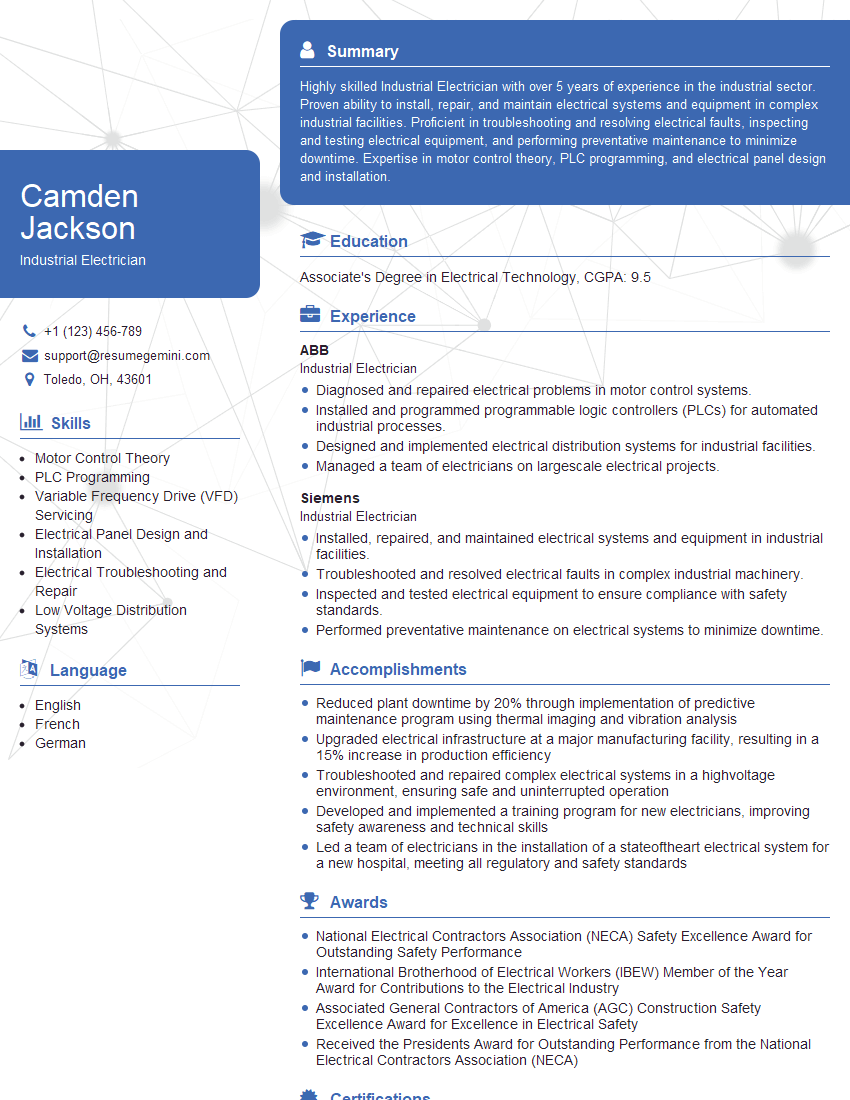
Industrial Electrician Resume Sample
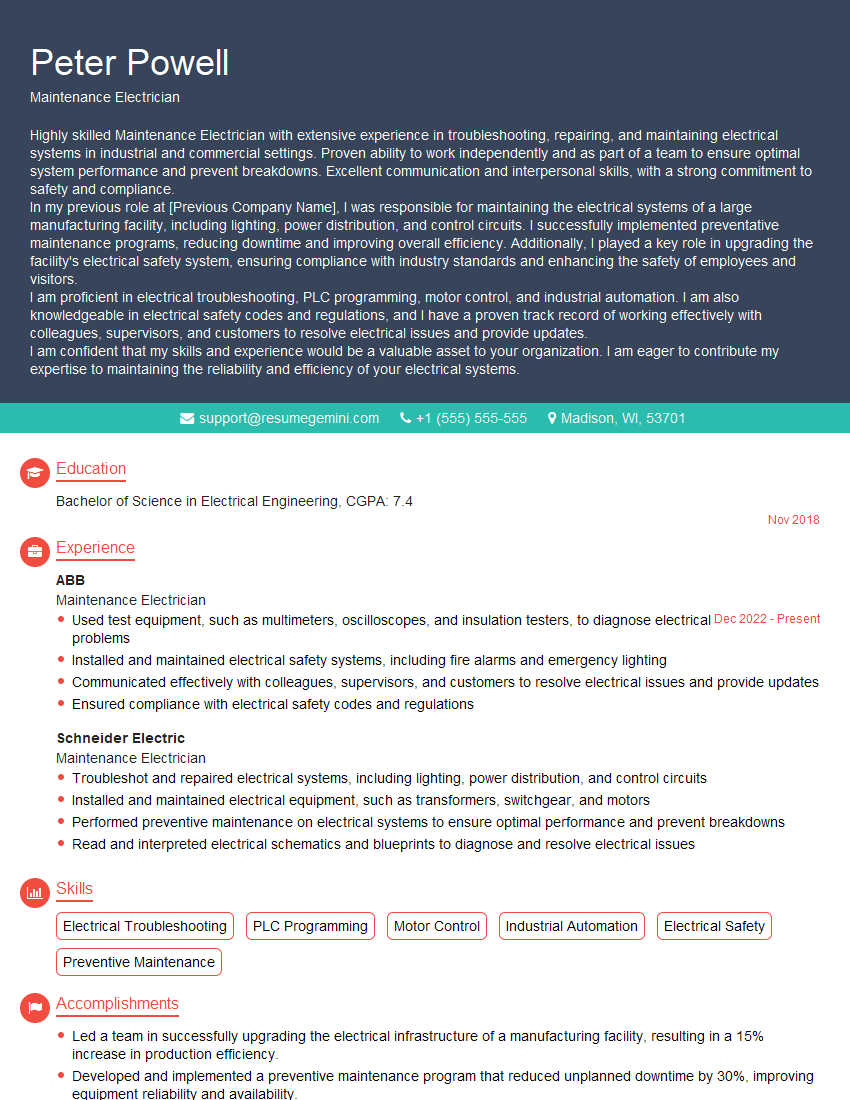
Maintenance Electrician Resume Sample
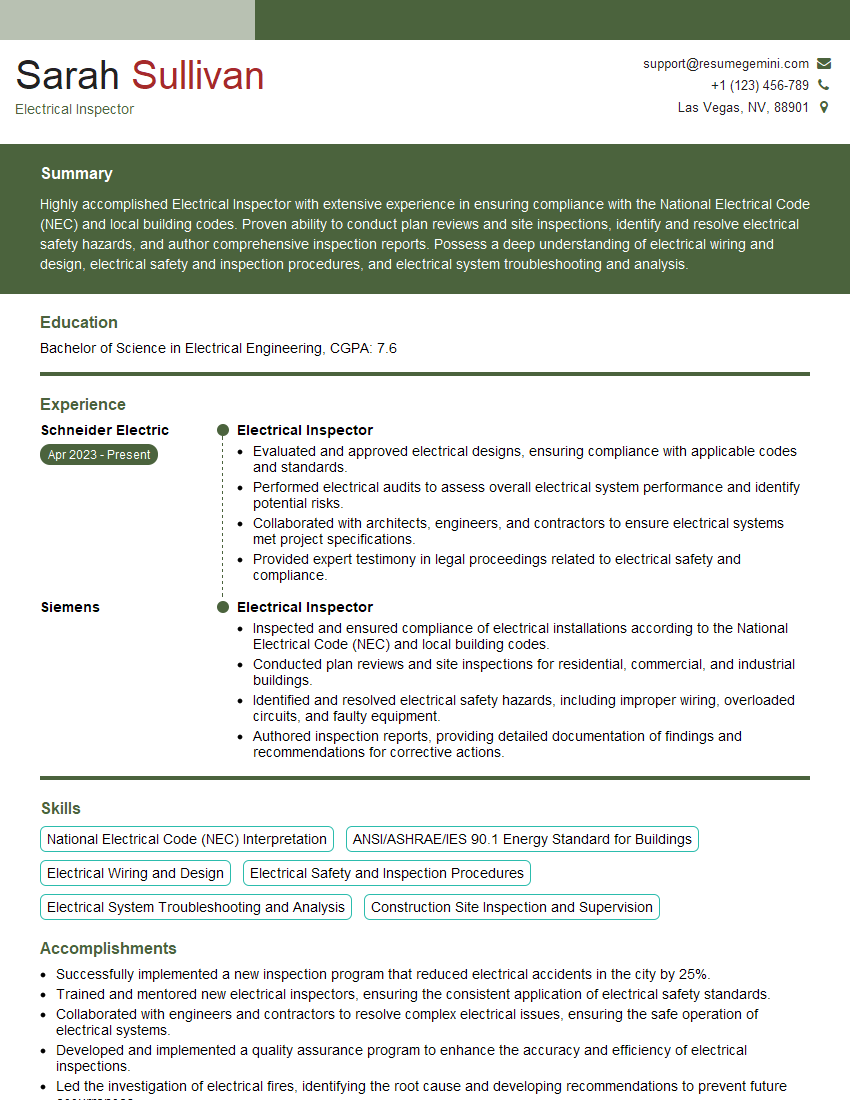
Electrical Inspector Resume Sample
Explore more articles
Users Rating of Our Blogs
Share Your Experience
We value your feedback! Please rate our content and share your thoughts (optional).
What Readers Say About Our Blog
Attention music lovers!
Wow, All the best Sax Summer music !!!
Spotify: https://open.spotify.com/artist/6ShcdIT7rPVVaFEpgZQbUk
Apple Music: https://music.apple.com/fr/artist/jimmy-sax-black/1530501936
YouTube: https://music.youtube.com/browse/VLOLAK5uy_noClmC7abM6YpZsnySxRqt3LoalPf88No
Other Platforms and Free Downloads : https://fanlink.tv/jimmysaxblack
on google : https://www.google.com/search?q=22+AND+22+AND+22
on ChatGPT : https://chat.openai.com?q=who20jlJimmy20Black20Sax20Producer
Get back into the groove with Jimmy sax Black
Best regards,
Jimmy sax Black
www.jimmysaxblack.com
Hi I am a troller at The aquatic interview center and I suddenly went so fast in Roblox and it was gone when I reset.
Hi,
Business owners spend hours every week worrying about their website—or avoiding it because it feels overwhelming.
We’d like to take that off your plate:
$69/month. Everything handled.
Our team will:
Design a custom website—or completely overhaul your current one
Take care of hosting as an option
Handle edits and improvements—up to 60 minutes of work included every month
No setup fees, no annual commitments. Just a site that makes a strong first impression.
Find out if it’s right for you:
https://websolutionsgenius.com/awardwinningwebsites
Hello,
we currently offer a complimentary backlink and URL indexing test for search engine optimization professionals.
You can get complimentary indexing credits to test how link discovery works in practice.
No credit card is required and there is no recurring fee.
You can find details here:
https://wikipedia-backlinks.com/indexing/
Regards
NICE RESPONSE TO Q & A
hi
The aim of this message is regarding an unclaimed deposit of a deceased nationale that bears the same name as you. You are not relate to him as there are millions of people answering the names across around the world. But i will use my position to influence the release of the deposit to you for our mutual benefit.
Respond for full details and how to claim the deposit. This is 100% risk free. Send hello to my email id: [email protected]
Luka Chachibaialuka
Hey interviewgemini.com, just wanted to follow up on my last email.
We just launched Call the Monster, an parenting app that lets you summon friendly ‘monsters’ kids actually listen to.
We’re also running a giveaway for everyone who downloads the app. Since it’s brand new, there aren’t many users yet, which means you’ve got a much better chance of winning some great prizes.
You can check it out here: https://bit.ly/callamonsterapp
Or follow us on Instagram: https://www.instagram.com/callamonsterapp
Thanks,
Ryan
CEO – Call the Monster App
Hey interviewgemini.com, I saw your website and love your approach.
I just want this to look like spam email, but want to share something important to you. We just launched Call the Monster, a parenting app that lets you summon friendly ‘monsters’ kids actually listen to.
Parents are loving it for calming chaos before bedtime. Thought you might want to try it: https://bit.ly/callamonsterapp or just follow our fun monster lore on Instagram: https://www.instagram.com/callamonsterapp
Thanks,
Ryan
CEO – Call A Monster APP
To the interviewgemini.com Owner.
Dear interviewgemini.com Webmaster!
Hi interviewgemini.com Webmaster!
Dear interviewgemini.com Webmaster!
excellent
Hello,
We found issues with your domain’s email setup that may be sending your messages to spam or blocking them completely. InboxShield Mini shows you how to fix it in minutes — no tech skills required.
Scan your domain now for details: https://inboxshield-mini.com/
— Adam @ InboxShield Mini
Reply STOP to unsubscribe
Hi, are you owner of interviewgemini.com? What if I told you I could help you find extra time in your schedule, reconnect with leads you didn’t even realize you missed, and bring in more “I want to work with you” conversations, without increasing your ad spend or hiring a full-time employee?
All with a flexible, budget-friendly service that could easily pay for itself. Sounds good?
Would it be nice to jump on a quick 10-minute call so I can show you exactly how we make this work?
Best,
Hapei
Marketing Director
Hey, I know you’re the owner of interviewgemini.com. I’ll be quick.
Fundraising for your business is tough and time-consuming. We make it easier by guaranteeing two private investor meetings each month, for six months. No demos, no pitch events – just direct introductions to active investors matched to your startup.
If youR17;re raising, this could help you build real momentum. Want me to send more info?
Hi, I represent an SEO company that specialises in getting you AI citations and higher rankings on Google. I’d like to offer you a 100% free SEO audit for your website. Would you be interested?
Hi, I represent an SEO company that specialises in getting you AI citations and higher rankings on Google. I’d like to offer you a 100% free SEO audit for your website. Would you be interested?