Cracking a skill-specific interview, like one for Electronic pagination and page assembly, requires understanding the nuances of the role. In this blog, we present the questions you’re most likely to encounter, along with insights into how to answer them effectively. Let’s ensure you’re ready to make a strong impression.
Questions Asked in Electronic pagination and page assembly Interview
Q 1. Explain the process of electronic pagination.
Electronic pagination is the process of automatically assigning page numbers and arranging content into pages within a digital document, eliminating the manual processes of traditional typesetting. Think of it like creating a digital blueprint for your printed material. It involves placing text and images onto virtual pages, controlling page breaks, and ensuring consistent formatting throughout the document. This process is crucial for producing professional-looking documents, whether it’s a book, magazine, brochure, or even a complex technical manual.
The process typically involves these steps:
- Content Import: Importing text, images, and other elements into the pagination software.
- Layout Design: Defining the page dimensions, margins, columns, and overall design.
- Content Placement: Arranging text and graphics onto the pages, handling text wrapping, image scaling, and other layout adjustments.
- Pagination: Automatically assigning page numbers and managing page breaks based on the layout and content.
- Proofreading: Reviewing the paginated document for errors in pagination, text, and images.
- Output: Generating output files suitable for printing or digital distribution, often PDF files.
Q 2. Describe different types of pagination software you’ve used.
Throughout my career, I’ve worked extensively with various pagination software packages, each with its own strengths and weaknesses. My experience includes:
- Adobe InDesign: A highly versatile industry standard, ideal for complex layouts, including multi-column designs, intricate image manipulation and precise control over typography. I’ve utilized its scripting capabilities for automating repetitive tasks, boosting efficiency in large projects.
- QuarkXPress: Another robust option known for its power and stability, especially useful for handling demanding projects with high image resolution. I’ve found its workflow well-suited for collaborative projects.
- PageMaker (Legacy): While outdated, my early experience with PageMaker provided a foundational understanding of the principles of pagination, which proved invaluable in later adopting newer software. This demonstrates adaptability to evolving technologies.
- Specific MIS (Management Information System) software: For large-scale publishing operations, I’ve also worked with proprietary MIS systems that integrate pagination with workflow management and database integration. These platforms streamline the entire publishing process, allowing for efficient project tracking and automation.
Q 3. How do you handle complex page layouts with multiple columns and images?
Handling complex layouts is a core aspect of my expertise. For documents with multiple columns and images, a strategic approach is essential. I typically begin by establishing a strong master page template that defines the column structure, margins, and other foundational elements. This template ensures consistency across the entire document. Then, I leverage the software’s features such as:
- Text Frames and Image Frames: Using these tools to precisely control the placement and flow of text and images within the column structure. This allows for wrapping text around images, creating visual balance, and preventing unexpected page breaks.
- Object Styles and Paragraph Styles: Applying consistent formatting to ensure visual uniformity and streamline editing. This saves significant time and effort on large projects.
- Tables and Grids: Utilizing tables to manage structured content and grids to maintain visual alignment across columns and pages, particularly beneficial for publications with intricate layouts.
- Master Pages and Layer Management: Using these tools to effectively manage complex layouts and keep content organized.
For example, when working on a multi-column magazine layout with numerous images, I create separate image frames for each image and use text wrapping to ensure the text flows naturally around them. This carefully planned approach is crucial for ensuring a clean, professional aesthetic.
Q 4. What are the key considerations for ensuring accurate pagination?
Ensuring accurate pagination requires meticulous attention to detail and a systematic approach. Key considerations include:
- Accurate Content Import: Ensuring the text and images are imported correctly and completely, without errors or missing information.
- Consistent Formatting: Maintaining consistent fonts, sizes, styles, and spacing throughout the document.
- Proper Page Breaks: Strategically managing page breaks to avoid widows and orphans (single words or lines at the top or bottom of a page) and maintaining appropriate visual flow.
- Image Resolution and Compression: Utilizing images with suitable resolution for print or digital media and managing compression to ensure image quality and file size are optimized. Low-resolution images can drastically impact print quality.
- Careful Review and Proofreading: Thorough checks for errors in pagination, content, and formatting before the final output. This may involve multiple rounds of review and feedback.
- Using Checklists and Quality Control Procedures: Employing established checklists and procedures to ensure all aspects of the process are correctly completed. This is particularly crucial for complex projects or large teams.
Overlooking these details can lead to significant errors that can be costly and time-consuming to rectify. Thus, precision and quality control are paramount.
Q 5. Explain the concept of imposition and its role in electronic pagination.
Imposition is the process of arranging pages in a digital document so that when printed, they fold and cut correctly to form a finished product like a book, magazine, or brochure. Think of it as creating a template for the printer that ensures the pages are arranged in the optimal order for efficient printing and binding. For instance, a 16-page booklet might need to be arranged in a specific sequence on a larger sheet of paper for printing, so that when it’s folded and trimmed, the pages are in the correct order.
Imposition is crucial in electronic pagination because it ensures the final printed product will be correctly assembled. It takes into account the physical constraints of the printing process, such as the size of the printing sheets, folding requirements, and binding methods. Without proper imposition, the pages might appear out of order or be incorrectly aligned after printing and binding. Many modern pagination software packages include imposition tools, often with pre-set templates for common formats.
Q 6. How do you manage different file formats during the page assembly process?
Managing different file formats during page assembly is a critical skill. Different content sources might generate files in various formats, like:
- Text: .txt, .doc, .docx, .rtf
- Images: .jpg, .jpeg, .tiff, .png, .eps, .ai
- Vector Graphics: .svg, .pdf
A robust workflow is necessary to handle this variety. This workflow typically involves:
- File Conversion: Using appropriate software tools to convert files into formats compatible with the pagination software. For example, converting a .doc file to a .txt file might be necessary for seamless integration. The choice of file type often depends on considerations of image quality and file size.
- Image Optimization: Optimizing images for size and resolution to ensure appropriate print quality without impacting file size and performance. It’s essential to balance image resolution with file size.
- Color Profile Management: Ensuring consistent color representation across different file formats, especially crucial for print materials (addressed in the next question).
- Link Management: Carefully managing linked images and other external files to avoid missing content or broken links.
Using a structured approach to file management and employing appropriate conversion tools ensures a smooth and efficient workflow, resulting in a more accurate and error-free output.
Q 7. Describe your experience with color management in prepress.
Color management in prepress is absolutely essential for ensuring accurate and consistent color reproduction in the final printed output. Inaccurate color can ruin the overall aesthetic and render the printed piece substandard. My experience includes:
- ICC Profiles: Working with ICC (International Color Consortium) profiles to define the color spaces used throughout the workflow, from image capture to printing. This ensures colors are translated accurately between different devices and software.
- Color Conversion: Understanding and applying color conversion techniques (like CMYK to RGB and vice versa) depending on the output destination and the printing method. This is crucial as print and screen use different color spaces.
- Proofing: Utilizing soft proofing methods (simulating print output on screen) and hard proofing (creating physical test prints) to verify color accuracy before final printing. This helps identify and correct discrepancies early on.
- Communication with Printers: Close collaboration with printers to understand their color capabilities and to align color profiles throughout the print workflow. This ensures that the intended colors are accurately reproduced.
For example, I recently worked on a project where the client provided images in the sRGB color space, but the final output was intended for CMYK printing. I carefully converted the images to CMYK, using the appropriate ICC profiles, and performed a soft proof to ensure color accuracy before sending the files to the printer. This meticulous approach ensured consistent and accurate color reproduction in the final printed piece.
Q 8. How do you troubleshoot pagination errors?
Troubleshooting pagination errors starts with understanding the source. Is it a data issue, a software glitch, or a problem with the template? I approach it systematically. First, I meticulously check the source data for inconsistencies – missing pages, incorrect page numbers, or corrupted data fields. I often use data validation tools to automate this process. Second, I examine the pagination software’s log files for error messages. These logs provide clues to the nature and location of the problem, often pointing to specific scripts or configurations. Finally, if the issue stems from the template itself, I inspect the template for errors in the page numbering, section breaks, or master page definitions. For example, a common mistake is an incorrect reference to a style sheet or a conflicting definition within the template that causes unexpected page breaks. I might use a print preview to visually identify problematic pages and then systematically work backward through the pagination process to find the root cause. I often employ a ‘divide and conquer’ approach, splitting the document into smaller sections to isolate the problem area, making it easier to pinpoint the error.
Q 9. Explain your experience with automated workflows in electronic pagination.
My experience with automated workflows in electronic pagination centers around streamlining the entire process from manuscript to final PDF. I’ve extensively used tools like Adobe InDesign Server and automated scripting languages such as Python to create highly efficient workflows. For instance, I’ve developed automated scripts that import data from databases, automatically generate page numbers, create indexes, and even perform basic quality checks, minimizing manual intervention and significantly reducing the potential for human error. In one project, we automated the creation of thousands of personalized brochures. Each brochure required a unique customer name and address, which were dynamically inserted by the script, drastically reducing the turnaround time compared to manual pagination. The automation extends to file preparation, preflighting, and even the final PDF generation. This ensures consistency and accelerates the overall production process.
Example: A Python script could use the PyPDF2 library to manipulate page order and add watermarks to specific pages based on metadata.Q 10. What quality control measures do you implement during page assembly?
Quality control during page assembly is paramount. I implement a multi-stage approach. First, a thorough review of the pagination software’s output is crucial. This involves checking for proper page numbering, correct placement of elements, and verifying that all pages are correctly ordered and formatted. Next, I conduct a visual inspection of the assembled pages using high-resolution screen proofs and often a soft proof on a calibrated monitor to ensure accurate color representation. This helps to identify any visual discrepancies such as unexpected breaks or misaligned elements. Furthermore, I utilize automated preflight checks to detect potential printing issues, like missing fonts, images with insufficient resolution, or color profiles that might cause unexpected results in the final print. A final step involves a detailed comparison of the final PDF with the source material to verify the accuracy and completeness of the pagination process, ensuring that the final output matches the client’s specifications. These multiple layers of quality control significantly reduce the likelihood of errors.
Q 11. Describe your familiarity with various trapping techniques.
My familiarity with trapping techniques is extensive. Trapping is crucial for preventing unsightly gaps between colors during printing, especially in documents with multiple color separations. I understand and implement various techniques, including spread trapping, choke trapping, and expansion trapping. Spread trapping, where the ink is slightly expanded, is beneficial for preventing gaps, but it can lead to color shifts. Choke trapping, where one color is slightly reduced to lie under the other, is useful where color shifts need to be minimized. I choose the most appropriate technique based on the printing method, paper type, and color combination. For example, for high-end printing jobs, I might carefully implement choke trapping to ensure the best color accuracy and minimize the risk of unsightly gaps. The selection of the appropriate trapping method often depends on the complexity of the artwork and printing specifications; it’s a decision that requires both technical understanding and artistic sensitivity.
Q 12. How do you handle bleeds and margins during pagination?
Handling bleeds and margins is critical for ensuring a professional-looking final product. Bleeds extend the image or color beyond the trim line to account for any slight misalignment during cutting and printing. I ensure that images and colors extend at least 3mm beyond the trim line to prevent white edges. Margins, on the other hand, define the safe area for text and critical elements, preventing important information from being lost during trimming. I carefully define and maintain consistent margins, usually within the specifications provided by the printing house. For example, in a book project, I’d carefully set up margins and bleeds according to the binding type, ensuring the text and images are safely placed inside the margin and that the bleeds provide ample coverage for the trimming process. This careful attention to both bleeds and margins is vital for delivering a professionally finished product.
Q 13. Explain the importance of preflighting in prepress workflow.
Preflighting is a crucial step in the prepress workflow, acting as a preventative measure to catch potential errors before they reach the printing stage. This automated process analyzes the file for issues such as missing fonts, low-resolution images, incorrect color profiles, or problematic color separations. Think of it as a comprehensive health check for your document. By identifying and resolving these issues early, preflighting saves valuable time and money by preventing costly reprints or delays in the printing process. Preflighting tools provide detailed reports identifying problem areas and frequently suggest solutions. For example, a preflight check might detect that an image uses an unsupported color space, allowing me to convert it to a suitable format before proceeding with printing. This significantly reduces the risk of errors and ensures a smoother production process.
Q 14. What are your preferred methods for resolving page numbering inconsistencies?
Resolving page numbering inconsistencies requires careful attention to detail. I start by identifying the specific pages or sections affected. Are they just off by one number, or is there a more complex pattern? I then examine the pagination settings within the software, checking for any errors in the section breaks, page numbering styles, or automatic numbering functions. A common cause is incorrect style sheet references or unintended overrides. In more complex cases, I might trace the page numbering through the document structure, examining the different styles and master pages, to find the point of divergence. If the problem stems from the data source, I carefully review the data feed for errors or omissions that might have led to the numbering inconsistencies. Sometimes, a simple find and replace operation can solve the problem, while other times, it might require more detailed manipulation of the data. In many cases, using a consistent numbering style throughout the document is the best way to prevent this kind of error in the first place.
Q 15. How do you maintain consistency across multiple pages?
Maintaining consistency across multiple pages is paramount in electronic pagination. Think of it like building with Lego bricks – each brick needs to fit perfectly with the others to create a stable structure. In publishing, this means consistent fonts, styles, margins, headers, footers, and page numbering. We achieve this through:
- Style guides and templates: Creating and enforcing a comprehensive style guide ensures every element is consistent. Templates, especially in software like Adobe InDesign or QuarkXPress, automate the application of these styles to each new page. This prevents manual adjustments and ensures uniformity.
- Master pages: These are templates applied to multiple pages, setting the foundation for consistent elements like headers, footers, page numbers, and margins. Changes to the master page automatically update all linked pages.
- Automated pagination tools: Advanced pagination software can automatically manage page numbering, section breaks, and other elements, minimizing manual intervention and reducing inconsistencies.
- Version control: Tracking revisions allows you to revert to consistent versions if inconsistencies are introduced unintentionally. This is particularly useful in collaborative projects.
For example, in a multi-chapter book, a master page would define the header (chapter title and page number) and footer (book title). Each chapter might have its own slightly varied master page, maintaining overall consistency while allowing for chapter-specific design elements.
Career Expert Tips:
- Ace those interviews! Prepare effectively by reviewing the Top 50 Most Common Interview Questions on ResumeGemini.
- Navigate your job search with confidence! Explore a wide range of Career Tips on ResumeGemini. Learn about common challenges and recommendations to overcome them.
- Craft the perfect resume! Master the Art of Resume Writing with ResumeGemini’s guide. Showcase your unique qualifications and achievements effectively.
- Don’t miss out on holiday savings! Build your dream resume with ResumeGemini’s ATS optimized templates.
Q 16. Describe your experience with PDF workflows in prepress.
My experience with PDF workflows in prepress is extensive. PDFs are the cornerstone of modern prepress, offering a universally compatible format for transferring files between different software and printing devices. My workflow typically involves:
- Creating press-ready PDFs: This involves ensuring the correct color space (CMYK), resolution, fonts embedded, bleeds set, and output settings optimized for the printing process (e.g., offset, digital). I utilize tools like Acrobat Pro to check and fix any potential issues.
- Preflighting: Before sending a PDF to the printer, I rigorously preflight the document using automated tools to identify potential problems such as missing fonts, low-resolution images, or color inconsistencies. This prevents costly reprints.
- Proofing: Soft proofing (on screen) and hard proofing (printed proof) are critical. Soft proofing helps identify issues early, saving time and resources. Hard proofing ensures accurate color representation on the chosen printing substrate.
- Imposition and nesting: I prepare the PDF for imposition (arranging pages for printing and binding) often using dedicated imposition software to optimize sheet usage and minimize waste.
For example, I’ve worked on projects requiring the creation of both PDF/X-1a and PDF/X-4 standards, choosing the appropriate standard based on the client’s requirements and the printer’s capabilities. This ensures compatibility and avoids printing errors.
Q 17. Explain how you ensure accurate imposition for different printing processes.
Accurate imposition is crucial for efficient printing and flawless binding. Different printing processes require different imposition strategies. I ensure accuracy by:
- Understanding the printing process: Offset printing, digital printing, and large format printing each have unique requirements. For example, offset requires careful consideration of sheet size, imposition layout, and bleed to account for plate alignment.
- Using imposition software: Specialized software automates the process, allowing for precise placement of pages, consideration of imposition schemes (e.g., 8-page signatures for perfect binding), and generation of printer-ready files.
- Proofing and verification: After creating the imposed file, I always create a proof (soft or hard) to visually verify the page order and position before sending it to the printer. This is essential to avoid misprints.
- Working with printing specifications: I collaborate closely with printers to understand their specific requirements for imposition, including trim marks, color bars, and other necessary elements.
For instance, a book with perfect binding requires careful consideration of the spine width and imposition to ensure the final product lays flat and the text aligns correctly across the spine. For a booklet with saddle-stitch binding, I carefully arrange the pages to ensure correct page order when folded.
Q 18. How do you handle revisions and updates to existing page layouts?
Handling revisions and updates efficiently is vital. My approach involves:
- Version control: Using software with version history allows tracking changes and reverting to previous versions if needed.
- Layered design: Designing with layers in software like InDesign allows for easy modification of individual elements without affecting others. This speeds up revision implementation.
- Style sheets: Updates to style sheets propagate changes automatically throughout the document, ensuring consistency during revisions.
- Collaboration tools: Using tools like shared cloud storage and annotation software allows for easy collaboration and efficient feedback incorporation.
For example, if a client requests a change to a specific paragraph on page 50 of a 100-page book, I can easily locate it using the page number, update the content, and export a new version without affecting the entire document.
Q 19. What strategies do you use to optimize file sizes for efficient printing?
Optimizing file sizes is crucial for efficient printing and reduces costs. Strategies I employ include:
- Using high-quality images but appropriate resolution: I use images at the appropriate resolution for the printing process, avoiding unnecessarily large files. For example, a 300 DPI image is usually sufficient for offset printing, but a lower resolution might suffice for web use.
- Compressing images: I use lossy or lossless compression techniques, depending on the image type and the acceptable level of quality loss. Tools like Photoshop and dedicated image compression software are helpful here.
- Vector graphics where appropriate: Using vector graphics (scalable graphics like those created in Illustrator) for illustrations and logos allows for resizing without loss of quality, reducing file size compared to raster images.
- Removing unused elements: I carefully check and remove any unused graphics, layers, or other elements that might bloat the file size.
- PDF optimization: Acrobat Pro offers tools for optimizing PDF files, reducing file size without sacrificing print quality.
For example, a high-resolution image for a print advertisement can be compressed significantly without being perceptibly different on print while reducing file size for faster processing during printing.
Q 20. Explain your knowledge of different binding methods and their impact on pagination.
Different binding methods significantly impact pagination. Understanding these impacts is critical for producing a well-bound and readable final product.
- Perfect Binding: This method involves gluing the edges of pages together to form a spine. Pagination needs to consider the spine width – pages near the spine will be slightly narrower and adjustments may be needed to prevent text running into the spine.
- Saddle Stitch Binding: Pages are folded and stapled together in the middle. Pagination must ensure the correct page order and orientation for proper folding and assembly.
- Spiral Binding: Pages are punched with holes and bound with a plastic or metal comb. Pagination is less critical here as the pages lie relatively flat.
- Case Binding: A more complex method used for hardback books. Pages are sewn together, glued to form a spine and then covered with a hard cover. The pagination here often involves signatures (sets of pages printed together)
For example, in perfect binding, I need to account for the gutter (the space between two pages that is lost in binding). The text and images near the spine may need to be adjusted to prevent information loss.
Q 21. Describe your experience with different printing substrates and their implications on prepress.
Different printing substrates (the materials being printed on) have significant implications on prepress. The choice of substrate affects color reproduction, ink absorption, and overall print quality.
- Paper Type: Coated paper gives vibrant, sharp prints, but uncoated paper offers a more natural feel but can show less saturated colors. This influences color profiles and ink choices.
- Paper Weight: Heavier paper requires different adjustments in the imposition process, particularly related to feeding and handling during printing.
- Paper Finish: The surface finish (matte, gloss, etc.) influences how ink interacts with the substrate. This needs to be considered during color proofing.
- Specialty Substrates: Printing on materials like canvas or plastics requires specific settings and considerations concerning ink adhesion and drying time.
For instance, when printing on uncoated paper, I might need to compensate for ink absorption by adjusting the color profile to ensure accurate color reproduction. Printing on a textured substrate might require a slight increase in the resolution to avoid blurring.
Q 22. How do you collaborate effectively with designers and other stakeholders during the prepress process?
Effective collaboration in prepress hinges on clear communication and proactive engagement. I start by scheduling early meetings with designers and stakeholders to thoroughly understand the project’s scope, including design specifications, content requirements, and the intended audience. This includes clarifying branding guidelines, reviewing style guides, and discussing any unique challenges the project might present. I utilize project management tools to track progress, share updates, and facilitate feedback. This transparent approach ensures everyone is on the same page and helps prevent costly errors further down the line. For example, in a recent book project, I collaborated closely with the designer to define bleed areas and ensure all images were correctly sized and positioned for optimal print quality. This involved iterative reviews and adjustments, leading to a high-quality final product.
I believe in fostering a collaborative environment where everyone feels comfortable sharing ideas and raising concerns. I actively solicit feedback at each stage of the process, utilizing tools like proofing software and online collaboration platforms to make the review process efficient and transparent.
Q 23. Describe your experience with using color profiles and managing color consistency.
Color management is crucial for consistent print results. My experience spans various color profiles, including CMYK, RGB, and spot colors. I’m proficient in using color management systems (CMS) such as Adobe Color Engine to ensure accurate color conversion and consistency across different devices and output methods. I always work with the correct color profile for the intended output (e.g., using a print-specific CMYK profile instead of a screen-based RGB profile). I carefully check and adjust color settings within the imposition software to match the press’s capabilities and ensure consistent color reproduction throughout the print job. For instance, if a client provides a logo in a specific Pantone spot color, I ensure that this is faithfully represented in the final print output. I frequently employ soft proofing to visualize how colors will appear in print before the job goes to press, mitigating costly surprises.
Q 24. What software do you use for imposition and how do you optimize settings for best results?
I am highly proficient in using industry-standard imposition software such as Esko Automation Engine, Imposition, and Preps. These tools enable efficient creation of imposition layouts, including the arrangement of pages, imposition of signatures, the addition of bleeds, and the generation of printer marks. Optimizing settings involves understanding the specifics of the printing press and paper stock. For example, I adjust the imposition settings to minimize waste, considering the sheet size, page size, and the orientation of the pages. I also meticulously configure the imposition settings to create accurate printer marks, such as crop marks and color bars, for accurate cutting and color registration during the printing process. The specific settings vary depending on the job, but in general, I always focus on optimizing for speed, accuracy, and minimizing waste. This includes fine-tuning settings for different imposition types, such as imposition of booklets, broadsheets, or leaflets. For instance, optimizing a booklet’s imposition requires meticulous attention to page order and the creation of proper signatures.
Q 25. How do you handle complex document structures with varying page sizes and orientations?
Handling complex document structures with varying page sizes and orientations requires a structured approach and the right tools. I begin by carefully analyzing the document structure, identifying any inconsistencies in page sizes and orientations. Next, I utilize the capabilities of my imposition software to create tailored templates for different page formats. I employ features like nested layouts and automated page numbering to handle complex scenarios, including those with different page orientations within the same document. For example, I might have a project requiring both landscape and portrait pages within a single booklet. My software allows me to define separate templates for each orientation and then seamlessly integrate them within a larger imposition scheme. This level of control ensures correct page sequencing and avoids common imposition errors.
Q 26. Explain your understanding of print resolution and its impact on image quality.
Print resolution, measured in dots per inch (dpi), directly impacts image quality. Higher resolution means more dots per inch, resulting in sharper and more detailed images. A common resolution for professional print is 300 dpi. Using lower resolution images will lead to pixelation, blurring, and a loss of detail in the final print output. For instance, using a 72 dpi image intended for a screen on a print job will result in a very poor quality print. I always ensure that images are provided in the appropriate resolution for their intended use, considering the final print size and desired level of detail. If images are provided at a lower resolution than needed, I will carefully assess the possibilities of upscaling the images, balancing image sharpness with the risk of introducing artifacts during upscaling. Careful attention to image resolution is essential for delivering high-quality print projects.
Q 27. How do you ensure the accuracy and completeness of page numbers, headers, and footers?
Accuracy in page numbering, headers, and footers is paramount. I use automated features within my imposition and design software to ensure consistent and correct numbering across all pages. I thoroughly review the generated output to catch any errors, paying close attention to any special cases or exceptions in page numbering that might arise from complex document structures or different section layouts. For instance, Roman numerals for preliminary pages, or different numbering styles for different sections. I use cross-checking techniques such as comparing page numbers against a master document to ensure accuracy. When dealing with headers and footers, I utilize template features to automate their placement and content, minimizing manual intervention and reducing the chance of errors. Consistent review at every step is key to guaranteeing accuracy.
Q 28. Describe a challenging pagination project and how you successfully resolved it.
A particularly challenging project involved a multi-lingual magazine with varying page sizes, orientations, and several custom-designed elements. The client required high accuracy for a complex booklet with specific folding and stitching requirements. The challenge was to maintain consistency across different languages and variations of the design. The primary issue was coordinating different versions of the magazine with varying content lengths, needing different page counts and pagination to meet the client’s specifications. To resolve this, I developed a robust imposition workflow, leveraging scripting features within my imposition software to automate the process of generating different page counts with distinct imposition layouts depending on the language and specific edition. I developed a system that automatically generated page numbers and headers/footers specific to each language and edition. This ensured consistent numbering across each version and helped me to successfully manage the complexity of multiple variants. Rigorous testing and multiple proofing rounds were critical to ensure final accuracy and client satisfaction before the project went to press.
Key Topics to Learn for Electronic Pagination and Page Assembly Interview
- Workflow and Processes: Understanding the entire lifecycle of document production, from initial design to final output, including pre-flight checks and quality control.
- Imposition and Layout: Mastering techniques for arranging pages for printing, including sheet imposition, signatures, and booklet creation. Practical application: Understanding the differences between various imposition methods and their suitability for different print types (e.g., web offset vs. sheetfed).
- Software Proficiency: Demonstrating expertise in relevant software applications used for electronic pagination and page assembly (e.g., Adobe Acrobat Pro, imposition software, prepress workflow systems). Be prepared to discuss your experience with specific tools and features.
- Color Management: Understanding color profiles, color spaces, and how to ensure consistent color reproduction throughout the production process. Practical application: Troubleshooting color discrepancies between digital and printed output.
- File Formats and Conversions: Knowledge of different file formats (PDF, TIFF, etc.) and their suitability for various stages of the workflow. Understanding file optimization techniques for efficient processing and high-quality output.
- Print Finishing and Binding: Familiarity with different print finishing options (e.g., cutting, folding, binding) and their impact on the pagination and page assembly process. Understanding how to prepare files for optimal results with chosen finishing methods.
- Troubleshooting and Problem-Solving: Demonstrating the ability to identify and resolve common issues that arise during electronic pagination and page assembly, such as incorrect imposition, color mismatches, and missing pages.
- Automation and Scripting (if applicable): Depending on the role, you may need to demonstrate knowledge of automating tasks using scripting languages (e.g., Python, JavaScript) within the prepress workflow.
Next Steps
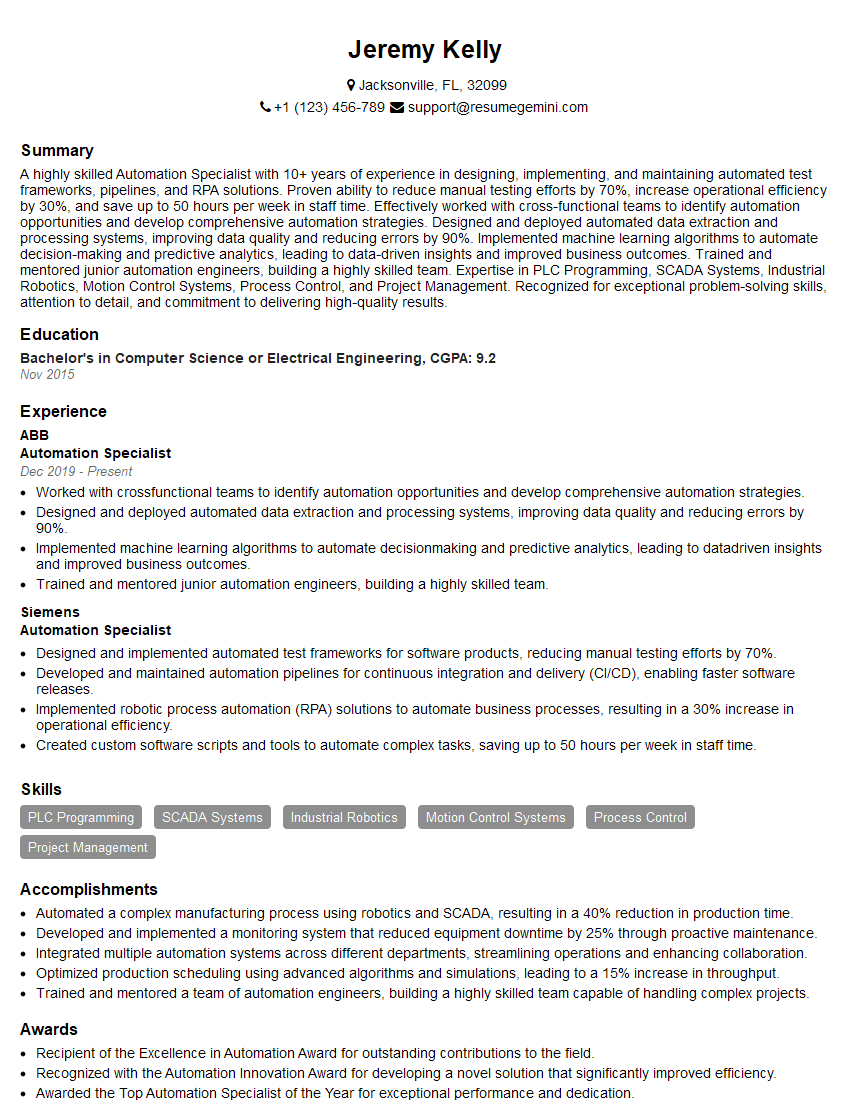
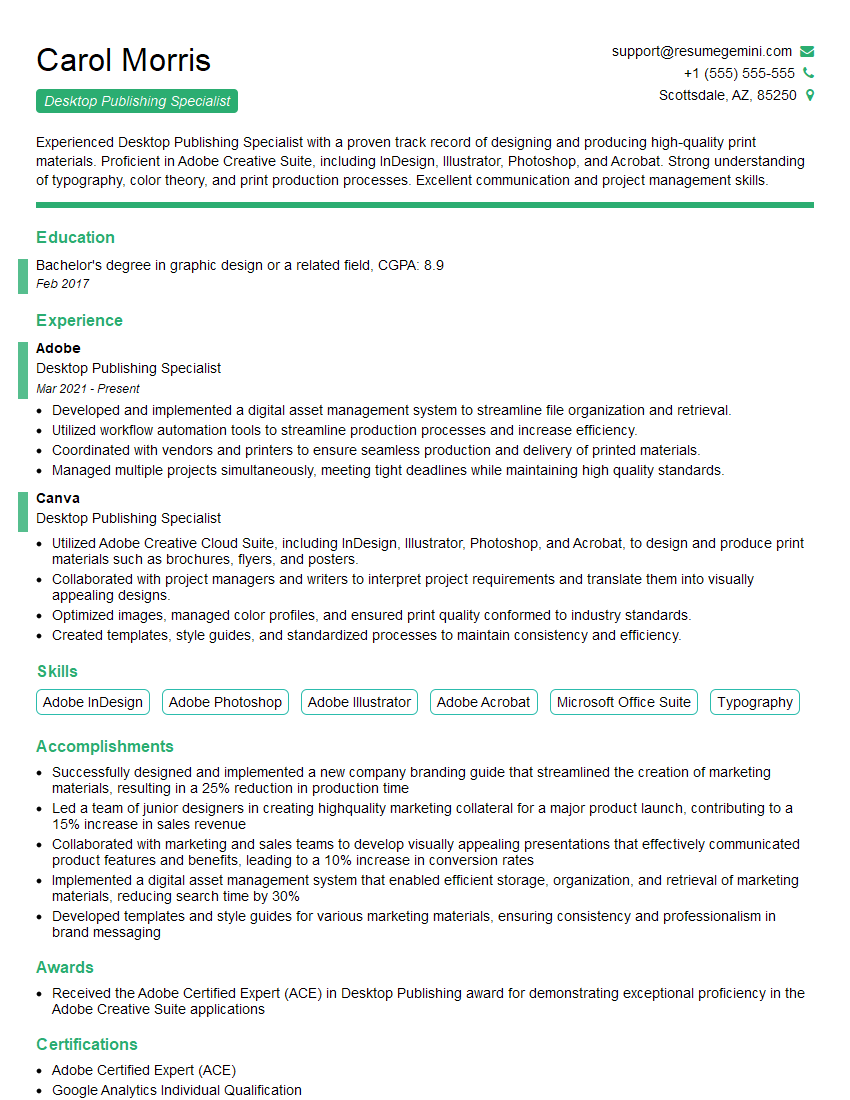
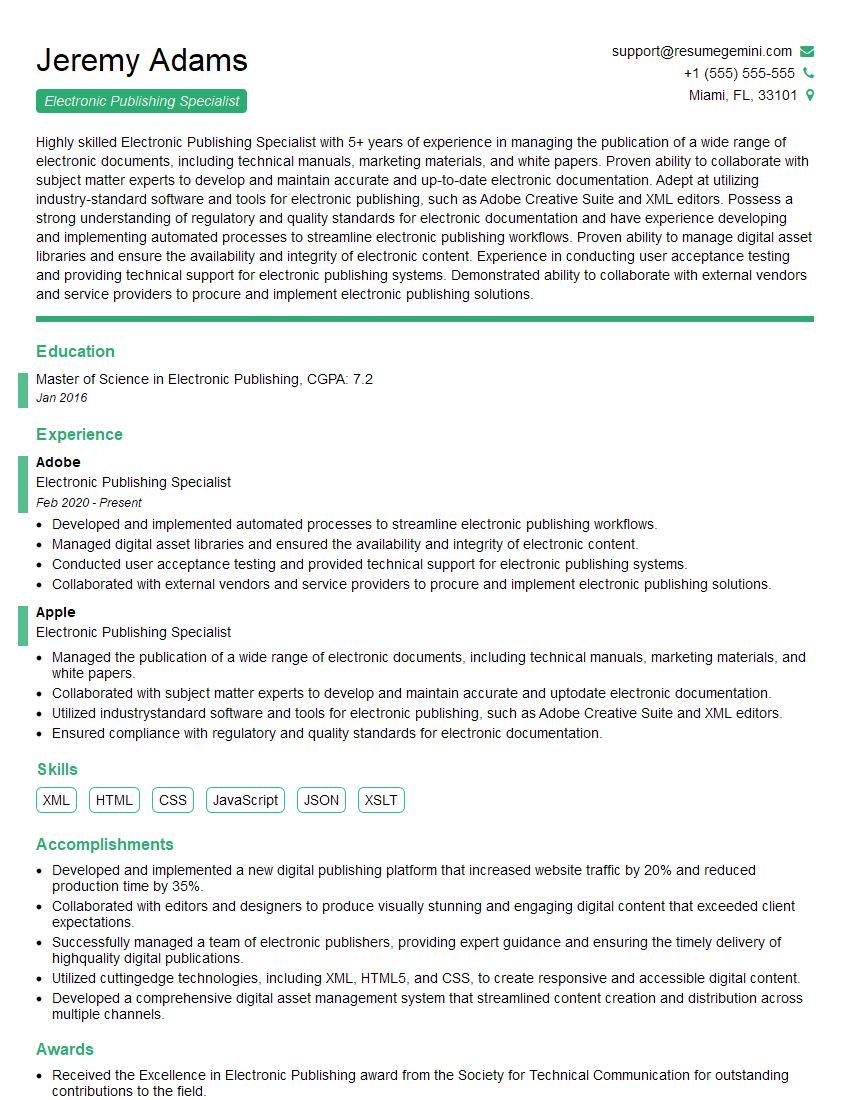
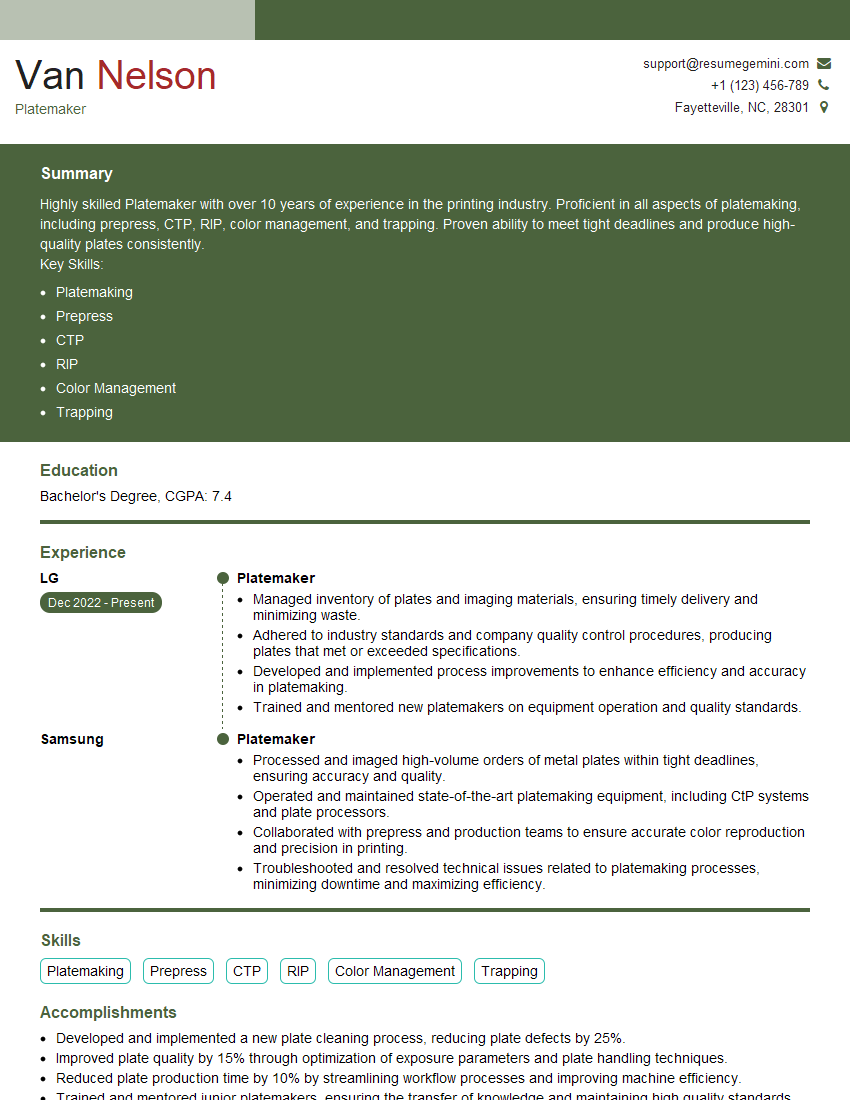
Mastering electronic pagination and page assembly is crucial for career advancement in the printing and publishing industries, opening doors to specialized roles and increased earning potential. To significantly enhance your job prospects, focus on crafting an ATS-friendly resume that highlights your key skills and experience. ResumeGemini is a valuable resource to help you build a professional and impactful resume that showcases your qualifications effectively. Examples of resumes tailored to Electronic Pagination and Page Assembly are available to guide your creation process.



Explore more articles
Users Rating of Our Blogs
Share Your Experience
We value your feedback! Please rate our content and share your thoughts (optional).
What Readers Say About Our Blog
Attention music lovers!
Wow, All the best Sax Summer music !!!
Spotify: https://open.spotify.com/artist/6ShcdIT7rPVVaFEpgZQbUk
Apple Music: https://music.apple.com/fr/artist/jimmy-sax-black/1530501936
YouTube: https://music.youtube.com/browse/VLOLAK5uy_noClmC7abM6YpZsnySxRqt3LoalPf88No
Other Platforms and Free Downloads : https://fanlink.tv/jimmysaxblack
on google : https://www.google.com/search?q=22+AND+22+AND+22
on ChatGPT : https://chat.openai.com?q=who20jlJimmy20Black20Sax20Producer
Get back into the groove with Jimmy sax Black
Best regards,
Jimmy sax Black
www.jimmysaxblack.com
Hi I am a troller at The aquatic interview center and I suddenly went so fast in Roblox and it was gone when I reset.
Hi,
Business owners spend hours every week worrying about their website—or avoiding it because it feels overwhelming.
We’d like to take that off your plate:
$69/month. Everything handled.
Our team will:
Design a custom website—or completely overhaul your current one
Take care of hosting as an option
Handle edits and improvements—up to 60 minutes of work included every month
No setup fees, no annual commitments. Just a site that makes a strong first impression.
Find out if it’s right for you:
https://websolutionsgenius.com/awardwinningwebsites
Hello,
we currently offer a complimentary backlink and URL indexing test for search engine optimization professionals.
You can get complimentary indexing credits to test how link discovery works in practice.
No credit card is required and there is no recurring fee.
You can find details here:
https://wikipedia-backlinks.com/indexing/
Regards
NICE RESPONSE TO Q & A
hi
The aim of this message is regarding an unclaimed deposit of a deceased nationale that bears the same name as you. You are not relate to him as there are millions of people answering the names across around the world. But i will use my position to influence the release of the deposit to you for our mutual benefit.
Respond for full details and how to claim the deposit. This is 100% risk free. Send hello to my email id: lukachachibaialuka@gmail.com
Luka Chachibaialuka
Hey interviewgemini.com, just wanted to follow up on my last email.
We just launched Call the Monster, an parenting app that lets you summon friendly ‘monsters’ kids actually listen to.
We’re also running a giveaway for everyone who downloads the app. Since it’s brand new, there aren’t many users yet, which means you’ve got a much better chance of winning some great prizes.
You can check it out here: https://bit.ly/callamonsterapp
Or follow us on Instagram: https://www.instagram.com/callamonsterapp
Thanks,
Ryan
CEO – Call the Monster App
Hey interviewgemini.com, I saw your website and love your approach.
I just want this to look like spam email, but want to share something important to you. We just launched Call the Monster, a parenting app that lets you summon friendly ‘monsters’ kids actually listen to.
Parents are loving it for calming chaos before bedtime. Thought you might want to try it: https://bit.ly/callamonsterapp or just follow our fun monster lore on Instagram: https://www.instagram.com/callamonsterapp
Thanks,
Ryan
CEO – Call A Monster APP
To the interviewgemini.com Owner.
Dear interviewgemini.com Webmaster!
Hi interviewgemini.com Webmaster!
Dear interviewgemini.com Webmaster!
excellent
Hello,
We found issues with your domain’s email setup that may be sending your messages to spam or blocking them completely. InboxShield Mini shows you how to fix it in minutes — no tech skills required.
Scan your domain now for details: https://inboxshield-mini.com/
— Adam @ InboxShield Mini
support@inboxshield-mini.com
Reply STOP to unsubscribe
Hi, are you owner of interviewgemini.com? What if I told you I could help you find extra time in your schedule, reconnect with leads you didn’t even realize you missed, and bring in more “I want to work with you” conversations, without increasing your ad spend or hiring a full-time employee?
All with a flexible, budget-friendly service that could easily pay for itself. Sounds good?
Would it be nice to jump on a quick 10-minute call so I can show you exactly how we make this work?
Best,
Hapei
Marketing Director
Hey, I know you’re the owner of interviewgemini.com. I’ll be quick.
Fundraising for your business is tough and time-consuming. We make it easier by guaranteeing two private investor meetings each month, for six months. No demos, no pitch events – just direct introductions to active investors matched to your startup.
If youR17;re raising, this could help you build real momentum. Want me to send more info?
Hi, I represent an SEO company that specialises in getting you AI citations and higher rankings on Google. I’d like to offer you a 100% free SEO audit for your website. Would you be interested?
Hi, I represent an SEO company that specialises in getting you AI citations and higher rankings on Google. I’d like to offer you a 100% free SEO audit for your website. Would you be interested?