The thought of an interview can be nerve-wracking, but the right preparation can make all the difference. Explore this comprehensive guide to Ensuring Proper Packaging and Labeling interview questions and gain the confidence you need to showcase your abilities and secure the role.
Questions Asked in Ensuring Proper Packaging and Labeling Interview
Q 1. Explain the importance of proper packaging in preventing product damage during shipping.
Proper packaging is paramount in preventing product damage during shipping. Think of it as a customized suit of armor for your product, protecting it from the rigors of transit. It’s a multifaceted process involving selecting the right materials, designing effective cushioning, and ensuring secure closure. Without proper packaging, even the most robust product can be damaged by impacts, vibrations, or environmental factors like temperature and humidity.
For example, imagine shipping fragile glassware. Improper packaging, such as loose placement in a cardboard box, could result in breakage. However, using a double-walled corrugated box with sufficient cushioning material (like bubble wrap or foam peanuts) significantly reduces the risk of damage. The design should also consider how the package will be handled – minimizing stacking pressure on vulnerable areas is crucial.
Q 2. Describe different types of packaging materials and their suitability for various products.
Packaging materials vary greatly depending on the product’s characteristics and the shipping conditions. Choosing the right material is crucial for effective protection.
- Corrugated cardboard: A versatile and widely used material offering varying degrees of protection based on its thickness and flute type. Suitable for a wide range of products, from electronics to food.
- Plastic films (e.g., shrink wrap, bubble wrap): Offer excellent cushioning and moisture protection. Bubble wrap is ideal for fragile items, while shrink wrap secures items tightly to a pallet or within a box.
- Foam: Provides excellent shock absorption and is available in various densities and forms (e.g., polyethylene foam, polyurethane foam). Great for protecting delicate electronics or medical equipment.
- Wood: Offers exceptional strength and durability, ideal for heavier or more sensitive products needing robust protection. Often used for shipping large or heavy machinery.
- Paper-based cushioning (e.g., kraft paper, shredded paper): Eco-friendly options providing good cushioning and often used as void fill to prevent shifting.
For instance, a delicate piece of art would require a custom-fitted foam insert within a sturdy wooden crate, while a shipment of canned goods might only need a corrugated cardboard box with minimal void fill.
Q 3. How do you ensure compliance with relevant regulations and standards (e.g., FDA, GHS) for packaging and labeling?
Compliance with regulations is non-negotiable. Failure to meet standards can lead to fines, product recalls, and reputational damage. My approach involves a multi-step process:
- Identify all applicable regulations: This includes those from the FDA (for food and drug products), GHS (Globally Harmonized System of Classification and Labelling of Chemicals) for hazardous materials, and any transport regulations (e.g., DOT, IATA). The specific regulations depend heavily on the product and its destination.
- Develop compliant packaging and labeling: This involves using approved materials, ensuring proper labeling with all required information (e.g., ingredients, warnings, handling instructions, shipping labels), and adhering to specific size and format requirements.
- Maintain comprehensive documentation: This ensures traceability and allows for quick verification during audits. This documentation includes material safety data sheets (MSDS), packaging specifications, and labeling proofs.
- Regular audits and updates: Regulations are constantly evolving, so continuous monitoring and updates are crucial to maintain compliance.
For example, shipping a hazardous chemical requires compliant packaging that meets UN standards and includes hazard pictograms and signal words on the label, as defined by GHS. Any deviation risks serious consequences.
Q 4. What are the key considerations for designing packaging for e-commerce?
E-commerce packaging presents unique challenges, focusing on both protection and the unboxing experience. Key considerations include:
- Protection against transit damage: E-commerce shipments often face more rigorous handling than traditional shipments. This requires robust packaging to withstand multiple handling events.
- Sustainability: Consumers are increasingly conscious of environmental impact. Using eco-friendly materials and minimizing packaging waste is crucial.
- Cost-effectiveness: Finding the right balance between protection and cost is critical for profitability. Over-packaging adds unnecessary expense and waste.
- Branding and unboxing experience: The packaging itself can enhance the brand image and customer satisfaction. A well-designed package can create a positive experience, turning a simple transaction into a memorable moment.
- Size and weight optimization: Shipping costs are significantly affected by package dimensions and weight. Optimizing these factors can drastically reduce expenses.
For instance, using compact and lightweight packaging materials, along with effective void fill, minimizes shipping costs while ensuring adequate product protection. A custom-designed mailer box with company branding adds a professional and memorable touch.
Q 5. Explain your experience with barcode and RFID technologies in packaging and labeling.
I have extensive experience integrating barcode and RFID technologies into packaging and labeling processes. These technologies significantly improve efficiency and traceability throughout the supply chain.
- Barcodes: Provide a simple and cost-effective way to identify and track individual packages. They are widely used for inventory management, shipping, and receiving.
- RFID (Radio-Frequency Identification): Offers greater versatility and data capacity compared to barcodes. RFID tags can be read without line-of-sight, enabling real-time tracking of packages throughout the supply chain. They can also store more data, such as temperature and humidity readings, enhancing monitoring and quality control.
In a recent project, we implemented RFID tracking for high-value medical supplies. This allowed for real-time monitoring of location, temperature, and humidity throughout the shipping process, ensuring product integrity and reducing the risk of spoilage or damage.
Q 6. How do you identify and address potential packaging-related hazards?
Identifying and addressing packaging-related hazards is critical for safety and compliance. My approach is proactive and involves:
- Hazard analysis: Identifying potential hazards associated with the product and its packaging, such as sharp edges, toxic materials, or instability.
- Risk assessment: Evaluating the likelihood and severity of each hazard to determine the level of risk.
- Mitigation strategies: Implementing appropriate controls to reduce or eliminate the risks, such as using protective cushioning, modifying the packaging design, or including appropriate warning labels.
- Testing and validation: Performing rigorous testing (e.g., drop tests, vibration tests) to ensure the packaging effectively protects the product under various conditions.
- Documentation: Maintaining thorough documentation of all hazard assessments, mitigation strategies, and testing results.
For instance, if a product contains hazardous chemicals, the packaging must meet strict UN standards, include appropriate warning labels, and be tested to withstand potential impacts and environmental conditions.
Q 7. Describe your experience with different labeling methods (e.g., inkjet, thermal transfer).
I’m proficient with various labeling methods, each suited to different needs and applications:
- Inkjet printing: Highly versatile, capable of printing high-resolution images and text directly onto various surfaces. Ideal for variable data printing (e.g., serial numbers, barcodes), allowing for customized labeling.
- Thermal transfer printing: Uses heat to transfer images from a ribbon onto a label. Offers high print quality, durability, and resistance to smudging or fading. Commonly used for barcode labeling and permanent labeling of products.
- Laser printing: Provides high-quality, high-speed printing, particularly useful for large-volume labeling applications. Often combined with automated labeling systems for high-throughput operations.
The choice of labeling method depends on factors such as the required print quality, durability, volume, and label material. For example, inkjet printing is suitable for customized labels printed on-demand, while thermal transfer is ideal for durable, long-lasting labels on packaged goods.
Q 8. How do you ensure the accuracy and legibility of product labels?
Ensuring accurate and legible product labels is paramount for consumer safety and regulatory compliance. My process involves a multi-step approach, beginning with meticulous label design. We use high-resolution printers and durable materials to ensure clarity. Each label undergoes a rigorous proofing stage, checked against the product specification and relevant regulations (e.g., FDA requirements for food products). We employ multiple checks: a pre-press review of the digital artwork, a visual inspection of the first printed labels, and potentially automated quality control systems that detect inconsistencies in font size, color, or placement.
For example, we once caught a minor font size error during our pre-press review that, if unnoticed, would have resulted in illegible text on thousands of labels, potentially leading to legal issues and customer dissatisfaction. This highlights the importance of this multi-layered approach.
Finally, we conduct regular audits of our label printing and application processes to maintain consistent quality and identify any potential areas for improvement. This proactive approach ensures the accuracy and legibility of every label, safeguarding both our brand reputation and consumer confidence.
Q 9. Explain your process for verifying the integrity of packaging seals.
Verifying packaging seal integrity is critical to prevent product tampering and maintain product quality. My approach involves a combination of visual inspection and testing. Visual checks assess the seal’s completeness and ensure there are no signs of damage or tampering. This is often performed manually, with trained personnel looking for gaps, tears, or inconsistencies in the seal. For certain products, we might use automated seal integrity testing equipment. These machines use various technologies like pressure sensors or infrared detectors to analyze the strength and completeness of the seal with objective measurements.
For example, in the case of tamper-evident seals, we verify that the seal is unbroken and leaves a visible indication of any tampering attempt. Think of the little pull-tab on medicine bottles or shrink wrap that clearly shows if it’s been opened. In a real-world scenario, a failed seal would immediately result in rejection of the batch, preventing potentially contaminated or damaged goods from reaching the consumer.
Q 10. How do you manage inventory and ensure sufficient packaging materials are available?
Efficient inventory management of packaging materials is crucial for avoiding production delays and minimizing waste. We utilize an inventory management system (IMS) that tracks packaging material levels in real-time. This allows us to forecast demand accurately based on production schedules and sales projections. The system automatically generates alerts when stock levels approach predetermined thresholds, triggering timely replenishment orders.
We employ a ‘Just-in-Time’ (JIT) inventory strategy to reduce storage costs and minimize the risk of obsolescence. This means we order materials only when needed, optimizing our warehousing space and reducing waste from expired or damaged materials. Regular inventory audits are also performed to verify the accuracy of the IMS and identify potential discrepancies. In addition, we regularly review and optimize our packaging specifications to minimize waste and improve efficiency, for example, switching to smaller box sizes when possible without compromising product protection.
Q 11. Describe your experience with implementing and maintaining a packaging quality management system.
Implementing and maintaining a packaging quality management system (PQMS) requires a structured approach. We typically adhere to standards like ISO 9001 or other relevant industry-specific guidelines. This involves defining clear procedures for all aspects of packaging, from material sourcing to finished product handling. Key elements of our PQMS include regular quality checks at each stage of the packaging process, detailed documentation of all processes and results, and a system for tracking and addressing any non-conformances. Our team is trained on proper packaging procedures and quality control methodologies.
For instance, we regularly perform statistical process control (SPC) analyses on packaging parameters to identify trends and prevent potential issues. We also conduct internal audits to ensure that our PQMS is effective and identify areas for improvement. A successful PQMS reduces defects, minimizes waste, enhances customer satisfaction, and ensures consistent product quality, ultimately contributing to a strong brand reputation.
Q 12. How do you handle packaging-related customer complaints or returns?
Addressing packaging-related customer complaints or returns requires a systematic approach focused on both resolution and prevention. We begin by thoroughly investigating each complaint, analyzing the nature of the issue (e.g., damaged goods, incorrect labeling, faulty seals). This often involves examining the returned product and its packaging to determine the root cause. We document all complaints and analyze trends to identify recurring problems. This data helps inform improvements to our packaging processes and materials. We offer prompt and fair resolution to customers, including replacements, refunds, or other appropriate compensation.
For example, a high number of complaints about damaged goods during shipping might lead to an investigation and subsequent changes, perhaps implementing stronger packaging materials or a different shipping method. Effective customer communication is critical throughout this process. Keeping customers updated on the investigation and resolution process significantly impacts their satisfaction.
Q 13. What are the key factors to consider when selecting packaging for international shipping?
International shipping presents unique challenges, demanding careful consideration of several key factors when selecting packaging. First, the packaging must withstand the rigors of international transportation, including potential exposure to extreme temperatures, humidity, and rough handling. This often necessitates the use of robust materials and sturdy designs. Secondly, compliance with international regulations and customs requirements is crucial. Different countries have varying standards and labeling requirements for hazardous materials, specific product categories, and customs declarations. Failure to comply can result in delays, fines, or even product seizure.
Thirdly, cost-effectiveness must be balanced with protection. Choosing the right packaging materials and methods minimizes shipping costs without compromising product safety and integrity. Finally, environmental considerations play a significant role. We aim to select sustainable and recyclable packaging options whenever feasible. For example, when shipping to a region with frequent temperature fluctuations, we’d use insulated packaging, and for fragile items, we might add extra padding or use custom-fit inserts. In short, a successful international shipping strategy prioritizes product protection while respecting regulatory compliance and environmental sustainability.
Q 14. Describe your experience with different types of packaging testing (e.g., drop tests, vibration tests).
Extensive experience with various packaging tests is essential for ensuring product integrity. We regularly conduct drop tests to evaluate a package’s ability to protect its contents from impacts during shipping and handling. These tests involve dropping packages from specified heights onto various surfaces to simulate real-world scenarios. Vibration testing simulates the vibrations experienced during transport, helping to identify potential weaknesses in the packaging design that could lead to product damage. Compression testing assesses the package’s ability to withstand external pressure, especially important for stacked goods.
Other tests include climate testing (evaluating the effects of temperature and humidity), and puncture tests. The results of these tests inform our packaging design, material selection, and shipping procedures. For example, if drop tests reveal inadequate protection, we might reinforce the packaging or add additional cushioning. Data gathered from these tests is crucial for continuous improvement and ensuring the safe delivery of our products.
Q 15. How do you stay up-to-date with the latest packaging and labeling trends and technologies?
Staying current in the dynamic field of packaging and labeling requires a multi-pronged approach. I actively participate in industry conferences like Pack Expo and FachPack, attending workshops and networking with leading experts to learn about the latest innovations. Trade publications such as Packaging World and Packaging Digest are essential reading, providing in-depth analysis of emerging trends and technologies. I also leverage online resources, subscribing to industry newsletters and following key influencers on platforms like LinkedIn. Finally, I actively seek out webinars and online courses focused on sustainable packaging materials, automation in packaging lines, and advanced labeling techniques – crucial for staying ahead of the curve.
For example, recently I learned about the increasing use of bio-based plastics and active and intelligent packaging solutions through a combination of attending Pack Expo and reading Packaging World’s special report on sustainable materials. This knowledge directly informed my recommendations for a client seeking to reduce their environmental impact.
Career Expert Tips:
- Ace those interviews! Prepare effectively by reviewing the Top 50 Most Common Interview Questions on ResumeGemini.
- Navigate your job search with confidence! Explore a wide range of Career Tips on ResumeGemini. Learn about common challenges and recommendations to overcome them.
- Craft the perfect resume! Master the Art of Resume Writing with ResumeGemini’s guide. Showcase your unique qualifications and achievements effectively.
- Don’t miss out on holiday savings! Build your dream resume with ResumeGemini’s ATS optimized templates.
Q 16. Explain your experience with using packaging design software.
I’m proficient in several packaging design software packages, including Adobe Illustrator, CorelDRAW, and specialized software like ArtiosCAD for structural design. My experience extends beyond simply creating visually appealing designs; I understand the technical aspects crucial for efficient production. For example, I’m adept at creating die-lines and understanding the limitations of different printing methods. This allows me to create designs that are not only aesthetically pleasing but also manufacturable and cost-effective.
In a recent project for a food client, I used Adobe Illustrator to create the label design and ArtiosCAD to design the structurally sound carton that would protect the product during shipping. I meticulously considered the material properties, ensuring the carton design allowed for efficient machine filling and sealing. The end result was a visually striking package that perfectly protected the product, highlighting the importance of integrating design and production considerations.
Q 17. How do you ensure that your packaging is sustainable and environmentally friendly?
Sustainability is paramount in modern packaging. My approach involves a holistic strategy focused on material selection, design optimization, and end-of-life management. I prioritize using recycled and renewable materials such as post-consumer recycled (PCR) content plastics, paperboard from responsibly managed forests, and biodegradable alternatives like PLA. Design optimization focuses on minimizing material usage without compromising product protection. This includes techniques like lightweighting and using minimal packaging components. Finally, I collaborate with clients to implement effective recycling programs and explore options for compostable or biodegradable packaging to reduce landfill waste.
For instance, I recently helped a client transition from a heavily-plasticized multi-layer packaging to a fully recyclable mono-material alternative that reduced their packaging footprint by 30%. This involved extensive research into material properties and collaboration with the client’s supply chain to ensure seamless transition and cost-effectiveness.
Q 18. How do you calculate the cost-effectiveness of different packaging options?
Calculating the cost-effectiveness of packaging involves a thorough analysis that goes beyond the initial material costs. I consider the following factors: material cost per unit, manufacturing cost (including printing, die-cutting, and assembly), transportation costs, warehousing costs, potential damage and spoilage during transit (resulting from insufficient protection), and the cost of disposal or recycling. I then compare these across different packaging options, often using a spreadsheet or dedicated cost-modeling software. This allows me to present a comprehensive cost-benefit analysis that helps clients make informed decisions.
For example, while a more expensive, reusable packaging option may seem less cost-effective upfront, the reduced material consumption, lower damage rate, and positive brand impact (associated with sustainability) can lead to long-term cost savings and improved brand image.
Q 19. Describe your experience with managing a packaging budget.
My experience in managing packaging budgets involves meticulous planning, accurate forecasting, and continuous monitoring. I begin by developing a detailed budget based on projected production volumes, material costs, and anticipated changes in the market. I use a combination of project management tools and spreadsheets to track expenses, ensuring that all costs are accounted for. Regular review and adjustment based on market fluctuations and unforeseen circumstances ensure that we remain within budget constraints. Effective negotiation with suppliers is key to securing favorable pricing and reducing costs without compromising quality.
In a previous role, I implemented a system of tracking material usage and waste generation. This allowed me to identify areas for cost optimization, resulting in a 15% reduction in packaging budget within six months.
Q 20. What are the key metrics you use to measure packaging efficiency?
Measuring packaging efficiency requires a multi-faceted approach. Key metrics I utilize include: Packaging Efficiency Ratio (PER), which measures the ratio of product weight to total package weight; Damage Rate, which tracks the percentage of damaged products; Material Usage, which monitors the amount of material used per unit; Inventory Turnover, assessing how quickly packaging materials are used; and Sustainability Metrics, like recycled content percentage and carbon footprint. Tracking these metrics provides crucial data to identify areas for improvement and optimize packaging processes.
For example, a high damage rate suggests a need for improvements in packaging design or handling, while a low PER might indicate opportunities for reducing material usage without compromising product safety.
Q 21. Explain your experience with root cause analysis for packaging failures.
When packaging failures occur, I employ a structured root cause analysis (RCA) methodology, often using tools like the 5 Whys or Fishbone diagrams. This process involves systematically investigating the problem to identify its underlying causes. I gather data from various sources, including production reports, quality control checks, and supplier feedback. The analysis identifies contributing factors such as material defects, machine malfunctions, or process inefficiencies. Corrective actions are then implemented and their effectiveness is monitored to prevent recurrence.
For example, a recent instance of damaged goods during shipping led to a root cause analysis that uncovered a problem with inadequate cushioning inside the packaging. By redesigning the internal structure with better cushioning, we significantly reduced the damage rate in subsequent shipments.
Q 22. Describe your experience with implementing Lean principles in packaging operations.
Implementing Lean principles in packaging operations focuses on eliminating waste and maximizing efficiency. My experience involves applying tools like 5S (Sort, Set in Order, Shine, Standardize, Sustain) to optimize the workspace, reducing unnecessary movements and improving workflow. Value stream mapping helped identify bottlenecks in our packaging process, such as inefficient material handling or excessive waiting times. For example, by analyzing the flow of materials from production to packaging, we identified a redundant step in the palletizing process, ultimately saving us 15 minutes per pallet. We then implemented Kaizen events – short, focused improvement projects – to tackle these bottlenecks. One such event resulted in a 10% reduction in packaging material waste through improved packaging design and better inventory management. Furthermore, we utilized standard work instructions to ensure consistency and reduce errors, leading to fewer rejected packages and improved quality.
Q 23. How do you prioritize tasks and manage competing deadlines in a fast-paced packaging environment?
Prioritizing tasks in a fast-paced environment requires a structured approach. I utilize a combination of techniques, including the Eisenhower Matrix (urgent/important), which helps categorize tasks and allocate resources effectively. This allows me to focus on critical tasks impacting deadlines while delegating or postponing less urgent ones. For example, ensuring timely shipment of high-priority orders always takes precedence over less time-sensitive projects. I also leverage project management software to track progress, identify potential delays, and communicate transparently with the team. Regular team meetings are vital for updates, problem-solving, and proactive adjustment of schedules. This collaborative approach ensures that everyone is on the same page and working towards common goals. Proactive communication with clients is key to managing expectations and mitigating potential delays.
Q 24. What is your experience with different types of palletizing and strapping techniques?
My experience encompasses various palletizing and strapping techniques, catering to diverse product types and shipping requirements. I’m proficient with manual and automated palletizers, understanding their capabilities and limitations. For instance, I’ve successfully implemented automated palletizers for high-volume, standardized products, significantly improving speed and consistency. For more fragile or irregularly shaped items, I’ve employed manual palletizing with customized layer patterns and interleaving materials for protection. Regarding strapping, I’ve worked with various materials, including polypropylene and steel, selecting the appropriate type based on product weight, fragility, and environmental conditions. I’m familiar with different strapping methods, such as tensioning and sealing, optimizing the process for security and efficiency. Safety protocols are always paramount – ensuring proper training for staff on equipment operation and safe handling practices.
Q 25. Describe your experience working with different types of shipping containers.
My work involves extensive experience with various shipping containers, selecting the appropriate type based on product characteristics, destination, and transportation method. This includes corrugated cardboard boxes in various sizes and strengths, tailored to the product’s fragility and weight. I’ve worked with wooden crates for heavier or more delicate items needing extra protection. Experience with reusable containers (e.g., plastic totes) for internal transport or returns demonstrates a focus on sustainability. I’m also familiar with different pallet types (e.g., wood, plastic) and their suitability for different transportation modes. Knowledge of international shipping regulations and the appropriate container types for various modes of transport (sea, air, land) is crucial to prevent delays and damage. Understanding the proper use of dunnage (packing materials) for securing products within containers is paramount for preventing shifting and damage during transit.
Q 26. How do you ensure the security of your packaging and prevent theft or tampering?
Ensuring packaging security is critical. We utilize various methods, starting with tamper-evident seals and labels on individual packages. This provides clear visual indication of any unauthorized access. For high-value goods, we incorporate security features like serialized barcodes or RFID tags, enabling precise tracking and authentication. Secure storage facilities with access control and surveillance systems further protect against theft. We also conduct regular audits to ensure all security protocols are followed. For shipments, we choose carriers with robust security measures and utilize tamper-evident packaging to identify any breach during transit. Employee training is integral, focusing on security awareness and the importance of reporting any suspicious activity.
Q 27. How do you handle situations where there are discrepancies between packaging specifications and actual packaging?
Discrepancies between packaging specifications and actual packaging are addressed through a structured process. First, a thorough investigation identifies the root cause of the discrepancy, determining whether it’s a production error, design flaw, or labeling mistake. Next, corrective actions are implemented to prevent recurrence – this might involve adjusting machinery settings, retraining staff, or revising design specifications. Depending on the severity of the discrepancy, affected packages might require re-packaging or recall. Thorough documentation of the incident, including corrective actions and preventative measures, ensures accountability and prevents future occurrences. This detailed record helps improve our processes and enhances overall quality control. Client notification is essential, particularly if the discrepancy affects product safety or functionality.
Q 28. Describe your experience with using packaging software to generate labels and shipping documents.
My experience with packaging software includes using systems to generate labels and shipping documents, streamlining our operations and reducing manual errors. I’m proficient in software that integrates with our ERP (Enterprise Resource Planning) system, automating data entry and reducing redundancy. This ensures accuracy in label information, including product details, barcodes, and shipping addresses. The software also generates compliant shipping documents, reducing administrative overhead. The system allows for customization of label formats and the inclusion of specific client requirements or regulatory markings. Using the software, we’ve significantly reduced the time required for label generation and document preparation, leading to improved efficiency and reduced costs. Regular updates and training ensure the team stays proficient and adapts to software enhancements.
Key Topics to Learn for Ensuring Proper Packaging and Labeling Interview
- Packaging Materials & Selection: Understanding different packaging materials (cardboard, plastic, etc.), their properties, and suitability for various products. This includes considerations for environmental impact and cost-effectiveness.
- Labeling Regulations & Compliance: Familiarize yourself with relevant industry regulations (e.g., FDA, GHS) regarding labeling requirements for different product types and geographical locations. Understanding the importance of accurate ingredient lists, weight/volume declarations, and hazard warnings is crucial.
- Packaging Design & Functionality: Explore the principles of effective packaging design, focusing on product protection, ease of handling, and consumer appeal. Consider aspects like tamper-evidence, shelf life extension, and ease of opening/closing.
- Quality Control & Inspection: Learn about quality control procedures for ensuring packaging and labeling accuracy. This includes understanding inspection methods and the importance of documenting findings and addressing any discrepancies.
- Supply Chain Management: Understand how packaging and labeling fit into the overall supply chain. This includes considerations for inventory management, logistics, and efficient warehousing practices.
- Cost Optimization Strategies: Explore methods to optimize packaging and labeling costs without compromising quality or regulatory compliance. This could involve material sourcing, efficient production processes, and waste reduction strategies.
- Problem-Solving & Troubleshooting: Be prepared to discuss instances where you had to identify and resolve issues related to packaging or labeling errors, delays, or inefficiencies. Demonstrate your analytical and problem-solving skills.
Next Steps
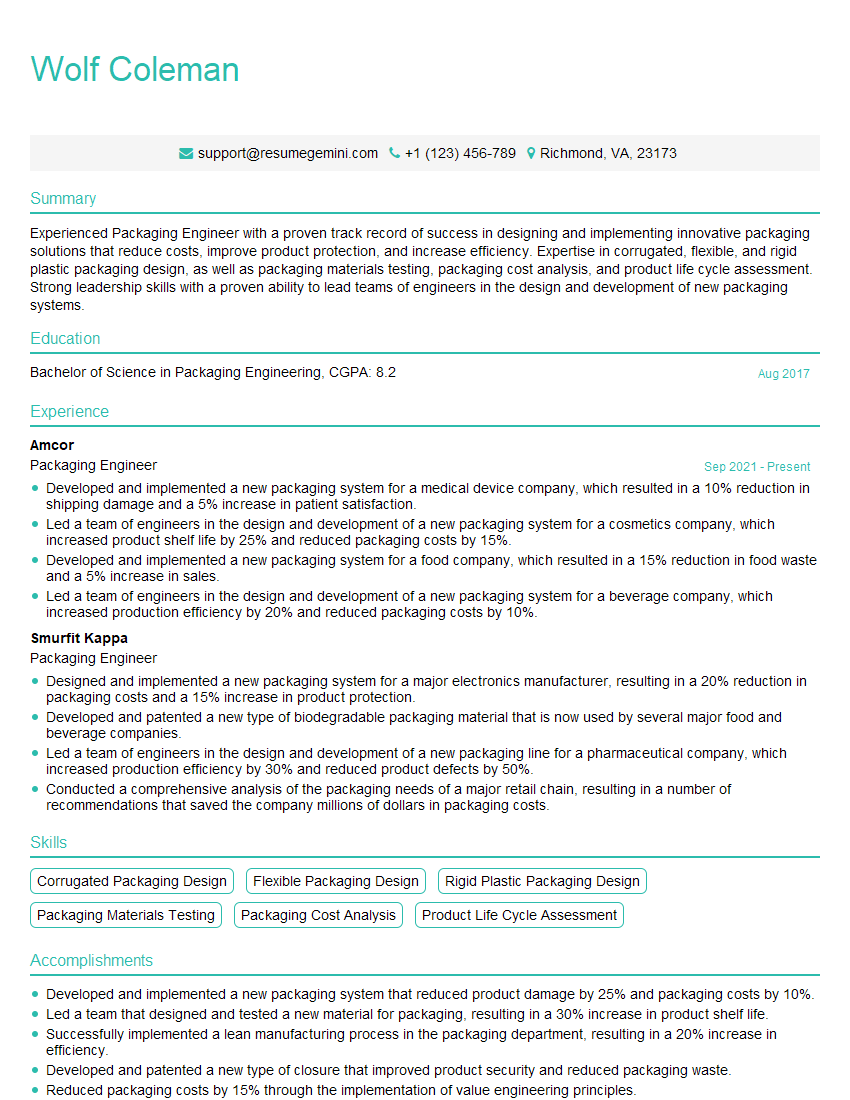
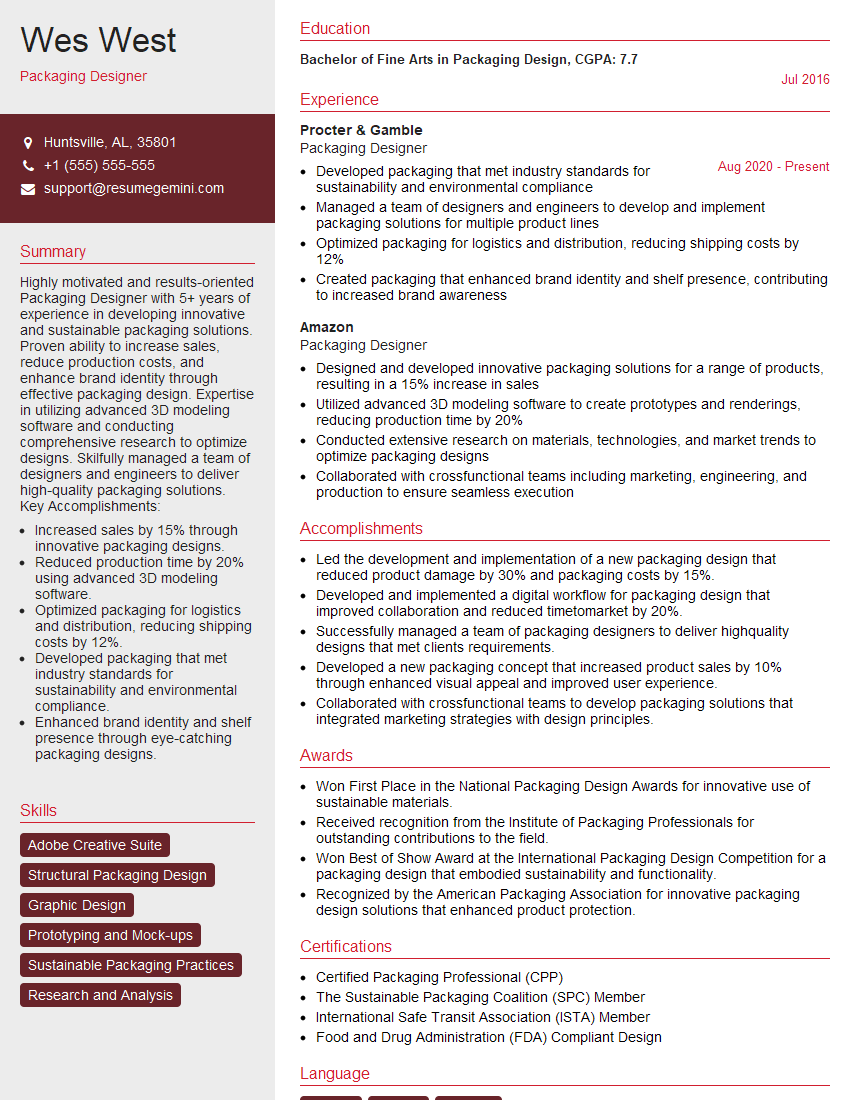
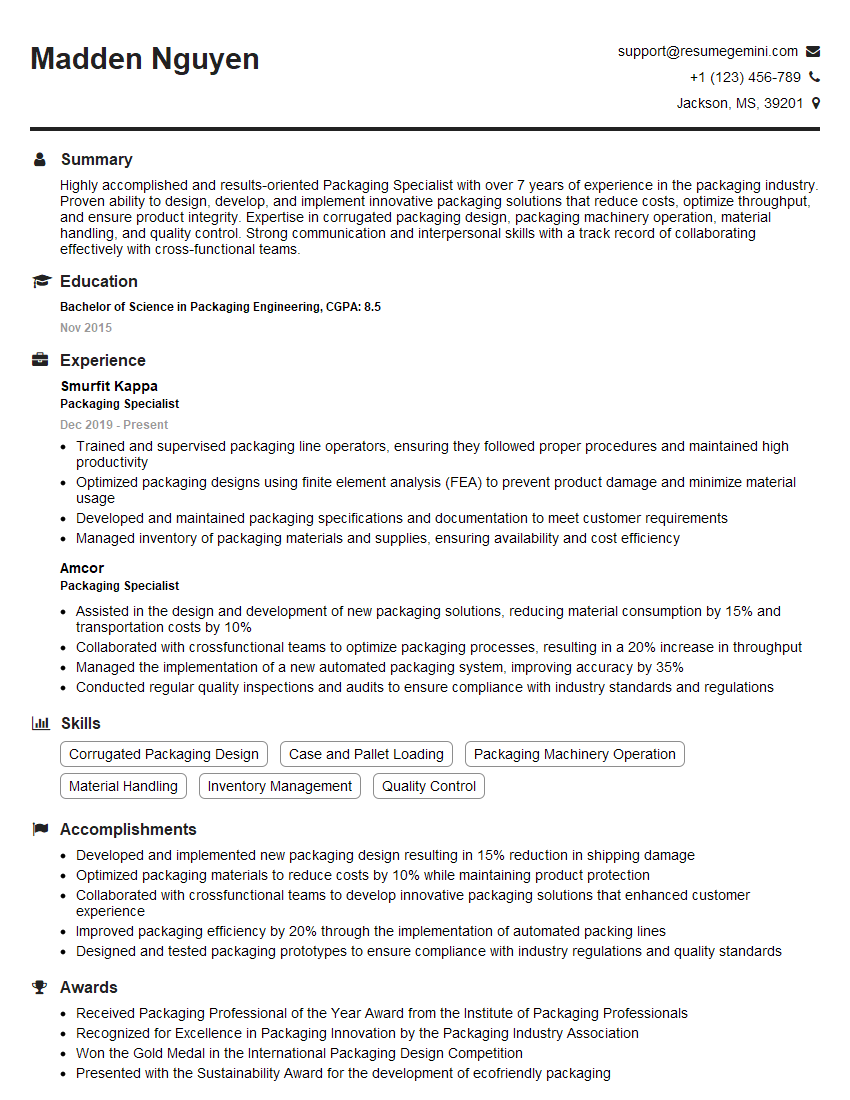
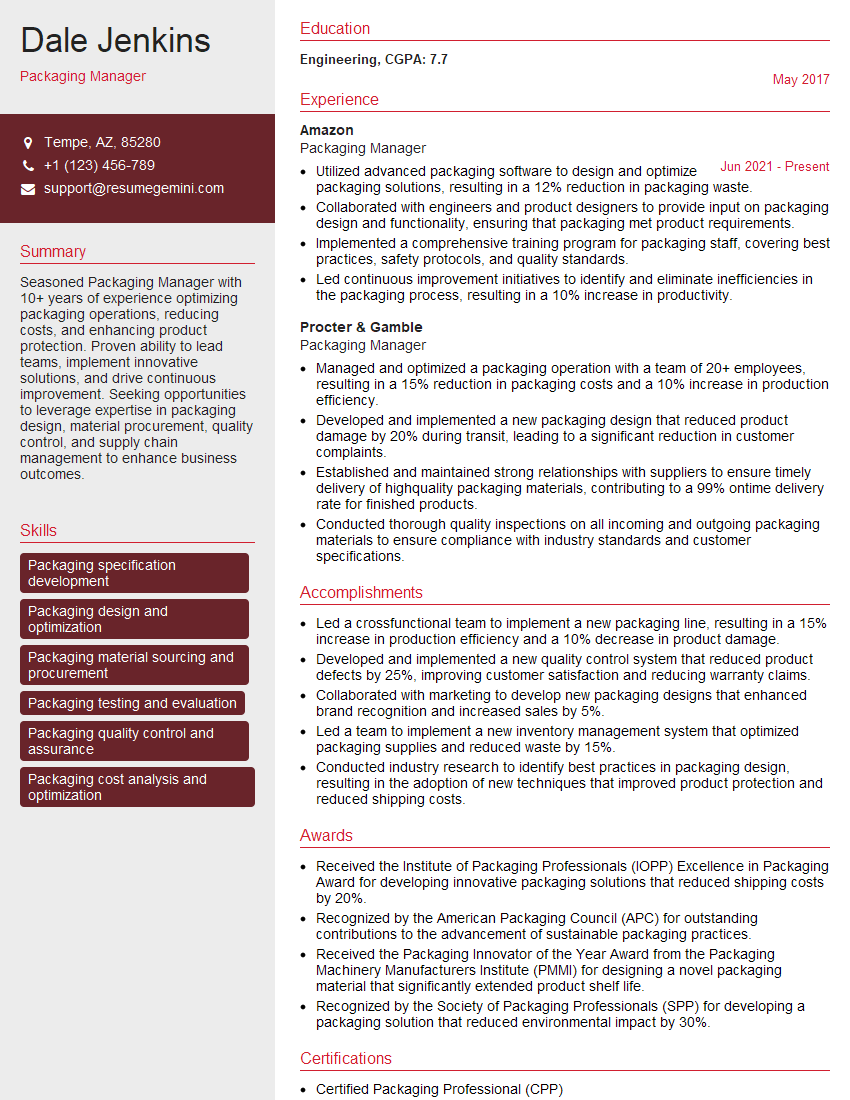
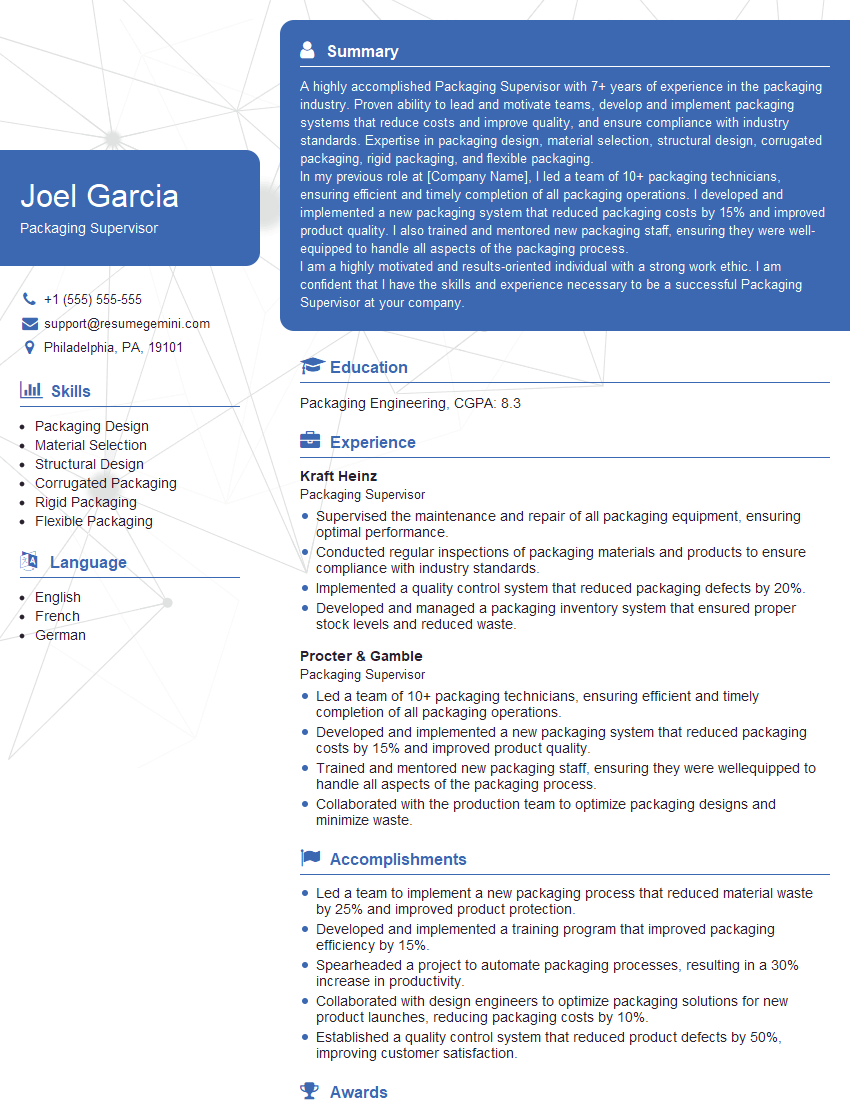
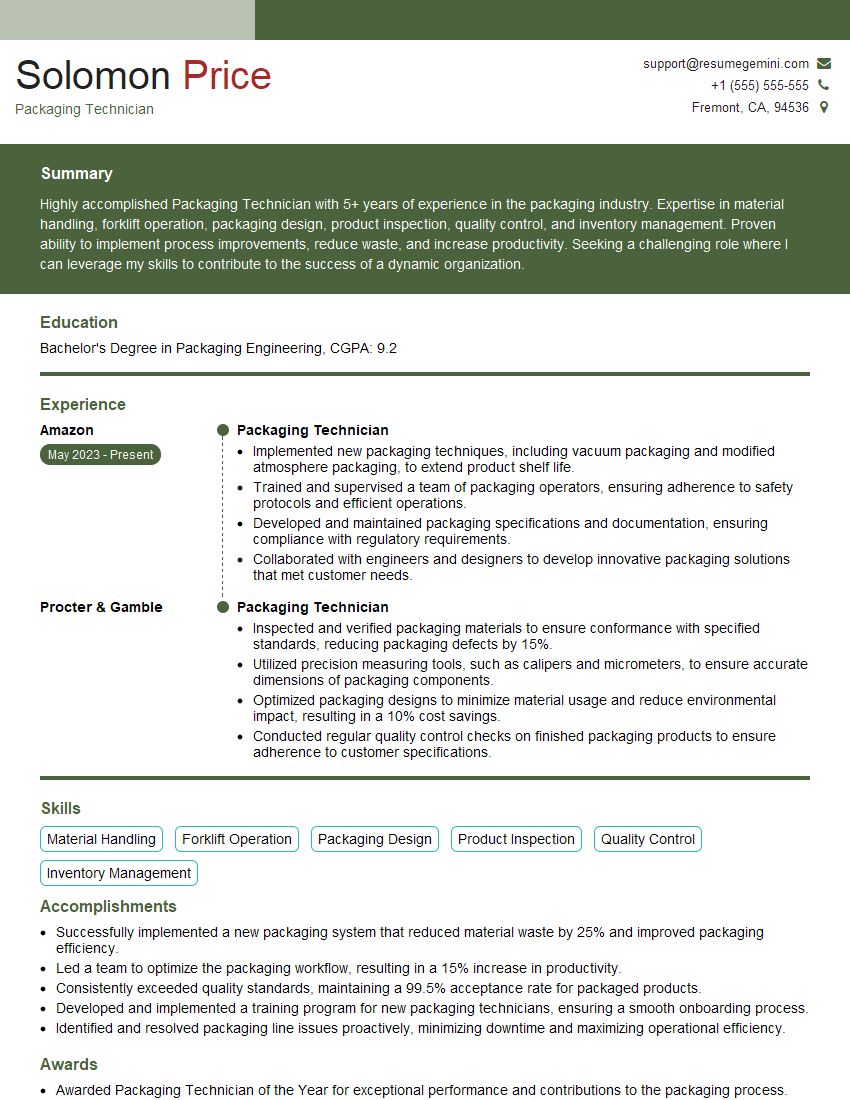
Mastering the art of ensuring proper packaging and labeling is crucial for career advancement in many industries. It demonstrates your attention to detail, regulatory knowledge, and commitment to quality and safety. To significantly boost your job prospects, creating an ATS-friendly resume is essential. ResumeGemini is a trusted resource that can help you build a professional and impactful resume, maximizing your chances of landing your dream job. Examples of resumes tailored to Ensuring Proper Packaging and Labeling are available to help guide you.
Explore more articles
Users Rating of Our Blogs
Share Your Experience
We value your feedback! Please rate our content and share your thoughts (optional).
What Readers Say About Our Blog
Very informative content, great job.
good