Feeling uncertain about what to expect in your upcoming interview? We’ve got you covered! This blog highlights the most important Ergonomic Assessments interview questions and provides actionable advice to help you stand out as the ideal candidate. Let’s pave the way for your success.
Questions Asked in Ergonomic Assessments Interview
Q 1. Define ergonomics and its relevance in the workplace.
Ergonomics is the scientific study of designing the workplace, equipment, and tasks to fit the capabilities and limitations of the human body. Its relevance in the workplace is paramount because it focuses on preventing injuries and discomfort by optimizing the interaction between people and their work environment. A well-designed ergonomic workplace improves productivity, reduces errors, boosts employee morale, and significantly lowers healthcare costs associated with work-related injuries.
Think of it like this: a perfectly tailored suit feels comfortable and allows for free movement. An ergonomically designed workplace should similarly fit the worker, minimizing strain and maximizing efficiency.
Q 2. Explain the different types of ergonomic assessments.
Ergonomic assessments come in various forms, each with its own strengths and applications. They can broadly be categorized as:
- Qualitative Assessments: These rely on observation and interviews to identify potential ergonomic hazards. They are often quick and inexpensive but may lack the precision of quantitative methods. Examples include checklists, observation of work tasks, and worker interviews.
- Quantitative Assessments: These involve objective measurements using tools like inclinometers, goniometers, and electromyography (EMG) to quantify factors like posture, forces, and muscle activity. These provide more precise data but can be more time-consuming and expensive.
- Rapid Upper Limb Assessment (RULA): A popular posture assessment tool that uses a scoring system to evaluate the risk of upper limb musculoskeletal disorders.
- Rapid Entire Body Assessment (REBA): Similar to RULA but assesses the entire body posture and considers factors like the load handled.
- NIOSH Lifting Equation: A quantitative method used to assess the risk of back injuries associated with manual lifting tasks. It calculates the recommended weight limit (RWL) based on various factors.
The choice of assessment method depends on the specific workplace, the types of tasks involved, the resources available, and the level of detail required.
Q 3. Describe your experience conducting risk assessments for musculoskeletal disorders (MSDs).
My experience in conducting risk assessments for musculoskeletal disorders (MSDs) involves a systematic approach that combines qualitative and quantitative methods. I begin by thoroughly reviewing the work process, including observing workers performing their tasks, interviewing them about their experiences and any discomfort they encounter, and reviewing injury reports. This helps to identify potential hazards. Then, depending on the nature of the task and available resources, I’d use appropriate quantitative tools such as RULA or REBA to objectively assess posture and risk. For example, in a recent assessment of a call center, I observed repetitive typing and prolonged static postures, which I then quantified using RULA, revealing a high risk for carpal tunnel syndrome and other upper limb MSDs. Based on the assessment results, I formulated recommendations for workstation adjustments, stretching programs, and changes in work procedures to mitigate the risks. These recommendations were implemented and the results monitored.
Q 4. How do you identify ergonomic hazards in a workplace setting?
Identifying ergonomic hazards requires a keen eye for detail and a thorough understanding of human factors. I typically utilize a multi-pronged approach:
- Walkthrough Surveys: A systematic walk-through of the workplace to observe work processes, equipment, and the work environment. This helps identify potential hazards such as awkward postures, repetitive movements, forceful exertions, and vibration.
- Worker Interviews: Directly interviewing workers to gather information about their experiences, discomfort, and any perceived hazards. This is crucial as workers often have valuable insights into the challenges they face.
- Job Task Analysis: Detailed analysis of each job task to identify specific movements, postures, and forces involved. This allows for a precise evaluation of risk factors.
- Checklists and Questionnaires: Using standardized questionnaires and checklists can provide a structured approach to identify potential hazards and facilitate a comparison across different workplaces.
For instance, during a walkthrough of a manufacturing plant, I noticed workers frequently reaching overhead to place parts on a high conveyor belt, indicating a potential hazard for shoulder injuries. Worker interviews confirmed their discomfort.
Q 5. What are the key elements of a comprehensive ergonomic assessment?
A comprehensive ergonomic assessment includes several key elements:
- Job Task Analysis: A detailed description of the job, including all tasks and movements.
- Workstation Assessment: Evaluation of the workstation setup, including chair, desk height, monitor placement, keyboard and mouse position.
- Posture Analysis: Assessment of worker postures during various tasks using methods like RULA or REBA.
- Force and Repetition Analysis: Evaluation of the forces exerted and the frequency and duration of repetitive movements.
- Environmental Factors: Consideration of factors like temperature, lighting, noise, and vibration that may contribute to discomfort or injury.
- Worker Interviews and Feedback: Gathering information directly from workers to understand their experiences and concerns.
- Risk Identification and Prioritization: Identifying and ranking the hazards based on their potential to cause injury.
Combining these elements paints a complete picture of the ergonomic risks in a workplace, allowing for the development of effective intervention strategies.
Q 6. Explain the process of recommending and implementing ergonomic controls.
Recommending and implementing ergonomic controls is an iterative process involving:
- Identifying Control Measures: Based on the assessment findings, appropriate controls are selected. These can be categorized as engineering controls (e.g., workstation adjustments, tool modifications), administrative controls (e.g., job rotation, work-rest schedules), and personal protective equipment (PPE) (e.g., back supports, gloves). The hierarchy of controls generally prioritizes engineering controls over administrative controls and PPE.
- Prioritizing Interventions: Prioritize interventions based on the severity and likelihood of injury. Address the highest-risk hazards first.
- Implementation: Implement the chosen control measures, providing training and support to workers to ensure proper use. This often involves collaboration with management, workers, and potentially other specialists.
- Evaluation and Monitoring: Regularly monitor the effectiveness of the implemented controls. Assess whether the interventions are successful in reducing risks and worker discomfort. Adjustments may be necessary based on feedback and ongoing assessment.
For example, after identifying a high risk of back injury due to manual lifting, engineering controls might involve implementing a lift assist device. This would be complemented by administrative controls such as training on proper lifting techniques. The effectiveness of these controls would be monitored by tracking injury rates and employee feedback.
Q 7. What are the common causes of work-related musculoskeletal disorders?
Work-related musculoskeletal disorders (MSDs) are a significant concern and arise from a combination of factors:
- Repetitive Movements: Repeatedly performing the same movements can lead to overuse injuries like carpal tunnel syndrome or tendonitis.
- Awkward Postures: Maintaining awkward or static postures for extended periods can strain muscles and joints.
- Forceful Exertion: Using excessive force to lift, push, or pull objects can cause muscle strain and injury.
- Vibration: Exposure to vibration, particularly hand-arm vibration, can damage nerves and blood vessels.
- Lack of Recovery Time: Insufficient rest breaks between demanding tasks can increase the risk of MSDs.
- Individual Factors: Pre-existing medical conditions, age, fitness level, and individual differences can also contribute to the risk of developing MSDs.
A comprehensive ergonomic assessment helps identify these factors and implement interventions to minimize their impact on workers’ health.
Q 8. How do you prioritize ergonomic interventions based on risk levels?
Prioritizing ergonomic interventions involves a risk-based approach, focusing on hazards with the highest potential for harm. We use a hierarchical system, often combining qualitative and quantitative data. First, we identify potential ergonomic hazards through observation, interviews, and job task analysis. This helps pinpoint areas like repetitive movements, awkward postures, and forceful exertions. Then, we assess the risk level using tools like Rapid Upper Limb Assessment (RULA) or Rapid Entire Body Assessment (REBA). These tools assign scores based on posture, force, and frequency, allowing us to categorize risks as low, medium, or high.
Interventions are prioritized based on this risk ranking. High-risk issues, such as those with high RULA scores and potential for serious injury, are addressed immediately. For instance, if an assembly line worker consistently scores high on REBA due to overhead reaching and forceful gripping, we’d prioritize providing adjustable height workstations and implementing tools to reduce force. Medium-risk issues might involve education and training, while low-risk issues are monitored and addressed proactively during routine checks. This systematic approach ensures we focus our resources efficiently and protect workers’ health effectively.
Q 9. Describe your experience using ergonomic assessment tools and software.
I’ve extensive experience with a range of ergonomic assessment tools and software. This includes using posture analysis software like RULA and REBA, as mentioned, which provide quantitative scores based on observed postures. I’m also proficient with software that allows 3D modeling of workstations and worker movements, predicting potential ergonomic risks before implementation. Further, I have used software for analyzing video recordings of job tasks to identify repetitive movements or forceful exertions not easily captured during observation. For instance, in a recent project involving warehouse workers, we used video analysis software to quantify the frequency and intensity of lifting tasks, informing our recommendations for assistive devices. Additionally, I’ve used questionnaires and checklists to collect subjective data on worker discomfort and perceptions of risk.
Beyond software, I’m well-versed in using various measurement tools, such as anthropometric measuring tapes, force gauges, and inclinometers, to gather objective data on workstation dimensions, forces involved in tasks, and the angles of body segments during work. This combined quantitative and qualitative data approach ensures a thorough and comprehensive ergonomic assessment.
Q 10. How do you communicate ergonomic recommendations to workers and management?
Communicating ergonomic recommendations effectively involves tailoring the message to the audience – workers and management. For workers, I emphasize the benefits of ergonomic improvements in terms of reduced pain, improved comfort, and enhanced productivity. I use clear, non-technical language, explaining the reasons behind each recommendation, and demonstrating the correct postures and techniques. I often use visual aids like diagrams, photographs, and videos to illustrate the points. For example, I might show a video demonstrating proper lifting techniques and the risks of improper lifting.
With management, I focus on the business case for ergonomic improvements. This includes highlighting the potential cost savings related to reduced worker’s compensation claims, increased productivity, and decreased absenteeism. I also present the recommendations in a structured manner, prioritizing the most impactful changes and providing a clear timeline for implementation. Using data from assessments to quantify risk, and demonstrate financial impacts, helps in securing buy-in and support. I also stress the importance of complying with relevant legislation and maintaining a safe working environment.
Q 11. Explain your knowledge of relevant legislation and regulations related to ergonomics.
My knowledge of ergonomics-related legislation and regulations is comprehensive. I’m familiar with OSHA guidelines (Occupational Safety and Health Administration) in the US, and equivalent legislation in other jurisdictions. This includes understanding requirements related to workplace hazard identification, risk assessment, control measures, and employee training. I understand regulations pertaining to specific industries and tasks, such as manual material handling, repetitive strain injuries, and display screen equipment (DSE) use. For instance, OSHA’s General Duty Clause requires employers to provide a workplace free from recognized hazards, which includes ergonomic hazards. I also stay updated on any changes and amendments to these regulations to ensure the recommendations I provide always align with the latest legal standards.
Furthermore, I’m aware of the legal consequences of non-compliance, which can include fines, lawsuits, and reputational damage for employers. This awareness helps me advocate for proactive ergonomic solutions to mitigate risks and avoid potential legal issues.
Q 12. How do you measure and analyze biomechanical data?
Measuring and analyzing biomechanical data involves a multi-faceted approach, integrating both observation and instrumentation. Observational methods include using tools like RULA or REBA, as mentioned before, to assess postures. More advanced techniques use motion capture systems to record worker movements in 3D space, providing detailed information on joint angles, velocities, and accelerations. These systems often involve placing reflective markers on the body, which are tracked by cameras. The data is then processed to generate detailed kinematic profiles that can help identify excessive joint movements or forces.
Instrumentation provides quantitative data on forces exerted. Force plates can measure ground reaction forces during lifting tasks, while force gauges can measure the force applied to hand tools. Electromyography (EMG) can assess muscle activation patterns and detect potential signs of muscle fatigue or overuse. The analysis of this data often involves specialized software that allows for calculating joint torques, muscle moments, and other biomechanical parameters to assess the risk of musculoskeletal disorders.
Q 13. Describe your experience working with different types of workers and workplaces.
My experience spans various sectors, including manufacturing, healthcare, office environments, and logistics. I’ve worked with diverse worker populations, from assembly line workers and nurses to office staff and warehouse personnel. In manufacturing, for example, I’ve assessed workstation ergonomics for tasks involving repetitive assembly, heavy lifting, and prolonged standing. This included developing recommendations for improved tooling, workstation design, and work organization strategies.
In healthcare, I’ve focused on reducing musculoskeletal injuries among nurses and other healthcare professionals by optimizing patient handling techniques, workstation design, and recommending appropriate assistive devices. In office settings, my work has focused on reducing DSE-related issues through proper monitor placement, keyboard positioning, and chair adjustments. This diverse experience has provided me with a deep understanding of the specific ergonomic challenges faced across various workplaces and how to tailor interventions to effectively address those challenges.
Q 14. What are the limitations of ergonomic assessments?
Ergonomic assessments, while valuable, have certain limitations. One key limitation is the subjective nature of some data. Worker self-reports of discomfort or pain can be influenced by factors beyond physical ergonomics, such as individual pain tolerance, stress levels, or underlying health conditions. Additionally, observational methods, while useful, can miss subtle, but potentially harmful, movements or postures. The accuracy of biomechanical models also depends on the quality of data input and the assumptions made in the model. Simplified models may not fully capture the complexity of human movement.
Another limitation is the cost and time associated with comprehensive assessments, especially those involving advanced biomechanical analysis. This can make it challenging to conduct assessments for all workers or tasks within a workplace. Finally, recommendations from ergonomic assessments require implementation and employee compliance. The effectiveness of interventions relies heavily on management support, worker buy-in, and ongoing monitoring to ensure compliance. Without these elements, even well-designed interventions might not achieve the desired results.
Q 15. How do you adapt ergonomic solutions to different work environments?
Adapting ergonomic solutions requires a deep understanding of the specific work environment. It’s not a one-size-fits-all approach. I begin by thoroughly assessing the physical layout, the tasks performed, and the individual characteristics of the workers. For instance, a manufacturing plant will have vastly different ergonomic needs compared to a call center.
- Physical Environment: Factors like space constraints, existing equipment, lighting, and temperature all influence the solutions. In a small office, we might focus on maximizing vertical space with adjustable desks, while in a large warehouse, we’d prioritize optimizing material handling techniques and equipment.
- Job Tasks: Analyzing the tasks identifies repetitive movements, awkward postures, and forceful exertions. For example, a repetitive assembly line job will require different solutions than a job involving prolonged computer use. Solutions range from adjusting work surfaces and chair height to implementing job rotation or providing assistive devices.
- Individual Worker Characteristics: Anthropometric data (body measurements) and individual health conditions are crucial. Solutions are tailored to accommodate diverse body sizes and potential pre-existing musculoskeletal issues. A worker with pre-existing back pain might need more frequent breaks or a different type of chair than a colleague.
Essentially, I create a customized ergonomic plan that considers the interplay of these factors, ensuring a safe and comfortable work environment for each individual and the overall workflow.
Career Expert Tips:
- Ace those interviews! Prepare effectively by reviewing the Top 50 Most Common Interview Questions on ResumeGemini.
- Navigate your job search with confidence! Explore a wide range of Career Tips on ResumeGemini. Learn about common challenges and recommendations to overcome them.
- Craft the perfect resume! Master the Art of Resume Writing with ResumeGemini’s guide. Showcase your unique qualifications and achievements effectively.
- Don’t miss out on holiday savings! Build your dream resume with ResumeGemini’s ATS optimized templates.
Q 16. Explain your understanding of anthropometry and its application in ergonomics.
Anthropometry is the scientific study of human body measurements. In ergonomics, it’s essential because it provides the data we need to design tools, equipment, and workstations that fit the human body. Imagine trying to design a chair without knowing the average height and weight of the users! It would likely be uncomfortable for many.
We use anthropometric data to establish design limits and ensure that the workspace accommodates the range of body sizes within the workforce. For example, when designing a keyboard tray, we’d consider the range of arm lengths and hand sizes to ensure proper fit and reduce strain. We also use data on reach, posture, and visual field to optimize workstation layout and tool placement. By considering the 5th and 95th percentiles of body dimensions, we can design workstations suitable for most users, minimizing discomfort and risk of injury.
The application of anthropometry goes beyond workstation design. It’s applied in designing everything from car interiors to aircraft cockpits and power tools, focusing on matching tool dimensions to the hand and arm size of the user.
Q 17. How do you evaluate the effectiveness of implemented ergonomic interventions?
Evaluating the effectiveness of ergonomic interventions is crucial to ensure that our solutions are working as intended. We use a multi-faceted approach:
- Pre- and Post-Intervention Assessments: We conduct thorough assessments before and after implementing the changes. This includes observation of work practices, musculoskeletal evaluations (e.g., using the Rapid Entire Body Assessment (REBA) or the Ovako Working Posture Assessment System (OWAS)), and questionnaires assessing worker discomfort and pain levels. This allows for quantifiable comparisons.
- Injury Rate Data: We monitor worker injury rates related to musculoskeletal disorders (MSDs) before and after interventions. A reduction in reported injuries or lost workdays is a strong indicator of success.
- Worker Feedback: Gathering feedback from workers through surveys or interviews provides valuable qualitative data on their experience and satisfaction with the ergonomic changes. This helps identify any unintended consequences or areas for further improvement.
- Productivity Measures: In some cases, we might assess productivity metrics to see if the ergonomic interventions have positively impacted efficiency or output.
By combining quantitative and qualitative data, we build a comprehensive understanding of the intervention’s success and identify areas for further adjustment or refinement. We look for a significant, measurable improvement in workers’ comfort, health, and well-being.
Q 18. Describe your experience in conducting workstation assessments.
I have extensive experience conducting workstation assessments. My process typically involves the following steps:
- Initial Observation and Interview: I start by observing the worker performing their tasks and interviewing them about their work routines, discomfort experienced, and any previous injuries. This provides a general understanding of the work environment and individual needs.
- Anthropometric Measurements: If needed, I take anthropometric measurements of the worker to tailor the recommendations to their body dimensions.
- Posture and Movement Analysis: I use various assessment tools (e.g., REBA, OWAS) to analyze posture and movements during work tasks. This helps identify areas of high risk for musculoskeletal injuries.
- Workstation Evaluation: I evaluate the workstation’s physical elements including chair adjustability, monitor height and placement, keyboard and mouse placement, and the overall workspace layout.
- Recommendations and Implementation: Based on my findings, I provide detailed recommendations for improving the workstation setup. This might involve adjusting chair height, providing monitor arms, using ergonomic keyboards, or modifying the work processes.
- Follow-Up Assessment: I conduct a follow-up assessment after the recommendations are implemented to ensure effectiveness and address any remaining issues.
I have experience conducting workstation assessments in diverse environments, ranging from office settings to manufacturing facilities and healthcare environments. I adapt my approach to each specific workplace and individual needs.
Q 19. What are the key considerations for designing ergonomic workstations?
Designing ergonomic workstations requires a holistic approach. Key considerations include:
- Chair Selection: The chair should provide adequate lumbar support, adjustable height and armrests, and allow for proper posture.
- Monitor Placement: The monitor should be positioned at arm’s length, with the top of the screen at or slightly below eye level to minimize neck strain.
- Keyboard and Mouse Placement: These should be positioned to allow for neutral wrist and forearm posture, avoiding excessive bending or reaching.
- Work Surface Height: The work surface should be at a height that allows for elbow flexion of approximately 90 degrees when typing or using a mouse.
- Lighting and Workspace Organization: Proper lighting minimizes eye strain. A well-organized workspace minimizes clutter and unnecessary reaching or bending.
- Footrest: A footrest may be necessary for those whose feet do not comfortably reach the floor when seated, maintaining proper posture.
- Breaks and Movement: Regular breaks are crucial to avoid prolonged static postures. Encouraging movement and stretching throughout the workday helps prevent stiffness and muscle fatigue.
Ultimately, the goal is to create a workstation that promotes neutral postures, minimizes repetitive movements, and allows for comfortable and efficient work.
Q 20. How do you address ergonomic issues related to manual material handling?
Ergonomic issues related to manual material handling (MMH) often lead to MSDs like back injuries, sprains, and strains. Addressing these requires a multi-pronged approach:
- Lift Assessment: We assess the weight of the load, the frequency of lifting, the lifting distance, and the posture involved. This can be done using tools such as the NIOSH lifting equation or similar methods.
- Workstation Design: Optimizing the workstation includes reducing the need for lifting by redesigning work processes, using conveyors or other material handling equipment, and positioning materials at optimal heights and within easy reach.
- Training and Education: Educating workers on proper lifting techniques, such as maintaining a straight back, bending at the knees, and keeping the load close to the body, is crucial.
- Use of Assistive Devices: Implementing tools like lifting aids, carts, hoists, or ergonomic lifting devices helps to reduce the physical strain on workers.
- Job Rotation and Task Variation: Rotating workers through different tasks helps reduce the repetitive strain associated with MMH.
A good MMH program combines engineering controls (changes to the physical environment), administrative controls (changes to work procedures), and personal protective equipment (PPE) to create a safer work environment.
Q 21. How do you incorporate worker participation in the ergonomic assessment process?
Worker participation is essential for successful ergonomic interventions. It ensures that the solutions are practical, acceptable, and effective from the worker’s perspective. My approach includes:
- Early Involvement: Involving workers from the outset allows for the incorporation of their experiences and knowledge into the assessment process. This helps to identify hidden hazards or challenges that might be overlooked.
- Participatory Workshops: Conducting workshops where workers can actively participate in identifying ergonomic hazards and brainstorming solutions is a valuable method.
- Surveys and Interviews: Utilizing surveys and interviews allows for gathering individual feedback and preferences. This ensures the implemented solutions address the workers’ specific needs and concerns.
- Observation and Shadowing: Observing workers performing their tasks allows for a better understanding of their work routines and physical demands. Shadowing a worker for a day provides valuable insight into the challenges they face.
- Feedback Mechanisms: Establishing ongoing communication channels allows workers to provide feedback and report any issues after interventions are implemented. This allows for continuous improvement and adaptation of the ergonomic program.
By actively involving workers, we create a sense of ownership and commitment, increasing the likelihood of successful implementation and sustained improvements in workplace safety and health.
Q 22. What are your strategies for ensuring compliance with ergonomic standards?
Ensuring compliance with ergonomic standards requires a multi-faceted approach. It begins with a thorough understanding of relevant regulations and guidelines, such as those from OSHA (Occupational Safety and Health Administration) or ISO (International Organization for Standardization). I start by identifying the specific standards applicable to the workplace and the tasks being assessed. This often involves reviewing existing safety data sheets, company policies, and relevant legislation.
Next, I conduct a comprehensive ergonomic assessment, using methods like Rapid Upper Limb Assessment (RULA), Rapid Entire Body Assessment (REBA), or Strain Index, to identify risk factors. This data is then used to develop and implement control measures, such as workstation adjustments, tool modifications, or training programs. Crucially, compliance isn’t a one-time event; it’s an ongoing process. Regular inspections, audits, and employee feedback mechanisms are essential to ensure continued adherence to standards. For instance, in a recent project involving a manufacturing plant, we implemented a system of weekly workstation checks, employee self-reporting of discomfort, and management review, leading to a significant reduction in reported musculoskeletal disorders.
Finally, documentation is key. Maintaining detailed records of assessments, interventions, and employee training ensures transparency and traceability, facilitating compliance audits and demonstrating a commitment to employee well-being. This includes meticulously recording the findings of assessments, proposed solutions, and any follow-up actions taken. A robust system for managing this documentation is essential for long-term compliance.
Q 23. Explain your experience with ergonomic training and education programs.
My experience in ergonomic training and education spans diverse settings, from manufacturing floors to office environments. I’ve developed and delivered training programs focusing on various aspects of ergonomics, including posture, lifting techniques, workstation setup, and the prevention of musculoskeletal disorders (MSDs). My approach is highly interactive, using a combination of lectures, demonstrations, hands-on exercises, and case studies to engage participants and promote learning retention.
For example, in a recent program for office workers, I incorporated interactive elements, like posture assessments and workstation adjustment exercises, to make learning more experiential. I also tailored the training content to address specific workplace challenges identified during my ergonomic assessment. For warehouse staff, I focused on safe lifting techniques and proper use of material handling equipment, incorporating videos and simulations to reinforce learning. The evaluation of training effectiveness involves pre- and post-training assessments to measure changes in knowledge and behavior. Feedback mechanisms, such as post-training questionnaires and on-site observations, help to identify areas for improvement and ensure continuous improvement in the training program.
I believe effective ergonomic training is not a one-off event but an ongoing process. Providing refreshers, incorporating new research, and offering ongoing support are crucial for sustained positive impact on employee health and productivity.
Q 24. Describe your experience with different ergonomic assessment methodologies.
I’m proficient in various ergonomic assessment methodologies, each suited to different contexts and objectives. These include observational methods such as RULA (Rapid Upper Limb Assessment) and REBA (Rapid Entire Body Assessment), which provide a systematic way to score postures and identify potential risk factors. I also utilize the Strain Index, a more quantitative method that considers factors like force, posture, and duration. For more in-depth analysis, I’ve employed electromyography (EMG) to measure muscle activity and identify areas of potential strain.
Beyond these quantitative methods, I incorporate qualitative approaches like interviews and questionnaires to gather subjective data on employee experiences and perceptions of workplace discomfort. This holistic approach combines objective data with subjective experiences to paint a complete picture of workplace ergonomics. For example, while RULA might highlight a repetitive wrist movement, interviews might reveal that employees find the workstation lighting inadequate, contributing to eye strain and fatigue. Integrating both types of data allows for a comprehensive understanding of risk factors and a more effective intervention strategy.
The choice of methodology depends on the specific workplace setting, the tasks being performed, and the available resources. A thorough understanding of the strengths and limitations of each approach is crucial to selecting the most appropriate method for a given assessment.
Q 25. How do you use data analysis to inform ergonomic recommendations?
Data analysis plays a vital role in shaping my ergonomic recommendations. After conducting an assessment, I gather data from various sources, such as observational checklists, RULA/REBA scores, interview transcripts, and questionnaires. This data is then organized and analyzed to identify patterns and trends. I use statistical software to analyze quantitative data, such as identifying correlations between specific tasks and reported discomfort levels. This process might involve calculating average RULA scores for different workstations, identifying significant differences in reported pain between groups of employees, or comparing injury rates before and after intervention.
Qualitative data, such as interview transcripts, is analyzed using thematic analysis to identify recurring themes or concerns. For instance, I might identify a common complaint about the height of a workstation or the difficulty of accessing certain tools. By combining quantitative and qualitative data, I can develop a comprehensive picture of the ergonomic risks within the workplace. For example, if high RULA scores are correlated with high self-reported back pain in a group performing repetitive lifting tasks, this guides the recommendation of appropriate training in lifting techniques and the provision of supportive equipment. In short, data analysis ensures that my recommendations are evidence-based and targeted to address the most significant ergonomic risks.
Q 26. How do you manage conflicting priorities in an ergonomic intervention project?
Managing conflicting priorities in an ergonomic intervention project is a common challenge. It often involves balancing cost constraints, production schedules, and employee well-being. My approach begins with clear communication and collaboration with stakeholders. I facilitate discussions to understand everyone’s concerns and priorities. This often involves presenting the potential costs associated with inaction (increased injury rates, lost productivity, worker’s compensation claims) against the costs of implementing ergonomic interventions. A cost-benefit analysis can help demonstrate the long-term value of investment in ergonomics.
Next, I prioritize interventions based on the severity and frequency of the identified ergonomic risks. This often involves focusing on the highest-risk tasks or workstations first. Sometimes, phased implementation might be necessary, addressing the most critical issues immediately and tackling less critical ones later. For example, if a high-risk task poses an immediate threat of injury, we address that first, even if it means delaying improvements to a less critical workstation. Throughout the process, ongoing communication and collaboration ensure everyone is aware of the progress, challenges, and any necessary adjustments to the plan. Flexibility is key; I’m prepared to adapt my approach based on the feedback and evolving needs of the organization.
Q 27. What are the ethical considerations in conducting ergonomic assessments?
Ethical considerations are paramount in conducting ergonomic assessments. The primary ethical obligation is to prioritize the health and well-being of workers. This involves ensuring confidentiality of any personal information gathered during the assessment process. All data collected should be treated with utmost respect for privacy, using anonymization or pseudonymization techniques wherever possible. Transparency is essential; employees should be fully informed about the purpose of the assessment, the procedures involved, and how the data will be used.
Another ethical consideration is avoiding bias in the assessment process. It’s crucial to ensure that the assessment is objective and not influenced by preconceived notions or personal relationships. Providing unbiased recommendations is key. Sometimes, interventions might require changes to workflow or job responsibilities. In such cases, I need to ensure a fair and equitable approach, taking into account the needs and capabilities of all employees. It’s crucial to obtain informed consent from employees before conducting any assessment. This ensures that participation is voluntary and that employees understand the implications of participating in the study.
Q 28. Describe a situation where you had to overcome a challenge in an ergonomic assessment.
In a recent assessment of a call center, I encountered a significant challenge in gaining buy-in from management for recommended changes. Initial resistance stemmed from concerns about the cost of implementing recommended workstation adjustments, which involved replacing existing chairs and installing adjustable desks. Management initially prioritized short-term cost savings over long-term investments in employee health.
To overcome this, I presented a comprehensive cost-benefit analysis. I demonstrated that the cost of replacing chairs and desks was significantly less than the potential long-term costs of increased sick days, lost productivity due to musculoskeletal injuries, and worker’s compensation claims. I included data from similar call centers that had successfully implemented ergonomic improvements. Moreover, I presented the findings of my assessment through visually engaging charts and graphs, making the data accessible and compelling to management. This approach, coupled with continued dialogue and emphasizing the importance of employee well-being, finally secured management’s support for implementing the recommended changes.
Key Topics to Learn for Ergonomic Assessments Interview
- Musculoskeletal System Anatomy and Physiology: Understanding the structure and function of the body’s musculoskeletal system is fundamental to identifying ergonomic risks.
- Risk Factor Identification and Analysis: Learn to identify common workplace risk factors (e.g., awkward postures, repetitive movements, forceful exertions) and analyze their potential impact on worker health.
- Ergonomic Principles and Design: Master the principles of good ergonomic design, including workstation setup, tool selection, and work process optimization.
- Assessment Methods and Tools: Familiarize yourself with various assessment methods, such as observational assessments, questionnaires (e.g., RULA, REBA), and biomechanical analysis.
- Workplace Interventions and Recommendations: Develop the ability to propose practical and effective interventions to mitigate identified ergonomic risks, including modifications to workstations, tools, and work procedures.
- Legislation and Regulations: Understand relevant health and safety legislation and regulations pertaining to ergonomics and workplace safety.
- Data Analysis and Reporting: Practice interpreting assessment data, drawing conclusions, and preparing clear and concise reports for stakeholders.
- Communication and Collaboration: Develop strong communication skills to effectively interact with workers, management, and other professionals involved in ergonomic assessments.
- Case Studies and Problem-Solving: Analyze real-world case studies to develop your problem-solving skills and ability to apply theoretical knowledge to practical situations.
Next Steps
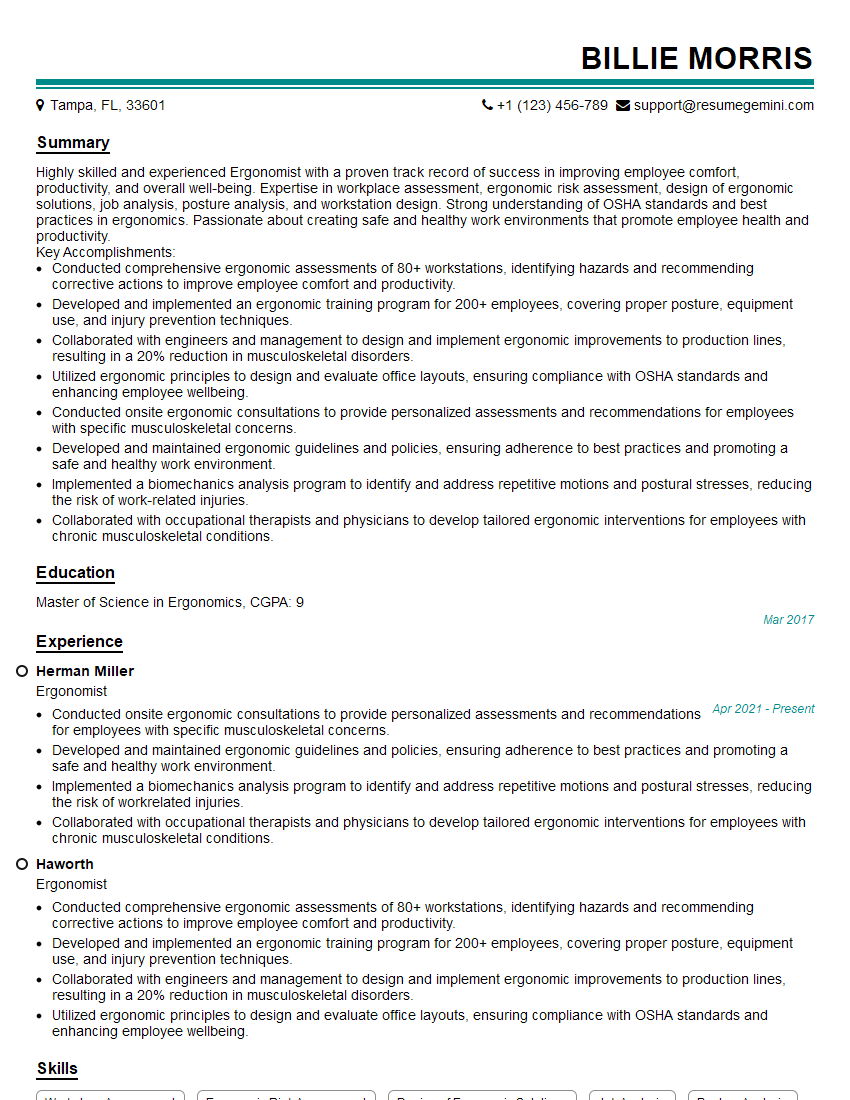
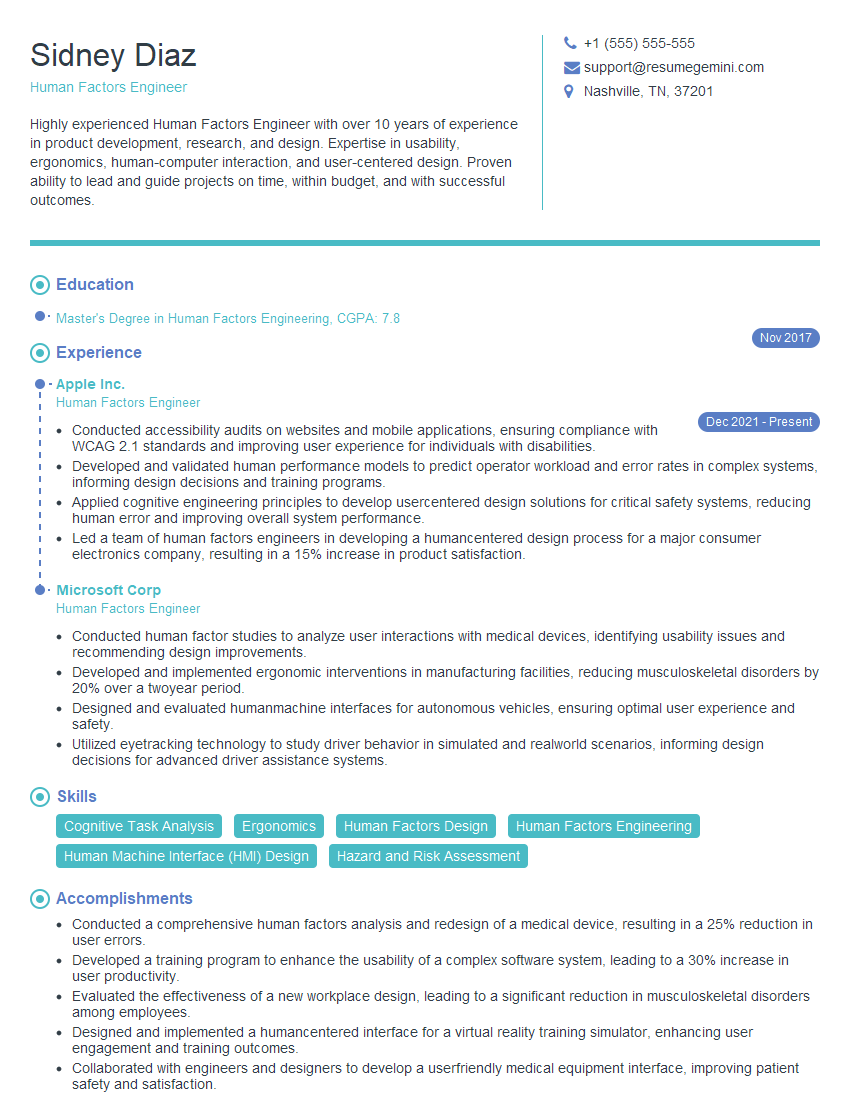
Mastering ergonomic assessments opens doors to exciting career opportunities in occupational health and safety, human factors engineering, and industrial design. To significantly enhance your job prospects, creating a compelling and ATS-friendly resume is crucial. ResumeGemini is a trusted resource that can help you build a professional resume that highlights your skills and experience effectively. ResumeGemini provides examples of resumes tailored to Ergonomic Assessments roles, helping you showcase your qualifications to potential employers. Invest time in crafting a strong resume—it’s your first impression and a key to unlocking your career potential in this field.
Explore more articles
Users Rating of Our Blogs
Share Your Experience
We value your feedback! Please rate our content and share your thoughts (optional).
What Readers Say About Our Blog
Attention music lovers!
Wow, All the best Sax Summer music !!!
Spotify: https://open.spotify.com/artist/6ShcdIT7rPVVaFEpgZQbUk
Apple Music: https://music.apple.com/fr/artist/jimmy-sax-black/1530501936
YouTube: https://music.youtube.com/browse/VLOLAK5uy_noClmC7abM6YpZsnySxRqt3LoalPf88No
Other Platforms and Free Downloads : https://fanlink.tv/jimmysaxblack
on google : https://www.google.com/search?q=22+AND+22+AND+22
on ChatGPT : https://chat.openai.com?q=who20jlJimmy20Black20Sax20Producer
Get back into the groove with Jimmy sax Black
Best regards,
Jimmy sax Black
www.jimmysaxblack.com
Hi I am a troller at The aquatic interview center and I suddenly went so fast in Roblox and it was gone when I reset.
Hi,
Business owners spend hours every week worrying about their website—or avoiding it because it feels overwhelming.
We’d like to take that off your plate:
$69/month. Everything handled.
Our team will:
Design a custom website—or completely overhaul your current one
Take care of hosting as an option
Handle edits and improvements—up to 60 minutes of work included every month
No setup fees, no annual commitments. Just a site that makes a strong first impression.
Find out if it’s right for you:
https://websolutionsgenius.com/awardwinningwebsites
Hello,
we currently offer a complimentary backlink and URL indexing test for search engine optimization professionals.
You can get complimentary indexing credits to test how link discovery works in practice.
No credit card is required and there is no recurring fee.
You can find details here:
https://wikipedia-backlinks.com/indexing/
Regards
NICE RESPONSE TO Q & A
hi
The aim of this message is regarding an unclaimed deposit of a deceased nationale that bears the same name as you. You are not relate to him as there are millions of people answering the names across around the world. But i will use my position to influence the release of the deposit to you for our mutual benefit.
Respond for full details and how to claim the deposit. This is 100% risk free. Send hello to my email id: lukachachibaialuka@gmail.com
Luka Chachibaialuka
Hey interviewgemini.com, just wanted to follow up on my last email.
We just launched Call the Monster, an parenting app that lets you summon friendly ‘monsters’ kids actually listen to.
We’re also running a giveaway for everyone who downloads the app. Since it’s brand new, there aren’t many users yet, which means you’ve got a much better chance of winning some great prizes.
You can check it out here: https://bit.ly/callamonsterapp
Or follow us on Instagram: https://www.instagram.com/callamonsterapp
Thanks,
Ryan
CEO – Call the Monster App
Hey interviewgemini.com, I saw your website and love your approach.
I just want this to look like spam email, but want to share something important to you. We just launched Call the Monster, a parenting app that lets you summon friendly ‘monsters’ kids actually listen to.
Parents are loving it for calming chaos before bedtime. Thought you might want to try it: https://bit.ly/callamonsterapp or just follow our fun monster lore on Instagram: https://www.instagram.com/callamonsterapp
Thanks,
Ryan
CEO – Call A Monster APP
To the interviewgemini.com Owner.
Dear interviewgemini.com Webmaster!
Hi interviewgemini.com Webmaster!
Dear interviewgemini.com Webmaster!
excellent
Hello,
We found issues with your domain’s email setup that may be sending your messages to spam or blocking them completely. InboxShield Mini shows you how to fix it in minutes — no tech skills required.
Scan your domain now for details: https://inboxshield-mini.com/
— Adam @ InboxShield Mini
support@inboxshield-mini.com
Reply STOP to unsubscribe
Hi, are you owner of interviewgemini.com? What if I told you I could help you find extra time in your schedule, reconnect with leads you didn’t even realize you missed, and bring in more “I want to work with you” conversations, without increasing your ad spend or hiring a full-time employee?
All with a flexible, budget-friendly service that could easily pay for itself. Sounds good?
Would it be nice to jump on a quick 10-minute call so I can show you exactly how we make this work?
Best,
Hapei
Marketing Director
Hey, I know you’re the owner of interviewgemini.com. I’ll be quick.
Fundraising for your business is tough and time-consuming. We make it easier by guaranteeing two private investor meetings each month, for six months. No demos, no pitch events – just direct introductions to active investors matched to your startup.
If youR17;re raising, this could help you build real momentum. Want me to send more info?
Hi, I represent an SEO company that specialises in getting you AI citations and higher rankings on Google. I’d like to offer you a 100% free SEO audit for your website. Would you be interested?
Hi, I represent an SEO company that specialises in getting you AI citations and higher rankings on Google. I’d like to offer you a 100% free SEO audit for your website. Would you be interested?