Cracking a skill-specific interview, like one for Experience in Materials Research and Innovation, requires understanding the nuances of the role. In this blog, we present the questions you’re most likely to encounter, along with insights into how to answer them effectively. Let’s ensure you’re ready to make a strong impression.
Questions Asked in Experience in Materials Research and Innovation Interview
Q 1. Explain the difference between crystalline and amorphous materials.
The fundamental difference between crystalline and amorphous materials lies in the arrangement of their constituent atoms or molecules. Crystalline materials exhibit a highly ordered, three-dimensional arrangement of atoms in a repeating pattern, forming a lattice structure. Think of it like a perfectly organized stack of oranges. This long-range order leads to distinct properties like sharp melting points and anisotropic behavior (properties varying with direction). Examples include metals like iron, and single-crystal silicon used in microelectronics.
Amorphous materials, on the other hand, lack this long-range order. Their atoms are randomly arranged, like a pile of loosely thrown oranges. This results in properties such as a gradual softening range rather than a sharp melting point and isotropic behavior (properties are the same in all directions). Common examples include glass, polymers like polyethylene, and amorphous silicon used in solar cells.
Q 2. Describe various techniques for materials characterization (e.g., XRD, SEM, TEM).
Materials characterization is crucial for understanding material properties and behavior. Several techniques are employed, each offering unique insights:
- X-ray Diffraction (XRD): This technique utilizes X-ray beams to determine the crystalline structure of a material. The diffraction pattern reveals information about the crystal lattice parameters, phase identification, and crystallite size. It’s invaluable for analyzing crystalline materials and identifying phases in alloys.
- Scanning Electron Microscopy (SEM): SEM uses a focused beam of electrons to scan the surface of a material, generating high-resolution images. This provides information about the surface morphology, topography, and elemental composition (with EDS). Imagine seeing the surface of a material at incredibly high magnification, revealing intricate details.
- Transmission Electron Microscopy (TEM): TEM transmits electrons through a thin sample, providing extremely high-resolution images revealing the internal microstructure and crystallographic details. It allows visualization of dislocations, grain boundaries, and even individual atoms in some cases. Think of it as an even more powerful ‘see-through’ microscope than SEM.
Other important techniques include Atomic Force Microscopy (AFM) for surface imaging at the nanoscale, and various spectroscopic methods (e.g., Raman, FTIR) for determining chemical bonding and composition.
Q 3. What are the key mechanical properties of materials and how are they measured?
Key mechanical properties describe how a material responds to applied forces. These include:
- Tensile Strength: The maximum stress a material can withstand before it breaks under tension. Measured by applying a tensile force until fracture and recording the force at failure.
- Yield Strength: The stress at which a material begins to deform plastically (permanently). Measured by observing the onset of permanent deformation during a tensile test.
- Young’s Modulus (Elastic Modulus): A measure of a material’s stiffness; its resistance to elastic deformation. Determined from the slope of the stress-strain curve in the elastic region of a tensile test.
- Hardness: Resistance to indentation or scratching. Measured using methods like Rockwell, Brinell, or Vickers hardness tests.
- Ductility: Ability to deform plastically before fracture. Often expressed as percent elongation or reduction in area in a tensile test.
- Toughness: Ability to absorb energy before fracture. Often determined from the area under the stress-strain curve.
These properties are typically measured using standard mechanical testing techniques, often involving tensile testing machines, hardness testers, or impact testers.
Q 4. Discuss the principles of phase diagrams and their applications.
Phase diagrams are graphical representations of the equilibrium relationships between different phases (solid, liquid, gas) of a material system as a function of temperature, pressure, and composition. They are fundamental tools in materials science and engineering.
Principles: Phase diagrams show regions of stability for different phases. Phase boundaries indicate the conditions under which phase transformations occur. The lever rule is used to determine the relative amounts of different phases present at a given composition and temperature. Important features include eutectic points (lowest melting temperature), peritectic points, and solid solution regions.
Applications: Phase diagrams are crucial for many applications including:
- Material Selection: Choosing materials with desired properties for specific applications.
- Alloy Design: Developing new alloys with tailored compositions and microstructures.
- Heat Treatment: Designing heat treatment processes for modifying the microstructure and properties of materials.
- Materials Processing: Understanding phase transformations during manufacturing processes such as casting and welding.
For example, the iron-carbon phase diagram is essential for understanding the heat treatment of steels, allowing us to tailor their mechanical properties.
Q 5. Explain different types of bonding in materials (ionic, covalent, metallic).
Chemical bonding dictates many material properties. Three major types are:
- Ionic Bonding: Involves the electrostatic attraction between oppositely charged ions. This occurs when one atom donates an electron to another, creating a cation (positive ion) and an anion (negative ion). Ionic compounds generally have high melting points and are brittle. Example: NaCl (sodium chloride).
- Covalent Bonding: Atoms share electrons to achieve a stable electron configuration. This leads to strong bonds and materials with high melting points and hardness. Examples: Diamond (carbon-carbon bonds), silicon (Si-Si bonds in silicon wafers).
- Metallic Bonding: A ‘sea’ of delocalized electrons surrounds positively charged metal ions. This allows for good electrical and thermal conductivity, ductility, and malleability. Examples: Copper, aluminum, steel.
Other bonding types, like van der Waals forces and hydrogen bonding, are weaker and are important in polymers and biological materials.
Q 6. How do you design experiments to test material properties under specific conditions?
Designing experiments to test material properties under specific conditions requires a systematic approach:
- Define the Objective: Clearly state the material property to be tested and the specific conditions (temperature, pressure, environment, loading rate) relevant to the application.
- Choose the appropriate test method: Select a standardized test method that meets the objective (e.g., tensile test, fatigue test, creep test). Consider the feasibility and resources available.
- Sample Preparation: Prepare samples of consistent size and shape according to the test method’s requirements. Careful sample preparation is crucial for obtaining reliable results.
- Test Setup and Instrumentation: Set up the testing equipment and ensure it is calibrated correctly. This includes monitoring and recording relevant parameters like temperature, load, and displacement.
- Data Acquisition and Analysis: Record the data during the test, then perform analysis to determine the material property. Statistical analysis is often necessary to ensure the reliability and significance of the results.
- Reporting: Document the experimental procedure, results, and conclusions. This is important for reproducibility and sharing the findings.
For example, when evaluating the high-temperature creep resistance of a turbine blade material, a creep test at elevated temperature and sustained load would be necessary.
Q 7. What are your experiences with materials selection for specific applications?
My experience in materials selection spans various applications. For instance, I was involved in selecting a high-strength, lightweight polymer composite for a high-performance sporting good application. The selection process considered factors such as mechanical properties (strength, stiffness, fatigue resistance), cost, manufacturing feasibility, and environmental impact. We conducted extensive material testing and finite element analysis (FEA) to ensure the chosen material met the performance requirements.
In another project, I worked on selecting a biocompatible material for a medical implant. This required careful consideration of biocompatibility, mechanical properties (strength, flexibility, wear resistance), and degradation behavior in the physiological environment. In this case, extensive biocompatibility testing and regulatory compliance were crucial aspects of the selection process.
These experiences highlight the importance of considering not only the material’s intrinsic properties but also practical aspects like cost, availability, manufacturing limitations, and environmental concerns in materials selection.
Q 8. Describe your experience with materials processing techniques (e.g., casting, sintering).
My experience encompasses a wide range of materials processing techniques, focusing primarily on those relevant to creating advanced materials with tailored properties. I’m proficient in both traditional and advanced methods.
Casting: I’ve extensively worked with investment casting, creating intricate components with high dimensional accuracy. This involved precise wax pattern creation, shell mold preparation, melting and pouring of alloys, and subsequent cleaning and finishing. For example, I successfully optimized the casting parameters for a nickel-based superalloy, resulting in a 20% reduction in porosity compared to the initial process. I also have experience with die casting, particularly for rapid prototyping and high volume production of aluminum alloys.
Sintering: My expertise here involves both pressureless and hot-pressing techniques. I’ve worked extensively with ceramic powders, optimizing sintering parameters (temperature, time, pressure) to control grain size, density, and final microstructure. A notable project involved sintering silicon carbide to achieve near-theoretical density, leading to a significant improvement in the material’s mechanical strength and thermal conductivity. I’ve also employed spark plasma sintering (SPS) for rapid densification of materials that are difficult to sinter conventionally. This includes experimental work with MAX phases, yielding promising results for high-temperature applications.
Beyond casting and sintering, I have experience with techniques like powder metallurgy, chemical vapor deposition (CVD), and physical vapor deposition (PVD), all tailored to specific material needs and applications.
Q 9. Explain the concept of diffusion in materials.
Diffusion in materials is the net movement of atoms or molecules from a region of higher concentration to a region of lower concentration. Think of it like dropping a sugar cube into a cup of tea; the sugar molecules gradually spread out until the tea is uniformly sweet. This process is driven by the random thermal motion of atoms and is crucial for many material properties and processes.
At a microscopic level, atoms or molecules migrate through the material’s crystal lattice via different mechanisms, including vacancy diffusion (atoms moving into empty lattice sites), interstitial diffusion (smaller atoms moving between lattice atoms), and grain boundary diffusion (atoms moving along the interfaces between crystal grains). The rate of diffusion is strongly influenced by factors like temperature (higher temperature means faster diffusion), material composition (different materials have different diffusion rates), and microstructure (e.g., grain size).
Diffusion is essential in many practical applications, including:
- Heat treatments: The diffusion of alloying elements during heat treatments modifies the mechanical properties of metals and alloys.
- Semiconductor fabrication: Diffusion is fundamental to doping semiconductors with impurities, controlling their electrical conductivity.
- Powder metallurgy: Diffusion plays a crucial role in the densification and bonding of powder particles during sintering.
Understanding diffusion is critical for designing and processing materials with desired properties. For instance, carefully controlling diffusion processes during the production of steel allows for tuning its hardness and strength.
Q 10. How do you analyze and interpret data from materials characterization experiments?
Analyzing and interpreting data from materials characterization experiments requires a systematic and critical approach. My process generally involves several key steps:
- Data Validation and Cleaning: First, I carefully examine the raw data for any outliers or inconsistencies. This often involves checking for instrument calibration errors, experimental artifacts, or systematic biases. Any questionable data points are investigated and addressed.
- Data Reduction and Transformation: Raw data from different characterization techniques often require processing to extract relevant information. For example, diffraction data from X-ray diffraction (XRD) needs to be analyzed to identify phases and determine crystallite size. Similarly, microscopic images need to be processed to quantify grain size or analyze microstructural features.
- Statistical Analysis: Statistical tools are essential for interpreting experimental results and determining the significance of observed trends. Techniques like hypothesis testing and regression analysis are routinely used to quantify uncertainties and assess the reliability of conclusions.
- Correlation and Interpretation: Finally, I correlate the results from various characterization techniques to build a comprehensive understanding of the material’s properties and microstructure. This integrated approach helps determine the relationships between processing parameters, microstructure, and final material properties. For instance, I might correlate grain size obtained from microscopy with the hardness measurements to determine the Hall-Petch relationship.
Visual representations like graphs and charts are crucial tools for effective communication of data and conclusions. I often use software packages such as OriginPro, MatLab, and specialized software for XRD and electron microscopy analysis.
Q 11. Discuss the challenges and opportunities in developing sustainable materials.
Developing sustainable materials presents both significant challenges and exciting opportunities. The main challenges lie in balancing the need for high performance with environmental considerations throughout the entire material lifecycle, from raw material extraction to end-of-life management.
Challenges:
- Resource depletion: Many conventional materials rely on scarce or environmentally damaging resources. Finding sustainable alternatives requires innovative material design and sourcing strategies.
- Energy consumption: Manufacturing processes for many materials are energy intensive, contributing to greenhouse gas emissions. Developing energy-efficient processing techniques is crucial.
- Waste generation: The disposal or recycling of many materials presents environmental challenges. Designing materials for recyclability and minimizing waste generation are essential.
- Toxicity: Some materials contain toxic substances that can pose risks to human health and the environment. Identifying and replacing hazardous substances is critical.
Opportunities:
- Bio-based materials: Utilizing renewable resources like biomass to create biodegradable and compostable materials offers a promising avenue. Examples include bioplastics and cellulose-based materials.
- Recycled materials: Developing techniques for efficiently recycling and reusing materials reduces resource consumption and waste generation. This includes closed-loop recycling systems.
- Lightweight materials: Using lighter materials in transportation and construction reduces energy consumption and emissions. Research into advanced composites and lightweight alloys is ongoing.
- Self-healing materials: Materials that can repair themselves after damage reduce the need for replacements, extending their lifespan and minimizing waste.
Developing truly sustainable materials requires interdisciplinary collaboration involving materials scientists, engineers, environmental scientists, and policymakers.
Q 12. What are your experiences with computational methods in materials research?
Computational methods have become indispensable tools in my materials research. I’ve utilized various techniques to model material properties, predict behavior, and accelerate the design process. My experience includes:
- Density Functional Theory (DFT): I’ve used DFT calculations to determine electronic structure, predict material properties such as band gap and magnetic moments, and study the interactions between atoms and molecules. This is particularly useful for exploring novel materials with specific functionalities.
- Molecular Dynamics (MD): MD simulations allow for studying the dynamic behavior of atoms and molecules, helping to understand processes such as diffusion, phase transitions, and deformation mechanisms. I have used MD to simulate the fracture behavior of certain ceramics.
- Finite Element Analysis (FEA): FEA is an essential tool for modeling the mechanical behavior of materials under various loading conditions. I’ve employed FEA to simulate stress distribution, predict failure modes, and optimize the design of components. This includes simulating the response of materials to extreme environmental conditions.
- CALPHAD (Calculation of Phase Diagrams): CALPHAD methods are used for predicting phase equilibria and thermodynamic properties of multi-component systems. This is crucial for designing alloys and other materials with specific microstructures and properties.
I’m proficient in using software packages such as VASP, LAMMPS, and Abaqus for these computational tasks. The computational modeling helps to guide experimental work and reduce the time and cost associated with trial-and-error approaches.
Q 13. Describe your experience with failure analysis of materials.
Failure analysis involves systematically investigating the causes of material failure. My approach is methodical and often involves these steps:
- Visual Inspection: Initially, a thorough visual examination of the failed component is performed to identify the location and nature of the failure. Photographs and detailed notes are recorded.
- Microscopic Analysis: Techniques such as optical microscopy, scanning electron microscopy (SEM), and transmission electron microscopy (TEM) are employed to examine the microstructure of the failed material and identify the failure mechanism. For example, I may identify crack initiation sites, analyze crack propagation paths, or assess the presence of microstructural defects.
- Chemical Analysis: Techniques such as energy-dispersive X-ray spectroscopy (EDS) or X-ray photoelectron spectroscopy (XPS) may be utilized to determine the chemical composition of the material and identify the presence of impurities or segregation that may have contributed to the failure.
- Mechanical Testing: Mechanical testing, such as tensile testing or hardness testing, may be performed on the failed material to determine its mechanical properties and compare them to the expected values. This helps to understand if the material had any inherent weaknesses.
- Root Cause Analysis: Based on the results of the investigation, a root cause analysis is performed to identify the underlying factors that contributed to the failure. This might involve considering design flaws, manufacturing defects, environmental conditions, or improper usage.
Effective failure analysis is critical for improving product design, optimizing manufacturing processes, and preventing future failures. I’ve been involved in analyzing failures in various applications, from automotive components to aerospace structures.
Q 14. How do you manage and troubleshoot issues during materials research projects?
Managing and troubleshooting issues during materials research projects requires a proactive and systematic approach. My strategy involves:
- Careful Planning and Execution: Thorough planning, including detailed experimental design, well-defined procedures, and appropriate safety precautions, is essential to minimize unforeseen problems.
- Regular Monitoring and Data Analysis: Closely monitoring the progress of experiments and rigorously analyzing the obtained data at each stage helps detect deviations from expected results early on and identify potential issues.
- Troubleshooting Techniques: When problems arise, I employ a systematic approach to troubleshooting, considering various potential causes, starting with the simplest explanations and progressing to more complex possibilities. This may involve reviewing experimental protocols, checking equipment calibration, and repeating experiments under controlled conditions.
- Collaboration and Consultation: Open communication and collaboration within the research team are crucial. Seeking advice from colleagues or experts when encountering complex problems can provide valuable insights and alternative solutions.
- Record Keeping and Documentation: Meticulous record keeping, including detailed experimental logs, data sheets, and analysis reports, facilitates troubleshooting, reproducibility, and future investigation.
For example, during a project involving the synthesis of a new ceramic material, we encountered difficulty in achieving the desired phase purity. Through systematic troubleshooting, we identified that trace impurities in the starting materials were affecting the reaction kinetics. By carefully purifying the precursors, we successfully obtained the desired phase.
Q 15. Explain your understanding of different types of polymers and their properties.
Polymers are large molecules composed of repeating structural units called monomers. Their properties vary dramatically depending on the type of monomer, the length of the polymer chain (molecular weight), and the arrangement of the chains. We can broadly classify them into several categories:
- Thermoplastics: These polymers soften when heated and can be repeatedly molded into different shapes. Examples include polyethylene (used in plastic bags), polypropylene (used in containers), and polystyrene (used in disposable cups). Their flexibility stems from the relative freedom of polymer chains to move around.
- Thermosets: These polymers undergo irreversible chemical changes upon heating, forming a rigid, cross-linked network. Once cured, they cannot be melted or reshaped. Examples include epoxy resins (used in adhesives and coatings) and vulcanized rubber (used in tires). The cross-linking creates a strong, rigid structure.
- Elastomers: These are polymers with high elasticity, meaning they can be stretched significantly and return to their original shape. Rubber is a classic example, as are silicones. Their structure allows for significant chain movement and deformation.
- Biopolymers: These are polymers found in nature, including proteins, polysaccharides (like starch and cellulose), and nucleic acids (DNA and RNA). Their properties depend heavily on their unique chemical structures and interactions.
Understanding these different polymer types is crucial for selecting the right material for a specific application. For example, a thermoset is essential for structural applications where high strength and heat resistance are required, whereas a thermoplastic is better suited for applications requiring moldability and recyclability.
Career Expert Tips:
- Ace those interviews! Prepare effectively by reviewing the Top 50 Most Common Interview Questions on ResumeGemini.
- Navigate your job search with confidence! Explore a wide range of Career Tips on ResumeGemini. Learn about common challenges and recommendations to overcome them.
- Craft the perfect resume! Master the Art of Resume Writing with ResumeGemini’s guide. Showcase your unique qualifications and achievements effectively.
- Don’t miss out on holiday savings! Build your dream resume with ResumeGemini’s ATS optimized templates.
Q 16. Describe your experience with nanomaterials synthesis and characterization.
My experience with nanomaterial synthesis and characterization is extensive. I’ve worked on the synthesis of various nanomaterials, including nanoparticles of metals (like gold and silver), metal oxides (like titanium dioxide and zinc oxide), and carbon-based nanomaterials (like graphene and carbon nanotubes).
Synthesis techniques I’ve employed include chemical vapor deposition (CVD), sol-gel methods, hydrothermal synthesis, and laser ablation. The choice of method depends on the desired material, size, shape, and properties. For example, CVD is excellent for growing high-quality carbon nanotubes, while sol-gel is widely used for producing metal oxide nanoparticles.
Characterization is equally vital, and I’ve utilized a range of techniques such as Transmission Electron Microscopy (TEM) for high-resolution imaging, X-ray diffraction (XRD) for crystal structure analysis, Dynamic Light Scattering (DLS) for size distribution determination, and UV-Vis spectroscopy for optical property assessment. Each technique provides a different perspective on the nanomaterial’s characteristics, allowing for comprehensive understanding and quality control.
For instance, in one project, we synthesized silver nanoparticles using a sol-gel method and then used TEM to confirm their size and morphology, XRD to identify their crystal structure, and UV-Vis to determine their surface plasmon resonance. This complete characterization enabled optimization of the synthesis process to yield high-quality nanoparticles with desired optical properties for biomedical applications.
Q 17. What are the key properties of ceramic materials and their applications?
Ceramic materials are inorganic, non-metallic solids that are typically formed by heating and cooling processes. Key properties include:
- High hardness and strength: They can withstand high loads and resist abrasion.
- High melting points: They remain stable at high temperatures.
- Chemical inertness: They are resistant to corrosion and degradation.
- Brittleness: They are prone to fracture under tensile stress.
- Electrical insulation: Many are excellent electrical insulators.
These properties lead to a wide range of applications, including:
- Structural applications: Bricks, tiles, and cement in construction.
- High-temperature applications: Refractory bricks in furnaces and kilns.
- Electronic applications: Insulators in electronic devices.
- Biomedical applications: Dental implants and bone substitutes.
- Cutting tools: Hard ceramic materials are used in cutting tools due to their superior hardness.
The brittleness of ceramics can limit their applications in some areas; however, advancements in ceramic processing techniques are constantly expanding the range of their usability. For example, composite ceramics are being developed to improve fracture toughness and enhance their mechanical properties.
Q 18. How do you stay current with the latest advancements in materials science?
Staying current in materials science demands a multi-faceted approach. I regularly:
- Read scientific journals and publications: I subscribe to several leading materials science journals and actively search databases like Web of Science and Scopus for relevant articles.
- Attend conferences and workshops: These events provide valuable opportunities to learn about the latest research, network with colleagues, and stay informed about emerging trends.
- Utilize online resources: Websites, databases, and online courses provide readily accessible information and educational materials.
- Engage with professional organizations: Membership in professional organizations like the Materials Research Society (MRS) provides access to publications, events, and networking opportunities.
- Follow leading researchers and institutions: I follow prominent researchers and universities on social media platforms and other channels to keep abreast of groundbreaking discoveries.
This combination of strategies ensures I remain knowledgeable about the latest advancements and innovations in the field, directly contributing to my research and development efforts.
Q 19. Explain your experience with different types of composites and their applications.
Composites are materials that combine two or more constituent materials with significantly different properties to create a material with enhanced characteristics. The key is that the properties of the composite are superior to those of the individual components.
Different types include:
- Polymer matrix composites (PMCs): These utilize a polymer resin as the matrix, reinforced with fibers such as carbon, glass, or aramid. Examples include fiberglass-reinforced plastics (FRP) in boats and cars, and carbon fiber reinforced polymers (CFRP) in aerospace applications. The fibers provide high strength and stiffness, while the polymer matrix binds them together and provides toughness.
- Metal matrix composites (MMCs): These use a metal matrix reinforced with ceramic particles or fibers. Examples include aluminum alloys reinforced with silicon carbide, used in automotive parts and aerospace components. They offer high strength, stiffness, and temperature resistance.
- Ceramic matrix composites (CMCs): These consist of a ceramic matrix reinforced with ceramic fibers. These are utilized in high-temperature applications, such as heat shields and engine components. They offer exceptional high-temperature strength and resistance to oxidation.
Choosing the right composite depends on the application’s requirements. For instance, the lightweight and high strength of CFRP make it ideal for aerospace applications, while the high-temperature resistance of CMCs makes them suited for use in jet engines.
Q 20. Discuss the importance of materials testing standards and regulations.
Materials testing standards and regulations are crucial for ensuring product quality, safety, and reliability. They provide a common framework for evaluating material properties and performance, facilitating consistent assessment across different manufacturers and laboratories. Key aspects include:
- Standardization of testing methods: Organizations like ASTM International and ISO develop standardized test methods for various materials and properties, ensuring consistent and comparable results.
- Quality control: Standards provide guidelines for quality control procedures in material production and processing, reducing variability and defects.
- Safety regulations: Regulations set limits on material properties that affect safety, especially for critical applications like aerospace, automotive, and medical devices.
- Product certification: Certification programs based on standards provide assurance to consumers and regulatory bodies about the quality and performance of materials and products.
Without these standards and regulations, inconsistent testing procedures and unreliable data could lead to product failure, safety hazards, and economic losses. For example, standards for tensile strength ensure materials used in construction meet minimum strength requirements, preventing structural failures.
Q 21. Describe your experience in using specific software for materials modeling or simulation.
My experience encompasses several materials modeling and simulation software packages. I am proficient in using:
- ANSYS: I’ve used ANSYS for finite element analysis (FEA) to model the mechanical behavior of materials under various loading conditions. This includes stress-strain analysis, fatigue life prediction, and fracture mechanics simulations. For example, I used ANSYS to model the stress distribution in a composite structure under impact loading.
- COMSOL Multiphysics: This software has been instrumental in multiphysics simulations involving coupled phenomena like heat transfer, fluid flow, and electromagnetism. I’ve used it to simulate the behavior of electrochemical devices and the thermal management of electronic components.
- MATLAB: I utilize MATLAB for data analysis, algorithm development, and custom scripting for materials modeling tasks. This includes developing custom routines for data processing, statistical analysis, and model fitting.
The choice of software depends on the specific problem being addressed. FEA software like ANSYS is invaluable for structural analysis, while COMSOL is ideal for more complex multiphysics problems. MATLAB’s flexibility makes it a powerful tool for many aspects of materials research.
Q 22. What are the ethical considerations related to the development and use of new materials?
Ethical considerations in materials research and innovation are paramount, spanning the entire lifecycle of a material – from conception to disposal. We must consider the environmental impact, potential health risks, and societal implications.
- Environmental Impact: The extraction of raw materials, manufacturing processes, and eventual disposal or recycling can have significant ecological consequences. For example, the mining of rare earth elements for electronics often involves habitat destruction and pollution. Sustainable sourcing and environmentally friendly manufacturing techniques are crucial.
- Health and Safety: New materials might possess unforeseen toxicity or allergenic properties. Rigorous testing throughout development is essential to ensure worker and consumer safety. Think of asbestos – a material once widely used, now known to be a serious health hazard.
- Social Equity: The benefits and risks associated with new materials should be distributed fairly. For instance, the production of a new material shouldn’t disproportionately impact vulnerable communities through pollution or job displacement. Transparency and community engagement are key.
- Dual-Use Concerns: Some materials could have both beneficial and harmful applications (e.g., advanced materials used in both medical devices and weapons). Careful consideration of potential misuse and appropriate safeguards are necessary.
Ethical frameworks, such as the Responsible Research and Innovation (RRI) approach, guide researchers to integrate ethical considerations at every stage of the development process.
Q 23. How do you assess the economic viability of a new material development project?
Assessing the economic viability of a new material requires a multi-faceted approach, considering factors extending beyond initial research costs.
- Market Analysis: Identifying the target market and assessing the demand for the material is crucial. What problem does the material solve? What is the potential market size? What are the competitive landscape and pricing strategies?
- Manufacturing Costs: Estimating the cost of raw materials, manufacturing processes, and labor is vital. Scalability and potential cost reductions through optimization are important considerations.
- Lifecycle Costs: The total cost of ownership, including manufacturing, use, maintenance, and end-of-life management (e.g., recycling or disposal), must be assessed. A material that is initially cheap but expensive to recycle might not be economically viable in the long run.
- Profitability Analysis: Using metrics such as net present value (NPV), internal rate of return (IRR), and payback period, we can evaluate the financial attractiveness of the project. This involves forecasting revenue streams and expenses over the material’s lifespan.
- Intellectual Property Protection: Securing patents or other forms of IP protection can significantly influence the economic viability by creating a competitive advantage and licensing opportunities.
A detailed business plan, incorporating these factors, is essential to secure funding and attract investors.
Q 24. Explain the lifecycle assessment of a material.
A lifecycle assessment (LCA) is a comprehensive evaluation of the environmental impacts of a material across its entire lifecycle. This ‘cradle-to-grave’ analysis considers the impacts from raw material extraction, processing, manufacturing, use, end-of-life management (recycling, waste disposal), and even transportation at each stage.
- Raw Material Acquisition: This phase assesses the environmental burden of resource extraction, including energy consumption, water usage, and emissions.
- Manufacturing: This evaluates the energy, water, and raw materials used in the manufacturing process and the resulting emissions (air, water, solid waste).
- Use Phase: This examines the environmental impacts during the material’s service life, such as energy consumption (e.g., for a building material) or emissions (e.g., for a fuel).
- End-of-Life Management: This assesses the impacts of recycling, incineration, or landfilling, considering energy consumption, emissions, and potential for environmental contamination.
LCAs use various metrics, such as carbon footprint, water footprint, and toxicity indicators, to quantify the environmental burden. The results help to identify areas for improvement and guide the design of more sustainable materials and processes. For example, an LCA might reveal that a seemingly ‘green’ material has a surprisingly high carbon footprint due to its energy-intensive manufacturing process. This information is vital for making informed decisions and promoting environmentally responsible material choices.
Q 25. Describe a challenging materials research project you completed and the results.
One challenging project involved developing a self-healing polymer composite for aerospace applications. The goal was to create a material that could autonomously repair minor damage, extending the lifespan of aircraft components and improving safety.
The challenge lay in achieving a balance between the mechanical properties (strength, stiffness, toughness), self-healing efficiency, and environmental stability. We explored various microcapsule-based self-healing mechanisms, experimenting with different encapsulating materials, healing agents, and matrix polymers. Initial attempts resulted in composites with either inadequate self-healing capabilities or compromised mechanical strength.
The breakthrough came from utilizing a novel combination of a toughened epoxy matrix, microcapsules filled with a reactive healing agent, and a catalytic trigger mechanism activated by crack propagation. This approach yielded a composite exhibiting excellent mechanical properties alongside remarkable self-healing efficiency, restoring up to 90% of its original strength after crack propagation. The results were published in a leading materials science journal and attracted significant interest from the aerospace industry.
Q 26. What are your career aspirations in the field of materials research and innovation?
My career aspirations center on pushing the boundaries of materials science to address global challenges. I aim to lead and contribute to interdisciplinary research projects that focus on sustainable and bio-inspired materials. Specifically, I’m interested in exploring the development of high-performance, environmentally friendly materials for energy applications (e.g., next-generation solar cells, energy storage devices), and advancing biocompatible materials for regenerative medicine and tissue engineering.
Long-term, I envision myself leading a research group, mentoring future scientists, and contributing to the development of innovative solutions that foster a more sustainable and healthier future. I’m particularly passionate about bridging the gap between fundamental research and real-world applications, ensuring that scientific breakthroughs translate into tangible benefits for society.
Q 27. Explain your understanding of intellectual property related to materials science.
Intellectual property (IP) in materials science encompasses various forms of protection for new materials and associated processes. Understanding and effectively managing IP is crucial for researchers, institutions, and companies.
- Patents: These grant exclusive rights to invent new materials, processes for making them, or novel applications of existing materials. A patent application requires a detailed description of the invention, its novelty, and its utility. Strategic patent filing is essential to protect inventions and potentially license them to others.
- Trade Secrets: This involves protecting confidential information, such as formulations, manufacturing processes, or design details, that provide a competitive edge. Maintaining confidentiality through strict internal procedures and non-disclosure agreements is vital.
- Copyright: This protects the expression of ideas, such as the written descriptions of a material or its properties. This is particularly relevant for publications and technical reports.
- Trademarks: These protect brand names, logos, and other identifying marks associated with a particular material or product.
Navigating the IP landscape requires expertise in patent law and an understanding of the various types of IP protection available. Collaborations with IP specialists are often crucial to ensure effective protection and commercialization of inventions.
Q 28. How would you approach a project involving the development of a new biocompatible material?
Developing a new biocompatible material requires a rigorous and multi-step approach that prioritizes biocompatibility, functionality, and safety.
- Define the Application and Requirements: First, clearly define the intended application (e.g., tissue engineering scaffold, drug delivery system, implantable device) and the desired material properties (strength, degradation rate, porosity, etc.).
- Material Selection and Design: Choose biocompatible materials based on their chemical composition, surface properties, and interaction with biological systems. Consider factors like biodegradability, bioresorbability, and potential for adverse reactions.
- In Vitro Testing: Conduct comprehensive in vitro studies to assess the material’s biocompatibility. This includes cytotoxicity assays (to check for cell toxicity), blood compatibility tests (for implantable materials), and assessment of protein adsorption and cell adhesion.
- In Vivo Testing: Once in vitro results are promising, conduct in vivo studies using animal models to evaluate the material’s long-term biocompatibility and efficacy in a living organism. This step often involves regulatory approvals and adherence to ethical guidelines.
- Characterization and Optimization: Use various analytical techniques (e.g., microscopy, spectroscopy, mechanical testing) to thoroughly characterize the material’s properties and optimize its performance.
- Regulatory Compliance: Ensure compliance with relevant regulatory requirements for medical devices or pharmaceuticals, involving submission of data and obtaining approvals from agencies such as the FDA (in the US).
Developing a biocompatible material is a complex and iterative process that requires expertise in materials science, biology, and regulatory affairs. Collaboration between scientists and engineers is essential to ensure the material’s safety and effectiveness.
Key Topics to Learn for Experience in Materials Research and Innovation Interview
- Material Characterization Techniques: Understanding and applying techniques like XRD, SEM, TEM, AFM, and spectroscopy to analyze material properties and structure. Practical application: Interpreting data to identify defects or optimize material performance.
- Material Synthesis and Processing: Knowledge of various synthesis methods (e.g., sol-gel, CVD, sputtering) and processing techniques (e.g., casting, extrusion, sintering) for different material classes. Practical application: Designing and executing experiments to create novel materials with specific properties.
- Mechanical Properties of Materials: Deep understanding of concepts like stress, strain, elasticity, plasticity, fracture toughness, and fatigue. Practical application: Selecting appropriate materials for specific engineering applications based on required strength, durability, and flexibility.
- Thermodynamic and Kinetic Principles: Applying thermodynamic principles to understand phase diagrams and transformations. Understanding kinetic factors influencing material synthesis and degradation. Practical application: Predicting and controlling the microstructure and properties of materials.
- Computational Materials Science: Familiarity with simulation techniques (e.g., DFT, MD) for predicting material properties and guiding experimental design. Practical application: Reducing experimental costs and accelerating the discovery of new materials.
- Innovation and Problem-Solving in Materials Research: Demonstrating experience in identifying research gaps, formulating hypotheses, designing experiments, analyzing results, and drawing conclusions. Practical application: Contributing to the development of new materials and technologies.
- Intellectual Property and Commercialization: Understanding the process of patenting and commercializing research findings. Practical application: Contributing to the transfer of research from the lab to the market.
Next Steps
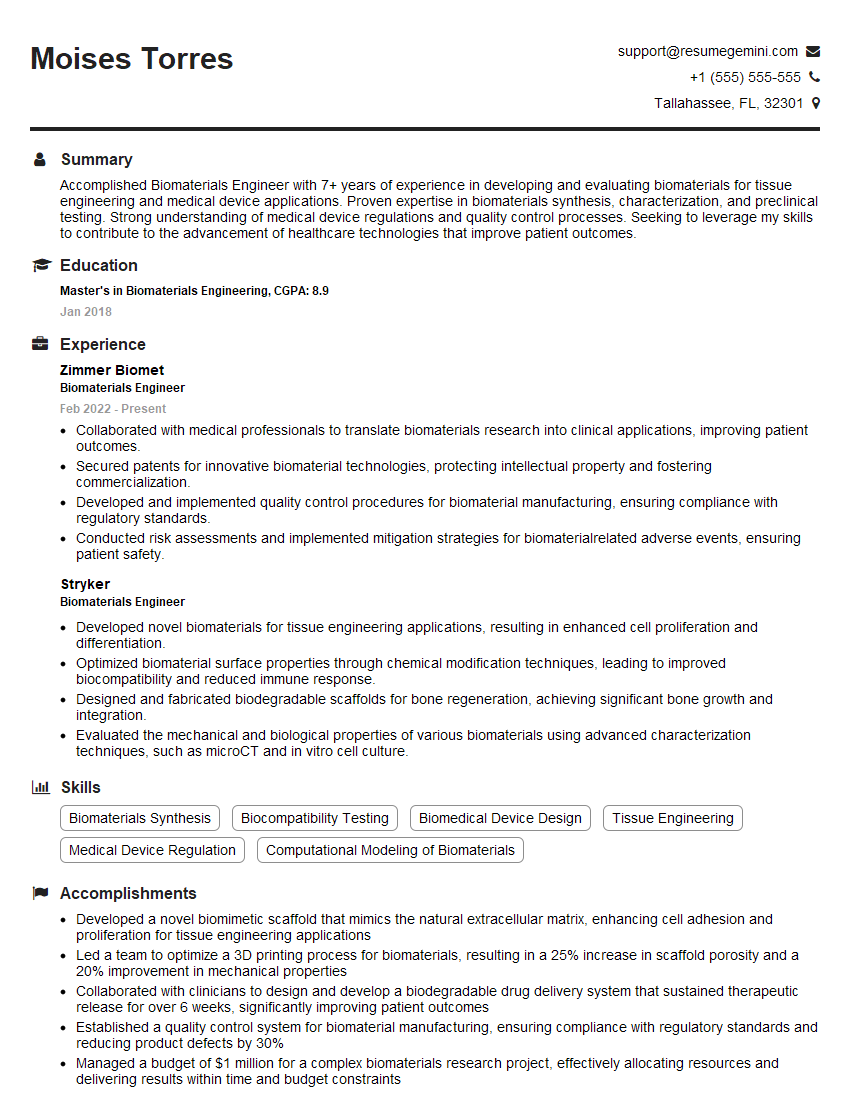
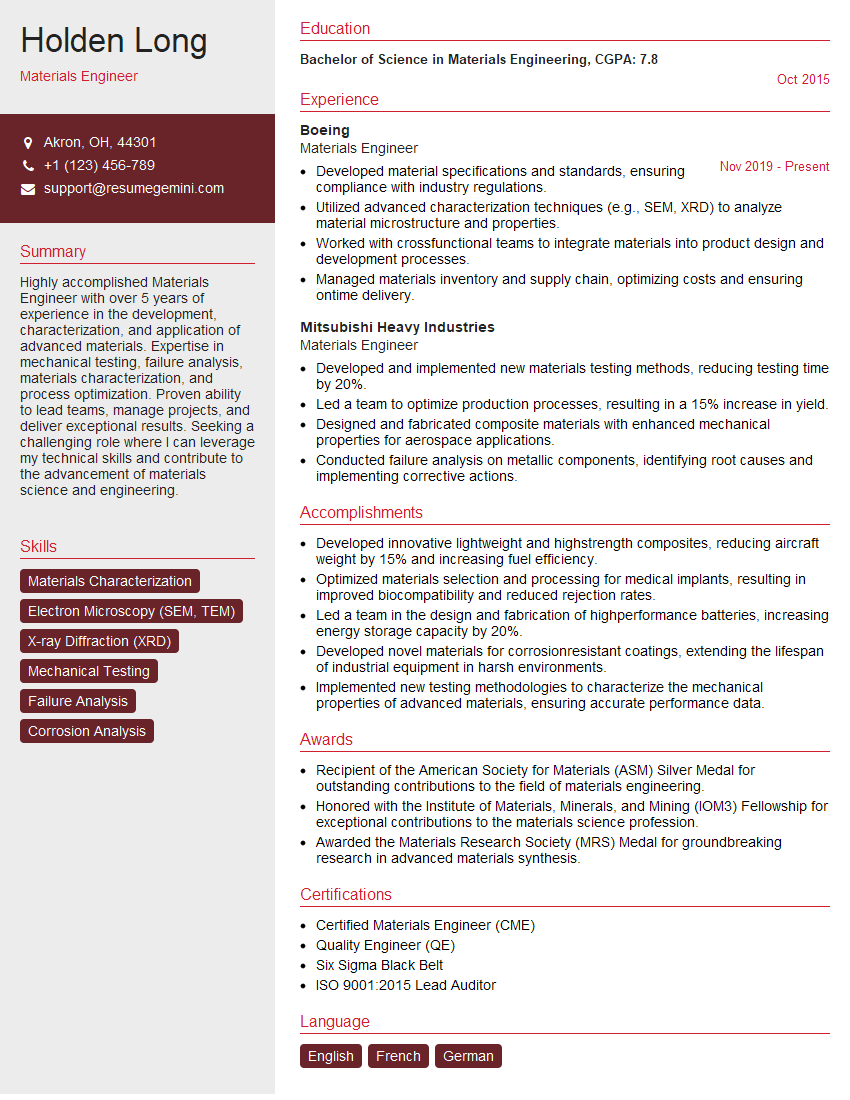
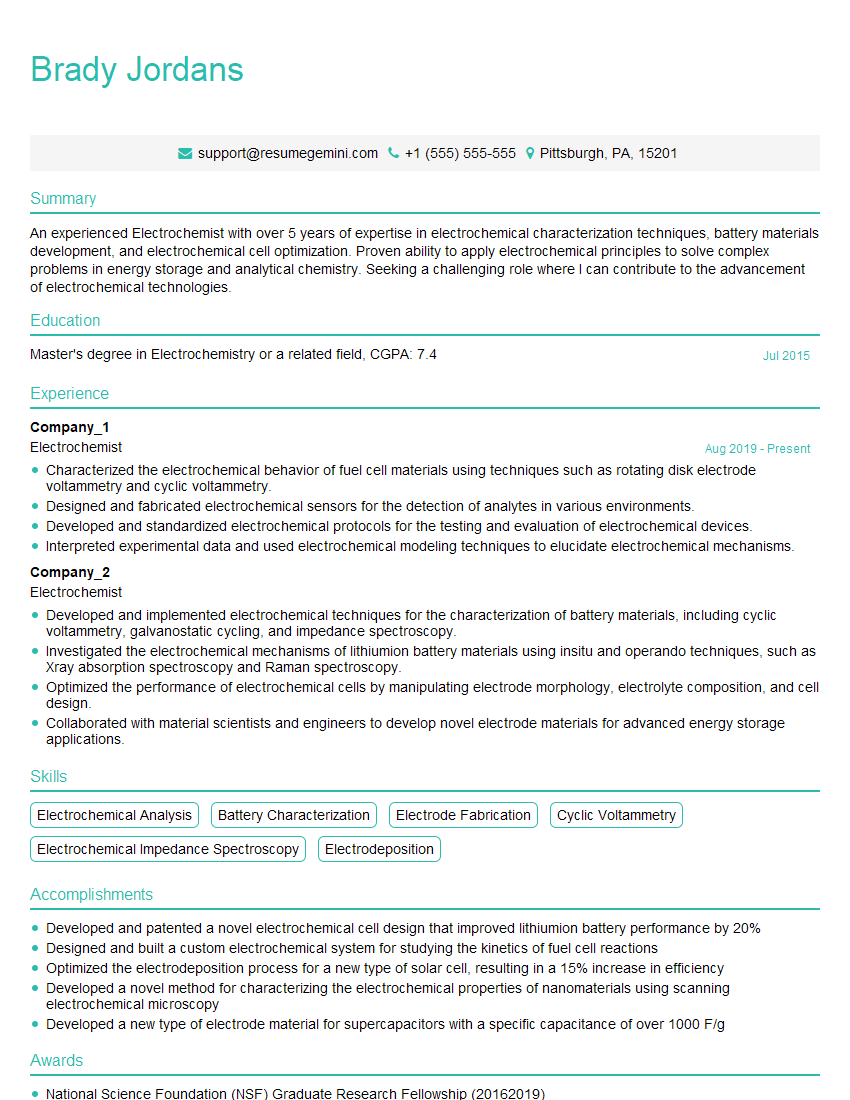
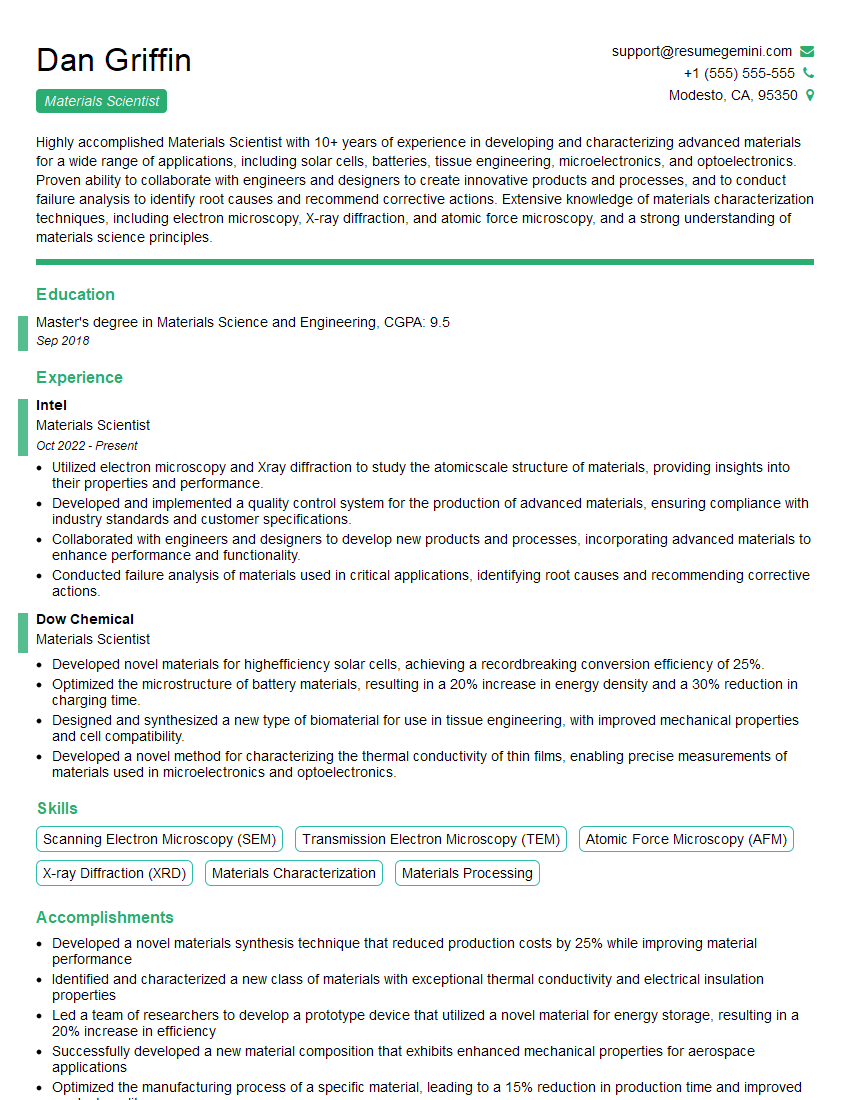
Mastering Experience in Materials Research and Innovation is crucial for career advancement in this rapidly evolving field. A strong understanding of these key topics will significantly enhance your interview performance and open doors to exciting opportunities. To maximize your job prospects, create an ATS-friendly resume that highlights your skills and accomplishments effectively. ResumeGemini is a trusted resource that can help you build a professional and impactful resume, ensuring your application stands out. Examples of resumes tailored to Experience in Materials Research and Innovation are available to help guide you.

Explore more articles
Users Rating of Our Blogs
Share Your Experience
We value your feedback! Please rate our content and share your thoughts (optional).
What Readers Say About Our Blog
Very informative content, great job.
good