Interviews are opportunities to demonstrate your expertise, and this guide is here to help you shine. Explore the essential Experience in Omnichannel Visual Merchandising interview questions that employers frequently ask, paired with strategies for crafting responses that set you apart from the competition.
Questions Asked in Experience in Omnichannel Visual Merchandising Interview
Q 1. Describe your experience in developing and implementing omnichannel visual merchandising strategies.
Developing and implementing omnichannel visual merchandising strategies requires a holistic approach, ensuring a consistent brand experience across all touchpoints – from physical stores to e-commerce websites, social media, and even email marketing. My experience involves first understanding the brand’s identity, target audience, and overall marketing objectives. Then, I create a visual merchandising plan that outlines the key themes, color palettes, and product presentation styles across all channels. This plan is meticulously executed through detailed style guides, training materials for staff, and close collaboration with marketing and design teams.
For example, at my previous company, we launched a new collection of sustainable clothing. We integrated this theme consistently. In-store, we used eco-friendly display materials and highlighted the sustainable aspects of the clothing through signage. Online, we used high-quality photography emphasizing the textures and natural colors of the fabrics, and we created engaging social media content showcasing the collection’s ethical production processes. This resulted in increased engagement and sales across both channels.
Q 2. How do you measure the success of your visual merchandising efforts across different channels?
Measuring the success of visual merchandising efforts requires a multi-faceted approach using both quantitative and qualitative data. Quantitative metrics include sales data (tracking sales increases of featured products), website analytics (measuring click-through rates on product images and engagement with online displays), and social media engagement (likes, shares, comments). Qualitative data comes from customer feedback surveys, store staff observations, and A/B testing of different visual merchandising elements.
For instance, we might compare sales of a product displayed using a particular visual merchandising approach in a store versus online. Similarly, we can track the conversion rate associated with specific online display layouts and compare them. This integrated data analysis provides a complete picture of the effectiveness of the visual merchandising strategy across all channels.
Q 3. Explain your process for creating consistent brand messaging across both online and offline channels.
Creating consistent brand messaging across online and offline channels begins with a well-defined brand style guide. This guide acts as a bible, outlining everything from logo usage and color palettes to typography and imagery styles. This guide isn’t just a document; it’s a living, breathing resource updated as the brand evolves. We ensure all visual elements, regardless of the channel, adhere strictly to this guide. We also use consistent messaging across channels, employing a similar tone of voice and storytelling techniques. This requires close collaboration between the visual merchandising, marketing, and creative teams.
For example, if the brand emphasizes a feeling of ‘rustic charm’, this must be reflected in both the in-store displays (using natural materials and vintage-inspired props) and online presentations (using earthy color palettes and storytelling around the product’s origin). This consistent messaging ensures brand recognition and strengthens customer loyalty.
Q 4. How do you adapt visual merchandising strategies for different customer segments or demographics?
Adapting visual merchandising strategies for different customer segments requires a deep understanding of each segment’s preferences, behaviors, and motivations. We segment our audiences through market research, customer data analysis, and insights from social listening. We then tailor our visual merchandising approaches accordingly. For example, a younger demographic might respond better to vibrant colors and trendy displays, while an older demographic might prefer a more sophisticated and classic aesthetic.
Imagine a clothing retailer. They might use bold colors and playful mannequins for their younger customer base, while opting for a more muted palette and elegant display settings for an older, more established clientele. This targeted approach maximizes engagement and resonates with each segment effectively.
Q 5. Describe a time you had to troubleshoot a visual merchandising issue across multiple channels.
In one instance, we launched a new product line with accompanying visual merchandising materials across all channels. However, we noticed a significant discrepancy in sales performance between online and offline. Online sales were far exceeding in-store sales, despite consistent marketing and product availability. After investigating, we discovered that the in-store displays, while adhering to the brand style guide, weren’t effectively showcasing the product’s key features and benefits. The online product photography and descriptions were superior.
We quickly addressed the issue by revising the in-store displays to incorporate elements inspired by the successful online presentation. We used similar photography on in-store signage, highlighting the same features. We also trained the store staff on the key selling points. This immediate change significantly improved in-store sales, bringing them more in line with online performance.
Q 6. How do you utilize data and analytics to inform your visual merchandising decisions?
Data and analytics are essential for informing visual merchandising decisions. We use various analytics tools to track key metrics, such as sales performance by product and location, website traffic patterns, and social media engagement. This data helps us understand which visual merchandising elements are most effective and which need improvement. A/B testing different visual displays allows us to compare performance and make data-driven decisions.
For example, if we observe that a particular color scheme or product arrangement consistently leads to higher sales in one store location, we can replicate that approach in other stores. Similarly, if website analytics reveal low click-through rates on certain product images, we can revise the photography or product placement online.
Q 7. What software or tools do you use for visual merchandising planning and execution?
For visual merchandising planning and execution, we use a variety of software and tools. These include:
- Digital Asset Management (DAM) systems: For storing and managing all visual assets, ensuring consistency and easy access.
- E-commerce platform tools: For managing product images, descriptions, and online display layouts.
- Analytics platforms: Such as Google Analytics, to track website traffic and conversion rates.
- Project management software: Like Asana or Trello, to collaborate on projects and track deadlines.
- Design software: Such as Adobe Creative Suite, for creating marketing materials and visual merchandising assets.
The specific tools used depend on the specific needs of the project and the resources available, but the core objective is streamlining the process and ensuring seamless collaboration.
Q 8. How do you ensure visual consistency across your brand’s online and offline presence?
Ensuring visual consistency across online and offline channels is paramount for a strong brand identity. It’s about creating a unified customer experience, regardless of where they interact with your brand. This involves meticulously defining a style guide that covers everything from color palettes and typography to imagery and layout.
- Style Guide: A comprehensive style guide acts as the single source of truth for all visual elements. This document dictates specific fonts, colors, image treatments, and even the preferred tone of voice used in captions and descriptions. It should include examples and clear guidelines to avoid ambiguity.
- Template Creation: For both online (website, email marketing) and offline (in-store displays, print materials) channels, we create standardized templates that adhere strictly to the style guide. This ensures consistent application of branding across different platforms.
- Regular Audits: We conduct regular audits of both online and offline displays to identify any deviations from the style guide. This involves reviewing website pages, social media posts, in-store displays, and print materials. Discrepancies are addressed promptly through communication and adjustments.
- Digital Asset Management (DAM): Utilizing a DAM system helps maintain brand consistency by centralizing all approved brand assets, ensuring everyone uses the same approved images, logos and fonts.
For example, if our brand uses a specific shade of blue, this shade must be consistently used across all websites, social media, and in-store signage. Similarly, the brand’s logo must appear in the same format and size consistently.
Q 9. How do you collaborate with other teams (marketing, design, merchandising) to achieve omnichannel visual goals?
Collaboration is the lifeblood of successful omnichannel visual merchandising. I thrive in cross-functional environments and actively seek input from marketing, design, and merchandising teams. Effective collaboration requires clear communication, shared goals, and a willingness to compromise.
- Regular Meetings: We hold regular cross-functional meetings to discuss upcoming campaigns, review progress on projects, and address any roadblocks. These meetings foster transparency and allow for early identification and resolution of potential issues.
- Shared Project Management Tools: We leverage project management tools like Asana or Trello to ensure everyone has visibility into tasks, deadlines, and progress. This centralizes communication and prevents duplicated efforts.
- Feedback Loops: Establishing clear feedback loops is critical. We use regular reviews, both formal and informal, to gather input and ensure that everyone’s perspective is considered. This iterative process allows us to refine visual merchandising strategies and optimize results.
- Joint Workshops: We conduct joint brainstorming sessions or workshops to collaboratively develop creative concepts and refine visual strategies. This fosters a sense of shared ownership and commitment to the overall goals.
For instance, during a holiday campaign, I would work closely with the marketing team to define the overall campaign message, with the design team to create eye-catching visuals, and with the merchandising team to ensure that product placement aligns with the campaign theme both online and in-store.
Q 10. Describe your experience with A/B testing different visual merchandising approaches.
A/B testing is crucial for data-driven decision-making in visual merchandising. It allows us to objectively assess different approaches and determine which resonates best with our target audience.
- Hypothesis Development: We start by defining a clear hypothesis. For example, ‘Using brighter colors in our online banner ads will lead to a higher click-through rate.’
- Design Variations: We create different versions (A and B) of the visual merchandising element, varying only one key element at a time (e.g., color scheme, image, call to action). We ensure all other elements remain consistent.
- Implementation and Tracking: We implement the A/B test across different channels, ensuring accurate tracking of key metrics like click-through rates, conversion rates, and dwell time.
- Data Analysis and Iteration: Once sufficient data is collected, we analyze the results. The version that performs better becomes the standard, and we continuously iterate and improve based on learnings.
For example, we tested two different homepage layouts: one with a hero image showcasing a new product collection and another with multiple smaller product images. By tracking engagement metrics, we determined that the hero image layout performed significantly better and optimized our website accordingly.
Q 11. How do you stay up-to-date on the latest trends in omnichannel visual merchandising?
Staying ahead in omnichannel visual merchandising requires continuous learning. I actively engage in several strategies to stay updated:
- Industry Publications and Blogs: I regularly read industry publications, blogs, and online forums dedicated to retail, visual merchandising, and UX/UI design. This keeps me informed about emerging trends and best practices.
- Conferences and Trade Shows: Attending industry conferences and trade shows provides invaluable opportunities to network with peers, learn from experts, and experience the latest innovations firsthand.
- Competitor Analysis: I consistently monitor the visual merchandising strategies of competitors, both online and offline. This helps me identify best practices and areas for improvement in our own approaches.
- Social Media and Online Communities: I actively participate in relevant social media groups and online communities to engage in discussions, share knowledge, and stay abreast of the latest trends.
- Webinars and Online Courses: I regularly participate in webinars and online courses offered by industry experts to deepen my knowledge and skills in specific areas.
For instance, I recently attended a webinar on using augmented reality in visual merchandising, which provided insights into innovative ways to enhance the customer experience both online and in-store.
Q 12. How do you handle conflicting priorities or tight deadlines in a fast-paced omnichannel environment?
Managing conflicting priorities and tight deadlines in a fast-paced environment requires a structured approach and strong organizational skills.
- Prioritization Matrix: I use a prioritization matrix (such as Eisenhower Matrix) to categorize tasks based on urgency and importance. This allows me to focus on the most critical items first.
- Effective Time Management: I utilize time management techniques such as time blocking and the Pomodoro Technique to maximize productivity and ensure timely completion of tasks.
- Clear Communication: I maintain open and proactive communication with stakeholders, keeping them informed of any potential challenges or delays. This helps to prevent misunderstandings and ensure everyone is on the same page.
- Flexibility and Adaptability: In a dynamic environment, it’s crucial to be flexible and adaptable. I readily adjust plans as needed based on evolving priorities or unforeseen circumstances.
- Delegation and Collaboration: I delegate tasks effectively when possible and collaborate with team members to share the workload and ensure timely completion of projects.
For example, if a critical in-store display needs to be updated urgently while simultaneously working on a major online campaign, I would prioritize the in-store display, potentially adjusting the online campaign timeline through clear communication with stakeholders.
Q 13. How do you balance creative vision with business objectives in visual merchandising?
Balancing creative vision with business objectives is essential for successful visual merchandising. It’s about finding the sweet spot where aesthetically pleasing displays drive sales and achieve marketing goals.
- Data-Driven Decisions: We use data analytics to inform our creative decisions. This involves tracking key metrics like conversion rates, sales figures, and customer engagement to assess the effectiveness of different visual merchandising approaches.
- KPI Alignment: We align our creative vision with specific, measurable, achievable, relevant, and time-bound (SMART) KPIs. This ensures that our creative efforts directly contribute to the overall business objectives.
- Target Audience Understanding: We deeply understand our target audience’s preferences, behaviors, and motivations. This informs our creative decisions and ensures that the visual merchandising strategies resonate with the intended audience.
- A/B Testing: We use A/B testing to compare the performance of different creative concepts, allowing us to validate assumptions and make data-driven choices.
- Continuous Feedback Loop: We maintain a continuous feedback loop with stakeholders, gathering input and incorporating learnings to refine our creative approach based on real-world results.
For instance, while creating a new window display, we might incorporate a bold and artistic design, but we would also ensure that the display prominently features key products and includes clear pricing and messaging to drive sales.
Q 14. Explain your approach to managing budgets and resources for visual merchandising projects.
Managing budgets and resources effectively is crucial for maximizing the return on investment (ROI) of visual merchandising projects.
- Budget Planning: We develop detailed budget plans for each project, outlining all anticipated costs (e.g., design fees, printing, materials, staffing). This involves meticulous cost estimation and contingency planning.
- Resource Allocation: We allocate resources strategically, balancing the need for high-quality materials and skilled personnel with budget constraints. This involves careful consideration of priorities and potential trade-offs.
- Cost Optimization: We explore cost-effective solutions without compromising quality. This includes negotiating with vendors, exploring alternative materials, and optimizing production processes.
- Tracking and Reporting: We track expenses meticulously throughout the project lifecycle, and provide regular budget reports to stakeholders. This ensures transparency and allows for proactive adjustments if needed.
- ROI Analysis: After project completion, we conduct a thorough ROI analysis to assess the effectiveness of the investment and inform future budget decisions. This helps to justify investments and optimize future spending.
For example, when budgeting for a new in-store display, we might explore using more cost-effective materials like eco-friendly cardboard instead of expensive plastics while maintaining visual appeal and durability. We would also carefully track the cost of design, printing, installation, and any subsequent maintenance.
Q 15. Describe a successful visual merchandising campaign you implemented.
One successful campaign involved relaunching our fall collection. We recognized that our previous in-store displays felt cluttered and weren’t effectively communicating the collection’s narrative. Our omnichannel approach involved several key changes.
- In-store: We transitioned from traditional shelf displays to modular, visually appealing fixtures showcasing key pieces. This allowed for greater flexibility and easier updates. We also incorporated digital signage with lifestyle imagery and product videos, creating a more engaging experience.
- Online: We created interactive 360° product views on our website, allowing customers to zoom in and examine details. We also updated our website’s landing pages with high-quality lifestyle photography reflecting the campaign’s overall theme. This ensured consistency between online and offline channels.
- Social Media: We ran a targeted social media campaign using influencer marketing and engaging user-generated content, showcasing customers styling the new collection. This encouraged social sharing and increased brand awareness.
The results were significant. We saw a 25% increase in in-store sales and a 15% rise in online conversions for the fall collection compared to the previous year. This success highlights the power of a well-coordinated omnichannel approach where the customer journey feels seamless across all touchpoints.
Career Expert Tips:
- Ace those interviews! Prepare effectively by reviewing the Top 50 Most Common Interview Questions on ResumeGemini.
- Navigate your job search with confidence! Explore a wide range of Career Tips on ResumeGemini. Learn about common challenges and recommendations to overcome them.
- Craft the perfect resume! Master the Art of Resume Writing with ResumeGemini’s guide. Showcase your unique qualifications and achievements effectively.
- Don’t miss out on holiday savings! Build your dream resume with ResumeGemini’s ATS optimized templates.
Q 16. What are some key performance indicators (KPIs) you use to track the effectiveness of omnichannel visual merchandising?
Tracking the effectiveness of omnichannel visual merchandising requires a multi-faceted approach. We use a range of KPIs, focusing on both qualitative and quantitative data. Key metrics include:
- Website Conversion Rates: Tracking conversion rates on product pages featuring updated visual merchandising elements. This helps us assess the impact of online visual changes.
- In-Store Sales Lift: Measuring sales performance in locations with updated visual merchandising compared to control groups. This provides direct evidence of the impact on in-store purchases.
- Average Order Value (AOV): Monitoring whether improved visual merchandising leads to customers purchasing higher-priced items or more items per transaction.
- Customer Engagement Metrics (Online): Tracking metrics like time spent on product pages, bounce rates, and click-through rates to gauge user interaction.
- Social Media Engagement: Monitoring likes, shares, comments, and overall reach of social media campaigns related to visual merchandising elements. This highlights brand resonance.
- Customer Feedback (Surveys & Reviews): Gathering customer feedback through surveys and online reviews provides qualitative insights into customer perceptions and experience.
By tracking these KPIs, we can gain a holistic understanding of our visual merchandising’s impact on sales, customer experience, and brand perception across all channels.
Q 17. How do you incorporate user experience (UX) principles into your visual merchandising strategies?
UX principles are fundamental to effective visual merchandising. We apply them consistently across all channels to create a seamless and enjoyable customer experience.
- Intuitive Navigation: Ensuring both online and in-store navigation is clear, logical, and user-friendly. In-store, this might involve clear signage and product placement. Online, it means intuitive website architecture and navigation menus.
- Accessibility: Making our visual merchandising accessible to all customers, including those with disabilities. This might involve using alternative text for online images and ensuring clear signage with appropriate font sizes in stores.
- Visual Hierarchy: Using visual cues to guide customers’ eyes towards key products and messages. In-store, this can be achieved through lighting, color, and placement of focal points. Online, it’s about strategic placement of images and text on a website.
- Consistency: Maintaining a consistent brand identity and visual style across all channels to reinforce brand recognition and build customer trust.
- Personalization: Utilizing data to tailor visual merchandising experiences to individual customer preferences where possible (e.g., personalized product recommendations online).
By integrating UX principles, we ensure our visual merchandising isn’t just aesthetically pleasing but also intuitive and effective in guiding customers through their journey.
Q 18. How do you use visual merchandising to enhance the customer journey across all channels?
Enhancing the customer journey through visual merchandising requires a cohesive strategy across all channels. We aim to create a consistent brand experience that feels seamless, whether the customer is shopping online or in-store.
- Consistent Branding: Maintaining a consistent brand identity, color palette, and visual style across all channels. This ensures brand recognition and builds customer trust.
- Storytelling: Creating a compelling narrative that engages customers and communicates the brand’s values. This might involve themed displays in-store or engaging lifestyle photography online.
- Cross-Channel Promotions: Promoting the same products and offers across all channels to ensure consistent messaging and reinforce promotions. For example, an in-store display might feature a QR code linking to an online product page with additional information.
- Personalized Experiences: Tailoring visual merchandising to individual customer preferences, leveraging data to offer personalized product recommendations or targeted messaging.
- Omnichannel Integration: Using technology to bridge the gap between online and offline channels. For example, using in-store kiosks to browse online inventory or offering click-and-collect services.
By aligning our visual merchandising across channels, we create a holistic and engaging customer experience that drives sales and builds brand loyalty.
Q 19. How do you adapt your visual merchandising strategies for different seasons or promotional periods?
Adapting visual merchandising for different seasons or promotional periods is crucial for maintaining relevance and maximizing impact. Our approach involves:
- Seasonal Themes: Developing seasonal themes that align with current trends and consumer preferences. This might involve using seasonal colors, textures, and props in both online and offline displays. For example, a summer campaign might feature bright colors and beach-themed imagery.
- Promotional Campaigns: Creating dedicated visual merchandising elements to support specific promotional campaigns. This ensures clear communication of offers and discounts to customers. We often use signage, window displays, and online banners.
- Product Rotation: Regularly rotating products in both online and offline displays to keep the visual merchandising fresh and exciting. This ensures products remain relevant and engaging to customers.
- Data-Driven Adjustments: Leveraging data to identify which visual merchandising elements are most effective and making adjustments based on performance metrics. This ensures resources are allocated to the highest impact elements.
- Flexibility: Designing modular displays that are easily adaptable to different seasons or promotions. This saves time and resources and allows for faster adjustments as needed.
This adaptable strategy ensures that our visual merchandising remains relevant and engaging throughout the year, maximizing sales and driving brand awareness during key periods.
Q 20. Describe your experience with creating and managing visual merchandising guidelines.
Creating and managing visual merchandising guidelines is essential for maintaining consistency and brand identity across all channels. My experience involves:
- Developing a Style Guide: Creating a comprehensive style guide that outlines brand colors, fonts, imagery styles, and overall visual tone. This ensures consistent branding across all touchpoints.
- Creating Templates: Designing templates for various visual merchandising elements (e.g., in-store displays, online banners, social media graphics). This streamlines the process and ensures consistency.
- Training and Onboarding: Training staff on the use of the style guide and templates to ensure that everyone understands and applies the guidelines correctly.
- Regular Updates: Regularly reviewing and updating the guidelines to reflect changes in brand identity, style, and best practices.
- Communication and Collaboration: Establishing clear communication channels with stakeholders to ensure that everyone is aware of the guidelines and that feedback is incorporated appropriately.
By creating and managing comprehensive guidelines, we ensure that our visual merchandising remains consistent and aligned with our brand identity, leading to a more cohesive and professional image across all channels.
Q 21. How do you handle feedback from stakeholders or customers on visual merchandising elements?
Handling feedback on visual merchandising elements is critical for continuous improvement. Our process involves:
- Collecting Feedback: Using various methods to gather feedback, such as customer surveys, online reviews, social media monitoring, and in-person feedback from store staff. We actively solicit both positive and negative feedback.
- Analyzing Feedback: Systematically analyzing the feedback to identify recurring themes, patterns, and areas for improvement. This often involves identifying trends in customer comments.
- Prioritizing Changes: Prioritizing changes based on the impact they will have on customer experience and sales. We often focus on addressing negative feedback that impacts a large segment of customers.
- Implementing Changes: Implementing necessary changes to our visual merchandising strategies, updating guidelines, and retraining staff as needed. We document changes for future reference.
- Measuring Impact: Monitoring the impact of changes implemented based on feedback. We collect data to assess the effectiveness of modifications.
By actively seeking and responding to feedback, we demonstrate our commitment to delivering a positive customer experience and continuously improving our visual merchandising strategies.
Q 22. What are the biggest challenges you’ve faced in omnichannel visual merchandising, and how did you overcome them?
One of the biggest challenges in omnichannel visual merchandising is maintaining consistency across all touchpoints – from the physical store to the e-commerce website and social media. Inconsistency can confuse customers and dilute the brand message. For example, a beautiful window display featuring a specific product might not be reflected accurately on the website, leading to a disconnect in the customer experience.
To overcome this, I implemented a centralized digital asset management system (DAM) where all visual assets – images, videos, and even 3D models – are stored and accessible to all teams. This ensures everyone works from the same source. We also developed detailed style guides outlining specific brand guidelines for photography, color palettes, and typography, across all platforms. Regular cross-functional meetings between the e-commerce, in-store, and marketing teams were crucial to align on upcoming campaigns and maintain visual consistency. Finally, we used A/B testing on the website to optimize visual elements and ensure they resonated with online customers, mirroring successful in-store displays.
Q 23. How do you ensure that your visual merchandising efforts are compliant with brand guidelines and legal requirements?
Brand guideline and legal compliance are paramount. I approach this through a multi-step process. First, a thorough review of the brand’s style guide and legal requirements – including advertising standards, copyright laws, and accessibility guidelines – is essential. This includes understanding regulations regarding image usage, model releases, and accurate product descriptions. I then create a checklist which ensures all visual merchandising materials, whether for in-store displays, online banners, or social media posts, adhere to these guidelines. This checklist is shared with all involved teams, and regular audits are conducted to ensure ongoing compliance. For example, if we are using influencer-generated content, we carefully review it for compliance with FTC guidelines on endorsements before using it in our campaigns. For in-store displays, we ensure that any claims about product features are verifiable and legally sound.
Q 24. Describe your understanding of different visual merchandising techniques, such as window displays, in-store displays, and online product presentations.
Visual merchandising techniques differ depending on the channel. Window displays aim to create an enticing first impression, often employing dramatic lighting, props, and mannequins to showcase key products and themes. In-store displays are designed to encourage impulse purchases and highlight product groupings. Techniques here include using effective shelving and fixtures, creating themed zones, and incorporating interactive elements. Online product presentations rely on high-quality photography, video, and 360° views to provide customers with detailed information and immersive experiences. For online, visual storytelling plays a crucial role, and a good user interface and navigation are essential to guide the user.
Think of it like this: a captivating window display is like a movie trailer – it needs to grab attention. In-store displays are more like exploring the different scenes within that movie – you want to keep the customer engaged as they move through the space. And online product presentations are like getting a behind-the-scenes look at the making of the film – they should offer a detailed and captivating experience.
Q 25. How do you incorporate storytelling into your visual merchandising strategies to engage customers?
Storytelling is crucial for creating an emotional connection with customers. Instead of simply displaying products, I focus on crafting narratives that resonate with the target audience. For example, a campaign for winter clothing might tell a story of cozy nights by the fireplace, rather than just showcasing the individual pieces of clothing. This narrative is woven consistently across channels. The website might feature a video showcasing families enjoying these cozy moments, while in-store displays might recreate that atmosphere with warm lighting, soft textures, and relevant props. Social media campaigns could further extend this narrative, encouraging user-generated content that incorporates similar themes. This approach helps build a brand identity that’s more than just a collection of products; it’s a lifestyle or experience that customers can relate to.
Q 26. How do you utilize technology (e.g., augmented reality, virtual reality) to enhance the omnichannel visual experience?
Technology plays a significant role in enhancing the omnichannel visual experience. Augmented reality (AR) apps, for instance, allow customers to virtually try on clothes or visualize furniture in their homes before purchasing. This bridge the gap between online and offline shopping. Virtual reality (VR) offers a more immersive experience, allowing customers to explore virtual showrooms or attend virtual fashion shows. For example, a furniture retailer could use VR to let customers virtually ‘walk through’ different room settings featuring their products. In addition to AR/VR, 3D product modeling is being increasingly used to create detailed and interactive product visualizations on e-commerce websites. This is particularly helpful for complex products where traditional photography might not suffice.
Q 27. Explain your experience with working with diverse teams and managing visual merchandising projects in different locations or time zones.
I have extensive experience collaborating with diverse teams across multiple locations and time zones. Effective communication is key. I utilize project management tools like Asana or Trello to track progress, share updates, and ensure everyone stays aligned. Regular video conferencing calls, detailed documentation, and clear task assignments are crucial for managing projects effectively. Establishing clear communication protocols, including designated response times and preferred communication channels, is essential to avoid confusion and delays. For instance, while working on a global campaign, we established a central communication hub using a shared project management platform, with specific roles and responsibilities clearly defined for team members in different locations.
Q 28. How do you measure the ROI of your visual merchandising investments?
Measuring the ROI of visual merchandising investments requires a multi-faceted approach. It’s not just about sales figures; it’s about understanding the entire customer journey. We track key metrics such as website traffic, conversion rates, average order value, and in-store sales data related to specific displays. We also conduct customer surveys and focus groups to gauge customer perception and satisfaction with the visual merchandising efforts. For example, a well-designed online banner could lead to a significant increase in click-through rates, indicating a positive ROI even if the direct sales lift isn’t immediately apparent. By analyzing these various data points, we gain a comprehensive understanding of the effectiveness of our visual merchandising strategies and make data-driven improvements.
Key Topics to Learn for Your Omnichannel Visual Merchandising Interview
- Understanding Omnichannel Strategies: Define and differentiate omnichannel from multichannel approaches. Discuss the importance of a cohesive brand experience across all touchpoints (website, social media, physical stores, etc.).
- Visual Merchandising Principles: Explain the core principles of visual merchandising, including color theory, space planning, storytelling through displays, and creating engaging customer journeys. Discuss how these principles translate to different channels.
- Data-Driven Decision Making: Describe how you use sales data, website analytics, and customer feedback to inform visual merchandising strategies and optimize displays for maximum impact. Illustrate with examples of how you’ve analyzed data to improve performance.
- Digital Visual Merchandising: Explain your experience with creating engaging online displays, utilizing high-quality product photography and videography, and optimizing website layouts for conversion. Discuss experience with A/B testing and personalization techniques.
- Content Creation & Management: Describe your experience in creating and managing visual assets for various platforms. Discuss your proficiency in relevant software (e.g., Adobe Creative Suite, design platforms). Highlight your ability to adapt content for different audiences and devices.
- Collaboration & Communication: Explain your experience collaborating with marketing, sales, and design teams to develop and implement cohesive omnichannel visual merchandising strategies. Highlight your communication skills and ability to present your ideas effectively.
- Budget Management & Resource Allocation: Discuss your experience managing budgets, prioritizing projects, and allocating resources effectively within an omnichannel visual merchandising context. Show your understanding of ROI in this area.
- Adaptability & Trend Awareness: Highlight your ability to adapt to changing trends, technologies, and consumer preferences. Discuss how you stay updated on the latest visual merchandising techniques and best practices across all channels.
Next Steps
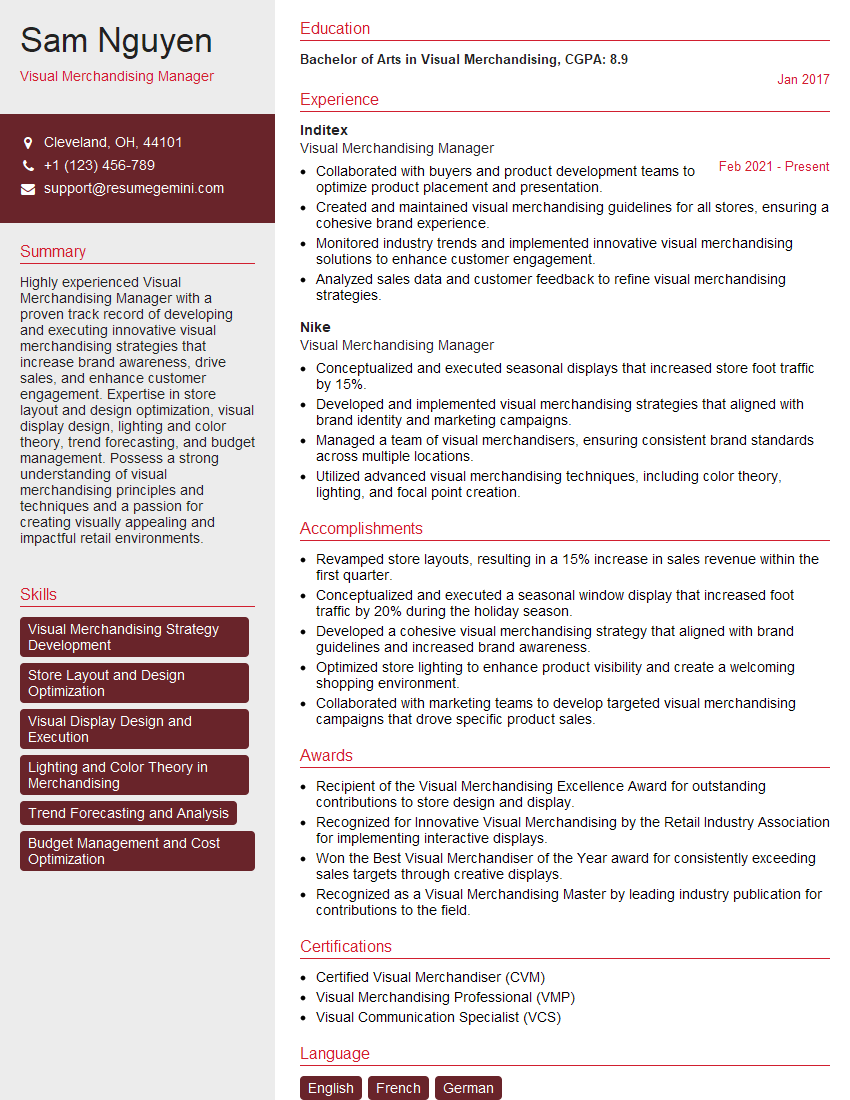
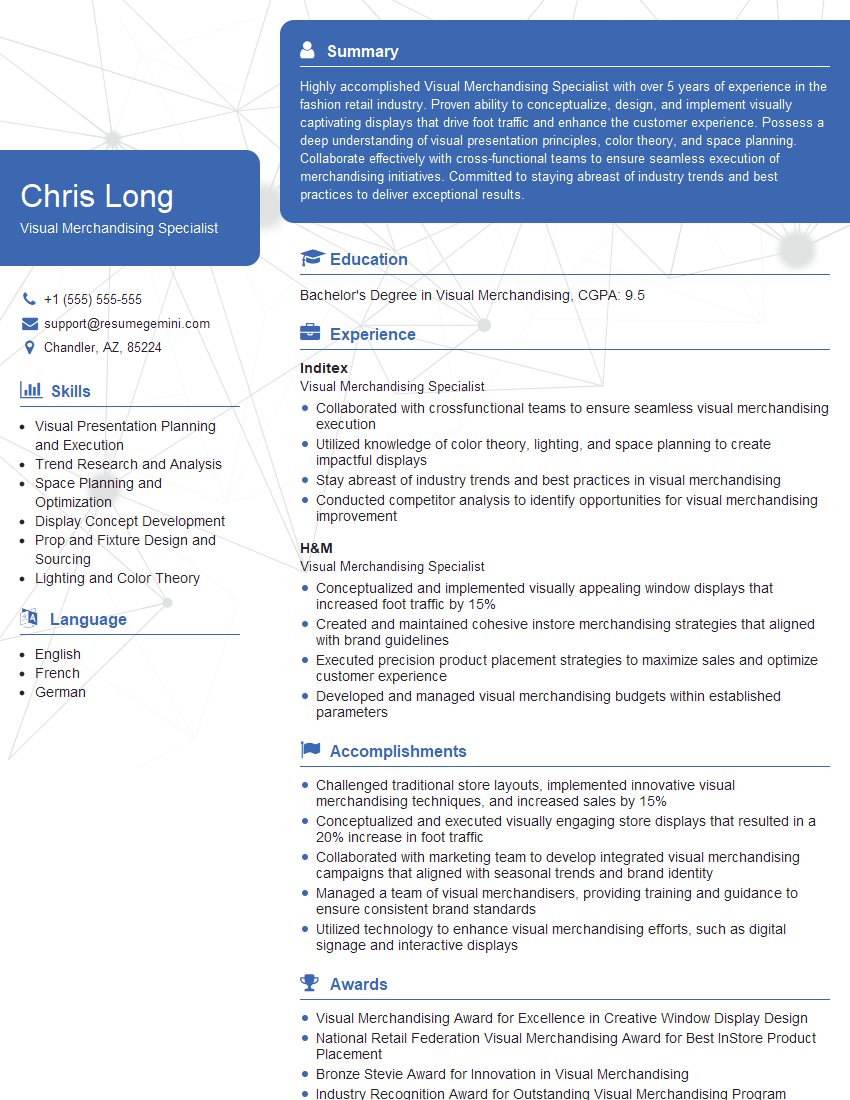
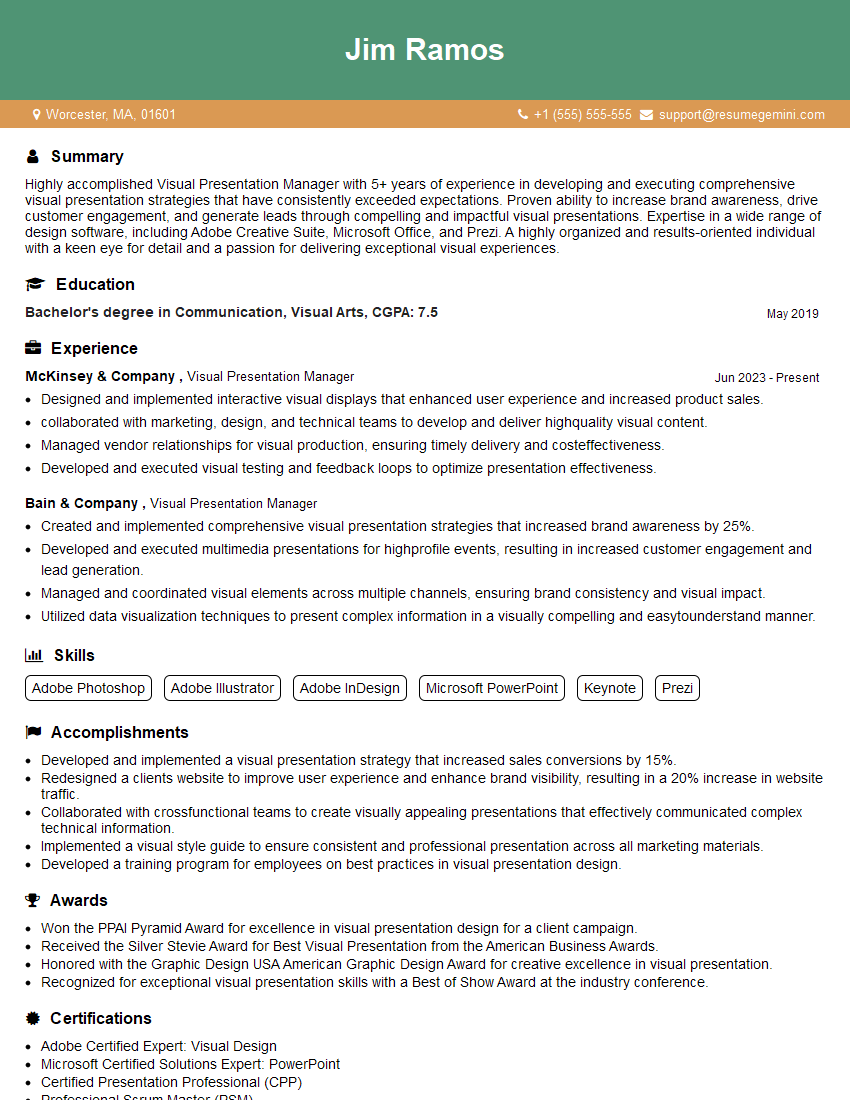
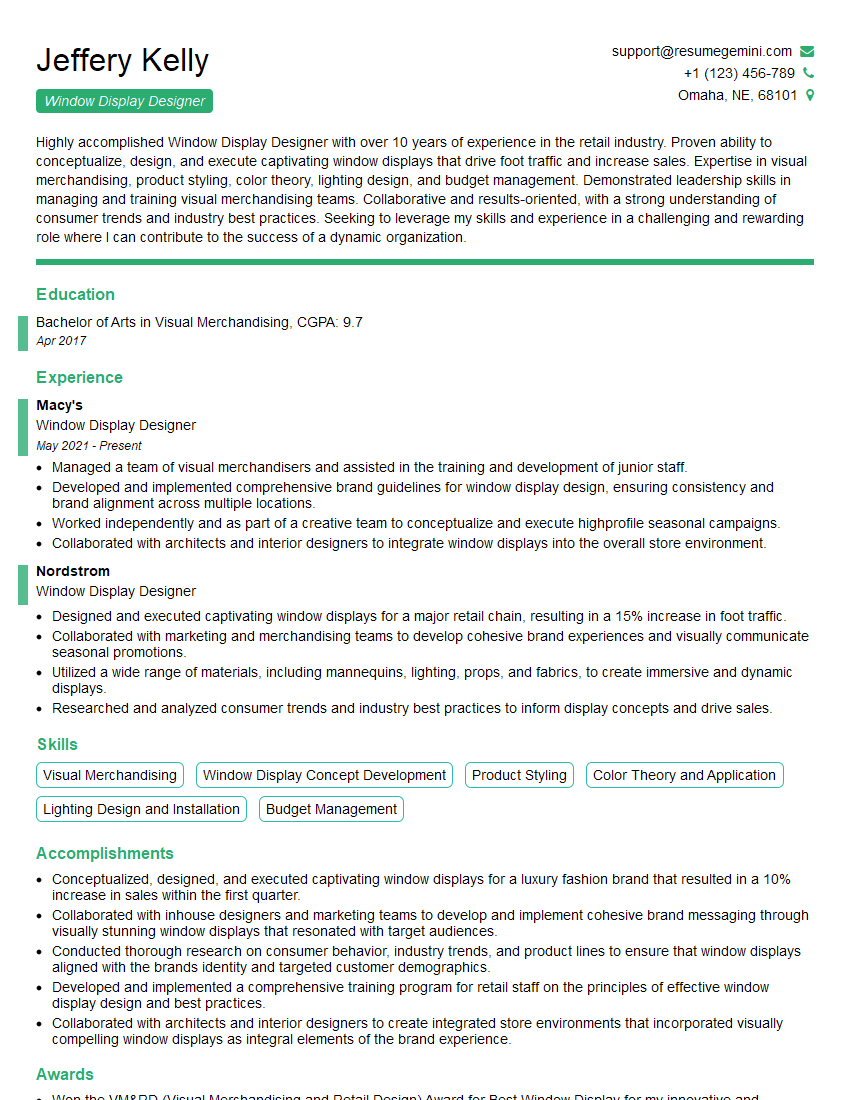
Mastering omnichannel visual merchandising is crucial for career advancement in today’s dynamic retail landscape. It demonstrates your ability to create engaging brand experiences and drive sales across all platforms. To significantly improve your job prospects, it’s vital to create an ATS-friendly resume that showcases your skills and experience effectively. ResumeGemini is a trusted resource to help you build a professional and impactful resume. We provide examples of resumes tailored to Omnichannel Visual Merchandising experience to help guide you. Take the next step towards your dream job – build a winning resume with ResumeGemini today!
Explore more articles
Users Rating of Our Blogs
Share Your Experience
We value your feedback! Please rate our content and share your thoughts (optional).
What Readers Say About Our Blog
Attention music lovers!
Wow, All the best Sax Summer music !!!
Spotify: https://open.spotify.com/artist/6ShcdIT7rPVVaFEpgZQbUk
Apple Music: https://music.apple.com/fr/artist/jimmy-sax-black/1530501936
YouTube: https://music.youtube.com/browse/VLOLAK5uy_noClmC7abM6YpZsnySxRqt3LoalPf88No
Other Platforms and Free Downloads : https://fanlink.tv/jimmysaxblack
on google : https://www.google.com/search?q=22+AND+22+AND+22
on ChatGPT : https://chat.openai.com?q=who20jlJimmy20Black20Sax20Producer
Get back into the groove with Jimmy sax Black
Best regards,
Jimmy sax Black
www.jimmysaxblack.com
Hi I am a troller at The aquatic interview center and I suddenly went so fast in Roblox and it was gone when I reset.
Hi,
Business owners spend hours every week worrying about their website—or avoiding it because it feels overwhelming.
We’d like to take that off your plate:
$69/month. Everything handled.
Our team will:
Design a custom website—or completely overhaul your current one
Take care of hosting as an option
Handle edits and improvements—up to 60 minutes of work included every month
No setup fees, no annual commitments. Just a site that makes a strong first impression.
Find out if it’s right for you:
https://websolutionsgenius.com/awardwinningwebsites
Hello,
we currently offer a complimentary backlink and URL indexing test for search engine optimization professionals.
You can get complimentary indexing credits to test how link discovery works in practice.
No credit card is required and there is no recurring fee.
You can find details here:
https://wikipedia-backlinks.com/indexing/
Regards
NICE RESPONSE TO Q & A
hi
The aim of this message is regarding an unclaimed deposit of a deceased nationale that bears the same name as you. You are not relate to him as there are millions of people answering the names across around the world. But i will use my position to influence the release of the deposit to you for our mutual benefit.
Respond for full details and how to claim the deposit. This is 100% risk free. Send hello to my email id: lukachachibaialuka@gmail.com
Luka Chachibaialuka
Hey interviewgemini.com, just wanted to follow up on my last email.
We just launched Call the Monster, an parenting app that lets you summon friendly ‘monsters’ kids actually listen to.
We’re also running a giveaway for everyone who downloads the app. Since it’s brand new, there aren’t many users yet, which means you’ve got a much better chance of winning some great prizes.
You can check it out here: https://bit.ly/callamonsterapp
Or follow us on Instagram: https://www.instagram.com/callamonsterapp
Thanks,
Ryan
CEO – Call the Monster App
Hey interviewgemini.com, I saw your website and love your approach.
I just want this to look like spam email, but want to share something important to you. We just launched Call the Monster, a parenting app that lets you summon friendly ‘monsters’ kids actually listen to.
Parents are loving it for calming chaos before bedtime. Thought you might want to try it: https://bit.ly/callamonsterapp or just follow our fun monster lore on Instagram: https://www.instagram.com/callamonsterapp
Thanks,
Ryan
CEO – Call A Monster APP
To the interviewgemini.com Owner.
Dear interviewgemini.com Webmaster!
Hi interviewgemini.com Webmaster!
Dear interviewgemini.com Webmaster!
excellent
Hello,
We found issues with your domain’s email setup that may be sending your messages to spam or blocking them completely. InboxShield Mini shows you how to fix it in minutes — no tech skills required.
Scan your domain now for details: https://inboxshield-mini.com/
— Adam @ InboxShield Mini
support@inboxshield-mini.com
Reply STOP to unsubscribe
Hi, are you owner of interviewgemini.com? What if I told you I could help you find extra time in your schedule, reconnect with leads you didn’t even realize you missed, and bring in more “I want to work with you” conversations, without increasing your ad spend or hiring a full-time employee?
All with a flexible, budget-friendly service that could easily pay for itself. Sounds good?
Would it be nice to jump on a quick 10-minute call so I can show you exactly how we make this work?
Best,
Hapei
Marketing Director
Hey, I know you’re the owner of interviewgemini.com. I’ll be quick.
Fundraising for your business is tough and time-consuming. We make it easier by guaranteeing two private investor meetings each month, for six months. No demos, no pitch events – just direct introductions to active investors matched to your startup.
If youR17;re raising, this could help you build real momentum. Want me to send more info?
Hi, I represent an SEO company that specialises in getting you AI citations and higher rankings on Google. I’d like to offer you a 100% free SEO audit for your website. Would you be interested?
Hi, I represent an SEO company that specialises in getting you AI citations and higher rankings on Google. I’d like to offer you a 100% free SEO audit for your website. Would you be interested?