Every successful interview starts with knowing what to expect. In this blog, we’ll take you through the top Experience in working with different types of sewing machines interview questions, breaking them down with expert tips to help you deliver impactful answers. Step into your next interview fully prepared and ready to succeed.
Questions Asked in Experience in working with different types of sewing machines Interview
Q 1. What types of sewing machines have you operated?
Throughout my career, I’ve had the opportunity to work with a wide variety of sewing machines, from basic mechanical models to advanced computerized machines and heavy-duty industrial units. This includes:
- Mechanical Sewing Machines: These are the workhorses of many home sewers and smaller businesses. I’m proficient with both straight-stitch and zigzag models, understanding their limitations and strengths. For example, I’ve used a Singer 221 Featherweight for delicate fabrics and a Kenmore for heavier-duty projects.
- Computerized Sewing Machines: My experience encompasses various computerized models from brands like Brother and Janome. These offer programmable stitches, automated features, and increased precision, perfect for intricate designs and consistent production.
- Industrial Sewing Machines: I’ve extensively worked with industrial sewing machines, including single-needle and double-needle machines, as well as those designed for specific applications like button sewing or topstitching. I understand their power, speed, and the importance of proper maintenance for optimal performance.
- Sergers/Overlock Machines: I’m skilled in using sergers for professional-looking seams and finishing edges, preventing fraying and creating a clean, finished look. I understand the different tension settings and needle configurations necessary for varying fabric types.
Q 2. Describe your experience with industrial sewing machines.
My experience with industrial sewing machines is extensive. I’ve worked on high-speed machines in a production setting, understanding the demands of large-scale manufacturing. This includes regular maintenance, preventative measures, and quick troubleshooting to minimize downtime. I’m familiar with different feed mechanisms, such as the walking foot and the roller feed, and their application to various materials. I’ve also worked with machines requiring specialized needles and thread for specific fabrics like leather or denim. For instance, I once troubleshooted a malfunctioning industrial sewing machine that was causing skipped stitches by identifying a worn needle and adjusting the tension. This involved understanding the machine’s internal workings, and the importance of maintaining optimal lubrication.
Q 3. How do you troubleshoot common sewing machine problems?
Troubleshooting sewing machine problems often involves a systematic approach. I typically start by:
- Identifying the Problem: Is it a skipped stitch, broken needle, tension issue, or something else? Carefully examining the stitch quality, fabric, and thread provides valuable clues.
- Checking the Basics: I ensure the machine is properly threaded, the needle is correctly inserted (including checking the needle type for the fabric), and the bobbin is wound correctly and placed correctly. These are the most common culprits.
- Tension Adjustment: Incorrect tension is frequently the source of problems. I systematically adjust the upper and lower tension dials, testing small samples to find the optimal balance.
- Needle and Fabric Evaluation: The needle might be bent or dull, or it might be unsuitable for the fabric type. I always inspect the needle and consider changing it. Fabric that’s too thick or too thin can also impact stitch quality.
- Timing and Feed Dogs: In more complex situations, I check the timing of the machine’s mechanisms and the condition of the feed dogs, which guide the fabric.
- Cleaning and Lubrication: A well-maintained machine is less likely to have problems. Regular cleaning and lubrication are essential, and sometimes a thorough cleaning and oiling is the solution.
If the problem persists after these steps, I consult the machine’s manual or seek expert help.
Q 4. What is your experience with different stitch types?
My experience encompasses a wide range of stitch types, including:
- Basic Stitches: Straight stitch, zigzag stitch, backstitch (for securing seams).
- Decorative Stitches: Various decorative stitches for embellishments and design elements. Computerized machines often offer a vast library of these.
- Functional Stitches: Blind hem stitch, buttonhole stitches, stretch stitches for knit fabrics, overlock stitches for finishing seams (serger).
- Specialty Stitches: Specific stitches for quilting, embroidery, or other specialized tasks.
Understanding the properties of different stitch types and their suitability for different fabrics and applications is crucial. For example, a stretch stitch is essential for stretchy materials like jersey to prevent seam breakage, while a blind hem stitch is perfect for inconspicuous hemming.
Q 5. Explain your experience with maintaining sewing machines.
Maintaining sewing machines is a key part of my expertise. This includes:
- Regular Cleaning: Removing lint, dust, and thread buildup from the bobbin area, feed dogs, and other moving parts.
- Lubrication: Applying appropriate sewing machine oil to moving parts as recommended by the manufacturer to reduce friction and prevent wear.
- Needle Changes: Regularly replacing needles to prevent skipped stitches and fabric damage. Matching needle size and type to the fabric is critical.
- Tension Adjustments: Periodically checking and adjusting tension settings to ensure consistent stitch quality.
- Inspection of Components: Regularly inspecting belts, gears, and other components for wear and tear.
- Preventative Maintenance: Following the manufacturer’s recommendations for preventative maintenance, including periodic servicing by a qualified technician.
A well-maintained sewing machine operates smoothly, produces high-quality stitches, and lasts longer. Neglecting maintenance can lead to costly repairs or even machine failure.
Q 6. How do you ensure consistent stitch quality?
Consistent stitch quality hinges on several factors:
- Proper Threading: Correctly threading the machine is paramount. A single missed step can significantly affect stitch quality.
- Appropriate Needle and Thread: Using the correct needle size and type for the fabric and thread that’s suitable for the project and machine are crucial. For example, a heavier fabric will require a heavier needle and thread.
- Balanced Tension: Achieving a balance between the upper and lower tension is essential. Too much or too little tension leads to uneven stitches or skipped stitches.
- Consistent Speed and Pressure: Maintaining a steady speed and consistent pressure on the foot pedal prevents inconsistencies.
- Clean and Lubricated Machine: Regular maintenance, including cleaning and lubrication, ensures that the machine operates smoothly.
- Fabric Selection: The type of fabric significantly influences the stitch quality. Matching the stitch type and needle to the fabric is important.
By carefully attending to each of these details, I can consistently produce high-quality stitches, regardless of the project’s complexity or fabric.
Q 7. Describe your experience with computerized sewing machines.
I’ve extensive experience working with computerized sewing machines. These machines offer numerous advantages including:
- Programmable Stitches: A vast library of stitches and the ability to create customized stitches allows for intricate designs and precise control.
- Automated Features: Functions like automatic needle threading, automatic buttonhole sewing, and even built-in sensors for fabric thickness improve efficiency and reduce errors.
- Advanced Settings: Computerized machines usually offer precise control over stitch length, width, and other parameters.
- Enhanced Precision: The computerized control leads to consistent stitch quality and accuracy, perfect for detailed work.
For example, I’ve used computerized machines for creating intricate embroidery designs, where the precise control over stitch placement and length was critical. I’m adept at navigating the user interfaces of various brands and utilizing their advanced features effectively.
Q 8. What safety precautions do you follow when operating sewing machines?
Safety is paramount when operating any sewing machine. Before I even begin, I always ensure the area around the machine is clear of any obstructions – loose threads, fabric scraps, or anything that could get caught. I make sure my workspace is well-lit to prevent eye strain and accidents. I never operate a machine with damaged parts or loose components; any malfunctioning machine immediately goes out of service for repair.
Next, I always keep my fingers away from the needle and presser foot while the machine is running. This seems obvious, but it’s a crucial safety rule. I use a seam ripper (never scissors near the needle) to remove stitches if needed, and the machine is always switched off before any adjustments or cleaning. I also prioritize proper posture to avoid fatigue and injuries. Think of it like driving a car; you wouldn’t drive without a seatbelt. Sewing machines require similar vigilance for safety.
Finally, I’m trained in emergency procedures, including how to quickly unplug the machine in case of a problem. This includes knowing where the power switch is located, understanding the machine’s safety features and, importantly, knowing when to seek professional assistance.
Q 9. How familiar are you with different needle types and their applications?
Needle selection is critical for achieving a professional finish. My experience encompasses a wide range of needle types, each designed for specific fabrics and projects. For instance, I use sharp needles for delicate fabrics like silk or chiffon, preventing snagging and ensuring a smooth stitch. Ballpoint needles are ideal for knits, as their rounded tips smoothly glide between the fabric’s loops without piercing them.
- Sharp needles: Silk, chiffon, fine linen.
- Ballpoint needles: Jersey, knits, lycra.
- Jeans needles: Denim, canvas, heavy fabrics.
- Leather needles: Leather, vinyl, suede.
- Stretch needles: Stretchy fabrics, activewear.
Choosing the right needle is like choosing the right tool for a job in carpentry. Using the wrong needle can lead to skipped stitches, broken needles, and damaged fabric. I’m always careful to check the needle size and type recommended for the fabric and sewing project, and I regularly inspect needles for any bending or damage before use.
Q 10. How do you adjust tension on different sewing machines?
Adjusting tension is crucial for achieving balanced stitches. The process varies slightly depending on the machine but generally involves adjusting the upper and sometimes lower tension dials. Upper tension controls the thread from the top spool, while lower tension manages the bobbin thread.
With a top-loading bobbin machine (like many domestic models), I might start by adjusting the upper tension dial. If the stitches are too loose, I increase the tension; if they’re too tight, I decrease it. If the stitches still look unbalanced, I’ll then investigate the bobbin tension (often requiring opening the bobbin case). A good visual test is to pull the top and bottom threads; they should both pull with fairly equal resistance.
Industrial sewing machines often have more intricate tension systems, potentially with additional dials for different types of stitches. Experience has taught me to methodically test and adjust, always checking the stitch quality on a scrap piece of fabric before proceeding with the main project. It’s a process of refinement, learned through trial and error and attention to detail.
Q 11. What is your experience with high-speed sewing machines?
I have extensive experience with high-speed sewing machines, primarily in industrial settings. These machines operate at significantly higher speeds than domestic machines, often exceeding 5000 stitches per minute. This requires precision, quick reflexes, and a deep understanding of machine mechanics.
The biggest difference lies in the demands on maintenance and operator skill. High-speed machines require meticulous care to prevent malfunctions. Regular lubrication, needle changes, and proactive identification of potential problems are essential. The operator must also have impeccable control, both in terms of feeding the fabric smoothly at the required speed and anticipating any potential disruptions or inconsistencies.
Working with high-speed machines has honed my skills and increased my efficiency dramatically. It’s a rewarding challenge that requires both technical expertise and a high degree of precision, leading to very high productivity and efficiency.
Q 12. How do you handle fabric types that are difficult to sew?
Sewing difficult fabrics requires both the right tools and techniques. For instance, working with leather necessitates using a specialized leather needle and often requires walking foot attachments to ensure even feeding. When working with slippery fabrics like silk, using a tissue paper layer underneath helps prevent puckering.
Other challenges include stretchy fabrics, which may require specialized needles or a serger for professional finishing. I’ve learned that adjusting the stitch length and using a smaller stitch can improve results, sometimes combined with using a walking foot or even a roller foot. Pre-washing fabrics also minimizes shrinking and helps avoid unexpected issues.
Each fabric presents unique challenges, but understanding the properties of the material and adapting my approach accordingly is crucial. It’s about adapting techniques and having the right tools on hand—almost like choosing the right ingredients and cooking method when following a complex recipe.
Q 13. What is your experience with pattern reading and interpretation?
Pattern reading and interpretation are fundamental to garment construction. I’m proficient in understanding pattern markings, understanding seam allowances, and translating 2D patterns into 3D garments. This includes understanding different types of pattern pieces, such as those for sleeves, collars, and pockets.
My experience extends to modifying patterns to alter sizing or fit. I can effectively adapt existing patterns, or make patterns from scratch based on sketches or measurements. A key skill is understanding the grain lines and fabric direction to ensure the final garment hangs and drapes correctly.
Accurate pattern reading is not just about following instructions but about understanding the underlying principles of design and construction. This understanding allows me to troubleshoot and make adjustments as needed, producing consistent, well-fitting garments.
Q 14. How do you perform preventative maintenance on sewing machines?
Preventative maintenance is key to extending the life of any sewing machine and ensuring it runs smoothly. I regularly clean the machine, removing lint, dust, and fabric scraps from the bobbin case, feed dogs, and other components. I lubricate moving parts with the appropriate sewing machine oil, making sure to follow the manufacturer’s instructions to avoid damaging sensitive components.
I meticulously inspect the needle for bends or damage, replacing it frequently. Similarly, the timing of the machine is checked; if stitches start to look irregular or the machine makes unusual sounds, a more in-depth assessment is needed. This includes cleaning and inspecting the hook mechanism and ensuring all mechanical linkages are properly functioning.
Regular maintenance might seem like a small task, but it prevents larger, more expensive problems down the line. Think of it like changing the oil in your car; it may seem like a simple task, but it dramatically extends the life and performance of your vehicle. The same holds true for sewing machines.
Q 15. Describe your experience with different sewing machine feet.
Sewing machine feet are specialized attachments that dramatically alter a machine’s functionality, allowing for diverse sewing techniques. My experience encompasses a wide range, from basic feet like the general-purpose foot used for most straight stitching, to highly specialized ones. I’m proficient with zipper feet for neat zipper insertion, buttonhole feet for creating consistent buttonholes, blind hem feet for invisible hems, walking feet for even feeding of multiple layers of fabric (especially helpful with quilting), and even more specialized feet like gathering feet and cording feet. Each foot requires understanding its unique function and application. For instance, the walking foot’s two sets of feed dogs ensure both layers of fabric move at the same rate, preventing slippage—crucial when sewing thick fabrics or multiple layers together. I’ve also worked with decorative stitch feet, which add creative elements to projects. Understanding the nuances of each foot allows me to achieve a high level of precision and efficiency in my sewing.
Career Expert Tips:
- Ace those interviews! Prepare effectively by reviewing the Top 50 Most Common Interview Questions on ResumeGemini.
- Navigate your job search with confidence! Explore a wide range of Career Tips on ResumeGemini. Learn about common challenges and recommendations to overcome them.
- Craft the perfect resume! Master the Art of Resume Writing with ResumeGemini’s guide. Showcase your unique qualifications and achievements effectively.
- Don’t miss out on holiday savings! Build your dream resume with ResumeGemini’s ATS optimized templates.
Q 16. How do you identify and resolve common sewing machine malfunctions?
Troubleshooting sewing machine malfunctions requires a systematic approach. I begin by visually inspecting the machine for obvious problems: loose threads, bent needles, or any obstructions in the bobbin case. A common issue is improper threading. I carefully check the threading path, ensuring the thread is correctly routed through each guide and tensioner. If the problem persists, I examine the needle for damage—bent, dull, or incorrectly inserted needles are frequent culprits. Bobbin issues are also common; I check for proper bobbin winding, correct placement, and sufficient tension. Sometimes, the problem lies with the timing of the machine’s internal mechanisms; in such cases, slight adjustments to the timing might be necessary—a skill I’ve honed over years of experience. For more complex issues, I consult the machine’s manual or online resources before attempting advanced repairs. Regular maintenance, such as lubricating moving parts and cleaning lint, helps prevent many malfunctions. For instance, I once experienced skipped stitches due to a buildup of lint around the bobbin case. A quick cleaning solved the issue immediately. I always prioritize a careful, methodical approach to diagnosis to find the quickest and most effective solution.
Q 17. How would you handle a sewing machine malfunction during production?
During production, a malfunction can be costly, so swift action is crucial. My first step is to assess the severity of the problem. If it’s minor, like a broken needle or a simple threading issue, I can usually fix it quickly. If it’s more serious, I immediately stop the machine to prevent further damage and potential injury. Then, I attempt to quickly diagnose the problem using my troubleshooting skills. If I can’t fix it immediately, I’ll switch to another machine if available. Maintaining a backup machine is a crucial aspect of production efficiency. I also immediately report the malfunction to my supervisor so they can assess the situation and arrange for repair or replacement if needed. Documenting the malfunction, including the time, the nature of the problem, and actions taken, is key for efficiency and prevention. In a previous role, a power surge damaged one of our industrial machines. By promptly reporting the issue and following our established protocol, we minimized downtime and avoided a significant production bottleneck.
Q 18. What is your experience with setting up and adjusting sewing machines?
Setting up and adjusting sewing machines involves a deep understanding of their mechanics and operational parameters. This includes not only the initial setup—threading the machine, installing the needle and bobbin, and adjusting the stitch length and width—but also fine-tuning aspects like tension and needle pressure. I’m experienced in setting up various types of machines, from basic domestic machines to heavy-duty industrial machines. Each machine has its own unique characteristics and needs. Setting up an industrial lockstitch machine, for instance, requires precise adjustment of the stitch length, needle feed, and presser foot pressure to accommodate different fabric weights and stitch types. I’ve consistently delivered high-quality work by ensuring all settings are optimized for each specific project. This experience also includes the calibration of various components such as differential feed systems found in many quilting machines. This precision minimizes fabric slippage and ensures consistent stitching quality.
Q 19. How do you ensure the safety of yourself and others around sewing machines?
Safety is paramount when working with sewing machines. I always ensure the machine is unplugged when making adjustments or cleaning it. I use the appropriate safety measures such as keeping my fingers away from the needle and presser foot. I’m very careful when handling needles and pins, and I make sure to use needle threaders to avoid pricking myself. I maintain a clean and organized workspace to prevent accidents. Additionally, I frequently check for any mechanical faults or signs of wear and tear that might pose a safety risk. I’ve also been trained in identifying and reporting any potential hazards in the work environment and following the specific safety guidelines provided. I regularly advise colleagues on the importance of maintaining a safe working environment. For example, I made it a point to always ensure needles are disposed of appropriately, preventing accidental injuries, and I have actively championed regular safety training sessions within the teams I have worked on.
Q 20. Describe your experience with working in a fast-paced sewing environment.
Working in a fast-paced sewing environment requires efficiency, accuracy, and the ability to maintain focus under pressure. My experience has honed these skills. I can adapt quickly to changing demands and prioritize tasks effectively. I can maintain a high level of output while still maintaining the quality of my work. I’m comfortable working under tight deadlines and meeting production quotas. I’m adept at multitasking and prioritizing various tasks while maintaining quality and precision, even amidst the pressure of tight deadlines. In one particular instance, we faced a significant surge in orders before a major trade show. By prioritizing tasks, efficiently utilizing available equipment, and collaborating effectively with my team, we successfully met the production demands without compromising quality. This involved continuous monitoring of production flow, identifying and addressing bottlenecks proactively, and continuously training and supporting my team.
Q 21. How familiar are you with different sewing machine brands and models?
My familiarity with sewing machine brands and models is extensive. I’ve worked with machines from various manufacturers, including Singer, Brother, Juki, Pfaff, and Bernina, both domestic and industrial models. My experience includes working with straight-stitch machines, overlock machines (sergers), coverstitch machines, and embroidery machines. I understand the unique capabilities and limitations of each brand and model. For example, I know that Juki industrial machines are renowned for their durability and reliability, while Bernina machines are known for their precision and advanced features. This knowledge allows me to select the appropriate machine for a specific task or project and to quickly identify and troubleshoot problems.
Q 22. How do you maintain accurate production records?
Maintaining accurate production records is crucial for efficient sewing operations. It ensures we track output, identify bottlenecks, and make data-driven improvements. My approach involves a multi-step process. First, I use a combination of digital and physical tracking methods. For instance, I might use a spreadsheet or dedicated software to log the number of units produced per machine per day, along with details like the fabric type and specific garment.
Secondly, I ensure each entry is meticulously documented, including the time spent on each task and any interruptions. This level of detail helps pinpoint areas for improvement in workflow. For example, if the data shows a consistent slowdown around a particular stage in the process, I can investigate and implement solutions like improved machine settings or better operator training. Finally, regular audits of the records are conducted to identify any discrepancies and make necessary corrections. This ensures the data’s accuracy and reliability for analysis and reporting.
Q 23. Explain your experience with quality control procedures in sewing.
Quality control in sewing is paramount. My experience involves implementing a rigorous multi-stage system. Before starting production, I carefully inspect the fabric for flaws like holes or inconsistencies in weave. This initial inspection prevents wasting time and resources on flawed material. During production, regular spot-checks are performed at various stages – after cutting, after stitching particular seams, and before final assembly. This allows for early detection of any stitching errors, misaligned pieces, or other defects.
Once a garment is complete, a final quality check ensures the garment meets specifications. This might involve checking for proper seams, consistent stitching, and overall finish. Any defective garments are set aside for repair or disposal, depending on the severity of the issue. Detailed records are kept of all quality control checks, providing a clear picture of the overall quality level and helping to identify recurring problems. For example, if consistent issues occur with a specific seam on a particular machine, we can adjust the machine settings or provide further training to the operator to resolve the problem.
Q 24. How do you prioritize tasks when working with multiple sewing machines?
Prioritizing tasks across multiple sewing machines requires a strategic approach. I typically begin by assessing the urgency and complexity of each task. High-priority orders with tight deadlines are handled first, even if they involve a more complex design. This ensures timely delivery of critical items. I use a task management system – sometimes as simple as a whiteboard with clearly listed tasks and their associated deadlines – to visualize and track progress.
Less urgent orders are tackled strategically. I may group similar tasks together to optimize workflow. For example, I’ll consolidate all orders requiring the same stitch type, minimizing the need to change machine settings. Furthermore, I consider the capabilities of each machine. More intricate designs might be handled by machines with advanced features, while simpler tasks are assigned to simpler machines, allowing for efficient use of resources. This combination of urgency, complexity, and machine capabilities leads to a balanced and efficient workflow.
Q 25. What is your experience with teamwork in a sewing machine operation setting?
Teamwork is fundamental to efficient sewing operations. In my experience, effective teamwork relies on clear communication and mutual respect. I’ve worked in teams where we share knowledge and best practices freely. For example, if one team member discovers a more efficient way to complete a particular step, we share this technique with others to improve overall productivity.
We also help each other out when needed. If one machine breaks down or a team member needs assistance, others step in to support them. This collaborative approach creates a positive work environment, increasing morale and fostering a sense of shared responsibility. A positive team dynamic leads to better communication, fewer errors, and ultimately, higher-quality products delivered on time.
Q 26. How do you adapt to new sewing machine technologies?
Adapting to new sewing machine technologies is a continuous process. My approach begins with thorough research and training. I actively seek out information on new machines and technologies through online resources, industry publications, and manufacturer training programs. I also value hands-on experience, starting with the manufacturer’s instructions and then experimenting with various settings and features to fully understand the machine’s capabilities.
I embrace the opportunity to learn from colleagues who may have experience with specific machines. This collaborative learning approach accelerates the assimilation of new technologies. This ensures that I am always up-to-date with the latest advancements in the field and can efficiently utilize the best available technology to improve efficiency and product quality. For example, when computerized embroidery machines were introduced in my previous workplace, I actively sought training and quickly integrated this new technology into our production process, improving both the speed and precision of our embroidery work.
Q 27. How do you handle production deadlines and targets?
Handling production deadlines and targets involves a proactive and organized approach. I start by carefully reviewing the order specifications and deadlines, breaking down large projects into smaller, manageable tasks with assigned due dates. I regularly monitor progress against these deadlines, addressing any potential delays early on. This might involve adjusting workflows, prioritizing tasks, or seeking additional resources if needed.
Effective communication with my team is crucial. I keep them informed of the progress and any potential challenges, fostering a sense of shared responsibility in meeting the targets. By proactively addressing potential issues and maintaining open communication, I ensure that the production team remains focused and motivated to meet the deadlines and production targets. For example, if a particular fabric is delayed, I’ll immediately inform the team, explore alternative solutions, and adjust the production schedule accordingly to minimize any impact on the overall delivery timeline.
Q 28. Describe your experience with troubleshooting complex sewing machine issues.
Troubleshooting complex sewing machine issues requires a systematic approach. I begin by identifying the specific problem, noting the symptoms and when they started. Is the machine making unusual noises? Are stitches inconsistent? Is the machine jamming frequently? This initial assessment helps narrow down the potential causes.
Next, I systematically check various components. I might inspect the needle, bobbin, tension settings, and feed dogs. Sometimes, a simple adjustment to the tension or a replacement needle can solve the issue. If the problem persists, I might consult the machine’s manual, search for online resources, or seek assistance from a more experienced technician. Documenting the troubleshooting process, including the steps taken and the results, helps in future diagnosis and also aids in improving preventative maintenance strategies. For example, if I frequently encounter problems with a specific type of needle, I’ll research better suited alternatives and incorporate them into our standard operating procedures.
Key Topics to Learn for Experience in working with different types of Sewing Machines Interview
- Types of Sewing Machines: Understanding the differences between industrial, domestic, and specialized sewing machines (e.g., sergers, embroidery machines). This includes knowledge of their functionalities, capabilities, and limitations.
- Machine Operation and Maintenance: Demonstrate practical knowledge of threading, bobbin winding, needle changing, tension adjustment, and basic troubleshooting for various machine types. Be prepared to discuss preventative maintenance practices.
- Stitch Selection and Application: Explain the purpose and application of different stitch types (straight stitch, zig-zag, overlock, etc.) and how the choice of stitch impacts the final product and its durability. Discuss how stitch selection varies across different machine types.
- Fabric Selection and its Impact: Discuss how different fabrics (e.g., lightweight silks, heavy-duty denim) require adjustments in machine settings, needle type, and stitch selection for optimal results. Be ready to explain how you adapt your technique based on the material.
- Troubleshooting and Problem Solving: Be prepared to discuss common sewing machine problems (e.g., skipped stitches, broken needles, thread jams) and your approaches to identifying and resolving these issues. This showcases your problem-solving skills and practical experience.
- Safety Procedures: Emphasize your understanding and adherence to safety protocols when operating various sewing machines, including proper handling of needles, blades, and electrical equipment.
- Advanced Techniques (if applicable): Depending on the role, you might be asked about more advanced techniques like free-motion quilting, appliqué, or specific industrial sewing processes. Tailor your preparation based on the job description.
Next Steps
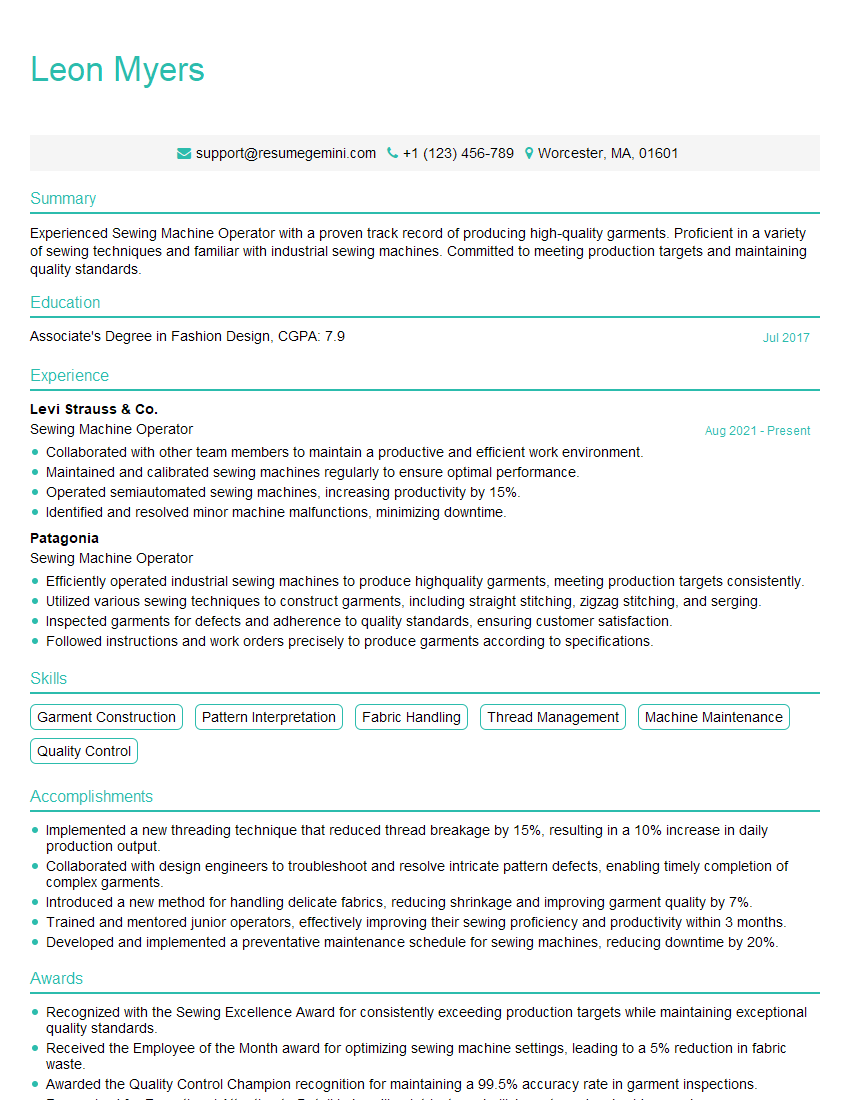
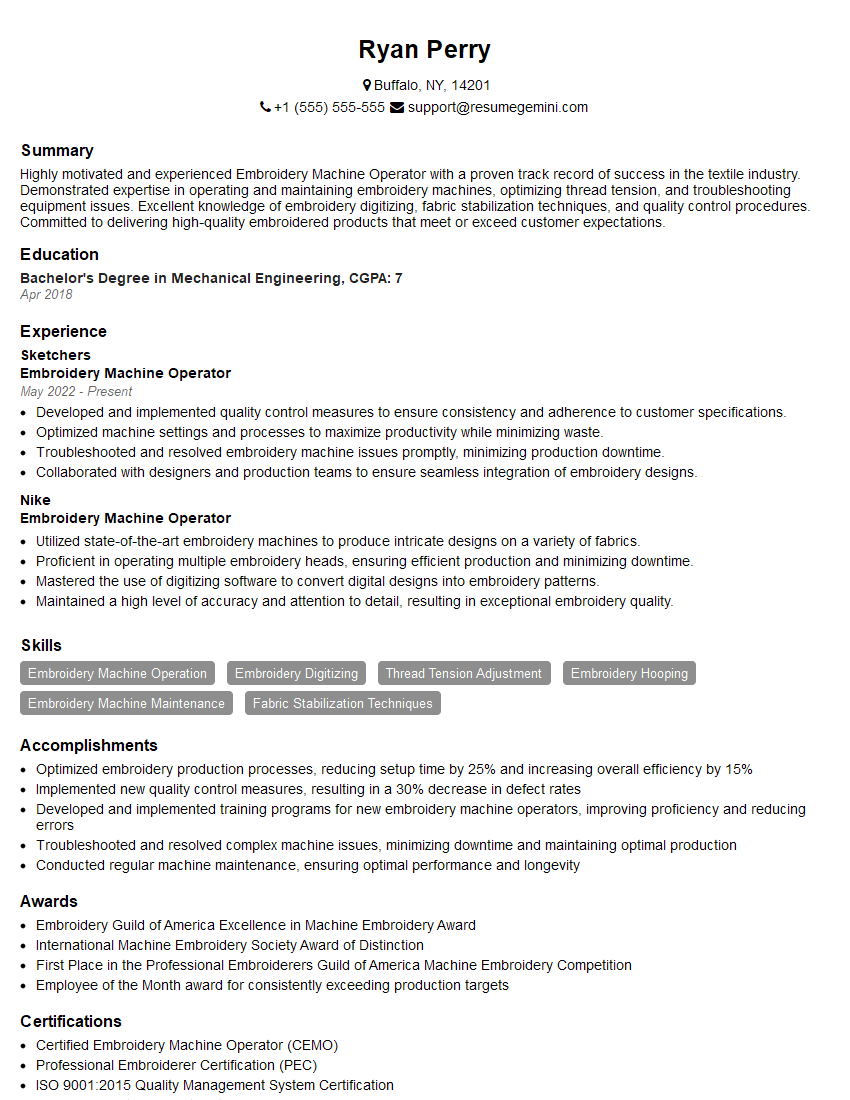
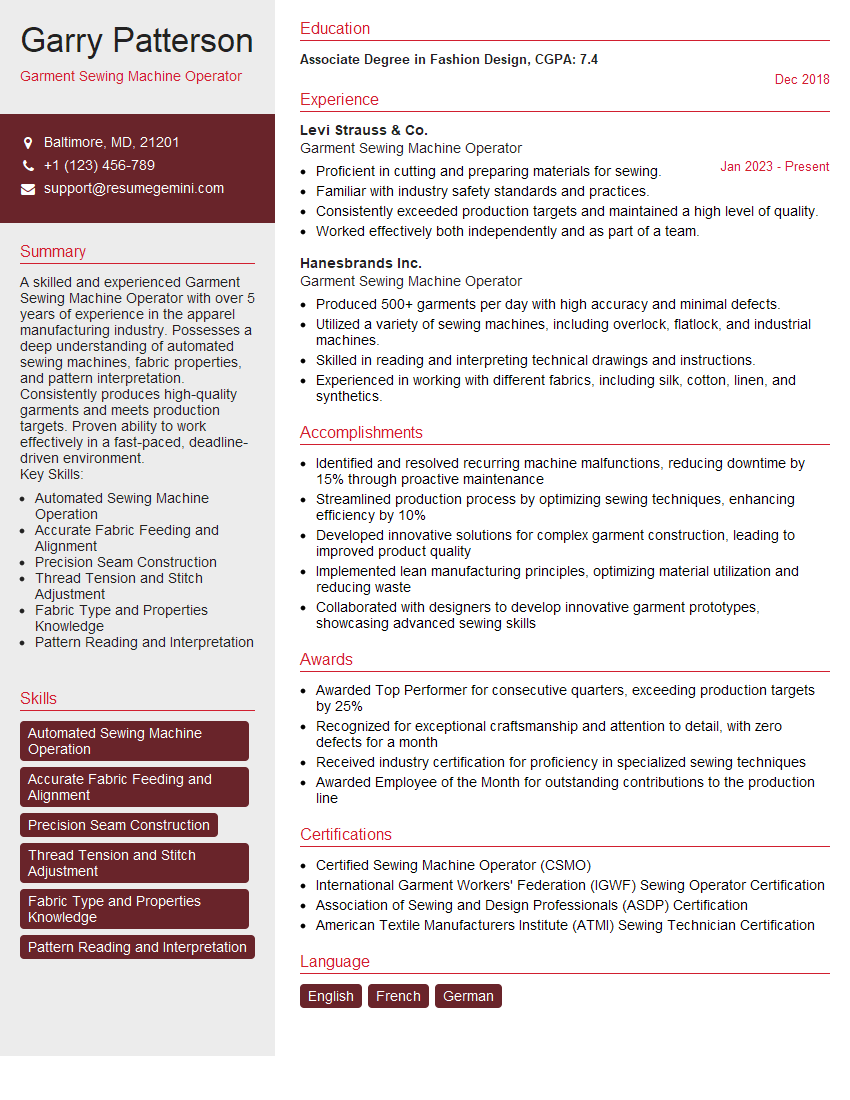
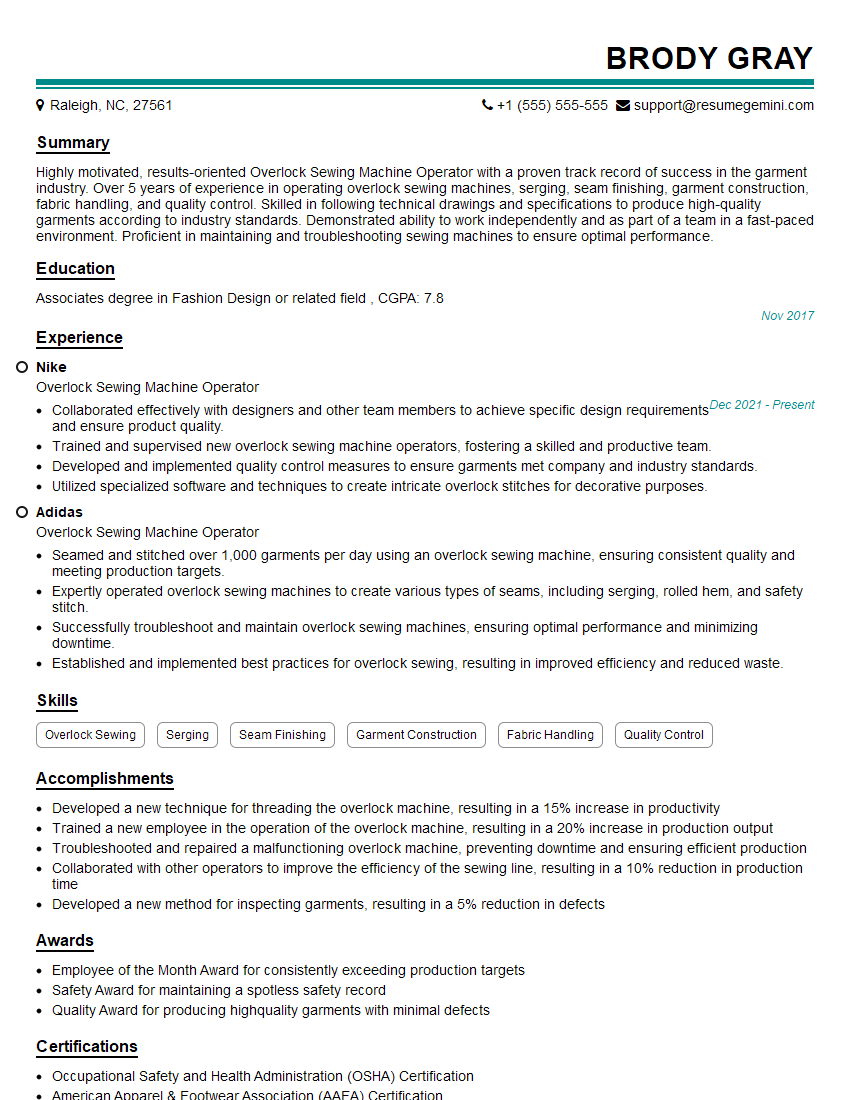
Mastering your experience with different types of sewing machines is crucial for career advancement in the textile and garment industry. A strong understanding of these techniques showcases your skills and adaptability, making you a more competitive candidate. To significantly boost your job prospects, create an ATS-friendly resume that highlights your relevant skills and accomplishments effectively. ResumeGemini is a trusted resource to help you build a professional and impactful resume. We provide examples of resumes tailored to showcasing experience with different types of sewing machines to help you get started.
Explore more articles
Users Rating of Our Blogs
Share Your Experience
We value your feedback! Please rate our content and share your thoughts (optional).
What Readers Say About Our Blog
Attention music lovers!
Wow, All the best Sax Summer music !!!
Spotify: https://open.spotify.com/artist/6ShcdIT7rPVVaFEpgZQbUk
Apple Music: https://music.apple.com/fr/artist/jimmy-sax-black/1530501936
YouTube: https://music.youtube.com/browse/VLOLAK5uy_noClmC7abM6YpZsnySxRqt3LoalPf88No
Other Platforms and Free Downloads : https://fanlink.tv/jimmysaxblack
on google : https://www.google.com/search?q=22+AND+22+AND+22
on ChatGPT : https://chat.openai.com?q=who20jlJimmy20Black20Sax20Producer
Get back into the groove with Jimmy sax Black
Best regards,
Jimmy sax Black
www.jimmysaxblack.com
Hi I am a troller at The aquatic interview center and I suddenly went so fast in Roblox and it was gone when I reset.
Hi,
Business owners spend hours every week worrying about their website—or avoiding it because it feels overwhelming.
We’d like to take that off your plate:
$69/month. Everything handled.
Our team will:
Design a custom website—or completely overhaul your current one
Take care of hosting as an option
Handle edits and improvements—up to 60 minutes of work included every month
No setup fees, no annual commitments. Just a site that makes a strong first impression.
Find out if it’s right for you:
https://websolutionsgenius.com/awardwinningwebsites
Hello,
we currently offer a complimentary backlink and URL indexing test for search engine optimization professionals.
You can get complimentary indexing credits to test how link discovery works in practice.
No credit card is required and there is no recurring fee.
You can find details here:
https://wikipedia-backlinks.com/indexing/
Regards
NICE RESPONSE TO Q & A
hi
The aim of this message is regarding an unclaimed deposit of a deceased nationale that bears the same name as you. You are not relate to him as there are millions of people answering the names across around the world. But i will use my position to influence the release of the deposit to you for our mutual benefit.
Respond for full details and how to claim the deposit. This is 100% risk free. Send hello to my email id: lukachachibaialuka@gmail.com
Luka Chachibaialuka
Hey interviewgemini.com, just wanted to follow up on my last email.
We just launched Call the Monster, an parenting app that lets you summon friendly ‘monsters’ kids actually listen to.
We’re also running a giveaway for everyone who downloads the app. Since it’s brand new, there aren’t many users yet, which means you’ve got a much better chance of winning some great prizes.
You can check it out here: https://bit.ly/callamonsterapp
Or follow us on Instagram: https://www.instagram.com/callamonsterapp
Thanks,
Ryan
CEO – Call the Monster App
Hey interviewgemini.com, I saw your website and love your approach.
I just want this to look like spam email, but want to share something important to you. We just launched Call the Monster, a parenting app that lets you summon friendly ‘monsters’ kids actually listen to.
Parents are loving it for calming chaos before bedtime. Thought you might want to try it: https://bit.ly/callamonsterapp or just follow our fun monster lore on Instagram: https://www.instagram.com/callamonsterapp
Thanks,
Ryan
CEO – Call A Monster APP
To the interviewgemini.com Owner.
Dear interviewgemini.com Webmaster!
Hi interviewgemini.com Webmaster!
Dear interviewgemini.com Webmaster!
excellent
Hello,
We found issues with your domain’s email setup that may be sending your messages to spam or blocking them completely. InboxShield Mini shows you how to fix it in minutes — no tech skills required.
Scan your domain now for details: https://inboxshield-mini.com/
— Adam @ InboxShield Mini
support@inboxshield-mini.com
Reply STOP to unsubscribe
Hi, are you owner of interviewgemini.com? What if I told you I could help you find extra time in your schedule, reconnect with leads you didn’t even realize you missed, and bring in more “I want to work with you” conversations, without increasing your ad spend or hiring a full-time employee?
All with a flexible, budget-friendly service that could easily pay for itself. Sounds good?
Would it be nice to jump on a quick 10-minute call so I can show you exactly how we make this work?
Best,
Hapei
Marketing Director
Hey, I know you’re the owner of interviewgemini.com. I’ll be quick.
Fundraising for your business is tough and time-consuming. We make it easier by guaranteeing two private investor meetings each month, for six months. No demos, no pitch events – just direct introductions to active investors matched to your startup.
If youR17;re raising, this could help you build real momentum. Want me to send more info?
Hi, I represent an SEO company that specialises in getting you AI citations and higher rankings on Google. I’d like to offer you a 100% free SEO audit for your website. Would you be interested?
Hi, I represent an SEO company that specialises in getting you AI citations and higher rankings on Google. I’d like to offer you a 100% free SEO audit for your website. Would you be interested?