Every successful interview starts with knowing what to expect. In this blog, we’ll take you through the top Experience with seasonal and promotional displays interview questions, breaking them down with expert tips to help you deliver impactful answers. Step into your next interview fully prepared and ready to succeed.
Questions Asked in Experience with seasonal and promotional displays Interview
Q 1. Describe your experience designing and implementing seasonal displays.
Designing and implementing seasonal displays requires a holistic approach, blending creativity with a deep understanding of consumer behavior and retail strategy. My experience spans various sectors, from high-end fashion boutiques to large-scale department stores. I begin by thoroughly researching the season – analyzing relevant trends, color palettes, and cultural events. For instance, during the winter holidays, I’d consider incorporating warm color schemes, rustic textures, and elements symbolic of the season like snowflakes or evergreen branches. Then, I develop a concept that aligns with the store’s brand identity and target audience. This often involves mood boards, sketches, and 3D renderings to visualize the final product. Implementation involves sourcing materials, managing budgets, collaborating with visual merchandising teams, and ensuring timely setup and takedown of the displays. For example, in one project, I managed a team to create an immersive autumn display featuring a giant pumpkin installation and rustic wooden elements; this resulted in a 15% increase in foot traffic to that specific area of the store.
Q 2. How do you stay up-to-date with current visual merchandising trends?
Staying current in visual merchandising requires constant learning. I religiously follow industry publications like Visual Merchandising & Store Design and attend relevant trade shows, such as the National Retail Federation’s Big Show. I actively engage with online communities and follow influential visual merchandisers on platforms like Instagram and Pinterest, analyzing their work and identifying innovative trends. Furthermore, I regularly visit competitor stores to observe their displays and strategies firsthand. Subscription to trend forecasting services also provides valuable data-driven insights into emerging consumer preferences and seasonal styles. I also subscribe to several relevant newsletters that curate news and emerging trends within retail and visual merchandising.
Q 3. Explain your process for creating a compelling promotional display.
Creating a compelling promotional display involves a strategic process that goes beyond just aesthetics. It starts with clearly defining the campaign’s objective – are we aiming to drive sales, increase brand awareness, or launch a new product? Next, I conduct thorough market research to understand the target audience and their purchasing behaviors. Then, I develop a concept that effectively communicates the promotional message, using impactful visuals, clear messaging, and compelling call-to-actions. For example, to promote a summer sale, I might use bright, vibrant colors, beach-themed props, and strategically placed signage with clear discounts. The design should be attention-grabbing and easy to understand, even from a distance. Finally, the display’s placement within the store is crucial – it needs to be high-traffic areas to maximize visibility and impact. I constantly A/B test elements to optimize performance.
Q 4. What software or tools are you proficient in for designing displays?
My proficiency spans various design software. I’m highly skilled in Adobe Creative Suite (Photoshop, Illustrator, InDesign), which I use for creating visual mockups, designing signage, and developing marketing materials. I also have experience with SketchUp for 3D modeling, allowing me to create realistic visualizations of displays before implementation. This helps in catching potential design flaws or spatial issues early on. Furthermore, I utilize project management tools like Asana or Trello to effectively manage multiple projects and collaborate with team members.
Q 5. How do you measure the success of a promotional or seasonal display?
Measuring the success of a display requires a multi-faceted approach. I track key performance indicators (KPIs) such as sales lift in the product category featured in the display, foot traffic in the specific area, customer engagement metrics (e.g., time spent interacting with the display), and social media mentions. Comparative analysis of sales data before, during, and after the display period provides crucial insights into its effectiveness. Analyzing customer feedback, whether through surveys or direct observation, helps to understand the display’s impact on brand perception. Furthermore, using heat maps, I can track the movement of shoppers through the store to optimize display placement.
Q 6. Describe a time you had to overcome a challenge in creating a display.
In one instance, I was tasked with creating a holiday display for a high-end jewelry store with extremely limited space. The challenge was to create a visually striking and luxurious display that didn’t feel cramped or overwhelming. My solution was to use vertical space more effectively by incorporating tiered shelves and strategically placed lighting. I minimized the number of props, focusing on high-quality materials and showcasing the jewelry as the centerpiece. I also employed a minimalist color palette to enhance the elegance of the pieces. The result was a sophisticated and highly effective display that exceeded sales expectations.
Q 7. How do you adapt displays for different retail environments?
Adapting displays for different retail environments requires flexibility and attention to detail. Factors like store layout, lighting conditions, target audience, and overall brand aesthetics all influence design choices. For example, a display designed for a bustling mall kiosk will need to be more visually impactful and concise compared to a display in a smaller, more intimate boutique. Materials selection should also be tailored to the environment; for instance, using durable, weather-resistant materials for outdoor displays or eco-friendly options for environmentally conscious stores. I always aim to maintain design consistency with the brand guidelines while adapting the scale and elements to perfectly suit the space and its unique characteristics.
Q 8. What are your preferred materials and techniques for display creation?
My material choices for display creation depend heavily on the brand, the product, and the overall campaign aesthetic. For a high-end brand, I might favor materials like polished wood, brushed metal, and high-quality acrylic, perhaps incorporating subtle LED lighting for a sophisticated look. For a more casual or trendy brand, I might use reclaimed wood, vibrant fabrics, corrugated cardboard, or even upcycled materials to create a unique and sustainable feel. Techniques include woodworking, metal fabrication, digital printing on various substrates (including textiles and plastics), and even hand-painting for a more bespoke touch. I’m proficient in using CAD software to create detailed plans and visualize the finished product, ensuring precision and minimizing waste.
For example, I recently designed a display for a new line of organic skincare. We used sustainably sourced bamboo and recycled paper, aligning with the brand’s eco-conscious values. The display was incredibly effective, visually communicating the brand’s message and drawing customers in.
Q 9. How do you ensure brand consistency across all displays?
Maintaining brand consistency across all displays is paramount. I begin by thoroughly understanding the brand’s style guide, including its logo usage, color palettes, typography, and overall brand voice. This is the foundation of any design. I then develop a set of design templates and guidelines ensuring all displays adhere to these standards. This includes creating detailed specifications for dimensions, materials, and visual elements to ensure uniformity. We use a centralized digital asset management system to store and share approved brand assets, guaranteeing consistency across all projects.
For example, if a brand’s signature color is a specific shade of blue, I ensure that this exact Pantone color is used consistently across all displays, from the signage to the background elements. Any deviation requires explicit approval from the brand team. Regular audits and quality control checks throughout the design and implementation process are crucial to catch inconsistencies.
Q 10. How do you manage budgets and timelines for display projects?
Budget and timeline management are critical for successful display projects. I start by collaborating with the client to clearly define the scope of the project, outlining all deliverables and their associated costs. This involves creating detailed cost breakdowns for materials, labor, production, and transportation. We then develop a realistic project timeline using project management software, outlining key milestones and deadlines. Regular progress meetings and transparent communication are crucial for staying on track and addressing any potential roadblocks proactively. Contingency planning is also essential to account for unexpected delays or cost overruns.
For instance, if we discover a material shortage, I’ll immediately explore alternative options and update the project timeline and budget accordingly, keeping the client informed every step of the way.
Q 11. Describe your experience working with cross-functional teams on display projects.
I thrive in collaborative environments. My experience working with cross-functional teams is extensive. I’ve worked with marketing, sales, product development, and operations teams on numerous display projects. Effective communication and a clear understanding of each team’s role and responsibilities are key. I typically utilize project management tools like Asana or Trello to centralize communication and track progress. I also make a conscious effort to actively listen to and incorporate input from all stakeholders, ensuring that the final design reflects the collective vision.
For example, on a recent project, I worked closely with the marketing team to understand the campaign objectives, the sales team to optimize product placement, and the operations team to ensure logistical feasibility. This collaborative approach resulted in a successful campaign that exceeded expectations.
Q 12. How do you incorporate store layout and product placement into your display designs?
Incorporating store layout and product placement into display designs is crucial for maximizing their impact. I always begin by conducting a thorough site survey, analyzing the store’s traffic flow, existing fixtures, and lighting conditions. This helps determine the optimal location and orientation for the display. I also consider the product itself, understanding its dimensions, packaging, and visual appeal. The goal is to create a display that not only enhances the product’s presentation but also complements the overall store environment. This may involve using elements like shelving, risers, or other architectural features to create a visually appealing and functional display.
For example, if a product is best viewed from a distance, I’ll ensure the display is positioned in a high-traffic area with good visibility. Conversely, a product requiring close inspection might be placed at a more intimate location within the store.
Q 13. What is your experience with different display types (e.g., window displays, in-store displays)?
My experience encompasses various display types, including window displays, in-store displays (such as end caps, freestanding units, and counter displays), and even digital displays. Each type requires a different approach in terms of design, materials, and construction. Window displays, for example, aim to create a captivating visual that attracts passersby, often using large-scale graphics and lighting effects. In-store displays prioritize ease of access and product visibility, often employing strategic shelving and clear signage. Digital displays allow for dynamic content updates and interactive experiences.
I’ve designed everything from elaborate window displays showcasing seasonal fashion collections to compact counter displays promoting impulse purchases. This diverse experience allows me to adapt my design approach to suit the specific needs of each project.
Q 14. How do you ensure displays are ADA compliant?
ADA compliance is a top priority in my designs. I ensure that all displays meet accessibility standards, focusing on aspects such as reach range, clear signage (including braille and large print where appropriate), and accessible pathways. This involves careful consideration of height, placement, and the use of materials that avoid creating obstacles for individuals with mobility impairments. I also collaborate with accessibility experts and utilize ADA compliance checklists to guarantee that all displays are inclusive and accessible to everyone.
For example, I would ensure that any interactive elements are operable by individuals with disabilities, and that signage is clear and easy to read from various distances and angles. Furthermore, I avoid creating displays that obstruct necessary pathways or create tripping hazards.
Q 15. How do you handle unexpected issues or changes during a display installation?
Unexpected issues during display installation are inevitable. My approach is proactive and systematic. First, I assess the situation calmly, identifying the problem’s root cause. This might involve anything from missing props to structural issues with the display location. Then, I prioritize solutions based on impact. If it’s a minor issue, like a misplaced sign, I’ll address it immediately. For more significant problems, I leverage my network – contacting suppliers for replacements or collaborating with the in-store team to find alternative solutions. For example, during a holiday display setup, we discovered a crucial element of the lighting system was faulty. Instead of delaying the entire installation, I quickly sourced a temporary replacement from a local supplier, ensuring the display opened on schedule with minimal disruption to the shopping experience. Thorough planning and pre-installation checklists are crucial in mitigating unforeseen issues.
Career Expert Tips:
- Ace those interviews! Prepare effectively by reviewing the Top 50 Most Common Interview Questions on ResumeGemini.
- Navigate your job search with confidence! Explore a wide range of Career Tips on ResumeGemini. Learn about common challenges and recommendations to overcome them.
- Craft the perfect resume! Master the Art of Resume Writing with ResumeGemini’s guide. Showcase your unique qualifications and achievements effectively.
- Don’t miss out on holiday savings! Build your dream resume with ResumeGemini’s ATS optimized templates.
Q 16. Describe your experience with different retail display technologies (e.g., digital signage)?
I have extensive experience with various retail display technologies, including digital signage, interactive kiosks, and even augmented reality (AR) applications. Digital signage, in particular, offers dynamic and engaging visual content. I’ve worked on projects using different screen sizes and resolutions, optimizing content for maximum impact. For instance, I once managed a project integrating interactive digital displays in a clothing store. We used the screens to showcase seasonal collections, highlight promotions, and provide interactive style guides, drastically increasing customer engagement and sales. Understanding the technical aspects is crucial—from content management systems (CMS) to screen calibration—to ensure smooth operation and seamless integration with existing store systems. I’m also familiar with the maintenance and troubleshooting required for these technologies.
Q 17. How do you prioritize display projects based on business goals?
Prioritizing display projects aligns directly with overarching business objectives. I utilize a framework that considers several factors. First, I analyze the projected ROI (Return on Investment) of each project, weighing the potential sales lift against the cost of implementation. Then, I assess the strategic alignment with marketing campaigns and seasonal promotions. For example, a display supporting a major holiday sale would naturally take precedence over a smaller, less impactful promotion. Finally, I consider the urgency and deadlines of each project. I often create a weighted scoring system to ensure objectivity and transparency, documenting the rationale behind the prioritization decisions. This helps manage expectations and resource allocation effectively.
Q 18. How do you source and manage display materials and props?
Sourcing and managing display materials requires a well-defined process. I start with detailed design specifications, which then inform my sourcing strategy. I identify potential suppliers based on quality, price, and lead times. This often involves negotiating contracts to ensure cost-effectiveness and timely delivery. I utilize a project management system to track orders, monitor inventory, and ensure materials are received according to the project timeline. For instance, when sourcing props for a themed display, I might collaborate with local artisans or craft suppliers for unique, cost-effective solutions. Maintaining detailed records, including invoices and purchase orders, is crucial for accountability and budgetary control.
Q 19. How do you evaluate the ROI of a promotional display?
Evaluating the ROI of a promotional display requires a multi-faceted approach. We begin by setting measurable objectives before the display is even installed. This might include increased foot traffic, higher conversion rates, or improved brand awareness. Post-installation, we track key performance indicators (KPIs) using in-store analytics, point-of-sale data, and customer surveys. For example, we might analyze sales data from the area surrounding the display to gauge its effectiveness in driving sales. We also compare the sales lift with the cost of design, production, and installation to calculate the overall return. It’s important to acknowledge that some aspects, like brand awareness, are harder to quantify directly. In those cases, we rely on qualitative data like customer feedback and social media sentiment.
Q 20. What is your experience with display maintenance and upkeep?
Display maintenance and upkeep are critical for preserving the visual appeal and ensuring the longevity of the display. My approach incorporates a regular cleaning schedule, addressing minor repairs promptly, and conducting periodic inspections for wear and tear. This includes checking lighting, ensuring structural integrity, and maintaining the overall neatness of the display. For instance, we might have a weekly cleaning routine for digital displays and a monthly inspection for any damage to physical props. This proactive approach not only maintains a professional image but also helps extend the useful life of the displays, saving costs on replacements.
Q 21. Describe a time you had to create a display with limited resources.
In one instance, I was tasked with creating an engaging display for a back-to-school promotion with a severely limited budget. Instead of resorting to expensive custom-made props, I leveraged readily available resources. I repurposed existing store fixtures, incorporating creative lighting and repurposed materials like cardboard boxes to build eye-catching elements. We used vibrant paint and inexpensive signage to create a visually appealing and cost-effective display that effectively promoted the back-to-school products. The result was a display that not only stayed within budget but also showcased ingenuity and resourcefulness. This project highlighted that creativity and innovation can often compensate for financial constraints.
Q 22. How do you incorporate customer feedback into your display designs?
Incorporating customer feedback is crucial for effective display design. It allows us to create displays that resonate with our target audience and ultimately drive sales. I use a multi-pronged approach:
- Surveys and Feedback Forms: I regularly deploy short, targeted surveys both in-store and online to gauge customer reactions to existing displays and gather ideas for future designs. For example, a recent survey helped us discover that customers preferred warmer lighting in our winter holiday display, leading to a significant sales increase.
- Social Media Monitoring: Actively monitoring social media channels (Instagram, Facebook, etc.) for mentions of our brand and displays provides valuable, real-time feedback. Hashtags and comments are goldmines of information.
- Focus Groups: Conducting focus groups allows for more in-depth discussions and understanding of customer preferences. These groups help me explore the ‘why’ behind feedback, providing richer insights.
- Sales Data Analysis: Analyzing sales data from specific display areas helps correlate display effectiveness with customer behavior. A display that consistently outperforms others in terms of sales indicates a successful design.
By analyzing this feedback, I can identify trends, address shortcomings, and refine future designs to better meet customer expectations.
Q 23. How do you ensure your displays are visually appealing and effective?
Creating visually appealing and effective displays requires a blend of art and science. I focus on several key elements:
- Visual Hierarchy: Guiding the customer’s eye through the display using size, color, and placement. Important products or messages should be prominently featured.
- Color Psychology: Understanding how colors evoke emotions and influence purchasing decisions. For instance, warm colors can create a sense of comfort, while bright colors can attract attention.
- Lighting: Proper lighting is crucial for showcasing products and creating the desired ambiance. Strategic use of spotlights can highlight key items.
- Signage and Graphics: Clear, concise signage and high-quality graphics are essential for communicating the message effectively. I ensure that fonts and imagery are consistent with the brand’s aesthetic.
- Storytelling: Crafting a narrative through the display to engage customers emotionally. This could be a seasonal theme, a product story, or a lifestyle portrayal.
For example, for a recent spring promotion, we used pastel colors, natural elements, and soft lighting to create a refreshing and inviting atmosphere, successfully increasing engagement.
Q 24. What are some innovative display ideas you have implemented?
I’ve implemented several innovative display ideas, always keeping in mind the specific product and target audience:
- Interactive Displays: Incorporating touchscreens or augmented reality elements to allow customers to engage directly with products. This is particularly effective for showcasing complex products or offering personalized experiences.
- Pop-up Shops: Creating temporary, themed displays in unexpected locations to generate buzz and reach new customers. We once set up a pop-up shop in a local park during a summer festival, attracting a completely new customer base.
- Personalized Displays: Using data analytics to create customized displays targeted at specific customer segments. This allows for more relevant and engaging experiences.
- Sustainability-Focused Displays: Using recycled or eco-friendly materials to create displays that align with environmentally conscious values. This approach is both visually appealing and ethical.
These innovative approaches not only enhance the shopping experience but also help us stand out from competitors.
Q 25. How do you balance creativity with practicality in display design?
Balancing creativity with practicality is paramount in display design. A visually stunning display that’s impractical or expensive to implement is ultimately ineffective. I achieve this balance by:
- Setting Clear Goals: Defining specific, measurable objectives for each display, ensuring that the design directly supports these goals. This keeps the creative process focused and prevents unnecessary extravagance.
- Budgeting and Resource Allocation: Developing a realistic budget and sourcing materials efficiently. This often involves exploring cost-effective alternatives without compromising on quality or visual impact.
- Time Management: Establishing realistic timelines and adhering to them strictly. This prevents rushed work and ensures the display is ready on time.
- Collaboration: Working closely with the merchandising, marketing, and operations teams to ensure the display aligns with overall business objectives and operational capabilities. Their feedback ensures practicality.
For example, while a highly elaborate display might be visually stunning, if it requires excessive setup time and maintenance, it’s not practical for a busy retail environment.
Q 26. How do you manage multiple display projects simultaneously?
Managing multiple display projects simultaneously requires strong organizational skills and a systematic approach. I use a project management framework combining these strategies:
- Prioritization: Identifying and prioritizing projects based on deadlines, importance, and resource availability. This helps focus efforts on the most critical tasks.
- Project Scheduling: Utilizing project management software (e.g., Asana, Trello) to create detailed schedules, track progress, and manage deadlines effectively.
- Teamwork and Delegation: Clearly defining roles and responsibilities within the team, delegating tasks effectively, and fostering clear communication to ensure everyone is on the same page.
- Regular Check-ins and Meetings: Holding regular meetings with the team to track progress, address challenges, and make necessary adjustments to the schedule.
- Documentation: Maintaining comprehensive documentation for each project, including design briefs, budgets, timelines, and feedback records.
This organized approach prevents project overlap and ensures timely completion of all displays.
Q 27. What is your experience with sustainability in display design?
Sustainability is a growing concern in display design, and I actively incorporate sustainable practices into my work:
- Recycled and Reusable Materials: Prioritizing the use of recycled materials like cardboard, wood, and plastics whenever possible. I also focus on designing displays that can be easily disassembled and reused for future projects.
- Eco-Friendly Printing: Using soy-based inks and recycled paper for printed materials. Reducing the amount of printed material whenever feasible through digital displays or minimizing unnecessary signage.
- Energy-Efficient Lighting: Utilizing LED lighting for displays, reducing energy consumption and environmental impact.
- Collaboration with Sustainable Suppliers: Partnering with suppliers who share our commitment to sustainability and offer eco-friendly products.
- Waste Reduction: Implementing strategies to minimize waste during the design and construction phases, through efficient material usage and careful planning.
Adopting these practices contributes to a smaller carbon footprint and aligns with growing consumer demand for environmentally conscious brands.
Q 28. How do you stay ahead of the competition in the field of visual merchandising?
Staying ahead in visual merchandising requires continuous learning and adaptation. My strategies include:
- Industry Trend Monitoring: Regularly reviewing industry publications, attending trade shows, and following key influencers in visual merchandising to stay informed about the latest trends and technologies.
- Competitor Analysis: Analyzing competitors’ displays to identify best practices and areas for improvement. This allows us to stay competitive and even surpass expectations.
- Continuing Education: Participating in workshops, seminars, and online courses to enhance my skills and knowledge in areas like design software, visual communication, and merchandising psychology.
- Experimentation and Innovation: Continuously experimenting with new display techniques, materials, and technologies to find innovative ways to engage customers.
- Data Analysis and Measurement: Using data analytics to track the effectiveness of different display strategies and make data-driven decisions to optimize future designs.
By staying informed, innovative, and data-driven, I can ensure our displays remain at the forefront of visual merchandising.
Key Topics to Learn for Experience with Seasonal and Promotional Displays Interview
- Visual Merchandising Principles: Understanding the fundamentals of visual merchandising, including color theory, space planning, and creating compelling visual narratives.
- Seasonal Trends & Themes: Analyzing current and upcoming seasonal trends to effectively incorporate them into display design and execution. This includes understanding the target audience for each season and adapting displays accordingly.
- Promotional Campaign Integration: Knowing how to seamlessly integrate promotional campaigns into displays, maximizing their impact and driving sales. This involves understanding the campaign’s goals and message.
- Display Construction & Maintenance: Practical skills in building and maintaining displays, including using various materials and tools safely and efficiently. This also involves understanding display longevity and maintenance schedules.
- Budgeting & Resource Management: Effectively managing budgets and resources for display creation and implementation. This includes material costs, labor, and time constraints.
- Performance Measurement & Analysis: Tracking and analyzing the performance of displays to understand their effectiveness and make data-driven improvements. This could involve sales data analysis linked to display placement and design.
- Problem-Solving & Adaptability: Demonstrating the ability to troubleshoot issues that arise during display creation or implementation, adapting to unexpected challenges and finding creative solutions.
- Collaboration & Teamwork: Highlighting experience working collaboratively with teams (marketing, sales, etc.) to achieve shared goals in display creation and execution.
Next Steps
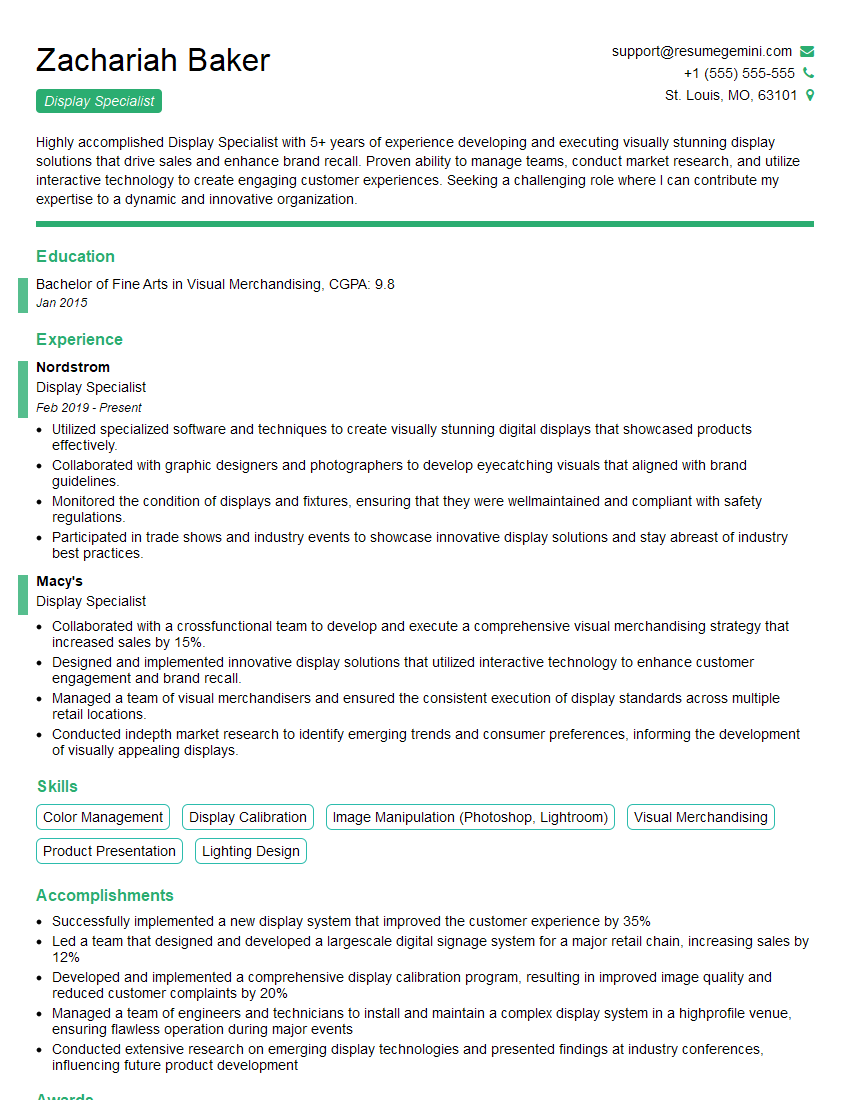
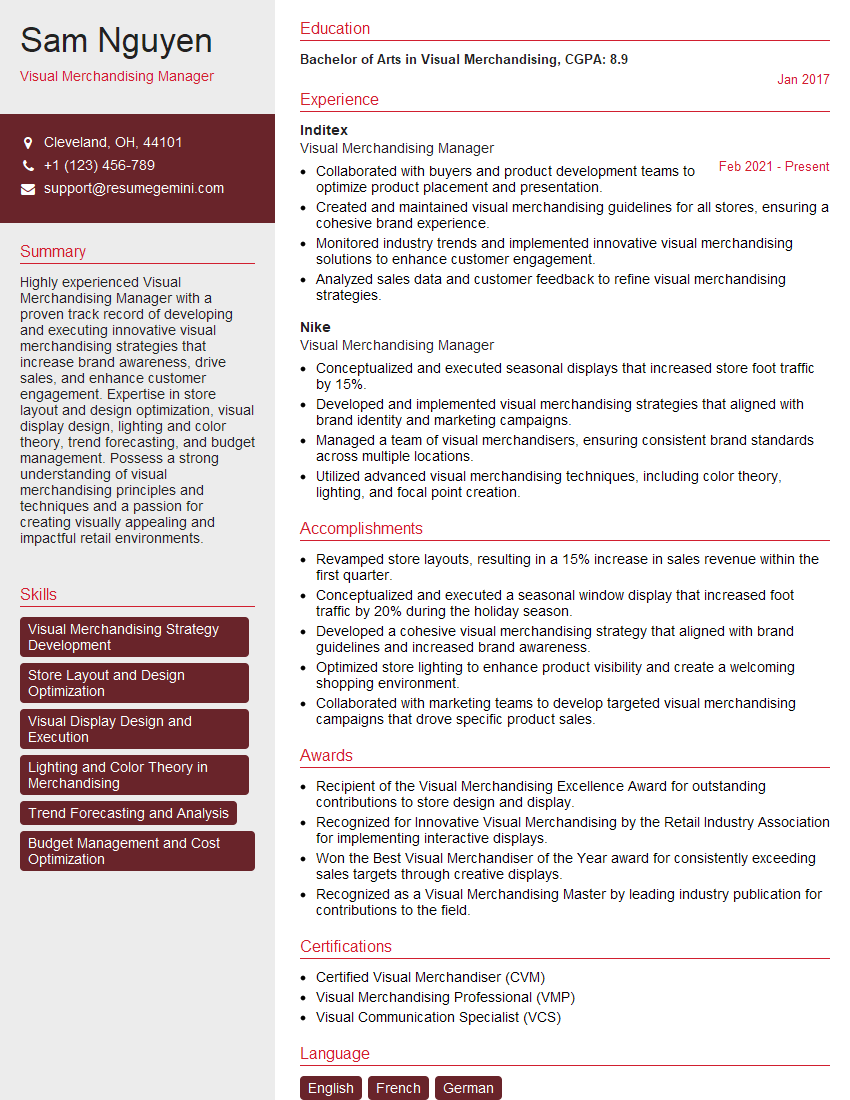
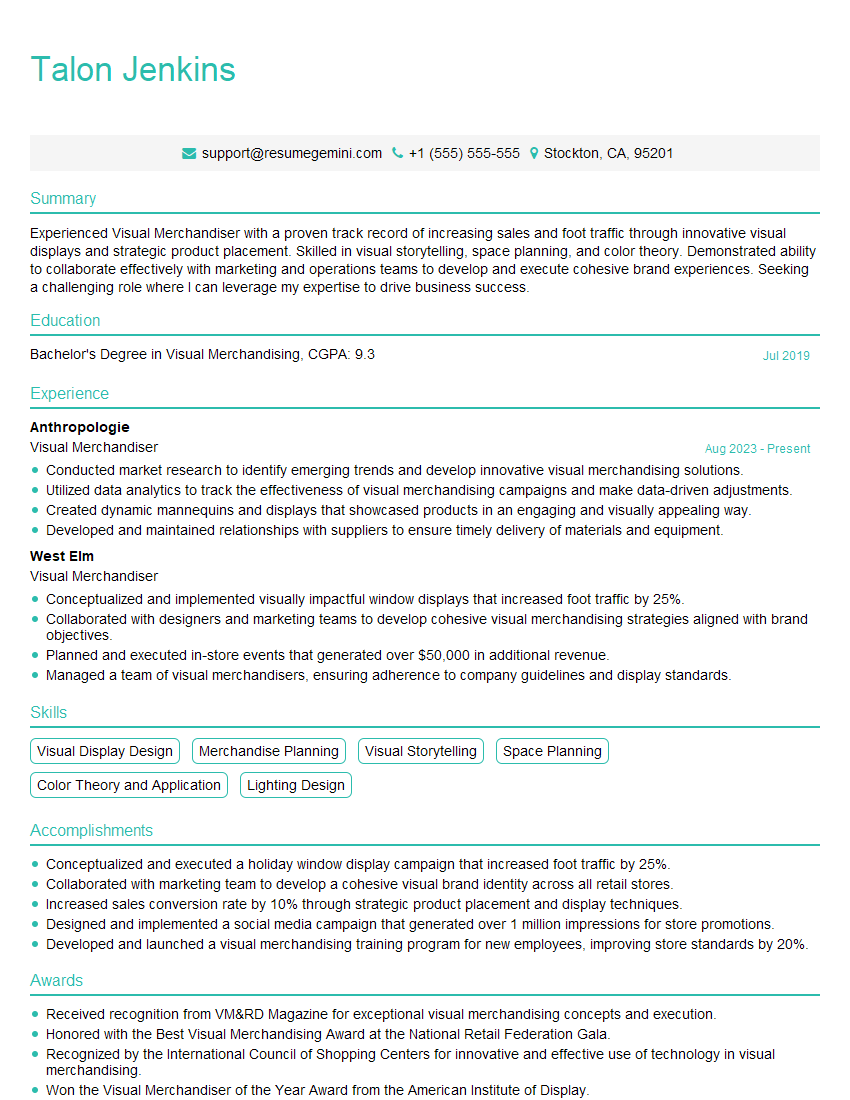
Mastering experience with seasonal and promotional displays is crucial for career advancement in retail, marketing, and visual merchandising. A strong understanding of these concepts demonstrates your ability to drive sales, enhance brand image, and contribute significantly to a company’s bottom line. To maximize your job prospects, create an ATS-friendly resume that effectively showcases your skills and experience. ResumeGemini is a trusted resource that can help you build a professional and impactful resume. Examples of resumes tailored to highlight experience with seasonal and promotional displays are available to guide you.
Explore more articles
Users Rating of Our Blogs
Share Your Experience
We value your feedback! Please rate our content and share your thoughts (optional).
What Readers Say About Our Blog
Attention music lovers!
Wow, All the best Sax Summer music !!!
Spotify: https://open.spotify.com/artist/6ShcdIT7rPVVaFEpgZQbUk
Apple Music: https://music.apple.com/fr/artist/jimmy-sax-black/1530501936
YouTube: https://music.youtube.com/browse/VLOLAK5uy_noClmC7abM6YpZsnySxRqt3LoalPf88No
Other Platforms and Free Downloads : https://fanlink.tv/jimmysaxblack
on google : https://www.google.com/search?q=22+AND+22+AND+22
on ChatGPT : https://chat.openai.com?q=who20jlJimmy20Black20Sax20Producer
Get back into the groove with Jimmy sax Black
Best regards,
Jimmy sax Black
www.jimmysaxblack.com
Hi I am a troller at The aquatic interview center and I suddenly went so fast in Roblox and it was gone when I reset.
Hi,
Business owners spend hours every week worrying about their website—or avoiding it because it feels overwhelming.
We’d like to take that off your plate:
$69/month. Everything handled.
Our team will:
Design a custom website—or completely overhaul your current one
Take care of hosting as an option
Handle edits and improvements—up to 60 minutes of work included every month
No setup fees, no annual commitments. Just a site that makes a strong first impression.
Find out if it’s right for you:
https://websolutionsgenius.com/awardwinningwebsites
Hello,
we currently offer a complimentary backlink and URL indexing test for search engine optimization professionals.
You can get complimentary indexing credits to test how link discovery works in practice.
No credit card is required and there is no recurring fee.
You can find details here:
https://wikipedia-backlinks.com/indexing/
Regards
NICE RESPONSE TO Q & A
hi
The aim of this message is regarding an unclaimed deposit of a deceased nationale that bears the same name as you. You are not relate to him as there are millions of people answering the names across around the world. But i will use my position to influence the release of the deposit to you for our mutual benefit.
Respond for full details and how to claim the deposit. This is 100% risk free. Send hello to my email id: lukachachibaialuka@gmail.com
Luka Chachibaialuka
Hey interviewgemini.com, just wanted to follow up on my last email.
We just launched Call the Monster, an parenting app that lets you summon friendly ‘monsters’ kids actually listen to.
We’re also running a giveaway for everyone who downloads the app. Since it’s brand new, there aren’t many users yet, which means you’ve got a much better chance of winning some great prizes.
You can check it out here: https://bit.ly/callamonsterapp
Or follow us on Instagram: https://www.instagram.com/callamonsterapp
Thanks,
Ryan
CEO – Call the Monster App
Hey interviewgemini.com, I saw your website and love your approach.
I just want this to look like spam email, but want to share something important to you. We just launched Call the Monster, a parenting app that lets you summon friendly ‘monsters’ kids actually listen to.
Parents are loving it for calming chaos before bedtime. Thought you might want to try it: https://bit.ly/callamonsterapp or just follow our fun monster lore on Instagram: https://www.instagram.com/callamonsterapp
Thanks,
Ryan
CEO – Call A Monster APP
To the interviewgemini.com Owner.
Dear interviewgemini.com Webmaster!
Hi interviewgemini.com Webmaster!
Dear interviewgemini.com Webmaster!
excellent
Hello,
We found issues with your domain’s email setup that may be sending your messages to spam or blocking them completely. InboxShield Mini shows you how to fix it in minutes — no tech skills required.
Scan your domain now for details: https://inboxshield-mini.com/
— Adam @ InboxShield Mini
support@inboxshield-mini.com
Reply STOP to unsubscribe
Hi, are you owner of interviewgemini.com? What if I told you I could help you find extra time in your schedule, reconnect with leads you didn’t even realize you missed, and bring in more “I want to work with you” conversations, without increasing your ad spend or hiring a full-time employee?
All with a flexible, budget-friendly service that could easily pay for itself. Sounds good?
Would it be nice to jump on a quick 10-minute call so I can show you exactly how we make this work?
Best,
Hapei
Marketing Director
Hey, I know you’re the owner of interviewgemini.com. I’ll be quick.
Fundraising for your business is tough and time-consuming. We make it easier by guaranteeing two private investor meetings each month, for six months. No demos, no pitch events – just direct introductions to active investors matched to your startup.
If youR17;re raising, this could help you build real momentum. Want me to send more info?
Hi, I represent an SEO company that specialises in getting you AI citations and higher rankings on Google. I’d like to offer you a 100% free SEO audit for your website. Would you be interested?
Hi, I represent an SEO company that specialises in getting you AI citations and higher rankings on Google. I’d like to offer you a 100% free SEO audit for your website. Would you be interested?