Preparation is the key to success in any interview. In this post, we’ll explore crucial Familiar with best practices for machine maintenance and operation interview questions and equip you with strategies to craft impactful answers. Whether you’re a beginner or a pro, these tips will elevate your preparation.
Questions Asked in Familiar with best practices for machine maintenance and operation Interview
Q 1. Describe your experience with preventative maintenance schedules.
Preventative maintenance schedules are the backbone of reliable machine operation. They’re essentially planned, proactive interventions designed to minimize downtime and extend the lifespan of equipment. Instead of waiting for a machine to fail, we anticipate potential problems and address them before they become major issues. I’ve worked with various types of schedules, from simple checklist-based systems to sophisticated Computerized Maintenance Management Systems (CMMS).
For example, in my previous role at a manufacturing plant, we used a CMMS to manage the preventative maintenance for our assembly line robots. The system scheduled regular lubrication, sensor checks, and software updates based on manufacturer recommendations and historical data. This approach allowed us to catch minor issues like loose connections before they escalated into costly repairs or production halts. Another example involves creating a simple but effective schedule using spreadsheets for smaller-scale equipment, where we tracked tasks such as cleaning, inspection, and replacement of consumable parts based on usage hours or time intervals.
A well-designed preventative maintenance schedule should consider factors such as machine criticality, manufacturer recommendations, historical failure rates, and operational demands. The key is to find a balance between minimizing downtime and maximizing the lifespan and efficiency of the equipment.
Q 2. Explain the importance of lubrication in machine maintenance.
Lubrication is crucial in machine maintenance; think of it as the lifeblood of many moving parts. It reduces friction between components, preventing wear and tear, extending the lifespan of the machine, and improving its efficiency. Without proper lubrication, components can overheat, seize up, or experience premature failure, leading to costly repairs and production downtime. It’s like regularly oiling the hinges on a door – without it, the door becomes stiff and eventually may break.
The type of lubricant used is critical and depends on the specific application and operating conditions. For example, high-temperature applications may require specialized grease, while delicate instruments might need a specific oil to prevent damage. Incorrect lubrication can be as damaging as no lubrication at all, potentially leading to corrosion or the attracting of contaminants.
Proper lubrication practices include using the correct type and amount of lubricant, applying it to the designated points, and regularly checking levels. This often includes the use of specialized tools like grease guns or oiling cans and meticulous adherence to manufacturer’s instructions.
Q 3. How do you identify and troubleshoot common machine malfunctions?
Identifying and troubleshooting machine malfunctions requires a systematic approach, combining practical experience with analytical skills. I typically start by gathering information: What’s the problem? When did it start? What were the circumstances? I’ll then carefully inspect the machine, checking for any obvious signs of damage, loose connections, or leaks. This might involve using simple tools like multimeters to check voltage or pressure gauges to assess fluid levels.
For example, if a machine suddenly stops working, I might first check the power supply, then examine the control system for error messages, and finally investigate the mechanical components for any signs of damage or obstruction. If the problem is electrical, I may use a multimeter to check for voltage, continuity, and short circuits. If the problem is mechanical, I may need to disassemble parts of the machine to inspect individual components for wear and tear or damage.
Troubleshooting often involves a process of elimination. By systematically checking each component, I can narrow down the potential causes and identify the root problem. Documentation, whether through written notes or digital records, is also key. It aids in tracing issues and helps in preventing similar problems in the future.
Q 4. What are the key indicators of machine wear and tear?
Recognizing the signs of machine wear and tear is crucial for proactive maintenance. These indicators can be subtle at first but escalate into major issues if ignored. Key indicators include excessive vibration, unusual noises (grinding, squealing, clicking), leaks of fluids, overheating, decreased performance or efficiency, and unusual wear patterns on components. Visual inspection often reveals signs such as cracks, pitting, or corrosion on machine surfaces.
For example, excessive vibration might indicate an imbalance in rotating parts, while unusual noises might suggest bearing wear. A slow decrease in production output could indicate that a critical component is nearing the end of its service life. Regular, careful observation is key here; learning to listen and feel is part of this expertise.
Beyond visual inspection, advanced methods like vibration analysis or oil analysis can provide detailed insights into the internal condition of a machine, allowing for early detection of potential problems before they lead to major failures.
Q 5. Describe your experience with different types of machine diagnostics.
My experience with machine diagnostics encompasses a range of techniques, from basic visual inspections to sophisticated data analysis. Basic methods include visual inspection, listening for unusual sounds, and checking fluid levels and pressures. More advanced techniques involve using specialized diagnostic tools such as:
- Vibration analysis: Measures vibrations to detect imbalances, bearing wear, and other mechanical problems.
- Oil analysis: Analyzes oil samples to detect contaminants, wear particles, and changes in oil properties.
- Thermal imaging: Identifies areas of excessive heat, indicating potential problems like loose connections or component failure.
- Computerized maintenance management systems (CMMS): Software that tracks machine performance, schedules maintenance, and analyzes historical data to predict potential failures.
For example, in a past project involving a large industrial pump, vibration analysis revealed a problem with its bearings long before any noticeable performance degradation. This allowed for a timely replacement, preventing a costly and disruptive emergency repair.
Q 6. What safety protocols do you follow during machine maintenance?
Safety is paramount during any machine maintenance. I always follow a strict set of protocols, beginning with a thorough risk assessment. This involves identifying potential hazards and developing control measures to mitigate them. This includes locking out and tagging out equipment to prevent accidental start-up, using appropriate personal protective equipment (PPE) such as safety glasses, gloves, and hearing protection, and following the manufacturer’s safety guidelines.
Before commencing any work, I always ensure the machine is completely powered down and locked out. I’ll also make sure that the work area is clean, well-lit, and free from obstacles. If working at heights or in confined spaces, I’ll use appropriate safety harnesses and other fall protection equipment. Working with hazardous materials requires specialized handling procedures and PPE. Teamwork and communication are crucial; having a spotter is essential for some tasks.
Safety isn’t just a checklist; it’s a mindset. A commitment to safety is not only about following the rules, but also about anticipating potential hazards and taking proactive steps to prevent accidents.
Q 7. How do you prioritize maintenance tasks in a high-pressure environment?
Prioritizing maintenance tasks in a high-pressure environment requires a strategic approach. I typically use a combination of methods, including:
- Criticality analysis: Prioritizing tasks based on the criticality of the equipment and the potential impact of failure. Essential machines that could cause major production disruptions get priority.
- Urgency assessment: Considering the urgency of repairs based on the severity of existing problems. Immediate safety hazards always take precedence.
- Preventative vs. Corrective: Balancing preventative maintenance with addressing urgent issues. Preventative work often requires scheduling, whereas corrective work often requires immediate action.
- Resource allocation: Considering the available resources, including personnel, tools, and parts. This helps to optimize the schedule and make the best use of resources.
A good CMMS plays a key role in this, allowing for efficient task scheduling and resource management. Effective communication with operations teams is crucial to ensure that maintenance activities don’t disrupt production unnecessarily. In practice, this often involves a dynamic prioritization system where tasks are constantly reassessed based on changing conditions and emergencies.
Q 8. Explain your understanding of predictive maintenance techniques.
Predictive maintenance is a proactive approach to maintenance that uses data analysis to predict when equipment is likely to fail, allowing for timely intervention and preventing unexpected downtime. Instead of relying on fixed schedules or reactive repairs after failure, it leverages real-time data from sensors and historical records to anticipate potential issues.
For example, imagine a manufacturing plant with a critical conveyor belt. Instead of replacing the belt every six months regardless of its condition (preventive maintenance), we could install sensors that monitor vibration, temperature, and belt speed. Machine learning algorithms analyze this data to detect anomalies indicating wear and tear, predicting when the belt is likely to break. This allows us to schedule maintenance before failure, minimizing disruption to production and reducing the cost of unplanned repairs.
Common techniques include vibration analysis, oil analysis, thermography, and machine learning algorithms applied to sensor data. The choice of technique depends on the specific equipment and its operating environment.
Q 9. How do you document maintenance activities and findings?
Meticulous documentation is crucial for effective maintenance. I utilize a combination of digital and physical methods to ensure a complete record. All maintenance activities are documented in a centralized system, typically a Computerized Maintenance Management System (CMMS). This system tracks work orders, parts used, labor hours, and associated costs.
For each maintenance task, I create a detailed report including:
- Date and time of the activity
- Description of the work performed
- Parts replaced or repaired (with serial numbers if applicable)
- Measurements taken before, during, and after the maintenance
- Photographs or videos of the equipment’s condition
- Findings and recommendations
Physical records, such as printed work orders and inspection checklists, are also kept, serving as backups and ensuring accessibility even during system outages.
Q 10. What software or tools do you use for maintenance tracking?
Throughout my career, I’ve used various CMMS (Computerized Maintenance Management System) software solutions. My experience includes working with both cloud-based and on-premise systems. Examples include IBM Maximo, SAP PM, and Fiix. These systems allow for efficient tracking of maintenance activities, scheduling, inventory management, and reporting. In addition to CMMS, I often use specialized software for data analysis, such as statistical packages (e.g., Minitab, SPSS) for analyzing vibration data or oil analysis results. For more basic tracking, spreadsheets are also valuable for simple tasks and quick reporting. The choice of software depends on the scale and complexity of the operation.
Q 11. Describe your experience with root cause analysis for machine failures.
Root cause analysis is essential for preventing recurring machine failures. My approach usually involves a structured methodology, like the ‘5 Whys’ technique or the Fishbone diagram (Ishikawa diagram). I start by clearly defining the problem. Then, I systematically investigate the underlying causes by repeatedly asking ‘why’ until the root cause is identified.
For example, if a machine overheats, the ‘5 Whys’ might look like this:
- Problem: Machine overheating.
- Why? The cooling fan is not working.
- Why? The fan motor is burned out.
- Why? The motor bearings seized.
- Why? Inadequate lubrication.
- Why? The lubrication schedule wasn’t followed.
The root cause is the failure to adhere to the lubrication schedule. Addressing this issue prevents future overheating incidents. The Fishbone diagram provides a visual representation of all potential contributing factors, guiding a more comprehensive investigation.
Q 12. How do you ensure compliance with safety regulations during maintenance?
Safety is paramount during all maintenance activities. Before commencing any work, I meticulously review the machine’s safety documentation, including lockout/tagout procedures, risk assessments, and relevant safety data sheets (SDS) for any chemicals or materials involved. I ensure that all necessary safety equipment—like personal protective equipment (PPE), including safety glasses, gloves, and hearing protection—is available and used correctly.
Lockout/tagout procedures are strictly followed to prevent accidental energization of equipment during maintenance. I always obtain authorization from the appropriate personnel before starting work and coordinate with other team members to maintain a safe work environment. After completing the work, I thoroughly inspect the machine to ensure it’s safe to operate before releasing the lockout/tagout.
Regular safety training and adherence to company safety policies are crucial elements of my approach.
Q 13. What is your experience with hydraulic and pneumatic systems?
I have extensive experience working with both hydraulic and pneumatic systems. My experience includes troubleshooting, maintenance, and repair of a wide range of equipment incorporating these systems. I understand the principles of fluid power, including pressure, flow, and force calculations. I’m familiar with various components such as pumps, valves, cylinders, actuators, and compressors.
In hydraulic systems, I’m proficient in identifying and resolving issues like leaks, pressure loss, contamination, and component failures. I understand the importance of proper fluid selection and filtration. In pneumatic systems, I can diagnose problems with air leaks, pressure regulators, and actuators. I understand the use of various fittings, tubing, and valves, and have experience with air compressor maintenance.
I’m comfortable using diagnostic tools like pressure gauges, flow meters, and leak detectors to pinpoint problems and make efficient repairs.
Q 14. Explain your understanding of vibration analysis in machine diagnostics.
Vibration analysis is a powerful predictive maintenance technique. It involves measuring the vibrations produced by machinery during operation. Abnormal vibration patterns can indicate developing problems, such as imbalance, misalignment, looseness, or bearing wear, often before they lead to catastrophic failure.
I use specialized equipment like accelerometers and vibration analyzers to collect vibration data. The data is then analyzed using frequency spectrum analysis to identify the frequencies and amplitudes of the vibrations. Comparing these readings to baseline data or established thresholds allows for early detection of developing problems. For example, a sudden increase in vibration amplitude at a specific frequency might indicate an impending bearing failure.
I’m experienced in interpreting vibration spectra and correlating them with potential machine faults. This allows me to make informed decisions regarding maintenance actions, preventing costly downtime and ensuring the safe operation of machinery.
Q 15. How do you handle unexpected machine breakdowns?
Unexpected machine breakdowns are inevitable, but a structured approach minimizes downtime and ensures safety. My first step is always safety – securing the area and preventing further damage. Then, I follow a systematic troubleshooting process. This involves:
- Initial Assessment: Identifying the nature of the breakdown (e.g., complete shutdown, unusual noise, error codes). I’ll check for obvious issues like power supply problems or loose connections.
- Data Collection: Gathering information from machine logs, operator reports, and sensor readings. This data provides clues about the root cause.
- Diagnostic Tests: Using diagnostic tools (multimeters, oscilloscopes, specialized software) to pinpoint the malfunction. I’ll test components individually to isolate the problem.
- Repair or Replacement: Once the fault is identified, I’ll determine whether a repair is feasible or if a component replacement is necessary. I always prioritize using OEM parts for optimal performance and warranty.
- Documentation: Meticulously documenting the entire process, including the problem, the diagnostic steps, the solution, and the time taken. This ensures future issues can be addressed more efficiently.
For instance, during a recent breakdown of a CNC milling machine, an unusual noise led me to discover a worn bearing. Replacing the bearing swiftly resolved the problem, and detailed documentation ensured we could implement preventative maintenance schedules to avoid similar issues.
Career Expert Tips:
- Ace those interviews! Prepare effectively by reviewing the Top 50 Most Common Interview Questions on ResumeGemini.
- Navigate your job search with confidence! Explore a wide range of Career Tips on ResumeGemini. Learn about common challenges and recommendations to overcome them.
- Craft the perfect resume! Master the Art of Resume Writing with ResumeGemini’s guide. Showcase your unique qualifications and achievements effectively.
- Don’t miss out on holiday savings! Build your dream resume with ResumeGemini’s ATS optimized templates.
Q 16. Describe your experience with different types of machine repairs.
My repair experience spans various machine types and complexities. I’m proficient in mechanical repairs, such as replacing worn gears, bearings, and belts in conveyors and packaging machines. I’ve also handled intricate hydraulic repairs, including diagnosing and fixing leaks in hydraulic cylinders and pumps. Furthermore, I have extensive experience with pneumatic systems, troubleshooting issues with air compressors, valves, and actuators. I’m also comfortable working on electrical systems, repairing faulty motors, sensors and control panels.
A notable example involved repairing a robotic arm in a manufacturing plant. A faulty servo motor caused erratic movements, potentially jeopardizing production. By carefully testing the motor’s windings and power supply, I isolated the problem and effected a timely repair, minimizing production downtime.
Q 17. What are your strategies for improving machine uptime?
Maximizing machine uptime requires a proactive and multi-faceted approach. My strategies revolve around:
- Preventative Maintenance (PM): Implementing a rigorous PM schedule based on manufacturer recommendations and operational data. This includes regular inspections, lubrication, cleaning, and component replacements before they fail.
- Predictive Maintenance: Utilizing sensor data and machine learning to anticipate potential failures. By monitoring vibration, temperature, and other key parameters, we can identify issues before they cause downtime.
- Condition Monitoring: Regularly checking machine performance indicators to detect subtle anomalies that might indicate developing problems. This early detection allows for timely intervention.
- Operator Training: Ensuring that operators are properly trained on machine operation and basic maintenance procedures. This reduces the likelihood of operator-induced breakdowns.
- Spare Parts Management: Maintaining a sufficient inventory of critical spare parts to minimize downtime during repairs.
For example, by implementing predictive maintenance on a crucial injection molding machine using vibration sensors, we were able to predict a bearing failure a week in advance. This allowed us to schedule the repair during a planned downtime, avoiding costly production interruptions.
Q 18. How do you work with a team to accomplish maintenance goals?
Effective teamwork is crucial in maintenance. I foster collaboration through:
- Clear Communication: Regularly updating the team on maintenance progress, challenges, and solutions. I utilize tools like shared online documents and regular team meetings.
- Defined Roles and Responsibilities: Clearly assigning tasks based on each member’s skills and experience. This ensures accountability and efficient workflow.
- Collaborative Problem Solving: Encouraging open discussion and brainstorming sessions when tackling complex maintenance issues. A variety of perspectives often leads to the best solutions.
- Knowledge Sharing: Promoting a culture of continuous learning and knowledge sharing within the team, through training sessions and mentorship.
- Constructive Feedback: Providing and receiving constructive feedback to improve individual and team performance.
In one project, our team faced a challenging hydraulic system failure. By effectively communicating the problem, coordinating tasks, and collaborating on troubleshooting, we successfully repaired the system in record time.
Q 19. What is your experience with different types of machine control systems?
I have experience with various machine control systems, including Programmable Logic Controllers (PLCs), Human-Machine Interfaces (HMIs), and Supervisory Control and Data Acquisition (SCADA) systems. I’m familiar with different programming languages used in these systems, such as Ladder Logic, Function Block Diagrams, and Structured Text. My expertise includes configuring, programming, troubleshooting, and maintaining these systems to optimize machine performance and reliability.
For example, I once worked on a project involving the migration of a legacy PLC system to a modern SCADA system. This required careful planning, programming, and testing to ensure a smooth transition with minimal downtime. Successfully managing this complex upgrade highlighted my ability to handle diverse control systems.
Q 20. Describe your experience with electrical troubleshooting.
Electrical troubleshooting requires a systematic approach, combining theoretical knowledge with practical skills. My approach involves:
- Safety First: Always prioritizing safety by de-energizing circuits before working on them and using appropriate personal protective equipment (PPE).
- Visual Inspection: Carefully inspecting wiring, connectors, and components for any visible damage, loose connections, or burn marks.
- Measuring Voltage, Current, and Resistance: Using multimeters to check voltage levels, current flow, and resistance in circuits. This helps identify shorts, open circuits, or other electrical faults.
- Schematic Diagrams: Using schematic diagrams to trace the flow of electricity through the circuit and identify potential problem areas.
- Testing Components: Isolating and testing individual components (motors, sensors, relays) to determine if they are functioning correctly.
In one instance, a sudden power failure in a packaging machine led to a complete shutdown. Using a multimeter and the machine’s wiring diagrams, I systematically traced the fault to a blown fuse in the main power supply. Replacing the fuse quickly restored power, highlighting the importance of methodical electrical troubleshooting.
Q 21. How do you ensure the accuracy of maintenance records?
Accurate maintenance records are critical for efficient maintenance planning and problem-solving. To ensure accuracy, I employ the following strategies:
- Detailed Documentation: Using standardized forms and software to record all maintenance activities, including date, time, problem description, actions taken, parts replaced, and outcomes. Digital systems allow for easy search and retrieval.
- Real-time Updates: Updating records immediately after completing each maintenance task. This ensures that information is current and accurate.
- Verification and Validation: Regularly reviewing and verifying the accuracy of maintenance records. This can be done through internal audits or cross-checking with other data sources.
- Data Backup and Security: Backing up maintenance records regularly to prevent data loss. Maintaining data security is also crucial to protect sensitive information.
- Standardized Procedures: Using standardized procedures for recording maintenance data to ensure consistency and uniformity across the team.
By implementing these practices, I ensure that our maintenance records serve as a valuable resource for improving equipment reliability and optimizing maintenance schedules.
Q 22. Explain your experience with inventory management for maintenance parts.
Effective inventory management for maintenance parts is crucial for minimizing downtime and optimizing maintenance costs. It involves a multi-faceted approach encompassing accurate tracking, forecasting demand, and efficient storage.
In my previous role at Acme Manufacturing, I implemented a system using a combination of a CMMS (Computerized Maintenance Management System) and a barcoding system. We meticulously tracked every part, from its arrival to its usage, recording details like part number, quantity, supplier, and date of purchase. This allowed us to:
- Reduce stockouts: By analyzing historical data and predicted future demand, we were able to anticipate needs and avoid critical shortages that could lead to production halts.
- Minimize waste: We implemented a FIFO (First-In, First-Out) system to prevent parts from expiring or becoming obsolete. Regular audits ensured we identified and disposed of unnecessary inventory.
- Optimize storage: We reorganized our warehouse for improved accessibility and reduced search time for technicians. This enhanced efficiency and decreased downtime.
For instance, we noticed a recurring shortage of a specific bearing. By analyzing usage patterns over the previous year, we were able to predict the future demand more accurately and adjust our ordering strategy to prevent future stockouts. This prevented significant production delays and cost overruns.
Q 23. What is your experience with using CMMS (Computerized Maintenance Management System)?
CMMS (Computerized Maintenance Management System) software is indispensable for streamlining maintenance operations. My experience spans several CMMS platforms, including UpKeep and Fiix. I’m proficient in using these systems to manage work orders, track maintenance activities, schedule preventive maintenance, and manage inventory.
I’ve successfully used CMMS to:
- Generate and manage work orders: I can create detailed work orders, assign them to technicians, and track their progress from initiation to completion. This ensures accountability and allows for better monitoring of maintenance tasks.
- Schedule preventive maintenance: I’ve used CMMS to schedule routine inspections and maintenance activities, reducing the likelihood of unexpected breakdowns and extending the lifespan of equipment.
- Track maintenance costs: The CMMS provides comprehensive reporting capabilities, allowing us to monitor expenses associated with repairs, parts, and labor, facilitating better budgeting and cost control.
- Generate reports and analyze data: CMMS provides valuable insights into equipment performance, maintenance costs, and technician productivity, allowing for data-driven decisions.
For example, using Fiix’s reporting tools, I identified a pattern of recurring failures in a specific machine. This analysis led to a proactive maintenance strategy that significantly reduced downtime and repair costs associated with this equipment.
Q 24. How do you stay updated on the latest maintenance technologies?
Staying current in the rapidly evolving field of maintenance technology requires a proactive and multi-pronged approach.
- Professional organizations: I’m an active member of several professional maintenance organizations (e.g., Society for Maintenance & Reliability Professionals (SMRP)), which offer access to conferences, webinars, and publications featuring the latest advancements.
- Industry publications and journals: I regularly read industry publications and journals, such as Maintenance Technology and Plant Engineering, to stay abreast of new technologies and best practices.
- Online courses and training: I utilize online platforms like Coursera and LinkedIn Learning to enhance my skills in areas like predictive maintenance and industrial IoT.
- Vendor training and workshops: Attending vendor-sponsored training sessions and workshops allows for hands-on experience with new equipment and software.
- Networking: Engaging with peers and experts at industry events and online forums helps to share knowledge and stay informed about emerging trends.
For instance, recently, I completed a course on applying AI in predictive maintenance, significantly improving our ability to anticipate potential equipment failures and schedule proactive maintenance.
Q 25. Describe your experience with lean manufacturing principles in maintenance.
Lean manufacturing principles, focusing on eliminating waste and maximizing efficiency, are highly applicable to maintenance. I’ve incorporated several lean concepts into my maintenance strategies, including:
- 5S methodology: Implementing 5S (Sort, Set in Order, Shine, Standardize, Sustain) has significantly improved workplace organization, reducing search time for tools and parts and enhancing safety.
- Value stream mapping: Analyzing the entire maintenance process, from work order generation to completion, allows us to identify bottlenecks and eliminate non-value-added activities.
- Total Productive Maintenance (TPM): Implementing TPM, which involves the entire workforce in equipment maintenance, promotes ownership and reduces downtime. It’s a collaborative approach that empowers employees.
- Kaizen events: Participating in Kaizen events, focused on continuous improvement, allows for iterative improvements to maintenance processes and efficiency.
In a previous role, we implemented 5S in our maintenance shop. This resulted in a 20% reduction in search time for tools and parts, directly contributing to a shorter equipment downtime.
Q 26. How do you balance maintenance costs with production efficiency?
Balancing maintenance costs with production efficiency is a delicate act requiring a strategic approach. It’s not about minimizing maintenance costs at all costs; it’s about optimizing the balance to maximize overall productivity and profitability.
My strategy involves:
- Preventive maintenance: Proactive maintenance significantly reduces the risk of costly breakdowns, minimizing unplanned downtime. This requires careful scheduling based on equipment usage and manufacturer recommendations.
- Predictive maintenance: Using technologies like vibration analysis and thermal imaging allows us to identify potential problems before they lead to failures. This reduces the need for reactive maintenance, saving both time and money.
- Cost-benefit analysis: I perform cost-benefit analyses for major maintenance projects, comparing the cost of repairs or upgrades with the potential benefits of improved uptime and reduced future costs. This ensures that we invest wisely in maintenance activities.
- Data-driven decisions: Using CMMS data to analyze maintenance costs and equipment performance allows for informed decision-making regarding maintenance strategies.
For example, by implementing a predictive maintenance program using vibration analysis, we were able to avoid a catastrophic failure in a critical piece of equipment, saving the company hundreds of thousands of dollars in downtime and repair costs.
Q 27. What is your experience with training other technicians on maintenance procedures?
Training other technicians is a vital aspect of my role. I believe in a multifaceted approach that combines theoretical knowledge with practical application.
My training methods include:
- On-the-job training: I mentor junior technicians, guiding them through real-world maintenance tasks. This hands-on approach allows them to learn by doing and gain practical experience.
- Formal training programs: I develop and deliver structured training programs covering various aspects of maintenance, from basic troubleshooting to advanced diagnostics.
- Documentation and manuals: I maintain clear and concise maintenance procedures and manuals, serving as a valuable resource for technicians. These documents are regularly updated and reviewed.
- Mentorship and feedback: I provide regular feedback to technicians, identifying areas for improvement and offering guidance to enhance their skills.
For example, I mentored a new technician, guiding him through a complex repair. Through patient instruction and hands-on guidance, he successfully completed the repair, significantly increasing his confidence and skills.
Q 28. Describe a time you had to troubleshoot a complex machine failure.
During my time at Beta Industries, we experienced a major failure in our automated packaging line. The machine completely shut down, halting production. Initially, the error codes were cryptic and didn’t provide much information.
My troubleshooting process was as follows:
- Gather information: I started by gathering information from the operators and reviewing the machine’s logs. This provided initial clues about the nature of the problem.
- Visual inspection: I carefully examined the machine for any visible signs of damage or malfunction, such as loose connections or damaged components.
- Systematic testing: I systematically checked individual components, starting with the most likely causes of the failure. I used multimeters and other diagnostic tools to isolate the problem.
- Consult resources: I consulted the machine’s technical manuals, online forums, and colleagues with expertise in similar equipment.
- Isolate the problem: Eventually, I identified a faulty sensor that was causing the shutdown. I confirmed this using a replacement sensor.
- Repair or replacement: After identifying the faulty sensor, I replaced it, restoring the machine’s functionality.
- Preventative measures: Following the repair, I implemented preventative measures to reduce the likelihood of future failures, including more frequent inspections and calibration of the sensor.
This experience highlighted the importance of systematic troubleshooting, utilizing available resources, and taking preventative measures to mitigate future issues. The timely resolution of this complex failure minimized production downtime and saved the company significant financial losses.
Key Topics to Learn for Familiar with best practices for machine maintenance and operation Interview
- Preventive Maintenance Schedules: Understanding the importance of routine inspections, lubrication, and cleaning to prevent major breakdowns and extend machine lifespan. Practical application: Explain how you would develop a PM schedule for a specific machine type, considering factors like usage intensity and manufacturer recommendations.
- Predictive Maintenance Techniques: Utilizing data analysis (vibration analysis, oil analysis, thermal imaging) to anticipate potential failures before they occur. Practical application: Describe a scenario where predictive maintenance prevented a costly downtime event.
- Troubleshooting and Diagnostics: Identifying and resolving mechanical, electrical, or hydraulic issues using systematic approaches like fault trees or process of elimination. Practical application: Explain your experience diagnosing a specific machine malfunction and the steps taken to rectify the problem.
- Safety Procedures and Regulations: Adhering to OSHA (or relevant) safety regulations, lockout/tagout procedures, and proper use of personal protective equipment (PPE). Practical application: Describe a situation where you ensured a safe working environment during a maintenance task.
- Machine Operation and Optimization: Understanding the operational parameters of various machines, optimizing settings for efficiency, and identifying areas for improvement. Practical application: Explain how you’ve improved the efficiency or output of a machine through adjustments or modifications.
- Documentation and Record Keeping: Maintaining accurate and up-to-date maintenance logs, repair records, and parts inventories. Practical application: Describe your experience with different maintenance management systems (CMMS).
- Root Cause Analysis: Identifying the underlying causes of recurring problems to implement effective long-term solutions. Practical application: Explain a time you used root cause analysis to prevent a machine issue from reoccurring.
Next Steps
Mastering best practices for machine maintenance and operation is crucial for career advancement in many industries. Demonstrating proficiency in these areas significantly increases your marketability and opens doors to higher-paying roles and leadership opportunities. To maximize your job prospects, it’s vital to create a resume that effectively highlights your skills and experience to Applicant Tracking Systems (ATS). ResumeGemini is a trusted resource to help you build a professional and ATS-friendly resume that showcases your expertise in machine maintenance and operation. Examples of resumes tailored to this field are available to help guide you. Invest the time to create a compelling resume—it’s a crucial step in landing your dream job.
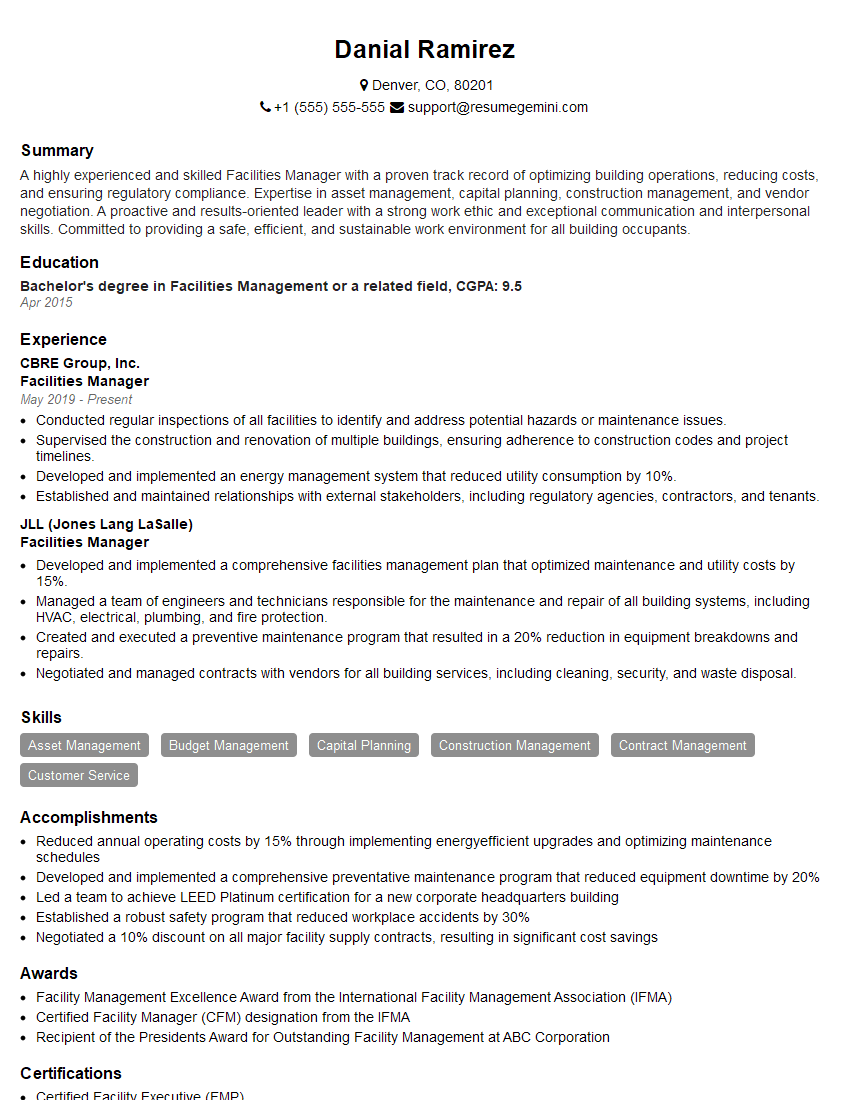
Facilities Manager Resume Sample
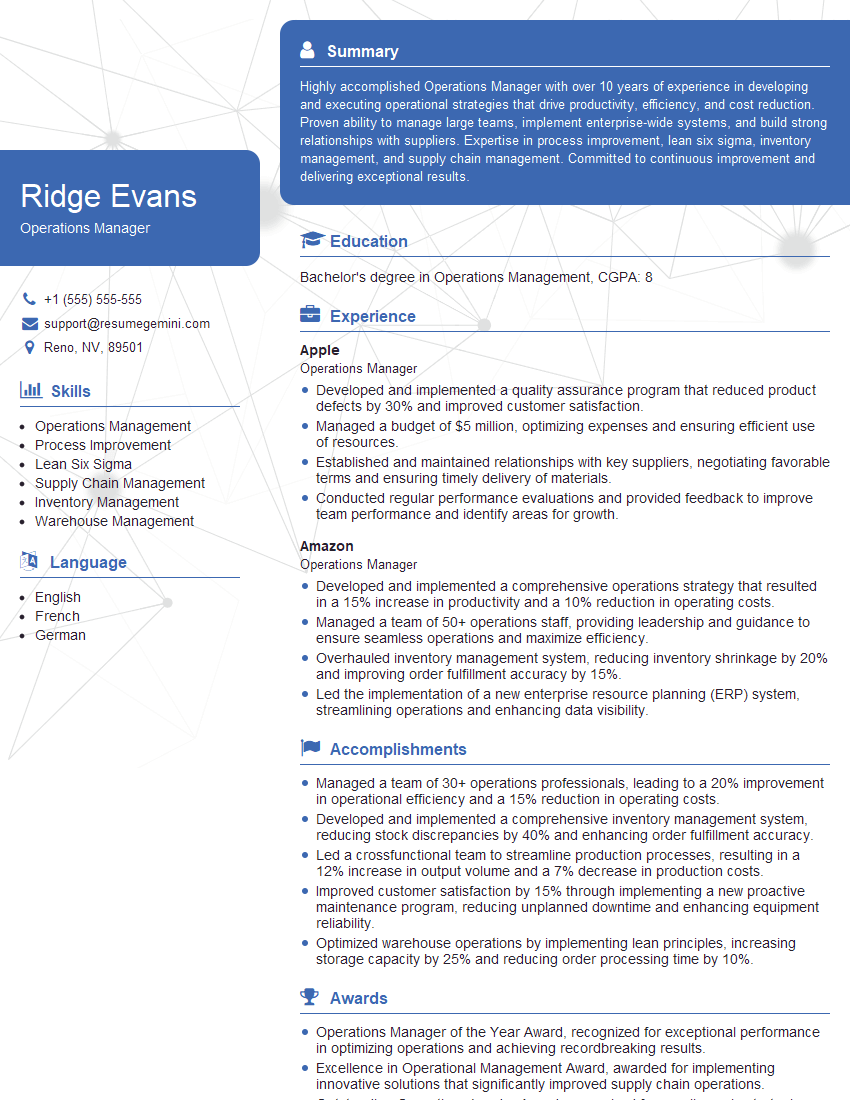
Operations Manager Resume Sample
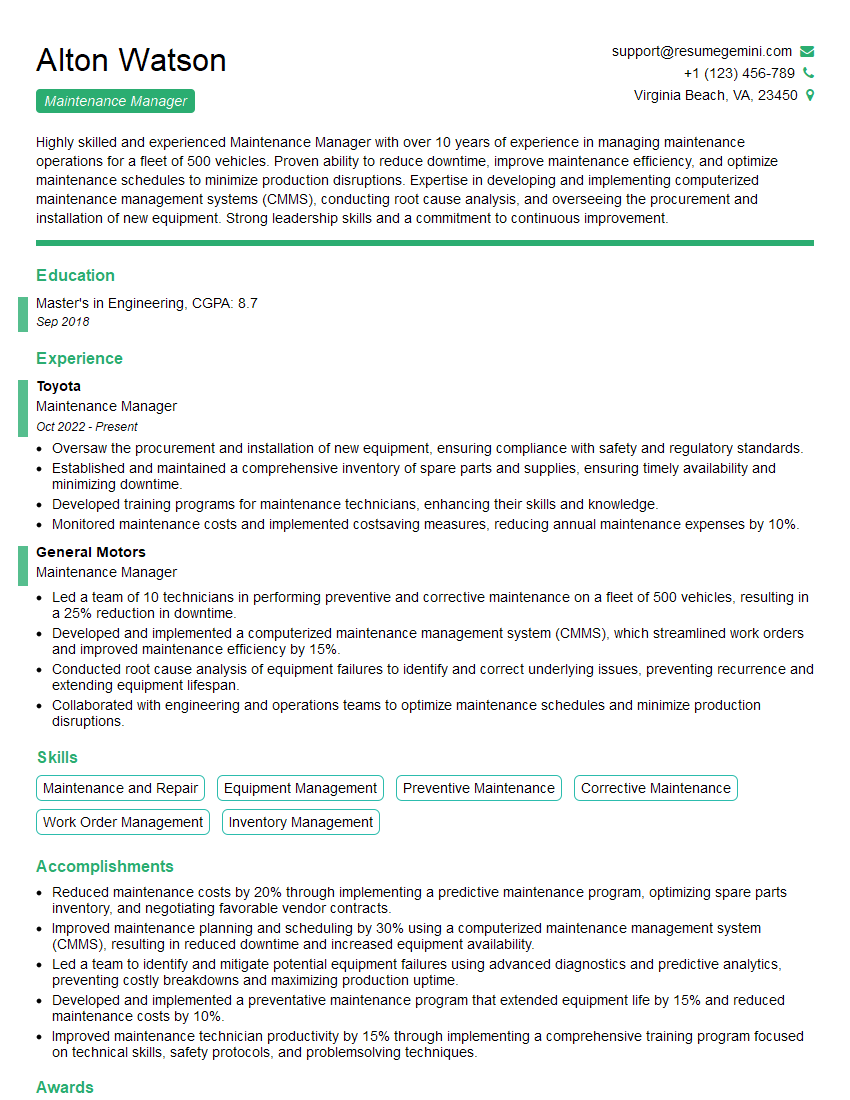
Maintenance Manager Resume Sample
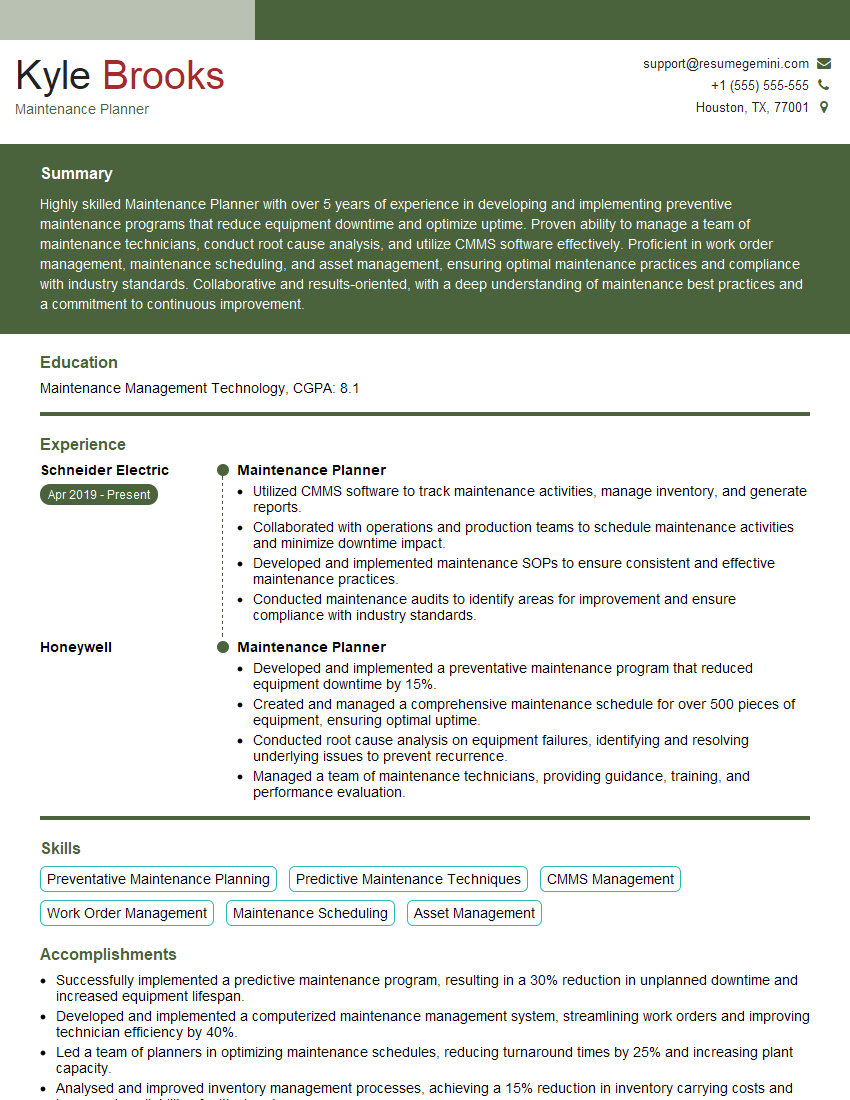
Maintenance Planner Resume Sample
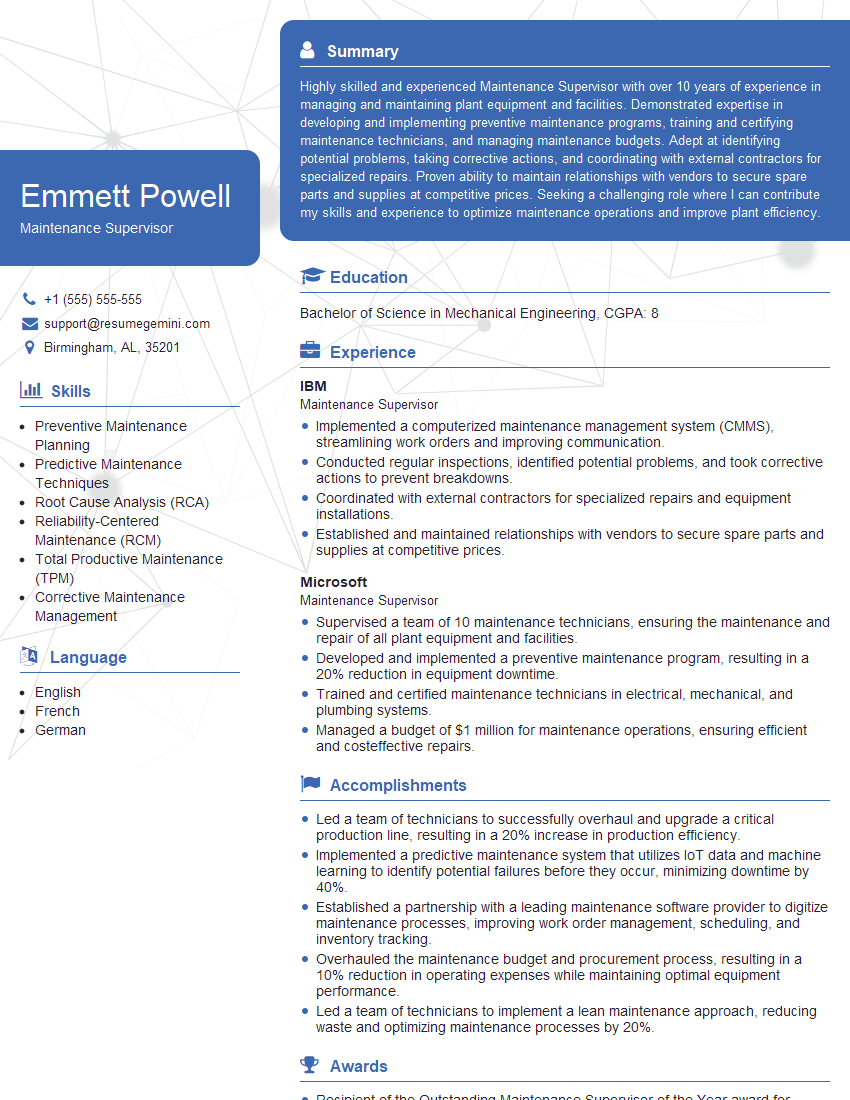
Maintenance Supervisor Resume Sample
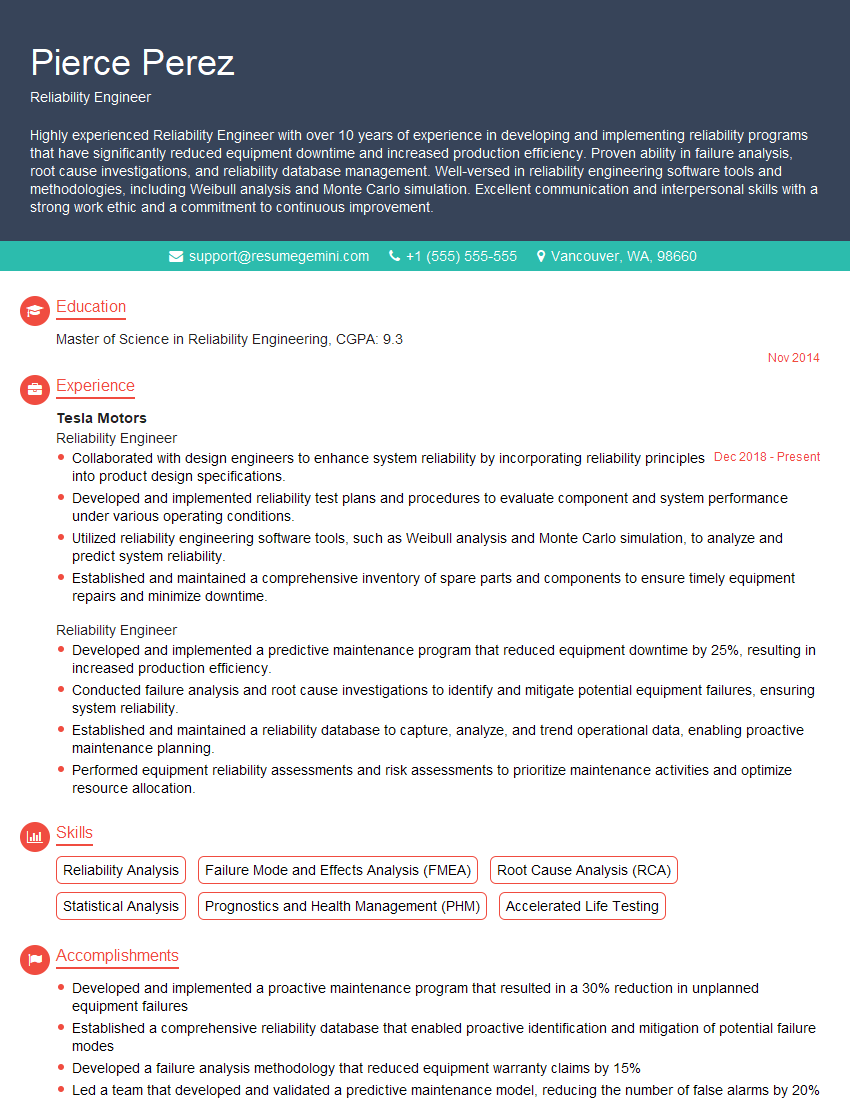
Reliability Engineer Resume Sample
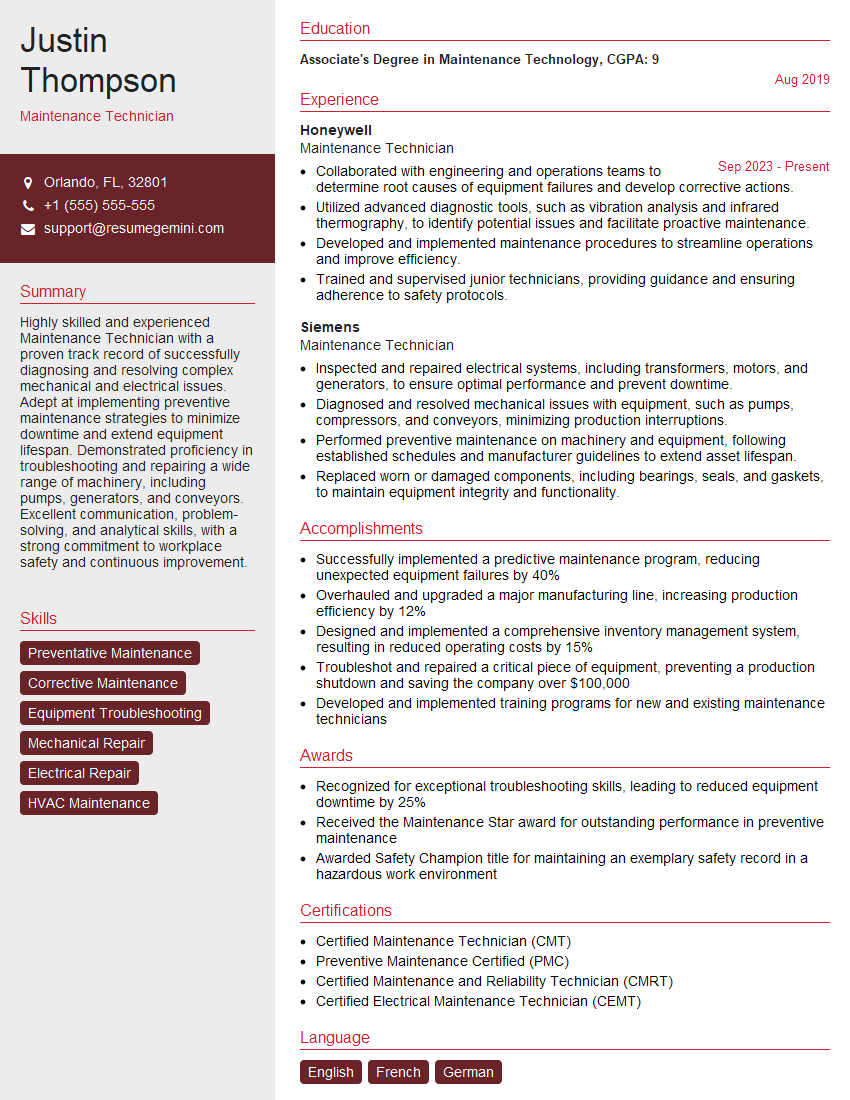
Maintenance Technician Resume Sample
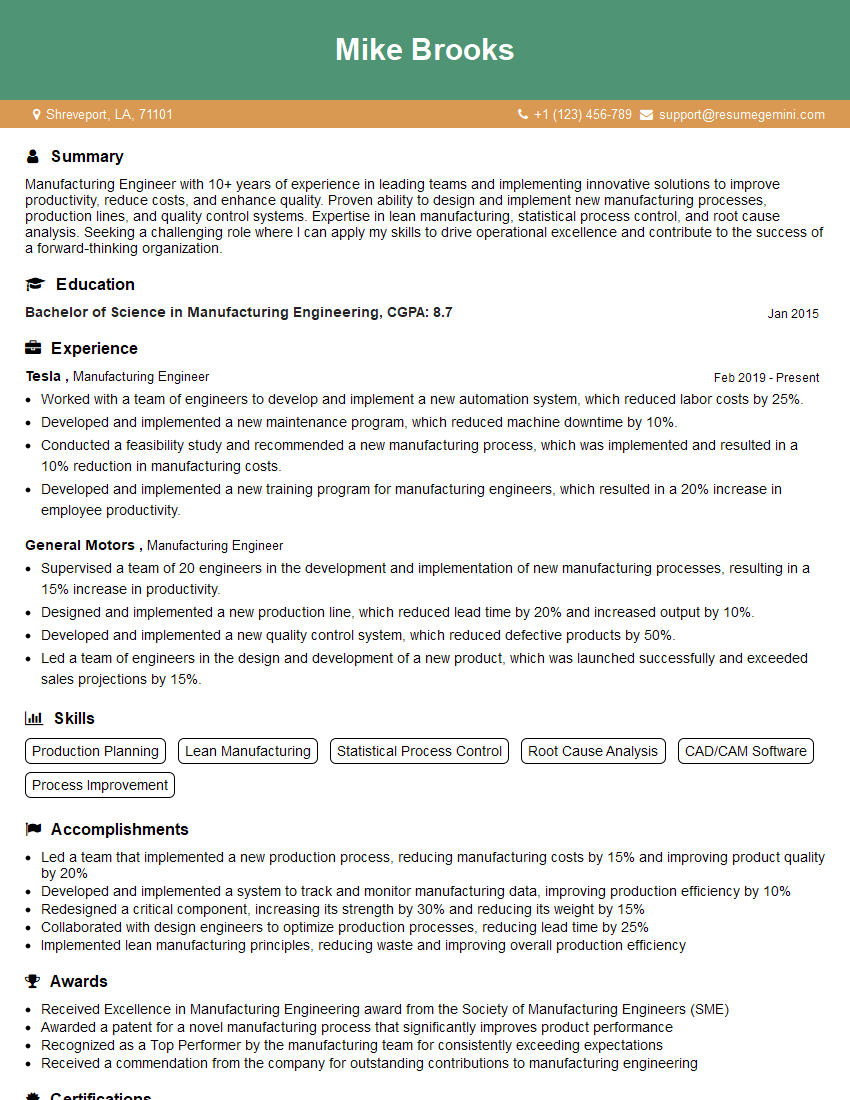
Manufacturing Engineer Resume Sample
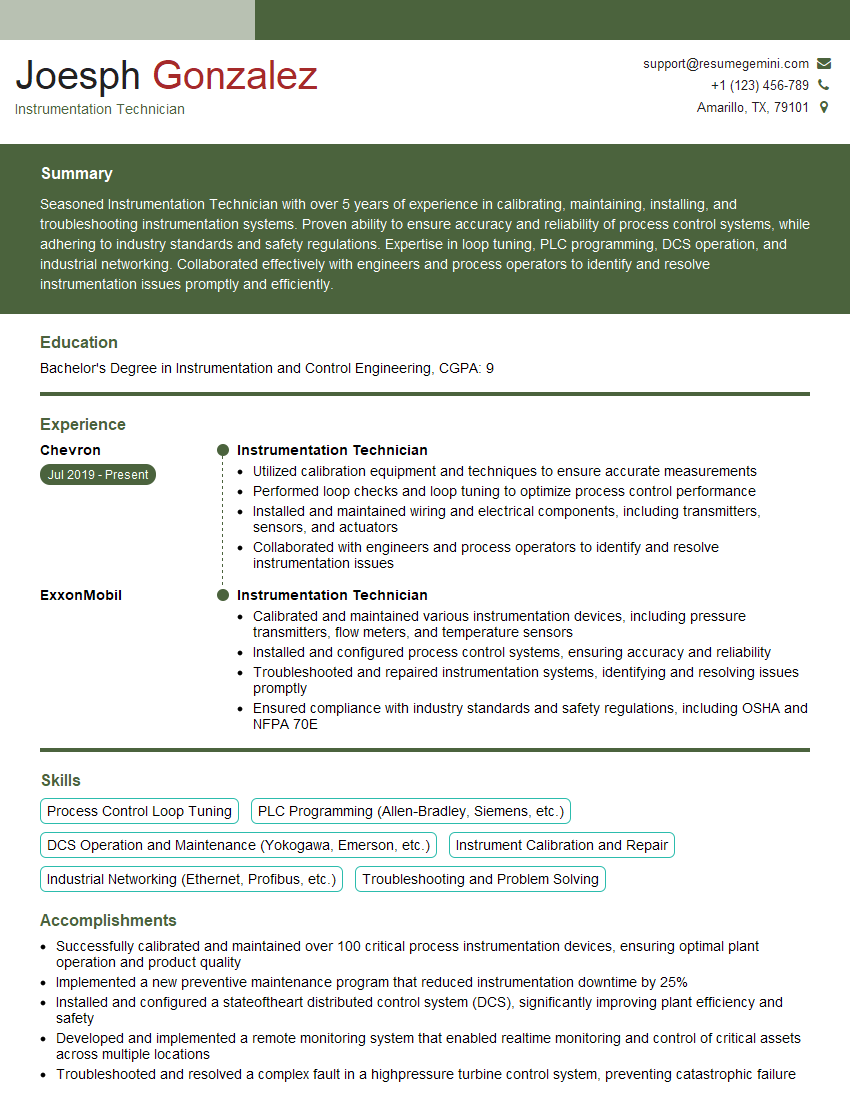
Instrumentation Technician Resume Sample
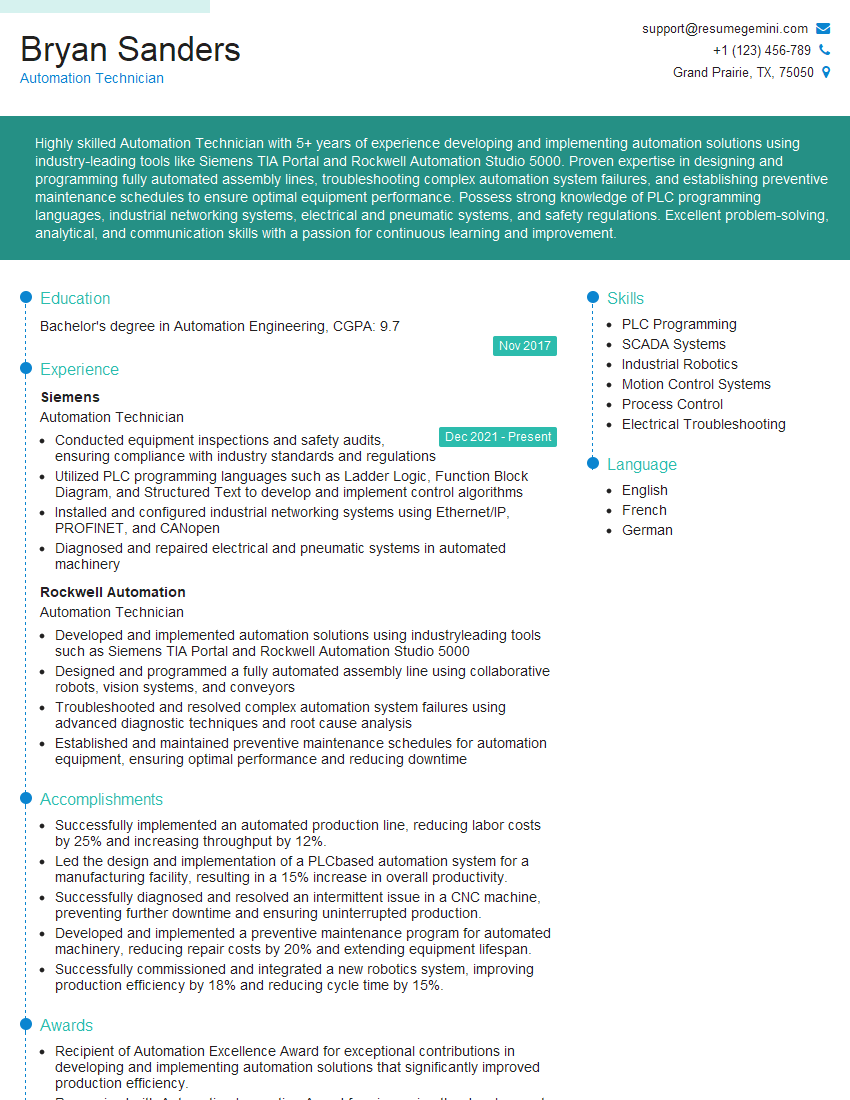
Automation Technician Resume Sample
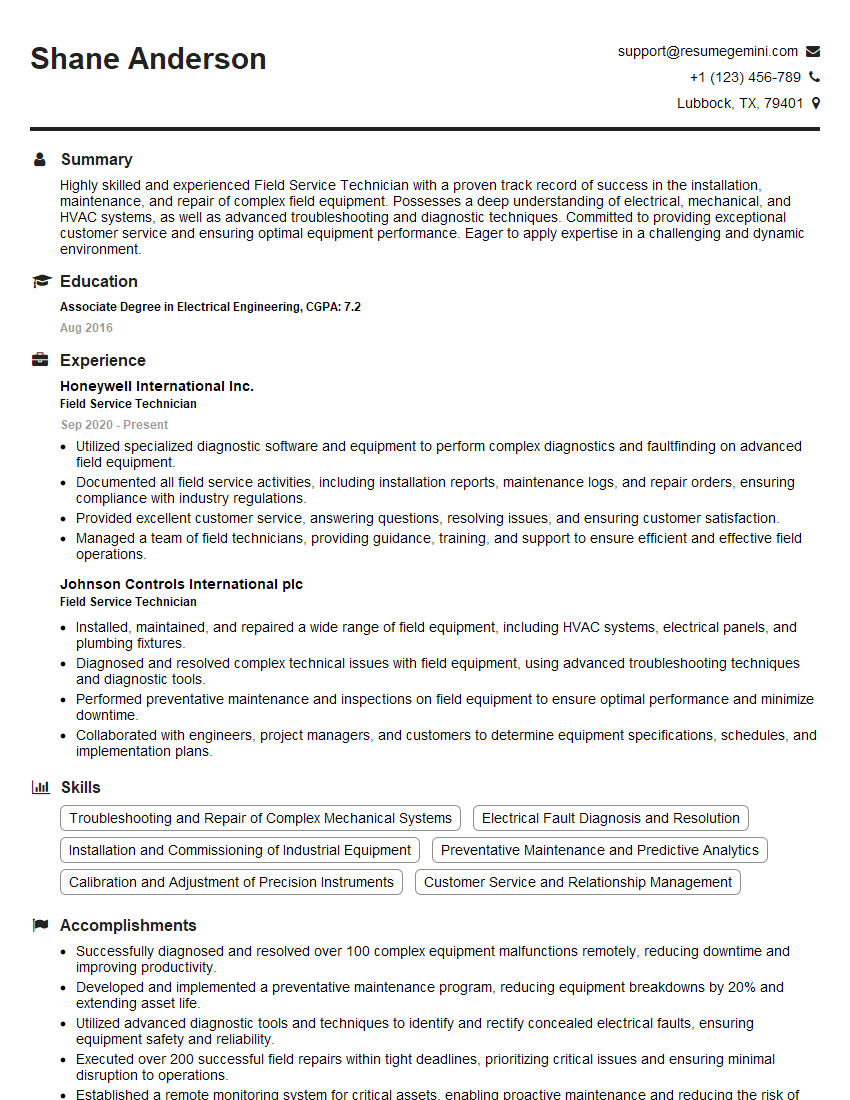
Field Service Technician Resume Sample
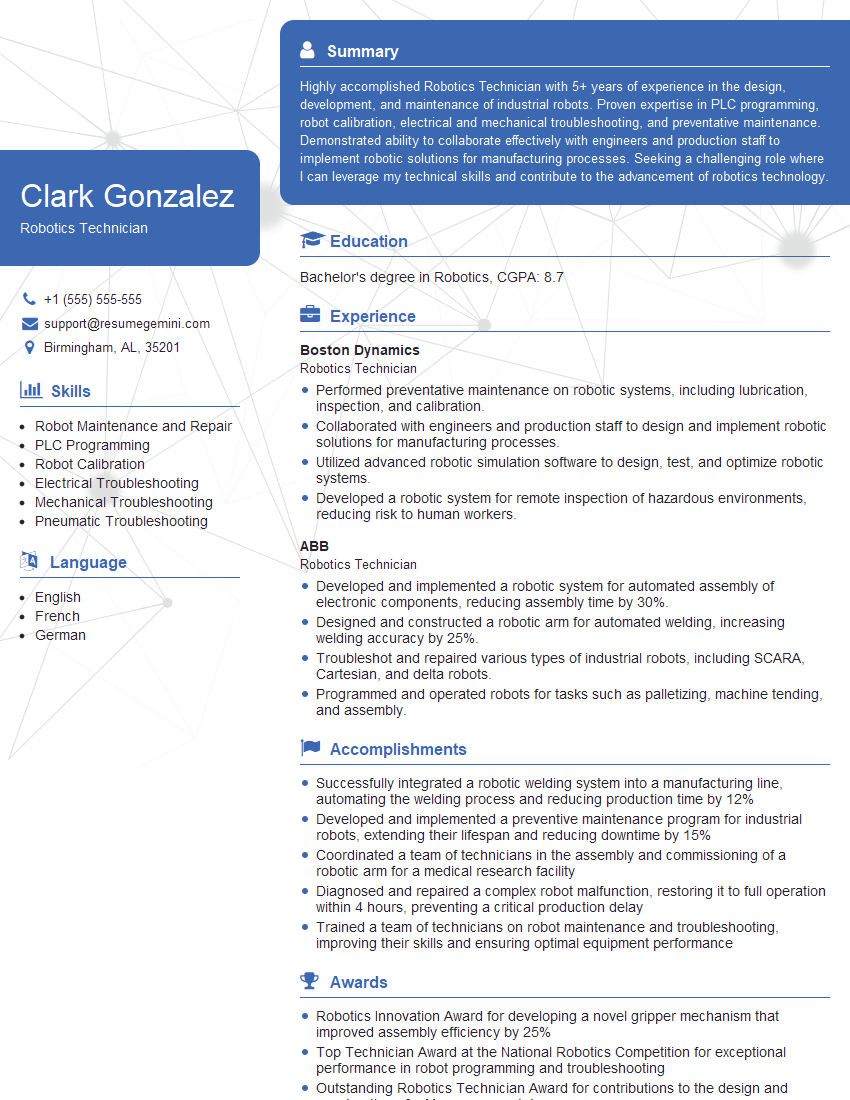
Robotics Technician Resume Sample
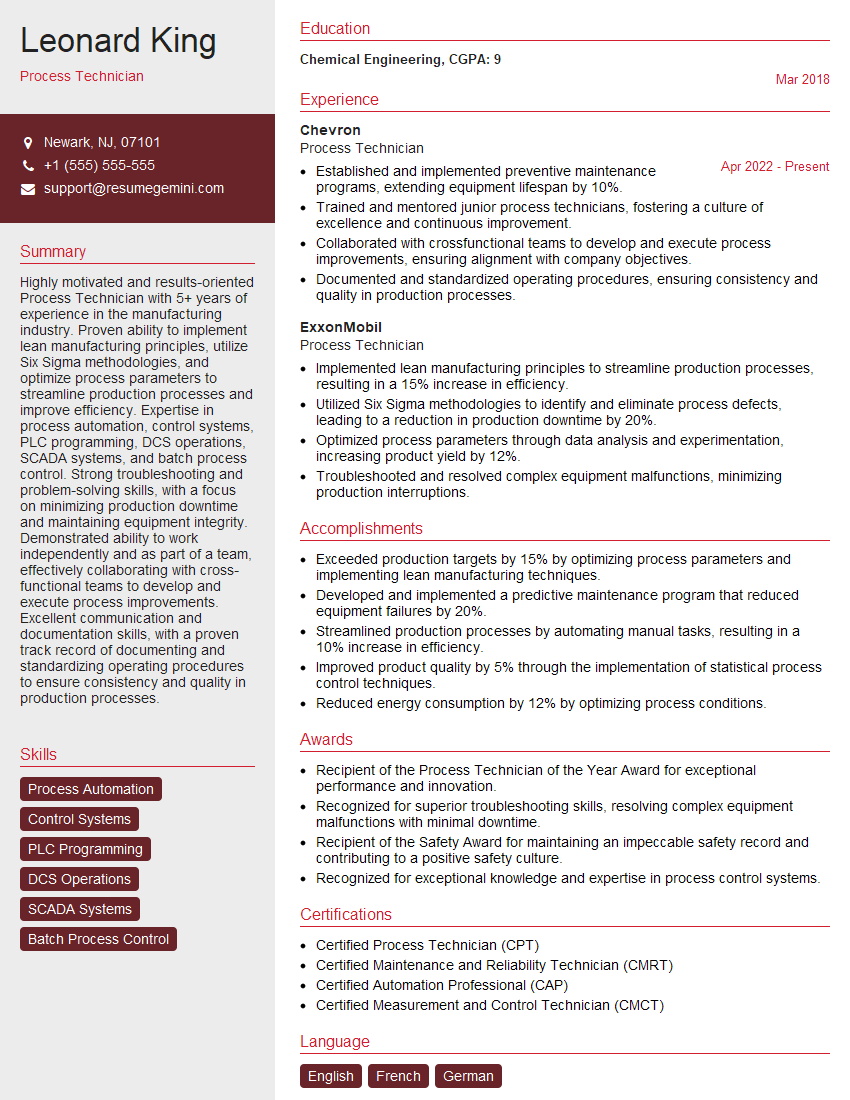
Process Technician Resume Sample
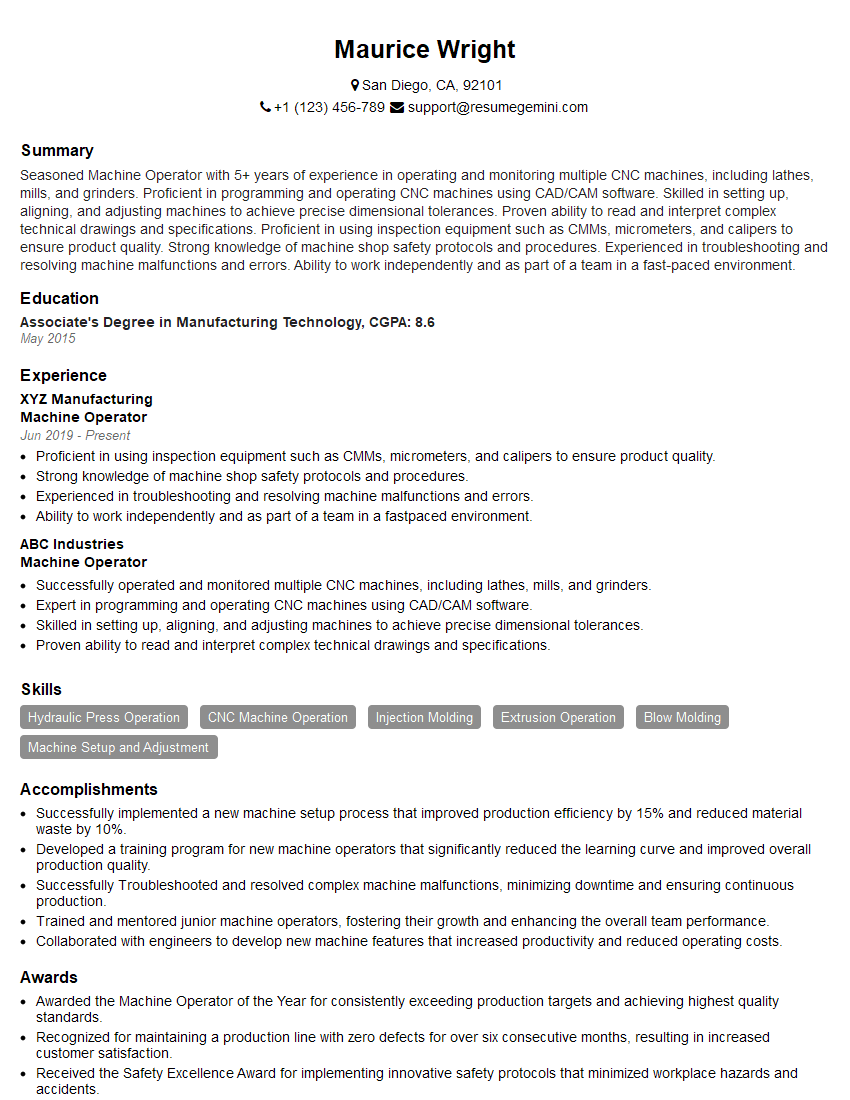
Machine Operator Resume Sample
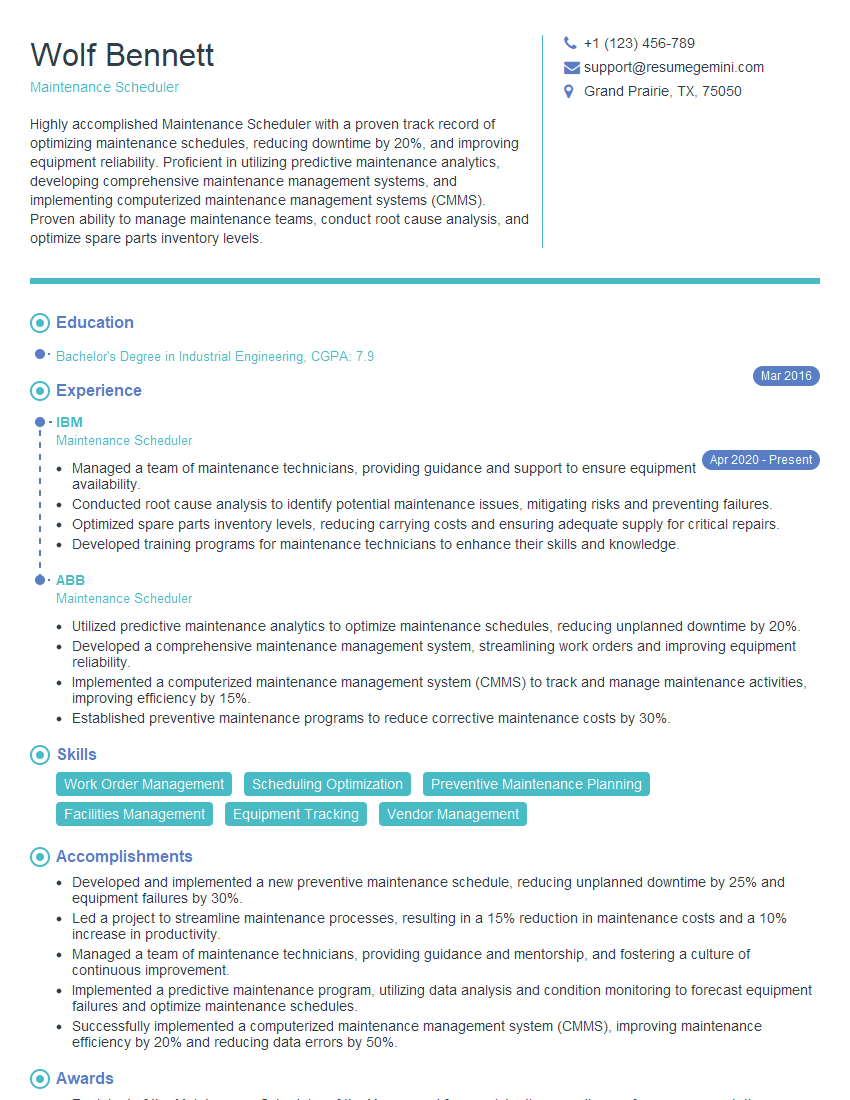
Maintenance Scheduler Resume Sample
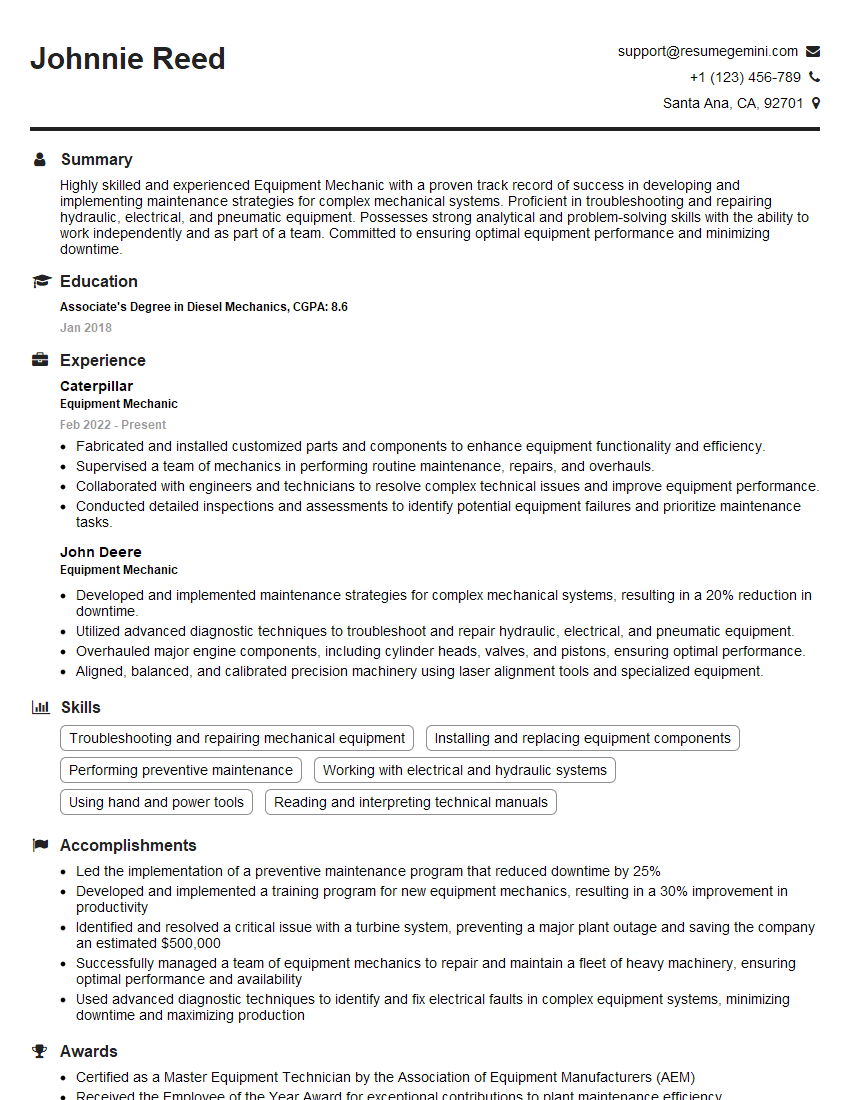
Equipment Mechanic Resume Sample
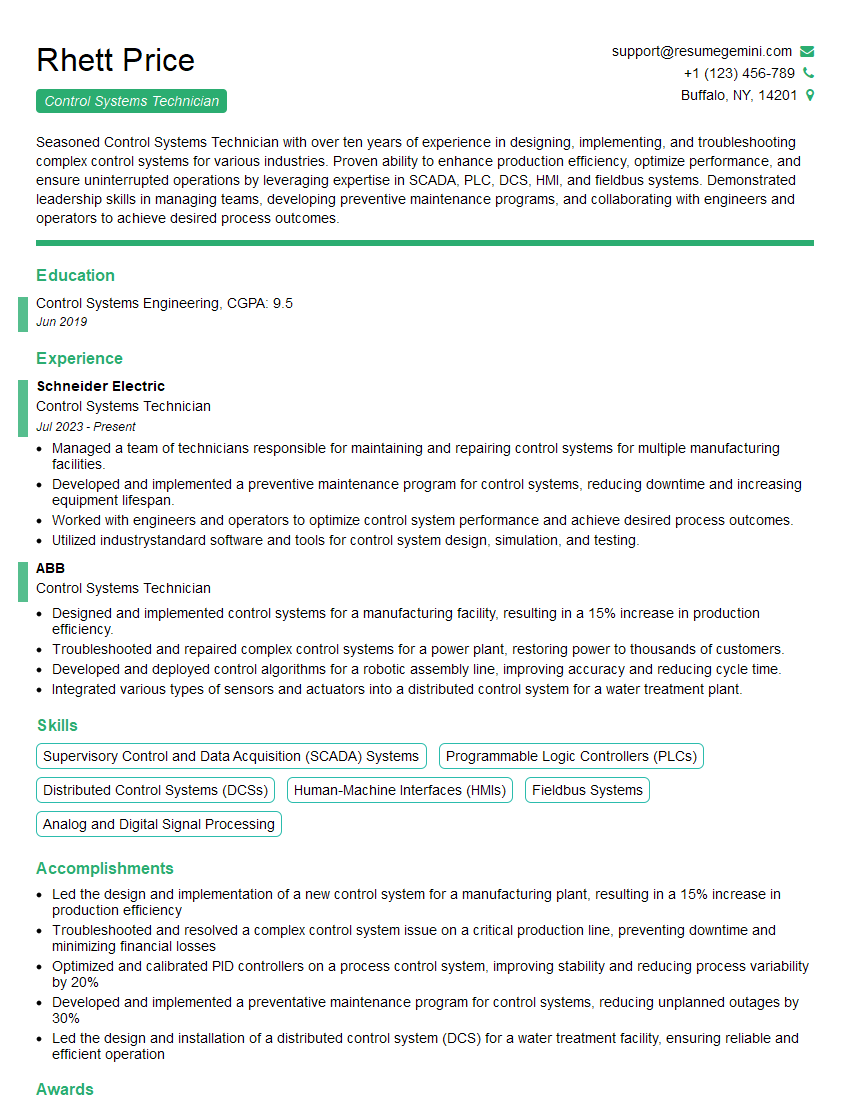
Control Systems Technician Resume Sample

Electrical Maintenance Technician Resume Sample
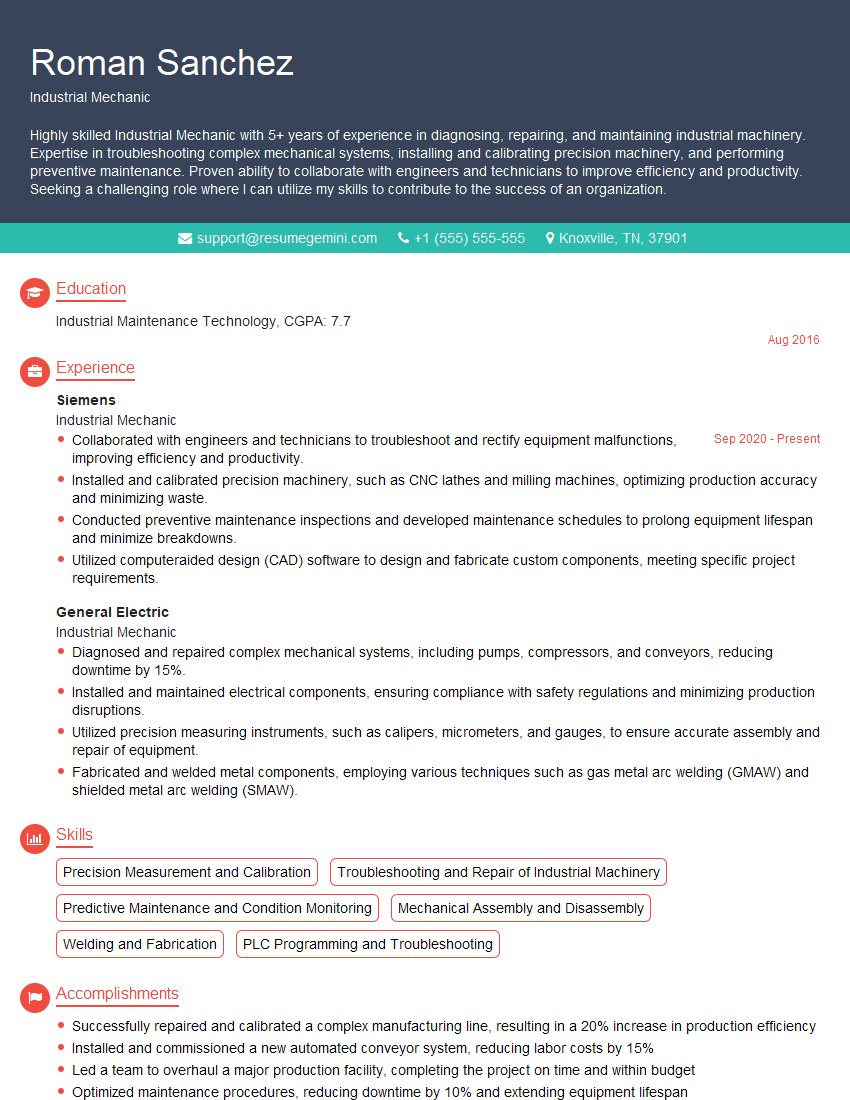
Industrial Mechanic Resume Sample
- Facilities Manager
- Operations Manager
- Maintenance Manager
- Maintenance Planner
- Maintenance Supervisor
- Reliability Engineer
- Maintenance Technician
- Manufacturing Engineer
- Instrumentation Technician
- Automation Technician
- Field Service Technician
- Robotics Technician
- Process Technician
- Machine Operator
- Maintenance Scheduler
- Equipment Mechanic
- Control Systems Technician
- Electrical Maintenance Technician
- Industrial Mechanic
Explore more articles
Users Rating of Our Blogs
Share Your Experience
We value your feedback! Please rate our content and share your thoughts (optional).
What Readers Say About Our Blog
Attention music lovers!
Wow, All the best Sax Summer music !!!
Spotify: https://open.spotify.com/artist/6ShcdIT7rPVVaFEpgZQbUk
Apple Music: https://music.apple.com/fr/artist/jimmy-sax-black/1530501936
YouTube: https://music.youtube.com/browse/VLOLAK5uy_noClmC7abM6YpZsnySxRqt3LoalPf88No
Other Platforms and Free Downloads : https://fanlink.tv/jimmysaxblack
on google : https://www.google.com/search?q=22+AND+22+AND+22
on ChatGPT : https://chat.openai.com?q=who20jlJimmy20Black20Sax20Producer
Get back into the groove with Jimmy sax Black
Best regards,
Jimmy sax Black
www.jimmysaxblack.com
Hi I am a troller at The aquatic interview center and I suddenly went so fast in Roblox and it was gone when I reset.
Hi,
Business owners spend hours every week worrying about their website—or avoiding it because it feels overwhelming.
We’d like to take that off your plate:
$69/month. Everything handled.
Our team will:
Design a custom website—or completely overhaul your current one
Take care of hosting as an option
Handle edits and improvements—up to 60 minutes of work included every month
No setup fees, no annual commitments. Just a site that makes a strong first impression.
Find out if it’s right for you:
https://websolutionsgenius.com/awardwinningwebsites
Hello,
we currently offer a complimentary backlink and URL indexing test for search engine optimization professionals.
You can get complimentary indexing credits to test how link discovery works in practice.
No credit card is required and there is no recurring fee.
You can find details here:
https://wikipedia-backlinks.com/indexing/
Regards
NICE RESPONSE TO Q & A
hi
The aim of this message is regarding an unclaimed deposit of a deceased nationale that bears the same name as you. You are not relate to him as there are millions of people answering the names across around the world. But i will use my position to influence the release of the deposit to you for our mutual benefit.
Respond for full details and how to claim the deposit. This is 100% risk free. Send hello to my email id: lukachachibaialuka@gmail.com
Luka Chachibaialuka
Hey interviewgemini.com, just wanted to follow up on my last email.
We just launched Call the Monster, an parenting app that lets you summon friendly ‘monsters’ kids actually listen to.
We’re also running a giveaway for everyone who downloads the app. Since it’s brand new, there aren’t many users yet, which means you’ve got a much better chance of winning some great prizes.
You can check it out here: https://bit.ly/callamonsterapp
Or follow us on Instagram: https://www.instagram.com/callamonsterapp
Thanks,
Ryan
CEO – Call the Monster App
Hey interviewgemini.com, I saw your website and love your approach.
I just want this to look like spam email, but want to share something important to you. We just launched Call the Monster, a parenting app that lets you summon friendly ‘monsters’ kids actually listen to.
Parents are loving it for calming chaos before bedtime. Thought you might want to try it: https://bit.ly/callamonsterapp or just follow our fun monster lore on Instagram: https://www.instagram.com/callamonsterapp
Thanks,
Ryan
CEO – Call A Monster APP
To the interviewgemini.com Owner.
Dear interviewgemini.com Webmaster!
Hi interviewgemini.com Webmaster!
Dear interviewgemini.com Webmaster!
excellent
Hello,
We found issues with your domain’s email setup that may be sending your messages to spam or blocking them completely. InboxShield Mini shows you how to fix it in minutes — no tech skills required.
Scan your domain now for details: https://inboxshield-mini.com/
— Adam @ InboxShield Mini
support@inboxshield-mini.com
Reply STOP to unsubscribe
Hi, are you owner of interviewgemini.com? What if I told you I could help you find extra time in your schedule, reconnect with leads you didn’t even realize you missed, and bring in more “I want to work with you” conversations, without increasing your ad spend or hiring a full-time employee?
All with a flexible, budget-friendly service that could easily pay for itself. Sounds good?
Would it be nice to jump on a quick 10-minute call so I can show you exactly how we make this work?
Best,
Hapei
Marketing Director
Hey, I know you’re the owner of interviewgemini.com. I’ll be quick.
Fundraising for your business is tough and time-consuming. We make it easier by guaranteeing two private investor meetings each month, for six months. No demos, no pitch events – just direct introductions to active investors matched to your startup.
If youR17;re raising, this could help you build real momentum. Want me to send more info?
Hi, I represent an SEO company that specialises in getting you AI citations and higher rankings on Google. I’d like to offer you a 100% free SEO audit for your website. Would you be interested?
Hi, I represent an SEO company that specialises in getting you AI citations and higher rankings on Google. I’d like to offer you a 100% free SEO audit for your website. Would you be interested?