Interviews are more than just a Q&A session—they’re a chance to prove your worth. This blog dives into essential Field Calibration and Testing interview questions and expert tips to help you align your answers with what hiring managers are looking for. Start preparing to shine!
Questions Asked in Field Calibration and Testing Interview
Q 1. Explain the importance of traceability in calibration.
Traceability in calibration is crucial because it establishes a clear and unbroken chain of comparisons, ultimately linking your measurement instrument’s accuracy back to a national or international standard. Think of it like a family tree for your measurements. Each calibration step is documented, showing how the instrument was compared to a more accurate standard, which in turn was compared to an even more accurate one, and so on, until you reach the top-tier standard.
Without traceability, you can’t be confident in the accuracy of your measurements. Imagine a mechanic using a wrench that’s never been calibrated. How can they be sure the bolts are tightened correctly? Traceability ensures the reliability of your measurements, which is essential for quality control, safety, and regulatory compliance in many industries, from aerospace to pharmaceuticals.
For example, if a pressure gauge is calibrated, the certificate should state that the calibration was performed using a pressure calibrator which, itself, was calibrated using a traceable standard from a nationally recognized laboratory like NIST (National Institute of Standards and Technology) or equivalent. This chain of custody assures accuracy and builds trust in measurement results.
Q 2. Describe the process of calibrating a pressure gauge.
Calibrating a pressure gauge involves comparing its readings to a known accurate pressure source. Here’s a step-by-step process:
- Prepare: Gather your equipment: the pressure gauge to be calibrated, a calibrated pressure source (e.g., a deadweight tester or a highly accurate pressure calibrator), connecting tubing, and documentation.
- Zeroing: Set the pressure to zero and verify that the gauge displays zero. Adjust if necessary.
- Calibration points: Apply different known pressures from your calibrated pressure source, typically at several points across the gauge’s operating range (e.g., 0%, 25%, 50%, 75%, 100%).
- Record readings: Carefully record both the applied pressure from the standard and the reading displayed on the gauge at each calibration point. Any discrepancy between the two is the error.
- Analysis: Compare the gauge readings to the known pressures. Calculate the error at each point. Determine if the errors are within acceptable tolerances defined by the gauge’s specifications or relevant standards.
- Documentation: Create a calibration certificate detailing the calibration process, including dates, instrument details, calibration points, readings, errors, and conclusions (passed/failed).
Important Considerations: The environment needs to be stable (temperature, vibration), and appropriate safety precautions should be taken, especially when working with high pressures.
Q 3. What are the common sources of error in field calibration?
Several factors can introduce errors in field calibration. Some common sources include:
- Environmental conditions: Temperature fluctuations, humidity, vibration, and altitude can all affect instrument readings.
- Equipment limitations: The accuracy of the reference standard used for calibration will directly impact the accuracy of the calibration. A faulty or poorly maintained reference standard will lead to inaccurate results.
- Human error: Incorrect readings, improper connection of equipment, or mistakes in calculations are common sources of error.
- Instrument drift: Instruments can drift over time, meaning their accuracy changes. This is why regular calibration is necessary.
- Improper handling: Rough handling or dropping of instruments can damage them and lead to inaccurate readings.
- Interference: Electromagnetic interference can influence the readings of certain electronic instruments.
Minimizing these errors requires careful planning, proper equipment maintenance, and a thorough understanding of the instrument and its limitations.
Q 4. How do you handle discrepancies found during calibration?
Discrepancies found during calibration require careful investigation and appropriate action. The steps involved include:
- Verify the discrepancy: Repeat the measurement several times to confirm the discrepancy isn’t due to a random error. Check the connections and equipment thoroughly.
- Investigate the cause: Determine the potential reasons for the discrepancy. Refer to the list of common sources of error mentioned earlier.
- Document findings: Thoroughly document the discrepancy, including the date, time, observed values, and suspected causes.
- Take corrective action: If the error is within the acceptable tolerance, the instrument may still be usable, but if it exceeds the tolerance, the instrument may require repair, adjustment, or replacement.
- Retest: Once corrective action has been taken, recalibrate the instrument to verify the issue has been resolved.
- Update documentation: Update the calibration certificate to reflect the findings and actions taken.
A common example: If a pressure gauge consistently reads 5 psi higher than the applied pressure, this suggests a systematic error requiring adjustment or repair, rather than a simple recalibration.
Q 5. Explain the difference between calibration and verification.
Calibration and verification are both important aspects of ensuring measurement accuracy, but they differ in their scope and purpose. Calibration is a process of adjusting an instrument to provide accurate measurements. It involves comparing the instrument’s readings to a known standard and adjusting it if necessary. Verification on the other hand, simply checks if the instrument is performing within its specified tolerances. No adjustment is made during verification.
Think of it this way: calibration is like tuning a guitar; you’re actively adjusting it to achieve the correct pitch. Verification is like checking the guitar’s tuning; you’re confirming that it’s in tune, but you’re not adjusting the tuning pegs unless it’s out of tune.
In a real-world scenario, you might calibrate a thermometer regularly using a traceable standard, while verification might involve spot-checking several thermometers against each other on a given day to ensure they are all performing consistently, even if their individual accuracy hasn’t been fully validated.
Q 6. What are the key components of a calibration certificate?
A calibration certificate is a formal document that verifies the accuracy of a calibrated instrument. Key components include:
- Unique identification number: A unique identifier for both the instrument and the calibration certificate.
- Instrument description: Model, serial number, and manufacturer of the instrument.
- Calibration date: The date the calibration was performed.
- Calibration method: The procedures and standards used during calibration.
- Calibration points: A list of the points at which the instrument was calibrated and corresponding measurements.
- Measured values: The readings obtained from the instrument at each calibration point.
- Calibration results: A statement indicating whether the instrument passed or failed the calibration.
- Uncertainty: The uncertainty associated with the calibration results.
- Calibration expiry date: The date the calibration is no longer valid.
- Calibration laboratory details: Information about the laboratory that performed the calibration, including their accreditation status.
- Calibration technician signature: Signature of the technician who performed the calibration.
This certificate is crucial for traceability and demonstrates that the instrument is fit for its intended purpose.
Q 7. How do you ensure the safety of equipment and personnel during field calibration?
Safety is paramount during field calibration. Measures must be taken to protect both personnel and equipment. Here’s a comprehensive approach:
- Risk assessment: Before starting any calibration, conduct a thorough risk assessment to identify potential hazards, including electrical hazards, pressure hazards, chemical hazards (depending on the instrument being calibrated), and environmental hazards.
- Personal protective equipment (PPE): Ensure appropriate PPE is used. This might include safety glasses, gloves, safety shoes, and hearing protection.
- Lockout/Tagout procedures: If working with energized equipment, follow proper lockout/tagout procedures to prevent accidental activation.
- Environmental considerations: Work in well-ventilated areas to prevent exposure to harmful fumes or gases. Take precautions against extreme temperatures or weather conditions.
- Proper handling of instruments: Handle instruments carefully to avoid damage. Use proper lifting techniques for heavy equipment.
- Emergency procedures: Ensure that emergency procedures are in place and that personnel are aware of them. This includes knowing the location of first aid kits, fire extinguishers, and emergency contact information.
- Calibration standards compliance: Follow relevant safety standards and regulations throughout the calibration process.
Using safety interlocks, ground fault circuit interrupters (GFCIs), and other safety devices as appropriate will prevent accidents. A safe work environment directly leads to accurate and reliable calibration results.
Q 8. Describe your experience with different calibration methods (e.g., comparison, substitution).
Calibration methods aim to ensure measurement instruments provide accurate readings. Two common methods are comparison and substitution. Comparison calibration involves comparing the instrument under test (IUT) against a known standard. Think of it like comparing your watch to an atomic clock – you see the difference and adjust your watch accordingly. This is straightforward for many instruments. Substitution calibration, however, involves replacing the standard with the IUT in a measurement setup. It’s more intricate, often used when direct comparison is difficult. For example, imagine calibrating a high-precision pressure transducer. Substitution lets us accurately measure the pressure applied, ensuring the IUT reading matches the known standard. I have extensive experience with both methods, using comparison for simpler tasks like calibrating thermometers and substitution for more complex scenarios involving specialized equipment like torque wrenches and flow meters. In addition to these, I’m also proficient in other calibration methods including direct and indirect calibration.
Q 9. What types of calibration equipment are you familiar with?
My experience encompasses a wide range of calibration equipment. This includes precision multimeters for electrical measurements, temperature calibrators for thermometers and thermocouples, pressure calibrators for pressure gauges and transducers, and various types of standards, including weight sets for balances and volumetric standards for flow meters. I’m also proficient with specialized equipment such as laser interferometers for length measurements and signal generators and oscilloscopes used in the calibration of electronic instruments. Beyond the equipment itself, I’m adept at using calibration software to manage data, track results, and generate reports adhering to ISO 17025 standards.
Q 10. How do you manage calibration schedules and deadlines?
Effective calibration schedule management is crucial. I typically begin by identifying all instruments requiring calibration, their calibration intervals (defined by manufacturer recommendations or regulatory requirements), and potential risks associated with out-of-calibration instruments. Then I use a computerized maintenance management system (CMMS) to generate a comprehensive schedule. This system allows me to track upcoming calibrations, send reminders, and allocate resources efficiently. The system also provides reports summarizing calibration history for each instrument and generates alerts if deadlines are approaching. Critical instruments with shorter calibration intervals get prioritized to minimize downtime. In case of unexpected equipment failure, I quickly re-prioritize tasks to address the issue promptly, working closely with maintenance and operations teams to ensure minimum disruption.
Q 11. Explain your understanding of uncertainty analysis in calibration.
Uncertainty analysis is fundamental to calibration. It quantifies the doubt associated with a measurement result. It’s not about the instrument’s accuracy alone but encompasses all sources of error, including the standard’s uncertainty, the measurement process, and the instrument’s inherent uncertainties. I use various methods, such as the Guide to the Expression of Uncertainty in Measurement (GUM), to estimate combined uncertainty. For example, when calibrating a pressure gauge, I consider uncertainties from the standard’s calibration certificate, the pressure calibrator’s stability, and the resolution and repeatability of the gauge itself. A thorough uncertainty analysis is essential for generating a valid calibration certificate, which reflects the reliability and confidence level of the measurement.
Q 12. Describe your experience with different types of measurement instruments.
My experience spans a wide range of measurement instruments. I’ve worked with electrical instruments like multimeters, oscilloscopes, and power meters; mechanical instruments such as pressure gauges, torque wrenches, and scales; temperature instruments like thermometers, thermocouples, and RTDs; and various other instruments for measuring flow, level, and other physical quantities. I’m also familiar with both analog and digital instruments and understand the unique calibration challenges associated with each type. For instance, analog instruments might require visual inspection for wear and tear, while digital instruments necessitate checking for internal calibration errors or software glitches.
Q 13. How do you troubleshoot calibration equipment malfunctions?
Troubleshooting calibration equipment malfunctions involves a systematic approach. I start by reviewing the equipment’s operational manual and checking for obvious issues such as power supply problems, loose connections, or incorrect settings. If the problem persists, I perform more in-depth checks: comparing readings to a secondary standard, verifying the instrument’s self-diagnostics, and inspecting for any physical damage. For software-related issues, I may consult the software documentation, check for software updates, and if necessary, contact technical support. I document all troubleshooting steps meticulously and maintain a log of any repairs or replacements made. If the problem can’t be resolved in-house, I coordinate with an external calibration service provider adhering to the manufacturer’s recommendations and maintaining a chain of custody.
Q 14. What are the common standards and regulations relevant to field calibration?
Several standards and regulations govern field calibration, ensuring consistency and accuracy. The most prominent is ISO 17025, which sets requirements for the competence of testing and calibration laboratories. Depending on the industry and the type of measurement, other regulations might also apply, such as those from national metrology institutes (NMIs) or industry-specific standards. For example, in the pharmaceutical industry, Good Manufacturing Practices (GMP) influence the calibration procedures. Adherence to these standards is crucial to maintaining the integrity and validity of the calibration process and ensuring the reliability of the resulting measurement data. Knowing these regulations enables me to create calibration procedures that align with the highest standards and meet legal requirements.
Q 15. Describe your experience with calibration software and documentation systems.
My experience with calibration software and documentation systems spans several years and various platforms. I’m proficient in using industry-standard software for managing calibration schedules, tracking equipment, and generating reports. This includes experience with both standalone applications and integrated systems linked to CMMS (Computerized Maintenance Management Systems). For example, I’ve extensively used Fluke Calibration software for managing data from various instruments, and I’m familiar with LIMS (Laboratory Information Management Systems) for integrating calibration data with other lab processes. In terms of documentation, I adhere to strict protocols for maintaining accurate records, including calibration certificates, test reports, and procedural documents. My approach emphasizes clarity, traceability, and compliance with regulatory requirements, ensuring all documentation is readily accessible and auditable.
Specifically, I’ve worked with systems that support features like automated reminders for upcoming calibrations, electronic signature capture, and data export capabilities for reporting and analysis. This helps maintain a highly efficient and error-free workflow. I’m also adept at migrating data between different software systems, ensuring seamless continuity in calibration management.
Career Expert Tips:
- Ace those interviews! Prepare effectively by reviewing the Top 50 Most Common Interview Questions on ResumeGemini.
- Navigate your job search with confidence! Explore a wide range of Career Tips on ResumeGemini. Learn about common challenges and recommendations to overcome them.
- Craft the perfect resume! Master the Art of Resume Writing with ResumeGemini’s guide. Showcase your unique qualifications and achievements effectively.
- Don’t miss out on holiday savings! Build your dream resume with ResumeGemini’s ATS optimized templates.
Q 16. How do you maintain the accuracy and integrity of calibration equipment?
Maintaining the accuracy and integrity of calibration equipment is paramount. It involves a multi-faceted approach encompassing preventive maintenance, regular calibration checks, and proper handling and storage. Think of it like caring for a precision instrument – the more meticulous you are, the more accurate and reliable the results. This starts with following the manufacturer’s recommended maintenance schedules, which often involves cleaning, lubricating, and inspecting components. Then there’s the regular calibration process itself, using traceable standards and adhering to established procedures. Any deviation from the accepted tolerances triggers corrective actions, which might involve recalibration, repair, or even replacement of the equipment.
Beyond routine checks, we also monitor environmental factors like temperature and humidity that can influence the accuracy of instruments. We might use environmental monitoring devices to track these variables and ensure they remain within acceptable limits. Proper storage, protecting equipment from dust, shocks, and vibrations, is also crucial. For example, delicate instruments are stored in climate-controlled areas to prevent degradation. Finally, comprehensive documentation, including detailed logs of maintenance and calibration activities, provides an auditable trail for verifying the ongoing accuracy of the equipment.
Q 17. Explain your experience with data analysis and reporting in calibration.
Data analysis and reporting are integral to calibration. My experience involves collecting, analyzing, and presenting calibration data to various stakeholders. This starts with extracting data from calibration software, which might involve numerous data points – readings, tolerances, uncertainties, and dates. I use statistical tools to analyze this data, determining if instruments are within acceptable tolerances and identifying trends that might indicate emerging problems. For instance, I might use control charts to monitor the performance of instruments over time and detect any significant drifts.
Reporting typically involves generating detailed calibration certificates and summary reports. These reports are designed for different audiences – from technicians needing detailed information to management needing high-level summaries of the overall calibration program status. I use various software to create customized reports with charts, graphs, and tables that effectively communicate the findings. Moreover, I’m skilled at analyzing data to identify areas for improvement in the calibration process itself, leading to more efficient and effective calibration programs.
Q 18. Describe a situation where you had to solve a complex calibration problem.
During a large-scale project involving multiple pressure transducers, we encountered a significant discrepancy in readings across different instruments. Initial troubleshooting pointed towards potential instrument malfunction, but after a thorough investigation, we discovered a subtle issue with the reference standard used for calibration. It turned out the reference standard itself was slightly out of calibration, introducing a systematic error affecting all the transducers.
Solving this required a multi-step approach: First, we independently verified the reference standard’s calibration using a higher-order standard traceable to national standards. This confirmed our suspicion of the error in the reference standard. Second, we recalibrated all the transducers using the correctly calibrated reference standard. Finally, we implemented stricter verification procedures for all reference standards and strengthened our preventative maintenance program to avoid recurrence. This incident emphasized the criticality of meticulous calibration of reference standards and the importance of having a robust verification protocol.
Q 19. How do you prioritize calibration tasks in a high-pressure environment?
Prioritizing calibration tasks in a high-pressure environment requires a structured approach. I use a risk-based prioritization system, considering factors like the criticality of the equipment, the potential consequences of failure, and the urgency of the calibration due date. Critical equipment directly impacting safety or product quality takes precedence. I utilize a combination of techniques like:
- Prioritization Matrices: Ranking tasks based on their criticality and urgency.
- Calibration Schedules: Implementing a well-defined schedule that proactively addresses upcoming calibrations.
- Workflow Software: Leveraging software tools that automate task assignments and provide real-time status updates.
In high-pressure situations, effective communication is key. Keeping stakeholders informed about progress and any potential delays ensures everyone is aligned and understands the prioritization rationale. Clear communication and a robust prioritization system can help maintain efficiency and avoid critical calibration oversights.
Q 20. What are your strategies for maintaining calibration records and documentation?
Maintaining calibration records and documentation involves a rigorous system for organization, storage, and retrieval. We use a combination of electronic and paper-based systems depending on the nature of the data. All records adhere to a strict naming convention, allowing easy retrieval. Electronic records are stored in secure, accessible databases, while paper-based records are filed in a controlled environment, protected from damage and degradation. The goal is to ensure the integrity and traceability of the data.
We implement version control for documents, tracking changes and revisions. This ensures that everyone is working with the most current version. We regularly back up all data to prevent loss or corruption. This comprehensive system ensures that all calibration information is easily retrievable, auditable, and compliant with regulatory standards. For instance, we utilize a software system that automatically generates calibration certificates, maintains audit trails, and allows for easy searching and reporting.
Q 21. How do you ensure compliance with ISO 17025 standards in calibration?
Ensuring compliance with ISO 17025 standards in calibration requires a systematic approach encompassing all aspects of the calibration process. This includes establishing a quality management system, defining clear procedures, maintaining traceability of measurements, and managing uncertainty analysis. We meticulously document all procedures, ensuring they are consistently followed, regularly reviewed, and updated as needed.
Traceability is ensured by using calibration standards traceable to national or international standards organizations. Our personnel receive regular training on the ISO 17025 standards and related calibration procedures. Regular internal audits verify compliance with the established processes, identifying areas for improvement and ensuring the system remains robust and effective. We also participate in proficiency testing programs to validate the competence of our laboratory and our calibration processes. The whole process is continuously monitored and improved based on data analysis and risk assessments to maintain and demonstrate continuous compliance.
Q 22. Describe your experience working with different types of sensors.
My experience encompasses a wide range of sensors, including temperature sensors (thermocouples, RTDs, thermistors), pressure sensors (strain gauge, piezoelectric), flow sensors (rotameters, ultrasonic), and various analytical sensors used in chromatography and spectroscopy. I’m proficient in understanding their operating principles, limitations, and appropriate calibration methods. For example, I’ve worked extensively with thermocouples, understanding the importance of selecting the correct type (e.g., Type K, Type J) based on the temperature range and application. With pressure sensors, I have experience in identifying and mitigating hysteresis effects through proper calibration procedures. Working with analytical sensors requires a deeper understanding of signal processing and drift compensation.
- Temperature Sensors: I’ve calibrated various types, from simple mercury thermometers to sophisticated resistance temperature detectors (RTDs) used in high-precision industrial processes.
- Pressure Sensors: My expertise includes calibrating pressure transducers across a wide range of pressures, from low vacuum to high-pressure applications, using both deadweight testers and electronic calibrators.
- Flow Sensors: I’ve calibrated various flow meters using gravimetric and volumetric methods, accounting for factors like temperature and pressure variations.
Q 23. How do you interpret calibration data and identify potential issues?
Interpreting calibration data involves a thorough understanding of the sensor’s behavior and the calibration standards used. I typically look for patterns and deviations from linearity, hysteresis, and repeatability. Potential issues can be identified through visual inspection of calibration curves (plotting measured values against reference values) and statistical analysis of the data. For instance, a significant deviation from linearity might suggest sensor damage or aging. High hysteresis suggests non-ideal response to changing conditions. Poor repeatability indicates inconsistent performance.
I use statistical tools like linear regression to fit the data and calculate uncertainty. Any significant deviations from the expected values are investigated. This might involve checking the calibration equipment, re-examining the calibration procedure, or even replacing the sensor itself. Documentation of the calibration process, including the raw data, is crucial for traceability and troubleshooting.
Example: If a temperature sensor shows a consistent offset of 2°C across the entire range, it suggests a systematic error that needs to be corrected through recalibration or adjustment of the sensor’s output.
Q 24. What is your experience with preventative maintenance of calibration equipment?
Preventative maintenance is crucial for ensuring the accuracy and longevity of calibration equipment. My experience includes regular cleaning, inspection for wear and tear, and adherence to manufacturer-recommended schedules. This often involves verifying the calibration of the calibration equipment itself (using standards traceable to national standards) at regular intervals – a concept called ‘calibration of the calibrator’. For example, a deadweight tester used for pressure calibration requires regular checks of its weights and piston condition. Similarly, electronic calibrators require periodic internal checks and updates. Proper environmental controls such as stable temperature and humidity are critical in preventing instrument drift and degradation.
I meticulously maintain detailed logs of all maintenance activities, including dates, procedures, and any findings. This helps in identifying trends and predicting potential issues before they affect the accuracy of the calibration process.
Q 25. How do you handle situations where calibration equipment is damaged or unavailable?
In case of damaged or unavailable calibration equipment, I have several strategies to ensure calibration activities continue with minimal disruption. First, I assess the urgency of the calibration and the impact on operations. If it’s a critical instrument, I might explore options like:
- Borrowing equipment: Contacting colleagues, other departments, or calibration service providers to borrow the necessary equipment temporarily.
- Using alternative methods: If possible, I’ll consider alternative calibration techniques or methods that do not require the damaged equipment, though this may involve increased uncertainty.
- Outsourcing: Sending instruments to a reputable calibration laboratory for calibration.
- Repairing the equipment: If the damage is minor, I might attempt to repair the equipment, following appropriate safety procedures and maintaining detailed records.
Prioritization and effective communication with stakeholders about potential delays are crucial in managing these scenarios. I always document the reason for the delay and any corrective actions taken.
Q 26. Explain your experience with different calibration techniques for various instruments (e.g., thermometers, scales).
My experience spans diverse calibration techniques for various instruments. For thermometers, I use traceable temperature standards (e.g., dry-block calibrators, liquid baths) and compare readings against these standards, accounting for factors like immersion depth and thermal equilibrium. For scales, I employ weight sets traceable to national standards, performing calibration checks across the entire weighing range. This often involves using a calibration weight set, which covers various weight increments and accuracy classes.
For more complex instruments, I’ve used specialized calibration procedures and software. For example, calibrating a pH meter involves using standard buffer solutions with precisely known pH values. Spectrophotometers require calibration using known concentration samples to establish a baseline and ensure accurate absorbance readings. Each instrument has its own unique calibration process, and I always refer to the manufacturer’s instructions and best practices.
Q 27. How do you ensure the accuracy of calibration across different locations or environmental conditions?
Ensuring accuracy across different locations and environmental conditions involves careful planning and the use of appropriate techniques. I consider environmental factors like temperature, humidity, and pressure that might influence the accuracy of measurements. Using equipment with built-in temperature compensation or environmental control chambers is often necessary. For example, when calibrating temperature sensors in a field setting with fluctuating temperatures, I’ll use a portable temperature calibrator with accurate temperature control or a system that can automatically compensate for ambient temperature variations. I also ensure that the calibration equipment itself is calibrated and its performance verified under the relevant conditions.
Maintaining a traceable calibration chain is critical. This involves using standards that are traceable to national or international standards, ensuring that the accuracy of the calibration is maintained across locations and time. This documentation forms part of the overall quality system.
Q 28. Describe a time you had to explain complex calibration concepts to a non-technical audience.
I once had to explain the importance of calibration to a group of non-technical managers who were struggling to understand why our quality control checks required so much time and resources. Instead of using technical jargon, I used an analogy. I explained that calibration was like regularly checking the accuracy of a kitchen scale. If the scale is inaccurate, it impacts every recipe and product produced. Similarly, inaccurate instruments in our manufacturing process could lead to defective products and potentially significant financial losses.
I also focused on the cost benefits of proper calibration, emphasizing how it prevents costly rework, reduces product waste, and ultimately improves customer satisfaction by ensuring consistent product quality. Visual aids such as simple diagrams and real-world examples were used to reinforce the points, making the explanation relatable and impactful.
Key Topics to Learn for Field Calibration and Testing Interview
- Instrumentation and Measurement Principles: Understanding the theoretical basis of various measurement instruments, including their operating principles, limitations, and sources of error. This forms the foundation for accurate calibration and testing.
- Calibration Techniques: Mastering different calibration methods, such as two-point, multi-point, and traceable calibrations. Practical application includes understanding when to use each method and how to interpret calibration data.
- Data Acquisition and Analysis: Proficiency in using data acquisition systems and software to collect, analyze, and interpret measurement data. This includes understanding statistical analysis and error propagation.
- Troubleshooting and Problem Solving: Developing the ability to diagnose and solve common problems encountered during field calibration and testing, such as instrument malfunctions, environmental factors, and data inconsistencies. This includes effective documentation of procedures and findings.
- Safety Procedures and Regulations: Understanding and adhering to relevant safety regulations and best practices related to working with instrumentation and in various field environments. This ensures a safe and compliant working environment.
- Specific Instrument Calibration: Familiarity with calibrating specific types of instruments relevant to the job description (e.g., pressure gauges, temperature sensors, flow meters). Deepen your understanding based on the requirements of the specific role.
- Documentation and Reporting: Mastering the creation of clear, concise, and accurate calibration reports that meet industry standards and regulatory requirements. This is crucial for maintaining traceability and accountability.
Next Steps
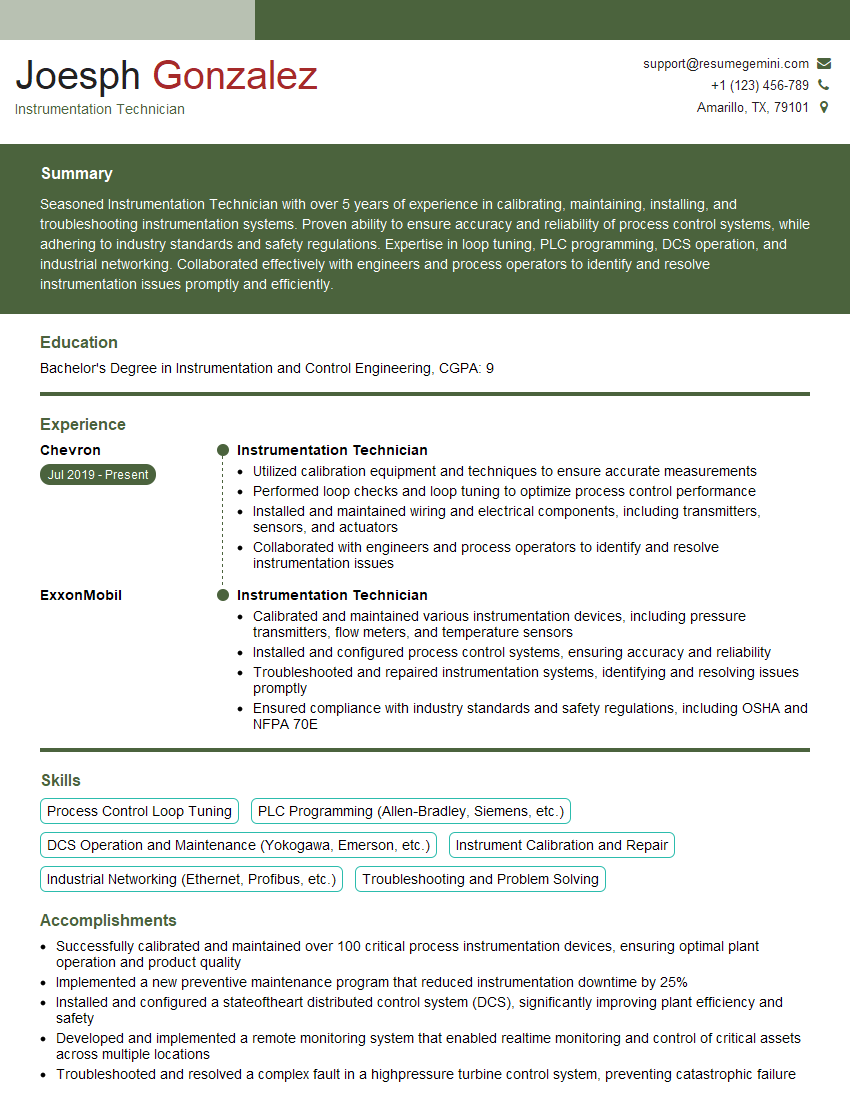
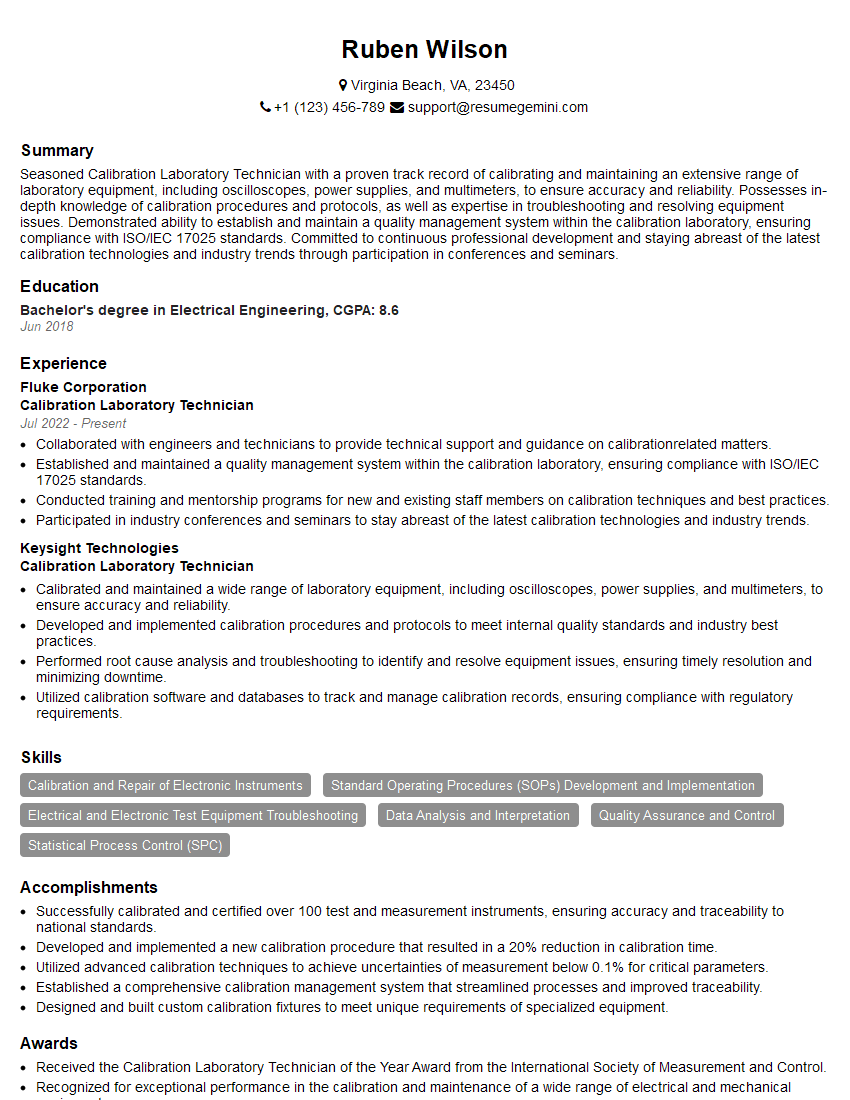
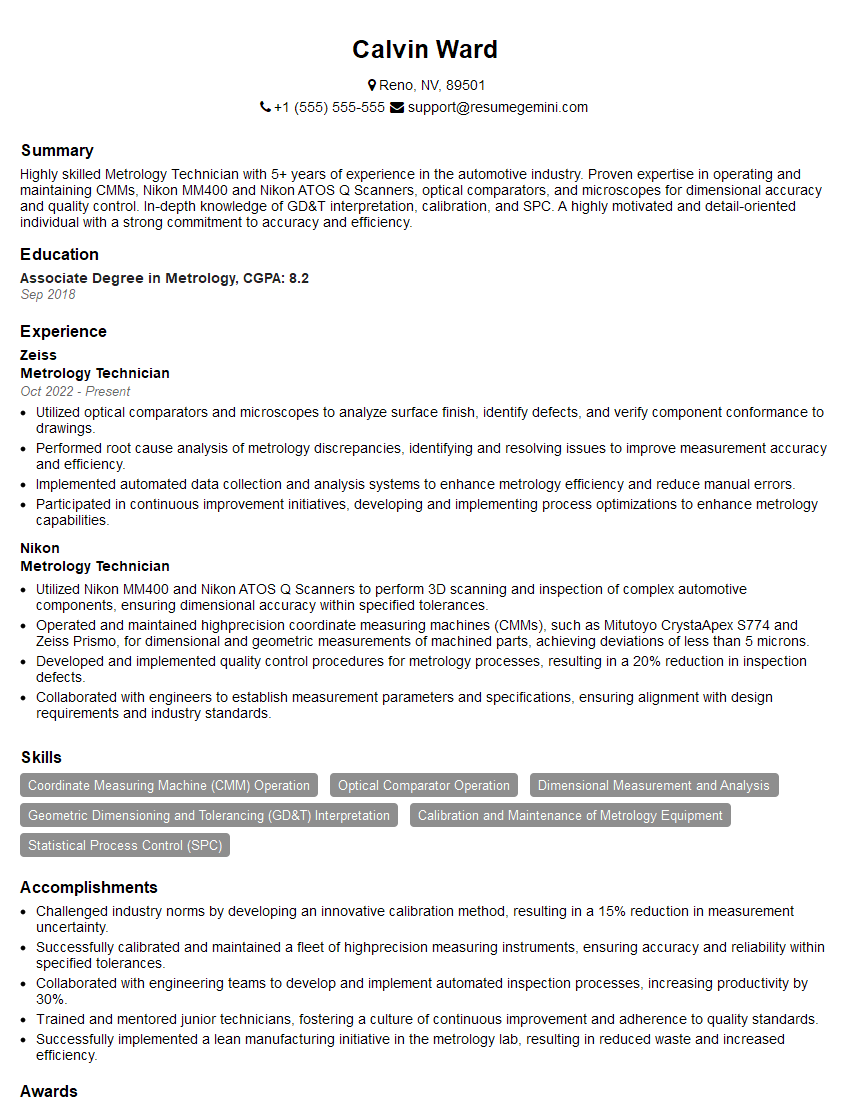
Mastering Field Calibration and Testing opens doors to exciting career opportunities with excellent growth potential in diverse industries. A strong foundation in these skills demonstrates your technical expertise and problem-solving capabilities, making you a highly valuable asset to any team. To maximize your chances of landing your dream role, invest time in crafting an ATS-friendly resume that effectively showcases your qualifications. ResumeGemini is a trusted resource that can help you build a professional and impactful resume. They provide examples of resumes tailored to Field Calibration and Testing to guide you through the process. Take advantage of these resources to present your skills and experience in the best possible light.
Explore more articles
Users Rating of Our Blogs
Share Your Experience
We value your feedback! Please rate our content and share your thoughts (optional).
What Readers Say About Our Blog
Hi I am a troller at The aquatic interview center and I suddenly went so fast in Roblox and it was gone when I reset.
Hi,
Business owners spend hours every week worrying about their website—or avoiding it because it feels overwhelming.
We’d like to take that off your plate:
$69/month. Everything handled.
Our team will:
Design a custom website—or completely overhaul your current one
Take care of hosting as an option
Handle edits and improvements—up to 60 minutes of work included every month
No setup fees, no annual commitments. Just a site that makes a strong first impression.
Find out if it’s right for you:
https://websolutionsgenius.com/awardwinningwebsites
Hello,
we currently offer a complimentary backlink and URL indexing test for search engine optimization professionals.
You can get complimentary indexing credits to test how link discovery works in practice.
No credit card is required and there is no recurring fee.
You can find details here:
https://wikipedia-backlinks.com/indexing/
Regards
NICE RESPONSE TO Q & A
hi
The aim of this message is regarding an unclaimed deposit of a deceased nationale that bears the same name as you. You are not relate to him as there are millions of people answering the names across around the world. But i will use my position to influence the release of the deposit to you for our mutual benefit.
Respond for full details and how to claim the deposit. This is 100% risk free. Send hello to my email id: [email protected]
Luka Chachibaialuka
Hey interviewgemini.com, just wanted to follow up on my last email.
We just launched Call the Monster, an parenting app that lets you summon friendly ‘monsters’ kids actually listen to.
We’re also running a giveaway for everyone who downloads the app. Since it’s brand new, there aren’t many users yet, which means you’ve got a much better chance of winning some great prizes.
You can check it out here: https://bit.ly/callamonsterapp
Or follow us on Instagram: https://www.instagram.com/callamonsterapp
Thanks,
Ryan
CEO – Call the Monster App
Hey interviewgemini.com, I saw your website and love your approach.
I just want this to look like spam email, but want to share something important to you. We just launched Call the Monster, a parenting app that lets you summon friendly ‘monsters’ kids actually listen to.
Parents are loving it for calming chaos before bedtime. Thought you might want to try it: https://bit.ly/callamonsterapp or just follow our fun monster lore on Instagram: https://www.instagram.com/callamonsterapp
Thanks,
Ryan
CEO – Call A Monster APP
To the interviewgemini.com Owner.
Dear interviewgemini.com Webmaster!
Hi interviewgemini.com Webmaster!
Dear interviewgemini.com Webmaster!
excellent
Hello,
We found issues with your domain’s email setup that may be sending your messages to spam or blocking them completely. InboxShield Mini shows you how to fix it in minutes — no tech skills required.
Scan your domain now for details: https://inboxshield-mini.com/
— Adam @ InboxShield Mini
Reply STOP to unsubscribe
Hi, are you owner of interviewgemini.com? What if I told you I could help you find extra time in your schedule, reconnect with leads you didn’t even realize you missed, and bring in more “I want to work with you” conversations, without increasing your ad spend or hiring a full-time employee?
All with a flexible, budget-friendly service that could easily pay for itself. Sounds good?
Would it be nice to jump on a quick 10-minute call so I can show you exactly how we make this work?
Best,
Hapei
Marketing Director
Hey, I know you’re the owner of interviewgemini.com. I’ll be quick.
Fundraising for your business is tough and time-consuming. We make it easier by guaranteeing two private investor meetings each month, for six months. No demos, no pitch events – just direct introductions to active investors matched to your startup.
If youR17;re raising, this could help you build real momentum. Want me to send more info?
Hi, I represent an SEO company that specialises in getting you AI citations and higher rankings on Google. I’d like to offer you a 100% free SEO audit for your website. Would you be interested?
Hi, I represent an SEO company that specialises in getting you AI citations and higher rankings on Google. I’d like to offer you a 100% free SEO audit for your website. Would you be interested?
good