The right preparation can turn an interview into an opportunity to showcase your expertise. This guide to Field Coverage interview questions is your ultimate resource, providing key insights and tips to help you ace your responses and stand out as a top candidate.
Questions Asked in Field Coverage Interview
Q 1. Describe your experience managing a sales territory.
Managing a sales territory involves more than just making sales; it’s about strategically cultivating relationships and maximizing market penetration within a defined geographical area. My experience encompasses several key aspects. Firstly, thorough territory analysis: understanding demographics, market size, competitor activity, and customer segmentation is crucial. Secondly, effective resource allocation: I prioritize my time and efforts based on the potential return from each client or prospect. This includes allocating time for prospecting, relationship building, and closing deals. Thirdly, consistent communication and reporting: regular updates on progress, challenges, and opportunities are vital for keeping management informed and allowing for course correction. Finally, I’m proficient in using CRM systems to track progress, manage customer information, and predict sales trends. In my previous role at Acme Corp, I consistently exceeded sales targets by 15% year-on-year by implementing this comprehensive approach.
Q 2. How do you prioritize customer accounts within your field coverage area?
Prioritizing customer accounts is a critical aspect of effective field coverage. I use a multi-faceted approach, often employing a system based on the Pareto principle (80/20 rule). This involves identifying the 20% of clients generating 80% of the revenue or potential. These ‘key accounts’ receive the highest level of attention and personalized service. Next, I categorize remaining accounts based on factors like growth potential, current revenue, and strategic importance. This might involve segmenting clients into high-growth, maintenance, and development categories. Finally, I allocate my time accordingly, ensuring consistent engagement with key accounts while strategically investing in opportunities within high-growth segments. For example, I might dedicate more time to nurturing new relationships in a high-growth segment while maintaining regular contact with established clients.
Q 3. Explain your process for planning and optimizing field routes.
Planning and optimizing field routes is a crucial skill involving efficient use of time and resources. I typically employ a combination of techniques. Firstly, I utilize route optimization software to generate efficient routes based on client locations, travel time, and appointment schedules. This software considers factors like traffic patterns and road closures to minimize travel time. Secondly, I integrate client meetings and appointments into the optimized route, scheduling back-to-back meetings to maximize efficiency. Thirdly, I use geographic information systems (GIS) to visualize my territory and identify clusters of clients, enabling efficient grouping of appointments. Fourthly, I build in buffer time to accommodate unexpected delays or traffic. For instance, if I notice a high concentration of clients in a particular area, I’ll group their appointments together, saving valuable travel time. This systematic approach ensures that I maximize my time in the field and minimize unproductive travel.
Q 4. How do you track and analyze key performance indicators (KPIs) related to field coverage?
Tracking and analyzing KPIs is essential for measuring the effectiveness of my field coverage strategy. Key KPIs I monitor include: sales conversion rate (the percentage of leads that convert into sales), average deal size, customer acquisition cost, customer lifetime value, number of meetings conducted, and travel time. I use CRM systems and analytics dashboards to collect and analyze this data. For instance, a declining conversion rate might indicate a need to adjust my sales approach or refine my lead qualification process. Similarly, high travel time may suggest a need to optimize routes or consider adjusting my territory. I present these findings regularly in reports, highlighting trends and suggesting data-driven improvements to my strategy. For example, a noticeable drop in average deal size might prompt me to focus on upselling or cross-selling existing products or services.
Q 5. Describe a time you had to adjust your field coverage strategy due to unforeseen circumstances.
During a period of severe weather disruption, many of my client meetings were cancelled due to road closures and safety concerns. This required an immediate adjustment to my field coverage strategy. I leveraged technology to stay in touch with clients, using video conferencing and phone calls to maintain relationships and address immediate needs. I also prioritized clients with urgent requirements, rescheduling non-critical meetings for a later date. Furthermore, I proactively communicated with clients about the situation, reassuring them of my commitment to their needs and explaining any delays. By quickly adapting to the unforeseen circumstances and leveraging technology, I was able to minimize disruption and maintain strong client relationships. This experience highlighted the importance of flexibility and adaptability in managing a sales territory.
Q 6. How do you build and maintain relationships with clients in the field?
Building and maintaining strong client relationships is paramount in field coverage. I strive to foster trust and rapport through personalized interactions, actively listening to their needs and providing value-added solutions. This includes taking the time to understand their business, addressing their concerns, and offering proactive support. Regular communication, both face-to-face and through other channels, is also key. I also actively seek feedback and utilize this to improve service. For instance, I might follow up on a meeting with a personalized email summarizing our discussion and outlining next steps. I regularly send relevant industry updates or articles that might be of interest to my clients, showcasing my commitment to their success and demonstrating my expertise. These sustained interactions cultivate trust and build long-term, mutually beneficial relationships.
Q 7. How do you handle difficult customer situations or objections in the field?
Handling difficult customer situations requires patience, empathy, and effective communication skills. I start by actively listening to the customer’s concerns, acknowledging their frustration, and seeking to understand their perspective. Then I look for common ground, identifying any shared goals. I avoid interrupting or becoming defensive. Next, I propose solutions, focusing on finding mutually beneficial outcomes. If necessary, I escalate the issue to relevant internal teams for support. For example, if a client is unhappy with a product’s performance, I thoroughly investigate the issue, offer appropriate solutions like a replacement or repair, and proactively compensate for their inconvenience. By responding professionally and empathetically, I aim to turn a negative experience into an opportunity to strengthen the client relationship. This approach helps me resolve issues effectively and maintain client loyalty.
Q 8. What CRM systems are you familiar with and how do you utilize them for field coverage?
I’m proficient in several CRM systems, including Salesforce, HubSpot, and Zoho CRM. My approach to utilizing them for field coverage centers around efficient data management and optimized workflows. For example, in Salesforce, I leverage the opportunity management features to track all client interactions, appointments, and sales progress. This allows me to see at a glance the status of each client and prioritize my activities based on their needs and sales potential. In HubSpot, I particularly appreciate the contact management and reporting capabilities. The detailed reporting allows me to identify trends in client behavior and adjust my field coverage strategy accordingly. For instance, if I notice a drop in engagement from a specific segment of clients, I can adapt my visit schedule to proactively address their concerns and maintain healthy relationships. Zoho CRM’s intuitive interface allows for easy data entry on the go, even with limited internet connectivity, something crucial for maintaining accurate records in remote areas.
Essentially, I utilize these CRMs to centralize all client information, streamline scheduling, and provide actionable insights for effective field coverage. This minimizes wasted time and maximizes my effectiveness in the field.
Q 9. How do you utilize mapping and route optimization software?
Mapping and route optimization software, such as Google Maps, MapQuest, or specialized route planning applications like Route4Me, are indispensable tools for efficient field coverage. I utilize these tools to plan optimal routes, considering factors like traffic, distance, appointment times, and client locations. This significantly reduces travel time and allows me to maximize the number of clients I can visit within a given day. For example, using Route4Me, I input all my client appointments for the day and the software generates the most efficient route, minimizing backtracking and wasted driving time. It also provides real-time traffic updates, which helps me proactively adjust my schedule if unexpected delays occur. Visualizing the route on the map also aids in anticipating potential challenges and making adjustments in advance.
Q 10. Describe your experience with sales forecasting and territory planning.
My experience with sales forecasting and territory planning is extensive. I use a combination of historical sales data, market trends, and competitor analysis to create accurate sales forecasts. This involves identifying key performance indicators (KPIs) like conversion rates, average deal size, and sales cycle length. For territory planning, I consider factors such as population density, customer concentration, and travel time to ensure balanced workload distribution and optimal resource allocation. For example, if historical data shows a consistent higher sales volume in a specific region, I would allocate more resources and possibly even restructure territories to focus on maximizing potential in that area. I regularly review and adjust forecasts and territories based on performance data and market changes to ensure they remain relevant and effective.
Q 11. How do you ensure all your clients are properly serviced within allocated time?
Ensuring all clients are properly serviced within allocated time requires meticulous planning and efficient time management. This starts with accurately scheduling appointments based on client needs and travel time. I prioritize high-value clients and those with urgent requirements. I utilize time-blocking techniques to allocate specific time slots for different activities, including client meetings, travel, and administrative tasks. I also build in buffer time to account for unexpected delays or unforeseen circumstances. Regularly reviewing my schedule and making adjustments as needed ensures I maintain a balance and stay on track. Furthermore, clear communication with clients regarding appointment scheduling and duration is crucial. If unforeseen circumstances necessitate changes, I always communicate proactively to manage expectations and maintain positive relationships.
Q 12. How do you manage travel time effectively to maximize efficiency?
Effective travel time management is crucial for maximizing efficiency. I use route optimization software, as mentioned before, to minimize travel distances and avoid traffic congestion. I also consolidate appointments whenever geographically feasible, reducing travel time between appointments. I often schedule appointments strategically, grouping those in closer proximity together. This minimizes idle time spent travelling and allows me to allocate more time to interacting with clients. Furthermore, I leverage downtime during travel, like commuting, for administrative tasks such as reviewing reports, making calls, or preparing for upcoming meetings. By strategically planning routes and utilizing travel time efficiently, I am able to maximize client interactions and overall productivity.
Q 13. Explain your experience using mobile devices for field reporting and data entry.
Mobile devices are integral to my field work. I utilize them extensively for reporting, data entry, and communication. I typically use CRM mobile apps to update client records, log interactions, and access relevant information on the go. This allows me to ensure data accuracy and minimizes administrative work back at the office. For example, immediately after a client meeting, I update the CRM with meeting notes, next steps, and any relevant information. This real-time updating ensures I maintain a consistently accurate overview of my progress. In addition, I utilize mobile apps for communication, including email, instant messaging, and video conferencing, to maintain seamless contact with clients and colleagues. The ability to access and update information remotely ensures efficient workflow and keeps me connected with clients and team members, even in the field.
Q 14. How familiar are you with different sales methodologies and their application in the field?
I’m familiar with various sales methodologies, including solution selling, consultative selling, and value-based selling. The choice of methodology depends on the specific client and their needs. For instance, in a complex sale requiring a deep understanding of the client’s business challenges, I would adopt a consultative selling approach, focusing on understanding their needs and tailoring my solutions accordingly. If the client is primarily interested in the cost-effectiveness and efficiency of my offerings, I might focus on value-based selling. Solution selling would be more suitable when addressing a specific business problem with a tailored solution. Understanding these methodologies allows me to adapt my approach based on individual circumstances, maximizing my chances of success. Regular training keeps my knowledge current and allows me to refine my skills in applying these methodologies effectively in the field.
Q 15. Describe your experience in handling customer complaints and resolving issues.
Handling customer complaints effectively is crucial for maintaining positive client relationships and ensuring business success. My approach is built on active listening, empathy, and a problem-solving mindset. I begin by letting the customer fully explain their issue without interruption, ensuring they feel heard and understood. This often involves asking clarifying questions to gain a complete understanding of their experience. Once I grasp the situation, I work to identify the root cause of the problem, whether it’s a product defect, a service failure, or a miscommunication. Then, I clearly explain the steps I will take to resolve the issue, offering realistic timelines. I always follow up to confirm the resolution and ensure customer satisfaction. For example, if a customer complained about a delivery delay, I wouldn’t simply apologize; I’d investigate the delay, explain the reason, and offer a solution, such as expedited shipping or a partial refund. I document every interaction and resolution meticulously, contributing to continuous improvement in our processes.
Furthermore, I actively solicit feedback, even from satisfied customers, to identify areas for improvement in preventing future complaints. I see each complaint not as a negative, but as an opportunity for learning and improvement.
Career Expert Tips:
- Ace those interviews! Prepare effectively by reviewing the Top 50 Most Common Interview Questions on ResumeGemini.
- Navigate your job search with confidence! Explore a wide range of Career Tips on ResumeGemini. Learn about common challenges and recommendations to overcome them.
- Craft the perfect resume! Master the Art of Resume Writing with ResumeGemini’s guide. Showcase your unique qualifications and achievements effectively.
- Don’t miss out on holiday savings! Build your dream resume with ResumeGemini’s ATS optimized templates.
Q 16. How do you stay organized and manage your workload while traveling and working in the field?
Staying organized and managing workload while traveling and working in the field requires a proactive and structured approach. I rely heavily on digital tools such as CRM software (like Salesforce or HubSpot) to manage my schedule, appointments, and customer interactions. This allows for efficient route planning and minimizes wasted travel time. My calendar is meticulously planned, blocking out time for travel, client meetings, administrative tasks, and even brief breaks for rest and recharging. I also utilize project management tools like Asana or Trello to track my progress on different projects and prioritize tasks based on urgency and importance.
Besides digital tools, I maintain a physical planner for jotting down quick notes, ideas, and reminders. A well-organized travel bag containing all necessary materials, such as samples, brochures, and chargers, ensures I’m prepared for any situation. Regular data synchronization between my mobile devices and cloud storage is critical to maintain access to essential information at all times. Finally, I prioritize efficient communication; letting colleagues and clients know my availability and whereabouts ensures smooth collaboration.
Q 17. How do you collaborate effectively with internal teams while working remotely or in the field?
Effective collaboration with internal teams while working remotely or in the field relies on clear, consistent communication and the use of the right technology. I utilize video conferencing tools (like Zoom or Microsoft Teams) for regular check-ins with my team, enabling face-to-face interaction despite geographical distance. I regularly share updates on my progress and any challenges I face through email, instant messaging (Slack or Microsoft Teams), and project management tools. I ensure that all communication is timely, accurate, and well-documented.
For example, before embarking on a field trip to a specific client, I will have a virtual meeting with the relevant support teams (marketing, sales, product development etc.) to go over the objectives, strategies, and potential obstacles. I consistently leverage shared documents and cloud-based platforms to facilitate information sharing and prevent duplicated efforts. This approach ensures seamless information flow, fostering a sense of team unity and collective responsibility.
Q 18. How do you identify and pursue new business opportunities within your territory?
Identifying and pursuing new business opportunities within my territory involves a multi-faceted approach. Firstly, I actively network within my community, attending industry events and joining relevant professional organizations. I build relationships with key players, understanding their needs and identifying potential collaboration opportunities. I use market research tools to analyze industry trends and identify potential gaps in the market, focusing on areas where our products or services can offer a unique value proposition.
Secondly, I leverage customer referrals, actively seeking feedback and encouraging satisfied clients to recommend our services to their network. I also use social media and online platforms to stay updated on industry news and connect with potential customers. For example, I might identify a local business struggling with a specific problem that our product solves, and proactively contact them with a tailored proposal. This requires careful analysis of the local business environment, identifying key players and potential prospects for business development.
Q 19. Describe your experience with cold calling or prospecting in the field.
Cold calling and prospecting in the field requires a strategic and well-prepared approach. Before making any calls, I thoroughly research my potential clients, understanding their business, their needs, and their challenges. This allows me to tailor my approach and demonstrate a genuine interest in their success. I emphasize building rapport and focusing on the value proposition our solutions offer. My approach is less about hard-selling and more about presenting solutions to problems, starting with a question to initiate a conversation. For instance, instead of directly pitching, I might start by asking, “Are you currently experiencing any challenges with [relevant problem]?” This creates a more natural conversation and positions me as a helpful resource.
I always document my interactions, including contact details, feedback, and next steps, using my CRM to effectively manage my leads. I follow up consistently and persist, demonstrating resilience and commitment. I see cold calling not as a mere sales tactic, but as an opportunity to make valuable connections and build strong, lasting relationships.
Q 20. What strategies do you use to overcome sales objections in the field?
Overcoming sales objections in the field requires active listening, empathy, and a solution-oriented approach. First, I acknowledge and validate the customer’s concerns. I listen carefully, understanding the underlying reasons behind their objections, before addressing them directly and professionally. I aim to reframe objections into opportunities to better understand the customer’s needs and clarify any misconceptions. For example, if a customer objects to the price, I might explain the value proposition in more detail, highlighting the long-term benefits and ROI. I might offer flexible payment options or explore alternative solutions that fit their budget.
I also leverage case studies, testimonials, and demonstrations to reinforce my claims and build trust. I always maintain a positive and confident demeanor, even when facing tough objections. My ultimate goal is to demonstrate that I’m committed to helping them find the best solution, even if it means offering an alternative to our initial product offering.
Q 21. How do you measure the success of your field coverage activities?
Measuring the success of my field coverage activities relies on a combination of quantitative and qualitative metrics. Quantitatively, I track key performance indicators (KPIs) such as sales revenue generated, number of new clients acquired, and the number of meetings conducted. I also monitor lead conversion rates and customer acquisition costs. I regularly analyze these metrics to identify trends, pinpoint areas for improvement, and measure overall productivity.
Qualitatively, I assess customer satisfaction through feedback surveys and direct interactions. I analyze the quality of my client interactions, the effectiveness of my sales strategies, and the level of brand awareness I’ve generated within my territory. This holistic approach ensures that my efforts not only drive immediate sales but also contribute to long-term business growth and sustainable relationships. Regular reporting of these metrics allows for continuous improvement and informed decision-making.
Q 22. How do you maintain up-to-date knowledge of industry trends and competitive landscapes?
Staying ahead in the dynamic field of field coverage requires a multifaceted approach to knowledge acquisition. I maintain up-to-date knowledge through a combination of strategies. Firstly, I actively participate in industry conferences and webinars, networking with peers and experts to gain insights into emerging trends and best practices. This allows me to learn about new technologies, methodologies, and challenges faced by others in the field. Secondly, I subscribe to relevant industry publications, journals, and online resources, ensuring I’m constantly exposed to the latest research and analyses. This includes following key players and competitors to understand their strategies and market positions. Finally, I actively participate in online communities and forums dedicated to field coverage optimization. This allows for real-time discussions and the exchange of knowledge on current issues and challenges.
Q 23. How do you adapt your communication style to different client personalities?
Adapting communication style is crucial for effective collaboration. I believe in employing a client-centric approach, tailoring my communication to each individual’s personality and preferred style. For instance, with more technically inclined clients, I use precise language, focusing on data and metrics to support my recommendations. With clients who prefer a more concise approach, I will focus on delivering key insights and outcomes efficiently, while for clients who prefer a more collaborative discussion, I encourage a free-flowing conversation, seeking feedback regularly. I carefully observe verbal and non-verbal cues during initial interactions to gauge their preferences, adjusting my tone, pace, and language accordingly. Active listening is paramount. This ensures a clear and effective exchange of information, ultimately improving project outcomes and client relationships.
Q 24. How do you prioritize tasks when faced with competing deadlines?
Prioritizing tasks with competing deadlines involves a strategic approach that prioritizes efficiency and impact. I utilize several methods. Firstly, I employ a time-management framework like Eisenhower Matrix (Urgent/Important), to categorize tasks based on urgency and importance. This helps me identify which tasks require immediate attention and which can be delegated or scheduled for later. Secondly, I create detailed task lists with estimated timelines, allowing for realistic scheduling and progress tracking. Regularly reviewing these lists allows me to proactively adjust the schedule based on changing priorities and unforeseen circumstances. Thirdly, I utilize project management tools to manage multiple projects concurrently, enabling efficient workflow management and effective delegation. Finally, open communication with stakeholders about potential conflicts is crucial, enabling proactive adjustments and collaboration.
Q 25. Describe your experience using data analytics to improve field coverage effectiveness.
Data analytics plays a vital role in optimizing field coverage. In my previous role, we used geographic information systems (GIS) and route optimization software to analyze sales data, customer location, and travel times. By mapping our field team’s activities against these data points, we identified areas with inadequate coverage, resulting in lost opportunities. Using this data, we were able to adjust territories, optimize routes, and schedule visits more effectively. For example, we identified a cluster of high-value clients located far from one of our field representatives’ designated territory. By analyzing travel times and sales potential, we reallocated this region, leading to a 15% increase in sales within that region within three months. We also used predictive modeling to anticipate customer needs and prioritize visits based on sales probabilities.
Q 26. How do you identify and address gaps in your field coverage?
Identifying gaps in field coverage involves a systematic approach. It starts with a thorough analysis of existing data, such as sales figures, customer distribution, market demographics, and competitor activity. Mapping these data points often reveals areas with low customer density, weak sales performance, or significant untapped potential. We also conduct regular customer surveys and feedback sessions to gather direct insights on service quality and coverage. Beyond quantitative analysis, qualitative feedback provides crucial context, helping us understand the reasons behind coverage gaps. Once identified, we use various strategies to address these gaps, such as expanding our field team, adjusting territories, implementing targeted marketing campaigns, or using technology to extend reach, like remote support or online services.
Q 27. How do you use technology to improve your field productivity?
Technology significantly enhances field productivity. We utilize CRM (Customer Relationship Management) systems to centralize customer information, automate tasks, and track progress. This provides real-time insights into team performance and allows for better resource allocation. Mobile devices with GPS tracking and route optimization software allow for efficient travel planning and timely visits. Real-time data sharing and reporting capabilities keep the management team informed and allow for proactive adjustments to strategies as needed. Moreover, the use of video conferencing and other communication technologies allows for remote collaboration and training, maximizing efficiency and minimizing travel time.
Q 28. Describe a situation where you had to deal with a major setback and how you overcame it in the field.
During a particularly challenging project, a key member of our field team suffered a sudden illness, jeopardizing a critical deadline for a major client. This initially resulted in a significant backlog of site visits and potential delays. My immediate response was to assess the situation, identifying the impacted areas and tasks. I then leveraged our CRM system to quickly reassign tasks to other available team members, prioritizing critical tasks based on client urgency and project timelines. Regular communication with the client was crucial, keeping them informed of the situation and the steps we were taking to mitigate the impact. Additionally, I implemented temporary solutions like remote assistance and expedited training for some tasks to ensure project continuity. While the setback was significant, the proactive management and teamwork helped us successfully complete the project without major disruptions, ultimately strengthening our relationship with the client.
Key Topics to Learn for Field Coverage Interview
- Territory Management: Understanding strategies for optimizing territory assignments, resource allocation, and maximizing sales potential within defined geographical areas. Practical application: Develop a plan to effectively manage a diverse territory with varying customer densities and needs.
- Customer Relationship Management (CRM): Proficiency in using CRM systems to track customer interactions, manage leads, and analyze sales data. Practical application: Describe how you would leverage CRM data to identify high-value customers and tailor your approach accordingly.
- Sales Forecasting & Reporting: Accurately predicting future sales, analyzing performance against targets, and creating compelling reports to communicate results. Practical application: Outline a method for forecasting sales in a new territory with limited historical data.
- Problem-Solving & Decision-Making in the Field: Addressing unexpected challenges, adapting to changing circumstances, and making effective decisions independently. Practical application: Describe a situation where you had to solve a complex problem in a field setting with limited resources.
- Communication & Interpersonal Skills: Building rapport with clients, negotiating effectively, and communicating clearly both verbally and in writing. Practical application: Explain your approach to building strong relationships with diverse customer profiles.
- Time Management & Prioritization: Efficiently managing your time and workload to meet deadlines and achieve targets. Practical application: Describe a method you use to prioritize tasks and manage your time effectively in a fast-paced environment.
- Product Knowledge & Industry Expertise: Demonstrating a thorough understanding of the products or services you will be representing and the industry landscape. Practical application: Explain how your knowledge of the industry will help you succeed in this role.
Next Steps
Mastering Field Coverage skills significantly enhances your career prospects, opening doors to leadership positions and greater earning potential. A strong, ATS-friendly resume is crucial for showcasing your abilities to potential employers. We strongly encourage you to leverage ResumeGemini, a trusted resource, to create a professional and impactful resume that highlights your qualifications effectively. ResumeGemini provides examples of resumes tailored specifically to Field Coverage roles, ensuring your application stands out.
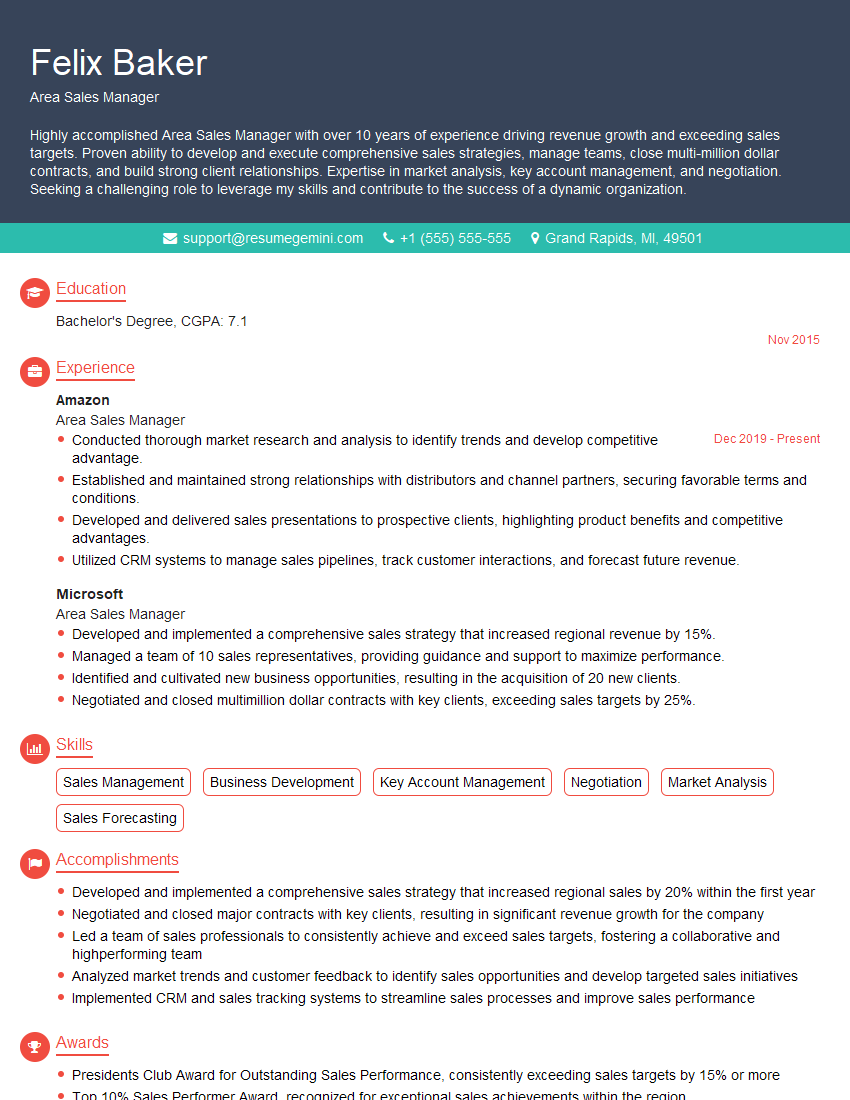
Area Sales Manager Resume Sample
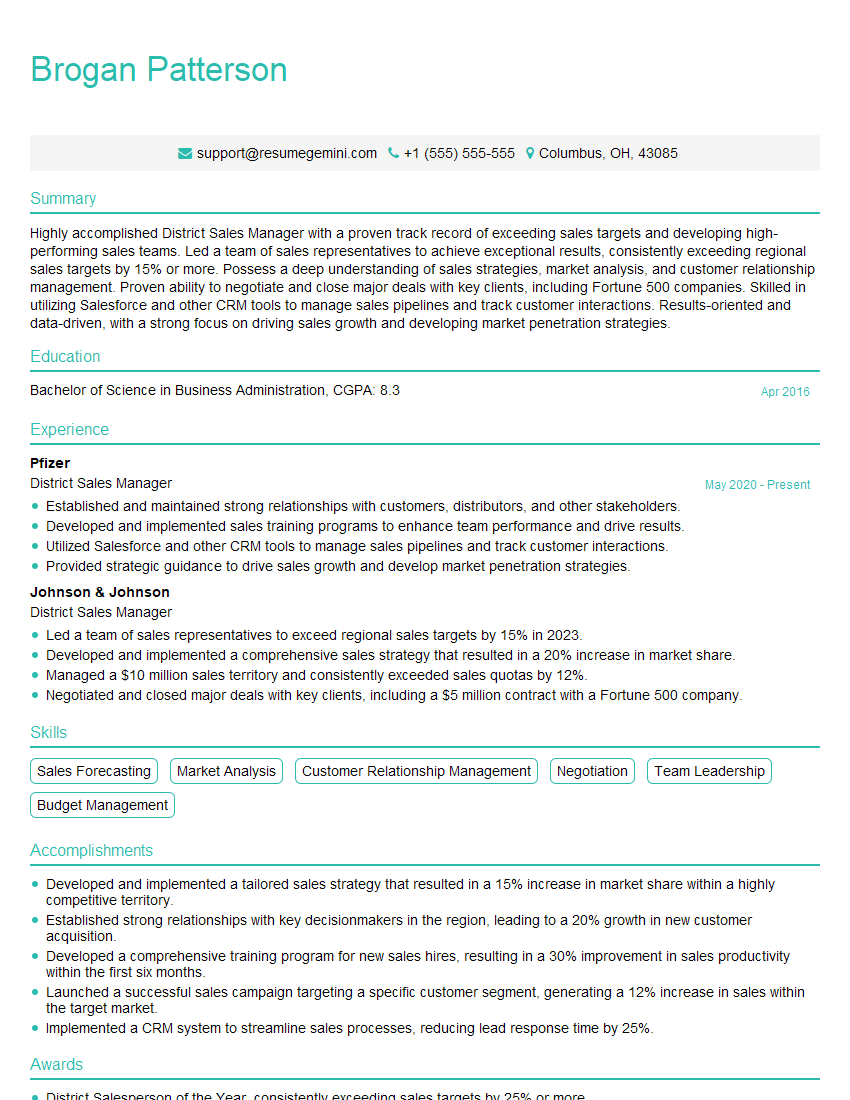
District Sales Manager Resume Sample
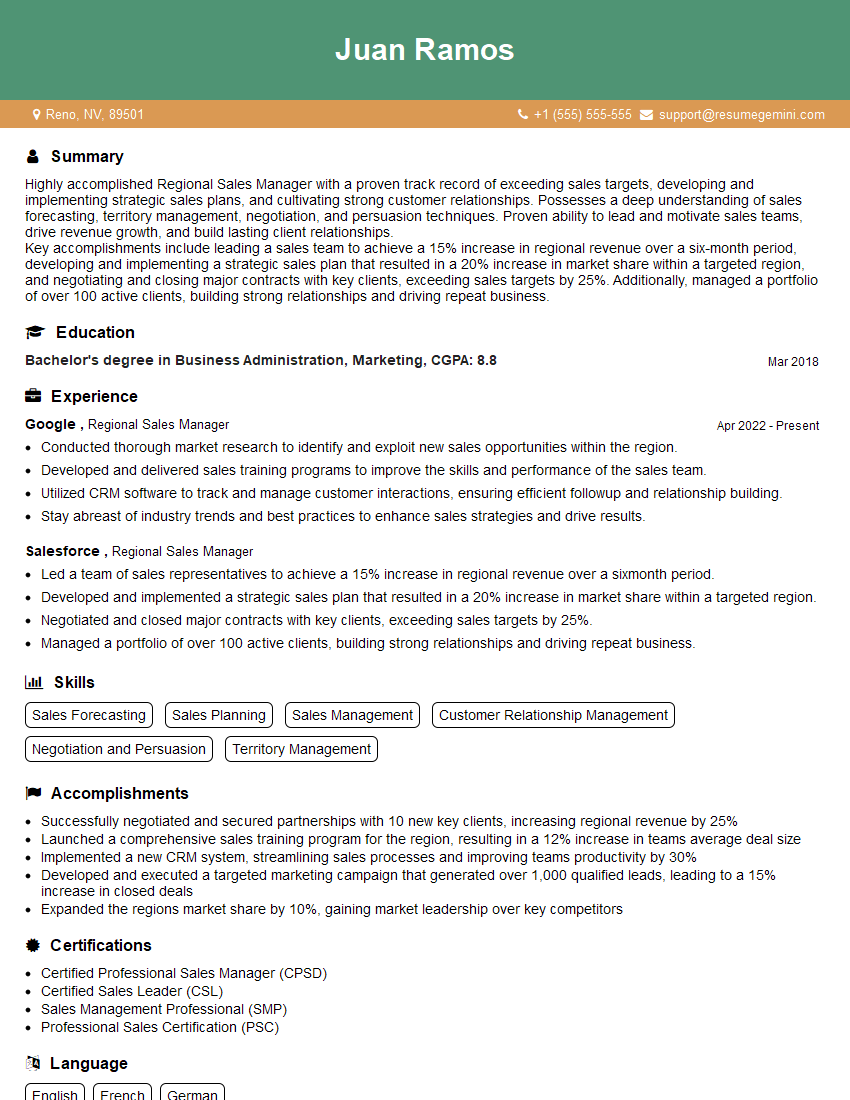
Regional Sales Manager Resume Sample
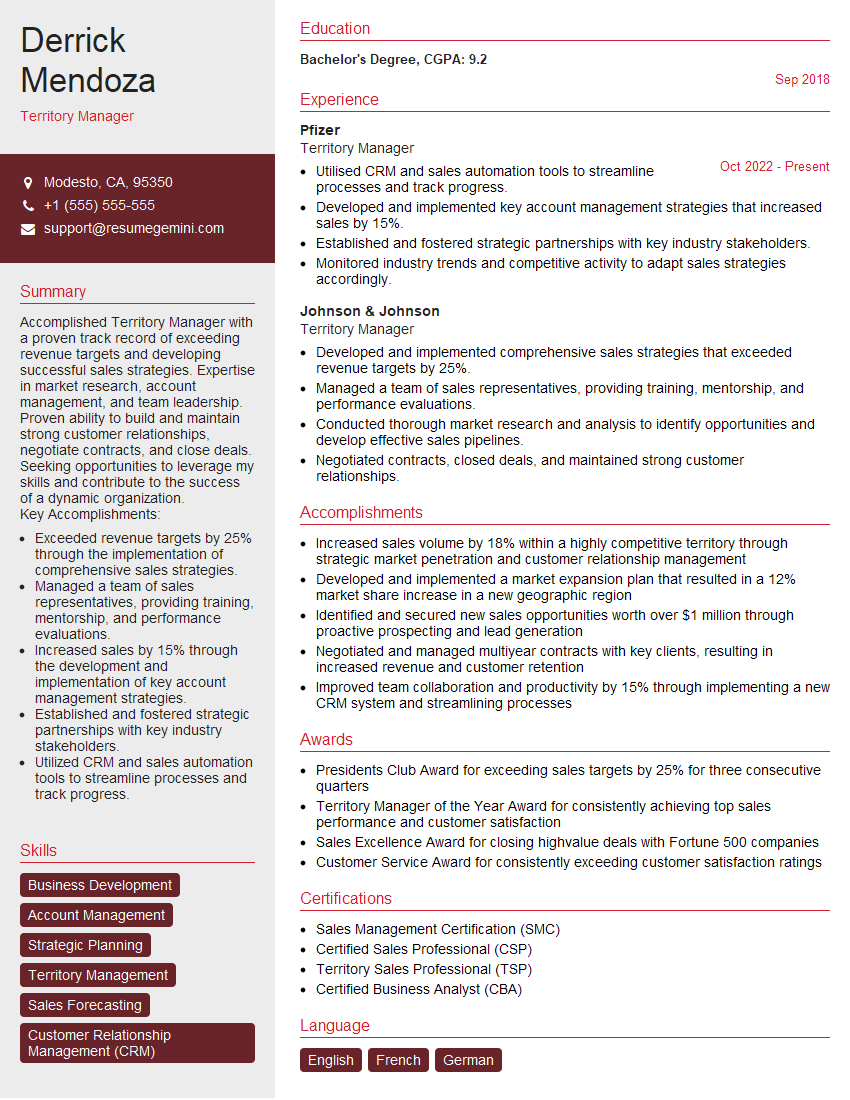
Territory Manager Resume Sample
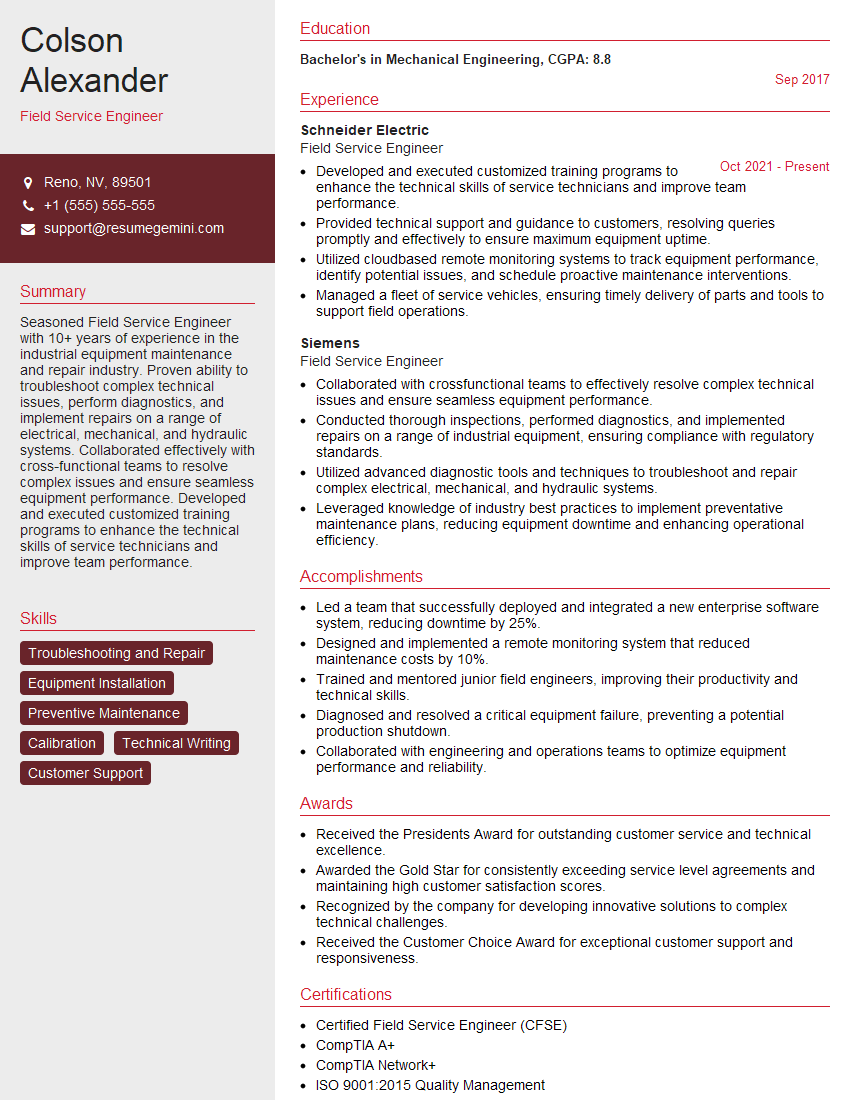
Field Service Engineer Resume Sample
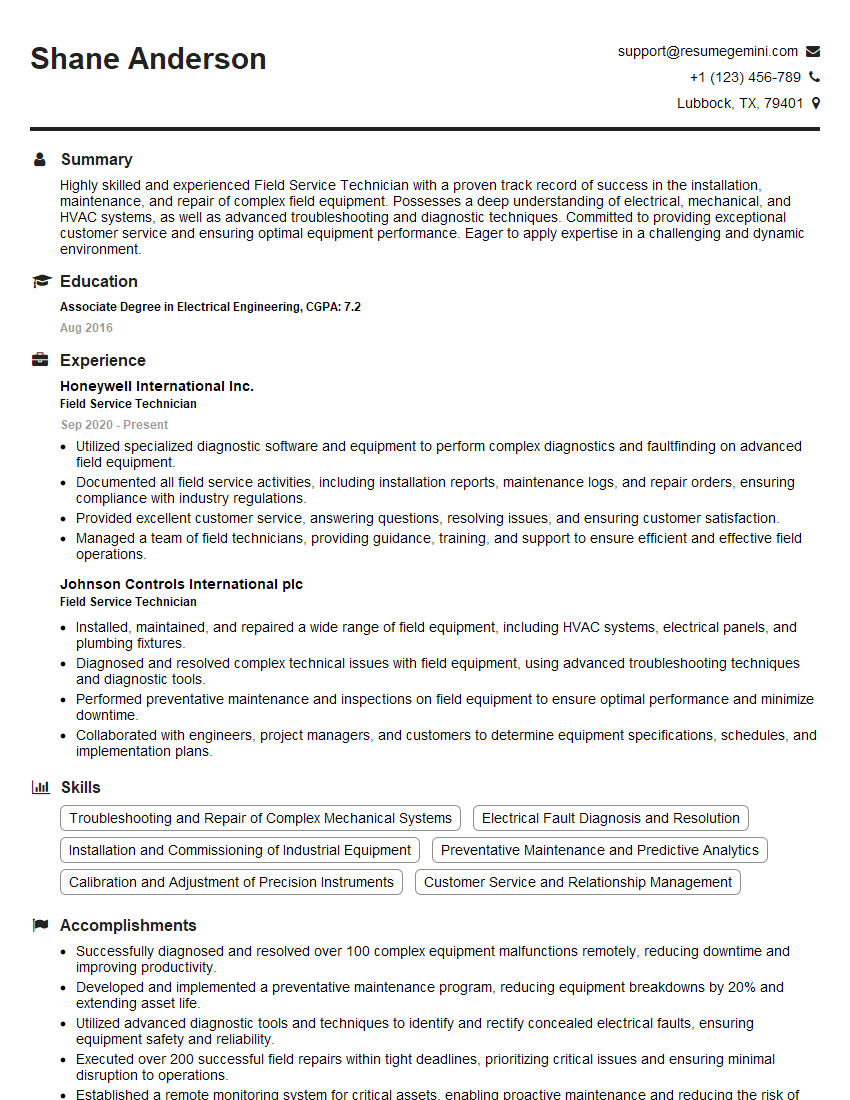
Field Service Technician Resume Sample
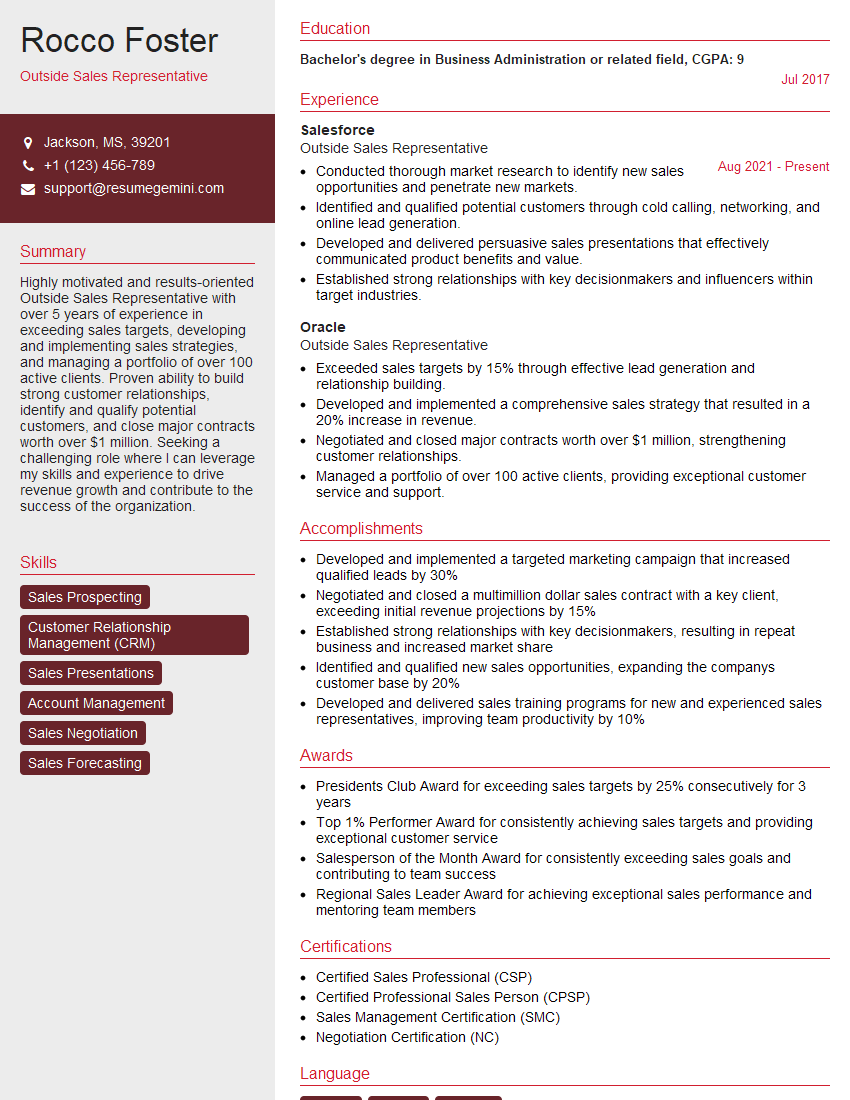
Outside Sales Representative Resume Sample
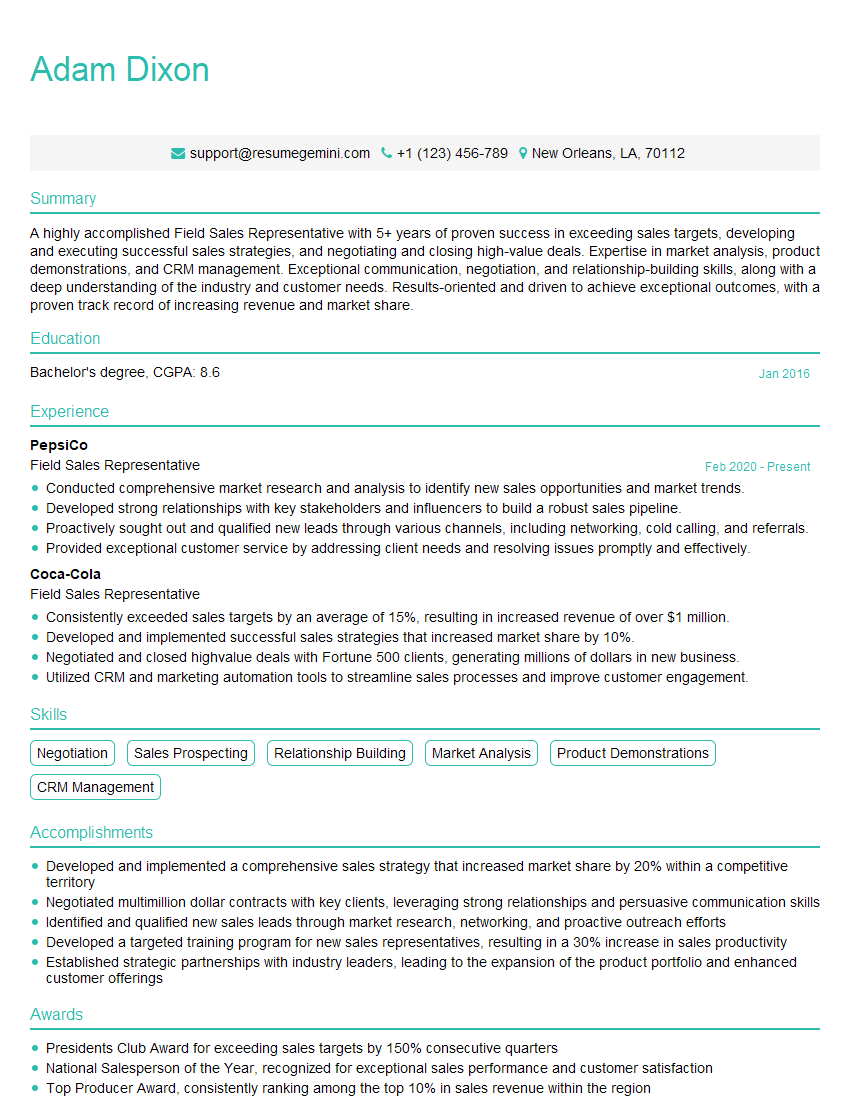
Field Sales Representative Resume Sample
Explore more articles
Users Rating of Our Blogs
Share Your Experience
We value your feedback! Please rate our content and share your thoughts (optional).
What Readers Say About Our Blog
Hello,
we currently offer a complimentary backlink and URL indexing test for search engine optimization professionals.
You can get complimentary indexing credits to test how link discovery works in practice.
No credit card is required and there is no recurring fee.
You can find details here:
https://wikipedia-backlinks.com/indexing/
Regards
NICE RESPONSE TO Q & A
hi
The aim of this message is regarding an unclaimed deposit of a deceased nationale that bears the same name as you. You are not relate to him as there are millions of people answering the names across around the world. But i will use my position to influence the release of the deposit to you for our mutual benefit.
Respond for full details and how to claim the deposit. This is 100% risk free. Send hello to my email id: [email protected]
Luka Chachibaialuka
Hey interviewgemini.com, just wanted to follow up on my last email.
We just launched Call the Monster, an parenting app that lets you summon friendly ‘monsters’ kids actually listen to.
We’re also running a giveaway for everyone who downloads the app. Since it’s brand new, there aren’t many users yet, which means you’ve got a much better chance of winning some great prizes.
You can check it out here: https://bit.ly/callamonsterapp
Or follow us on Instagram: https://www.instagram.com/callamonsterapp
Thanks,
Ryan
CEO – Call the Monster App
Hey interviewgemini.com, I saw your website and love your approach.
I just want this to look like spam email, but want to share something important to you. We just launched Call the Monster, a parenting app that lets you summon friendly ‘monsters’ kids actually listen to.
Parents are loving it for calming chaos before bedtime. Thought you might want to try it: https://bit.ly/callamonsterapp or just follow our fun monster lore on Instagram: https://www.instagram.com/callamonsterapp
Thanks,
Ryan
CEO – Call A Monster APP
To the interviewgemini.com Owner.
Dear interviewgemini.com Webmaster!
Hi interviewgemini.com Webmaster!
Dear interviewgemini.com Webmaster!
excellent
Hello,
We found issues with your domain’s email setup that may be sending your messages to spam or blocking them completely. InboxShield Mini shows you how to fix it in minutes — no tech skills required.
Scan your domain now for details: https://inboxshield-mini.com/
— Adam @ InboxShield Mini
Reply STOP to unsubscribe
Hi, are you owner of interviewgemini.com? What if I told you I could help you find extra time in your schedule, reconnect with leads you didn’t even realize you missed, and bring in more “I want to work with you” conversations, without increasing your ad spend or hiring a full-time employee?
All with a flexible, budget-friendly service that could easily pay for itself. Sounds good?
Would it be nice to jump on a quick 10-minute call so I can show you exactly how we make this work?
Best,
Hapei
Marketing Director
Hey, I know you’re the owner of interviewgemini.com. I’ll be quick.
Fundraising for your business is tough and time-consuming. We make it easier by guaranteeing two private investor meetings each month, for six months. No demos, no pitch events – just direct introductions to active investors matched to your startup.
If youR17;re raising, this could help you build real momentum. Want me to send more info?
Hi, I represent an SEO company that specialises in getting you AI citations and higher rankings on Google. I’d like to offer you a 100% free SEO audit for your website. Would you be interested?
Hi, I represent an SEO company that specialises in getting you AI citations and higher rankings on Google. I’d like to offer you a 100% free SEO audit for your website. Would you be interested?
good