Feeling uncertain about what to expect in your upcoming interview? We’ve got you covered! This blog highlights the most important Field Testing interview questions and provides actionable advice to help you stand out as the ideal candidate. Let’s pave the way for your success.
Questions Asked in Field Testing Interview
Q 1. Describe your experience with different field testing methodologies.
My experience encompasses a wide range of field testing methodologies, tailored to the specific project needs. I’ve extensively used Alpha testing (early stage testing with a select group), Beta testing (testing with a larger, representative user base), Gamma testing (final testing before release), and Acceptance testing (verifying the product meets specified requirements). For example, in a recent project involving a new agricultural drone, we employed a phased approach. Alpha testing focused on functionality and controllability within a controlled environment. Beta testing involved deploying the drone on various farm sizes and terrains, gathering user feedback on usability and performance in real-world scenarios. Gamma testing involved simulating extreme weather conditions and potential failures, and Acceptance testing validated that the drone met pre-defined spraying accuracy and efficiency metrics.
Beyond these standard methodologies, I’m also proficient in A/B testing (comparing two versions to see which performs better), usability testing (evaluating user experience), and performance testing (assessing speed and stability). The choice of methodology depends on the product, its stage of development, and the specific objectives of the field test.
Q 2. How do you ensure accurate and reliable data collection during field tests?
Accurate and reliable data collection is paramount. We achieve this through a multi-pronged approach. Firstly, we meticulously plan the data collection process, defining clear objectives, identifying key performance indicators (KPIs), and creating detailed data collection instruments. This includes standardized forms, checklists, and data logging procedures. Secondly, we select appropriate and calibrated measurement instruments, ensuring their accuracy and reliability through regular calibration checks and maintenance.
Thirdly, we provide comprehensive training to our field testers on the proper use of equipment and the standardized data collection protocols. We emphasize the importance of meticulous record-keeping and consistent data entry. We employ rigorous quality control mechanisms, including data validation checks, cross-referencing, and outlier analysis. Finally, we use version control systems to track all data and metadata, ensuring data integrity and traceability. For instance, in a recent environmental monitoring project, we used GPS-tagged data loggers to ensure precise location data along with sensor readings, providing a robust audit trail.
Q 3. What are some common challenges you face during field testing, and how do you overcome them?
Field testing inevitably presents challenges. Unforeseen weather conditions can disrupt testing schedules, requiring flexibility and contingency planning. For example, a sudden downpour during a solar panel efficiency test would necessitate postponement and careful consideration of data collected prior to the event. Equipment malfunctions can also cause delays, highlighting the importance of backup equipment and comprehensive maintenance procedures. Furthermore, logistical challenges like accessing remote testing sites or coordinating multiple testers can be significant hurdles.
We mitigate these challenges through thorough planning, including backup plans for weather disruptions, regular equipment checks, and efficient logistical arrangements. We use robust communication systems and collaborative tools to keep the team informed and connected. In instances of equipment failure, we have established protocols for timely repairs or replacements to minimize downtime. Adaptability and problem-solving skills are crucial in addressing unforeseen issues during field tests.
Q 4. Explain your experience with test equipment calibration and maintenance.
Calibration and maintenance of test equipment are critical for data accuracy and reliability. We establish a comprehensive calibration schedule for all equipment, following manufacturer recommendations and relevant industry standards. We use certified calibration laboratories to ensure traceability and accuracy. Maintenance involves regular inspections, cleaning, and repairs as needed, using documented procedures to maintain equipment integrity. We maintain detailed logs of all calibration and maintenance activities, including dates, results, and technician signatures. This ensures full compliance with quality standards and enables tracing the history of each instrument.
For example, we routinely calibrate our precision scales used for measuring material quantities in a construction material testing project, verifying their accuracy against traceable standards before and after each testing session. Any deviations from established tolerances trigger immediate investigation and corrective actions, ensuring high-quality and reliable test results.
Q 5. How do you manage and analyze large datasets from field tests?
Managing and analyzing large datasets from field tests often involves specialized software and statistical techniques. We utilize data management software to organize, clean, and preprocess the raw data. This involves handling missing values, identifying and correcting errors, and transforming data into suitable formats for analysis. We then employ statistical software packages like R or Python with specialized libraries to analyze the data. This allows for statistical modeling, trend analysis, and hypothesis testing to extract meaningful insights from the data.
For instance, in a large-scale agricultural trial involving multiple sites and treatments, we would use a database to store the diverse data collected (soil conditions, weather data, yield measurements, etc.). Then, we would utilize statistical models to analyze the impact of different treatments on crop yields, accounting for the varying site conditions. Data visualization tools are essential to present the findings in a clear and comprehensible way.
Q 6. Describe your experience with different types of field testing environments.
My experience spans diverse field testing environments. I’ve conducted tests in controlled laboratory settings, offering precise control over variables but limited real-world applicability. I’ve also worked extensively in uncontrolled outdoor environments, which present greater variability but offer real-world relevance. These environments can range from urban settings to remote wilderness areas, requiring adaptability and careful consideration of environmental factors. For example, I conducted durability tests of a new type of pavement material in a high-traffic urban area, and then conducted similar tests in a harsh desert environment.
Furthermore, I’ve been involved in tests within industrial facilities, where safety protocols and specialized equipment are paramount. Each environment presents unique challenges and necessitates tailored approaches to data collection, equipment usage, and safety protocols. Understanding the specific characteristics of each environment is essential for successful field testing.
Q 7. How do you prioritize and manage multiple field test projects simultaneously?
Managing multiple field test projects simultaneously requires efficient organization and prioritization. We use project management tools to track progress, deadlines, and resources for each project. We establish clear priorities based on project timelines, criticality, and resource availability. Regular project status meetings ensure effective communication and coordination among team members and stakeholders. We use risk management techniques to identify potential issues and develop mitigation strategies for each project. A flexible approach is key, adapting plans as necessary to accommodate unexpected delays or challenges.
For instance, I might prioritize a project with a tight deadline and significant resource requirements over a project with more flexibility. Clear communication and robust planning are crucial to avoid conflicts and ensure the successful completion of all projects.
Q 8. What are your skills in troubleshooting and problem-solving during field testing?
Troubleshooting and problem-solving are paramount in field testing. My approach is systematic, focusing on identifying the root cause, not just the symptoms. I use a structured process: first, I clearly define the problem, gathering all relevant data – logs, error messages, environmental factors. Then, I hypothesize potential causes, prioritizing the most likely ones. I test each hypothesis systematically, often using a divide-and-conquer strategy to isolate the issue. For instance, if a sensor is malfunctioning, I’d check its power supply, wiring, and calibration before considering software or communication problems. Once the root cause is identified, I implement the solution, retest, and thoroughly document the entire process, including the problem, investigation steps, solution, and preventive measures. A recent project involved a drone failing mid-flight. By meticulously analyzing flight logs and examining the drone’s physical condition, I traced the issue to a faulty battery connection, which was swiftly resolved, preventing further incidents.
Q 9. How familiar are you with different reporting and documentation standards for field tests?
I’m proficient in various reporting and documentation standards, including IEEE 802.11 (for wireless testing), ASTM (for materials testing), and ISO (for general testing standards). My experience spans generating reports for different stakeholders, from technical teams needing detailed analysis to executive summaries for management. Reports always include a clear executive summary highlighting key findings, a detailed methodology section explaining the testing procedures, comprehensive results with supporting data (graphs, tables), conclusions based on the results, and recommendations for improvements or further testing. The format and level of detail are tailored to the audience and the specific project requirements. For example, a report for a government contract would be far more rigorous and detailed than one for internal use.
Q 10. Describe your experience using field test management software or tools.
I’ve extensively used field test management software like TestRail and Zephyr for planning, executing, and tracking tests. These tools are invaluable for managing test cases, assigning tasks to team members, tracking progress, recording defects, and generating reports. For example, in a recent project involving the testing of a new smart irrigation system, TestRail allowed us to centralize all test cases, automate test execution where possible, and effectively track the progress of multiple testers across different sites. This drastically improved efficiency and reduced errors. Furthermore, I’m also comfortable using various data acquisition and analysis tools tailored for specific testing environments, depending on the technology being tested.
Q 11. How do you ensure the safety and security of test equipment and personnel during field tests?
Safety and security are non-negotiable in field testing. My approach involves a multi-layered strategy. Before commencing any test, a thorough risk assessment is conducted, identifying potential hazards – equipment malfunctions, environmental risks, and human factors. This assessment informs the development of a comprehensive safety plan that addresses each identified risk. This plan includes detailed safety protocols, emergency procedures, and the use of appropriate personal protective equipment (PPE). For example, when testing equipment in hazardous environments, I ensure that personnel have the proper training, safety gear, and emergency communication systems. Regular equipment checks and maintenance further mitigate risks. We also adhere to strict data security measures, especially when dealing with sensitive information. This includes using encrypted communication channels and secure data storage.
Q 12. How do you handle unexpected issues or problems that arise during field testing?
Unexpected issues are common in field testing. My approach is to stay calm, assess the situation quickly, and prioritize actions based on the severity of the issue. The first step is always to ensure the safety of personnel and equipment. Then, I gather data to understand the problem, trying to replicate it if possible. Depending on the severity, I might escalate the issue to higher management or seek external expertise. For example, during a recent network performance test, we encountered unexpected packet loss. We initially ruled out equipment malfunction through tests. By collaborating with the network provider, we discovered an unexpected network outage affecting the test area. This highlighted the importance of proactive communication and collaboration to handle unexpected events effectively.
Q 13. Explain your experience with different types of test plans and procedures.
My experience encompasses various test plans and procedures, ranging from simple functional tests to complex integration and performance tests. I’m proficient in creating test plans that align with project requirements, using established methodologies like Waterfall and Agile. These plans outline the test objectives, scope, approach, resources, and timeline. Detailed test procedures are developed, outlining the specific steps for each test case, expected results, and pass/fail criteria. For instance, I’ve developed test plans for software applications, hardware devices, and network infrastructure. The complexity and detail of the plan and procedures always depend on the project scope and complexity. For a smaller project, a simpler plan might suffice; larger, more complex projects need extensive documentation.
Q 14. How do you collaborate with other teams or stakeholders during field testing projects?
Collaboration is crucial in field testing. I excel in working with cross-functional teams, including engineers, developers, project managers, and clients. I use clear and concise communication, regularly updating stakeholders on progress, challenges, and key findings. I leverage tools such as project management software (e.g., Jira) and collaborative platforms (e.g., Slack) to facilitate communication and information sharing. For example, during a recent field trial for a new agricultural sensor, I worked closely with the development team to address software bugs identified during testing. Regular meetings and feedback loops ensured everyone remained aligned and worked towards a common goal, resulting in a successful project launch.
Q 15. Describe your experience with risk assessment and mitigation in field testing.
Risk assessment and mitigation are crucial in field testing. It’s like planning a mountain climb – you wouldn’t ascend Everest without studying the route, checking the weather, and packing appropriate gear. Similarly, before deploying a product for field testing, we meticulously identify potential risks. This involves brainstorming potential failure points, environmental challenges (temperature extremes, humidity, etc.), and user interaction issues. We then assess the likelihood and severity of each risk, prioritizing those with the highest potential impact.
Mitigation strategies are then developed for each identified risk. For example, if a risk is potential water damage, mitigation might include using waterproof casings or testing in controlled environments. Another example: if the risk is user error, we might include comprehensive user instructions or implement user feedback mechanisms in the field test design. We often use tools like Failure Mode and Effects Analysis (FMEA) to systematically document and manage these risks and mitigation plans.
In one project involving a new smart irrigation system, we identified a high risk of water damage due to potential leaks. Our mitigation plan included rigorous waterproofing tests, using sensors to detect leaks, and implementing automatic shut-off valves in the prototype. This proactive approach prevented costly damage and ensured successful field testing.
Career Expert Tips:
- Ace those interviews! Prepare effectively by reviewing the Top 50 Most Common Interview Questions on ResumeGemini.
- Navigate your job search with confidence! Explore a wide range of Career Tips on ResumeGemini. Learn about common challenges and recommendations to overcome them.
- Craft the perfect resume! Master the Art of Resume Writing with ResumeGemini’s guide. Showcase your unique qualifications and achievements effectively.
- Don’t miss out on holiday savings! Build your dream resume with ResumeGemini’s ATS optimized templates.
Q 16. What are your skills in data visualization and presentation for field test results?
Data visualization is key to effectively communicating field test results. I’m proficient in various tools, including Tableau, Power BI, and even simple tools like Excel, depending on the complexity of the data and the audience. My approach involves choosing the right chart type for the specific data and message. For instance, line charts are great for showing trends over time, bar charts for comparing different conditions, and scatter plots for identifying correlations.
I also focus on creating clear and concise presentations. This includes using intuitive labels, legends, and titles; choosing an appropriate color palette; and highlighting key findings with callouts or annotations. I always tailor my presentation style to my audience – a technical report might use more detailed charts with statistical information, while a presentation to upper management would prioritize a high-level summary with clear, impactful visuals. Ultimately, the goal is to make complex data easily understandable and actionable for stakeholders.
Q 17. How do you ensure the quality and integrity of field test data?
Ensuring data quality and integrity is paramount. We employ a multi-faceted approach starting with meticulous planning. This includes defining clear data collection protocols, using calibrated instruments, and thoroughly training field testers on data collection procedures. Data validation is crucial – we implement checks at every stage. This can involve automated data checks within data logging software to immediately flag inconsistencies. We also perform manual reviews, particularly for outliers or unexpected values, to ensure the data accurately reflects reality and not errors in measurement or recording.
We often use version control systems to track changes and maintain audit trails. Furthermore, we employ robust data storage and backup procedures to prevent data loss. Finally, documenting the entire process from planning to analysis allows us to trace any issues and maintain the integrity of the results. Think of it like a scientific experiment – rigorous methodology and detailed documentation are essential for credible results.
Q 18. Describe your experience with root cause analysis related to field test failures.
Root cause analysis (RCA) is critical when field test failures occur. We use various techniques, including the ‘5 Whys’ method, fault tree analysis, and fishbone diagrams. The ‘5 Whys’ involves repeatedly asking ‘why’ to drill down to the root cause of a problem. For example, if a device fails, we ask: Why did it fail? Because of overheating. Why did it overheat? Because of inadequate ventilation. Why was ventilation inadequate? Because of a design flaw. And so on.
Fault tree analysis is a more formal technique that uses a hierarchical diagram to visualize the potential causes of a failure. Fishbone diagrams (Ishikawa diagrams) help brainstorm potential causes grouped by categories like materials, methods, manpower, and machines. Choosing the right technique depends on the complexity of the failure. After identifying the root cause, we implement corrective actions and retest to ensure the issue is resolved. Thorough documentation of the RCA process is vital for learning from failures and preventing recurrence.
Q 19. How do you use field test data to improve product design or performance?
Field test data is invaluable for product improvement. We analyze the data to identify areas for design enhancements or performance optimizations. For example, if we find that a product consistently fails under certain environmental conditions, the data guides design changes to improve its robustness. Similarly, if user feedback indicates usability issues, we redesign the interface based on this data. Statistical analysis helps quantify the impact of different design choices and enables data-driven decision-making.
In one project, field testing revealed that our new drone’s battery life was shorter than anticipated under high wind conditions. By analyzing flight logs and environmental data, we identified the root cause as increased energy consumption by the stabilization system. This led to a redesigned stabilization algorithm and a revised battery configuration, resulting in a significant improvement in flight time.
Q 20. Explain your experience with remote field testing techniques.
Remote field testing leverages technology to conduct tests without requiring on-site presence. This is often more efficient and cost-effective, especially for geographically dispersed tests or when dealing with hazardous environments. We utilize various tools, including remote monitoring systems that collect data wirelessly and transmit it to a central server for analysis. This can involve sensors, cameras, and other devices that provide real-time feedback. Secure cloud-based platforms are used for data storage, collaboration, and data analysis.
We also use remote communication technologies, such as video conferencing, to conduct virtual check-ins with field testers, address any issues that arise, and provide support. For example, we conducted a remote field test of a smart agriculture sensor network across multiple farms. Data from each sensor was transmitted wirelessly to the cloud, and we remotely monitored the system’s performance and collected data from multiple locations simultaneously.
Q 21. What are your skills in using various field testing instruments and tools?
My experience encompasses a broad range of field testing instruments and tools. This includes various types of sensors (temperature, humidity, pressure, GPS, etc.), data loggers, power analyzers, oscilloscopes, spectrum analyzers, and network testing equipment. I’m proficient in using both commercial-off-the-shelf and custom-built tools. Proficiency extends beyond merely operating these tools; it includes understanding their limitations, calibration procedures, and how to select the most appropriate tool for a given task.
For example, during the testing of a communication system, I utilized a spectrum analyzer to identify and analyze signal interference. We needed accurate, detailed data that a standard signal meter couldn’t provide. This knowledge is essential to obtain reliable and accurate data for making sound decisions during field testing.
Q 22. How do you ensure compliance with relevant safety and regulatory standards during field testing?
Ensuring safety and regulatory compliance during field testing is paramount. It involves a multi-faceted approach starting before the test even begins. We meticulously review all relevant safety regulations – think OSHA, FCC, and any industry-specific guidelines – applicable to the location and the equipment being tested. This often includes permits and environmental impact assessments.
On-site, this translates to having comprehensive safety plans, providing all personnel with appropriate Personal Protective Equipment (PPE), and conducting thorough risk assessments. For instance, when testing equipment near power lines, we’d establish exclusion zones and use specialized equipment to prevent electrical hazards. Regular safety briefings and emergency procedures are also crucial. We meticulously document all safety measures taken, including any incidents or near misses, to ensure continuous improvement and accountability. Post-testing, we ensure all equipment is handled and disposed of safely, adhering to environmental regulations.
Q 23. Describe your experience with different types of wireless communication protocols in field testing.
My experience spans a wide range of wireless communication protocols, including but not limited to cellular technologies (2G, 3G, 4G, 5G, and various LTE variants), Wi-Fi (802.11 a/b/g/n/ac/ax), Bluetooth, Zigbee, and LoRaWAN. I’ve worked extensively with spectrum analyzers and signal generators to measure signal strength, latency, and other key performance indicators (KPIs). For example, while testing the range of a new LoRaWAN sensor network, I had to account for environmental factors like building materials and terrain to accurately assess performance.
I’m proficient in using specialized software for analyzing wireless signals, interpreting data, and identifying potential interference sources. A recent project involved troubleshooting signal degradation in a dense urban environment using 5G NR, where understanding the impact of building materials and signal reflections proved crucial in optimizing the network’s performance.
Q 24. How familiar are you with using GPS or other location-based technologies in field tests?
I’m very familiar with using GPS and other location-based technologies in field tests. This includes working with differential GPS (DGPS) for high-accuracy positioning, as well as other systems such as GLONASS and Galileo. In practice, this often involves integrating GPS data with other sensor readings to create a comprehensive dataset that can be used for analysis and reporting.
For instance, I once used GPS data to track the movement of a mobile robot during a field test, correlating its location with sensor data to assess its navigation accuracy. Beyond GPS, I’ve used other location technologies, like RFID and Bluetooth beacons, for asset tracking and proximity detection during field tests. Understanding the limitations of each technology and selecting the appropriate system based on the test objectives is key. For example, while GPS provides excellent outdoor positioning, indoor environments often require alternative solutions such as Bluetooth beacons.
Q 25. Explain your experience with environmental monitoring during field tests.
Environmental monitoring is a critical aspect of many field tests, and I have extensive experience in this area. This includes measuring parameters like temperature, humidity, wind speed, and solar radiation, as well as air and water quality, depending on the testing environment. I’m proficient in using a variety of sensors and data loggers for this purpose.
For instance, when testing a solar panel system in a desert environment, accurately measuring solar irradiance, ambient temperature, and wind speed was crucial in assessing the system’s efficiency. We used calibrated sensors and regularly checked their accuracy to ensure the reliability of the environmental data gathered. Data logging and post-processing is critical for analyzing the impact of environmental factors on system performance.
Q 26. How do you manage and maintain test equipment inventory for field testing?
Managing and maintaining test equipment inventory is a crucial responsibility. We typically use a combination of software and physical tracking systems to maintain a detailed inventory of all test equipment. This includes using a database system to track equipment location, calibration dates, maintenance records, and loan status. We use a barcode scanning system or RFID tags for efficient tracking.
Regular calibration and maintenance are scheduled to ensure that equipment is functioning accurately. A robust system of checks and balances makes sure all equipment is accounted for after every field test and is properly stored for future use. We also have procedures in place for handling damaged or lost equipment, to minimize downtime and costs. Think of it like a well-oiled machine; smooth operations, timely maintenance, and accurate record keeping are essential.
Q 27. Describe your experience with field testing in different geographical locations or climates.
I have extensive experience conducting field tests in diverse geographical locations and climates. This includes working in extreme temperatures (from arctic conditions to desert heat), varying altitudes, and challenging terrains. I’m familiar with the logistical considerations associated with each environment and have adapted my testing procedures to accommodate these conditions.
For example, while testing equipment in a rainforest environment, I needed to consider the impact of high humidity and rainfall on the equipment’s performance. We implemented protective measures and modified our data collection techniques to account for these environmental challenges. Adaptability and the ability to plan for unforeseen circumstances are vital for successful field testing in such diverse conditions.
Q 28. What are your expectations regarding compensation and benefits for this Field Test Engineer position?
My salary expectations are in line with the industry standard for a Field Test Engineer with my experience and skillset. I’m open to discussing a competitive compensation package that reflects my contributions and aligns with the company’s compensation structure. Benefits are also important to me; I’m particularly interested in comprehensive health insurance, a robust retirement plan, and opportunities for professional development.
Key Topics to Learn for Field Testing Interview
- Test Planning & Design: Understanding the entire testing lifecycle, from initial requirements gathering to final report generation. This includes defining test objectives, designing test cases, and selecting appropriate test methodologies.
- Test Execution & Data Collection: Gaining hands-on experience with various field testing techniques, meticulous data recording, and managing unexpected challenges in real-world environments. This includes understanding data integrity and accuracy.
- Data Analysis & Reporting: Mastering the art of interpreting collected data, identifying trends, and presenting findings clearly and concisely through comprehensive reports. This involves using statistical analysis where appropriate.
- Troubleshooting & Problem Solving: Developing skills to identify and resolve technical issues during field testing, adapting to changing conditions, and effectively communicating challenges to relevant stakeholders.
- Field Testing Methodologies: Familiarize yourself with different approaches to field testing, such as A/B testing, usability testing, beta testing, and user acceptance testing, understanding their strengths and weaknesses.
- Risk Management & Mitigation: Learn to identify potential risks and develop strategies to mitigate them during field testing, ensuring the safety of personnel and equipment while maintaining data integrity.
- Communication & Collaboration: Effective communication is crucial. Practice clearly conveying technical information to both technical and non-technical audiences, fostering collaboration with team members and stakeholders.
Next Steps
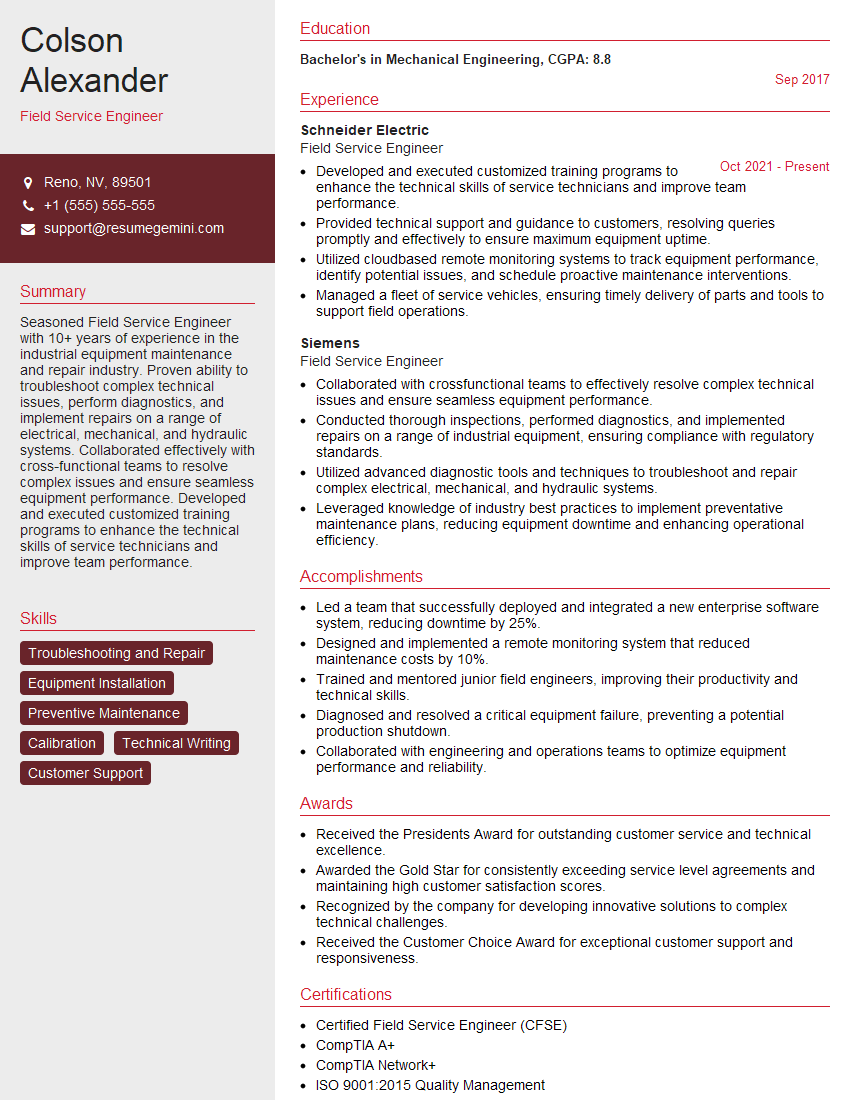
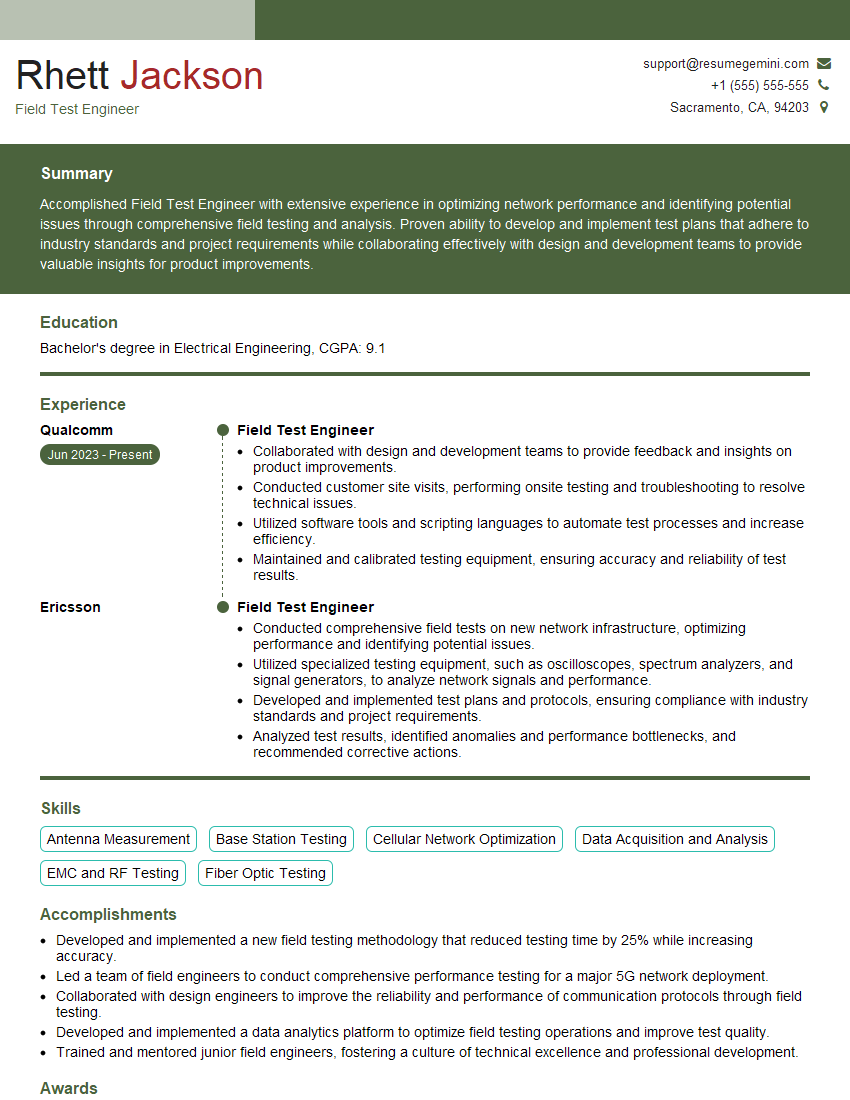
Mastering field testing opens doors to exciting career opportunities in various industries, offering chances for professional growth and impactful contributions. To maximize your job prospects, crafting an ATS-friendly resume is vital. ResumeGemini can help you build a professional and effective resume that highlights your skills and experience in field testing. We provide examples of resumes tailored to the Field Testing field to help guide you in this process.
Explore more articles
Users Rating of Our Blogs
Share Your Experience
We value your feedback! Please rate our content and share your thoughts (optional).
What Readers Say About Our Blog
Hello,
we currently offer a complimentary backlink and URL indexing test for search engine optimization professionals.
You can get complimentary indexing credits to test how link discovery works in practice.
No credit card is required and there is no recurring fee.
You can find details here:
https://wikipedia-backlinks.com/indexing/
Regards
NICE RESPONSE TO Q & A
hi
The aim of this message is regarding an unclaimed deposit of a deceased nationale that bears the same name as you. You are not relate to him as there are millions of people answering the names across around the world. But i will use my position to influence the release of the deposit to you for our mutual benefit.
Respond for full details and how to claim the deposit. This is 100% risk free. Send hello to my email id: [email protected]
Luka Chachibaialuka
Hey interviewgemini.com, just wanted to follow up on my last email.
We just launched Call the Monster, an parenting app that lets you summon friendly ‘monsters’ kids actually listen to.
We’re also running a giveaway for everyone who downloads the app. Since it’s brand new, there aren’t many users yet, which means you’ve got a much better chance of winning some great prizes.
You can check it out here: https://bit.ly/callamonsterapp
Or follow us on Instagram: https://www.instagram.com/callamonsterapp
Thanks,
Ryan
CEO – Call the Monster App
Hey interviewgemini.com, I saw your website and love your approach.
I just want this to look like spam email, but want to share something important to you. We just launched Call the Monster, a parenting app that lets you summon friendly ‘monsters’ kids actually listen to.
Parents are loving it for calming chaos before bedtime. Thought you might want to try it: https://bit.ly/callamonsterapp or just follow our fun monster lore on Instagram: https://www.instagram.com/callamonsterapp
Thanks,
Ryan
CEO – Call A Monster APP
To the interviewgemini.com Owner.
Dear interviewgemini.com Webmaster!
Hi interviewgemini.com Webmaster!
Dear interviewgemini.com Webmaster!
excellent
Hello,
We found issues with your domain’s email setup that may be sending your messages to spam or blocking them completely. InboxShield Mini shows you how to fix it in minutes — no tech skills required.
Scan your domain now for details: https://inboxshield-mini.com/
— Adam @ InboxShield Mini
Reply STOP to unsubscribe
Hi, are you owner of interviewgemini.com? What if I told you I could help you find extra time in your schedule, reconnect with leads you didn’t even realize you missed, and bring in more “I want to work with you” conversations, without increasing your ad spend or hiring a full-time employee?
All with a flexible, budget-friendly service that could easily pay for itself. Sounds good?
Would it be nice to jump on a quick 10-minute call so I can show you exactly how we make this work?
Best,
Hapei
Marketing Director
Hey, I know you’re the owner of interviewgemini.com. I’ll be quick.
Fundraising for your business is tough and time-consuming. We make it easier by guaranteeing two private investor meetings each month, for six months. No demos, no pitch events – just direct introductions to active investors matched to your startup.
If youR17;re raising, this could help you build real momentum. Want me to send more info?
Hi, I represent an SEO company that specialises in getting you AI citations and higher rankings on Google. I’d like to offer you a 100% free SEO audit for your website. Would you be interested?
Hi, I represent an SEO company that specialises in getting you AI citations and higher rankings on Google. I’d like to offer you a 100% free SEO audit for your website. Would you be interested?
good