Unlock your full potential by mastering the most common Fire Control Planning interview questions. This blog offers a deep dive into the critical topics, ensuring you’re not only prepared to answer but to excel. With these insights, you’ll approach your interview with clarity and confidence.
Questions Asked in Fire Control Planning Interview
Q 1. Explain the process of developing a fire control plan.
Developing a fire control plan is a systematic process that ensures the safety of life and property in the event of a fire. It involves a detailed assessment of potential fire hazards, the implementation of preventive measures, and the establishment of procedures for fire detection, suppression, and evacuation. Think of it like building a comprehensive defense system against a potential threat.
Hazard Identification and Risk Assessment: This crucial first step involves a thorough walkthrough of the facility, identifying potential ignition sources (e.g., electrical equipment, flammable materials), analyzing occupancy loads and potential escape routes. We use tools like fire risk assessment questionnaires and site inspections to determine the likelihood and potential impact of fires.
Fire Prevention Measures: This stage focuses on mitigating identified risks. Examples include implementing regular maintenance schedules for electrical systems, storing flammable materials safely, providing adequate fire-resistant barriers, and conducting regular employee training on fire safety procedures.
Fire Suppression System Design: This involves selecting and installing appropriate fire suppression systems, such as sprinklers, fire extinguishers, or specialized systems like foam or CO2 systems. The choice depends on the nature of the hazard and the specific requirements of the facility. We must ensure these systems are properly designed, installed, tested and maintained in accordance with relevant standards.
Emergency Response Planning: This element outlines procedures for fire detection, alarm activation, evacuation, and emergency response. It includes designating assembly points, defining roles and responsibilities, and outlining procedures for communication and coordination with emergency services.
Training and Drills: Regular training programs for employees are essential to ensure everyone understands their roles and responsibilities during a fire emergency. Fire drills help test and refine the emergency response plan.
Documentation and Review: The entire fire control plan, including all assessments, designs, and procedures, needs to be meticulously documented. Regular reviews and updates are vital to reflect changes in the facility or environment and maintain the plan’s effectiveness.
Q 2. Describe different types of fire suppression systems and their applications.
Various fire suppression systems cater to different fire types and environments. The selection depends on factors like the type of combustible material, the size and location of the area to be protected, and the potential hazards present.
Water Sprinkler Systems: The most common type, effective for Class A fires (ordinary combustibles like wood and paper). They use water to cool the fire and reduce its intensity. Different sprinkler types exist, such as wet pipe (always pressurized), dry pipe (pressurized only when activated), and deluge (designed for large-scale protection).
Foam Systems: Ideal for Class B fires (flammable liquids) and sometimes Class A fires. Foam creates a layer on the surface of the liquid, suppressing vapors and preventing reignition. Different foam types are available depending on the type of liquid.
Carbon Dioxide (CO2) Systems: Suitable for Class B and C fires (electrical equipment). CO2 displaces oxygen, suffocating the fire. It’s clean but requires proper ventilation after use to avoid asphyxiation.
Dry Chemical Systems: Effective for Class A, B, and C fires. These systems use dry chemical powders to interrupt the chemical chain reaction of combustion. Different types of dry chemical agents address different fire classes.
Wet Chemical Systems: Specifically designed for Class F fires (cooking oils and fats). These systems use potassium-based solutions to saponify the burning oils, creating a soap-like substance that extinguishes the fire.
Fire Extinguishers: Portable devices that use different agents (water, foam, dry chemical, CO2) depending on the type of fire. They’re a crucial part of fire safety, especially for smaller fires in their initial stages.
Q 3. How do you assess fire risk and vulnerability?
Assessing fire risk and vulnerability involves a multi-faceted approach. We don’t just look at the obvious; we delve deep into the potential for a fire to start, spread, and cause damage. Think of it like a detective investigating a crime scene, but instead of a crime, it’s a potential fire.
Hazard Identification: We identify potential ignition sources (e.g., faulty wiring, flammable liquids, hot work), combustible materials present, and the building’s layout and construction materials.
Vulnerability Assessment: This considers the building’s structural integrity, the effectiveness of existing fire protection systems, the building’s occupancy, and the presence of any potential obstacles to evacuation.
Risk Analysis: We combine the probability of a fire occurring with the potential consequences (property damage, injuries, business interruption) to determine the overall risk level. This often involves using quantitative methods, such as fire risk assessment software, to calculate risk scores.
Regulatory Compliance: We ensure that all assessments are carried out in accordance with relevant fire safety regulations and codes.
For example, a high-rise building with flammable materials and inadequate fire protection systems presents a significantly higher fire risk than a low-rise building with fire-resistant construction and comprehensive fire protection.
Q 4. What are the key factors to consider when selecting fire suppression agents?
Selecting the right fire suppression agent is critical. The wrong choice can be ineffective, damage property, or even create hazardous conditions. We consider several key factors:
Fire Class: The type of fire (A, B, C, D, F) dictates the appropriate agent. Water is effective for Class A, while CO2 is suitable for Class B and C. Special agents are needed for Class D (combustible metals) and Class F (cooking oils and fats).
Environmental Impact: Some agents can harm the environment or cause damage to equipment. We prioritize agents with minimal environmental impact, such as water-based systems, where possible. CO2 is relatively clean but can displace oxygen and needs careful consideration.
Toxicity: The agent shouldn’t pose a threat to occupants or firefighters during application. Halon alternatives, for example, are carefully chosen to minimize toxicity.
Effectiveness: The agent should effectively extinguish the fire quickly and prevent reignition. The concentration needed for effectiveness is a key consideration.
Cost: The initial cost of the system and ongoing maintenance costs must be weighed against the potential cost of a fire.
Accessibility and ease of use: Fire extinguishers, for instance, must be easily accessible and usable by building occupants. For larger systems, maintenance and accessibility are paramount.
Q 5. Explain the importance of fire safety regulations and codes.
Fire safety regulations and codes are crucial for ensuring public safety and minimizing the risk of fire-related incidents. They establish minimum standards for fire protection, design, construction, and operation of buildings and facilities. Think of them as a safety net, ensuring a base level of protection.
Life Safety: Codes address issues such as building egress, fire detection, alarm systems, and evacuation plans, ensuring that people can safely escape a burning building. These are non-negotiable.
Property Protection: Codes also cover fire suppression systems, fire-resistant materials, and construction methods, aimed at protecting the structure from fire damage. This is just as critical as safeguarding lives.
Consistency and Standardization: These codes provide consistency in fire safety standards across jurisdictions, preventing confusion and ensuring a standardized approach to fire protection.
Enforcement and Accountability: Enforcement mechanisms ensure that buildings and facilities comply with the established regulations. Regular inspections and audits help catch potential problems before they become serious.
Non-compliance can lead to serious legal repercussions, including fines and operational shutdowns, in addition to the much greater risk of injury and loss of life.
Q 6. How do you conduct a fire risk assessment?
A fire risk assessment is a systematic process of identifying hazards, analyzing risks, and developing control measures to prevent fires. It’s a proactive approach, not a reactive one.
Preliminary Survey: We begin with a site visit to understand the facility’s layout, occupancy, and potential hazards. This involves reviewing blueprints, talking to staff, and observing operations.
Hazard Identification: We identify potential ignition sources, flammable materials, and other factors that could contribute to a fire. This can involve checklists, interviews, and reviewing historical fire incidents.
Risk Assessment: This involves evaluating the likelihood and consequences of a fire, considering factors such as the type of occupancy, the presence of fire protection systems, and potential escape routes. We often use a matrix to visually categorize the risks.
Risk Control Measures: Based on the risk assessment, we recommend control measures, such as installing fire suppression systems, improving evacuation routes, implementing stricter fire safety protocols, and providing fire safety training.
Documentation and Review: The entire assessment is documented, including the identified hazards, the risk levels, and the recommended control measures. Regular reviews and updates are essential to ensure the continued effectiveness of the assessment.
We might use different techniques depending on the complexity of the facility. For a small office, a simple checklist might suffice, whereas a large industrial plant would require a more comprehensive assessment.
Q 7. Describe your experience with fire modeling software.
I have extensive experience utilizing various fire modeling software packages, including CFAST, FDS, and PyroSim. These tools are essential for predicting fire behavior and evaluating the effectiveness of fire protection systems. They allow us to simulate various scenarios, such as different fire sources, fuel loads, and ventilation conditions, and assess their impact.
Model Creation: I’m proficient in creating detailed 3D models of buildings and facilities, incorporating relevant geometry, materials, and fire protection systems. This involves inputting data on building materials, fire loads, sprinkler systems, and other factors to create a realistic virtual environment.
Simulation and Analysis: Using these models, I can simulate fire scenarios and analyze the results, such as temperature profiles, smoke movement, and evacuation times. This provides valuable insights for optimizing fire protection strategies and improving building designs.
Code Compliance and Design Optimization: Fire modeling helps to ensure compliance with relevant building codes and standards. It also allows for evaluating the effectiveness of design changes and proposed modifications, leading to optimal fire safety solutions.
Report Generation: I can generate detailed reports summarizing the simulation results, visualizations, and recommendations. These reports are critical for communicating findings to clients and stakeholders.
For example, I recently used FDS to simulate a fire scenario in a large warehouse to evaluate the effectiveness of the existing sprinkler system and determine if modifications were necessary to meet updated code requirements. The results of the simulation led to a recommendation for additional sprinklers in certain high-risk areas.
Q 8. What are the different types of fire detection systems and how do they work?
Fire detection systems are crucial for early warning and rapid response. They fall into several categories, each operating on different principles:
- Heat Detectors: These trigger an alarm when a specific temperature is reached. There are fixed temperature detectors (activating at a preset temperature) and rate-of-rise detectors (activating when the temperature increases rapidly). Think of a thermostat in your home – a fixed temperature detector. A rate-of-rise detector is like a more sensitive thermostat that alarms even if the temperature doesn’t reach a high value but increases very quickly.
- Smoke Detectors: These are arguably the most common type, detecting the presence of smoke particles. Ionization detectors use a small radioactive source to ionize the air; smoke particles disrupt the ionization current, triggering the alarm. Photoelectric detectors use a light beam; smoke particles scatter the light, activating the alarm. Ionization detectors are better at detecting fast-flaming fires, while photoelectric detectors are more sensitive to smoldering fires. Imagine an ionization detector like a tiny traffic jam – smoke particles ‘jam’ the flow of ions. A photoelectric detector is like shining a flashlight into a smoky room – the smoke scatters the light.
- Flame Detectors: These detect the infrared or ultraviolet radiation emitted by flames. They are particularly useful in areas where smoke detection might be less effective, such as in high-ceilinged spaces or areas with a lot of dust. Think of it as a ‘fire-specific’ sensor, unlike smoke detectors which may also be triggered by other particles.
- Combination Detectors: These combine multiple detection technologies (e.g., smoke and heat) to improve overall reliability and reduce false alarms. This is the best-of-both-worlds approach for versatile fire detection.
The choice of system depends on the specific risk profile of the building or area. For example, a kitchen might benefit from a heat detector, while a bedroom would prioritize a smoke detector.
Q 9. How do you manage resources during a fire incident?
Resource management during a fire incident is critical for effective and safe operations. It involves a coordinated effort to allocate and utilize personnel, equipment, and supplies efficiently. This is typically managed using the Incident Command System (ICS), which we’ll discuss later. Key aspects include:
- Personnel: Assigning firefighters to specific tasks (hose lines, ventilation, rescue) based on their skills and the evolving situation. This requires clear communication and a well-defined chain of command.
- Equipment: Ensuring sufficient water supply, adequate fire engines and trucks, and the availability of specialized equipment (e.g., aerial ladders, rescue tools) is crucial. Tracking equipment location and status prevents delays.
- Supplies: Managing air tanks, hoses, protective gear, and other consumables is essential. Regular inventory and timely resupply are vital to maintaining operational capabilities.
- Staging Areas: Establishing staging areas for additional resources (personnel, equipment) allows for a rapid response to changing needs. This facilitates organized deployment and avoids chaos.
Effective resource management involves continuous monitoring, reassessment, and adaptation to the changing conditions of the fire.
Q 10. Describe your experience with incident command systems (ICS).
My experience with Incident Command Systems (ICS) spans several years, involving various roles from initial responder to incident commander. ICS is a standardized management system designed to enable effective and efficient incident management. It’s based on a modular organizational structure, facilitating scalability depending on the incident’s complexity. I’ve actively participated in:
- Establishing command posts: Setting up communication systems and coordinating the activities of different teams (e.g., fire suppression, rescue, investigation).
- Resource allocation: Using ICS to track and assign resources to meet priorities and handle the evolving fire dynamic.
- Situational awareness: Using ICS tools to maintain accurate and up-to-date information about the incident, enabling informed decision-making.
- Collaboration with other agencies: Working effectively with law enforcement, emergency medical services (EMS), and other stakeholders involved in large-scale incidents.
One specific example involved a large warehouse fire where ICS proved invaluable. By implementing a clear command structure and efficient resource management, we were able to contain the fire quickly and prevent wider damage and minimize casualties. ICS ensures everyone understands roles, responsibilities, and priorities, minimizing confusion and maximizing efficiency during high-stress situations.
Q 11. What is your approach to emergency response planning for fire incidents?
My approach to emergency response planning for fire incidents is multifaceted and proactive. It involves a structured process focusing on prevention, preparedness, response, and recovery:
- Hazard Identification and Risk Assessment: Thoroughly identifying potential fire hazards within a building or area (e.g., flammable materials, electrical systems, cooking appliances). This assessment guides the development of tailored prevention measures.
- Developing Control Measures: Implementing measures to mitigate identified risks, including installing fire suppression systems, establishing evacuation plans, and providing fire safety training.
- Emergency Response Procedures: Creating detailed procedures for handling various fire scenarios, specifying roles, responsibilities, communication protocols, and emergency contact information.
- Testing and Review: Regularly conducting drills and exercises to test the effectiveness of the plan and identify areas for improvement. Post-incident reviews further refine procedures.
- Training and Education: Providing comprehensive fire safety training to all building occupants, including fire extinguisher use, evacuation procedures, and emergency communication protocols.
My planning approach prioritizes a clear understanding of the potential threats, implementing appropriate safeguards, and maintaining a state of preparedness to effectively manage fire incidents.
Q 12. How do you communicate fire control plans to stakeholders?
Communicating fire control plans to stakeholders is crucial for their understanding and cooperation. My strategy employs a multi-pronged approach:
- Tailored Communication: Presenting information in a clear and concise manner, adjusting the level of detail to the audience’s understanding (e.g., detailed technical plans for firefighters, simplified instructions for building occupants).
- Multiple Channels: Utilizing various methods to reach different stakeholders – written plans, presentations, training sessions, online resources, and regular updates.
- Interactive Sessions: Conducting training exercises and simulations, allowing stakeholders to actively participate and ask questions.
- Feedback Mechanisms: Establishing systems for gathering feedback from stakeholders, enabling continuous improvement and addressing any concerns.
- Documentation and Accessibility: Maintaining up-to-date, easily accessible documents and plans (both physical and digital copies).
Clear and consistent communication is paramount to ensuring everyone understands their roles and responsibilities in a fire emergency.
Q 13. How do you evaluate the effectiveness of a fire control plan?
Evaluating the effectiveness of a fire control plan is an ongoing process involving several key steps:
- Post-Incident Analysis: After a fire incident, a thorough review is conducted, assessing the plan’s effectiveness in mitigating the incident and identifying areas for improvement. This includes reviewing communication procedures and resource deployment.
- Regular Drills and Exercises: Conducting regular drills and exercises test the plan’s effectiveness and identify shortcomings in response times, communication, resource allocation, or evacuation procedures. Feedback from participants is critical.
- Performance Indicators: Tracking key performance indicators (KPIs) such as response times, damage levels, injuries, and evacuation times helps to quantitatively assess the plan’s success. This provides objective data for improvement.
- Technology Integration: Analyzing data from fire detection systems, building management systems, and other technologies helps identify trends and potential weaknesses in the plan.
- External Audits and Reviews: Periodic independent audits and reviews by fire safety experts provide an objective evaluation of the plan’s compliance with standards and best practices.
Continuous evaluation and improvement are critical to maintain a highly effective fire control plan, ensuring the safety and well-being of all stakeholders.
Q 14. Describe your experience with fire suppression tactics and strategies.
My experience encompasses a wide range of fire suppression tactics and strategies, tailored to the specific circumstances of each incident. This includes:
- Defensive Tactics: Used when the fire is too large or dangerous for an immediate interior attack. These strategies focus on containing the fire’s spread, protecting exposures, and preventing further damage. This might involve establishing firebreaks, using aerial attacks, or utilizing controlled burns in some specific circumstances.
- Offensive Tactics: Applied when a fire is contained to a manageable size and firefighters can safely enter the structure for direct suppression. This includes deploying hose lines, using fire extinguishers, and conducting ventilation.
- Ventilation: A crucial aspect of fire suppression, involving creating openings to release heat and smoke, improving visibility for firefighters, and reducing the risk of flashover. This requires careful planning and coordination to avoid spreading the fire.
- Salvage and Overhaul: Following suppression, salvage operations focus on minimizing further damage by protecting property and belongings. Overhaul involves extinguishing remaining embers and hotspots to prevent re-ignition.
- Special Tactics: Depending on the type of fire (e.g., hazardous materials, wildland fires), specialized tactics and equipment may be required.
Effective fire suppression requires a thorough understanding of fire dynamics, a mastery of various techniques, and a capacity for adapting strategies to the unique challenges posed by each incident. I am adept in all these areas, always prioritizing firefighter safety while pursuing effective suppression.
Q 15. Explain the concept of fire spread modeling.
Fire spread modeling is the process of predicting how a fire will behave given certain environmental conditions and fuel types. It’s crucial for effective fire control planning because it allows us to anticipate the fire’s potential path, intensity, and rate of spread, enabling proactive measures.
Several models exist, ranging from simple empirical equations to complex simulations using Geographic Information Systems (GIS). Simpler models might use factors like wind speed, slope, and fuel load to estimate spread rate. More sophisticated models incorporate detailed fuel maps, weather forecasts, and even topography to generate highly accurate predictions.
For example, imagine a wildfire starting in a mountainous region with dense pine forests. A fire spread model could predict that the fire will move faster upslope due to the effect of wind and preheating. The model would also show potential areas where the fire might slow down, based on changes in fuel type or topography. This allows firefighters to strategically position resources and plan evacuation routes.
Career Expert Tips:
- Ace those interviews! Prepare effectively by reviewing the Top 50 Most Common Interview Questions on ResumeGemini.
- Navigate your job search with confidence! Explore a wide range of Career Tips on ResumeGemini. Learn about common challenges and recommendations to overcome them.
- Craft the perfect resume! Master the Art of Resume Writing with ResumeGemini’s guide. Showcase your unique qualifications and achievements effectively.
- Don’t miss out on holiday savings! Build your dream resume with ResumeGemini’s ATS optimized templates.
Q 16. How do you integrate technology into fire control planning?
Technology is integral to modern fire control planning. We leverage several tools to enhance our effectiveness. Geographic Information Systems (GIS) are fundamental; they allow us to map fire perimeters, fuel types, and infrastructure in real-time. This allows for precise resource allocation and informed decision-making during incidents.
Remote sensing technologies, like satellite imagery and aerial drones equipped with thermal cameras, provide valuable situational awareness. These technologies help us monitor fire behavior, assess the severity of the fire, and identify hotspots inaccessible by ground crews. We also use weather forecasting models to predict changing wind patterns and other atmospheric conditions that will significantly impact fire behavior.
Furthermore, predictive modeling software aids in forecasting fire spread, enabling proactive deployment of resources and potentially minimizing damage. Incident command systems, often digitally-based, facilitate communication and coordination among various teams involved in the fire control effort. These tools ultimately improve response times, enhance safety measures, and contribute to more effective suppression efforts.
Q 17. What are your strategies for mitigating human factors related to fire incidents?
Human factors are a significant contributing element in many fire incidents, ranging from accidental ignition to lapses in safety protocols. Mitigating these risks involves a multi-pronged approach.
Firstly, comprehensive training programs are crucial. We emphasize fire safety awareness, emergency response procedures, and the use of personal protective equipment (PPE). Regular drills and simulations ensure personnel are prepared to handle various fire scenarios effectively and safely.
Secondly, clear communication channels are essential. We establish protocols for reporting and escalating incidents promptly. Establishing a culture of safety reporting, free of blame, encourages individuals to report potential hazards, leading to proactive mitigation. Finally, ergonomic design of tools and equipment reduces fatigue and human error during challenging fire suppression operations.
For instance, we might implement a buddy system where firefighters work in pairs for enhanced safety. Similarly, regular checks and maintenance of equipment reduce the chances of mechanical failure, further minimizing risks.
Q 18. How do you handle conflicting priorities during a fire incident?
Conflicting priorities are common during fire incidents. Resource limitations, varying levels of threat, and competing needs (e.g., protecting structures versus containing the fire’s spread) often require difficult decisions. Our approach hinges on a structured framework of prioritization.
We utilize a risk assessment matrix to weigh the severity of various threats and the potential consequences of inaction. This involves considering factors like the rate of fire spread, proximity to structures, and potential loss of life. The Incident Commander, using this risk assessment and input from various teams, establishes priorities. This process might involve establishing zones of action with differing levels of resource allocation based on immediate needs.
Transparency and open communication are paramount. All stakeholders are kept informed of the rationale behind decisions. This prevents confusion and fosters understanding, even when difficult choices are made. For instance, we might prioritize saving lives before protecting property in a scenario where immediate evacuation is crucial, even if it requires diverting resources from structural protection.
Q 19. What is your experience with wildfire prevention and control?
My experience with wildfire prevention and control spans over [Number] years. This includes extensive work in [mention specific regions or ecosystems]. My experience encompasses all aspects, from pre-fire planning to post-fire restoration.
In prevention, I’ve been involved in creating and implementing controlled burns to reduce fuel loads, promoting community awareness campaigns on fire safety, and working with land management agencies to develop and implement fuel management plans. In active wildfire control, I’ve participated in numerous fire suppression operations, using both ground-based and aerial firefighting techniques. I’ve also been involved in post-fire assessments, analyzing the effectiveness of our strategies and identifying areas for improvement.
A particularly challenging experience involved a wildfire in [mention a specific location or event]. We used advanced modeling techniques and real-time data to predict the fire’s path and successfully protect several communities. This experience highlighted the importance of collaboration and data-driven decision-making in wildfire management.
Q 20. How do you ensure compliance with fire safety regulations?
Ensuring compliance with fire safety regulations is paramount. This involves a proactive and multi-faceted strategy. We start with regular audits and inspections of facilities to identify potential hazards and ensure compliance with relevant codes and standards. This involves checking things like fire alarm systems, sprinkler systems, and emergency exits.
We develop and implement comprehensive fire safety plans tailored to the specific risks of each facility. These plans detail emergency procedures, evacuation routes, and responsibilities of different personnel. We also conduct regular fire drills to ensure everyone is familiar with these procedures and to identify areas for improvement.
Training is a cornerstone of our compliance program. We provide regular training to staff on fire prevention and safety procedures, emphasizing the importance of adhering to regulations and reporting potential hazards. Finally, we maintain detailed records of inspections, training, and any incidents, ensuring transparency and accountability in our fire safety practices.
Q 21. Describe your experience with fire investigation techniques.
Fire investigation is a crucial aspect of our work, aimed at determining the origin, cause, and circumstances of a fire. This involves a systematic approach, following established protocols and leveraging various techniques.
The process typically begins with securing the scene to preserve evidence. We then conduct a thorough examination of the fire scene, documenting observations, taking photographs, and collecting samples. Advanced techniques like accelerant detection canines and laboratory analysis of debris help us determine the presence of accelerants or other ignitable materials. We also interview witnesses and review any available security footage.
Interpreting the physical evidence and piecing together the sequence of events requires careful analysis and attention to detail. We use established methodologies and collaborate with forensic experts when necessary. For instance, in one investigation, the examination of burn patterns on the floor indicated a specific point of origin, crucial in pinpointing the cause of the fire.
Q 22. How do you maintain fire control equipment and systems?
Maintaining fire control equipment and systems is crucial for effective wildfire management. It’s a multi-faceted process encompassing preventative maintenance, regular inspections, and prompt repairs. Think of it like maintaining a complex machine – regular check-ups prevent costly breakdowns.
- Preventative Maintenance: This involves scheduled servicing of all equipment, including engines on fire trucks, pumps, and communication systems. We adhere to manufacturer’s guidelines and often develop our own internal checklists to ensure thoroughness. For example, we might schedule a monthly check of all hose connections for leaks and wear.
- Regular Inspections: These are more frequent, often daily or weekly, depending on the equipment’s usage and criticality. Inspections involve checking fuel levels, oil levels, tire pressure, and the overall condition of the vehicle and its components. We use detailed inspection forms to ensure consistency.
- Prompt Repairs: Any identified issues need immediate attention. We have established protocols for reporting malfunctions and coordinating repairs. This includes tracking spare parts inventory and liaising with equipment vendors to ensure quick turnaround times. Delaying repairs can lead to equipment failure during critical situations.
- Training and Certification: Our personnel receive ongoing training on the proper operation, maintenance, and safety procedures for all fire control equipment. Certifications and competency assessments are a key part of this process.
Effective maintenance ensures equipment reliability, reduces downtime, and ultimately saves lives and property.
Q 23. Explain your understanding of fire behavior prediction.
Fire behavior prediction is the process of forecasting how a wildfire will spread based on various factors. It’s not an exact science, but using sophisticated models and data, we can make reasonably accurate predictions, allowing for proactive fire management strategies. Think of it like predicting the weather – not always perfect, but provides valuable guidance.
Key factors considered include:
- Fuel Type and Density: Different vegetation types burn at different rates and intensities.
- Topography: Slope, aspect (direction a slope faces), and elevation significantly influence fire spread.
- Weather Conditions: Wind speed and direction, temperature, humidity, and precipitation are crucial. Strong winds, for instance, dramatically accelerate fire spread.
- Past Fire History: Understanding previous fire events in the area helps assess fuel availability and potential fire behavior.
We use various tools, including computer models (like FARSITE or FlamMap) and real-time data from weather stations and remote sensing technologies to create these predictions. These predictions help determine the best strategies for suppression, containment lines, and resource allocation.
Q 24. How do you use geographical information systems (GIS) in fire control planning?
Geographical Information Systems (GIS) are indispensable for fire control planning. They provide a powerful platform to visualize and analyze spatial data, enabling better decision-making. Imagine GIS as a detailed map that comes alive, revealing crucial information for fighting wildfires.
GIS helps in:
- Mapping Fuel Types and Distribution: Identifying areas with high fuel loads helps prioritize resource deployment.
- Analyzing Topography and Terrain: Pinpointing areas with steep slopes or difficult access is critical for planning safe and effective suppression strategies.
- Modeling Fire Spread: GIS integrates with fire behavior prediction models to simulate fire spread under various conditions.
- Managing Resources: Tracking equipment locations, personnel deployment, and water sources in real-time is essential.
- Communicating Information: GIS maps are easily shared with stakeholders and incident commanders, facilitating efficient collaboration.
For instance, we’d use GIS to identify the optimal location for establishing firebreaks based on fuel type, slope, and wind direction. This ensures resources are used efficiently and minimizes the risk to firefighters.
Q 25. Describe your experience with developing evacuation plans.
Developing evacuation plans requires a comprehensive understanding of the community, potential wildfire risks, and available escape routes. It’s like designing a well-rehearsed escape plan for a building – crucial for saving lives.
My experience includes:
- Hazard Assessment: Identifying areas at high risk of wildfire and potential escape route bottlenecks.
- Route Planning: Establishing multiple evacuation routes considering road capacity, traffic flow, and potential obstacles.
- Community Engagement: Working closely with local residents and officials to educate them on the plan and ensure their preparedness.
- Communication Strategies: Developing robust warning systems using sirens, public announcements, and social media to alert residents promptly.
- Staging Areas and Shelters: Identifying and preparing safe locations for evacuees to assemble and receive support.
A recent project involved creating an evacuation plan for a mountain community susceptible to wildfires. We used GIS to model potential fire spread, identified evacuation routes, and developed a communication plan involving community meetings and regular updates through local media.
Q 26. What is your approach to training and education regarding fire safety?
Training and education are fundamental to fire safety. It’s about empowering individuals and communities with the knowledge and skills to prevent and respond to wildfires. This is akin to teaching someone how to use a fire extinguisher – vital for effective response.
My approach includes:
- Public Awareness Campaigns: Educating the public on fire prevention measures, like proper campfires and responsible debris management.
- Hands-on Training: Providing practical training for firefighters on techniques like fire suppression, equipment operation, and safety procedures.
- Community Workshops: Organizing workshops for homeowners on creating defensible spaces around their homes to reduce wildfire risk.
- School Programs: Engaging with schools to teach children about fire safety through age-appropriate education.
- Online Resources: Developing and maintaining websites and online resources providing readily available information.
For example, I’ve led several community workshops demonstrating how to create defensible space around homes, including proper landscaping and clearing of flammable materials. We use demonstrations and interactive exercises to enhance learning and retention.
Q 27. How do you adapt fire control plans to changing environmental conditions?
Adapting fire control plans to changing environmental conditions is paramount. Wildfires are dynamic events, and environmental factors can significantly influence their behavior. Think of it as adjusting a sailing course based on changing wind patterns.
We adapt plans by:
- Monitoring Weather Forecasts: Closely monitoring real-time weather data, including wind speed, direction, humidity, and temperature, to assess potential changes in fire behavior.
- Fuel Monitoring: Regularly assessing fuel conditions on the ground, looking for changes in dryness, density, and type.
- Adjusting Suppression Strategies: Modifying tactics based on observed fire behavior and environmental changes. This may involve shifting resources, creating new containment lines, or modifying evacuation orders.
- Utilizing Predictive Modeling: Regularly updating fire behavior models with the latest data to ensure predictions remain accurate.
- Adaptive Management: Embracing a flexible and iterative approach, constantly monitoring and adjusting the plan based on new information.
For example, during a wildfire, if the wind shifts unexpectedly, we’d immediately reassess the situation, adjust the containment lines, and potentially initiate new evacuations or resource allocations.
Q 28. Describe your experience with post-incident analysis and improvement
Post-incident analysis is vital for continuous improvement. It’s a systematic review of a wildfire event to identify what worked well, what could be improved, and how to prevent similar incidents in the future. It’s like conducting a post-game analysis in sports to refine strategies for future success.
My experience includes:
- Data Collection: Gathering information from various sources, including incident reports, weather data, maps, and post-fire assessments.
- Review of Tactics and Strategies: Evaluating the effectiveness of the implemented fire suppression strategies, communication protocols, and resource allocation.
- Identifying Strengths and Weaknesses: Pinpointing areas where the response was effective and areas requiring improvement.
- Developing Recommendations: Creating actionable recommendations to improve future responses, including equipment upgrades, training modifications, and revised protocols.
- Implementing Changes: Integrating the recommendations into updated fire control plans and training materials.
After a recent wildfire, our post-incident analysis revealed communication challenges between different agencies. This led to the implementation of a new unified communication platform and improved training for all personnel to ensure better coordination during future incidents.
Key Topics to Learn for Fire Control Planning Interview
- Strategic Fire Control Planning: Understanding the overarching goals and objectives, resource allocation, and risk assessment involved in developing a comprehensive fire control plan.
- Tactical Fire Control Techniques: Mastering the practical application of fire control strategies, including deployment of resources, communication protocols, and real-time decision-making during incidents.
- Fire Behavior and Prediction: Developing a strong understanding of how fires spread, the factors influencing their behavior (fuel type, weather, topography), and utilizing predictive modeling tools to anticipate fire progression.
- Technology and Tools in Fire Control: Familiarity with Geographic Information Systems (GIS), remote sensing technologies, modeling software, and communication systems used in modern fire control operations.
- Incident Command System (ICS): Understanding the ICS structure, roles, responsibilities, and communication protocols within an incident management team, crucial for effective fire control collaboration.
- Risk Assessment and Mitigation: Developing strategies for identifying, analyzing, and mitigating fire risks based on factors like fuel load, weather conditions, and proximity to structures.
- Post-Incident Analysis and Improvement: Understanding the process of reviewing past incidents to identify areas for improvement in fire control planning and execution.
- Legal and Regulatory Frameworks: Familiarity with relevant laws, regulations, and best practices related to fire prevention, suppression, and control.
- Communication and Teamwork: Highlighting your skills in effective communication, collaboration, and leadership within a team environment during fire control operations.
Next Steps
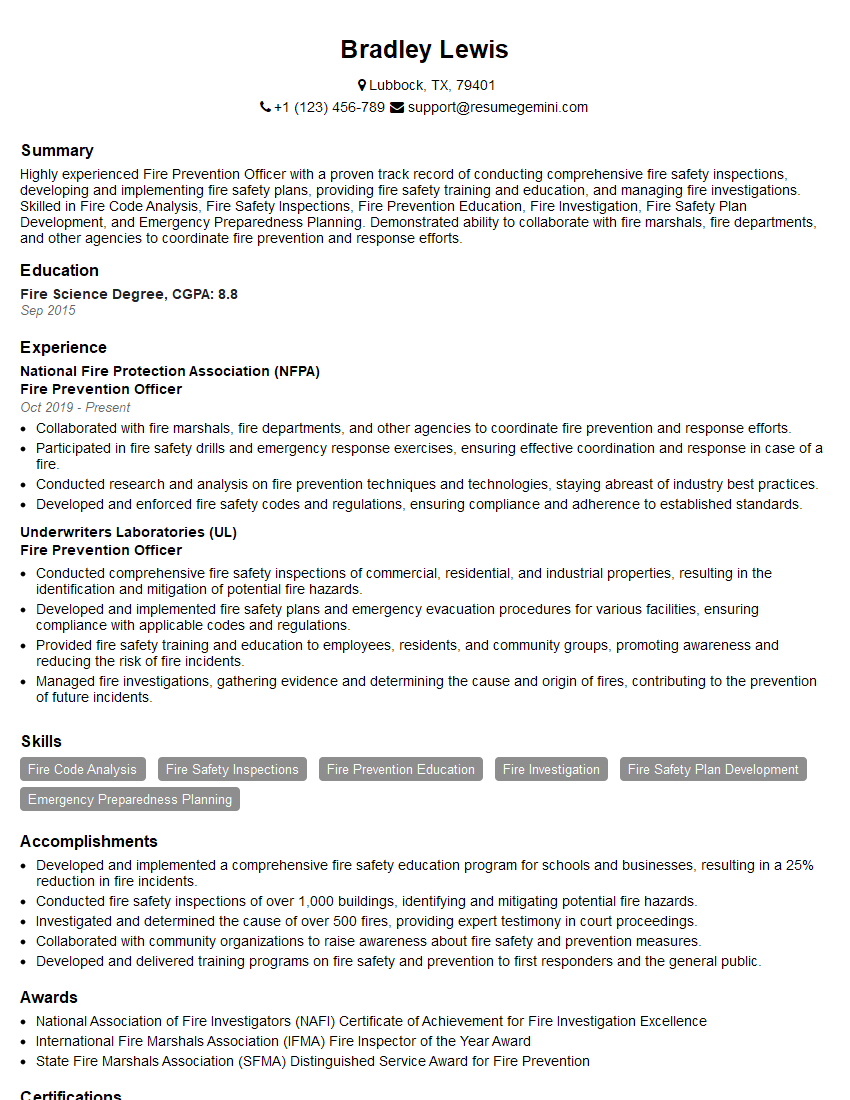
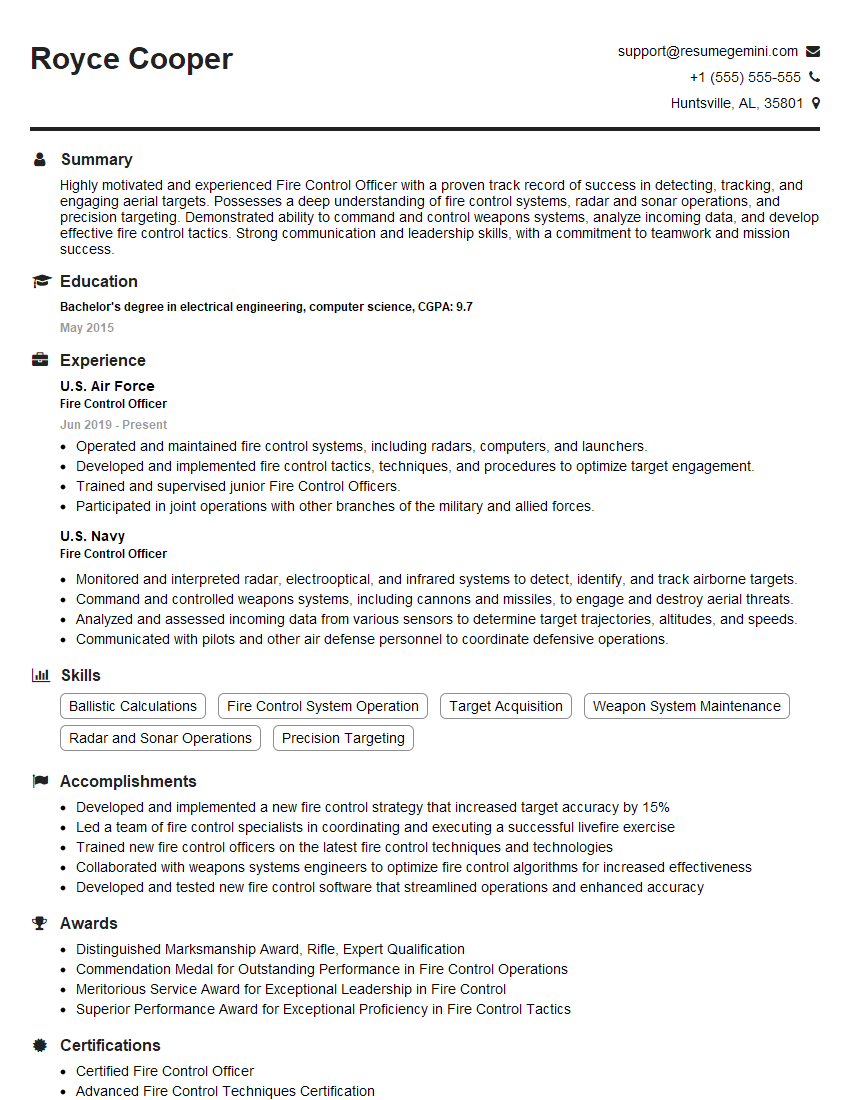
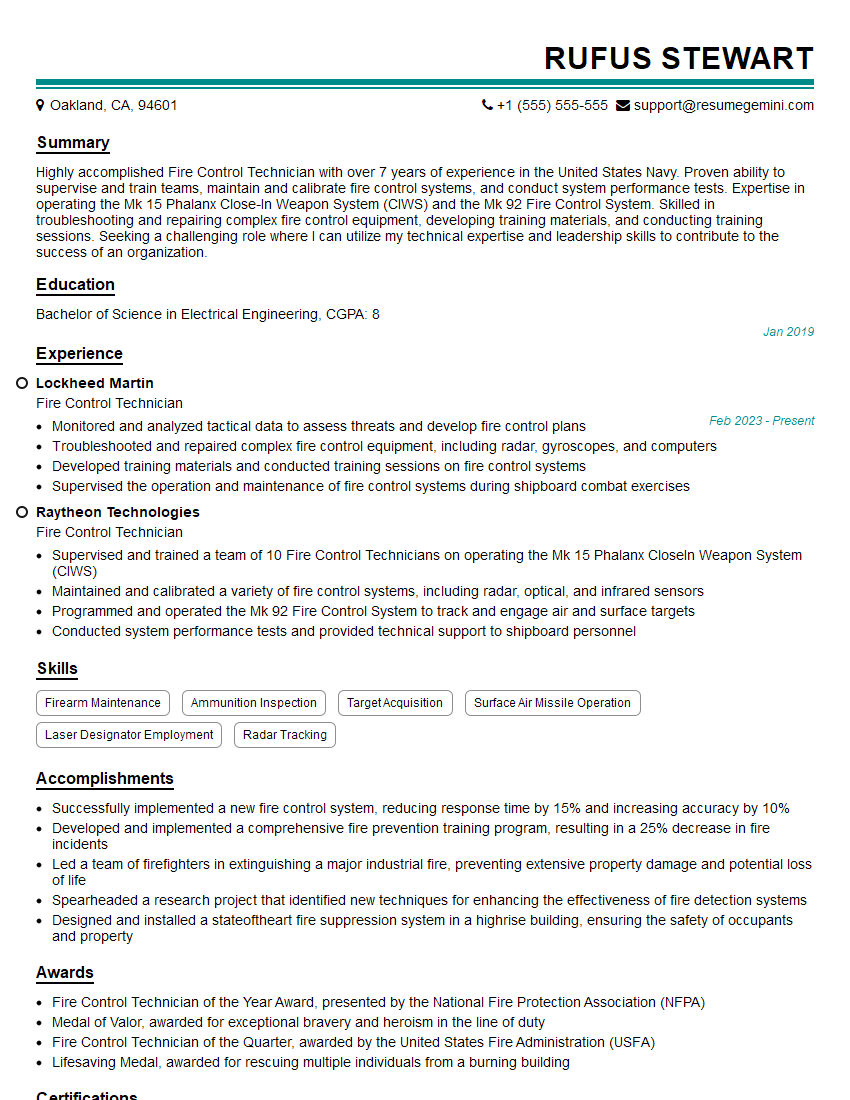
Mastering Fire Control Planning is vital for career advancement in this dynamic field. It demonstrates a strong understanding of safety, efficiency, and strategic thinking, qualities highly sought after by employers. To significantly boost your job prospects, creating an ATS-friendly resume is crucial. This ensures your application gets noticed by recruiters and hiring managers. We highly recommend leveraging ResumeGemini to build a professional and impactful resume that highlights your skills and experience effectively. ResumeGemini provides examples of resumes tailored to Fire Control Planning to guide you through the process. Invest the time to craft a compelling resume—it’s a critical step in securing your dream role.
Explore more articles
Users Rating of Our Blogs
Share Your Experience
We value your feedback! Please rate our content and share your thoughts (optional).
What Readers Say About Our Blog
Hello,
We found issues with your domain’s email setup that may be sending your messages to spam or blocking them completely. InboxShield Mini shows you how to fix it in minutes — no tech skills required.
Scan your domain now for details: https://inboxshield-mini.com/
— Adam @ InboxShield Mini
Reply STOP to unsubscribe
Hi, are you owner of interviewgemini.com? What if I told you I could help you find extra time in your schedule, reconnect with leads you didn’t even realize you missed, and bring in more “I want to work with you” conversations, without increasing your ad spend or hiring a full-time employee?
All with a flexible, budget-friendly service that could easily pay for itself. Sounds good?
Would it be nice to jump on a quick 10-minute call so I can show you exactly how we make this work?
Best,
Hapei
Marketing Director
Hey, I know you’re the owner of interviewgemini.com. I’ll be quick.
Fundraising for your business is tough and time-consuming. We make it easier by guaranteeing two private investor meetings each month, for six months. No demos, no pitch events – just direct introductions to active investors matched to your startup.
If youR17;re raising, this could help you build real momentum. Want me to send more info?
Hi, I represent an SEO company that specialises in getting you AI citations and higher rankings on Google. I’d like to offer you a 100% free SEO audit for your website. Would you be interested?
Hi, I represent an SEO company that specialises in getting you AI citations and higher rankings on Google. I’d like to offer you a 100% free SEO audit for your website. Would you be interested?
good