The thought of an interview can be nerve-wracking, but the right preparation can make all the difference. Explore this comprehensive guide to Fire Extinguishment Agents interview questions and gain the confidence you need to showcase your abilities and secure the role.
Questions Asked in Fire Extinguishment Agents Interview
Q 1. What are the different classes of fires and which extinguishing agents are most effective for each?
Fires are classified into different classes based on the type of fuel involved. Choosing the right extinguishing agent is crucial for effective fire suppression and safety. Here’s a breakdown:
- Class A: Ordinary combustibles like wood, paper, cloth. Water is the most effective agent, as it cools the fuel below its ignition temperature. Foam can also be effective.
- Class B: Flammable liquids like gasoline, oil, grease. CO2, dry chemical agents (like sodium bicarbonate or potassium bicarbonate), and foam are effective. Water is generally not recommended due to the risk of spreading the fire.
- Class C: Energized electrical equipment. CO2 and dry chemical agents are preferred because they are non-conductive. Never use water on electrical fires.
- Class D: Combustible metals like magnesium, titanium, sodium. These fires require specialized extinguishing agents like dry powder designed for metal fires. Water can actually worsen these fires.
- Class K: Cooking oils and fats. Wet chemical extinguishing agents are designed for these fires. They work by saponification, creating a soapy layer that smothers the flames. Water is ineffective and potentially dangerous.
It’s important to remember that some extinguishers are multi-purpose (e.g., ABC), meaning they can be used on multiple classes of fires. However, always prioritize choosing an extinguisher specific to the fire type if possible for maximum effectiveness.
Q 2. Explain the PASS method for operating a fire extinguisher.
The PASS method is a simple yet effective mnemonic for using a fire extinguisher safely and efficiently. It stands for:
- P – Pull: Pull the pin. This activates the extinguisher and releases the locking mechanism.
- A – Aim: Aim the nozzle at the base of the fire. This ensures that the extinguishing agent is directed at the fuel source, not just the flames. Targeting the flames alone may only temporarily suppress the fire.
- S – Squeeze: Squeeze the lever or handle slowly and steadily to release the extinguishing agent.
- S – Sweep: Sweep the nozzle from side to side at the base of the fire, covering the entire area until the flames are extinguished. Keep a safe distance and continue sweeping even if the flames appear to be out – there could be lingering embers.
Remember to always assess your escape route before attempting to use a fire extinguisher. If the fire is too large or spreading rapidly, evacuate immediately and call for professional help. Never put yourself in harm’s way.
Q 3. Describe the advantages and disadvantages of water, foam, CO2, and dry chemical extinguishing agents.
Each extinguishing agent has its strengths and weaknesses:
- Water:
- Advantages: Readily available, inexpensive, effective on Class A fires. Good cooling agent.
- Disadvantages: Can conduct electricity, may spread flammable liquids, can cause water damage.
- Foam:
- Advantages: Effective on Class A and B fires, creates a layer that separates fuel from oxygen, relatively safe.
- Disadvantages: Can be affected by wind, less effective on deep-seated fires.
- CO2:
- Advantages: Non-conductive, leaves no residue, effective on Class B and C fires.
- Disadvantages: Relatively short discharge time, can cause asphyxiation in confined spaces, expensive.
- Dry Chemical:
- Advantages: Effective on Class A, B, and C fires, relatively easy to use.
- Disadvantages: Can leave a residue, reduces visibility, can cause respiratory irritation.
The best agent depends entirely on the type of fire and the surrounding environment. Choosing the wrong agent can be ineffective or even dangerous.
Q 4. How do you inspect and maintain a fire extinguisher?
Regular inspection and maintenance are vital for ensuring fire extinguishers are ready when needed. Here’s a typical inspection process:
- Visual Inspection: Check for any damage to the extinguisher, including dents, corrosion, or leaks. Ensure the pressure gauge is within the acceptable range (usually green area). Verify that the tamper seal is intact.
- Weighing (if applicable): Some extinguishers have a weight indicator to show the amount of extinguishing agent remaining. Consult the manufacturer’s instructions.
- Checking the Nozzle: Make sure the nozzle isn’t clogged or damaged. Inspect for any signs of leakage.
- Documentation: Keep thorough records of your inspection dates and any findings. This is crucial for compliance and helps track maintenance needs.
Maintenance involves more than just visual checks. Professional servicing, often involving hydrostatic testing, may be required depending on the extinguisher type and local regulations. This testing ensures the extinguisher’s structural integrity and proper function.
Q 5. What are the legal requirements for fire extinguisher inspections and maintenance?
Legal requirements for fire extinguisher inspections and maintenance vary significantly depending on location (country, state/province, etc.) and the specific type of occupancy (e.g., industrial facility, office building, residential). Local fire codes and regulations outline the required frequency of inspections and professional servicing. Generally, this includes:
- Regular Inspections: Typically monthly visual inspections are recommended, with more frequent inspections in high-risk areas.
- Professional Servicing: Professional maintenance, including hydrostatic testing, is often required at intervals specified by the manufacturer and local regulations (e.g., every 5-12 years). These intervals depend on the extinguisher type and its operating pressure.
- Record Keeping: Detailed records of inspections and maintenance activities are typically mandatory. These records need to be readily available for inspection by authorities.
Failure to comply with these regulations can result in fines, legal action, and potentially jeopardize insurance coverage. It’s crucial to consult local fire authorities or a qualified fire safety professional to understand the specific requirements in your area.
Q 6. What are the potential hazards associated with using different fire extinguishing agents?
Different extinguishing agents present different hazards:
- Water: Can cause electrical shock, damage property due to water damage.
- Foam: Some foams may contain chemicals that are harmful to the environment or to human health if inhaled or absorbed through the skin. Proper disposal is essential.
- CO2: Can cause asphyxiation in confined spaces due to oxygen displacement; may cause frostbite on contact with skin due to extremely low temperature during discharge.
- Dry Chemical: Can cause respiratory irritation and reduced visibility; some dry chemicals can be corrosive.
- Wet Chemical: Can be corrosive and cause skin irritation. Proper cleanup and disposal are essential.
Always use appropriate personal protective equipment (PPE), such as eye protection, gloves, and respiratory protection, when handling fire extinguishers and their agents, especially in confined spaces.
Q 7. Explain the principles of fire suppression.
Fire suppression relies on interrupting the fire triangle (or tetrahedron): fuel, heat, oxidizer (usually oxygen), and in some cases, a chain reaction. To extinguish a fire, at least one of these elements must be removed or reduced. Methods include:
- Cooling: Reducing the temperature of the fuel below its ignition point. Water is a common coolant.
- Smothering: Removing or reducing the oxygen supply. This can be done by using a blanket, CO2, or foam.
- Fuel Removal: Separating the fuel source from the fire. This might involve turning off a gas valve or moving flammable materials.
- Chain Breaking: Interrupting the chemical chain reaction in the combustion process. Dry chemical agents accomplish this.
Effective fire suppression strategies often employ a combination of these methods for optimal results. Understanding these principles is crucial for selecting appropriate extinguishing agents and employing safe fire-fighting techniques.
Q 8. How do you identify the type of fire extinguisher needed for a specific hazard?
Identifying the right fire extinguisher hinges on understanding the fire class. Different classes represent different types of flammable materials, and each requires a specific extinguishing agent.
- Class A: Ordinary combustibles like wood, paper, cloth. Use water-based extinguishers (indicated by a green triangle).
- Class B: Flammable liquids like gasoline, oil, grease. Use carbon dioxide (CO2), dry chemical, or foam extinguishers (indicated by a red square).
- Class C: Energized electrical equipment. Use CO2 or dry chemical extinguishers (never water!).
- Class D: Combustible metals like magnesium, titanium. Require specialized extinguishers with dry powder agents (indicated by a yellow star).
- Class K: Cooking oils and fats. Use special K-class extinguishers designed for wet chemical agents.
Think of it like this: you wouldn’t use a hammer to screw in a screw, right? Similarly, you need the right extinguisher for the right fire type. Always check the fire class symbol on the extinguisher and the hazard label of the material involved before selecting an extinguisher.
Q 9. What are the safety precautions when using a fire extinguisher?
Safety is paramount when using a fire extinguisher. Remember the acronym PASS:
- P – Pull the pin: This unlocks the extinguisher.
- A – Aim at the base of the fire: Don’t aim at the flames themselves, but at the source of the fire.
- S – Squeeze the lever: This releases the extinguishing agent.
- S – Sweep from side to side: Move the nozzle in a sweeping motion to cover the entire burning area.
Additional precautions include:
- Assess the situation: Only attempt to extinguish a fire if it is small and contained. If the fire is spreading rapidly or you feel unsafe, evacuate immediately and call emergency services.
- Maintain a safe distance: Stand upwind of the fire to avoid inhaling smoke and fumes.
- Use the extinguisher correctly: Don’t use water on electrical fires or flammable liquids. Use the right extinguisher for the fire class.
- Never fight a fire alone: If possible, have someone else call for help while you attempt to extinguish the fire.
Q 10. What are the signs of a malfunctioning fire extinguisher?
A malfunctioning fire extinguisher can be a serious hazard. Here’s how to spot problems:
- Low pressure gauge: The pressure gauge should indicate that the extinguisher is fully charged. A low reading means it might not work effectively.
- Damaged nozzle or hose: Cracks, leaks, or kinks in the hose or nozzle can prevent the agent from being properly discharged.
- Corrosion or damage to the cylinder: Significant rust, dents, or punctures in the cylinder are serious issues and indicate the extinguisher needs replacing.
- Missing or damaged safety pin: This pin is crucial for preventing accidental discharge. Its absence is a major safety risk.
- Signs of leakage: Look for any signs of leaked extinguishing agent around the nozzle, valve, or cylinder base.
Regular inspections are critical. Many facilities have scheduled inspections and maintenance programs.
Q 11. Describe the different types of fire suppression systems (e.g., sprinkler systems, clean agent systems).
Fire suppression systems go beyond handheld extinguishers. They are designed for larger-scale protection:
- Sprinkler Systems: These systems use a network of pipes containing water, which is released automatically when activated by heat. They’re incredibly effective for controlling Class A fires and are widely used in commercial and residential buildings.
- Clean Agent Systems: These systems use gaseous extinguishing agents that are environmentally friendly and leave minimal residue. They’re ideal for protecting sensitive equipment like computer servers or electrical rooms where water damage is unacceptable. Common clean agents include inert gases like Argon, Nitrogen, and Carbon Dioxide, and halocarbons like FM-200.
- Foam Systems: These systems produce foam that blankets the surface of flammable liquids, suppressing the fire by excluding oxygen. They are effective for Class B fires.
- Wet Chemical Systems: These systems are specifically designed for extinguishing Class K cooking oil and fat fires. They use a potassium acetate-based solution.
Each system has its strengths and weaknesses; the choice depends on the type of hazard being protected.
Q 12. What is the role of a fire suppression system in a building’s overall fire safety plan?
A fire suppression system plays a vital role in a building’s fire safety plan, forming its backbone. It is a crucial element of a multi-layered strategy that also includes:
- Fire Detection Systems: These systems alert occupants to a fire and dispatch emergency services.
- Evacuation Plans: These plans ensure safe and orderly evacuation of the building in the event of a fire.
- Fire Drills: Regular drills help familiarize occupants with evacuation procedures.
- Fire-resistant Materials: The use of fire-retardant materials in construction limits the spread of fire.
The suppression system acts as the last line of defense, mitigating damage and protecting lives after the initial detection and evacuation attempts. A comprehensive plan considers all these factors, ensuring a holistic approach to fire safety.
Q 13. How do you select the appropriate fire suppression system for a particular application?
Selecting the appropriate fire suppression system demands a thorough risk assessment, considering several key factors:
- Type of Occupancy: A hospital requires a different system than a warehouse.
- Fire Hazards Present: The types of flammable materials stored or used will dictate the appropriate agent.
- Size and Layout of the Area: Larger areas often require more extensive systems.
- Environmental Considerations: The impact on the environment and occupants from the discharge of the suppressing agent is critical.
- Cost and Maintenance: Systems vary significantly in initial cost and ongoing maintenance requirements.
- Integration with Other Systems: The system should seamlessly integrate with existing fire detection and alarm systems.
Expert consultation with fire protection engineers is crucial to ensure the system selected is both effective and suitable for the specific needs of the location.
Q 14. What are the environmental considerations when choosing a fire extinguishing agent?
Environmental considerations are increasingly important when selecting fire extinguishing agents. Some agents, especially older halon-based alternatives, can deplete the ozone layer or contribute to global warming.
Modern trends prioritize environmentally friendly agents. For example:
- Inert gases (Argon, Nitrogen, CO2): These agents displace oxygen, suppressing the fire without harming the ozone layer or contributing significantly to greenhouse gas emissions. However, CO2 can displace oxygen, leading to suffocation risks in enclosed spaces.
- Clean agents (like FM-200 replacements): Many newer clean agents are designed to have minimal environmental impact while remaining highly effective at extinguishing fires. However, the lifecycle impact of their manufacturing and disposal needs to be considered.
- Water-based systems: While effective for many Class A fires, the potential for water damage needs to be considered, particularly in sensitive environments.
The choice requires a balance between fire safety effectiveness and minimal environmental impact. Life cycle assessments and comparative analyses of different agents are valuable for informed decision-making.
Q 15. Explain the concept of fire triangle and how extinguishing agents disrupt it.
The fire triangle illustrates the three elements necessary for combustion: heat, fuel, and an oxidizing agent (usually oxygen). A fire can’t exist without all three. Extinguishing agents work by disrupting at least one element of this triangle, thus stopping the fire.
Removing Heat: Water-based extinguishers cool the fire, reducing the heat below the ignition temperature of the fuel.
Removing Fuel: Using a fire blanket smothers the fire, cutting off its oxygen supply and removing the fuel source by separating the burning material from the flame.
Removing Oxidizer: Carbon dioxide (CO2) extinguishers displace oxygen, starving the fire of its oxidizer. This is particularly effective for Class B (flammable liquid) and Class C (electrical) fires.
Think of it like a campfire: If you remove the wood (fuel), the fire dies down. If you pour water on it (removing heat), the flames extinguish. If you cover it with a blanket (removing oxygen), it will also go out. Extinguishing agents employ one or more of these methods.
Career Expert Tips:
- Ace those interviews! Prepare effectively by reviewing the Top 50 Most Common Interview Questions on ResumeGemini.
- Navigate your job search with confidence! Explore a wide range of Career Tips on ResumeGemini. Learn about common challenges and recommendations to overcome them.
- Craft the perfect resume! Master the Art of Resume Writing with ResumeGemini’s guide. Showcase your unique qualifications and achievements effectively.
- Don’t miss out on holiday savings! Build your dream resume with ResumeGemini’s ATS optimized templates.
Q 16. What is the difference between a fire extinguisher and a fire suppression system?
While both fire extinguishers and fire suppression systems aim to control or extinguish fires, they differ significantly in scale and application.
Fire Extinguishers: These are portable devices used to extinguish small, localized fires in their early stages. They’re ideal for quick responses to nascent fires. Think of them as a first-aid kit for fires.
Fire Suppression Systems: These are fixed installations designed to protect larger areas or specific high-risk zones. They automatically or manually deploy extinguishing agents over a wider area. Examples include sprinkler systems, total flooding systems (using inert gases like CO2 or Argon), and foam systems. These systems are typically for larger facilities or areas where a handheld extinguisher wouldn’t be sufficient.
Imagine a small kitchen fire versus a large warehouse fire. An extinguisher would be appropriate for the kitchen, while a sprinkler system or other suppression system would be necessary for the warehouse.
Q 17. Describe the process of evacuating a building in case of a fire.
Evacuating a building during a fire is a crucial life-saving procedure. It requires a well-defined plan and practice to ensure swift and orderly exit.
Activate the alarm: Pull the nearest fire alarm and alert emergency services immediately.
Follow the evacuation plan: Know your designated escape routes and assembly points. These are usually clearly marked on building signage.
Close doors behind you: This helps to contain the fire and reduce smoke spread.
Assist others if possible: Offer help to those who may need assistance, such as elderly or disabled individuals.
Account for everyone: At the assembly point, designated personnel should check to make sure everyone is accounted for.
Do not re-enter the building: Once outside, remain at the assembly point and await instructions from emergency responders.
Regular fire drills are essential to familiarize everyone with the evacuation plan and ensure smooth execution in case of a real emergency. This is not just for large organizations, even homes can benefit from planning escape routes.
Q 18. How do you handle a fire extinguisher that has been improperly discharged?
Handling an improperly discharged fire extinguisher requires careful attention to safety.
Ensure the area is safe: Make sure the area around the extinguisher is clear of any hazards, especially if there’s residual pressure or spilled extinguishing agent.
Assess the extinguisher’s condition: Check for any visible damage or leaks. If there are leaks, do not attempt to handle it further and contact a professional.
Secure the extinguisher: Store the extinguisher in a safe location, following any guidelines in your building’s safety procedures.
Contact a professional for disposal or servicing: Improperly discharged extinguishers require professional assessment and may require servicing or replacement. Do not attempt to refill or repair them yourself.
Improper handling of a discharged extinguisher could lead to further injury or environmental damage. Professional handling ensures both safety and environmental compliance.
Q 19. What are the common causes of fire extinguisher malfunctions?
Several factors can lead to fire extinguisher malfunctions. These malfunctions can be categorized as either user error or mechanical issues.
User Error: Incorrect operation (not using the proper procedure), improper maintenance (not inspecting regularly), or attempting to use an extinguisher on a fire class it’s not rated for.
Mechanical Issues: These could involve internal component failures, corrosion, damage due to impact or improper storage, or depletion of the extinguishing agent due to leakage.
Regular inspection and maintenance, along with proper training, significantly reduce the likelihood of malfunctions. Think of it like your car – regular checkups prevent major problems.
Q 20. How do you train employees on proper fire extinguisher use?
Training employees on proper fire extinguisher use is critical for workplace safety. Effective training should include:
Classroom instruction: This covers the basics of fire safety, understanding the fire triangle, different classes of fires, and how to select the appropriate extinguisher.
Hands-on practice: This allows trainees to practice using different types of extinguishers on simulated fires in a controlled environment. This is crucial for building muscle memory and confidence.
Regular refresher training: This reinforces learned skills and keeps employees up-to-date on safety procedures. Fire safety procedures are not static, and there are continuous improvements.
Documentation: Maintain records of training sessions for compliance and audit purposes. This also shows a commitment to employee safety.
Effective training goes beyond simply showing someone how to operate an extinguisher. It fosters a culture of safety and preparedness. Regular drills keep the knowledge fresh.
Q 21. What are the limitations of different fire extinguishing agents?
Different extinguishing agents have specific strengths and weaknesses, limiting their application in certain scenarios.
Water: Effective for Class A fires (ordinary combustibles) but can be ineffective or even harmful for Class B or C fires. Water conducts electricity, making it dangerous for electrical fires. It also can damage electrical equipment or spread flammable liquids.
Carbon Dioxide (CO2): Effective for Class B and C fires, but it’s not ideal for Class A fires because its cooling effect is limited. It can also displace oxygen and create an oxygen-deficient atmosphere, posing a risk to occupants in enclosed spaces.
Dry Chemical: Versatile and effective for Class A, B, and C fires. However, the powder can create visibility problems and cause damage to sensitive equipment.
Foam: Excellent for Class A and B fires, particularly flammable liquids, by creating a layer that smothers the flames. However, foam isn’t effective for Class C fires.
Halon Alternatives (Clean Agents): Effective for Class B and C fires, offering minimal environmental impact compared to Halons, but they are typically more expensive.
Choosing the right extinguishing agent depends entirely on the type of fire and the specific circumstances. Understanding these limitations is key to choosing and using the appropriate extinguisher.
Q 22. Describe the process of refilling a fire extinguisher.
Refilling a fire extinguisher is a complex process that should only be performed by trained and certified professionals. It’s not a DIY project! Improper refilling can render the extinguisher useless or even dangerous. The process typically involves several steps:
- Inspection: Thoroughly inspect the extinguisher for any damage to the cylinder, hose, or nozzle. A damaged extinguisher should be replaced, not refilled.
- Discharge: Completely discharge any remaining extinguishing agent. This is crucial for safety and accurate refilling.
- Disassembly (if necessary): Some extinguishers require partial disassembly to access the internal components. This is typically done by trained technicians.
- Refilling: Using specialized equipment, the technician will refill the extinguisher with the correct type and amount of extinguishing agent, ensuring proper pressure is maintained. The type of agent must match the extinguisher’s rating.
- Weighing and Pressure Testing: The extinguisher’s weight and pressure are carefully checked to ensure it meets safety standards. This is vital for proper functionality.
- Reassembly and Inspection: The extinguisher is reassembled, and a final inspection is conducted to verify everything is in working order.
- Tagging and Documentation: The extinguisher receives a new inspection tag indicating the refill date and the technician’s certification.
Think of it like getting your car serviced – you wouldn’t attempt a major engine repair yourself; similarly, leave extinguisher refilling to the experts.
Q 23. How do you determine the appropriate size and type of fire extinguisher for a specific area?
Determining the right fire extinguisher involves considering the fire hazards present and the size of the area to be protected. It’s not a one-size-fits-all situation.
- Identify Hazards: What types of flammable materials are present? Class A (ordinary combustibles like wood and paper), Class B (flammable liquids like gasoline), Class C (electrical fires), Class D (combustible metals), or Class K (cooking oils and fats)?
- Size of Area: Larger areas require larger extinguishers or multiple smaller ones strategically placed. Consider the travel distance to reach the fire source.
- Extinguisher Type and Rating: Choose an extinguisher rated to handle the identified hazards. The rating (e.g., 2A:10BC) indicates its extinguishing capacity. A higher rating indicates greater fire-fighting capacity. For example, a 2A:10BC extinguisher is better suited for larger fires than a 1A:2B extinguisher.
- Accessibility: Extinguishers should be easily accessible and visible in case of an emergency. They should be properly mounted and clearly marked.
For example, a kitchen would require a Class K extinguisher, while an office might need a Class A and a Class C extinguisher. Always consult fire safety codes and guidelines for your specific location and type of building. A professional fire safety assessment is invaluable.
Q 24. What is the difference between wet chemical and dry chemical fire extinguishers?
Both wet chemical and dry chemical extinguishers are used for Class K fires (cooking oils and fats), but they operate differently:
- Dry Chemical Extinguishers: These use a dry powder chemical (like monoammonium phosphate or potassium bicarbonate) to smother the flames and interrupt the chemical reaction of combustion. They are relatively inexpensive and effective but can leave a messy residue.
- Wet Chemical Extinguishers: These extinguishers utilize a water-based solution containing potassium acetate or potassium citrate. The solution cools the fire and saponifies (forms soap) with the burning oil, preventing reignition. This leaves a less messy residue compared to dry chemical extinguishers and is generally more effective for Class K fires.
Imagine dry chemical as throwing sand on a campfire – it smothers the flames. Wet chemical is more like adding water, cooling it down and creating a barrier.
Q 25. What are the health and safety concerns associated with handling various fire extinguishing agents?
Handling various fire extinguishing agents presents several health and safety concerns:
- Dry Chemical Agents: Can cause respiratory irritation, especially in enclosed spaces. They can also be corrosive to some materials.
- Wet Chemical Agents: Less harmful to breathe than dry chemicals, but skin contact can cause irritation. Cleanup is important to prevent slippage.
- Carbon Dioxide (CO2): Can cause frostbite on skin contact due to its extremely low temperature. In confined spaces, it can displace oxygen, leading to asphyxiation. Therefore, adequate ventilation is critical.
- Halon (now largely phased out): Known to be ozone-depleting and harmful to the environment. Though increasingly rare, they can also cause respiratory issues.
- Water: While seemingly benign, pressurized water can cause serious injury from the force of the stream. Electrical fires present a significant risk of electrocution when water is used.
Always wear appropriate personal protective equipment (PPE), such as gloves and eye protection, when handling fire extinguishers. Proper training and understanding of the agent’s properties are crucial for safe handling.
Q 26. Explain the importance of regular fire extinguisher inspection and maintenance.
Regular inspection and maintenance are vital for ensuring fire extinguishers are ready for use in an emergency. A malfunctioning extinguisher is worse than having none at all.
- Visual Inspection: Check for damage, corrosion, leaks, or missing parts. Ensure the pressure gauge is within the acceptable range.
- Weighing: This verifies the correct amount of extinguishing agent is present.
- Internal Inspection (by certified technician): A thorough internal examination is necessary periodically to check for any internal damage or degradation of components. This requires specialized equipment and knowledge.
- Hydrostatic Testing (periodic): This involves pressure testing the cylinder to ensure its structural integrity, preventing catastrophic failure during operation. Frequency depends on extinguisher type and local regulations.
- Record Keeping: Maintaining detailed records of inspections and maintenance is critical for compliance and safety.
Think of it as a regular car check-up; preventative maintenance keeps your extinguisher in top condition, ensuring its reliability when you need it most.
Q 27. Describe a time you had to troubleshoot a fire suppression system malfunction.
I once responded to a malfunctioning fire suppression system in a server room. The system failed to activate during a simulated fire drill. Our investigation revealed a faulty pressure sensor in the control panel.
- Initial Assessment: We inspected the entire system, checking all visible components for damage. This involved visually checking pipes, nozzles and the control panel itself.
- Diagnostic Testing: We then used specialized diagnostic equipment to test the system’s sensors, circuits, and pressure levels. The diagnostic tests pinpointed the faulty pressure sensor.
- Component Replacement: The faulty sensor was replaced with a new one, ensuring it was the correct model and matched the system’s specifications.
- System Testing: Once replaced, the entire system underwent rigorous testing to ensure all components were functioning correctly. We simulated different scenarios.
- Documentation: Detailed records of the troubleshooting process, including replacement parts, and test results, were documented and archived.
This case highlights the importance of regular maintenance and the need for qualified technicians to handle fire suppression system malfunctions. Ignoring issues can have severe consequences.
Q 28. How would you handle a situation where a fire extinguisher fails during a fire?
If a fire extinguisher fails during a fire, the immediate priority is to ensure your safety and the safety of others. Don’t put yourself in danger!
- Evacuate: If possible, safely evacuate the building immediately. Activating the building’s fire alarm is vital.
- Call Emergency Services: Call the emergency services (911 or your local equivalent) to report the fire and your location.
- Attempt Alternative Suppression Methods: If the fire is small and manageable and you have access to other fire suppression tools (e.g., fire blankets, sand), try using them cautiously.
- Assist Others: Help others escape the building safely. Assist those that may require help during evacuation.
- Report Failure: Report the failed extinguisher to the appropriate authority. This is essential for both maintenance and investigation.
Remember, your life is more valuable than any property. A failed extinguisher shouldn’t compromise your safety. Prioritize evacuation and calling for professional help. Proper training and regular inspections dramatically minimize the risk of this situation.
Key Topics to Learn for Fire Extinguishment Agents Interview
- Classification of Fire Extinguishing Agents: Understand the different classes of fires (A, B, C, D, K) and which agents are effective against each. Explore the strengths and weaknesses of each agent type.
- Mechanism of Action: Learn the fundamental principles behind how various agents extinguish fires. This includes cooling, smothering, chain breaking, and inhibiting chemical reactions. Be prepared to discuss the specific mechanisms for different agents (e.g., water, foam, dry chemical, CO2).
- Agent Selection and Application: Discuss the factors influencing the choice of fire extinguishing agent for different scenarios (e.g., type of fire, location, available resources, environmental concerns). Explain safe application techniques and potential hazards.
- Physical and Chemical Properties: Familiarize yourself with the relevant physical and chemical properties of common fire extinguishing agents, including their boiling points, densities, and reactivity. This is crucial for understanding their effectiveness and limitations.
- Environmental Impact: Discuss the environmental consequences of using different fire extinguishing agents and explore the development of more environmentally friendly alternatives. Consider the long-term effects and regulations surrounding agent disposal.
- System Design and Maintenance: Understand the principles behind designing and maintaining fire suppression systems employing various agents. This includes considerations for system capacity, agent delivery, and regular inspections.
- Safety Procedures and Regulations: Demonstrate a comprehensive understanding of safety protocols and relevant regulations concerning the handling, storage, and use of fire extinguishing agents. This includes personal protective equipment (PPE) and emergency response procedures.
Next Steps
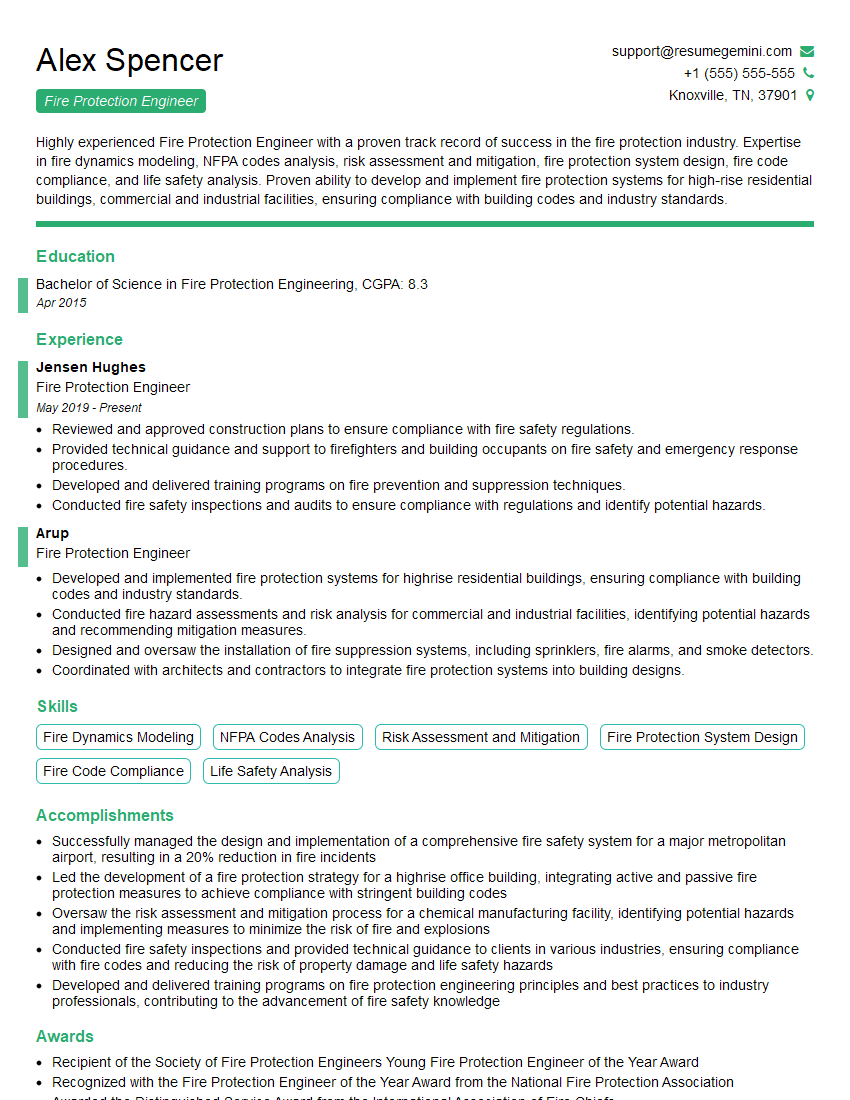
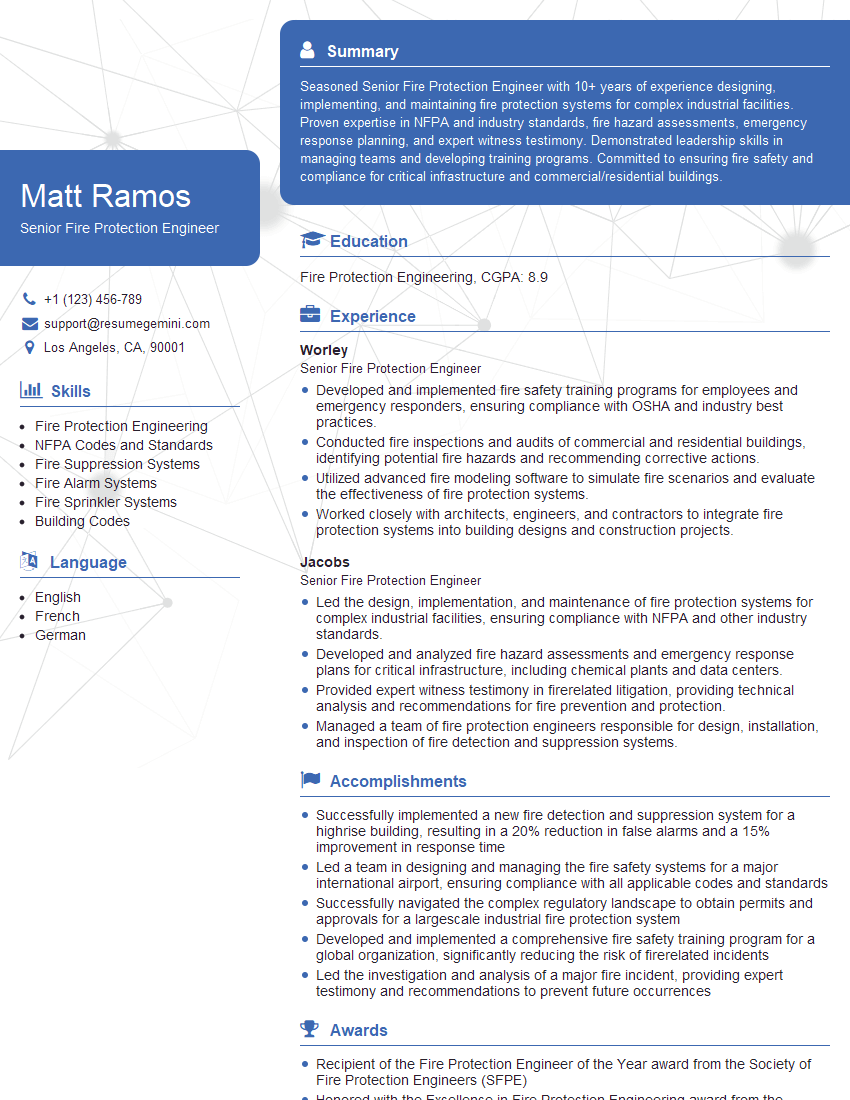
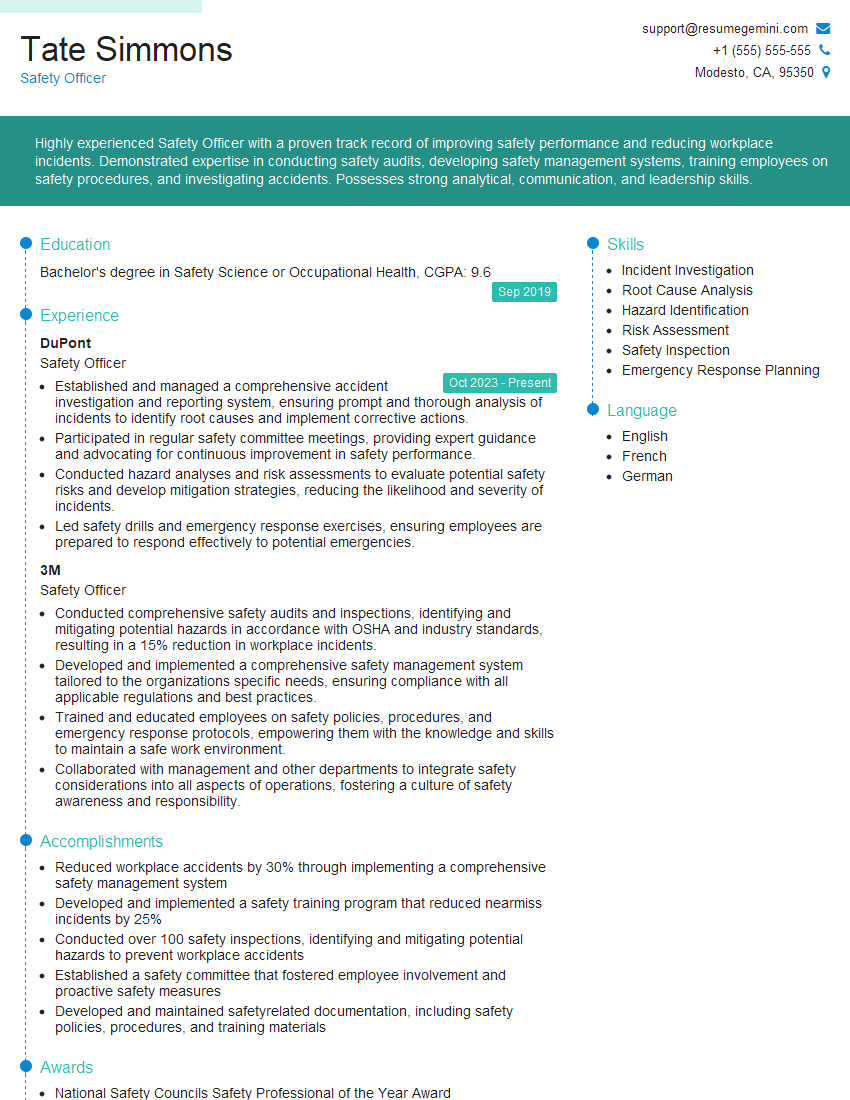
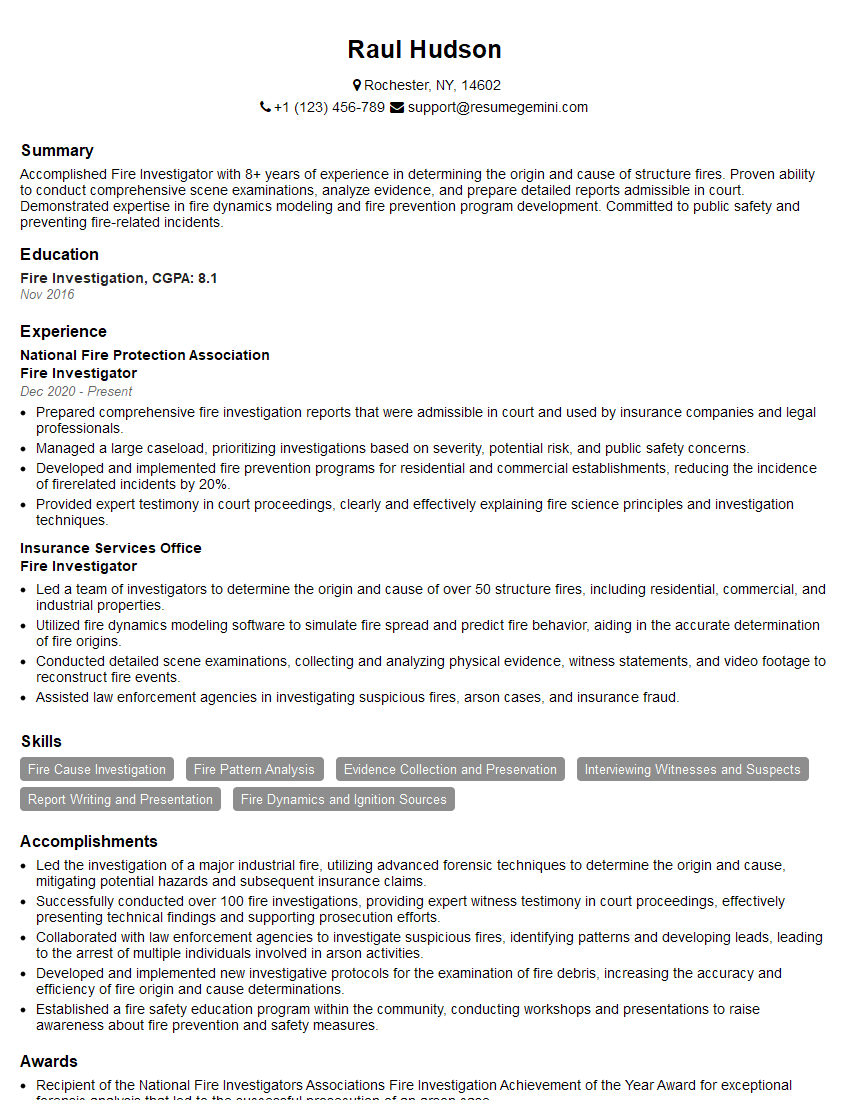
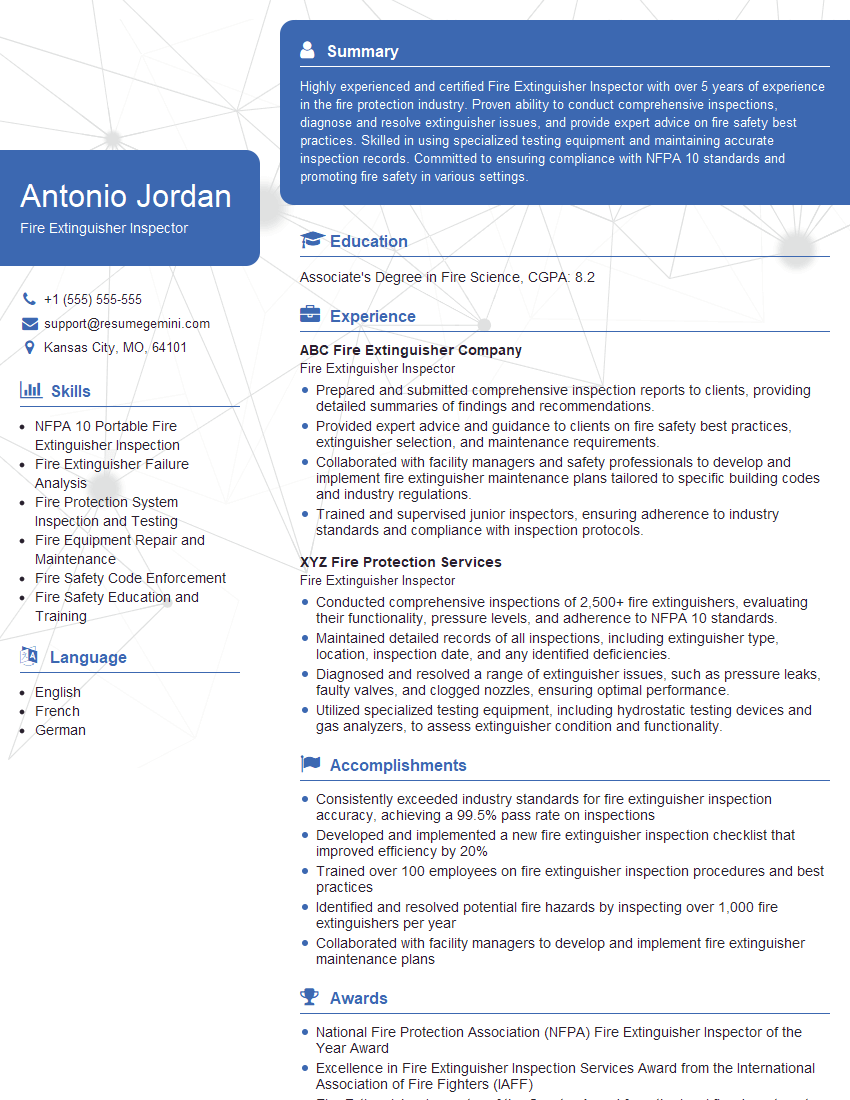
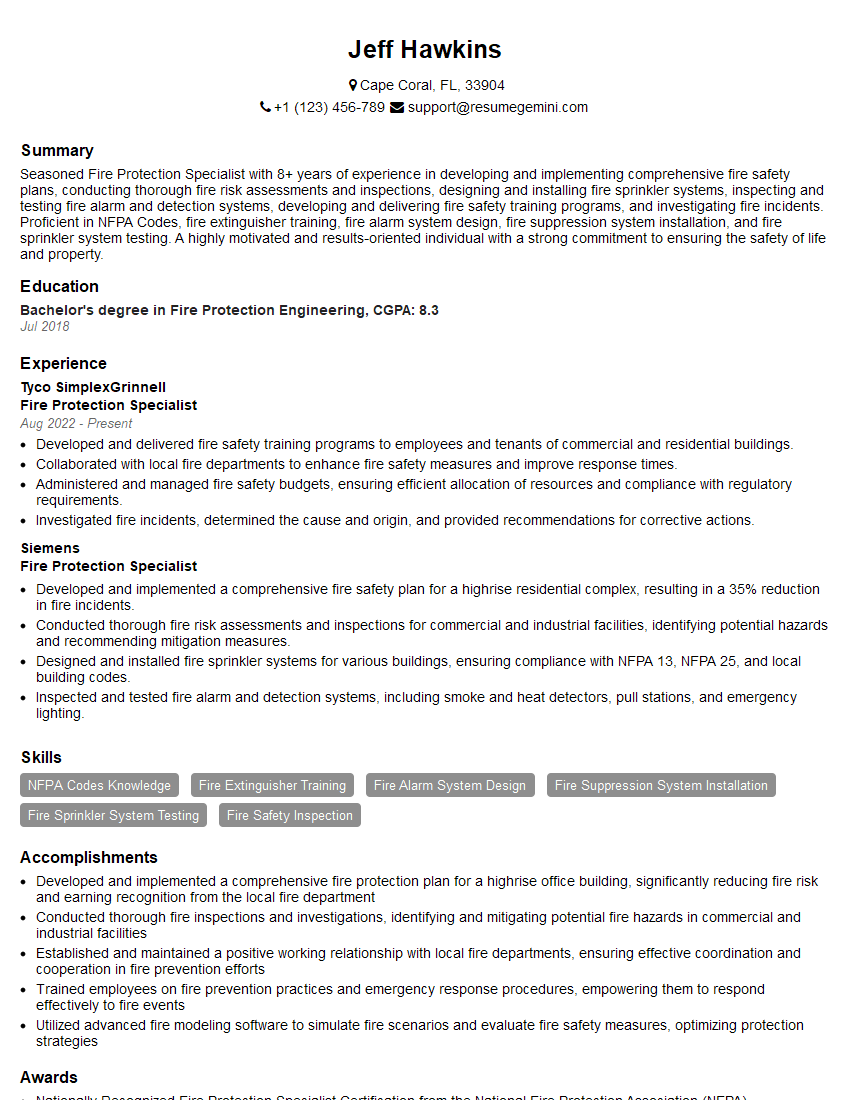
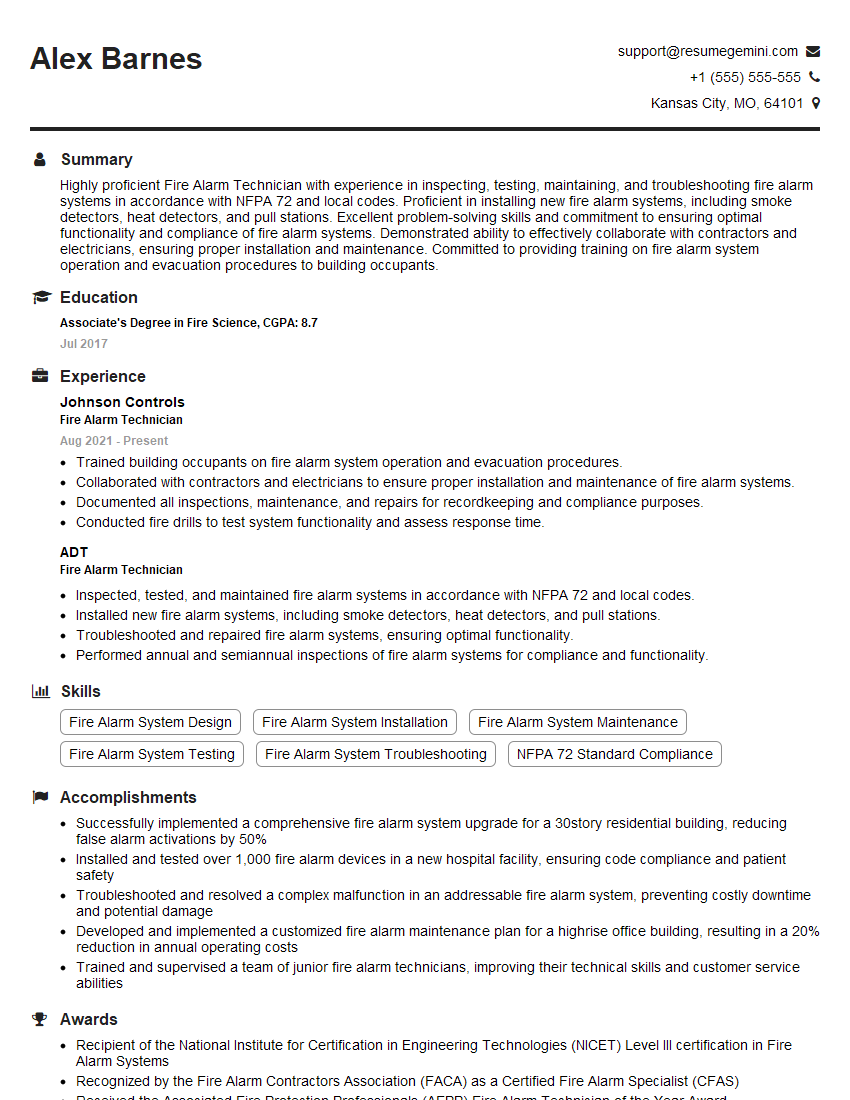
Mastering the intricacies of fire extinguishing agents is paramount for career advancement in this field. A strong understanding of these concepts demonstrates expertise and commitment, opening doors to more challenging and rewarding roles. To maximize your job prospects, creating an ATS-friendly resume is essential. A well-structured resume that highlights your skills and experience will significantly increase your chances of landing an interview. We strongly encourage you to use ResumeGemini, a trusted resource for building professional resumes, to craft a compelling document that showcases your capabilities. ResumeGemini provides examples of resumes tailored to Fire Extinguishment Agents to help guide you through the process.
Explore more articles
Users Rating of Our Blogs
Share Your Experience
We value your feedback! Please rate our content and share your thoughts (optional).
What Readers Say About Our Blog
Attention music lovers!
Wow, All the best Sax Summer music !!!
Spotify: https://open.spotify.com/artist/6ShcdIT7rPVVaFEpgZQbUk
Apple Music: https://music.apple.com/fr/artist/jimmy-sax-black/1530501936
YouTube: https://music.youtube.com/browse/VLOLAK5uy_noClmC7abM6YpZsnySxRqt3LoalPf88No
Other Platforms and Free Downloads : https://fanlink.tv/jimmysaxblack
on google : https://www.google.com/search?q=22+AND+22+AND+22
on ChatGPT : https://chat.openai.com?q=who20jlJimmy20Black20Sax20Producer
Get back into the groove with Jimmy sax Black
Best regards,
Jimmy sax Black
www.jimmysaxblack.com
Hi I am a troller at The aquatic interview center and I suddenly went so fast in Roblox and it was gone when I reset.
Hi,
Business owners spend hours every week worrying about their website—or avoiding it because it feels overwhelming.
We’d like to take that off your plate:
$69/month. Everything handled.
Our team will:
Design a custom website—or completely overhaul your current one
Take care of hosting as an option
Handle edits and improvements—up to 60 minutes of work included every month
No setup fees, no annual commitments. Just a site that makes a strong first impression.
Find out if it’s right for you:
https://websolutionsgenius.com/awardwinningwebsites
Hello,
we currently offer a complimentary backlink and URL indexing test for search engine optimization professionals.
You can get complimentary indexing credits to test how link discovery works in practice.
No credit card is required and there is no recurring fee.
You can find details here:
https://wikipedia-backlinks.com/indexing/
Regards
NICE RESPONSE TO Q & A
hi
The aim of this message is regarding an unclaimed deposit of a deceased nationale that bears the same name as you. You are not relate to him as there are millions of people answering the names across around the world. But i will use my position to influence the release of the deposit to you for our mutual benefit.
Respond for full details and how to claim the deposit. This is 100% risk free. Send hello to my email id: lukachachibaialuka@gmail.com
Luka Chachibaialuka
Hey interviewgemini.com, just wanted to follow up on my last email.
We just launched Call the Monster, an parenting app that lets you summon friendly ‘monsters’ kids actually listen to.
We’re also running a giveaway for everyone who downloads the app. Since it’s brand new, there aren’t many users yet, which means you’ve got a much better chance of winning some great prizes.
You can check it out here: https://bit.ly/callamonsterapp
Or follow us on Instagram: https://www.instagram.com/callamonsterapp
Thanks,
Ryan
CEO – Call the Monster App
Hey interviewgemini.com, I saw your website and love your approach.
I just want this to look like spam email, but want to share something important to you. We just launched Call the Monster, a parenting app that lets you summon friendly ‘monsters’ kids actually listen to.
Parents are loving it for calming chaos before bedtime. Thought you might want to try it: https://bit.ly/callamonsterapp or just follow our fun monster lore on Instagram: https://www.instagram.com/callamonsterapp
Thanks,
Ryan
CEO – Call A Monster APP
To the interviewgemini.com Owner.
Dear interviewgemini.com Webmaster!
Hi interviewgemini.com Webmaster!
Dear interviewgemini.com Webmaster!
excellent
Hello,
We found issues with your domain’s email setup that may be sending your messages to spam or blocking them completely. InboxShield Mini shows you how to fix it in minutes — no tech skills required.
Scan your domain now for details: https://inboxshield-mini.com/
— Adam @ InboxShield Mini
support@inboxshield-mini.com
Reply STOP to unsubscribe
Hi, are you owner of interviewgemini.com? What if I told you I could help you find extra time in your schedule, reconnect with leads you didn’t even realize you missed, and bring in more “I want to work with you” conversations, without increasing your ad spend or hiring a full-time employee?
All with a flexible, budget-friendly service that could easily pay for itself. Sounds good?
Would it be nice to jump on a quick 10-minute call so I can show you exactly how we make this work?
Best,
Hapei
Marketing Director
Hey, I know you’re the owner of interviewgemini.com. I’ll be quick.
Fundraising for your business is tough and time-consuming. We make it easier by guaranteeing two private investor meetings each month, for six months. No demos, no pitch events – just direct introductions to active investors matched to your startup.
If youR17;re raising, this could help you build real momentum. Want me to send more info?
Hi, I represent an SEO company that specialises in getting you AI citations and higher rankings on Google. I’d like to offer you a 100% free SEO audit for your website. Would you be interested?
Hi, I represent an SEO company that specialises in getting you AI citations and higher rankings on Google. I’d like to offer you a 100% free SEO audit for your website. Would you be interested?