Are you ready to stand out in your next interview? Understanding and preparing for Flyer Design interview questions is a game-changer. In this blog, we’ve compiled key questions and expert advice to help you showcase your skills with confidence and precision. Let’s get started on your journey to acing the interview.
Questions Asked in Flyer Design Interview
Q 1. Explain your design process for creating a flyer.
My flyer design process is iterative and client-focused. It begins with a thorough understanding of the client’s needs and objectives. I start by asking detailed questions about their target audience, the event or product being promoted, the key message they want to convey, and their budget. This initial consultation informs every subsequent step.
- Concept Development: Based on the client brief, I brainstorm several design concepts, sketching initial layouts and exploring different visual styles. I present these concepts to the client for feedback, ensuring alignment with their vision.
- Design Refinement: Once a concept is approved, I move into the detailed design phase. This involves selecting appropriate fonts, colors, imagery, and layout, paying close attention to visual hierarchy and readability. I use software like Adobe Illustrator or InDesign to create high-resolution visuals.
- Review and Revisions: I present the refined design to the client for review. This often involves a back-and-forth process of revisions based on their feedback. I’m adept at incorporating changes efficiently and maintaining the design’s integrity.
- Finalization and Preparation: Once the design is finalized and approved, I prepare the files for print, ensuring they meet the printer’s specifications, including bleed, color profiles, and resolution. I always provide the client with multiple file formats to accommodate their needs.
Q 2. What software are you proficient in for flyer design (e.g., Adobe Illustrator, Photoshop, InDesign)?
I’m highly proficient in Adobe Creative Suite, specifically Adobe Illustrator, Photoshop, and InDesign. Each program plays a crucial role in my workflow. Illustrator is excellent for creating vector-based graphics, ensuring scalability and crispness at any size. Photoshop is ideal for image manipulation and retouching, ensuring high-quality visuals. InDesign is my go-to for page layout and typography, ensuring professional and well-structured flyers.
My skills extend beyond these core programs. I’m also comfortable using other design software as needed, adapting to client preferences and project requirements.
Q 3. Describe your experience with different printing methods and their impact on flyer design.
I have extensive experience with various printing methods, including offset printing, digital printing, and large-format printing. Each method impacts design considerations differently.
- Offset Printing: Ideal for large print runs, offset printing provides high-quality results with vibrant colors and sharp details. However, it involves higher upfront costs. Design considerations include ensuring proper bleed and color profiles (like CMYK) are used.
- Digital Printing: Suitable for smaller print runs and quick turnaround times, digital printing offers cost-effectiveness and flexibility. Design considerations might include adjusting for the specific resolution capabilities of the digital press.
- Large-Format Printing: Used for posters and billboards, this method requires designs optimized for large-scale viewing. I ensure the artwork is created at a high enough resolution to maintain clarity even at significant magnification.
Understanding the nuances of each method is critical to achieving the desired results. For example, a design optimized for offset printing might look washed out when printed digitally, emphasizing the importance of selecting the right process and adapting the design accordingly.
Q 4. How do you ensure color consistency across different printing processes?
Maintaining color consistency across different printing processes is paramount. I achieve this through several key strategies:
- Color Management: I meticulously manage color profiles throughout the design process, using industry-standard color spaces like CMYK for print and ensuring consistent color conversion.
- Proofing: I always request a color proof from the printer before the final print run. This allows for adjustments and helps to catch any discrepancies early on.
- Pantone Matching System (PMS): For critical color accuracy, especially for branding, I utilize the PMS system, which provides specific color formulas for consistent results across different printing methods.
- Communication with Printer: I maintain close communication with the printer, providing them with clear instructions and specifications to ensure consistency throughout the process.
By diligently following these steps, I minimize the risk of color variations and ensure the final product accurately reflects the design intent.
Q 5. How do you incorporate brand guidelines into your flyer designs?
Incorporating brand guidelines is crucial for maintaining brand consistency and creating a cohesive visual identity. I carefully review and understand the client’s brand guidelines before starting any design work. This includes aspects like:
- Logo Usage: Correct placement, size, and clear space around the logo are always prioritized.
- Color Palette: I adhere strictly to the brand’s specified color palette, ensuring consistent use throughout the flyer.
- Typography: I select fonts that align with the brand’s typography guidelines, ensuring consistency in font families, sizes, and styles.
- Imagery and Style: I ensure the imagery and overall style of the flyer are consistent with the brand’s existing visual assets.
By meticulously following brand guidelines, I ensure the flyer effectively communicates the brand’s message while strengthening its visual identity.
Q 6. How do you handle revisions and feedback from clients?
I handle revisions and client feedback professionally and efficiently. I believe in fostering open communication throughout the design process. My approach is:
- Organized Feedback Tracking: I maintain a detailed record of all feedback received, ensuring no comment is overlooked.
- Clear Communication: I communicate clearly with the client, explaining the rationale behind design choices and offering alternative solutions when necessary.
- Iterative Revisions: I present revisions in an organized manner, clearly highlighting the changes made based on their feedback.
- Timely Response: I provide prompt and efficient responses to client inquiries, keeping the project moving forward.
My goal is not just to meet but exceed client expectations. I value collaboration and aim for a positive and productive design experience.
Q 7. Describe a time you had to design a flyer under a tight deadline.
I once had to design a flyer for a charity gala just three days before the event. The client had only provided the basic information late. It was a high-pressure situation, but I leveraged my experience and efficiency to deliver.
- Prioritization: I quickly prioritized the essential elements – event details, date, time, location, and call to action – ensuring these were prominently featured.
- Efficient Workflow: I used pre-existing templates and stock imagery to expedite the design process without compromising quality.
- Streamlined Communication: I maintained constant communication with the client, ensuring all feedback was addressed promptly.
- File Preparation: I ensured all files were prepared for print well in advance of the deadline, allowing for any potential issues to be addressed.
Despite the tight deadline, the final product met the client’s expectations and effectively promoted the gala. This experience reinforced the importance of efficient workflow, clear communication, and problem-solving skills in a high-pressure environment.
Q 8. How do you choose the appropriate fonts and typography for a flyer?
Choosing the right fonts is crucial for flyer design; it directly impacts readability and brand perception. Think of fonts as the voice of your message – a playful script for a children’s event, a bold sans-serif for a tech company, or an elegant serif for a high-end boutique.
I consider several factors:
- Target Audience: A flyer for teenagers will benefit from modern, trendy fonts, while a flyer for a senior center might use more classic and easily readable fonts.
- Brand Identity: The font should align with the brand’s overall aesthetic. Is it modern, classic, rustic, playful? The font choice needs to reflect that.
- Readability: Prioritize readability above all else. Avoid overly decorative or difficult-to-read fonts, especially for body text. Consider the size of the flyer and the expected viewing distance.
- Contrast: Ensure sufficient contrast between the font color and the background. Dark text on a light background generally works best.
- Font Pairing: Don’t use too many different fonts. A good rule of thumb is to use two at most – one for headings and one for body text. These fonts should complement each other, not clash.
For example, I might pair a clean sans-serif like Open Sans for body text with a bolder sans-serif like Montserrat for headings to create a modern and professional feel. Or, for a more traditional look, I might use a classic serif like Garamond with a simpler sans-serif like Lato for headings.
Q 9. Explain your understanding of visual hierarchy and its importance in flyer design.
Visual hierarchy is the arrangement of elements on a page to guide the viewer’s eye and communicate information effectively. It’s like a roadmap for the reader’s attention. Think of it as directing the reader’s journey through the flyer.
Importance:
- Improved Readability: It ensures crucial information (like the call to action) is seen first.
- Enhanced Engagement: A well-structured flyer keeps the reader interested and moving through the content.
- Clearer Message: It helps prioritize key messages and avoids visual clutter.
I achieve visual hierarchy using various techniques:
- Size: Larger text and images draw attention.
- Color: Bold or contrasting colors highlight important elements.
- Spacing: White space helps separate elements and create visual breathing room.
- Placement: Strategic placement of elements (like placing the call to action prominently) directs the eye.
- Font Weight: Bold or heavier fonts emphasize specific words or phrases.
For instance, I might use a large, bold headline to grab attention, followed by a smaller subheading and body text to provide details. Images can be used to further break up the text and draw the eye to specific areas.
Q 10. How do you use imagery effectively to convey a message in a flyer?
Imagery is a powerful tool for conveying a message in a flyer. A well-chosen image can instantly communicate the mood, style, and message of the event or product being advertised.
Effective use of imagery involves:
- Relevance: The image must directly relate to the flyer’s content. A picture of a delicious burger is perfect for a restaurant flyer, but not for a software launch.
- High Quality: Use high-resolution images that are crisp and clear. Pixelated or blurry images detract from the overall quality of the flyer.
- Emotional Appeal: Images that evoke positive emotions (happiness, excitement, etc.) are more likely to resonate with viewers.
- Visual Style: The image style should complement the overall design of the flyer. A photorealistic image might not be suitable for a flyer with a minimalist design.
- Appropriate Licensing: Ensure that you have the rights to use the images. Using copyrighted images without permission can lead to legal issues.
For example, a flyer for a summer music festival might feature a vibrant image of a crowd enjoying a concert, conveying energy and excitement. Conversely, a flyer for a luxury spa might use a calming image of a serene environment to promote relaxation.
Q 11. Describe your experience with designing flyers for different target audiences.
My experience encompasses designing flyers for diverse target audiences, requiring adaptation of style, tone, and content to resonate effectively.
Examples:
- Children’s event: I’d use bright, playful colors, cartoonish illustrations, and simple, easy-to-read fonts. The message would be concise and focused on fun activities.
- Corporate event: I’d opt for a more sophisticated design, using professional imagery, a clean layout, and high-quality fonts. The language would be formal and professional, highlighting the event’s purpose and benefits.
- Local business promotion: The design would focus on attracting local customers. I might incorporate imagery that showcases the business’s location or products, and the tone would be friendly and approachable.
- University announcement: The design needs to convey credibility and academic excellence, utilizing a more formal tone, clean layouts, and high-quality images, perhaps incorporating university branding elements.
Adapting my design approach to each audience is key to achieving impactful results. I always research the target demographic to ensure the flyer’s message, style and tone are perfectly aligned.
Q 12. How do you measure the success of a flyer design?
Measuring the success of a flyer design goes beyond simply assessing its visual appeal. It involves analyzing its effectiveness in achieving its intended goal, such as driving sales, increasing event attendance, or raising brand awareness.
Methods to measure success include:
- Tracking Codes/QR Codes: Including unique tracking codes or QR codes allows me to monitor how many people are responding to the flyer and where they are coming from.
- Website Analytics: If the flyer directs people to a website, I analyze website traffic from that source to determine the number of visits and conversions.
- Event Attendance: For event flyers, I can compare attendance figures to previous years or to similar events to measure the impact of the flyer.
- Sales Data: If the flyer is promoting a product, I track sales data to see if there’s a noticeable increase after the distribution of the flyer.
- Customer Surveys/Feedback: Gathering feedback directly from customers can offer valuable insights into what resonated well and what could be improved.
Combining these methods provides a comprehensive picture of the flyer’s effectiveness. It allows for data-driven refinement of future designs.
Q 13. What are some common mistakes to avoid when designing flyers?
Many common mistakes can hinder a flyer’s effectiveness. Avoiding these pitfalls is crucial for creating impactful designs.
Common mistakes to avoid:
- Poor Readability: Using hard-to-read fonts, insufficient contrast, or too much text.
- Cluttered Design: Overcrowding the flyer with too many elements, making it visually overwhelming.
- Poor Image Quality: Using low-resolution or irrelevant images.
- Inconsistent Branding: Not aligning the design with the brand’s overall aesthetic.
- Lack of Call to Action: Not clearly stating what you want the reader to do (e.g., visit a website, call a number).
- Ignoring Target Audience: Failing to tailor the design and message to the intended audience.
- Incorrect Dimensions: Not using the appropriate dimensions for printing.
Careful planning and consideration of these points greatly increases the chance of creating a successful and effective flyer.
Q 14. How do you stay up-to-date with the latest design trends?
Staying current with design trends is essential for maintaining a competitive edge. I employ several strategies:
- Following Design Blogs and Websites: I regularly read design blogs, websites, and online publications dedicated to graphic design and trends, such as Behance and Dribbble.
- Attending Workshops and Conferences: Participating in industry events allows me to learn from leading designers and network with peers.
- Utilizing Social Media: Platforms like Instagram and Pinterest provide exposure to new styles and techniques.
- Exploring Design Magazines and Books: Printed materials offer in-depth insights into various design approaches.
- Analyzing Competitor Work: Observing successful flyer designs from competitors gives me valuable insights into current best practices.
By actively seeking out new inspiration and information, I ensure my designs remain fresh, relevant, and aligned with the latest visual trends.
Q 15. Explain your understanding of color theory and its application in flyer design.
Color theory is the foundational principle governing how colors interact and create visual impact. Understanding it is crucial for effective flyer design. It encompasses three main aspects: color wheel relationships, color schemes, and color psychology.
- Color Wheel Relationships: The color wheel visually demonstrates the relationships between colors – primary (red, yellow, blue), secondary (green, orange, violet), and tertiary (combinations of primary and secondary). Understanding complementary (opposite colors on the wheel), analogous (colors next to each other), and triadic (three evenly spaced colors) relationships allows for creating visually appealing and harmonious palettes.
- Color Schemes: Different color schemes evoke different emotions and suit different purposes. For example, a warm scheme (reds, oranges, yellows) might be used for a food flyer to stimulate appetite, while a cool scheme (blues, greens) might be ideal for a calming spa treatment. Monochromatic (variations of a single color) schemes create a sense of elegance and sophistication.
- Color Psychology: Colors have psychological associations that impact how viewers perceive your message. Red signifies urgency or excitement, blue conveys trust and calmness, green represents nature and growth. Consider these implications when selecting a color palette.
For instance, designing a flyer for a summer music festival, I might use a vibrant, analogous scheme combining oranges, yellows, and reds to capture the energy of the event. Contrast is key – make sure your text and important elements are easily legible against your chosen background color.
Career Expert Tips:
- Ace those interviews! Prepare effectively by reviewing the Top 50 Most Common Interview Questions on ResumeGemini.
- Navigate your job search with confidence! Explore a wide range of Career Tips on ResumeGemini. Learn about common challenges and recommendations to overcome them.
- Craft the perfect resume! Master the Art of Resume Writing with ResumeGemini’s guide. Showcase your unique qualifications and achievements effectively.
- Don’t miss out on holiday savings! Build your dream resume with ResumeGemini’s ATS optimized templates.
Q 16. How do you balance creativity and practicality in your flyer designs?
Balancing creativity and practicality in flyer design is a delicate art. Creativity is about crafting a visually captivating design that grabs attention. Practicality ensures the design effectively communicates the intended message and is feasible within budget and time constraints.
For me, this balance involves a clear understanding of the client’s goals. I start with a thorough briefing to grasp the target audience, the message to convey, and the desired outcome (increased sales, event attendance, etc.). I then brainstorm creative concepts, exploring different visual styles and approaches, but always grounding them in the practicalities. This might involve choosing a font that is both visually appealing and easily readable, or selecting an image that reflects the brand while being high-resolution and suitable for print. I always present multiple design options, allowing the client to provide feedback and shape the final product.
For example, I designed a flyer for a local bookstore. While I explored artistic typographic treatments, I ensured the key information (store location, event schedule) was prominently displayed and easily accessible, avoiding a cluttered or confusing layout.
Q 17. Describe your experience with using different paper stocks and finishes.
My experience with different paper stocks and finishes is extensive. The choice of paper significantly impacts the overall impression of a flyer. I’ve worked with various weights (e.g., 80lb cover, 100lb cover), textures (smooth, uncoated, textured), and finishes (gloss, matte, UV coating).
- Weight: Heavier paper stocks convey a higher sense of quality and durability. They’re particularly suitable for flyers intended to be kept for longer periods.
- Texture: Uncoated paper stocks offer a more natural, tactile feel, while smooth, coated stocks provide vibrant color reproduction. The choice depends on the desired aesthetic and brand image.
- Finishes: Gloss finishes give a sleek, modern look but can be prone to fingerprints; matte finishes provide a more subtle, less reflective effect; UV coating enhances durability and protects against scratches.
For a high-end product launch, I might select a heavier, textured paper with a matte finish to convey elegance and sophistication. For a casual event, a lighter weight, uncoated paper with a vibrant design might be more appropriate. In each case, the choice is driven by the client’s budget and the desired brand image.
Q 18. How do you ensure your flyer designs are accessible to people with disabilities?
Accessibility is paramount in my design process. I ensure all my flyer designs meet WCAG (Web Content Accessibility Guidelines) standards where applicable, and consider accessibility for those with print disabilities. This includes:
- Sufficient Color Contrast: Using sufficient color contrast between text and background ensures readability for people with visual impairments. I utilize tools to check contrast ratios and adhere to WCAG guidelines.
- Font Choice: Selecting clear, legible fonts with sufficient point size (at least 12pt for body text) improves readability for everyone, including those with visual impairments.
- Alternative Text for Images: If incorporating images, providing descriptive alternative text (alt text) allows screen readers to convey the image content to visually impaired users.
- Simplified Layout: A clear and uncluttered layout helps everyone process information effectively.
Even when designing for print-only flyers, keeping accessibility principles in mind ensures that information is presented clearly and effectively, maximizing its usability for all.
Q 19. Describe your experience working with a design team.
I thrive in collaborative environments and have extensive experience working with design teams. My approach involves open communication, active listening, and mutual respect. I value diverse perspectives and believe that a team’s collective expertise leads to superior results.
My roles in team settings have varied, from leading a team to contributing as a member. I am proficient in using project management software (like Asana or Trello) to track progress, share files, and ensure efficient workflows. I always actively participate in brainstorming sessions, offering creative input and contributing to the development of innovative solutions. In any team setting, I maintain a positive and supportive attitude, fostering collaboration and constructive feedback.
For example, in one project involving the design of a series of flyers for a museum exhibition, I worked closely with the marketing team to define the key message and target audience, with the copywriter to refine the text, and with the project manager to ensure timely delivery of the final products. This collaborative approach resulted in a cohesive and impactful campaign.
Q 20. How do you handle constructive criticism of your flyer designs?
I view constructive criticism as a valuable opportunity for growth and improvement. I welcome feedback from clients, colleagues, and stakeholders as a means to refine my designs and enhance their effectiveness.
My approach involves actively listening to the feedback, asking clarifying questions, and seeking to understand the rationale behind the critiques. I then assess the feedback objectively, determining which suggestions are valid and how they can be implemented to strengthen the design. I never take criticism personally, instead seeing it as a chance to learn and improve my skills.
I maintain open communication with the client throughout the revision process, explaining my rationale for incorporating or rejecting specific suggestions. The goal is always to create a final product that meets the client’s needs and reflects a high standard of design excellence.
Q 21. What is your approach to designing for both digital and print formats?
Designing for both digital and print formats requires a nuanced approach, as the two mediums have different requirements and constraints.
For print, I focus on high-resolution images, ensuring appropriate color profiles (CMYK), and considering bleed and trim areas. I also optimize designs for the chosen paper stock and printing method.
For digital formats, the design needs to be responsive and adaptable across different screen sizes. I use vector graphics where possible, ensuring designs are scalable without loss of quality. File size optimization is critical for fast loading times on websites and other online platforms. I’ll often use RGB color profiles for digital designs.
A key aspect is maintaining design consistency across both formats. While adjustments are necessary to accommodate the technical requirements of each medium, the overall visual style, brand messaging, and color palette should remain consistent. I often create a master design file that can then be adapted for both print and digital use, ensuring a cohesive brand experience.
Q 22. How familiar are you with different file formats for print (e.g., PDF, TIFF)?
File formats are crucial for print design, ensuring quality and compatibility. PDF (Portable Document Format) is the industry standard, preserving vector graphics and fonts, crucial for sharp, scalable prints. TIFF (Tagged Image File Format) is preferred for high-resolution images, especially photographs, minimizing data loss during printing. I’m proficient in both, understanding their strengths and limitations. For instance, a PDF is best for a flyer with text and logos, whereas TIFF would be ideal for a flyer heavily reliant on high-quality photography, like a travel brochure. I always check the printer’s requirements to ensure the best possible outcome and avoid issues like color shifts or font inconsistencies.
Q 23. How do you optimize your flyer designs for various print sizes?
Optimizing designs for various print sizes requires a strategic approach focusing on scalability and resolution. I use vector graphics whenever possible (like logos created in Adobe Illustrator) because they maintain quality regardless of scaling. For raster images (like photos from your smartphone), I ensure sufficient resolution (at least 300 DPI for print) to avoid pixelation. I create my designs using a master template in a larger size that I then scale down for smaller prints. This method preserves image clarity and text legibility across different sizes. I also adjust margins and layouts to fit the new dimensions, preventing important elements from being cut off or looking cramped. For example, a flyer designed for A4 (8.5×11 inches) can be easily scaled down to A5 (5.8×8.3 inches) while retaining its professional look and feel.
Q 24. Describe your experience in designing flyers for specific industries (e.g., healthcare, hospitality).
My experience spans several industries, tailoring designs to specific needs. In healthcare, flyers need to be clean, professional, and trustworthy, often focusing on clear information and calming colors. For example, a flyer advertising a new clinic would use calming blues and greens and clear, concise text about services. In the hospitality sector, I focus on creating visually appealing designs that evoke the desired atmosphere. A flyer for a luxury resort might use vibrant colors and high-quality imagery, emphasizing elegance and relaxation. I always conduct thorough research on each industry’s visual language and target audience to craft effective and impactful designs.
Q 25. How do you incorporate call-to-actions effectively into your flyer designs?
Effective call-to-actions (CTAs) are vital for driving results. I design them to be prominent, using contrasting colors, clear action verbs, and a compelling message. Their placement is equally critical; a CTA buried in text is ineffective. I typically place them near the bottom or at a visually prominent spot that draws the eye. For example, instead of just ‘Learn More,’ I might use ‘Discover our Special Offers Now!’ or include a strong visual cue like an arrow pointing towards the website URL. Using a clear and concise CTA significantly increases engagement.
Q 26. How do you ensure your flyer designs align with marketing objectives?
Alignment with marketing objectives is paramount. I begin every project by thoroughly understanding the client’s goals, target audience, and desired outcomes. This involves analyzing market trends, competitor analysis, and a detailed discussion of the marketing strategy. For example, if the goal is to increase foot traffic to a new store, the flyer design will prioritize location, opening hours, and a visually appealing representation of the products/services. Every design element, from color palette to font choice, will be consciously selected to achieve these goals. This collaborative approach ensures the flyer is not just visually appealing but also effective in achieving its marketing purpose.
Q 27. Describe your experience with A/B testing flyer designs.
A/B testing is integral to optimizing flyer designs. I create variations of a design, focusing on changes to specific elements like headlines, imagery, or CTAs. Then, I distribute these versions to different segments of the target audience and track their performance using metrics like click-through rates or response rates. This data-driven approach helps identify which design elements resonate most with the target audience and allows for continuous improvement. For example, I might test two flyer versions—one with a bold headline and another with a more subtle approach—to see which drives more engagement.
Q 28. What are your salary expectations?
My salary expectations are commensurate with my experience and skills, ranging from $X to $Y annually. This range reflects my proven ability to deliver high-quality, effective designs that meet and exceed client expectations. I’m open to discussing this further based on the specific details of the role and the company’s compensation structure.
Key Topics to Learn for Flyer Design Interview
- Design Principles: Understanding and applying principles like balance, contrast, proximity, and repetition to create visually appealing and effective flyers.
- Typography & Font Selection: Choosing appropriate fonts, sizes, and styles to ensure readability and brand consistency. Consider the impact of kerning and leading.
- Color Theory & Palette Selection: Mastering color psychology to evoke desired emotions and aligning color choices with brand guidelines. Explore color harmonies and contrasts.
- Image Selection & Manipulation: Choosing high-quality images, understanding image resolution, and using image editing software to optimize images for print and digital use. Consider copyright implications.
- Layout & Composition: Creating visually engaging layouts that guide the viewer’s eye and effectively communicate the flyer’s message. Experiment with different layout structures (Z-pattern, F-pattern, etc.).
- Software Proficiency: Demonstrating practical experience with industry-standard design software such as Adobe Photoshop, Illustrator, or InDesign. Be prepared to discuss your workflow and preferred tools.
- Print Production & File Preparation: Understanding print specifications, color profiles (CMYK), bleed and margins, and preparing files for professional printing.
- Branding & Messaging: Aligning the flyer design with the overall brand identity and crafting compelling messaging to resonate with the target audience.
- Problem-Solving & Creative Thinking: Demonstrating the ability to overcome design challenges, think creatively, and iterate on designs to achieve optimal results. Be prepared to discuss your creative process.
Next Steps
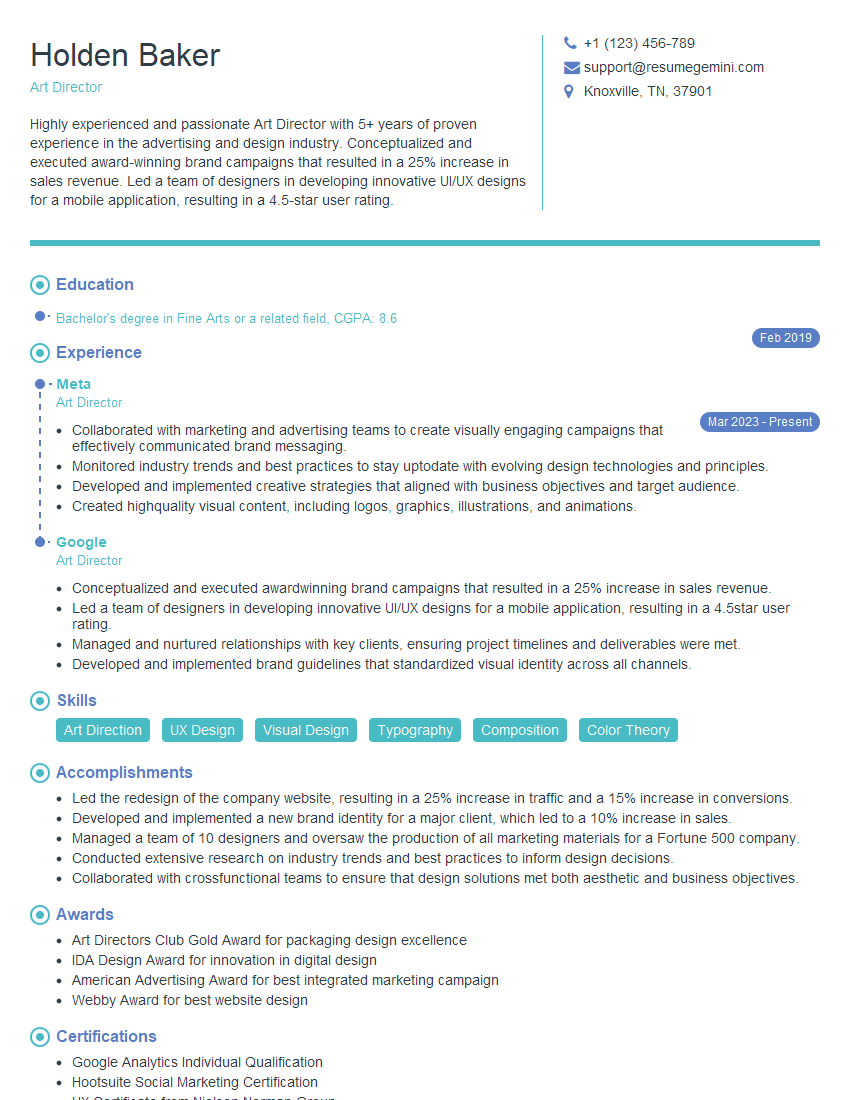
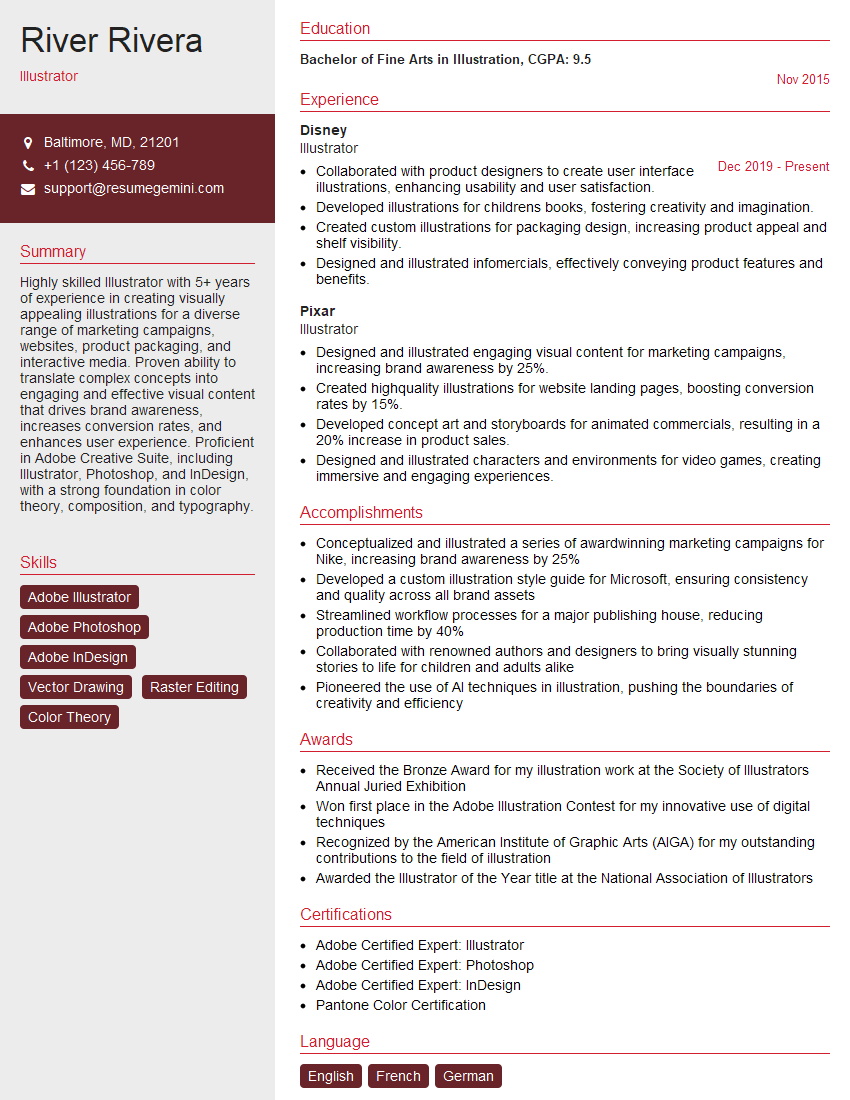
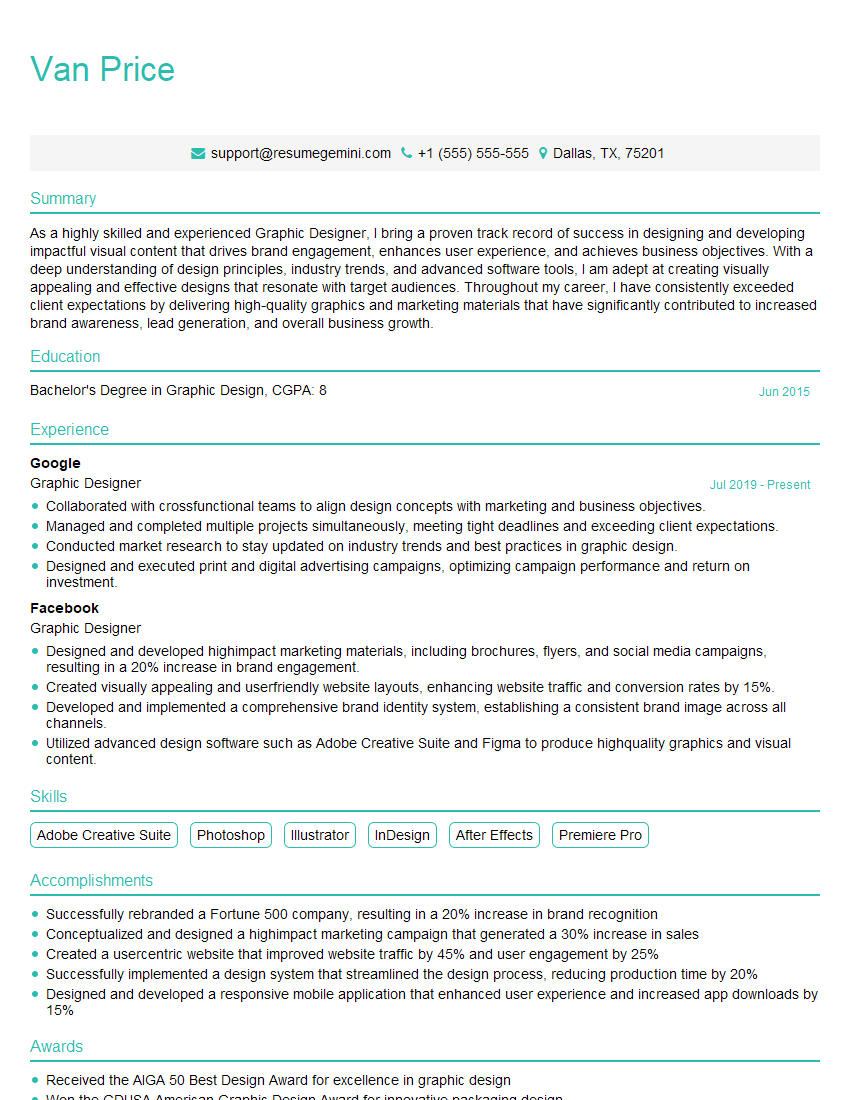
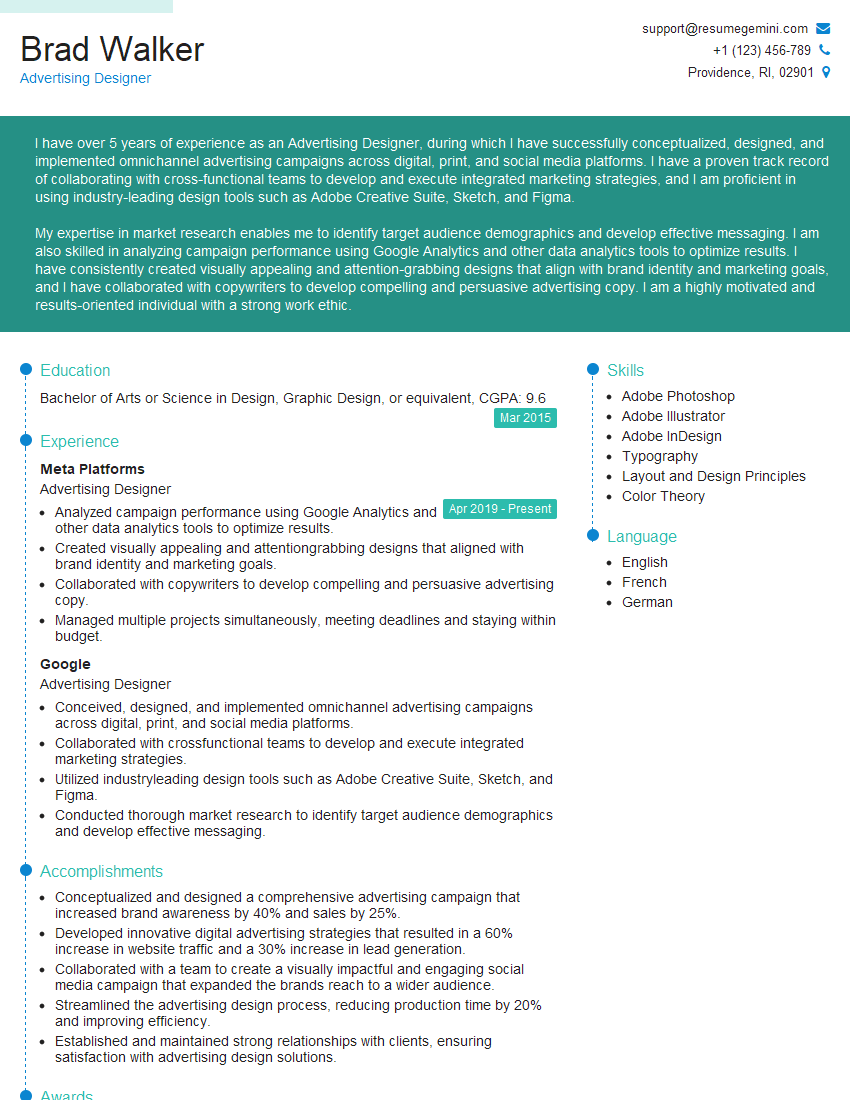
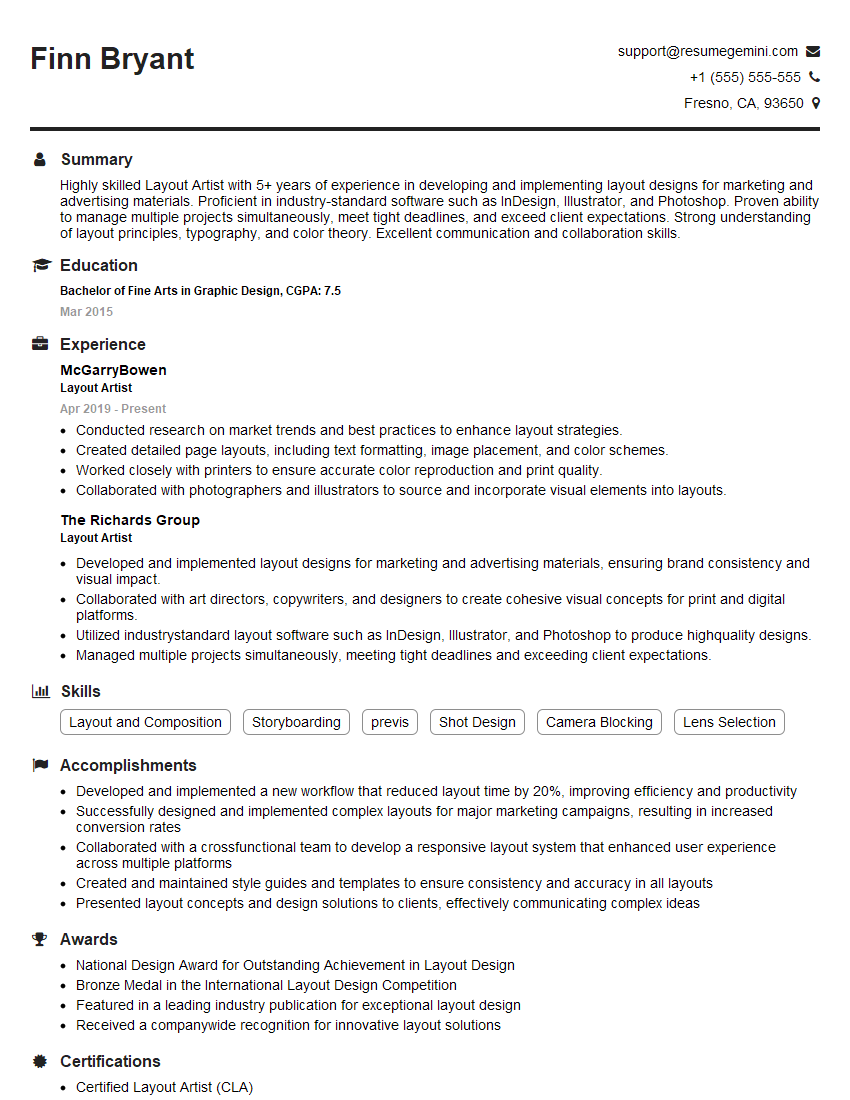
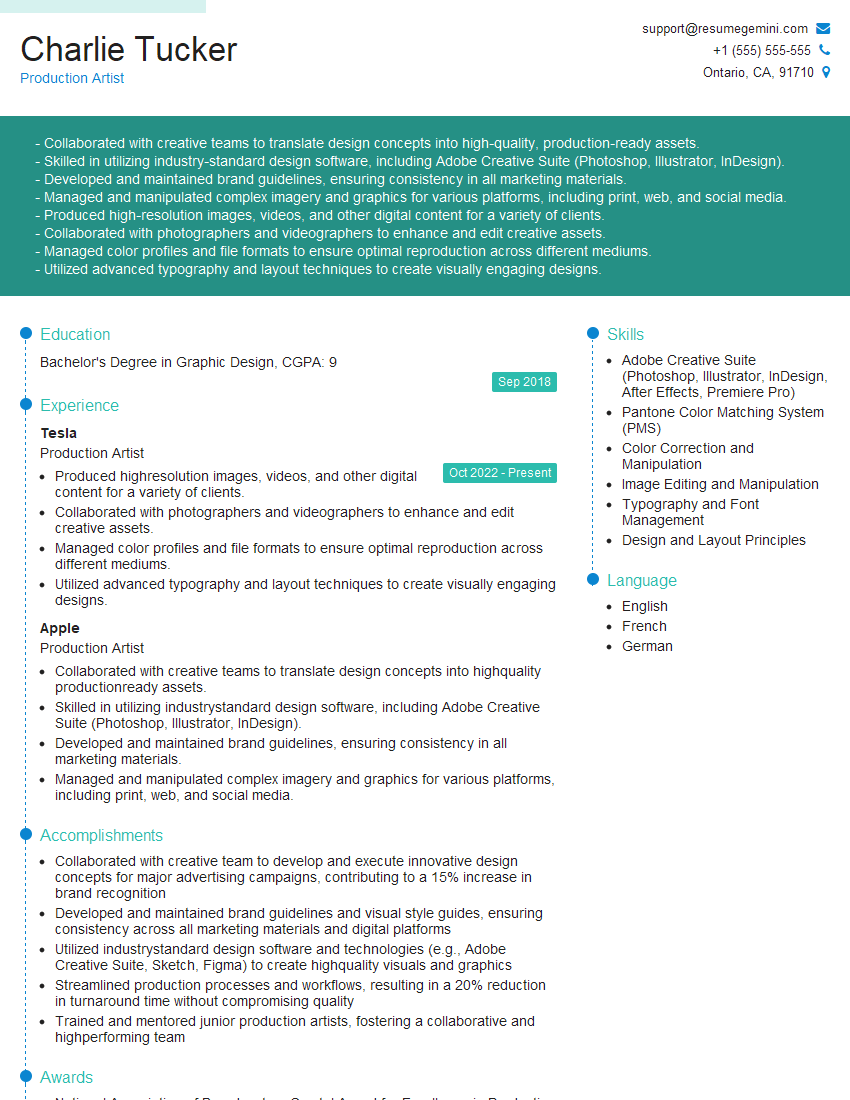
Mastering flyer design is crucial for a successful career in graphic design and related fields. A strong portfolio showcasing your skills is essential, but a well-crafted resume is your first impression. An ATS-friendly resume ensures your qualifications are accurately recognized by Applicant Tracking Systems, significantly increasing your chances of landing an interview. To create a professional and impactful resume, we highly recommend using ResumeGemini. ResumeGemini provides a user-friendly platform and offers examples of resumes tailored specifically to Flyer Design roles, helping you present your skills and experience effectively.


Explore more articles
Users Rating of Our Blogs
Share Your Experience
We value your feedback! Please rate our content and share your thoughts (optional).
What Readers Say About Our Blog
Attention music lovers!
Wow, All the best Sax Summer music !!!
Spotify: https://open.spotify.com/artist/6ShcdIT7rPVVaFEpgZQbUk
Apple Music: https://music.apple.com/fr/artist/jimmy-sax-black/1530501936
YouTube: https://music.youtube.com/browse/VLOLAK5uy_noClmC7abM6YpZsnySxRqt3LoalPf88No
Other Platforms and Free Downloads : https://fanlink.tv/jimmysaxblack
on google : https://www.google.com/search?q=22+AND+22+AND+22
on ChatGPT : https://chat.openai.com?q=who20jlJimmy20Black20Sax20Producer
Get back into the groove with Jimmy sax Black
Best regards,
Jimmy sax Black
www.jimmysaxblack.com
Hi I am a troller at The aquatic interview center and I suddenly went so fast in Roblox and it was gone when I reset.
Hi,
Business owners spend hours every week worrying about their website—or avoiding it because it feels overwhelming.
We’d like to take that off your plate:
$69/month. Everything handled.
Our team will:
Design a custom website—or completely overhaul your current one
Take care of hosting as an option
Handle edits and improvements—up to 60 minutes of work included every month
No setup fees, no annual commitments. Just a site that makes a strong first impression.
Find out if it’s right for you:
https://websolutionsgenius.com/awardwinningwebsites
Hello,
we currently offer a complimentary backlink and URL indexing test for search engine optimization professionals.
You can get complimentary indexing credits to test how link discovery works in practice.
No credit card is required and there is no recurring fee.
You can find details here:
https://wikipedia-backlinks.com/indexing/
Regards
NICE RESPONSE TO Q & A
hi
The aim of this message is regarding an unclaimed deposit of a deceased nationale that bears the same name as you. You are not relate to him as there are millions of people answering the names across around the world. But i will use my position to influence the release of the deposit to you for our mutual benefit.
Respond for full details and how to claim the deposit. This is 100% risk free. Send hello to my email id: lukachachibaialuka@gmail.com
Luka Chachibaialuka
Hey interviewgemini.com, just wanted to follow up on my last email.
We just launched Call the Monster, an parenting app that lets you summon friendly ‘monsters’ kids actually listen to.
We’re also running a giveaway for everyone who downloads the app. Since it’s brand new, there aren’t many users yet, which means you’ve got a much better chance of winning some great prizes.
You can check it out here: https://bit.ly/callamonsterapp
Or follow us on Instagram: https://www.instagram.com/callamonsterapp
Thanks,
Ryan
CEO – Call the Monster App
Hey interviewgemini.com, I saw your website and love your approach.
I just want this to look like spam email, but want to share something important to you. We just launched Call the Monster, a parenting app that lets you summon friendly ‘monsters’ kids actually listen to.
Parents are loving it for calming chaos before bedtime. Thought you might want to try it: https://bit.ly/callamonsterapp or just follow our fun monster lore on Instagram: https://www.instagram.com/callamonsterapp
Thanks,
Ryan
CEO – Call A Monster APP
To the interviewgemini.com Owner.
Dear interviewgemini.com Webmaster!
Hi interviewgemini.com Webmaster!
Dear interviewgemini.com Webmaster!
excellent
Hello,
We found issues with your domain’s email setup that may be sending your messages to spam or blocking them completely. InboxShield Mini shows you how to fix it in minutes — no tech skills required.
Scan your domain now for details: https://inboxshield-mini.com/
— Adam @ InboxShield Mini
support@inboxshield-mini.com
Reply STOP to unsubscribe
Hi, are you owner of interviewgemini.com? What if I told you I could help you find extra time in your schedule, reconnect with leads you didn’t even realize you missed, and bring in more “I want to work with you” conversations, without increasing your ad spend or hiring a full-time employee?
All with a flexible, budget-friendly service that could easily pay for itself. Sounds good?
Would it be nice to jump on a quick 10-minute call so I can show you exactly how we make this work?
Best,
Hapei
Marketing Director
Hey, I know you’re the owner of interviewgemini.com. I’ll be quick.
Fundraising for your business is tough and time-consuming. We make it easier by guaranteeing two private investor meetings each month, for six months. No demos, no pitch events – just direct introductions to active investors matched to your startup.
If youR17;re raising, this could help you build real momentum. Want me to send more info?
Hi, I represent an SEO company that specialises in getting you AI citations and higher rankings on Google. I’d like to offer you a 100% free SEO audit for your website. Would you be interested?
Hi, I represent an SEO company that specialises in getting you AI citations and higher rankings on Google. I’d like to offer you a 100% free SEO audit for your website. Would you be interested?