Interviews are opportunities to demonstrate your expertise, and this guide is here to help you shine. Explore the essential Framing and carpentry interview questions that employers frequently ask, paired with strategies for crafting responses that set you apart from the competition.
Questions Asked in Framing and carpentry Interview
Q 1. Explain the different types of wood framing.
Wood framing involves constructing the skeletal structure of a building using lumber. Several types exist, each with its own advantages and disadvantages. The choice depends on factors like building design, budget, and local building codes.
- Platform Framing: This is the most common method in modern construction. Each floor is built as a separate platform, creating a strong and stable base for the next level. This makes construction easier and safer as work can be done primarily on the ground or completed floors.
- Balloon Framing: In this method, the studs run continuously from the foundation to the roof. While requiring less lumber, it’s less fire-resistant and poses challenges with plumbing and wiring runs. It’s less common now due to safety and code requirements.
- Post and Beam Framing: This traditional technique uses larger, heavier timbers to create a frame with significant spacing between the beams. It’s visually appealing and often used in larger, more custom homes, but requires skilled labor and more expensive materials.
- Light Gauge Steel Framing: While not strictly wood framing, it’s worth mentioning as a common alternative. It uses thin metal studs and is lightweight, strong, and resistant to fire and pests. It’s becoming increasingly popular due to its efficiency.
Q 2. Describe your experience with various framing techniques (platform, balloon, etc.).
I have extensive experience with platform and balloon framing, having worked on numerous residential and commercial projects. Platform framing is my preferred method due to its ease of construction, efficiency, and overall safety. I’ve worked on projects where balloon framing was specified, requiring meticulous attention to detail and specialized techniques for installing utilities. I understand the limitations of balloon framing and always prioritize safety, even on projects using this older technique.
For instance, on a recent renovation project, the existing structure used balloon framing. We carefully examined the existing structure for stability and addressed any issues before proceeding. This involved strengthening weak points and using appropriate bracing techniques to ensure the integrity of the structure during the renovation.
Q 3. How do you ensure accurate measurements and cuts in framing?
Accuracy is paramount in framing. We use a combination of tools and techniques to ensure precise measurements and cuts:
- Detailed Plans: Starting with accurate architectural plans is crucial. We thoroughly review them, identifying potential issues before starting work.
- Laser Measuring Tools: These provide incredibly precise measurements, minimizing errors and ensuring consistent spacing.
- Speed Squares: These are essential for marking angles, ensuring accurate cuts for rafters, and other angled members.
- Chop Saws and Miter Saws: These power tools, when used correctly with the appropriate blades, make clean, precise cuts.
- Double-Checking: We always double-check measurements and cuts before installing any framing members. A simple mistake early on can lead to significant problems later.
Think of it like building with LEGOs. If your base isn’t perfectly square and level, the entire structure will be off. We maintain that precision at every step.
Q 4. What safety precautions do you take while working with power tools?
Safety is my top priority. When working with power tools, I always adhere to the following:
- Proper Personal Protective Equipment (PPE): This includes safety glasses, hearing protection, work gloves, and appropriate footwear.
- Tool Maintenance: Tools are regularly inspected and maintained to ensure they are in good working order. Dull blades, for example, increase the risk of kickback.
- Safe Work Practices: Never rush. Maintain a clear workspace, secure materials properly, and always follow the manufacturer’s instructions for each tool.
- Emergency Procedures: I’m familiar with emergency procedures, including first aid and how to respond to accidents.
- Lockout/Tagout Procedures: On larger projects, we utilize lockout/tagout procedures for equipment maintenance to prevent accidental starts.
A simple cut can be dangerous if you’re not careful. Our safety protocols are as important as our construction techniques.
Q 5. Explain your understanding of building codes and regulations related to framing.
I have a thorough understanding of building codes and regulations concerning framing. These vary by location, but generally cover aspects such as:
- Structural Integrity: Framing must meet specific requirements for load-bearing capacity, ensuring the building can withstand wind, snow, and other forces.
- Fire Safety: Regulations specify requirements for fire-resistant materials and construction techniques to prevent the spread of fire.
- Accessibility: Codes often dictate requirements for accessibility, such as door widths and ramp slopes.
- Energy Efficiency: Building codes increasingly emphasize energy efficiency, influencing framing techniques and insulation requirements.
I regularly consult the relevant codes for each project and make sure all work conforms to these regulations. Ignoring building codes can lead to dangerous and costly consequences.
Q 6. Describe your experience working with different types of fasteners.
My experience encompasses a range of fasteners, each suited to specific applications:
- Nails: Common for sheathing and general framing. Various types exist, including common nails, sinkers, and ring-shank nails, each optimized for different wood types and applications.
- Screws: Offer superior holding power and are often used for connections requiring higher strength or adjustability. Wood screws come in different lengths, diameters, and head types.
- Bolts: Used for heavy-duty connections and are particularly useful for joining larger timbers or steel components.
- Connectors: Metal connectors like joist hangers, hurricane ties, and rafter ties enhance the strength and stability of the framing, ensuring compliance with building codes.
The right fastener is crucial for a strong and safe structure. Improper fastening can lead to structural failure.
Q 7. How do you handle unexpected issues or problems during framing?
Unexpected issues are inevitable in construction. My approach involves:
- Assessment: Carefully assess the problem, identifying its root cause and potential impact on the project.
- Problem-Solving: Develop several potential solutions, weighing their feasibility, cost, and impact on the project timeline.
- Consultation: When necessary, I consult with engineers, architects, or other specialists to ensure the best approach is taken.
- Documentation: Maintain meticulous records of the issue, its resolution, and any modifications made to the plans.
- Safety: Prioritize safety throughout the problem-solving process. If necessary, halt work until the issue is resolved safely.
For example, discovering rotted lumber during framing requires immediate action. We’d assess the extent of the damage, replace the affected lumber, and potentially adjust the framing to compensate for the changes.
Q 8. What are the common problems encountered during framing and how do you address them?
Common framing problems often stem from inaccurate measurements, poor material quality, or inadequate planning. For instance, misaligned studs can compromise wall stability, while using warped lumber leads to structural weakness. Improperly installed bracing can result in racking (leaning).
- Inaccurate Measurements: Addressing this involves meticulous double-checking of measurements before cutting and employing laser levels for precise alignment. A simple mistake in measuring can cascade into significant problems later.
- Material Quality: Using only high-quality, straight lumber is crucial. Inspecting each piece for warping, knots, and splits before installation prevents future issues. Rejecting substandard materials is vital.
- Inadequate Bracing: Proper bracing is critical, especially for tall walls and large openings. This involves strategically placing temporary bracing during construction and ensuring sufficient permanent bracing according to building codes. Think of bracing as the skeleton’s support system, preventing collapse.
- Weather Conditions: Framing in extreme weather (high winds, heavy rain) can introduce challenges. Taking precautions, such as securing materials properly and using weather protection, minimizes risks.
Addressing these problems proactively through careful planning, precise execution, and quality control ensures a structurally sound and safe building.
Q 9. How do you ensure the structural integrity of a framed structure?
Ensuring structural integrity hinges on adherence to building codes, precise framing techniques, and the use of appropriate materials. This involves several key steps:
- Correct Engineering and Design: Starting with well-designed plans that meet local building codes is paramount. These plans dictate the size, spacing, and type of lumber required to support the intended loads.
- Proper Connection of Members: Using appropriate fasteners – nails, screws, and connectors – is crucial. Over-nailing isn’t always better; following the specifications in the plans and building codes ensures optimal strength and prevents damage to the lumber.
- Shear Wall Placement: Shear walls (walls designed to resist lateral forces like wind and earthquakes) must be correctly positioned and constructed according to the structural engineer’s specifications. This is essential for the building’s resistance to seismic activity.
- Regular Inspections: Ongoing inspections throughout the framing process help identify and correct any problems early, preventing major issues later. Think of it like a medical checkup for the building.
- Material Selection: Using properly graded lumber appropriate for its intended use prevents failure. Each type of wood has its own strength characteristics; choosing the right one is essential.
By focusing on these elements, we significantly minimize the risks of structural failure and create a durable and safe structure.
Q 10. Explain your experience with different types of roofing structures.
My experience encompasses various roofing structures, including gable, hip, gambrel, and shed roofs. Each has its own unique challenges and design considerations.
- Gable Roofs: These are classic, featuring two sloping sides that meet at a ridge. I’ve worked extensively on gable roofs of varying complexities, from simple residential structures to more elaborate designs.
- Hip Roofs: These roofs slope down on all four sides, offering excellent wind resistance. I’ve been involved in constructing hip roofs, paying close attention to the intricate rafter intersections and ensuring water tightness.
- Gambrel Roofs: Featuring two slopes on each side, these are often found in barns and offer increased attic space. I’ve worked on gambrel roofs, understanding the unique challenges of their double-sloped design and ensuring structural stability.
- Shed Roofs: Simpler single-sloped roofs that are ideal for smaller structures like sheds or extensions. These often require less complex framing but careful attention to water runoff.
In each case, I’ve prioritized understanding the structural requirements, ensuring proper rafter placement, and implementing effective waterproofing measures. I’m familiar with various roofing materials and their installation techniques.
Q 11. What is your experience with installing shear walls?
Installing shear walls is a critical aspect of framing, particularly in areas prone to earthquakes or high winds. My experience includes installing various types of shear walls, using both conventional wood framing and engineered wood products like OSB (Oriented Strand Board) sheathing.
The process typically involves:
- Proper Placement: Determining the optimal placement of shear walls based on structural engineering plans is crucial. They need to be strategically located to effectively resist lateral forces.
- Fastener Selection: Using appropriate nails or screws with adequate spacing and penetration depth is essential for ensuring strong connections between the sheathing and framing members.
- Sheathing Installation: Precise installation of the OSB or plywood sheathing is critical for transferring the lateral loads to the foundation. Overlapping joints and proper fastening are crucial.
- Connection to Foundation: Securing the shear wall to the foundation is critical; a proper connection prevents the wall from sliding or separating during seismic events.
I’m experienced in ensuring that shear walls are adequately braced and tied into the overall framing system, creating a resilient structure able to withstand significant lateral loads.
Q 12. Describe your experience with reading and interpreting blueprints.
Reading and interpreting blueprints is fundamental to my work. My experience involves accurately deciphering architectural and structural drawings, including plans, elevations, sections, and details. This includes understanding:
- Dimensions and Scalings: Accurately measuring dimensions and understanding the drawing scales are paramount to avoid errors.
- Symbols and Notations: Familiarity with standard architectural symbols and notations, such as those representing wall types, window placements, and structural elements, is critical.
- Material Specifications: Understanding the specified materials, their sizes, and grades helps me procure the correct materials for the project and ensure proper installation.
- Details and Sections: Detailed drawings are key to understanding complex framing connections, ensuring the proper installation of crucial elements.
I’m proficient in utilizing blueprints to guide my work, ensuring that the framed structure precisely matches the architect’s design. I frequently cross-reference different sheets to ensure consistency and accuracy.
Q 13. How do you manage your time and prioritize tasks on a construction site?
Effective time management on a construction site is crucial. My approach combines careful planning with flexibility to adapt to unexpected challenges. I utilize several techniques:
- Detailed Scheduling: Creating a detailed schedule, breaking down the project into smaller, manageable tasks, is vital. This allows for tracking progress and identifying potential bottlenecks.
- Prioritization: Prioritizing tasks based on their dependency and critical path is essential. This involves identifying tasks that must be completed before others can begin.
- Communication: Maintaining open communication with the team and project manager ensures that everyone is aware of the schedule and any potential delays or changes.
- Adaptability: Unexpected issues arise frequently in construction. I’m adept at adapting the schedule and prioritizing tasks as needed, ensuring project completion on time.
My experience shows that proactive planning, coupled with a responsive approach to unexpected events, optimizes time management on even the most complex projects.
Q 14. Describe your experience with working as part of a team.
I thrive in team environments. Effective teamwork is critical in framing, where collaboration ensures safety, efficiency, and a quality outcome. My approach involves:
- Clear Communication: Maintaining clear and consistent communication with team members regarding tasks, timelines, and potential issues is paramount.
- Collaboration and Support: Actively collaborating with colleagues, offering support, and sharing expertise contributes to a cohesive and efficient workflow. This builds camaraderie and fosters trust.
- Problem-solving: Working collaboratively to solve problems, contributing ideas and solutions, improves team performance and avoids costly delays.
- Respect and Professionalism: Treating all team members with respect and maintaining a professional demeanor fosters a positive and productive work environment.
My experience in various team settings demonstrates my ability to effectively contribute, collaborate, and resolve conflicts constructively, leading to successful project completion.
Q 15. How do you ensure that the framing is plumb, level, and square?
Ensuring a structure is plumb (vertical), level (horizontal), and square (90-degree angles) is fundamental to framing. It’s like building a house of cards – if one part isn’t perfectly aligned, the whole thing becomes unstable. We use a combination of tools and techniques to achieve this:
Plumb Bob: A simple yet effective tool for checking verticality. We suspend it from a high point and check its alignment with the framing member.
Level: A level, either a torpedo level (small, for quick checks) or a longer builder’s level, is essential for ensuring horizontality. We place the level on the framing member and check the bubble is centered.
Square: A framing square or speed square is used to ensure 90-degree angles between walls and floors, or between intersecting framing members. We check this at several points along each member.
Measuring and Marking: Before we even begin fastening, careful measurement and precise marking are paramount. Using a tape measure and marking with a pencil prevents problems later on.
Continuous Checking: Throughout the process, we continuously check for plumb, level, and square. It’s better to correct minor deviations early, rather than trying to fix larger problems later, which can be very time consuming and costly.
For example, when framing a wall, I’ll first set the bottom plate level and square, then plumb the studs using a level and plumb bob, and finally check the top plate for level and square. Any deviations are corrected immediately.
Career Expert Tips:
- Ace those interviews! Prepare effectively by reviewing the Top 50 Most Common Interview Questions on ResumeGemini.
- Navigate your job search with confidence! Explore a wide range of Career Tips on ResumeGemini. Learn about common challenges and recommendations to overcome them.
- Craft the perfect resume! Master the Art of Resume Writing with ResumeGemini’s guide. Showcase your unique qualifications and achievements effectively.
- Don’t miss out on holiday savings! Build your dream resume with ResumeGemini’s ATS optimized templates.
Q 16. What is your experience with using different types of levels?
My experience with levels is extensive. I’ve used various types, each suited for specific tasks:
Torpedo Levels: Small and compact, perfect for quick checks on smaller components and hard-to-reach areas. These are my go-to for quick checks of smaller components.
Builder’s Levels: Longer levels, typically 2-4 feet long, provide a more accurate reading over longer spans. Essential for laying out larger sections of framing, like wall plates.
Laser Levels: While more sophisticated and not always necessary for every job, these offer significant advantages on larger projects. They project a laser line, allowing for quick and accurate leveling across significant distances. They are great for large projects and ensuring consistent level across multiple points quickly.
Digital Levels: These incorporate digital displays that provide precise readings of angle and level, helping to avoid any human interpretation bias. This is really helpful when dealing with very critical alignments.
I select the level based on the job’s size, complexity, and the required precision. For a small shed, a torpedo level might suffice. For a large house, I would likely use a combination of builder’s levels and possibly a laser level for increased accuracy and efficiency.
Q 17. Explain your experience with using different types of saws.
My experience encompasses a wide variety of saws, each with its own strengths and weaknesses:
Hand Saws: I’m proficient with both rip saws (for cutting with the grain) and crosscut saws (for cutting against the grain). These are invaluable for precise cuts in situations where power tools aren’t practical or safe.
Circular Saw: A workhorse for rough cuts and framing. I’m experienced using various blades for different materials and applications.
Reciprocating Saw (Sawzall): Ideal for demolition work and cutting through obstructions, very useful for cutting in tight or difficult-to-reach places.
Miter Saw: Provides accurate and clean cuts at precise angles, essential for trim work and creating angles for framing.
Jigsaw: Offers flexibility for intricate cuts and curves, very useful for specific cuts in framing that requires curves.
Selecting the appropriate saw depends on the material being cut, the desired accuracy, and the overall context of the project. I’d never use a jigsaw for cutting a stud, but it would be perfect for making a curved cut in a decorative trim piece.
Q 18. How do you calculate the amount of materials needed for a framing project?
Calculating material quantities for framing projects involves several steps:
Detailed Plans: Starting with accurate blueprints or plans is crucial. These will specify dimensions and materials required.
Measurements: Carefully measure all walls, floors, and roofs to get precise dimensions. Remember to account for waste – lumber often comes in standard lengths, and you’ll need extra material to account for cuts and mistakes.
Calculations: Calculate the total length of each member needed. This involves determining the number of studs, joists, rafters, and other components. Factor in the standard lengths of lumber available to minimize waste.
Waste Factor: Always include a waste factor (typically 5-10%, depending on the complexity of the project). This accounts for cuts, errors, and unusable pieces.
Material Lists: Compile a comprehensive list of materials, including lumber sizes, quantities, and any additional materials (nails, screws, connectors).
For example, if you’re framing a 10-foot wall with studs spaced 16 inches on center, you’ll need to calculate the number of studs needed. Don’t forget to account for things like header framing over openings. I’ve found that using spreadsheets or specialized construction software helps with these calculations and material management.
Q 19. What is your experience with using various hand tools?
My proficiency with hand tools is extensive and essential to my success as a framer. They provide precision and control that power tools can’t always match:
Claw Hammer: For driving nails, removing nails, and general construction tasks.
Tape Measure: Accurate measurement is fundamental.
Speed Square: Marking angles and checking squareness.
Pencil: Accurate marking of cut lines.
Level: Checking for plumb, level, and square.
Chisels: For shaping and trimming wood.
Hand Saws: For precise cutting when power tools aren’t suitable.
These tools are my extensions, allowing me to work quickly and accurately. I’ve found that mastering hand tools allows for greater precision and control, especially in tight situations where power tools are impractical.
Q 20. Describe your knowledge of different types of lumber and their applications.
Understanding lumber is critical. Different types have varying strengths, weaknesses, and applications:
Spruce: A common framing lumber; relatively inexpensive and easy to work with. Good for studs and joists where strength isn’t paramount.
Pine: Another common framing lumber. Offers a balance of strength and workability. It can be used for a variety of applications.
Fir: Strong and durable, often used for structural components where higher strength is needed.
Engineered Lumber (LVL, PSL, etc.): Manufactured lumber offering consistent strength and quality. It provides high-strength structural components, frequently used in engineered systems.
The choice of lumber depends on the specific requirements of the project. For instance, I’d use stronger lumber like fir or engineered wood for beams and headers, while spruce or pine might suffice for less critical framing elements.
Furthermore, understanding grading is important. Lumber grades indicate the quality and strength of the wood. Higher grades are more expensive but offer greater strength and fewer defects. Knowing what grade to select for a specific application is crucial for structural integrity.
Q 21. How do you deal with difficult clients or supervisors?
Dealing with challenging individuals requires clear communication, empathy, and a proactive approach:
Active Listening: I start by truly listening to their concerns. Understanding their perspective is the first step towards finding a solution.
Clear Communication: I communicate my thoughts and plans clearly and concisely, avoiding technical jargon when possible. Visual aids, like sketches or diagrams, can be extremely helpful.
Professionalism: Maintaining a professional demeanor, even under pressure, is essential. I always strive to be respectful and courteous, even when facing frustration.
Problem-Solving: I focus on finding solutions, not assigning blame. I present options and collaborate to find the best course of action.
Escalation: If I can’t resolve the issue directly, I escalate it to the appropriate person in a timely manner.
For example, I once had a client who was constantly changing their mind about design details. By actively listening to their concerns, communicating the feasibility and cost implications of each change, and offering alternative solutions, I was able to manage their requests effectively while maintaining a positive working relationship.
Q 22. Explain your experience with using construction software or applications.
My experience with construction software spans several applications. I’m proficient in using software like SketchUp for 3D modeling and visualization, allowing me to create detailed models of framing plans, ensuring accuracy and minimizing on-site errors. This is particularly useful for complex projects where visualizing the entire structure before construction is crucial. I also utilize software for generating cut lists and material estimations, streamlining the purchasing process and reducing waste. For example, on a recent multi-family dwelling project, using SketchUp allowed the team to identify potential clashes between framing members and MEP (Mechanical, Electrical, and Plumbing) systems *before* construction began, saving significant time and money. Furthermore, I’m familiar with project management software such as Asana or Trello for task assignment and progress tracking, contributing to efficient teamwork and project completion on schedule.
Q 23. What are your strengths and weaknesses as a carpenter?
My greatest strength as a carpenter is my meticulous attention to detail. Accuracy in measurements and precise cuts are paramount in framing, and I pride myself on consistently delivering high-quality work. I also possess strong problem-solving skills; I’m adept at finding creative solutions to unexpected on-site challenges, often adapting techniques to overcome obstacles or material limitations. For example, when faced with unexpectedly warped lumber on a recent job, I adjusted the framing plan slightly to utilize the good sections and minimize waste.
A weakness I’m actively working on is delegating tasks more effectively. As someone who takes pride in my work, I sometimes find it difficult to relinquish control, but I recognize the importance of team collaboration and efficient workflow, and I’m actively developing my leadership and delegation skills through mentorship programs and on-the-job training.
Q 24. How do you stay updated on the latest framing techniques and building codes?
Staying current with the latest framing techniques and building codes is crucial in this field. I achieve this through a multi-pronged approach. Firstly, I regularly attend industry workshops and seminars offered by organizations like the local chapter of the Associated Builders and Contractors (ABC) or similar professional groups. These events often feature presentations on cutting-edge techniques and new code updates. Secondly, I actively subscribe to relevant industry publications and online resources, keeping abreast of advancements and best practices. Thirdly, I network extensively with other experienced carpenters and framers. Sharing knowledge and learning from others’ experiences is invaluable; we often discuss innovative techniques and troubleshooting approaches during informal gatherings or professional conferences. Finally, I make sure to routinely review and update my knowledge of the International Building Code (IBC) and any local amendments. Keeping up with regulations ensures that all my work is compliant and safe.
Q 25. Describe your experience working in different weather conditions.
I have extensive experience working in various weather conditions, from scorching summers to freezing winters. My approach is always to prioritize safety and adapt my techniques accordingly. In extreme heat, I ensure adequate hydration breaks for my team and schedule work during cooler parts of the day. In cold weather, we employ techniques to protect materials from moisture damage and ensure the safety of personnel. This includes using heated spaces for materials, dressing appropriately, and being mindful of ice and snow hazards. For instance, in a recent project during a harsh winter, we strategically covered the framing with tarps to protect the lumber from snow and ice, preventing delays due to material damage.
Q 26. How do you manage your time and prioritize tasks on a framing project?
Efficient time management is key to successful framing projects. I use a combination of techniques to prioritize tasks. I begin by carefully reviewing the blueprints and creating a detailed schedule, breaking down the project into smaller, manageable tasks. This involves identifying critical path activities – those that directly affect project completion – and ensuring they receive priority. I regularly hold meetings with the team to review progress, address challenges, and re-prioritize tasks as needed. Utilizing project management software further aids in tracking progress and maintaining accountability. For example, in a recent renovation, we used a Gantt chart to visualize dependencies between tasks, which allowed us to identify potential bottlenecks and adjust our schedule proactively. This proactive approach helps maintain the project timeline and ensures on-time completion.
Q 27. What is your understanding of load-bearing walls and non-load-bearing walls?
Load-bearing walls are essential structural components designed to support the weight of the building above, including floors, roofs, and even the building’s own weight. They transfer this load to the foundation. Non-load-bearing walls, on the other hand, serve primarily as partitions or dividers. They don’t carry significant structural weight and rely on the load-bearing walls and the building’s frame for support. Identifying load-bearing walls is crucial during framing; incorrect identification can have significant structural and safety consequences. For example, removing a load-bearing wall without proper engineering and reinforcement can compromise the stability of the entire structure. I always carefully consult blueprints and engineering plans to accurately identify load-bearing walls and ensure the integrity of the framing structure.
Q 28. Describe your experience with installing windows and doors within a framed structure.
Installing windows and doors accurately and efficiently within a framed structure requires precision and careful planning. It begins with ensuring the rough openings are precisely cut to the manufacturer’s specifications. I use accurate measuring techniques and double-check measurements before cutting to avoid errors. The next step involves installing the flashing and weatherproofing around the openings to prevent water infiltration. This is crucial for maintaining the building’s structural integrity and preventing costly repairs. Finally, the window or door unit is carefully installed, ensuring proper alignment and secure fastening. For example, I always use shims to ensure a perfectly plumb and level installation, guaranteeing a secure and long-lasting fit. I’m also mindful of using appropriate fasteners for different framing materials and ensuring compliance with all relevant building codes during installation.
Key Topics to Learn for Framing and Carpentry Interview
- Blueprint Reading and Interpretation: Understanding architectural drawings, dimensions, and specifications to accurately build structures.
- Framing Techniques: Practical application of various framing methods (platform, balloon, etc.) including wall framing, floor framing, and roof framing. Demonstrate knowledge of proper techniques for ensuring structural integrity and code compliance.
- Material Selection and Estimation: Choosing appropriate lumber types, dimensions, and quantities based on project requirements and budget considerations. This includes understanding lumber grading and its impact on structural strength.
- Safety Procedures and Regulations: Familiarity with OSHA regulations and safe work practices, including proper use of power tools and personal protective equipment (PPE).
- Cutting and Joining Techniques: Mastery of various cutting methods (e.g., miter cuts, bevel cuts) and joining techniques (e.g., nailing, screwing, using connectors) for precise and strong construction.
- Problem-Solving and Troubleshooting: Ability to identify and resolve on-site challenges, such as correcting framing errors or adapting to unexpected site conditions.
- Finish Carpentry Techniques: Understanding and practical application of techniques in installing doors, windows, trim, and other finishing elements for a high-quality finish.
- Construction Math and Measurement: Accurate calculation of angles, areas, and volumes for precise cutting and material ordering.
- Understanding Building Codes and Regulations: Knowledge of local building codes and regulations related to framing and carpentry.
- Experience with various tools and equipment: Demonstrate familiarity with hand tools and power tools commonly used in framing and carpentry.
Next Steps
Mastering framing and carpentry opens doors to a rewarding career with excellent earning potential and diverse opportunities for growth. Whether you are seeking a journeyman position or aiming for a supervisory role, a strong skillset and a well-presented resume are essential. To significantly increase your chances of landing your dream job, crafting an ATS-friendly resume is paramount. ResumeGemini is a trusted resource to help you build a professional and effective resume that highlights your skills and experience. We provide examples of resumes tailored specifically to framing and carpentry positions to guide you in showcasing your unique qualifications. Take advantage of these resources to create a compelling application that grabs the attention of potential employers.
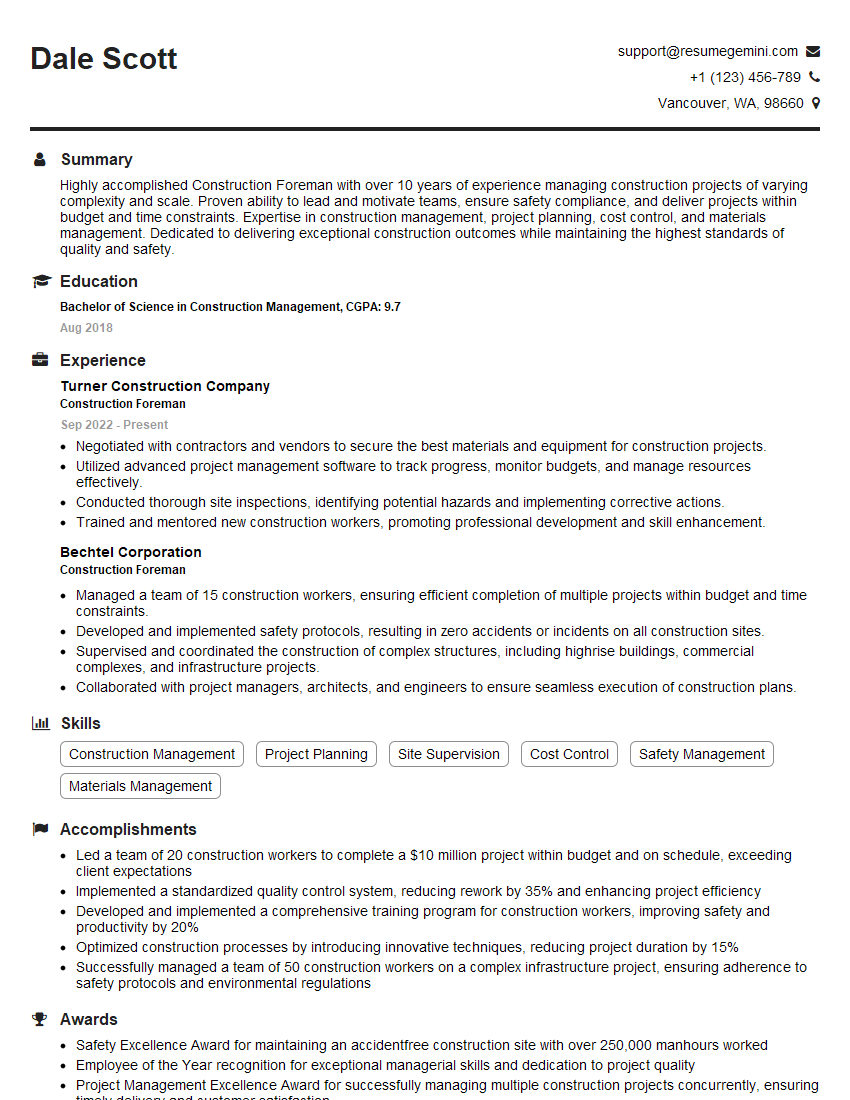
Construction Foreman Resume Sample
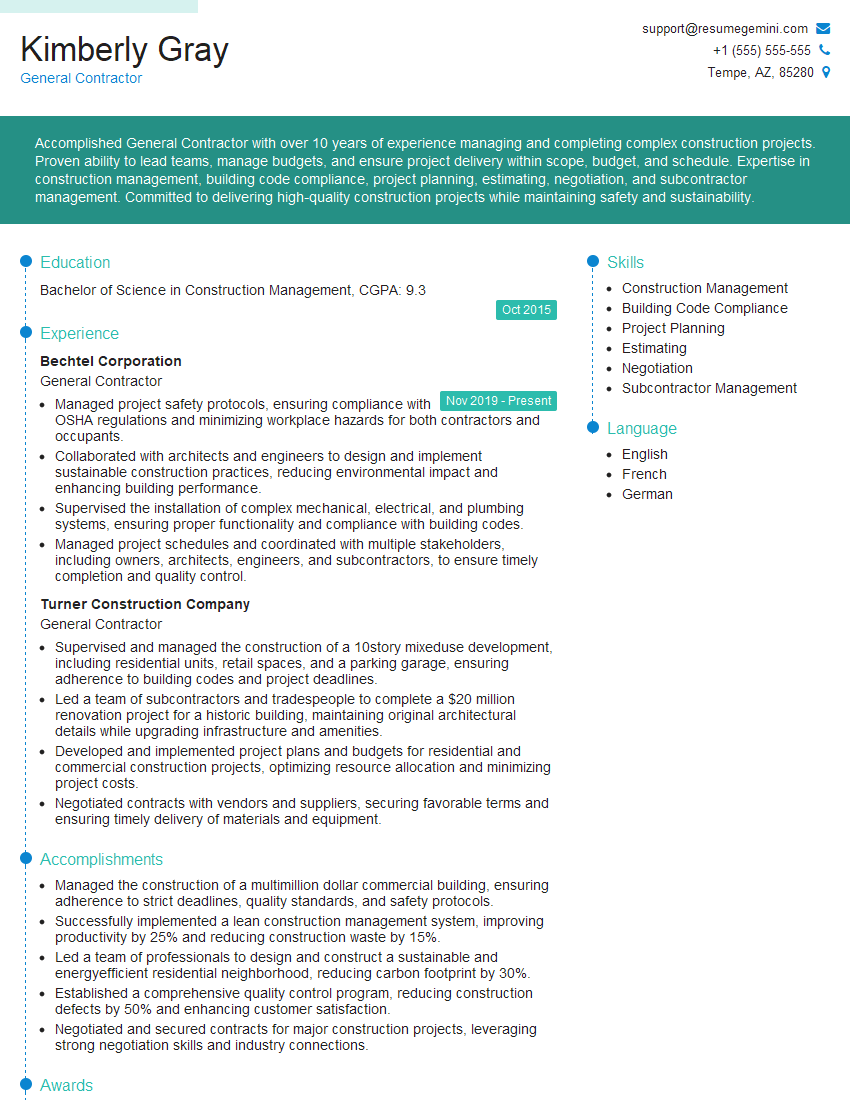
General Contractor Resume Sample
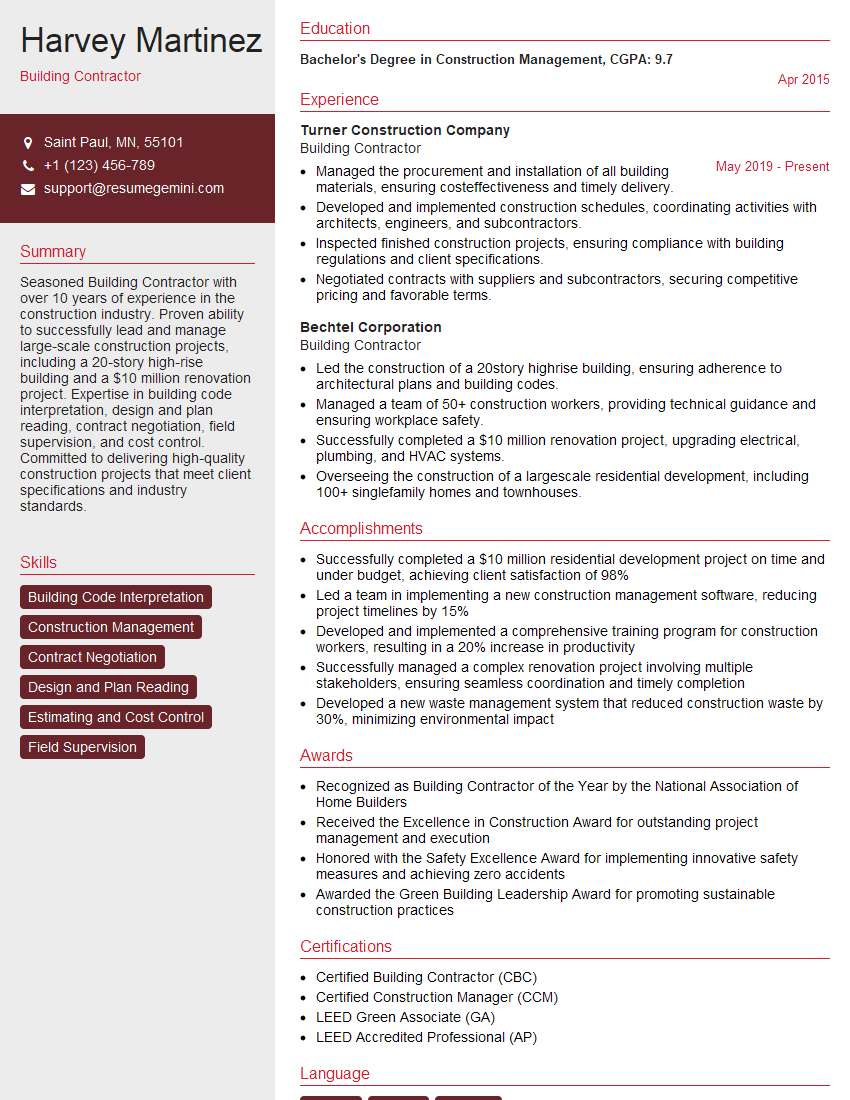
Building Contractor Resume Sample
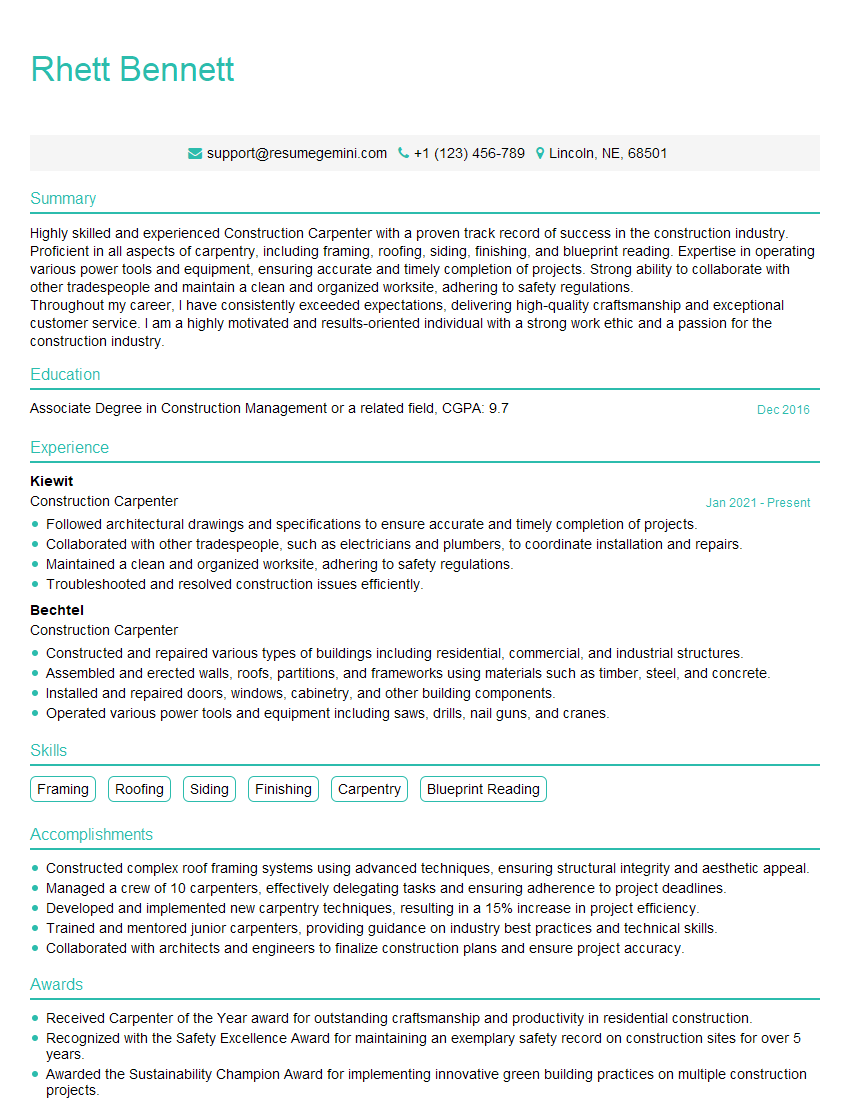
Construction Carpenter Resume Sample
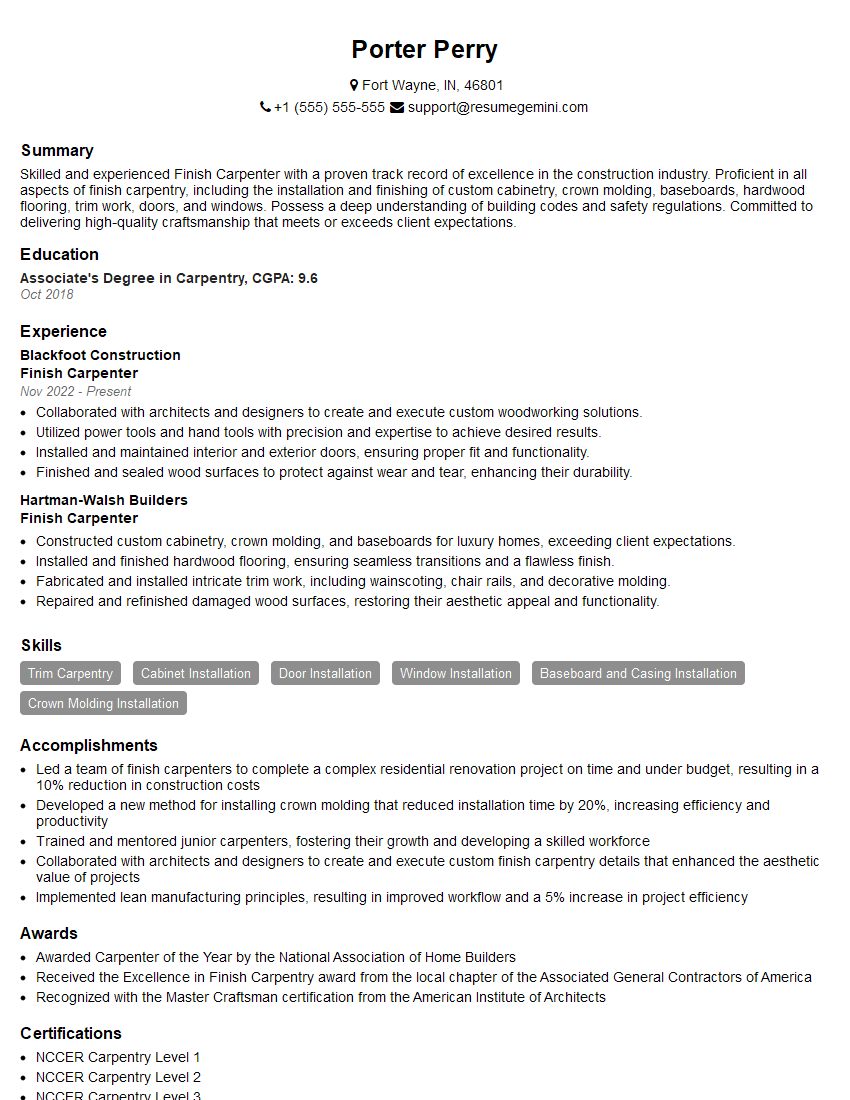
Finish Carpenter Resume Sample
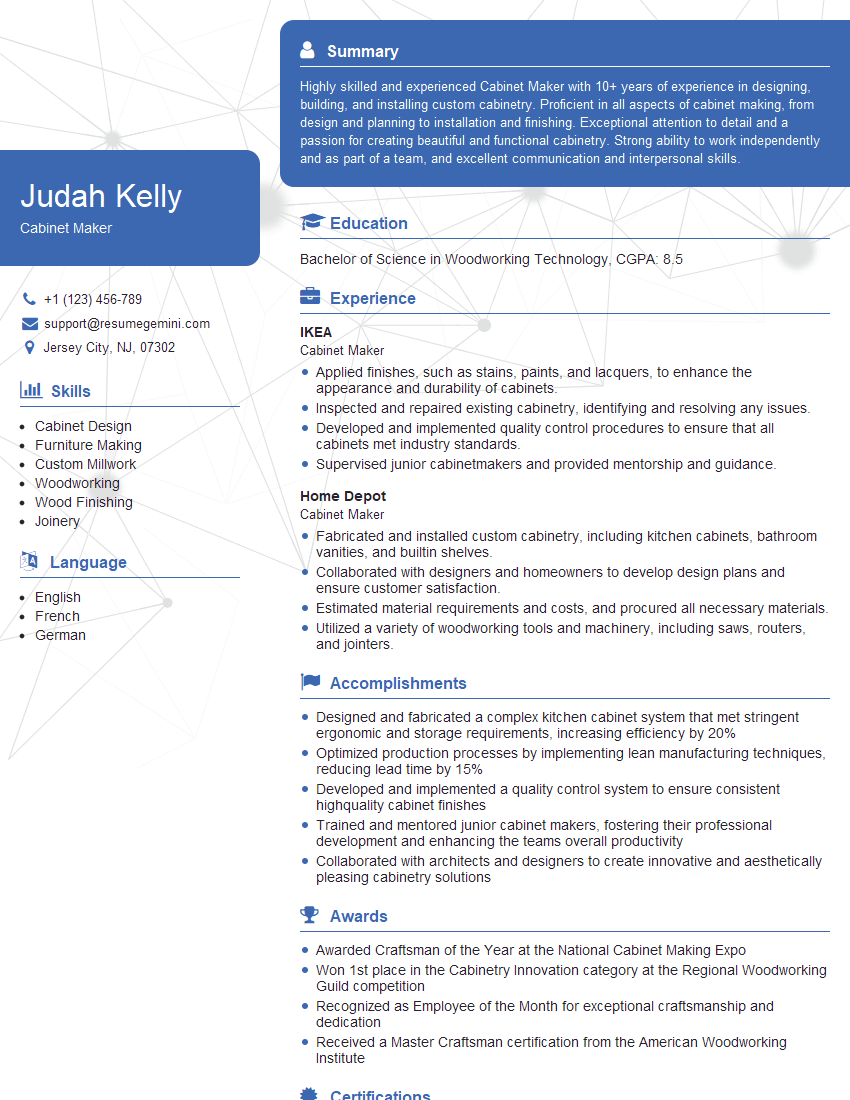
Cabinet Maker Resume Sample
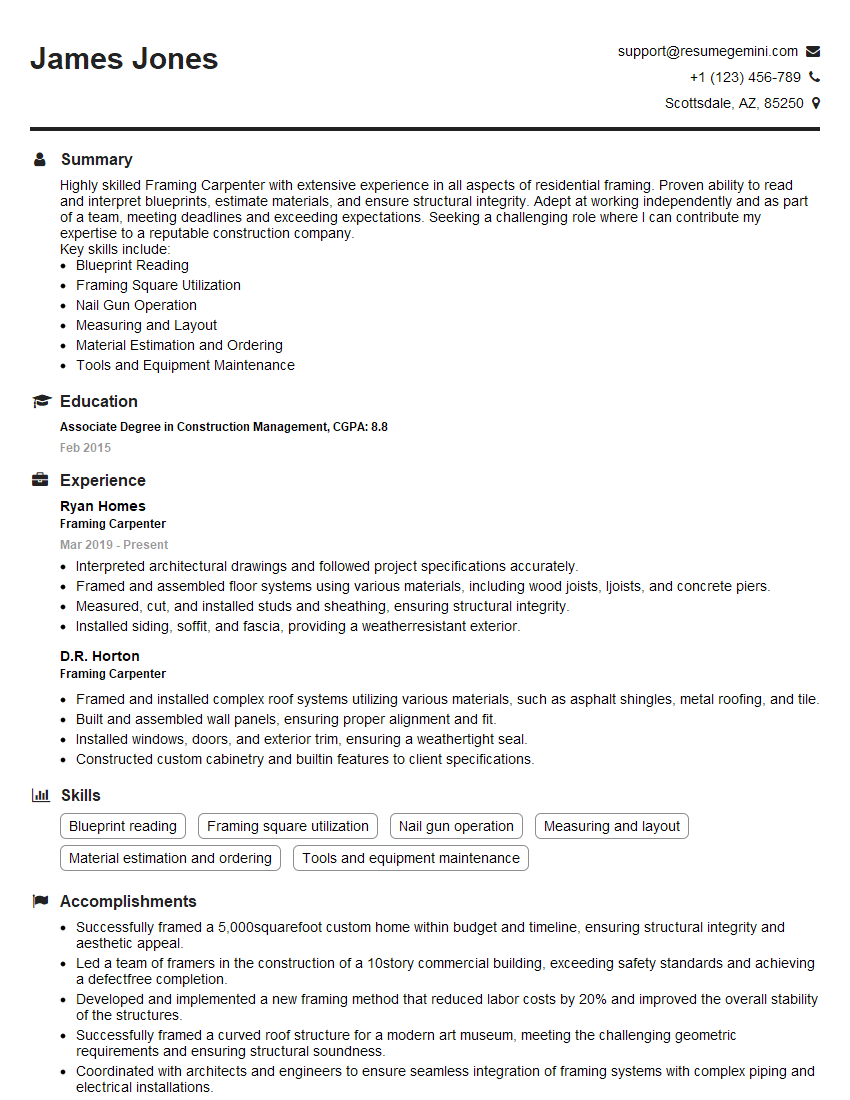
Framing Carpenter Resume Sample
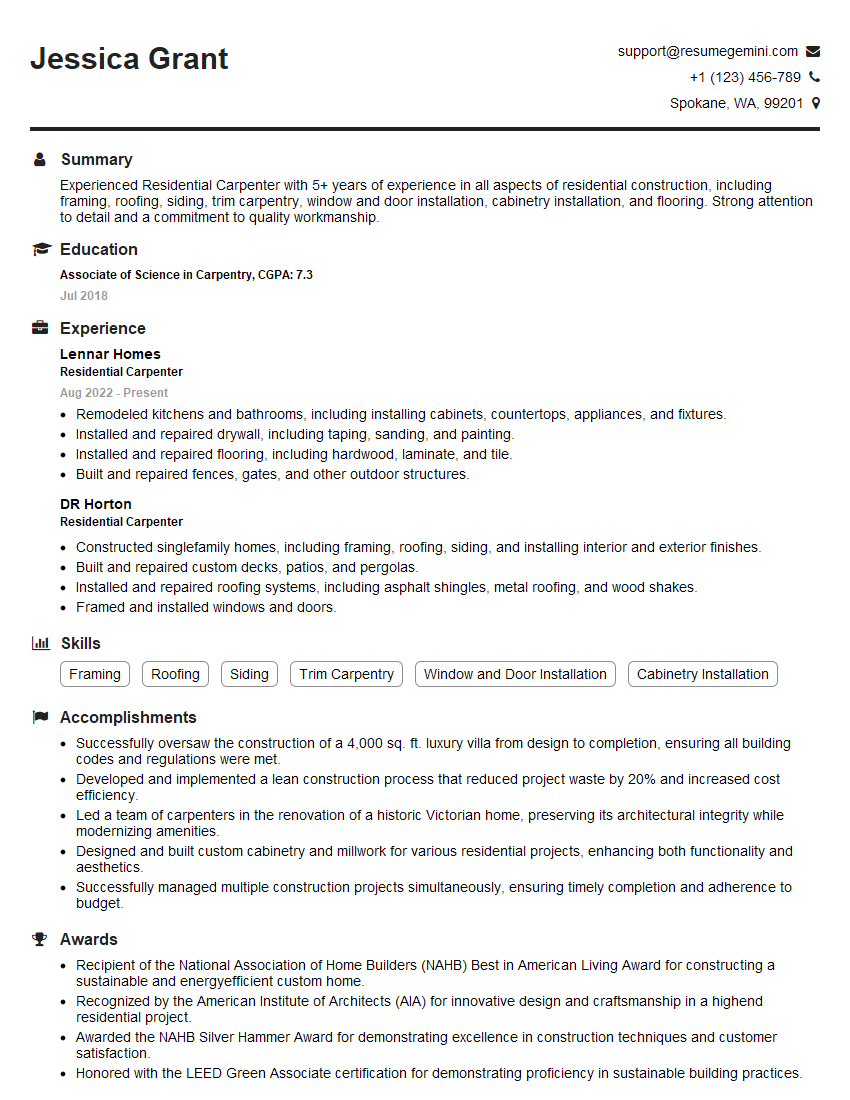
Residential Carpenter Resume Sample
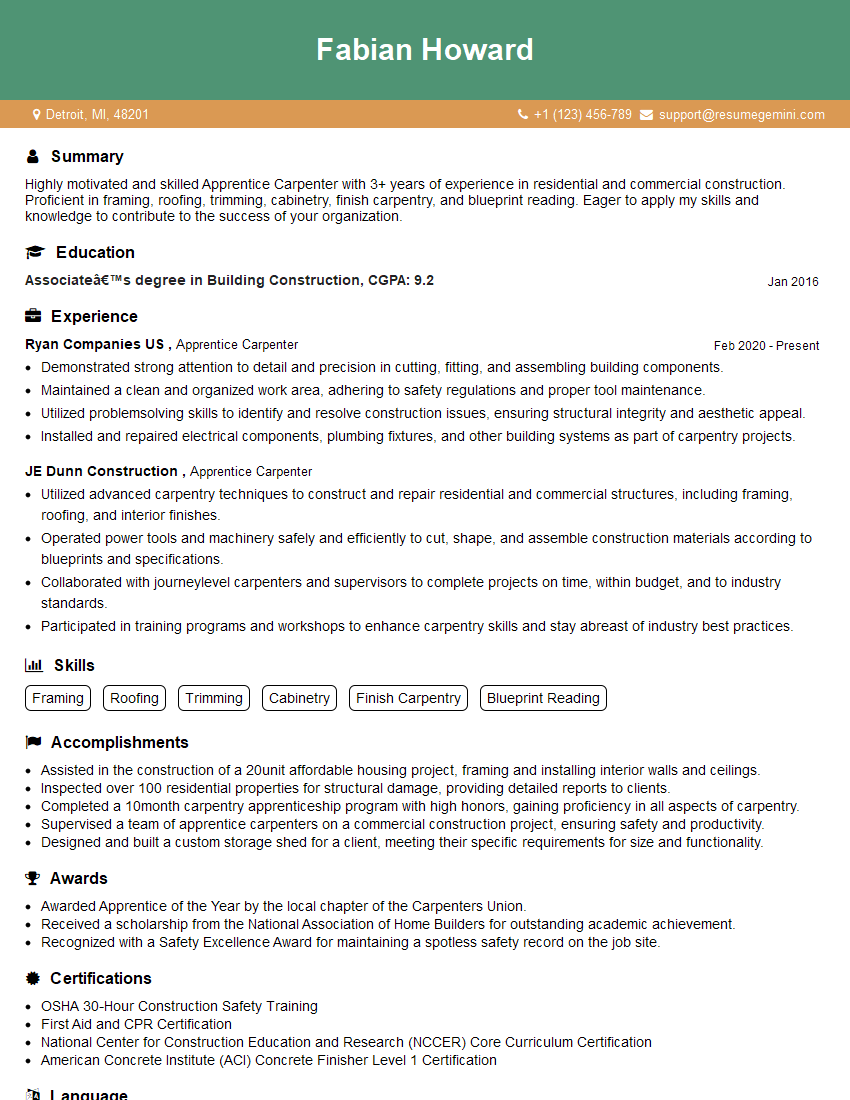
Apprentice Carpenter Resume Sample
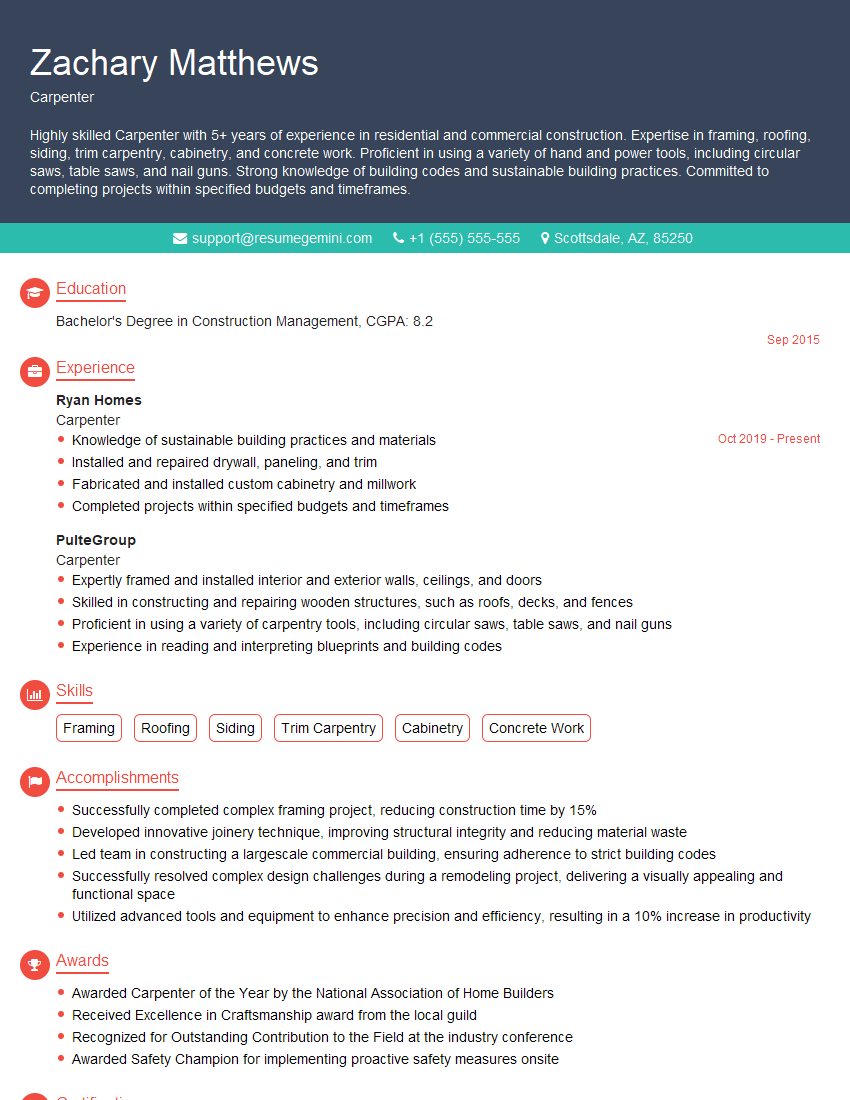
Carpenter Resume Sample
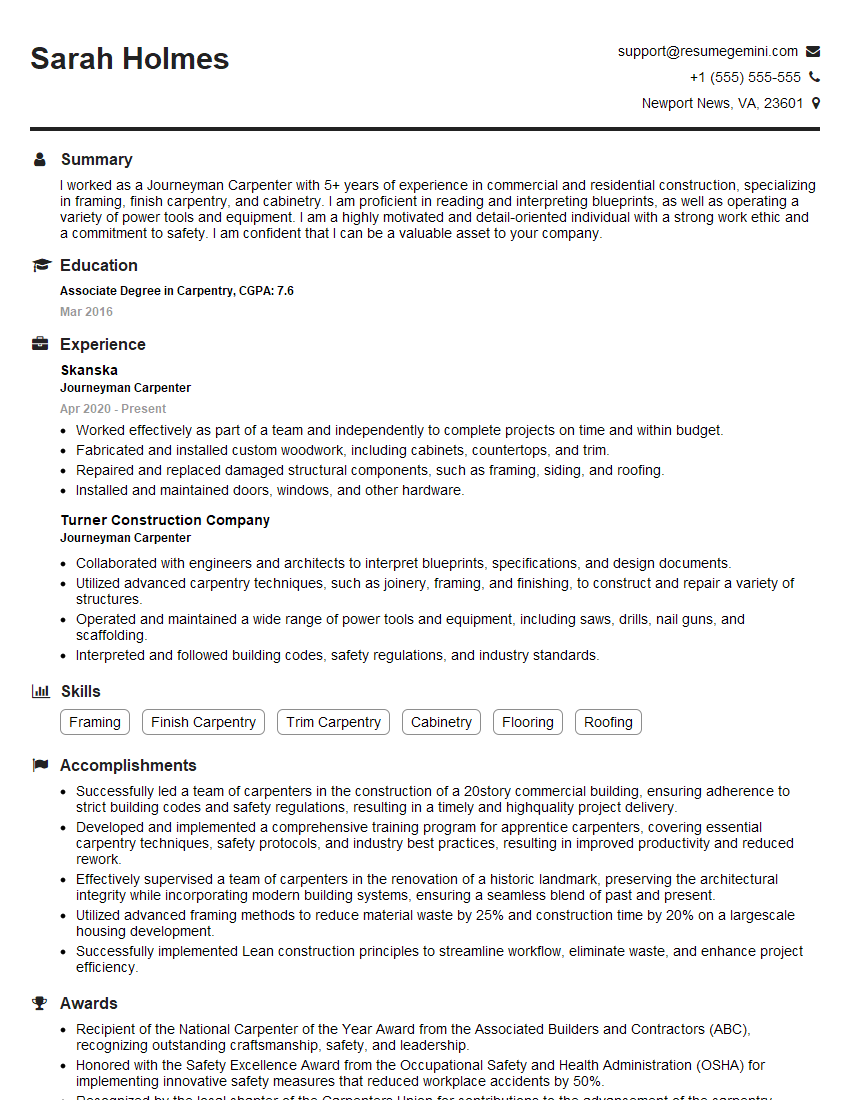
Journeyman Carpenter Resume Sample
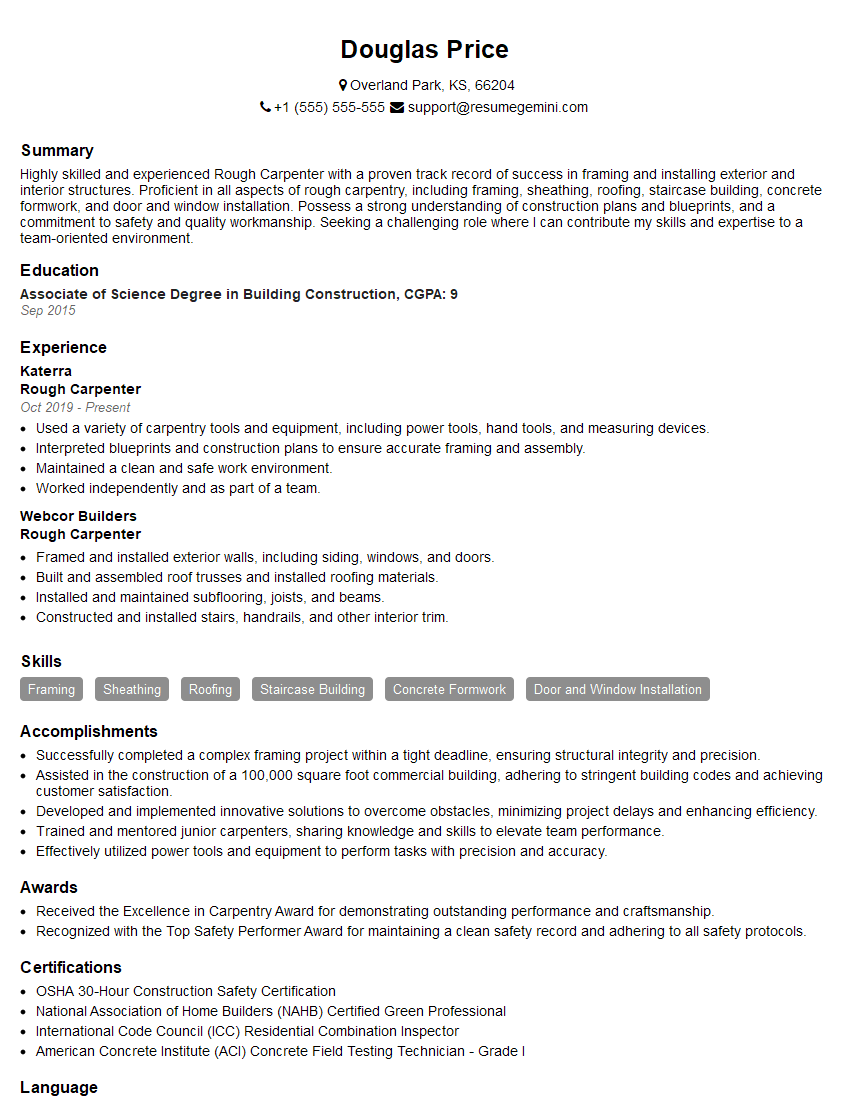
Rough Carpenter Resume Sample
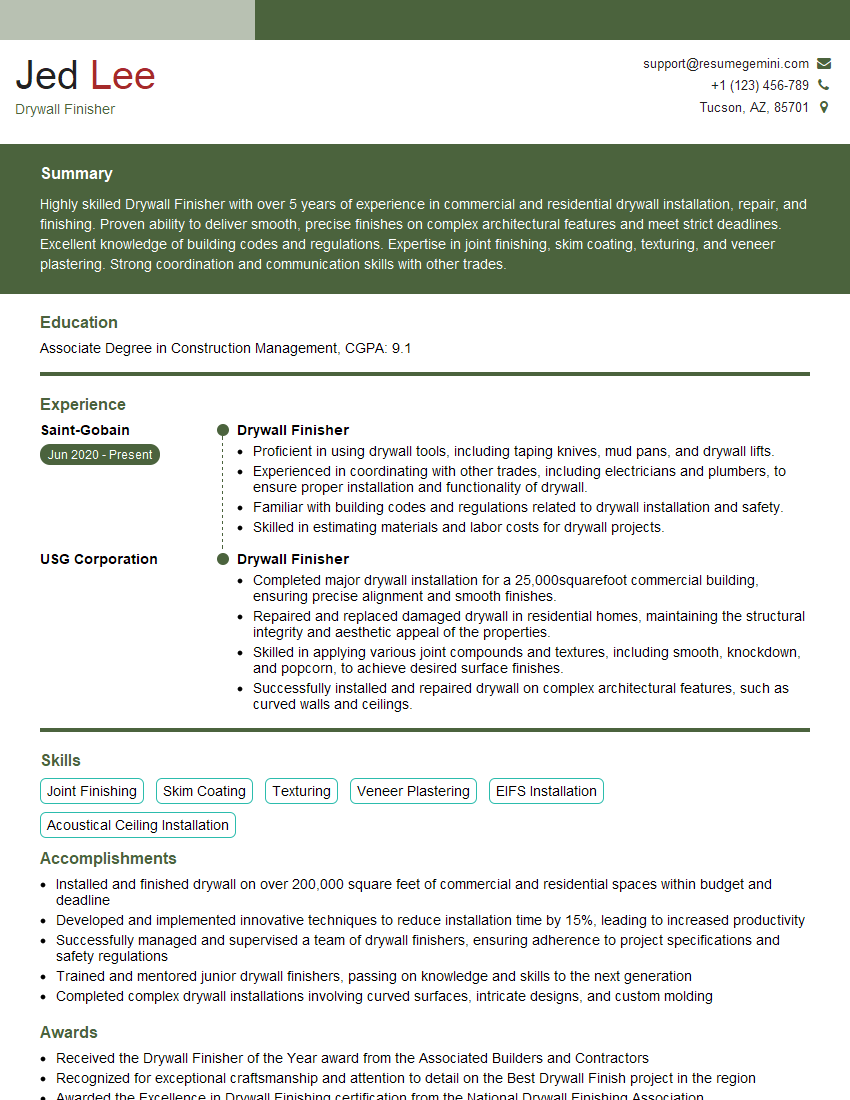
Drywall Finisher Resume Sample
Explore more articles
Users Rating of Our Blogs
Share Your Experience
We value your feedback! Please rate our content and share your thoughts (optional).
What Readers Say About Our Blog
Attention music lovers!
Wow, All the best Sax Summer music !!!
Spotify: https://open.spotify.com/artist/6ShcdIT7rPVVaFEpgZQbUk
Apple Music: https://music.apple.com/fr/artist/jimmy-sax-black/1530501936
YouTube: https://music.youtube.com/browse/VLOLAK5uy_noClmC7abM6YpZsnySxRqt3LoalPf88No
Other Platforms and Free Downloads : https://fanlink.tv/jimmysaxblack
on google : https://www.google.com/search?q=22+AND+22+AND+22
on ChatGPT : https://chat.openai.com?q=who20jlJimmy20Black20Sax20Producer
Get back into the groove with Jimmy sax Black
Best regards,
Jimmy sax Black
www.jimmysaxblack.com
Hi I am a troller at The aquatic interview center and I suddenly went so fast in Roblox and it was gone when I reset.
Hi,
Business owners spend hours every week worrying about their website—or avoiding it because it feels overwhelming.
We’d like to take that off your plate:
$69/month. Everything handled.
Our team will:
Design a custom website—or completely overhaul your current one
Take care of hosting as an option
Handle edits and improvements—up to 60 minutes of work included every month
No setup fees, no annual commitments. Just a site that makes a strong first impression.
Find out if it’s right for you:
https://websolutionsgenius.com/awardwinningwebsites
Hello,
we currently offer a complimentary backlink and URL indexing test for search engine optimization professionals.
You can get complimentary indexing credits to test how link discovery works in practice.
No credit card is required and there is no recurring fee.
You can find details here:
https://wikipedia-backlinks.com/indexing/
Regards
NICE RESPONSE TO Q & A
hi
The aim of this message is regarding an unclaimed deposit of a deceased nationale that bears the same name as you. You are not relate to him as there are millions of people answering the names across around the world. But i will use my position to influence the release of the deposit to you for our mutual benefit.
Respond for full details and how to claim the deposit. This is 100% risk free. Send hello to my email id: lukachachibaialuka@gmail.com
Luka Chachibaialuka
Hey interviewgemini.com, just wanted to follow up on my last email.
We just launched Call the Monster, an parenting app that lets you summon friendly ‘monsters’ kids actually listen to.
We’re also running a giveaway for everyone who downloads the app. Since it’s brand new, there aren’t many users yet, which means you’ve got a much better chance of winning some great prizes.
You can check it out here: https://bit.ly/callamonsterapp
Or follow us on Instagram: https://www.instagram.com/callamonsterapp
Thanks,
Ryan
CEO – Call the Monster App
Hey interviewgemini.com, I saw your website and love your approach.
I just want this to look like spam email, but want to share something important to you. We just launched Call the Monster, a parenting app that lets you summon friendly ‘monsters’ kids actually listen to.
Parents are loving it for calming chaos before bedtime. Thought you might want to try it: https://bit.ly/callamonsterapp or just follow our fun monster lore on Instagram: https://www.instagram.com/callamonsterapp
Thanks,
Ryan
CEO – Call A Monster APP
To the interviewgemini.com Owner.
Dear interviewgemini.com Webmaster!
Hi interviewgemini.com Webmaster!
Dear interviewgemini.com Webmaster!
excellent
Hello,
We found issues with your domain’s email setup that may be sending your messages to spam or blocking them completely. InboxShield Mini shows you how to fix it in minutes — no tech skills required.
Scan your domain now for details: https://inboxshield-mini.com/
— Adam @ InboxShield Mini
support@inboxshield-mini.com
Reply STOP to unsubscribe
Hi, are you owner of interviewgemini.com? What if I told you I could help you find extra time in your schedule, reconnect with leads you didn’t even realize you missed, and bring in more “I want to work with you” conversations, without increasing your ad spend or hiring a full-time employee?
All with a flexible, budget-friendly service that could easily pay for itself. Sounds good?
Would it be nice to jump on a quick 10-minute call so I can show you exactly how we make this work?
Best,
Hapei
Marketing Director
Hey, I know you’re the owner of interviewgemini.com. I’ll be quick.
Fundraising for your business is tough and time-consuming. We make it easier by guaranteeing two private investor meetings each month, for six months. No demos, no pitch events – just direct introductions to active investors matched to your startup.
If youR17;re raising, this could help you build real momentum. Want me to send more info?
Hi, I represent an SEO company that specialises in getting you AI citations and higher rankings on Google. I’d like to offer you a 100% free SEO audit for your website. Would you be interested?
Hi, I represent an SEO company that specialises in getting you AI citations and higher rankings on Google. I’d like to offer you a 100% free SEO audit for your website. Would you be interested?