The right preparation can turn an interview into an opportunity to showcase your expertise. This guide to Garment Alterations interview questions is your ultimate resource, providing key insights and tips to help you ace your responses and stand out as a top candidate.
Questions Asked in Garment Alterations Interview
Q 1. Describe your experience with different types of fabric and their unique alteration requirements.
Working with diverse fabrics is fundamental to garment alteration. Each fabric has unique properties affecting how it responds to alterations. For instance, delicate fabrics like silk or chiffon require a gentler touch and specialized needles to avoid damage, while sturdy materials such as denim or canvas can withstand more aggressive techniques.
- Silk: Requires very fine needles and delicate hand-stitching to prevent snags and tears. Pressing must be done with a press cloth to avoid scorching.
- Wool: Can be prone to stretching, so careful measurements and pressing techniques are crucial. Interfacing may be needed for added stability during alterations.
- Cotton: Relatively easy to work with; however, different weaves (e.g., poplin, chambray) have varying degrees of drape and require appropriate adjustments.
- Leather: Requires specialized tools and techniques. It’s not simply a matter of sewing; often you need specialized needles and sometimes even glue or patching material.
Understanding a fabric’s drape, stretch, and weight dictates the best alteration approach. For example, a heavy wool coat needs more robust seams than a lightweight summer dress. A significant alteration to a stretchy fabric might require a different seam allowance to compensate for potential loss of elasticity compared to the same alteration for a non-stretchy fabric.
Q 2. How do you determine the appropriate seam allowance when altering garments?
Determining the appropriate seam allowance is critical for a professional finish. It depends on several factors: the type of fabric, the garment style, and the type of alteration. A general rule is to maintain the original seam allowance where possible. This ensures consistency and avoids distortion.
However, sometimes adjustments are necessary. If shortening a garment, you’ll need to consider the original seam allowance plus the amount of fabric removed. For example, if the original seam allowance is 5/8 inch and you’re shortening by 2 inches, you would need to adjust the pattern accordingly. Conversely, when adding length, extra seam allowance must be incorporated. When working with bulky fabrics, a slightly wider seam allowance might be necessary for strength. For delicate fabrics, a narrower seam allowance helps avoid bulkiness. Ultimately, experience and a keen eye for detail help determine the exact allowance needed for a flawless alteration.
Q 3. Explain your process for taking accurate body measurements for alterations.
Accurate body measurements are the foundation of successful alterations. I use a flexible measuring tape and follow a standardized procedure. The client should wear minimal clothing to ensure accurate measurements.
- Bust: Measured around the fullest part of the bust, keeping the tape measure parallel to the floor.
- Waist: Measured around the natural waistline, the narrowest part of the torso.
- Hips: Measured around the fullest part of the hips, keeping the tape measure parallel to the floor.
- Shoulder-to-shoulder: Measured across the back from one shoulder bone to the other.
- Sleeve length: Measured from the shoulder bone to the desired wrist length.
- Inseam/Outseam: Measured along the inner/outer leg to the ankle bone, for pants alteration.
I always take multiple measurements to ensure consistency and accuracy. Comparing the garment’s existing measurements to the client’s new measurements helps determine needed adjustments. I also note any areas of the body that might present particular challenges – for instance, a sloped shoulder would require careful consideration when altering a jacket.
Q 4. What methods do you use to repair damaged seams?
Seam repair is a common alteration. The approach depends on the extent and type of damage.
- Small tears: Can often be repaired by hand-sewing with a fine needle and thread that matches the garment’s color. A ladder stitch is usually ideal for a virtually invisible repair.
- Larger tears or rips: May require patching. I would carefully remove the damaged portion of the seam, carefully matching the remaining fabric before stitching the patch in place. Sometimes the fabric may need to be reinforced for added support.
- Loose seams: Can be reinforced by restitching the seam, either by hand or machine. Depending on the material and damage, I may add a stay stitch to prevent future issues.
For very delicate or intricate fabrics, I would consider hand-sewing as the best method to maintain the integrity of the garment and prevent further damage. I’m always careful to match the thread to the fabric color for an invisible, high-quality repair.
Q 5. How do you handle alterations involving zippers and closures?
Altering zippers and closures requires precision and patience. Replacing a zipper involves careful removal of the old zipper, accurate measurement of the zipper opening, and precise installation of the new one. This often requires specialized tools. Different types of zippers (e.g., metal, plastic, invisible) require different techniques.
Modifying closures such as buttons, hooks, and snaps can be relatively straightforward but requires attention to detail. For button replacement, I would consider the button size, spacing, and matching the thread to the fabric for a seamless finish. For hook and eye closures, precise placement is paramount for functionality and appearance. I always have a good selection of different zippers, buttons, and snaps in various colours and materials in my workshop.
Q 6. Describe your experience with altering various garment types (e.g., dresses, pants, jackets).
My experience spans a wide range of garment types. I routinely alter dresses, pants, jackets, coats, and more. Each garment type presents unique challenges.
- Dresses: Altering a dress might involve taking in the seams, adjusting the length, or altering the neckline. I need to ensure that these alterations maintain the dress’s overall shape and style.
- Pants: Pants alterations often include adjusting the waist, length, and leg width. These need careful attention to fit and comfort.
- Jackets: Jacket alterations can be more complex, often requiring adjustments to the shoulders, sleeves, and waist. The proper placement of padding and interfacing is important to maintain structure.
I’ve successfully altered various styles, from simple A-line dresses to complex tailored jackets, always maintaining a keen eye for detail and structural integrity. For example, I recently altered a vintage wedding dress, carefully preserving its intricate lace detailing while making it fit the client perfectly.
Q 7. How do you ensure the altered garment maintains its original style and shape?
Preserving the original style and shape of a garment is paramount. My process involves a thorough assessment of the garment’s design elements – the construction, the seams, and the overall silhouette. I start by carefully analyzing the existing construction of the garment, trying to understand the designer’s intent.
I use various techniques to achieve this, including precise pattern adjustments, careful seam manipulation, and appropriate pressing. For instance, when shortening a skirt, I would make sure that the hem remains aligned with the original design lines to maintain the silhouette. If I’m taking in a seam, I use techniques that minimize distortion or puckering of the fabric. The goal is always a natural, professional finish that does not detract from the garment’s inherent style.
In essence, my approach to alteration is always guided by the principle of preservation, striving to maintain or enhance the garment’s original elegance and form. I find it incredibly satisfying to see a beautifully altered garment that retains its original style while achieving the perfect fit for the client.
Q 8. What techniques do you use to blend altered fabric with existing fabric seamlessly?
Seamlessly blending altered fabric with existing fabric is crucial for achieving a professional finish. It requires careful attention to detail and a nuanced understanding of fabric types and their behavior. My approach involves a multi-step process.
- Fabric Matching: Before even starting the alteration, I carefully examine the existing fabric to determine its type, weight, drape, and color. This helps me select the most appropriate replacement fabric, ensuring a near-perfect match in terms of texture and shade. Sometimes, finding an exact match is impossible, so I might use techniques like strategically placing the seam to minimize the contrast.
- Seam Preparation: I precisely cut and prepare the edges of both the original and the new fabric, using techniques like pinking shears to prevent fraying. This ensures that the seam allowance is consistent and clean, enabling a neat join.
- Seaming Techniques: I employ various seaming techniques based on the fabric type. For delicate fabrics, I might use a French seam or a very fine, precise stitch. For heavier fabrics, a strong, durable seam is necessary, possibly reinforced with additional stitching.
- Pressing and Finishing: The final stage involves careful pressing using appropriate heat settings for the fabric. I use a tailor’s ham or sleeve roll to ensure the seam is flat and lies naturally with the surrounding fabric. This pressing minimizes visible seam lines and creates a smooth, invisible blend.
For instance, I once altered a high-end wool coat, replacing a worn elbow patch. By carefully matching the wool type and using a French seam, I created an almost invisible repair that maintained the coat’s original integrity.
Q 9. Explain your process for pressing and finishing altered garments.
Pressing and finishing are not mere afterthoughts; they’re integral to the alteration process, elevating the garment from simply altered to professionally finished. My process prioritizes precision and the preservation of the garment’s structure.
- Appropriate Tools: I use a professional-grade iron with a temperature control that allows me to select the perfect heat setting for each fabric type. I also utilize essential pressing tools like a tailor’s ham, sleeve board, and point presser to shape and press specific garment areas accurately.
- Pressing Sequence: I press seams open as I sew, then press the seam allowance to one side before pressing the entire garment section flat. This prevents distortion and ensures a smooth, clean finish. The order of pressing depends on the type of garment and the alteration made.
- Steam vs. Dry Heat: The choice between steam and dry heat depends on the fabric. Steam is great for releasing wrinkles and smoothing fabrics, while dry heat is better for crisp fabrics or those that don’t react well to moisture.
- Finishing Touches: Once pressed, the garment receives a final inspection for any imperfections. I might use a lint roller to remove any stray threads or particles. Finally, I hang or fold the garment carefully to maintain its shape before it’s returned to the customer.
For example, when hemming trousers, I press the hem to create a sharp crease and ensure a clean, consistent finish that enhances the silhouette of the trousers.
Q 10. How do you handle customer requests that might compromise garment integrity?
Customer satisfaction is paramount, but it cannot come at the expense of garment integrity. When faced with a request that might compromise a garment, I initiate a detailed conversation.
- Open Communication: I explain the potential consequences of the alteration request. This might involve demonstrating the stress points the alteration might create or explaining why the fabric is unsuitable for the requested modification. I use clear, non-technical language.
- Alternative Solutions: I always suggest alternative solutions that achieve the desired look without compromising the garment’s durability. This might involve suggesting a different alteration or even advising against the alteration altogether.
- Transparency: I clearly state the limitations of the fabric or the garment’s construction and provide honest feedback on the feasibility of the alteration. I always prioritize preserving the garment’s structural integrity and longevity.
- Documentation: In some cases, I take photos of the garment before and after the alteration, documenting any potential risks or concerns. This protects both myself and the client.
For instance, a client once requested a significant reduction in the size of a delicate silk blouse. I explained that this alteration would likely weaken the fabric and suggested a different approach that minimized the alteration while preserving the blouse’s shape and integrity.
Q 11. How do you manage time effectively when working on multiple alterations?
Effective time management is key to meeting deadlines and maintaining a high level of work quality. I employ several strategies to manage multiple alterations concurrently.
- Prioritization: I carefully prioritize tasks based on factors like urgency, complexity, and the client’s expectations. This involves creating a schedule or to-do list that outlines the tasks and deadlines for each alteration.
- Batching Similar Tasks: I group similar alterations together, such as hemming multiple pairs of pants or shortening several dresses. This allows me to streamline the process and minimize set-up time between different tasks.
- Time Blocking: I allocate specific blocks of time for various tasks, minimizing interruptions and maximizing focus. This approach allows for focused work on each alteration and helps prevent delays.
- Realistic Scheduling: I avoid overbooking and provide accurate completion time estimates to clients. Transparency ensures realistic expectations and minimizes stress.
For example, on a busy day, I might dedicate the morning to hemming projects, the afternoon to more complex alterations, and the evening to finishing touches and quality control.
Q 12. What types of sewing machines are you proficient with?
Proficiency with various sewing machines is essential for handling diverse fabrics and alteration needs. I’m experienced with both industrial and domestic machines.
- Industrial Sewing Machines: I’m adept at using industrial machines for tasks that require high speed and durability, such as hemming large quantities of fabric or working with heavy-duty materials. This includes machines designed for straight stitching, zigzag stitching, and overlocking.
- Domestic Sewing Machines: I’m also comfortable using high-quality domestic sewing machines for more intricate work that might require specialized stitches or adjustments. This familiarity allows me to adapt to different settings and work on a range of projects.
- Specialized Attachments: I’m skilled in using a variety of attachments such as walking feet (to prevent slippage on multiple layers), blind hem stitch attachments, and buttonhole attachments. These tools enable me to perform a wider variety of alterations efficiently and precisely.
This versatility allows me to select the right machine for each task, maximizing efficiency and ensuring a superior outcome.
Q 13. What is your experience with different types of stitching techniques?
A wide range of stitching techniques is vital for achieving diverse alteration goals. My experience encompasses many different types.
- Basic Stitches: I’m proficient in all basic stitches such as straight stitch, zigzag stitch, backstitch, and overlock stitch. These are foundational and crucial for a variety of alterations.
- Specialized Stitches: I have mastery over specialized stitches such as blind hem stitch (invisible hem), slip stitch (for hand-sewing invisible seams), and ladder stitch (for closing openings cleanly).
- Hand Stitching: I am proficient in various hand-stitching techniques, which are frequently essential for delicate fabrics and intricate alterations. Hand-stitching is often preferred for invisible alterations and for repairing damaged areas carefully.
- Stitch Selection: I carefully select stitches based on the fabric type, weight, and the type of alteration being performed. This selection ensures both durability and aesthetics.
For example, when repairing a tear in a silk scarf, I’d use a delicate slip stitch by hand to ensure an invisible repair that maintains the scarf’s integrity and beauty.
Q 14. Describe your problem-solving skills in addressing alteration challenges.
Problem-solving is inherent in garment alterations. Unexpected challenges are common, and I approach them methodically.
- Assessment: When faced with a problem, I carefully assess the situation, identifying the specific challenge. This includes analyzing the fabric type, the garment’s construction, and the nature of the issue.
- Research and Experimentation: I might research solutions using online resources or consult relevant literature to find solutions to less common problems. This might involve experimenting with different stitching techniques, fabric treatments, or pressing methods.
- Resourcefulness: I’m resourceful and adaptable. If a solution requires tools or materials I don’t have, I find alternatives or source them efficiently. This could involve finding a substitute fabric or adapting a technique to fit available resources.
- Client Communication: If a problem is complex or might significantly alter the outcome, I communicate with the client, clearly explaining the issue and proposed solutions. This collaborative approach ensures transparency and mutual understanding.
For example, I once encountered a situation where a client’s trousers shrunk after washing. I had to devise a solution to add length whilst maintaining a similar fabric texture by strategically using fabric from the side seams, resulting in a near-invisible alteration that restored the trousers to their original length.
Q 15. How do you communicate with customers regarding alteration expectations and timelines?
Effective communication is crucial for successful garment alterations. I begin by having a thorough consultation with each client. This involves carefully listening to their needs and expectations, examining the garment, and discussing the desired alterations. We visually assess the fit and identify the specific areas needing adjustment. I then clearly explain the process, including the techniques I’ll use and potential challenges. Crucially, I provide a realistic timeline, considering factors like fabric type, complexity of alteration, and my current workload. I always offer multiple options if there are different ways to achieve the desired outcome, discussing the pros and cons of each approach with the client. For instance, if a client wants a dress hemmed, I’ll discuss whether a simple blind hem or a more decorative finish is preferable, explaining the difference in cost and visual result. Once we agree on the plan, I provide a written estimate outlining the alterations, cost, and expected completion date. I maintain open communication throughout the process, providing updates if there are any unforeseen issues or delays.
Career Expert Tips:
- Ace those interviews! Prepare effectively by reviewing the Top 50 Most Common Interview Questions on ResumeGemini.
- Navigate your job search with confidence! Explore a wide range of Career Tips on ResumeGemini. Learn about common challenges and recommendations to overcome them.
- Craft the perfect resume! Master the Art of Resume Writing with ResumeGemini’s guide. Showcase your unique qualifications and achievements effectively.
- Don’t miss out on holiday savings! Build your dream resume with ResumeGemini’s ATS optimized templates.
Q 16. What safety measures do you take while using sewing equipment?
Safety is my top priority. Before using any sewing machine or equipment, I ensure all guards are in place and functioning correctly. I always unplug the machine before cleaning or making adjustments. I keep my workspace clean and organized to prevent accidents. I use sharp, well-maintained needles and scissors, keeping them properly stored when not in use. I wear safety glasses to protect my eyes from flying debris. When working with pins, I use a pincushion and am very careful to avoid accidental needle sticks. I handle hot irons and pressing equipment with care, avoiding contact with skin. Regular maintenance checks on all equipment help to minimize potential hazards. Furthermore, I am trained in first aid and have appropriate supplies readily accessible in the event of an accident.
Q 17. Explain your experience with pattern adjustments and modifications.
Pattern adjustments are a core part of my expertise. I have extensive experience modifying existing patterns and creating new ones from scratch to achieve a perfect fit. This involves understanding different body types and making precise alterations to the pattern pieces to accommodate various needs. For example, I’ve successfully adjusted patterns to create more room in the bust, waist, or hips; lengthen or shorten garments; change sleeve lengths or styles; and alter necklines or shoulderlines. I utilize various techniques such as adding or removing darts, shifting seams, and adjusting seam allowances. I often use a combination of both paper pattern adjustments and direct alterations to the fabric, choosing the most effective method based on the garment and its construction. I’ve worked on numerous complex pattern adjustments, including adapting vintage patterns for modern sizing and adjusting patterns for unique fabric drapes and textures. A recent example involved creating a completely custom bodice pattern for a client with an unusual body shape, resulting in a flawlessly fitting gown.
Q 18. How do you handle alterations for plus-size garments?
Alterations for plus-size garments require a specialized approach. I understand the importance of proper fit and comfort in this context. I take extra care to ensure adequate ease (the extra roominess built into a garment) is maintained while still achieving a flattering silhouette. This often means adapting standard techniques to accommodate the added fabric volume. For instance, I pay close attention to seam placement and construction, using reinforcement techniques where necessary to prevent seams from stretching or failing. I’m experienced in working with heavier fabrics and constructing sturdy seams that can support the weight of the garment. I also prioritize comfort by employing techniques to minimize bulkiness and improve draping. I have a selection of fabrics that work well with plus-size clothing, and I always consult with the client to ensure the selected materials are comfortable and durable.
Q 19. How do you address fitting issues like gaping seams or ill-fitting shoulders?
Gaping seams and ill-fitting shoulders are common fitting issues that I address frequently. Gaping seams often result from insufficient ease or incorrect fitting in the area. To fix this, I may need to take in the seam allowances or adjust the pattern to distribute the excess fabric more evenly. For example, a gaping seam at the back of a dress could be rectified by taking in the back seam or adjusting the darts to create a better fit. Ill-fitting shoulders, often characterized by a pulling or tightness, might be resolved by adjusting the shoulder seams, possibly making them wider or narrower, and perhaps making alterations to the armholes or sleeve caps to improve the fit and comfort. I carefully assess the garment’s construction and fabric before deciding on the most suitable approach. Detailed fitting sessions with clients are crucial to identifying the precise nature of the issue before executing the necessary adjustments.
Q 20. Describe your experience with hemming various types of fabrics.
Hemming different fabrics requires adapting techniques to each fabric’s unique characteristics. For lightweight fabrics like cotton or linen, a simple blind hem is often ideal. For heavier fabrics like denim or wool, a double-stitched hem provides greater durability. Delicate fabrics like silk or chiffon require a hand-finished hem to prevent damage. I utilize different stitch lengths and types depending on the fabric weight and structure. For example, a smaller stitch length is used on lightweight fabrics to avoid puckering, whereas a larger stitch might be better suited to heavier materials. I always pre-wash the fabric before hemming to prevent shrinkage after the alteration. Understanding the fiber content of the fabric is also critical in choosing the appropriate thread and needle to avoid damaging the material. I have years of experience hemming a wide variety of fabrics, from delicate lace to heavy brocades, ensuring a professional and invisible finish.
Q 21. What is your experience with working with delicate fabrics (e.g., silk, lace)?
Working with delicate fabrics like silk and lace requires a specialized approach. I use sharp, fine needles and appropriate thread to avoid snagging or pulling the fabric. I work on a flat, stable surface with good lighting to maintain control and prevent any damage. I employ specialized techniques, such as using a walking foot on the sewing machine to prevent slippage or using a hand-sewing method for finer details. I avoid pulling or stretching the fabric during the alteration process. In the case of lace, I frequently use specialty techniques to ensure the alteration is invisible, while maintaining the integrity of the intricate pattern. For silk, I often use silk-specific threads and pressing methods to preserve the fabric’s natural luster and drape. I always test my techniques on a hidden seam or scrap of fabric first to ensure no damage or discoloration occurs before working on the garment itself. My experience with delicate fabrics is extensive, allowing me to handle even the most challenging materials with confidence and skill.
Q 22. How do you maintain the quality and consistency of your work?
Maintaining quality and consistency in garment alterations is paramount. It’s a blend of precision, attention to detail, and a deep understanding of fabric properties. My approach involves several key steps:
- High-Quality Tools and Materials: I invest in professional-grade sewing machines, needles, threads, and pressing equipment. The right tools are crucial for achieving clean, precise stitches and a professional finish.
- Thorough Inspection and Planning: Before starting any alteration, I carefully examine the garment, noting its fabric type, construction, and any existing wear and tear. This careful assessment allows me to plan the alteration meticulously, ensuring the best possible outcome.
- Precision Cutting and Sewing: Accurate cutting and even stitching are essential. I use precise measuring tools and techniques to minimize fabric waste and maintain the garment’s structural integrity. My stitching is consistent, avoiding skipped stitches or uneven tension.
- Consistent Pressing: Proper pressing is crucial throughout the alteration process. It sets seams, removes wrinkles, and enhances the overall look and feel of the garment. I use steam and a variety of pressing tools to achieve the desired finish.
- Quality Control Checks: After completing the alteration, I always conduct a thorough quality control check, looking for any imperfections, such as loose threads or uneven seams. This final check ensures the garment meets my high standards before it’s returned to the client.
For example, when hemming trousers, I always ensure a consistent seam allowance and use a precise technique to prevent the hem from puckering or stretching.
Q 23. What is your process for removing and reattaching buttons or other closures?
Removing and reattaching buttons or closures requires a delicate touch and attention to detail. Here’s my process:
- Button Removal: I carefully remove the existing buttons using a seam ripper or small scissors. I pay close attention to avoid damaging the surrounding fabric. If the button is sewn on with multiple strands, I carefully cut each one individually to prevent fraying.
- Fabric Preparation: If the buttonholes or fabric need repair, I do that before attaching new buttons. This might involve reinforcing the fabric or mending any damaged areas.
- Button Attachment: I use appropriate thread color, ensuring the new button is securely attached using either hand stitching or a machine, depending on the button type and garment.
- Testing: I always test the button to make sure it’s securely attached and functional before returning the garment.
For instance, when replacing a button on a delicate silk blouse, I’d opt for hand-sewing to ensure a neat, invisible finish, using small, even stitches.
Q 24. Describe your experience with working on leather or suede garments.
I have extensive experience working with leather and suede garments. These materials require specialized tools and techniques due to their unique properties. They are more delicate than many fabrics and need careful consideration during the alteration process.
- Specialized Tools: I use specialized needles and threads designed for leather and suede to avoid piercing the material. Leather needles are typically stronger and sharper than regular sewing machine needles.
- Understanding Material Properties: I understand how leather and suede react to moisture and heat. I take extra care in pressing to avoid scorching or damaging the leather’s finish. Using a pressing cloth is crucial here.
- Stitching Techniques: The stitching needs to be strong and even to hold the alteration firmly. I employ specific leather stitching techniques to avoid damage.
- Specific Alterations: Leather alterations can involve things like resizing jackets, repairing tears, or replacing zippers. Each requires a specialized approach. For example, shortening a leather jacket involves carefully removing the lining, making the adjustments to the outer leather, and reattaching the lining meticulously.
Recently, I successfully altered a vintage leather jacket, repairing a significant tear and adjusting the sleeves. The client was delighted with the results, highlighting the preservation of the jacket’s original character and quality.
Q 25. How do you determine the appropriate price for garment alterations?
Pricing garment alterations involves several factors. I consider the following:
- Type of Alteration: Simple alterations like hemming pants are less expensive than complex alterations like taking in a jacket or restructuring a dress.
- Fabric Type: Delicate or difficult-to-work-with fabrics (e.g., leather, silk) command higher prices due to the extra time and care required.
- Complexity of the Design: Intricate details like beading, embroidery, or embellishments increase the alteration cost.
- Time Required: I estimate the time involved in completing the alteration accurately. This includes cutting, sewing, pressing, and finishing.
- Market Rates: I stay informed about industry standards and competitor pricing to maintain competitive yet fair pricing.
I provide a clear and detailed price quote to the client upfront to avoid any surprises. Transparency is key.
Q 26. How do you manage alterations with intricate details or embellishments?
Alterations with intricate details or embellishments demand meticulous care and precision. My approach involves:
- Careful Planning: I carefully analyze the garment’s embellishments before starting any alteration. I determine the safest way to preserve these details and incorporate them into the alteration process.
- Specialized Tools: I may use specialized tools such as fine-tipped scissors or tweezers to carefully work around the embellishments.
- Hand Stitching: In many cases, hand stitching is preferred to prevent damage to delicate embellishments. The stitches should be invisible and sturdy.
- Preservation Techniques: I might use techniques to protect the embellishments during the alteration process, such as covering them with protective fabric during pressing.
- Patience and Precision: This type of alteration requires patience and extreme precision to ensure the embellishments remain intact and the alteration is seamlessly integrated.
For example, when altering a gown with intricate beading, I would carefully hand-stitch the alteration, ensuring the beads are not disturbed or damaged during the process.
Q 27. What is your experience with using different types of interfacing?
Different types of interfacing serve different purposes in garment alterations. My experience includes using various types, each selected based on the fabric and the required alteration.
- Woven Interfacing: This offers stability and structure, often used in collars, cuffs, and lapels. It’s ideal for heavier fabrics.
- Non-Woven Interfacing: A more flexible option suitable for lighter fabrics. It’s less structured and easier to sew.
- Fusible Interfacing: This type is bonded to the fabric using heat and pressure. It is efficient but requires careful application to prevent scorching.
- Knit Interfacing: Used for knit fabrics, it provides stretch and stability, preventing unwanted distortion.
Choosing the right interfacing is crucial for a successful alteration. For instance, using a fusible interfacing on a silk garment requires extra caution to prevent damage. The choice of interfacing depends heavily on the fabric’s weight, drape, and the desired outcome.
Q 28. How do you handle alterations requests that require significant reconstruction?
Alterations requiring significant reconstruction demand a systematic and thorough approach. This goes beyond simple adjustments and involves reshaping or rebuilding parts of the garment.
- Assessment and Planning: A detailed assessment is crucial. I carefully analyze the garment’s current state, identifying the areas requiring reconstruction. Detailed sketches and measurements are helpful.
- Pattern Adjustment: In many cases, I’ll need to adjust or create a new pattern to accommodate the changes. This requires advanced pattern-making skills.
- Fabric Selection: Depending on the extent of the reconstruction, I may need to source additional fabric that matches the original garment closely.
- Reconstruction: This phase involves carefully deconstructing parts of the garment, creating new pieces as needed, and then reassembling the garment, paying close attention to structural integrity.
- Finishing: Once the reconstruction is complete, the usual finishing steps apply, including pressing and quality control checks.
An example of a significant reconstruction might be converting a long-sleeved dress into a sleeveless top. This requires careful planning, pattern adjustments, and the creation of new armholes. Every step needs precision to maintain the integrity and quality of the final piece.
Key Topics to Learn for Garment Alterations Interview
- Fabric Knowledge: Understanding different fabric types (e.g., cotton, silk, wool, synthetics), their properties, and how they react to alterations. Practical application: Knowing which techniques are best suited for delicate fabrics vs. sturdy ones.
- Measurement & Fitting: Accurate taking and interpreting body measurements, identifying fitting issues (e.g., too tight, too loose, uneven hems), and understanding how alterations address these issues. Practical application: Demonstrating your ability to assess a garment and plan the necessary adjustments.
- Seam Construction & Manipulation: Knowledge of various seam types (e.g., French seams, flat-felled seams), how to accurately dissect and reconstruct seams, and understanding seam allowances. Practical application: Explaining your approach to altering a seam without compromising the garment’s integrity.
- Alteration Techniques: Proficiency in common alteration techniques like taking in seams, letting out seams, shortening/lengthening garments, adjusting shoulders, sleeves, and waistlines. Practical application: Describing your experience with different alteration methods and choosing the appropriate technique for a specific garment.
- Pattern Adjustment: Understanding how to adjust patterns to accommodate alterations, especially for complex fitting problems. Practical application: Explaining your approach to modifying a pattern to achieve a desired fit.
- Problem-Solving & Troubleshooting: Ability to identify and resolve common alteration challenges (e.g., uneven hems, fabric puckering, distorted shapes). Practical application: Providing examples of how you’ve overcome difficult alteration situations.
- Machine Operation & Maintenance: Proficiency in using various sewing machines and their different functions, as well as basic machine maintenance. Practical application: Demonstrating your understanding of machine settings and their impact on the final result.
- Professionalism & Client Communication: Understanding the importance of providing excellent customer service, communicating effectively with clients, and managing expectations. Practical application: Sharing examples of successful client interactions and addressing difficult client situations.
Next Steps
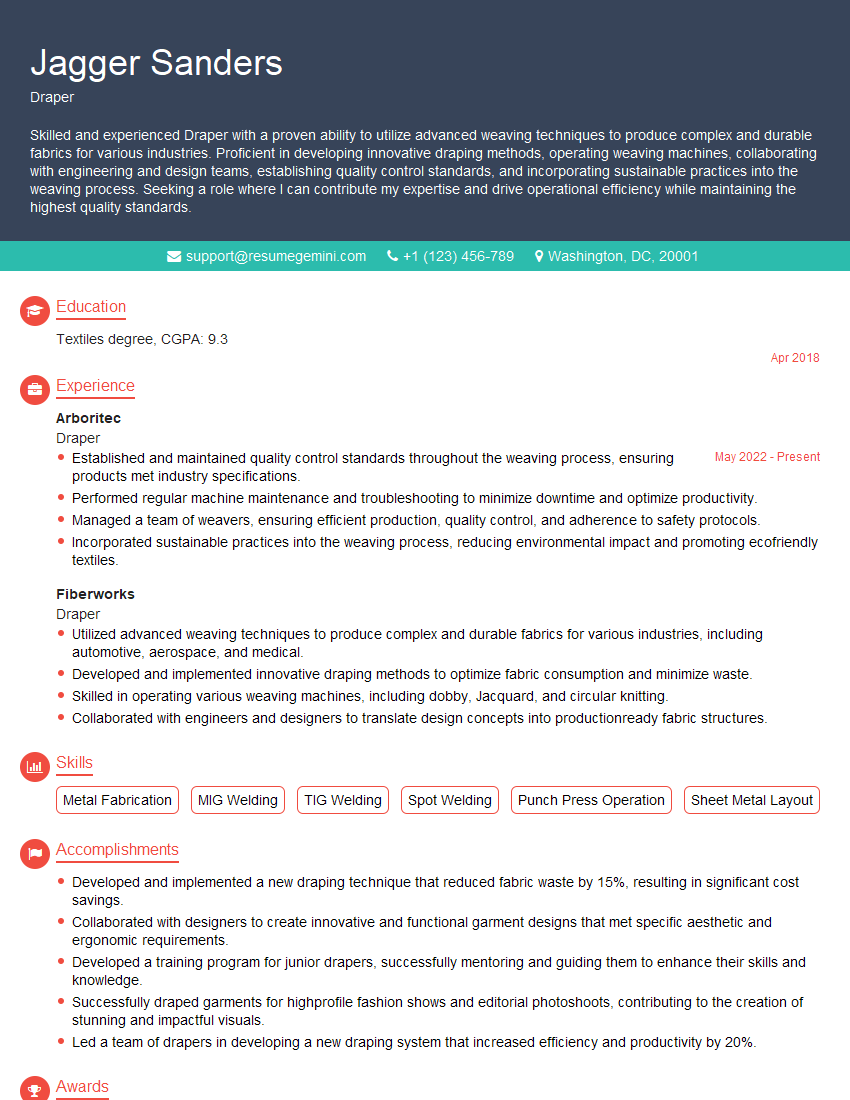
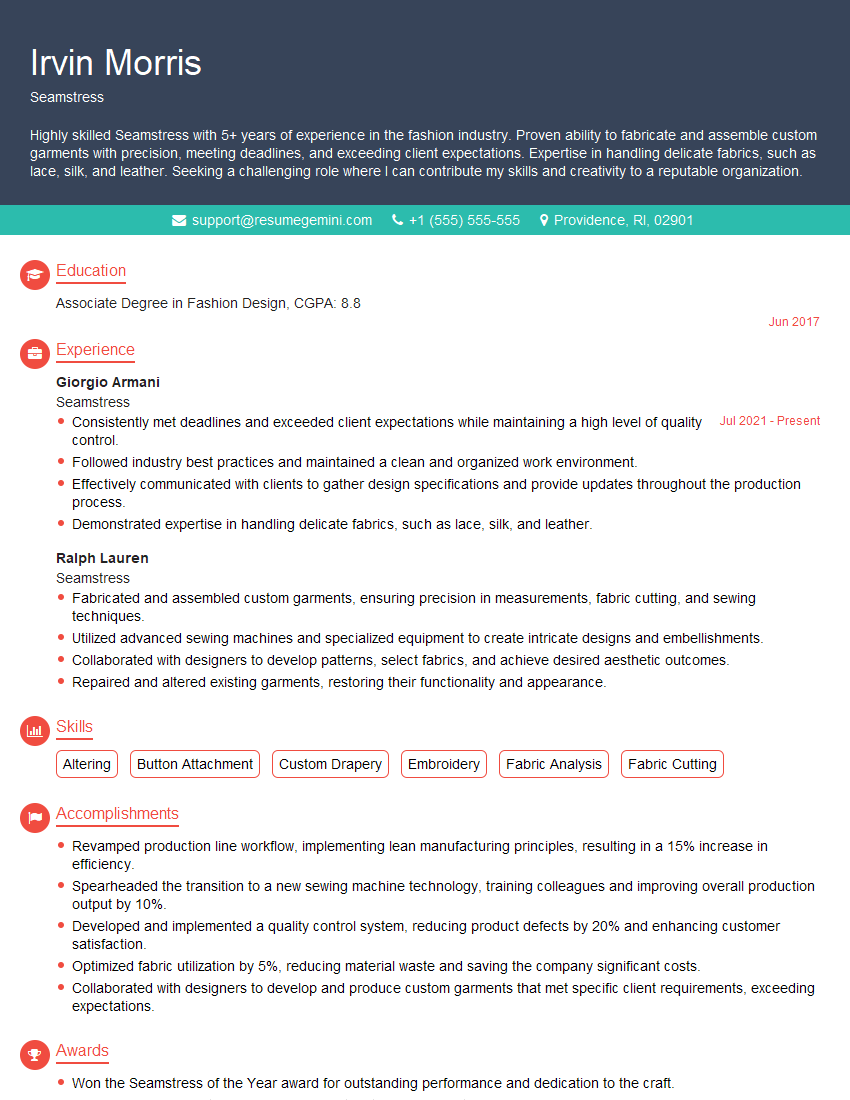
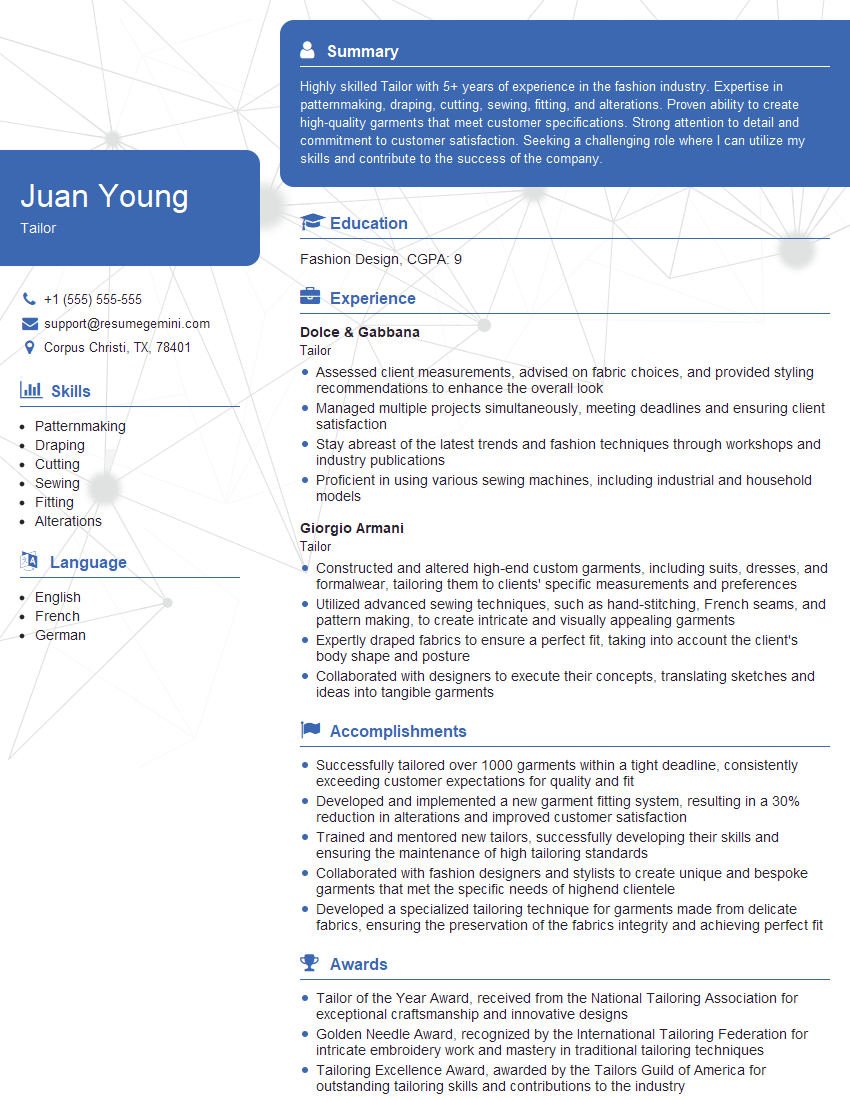
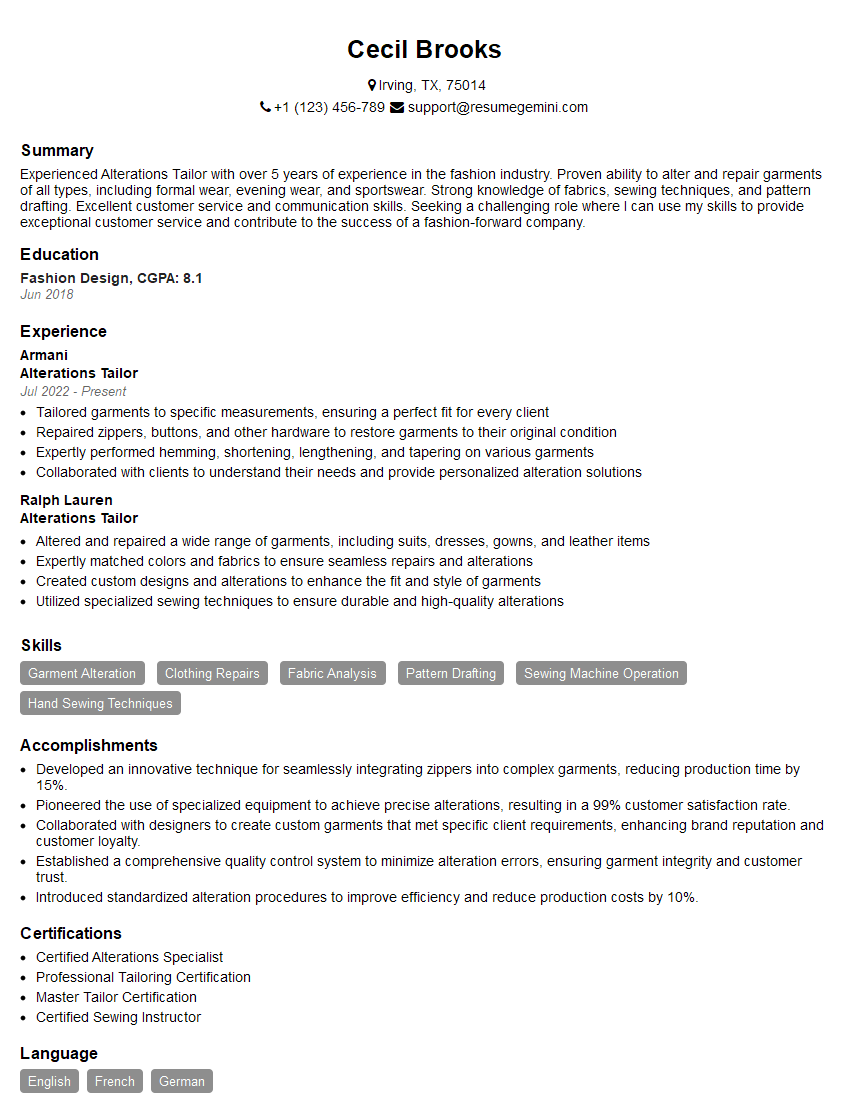
Mastering garment alterations opens doors to a rewarding career with diverse opportunities for growth, from working in boutiques to high-end fashion houses. An ATS-friendly resume is crucial for maximizing your job prospects. ResumeGemini is a trusted resource to help you craft a professional and impactful resume that highlights your skills and experience. Examples of resumes tailored specifically to Garment Alterations are available to help you showcase your expertise effectively.
Explore more articles
Users Rating of Our Blogs
Share Your Experience
We value your feedback! Please rate our content and share your thoughts (optional).
What Readers Say About Our Blog
Attention music lovers!
Wow, All the best Sax Summer music !!!
Spotify: https://open.spotify.com/artist/6ShcdIT7rPVVaFEpgZQbUk
Apple Music: https://music.apple.com/fr/artist/jimmy-sax-black/1530501936
YouTube: https://music.youtube.com/browse/VLOLAK5uy_noClmC7abM6YpZsnySxRqt3LoalPf88No
Other Platforms and Free Downloads : https://fanlink.tv/jimmysaxblack
on google : https://www.google.com/search?q=22+AND+22+AND+22
on ChatGPT : https://chat.openai.com?q=who20jlJimmy20Black20Sax20Producer
Get back into the groove with Jimmy sax Black
Best regards,
Jimmy sax Black
www.jimmysaxblack.com
Hi I am a troller at The aquatic interview center and I suddenly went so fast in Roblox and it was gone when I reset.
Hi,
Business owners spend hours every week worrying about their website—or avoiding it because it feels overwhelming.
We’d like to take that off your plate:
$69/month. Everything handled.
Our team will:
Design a custom website—or completely overhaul your current one
Take care of hosting as an option
Handle edits and improvements—up to 60 minutes of work included every month
No setup fees, no annual commitments. Just a site that makes a strong first impression.
Find out if it’s right for you:
https://websolutionsgenius.com/awardwinningwebsites
Hello,
we currently offer a complimentary backlink and URL indexing test for search engine optimization professionals.
You can get complimentary indexing credits to test how link discovery works in practice.
No credit card is required and there is no recurring fee.
You can find details here:
https://wikipedia-backlinks.com/indexing/
Regards
NICE RESPONSE TO Q & A
hi
The aim of this message is regarding an unclaimed deposit of a deceased nationale that bears the same name as you. You are not relate to him as there are millions of people answering the names across around the world. But i will use my position to influence the release of the deposit to you for our mutual benefit.
Respond for full details and how to claim the deposit. This is 100% risk free. Send hello to my email id: lukachachibaialuka@gmail.com
Luka Chachibaialuka
Hey interviewgemini.com, just wanted to follow up on my last email.
We just launched Call the Monster, an parenting app that lets you summon friendly ‘monsters’ kids actually listen to.
We’re also running a giveaway for everyone who downloads the app. Since it’s brand new, there aren’t many users yet, which means you’ve got a much better chance of winning some great prizes.
You can check it out here: https://bit.ly/callamonsterapp
Or follow us on Instagram: https://www.instagram.com/callamonsterapp
Thanks,
Ryan
CEO – Call the Monster App
Hey interviewgemini.com, I saw your website and love your approach.
I just want this to look like spam email, but want to share something important to you. We just launched Call the Monster, a parenting app that lets you summon friendly ‘monsters’ kids actually listen to.
Parents are loving it for calming chaos before bedtime. Thought you might want to try it: https://bit.ly/callamonsterapp or just follow our fun monster lore on Instagram: https://www.instagram.com/callamonsterapp
Thanks,
Ryan
CEO – Call A Monster APP
To the interviewgemini.com Owner.
Dear interviewgemini.com Webmaster!
Hi interviewgemini.com Webmaster!
Dear interviewgemini.com Webmaster!
excellent
Hello,
We found issues with your domain’s email setup that may be sending your messages to spam or blocking them completely. InboxShield Mini shows you how to fix it in minutes — no tech skills required.
Scan your domain now for details: https://inboxshield-mini.com/
— Adam @ InboxShield Mini
support@inboxshield-mini.com
Reply STOP to unsubscribe
Hi, are you owner of interviewgemini.com? What if I told you I could help you find extra time in your schedule, reconnect with leads you didn’t even realize you missed, and bring in more “I want to work with you” conversations, without increasing your ad spend or hiring a full-time employee?
All with a flexible, budget-friendly service that could easily pay for itself. Sounds good?
Would it be nice to jump on a quick 10-minute call so I can show you exactly how we make this work?
Best,
Hapei
Marketing Director
Hey, I know you’re the owner of interviewgemini.com. I’ll be quick.
Fundraising for your business is tough and time-consuming. We make it easier by guaranteeing two private investor meetings each month, for six months. No demos, no pitch events – just direct introductions to active investors matched to your startup.
If youR17;re raising, this could help you build real momentum. Want me to send more info?
Hi, I represent an SEO company that specialises in getting you AI citations and higher rankings on Google. I’d like to offer you a 100% free SEO audit for your website. Would you be interested?
Hi, I represent an SEO company that specialises in getting you AI citations and higher rankings on Google. I’d like to offer you a 100% free SEO audit for your website. Would you be interested?