The right preparation can turn an interview into an opportunity to showcase your expertise. This guide to Geological Data Interpretation interview questions is your ultimate resource, providing key insights and tips to help you ace your responses and stand out as a top candidate.
Questions Asked in Geological Data Interpretation Interview
Q 1. Explain the difference between porosity and permeability.
Porosity and permeability are two fundamental rock properties that govern fluid flow in subsurface formations. Think of a sponge: porosity is the total amount of space within the sponge, while permeability is how easily water can flow through those spaces.
Porosity is the fraction of the total volume of a rock that is occupied by pore spaces (voids). It’s expressed as a percentage or decimal. High porosity means a rock has a lot of empty space. For instance, a sandstone with high porosity could hold a significant amount of oil or gas. We calculate porosity using various methods including laboratory measurements on core samples and log derived calculations from well logs.
Permeability, on the other hand, measures the ability of a fluid to flow through the interconnected pore spaces within a rock. It’s influenced not only by the amount of pore space (porosity) but also the size, shape, and interconnectedness of those pores. A rock can have high porosity but low permeability if the pores are isolated and don’t connect well. Imagine a sponge with many small, unconnected holes: It holds a lot of water (high porosity) but the water doesn’t flow easily (low permeability).
In reservoir engineering, both porosity and permeability are crucial for estimating hydrocarbon reserves and predicting production rates. A reservoir with both high porosity and high permeability is ideal as it allows for efficient fluid flow and easy extraction of hydrocarbons.
Q 2. Describe the various types of geological maps and their applications.
Geological maps are visual representations of the Earth’s surface and subsurface geology. Different types of geological maps serve distinct purposes. Here are a few examples:
- Topographic Maps: These show the surface elevation of the land, using contour lines to represent changes in height. They’re essential for understanding the surface morphology and planning infrastructure projects.
- Geological Maps: These illustrate the distribution of different rock types, geological structures (faults, folds), and geological formations. They’re fundamental for regional geological studies and resource exploration. For example, identifying areas prospective for mineral or hydrocarbon exploration.
- Structural Maps: These focus specifically on the geological structures within the subsurface, such as fault planes and fold axes. This helps geologists understand the stress and strain history of an area and potential trapping mechanisms for hydrocarbons.
- Hydrogeological Maps: These show the distribution of groundwater resources and their properties, including aquifers and their boundaries. Crucial for water resource management and environmental studies.
- Geophysical Maps: These are derived from geophysical surveys (e.g., seismic, gravity, magnetic) and provide subsurface information not directly observable at the surface. Seismic maps are of particular importance in hydrocarbon exploration.
The application of these maps is broad, ranging from mineral exploration and groundwater management to environmental impact assessments and hazard mitigation. Their creation involves meticulous field mapping, laboratory analysis, and data integration.
Q 3. How do you interpret seismic data to identify potential hydrocarbon reservoirs?
Seismic data interpretation is a crucial step in hydrocarbon exploration. Seismic surveys use sound waves to image subsurface structures. The process involves several steps to identify potential hydrocarbon reservoirs:
- Data Acquisition and Processing: Seismic data is acquired through various methods (e.g., land, marine), followed by extensive processing to enhance the signal and remove noise.
- Seismic Imaging: Processed seismic data is displayed as a series of sections representing the subsurface. Experienced interpreters visually identify features such as:
- Identifying Potential Traps: Hydrocarbons need a structural or stratigraphic trap to accumulate. Seismic data helps identify these traps, such as anticlines (upward folds), faults, or stratigraphic pinch-outs.
- Determining Reservoir Properties: Seismic attributes (e.g., amplitude, frequency) can provide clues about reservoir properties like porosity and lithology. These properties determine a reservoir’s potential hydrocarbon volumes.
- Integrating with other data: Seismic interpretation is seldom done in isolation. It’s critically important to integrate seismic data with other geological data (e.g., well logs, geological maps) for a more robust interpretation.
For example, a bright spot on a seismic section might indicate the presence of a gas reservoir due to the high acoustic impedance contrast between gas and surrounding rocks. However, careful consideration of other factors is crucial to confirm this interpretation. Seismic data provides a valuable ‘big picture’ view of the subsurface, but it needs rigorous analysis and integration to confirm the presence of hydrocarbons.
Q 4. What are the key parameters considered when analyzing well logs?
Well logs are continuous records of physical properties measured in boreholes. Analyzing well logs is critical for understanding subsurface formations. Key parameters considered include:
- Gamma Ray (GR): Measures natural radioactivity, helping to distinguish between different rock types (e.g., shale has higher GR than sandstone). Shale is usually a non-reservoir rock.
- Neutron Porosity (NPHI): Measures the porosity of the formation by detecting the amount of hydrogen present in pore spaces, providing an estimation of the volume of pore spaces.
- Density (RHOB): Measures the bulk density of the formation, indirectly giving insights into porosity and lithology.
- Resistivity (various types): Measures the ability of the formation to conduct electrical current. High resistivity often indicates the presence of hydrocarbons (which are poor conductors).
- Sonic (DT): Measures the time it takes for a sound wave to travel through the formation. This can be used to estimate porosity and lithology.
By combining these logs, geologists and engineers can create detailed lithological logs, identify reservoir zones, estimate porosity and permeability, and evaluate hydrocarbon saturation. This information is essential for reservoir characterization and production planning. For example, a zone with high resistivity, low GR, and high porosity would likely be a promising hydrocarbon reservoir.
Q 5. Explain the concept of geostatistics and its role in geological modeling.
Geostatistics is a branch of statistics that deals with spatial data. It’s crucial in geological modeling because geological properties (e.g., porosity, permeability) are not uniformly distributed. Instead, they exhibit spatial variability. Geostatistics provides tools to model this variability and create realistic 3D models of subsurface formations.
The core concept is to use the spatial correlation between data points to predict values at unsampled locations. Common geostatistical techniques include:
- Kriging: A weighted averaging technique that considers both the measured values and their spatial correlation to estimate values at unsampled locations. Different types of kriging are used depending on the nature of the spatial correlation.
- Sequential Gaussian Simulation (SGS): A technique that generates multiple equally likely realizations of the geological model, accounting for uncertainty in the data.
Geostatistical modeling is critical in reservoir simulation, resource estimation, and mine planning. By generating multiple realistic models, we can account for uncertainty and quantify the risk associated with our predictions. For instance, in reservoir simulation, geostatistical models of porosity and permeability are essential for accurate predictions of fluid flow and hydrocarbon recovery.
Q 6. How do you handle uncertainty and ambiguity in geological data interpretation?
Geological data interpretation is often fraught with uncertainty and ambiguity. This is due to several factors, including:
- Limited Data Availability: We often have sparse and unevenly distributed data, making it challenging to accurately represent the entire subsurface.
- Data Uncertainty: Measurement errors and inherent limitations in geophysical and geological techniques introduce uncertainties into the data.
- Complex Geological Processes: Geological processes are complex and influenced by multiple factors, making interpretations ambiguous.
To handle this uncertainty, we employ several strategies:
- Probabilistic Modeling: Using geostatistical methods to create multiple equally likely models and quantify the range of possible outcomes.
- Sensitivity Analysis: Assessing how changes in input parameters affect the model predictions.
- Data Integration: Combining multiple data types (e.g., seismic, well logs, geological maps) to reduce ambiguity and improve confidence in interpretations.
- Expert Judgment: Using the experience and knowledge of geologists to integrate data and make informed decisions.
It’s vital to acknowledge the limitations of our interpretations and communicate uncertainties effectively. Presenting multiple scenarios and quantifying uncertainties is more informative than providing a single, potentially misleading, deterministic model.
Q 7. Describe your experience with different geological software (e.g., Petrel, Kingdom, ArcGIS).
Throughout my career, I’ve extensively used various geological software packages, each with its strengths and weaknesses. My experience includes:
- Petrel: A comprehensive reservoir simulation and characterization software widely used in the oil and gas industry. I’ve used Petrel for building 3D geological models, interpreting seismic data, and performing reservoir simulation studies. I’m proficient in its functionalities for creating and manipulating geological models, including structural modeling, fault modeling, and geostatistical simulation.
- Kingdom: Another industry-standard software for seismic interpretation and processing. I’ve utilized Kingdom for seismic attribute analysis, horizon picking, and creating structural maps. My skills encompass seismic interpretation techniques and the application of various attributes to characterize reservoirs.
- ArcGIS: A powerful GIS software used for spatial data management and visualization. I’ve used ArcGIS for integrating geological data with other spatial datasets, creating maps, and performing spatial analysis. This includes creating maps showing subsurface structures, well locations, and geological formations.
My experience spans the entire workflow, from data import and processing to model building and interpretation. I am comfortable working with various data formats and adapting my approach depending on the specific geological problem and available data.
Q 8. How do you integrate various datasets (e.g., seismic, well logs, geological maps) for a comprehensive interpretation?
Integrating diverse geological datasets is crucial for building a robust subsurface model. It’s like assembling a puzzle – each dataset provides a piece of the picture, and combining them reveals the complete image of the subsurface.
My approach involves a multi-step process:
- Data Preprocessing: This involves cleaning, formatting, and ensuring the datasets are compatible. For instance, converting different seismic data formats into a common standard, and checking well log depths for consistency.
- Georeferencing: All data needs to be accurately located spatially. This usually involves aligning data to a common coordinate system and datum.
- Correlation: Identifying and correlating features across different datasets. For example, correlating seismic reflectors with stratigraphic horizons identified in well logs. We might use well-log curves like Gamma Ray to identify lithological changes which we then try to trace on the seismic data.
- Interpretation and Modeling: Integrating the correlated data into a 3D geological model. This often involves using specialized software (e.g., Petrel, Kingdom) to create a visual representation of subsurface features and their spatial relationships. We might use seismic interpretation to delineate faults and build a structural framework, and then populate that framework with lithological and petrophysical information from well logs.
- Validation: Continuously validating the model against all available data. This ensures consistency and helps identify areas needing further investigation or data acquisition.
For example, in a hydrocarbon exploration project, integrating seismic data (showing structural features and potential reservoir geometry), well logs (providing lithological and petrophysical properties), and geological maps (showing surface geology and regional trends) enables us to accurately delineate potential reservoir zones and assess their producibility.
Q 9. Explain the principles of structural geology and their relevance to data interpretation.
Structural geology principles are fundamental to interpreting subsurface data. They deal with the three-dimensional arrangement of rocks and the forces that have deformed them. Understanding these principles helps us interpret the history of deformation and its impact on reservoir properties.
Key principles include:
- Folding: The bending of rock layers due to compressional forces. Understanding fold geometry (e.g., anticline, syncline) is critical for predicting reservoir continuity and trap geometry.
- Faulting: Fracturing and displacement of rock layers due to shear stresses. Faulting can create compartments within a reservoir, affecting fluid flow and compartmentalization. We analyze fault throws, dips, and orientations to understand their influence on reservoir architecture.
- Jointing: The formation of fractures without significant displacement. Joints can enhance reservoir permeability, particularly in tight formations. We need to analyze their density and orientation.
- Stress and Strain: Analyzing the stress field responsible for deformation helps predict future deformation and its impact on reservoir integrity and stability.
In data interpretation, we use these principles to identify structural features from seismic data (e.g., faults, folds), interpret their influence on well log data (e.g., changes in porosity and permeability near faults), and build accurate 3D geological models. For example, identifying a fault that disrupts a reservoir layer will significantly influence production strategies and well placement.
Q 10. How do you identify and mitigate risks associated with geological data interpretation?
Geological data interpretation inherently involves uncertainty. Risks stem from data limitations, interpretation ambiguities, and the inherent complexity of natural systems. Mitigation involves a multi-pronged approach:
- Data Quality Assessment: Carefully evaluate the quality and reliability of each dataset. This might include checking for noise in seismic data or inconsistencies in well log calibrations.
- Multiple Interpretations: Considering alternative interpretations to account for uncertainty. We might generate multiple structural models to represent the range of possible scenarios.
- Sensitivity Analysis: Assessing the sensitivity of interpretations to input data variations. This helps quantify the uncertainty associated with our conclusions.
- Uncertainty Quantification: Using statistical methods to quantify the uncertainties in our interpretations (e.g., probabilistic modeling).
- Cross-Validation: Comparing interpretations with independent data sources to ensure consistency. This might include using production data to validate reservoir models.
For instance, if seismic data is ambiguous in a particular area, we might acquire additional data (e.g., higher resolution seismic or additional well logs) to reduce uncertainty. Alternatively, we might use a range of plausible interpretations to inform decision-making, recognizing that our knowledge is incomplete.
Q 11. Describe your experience with geological data visualization and presentation techniques.
Data visualization and presentation are crucial for effective communication of geological interpretations. I’m proficient in various techniques using both industry-standard software and custom scripting.
My experience includes:
- Cross-sections and maps: Creating 2D visualizations of geological features, such as cross-sections showing stratigraphic layering and structural features, and maps showing surface geology, fault patterns, or isopach maps.
- 3D geological models: Building 3D models using Petrel or similar software to visualize subsurface structures and reservoir properties. These models often include features like faults, horizons, and property distributions.
- Seismic sections and attributes: Interpreting seismic data and displaying it using various attributes (e.g., amplitude, frequency, impedance) to highlight potential hydrocarbon reservoirs.
- Well log plots: Creating and interpreting well log plots to visualize lithological variations, porosity, permeability, and other petrophysical properties.
- Interactive presentations: Developing dynamic presentations using tools like Powerpoint, integrating 3D models and interactive visualizations to engage the audience.
I always tailor the visualization style and complexity to the audience’s background and the specific project needs. A simple cross-section is appropriate for a general audience, while a detailed 3D model is more relevant for technical experts.
Q 12. What are the common challenges encountered during geological data interpretation?
Geological data interpretation presents various challenges. Data quality issues, ambiguities, and the inherent complexity of geological systems are common obstacles. Some specific challenges include:
- Data scarcity or poor quality: In many areas, data is limited or of poor quality, hindering accurate interpretation. This often requires creative use of available data and advanced interpretation techniques.
- Ambiguity in data interpretation: Different interpretations might be possible from the same dataset, necessitating careful consideration and integration of multiple lines of evidence.
- Scale and resolution limitations: The resolution of data might be insufficient to capture detailed geological features, particularly at the reservoir scale. This necessitates upscaling or downscaling techniques.
- Integration of disparate datasets: Combining datasets with different spatial resolutions, scales, and types poses significant challenges. This requires careful data preprocessing and handling.
- Uncertainty and risk: Inherent uncertainties in data and interpretations lead to potential risks in decision-making.
For example, the scarcity of wells in a remote area might limit our ability to constrain a geological model. Addressing this might involve integrating other data types, such as seismic data or regional geological analogues, to increase the confidence in our interpretations.
Q 13. How do you validate the accuracy of your geological interpretations?
Validating geological interpretations is crucial to ensure accuracy and reliability. This is an iterative process that involves comparing the interpretation with independent data and refining the model accordingly.
Validation methods include:
- Comparing with independent data: This might include comparing interpreted reservoir properties with production data, or using different seismic attributes to cross-check structural interpretations.
- Sensitivity analysis: Assessing how sensitive our interpretations are to changes in input data or parameters. This helps identify critical uncertainties and potential biases.
- Quantitative measures: Using statistical methods or error analysis to quantify the uncertainty associated with the interpretations.
- Peer review: Presenting interpretations to other experts for critical evaluation and feedback.
- Predictive capability: Assessing the ability of the model to predict new observations or data. This involves testing the model against data not used in the initial interpretation.
For instance, we might compare the predicted reservoir volumes from a geological model with actual production data to assess the accuracy of our reservoir characterization. Discrepancies might indicate areas needing refinement or further investigation.
Q 14. Explain the concept of facies analysis and its importance in reservoir characterization.
Facies analysis is the description and interpretation of sedimentary rock units based on their lithological characteristics, sedimentary structures, and fossil content. It’s essential for reservoir characterization because it helps us understand how sedimentary environments and processes have shaped reservoir architecture and fluid distribution.
The importance in reservoir characterization lies in:
- Predicting reservoir properties: Different facies have distinct petrophysical properties (porosity, permeability). Understanding facies distribution helps predict these properties throughout the reservoir.
- Understanding reservoir geometry: Facies patterns reveal the geometry and architecture of the reservoir, including the distribution of permeable and impermeable zones.
- Improving reservoir modeling: Facies data are crucial for building accurate geological and reservoir simulation models. This helps predict fluid flow, hydrocarbon recovery, and other reservoir performance parameters.
- Optimizing well placement and production strategies: Knowing the distribution of different facies helps to optimize well placement and production strategies, maximizing hydrocarbon recovery.
For instance, in a fluvial (river) system, identifying channel and floodplain facies is critical for understanding reservoir connectivity and permeability variations. Channel sands tend to be highly permeable, while floodplain mudstones are less permeable. This information allows us to optimally place wells within high-permeability channel sands.
Q 15. Describe your experience with sequence stratigraphy and its application in geological modeling.
Sequence stratigraphy is a powerful technique used to interpret the sedimentary record in terms of relative sea-level changes and their impact on depositional systems. It essentially provides a framework for understanding the architecture of sedimentary basins by recognizing repeating patterns of depositional units bounded by unconformities or other significant stratigraphic surfaces. In geological modeling, sequence stratigraphy helps us predict the distribution of different rock types, reservoir quality, and potential hydrocarbon traps.
For instance, I’ve used sequence stratigraphy to model a fluvial system in a deepwater setting. By identifying key surfaces like flooding surfaces and maximum flooding surfaces, I could delineate different depositional environments – channel fills, overbank deposits, and deep-water shales. This understanding, coupled with well log and seismic data, allowed me to create a 3D geological model which accurately predicted reservoir distribution, thickness, and connectivity, ultimately optimizing well placement strategies.
In another project, relating to a carbonate platform, the identification of sequence boundaries helped in defining the distribution of reservoir facies and predicting porosity and permeability variations within the platform. This information proved critical in determining the optimal locations for drilling and maximizing the economic recovery of resources.
Career Expert Tips:
- Ace those interviews! Prepare effectively by reviewing the Top 50 Most Common Interview Questions on ResumeGemini.
- Navigate your job search with confidence! Explore a wide range of Career Tips on ResumeGemini. Learn about common challenges and recommendations to overcome them.
- Craft the perfect resume! Master the Art of Resume Writing with ResumeGemini’s guide. Showcase your unique qualifications and achievements effectively.
- Don’t miss out on holiday savings! Build your dream resume with ResumeGemini’s ATS optimized templates.
Q 16. How do you handle conflicting data during the interpretation process?
Handling conflicting data is a common challenge in geological interpretation. It requires a systematic and critical approach. My strategy involves a multi-step process. First, I thoroughly review all the available data, noting any discrepancies. This includes examining the quality and reliability of each data source; for instance, seismic data might have limitations in resolution compared to well logs. Second, I evaluate the potential causes of the conflict. Are there errors in data acquisition or processing? Could the conflict stem from the limitations of the interpretation technique or the complex nature of the subsurface?
Third, I integrate data from multiple sources to resolve the conflict. For example, I might use well log data to constrain the interpretation of seismic data, or vice versa. A consistent geological model should respect all data. Sometimes, compromises need to be made using weight-of-evidence approaches, considering the reliability of different data types. Finally, I document the conflict, the resolution method, and the uncertainties associated with the final interpretation. This ensures transparency and enables a robust evaluation of the model’s validity.
For example, in one project, conflicting interpretations arose from seismic imaging and well log analysis on a fault zone. Using advanced seismic attributes and incorporating information from nearby wells improved the seismic interpretation and allowed for a reconciled model that accurately represented the fault geometry and its effect on reservoir properties.
Q 17. Explain the principles of stratigraphic correlation.
Stratigraphic correlation involves matching or aligning rock strata from different locations to establish their relative age and understand their depositional history. This process relies on several principles:
- Lithological Correlation: Matching rock types, such as sandstone, shale, or limestone, based on their physical properties and composition.
- Biostratigraphic Correlation: Utilizing fossils to correlate strata. The presence or absence of specific fossil assemblages helps determine the relative age of rocks.
- Chronostratigraphic Correlation: Aligning rock units based on their absolute ages determined by radiometric dating techniques.
- Chemostratigraphic Correlation: Comparing the chemical composition of rocks (e.g., isotopic ratios) to establish correlations.
- Magnetostratigraphic Correlation: Utilizing the record of Earth’s magnetic field reversals preserved in rocks to correlate strata.
These principles are often used in conjunction to achieve a robust and accurate correlation. For example, I’ve used biostratigraphy and lithostratigraphy to correlate subsurface strata across a large basin, creating a comprehensive stratigraphic framework for regional exploration and production activities. This involved careful analysis of fossil assemblages in core samples, combined with detailed logging of lithological units from wells, and the use of seismic data to map the distribution of these units across the basin.
Q 18. What are the different types of geological structures and their impact on subsurface fluid flow?
Geological structures are significant features that deform rock formations. Common types include faults, folds, joints, and unconformities. These structures significantly impact subsurface fluid flow by altering porosity, permeability, and the pathways for fluid movement.
- Faults: Fractures along which there has been displacement. Faults can act as barriers or conduits to fluid flow, depending on their orientation, displacement, and the type of rocks involved. A sealing fault can trap hydrocarbons, while a highly permeable fault can act as a pathway for water or hydrocarbon migration.
- Folds: Curvature in rock layers. Folds can create complex pathways for fluid flow, with permeability varying across the fold limbs and hinge zones.
- Joints: Fractures without significant displacement. While individually low permeability, a dense network of joints can create significant secondary permeability.
- Unconformities: Surfaces representing a significant break in the geological record, often characterized by erosion or non-deposition. They can create significant flow barriers.
For example, in reservoir characterization, understanding the impact of faulting is crucial. A sealing fault can create a trap for hydrocarbons, while a highly permeable fault can allow for hydrocarbon leakage. Accurate modeling of faults and their influence on fluid flow is therefore essential for successful exploration and production planning.
Q 19. Describe your experience with geological modeling software and workflows.
I have extensive experience with various geological modeling software packages, including Petrel, RMS, and Gocad. My workflows typically involve integrating data from multiple sources, such as seismic surveys, well logs, core analysis, and geological maps, to create 3D geological models. The process involves several key steps:
- Data import and processing: Importing and cleaning data from different sources.
- Seismic interpretation: Defining horizons, faults, and other geological features on seismic data.
- Well log interpretation: Analyzing well logs to identify lithology, porosity, permeability, and fluid saturations.
- Facies modeling: Building 3D models of different rock types based on their distribution and properties.
- Property modeling: Assigning geological properties (e.g., porosity, permeability) to the different rock types.
- Model validation and refinement: Comparing the model with available data and making adjustments as needed.
A recent project involved using Petrel to build a 3D model of a complex carbonate reservoir. We integrated seismic data, well logs, and core data to define different reservoir facies and their associated petrophysical properties. This model was then used to predict reservoir performance and optimize drilling locations.
Q 20. How do you assess the quality of geological data?
Assessing data quality is paramount in geological interpretation. My approach involves a multi-faceted evaluation:
- Data Source Assessment: Evaluating the reliability and accuracy of the data source. This involves checking the methodology used for data acquisition, processing, and interpretation. For example, the vintage and resolution of seismic data will affect its interpretation.
- Data Completeness and Coverage: Assessing the extent to which data covers the area of interest and if there are significant gaps.
- Data Consistency and Accuracy: Checking for inconsistencies or errors within the data sets and comparing different data sets to identify discrepancies. This might involve statistical analysis.
- Data Uncertainty: Quantifying the uncertainty associated with the data. This is crucial for incorporating uncertainty into geological models.
For instance, when dealing with well logs, I carefully examine the log quality, checking for spikes, noisy data, and other artifacts. I use quality control procedures to identify and mitigate those issues. In seismic data processing, I look at noise levels and resolution to assess the quality of the data.
Q 21. Explain your understanding of different types of geological formations.
Geological formations are categorized based on several characteristics, including their origin, composition, and structure. Some key types are:
- Sedimentary Formations: Formed from the accumulation and lithification of sediments (e.g., sandstone, shale, limestone, conglomerate). These formations often show layering and contain fossils. Their properties can significantly vary laterally and vertically.
- Igneous Formations: Formed from the cooling and solidification of molten rock (magma or lava). These formations can be intrusive (e.g., granite) or extrusive (e.g., basalt), influencing their texture and structure. They often exhibit different densities and magnetic properties.
- Metamorphic Formations: Formed by the alteration of pre-existing rocks due to heat, pressure, or chemical reactions (e.g., marble, slate, gneiss). These formations can show foliation (layering) and significant changes in texture and mineral composition relative to the original rock.
Understanding the origin and properties of different geological formations is crucial for various applications, including reservoir characterization, groundwater exploration, and geological hazard assessment. For example, in petroleum exploration, understanding the characteristics of sedimentary formations, such as porosity and permeability, is crucial for identifying potential hydrocarbon reservoirs.
Q 22. Describe your experience with the interpretation of different geophysical methods (e.g., gravity, magnetics).
My experience with geophysical data interpretation encompasses a wide range of methods, primarily gravity and magnetics, but also extending to seismic and electrical resistivity techniques. I’m proficient in processing, analyzing, and interpreting the data acquired from these surveys. Gravity surveys, for instance, reveal subsurface density variations. Anomalies in the gravity data might indicate dense ore bodies or subsurface geological structures like salt domes. I’ve used this in projects involving mineral exploration and groundwater resource assessment. Magnetics, on the other hand, are sensitive to magnetic susceptibility contrasts, which are helpful in detecting iron-rich formations or identifying buried geological structures. I’ve worked on projects using magnetic data to map fault zones and delineate igneous intrusions. In my work, I often integrate multiple geophysical datasets to create a more comprehensive subsurface model. This integrated approach allows for a more robust interpretation and minimizes the ambiguity often associated with single-method studies. For example, combining gravity and magnetic data can help differentiate between a dense, magnetic ore body and a dense, non-magnetic geological structure. My proficiency extends to using specialized software like Oasis Montaj and Petrel for data processing, modelling, and visualization.
Q 23. How do you use geological data to predict the potential for natural hazards?
Geological data is crucial for predicting natural hazards. For example, analyzing geological maps, fault lines, and historical seismic data helps assess earthquake risks. I’ve been involved in projects where we mapped active faults using high-resolution satellite imagery and field mapping to define hazard zones for urban planning. Similarly, understanding the geology of a region (like slope angle, soil type, and rock strength) allows us to assess landslide susceptibility. A crucial aspect is identifying unstable slopes or areas prone to erosion. This involves analysing soil properties, slope morphology and hydrological data to predict the probability and impact of landslides. Another application involves assessing volcanic hazards. By studying past eruption histories, volcanic rock types and current volcanic activity (e.g., gas emissions, ground deformation) we can determine the potential for future eruptions and predict the possible impact zones.
Essentially, it’s about identifying geological indicators that correlate with past events and using these correlations to predict future occurrences. This often involves statistical modelling to quantify the likelihood and severity of different hazards.
Q 24. Explain the application of geological data in environmental site assessments.
Geological data plays a vital role in environmental site assessments. Understanding the subsurface geology is key to determining the potential for contaminant migration. For example, the presence of permeable layers like sand and gravel could indicate a high risk of groundwater contamination. Conversely, impermeable layers like clay can help contain contaminants. I’ve used geological data, such as borehole logs and soil samples to determine hydrogeological properties. These properties are used to build conceptual site models, which help predict the movement of contaminants in the subsurface. Furthermore, geological data informs the selection of appropriate remediation strategies. If the contamination involves a specific geological unit or a particular type of soil, then our remediation techniques need to be targeted to the properties of that material. My experience includes assessing the impact of historical industrial activities, identifying potential sources of contamination, and designing appropriate monitoring and remediation plans.
Q 25. Describe your experience with the interpretation of remote sensing data in geological applications.
My experience with remote sensing data in geological applications is extensive. I’m skilled in interpreting satellite imagery (Landsat, Sentinel, etc.) and aerial photographs to map geological features, identify lineaments (which often indicate faults), and assess landforms. This involves using image processing techniques to enhance the image contrast, identify spectral signatures of different rock types and analyze spatial patterns. I’ve used this information for geological mapping, mineral exploration, and monitoring geological hazards. For example, I used multispectral imagery to differentiate between different types of volcanic rocks, which helped in mapping the extent of volcanic activity and evaluating the risk of future eruptions. Additionally, I’ve utilized techniques like LiDAR (Light Detection and Ranging) data to create high-resolution digital elevation models (DEMs), providing crucial information for landslide susceptibility mapping and assessing areas prone to flooding. The combination of remote sensing data with field observations provides a powerful tool for geological investigations.
Q 26. How do you communicate your geological interpretations to a non-technical audience?
Communicating complex geological interpretations to non-technical audiences requires a clear and concise approach. I avoid jargon and technical terms as much as possible, relying instead on simple analogies and visual aids. For instance, instead of saying ‘the subsurface exhibits a high-amplitude magnetic anomaly,’ I might say ‘we’ve found a strong magnetic signal that suggests the presence of a potentially valuable mineral deposit.’ I use maps, cross-sections, and diagrams to illustrate my findings, making them easily understandable. Stories and case studies help to illustrate the relevance of the geological information. For example, I might explain how understanding the geological setting of a particular area can help prevent construction failures or improve the efficiency of water resource management. Using plain language and visuals allows for clear communication and ensures that the audience understands the significance of the geological information.
Q 27. What are your career goals in geological data interpretation?
My career goals involve continuing to develop my expertise in geological data interpretation and leveraging my skills to address real-world challenges. I aim to become a leading expert in the integration of multiple datasets, including geophysical, geological, and remote sensing data, for improved subsurface modelling. I’m particularly interested in applying my knowledge to support sustainable resource management and mitigate natural hazards. Specifically, I’d like to contribute to projects involving groundwater resource exploration and management in water-stressed regions, and develop advanced techniques for predicting and mitigating geological hazards such as landslides and earthquakes. My ultimate goal is to use my skills to contribute to both scientific advancement and societal benefit.
Key Topics to Learn for Geological Data Interpretation Interview
- Seismic Data Interpretation: Understanding seismic reflection and refraction principles, processing techniques, and interpretation workflows to identify subsurface geological structures like faults, folds, and stratigraphic layers. Practical application: Identifying potential hydrocarbon reservoirs from 3D seismic data.
- Well Log Analysis: Mastering the interpretation of various well logs (gamma ray, resistivity, porosity, density) to determine lithology, porosity, permeability, and hydrocarbon saturation. Practical application: Evaluating reservoir quality and identifying potential zones for production.
- Petrophysical Properties and Reservoir Characterization: Developing a strong understanding of rock properties, fluid flow, and reservoir simulation techniques to build accurate geological models. Practical application: Predicting reservoir performance and optimizing production strategies.
- Structural Geology and Tectonics: Applying structural geological principles to interpret fault systems, fold geometries, and stress regimes. Practical application: Assessing the structural integrity of potential drilling locations and understanding the impact of tectonic processes on reservoir formation.
- Geological Modeling and Mapping: Developing proficiency in creating 2D and 3D geological models using various software packages. Practical application: Visualizing subsurface geology and predicting the distribution of geological formations.
- Stratigraphy and Sedimentology: Understanding sedimentary processes, depositional environments, and stratigraphic sequences to interpret subsurface geological history. Practical application: Correlating well logs and seismic data to build a detailed stratigraphic framework.
- Geostatistics and Data Analysis: Utilizing statistical methods to analyze geological data, assess uncertainty, and make informed decisions. Practical application: Estimating hydrocarbon reserves and managing geological risks.
Next Steps
Mastering Geological Data Interpretation is crucial for career advancement in the energy sector and related fields. A strong understanding of these concepts will significantly enhance your prospects for securing a challenging and rewarding position. To maximize your job search success, it’s essential to create a compelling and ATS-friendly resume that highlights your skills and experience effectively. We strongly recommend using ResumeGemini to build a professional resume that showcases your abilities. ResumeGemini provides valuable tools and resources, including examples of resumes tailored to Geological Data Interpretation, to help you create a document that stands out from the competition.
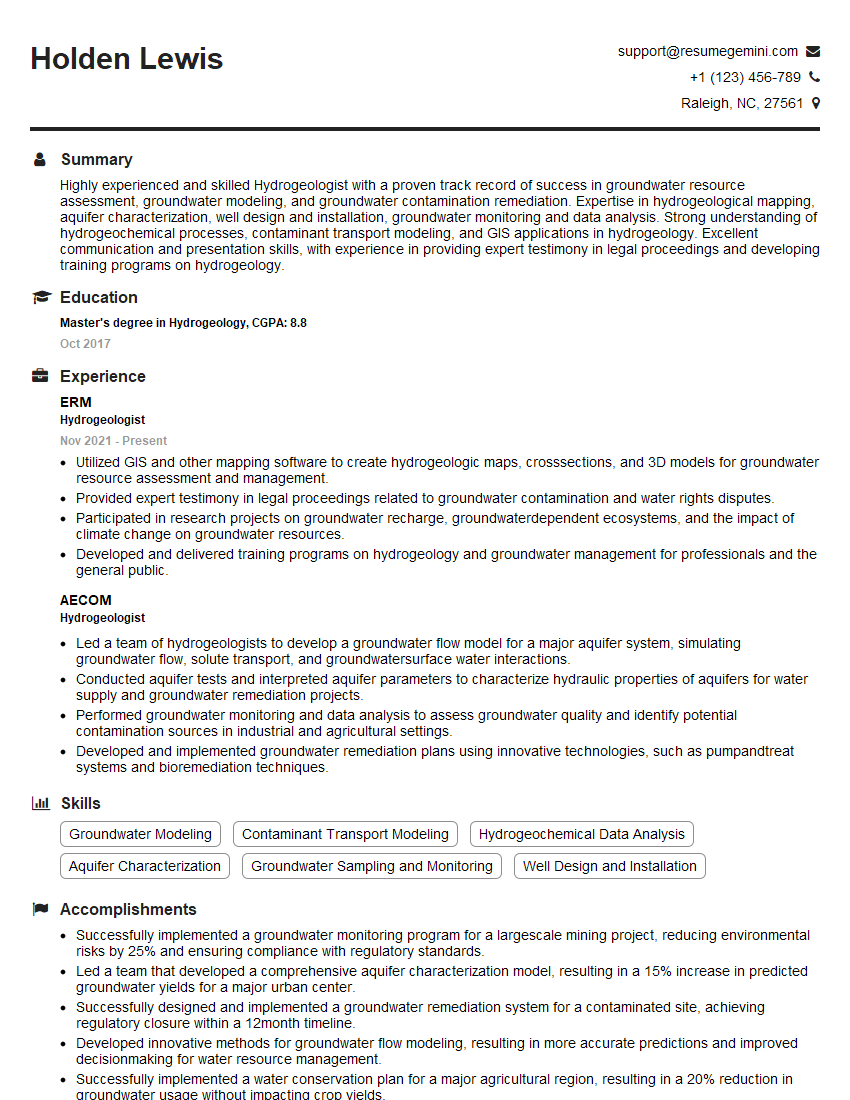
Hydrogeologist Resume Sample
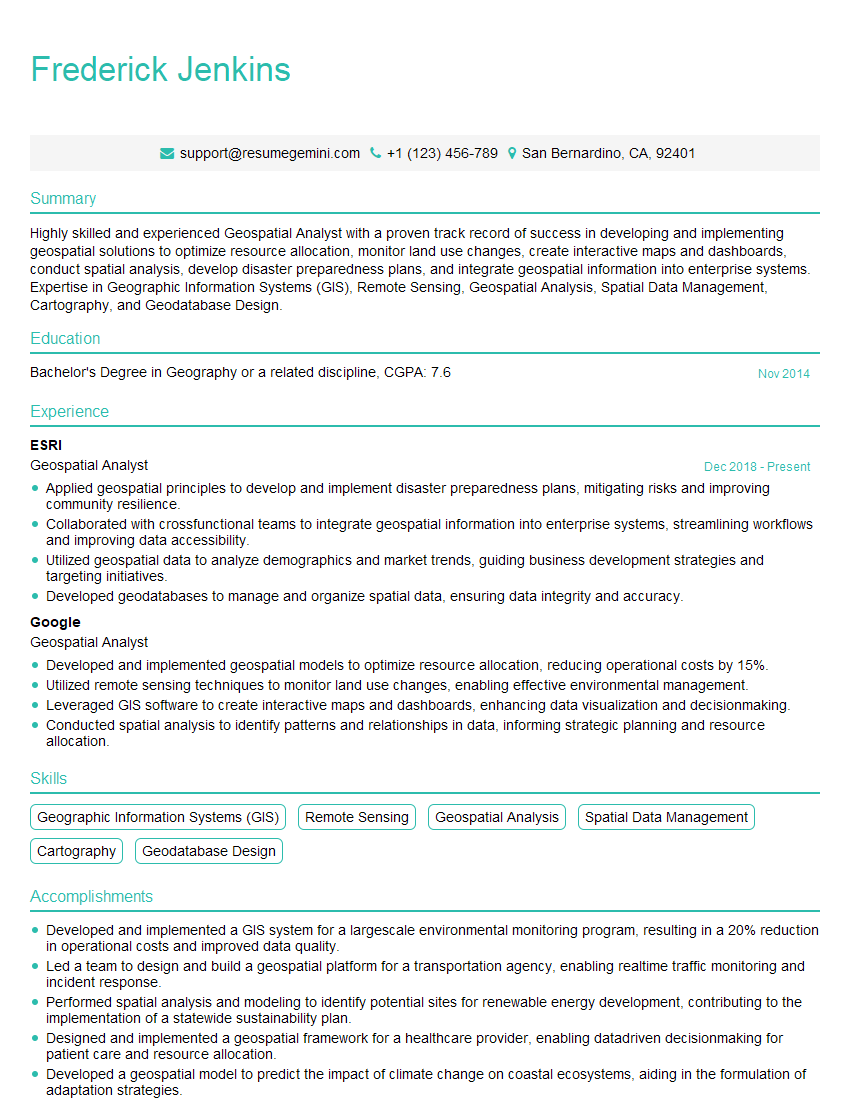
Geospatial Analyst Resume Sample

Geologist Resume Sample

Geotechnical Engineer Resume Sample

Exploration Geologist Resume Sample

Engineering Geologist Resume Sample

Environmental Geologist Resume Sample
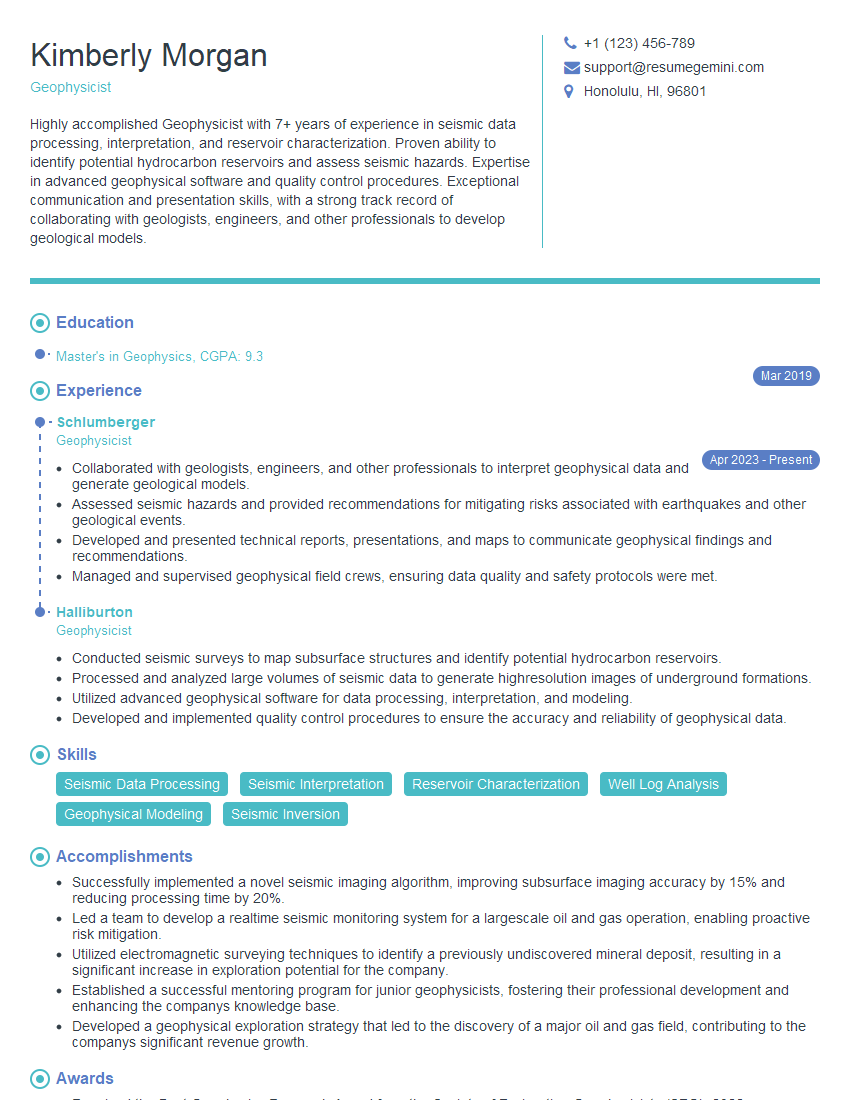
Geophysicist Resume Sample
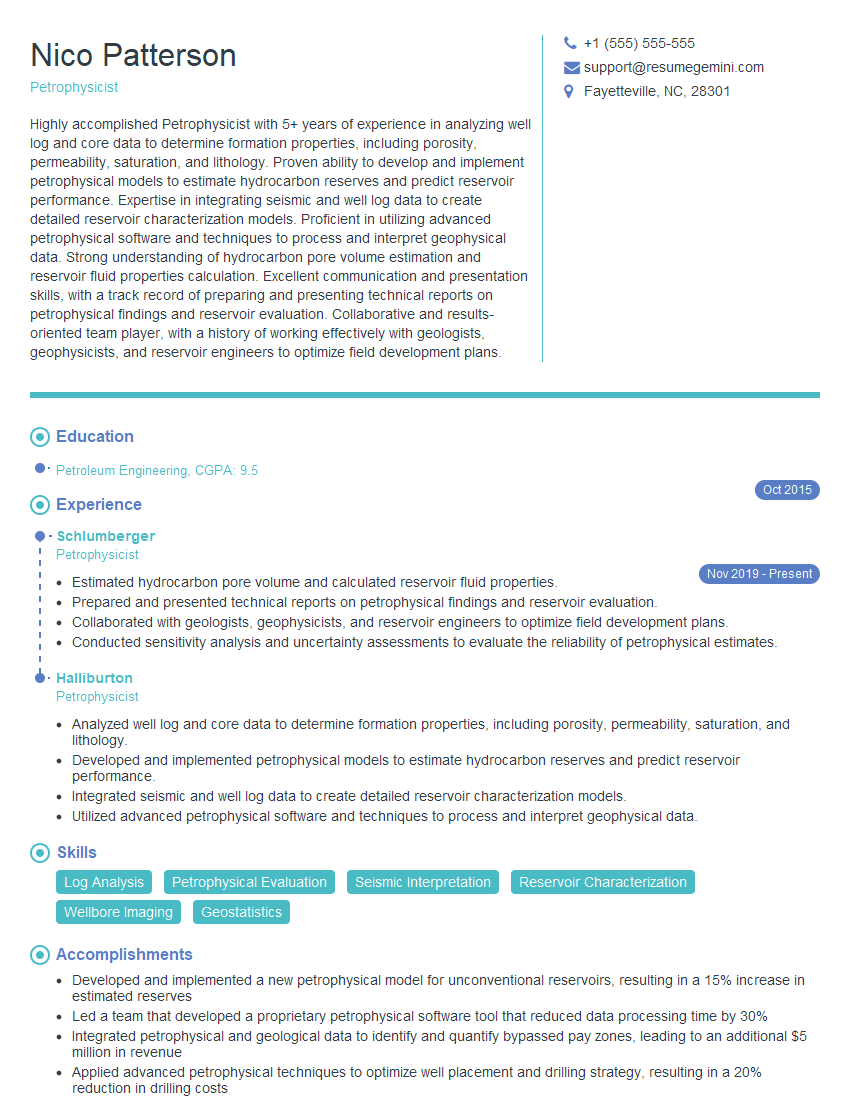
Petrophysicist Resume Sample

Research Geologist Resume Sample
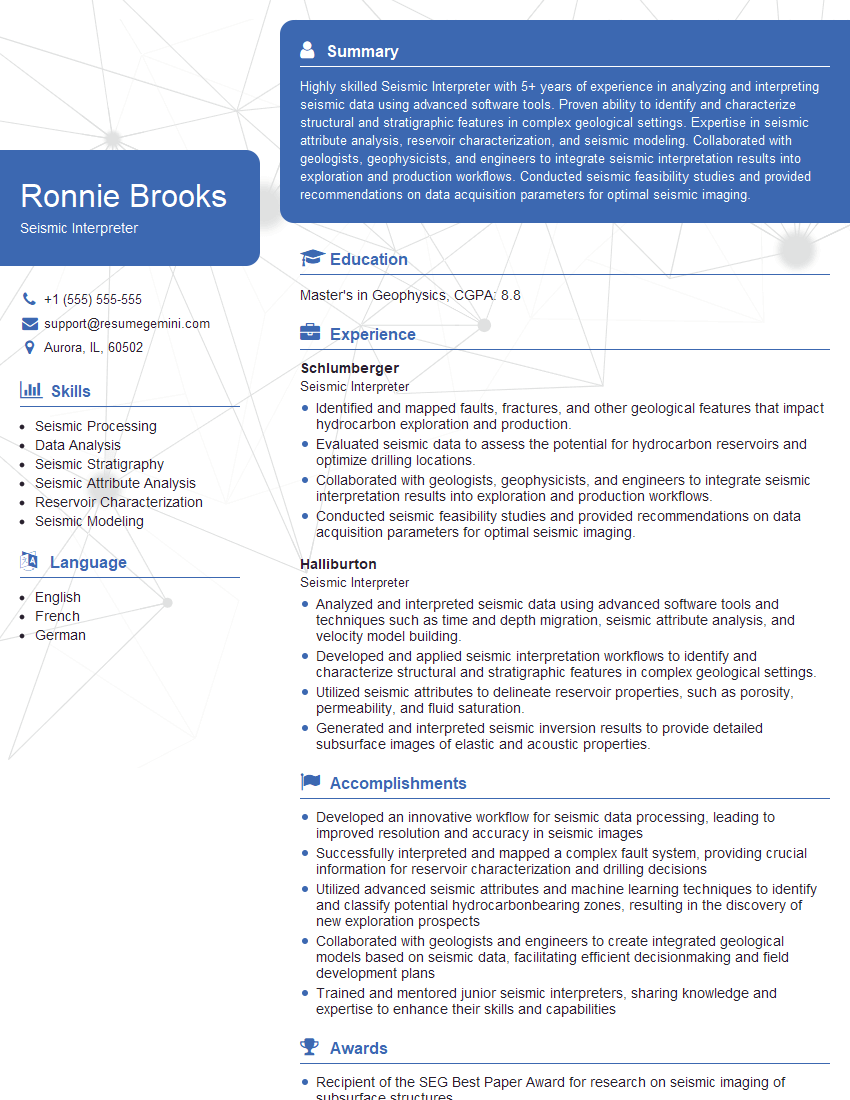
Seismic Interpreter Resume Sample

Geological Technician Resume Sample
Explore more articles
Users Rating of Our Blogs
Share Your Experience
We value your feedback! Please rate our content and share your thoughts (optional).
What Readers Say About Our Blog
Very informative content, great job.
good