Interviews are opportunities to demonstrate your expertise, and this guide is here to help you shine. Explore the essential Geological Interpretation interview questions that employers frequently ask, paired with strategies for crafting responses that set you apart from the competition.
Questions Asked in Geological Interpretation Interview
Q 1. Explain the difference between seismic reflection and refraction.
Seismic reflection and refraction are both geophysical techniques used to image subsurface structures, but they rely on different principles. Think of it like throwing a stone into a pond: reflection is like the stone bouncing off the bottom and returning to the surface, while refraction is like the stone’s path bending as it enters a different layer of water (e.g., deeper, denser water).
Seismic Reflection: This method uses the principle that sound waves (seismic waves) reflect off interfaces between layers with different acoustic impedance (density multiplied by velocity). We send seismic waves into the earth, and receivers record the returning reflections. The time it takes for the waves to travel down and back up allows us to determine the depth of the reflecting interfaces. Strong reflections often indicate significant changes in lithology or the presence of geological structures like faults.
Seismic Refraction: This method measures the change in speed of seismic waves as they pass through layers with different velocities. The refracted waves travel along the interface between layers before being detected by receivers. We use this to determine the velocity of seismic waves in each layer and then infer the geological properties of these layers, like density and rock type. Refraction is particularly useful for determining the depth to a relatively shallow, high-velocity layer.
In summary: Reflection uses the reflected waves to image subsurface structures, while refraction uses the change in wave velocity to infer layer properties. Both techniques are often used in conjunction to provide a more complete subsurface image. For instance, reflection data might show a fault, while refraction data could tell us about the rock type on either side.
Q 2. Describe your experience with well log interpretation.
I have extensive experience in well log interpretation, encompassing various well log types such as gamma ray, neutron porosity, density, sonic, and resistivity logs. My work has primarily focused on reservoir characterization, formation evaluation, and geological modeling. I’ve used well logs to define lithology, porosity, permeability, water saturation, and hydrocarbon type.
For example, in one project, I used gamma-ray logs to identify shale intervals, which helped to differentiate between reservoir and non-reservoir rock. Integrating this information with neutron and density porosity logs, I was able to estimate the reservoir’s pore space volume. Resistivity logs were then crucial in determining water saturation and identifying hydrocarbon-bearing zones. Combining these logs created a comprehensive understanding of reservoir properties. My interpretation also often incorporates core data and other subsurface data for a more robust and accurate analysis.
I am adept at using well log analysis software such as Petrel, Landmark, and Techlog to process, interpret, and integrate well log data effectively. My experience includes identifying and resolving inconsistencies in log data and applying advanced interpretation techniques such as cross-plotting and petrophysical modeling to arrive at accurate and reliable reservoir characterization.
Q 3. How do you interpret cross-sections in geological mapping?
Interpreting cross-sections in geological mapping is crucial for understanding the three-dimensional geometry of geological structures. It’s like slicing a cake to see its internal layers. The cross-section shows a vertical view of the subsurface, revealing the spatial relationships between different rock units and geological features.
My approach involves a systematic analysis: Firstly, I carefully examine the location and orientation of the cross-section relative to the mapped geology. Secondly, I project the geological contacts and structures from the surface map onto the cross-section. This involves considering the dip and strike of bedding planes, faults, and other features. Thirdly, I utilize supplementary data such as well logs, seismic data, and other geophysical surveys to constrain the interpretation and improve the accuracy. I use this integrated data to refine the geometry of subsurface structures and the distribution of geological units within the cross-section.
For instance, if I see a fault dipping to the east in the map view, I’d expect to see its projection in the cross-section with similar dip, showing the vertical displacement of layers across it. By integrating different data sources, uncertainties are minimized and the geological interpretation becomes more reliable and accurate, reflecting the true subsurface geometry.
Q 4. What software packages are you proficient in for geological interpretation?
I am proficient in several industry-standard software packages for geological interpretation. My expertise includes:
- Petrel: This is my primary software for seismic interpretation, well log correlation, and 3D geological modeling. I’m experienced in building and refining geological models based on integrated data.
- Landmark OpenWorks (DecisionSpace): I have used this suite for advanced seismic processing, interpretation, and reservoir simulation. It is particularly helpful for handling large datasets and complex workflows.
- Kingdom: I use this software for 2D and 3D seismic interpretation and attribute analysis.
- Techlog: This software is my go-to for well log analysis, petrophysical interpretation, and data management. It facilitates detailed evaluation of reservoir properties.
- Leapfrog Geo: I utilize Leapfrog Geo for 3D geological modelling and visualization, including structural modeling and resource estimation.
My proficiency extends beyond basic usage; I’m comfortable developing custom workflows, automating tasks, and integrating data from various sources to generate comprehensive geological interpretations.
Q 5. Explain the concept of facies analysis and its importance.
Facies analysis is the systematic description and interpretation of sedimentary rock units in terms of their depositional environments. Essentially, it’s about understanding the ‘what’ and ‘how’ of sediment accumulation. Think of it like reading a history book: each layer tells a story of past conditions.
Each sedimentary rock unit (facies) reflects the specific conditions under which it formed, including water depth, energy level, sediment supply, and biological activity. For instance, a sandstone facies might indicate a high-energy environment like a river channel or beach, while a shale facies might suggest a low-energy environment like a deep-sea basin. The analysis involves identifying different facies types based on their lithology, sedimentary structures, fossil content, and other properties. Detailed logging of cores and outcrops are crucial for high-quality facies analysis.
The importance of facies analysis lies in its ability to reconstruct past environments, predict the distribution of subsurface reservoirs, and guide exploration and production activities. By understanding the depositional patterns, we can better predict the location of potential hydrocarbon traps and improve the success rate of exploration efforts. For example, in reservoir modeling, facies analysis helps create a more realistic and accurate representation of reservoir heterogeneity, impacting production forecasts and field development strategies.
Q 6. How do you identify and interpret different types of faults?
Identifying and interpreting different types of faults involves a systematic approach combining field observations, remote sensing data, and subsurface data. Fault identification starts with recognizing the displacement of geological units.
I typically use several lines of evidence: Geometric characteristics (e.g., fault plane orientation, displacement magnitude, fault trace morphology) are vital. For instance, normal faults typically show a hanging wall that has moved down relative to the footwall. Reverse faults show the opposite, and strike-slip faults show horizontal movement. Kinematic indicators (e.g., slickensides, drag folds, and fault-related folds) provide information about the direction and sense of movement along the fault. Stratigraphic relationships help define the relative timing of faulting events, and subsurface data like seismic reflection profiles provide information on the fault’s geometry at depth.
Different software packages can assist in the interpretation and 3D visualization of faults. I use tools to trace faults on seismic data, measure fault parameters, and create 3D structural models. For example, a software like Petrel can help me to interpret faults on a 3D seismic cube, map its extent, and quantify its throw and displacement. Ultimately, detailed fault interpretation is crucial for understanding the tectonic history, estimating reservoir potential, and assessing geological hazards such as seismic risk.
Q 7. Describe your experience with structural geological modeling.
My experience with structural geological modeling encompasses the creation of three-dimensional representations of geological structures using various software packages and integrated datasets. The goal is to build a realistic subsurface model that accurately represents the geometry and kinematics of faults, folds, and other structural features.
My modeling workflow usually begins with compiling and interpreting all available geological data, including surface maps, subsurface data (well logs, seismic surveys), and structural measurements from outcrops and boreholes. Using software like Petrel or Leapfrog Geo, I construct the initial geological model, defining stratigraphic layers, faults, and folds. I then refine the model by incorporating constraints from different data sources, adjusting the geometry of structural features based on interpreted data. Techniques like geostatistics can be used to fill in uncertainties in data-sparse areas. Validation of the model using independent data sets is crucial to ensure accuracy and reliability.
In practice, I’ve worked on models for various applications, including reservoir modeling (to understand hydrocarbon distribution and flow), exploration (to identify potential traps and assess risk), and geohazard assessment (to understand the geometry of faults and potential for seismic activity). Successful structural modeling depends heavily on a thorough understanding of structural geology principles, proficiency in using appropriate software, and careful integration of multiple data sources.
Q 8. Explain your understanding of porosity and permeability in reservoir rocks.
Porosity and permeability are two crucial properties of reservoir rocks that determine their ability to store and transmit hydrocarbons. Porosity refers to the void space within a rock, expressed as a percentage of the total rock volume. Think of it like the amount of empty space in a sponge – a higher porosity means more space to hold fluids. Permeability, on the other hand, measures how easily fluids can flow through the interconnected pore spaces. It’s not just about having space; it’s about having connected pathways. A rock can have high porosity but low permeability if the pores aren’t connected, like a sponge with lots of isolated bubbles.
For example, a well-sorted sandstone typically exhibits high porosity and high permeability, making it an excellent reservoir rock. Conversely, a tightly cemented shale might have some porosity but very low permeability because the pores are too small and not interconnected, hindering fluid flow. Understanding porosity and permeability is fundamental in reservoir characterization, predicting hydrocarbon production rates, and designing effective well completion strategies. We use various techniques, such as core analysis, well logs (like neutron porosity and formation resistivity), and image logs to determine these properties.
Q 9. How do you use geological data to build a 3D geological model?
Building a 3D geological model involves integrating diverse geological data to create a three-dimensional representation of the subsurface. This is a crucial step in exploration and production. It starts with gathering and interpreting data, including seismic surveys, well logs (providing information on lithology, porosity, and permeability), geological maps, and core samples.
- Data Integration: We use specialized software to integrate this data. Seismic data provides a broad picture of the subsurface structures, while well logs offer high-resolution information at specific locations. We correlate these datasets to build a consistent geological framework.
- Structural Modeling: We then create a structural model incorporating faults, folds, and other geological features identified from seismic interpretation and surface mapping. This model defines the geometrical framework of the reservoir.
- Property Modeling: Next, we create a property model by assigning petrophysical properties (like porosity, permeability, and fluid saturations) to different geological units based on well log data and core analyses. Geostatistical methods like kriging are often employed to interpolate properties between wells.
- Validation and Refinement: The model is continuously validated against available data. Any discrepancies require further investigation and model refinement. This iterative process ensures the model accurately represents the subsurface geology.
The resulting 3D model allows us to visualize reservoir geometry, estimate hydrocarbon volumes, and plan drilling and production strategies more effectively. Think of it as a virtual representation of the underground, allowing us to ‘see’ what lies beneath the surface.
Q 10. Describe the process of creating a geological map.
Creating a geological map is a systematic process of representing the geological features of a given area on a two-dimensional plane. It involves several key steps:
- Data Acquisition: This includes fieldwork such as geological surveys, rock sample collection, and stratigraphic observations. We also integrate existing data like aerial photographs, satellite imagery, and previously compiled geological maps.
- Data Interpretation: We analyze the collected data to interpret the geological history, identify different rock units (stratigraphy), and delineate structural features (faults, folds). We need to understand the relationships between different rock formations and their ages.
- Map Compilation: We use specialized mapping software to compile all the information onto a base map. Different rock units and geological structures are represented using colors, patterns, and symbols according to a legend.
- Cross-Sections: We often create geological cross-sections to illustrate the subsurface geometry and relationships between different geological units in three dimensions. This adds depth to our understanding.
- Finalization: The final map is reviewed and revised to ensure accuracy, consistency, and clarity. It’s then annotated with relevant information, such as geological formations, fault lines, and well locations.
The resulting geological map provides a valuable overview of the area’s geology, serving as a base for further geological investigations and resource management decisions. Think of it as a snapshot of the earth’s history in a specific location.
Q 11. Explain the principles of sequence stratigraphy.
Sequence stratigraphy is a powerful tool used to interpret the architecture of sedimentary successions based on the relative changes in sea level. It focuses on understanding how sedimentary strata are organized and deposited in response to sea-level fluctuations and sediment supply. The basic principles are:
- Accommodation Space: This is the space available for sediment accumulation, largely controlled by sea-level changes. Rising sea levels create more space, leading to higher sedimentation rates and potential flooding surfaces.
- Sediment Supply: The amount of sediment available for deposition influences the thickness and type of sedimentary layers. High sediment supply leads to progradation (seaward advancement of sediments).
- Systems Tract: Based on the interplay of accommodation space and sediment supply, different depositional environments and sedimentary bodies are formed, collectively known as systems tracts. These include transgressive systems tracts (deposited during sea-level rise) and highstand systems tracts (deposited during sea-level fall). Understanding these systems tracts allows us to predict reservoir geometry and distribution.
- Unconformities: These represent gaps in the geological record, typically caused by erosion or non-deposition during periods of sea-level fall or tectonic uplift. These are crucial surfaces in sequence stratigraphy.
By analyzing these parameters, we can reconstruct the relative sea-level history and predict the distribution of different sedimentary environments and potential reservoir rocks. This is particularly important for exploration in offshore environments and in areas with complex sedimentary architectures.
Q 12. How do you interpret seismic data to identify potential hydrocarbon reservoirs?
Seismic data is a crucial tool in hydrocarbon exploration. We use seismic reflection data, essentially sound waves reflected from different subsurface layers, to identify potential hydrocarbon reservoirs. The interpretation process involves several steps:
- Data Processing: Raw seismic data undergoes extensive processing to enhance the signal quality and remove noise. This involves steps like deconvolution, stacking, and migration, leading to clearer images of subsurface structures.
- Structural Interpretation: We analyze the processed seismic data to identify faults, folds, and other structural features that influence reservoir geometry. These structures can trap hydrocarbons.
- Stratigraphic Interpretation: We use seismic attributes like amplitude, frequency, and reflection continuity to identify different geological units and stratigraphic features. We look for specific reflections indicative of reservoir rocks (e.g., bright spots associated with gas reservoirs).
- AVO Analysis (Amplitude Versus Offset): This technique helps us distinguish between different rock types and fluids based on how seismic amplitudes change with the source-receiver offset. It’s particularly useful in identifying hydrocarbon-bearing layers.
- Seismic Attribute Analysis: Various seismic attributes provide additional information about the reservoir’s properties, such as porosity and fluid content. These attributes can be used to map reservoir quality and predict hydrocarbon volumes.
By integrating seismic data with other geological information like well logs and surface geology, we can build a comprehensive picture of the subsurface and pinpoint potential hydrocarbon traps and reservoirs. It’s a bit like doing a medical ultrasound but for the earth.
Q 13. Describe your experience with geological interpretation workflows.
My geological interpretation workflows typically involve a multi-stage approach, heavily reliant on integrated data analysis. I’ve extensively used industry-standard software packages like Petrel and Kingdom to manage and interpret data.
A typical workflow begins with data acquisition, which might include reviewing existing well logs, seismic surveys, and geological maps. Then I conduct a comprehensive review, which involves evaluating the data quality, identifying potential anomalies, and developing an initial geological interpretation. This often includes creating structural maps, stratigraphic cross-sections, and initial 3D models. The next step is the iterative refinement, involving incorporating new data, updating the models based on feedback, and validating interpretations against available data. Finally, I prepare detailed reports which include maps, cross-sections, 3D visualizations, and quantitative estimations of resources, all carefully documented to ensure transparency and reproducibility.
I have considerable experience in various settings, including onshore and offshore basins, working on projects involving different reservoir types (sandstones, carbonates, etc.) and exploration stages (from early exploration to field development).
Q 14. How do you address uncertainties in geological interpretation?
Uncertainty is inherent in geological interpretation due to the incomplete nature of subsurface data and the complexity of geological processes. To address these uncertainties, I employ a number of strategies:
- Probabilistic Methods: Instead of relying on single point estimates, I use probabilistic methods to quantify the uncertainty. For example, Monte Carlo simulations are used to generate a range of possible outcomes, reflecting the uncertainty in input parameters (e.g., porosity, permeability).
- Sensitivity Analysis: I perform sensitivity analysis to identify which input parameters have the most significant impact on the interpretation. This helps focus efforts on reducing uncertainties related to critical parameters.
- Multiple Working Hypotheses: I avoid prematurely favoring a single interpretation and consider several alternative interpretations that fit the available data. This acknowledges the inherent ambiguity of geological data.
- Data Integration and Redundancy: I strive to use multiple, independent datasets to reduce uncertainty. The more data, the better constraint on interpretation.
- Peer Review and Expert Consultation: I seek regular feedback from colleagues and other experts to identify potential biases and challenge assumptions. This cross-validation helps to identify potential flaws.
By systematically addressing uncertainties, I can provide more robust and reliable geological interpretations, which reduces the risk associated with exploration and production decisions.
Q 15. Explain the concept of geological time and its importance in interpretation.
Geological time is a vast timescale spanning billions of years, encompassing the Earth’s formation and evolution. It’s crucial for geological interpretation because it provides a framework for understanding the sequence of events that shaped the subsurface. We use this framework to understand the relative ages of rocks and events, allowing us to reconstruct the history of sedimentation, tectonic activity, and the formation of hydrocarbon reservoirs.
For example, understanding that a particular sandstone formation was deposited during a specific geological period (e.g., the Cretaceous) allows us to predict its potential reservoir characteristics based on the prevailing climatic and tectonic conditions of that era. Without a grasp of geological time, interpreting subsurface data would be akin to trying to assemble a jigsaw puzzle without knowing what the final picture looks like.
Career Expert Tips:
- Ace those interviews! Prepare effectively by reviewing the Top 50 Most Common Interview Questions on ResumeGemini.
- Navigate your job search with confidence! Explore a wide range of Career Tips on ResumeGemini. Learn about common challenges and recommendations to overcome them.
- Craft the perfect resume! Master the Art of Resume Writing with ResumeGemini’s guide. Showcase your unique qualifications and achievements effectively.
- Don’t miss out on holiday savings! Build your dream resume with ResumeGemini’s ATS optimized templates.
Q 16. How do you integrate different data types (e.g., seismic, well logs, core data) for interpretation?
Integrating different data types is fundamental to successful geological interpretation. Think of it as a detective piecing together clues. We start by building a geological framework, often using seismic data to provide a large-scale picture of subsurface structures and stratigraphy. Seismic data gives us images of subsurface layers, faults, and folds, but it provides limited information about rock properties.
Next, we incorporate well log data, which provides detailed information about the physical properties of rocks at specific points (e.g., porosity, permeability, lithology) from individual wells. Core data, which consists of physical samples retrieved from wells, offer the most detailed information, allowing for direct analysis of rock textures, composition, and pore systems.
The integration process involves correlating features observed in different datasets. For instance, we might identify a specific seismic reflector that corresponds to a particular lithological unit observed in a core sample and characterized by specific well log responses. Sophisticated software helps visualize and analyze these datasets together, creating a comprehensive 3D subsurface model that can guide further reservoir characterization and development planning.
Q 17. Describe your experience with reservoir simulation or modeling.
I have extensive experience with reservoir simulation using industry-standard software like CMG and Eclipse. My work has involved building static models (representing the geometrical properties of the reservoir) and dynamic models (simulating fluid flow and production behavior). A key aspect of this work is incorporating uncertainty into the models, which involves using geostatistical techniques to create multiple realizations representing the range of possible subsurface configurations.
For instance, I worked on a project where we used reservoir simulation to predict the impact of different well placement strategies on oil recovery. By running multiple simulations with different geological models, we were able to quantify the uncertainty associated with these predictions and optimize the well placement for maximum recovery.
Q 18. How do you evaluate the quality of geological data?
Evaluating data quality is paramount to accurate interpretation. It involves a multi-step process.
- Data Acquisition Review: Examining the methods used to collect the data. Were appropriate quality control measures implemented during seismic surveys or well logging? Were samples properly stored and handled during core analysis?
- Data Consistency Checks: Identifying inconsistencies or anomalies within individual datasets. This might involve checking for errors in well logs or evaluating the signal-to-noise ratio in seismic data.
- Cross-Validation: Comparing data from different sources to identify discrepancies and ensure consistency. Do well logs correlate with seismic data? Do core observations align with well log interpretations?
- Uncertainty Quantification: Acknowledging and quantifying the uncertainties associated with the data. Seismic data is inherently uncertain, and we need to propagate these uncertainties through our interpretations.
A simple example: If a well log shows an abnormally high porosity value, I would examine the logging environment, the tool response, and compare it with neighboring wells to determine if it’s a valid measurement or an artifact.
Q 19. What are some common challenges in geological interpretation and how do you overcome them?
Common challenges include data scarcity, ambiguity in seismic interpretation, and the inherent uncertainty in subsurface properties. Data scarcity often arises in frontier exploration areas, requiring creative approaches to infer geological models with limited data. Ambiguity in seismic interpretation can stem from complex geological structures or limitations in seismic imaging resolution, necessitating the use of advanced processing techniques or integrating other datasets.
To overcome these challenges, I employ several strategies: I use advanced imaging and interpretation techniques, including attributes analysis and seismic inversion. I also integrate multiple datasets (as discussed previously). Furthermore, I leverage Bayesian methods and geostatistics to quantify and manage uncertainty in geological models. Collaborating with other geoscientists, reservoir engineers, and petrophysicists is crucial for developing robust and reliable interpretations.
Q 20. Explain your understanding of different depositional environments and their impact on reservoir properties.
Understanding depositional environments is critical because they directly influence reservoir properties. Different environments (e.g., fluvial, deltaic, marine) lead to distinct sediment textures, structures, and geometries, which impact porosity, permeability, and overall reservoir quality.
For example, a fluvial (river) environment might produce a sandstone with high permeability due to the well-sorted, coarse-grained nature of river deposits. In contrast, a deltaic environment might result in a heterogeneous sandstone with layers of varying permeability due to the complex interplay of river and marine processes. A deep-marine environment might produce fine-grained, low-permeability shale. By identifying the depositional environment, we can predict the reservoir’s characteristics and potential for hydrocarbon accumulation. This informs reservoir simulation and production strategies.
Q 21. Describe your experience with geostatistical analysis.
Geostatistical analysis is essential for handling the uncertainty inherent in subsurface data. I frequently use techniques like kriging and sequential Gaussian simulation to interpolate and model spatial variations in reservoir properties (e.g., porosity, permeability). These methods allow us to create multiple equally likely realizations of the reservoir model, capturing the uncertainty associated with limited data sampling.
For instance, in reservoir modeling, geostatistics allows us to estimate the reservoir properties at unsampled locations based on the values at known locations. This is crucial because we typically have data from a limited number of wells, but need to build a complete 3D model of the reservoir to simulate fluid flow and predict production performance. The use of multiple realizations allows us to assess the sensitivity of production forecasts to uncertainties in reservoir properties.
Q 22. How do you communicate complex geological information to a non-technical audience?
Communicating complex geological information to a non-technical audience requires a strategic approach that focuses on clear, concise language and effective visualization. I avoid jargon and technical terms whenever possible, instead opting for analogies and relatable examples. For instance, explaining fault lines as cracks in the Earth’s surface, similar to cracks in a dried-up mud puddle, helps people grasp the concept quickly. I also use visuals extensively – maps, cross-sections, and even simple diagrams – to illustrate complex geological processes and structures. Think of it like telling a story; I build a narrative around the geological findings, focusing on the key takeaways and their implications. Finally, I tailor the level of detail to the audience’s knowledge and interest, ensuring the message is both informative and engaging.
For example, when explaining the formation of a mountain range to a group of investors, I wouldn’t delve into the specifics of plate tectonics. Instead, I would focus on the broader implications for resource potential and the overall geological stability of the area. Conversely, when talking to geoscience students, I can utilize more technical language and discuss the nuanced details of the geological processes involved.
Q 23. Explain the concept of uncertainty quantification in geological interpretation.
Uncertainty quantification in geological interpretation is crucial because geological models are inherently uncertain. We rarely have perfect data coverage or a complete understanding of the subsurface. It’s about acknowledging and quantifying the range of possible interpretations, rather than presenting a single, definitive model. This involves assessing the uncertainties associated with different data sources (e.g., seismic data, well logs, geological maps), incorporating geological principles and expert judgment, and employing statistical methods to represent the range of plausible outcomes. We use various techniques, including probabilistic modeling, geostatistics, and Monte Carlo simulations, to estimate the probability of different scenarios.
For example, when estimating the volume of a hydrocarbon reservoir, we wouldn’t simply provide a single number. Instead, we’d provide a range of possible volumes along with their associated probabilities, reflecting the uncertainty in our data and interpretations. This allows stakeholders to make informed decisions considering the inherent risks involved. A robust uncertainty quantification process helps avoid overconfidence in geological models and facilitates better risk management.
Q 24. How do you use geological interpretation to guide exploration and production decisions?
Geological interpretation plays a pivotal role in guiding exploration and production decisions by providing a framework for understanding the subsurface geology. It starts with identifying prospective areas for hydrocarbon exploration based on geological models and structural analysis. This involves analyzing geological maps, seismic data, and well logs to identify potential traps, reservoirs, and seals. During the production phase, geological interpretation helps optimize well placement, reservoir management strategies, and enhanced oil recovery techniques. For example, identifying faults or changes in reservoir properties can significantly impact drilling decisions and production planning. A clear understanding of the reservoir architecture, including its heterogeneity and connectivity, is critical for maximizing production and minimizing risks.
In one project, our geological interpretation led to the successful identification of a previously overlooked fault block containing a significant hydrocarbon accumulation, resulting in a substantial increase in production.
Q 25. What are some examples of your successful geological interpretations?
One successful interpretation involved the delineation of a complex carbonate reservoir using a combination of seismic data and well log analysis. By integrating these datasets, we were able to identify previously unknown stratigraphic features and build a high-resolution geological model that accurately predicted reservoir properties and fluid distribution. This led to improved well placement and significantly increased production. In another instance, I successfully interpreted complex seismic data to identify a subtle stratigraphic trap, which resulted in the discovery of a new hydrocarbon field. This interpretation involved advanced seismic processing techniques and careful consideration of the regional geological context. These successes highlight the importance of careful data analysis and integration, combined with a strong understanding of geological principles. Each project is unique, requiring adaptation of techniques to the specific geological setting.
Q 26. Describe your experience with interpreting data from unconventional reservoirs (e.g., shale gas).
My experience with unconventional reservoirs, particularly shale gas, involves interpreting complex datasets to understand the complex interplay of geological factors controlling reservoir productivity. This requires expertise in analyzing micro-seismic data, core analysis, and well test data to characterize the intricate fracture networks and pore systems within these unconventional formations. The interpretation also involves integrating geological data with engineering data to optimize completion strategies and improve production rates. Understanding the impact of geomechanical properties, such as stress state and rock brittleness, is crucial for predicting hydraulic fracture propagation and identifying optimal well locations. The process often incorporates sophisticated modeling techniques to simulate fluid flow within the complex fracture networks and assess the overall reservoir performance.
For example, in a recent project, I used micro-seismic data to map induced fracture networks, which enabled a more targeted completion design and significantly increased gas production from a shale gas reservoir.
Q 27. Explain your understanding of the relationship between geology and geophysics.
Geophysics and geology are intrinsically linked; geophysics provides the data, and geology interprets it to create a comprehensive understanding of the subsurface. Geophysical methods, such as seismic reflection and gravity surveys, provide images and measurements of subsurface structures and properties that cannot be directly observed. Geological interpretation then uses this geophysical data, along with surface geology and well log information, to build geological models. These models represent the subsurface in terms of rock types, structures, and fluid distribution. A strong understanding of both disciplines is crucial. For instance, interpreting seismic reflections requires knowledge of seismic wave propagation and geological structures, such as faults and folds. Similarly, using well logs to determine lithology requires an understanding of the rock properties that affect the log responses. It’s a continuous iterative process, where geophysical data informs geological interpretation, and geological knowledge guides the interpretation and refinement of geophysical data.
Q 28. How do you stay current with advances in geological interpretation techniques?
Staying current with advances in geological interpretation techniques is crucial for maintaining professional competence. I actively participate in professional organizations such as the AAPG and SEG, attending conferences and workshops to learn about new methodologies and technologies. I regularly read industry publications and peer-reviewed journals, focusing on advancements in seismic interpretation, well log analysis, and geological modeling. I also actively engage in online courses and webinars offered by reputable institutions. Moreover, I participate in collaborative projects with other experts in the field, exchanging ideas and sharing best practices. Continuous learning, collaboration, and staying connected with the wider community are essential for keeping abreast of the latest developments in this rapidly evolving field. The constant technological advancements necessitate a proactive and diligent approach to stay at the forefront of this dynamic discipline.
Key Topics to Learn for Geological Interpretation Interview
- Sedimentology and Stratigraphy: Understanding depositional environments, stratigraphic principles (superposition, cross-cutting relationships), and interpreting sedimentary sequences. Practical application: Analyzing well logs and core data to reconstruct depositional history.
- Structural Geology: Interpreting fault patterns, folds, and other structural features; understanding stress and strain regimes. Practical application: Mapping geological structures from seismic data and constructing geological cross-sections.
- Petrophysics: Relating physical properties of rocks (porosity, permeability, density) to their geological characteristics. Practical application: Evaluating reservoir potential using well log data and core analysis.
- Geophysics: Interpreting seismic data, gravity surveys, and magnetic surveys to create subsurface images and understand geological structures. Practical application: Identifying potential hydrocarbon reservoirs or mineral deposits.
- Reservoir Characterization: Integrating various data sources (seismic, well logs, core data) to build a comprehensive understanding of reservoir properties and geometry. Practical application: Developing reservoir simulation models for production forecasting.
- Geological Modeling: Building 3D geological models to visualize subsurface structures and properties. Practical application: Planning drilling locations and optimizing reservoir management strategies.
- Data Analysis and Visualization: Proficiency in using geological software and interpreting data in various formats (maps, cross-sections, well logs). Practical application: Presenting geological interpretations effectively to clients or colleagues.
Next Steps
Mastering Geological Interpretation is crucial for career advancement in the energy sector and related fields. A strong understanding of these concepts opens doors to exciting opportunities in exploration, production, and research. To maximize your job prospects, crafting an ATS-friendly resume is essential. This ensures your application gets noticed by recruiters and hiring managers. We recommend using ResumeGemini, a trusted resource, to build a professional and impactful resume. ResumeGemini provides examples of resumes tailored specifically to Geological Interpretation, giving you a head start in creating a winning application.
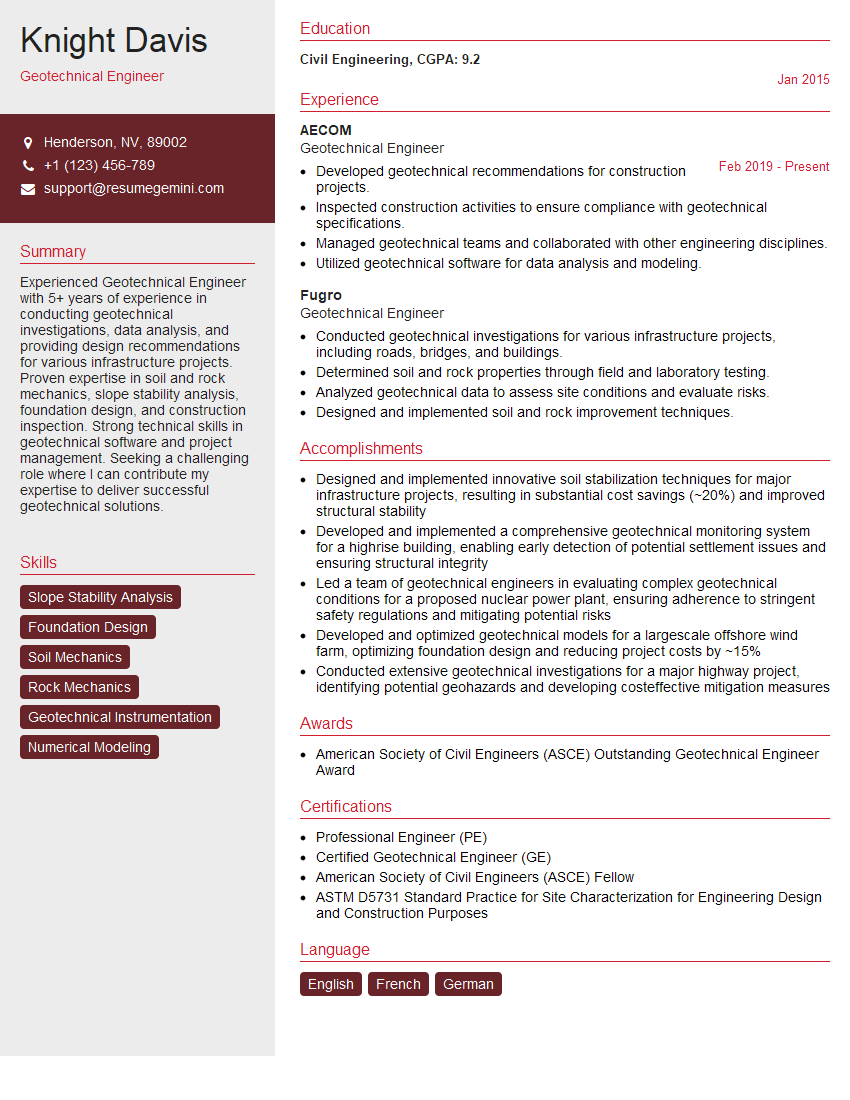
Geotechnical Engineer Resume Sample

Exploration Geologist Resume Sample

Field Geologist Resume Sample
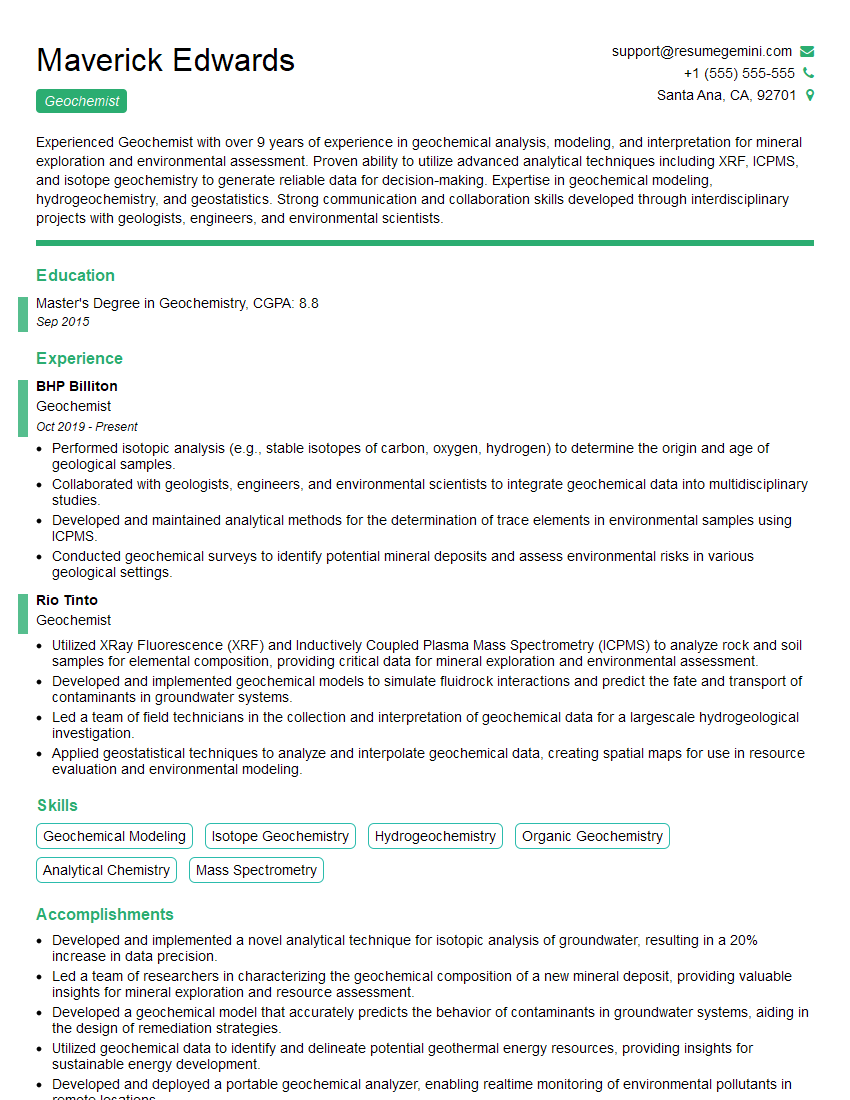
Geochemist Resume Sample
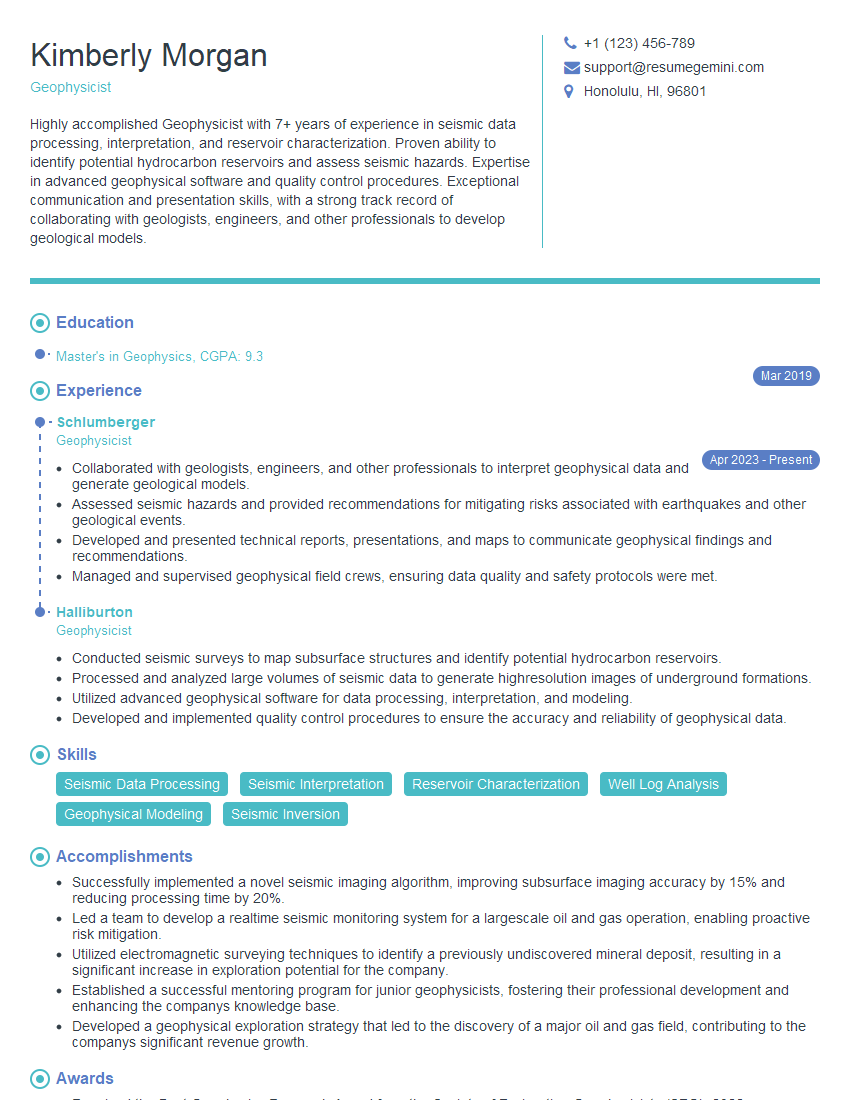
Geophysicist Resume Sample
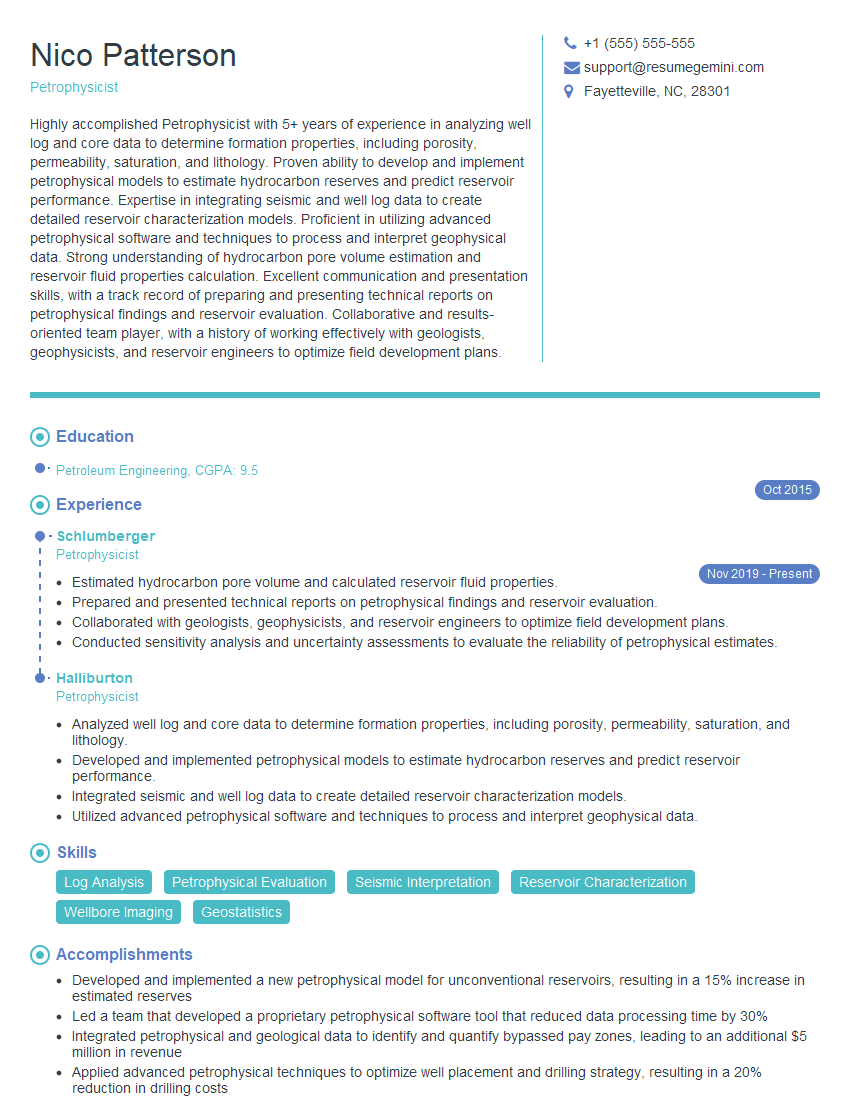
Petrophysicist Resume Sample

Project Geologist Resume Sample
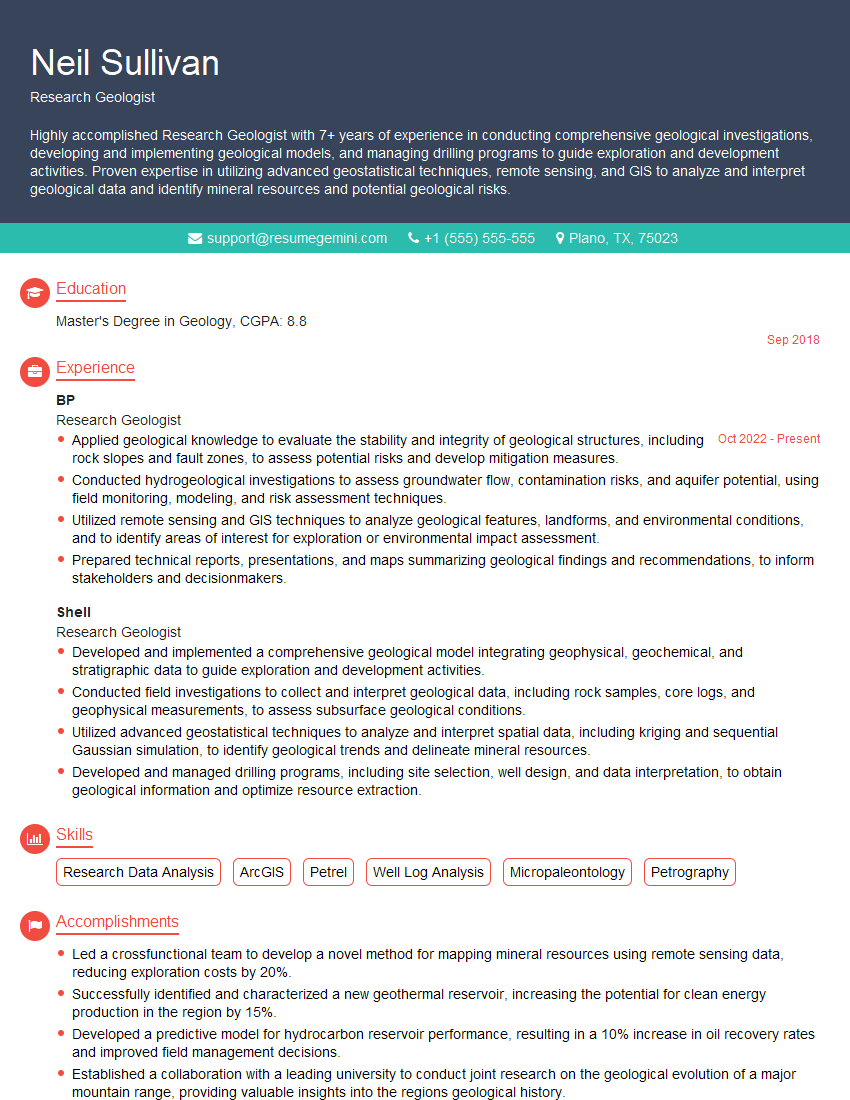
Research Geologist Resume Sample
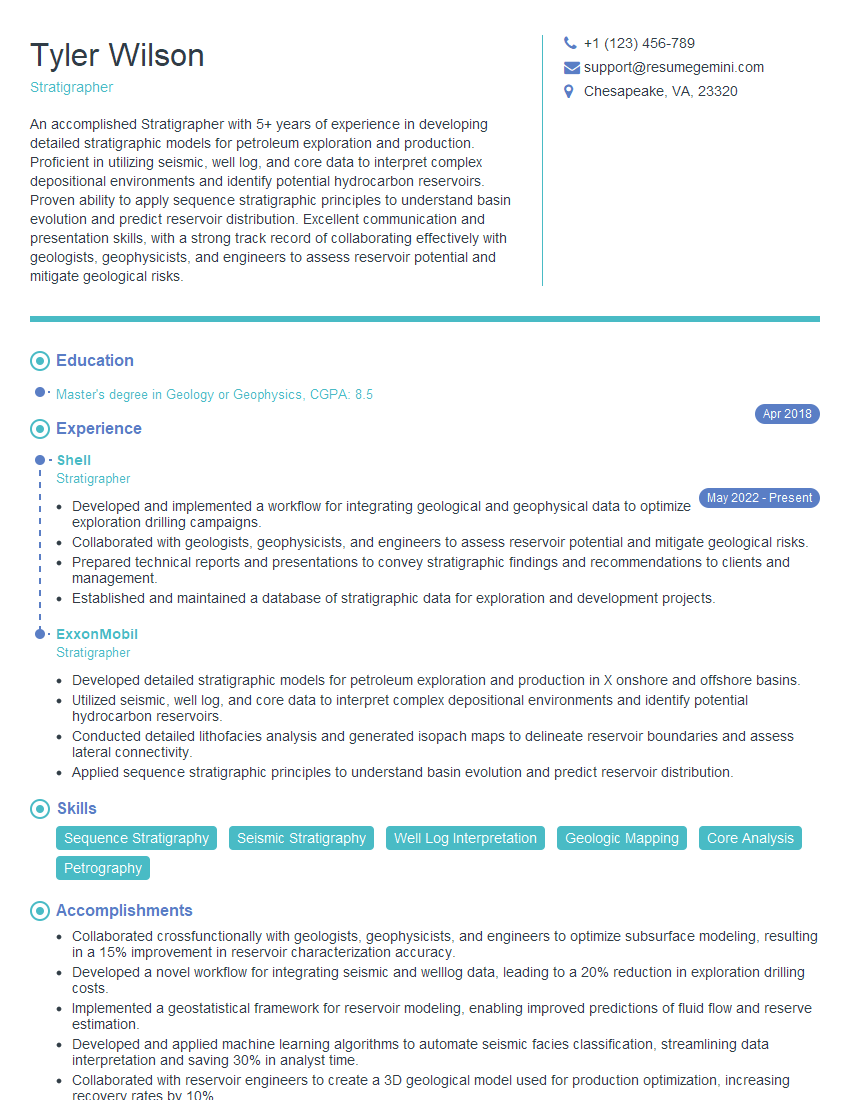
Stratigrapher Resume Sample
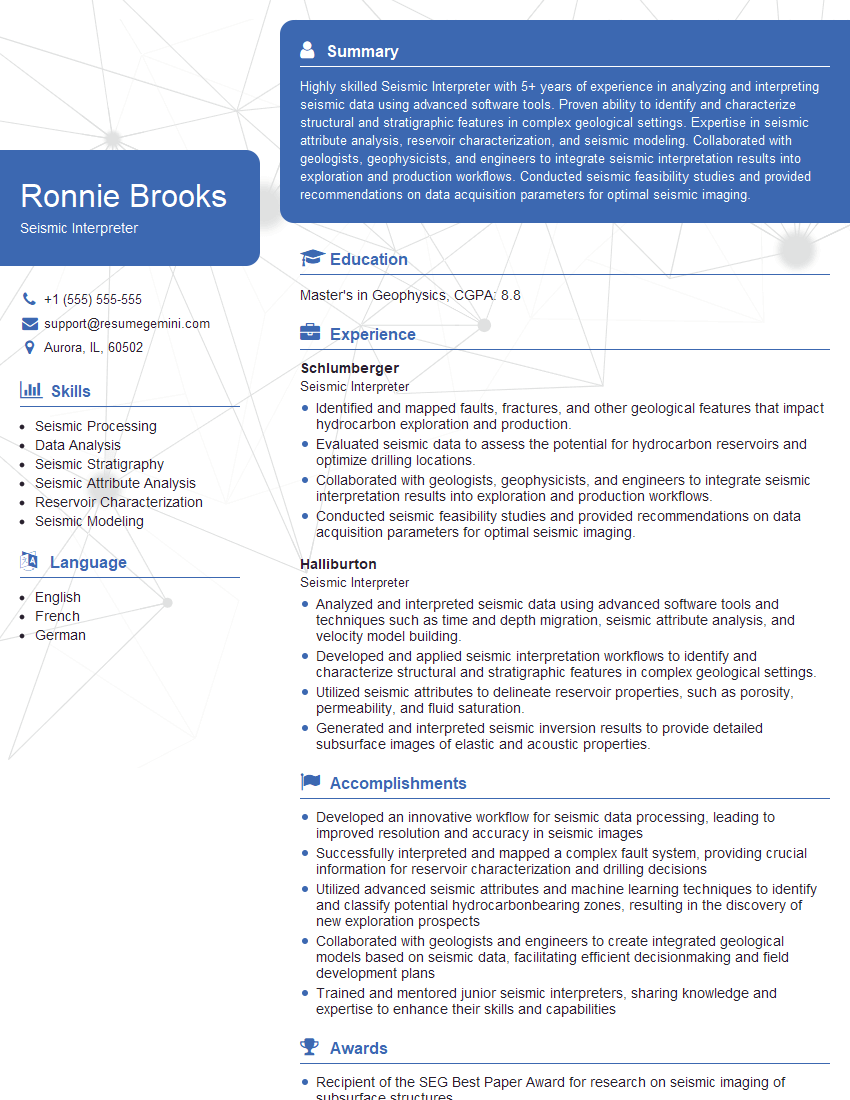
Seismic Interpreter Resume Sample
Explore more articles
Users Rating of Our Blogs
Share Your Experience
We value your feedback! Please rate our content and share your thoughts (optional).
What Readers Say About Our Blog
Attention music lovers!
Wow, All the best Sax Summer music !!!
Spotify: https://open.spotify.com/artist/6ShcdIT7rPVVaFEpgZQbUk
Apple Music: https://music.apple.com/fr/artist/jimmy-sax-black/1530501936
YouTube: https://music.youtube.com/browse/VLOLAK5uy_noClmC7abM6YpZsnySxRqt3LoalPf88No
Other Platforms and Free Downloads : https://fanlink.tv/jimmysaxblack
on google : https://www.google.com/search?q=22+AND+22+AND+22
on ChatGPT : https://chat.openai.com?q=who20jlJimmy20Black20Sax20Producer
Get back into the groove with Jimmy sax Black
Best regards,
Jimmy sax Black
www.jimmysaxblack.com
Hi I am a troller at The aquatic interview center and I suddenly went so fast in Roblox and it was gone when I reset.
Hi,
Business owners spend hours every week worrying about their website—or avoiding it because it feels overwhelming.
We’d like to take that off your plate:
$69/month. Everything handled.
Our team will:
Design a custom website—or completely overhaul your current one
Take care of hosting as an option
Handle edits and improvements—up to 60 minutes of work included every month
No setup fees, no annual commitments. Just a site that makes a strong first impression.
Find out if it’s right for you:
https://websolutionsgenius.com/awardwinningwebsites
Hello,
we currently offer a complimentary backlink and URL indexing test for search engine optimization professionals.
You can get complimentary indexing credits to test how link discovery works in practice.
No credit card is required and there is no recurring fee.
You can find details here:
https://wikipedia-backlinks.com/indexing/
Regards
NICE RESPONSE TO Q & A
hi
The aim of this message is regarding an unclaimed deposit of a deceased nationale that bears the same name as you. You are not relate to him as there are millions of people answering the names across around the world. But i will use my position to influence the release of the deposit to you for our mutual benefit.
Respond for full details and how to claim the deposit. This is 100% risk free. Send hello to my email id: lukachachibaialuka@gmail.com
Luka Chachibaialuka
Hey interviewgemini.com, just wanted to follow up on my last email.
We just launched Call the Monster, an parenting app that lets you summon friendly ‘monsters’ kids actually listen to.
We’re also running a giveaway for everyone who downloads the app. Since it’s brand new, there aren’t many users yet, which means you’ve got a much better chance of winning some great prizes.
You can check it out here: https://bit.ly/callamonsterapp
Or follow us on Instagram: https://www.instagram.com/callamonsterapp
Thanks,
Ryan
CEO – Call the Monster App
Hey interviewgemini.com, I saw your website and love your approach.
I just want this to look like spam email, but want to share something important to you. We just launched Call the Monster, a parenting app that lets you summon friendly ‘monsters’ kids actually listen to.
Parents are loving it for calming chaos before bedtime. Thought you might want to try it: https://bit.ly/callamonsterapp or just follow our fun monster lore on Instagram: https://www.instagram.com/callamonsterapp
Thanks,
Ryan
CEO – Call A Monster APP
To the interviewgemini.com Owner.
Dear interviewgemini.com Webmaster!
Hi interviewgemini.com Webmaster!
Dear interviewgemini.com Webmaster!
excellent
Hello,
We found issues with your domain’s email setup that may be sending your messages to spam or blocking them completely. InboxShield Mini shows you how to fix it in minutes — no tech skills required.
Scan your domain now for details: https://inboxshield-mini.com/
— Adam @ InboxShield Mini
support@inboxshield-mini.com
Reply STOP to unsubscribe
Hi, are you owner of interviewgemini.com? What if I told you I could help you find extra time in your schedule, reconnect with leads you didn’t even realize you missed, and bring in more “I want to work with you” conversations, without increasing your ad spend or hiring a full-time employee?
All with a flexible, budget-friendly service that could easily pay for itself. Sounds good?
Would it be nice to jump on a quick 10-minute call so I can show you exactly how we make this work?
Best,
Hapei
Marketing Director
Hey, I know you’re the owner of interviewgemini.com. I’ll be quick.
Fundraising for your business is tough and time-consuming. We make it easier by guaranteeing two private investor meetings each month, for six months. No demos, no pitch events – just direct introductions to active investors matched to your startup.
If youR17;re raising, this could help you build real momentum. Want me to send more info?
Hi, I represent an SEO company that specialises in getting you AI citations and higher rankings on Google. I’d like to offer you a 100% free SEO audit for your website. Would you be interested?
Hi, I represent an SEO company that specialises in getting you AI citations and higher rankings on Google. I’d like to offer you a 100% free SEO audit for your website. Would you be interested?