Interviews are more than just a Q&A session—they’re a chance to prove your worth. This blog dives into essential GIS Mapping and Modeling interview questions and expert tips to help you align your answers with what hiring managers are looking for. Start preparing to shine!
Questions Asked in GIS Mapping and Modeling Interview
Q 1. Explain the difference between vector and raster data.
Vector and raster data are two fundamental ways to represent geographic information in GIS. Think of it like drawing a map: vector uses points, lines, and polygons to define features, while raster uses a grid of cells (pixels) to represent them.
- Vector Data: Imagine drawing a road on a map. Vector data would represent this road as a series of connected points (line). Each point has precise coordinates (x, y). This allows for accurate measurements and scaling. Examples include points representing buildings, lines representing rivers, and polygons representing land parcels. Vector data is ideal for storing discrete features with defined boundaries.
- Raster Data: Now imagine representing a satellite image. A raster would show this as a grid of pixels, each with a specific color value. This color represents something like land cover (e.g., forest, water, urban areas) or elevation. Raster data is great for representing continuous phenomena, but individual feature measurements can be less precise.
In short: Vector is precise and good for discrete features; raster is efficient for continuous data but less precise for individual feature boundaries.
Q 2. Describe your experience with different GIS software (e.g., ArcGIS, QGIS).
I have extensive experience with both ArcGIS and QGIS, two leading GIS software packages. My ArcGIS experience spans various applications, from basic data manipulation and visualization to advanced spatial analysis techniques using geoprocessing tools and model builder. I’ve utilized ArcGIS Pro extensively for projects involving network analysis, suitability modeling and 3D visualization. I’m proficient in creating custom tools and scripts using Python within the ArcGIS environment.
My QGIS experience complements my ArcGIS skills. I find QGIS a powerful and versatile open-source option, particularly beneficial for projects requiring cross-platform compatibility and extensive customization. I’ve leveraged its processing toolbox extensively for batch processing and spatial analysis operations, as well as its plugin architecture for incorporating specialized functionalities. For example, I used QGIS’s processing capabilities to automate the conversion and analysis of massive LiDAR datasets for a recent terrain modeling project.
Q 3. How do you perform spatial analysis using GIS?
Spatial analysis in GIS involves manipulating and analyzing spatial data to extract meaningful information and answer geographic questions. It’s like being a detective with a powerful magnifying glass and a map.
Common techniques include:
- Buffering: Creating zones around features (e.g., finding all houses within 1km of a school).
- Overlay Analysis: Combining layers to identify overlapping areas (e.g., finding areas suitable for development by intersecting land use and zoning layers).
- Network Analysis: Finding optimal routes or paths (e.g., determining the fastest ambulance route to an emergency).
- Proximity Analysis: Measuring distances between features (e.g., finding the nearest hospital to a residential area).
- Spatial Interpolation: Estimating values at unsampled locations (e.g., creating a continuous elevation surface from point measurements).
For example, I recently used overlay analysis to identify suitable locations for installing new wind turbines by combining wind resource data, land ownership, and environmental sensitivity layers. The result was a map highlighting optimal areas with minimal environmental impact.
Q 4. What are the common coordinate reference systems (CRS) and their applications?
Coordinate Reference Systems (CRS) define how geographic coordinates are represented on a map. They are essential for ensuring that spatial data aligns correctly. Think of it as a set of instructions telling the software how to interpret the location information.
- Geographic Coordinate Systems (GCS): Use latitude and longitude to define locations on the Earth’s surface, referencing a sphere or ellipsoid (e.g., WGS 84, used by GPS). Ideal for global applications.
- Projected Coordinate Systems (PCS): Transform the curved Earth’s surface onto a flat plane using mathematical projections (e.g., UTM, State Plane). This introduces distortions, but minimizes them within a specific area. Best for local or regional projects where accurate distances and areas are important.
The choice of CRS depends on the scale and geographic extent of the project. For a global climate model, a GCS like WGS 84 would be appropriate. For a local land-use plan, a PCS like UTM might be more suitable to avoid significant distortion.
Q 5. Explain the concept of georeferencing.
Georeferencing is the process of assigning geographic coordinates to unreferenced data, like scanned maps or aerial photographs. It’s like adding location information to a picture. This allows us to integrate these datasets with other geospatial information.
This involves identifying control points (locations with known coordinates) on both the unreferenced image and a reference map. GIS software then uses these points to create a transformation that aligns the image with the coordinate system of the reference map. Techniques include using ground control points (GCPs) obtained through field surveys or existing geospatial data. Accuracy depends heavily on the number and distribution of these control points.
Q 6. How do you handle spatial data projection and transformation?
Spatial data projection and transformation are crucial for ensuring that data from different sources aligns correctly. They are fundamental for accurate spatial analysis and visualization. It is like ensuring different map pieces fit together seamlessly.
When data comes from different sources, it might be in different CRS. Before integrating these datasets, it’s vital to transform them into a common CRS. This process uses mathematical formulas (projections and transformations) to convert coordinates from one CRS to another. Software such as ArcGIS and QGIS provide built-in tools for this, including the ability to select appropriate projection algorithms considering the specific CRS involved and the scale of the project. Incorrect transformations can lead to significant errors in spatial analysis, so careful consideration is crucial.
Q 7. Describe your experience with data cleaning and preprocessing in GIS.
Data cleaning and preprocessing are vital steps before any spatial analysis. It’s like preparing ingredients before cooking a meal; if the ingredients are bad, the meal will be bad. Common tasks include:
- Error Detection and Correction: Identifying and correcting inconsistencies, such as spatial outliers or attribute errors.
- Data Conversion: Converting data formats to a compatible format for analysis (e.g., converting shapefiles to geodatabases).
- Attribute Cleaning: Addressing missing or incorrect attribute data. This may involve imputation techniques to estimate missing values based on neighboring data points.
- Topology Checks: Ensuring geometric consistency, such as checking for overlaps or gaps in polygon layers.
In one project, I had to clean a large dataset of street centerline data. This involved identifying and correcting dangling lines, overlaps, and inconsistencies in attribute information, ensuring the quality of the data before using it for network analysis.
Q 8. What is spatial autocorrelation and how does it affect analysis?
Spatial autocorrelation describes the degree to which a variable’s values at nearby locations are similar. Imagine a map showing house prices: if expensive houses tend to cluster together, we have high spatial autocorrelation. Conversely, if expensive and inexpensive houses are randomly mixed, autocorrelation is low. This is crucial because ignoring spatial autocorrelation in analysis can lead to inaccurate results, violating the assumption of independent observations common in many statistical models.
For example, in analyzing crime rates, if we fail to account for the clustering of crime in certain neighborhoods (high spatial autocorrelation), a simple regression model might incorrectly identify factors unrelated to crime as significant predictors. Proper analysis requires techniques like spatial regression models (e.g., Geographically Weighted Regression or spatial error models) which explicitly account for this spatial dependence. These methods incorporate spatial weights matrices defining the relationships between locations.
Understanding and addressing spatial autocorrelation is vital for producing robust and reliable spatial analyses. It’s not just about detecting clusters, but also understanding why they exist and how that impacts our interpretations of spatial data.
Q 9. Explain your understanding of different interpolation methods.
Interpolation estimates values at unsampled locations based on known values at sampled locations. Several methods exist, each with strengths and weaknesses:
- Inverse Distance Weighting (IDW): This method assigns weights inversely proportional to the distance from known points. Closer points have more influence. It’s simple to understand and implement but can be sensitive to outliers and produce unnatural ‘bulls-eye’ effects around data points.
- Kriging: A geostatistical method that considers both the distance and spatial autocorrelation of the data. It provides not only interpolated values but also estimates of uncertainty. Different Kriging variants exist, such as Ordinary Kriging and Universal Kriging, each suitable for different data characteristics. It is more computationally intensive than IDW but generally produces more accurate and reliable results.
- Spline Interpolation: This method fits a smooth surface through the known data points, minimizing the curvature of the surface. It produces smooth surfaces, useful for applications like creating elevation models, but may not accurately reflect local variations.
- Nearest Neighbor: The simplest method, assigning the value of the nearest known point. It is computationally efficient but results in a very coarse and discontinuous surface, suitable only for preliminary analysis or when accuracy is less critical.
The choice of interpolation method depends heavily on the data’s characteristics, the desired level of accuracy, and the intended application. A thorough understanding of the strengths and weaknesses of each method is crucial for appropriate selection.
Q 10. How do you create and manage a GIS database?
Creating and managing a GIS database involves careful planning and execution. It begins with defining the data model, which outlines the entities, attributes, and relationships within the database. A well-structured database is crucial for efficient data management and analysis.
I typically employ a relational database management system (RDBMS) like PostgreSQL/PostGIS for large datasets due to its scalability and powerful spatial capabilities. For smaller projects, a simpler system like SQLite with spatialite extension can suffice. The process involves:
- Data Acquisition: Gathering data from various sources like surveys, remote sensing, and existing databases.
- Data Cleaning and Preprocessing: Handling missing data, correcting errors, and converting data to a consistent format.
- Data Modeling: Designing the database schema, defining tables, attributes, and relationships.
- Data Loading: Importing data into the database. This can be done using various tools and scripts.
- Data Validation and Quality Control: Ensuring data accuracy and consistency through validation rules and regular checks.
- Data Maintenance: Regularly updating the database with new data and managing data versioning.
Efficient database management also involves using appropriate indexing strategies to speed up queries and employing efficient data storage techniques to optimize performance and minimize storage space.
Q 11. What are your experiences with different spatial data formats (e.g., shapefiles, GeoTIFF)?
I have extensive experience working with various spatial data formats. Here are some common ones and their characteristics:
- Shapefiles: A widely used vector format storing geographical features as points, lines, or polygons. It’s simple but has limitations, requiring multiple files to represent a single feature class. I’ve used them extensively for storing and managing polygon data representing land use, administrative boundaries, and road networks.
- GeoTIFF: A raster format commonly used for storing imagery and elevation data. It’s efficient for storing large datasets and incorporates georeferencing information. I’ve used it extensively in image processing and analysis workflows.
- GeoJSON: A lightweight JSON-based format suitable for representing both vector and raster data. It’s increasingly popular for web mapping applications, due to its ease of use and support across various platforms. I utilize it for data exchange in web-based GIS projects.
- Geodatabase (File Geodatabase or Enterprise Geodatabase): A powerful format offered by Esri’s ArcGIS. It provides superior data management capabilities including data versioning and complex relationships that are not present in other formats. It is particularly suitable for large and complex projects that require robust data management.
Choosing the right format depends on the nature of the data, the application requirements, and the tools used for analysis. Understanding the strengths and weaknesses of each format is essential for effective data management.
Q 12. Describe your experience with remote sensing data and its applications in GIS.
Remote sensing data, acquired from satellites or airborne sensors, provides crucial information for many GIS applications. I have extensive experience integrating various types of remote sensing data into GIS workflows, including:
- Satellite Imagery: Using multispectral imagery (e.g., Landsat, Sentinel) for land cover classification, change detection, and environmental monitoring. For example, I’ve used Landsat imagery to monitor deforestation in the Amazon rainforest.
- Aerial Photography: Analyzing high-resolution aerial photos for detailed mapping, urban planning, and infrastructure assessment. In one project, we used aerial photography to create detailed 3D models of urban areas.
- LiDAR (Light Detection and Ranging): Processing LiDAR data to create Digital Terrain Models (DTMs) and Digital Surface Models (DSMs), essential for hydrological modeling, terrain analysis, and infrastructure design. I’ve used LiDAR data to assess flood risk in coastal regions.
The integration of remote sensing data into GIS often involves georeferencing, image processing (e.g., atmospheric correction, geometric correction), and image classification techniques. These steps are crucial to ensure the data’s accuracy and compatibility within the GIS environment. The analysis can often include the use of image segmentation algorithms, object-based image analysis (OBIA), and machine learning techniques for more accurate classification and extraction of information.
Q 13. Explain the concept of topology in GIS.
Topology in GIS defines the spatial relationships between geographic features. It describes how features connect, share boundaries, and overlap. Think of it as the rules that govern how features interact spatially.
For example, a topological database ensures that adjacent polygons share a common boundary, preventing gaps or overlaps. This is crucial for accurate spatial analysis, especially for network analysis (e.g., routing, shortest path analysis) and for ensuring data integrity. Topological relationships can include:
- Connectivity: How lines and points connect to form networks.
- Adjacency: How polygons share boundaries.
- Containment: How points are contained within polygons.
Establishing topology adds significant constraints, but it improves data quality and enables more sophisticated spatial analysis. It’s particularly useful in applications such as utility network management, transportation planning, and cadastral mapping where maintaining accurate spatial relationships is critical.
Q 14. How do you perform overlay analysis (e.g., union, intersect)?
Overlay analysis combines two or more spatial layers to create a new layer containing information from both inputs. Common operations include:
- Union: Combines all features from both layers, preserving all attributes. Imagine overlaying a soil type map and a land use map; the union would create a new map where each polygon has both soil type and land use attributes.
- Intersect: Creates a new layer containing only the areas where features from both layers overlap. For example, intersecting a flood plain map with a building footprint map identifies buildings at risk of flooding.
- Clip: Extracts a portion of one layer based on the boundaries of another. Clipping a global land cover dataset with a specific region of interest extracts the land cover information for that region.
- Erase: Removes the parts of a layer that overlap with another layer. Erasing roads from a land cover map results in a land cover map without the roads.
These operations are performed using GIS software such as ArcGIS, QGIS, or other specialized tools. The specific methods vary by software but generally involve selecting the layers, choosing the overlay operation, and specifying output settings. The result is a new layer containing information derived from the combined datasets, allowing for powerful spatial analysis and decision-making. For example, overlay analysis might be used to identify suitable locations for a new park based on criteria like proximity to residential areas, access to transportation, and availability of undeveloped land.
Q 15. What are the different types of spatial queries and their applications?
Spatial queries are the backbone of GIS analysis, allowing us to extract meaningful information from geographic data. They essentially ask ‘what’s where?’ and come in various types. Think of them as powerful search functions specifically designed for maps.
- Point-in-polygon: Determines if a point feature falls within a polygon. Example: Finding all houses (points) within a specific flood zone (polygon).
- Polygon-on-polygon: Identifies overlapping areas between polygons. Example: Determining the areas where protected wildlife habitats (polygons) intersect with proposed development zones (polygons).
- Near-neighbor analysis: Finds features closest to a given location or set of features. Example: Identifying the nearest hospital (point) to an accident location (point).
- Spatial joins: Combines attributes from two layers based on spatial relationships. Example: Adding population data from census tracts (polygons) to crime incident points by joining the points to the polygons they fall within.
- Buffer analysis: Creates zones around features at a specified distance. Example: Creating a 500-meter buffer around schools (points) to analyze areas potentially impacted by traffic congestion.
The applications are vast, from urban planning and resource management to public health and environmental monitoring. Selecting the right type of query depends heavily on the question you’re trying to answer and the nature of your data.
Career Expert Tips:
- Ace those interviews! Prepare effectively by reviewing the Top 50 Most Common Interview Questions on ResumeGemini.
- Navigate your job search with confidence! Explore a wide range of Career Tips on ResumeGemini. Learn about common challenges and recommendations to overcome them.
- Craft the perfect resume! Master the Art of Resume Writing with ResumeGemini’s guide. Showcase your unique qualifications and achievements effectively.
- Don’t miss out on holiday savings! Build your dream resume with ResumeGemini’s ATS optimized templates.
Q 16. Describe your experience with spatial modeling techniques (e.g., network analysis, terrain analysis).
My experience with spatial modeling encompasses a wide range of techniques. I’ve extensively used network analysis to model traffic flow, optimize delivery routes, and assess accessibility to services. For example, in a recent project, I used ArcGIS Network Analyst to determine the optimal locations for new fire stations based on response time to different areas. This involved considering road networks, traffic speeds, and the location of existing facilities.
Terrain analysis is another area I’m proficient in. I’ve used tools like ArcGIS Spatial Analyst to perform slope analysis for landslide risk assessment, hydrological modeling to predict flood inundation zones, and visibility analysis to identify suitable locations for wind turbines. In one case, I generated a digital elevation model (DEM) from LiDAR data and used it to model the optimal path for a new hiking trail, avoiding areas with steep slopes and minimizing environmental impact.
Beyond these, I’ve also worked with other techniques including suitability modeling, overlay analysis, and geostatistics, always tailoring my approach to the specific problem at hand. My skillset is focused on choosing the right tool for the job and interpreting results accurately.
Q 17. How do you assess the accuracy and quality of spatial data?
Assessing spatial data accuracy and quality is crucial for any reliable GIS project. It involves a multi-faceted approach, combining quantitative and qualitative methods.
- Positional Accuracy: This refers to how precisely features are located on the map. We assess this using Root Mean Square Error (RMSE) and comparing to high-accuracy reference data (e.g., GPS measurements).
- Attribute Accuracy: This refers to the correctness of the descriptive information associated with features. We check for consistency, completeness, and validate against reliable sources.
- Logical Consistency: This ensures that features are spatially related as they should be (e.g., roads connecting properly, polygons not overlapping unexpectedly). We check topological relationships for errors.
- Completeness: This means ensuring all relevant features are included within the dataset, with no critical gaps.
- Temporal Accuracy: In case of time-sensitive data, this ensures that the data is relevant to the specified time period.
Data quality reports are essential, detailing the various assessments undertaken. Identifying errors requires thorough investigation and potential corrections or updates to the dataset. Metadata is also critically important, clearly explaining the data’s origin, limitations, and accuracy assessments.
Q 18. Explain your experience with cartographic design principles.
Cartographic design principles are paramount for creating effective and visually appealing maps. It’s not just about displaying information; it’s about communicating it clearly and concisely. I focus on several key aspects:
- Clarity and Simplicity: Avoid clutter. Prioritize information, selecting appropriate symbology and labelling to highlight key elements.
- Visual Hierarchy: Use size, color, and placement to guide the viewer’s eye, emphasizing the most important information.
- Color Selection: Choose colors carefully to avoid misinterpretations; consider color blindness and readability. Employ color palettes that support the map’s purpose.
- Legibility: Font choices should be clear and easy to read. Label placement is critical, avoiding overlapping or obscuring features.
- Map Scale and Projection: Selecting the appropriate map scale and projection is essential for accurate spatial representation. The scale must be appropriate for the detail shown, and the projection should minimize distortion for the area being mapped.
I’ve extensively used software like ArcGIS Pro and QGIS to create maps that effectively convey complex spatial relationships and ensure user comprehension. I always consider the target audience when making design choices.
Q 19. How do you communicate GIS results effectively to non-technical audiences?
Communicating GIS results effectively to non-technical audiences requires translating technical jargon into plain language and using visuals that tell a story. I employ several strategies:
- Storytelling with Maps: Create maps that are visually appealing and easily understood, highlighting key findings with clear labels and legends.
- Charts and Graphs: Supplement maps with charts and graphs to show trends, patterns, and key statistics.
- Interactive Dashboards: Develop dashboards that allow users to explore data dynamically, empowering them to find answers to their own questions.
- Simple Language and Visual Aids: Avoid technical jargon, replace it with clear and easy to understand explanations. Use analogies and real-world examples to make complex concepts more accessible.
- Presentations and Reports: Tailor communication formats to the audience. For example, using interactive dashboards for a stakeholder meeting or a concise report with key findings for a quick overview.
In practice, I’ve found that focusing on the ‘so what?’ aspect is key. Instead of simply showing data, I explain the implications of the findings and connect them to real-world issues relevant to the audience.
Q 20. Describe your experience with GIS project management.
My GIS project management experience includes leading and participating in multiple projects of varying scope and complexity. I’m adept at all phases, from initial planning and scoping to data acquisition, analysis, and final report delivery.
- Project Scoping and Planning: Define clear objectives, deliverables, and timelines. This involves careful consideration of data requirements, analysis methods, and budget constraints.
- Data Acquisition and Management: Plan and execute data collection strategies, ensuring data quality and adherence to project standards.
- Analysis and Modeling: Select and apply appropriate GIS techniques, ensuring accuracy and validating results against expectations.
- Communication and Collaboration: Maintain clear and consistent communication with stakeholders, team members, and clients. This involves regular updates, feedback sessions, and presentation of results.
- Quality Control and Assurance: Implement quality control procedures throughout the project lifecycle to ensure data integrity and analysis accuracy. This includes thorough review of outputs and documentation.
I’m proficient in project management methodologies such as Agile and Waterfall, adapting my approach based on project needs and stakeholder expectations. I’ve successfully managed projects involving multiple team members, diverse datasets, and tight deadlines.
Q 21. What are your experiences with scripting or automation in GIS (e.g., Python)?
Python is an indispensable tool in my GIS workflow, allowing me to automate repetitive tasks, perform complex analyses, and extend the capabilities of GIS software. My experience includes:
- Data Processing and Manipulation: Using libraries like
geopandasandrasterioto read, process, and write geospatial data in various formats (shapefiles, GeoTIFFs, etc.). For example, I’ve written scripts to automate the conversion of large datasets, projection changes, and attribute cleaning. - Geoprocessing Automation: Creating scripts to automate geoprocessing tasks within ArcGIS or QGIS. This allows for reproducible workflows and efficient handling of large datasets. I’ve automated tasks like batch processing of raster data, creating buffers around multiple features, and generating reports.
- Web Mapping and Application Development: Building web maps and interactive applications using frameworks like
Flaskandfolium, enabling the sharing of GIS data and results through user-friendly interfaces. - Spatial Analysis: Implementing advanced spatial analysis algorithms using libraries such as
scipyandscikit-learn. This allows me to carry out complex spatial statistical analysis.
# Example Python code snippet using geopandas to read a shapefile:import geopandas as gpd
gdf = gpd.read_file('my_shapefile.shp')
print(gdf.head())
My ability to script and automate tasks is a critical factor in my efficiency and allows me to tackle larger, more complex projects.
Q 22. Describe a challenging GIS problem you faced and how you solved it.
One of the most challenging GIS problems I encountered involved creating a highly accurate flood inundation model for a coastal city prone to severe hurricanes. The challenge stemmed from the need to integrate diverse datasets with varying resolutions and accuracies, including LiDAR elevation data, high-resolution satellite imagery, and hydrodynamic model outputs. The differing coordinate systems and datum inconsistencies initially presented significant obstacles.
To overcome this, I employed a multi-step approach. First, I rigorously performed geoprocessing tasks, ensuring all data was projected into a consistent coordinate system (UTM Zone appropriate for the region) and datum (WGS 84). This involved using tools like the ‘Project’ geoprocessing tool within ArcGIS Pro to reproject data and align them spatially. Next, I used spatial analysis techniques to identify and rectify errors in the LiDAR data, specifically focusing on areas with inconsistencies between the LiDAR and imagery. I applied a weighted overlay analysis to combine the different layers, assigning weights based on the reliability and accuracy of each dataset. The hydrodynamic model output, showing water depths during a simulated hurricane, was then integrated using raster calculator tools to combine elevation and depth data and derive precise flood extent.
Finally, I validated the model by comparing the predicted flood extent to historical flood event data and ground-truthing data, which included on-site measurements and photographic evidence of past flooding. This iterative process of refinement allowed me to generate a highly accurate and reliable inundation map, effectively aiding in city planning and emergency management strategies.
Q 23. How familiar are you with cloud-based GIS platforms (e.g., ArcGIS Online, Google Earth Engine)?
I’m very familiar with cloud-based GIS platforms, having extensively used both ArcGIS Online and Google Earth Engine in various projects. ArcGIS Online excels in collaborative map creation, sharing, and data management, while Google Earth Engine provides unparalleled capabilities for processing massive geospatial datasets using its server-side processing power.
In ArcGIS Online, I’ve leveraged its web mapping capabilities to create interactive maps for public engagement, incorporating features like basemaps, layers, and pop-up information. I’ve also used its geoprocessing tools for basic spatial analysis tasks. With Google Earth Engine, I’ve performed large-scale image analysis on satellite imagery, extracting valuable information like deforestation rates, crop yield estimations, and urban sprawl analysis. For instance, I utilized GEE’s JavaScript API to analyze time-series Landsat imagery to monitor changes in forest cover over a decade. This involved importing the data, applying cloud masking algorithms, and calculating the Normalized Difference Vegetation Index (NDVI) over time.
Q 24. Explain the concept of spatial statistics and give an example.
Spatial statistics involves the application of statistical methods to spatially referenced data. Unlike traditional statistics that ignores spatial relationships, spatial statistics accounts for the fact that observations are often correlated due to their proximity. This correlation needs to be considered to avoid biased results. This is especially important in geographical analyses, where spatial autocorrelation – the tendency for nearby locations to have similar characteristics – is prevalent.
For example, consider analyzing the distribution of crime hotspots within a city. A simple approach might involve calculating the crime rate per neighborhood. However, a spatial statistical method like a spatial autocorrelation analysis (using Moran’s I or Geary’s C) would provide insights into whether crime clusters are randomly distributed or exhibit spatial clustering. A high positive Moran’s I value would suggest significant spatial clustering, indicating areas with concentrated crime activity, which can inform policing strategies and resource allocation. Conversely, a negative value would suggest spatial dispersion. Other spatial statistical techniques such as point pattern analysis, spatial regression, and kriging are used to model spatial patterns and make predictions.
Q 25. How do you ensure data security and privacy in GIS projects?
Data security and privacy are paramount in any GIS project. My approach involves a multi-layered strategy. First, access control is implemented to restrict data access to authorized personnel only. This involves utilizing secure databases and implementing role-based access control (RBAC) mechanisms. For example, in ArcGIS Pro, we use project-level access control with defined user roles and permissions. Second, data encryption is employed to protect data both in transit and at rest. Encryption methods like AES-256 ensure that even if data is intercepted, it cannot be readily deciphered.
Third, I adhere to all relevant data privacy regulations (like GDPR, CCPA) which dictate how sensitive personal or location-related data is handled and processed. This includes anonymizing data where possible, obtaining informed consent when needed, and minimizing data collection to only what is essential for the project. Data provenance is meticulously documented, enabling traceability throughout the project lifecycle. Regular security audits and vulnerability assessments are undertaken to ensure ongoing protection against potential threats.
Q 26. What are your professional development goals in the field of GIS?
My professional development goals center around deepening my expertise in advanced spatial modeling and analysis techniques, particularly those integrating AI and machine learning. I aim to improve my proficiency in programming languages like Python for automating GIS workflows and developing customized geospatial tools. I also want to enhance my knowledge in cloud computing, big data processing, and advanced remote sensing, enabling me to tackle increasingly complex GIS projects. Additionally, I’m keen on expanding my experience in the application of GIS to solving real-world problems, such as environmental conservation and disaster response, by actively seeking collaborations and opportunities in these areas.
Q 27. Describe your experience with versioning and managing changes in GIS data.
I have considerable experience with versioning and managing changes in GIS data, crucial for maintaining data integrity and facilitating collaboration on projects. I’ve utilized various methods, including versioning systems built into GIS software like ArcGIS Pro’s geodatabase versioning. This allows multiple users to simultaneously work on the same data without conflicts, tracking edits and changes over time. We define different versions (e.g., ‘design’, ‘review’, ‘final’) to manage updates, and can easily revert to prior versions if necessary.
For larger projects with multiple contributors and various data sources, I also employ a dedicated version control system like Git, integrated with tools like QGIS or ArcGIS Pro extensions. This enables centralized data management, better tracking of changes, and the ability to branch out for specific tasks while maintaining a single source of truth. A robust metadata system is critical, providing comprehensive information about the data, its origin, modifications, and associated uncertainties. This detailed metadata ensures data quality and supports data discovery.
Q 28. What are your views on the future of GIS technology?
The future of GIS technology is incredibly exciting. I foresee several key trends shaping the field. First, the continued integration of AI and machine learning will lead to automated geospatial analysis, allowing for the efficient extraction of insights from massive datasets that would be impossible for humans to process manually. This will revolutionize tasks such as image classification, change detection, and predictive modeling.
Second, the proliferation of low-cost, high-resolution sensors (like drones and CubeSats) will generate an unprecedented volume of geospatial data. Cloud computing will be essential for managing and processing this data, facilitating real-time insights for applications such as precision agriculture, urban planning, and environmental monitoring. Third, the rise of 3D GIS and virtual reality technologies will provide more immersive and interactive ways to visualize and analyze spatial data, opening new possibilities for data exploration and communication. Finally, the increasing focus on ethical considerations and data privacy will shape how GIS data is collected, managed, and used, promoting responsible and sustainable practices.
Key Topics to Learn for GIS Mapping and Modeling Interview
- Spatial Data Structures and Models: Understanding vector and raster data, their strengths and weaknesses, and when to use each. Consider exploring topics like topology and geodatabases.
- Geoprocessing and Analysis: Practical application includes buffer analysis, overlay operations (union, intersect, etc.), spatial statistics, and network analysis. Be prepared to discuss specific tools and techniques you’ve used.
- Cartography and Map Design: Discuss principles of effective map design, including symbolization, labeling, and projection selection. Showcase your ability to create clear and informative maps for diverse audiences.
- Remote Sensing and Image Processing: Understand the basics of satellite imagery, image classification techniques, and how to extract meaningful information from remotely sensed data. Prepare examples of your experience with specific software (e.g., ArcGIS Pro, QGIS).
- Geographic Modeling: Explore different types of geographic models (e.g., spatial interpolation, suitability modeling, network modeling). Be ready to explain your understanding of model building, validation, and limitations.
- GIS Software Proficiency: Demonstrate expertise in at least one major GIS software package (e.g., ArcGIS, QGIS). Highlight your skills in data management, analysis, and visualization.
- Data Management and Quality Control: Discuss your experience with data cleaning, error detection, and metadata management. This is crucial for ensuring data accuracy and reliability.
- Problem-Solving and Application: Be prepared to discuss how you’ve used GIS to solve real-world problems. Showcase your ability to apply GIS techniques to address specific challenges in diverse fields (environmental management, urban planning, etc.).
Next Steps
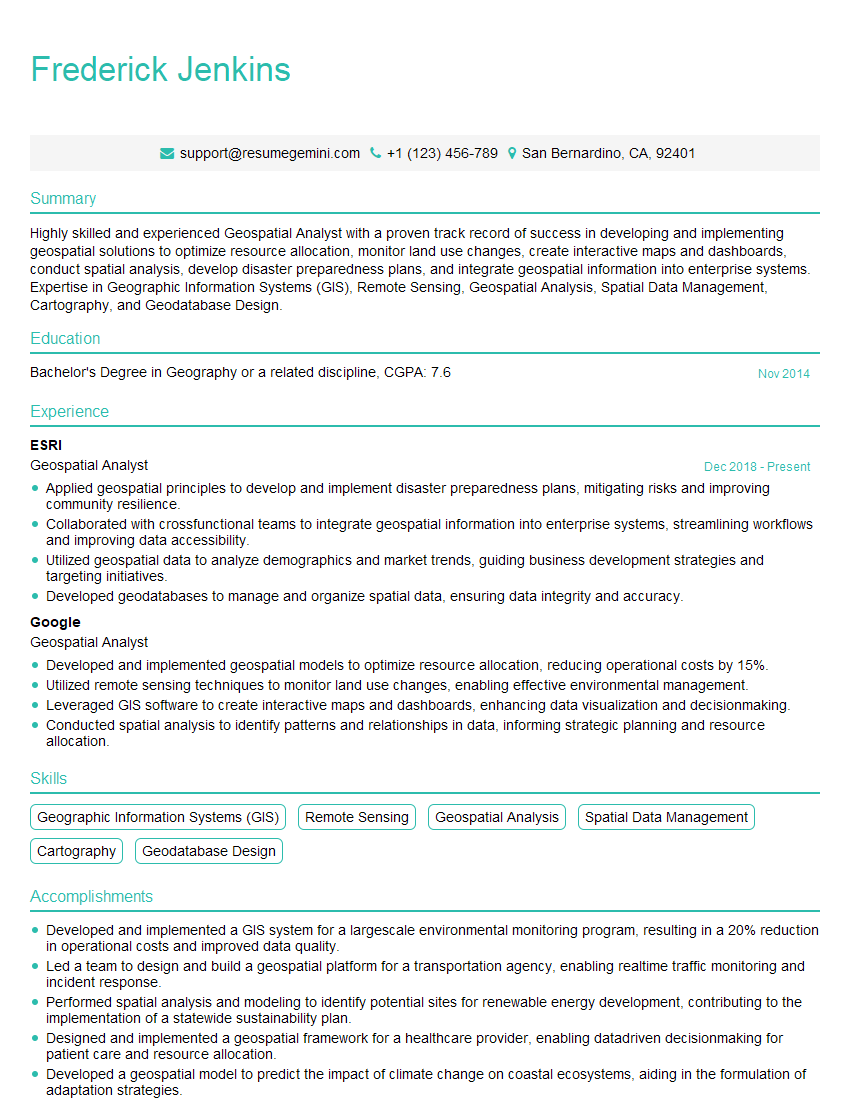
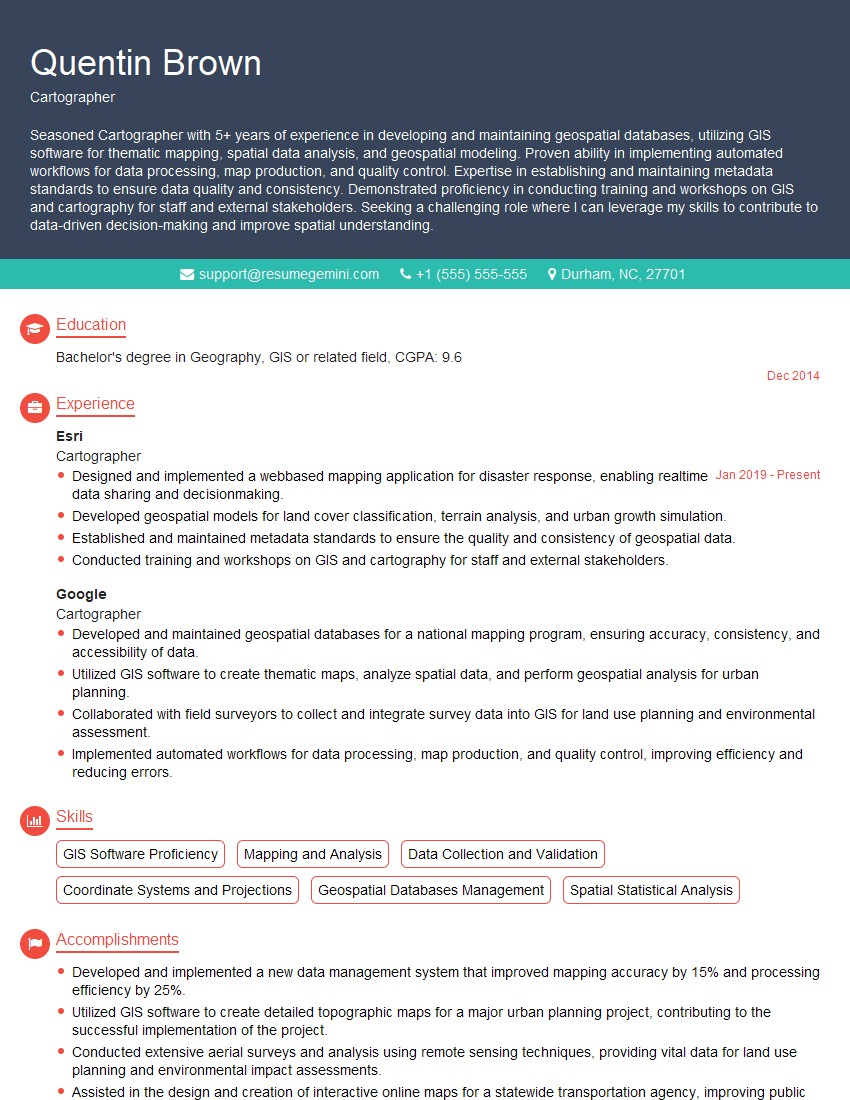
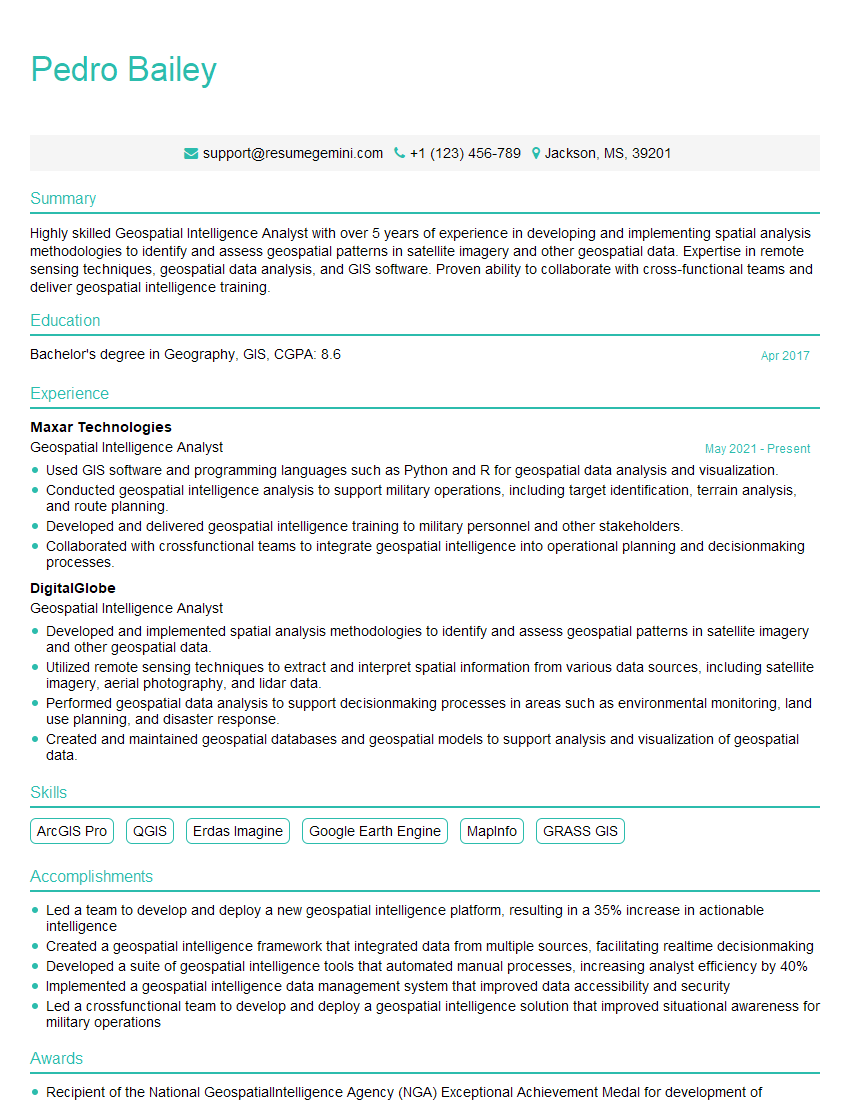
Mastering GIS Mapping and Modeling opens doors to exciting and impactful careers in various sectors. To maximize your job prospects, crafting a strong, ATS-friendly resume is crucial. ResumeGemini is a trusted resource that can help you build a professional and effective resume. They provide examples of resumes tailored to the GIS Mapping and Modeling field to give you a head start. Invest time in creating a compelling resume that highlights your skills and experience – it’s your first impression with potential employers.
Explore more articles
Users Rating of Our Blogs
Share Your Experience
We value your feedback! Please rate our content and share your thoughts (optional).
What Readers Say About Our Blog
Hello,
we currently offer a complimentary backlink and URL indexing test for search engine optimization professionals.
You can get complimentary indexing credits to test how link discovery works in practice.
No credit card is required and there is no recurring fee.
You can find details here:
https://wikipedia-backlinks.com/indexing/
Regards
NICE RESPONSE TO Q & A
hi
The aim of this message is regarding an unclaimed deposit of a deceased nationale that bears the same name as you. You are not relate to him as there are millions of people answering the names across around the world. But i will use my position to influence the release of the deposit to you for our mutual benefit.
Respond for full details and how to claim the deposit. This is 100% risk free. Send hello to my email id: [email protected]
Luka Chachibaialuka
Hey interviewgemini.com, just wanted to follow up on my last email.
We just launched Call the Monster, an parenting app that lets you summon friendly ‘monsters’ kids actually listen to.
We’re also running a giveaway for everyone who downloads the app. Since it’s brand new, there aren’t many users yet, which means you’ve got a much better chance of winning some great prizes.
You can check it out here: https://bit.ly/callamonsterapp
Or follow us on Instagram: https://www.instagram.com/callamonsterapp
Thanks,
Ryan
CEO – Call the Monster App
Hey interviewgemini.com, I saw your website and love your approach.
I just want this to look like spam email, but want to share something important to you. We just launched Call the Monster, a parenting app that lets you summon friendly ‘monsters’ kids actually listen to.
Parents are loving it for calming chaos before bedtime. Thought you might want to try it: https://bit.ly/callamonsterapp or just follow our fun monster lore on Instagram: https://www.instagram.com/callamonsterapp
Thanks,
Ryan
CEO – Call A Monster APP
To the interviewgemini.com Owner.
Dear interviewgemini.com Webmaster!
Hi interviewgemini.com Webmaster!
Dear interviewgemini.com Webmaster!
excellent
Hello,
We found issues with your domain’s email setup that may be sending your messages to spam or blocking them completely. InboxShield Mini shows you how to fix it in minutes — no tech skills required.
Scan your domain now for details: https://inboxshield-mini.com/
— Adam @ InboxShield Mini
Reply STOP to unsubscribe
Hi, are you owner of interviewgemini.com? What if I told you I could help you find extra time in your schedule, reconnect with leads you didn’t even realize you missed, and bring in more “I want to work with you” conversations, without increasing your ad spend or hiring a full-time employee?
All with a flexible, budget-friendly service that could easily pay for itself. Sounds good?
Would it be nice to jump on a quick 10-minute call so I can show you exactly how we make this work?
Best,
Hapei
Marketing Director
Hey, I know you’re the owner of interviewgemini.com. I’ll be quick.
Fundraising for your business is tough and time-consuming. We make it easier by guaranteeing two private investor meetings each month, for six months. No demos, no pitch events – just direct introductions to active investors matched to your startup.
If youR17;re raising, this could help you build real momentum. Want me to send more info?
Hi, I represent an SEO company that specialises in getting you AI citations and higher rankings on Google. I’d like to offer you a 100% free SEO audit for your website. Would you be interested?
Hi, I represent an SEO company that specialises in getting you AI citations and higher rankings on Google. I’d like to offer you a 100% free SEO audit for your website. Would you be interested?
good