The right preparation can turn an interview into an opportunity to showcase your expertise. This guide to Handheld Power Tool Operation interview questions is your ultimate resource, providing key insights and tips to help you ace your responses and stand out as a top candidate.
Questions Asked in Handheld Power Tool Operation Interview
Q 1. What safety precautions must be taken before operating a circular saw?
Operating a circular saw safely requires a multi-step approach. Think of it like preparing for a surgical procedure – precision and careful planning are crucial. First, always inspect the saw blade for damage; a chipped or worn blade is a recipe for disaster. Ensure the blade is correctly mounted and securely tightened. Next, assess your workspace. Clear the area of any obstructions – nails, loose debris, or even pets can lead to accidents. You need a stable work surface, preferably a sawhorse or sturdy workbench. Proper lighting is also key; you need to see your cut clearly. Always wear appropriate safety gear: safety glasses (or a face shield), hearing protection, and work gloves are essential. Finally, before even turning the saw on, firmly grasp the saw and carefully position yourself for the cut, keeping your body away from the path of the blade. Practice makes perfect, but always prioritize safety above all else.
Q 2. Explain the proper technique for using a drill press.
Using a drill press correctly requires precision and a methodical approach. Think of it like a miniature lathe, requiring careful alignment and steady pressure. First, secure your workpiece to the drill press table using clamps or a vise to prevent movement during drilling. Then, position the bit at the correct location. Start with a low speed to avoid tear-out, especially with hardwoods. Apply steady, even pressure, feeding the material into the bit gradually. Avoid forcing the drill; excessive pressure can cause the bit to break or the workpiece to bind. Keep your hands clear of the rotating bit and always use a push stick for larger workpieces, keeping your fingers a safe distance away. Once the hole is drilled, turn the machine off and allow it to stop completely before removing the workpiece. Remember, patience and a steady hand are key to success with a drill press.
Q 3. Describe the different types of drill bits and their applications.
Drill bits come in a variety of types, each designed for specific materials and applications.
- Twist bits: These are the most common, with spiral flutes designed for general-purpose drilling in wood, metal, and plastic. Different angles and materials (high-speed steel, titanium-coated) are used for different materials.
- Brad-point bits: These have a sharp point and spurs to help prevent the bit from walking or slipping when drilling wood, especially for pilot holes before screwing.
- Forstner bits: These create flat-bottomed holes, ideal for woodworking applications like mortises or furniture joinery.
- Masonry bits: These have a hardened carbide tip for drilling through brick, concrete, and stone.
- Countersink bits: These enlarge the top of a hole to accommodate a screw head, ensuring a flush surface.
Q 4. How do you maintain a reciprocating saw to ensure optimal performance?
Maintaining a reciprocating saw ensures its longevity and optimal cutting performance. Imagine it like servicing your car – regular maintenance prevents major problems. After each use, clean the saw blade thoroughly, removing sawdust and debris that can dull the blade and hinder cutting. Regularly inspect the blade for damage and replace it when necessary; a damaged blade reduces cutting efficiency and can cause injury. Lubricate moving parts as recommended by the manufacturer; this helps maintain smooth operation and prevent excessive wear. Check the power cord for fraying or damage; a damaged cord is a serious safety hazard. Storing the saw in a dry, secure location is also vital to prevent rust and damage. Regular maintenance translates to improved performance and safety.
Q 5. What are the potential hazards associated with using an angle grinder?
Angle grinders are incredibly versatile but also extremely dangerous if not handled correctly. The primary hazards are:
- Flying debris: The high-speed rotating disc can throw debris in all directions, causing serious eye injuries or lacerations. Always wear a face shield in addition to safety glasses.
- Kickback: The grinder can suddenly jerk back towards the operator, which can result in loss of control and serious injury. Maintaining a firm grip and using the correct technique is critical.
- Burns: The high speed generates heat, which can burn the operator’s skin if it comes into contact with the disc or the workpiece.
- Electrical shock: Always use a properly grounded tool and ensure the power cord is in good condition to prevent shocks.
Q 6. Explain the importance of using the correct blade for different materials when using a jigsaw.
Using the correct jigsaw blade is paramount for clean cuts and the longevity of the tool. Just as you wouldn’t use a butter knife to cut a steak, you wouldn’t use a wood-cutting blade on metal. Different materials require blades with different tooth configurations and materials.
- Wood blades: Have varying tooth pitches (teeth per inch) depending on the thickness and type of wood. Fine tooth blades are for intricate cuts, while coarse tooth blades are for faster rough cuts.
- Metal blades: Typically have a high number of teeth and are made from high-speed steel to handle the hardness of the metal.
- Plastic blades: May have fewer teeth than wood blades to avoid excessive heat buildup and melting of the plastic.
Q 7. How would you troubleshoot a malfunctioning impact driver?
Troubleshooting a malfunctioning impact driver involves a systematic approach. First, check the battery – is it fully charged? If not, charge it. If the battery is fully charged, check the bit – is it damaged or incorrectly seated? Replace or tighten as needed. Inspect the chuck; is it properly tightened? If it’s loose, tighten the chuck. Is the driver making unusual noises? This may indicate a problem with the internal mechanism, which requires professional repair. Check the switch mechanism for proper operation. Does the driver respond when the trigger is pulled? If not, this may indicate an internal electrical problem requiring professional attention. Is the driver overheating? This indicates a possible problem with the motor or internal components, and professional service is advisable. Finally, consult the owner’s manual for specific troubleshooting steps recommended by the manufacturer.
Q 8. Describe the safety procedures for operating a nail gun.
Nail gun safety is paramount. Before even picking up the tool, you need to understand its operation and limitations. Always inspect the nail gun before each use, checking for damage to the gun itself and ensuring the air hose is in good condition and properly connected. Never point the nail gun at yourself or anyone else, even when it’s not loaded. Think of it like handling a loaded firearm – respect is key.
- Eye Protection: Safety glasses with side shields are mandatory. Flying debris is a real danger.
- Hearing Protection: Nail guns are loud. Earplugs or muffs are essential, especially during prolonged use.
- Proper Grip: Maintain a firm grip on the tool. A poor grip increases the risk of injury.
- Material Awareness: Know the material you’re working with. Harder materials can cause kickback or misfires.
- Double Check Placement: Always double-check your nail placement before firing. One wrong shot can ruin a project and cause injury.
- Never Dry Fire: This can damage the gun and is incredibly unsafe.
- Training: Proper training is crucial for safe nail gun operation. Don’t just watch videos; get hands-on instruction from an experienced professional.
For example, I once saw a carpenter severely injure his hand because he failed to use proper safety glasses. A piece of wood splintered and struck him in the eye. It highlighted the importance of always following safety protocols, even for ‘simple’ tasks.
Q 9. How do you select the appropriate safety glasses for different power tool operations?
Choosing the right safety glasses depends on the task and the potential hazards. The level of protection needed varies significantly between different power tools.
- Impact Resistance: For tasks involving flying debris (e.g., grinding, chipping, nail guns), high-impact safety glasses, often marked with Z87.1+, are necessary. These glasses resist high-velocity impacts.
- Chemical Splashes: If you’re working with chemicals or liquids that could splash, you’ll need chemical splash goggles or safety glasses with side shields to protect your eyes from chemical burns.
- Dust and Debris: For tasks producing significant dust or fine particles (e.g., sanding, sawing), consider safety glasses with dust protection features. This may include side shields, a wraparound design, or even a dust mask in conjunction with glasses.
- Prescription Glasses: If you wear prescription glasses, you can find safety glasses that accommodate your prescription, or protective eyewear that fits over your regular glasses.
Think of it like choosing the right personal protective equipment (PPE) for any other workplace hazard: the severity of the potential injury dictates the level of protection required.
Q 10. What are the signs of a worn-out drill bit?
A worn drill bit significantly reduces drilling efficiency and can lead to inaccurate holes or damaged materials. Here’s how to spot the signs:
- Chipped or Broken Cutting Edges: This is the most obvious sign. Chipped edges cause uneven holes and can lead to the bit breaking during use.
- Blunting of Cutting Edges: Over time, the sharp edges become dull, resulting in slower drilling speed and increased friction, which generates more heat and potentially damages the material being drilled. The drill bit will also require more pressure to function.
- Excessive Heat Generation: A worn bit produces excessive heat, potentially damaging the workpiece or the drill itself. If the bit is hot to the touch after drilling, it needs replacing.
- Increased Vibration: A worn bit often causes increased vibrations during drilling, making the process less precise and potentially dangerous.
- Metal Shavings: Unusual or inconsistent metal shavings also are indicators that your drill bit might be worn.
If you notice any of these signs, replace the drill bit immediately to avoid damage to your equipment and ensure a clean, efficient, and safe work process.
Q 11. How do you handle kickback when using a chainsaw?
Chainsaw kickback is a dangerous phenomenon that can result in serious injury. It occurs when the tip or upper quadrant of the guide bar contacts an object, causing the saw to unexpectedly snap back towards the operator.
- Proper Technique: Maintaining a firm, balanced grip and using the correct cutting technique minimizes the risk of kickback. Never overreach or force the cut.
- Chain Brake: Familiarize yourself with and consistently use the chain brake. It’s designed to stop the chain rapidly in the event of kickback.
- Sharp Chain: A dull chain increases the chances of kickback. Keep your chain sharp and properly tensioned.
- Body Positioning: Keep your body positioned so that you are not directly in line with the saw’s path of travel should kickback occur. Maintain a safe distance from the area being cut.
- Anti-Kickback Features: Many modern chainsaws have anti-kickback features designed into the guide bar. Ensure that these are properly functioning.
For instance, always start the chainsaw at arm’s length and away from your body. Never let the chainsaw go beyond what you can handle or risk kickback.
Q 12. Explain the difference between a hammer drill and a standard drill.
While both hammer drills and standard drills are used for making holes, their mechanisms and applications differ significantly.
- Standard Drill: A standard drill rotates a bit to create a hole through rotation alone. It’s suitable for softer materials like wood, plastic, and softer metals. Think of it as a simple twisting action.
- Hammer Drill: A hammer drill combines rotational motion with a hammering action. The hammering action helps it penetrate harder materials like concrete, brick, and stone more effectively. It essentially both rotates and impacts the material to create the hole.
You would use a standard drill for making holes in wood for furniture assembly, while a hammer drill would be necessary for anchoring a shelf to a concrete wall. The hammering action is what allows the drill to break through the hard surface.
Q 13. What are the different types of sandpaper grits and their uses?
Sandpaper grits are measured by the number of abrasive particles per square inch. A lower grit number indicates coarser sandpaper with larger particles, while a higher grit number indicates finer sandpaper with smaller particles.
- Coarse Grits (24-60): Used for heavy material removal, shaping, and rough sanding. Imagine removing a lot of material quickly – like shaping a piece of wood.
- Medium Grits (80-120): Used for smoothing out surfaces after coarse sanding and removing scratches. Think of refining the shape and removing bigger imperfections.
- Fine Grits (150-220): Used for fine smoothing and preparing surfaces for finishing. This is for getting a really smooth surface ready for paint or stain.
- Very Fine Grits (240-400 and above): Used for polishing and creating a super-smooth finish. This would be used for high-end finishes where extreme smoothness is required.
Choosing the right grit is crucial for achieving the desired surface finish. Starting with a coarser grit to remove significant material and gradually progressing to finer grits to achieve a smooth, polished surface is a common practice in woodworking and other applications.
Q 14. How do you safely change a blade on a circular saw?
Changing a circular saw blade requires caution and precision to avoid injury. Always unplug the saw from the power source before beginning.
- Secure the Saw: Place the saw on a stable, flat surface.
- Use the Wrench: Use the correct wrench (usually provided with the saw) to loosen the blade retaining nut. Turn it counter-clockwise.
- Remove the Blade: Carefully remove the blade, noting its orientation – sometimes there’s a marking to indicate proper orientation.
- Install New Blade: Align the new blade correctly with the saw’s markings and tighten the retaining nut. Again, tighten it using the wrench, ensuring it’s secure.
- Double Check: Double-check that the blade is correctly installed and the nut is securely tightened before plugging the saw back in.
I once witnessed a colleague almost lose a finger due to improper blade changing. Always remember to prioritize safety above all else. It’s far better to take your time and do it correctly than to risk injury.
Q 15. Describe the proper techniques for using a router.
Using a router requires precision and a steady hand. Think of it like a very precise carving tool. Before you even start, it’s crucial to plan your cuts meticulously. Mark your workpiece clearly and securely clamp it down to your workbench – safety first! The router bit selection is critical; different bits are designed for different tasks, such as rabbeting, dadoing, or creating decorative edges. Always use the correct bit for the job. When operating, start slowly and let the router do the work; don’t force it. Maintain consistent speed and pressure, guiding the router along the marked lines with smooth, even movements. Keep your fingers clear of the cutting path and use push blocks for added safety, especially when working near the edges. Finally, always remember to disconnect the router before making any adjustments or changing bits.
For example, when creating a decorative edge on a piece of wood, you’d carefully select a profile bit, set the depth of cut incrementally, and make multiple passes for a cleaner finish, rather than trying to cut the entire profile in one go. This method ensures accuracy and prevents damage to the bit or the workpiece.
Career Expert Tips:
- Ace those interviews! Prepare effectively by reviewing the Top 50 Most Common Interview Questions on ResumeGemini.
- Navigate your job search with confidence! Explore a wide range of Career Tips on ResumeGemini. Learn about common challenges and recommendations to overcome them.
- Craft the perfect resume! Master the Art of Resume Writing with ResumeGemini’s guide. Showcase your unique qualifications and achievements effectively.
- Don’t miss out on holiday savings! Build your dream resume with ResumeGemini’s ATS optimized templates.
Q 16. What are the safety considerations when working at heights with power tools?
Working at heights with power tools presents significant safety risks. Falls are a major concern, so the first step is always to secure a stable work platform. This could be scaffolding, a securely anchored ladder, or a properly installed harness system. Never overreach or work beyond the platform’s limits. Power tools are inherently dangerous; a fall combined with a dropped tool can be catastrophic. Use appropriate fall protection equipment like harnesses and lanyards connected to anchor points rated for your weight. Always secure your work area, ensuring tools and materials are also secured to prevent them from falling. Consider using tethers for your power tools to prevent them from falling to the ground. Finally, having a spotter or another trained individual present, particularly when working on complex tasks, can significantly improve safety.
For instance, imagine installing crown molding. You wouldn’t simply climb a ladder with a nail gun; you’d ensure the ladder is stable, possibly even use a second ladder for extra support, and wear a harness to prevent a fall. You’d also ensure the nail gun is securely tethered to your body.
Q 17. How do you maintain the sharpness of your chisels and other hand tools?
Maintaining sharp chisels and hand tools is essential for both safety and efficiency. Dull tools require more force, leading to slips and injuries. The best way to sharpen most tools is with a honing stone or sharpening steel. Start with a coarse stone to remove major chips and then move to finer stones for a polished edge. For chisels, you typically hold the chisel at a consistent angle against the stone, moving it smoothly across the surface with a slight rocking motion. Sharpening steels are excellent for touching up the edge between uses. Remember to maintain a consistent bevel angle during sharpening; using a guide or jig can help. For extremely dull tools, a grinding wheel might be necessary, but use caution and proper safety gear (eye protection is crucial!). Always follow the manufacturer’s recommendations.
Consider this: a sharp chisel will cleanly cut through wood with minimal effort, producing a clean, precise cut. A dull chisel will require significantly more force and might cause splintering or damage to the workpiece. This isn’t just about efficiency; it’s about ensuring your safety, too.
Q 18. Explain the importance of regular maintenance for power tools.
Regular maintenance is critical for the longevity, performance, and safety of power tools. Neglecting maintenance can lead to malfunctions, reduced efficiency, and, most importantly, injuries. Regular maintenance includes cleaning the tool after each use to remove dust, debris, and build-up. Check for any loose parts, damaged cords or cables, and ensure all guards are in place and functional. Lubricate moving parts as recommended by the manufacturer, typically with specialized tool lubricants. Sharpen or replace blades and bits when necessary. And inspect brushes and other wear parts on electric tools. This not only extends the life of your tools but drastically reduces the risk of accidents. A well-maintained tool will operate smoothly and predictably.
For example, neglecting to clean the dust out of a circular saw motor could cause overheating and potential fire. Similarly, a dull blade increases the risk of kickback, a dangerous situation that can lead to injury. Regular inspections and maintenance are preventative measures that save time, money, and potentially lives.
Q 19. What are the different types of fasteners used with power tools?
Power tools use a variety of fasteners, each suited for specific applications. Common fasteners include screws (various types like wood screws, machine screws, self-tapping screws), nails (different sizes and types for various materials), bolts (with nuts and washers), and rivets. The choice of fastener depends on the material being joined (wood, metal, plastic), the required strength, and the aesthetic considerations. Power tools like screw guns, nail guns, and impact wrenches are used to install these fasteners efficiently and quickly. Different types of power tools require different types of fasteners and bits.
For example, constructing a wooden shelf would utilize wood screws driven in with a screw gun, while building a metal framework might call for bolts and nuts tightened with an impact wrench. Selecting the appropriate fastener is paramount to a successful and safe project.
Q 20. How do you ensure the accuracy of cuts when using a miter saw?
Ensuring accurate cuts with a miter saw requires careful setup and technique. Begin by checking the miter angle indicator to confirm it’s set to the desired angle. Secure the workpiece firmly against the fence, ensuring it is square and aligned. Use the appropriate blade for the material you are cutting; a dull blade will compromise accuracy. Make a test cut on scrap material first to check the accuracy of the cut and adjust as needed. Make sure the blade is spinning at full speed before engaging the workpiece, and feed the workpiece smoothly and steadily into the blade. Avoid applying excessive force. Post-cut, review for accuracy and make any necessary adjustments in the following cuts.
A simple example: cutting crown molding at a 45-degree angle requires precise miter saw setup. A slightly off-angle cut will result in gaps when installing the molding; a test cut will help you refine the angle before cutting the actual molding pieces.
Q 21. What are the procedures for cleaning and storing power tools after use?
Cleaning and storing power tools properly extends their lifespan and ensures safety. After each use, remove all debris and dust from the tool using a brush, compressed air, or a shop vacuum. Wipe down the tool with a clean cloth, paying attention to any moving parts. Check for any damage and make necessary repairs or replacements before storage. Disconnect any power cords and batteries. Store power tools in a dry, well-ventilated area away from moisture and extreme temperatures. Store tools securely to prevent damage, and consider using a dedicated tool chest or storage system to keep them organized and prevent accidental damage. Always keep tools out of the reach of children.
Imagine leaving a circular saw covered in sawdust; this sawdust could cause rust and damage internal parts. Keeping the tool clean and properly stored will avoid problems down the road.
Q 22. Describe the different types of safety guards used on power tools.
Safety guards on power tools are crucial for preventing injuries. They vary depending on the tool but generally aim to keep the user’s hands and body away from moving parts and the workpiece. Common types include:
Blade guards: These enclose the blade, often with a riving knife to prevent kickback on circular saws or table saws (though these aren’t always handheld). They prevent accidental contact with the sharp edge.
Chuck guards: Found on rotary tools, these shields protect the user from flying debris or accidental contact with the rotating chuck and bit.
Trigger guards or switches with lockout mechanisms: These prevent accidental activation of the tool, particularly helpful in preventing unintended starts or accidental operation while carrying.
Dust shrouds or collection systems: These aren’t strictly safety guards in the sense of preventing contact, but they significantly reduce inhalation of hazardous dust and improve working conditions.
Hand guards (e.g., on routers): These help keep the operator’s hands from getting too close to the cutting bit.
Always ensure guards are properly installed and functioning before operating any power tool. A damaged or missing guard renders the tool unsafe and should never be used.
Q 23. How do you identify and address potential hazards in a work environment?
Identifying and addressing hazards is a systematic process. I typically use a Hazard Analysis and Critical Control Points (HACCP) approach, adapted for the power tool environment. This involves:
Hazard Identification: I visually inspect the work area for potential dangers, including tripping hazards (cords, debris), unstable work surfaces, inadequate lighting, the presence of flammable materials near operating tools, and the condition of the tools themselves (damaged cords, loose parts).
Risk Assessment: I evaluate the likelihood and severity of each identified hazard. A sharp blade is a high severity, high likelihood risk; a slightly frayed cord is a moderate severity, moderate likelihood risk.
Control Measures: Based on the risk assessment, I implement control measures, such as:
- Eliminating the hazard (e.g., removing tripping hazards).
- Engineering controls (e.g., using appropriate safety guards).
- Administrative controls (e.g., enforcing safety rules, providing training).
- Personal protective equipment (PPE): safety glasses, hearing protection, respirators, gloves.
Monitoring and Review: I regularly check the effectiveness of these control measures and adjust my approach as needed.
For instance, if I’m working on a project involving lots of dust, I’d use a dust collection system, wear a respirator, and ensure good ventilation to reduce the risk of respiratory problems.
Q 24. What are the emergency procedures in case of a power tool accident?
Emergency procedures for power tool accidents are critical and should be well-rehearsed. The key steps include:
Turn off the power tool immediately: This is the first and most important step to prevent further injury.
Assess the situation: Check for immediate life-threatening injuries, like heavy bleeding or loss of consciousness.
Provide first aid: Administer appropriate first aid, keeping in mind your training and limitations.
Call for emergency medical services: Dial 911 (or your local emergency number) immediately if necessary.
Secure the area: Prevent others from entering the accident zone until the emergency services arrive.
Report the accident: Follow your company’s accident reporting procedures, documenting the incident thoroughly and honestly.
I’ve completed OSHA-approved first aid and CPR training, providing me with the knowledge and confidence to act quickly and effectively in emergency situations. Knowing what to do and how to react calmly is essential. Practice makes perfect – regular safety drills are key.
Q 25. How do you calculate the appropriate RPM for different materials when using a rotary tool?
Selecting the appropriate RPM for a rotary tool depends heavily on the material being worked and the bit being used. There’s no single formula, but rather a guideline based on experience and material properties. Generally:
Hard materials (e.g., steel, ceramics): Require lower RPMs to avoid overheating and burning. Overly high speed can lead to tool damage and reduced lifespan.
Soft materials (e.g., wood, plastics): Can tolerate higher RPMs, but excessive speed can lead to uneven cuts or surface damage.
Most rotary tools have variable speed controls. Starting slow and gradually increasing the speed allows you to feel the optimal RPM for the material. Too fast, and it’ll burn or damage. Too slow, and it’ll stall. Experience and careful observation are key. Manufacturers’ recommendations for specific bits and materials should also be consulted.
For example, when using a diamond bit on tile, I would start at a lower RPM (around 10,000-15,000 RPM), gradually increasing as needed to find the best balance between cutting speed and prevention of chipping or fracturing. On soft wood with a sanding bit, a much higher RPM (20,000-30,000 RPM) might be suitable for a smooth finish.
Q 26. Explain your experience with various types of blades and bits used with handheld power tools.
My experience encompasses a wide range of blades and bits used with handheld power tools. This includes:
Drill bits: From high-speed steel (HSS) for general-purpose drilling to titanium-coated bits for increased durability and speed, and specialized bits for various materials (wood, metal, masonry).
Saw blades: Circular saw blades with varying tooth counts and designs for different cutting applications (wood, metal, plastic). Reciprocating saw blades come in a vast array of tooth patterns for various applications like demolition and fine cuts.
Router bits: A wide selection for creating various profiles, grooves, and joints in wood. Each bit’s design affects the final cut, requiring careful selection based on the project’s requirements.
Rotary tool bits: Countless options, ranging from grinding and cutting wheels to sanding drums and polishing pads, each optimized for specific materials and tasks.
Understanding the differences in blade/bit design and material compatibility is crucial for efficient and safe operation. For example, using the wrong type of drill bit on a certain material can lead to broken bits or damage to the workpiece, while incorrect blade selection on a saw can cause kickback or poor cuts.
Q 27. Describe a time you had to troubleshoot a complex problem involving a handheld power tool.
I once encountered a problem with a cordless impact driver that wouldn’t fully charge. The battery indicator light showed a full charge, but the tool had significantly reduced power. My troubleshooting steps were:
Checked the charger: Verified the charger was functioning correctly by testing it with a known good battery.
Inspected the battery terminals: Cleaned any corrosion or debris from the battery terminals and the tool’s contacts. Sometimes simple corrosion can prevent proper contact.
Tested with a different battery: Used a known good battery in the impact driver to isolate the problem. This confirmed that the issue wasn’t the charger or the tool itself, but the battery.
Further battery diagnostics (if possible): If I had access to battery testing equipment I would have checked the battery’s voltage and internal resistance to diagnose the exact problem.
Replacement: In this case, replacing the faulty battery resolved the issue.
This systematic approach, starting with the simplest checks and progressively moving to more complex solutions, is crucial for efficient troubleshooting. Often, the problem is a simple fix, but a thorough process ensures you don’t miss anything.
Q 28. How do you stay up-to-date on the latest safety regulations and best practices for handheld power tool operation?
Staying current on safety regulations and best practices is an ongoing process. I utilize several methods:
OSHA website: Regularly review OSHA’s publications and guidelines on power tool safety. OSHA provides detailed standards and recommendations for safe use.
Industry publications: I subscribe to industry magazines and journals that publish articles on new safety technologies and best practices.
Manufacturer training: Many power tool manufacturers offer training programs and resources on the safe and proper operation of their tools.
Professional development courses: Attending safety training courses and workshops provides in-depth knowledge and certifications relevant to handheld power tool operation.
Networking with colleagues: Sharing experiences and best practices with other professionals in the field provides valuable insights.
Staying informed is not just a matter of compliance; it’s a commitment to my own safety and the safety of others on my team. It is also essential for continuous improvement in skills and efficiency.
Key Topics to Learn for Handheld Power Tool Operation Interview
- Tool Safety and Maintenance: Understanding safety protocols, proper handling techniques, regular maintenance procedures (cleaning, lubrication, blade/bit changes), and recognizing signs of malfunction.
- Operational Techniques: Mastering various cutting, drilling, sanding, and fastening techniques using different handheld power tools (drills, saws, grinders, impact drivers, etc.). This includes understanding appropriate speeds, depths, and pressures for different materials.
- Material Selection and Application: Knowing which tools are best suited for different materials (wood, metal, plastic, etc.) and understanding the impact of tool selection on project outcomes. This also includes recognizing potential material-related challenges and appropriate solutions.
- Troubleshooting and Problem Solving: Identifying common problems encountered during operation (e.g., tool jams, inaccurate cuts, power issues), and applying practical problem-solving skills to resolve them efficiently and safely. This includes understanding preventative maintenance to minimize issues.
- Project Planning and Execution: Demonstrating an understanding of project planning – from initial assessment and tool selection to safe execution and cleanup. This includes understanding worksite safety procedures.
- Relevant Regulations and Standards: Familiarity with occupational health and safety regulations and industry best practices related to handheld power tool operation.
- Understanding of Different Tool Types and Applications: In-depth knowledge of various handheld power tools, their functionalities, and appropriate applications. This includes knowing the strengths and limitations of each tool.
Next Steps
Mastering handheld power tool operation is crucial for career advancement in many skilled trades and manufacturing environments. It demonstrates a commitment to safety, efficiency, and technical proficiency – highly valued attributes in today’s competitive job market. To increase your chances of landing your dream job, focus on crafting an ATS-friendly resume that showcases your skills and experience effectively. ResumeGemini is a trusted resource to help you build a professional resume that stands out. They provide examples of resumes tailored to Handheld Power Tool Operation to guide you through the process. Take advantage of these resources to present yourself as the ideal candidate.
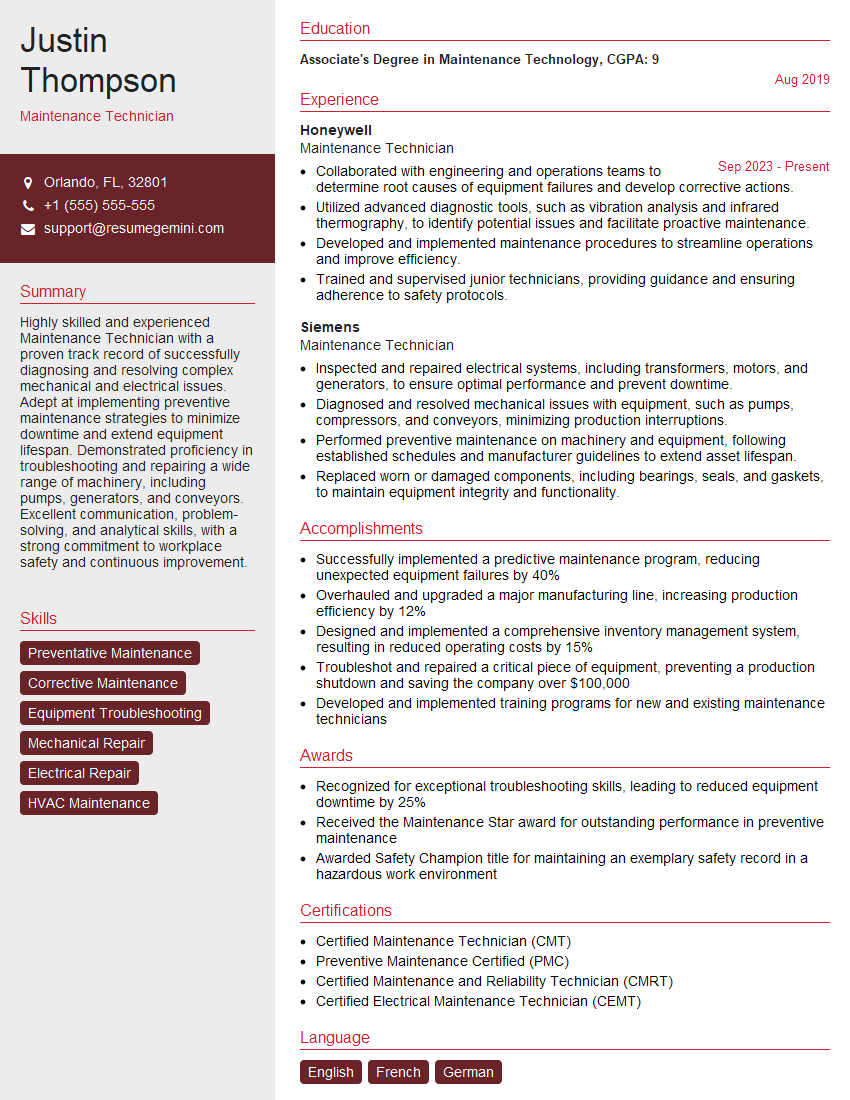
Maintenance Technician Resume Sample

Manufacturing Technician Resume Sample

Equipment Operator Resume Sample

Restoration Technician Resume Sample

Furniture Maker Resume Sample
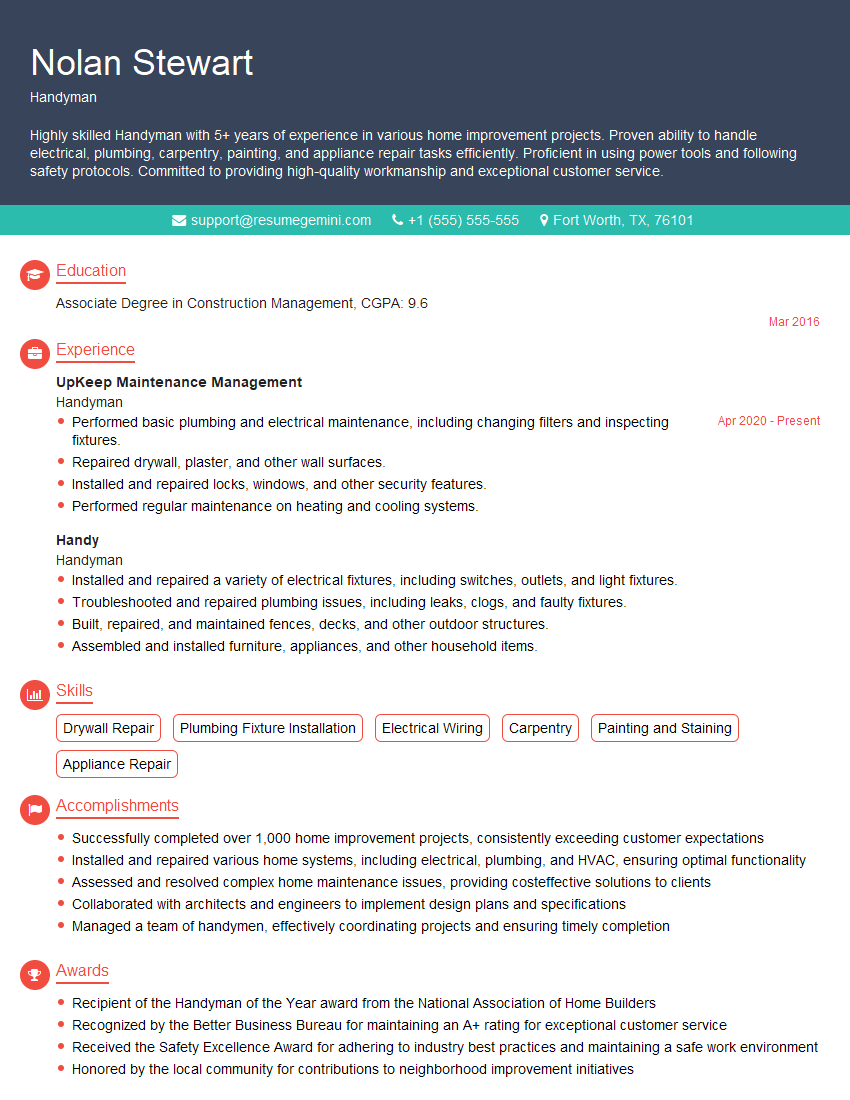
Handyman Resume Sample

Finish Carpenter Resume Sample
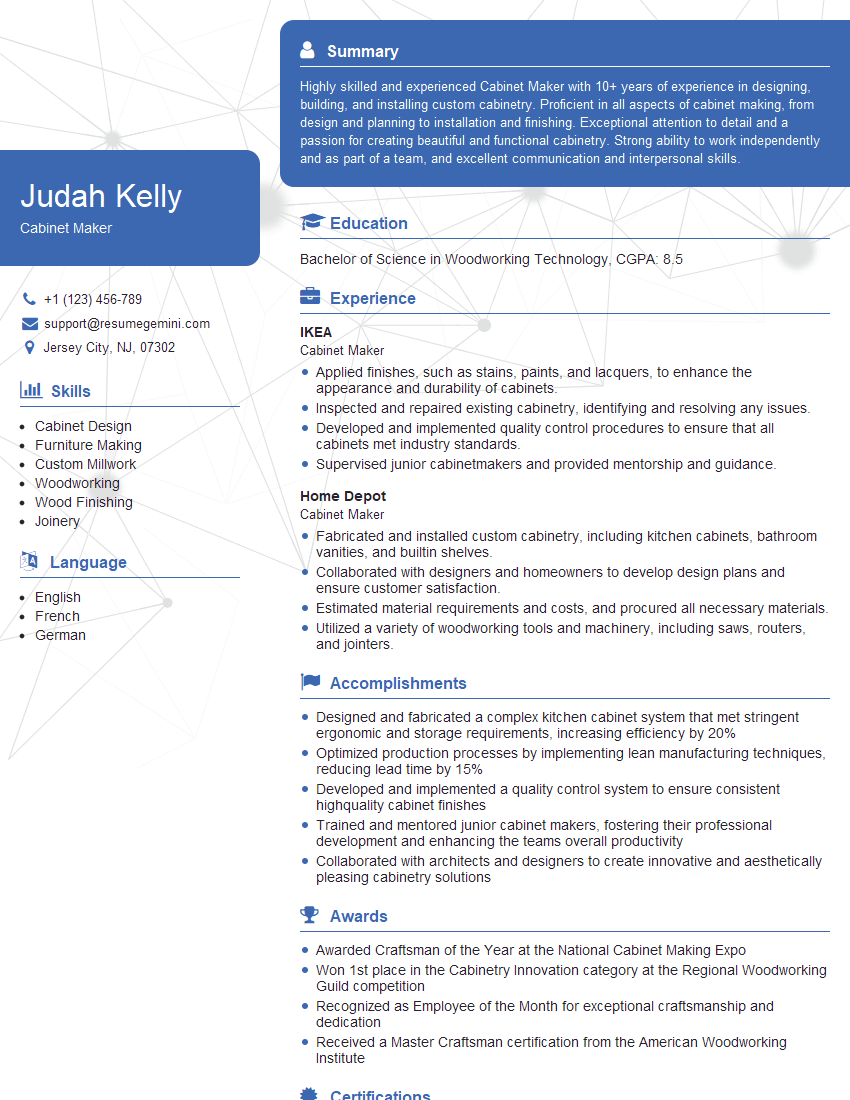
Cabinet Maker Resume Sample

Carpenter Resume Sample
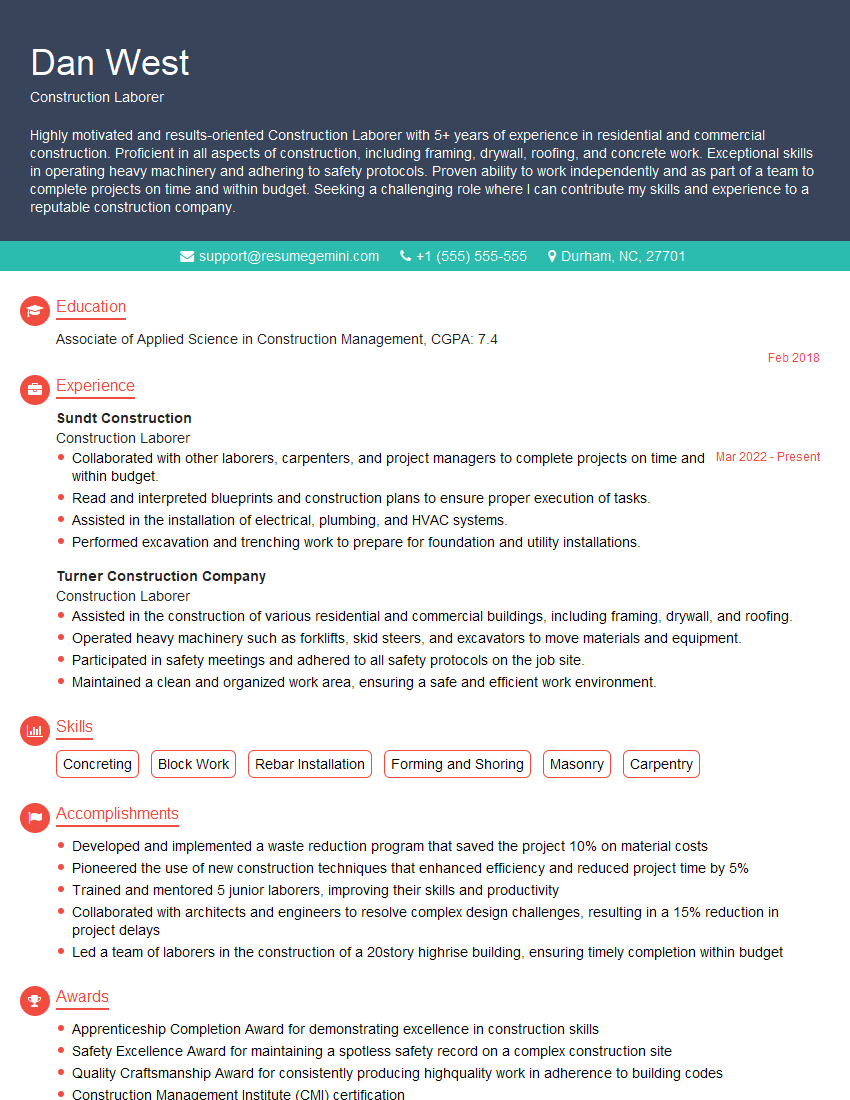
Construction Laborer Resume Sample

Demolition Worker Resume Sample
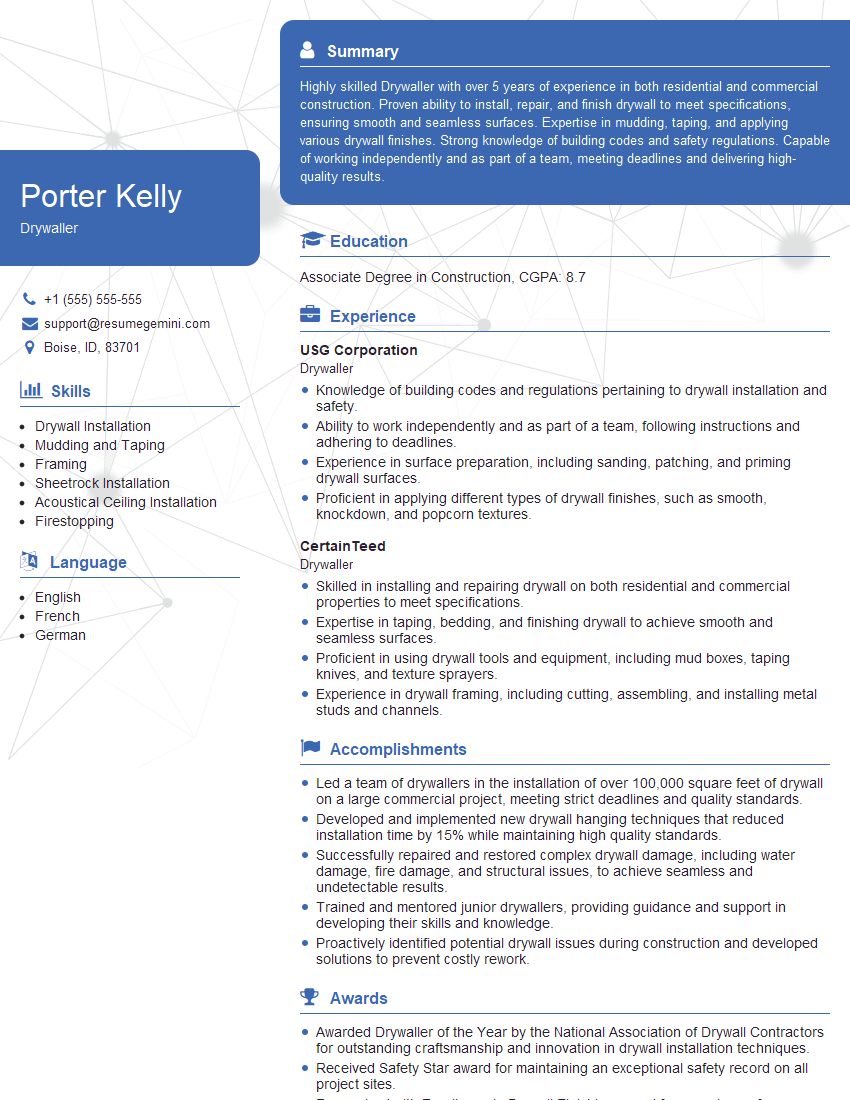
Drywaller Resume Sample

Electrician Resume Sample

Plumber Resume Sample

Repair Technician Resume Sample

Industrial Mechanic Resume Sample

Assembly Line Worker Resume Sample

Production Line Worker Resume Sample

HVAC Technician Resume Sample
- Maintenance Technician
- Manufacturing Technician
- Equipment Operator
- Restoration Technician
- Furniture Maker
- Handyman
- Finish Carpenter
- Cabinet Maker
- Carpenter
- Construction Laborer
- Demolition Worker
- Drywaller
- Electrician
- Plumber
- Repair Technician
- Industrial Mechanic
- Assembly Line Worker
- Production Line Worker
- HVAC Technician
Explore more articles
Users Rating of Our Blogs
Share Your Experience
We value your feedback! Please rate our content and share your thoughts (optional).
What Readers Say About Our Blog
Attention music lovers!
Wow, All the best Sax Summer music !!!
Spotify: https://open.spotify.com/artist/6ShcdIT7rPVVaFEpgZQbUk
Apple Music: https://music.apple.com/fr/artist/jimmy-sax-black/1530501936
YouTube: https://music.youtube.com/browse/VLOLAK5uy_noClmC7abM6YpZsnySxRqt3LoalPf88No
Other Platforms and Free Downloads : https://fanlink.tv/jimmysaxblack
on google : https://www.google.com/search?q=22+AND+22+AND+22
on ChatGPT : https://chat.openai.com?q=who20jlJimmy20Black20Sax20Producer
Get back into the groove with Jimmy sax Black
Best regards,
Jimmy sax Black
www.jimmysaxblack.com
Hi I am a troller at The aquatic interview center and I suddenly went so fast in Roblox and it was gone when I reset.
Hi,
Business owners spend hours every week worrying about their website—or avoiding it because it feels overwhelming.
We’d like to take that off your plate:
$69/month. Everything handled.
Our team will:
Design a custom website—or completely overhaul your current one
Take care of hosting as an option
Handle edits and improvements—up to 60 minutes of work included every month
No setup fees, no annual commitments. Just a site that makes a strong first impression.
Find out if it’s right for you:
https://websolutionsgenius.com/awardwinningwebsites
Hello,
we currently offer a complimentary backlink and URL indexing test for search engine optimization professionals.
You can get complimentary indexing credits to test how link discovery works in practice.
No credit card is required and there is no recurring fee.
You can find details here:
https://wikipedia-backlinks.com/indexing/
Regards
NICE RESPONSE TO Q & A
hi
The aim of this message is regarding an unclaimed deposit of a deceased nationale that bears the same name as you. You are not relate to him as there are millions of people answering the names across around the world. But i will use my position to influence the release of the deposit to you for our mutual benefit.
Respond for full details and how to claim the deposit. This is 100% risk free. Send hello to my email id: lukachachibaialuka@gmail.com
Luka Chachibaialuka
Hey interviewgemini.com, just wanted to follow up on my last email.
We just launched Call the Monster, an parenting app that lets you summon friendly ‘monsters’ kids actually listen to.
We’re also running a giveaway for everyone who downloads the app. Since it’s brand new, there aren’t many users yet, which means you’ve got a much better chance of winning some great prizes.
You can check it out here: https://bit.ly/callamonsterapp
Or follow us on Instagram: https://www.instagram.com/callamonsterapp
Thanks,
Ryan
CEO – Call the Monster App
Hey interviewgemini.com, I saw your website and love your approach.
I just want this to look like spam email, but want to share something important to you. We just launched Call the Monster, a parenting app that lets you summon friendly ‘monsters’ kids actually listen to.
Parents are loving it for calming chaos before bedtime. Thought you might want to try it: https://bit.ly/callamonsterapp or just follow our fun monster lore on Instagram: https://www.instagram.com/callamonsterapp
Thanks,
Ryan
CEO – Call A Monster APP
To the interviewgemini.com Owner.
Dear interviewgemini.com Webmaster!
Hi interviewgemini.com Webmaster!
Dear interviewgemini.com Webmaster!
excellent
Hello,
We found issues with your domain’s email setup that may be sending your messages to spam or blocking them completely. InboxShield Mini shows you how to fix it in minutes — no tech skills required.
Scan your domain now for details: https://inboxshield-mini.com/
— Adam @ InboxShield Mini
support@inboxshield-mini.com
Reply STOP to unsubscribe
Hi, are you owner of interviewgemini.com? What if I told you I could help you find extra time in your schedule, reconnect with leads you didn’t even realize you missed, and bring in more “I want to work with you” conversations, without increasing your ad spend or hiring a full-time employee?
All with a flexible, budget-friendly service that could easily pay for itself. Sounds good?
Would it be nice to jump on a quick 10-minute call so I can show you exactly how we make this work?
Best,
Hapei
Marketing Director
Hey, I know you’re the owner of interviewgemini.com. I’ll be quick.
Fundraising for your business is tough and time-consuming. We make it easier by guaranteeing two private investor meetings each month, for six months. No demos, no pitch events – just direct introductions to active investors matched to your startup.
If youR17;re raising, this could help you build real momentum. Want me to send more info?
Hi, I represent an SEO company that specialises in getting you AI citations and higher rankings on Google. I’d like to offer you a 100% free SEO audit for your website. Would you be interested?
Hi, I represent an SEO company that specialises in getting you AI citations and higher rankings on Google. I’d like to offer you a 100% free SEO audit for your website. Would you be interested?