Preparation is the key to success in any interview. In this post, we’ll explore crucial Harvest Forecasting and Yield Estimation interview questions and equip you with strategies to craft impactful answers. Whether you’re a beginner or a pro, these tips will elevate your preparation.
Questions Asked in Harvest Forecasting and Yield Estimation Interview
Q 1. Explain the difference between yield potential and actual yield.
Yield potential represents the maximum achievable yield under ideal growing conditions, assuming optimal management practices and no environmental limitations. Think of it as the theoretical upper limit for a specific crop in a given location. Actual yield, on the other hand, is the actual amount of crop harvested at the end of the growing season. This is always lower than the yield potential because of various factors like weather events, pest infestations, diseases, and suboptimal management practices. For example, the yield potential for a particular variety of wheat might be 10 tons per hectare, but the actual yield might be only 7 tons per hectare due to a drought during the growing season.
The difference between these two values highlights the impact of various stresses and limitations on crop production. Analyzing this difference helps us understand yield gaps and identify areas for improvement in farming practices to bring actual yield closer to its potential.
Q 2. Describe the various data sources used in harvest forecasting (e.g., remote sensing, historical data, field observations).
Harvest forecasting relies on a diverse range of data sources to provide a comprehensive understanding of crop conditions.
- Remote Sensing: Satellites and drones equipped with sensors capture spectral data (reflectance, emission etc.) that help assess vegetation health, leaf area index (LAI), and biomass. This provides large-scale information on crop growth and stress factors. For example, NDVI (Normalized Difference Vegetation Index) derived from satellite imagery can be used as an indicator of crop vigour.
- Historical Data: Past yield records, weather patterns, and soil data provide crucial context for forecasting. Statistical models often use historical data to establish baselines and identify trends, allowing for more accurate predictions. Analyzing the last 10 years’ yields for a specific region under varying weather conditions could inform the model significantly.
- Field Observations: On-the-ground assessments, including measurements of plant height, tiller count (for cereals), and disease incidence, provide valuable ground-truthing data that are vital for calibrating remote sensing data and fine-tuning models. This is especially valuable in areas with heterogeneous field conditions where satellite imagery lacks sufficient spatial resolution.
- Weather Data: Real-time weather information from meteorological stations and weather forecasts is crucial to adjust forecast accuracy by incorporating immediate environmental changes. Rainfall, temperature and solar radiation data directly affects crop growth.
Combining these data sources provides a robust and reliable basis for building accurate predictive models.
Q 3. What are the key factors influencing crop yield?
Crop yield is influenced by a complex interplay of factors that can be broadly categorized as:
- Genetic Factors: The inherent characteristics of the crop variety, such as its yield potential, maturity time, and disease resistance, greatly influence the final yield. Choosing a suitable variety for a specific climate and soil type can drastically change the final outcome.
- Climatic Factors: Temperature, rainfall, solar radiation, and extreme weather events like droughts, floods, and heat waves significantly impact crop growth and development. The availability of water is crucial, and stress at crucial stages in the growing season severely restricts yield.
- Soil Factors: Soil fertility, texture, water-holding capacity, and nutrient availability are essential. Soil health directly influences the root system development and nutrient uptake.
- Management Practices: Planting date, fertilizer application, irrigation methods, pest and weed control, and harvesting techniques all affect yield. Good practices optimize crop growth, minimize losses and improve yield.
- Pests and Diseases: Infestation by pests and diseases can severely reduce yield and quality if not controlled efficiently. Early detection and timely intervention are essential.
Understanding and quantifying the influence of these factors is crucial for developing effective yield forecasting models.
Q 4. How do you handle missing data in yield estimation models?
Missing data is a common challenge in yield estimation. Several techniques can be employed to address this issue:
- Imputation Methods: These methods fill in missing values based on the available data. Simple methods include using the mean, median or mode of the available data. More advanced techniques like multiple imputation or k-Nearest Neighbors (k-NN) utilize correlations between variables to estimate missing values more accurately.
- Data Interpolation: If the missing data exhibits a temporal or spatial trend, interpolation techniques like linear or spline interpolation can estimate the missing values based on neighboring data points. For instance, missing rainfall data in a particular week can be interpolated using data from the preceding and following weeks.
- Model-Based Approaches: Some statistical models, like those based on machine learning, can handle missing data during the model fitting process. These models employ techniques to implicitly account for missing data in their calculations.
- Data Augmentation: In specific scenarios, if there is sufficient relevant data, synthetic data points can be generated to supplement the missing data. This may require sophisticated statistical or machine learning techniques.
The choice of method depends on the nature and extent of the missing data, the characteristics of the dataset, and the specific application.
Q 5. What statistical methods are commonly used in yield forecasting?
A variety of statistical methods are employed in yield forecasting. The best approach depends on the available data, the desired accuracy, and the complexity of the relationships between the influencing factors.
- Regression Models: Linear regression, multiple regression, and generalized linear models (GLMs) are widely used to model the relationship between yield and various predictor variables (e.g., weather data, soil characteristics). These models provide quantitative estimates of the effects of each factor on yield.
- Time Series Analysis: Autoregressive Integrated Moving Average (ARIMA) models and other time series models are used to forecast yield based on its past trends. These methods are particularly useful when historical yield data are available.
- Machine Learning Algorithms: Support Vector Machines (SVMs), Random Forests, and Artificial Neural Networks (ANNs) are increasingly used in yield forecasting. These algorithms can capture complex non-linear relationships between variables and often yield more accurate predictions than traditional statistical models, especially with large and high-dimensional datasets.
- Geostatistical Methods: Kriging and other geostatistical methods are used to interpolate yield across spatial locations, providing spatially explicit yield maps. This is particularly useful for identifying areas with high yield variability.
Often a combination of these methods is employed to improve the accuracy and robustness of the forecasts.
Q 6. Explain the concept of yield variability and its impact on forecasting.
Yield variability refers to the spatial and temporal differences in crop yield within a field, across fields, and over time. It’s influenced by numerous factors, including variations in soil conditions, microclimate, pest pressure, and management practices. High yield variability presents challenges for harvest forecasting, as it means the average yield across an area may not accurately reflect the yield in individual fields or sub-regions.
The impact on forecasting is significant. A model predicting average yield for a region might be quite accurate, but it may fail to capture the wide range of yields experienced in individual fields. This can lead to underestimation of the total harvest in some areas and overestimation in others. To mitigate this, more sophisticated models that incorporate spatial variability, such as geostatistical methods, are needed. Using precision agriculture techniques, which involve data from sensors embedded in the farm equipment or drones allows for more accurate estimates of yield across different parts of the field.
Q 7. Describe different types of crop models used for yield prediction.
Several types of crop models are employed for yield prediction, each with its strengths and limitations:
- Process-based models: These models simulate the underlying physiological processes of crop growth and development, incorporating factors like photosynthesis, respiration, and nutrient uptake. Examples include DSSAT (Decision Support System for Agrotechnology Transfer) and APSIM (Agricultural Production Systems Simulator). These are more complex, require detailed input data and can be computationally intensive, but they often provide more mechanistic insights into yield formation.
- Statistical models: These models, as previously mentioned, use statistical techniques to relate yield to various predictor variables. These models are relatively simple to implement and require less data but might not capture the complex interactions influencing yield as accurately as process-based models.
- Empirical models: These are simpler models based on observed relationships between yield and a limited set of variables. They are easy to use and require less data, but their predictive power might be limited.
- Machine learning models: As previously stated, these models are capable of handling complex non-linear relationships among variables and are effective with large datasets. They can provide accurate predictions, but their ‘black box’ nature can make it difficult to interpret the results and understand the factors that most strongly influence yield.
The choice of model depends on the specific needs and resources available, such as the data quantity and quality, computational resources, and the level of detail required in the analysis.
Q 8. How do you validate the accuracy of your yield forecasts?
Validating yield forecast accuracy is crucial for building trust and ensuring reliable decision-making. We use a multi-pronged approach combining various techniques. Firstly, we compare our forecasts against historical yield data. This involves statistical analysis like calculating RMSE (Root Mean Squared Error) and MAE (Mean Absolute Error) to quantify the difference between predicted and actual yields. Lower values indicate higher accuracy. Secondly, we perform ground truthing. This involves physically sampling fields at harvest to obtain actual yield measurements. We strategically select representative samples across different field locations and conditions. This allows us to directly compare our predictions with observed reality. Finally, we continuously refine our models using feedback loops. After harvest, we analyze the discrepancies between the forecast and the actual yield, identifying areas of improvement in our models or data inputs. This iterative process allows for continuous improvement of forecast accuracy.
For example, if our model consistently overestimates yields in fields with poor drainage, we would investigate whether incorporating soil moisture data from sensors could improve our predictions. This continuous refinement is key to maintaining high accuracy.
Q 9. What are the limitations of using remote sensing data for yield estimation?
Remote sensing, while powerful, has limitations in yield estimation. One major limitation is the spatial resolution of the imagery. High-resolution imagery is expensive and may not be available for large areas. Lower resolution data may struggle to capture the variability in yields within a field, leading to inaccurate estimations. Another constraint is the influence of atmospheric conditions. Clouds, haze, and other atmospheric phenomena can obscure the view of the crop canopy and affect the accuracy of the spectral measurements. Also, the relationship between remotely sensed data and actual yield is not always straightforward. Various factors like crop management practices, planting date, and pest infestations can influence yield independently of spectral signatures. We address these by carefully selecting appropriate sensors and wavelengths, using atmospheric correction techniques, and incorporating ground-based data to account for local variability.
Think of it like taking a picture of a football field from a plane. You can see the general shape and color of the grass but it’s hard to count each individual blade of grass. Remote sensing is similar; it provides a bird’s-eye view, but detailed information may be lost.
Q 10. How do you incorporate weather data into your yield forecasting models?
Weather data is a critical input in yield forecasting models because it directly impacts crop growth and development. We incorporate weather data using various methods. Historical weather data (temperature, rainfall, solar radiation, humidity) for the growing season is often used in statistical models to establish correlations between weather patterns and historical yield. More sophisticated models use weather forecasts throughout the growing season to predict the effect of upcoming weather events on crop growth. This can involve running crop simulation models that integrate real-time weather inputs to dynamically update yield predictions. This is particularly useful for managing risks associated with extreme weather events, such as droughts or heat waves.
For example, if a prolonged heatwave is predicted, we can adjust our yield forecast downwards as we know high temperatures can negatively impact grain fill.
Q 11. Explain the concept of yield risk and how it is managed.
Yield risk refers to the uncertainty associated with achieving a target yield. It considers the potential for variations in yield due to various factors, including weather variability, pest and disease outbreaks, soil conditions, and market fluctuations. Yield risk management aims to mitigate these uncertainties and stabilize crop production. Strategies include crop diversification (growing different crops in different fields to reduce the impact of losses in one crop), risk insurance (purchasing crop insurance to cover potential yield losses), and precision agriculture technologies (using data-driven insights for optimized resource allocation). We also use statistical models to quantify yield risk, often calculating the probability of achieving different yield levels. This enables informed decision-making regarding input investments and risk mitigation strategies.
A farmer who plants only one crop faces a higher yield risk compared to one who diversifies. If a disease affects that single crop, the farmer’s entire income is at stake.
Q 12. How do soil properties influence crop yield prediction?
Soil properties significantly influence crop yield. Factors such as soil texture (sand, silt, clay content), organic matter content, nutrient availability (nitrogen, phosphorus, potassium), and water holding capacity directly affect crop growth and yield. We incorporate these properties into yield prediction models in various ways. Soil surveys provide baseline information about soil types and their inherent properties across different fields. Soil sampling and laboratory analysis provide more detailed information about nutrient levels and other characteristics. This data is integrated into our models as input variables, allowing us to account for the variations in yield potential across different soil types and conditions. For example, a soil with high organic matter content and good drainage will likely support higher yields compared to a soil that is compacted and nutrient-poor.
Imagine trying to grow a plant in a pot with no soil. The plant would likely die. Similarly, poor soil conditions limit crop growth and yield.
Q 13. Discuss the role of precision agriculture technologies in yield forecasting.
Precision agriculture technologies play a vital role in enhancing yield forecasting accuracy. GPS-guided machinery allows for site-specific application of inputs (fertilizers, pesticides, irrigation), leading to more efficient resource use and potentially higher yields. Remote sensing and sensor networks provide valuable data on crop health and environmental conditions, allowing for early detection of stress factors that might affect yield. Data analytics techniques help in analyzing this data to identify patterns and trends, leading to improved predictions. We can use this information to generate site-specific yield forecasts, optimizing resource management and reducing uncertainty.
For instance, using drone imagery to monitor crop growth allows for early detection of nutrient deficiencies, enabling timely application of fertilizers to maximize yields.
Q 14. What are the economic implications of accurate yield forecasts?
Accurate yield forecasts have significant economic implications across the agricultural value chain. For farmers, accurate forecasts allow for better planning of inputs, optimizing resource allocation and reducing waste. It helps in securing better prices for their produce by allowing them to make informed decisions about when to sell. For traders and processors, accurate forecasts help in managing supply chains, ensuring adequate storage capacity and efficient processing operations. For financial institutions, forecasts aid in credit risk assessment and investment decisions in the agricultural sector. For policymakers, they support the development of effective agricultural policies and interventions. Ultimately, accurate yield forecasts contribute to increased efficiency, reduced risks, and enhanced profitability throughout the agricultural industry.
Imagine a farmer relying on inaccurate forecasts; they might over-invest in inputs only to find that yields are significantly lower than expected, resulting in financial losses. Accurate forecasts mitigate this risk.
Q 15. How do you present your yield forecasts to stakeholders?
Presenting yield forecasts to stakeholders requires a clear, concise, and visually appealing approach. I tailor my presentation to the audience’s level of understanding. For example, a farmer might need a simple summary with key figures, while a financial analyst will require a more detailed breakdown with statistical analysis and potential risk assessments.
- Visualizations: I utilize graphs, charts (bar charts, line graphs showing yield trends over time), and maps to illustrate yield predictions across different fields or regions. This makes complex data more accessible.
- Key Metrics: I focus on key performance indicators (KPIs) like projected yield per acre, total expected harvest, and potential revenue, highlighting areas of concern or opportunity.
- Uncertainty Quantification: I always present a range of possible outcomes rather than a single point estimate, acknowledging the inherent uncertainty involved in forecasting. This often involves confidence intervals to illustrate the reliability of the forecast. For instance, I might say, ‘We forecast a yield of 50 bushels per acre, with a 95% confidence interval of 45-55 bushels per acre.’
- Narrative Explanation: I provide a clear narrative explaining the methodology, assumptions, and limitations of the forecast. This includes discussing significant weather events, pest pressures, or soil conditions that have affected the prediction.
- Interactive Dashboards (if applicable): For larger-scale projects, I utilize interactive dashboards that allow stakeholders to explore the data at different levels of detail, filtering by field, crop type, or other relevant parameters.
Career Expert Tips:
- Ace those interviews! Prepare effectively by reviewing the Top 50 Most Common Interview Questions on ResumeGemini.
- Navigate your job search with confidence! Explore a wide range of Career Tips on ResumeGemini. Learn about common challenges and recommendations to overcome them.
- Craft the perfect resume! Master the Art of Resume Writing with ResumeGemini’s guide. Showcase your unique qualifications and achievements effectively.
- Don’t miss out on holiday savings! Build your dream resume with ResumeGemini’s ATS optimized templates.
Q 16. What software or tools do you use for yield estimation?
My yield estimation process relies on a combination of software and tools. The choice depends on the specific needs of the project and the data available.
- GIS Software (e.g., ArcGIS, QGIS): These are invaluable for spatial data analysis, creating yield maps, and integrating data from various sources like satellite imagery, GPS data from machinery, and soil sensors.
- Remote Sensing Software (e.g., ENVI, ERDAS IMAGINE): These tools help process satellite and drone imagery to assess crop health and estimate biomass, crucial components of yield prediction.
- Statistical Software (e.g., R, SAS, Python with libraries like scikit-learn): I use these for statistical modeling, time-series analysis, and forecasting. This enables me to develop robust predictive models that incorporate various factors.
- Agricultural Management Systems (e.g., Farm Management Software): These integrate data from different farm operations, including planting dates, fertilization rates, and irrigation schedules, contributing to more accurate forecasting.
- Weather Data Platforms: Accessing real-time and historical weather data is crucial. I utilize weather APIs or specialized weather stations to incorporate climate information into my models.
For instance, R with packages like caret and randomForest allows me to build and evaluate different machine learning models for yield prediction.
Q 17. Describe a situation where your yield forecast was inaccurate. What were the contributing factors?
In one instance, my yield forecast for a corn crop was significantly lower than the actual harvest. The primary contributing factor was an unexpected and severe early-season drought, followed by an unusually rapid and heavy rainfall event. My initial forecast relied on historical weather patterns and did not account for such an extreme and abrupt shift in weather conditions.
- Inaccurate Weather Data: The initial weather prediction was relatively optimistic, underestimating the severity and duration of the drought.
- Model Limitations: My model, while robust, lacked the capacity to accurately predict the crop’s resilience to such unusual weather extremes. It relied on historical data, which did not capture the specific combination of drought and intense rain.
- Lack of Real-time Monitoring: A more proactive approach with frequent field visits and close monitoring of soil moisture levels could have provided earlier warning signals and allowed for adaptive adjustments to the forecast.
This experience highlighted the critical need to incorporate real-time data, refine models to account for climate change variability, and utilize a range of monitoring techniques to improve forecast accuracy.
Q 18. How do you adapt your forecasting techniques for different crops?
Adapting forecasting techniques for different crops requires understanding the unique characteristics of each crop, including its growth cycle, sensitivity to environmental factors, and typical yield levels.
- Crop-Specific Models: I don’t use a one-size-fits-all approach. Instead, I develop or adapt models tailored to each crop. For example, a model for wheat will differ significantly from one for soybeans or rice, considering factors like planting density, maturation time, and susceptibility to diseases.
- Data Requirements: The types of data needed also vary. For some crops, remote sensing might be crucial, while for others, soil analysis might be more critical. I select data sources relevant to the specific crop and its growth characteristics.
- Growth Stages: I consider the different growth stages of each crop and their respective sensitivities to environmental stressors. A corn crop’s sensitivity to drought will vary significantly at different growth stages.
- Historical Data: Access to sufficient high-quality historical yield and environmental data for each crop is essential to building accurate predictive models.
For instance, forecasting for fruit crops often involves incorporating chilling hours needed for proper budbreak, a factor not as relevant in grain crop forecasting.
Q 19. What are the ethical considerations related to using yield forecasts?
Ethical considerations are paramount in using yield forecasts. Transparency and responsible communication are key.
- Transparency: It is crucial to clearly communicate the limitations and uncertainties associated with the forecast. Stakeholders need to understand that forecasts are not guarantees.
- Data Privacy: When using data from various sources, including farmer’s data, strict adherence to data privacy regulations is mandatory. Informed consent and responsible data handling are crucial.
- Bias and Fairness: Forecasting models should be free from bias. Careful consideration must be given to ensure that the model is not perpetuating existing inequalities or disproportionately affecting certain groups of farmers.
- Avoid Misinformation: Yield forecasts should not be used to manipulate markets or create unfair advantages for certain parties. Responsible communication is essential to prevent misleading or deceptive practices.
- Impact Assessment: The potential economic and social impacts of the forecast should be considered, particularly in vulnerable communities relying heavily on agricultural production.
An example of ethical concern would be using a yield forecast to encourage speculative trading in agricultural commodities without transparently communicating the inherent uncertainty.
Q 20. How do you account for pest and disease pressure in yield forecasting?
Accounting for pest and disease pressure in yield forecasting is crucial for accuracy. This often involves integrating various data sources and employing specialized models.
- Pest and Disease Monitoring Data: Integrating real-time pest and disease monitoring data, obtained through scouting, traps, or remote sensing, is essential. This data provides information on the severity and spread of infestations.
- Disease Models: Incorporating disease models that simulate the spread of pathogens based on environmental conditions and crop susceptibility enhances the accuracy of yield prediction.
- Pest Management Strategies: The impact of pest and disease management strategies should be factored into the forecast. This involves considering factors like pesticide application timing, effectiveness, and potential impact on yield.
- Remote Sensing: Multispectral or hyperspectral imagery can detect subtle changes in crop health indicative of pest or disease infestation, allowing for early detection and incorporation into the forecast.
- Expert Knowledge: Input from agronomists and plant pathologists provides valuable insight into the potential impact of pests and diseases on the crop’s yield potential.
For instance, a model for potato yield might incorporate data on late blight prevalence and the efficacy of various fungicides used to manage it.
Q 21. Explain the concept of yield mapping and its application in precision agriculture.
Yield mapping involves creating a spatial representation of crop yields across a field. It’s a powerful tool in precision agriculture, allowing for site-specific management practices.
- Data Acquisition: Yield data is collected using yield monitors integrated into harvesting machinery. GPS coordinates record the yield at specific locations within the field.
- Map Creation: The collected data is then processed and used to create a map, with different colors or shading representing variations in yield across the field.
- Identifying Variability: Yield maps reveal spatial variability in crop yields, highlighting areas of high and low productivity. These variations can be linked to soil conditions, topography, or management practices.
- Precision Management: This spatial information guides site-specific management decisions, such as variable rate fertilization, irrigation, or pest control. This optimizes resource use and improves overall efficiency and sustainability.
- Long-Term Planning: Yield maps from multiple years can be overlaid to identify persistent patterns of low or high yield, guiding long-term land management decisions, including soil amendments and crop rotations.
For example, a yield map might reveal a consistently low-yielding area due to poor drainage. This allows farmers to target that specific area with improved drainage strategies or soil amendments in subsequent growing seasons.
Q 22. Describe the process of calibrating yield models using field data.
Calibrating yield models with field data is crucial for ensuring accuracy. It’s essentially a process of fine-tuning the model’s parameters to best reflect real-world conditions. This involves a few key steps:
- Data Collection: We begin by gathering comprehensive field data. This includes historical yield data, weather information (temperature, rainfall, sunlight), soil characteristics (type, nutrients), planting dates, and any relevant management practices (fertilizer application, irrigation, pest control).
- Model Selection: Choosing the right model depends on the data available and the complexity needed. Simple linear regression might suffice for initial estimations, while more sophisticated models like machine learning algorithms (e.g., random forests, support vector machines) can handle complex interactions between variables and potentially improve accuracy.
- Parameter Estimation: This involves using statistical techniques to estimate the model’s parameters. This often involves minimizing the difference between the model’s predictions and the actual yield data. Methods like least squares or maximum likelihood estimation are commonly used.
- Model Validation: After fitting the model, it’s vital to validate its performance. This usually involves splitting the data into training and testing sets. The model is trained on the training data and then its predictive power is assessed on the unseen testing data. Metrics such as R-squared, RMSE (Root Mean Squared Error), and MAE (Mean Absolute Error) are used to quantify the model’s accuracy and identify potential overfitting.
- Iteration and Refinement: Based on the validation results, the model might need further refinement. This could involve adjusting the model parameters, incorporating additional variables, or exploring alternative model structures. This iterative process continues until a satisfactory level of accuracy is achieved.
For example, if we’re building a model predicting corn yield, we might find that rainfall during a specific growth stage is a highly significant predictor. The calibration process would then involve determining the optimal coefficient for this rainfall variable within the model equation to maximize predictive accuracy.
Q 23. How do you assess the uncertainty associated with your yield forecasts?
Assessing uncertainty in yield forecasts is critical for responsible decision-making. We can’t simply provide a single point estimate; we need to quantify the range of possible outcomes. Here’s how we approach it:
- Quantifying Model Uncertainty: This addresses the inherent uncertainty in the model itself. Methods like bootstrapping or Bayesian methods allow us to generate a distribution of possible model parameters, leading to a range of yield predictions.
- Quantifying Data Uncertainty: Our field data is never perfect. There’s always measurement error and inherent variability. We can incorporate this uncertainty using techniques like Monte Carlo simulation, which randomly samples from the distributions of our input variables (e.g., rainfall, temperature) to generate a range of possible yields.
- Presenting Uncertainty: We communicate uncertainty through various means, including:
- Confidence Intervals: Providing a range within which we are, say, 95% confident the actual yield will fall.
- Probability Distributions: Presenting the entire probability distribution of possible yields, giving a visual representation of uncertainty.
- Scenario Planning: Exploring different scenarios based on different assumptions about input variables, highlighting the potential impact of uncertainty on yield.
For instance, instead of saying ‘the expected yield is 100 bushels per acre,’ we might say ‘we are 95% confident that the yield will be between 90 and 110 bushels per acre.’ This provides a much clearer picture of the risks involved.
Q 24. What are the latest advancements in harvest forecasting technologies?
Harvest forecasting is rapidly evolving. Recent advancements include:
- Remote Sensing Technologies: Satellites and drones equipped with advanced sensors (multispectral, hyperspectral) provide high-resolution imagery of crops throughout the growing season. Analysis of this imagery can reveal crucial information about crop health, stress, and biomass, significantly improving yield prediction accuracy.
- Machine Learning and AI: These are being extensively used to develop more complex and accurate yield prediction models. Deep learning algorithms, in particular, have proven highly effective at capturing intricate relationships between numerous variables.
- Integration of Weather and Climate Data: Sophisticated weather models combined with climate projections are increasingly integrated into yield forecasts, allowing for better prediction of extreme weather events and their impact on crop production. Improved weather data resolution also enhances accuracy.
- In-Field Sensors: Sensors embedded in the soil or attached to plants provide real-time data on soil moisture, nutrient levels, and plant health. This allows for more precise and timely adjustments in farm management practices.
- Precision Agriculture Techniques: Combining yield forecasts with variable-rate technology enables farmers to apply inputs (fertilizer, water, pesticides) more efficiently, optimizing yields and reducing resource waste.
For example, the use of hyperspectral imagery can detect subtle changes in plant chlorophyll content, which can be indicative of nutrient deficiencies or disease, allowing for early intervention and improved yields.
Q 25. How do you interpret and communicate complex statistical results related to yield?
Interpreting and communicating complex statistical results requires careful consideration of the audience. My approach involves:
- Simplifying Terminology: Avoid jargon. Explain statistical concepts in plain language, using analogies where appropriate. For example, instead of saying ‘R-squared is 0.85,’ I’d say ‘the model explains 85% of the variation in yield.’
- Visualizations: Use graphs, charts, and maps to illustrate key findings. Visualizations make complex data more accessible and memorable.
- Focus on Key Findings: Highlight the most important results and their implications for decision-making. Don’t overwhelm the audience with unnecessary details.
- Uncertainty Quantification: Clearly communicate the uncertainty associated with the results, emphasizing the range of possible outcomes. This builds trust and avoids overconfidence.
- Contextualization: Relate the findings to the specific context of the farm or region. Explain the limitations of the analysis and any assumptions made.
For instance, when presenting a yield forecast, I might display a graph showing the predicted yield with confidence intervals, explaining the probability that the actual yield falls within that range. I would also discuss potential factors that could influence the yield and their associated uncertainty.
Q 26. How do you integrate yield forecasts into farm management decisions?
Yield forecasts are fundamental to informed farm management decisions. They allow farmers to:
- Optimize Planting Decisions: Choose the right crop varieties, planting dates, and densities based on projected yields and market prices.
- Improve Resource Allocation: Efficiently allocate resources like water, fertilizers, and pesticides, maximizing returns while minimizing costs and environmental impact.
- Risk Management: Assess and manage risks associated with weather variability, pests, and diseases. This might involve purchasing crop insurance or diversifying crop production.
- Marketing and Sales Strategies: Develop effective marketing and sales strategies based on projected harvest volumes and anticipated market conditions.
- Financial Planning: Develop accurate financial budgets and secure loans based on expected income from the harvest.
For example, a low yield forecast for corn might lead a farmer to prioritize other crops or reduce input costs to minimize losses. Conversely, a high yield forecast might encourage them to invest in additional storage capacity.
Q 27. Describe your experience with time series analysis in the context of yield prediction.
Time series analysis is invaluable for yield prediction as it explicitly accounts for the temporal dependence inherent in yield data. Yields from previous years often influence current and future yields due to factors like soil nutrient depletion, pest cycles, and the impact of long-term climate trends.
I have extensive experience using various time series methods, including:
- ARIMA models: Autoregressive Integrated Moving Average models are widely used for modeling stationary time series. These models capture the autocorrelation structure of the data to predict future yields.
- SARIMA models: Seasonal ARIMA models extend ARIMA to account for seasonal patterns in yield data, which are common in agriculture.
- Exponential Smoothing methods: These provide a more adaptive approach, assigning higher weights to more recent observations, making them robust to changes in trends.
- State-Space Models: These are particularly useful for modeling complex systems with unobserved components, such as soil moisture or pest populations, that influence yield.
In practice, I often combine time series models with other explanatory variables (e.g., weather data, soil characteristics) to build more comprehensive and accurate prediction models. For example, an ARIMA model capturing the long-term trend in yields might be combined with a regression model incorporating current weather conditions for a more precise forecast.
Q 28. How would you handle a situation where your yield forecast significantly deviates from actual results?
Significant deviations between forecasted and actual yields warrant a thorough investigation to identify the causes and improve future forecasts. My approach involves:
- Data Review: Carefully examine the actual yield data to confirm its accuracy. Were there any measurement errors or unusual events that affected the harvest?
- Model Evaluation: Analyze the model’s performance. Did it systematically overestimate or underestimate yields? Are there any patterns in the errors? This might indicate weaknesses in the model or missing variables.
- External Factor Analysis: Identify any unanticipated events that could explain the discrepancy. This might include unforeseen weather events (e.g., severe drought, hailstorms), pest outbreaks, or changes in market conditions.
- Model Refinement: Based on the investigation, refine the model. This could involve adding new variables, adjusting model parameters, or exploring alternative model structures. For example, if an unexpected drought significantly impacted yield, incorporating drought indices into the model would be crucial.
- Communication and Transparency: Communicate the findings and any revised forecasts to stakeholders. Transparency about the limitations of the models and the uncertainties associated with predictions is essential.
A thorough post-mortem analysis, focusing both on the strengths and weaknesses of the forecasting process, is critical for continuous improvement. This iterative process of learning from errors is key to building more robust and reliable yield prediction models.
Key Topics to Learn for Harvest Forecasting and Yield Estimation Interview
- Crop Growth Modeling: Understanding different growth models (e.g., linear, exponential, logistic) and their application in predicting crop yield based on various factors like weather, soil conditions, and planting density.
- Remote Sensing and GIS Applications: Utilizing satellite imagery, aerial photography, and GIS software for assessing crop health, identifying stress factors, and estimating yield potential across large areas. Practical application involves analyzing NDVI (Normalized Difference Vegetation Index) data and other spectral indices.
- Statistical Analysis and Data Interpretation: Employing statistical methods like regression analysis, time series analysis, and ANOVA to analyze historical yield data, identify trends, and predict future yields. This includes understanding the limitations and assumptions of different statistical models.
- Environmental Factors and their Impact: Analyzing the influence of weather patterns (temperature, rainfall, sunlight), soil nutrients, pests, and diseases on crop growth and yield. This involves understanding how these factors interact and their potential impact on forecast accuracy.
- Harvesting Techniques and Losses: Understanding the impact of various harvesting methods on yield losses and incorporating this knowledge into yield estimations. This also includes considering post-harvest factors like storage and transportation losses.
- Data Management and Quality Control: Implementing robust data management strategies to ensure data accuracy and consistency. This includes understanding data validation techniques and addressing potential sources of error in data collection and analysis.
- Uncertainty and Risk Assessment: Developing methods for quantifying uncertainty in yield forecasts and assessing the associated risks. This involves understanding the limitations of forecasting models and employing strategies to mitigate potential risks.
Next Steps
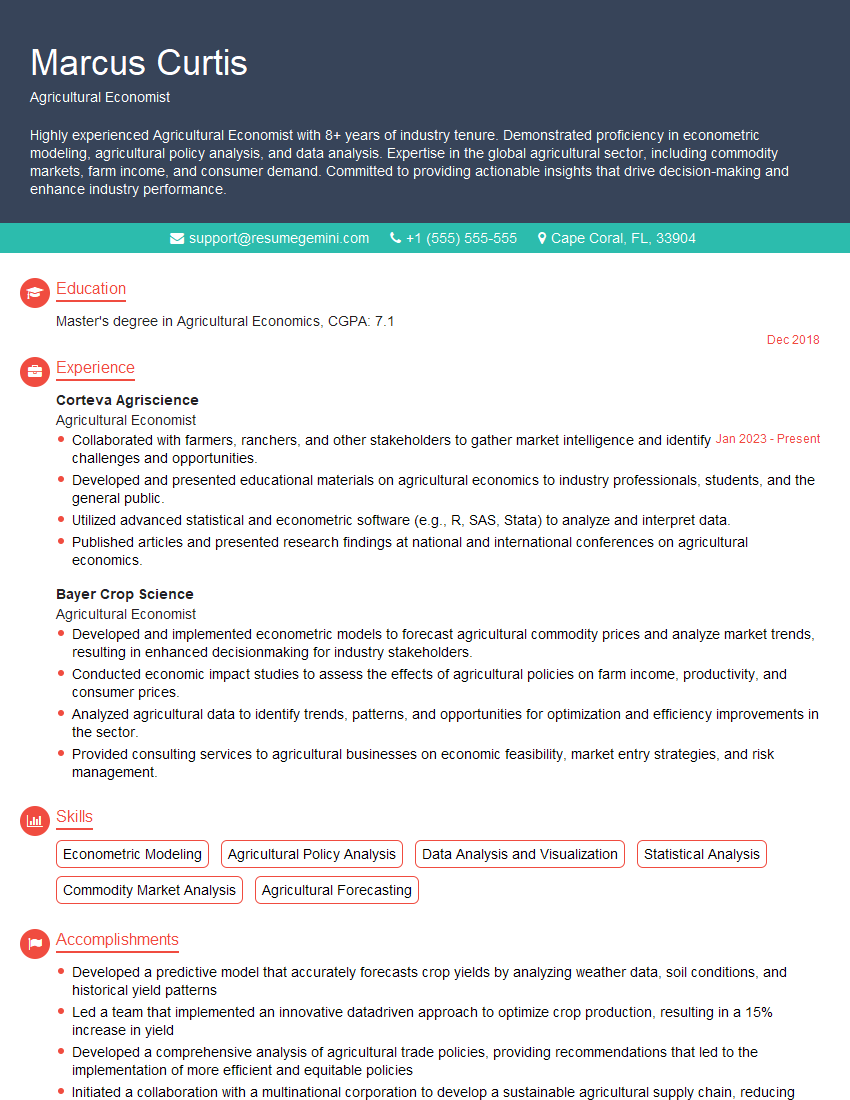
Mastering Harvest Forecasting and Yield Estimation is crucial for career advancement in agriculture, food security, and related fields. Accurate predictions are vital for efficient resource allocation, informed decision-making, and ensuring food availability. To significantly enhance your job prospects, creating a strong, ATS-friendly resume is essential. ResumeGemini is a trusted resource that can help you build a professional and impactful resume tailored to your skills and experience. Examples of resumes specifically designed for candidates in Harvest Forecasting and Yield Estimation are available to help guide you.
Explore more articles
Users Rating of Our Blogs
Share Your Experience
We value your feedback! Please rate our content and share your thoughts (optional).
What Readers Say About Our Blog
Very informative content, great job.
good