Are you ready to stand out in your next interview? Understanding and preparing for Healthcare Data Abstraction interview questions is a game-changer. In this blog, we’ve compiled key questions and expert advice to help you showcase your skills with confidence and precision. Let’s get started on your journey to acing the interview.
Questions Asked in Healthcare Data Abstraction Interview
Q 1. Explain the process of data abstraction in healthcare.
Healthcare data abstraction is the process of extracting specific information from various sources – like medical records, lab reports, and billing statements – and transforming it into a structured format for analysis, reporting, and research. Think of it like distilling the essence of a patient’s journey from a vast ocean of data. It involves systematically reviewing source documents, identifying relevant data points, and meticulously recording them into a standardized database. This structured data then becomes readily usable for various purposes, such as quality improvement initiatives, clinical research studies, and regulatory reporting.
The process typically involves several steps: 1. Defining Data Elements: Clearly specifying what data needs to be abstracted. 2. Source Identification: Locating the relevant medical records and documents. 3. Data Extraction: Carefully reviewing the source documents and extracting the specified data points. 4. Data Validation: Verifying the accuracy and completeness of the extracted data. 5. Data Entry: Entering the validated data into a structured database. 6. Data Reporting: Generating reports and visualizations based on the abstracted data.
Q 2. What are the key differences between structured and unstructured healthcare data?
Structured data is neatly organized, easily searchable, and readily analyzed. Think of it like a neatly organized spreadsheet where each piece of information fits into a predefined column. Examples include data stored in databases with clearly defined fields like patient age, diagnosis codes (ICD codes), or medication lists. Unstructured data, on the other hand, is messy, disorganized, and challenging to analyze. Imagine a pile of handwritten notes, or a large collection of clinical narratives. Examples include physician’s notes, radiology reports, or pathology reports, often containing free-text descriptions and clinical observations.
The key difference lies in their format and searchability. Structured data lends itself easily to automated analysis using tools like SQL. Unstructured data often requires Natural Language Processing (NLP) techniques for meaningful analysis. The transition from unstructured to structured data is a significant focus in healthcare to unlock its full analytical potential.
Q 3. Describe your experience with various data abstraction methods.
Throughout my career, I’ve employed various data abstraction methods, adapting my approach based on the specific data source and research question. I have extensive experience with manual abstraction, where trained abstractors meticulously review source documents and enter data into a standardized format. This method ensures high accuracy but can be time-consuming and labor-intensive. I’ve also worked with automated abstraction techniques, where software uses natural language processing (NLP) and machine learning algorithms to extract data from unstructured text. This significantly increases efficiency, but requires careful validation to maintain accuracy. My experience also encompasses hybrid approaches, combining manual and automated methods to leverage the strengths of each. For instance, I might use NLP to pre-process large volumes of text, then employ manual review to ensure accuracy of critical data points.
In one project, I employed a combination of manual and automated techniques to extract information on patient demographics and treatment outcomes from electronic health records. The automated method initially identified potential data points, which I then manually verified for accuracy. This blended approach optimized efficiency while minimizing errors.
Q 4. How do you ensure data accuracy and completeness during abstraction?
Ensuring data accuracy and completeness is paramount in healthcare data abstraction. We employ a multi-pronged approach: 1. Standardized Procedures: Clear, detailed abstraction protocols are essential. These protocols outline the specific data elements to collect, the source documents to review, and the data entry rules to follow. 2. Training and Quality Control: Abstractors undergo thorough training on the protocols and data entry procedures. Ongoing quality checks, including random audits of abstracted data and inter-rater reliability assessments, are conducted. 3. Data Validation: Data validation steps involve comparing the abstracted data with the source documents to verify accuracy and completeness. This can be done through manual review or automated validation rules. 4. Double Data Entry: In cases where the highest level of accuracy is needed, double data entry is utilized where two independent abstractors enter the data, and discrepancies are resolved. 5. Data Cleaning: Regular data cleaning procedures identify and correct errors, inconsistencies, and missing data.
Q 5. What are common challenges encountered during data abstraction?
Common challenges in healthcare data abstraction include: 1. Inconsistent Data Formats: Different healthcare systems use varying formats for medical records, making data extraction difficult. 2. Incomplete or Missing Data: Medical records may lack essential information, leading to incomplete datasets. 3. Ambiguous Terminology: Clinical notes can contain ambiguous or subjective terms, making it challenging to interpret and abstract data consistently. 4. Time Constraints: Meeting deadlines for data abstraction can be challenging, particularly with large datasets. 5. Data Security and Confidentiality: Protecting patient privacy and complying with regulations like HIPAA is crucial. 6. Maintaining Data Quality: Ensuring data accuracy and consistency across multiple abstractors and sources.
Q 6. How do you handle missing or incomplete data?
Handling missing or incomplete data requires a careful and systematic approach. The first step is to identify the extent of missing data and understand why the information is missing. If the missing data is random, imputation methods (like mean/median imputation or more sophisticated techniques) can be used to estimate missing values. However, this must be done cautiously as it can introduce bias. In cases where there is a pattern to the missing data (e.g., consistently missing certain lab results), it might indicate a systemic issue with data collection or record-keeping, which needs to be addressed. We document all instances of missing data, the reasons for missingness, and the methods used to handle them. Transparency in addressing data limitations is crucial for maintaining data integrity and ensuring the reliability of findings.
Q 7. How do you maintain data confidentiality and comply with HIPAA regulations?
Maintaining data confidentiality and complying with HIPAA regulations is an absolute priority. We adhere to strict protocols that include: 1. Data Encryption: All data is encrypted both in transit and at rest. 2. Access Control: Access to protected health information (PHI) is restricted to authorized personnel based on the principle of least privilege. 3. Secure Data Storage: Data is stored in secure servers with robust security measures. 4. De-identification: Whenever possible, we de-identify data to remove any direct identifiers that could compromise patient privacy. 5. Compliance Training: All personnel involved in data abstraction receive HIPAA compliance training. 6. Regular Security Audits: Regular security audits are conducted to identify and address potential vulnerabilities. 7. Data Disposal: Secure disposal methods are used to destroy data when it is no longer needed.
Q 8. Explain your experience with different data sources (e.g., EHRs, paper charts).
My experience spans a wide range of healthcare data sources. I’ve extensively worked with Electronic Health Records (EHRs) from various vendors, including Epic, Cerner, and Allscripts. This involves navigating complex data structures, understanding their specific functionalities, and efficiently extracting relevant information. For example, I’ve used Epic’s SmartForms to streamline data extraction for specific clinical trials. I’m also proficient in working with paper charts, a skill honed through years of experience in retrospective chart reviews. This requires meticulous attention to detail and a keen understanding of medical terminology and handwriting interpretation. I’ve adapted to working with scanned images of paper charts, utilizing optical character recognition (OCR) software to improve efficiency and accuracy when feasible, always ensuring proper validation to reduce errors introduced by OCR. In both scenarios, I’m well versed in handling different data formats such as structured data within EHRs and unstructured data in scanned documents or hand-written notes.
Q 9. Describe your proficiency with data abstraction tools and software.
My proficiency with data abstraction tools and software is comprehensive. I’m adept at using various software applications to facilitate efficient and accurate data extraction. I have extensive experience with dedicated data abstraction platforms, such as [mention specific tools if applicable, e.g., ChartWise, or other relevant software], that streamline the process with features like query building and data validation. I’m comfortable using SQL for complex data queries directly within databases, allowing me to pull highly specific information. Furthermore, I’m proficient in spreadsheet software (Excel, Google Sheets) for data organization, cleaning, and analysis. My skills extend to programming languages like R or Python for automation and more advanced data manipulation. For instance, I’ve developed R scripts to automate the extraction of specific lab values from EHR data, saving significant time and improving consistency.
Q 10. How do you prioritize tasks and manage time effectively during data abstraction projects?
Effective task prioritization and time management are crucial in data abstraction projects. I use a combination of methods to stay organized and on schedule. I begin by carefully reviewing the project scope and data requirements to identify key deliverables and deadlines. Then, I break down large tasks into smaller, manageable steps, creating a detailed workflow. Tools like project management software (e.g., Asana, Trello) help me track progress and identify potential bottlenecks. I always prioritize tasks based on urgency and importance, focusing on high-impact activities first. For instance, if I need specific data to meet an imminent deadline, I will dedicate my time to extracting that data first, even if it means temporarily delaying a less time-sensitive task. Regular progress reviews help ensure I’m staying on track, and I actively communicate potential delays or challenges to project stakeholders to proactively address them.
Q 11. How do you identify and resolve data inconsistencies?
Identifying and resolving data inconsistencies is a core aspect of my work. I employ a multi-pronged approach. First, I establish clear data definitions and abstraction rules at the project’s outset, ensuring everyone understands what constitutes valid data. During the abstraction process, I utilize data validation checks within the software I’m using; flagged inconsistencies are reviewed carefully. For example, if an age value seems contradictory with recorded birthdate, I will investigate the discrepancy, potentially consulting source documents for clarification. I also leverage data quality reports to highlight areas with frequent inconsistencies and look for patterns. For instance, repeated misspellings might suggest an issue with data entry or scanning quality. Finally, I document all resolutions, creating an audit trail to ensure transparency and maintain data integrity.
Q 12. What quality control measures do you employ during data abstraction?
Quality control is paramount. I implement several measures throughout the data abstraction process. First, I perform regular data validation checks, comparing data against source documents and established criteria. Second, I conduct inter-rater reliability checks, particularly when multiple abstractors are involved, comparing results to ensure consistency and identify areas needing clarification or further training. Third, I use statistical methods to identify outliers or unexpected patterns in the abstracted data, potentially indicating errors. Fourth, I maintain detailed documentation of the abstraction process, including any modifications or exceptions made. Finally, I develop a comprehensive quality control report summarizing findings and detailing any necessary corrections or adjustments.
Q 13. How do you validate the accuracy of abstracted data?
Validating the accuracy of abstracted data involves a combination of techniques. I always compare the abstracted data against the source documents meticulously. For complex clinical data, I may seek clarification from clinicians familiar with the patient’s records. For example, if there’s ambiguity about a diagnosis code, I would consult a medical professional for verification. Statistical methods, such as comparing the extracted data to known population averages or benchmarks, can highlight potential issues. Finally, I always document the validation process, noting any discrepancies and the resolution steps taken. This comprehensive approach ensures a high degree of accuracy and confidence in the final dataset.
Q 14. Explain your experience with data cleaning and transformation.
Data cleaning and transformation are essential steps in preparing data for analysis. This often involves handling missing values, correcting inconsistencies, and standardizing data formats. I use a variety of techniques, including data imputation for missing values, using appropriate methods based on the data type and context (e.g., mean imputation, multiple imputation). I implement data standardization procedures, such as converting data to a uniform format or applying coding schemes (e.g., ICD codes for diagnoses). I’m also proficient in data transformation techniques, such as data aggregation, grouping, and pivoting to create a more usable dataset for analysis. My experience with programming languages like R and Python allows for efficient automation of these processes. For example, I’ve developed scripts to automatically identify and correct inconsistencies in dates and times.
Q 15. Describe your experience with different data formats (e.g., CSV, XML, HL7).
My experience encompasses a wide range of healthcare data formats. I’m proficient in working with structured formats like CSV (Comma Separated Values) for their simplicity in importing into spreadsheets and databases for analysis, and XML (Extensible Markup Language) which offers more complex hierarchical structures often found in electronic health records (EHR) systems. I also possess extensive experience with HL7 (Health Level Seven) which is the industry standard for exchanging clinical data between different healthcare systems. Think of CSV as a simple list, XML as a detailed outline, and HL7 as a complex, standardized message system for conveying patient information across different platforms. For example, I’ve used CSV to analyze patient demographics for a large epidemiological study, XML to extract specific clinical data points from EHR systems, and HL7 to integrate data from different hospital departments for a comprehensive patient record.
Understanding the nuances of each format is crucial for efficient data abstraction. Each format presents unique challenges and opportunities in terms of data extraction, cleaning, and transformation. For instance, while CSV is easy to work with, it lacks the rich metadata that XML provides. HL7, while highly standardized, requires a deep understanding of its message structures to ensure successful data extraction.
Career Expert Tips:
- Ace those interviews! Prepare effectively by reviewing the Top 50 Most Common Interview Questions on ResumeGemini.
- Navigate your job search with confidence! Explore a wide range of Career Tips on ResumeGemini. Learn about common challenges and recommendations to overcome them.
- Craft the perfect resume! Master the Art of Resume Writing with ResumeGemini’s guide. Showcase your unique qualifications and achievements effectively.
- Don’t miss out on holiday savings! Build your dream resume with ResumeGemini’s ATS optimized templates.
Q 16. How do you ensure data integrity throughout the abstraction process?
Data integrity is paramount in healthcare data abstraction. My approach focuses on a multi-pronged strategy. Firstly, I meticulously validate data at every stage of the process. This involves using automated checks for data consistency, completeness and accuracy. For example, I would verify that dates of birth are consistent across different data sources and that age calculations align with these dates. I also employ manual validation through independent data review by multiple trained abstractors to reduce the chance of human error. This is similar to having a second pair of eyes check an important document.
Secondly, I implement robust data governance procedures. This includes clearly defined data standards, documented processes, and version control for all data and code. This ensures traceability and facilitates troubleshooting. Finally, I utilize data encryption and secure storage methods to protect patient privacy and maintain confidentiality, always adhering to HIPAA regulations (or equivalent regulations depending on the jurisdiction).
Q 17. What is your experience with data dictionaries and code sets (e.g., ICD, SNOMED)?
My experience with data dictionaries and code sets is extensive. I’m highly familiar with widely used standards like ICD (International Classification of Diseases) for diagnosing diseases and SNOMED CT (Systematized Nomenclature of Medicine – Clinical Terms) for classifying clinical findings, procedures, and other healthcare concepts. These code sets are crucial for ensuring data standardization and facilitating data analysis and reporting. Think of them as the common language we use to describe healthcare data.
I’ve used ICD codes to analyze trends in specific diseases across different patient populations, while SNOMED CT has been instrumental in mapping clinical concepts to ensure consistency in data aggregation and analysis across various data sources. A strong understanding of these code sets is vital for accurate and meaningful data abstraction. For example, I’ve successfully resolved data inconsistencies by carefully mapping different code sets to ensure a unified view of the clinical information.
Q 18. How do you handle data errors and discrepancies?
Handling data errors and discrepancies is a critical aspect of data abstraction. My approach starts with proactive error detection using automated data validation rules and quality checks. I then investigate any inconsistencies and discrepancies, utilizing various methods to resolve them. This might involve reconciling data from multiple sources, querying the original source for clarification, or applying established protocols for handling missing or ambiguous data.
For example, if I encounter conflicting diagnosis codes for a patient across different records, I’ll consult the original medical records to find the correct diagnosis. If data is missing, I’ll document it clearly and explore whether it’s possible to retrieve the information from other available sources or by following a standardized imputation process. Transparency and clear documentation of all decisions and adjustments made are vital in ensuring data integrity and reproducibility.
Q 19. Describe your experience working with large datasets.
I have extensive experience working with large datasets, often involving millions of records. To manage these, I utilize techniques like parallel processing and distributed computing to increase the efficiency of data processing. I’m proficient in using programming languages like Python or R, along with tools such as SQL and specialized data processing frameworks like Spark to handle the volume, velocity, and variety of the data.
In one project, we were processing several terabytes of clinical data. By implementing a distributed data processing pipeline, we managed to reduce the data processing time from several days to a few hours. My experience also includes data sampling strategies and efficient data storage techniques. Understanding which methods are most effective depends heavily on the nature of the data and the research question.
Q 20. How do you collaborate with other healthcare professionals during data abstraction projects?
Collaboration is essential in healthcare data abstraction projects. I regularly collaborate with physicians, nurses, coders, and other healthcare professionals. Effective communication is key. This often involves regular meetings, shared documentation, and clear protocols for handling data queries and resolving discrepancies.
For instance, in a recent project, I worked closely with clinicians to clarify ambiguous clinical terminology. This collaborative approach helped ensure the accuracy and relevance of the abstracted data. Establishing clear communication channels and leveraging collaborative tools significantly improves the efficiency and quality of the entire data abstraction process.
Q 21. What are some common reporting requirements for abstracted data?
Reporting requirements for abstracted data vary depending on the project goals. However, some common requirements include: summary statistics (e.g., means, medians, frequencies) illustrating key characteristics of the patient population; tables summarizing the prevalence of different diagnoses, procedures, or treatments; visualizations such as charts and graphs to present data trends and patterns; and detailed data reports for in-depth analysis.
For example, a study might require a report showing the incidence of a specific disease over time, broken down by age and gender. Other reports may focus on comparing treatment outcomes across different patient groups. The reporting format is carefully tailored to the needs of the stakeholders, which might include researchers, clinicians, administrators, or regulatory bodies. Understanding these requirements and delivering reports that are accurate, insightful, and easy to understand is critical for the successful completion of a data abstraction project.
Q 22. Explain your experience with data visualization and presentation.
Data visualization is crucial for transforming raw healthcare data into actionable insights. My experience encompasses creating various visualizations, from simple bar charts illustrating patient demographics to complex interactive dashboards showcasing disease trends. I’m proficient in tools like Tableau and Power BI, leveraging their capabilities to build clear, concise, and impactful presentations. For example, in a recent project involving hospital readmission rates, I used Tableau to create interactive maps visualizing readmission rates by geographical location, allowing stakeholders to quickly identify high-risk areas and target interventions effectively. Another example involves using Power BI to create dashboards that showed the correlation between patient demographics and treatment outcomes, assisting in identifying potential disparities in care. My presentations are always tailored to the audience, whether it’s a technical team requiring detailed data analysis or executive leadership needing a high-level overview of key performance indicators (KPIs).
Q 23. How do you stay up-to-date with changes in healthcare data standards and regulations?
Staying current with healthcare data standards and regulations is paramount. I actively participate in professional organizations like AHIMA (American Health Information Management Association) and HIMSS (Healthcare Information and Management Systems Society), attending webinars and conferences to keep abreast of the latest updates. I subscribe to relevant journals and newsletters, such as the Journal of the American Medical Informatics Association (JAMIA), and regularly review websites of regulatory bodies like HIPAA and CMS (Centers for Medicare & Medicaid Services). Furthermore, I actively monitor changes in coding systems like ICD-10 and CPT, understanding their implications for data abstraction and analysis. Think of it like constantly updating a medical textbook; new knowledge and regulations are continuously emerging, demanding continuous learning to maintain proficiency.
Q 24. Describe a time you had to troubleshoot a data abstraction problem. What was the solution?
During a project involving the abstraction of patient data for a clinical trial, we encountered inconsistencies in the diagnosis codes. Initially, our reports showed an unexpectedly low prevalence of a specific condition. Upon investigation, we discovered a discrepancy in how different physicians documented the condition in their electronic health records (EHRs). Some used specific ICD-10 codes, while others used less precise terms or synonyms. The solution involved a multi-step approach. First, we developed a comprehensive mapping table, cross-referencing different terminology and codes to a standardized set of diagnoses. Then, we implemented a data validation process using regular expressions (regex) and custom scripts in Python to identify and correct the inconsistencies. Finally, we retrained our data abstraction team on the standardized coding system to prevent future errors. This experience reinforced the importance of rigorous data validation and the need for clearly defined data abstraction protocols.
Q 25. What is your experience with different types of healthcare data (e.g., demographics, diagnoses, procedures)?
My experience with healthcare data spans across various domains. I’m proficient in handling demographic data (age, gender, race, address), clinical data (diagnoses, procedures, medications, lab results), and administrative data (insurance information, billing codes). I have worked extensively with structured data, such as information within EHR systems and claims databases, and unstructured data like physician notes and discharge summaries, requiring Natural Language Processing (NLP) techniques for extraction. For instance, I’ve used NLP to extract key information from unstructured physician notes to automate the abstraction of relevant clinical data for research studies. The ability to navigate and interpret diverse data types is essential for comprehensive healthcare data analysis, and I’m adept at utilizing different methods to handle the challenges each type presents.
Q 26. How do you define and measure the success of a data abstraction project?
The success of a data abstraction project is defined by its accuracy, completeness, timeliness, and alignment with project goals. Accuracy refers to the correctness of the abstracted data; completeness means all necessary data points are captured; and timeliness signifies delivering the data within agreed-upon deadlines. Alignment with project goals ensures that the extracted data effectively supports the intended use, whether it’s research, quality improvement, or regulatory reporting. We measure success through several key performance indicators (KPIs). These include data validation rates, error rates, time taken for data abstraction, and the effective utilization of the extracted data in downstream analyses. For example, a high data validation rate (above 95%) and a low error rate (below 5%) demonstrate excellent data quality. Furthermore, we assess if the data successfully answered the initial research questions or improved healthcare processes, demonstrating the project’s practical value.
Q 27. What are your salary expectations for this role?
My salary expectations for this role are in the range of [Insert Salary Range], depending on the specifics of the position, including responsibilities, benefits, and company culture. I’m confident that my skills and experience align perfectly with the requirements of this role, and I’m eager to discuss this further.
Key Topics to Learn for Healthcare Data Abstraction Interview
- Data Sources & Formats: Understanding various healthcare data sources (EHRs, claims data, registries) and their respective formats (HL7, DICOM, CSV). This includes familiarity with data structures and their limitations.
- Data Cleaning & Validation: Mastering techniques for identifying and correcting inaccuracies, inconsistencies, and missing data. Practical application includes developing strategies for handling outliers and ensuring data integrity.
- Abstraction Techniques & Methodologies: Exploring different methods for extracting relevant information, including structured and unstructured data extraction. Consider the implications of different abstraction methodologies on data quality and analysis.
- Data Security & Privacy: Understanding HIPAA regulations and best practices for protecting sensitive patient information throughout the abstraction process. This includes knowledge of de-identification and anonymization techniques.
- Data Analysis & Interpretation: Developing skills in interpreting abstracted data to identify trends, patterns, and insights relevant to clinical research, quality improvement, or operational efficiency. Practice transforming raw data into actionable intelligence.
- Abstraction Tools & Technologies: Familiarity with software and tools commonly used in healthcare data abstraction, including data mining techniques and specialized software packages. Consider the advantages and disadvantages of various tools.
- Quality Control & Assurance: Understanding the importance of establishing robust quality control measures to ensure accuracy, consistency, and reliability of abstracted data. This includes processes for validation and auditing.
Next Steps
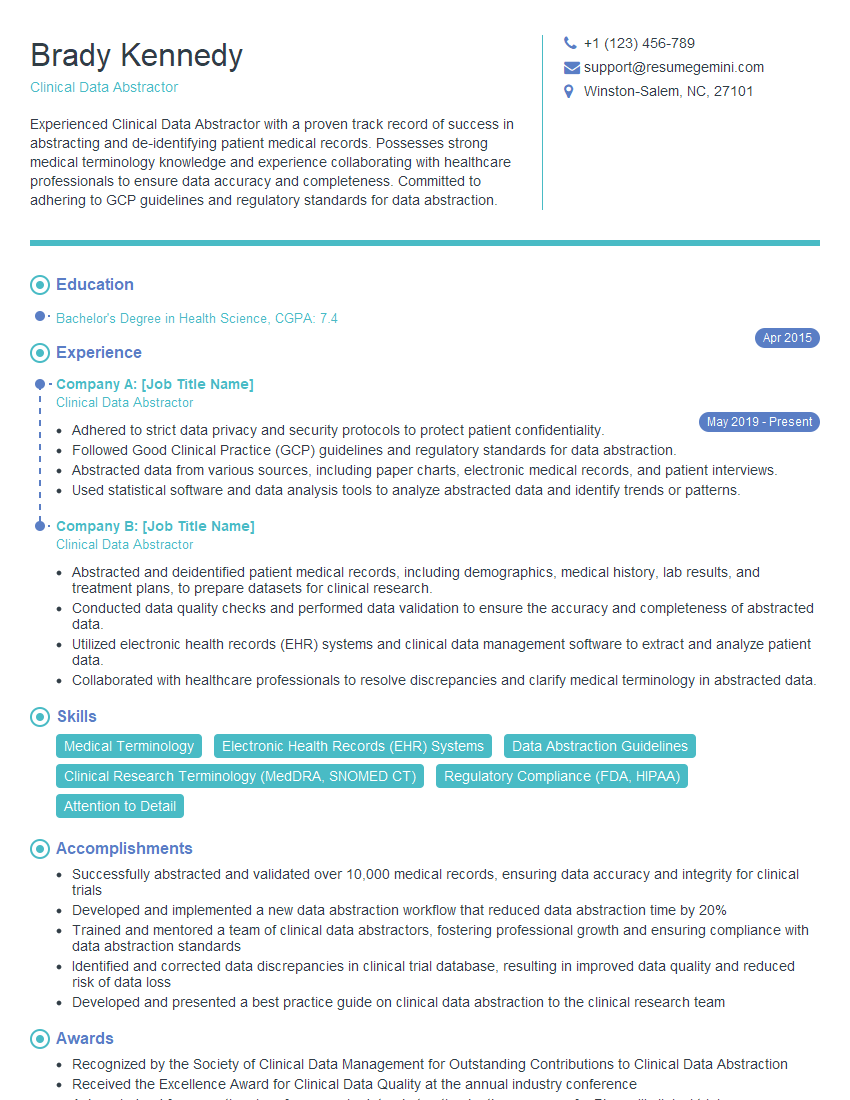
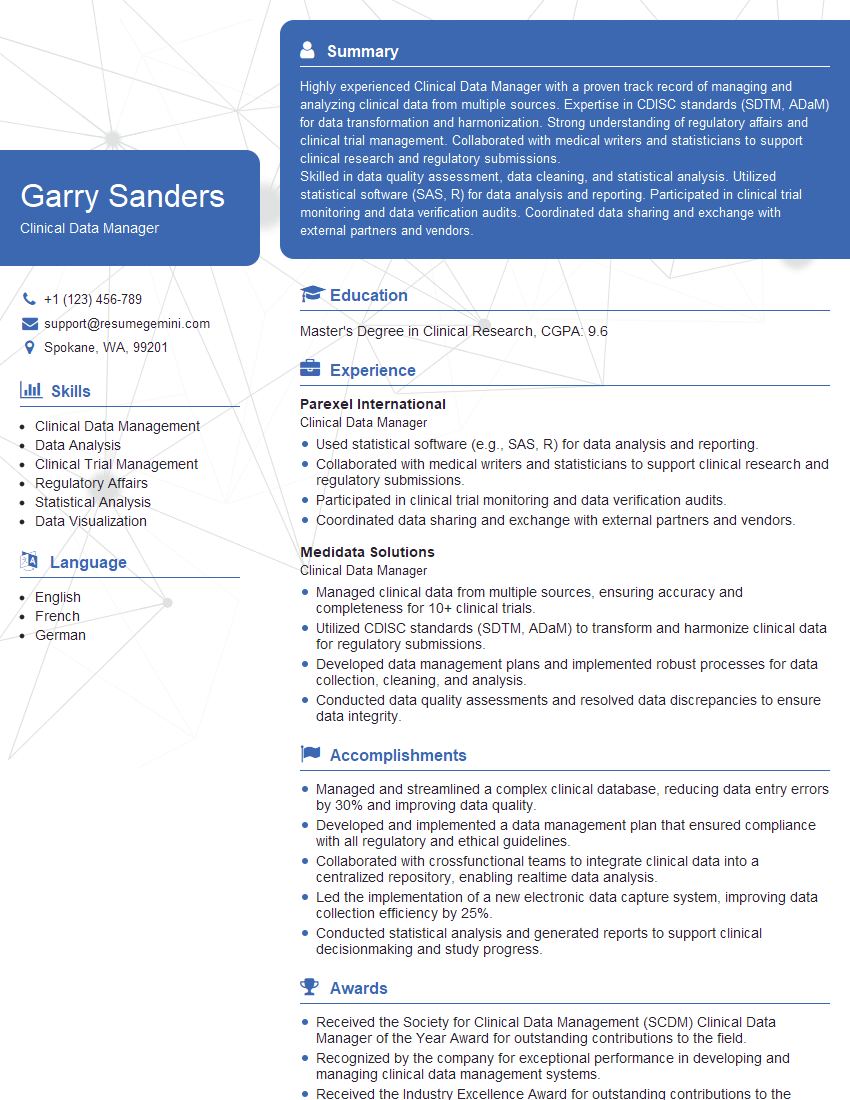
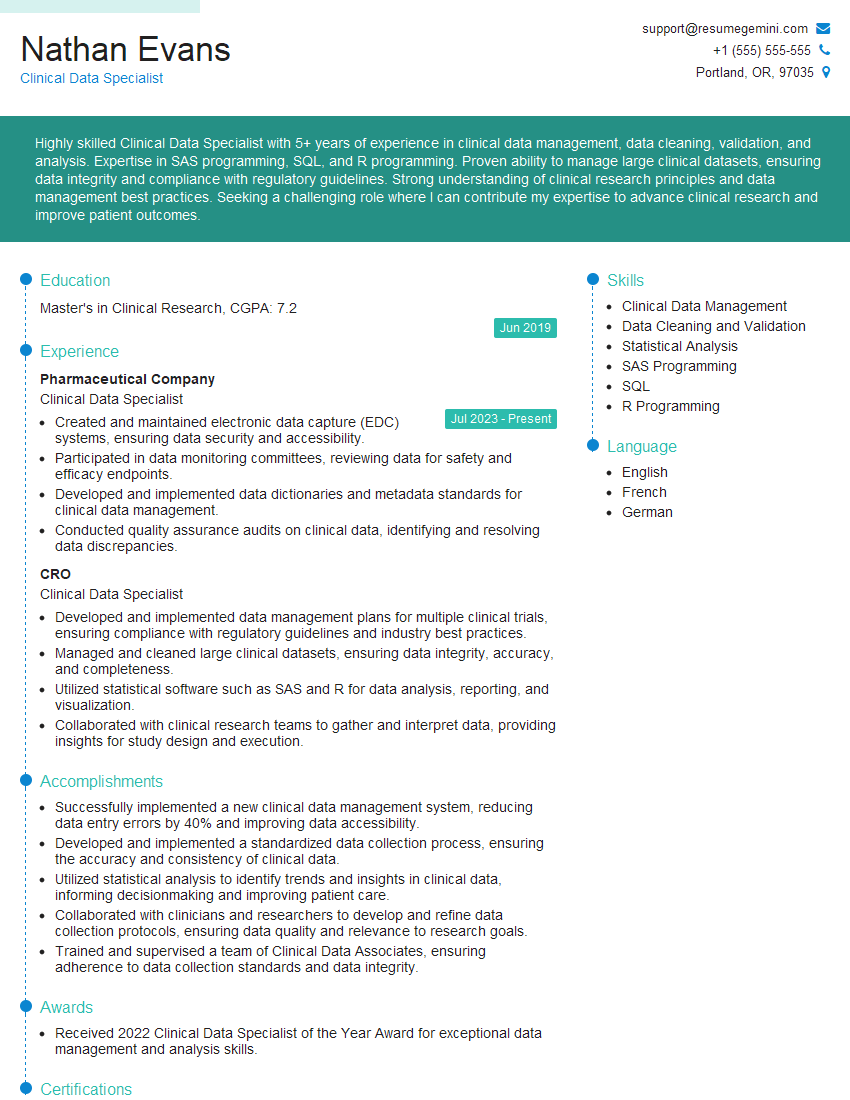
Mastering Healthcare Data Abstraction opens doors to exciting career opportunities in healthcare analytics, research, and quality improvement. It’s a highly sought-after skillset that significantly boosts your marketability and earning potential. To maximize your job prospects, crafting a strong, ATS-friendly resume is crucial. ResumeGemini is a trusted resource that can help you build a professional, impactful resume that showcases your skills and experience effectively. Examples of resumes tailored to Healthcare Data Abstraction are available, helping you present your qualifications in the best possible light.
Explore more articles
Users Rating of Our Blogs
Share Your Experience
We value your feedback! Please rate our content and share your thoughts (optional).
What Readers Say About Our Blog
Hello,
we currently offer a complimentary backlink and URL indexing test for search engine optimization professionals.
You can get complimentary indexing credits to test how link discovery works in practice.
No credit card is required and there is no recurring fee.
You can find details here:
https://wikipedia-backlinks.com/indexing/
Regards
NICE RESPONSE TO Q & A
hi
The aim of this message is regarding an unclaimed deposit of a deceased nationale that bears the same name as you. You are not relate to him as there are millions of people answering the names across around the world. But i will use my position to influence the release of the deposit to you for our mutual benefit.
Respond for full details and how to claim the deposit. This is 100% risk free. Send hello to my email id: [email protected]
Luka Chachibaialuka
Hey interviewgemini.com, just wanted to follow up on my last email.
We just launched Call the Monster, an parenting app that lets you summon friendly ‘monsters’ kids actually listen to.
We’re also running a giveaway for everyone who downloads the app. Since it’s brand new, there aren’t many users yet, which means you’ve got a much better chance of winning some great prizes.
You can check it out here: https://bit.ly/callamonsterapp
Or follow us on Instagram: https://www.instagram.com/callamonsterapp
Thanks,
Ryan
CEO – Call the Monster App
Hey interviewgemini.com, I saw your website and love your approach.
I just want this to look like spam email, but want to share something important to you. We just launched Call the Monster, a parenting app that lets you summon friendly ‘monsters’ kids actually listen to.
Parents are loving it for calming chaos before bedtime. Thought you might want to try it: https://bit.ly/callamonsterapp or just follow our fun monster lore on Instagram: https://www.instagram.com/callamonsterapp
Thanks,
Ryan
CEO – Call A Monster APP
To the interviewgemini.com Owner.
Dear interviewgemini.com Webmaster!
Hi interviewgemini.com Webmaster!
Dear interviewgemini.com Webmaster!
excellent
Hello,
We found issues with your domain’s email setup that may be sending your messages to spam or blocking them completely. InboxShield Mini shows you how to fix it in minutes — no tech skills required.
Scan your domain now for details: https://inboxshield-mini.com/
— Adam @ InboxShield Mini
Reply STOP to unsubscribe
Hi, are you owner of interviewgemini.com? What if I told you I could help you find extra time in your schedule, reconnect with leads you didn’t even realize you missed, and bring in more “I want to work with you” conversations, without increasing your ad spend or hiring a full-time employee?
All with a flexible, budget-friendly service that could easily pay for itself. Sounds good?
Would it be nice to jump on a quick 10-minute call so I can show you exactly how we make this work?
Best,
Hapei
Marketing Director
Hey, I know you’re the owner of interviewgemini.com. I’ll be quick.
Fundraising for your business is tough and time-consuming. We make it easier by guaranteeing two private investor meetings each month, for six months. No demos, no pitch events – just direct introductions to active investors matched to your startup.
If youR17;re raising, this could help you build real momentum. Want me to send more info?
Hi, I represent an SEO company that specialises in getting you AI citations and higher rankings on Google. I’d like to offer you a 100% free SEO audit for your website. Would you be interested?
Hi, I represent an SEO company that specialises in getting you AI citations and higher rankings on Google. I’d like to offer you a 100% free SEO audit for your website. Would you be interested?
good