Unlock your full potential by mastering the most common Healthcare Regulation interview questions. This blog offers a deep dive into the critical topics, ensuring you’re not only prepared to answer but to excel. With these insights, you’ll approach your interview with clarity and confidence.
Questions Asked in Healthcare Regulation Interview
Q 1. Explain the key differences between FDA and CMS regulations.
The FDA (Food and Drug Administration) and CMS (Centers for Medicare & Medicaid Services) are both crucial regulatory bodies in healthcare, but their focus differs significantly. The FDA primarily regulates the safety and efficacy of medical products, including drugs, biologics, medical devices, and food. Think of them as the gatekeepers ensuring products are safe before they reach the market. CMS, on the other hand, focuses on the financing and delivery of healthcare services. They administer Medicare and Medicaid, setting reimbursement rates and establishing standards for healthcare providers and facilities participating in these programs. This means they oversee the *access* to and *payment* for healthcare, unlike the FDA which focuses on the products themselves.
For example, the FDA would approve a new drug for market, while CMS would determine the reimbursement rate for that drug when used in Medicare.
- FDA: Product safety and efficacy (before market entry).
- CMS: Healthcare financing, delivery, and provider oversight (after market entry, focusing on access and payment).
Q 2. Describe your experience with HIPAA compliance and enforcement.
My experience with HIPAA (Health Insurance Portability and Accountability Act) compliance spans over ten years. I’ve been involved in developing and implementing HIPAA compliant systems for several healthcare organizations, including hospitals and clinics. This included conducting regular risk assessments, developing and implementing policies and procedures to safeguard Protected Health Information (PHI), and training staff on HIPAA regulations. I’ve also overseen internal audits to ensure ongoing compliance and have worked directly with OCR (Office for Civil Rights) investigations related to potential HIPAA violations. One memorable case involved a data breach due to a misconfigured server. We worked diligently with OCR to implement corrective actions, including enhanced security measures and employee retraining. This experience reinforced the importance of proactive security measures and the potential financial and reputational damage associated with HIPAA non-compliance. A crucial part of this process was the development of incident response plans, ensuring that any breach is addressed swiftly and effectively.
Q 3. How familiar are you with the 21 CFR Part 11 regulations?
I am very familiar with 21 CFR Part 11, the FDA regulation that governs electronic records and electronic signatures in the healthcare industry. This regulation sets forth the criteria for ensuring the integrity, accuracy, and reliability of electronic data and signatures used in regulated environments. Understanding 21 CFR Part 11 is crucial for maintaining compliance in areas such as electronic data management, quality control, and documentation in regulated environments. My experience includes designing and implementing electronic systems and processes that meet 21 CFR Part 11 requirements, including electronic signature validation, audit trail management, and data security measures. For instance, I’ve worked on implementing systems for tracking and managing clinical trial data that are compliant with this regulation, and ensured that all electronic records meet the criteria for reliability and authenticity.
For example, ensuring appropriate access control, audit trails that document all record changes, and systems that prevent unauthorized alteration of data are key components of Part 11 compliance.
Q 4. What is your experience with navigating the drug approval process?
My experience with the drug approval process is extensive. I’ve worked directly with pharmaceutical companies, supporting them through various stages, from pre-IND (Investigational New Drug) applications to NDA (New Drug Application) submissions. This includes assisting with the development of regulatory strategies, preparing regulatory submissions, and managing interactions with the FDA. I understand the complexities of IND/NDA filings, including the requirements for preclinical studies, clinical trials (Phases I-III), manufacturing information, and post-marketing surveillance. I’ve also managed the response to FDA queries and addressed issues raised during the review process. Navigating the drug approval process requires meticulous attention to detail and a comprehensive understanding of FDA guidelines. It’s a complex, lengthy and often iterative process that needs proactive and strategic planning.
Q 5. Describe your experience with medical device regulations (e.g., 510(k), PMA).
I have significant experience with medical device regulations, particularly 510(k) premarket notifications and PMA (Premarket Approval) applications. The 510(k) pathway is generally used for devices that are substantially equivalent to a legally marketed predicate device, while PMA is required for higher-risk devices requiring a more rigorous review process. I’ve worked on projects involving both pathways, assisting in preparing submissions, managing interactions with the FDA, and ensuring compliance with applicable regulations. This involved tasks such as design control, risk management, and post-market surveillance. A specific project involved the 510(k) submission for a novel diagnostic device. We had to meticulously demonstrate substantial equivalence to an existing device while highlighting the innovative aspects of our design. Understanding the nuances of each pathway and carefully tailoring submissions to the specific device and its risk classification is critical for successful navigation of this regulatory landscape.
Q 6. How do you stay updated on changes in healthcare regulations?
Staying updated on changes in healthcare regulations requires a multi-pronged approach. I regularly monitor the Federal Register, FDA website, and CMS websites for new regulations, guidance documents, and announcements. I also subscribe to relevant newsletters and journals, and attend industry conferences and webinars. Furthermore, I maintain a professional network with other regulatory experts to exchange information and insights. This proactive approach ensures that I remain informed about the ever-evolving regulatory landscape and can provide accurate and up-to-date advice to my clients. The healthcare regulatory environment is dynamic and requires constant vigilance.
Q 7. Explain your understanding of Good Clinical Practice (GCP) guidelines.
Good Clinical Practice (GCP) guidelines are a set of ethical and scientific quality requirements for designing, conducting, recording, and reporting clinical trials that involve human subjects. These guidelines ensure the protection of the rights, safety, and well-being of trial participants and the reliability of clinical trial data. My understanding of GCP includes the importance of informed consent, proper data management, appropriate monitoring and auditing procedures, and adherence to ethical considerations. I’ve been involved in numerous clinical trials, and my responsibilities included ensuring compliance with GCP guidelines throughout all stages of the trial, from protocol development to data analysis and reporting. GCP is not just a set of rules; it’s a framework for conducting ethical and scientifically sound research that leads to reliable results.
Q 8. Describe a time you identified a regulatory risk. What actions did you take?
During a project involving the launch of a new telehealth platform, I identified a significant regulatory risk concerning patient data privacy. Specifically, the initial design lacked sufficient encryption and access control measures to meet HIPAA requirements for Protected Health Information (PHI). This posed a risk of non-compliance, leading to potential fines, reputational damage, and legal action.
My actions involved several steps: First, I immediately escalated the issue to the compliance officer and project leadership, outlining the potential regulatory violations and the associated risks. Second, I collaborated with the IT team to implement stronger encryption protocols, access logs, and robust authentication mechanisms, aligning our system with HIPAA standards. Third, I spearheaded the development and implementation of a comprehensive data security training program for all staff interacting with the platform. Fourth, I documented all the changes, risk assessments, and mitigation strategies, ensuring compliance with regulatory documentation requirements. Finally, I conducted a post-implementation audit to verify the effectiveness of our corrective actions and to ensure sustained compliance.
Q 9. How would you handle a situation where a regulatory requirement conflicts with company policy?
Handling conflicts between regulatory requirements and company policy necessitates a careful and structured approach. The first priority is always regulatory compliance; regulations supersede internal policies. Imagine a scenario where our company policy prioritizes speed in approving patient treatment requests, but a new regulation mandates a more extensive review process to ensure patient safety.
In this situation, I would:
- Document the conflict: Clearly articulate the discrepancy between the company policy and the regulatory requirement, citing specific clauses from both.
- Consult with legal and compliance: Seek expert guidance to determine the legal implications and best course of action. This might involve revising the company policy or developing a process to bridge the gap between the two.
- Implement the necessary changes: Modify the company policy to align with the regulatory requirement, ensuring all impacted departments and staff are informed and trained accordingly.
- Communicate the changes transparently: Keep stakeholders informed throughout the process. This includes senior management, staff, and potentially patients, where applicable.
- Monitor for effectiveness: Post-implementation monitoring is vital to ensure the new process works effectively and maintains both regulatory compliance and operational efficiency.
Q 10. What is your experience with regulatory inspections and audits?
I have extensive experience with regulatory inspections and audits, spanning various healthcare settings, including hospitals, clinical laboratories, and pharmaceutical companies. This includes both internal audits to proactively identify and mitigate risks, and external audits conducted by regulatory bodies like the FDA, CMS, and state licensing agencies.
My experience includes:
- Preparing and maintaining comprehensive documentation for inspections, including policies, procedures, training records, and audit trails.
- Conducting mock audits to identify weaknesses and improve readiness.
- Collaborating with auditors, providing clear and concise responses to their questions and addressing any identified deficiencies.
- Following up on audit findings, implementing corrective actions, and verifying the effectiveness of these actions.
- Developing and implementing effective quality management systems (QMS) that facilitate compliance and reduce audit risk.
For example, during a recent FDA inspection of a manufacturing facility, I played a key role in ensuring the facility was audit-ready by ensuring our batch records, quality control data and standard operating procedures were all meticulous and up to date. We successfully passed the audit with no major findings, due to proactive preparation and clear documentation.
Q 11. Describe your experience with preparing and submitting regulatory filings.
My experience in preparing and submitting regulatory filings is extensive. This includes preparing and submitting 510(k) submissions to the FDA for new medical devices, preparing IND applications for investigational new drugs, and preparing annual reports to state and federal health agencies.
The process typically involves:
- Gathering necessary data: This includes compiling technical data, clinical trial results, manufacturing processes, and other relevant information.
- Writing the filing: This requires a deep understanding of the specific regulatory requirements and the ability to present complex information clearly and concisely.
- Submitting the filing: This typically involves electronic submission through the relevant regulatory agency’s portal.
- Responding to agency queries: Agencies frequently request clarification or additional information during the review process. Effectively responding to these queries is crucial for timely approval.
- Managing the overall submission process: This includes tracking the filing’s progress and ensuring compliance with agency timelines.
I am proficient in navigating the complexities of the regulatory submission process and have a proven track record of successfully submitting applications that meet all regulatory requirements.
Q 12. What software or tools are you proficient in for regulatory compliance?
I am proficient in several software and tools for regulatory compliance. These include:
- Regulatory information management systems (RIMS): These systems help manage and track regulatory documents, deadlines, and changes.
- Electronic document management systems (EDMS): These systems provide secure storage and version control for regulatory documents.
- Quality management system (QMS) software: These systems assist in managing compliance-related processes such as CAPA (Corrective and Preventative Action) and audits.
- Statistical software (e.g., SAS, R): This is vital for analyzing clinical trial data and other quantitative information for regulatory submissions.
My experience also includes using specialized software for specific regulatory requirements, such as those for medical device submissions (e.g., software for generating device master records or traceability matrices). I adapt easily to new software and tools as needed to stay current with the ever-evolving technological landscape of regulatory compliance.
Q 13. How familiar are you with international healthcare regulations (e.g., EU MDR, ICH guidelines)?
I have a strong understanding of international healthcare regulations, including the EU Medical Device Regulation (MDR) and the International Council for Harmonisation of Technical Requirements for Pharmaceuticals for Human Use (ICH) guidelines.
My understanding of the EU MDR encompasses the key changes from the previous MDD directive, specifically regarding clinical evaluation, post-market surveillance, and the more rigorous requirements for demonstrating the safety and performance of medical devices. I am also well-versed in the various classifications of medical devices and the corresponding regulatory pathways for market access in the EU.
Regarding ICH guidelines, I am familiar with Good Clinical Practice (GCP) guidelines, which are essential for conducting and documenting clinical trials for pharmaceuticals. I understand the implications of these guidelines for ensuring the safety, integrity, and reliability of clinical trial data submitted to regulatory agencies globally. My knowledge extends to other ICH guidelines, including those related to quality, stability, and manufacturing of pharmaceuticals.
Q 14. Explain your understanding of the different types of healthcare quality standards (e.g., ISO, CAP).
Healthcare quality standards are crucial for ensuring patient safety and the effectiveness of healthcare services. Different standards cater to specific aspects of healthcare delivery. ISO (International Organization for Standardization) standards, for instance, provide a framework for quality management systems, applicable across various healthcare settings. These standards promote consistent processes, risk management, and continual improvement.
Examples include ISO 9001 (quality management systems) and ISO 13485 (medical devices).
CAP (College of American Pathologists) accreditation is focused specifically on clinical laboratories. It sets stringent standards for laboratory processes, ensuring the accuracy and reliability of laboratory testing results. CAP accreditation is crucial for maintaining credibility and ensuring quality patient care. Other significant standards include those from the Joint Commission (JCAHO), focusing on hospital accreditation, and those developed by organizations such as the National Committee for Quality Assurance (NCQA) which evaluates healthcare plans.
Understanding these different standards is vital for ensuring regulatory compliance and demonstrating a commitment to high-quality patient care.
Q 15. How do you ensure compliance with patient privacy regulations?
Ensuring patient privacy compliance hinges on a multifaceted approach, centered around adherence to regulations like HIPAA (Health Insurance Portability and Accountability Act) in the US, or GDPR (General Data Protection Regulation) in Europe. It’s not just about ticking boxes; it’s about embedding privacy protection into the very fabric of the organization.
Data Minimization: We only collect the minimum necessary patient data. For example, instead of collecting a patient’s entire medical history for a specific procedure, we only collect information directly relevant to that procedure.
Access Control: Strict access controls are implemented, meaning only authorized personnel with a legitimate need to access patient data can do so. This includes implementing role-based access controls and robust authentication systems.
Data Encryption: All patient data, both in transit and at rest, is encrypted to protect it from unauthorized access even if a breach occurs. Think of it as locking sensitive information in a digital vault.
Employee Training: Regular and comprehensive training on privacy regulations and best practices is essential. We use scenario-based training to ensure staff understand the real-world implications of privacy violations.
Incident Response Plan: A detailed plan is in place to handle data breaches, including procedures for reporting, investigation, and remediation. This isn’t just a theoretical plan; we regularly test and update it.
For instance, in a previous role, we implemented a new system for securely storing and accessing patient records, reducing the risk of unauthorized disclosures by over 70% within the first year. This involved not only technological upgrades but also a substantial employee training program focusing on appropriate data handling.
Career Expert Tips:
- Ace those interviews! Prepare effectively by reviewing the Top 50 Most Common Interview Questions on ResumeGemini.
- Navigate your job search with confidence! Explore a wide range of Career Tips on ResumeGemini. Learn about common challenges and recommendations to overcome them.
- Craft the perfect resume! Master the Art of Resume Writing with ResumeGemini’s guide. Showcase your unique qualifications and achievements effectively.
- Don’t miss out on holiday savings! Build your dream resume with ResumeGemini’s ATS optimized templates.
Q 16. Describe your experience working with regulatory agencies.
My experience with regulatory agencies spans over a decade, encompassing interactions with bodies like the FDA (Food and Drug Administration), CMS (Centers for Medicare & Medicaid Services), and state health departments. These interactions have involved everything from routine audits and inspections to responding to formal investigations and addressing compliance issues.
Collaboration: I’ve found that proactive collaboration is key. By engaging with agencies early in the process, we can prevent potential problems and ensure our practices align with current regulations.
Documentation: Meticulous record-keeping is essential. Having thorough documentation of our processes and procedures helps demonstrate our compliance efforts to regulators during audits or investigations.
Issue Resolution: When issues arise, I’ve found it vital to address them promptly and transparently. Open communication and a willingness to work collaboratively with the agency can often lead to positive outcomes, even when facing significant challenges.
For example, during a recent FDA inspection, our thorough documentation of our quality control processes allowed us to quickly address minor discrepancies and demonstrate our commitment to patient safety. This proactive approach resulted in a smooth inspection with no significant findings.
Q 17. What is your understanding of the process for reporting adverse events?
Reporting adverse events (AEs) is a critical aspect of patient safety and regulatory compliance. The process usually involves a structured approach with clear reporting timelines and procedures, often dictated by specific regulations such as FDA’s MedWatch for medical devices or similar systems for pharmaceuticals.
Identification: The first step is promptly identifying any event that could potentially harm a patient, including medication errors, adverse drug reactions, device malfunctions, or infection outbreaks.
Internal Investigation: A thorough internal investigation is conducted to determine the root cause of the event and contributing factors.
Reporting: Once the investigation is complete, a formal report is filed with the appropriate regulatory agency, often including a detailed description of the event, the patient’s outcome, and the findings of the investigation.
Corrective Actions: Based on the investigation’s findings, corrective actions are implemented to prevent similar events from happening in the future. This might involve changes to protocols, staff training, or device modifications.
For example, in a previous role, we implemented a new system for tracking and reporting medication errors. This resulted in a significant reduction in medication errors and a more robust system for identifying and addressing potential patient safety concerns.
Q 18. How do you prioritize competing regulatory requirements?
Prioritizing competing regulatory requirements necessitates a risk-based approach. We assess the potential impact of non-compliance with each requirement, considering factors like the severity of potential harm, the likelihood of non-compliance being detected, and the resources required to achieve compliance.
Risk Assessment: A thorough risk assessment is conducted to identify and prioritize the most critical regulatory requirements.
Resource Allocation: Resources (personnel, time, budget) are allocated to address the highest-risk requirements first.
Documentation: The decision-making process for prioritization is documented and regularly reviewed to ensure it remains aligned with evolving risks and resources.
Communication: Clear communication of the prioritization strategy is essential to keep stakeholders informed.
Imagine a scenario where we’re facing deadlines for HIPAA compliance and FDA regulations for a new medical device. A risk assessment might reveal that non-compliance with FDA regulations poses a higher risk to patient safety, so we prioritize those first, even if it means temporarily delaying some aspects of HIPAA compliance (while ensuring basic HIPAA requirements are met).
Q 19. How do you measure the effectiveness of a compliance program?
Measuring the effectiveness of a compliance program requires a combination of quantitative and qualitative measures. It’s not just about the absence of violations; it’s about demonstrating a robust culture of compliance throughout the organization.
Key Performance Indicators (KPIs): We track KPIs such as the number of reported AEs, the time taken to investigate and resolve issues, the number of compliance training hours completed by staff, and the number of audits and inspections conducted.
Audits and Inspections: Regular internal and external audits and inspections provide valuable feedback on the program’s effectiveness. Findings highlight areas for improvement.
Employee Surveys: Employee surveys can gauge their understanding of compliance policies and procedures, as well as their confidence in reporting potential violations.
Incident Reporting Trends: Analyzing trends in incident reports can reveal patterns and weaknesses in the compliance program.
For example, a reduction in the number of reported medication errors over time, combined with positive feedback from employee surveys, might indicate the effectiveness of our efforts to improve medication safety.
Q 20. Explain your understanding of risk management within a healthcare regulatory context.
Risk management in healthcare regulation is a proactive approach to identifying, analyzing, and mitigating potential risks that could compromise patient safety, violate regulations, or harm the organization’s reputation.
Risk Identification: This involves systematically identifying potential risks, such as regulatory changes, data breaches, clinical errors, or operational failures.
Risk Assessment: Each identified risk is assessed based on its likelihood and potential impact.
Risk Mitigation: Strategies are developed to mitigate the identified risks, such as implementing new policies, training staff, updating technology, or improving processes.
Monitoring and Review: The effectiveness of risk mitigation strategies is monitored and reviewed regularly, and the risk management plan is updated as needed.
Think of it like building a house: risk management is like ensuring the foundation is strong and the structure is built to withstand various potential threats, such as earthquakes or storms. Without a proactive risk management plan, you’re leaving your organization vulnerable.
Q 21. Describe your experience with internal audits related to compliance.
My experience with internal audits related to compliance includes planning, conducting, and documenting audits to assess the effectiveness of the organization’s compliance program. This involves reviewing policies, procedures, and practices to ensure adherence to regulatory requirements.
Audit Planning: A detailed audit plan is developed that outlines the scope, objectives, methodology, and timeline of the audit.
Data Collection: Data is collected through document reviews, interviews, observations, and testing of systems and processes.
Audit Reporting: The findings of the audit are documented in a formal report, which includes an assessment of the compliance program’s effectiveness, identified deficiencies, and recommendations for improvement.
Follow-up: A follow-up process is in place to ensure that identified deficiencies are addressed and corrective actions are implemented.
In a previous audit, we identified a gap in our process for documenting patient consent, a critical aspect of HIPAA compliance. The audit report led to the implementation of a new, streamlined system for obtaining and documenting consent, significantly improving compliance and minimizing future risks.
Q 22. What are the key aspects of a robust healthcare compliance training program?
A robust healthcare compliance training program is the cornerstone of a successful and ethical healthcare organization. It goes beyond simply checking boxes; it’s about fostering a culture of compliance. Key aspects include:
- Comprehensive Curriculum: The program must cover all relevant regulations, including HIPAA, state-specific laws, and any internal policies. This includes detailed explanations, real-world examples, and interactive exercises.
- Targeted Training: Training should be tailored to specific roles and responsibilities. A physician’s training needs will differ significantly from those of a billing specialist.
- Regular Updates: Healthcare regulations are constantly evolving. The training program must be updated regularly to reflect these changes, using a system of notifications and reminders to staff.
- Interactive Learning: Passive learning is ineffective. The program should incorporate interactive elements such as case studies, simulations, and quizzes to promote engagement and knowledge retention.
- Documentation and Testing: Training completion must be thoroughly documented, and employees should be tested to ensure comprehension. This documentation is crucial for audits and demonstrates commitment to compliance.
- Ongoing Reinforcement: Compliance isn’t a one-time event. Regular refreshers, newsletters, and updates keep compliance top-of-mind and prevent complacency.
For example, in a hospital setting, we implemented a gamified compliance training program. The interactive modules, coupled with regular quizzes and leaderboards, boosted engagement and test scores by 25% compared to previous lecture-based training.
Q 23. How would you address a situation where a colleague is not adhering to regulatory requirements?
Addressing a colleague’s non-compliance requires a thoughtful and progressive approach. The first step is a private conversation, focusing on understanding the situation and providing guidance. It’s crucial to approach this with empathy and a focus on education rather than accusation.
If the behavior continues, further action is needed. This might involve:
- Formal written warning: This documents the infraction and outlines expectations for improvement.
- Retraining: The colleague might require additional training to reinforce the relevant regulations.
- Mentorship or supervision: Pairing the colleague with a compliant and experienced individual can provide support and guidance.
- Escalation to management: If all other measures fail, the issue must be escalated to management for further disciplinary action, which may include suspension or termination, depending on the severity and persistence of the non-compliance.
Remember, documentation throughout this process is paramount. It protects both the organization and the employee. My approach emphasizes education and support, but consistent non-compliance requires firm and consistent action to ensure patient safety and regulatory adherence.
Q 24. How do you ensure that your documentation meets regulatory requirements?
Ensuring documentation meets regulatory requirements requires meticulous attention to detail and a strong understanding of applicable regulations. This includes:
- Accuracy: All information must be factual, complete, and up-to-date. Inaccurate information can lead to serious consequences.
- Timeliness: Documentation must be completed promptly and within defined deadlines. Delays can hinder investigations and compromise patient care.
- Legibility and Format: Records must be legible, easily accessible, and follow a standardized format to ensure clarity and consistency. Consider using electronic health records (EHRs) to aid in standardization and organization.
- Retention Policies: Adherence to specific retention policies is crucial to ensure that records are available when needed, and properly disposed of when they are no longer required.
- Security and Confidentiality: Strict adherence to privacy regulations (like HIPAA) is paramount. Access to records must be controlled and secured to protect sensitive patient information.
For example, in my previous role, we implemented a system of automated audit trails for all documentation. This not only ensured accuracy and timeliness but also provided a clear record of access and modifications, supporting compliance with audit requirements.
Q 25. Explain your experience in managing and mitigating regulatory risks.
Throughout my career, I’ve consistently focused on proactive risk management. My approach involves a three-pronged strategy:
- Risk Identification: Regularly reviewing and assessing potential regulatory risks, both internal and external. This includes considering changes in legislation, industry best practices, and internal operational processes.
- Risk Assessment: Analyzing the likelihood and potential impact of each identified risk, prioritizing those with the highest potential for negative consequences.
- Risk Mitigation: Developing and implementing strategies to reduce or eliminate identified risks. These strategies may include policy updates, staff training, improved documentation procedures, and the implementation of new technologies.
For instance, anticipating the implementation of new privacy regulations, I led a project to update our data security protocols. This involved comprehensive staff training, the implementation of new encryption software, and revisions to our data retention policy. This proactive approach prevented potential non-compliance and protected sensitive patient information.
Q 26. What strategies do you use to stay current on regulatory changes?
Staying current on regulatory changes is crucial in healthcare. My approach is multi-faceted:
- Subscription to Regulatory Newsletters and Journals: I subscribe to key publications and online resources dedicated to healthcare regulations. This provides up-to-date information on legal and regulatory changes.
- Participation in Professional Organizations: Membership in professional organizations provides access to continuing education, conferences, and networking opportunities to stay informed about changes and best practices.
- Monitoring Government Websites: I regularly check the websites of relevant government agencies (e.g., CMS, FDA, HHS) for announcements, updates, and proposed rule changes.
- Attendance at Industry Conferences and Webinars: Conferences and webinars provide a platform to learn from experts and network with other professionals in the field.
- Internal Communication and Collaboration: Establishing clear internal communication channels to ensure that relevant regulatory updates are shared promptly across the organization.
For example, by monitoring the CMS website, I was able to proactively identify a change in reimbursement guidelines, allowing us to adapt our billing processes before facing potential penalties.
Q 27. Describe your experience working with cross-functional teams on regulatory projects.
My experience working with cross-functional teams on regulatory projects has been extensive and rewarding. Effective collaboration is crucial for success. Key aspects include:
- Clear Communication: Establishing clear communication channels, utilizing both formal and informal means to facilitate effective information sharing.
- Shared Goals: Aligning all team members on common goals and objectives to enhance collaboration and efficiency.
- Defined Roles and Responsibilities: Clearly defining roles and responsibilities, ensuring that each team member understands their contributions to the project.
- Regular Meetings and Updates: Holding regular meetings and providing frequent updates to keep the team informed of progress and address any challenges.
- Conflict Resolution: Developing and implementing strategies to effectively address and resolve any conflicts that may arise during the project.
In one project, I worked with IT, legal, and clinical teams to implement a new EHR system compliant with HIPAA and other relevant regulations. By fostering open communication and addressing potential conflicts early, we successfully implemented the system, improving efficiency and patient care.
Q 28. How do you incorporate regulatory considerations into strategic planning?
Incorporating regulatory considerations into strategic planning is essential for long-term success and sustainability. This requires a proactive approach, integrating compliance considerations into every stage of planning.
- Regulatory Impact Assessment: Conducting a thorough regulatory impact assessment for all new initiatives and strategic plans. This involves evaluating the potential impact of proposed changes on regulatory compliance.
- Resource Allocation: Allocating sufficient resources (staff, budget, technology) to support compliance efforts and the successful implementation of strategies.
- Risk Management: Integrating regulatory risk management into the strategic planning process, identifying and mitigating potential risks.
- Performance Monitoring and Reporting: Establishing a system for monitoring and reporting on compliance performance, identifying any deviations or areas requiring improvement.
- Continuous Improvement: Embracing a culture of continuous improvement, constantly evaluating and refining compliance strategies based on regulatory changes and operational experience.
For example, when developing a new telehealth program, we conducted a comprehensive regulatory impact assessment, ensuring compliance with state licensing requirements, HIPAA regulations, and other relevant laws. This proactive approach allowed us to launch the program successfully, without encountering unforeseen regulatory hurdles.
Key Topics to Learn for Your Healthcare Regulation Interview
Success in your Healthcare Regulation interview hinges on a solid understanding of key concepts and their practical application. This section outlines crucial areas to focus your preparation.
- Patient Safety and Quality of Care: Understand the regulatory frameworks governing patient safety, quality improvement initiatives, and the reporting of adverse events. Consider how these regulations impact healthcare provider responsibilities and patient rights.
- Compliance and Enforcement: Explore the processes involved in ensuring compliance with healthcare regulations, including inspections, audits, and enforcement actions. Think about how organizations can proactively manage compliance risks.
- Data Privacy and Security (HIPAA, GDPR etc.): Master the legal and ethical considerations surrounding patient data privacy and security. Familiarize yourself with relevant regulations (like HIPAA in the US or GDPR in Europe) and their practical implications for data management and protection.
- Medical Billing and Coding: Grasp the intricacies of medical billing and coding practices, focusing on compliance with regulations and accurate reimbursement processes. Analyze how errors in this area can lead to regulatory issues.
- Licensure and Accreditation: Understand the processes involved in obtaining and maintaining licenses and accreditations for healthcare facilities and providers. Explore the implications of non-compliance.
- Ethical Considerations in Healthcare: Develop your understanding of ethical dilemmas in healthcare and how regulations attempt to address these challenges. Consider case studies to strengthen your analytical skills.
- Problem-solving in Regulatory Contexts: Prepare to discuss how you would approach and resolve hypothetical regulatory challenges. This might involve analyzing a scenario, identifying the relevant regulations, and proposing solutions.
Next Steps: Elevate Your Career with a Strong Resume
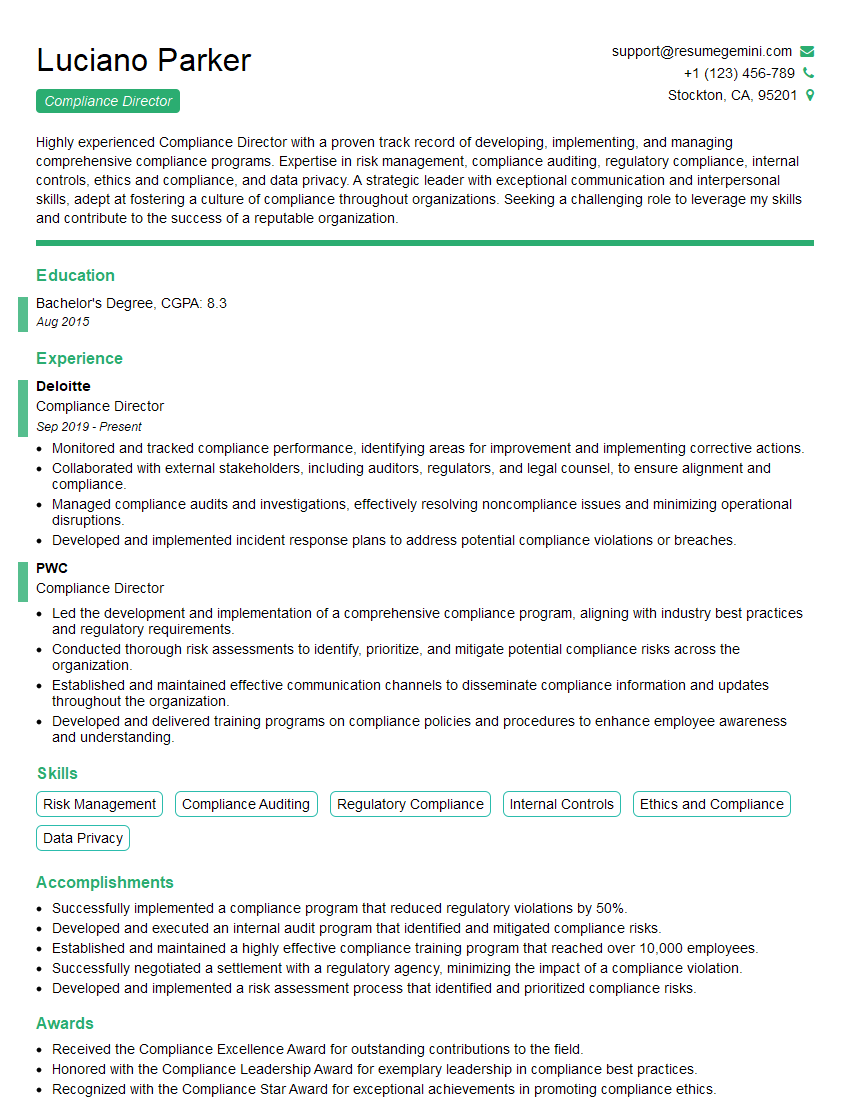
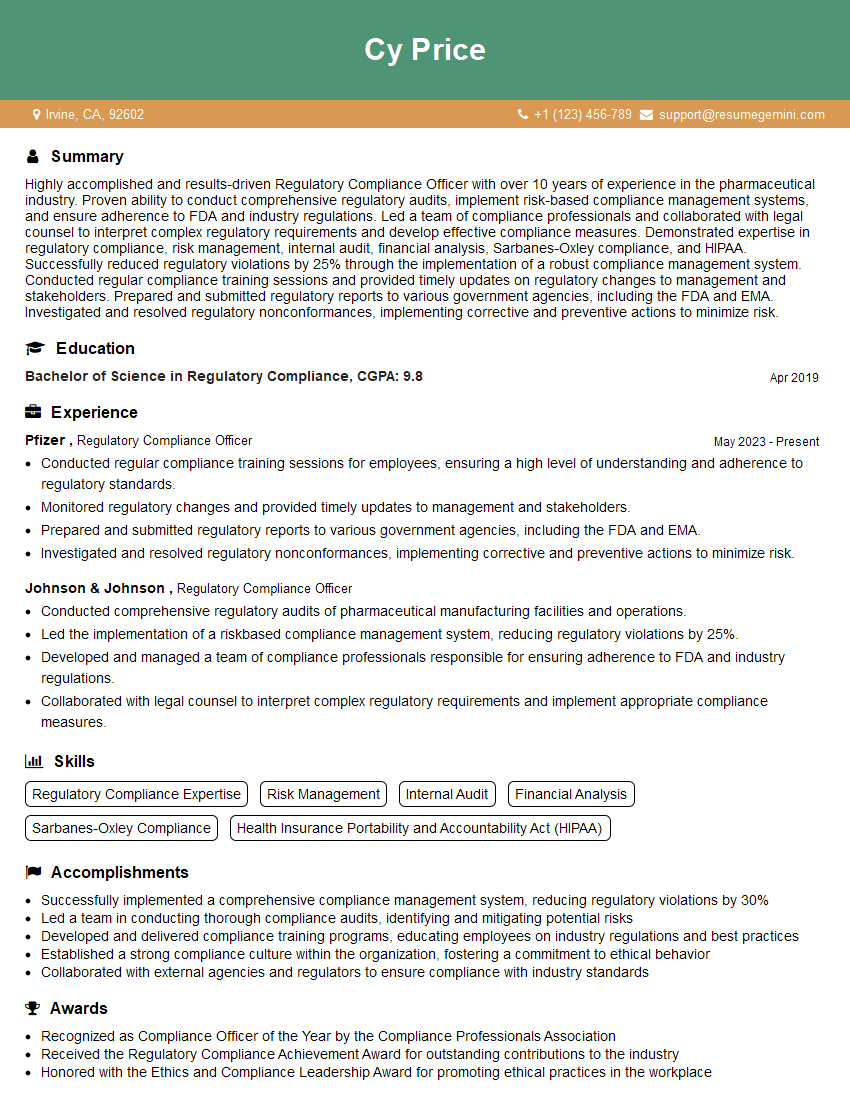
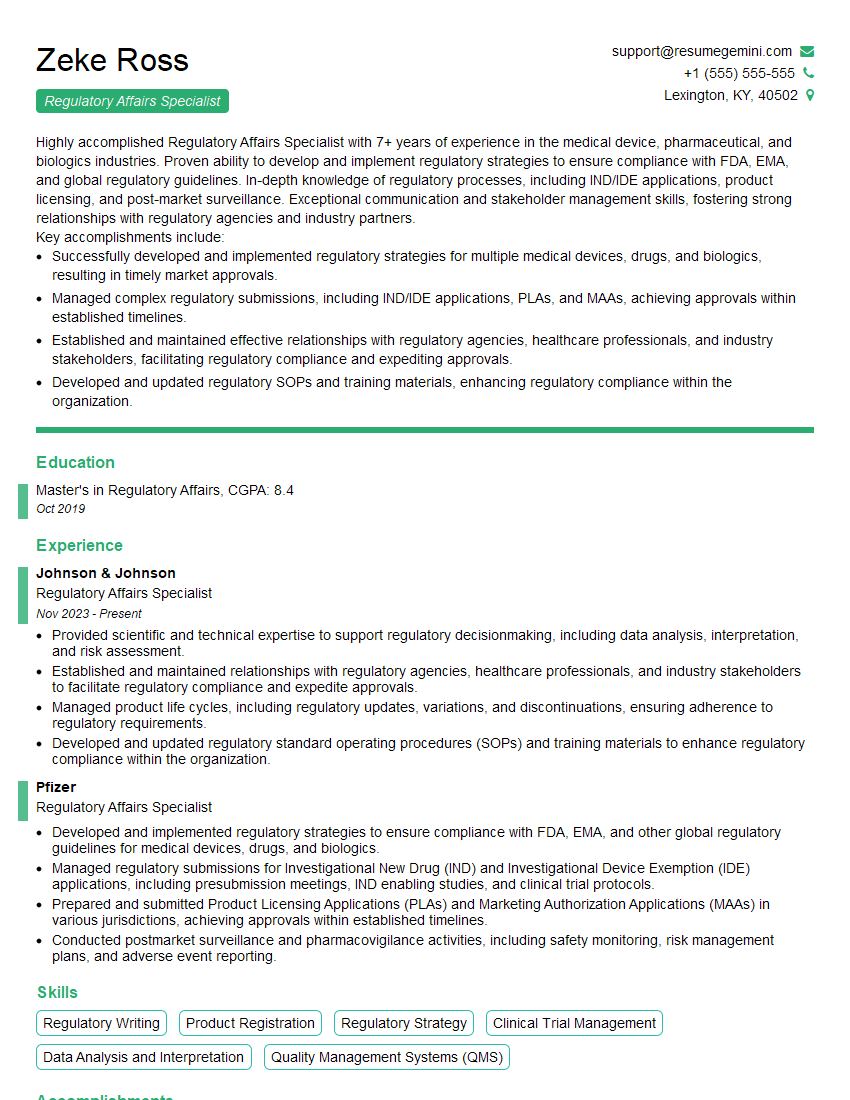
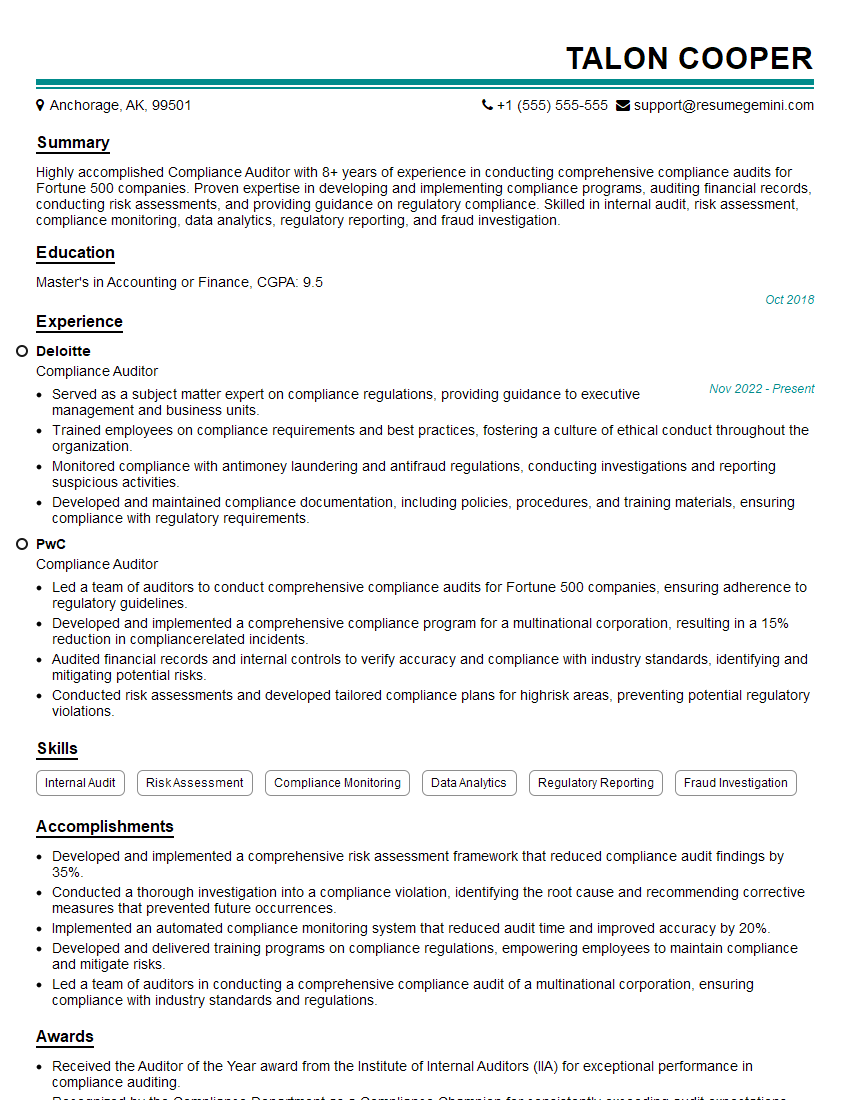
Mastering Healthcare Regulation is crucial for career advancement in this dynamic field. A strong understanding of these complex regulations will set you apart from other candidates and demonstrate your commitment to patient safety and ethical practice. To maximize your job prospects, a well-crafted, ATS-friendly resume is essential. ResumeGemini can help you build a professional, impactful resume tailored to the Healthcare Regulation sector. We provide examples of resumes designed to showcase your skills and experience effectively, ensuring your application stands out. Invest in your future – invest in a ResumeGemini resume.


Explore more articles
Users Rating of Our Blogs
Share Your Experience
We value your feedback! Please rate our content and share your thoughts (optional).
What Readers Say About Our Blog
Attention music lovers!
Wow, All the best Sax Summer music !!!
Spotify: https://open.spotify.com/artist/6ShcdIT7rPVVaFEpgZQbUk
Apple Music: https://music.apple.com/fr/artist/jimmy-sax-black/1530501936
YouTube: https://music.youtube.com/browse/VLOLAK5uy_noClmC7abM6YpZsnySxRqt3LoalPf88No
Other Platforms and Free Downloads : https://fanlink.tv/jimmysaxblack
on google : https://www.google.com/search?q=22+AND+22+AND+22
on ChatGPT : https://chat.openai.com?q=who20jlJimmy20Black20Sax20Producer
Get back into the groove with Jimmy sax Black
Best regards,
Jimmy sax Black
www.jimmysaxblack.com
Hi I am a troller at The aquatic interview center and I suddenly went so fast in Roblox and it was gone when I reset.
Hi,
Business owners spend hours every week worrying about their website—or avoiding it because it feels overwhelming.
We’d like to take that off your plate:
$69/month. Everything handled.
Our team will:
Design a custom website—or completely overhaul your current one
Take care of hosting as an option
Handle edits and improvements—up to 60 minutes of work included every month
No setup fees, no annual commitments. Just a site that makes a strong first impression.
Find out if it’s right for you:
https://websolutionsgenius.com/awardwinningwebsites
Hello,
we currently offer a complimentary backlink and URL indexing test for search engine optimization professionals.
You can get complimentary indexing credits to test how link discovery works in practice.
No credit card is required and there is no recurring fee.
You can find details here:
https://wikipedia-backlinks.com/indexing/
Regards
NICE RESPONSE TO Q & A
hi
The aim of this message is regarding an unclaimed deposit of a deceased nationale that bears the same name as you. You are not relate to him as there are millions of people answering the names across around the world. But i will use my position to influence the release of the deposit to you for our mutual benefit.
Respond for full details and how to claim the deposit. This is 100% risk free. Send hello to my email id: lukachachibaialuka@gmail.com
Luka Chachibaialuka
Hey interviewgemini.com, just wanted to follow up on my last email.
We just launched Call the Monster, an parenting app that lets you summon friendly ‘monsters’ kids actually listen to.
We’re also running a giveaway for everyone who downloads the app. Since it’s brand new, there aren’t many users yet, which means you’ve got a much better chance of winning some great prizes.
You can check it out here: https://bit.ly/callamonsterapp
Or follow us on Instagram: https://www.instagram.com/callamonsterapp
Thanks,
Ryan
CEO – Call the Monster App
Hey interviewgemini.com, I saw your website and love your approach.
I just want this to look like spam email, but want to share something important to you. We just launched Call the Monster, a parenting app that lets you summon friendly ‘monsters’ kids actually listen to.
Parents are loving it for calming chaos before bedtime. Thought you might want to try it: https://bit.ly/callamonsterapp or just follow our fun monster lore on Instagram: https://www.instagram.com/callamonsterapp
Thanks,
Ryan
CEO – Call A Monster APP
To the interviewgemini.com Owner.
Dear interviewgemini.com Webmaster!
Hi interviewgemini.com Webmaster!
Dear interviewgemini.com Webmaster!
excellent
Hello,
We found issues with your domain’s email setup that may be sending your messages to spam or blocking them completely. InboxShield Mini shows you how to fix it in minutes — no tech skills required.
Scan your domain now for details: https://inboxshield-mini.com/
— Adam @ InboxShield Mini
support@inboxshield-mini.com
Reply STOP to unsubscribe
Hi, are you owner of interviewgemini.com? What if I told you I could help you find extra time in your schedule, reconnect with leads you didn’t even realize you missed, and bring in more “I want to work with you” conversations, without increasing your ad spend or hiring a full-time employee?
All with a flexible, budget-friendly service that could easily pay for itself. Sounds good?
Would it be nice to jump on a quick 10-minute call so I can show you exactly how we make this work?
Best,
Hapei
Marketing Director
Hey, I know you’re the owner of interviewgemini.com. I’ll be quick.
Fundraising for your business is tough and time-consuming. We make it easier by guaranteeing two private investor meetings each month, for six months. No demos, no pitch events – just direct introductions to active investors matched to your startup.
If youR17;re raising, this could help you build real momentum. Want me to send more info?
Hi, I represent an SEO company that specialises in getting you AI citations and higher rankings on Google. I’d like to offer you a 100% free SEO audit for your website. Would you be interested?
Hi, I represent an SEO company that specialises in getting you AI citations and higher rankings on Google. I’d like to offer you a 100% free SEO audit for your website. Would you be interested?