The right preparation can turn an interview into an opportunity to showcase your expertise. This guide to Hitting and Pitching Instruction interview questions is your ultimate resource, providing key insights and tips to help you ace your responses and stand out as a top candidate.
Questions Asked in Hitting and Pitching Instruction Interview
Q 1. Explain the difference between a topspin and backspin fastball.
The difference between a topspin and backspin fastball lies in the way the ball rotates and how that affects its movement after release. Think of it like throwing a frisbee; a topspin frisbee will dip more sharply at the end of its flight, while a backspin frisbee will have a flatter trajectory.
A topspin fastball rotates forward, causing it to drop more dramatically than a standard fastball. This makes it appear to ‘sink’ or ‘dive’ down just before reaching the plate, making it difficult for hitters to make solid contact. This movement is caused by a slightly upward angle on the release and a firm grip resulting in a spin axis that rotates towards the hitter.
A backspin fastball, conversely, rotates backward. This results in less drop and often a slight rise in its trajectory, creating an illusion of movement that can also fool batters. The pitcher achieves this by throwing with a more horizontal release and a firmer grip, promoting a spin axis that rotates away from the batter. The ‘rise’ is more of an optical illusion due to the lack of expected drop.
Both pitches rely on deception and precise control. The key difference is in the resulting movement and the subtle adjustments in the pitcher’s mechanics to achieve that specific type of spin.
Q 2. Describe three common hitting mechanics flaws and how to correct them.
Three common hitting flaws are: casting, early extension, and uppercut swing.
- Casting: This occurs when the hitter throws their hands at the ball, losing control and power. It often leads to weak contact and inconsistent results. Think of it like trying to throw a dart without a proper arm swing – accuracy and power are compromised. Correction: Focus on a smooth, controlled swing, initiating the movement from the lower body, transferring energy efficiently through the core and arms.
- Early Extension: Here, the hitter reaches for the ball too soon, compromising their balance and power generation. Imagine trying to punch someone but extending your arm before your body fully moves. It’s weak and less effective. Correction: Emphasize maintaining a good body posture and allowing the body to drive the bat through the hitting zone. Use drills that emphasize maintaining a compact swing until contact.
- Uppercut Swing: An uppercut swing is characterized by a steep upward swing path, leading to pop-ups and weak ground balls. It reduces bat speed, limits solid contact, and increases the likelihood of hitting below the sweet spot. Correction: Work on creating a level swing path by focusing on hitting through the baseball, not over it. Drills with tee work and soft toss can help develop a more consistent path.
Correcting these flaws requires diligent practice, video analysis, and often the guidance of a qualified hitting coach. Consistent work on the fundamentals is key.
Q 3. How do you assess a hitter’s swing path?
Assessing a hitter’s swing path involves analyzing several aspects of their swing, primarily using video analysis and observation. Key things to look for are:
- Starting position: Is the stance balanced and athletic? Is the weight properly distributed?
- Load and stride: Is the hitter using a proper weight shift and stride to generate power? Is it consistent?
- Swing plane: This refers to the angle of the bat’s path through the zone. Is it level, or is there an uppercut or downswing?
- Bat path through the zone: How does the bat travel through the strike zone? Is it on a consistent plane? Is the hitter making solid contact?
- Follow-through: Where does the bat finish its swing? A proper follow-through shows efficient energy transfer.
By carefully analyzing these elements, we can identify inefficiencies and suggest adjustments to improve their swing and effectiveness.
Q 4. What are the key elements of a proper pitching grip?
A proper pitching grip is crucial for command, velocity, and movement. The key elements include:
- Finger placement: The index and middle fingers should be placed on the seams of the baseball, creating a firm grip. The exact placement varies depending on the desired pitch type.
- Pressure: The grip should be firm but not overly tight. Too much pressure can affect the release and reduce accuracy and velocity.
- Hand position: The hand position, including wrist angle and position of the thumb, significantly influences spin rate and pitch trajectory. This varies based on the pitch.
- Seam alignment: Aligning fingers with seams helps the pitcher maximize spin rate and control the trajectory of the pitch.
Teaching proper grip is usually done through trial and error, combined with feedback and video analysis. The pitcher needs to feel comfortable and confident with their grip before they can focus on other aspects of their delivery.
Q 5. How do you teach a hitter to adjust to different pitching styles?
Teaching a hitter to adjust to different pitching styles involves understanding the types of pitches and their movements. Then, we can adapt their approach accordingly.
- Visual Recognition: Hitters need to improve their ability to quickly identify the type of pitch – fastball, curveball, slider, etc. – This is developed through repetition and focused practice.
- Swing Adjustments: Different pitches require different swing adjustments. For example, a fastball might require a more direct swing, while a curveball could need a slight adjustment in timing and swing path to compensate for its movement.
- Mental Approach: Hitters should develop a mental approach that allows them to remain calm, focused, and adapt quickly to changing situations, such as the pitcher’s change of pace or pitching style.
- Practice with varied pitching styles: Exposure to various pitching styles during batting practice is paramount for adaptation. This can involve machine pitching, bullpen sessions with different pitchers, and video analysis.
Ultimately, it’s about developing a hitter’s ability to read the pitch, recognize subtle clues, and make quick adjustments during their swing to maximize their chances of hitting.
Q 6. Explain the importance of proper warm-up routines for hitters and pitchers.
Proper warm-up routines are crucial for preventing injuries and optimizing performance for both hitters and pitchers.
Hitters: A good warm-up should include light cardio to increase blood flow, dynamic stretching to improve flexibility and range of motion, and soft toss or tee work to prepare the swing mechanics. This gradually increases the intensity and prepares the muscles for the demands of the game. Skipping warm-ups increases the risk of pulled muscles and reduces bat speed.
Pitchers: Pitchers need a thorough warm-up to prepare their arm and shoulder for the stress of throwing. This involves long toss to increase blood flow and arm strength, followed by specific drills for their individual pitches. Failure to warm-up properly puts pitchers at significant risk of injury – particularly to the rotator cuff and elbow.
Both hitters and pitchers should have a routine tailored to their individual needs and gradually increasing in intensity, leading to peak performance.
Q 7. Describe your approach to developing a player’s mental game.
Developing a player’s mental game is equally, if not more, important than their physical skills. My approach involves:
- Building confidence: This is the foundation. I work to identify and address any self-doubt or negative self-talk. Success builds confidence; I use drills and training that allows them to experience success and build their self-belief.
- Focus and concentration: I teach techniques for improving focus and concentration, such as mindfulness exercises and visualization. This improves performance under pressure and reduces distractions.
- Resilience: Facing setbacks is inevitable. I help players develop resilience to bounce back from failure. This involves recognizing the importance of learning from mistakes, adjusting the approach, and maintaining a positive attitude.
- Pressure management: Learning to manage pressure is crucial. I use simulations of high-pressure situations during training and introduce coping mechanisms such as deep breathing and positive self-talk.
The mental game is often overlooked, but it significantly influences performance. A player with a strong mental game will consistently outperform a player with superior physical skills but a weak mental game.
Q 8. How do you identify and address a pitcher’s arm slot issues?
Identifying and addressing a pitcher’s arm slot issues requires a systematic approach combining observation, video analysis, and hands-on assessment. The arm slot, the point where the ball is released, significantly impacts velocity, movement, and command. An inconsistent or inefficient arm slot often leads to decreased effectiveness and increased risk of injury.
Identification: I begin by observing the pitcher during their throwing motion. I look for inconsistencies in the release point—does the arm slot change from pitch to pitch? Is it consistently high, low, or across the body? Video analysis helps quantify these observations, enabling precise measurements and frame-by-frame breakdown. I also assess the pitcher’s mechanics: Does their arm path create an optimal trajectory for the ball? Is there excessive effort or strain? Finally, I’ll analyze the resulting pitch movement and location. A flawed arm slot frequently manifests as inconsistent ball movement or poor command.
Addressing the issue: Once identified, correcting an arm slot requires a gradual approach, focusing on fundamental mechanics. We might work on improving posture, strengthening core muscles (essential for rotational power and stability), refining the arm path through drills targeting specific movement patterns, and building a stronger base for the delivery. I emphasize proper body sequencing, ensuring the pitcher’s body works as a coordinated unit rather than just relying on arm strength. Small adjustments, meticulously monitored via video, are key. We might start with minor tweaks to the stride, footwork, or trunk rotation to subtly influence the arm slot. Progress is monitored continuously, adjusting the approach as needed.
Q 9. What are the benefits of using video analysis in hitting and pitching instruction?
Video analysis is revolutionary in hitting and pitching instruction. It provides objective, quantifiable data that surpasses subjective observation. For hitters, it allows for precise measurement of swing path, bat angle, and contact point, all critical for consistent hard contact. For pitchers, it unveils intricacies of their mechanics, like arm slot consistency, release point, stride length, and overall body movement. This precision enables targeted improvements.
Benefits:
- Objective Feedback: Replaces guesswork with concrete data. A hitter might think they’re making solid contact, but video might reveal a flaw in their swing path.
- Improved Communication: Allows for clear and concise communication between coach and athlete. Showing the athlete a video of their shortcomings is far more impactful than simply describing the problem.
- Progress Tracking: Video allows you to track progress over time. This can be extremely motivating for the athlete, especially when they see tangible improvement.
- Injury Prevention: Identifying subtle mechanical flaws that could lead to injury is crucial, and video analysis enables early detection and correction.
Example: A hitter consistently hits weak ground balls. Video analysis might reveal a late swing, causing them to hit the ball on the bottom half. We can then address this with drills to improve timing and bat path.
Q 10. How do you tailor your coaching style to different age groups and skill levels?
Tailoring coaching styles to different age groups and skill levels is crucial for effective instruction. Younger athletes require a more playful, engaging approach focusing on fundamental skills and building a love for the game. Older, more experienced athletes benefit from more nuanced, technical instruction, and often benefit from personalized training plans.
Younger Athletes (e.g., 8-12 years old): The emphasis is on fun, games, and building a solid foundation. Drills are kept short, engaging, and varied to maintain focus. Positive reinforcement and encouragement are paramount. The focus is on developing fundamental movement skills, coordination, and a basic understanding of the game. Technical details are introduced gradually, and complexity is avoided.
Older Athletes (e.g., High School and beyond): Instruction becomes more specialized and technical. Video analysis plays a more significant role. More advanced training techniques, including strength and conditioning programs specific to hitting and pitching, are incorporated. The athlete’s individual strengths and weaknesses are meticulously analyzed, and training plans are customized to target specific areas for improvement. Mental aspects of the game, like managing pressure and developing game strategy, are emphasized.
Skill Level: Regardless of age, I adapt my approach to each athlete’s skill level. Beginners require more detailed explanations and demonstrations of basic skills, while advanced athletes might benefit from specialized drills focusing on advanced techniques and strategies.
Q 11. Explain the different types of pitching grips and their applications.
Pitching grips are crucial for controlling a pitch’s movement and velocity. Even minor adjustments significantly impact a pitch’s trajectory and effectiveness.
Fastball Grip: The four-seam grip involves all four fingers across the seams, providing maximum velocity and minimal movement. The two-seam grip, placing two fingers along a seam, produces more movement but slightly less velocity.
Curveball Grip: A curveball relies on a specific spin to achieve its downward break. This is achieved by gripping the ball with fingers across the seams, typically using the index and middle finger to apply backspin.
Slider Grip: Often resembling a fastball grip with a slight adjustment, the slider uses a firm grip with pressure on the sides of the ball to achieve horizontal movement.
Changeup Grip: The changeup aims to deceive the hitter by mimicking a fastball’s release, while significantly reducing speed. Pitchers often use a softer grip, sometimes incorporating a fingertip grip, creating less pressure on the ball than a fastball.
Application: Each grip’s application depends on the pitcher’s skill level and the desired effect on the batter. Teaching the correct grip is just the first step; consistent practice is crucial to mastering each pitch type. The application also includes the pitcher’s arm slot and overall mechanics, as the grip alone isn’t sufficient for effective pitch execution.
Q 12. How do you teach a hitter to make consistent contact with the ball?
Teaching consistent contact is the cornerstone of successful hitting. It hinges on precise mechanics, strong hand-eye coordination, and a consistent mental approach.
Fundamentals: I focus on building a solid foundation. This includes proper stance, weight transfer, hand placement, and swing path. Visual aids and drills are used to improve hand-eye coordination. For example, tee work helps develop timing and control. Soft toss drills improve the feel of the bat and the ability to make solid contact.
Swing Path: Consistent, direct contact requires a controlled swing path. Drills aiming to create an efficient swing path – one that gets the barrel through the zone effectively – are critical. We use video analysis to identify any deviation from the desired path. A hitter may be pulling the bat early or swinging too hard, leading to inconsistent contact.
Mental Approach: A calm, focused mindset is critical. Over-thinking can negatively impact performance. Visualization techniques and mindful hitting practices are employed to help develop confidence and mental consistency.
Progression: We progress from simple drills to more complex scenarios. From tee work, we move to soft toss, and finally to live pitching, gradually increasing the complexity of the training to improve consistent contact in game situations.
Q 13. What are the signs of overuse injuries in young pitchers, and how do you prevent them?
Overuse injuries are a significant concern for young pitchers. Identifying and preventing them requires vigilance and a comprehensive approach. Recognizing early warning signs is critical.
Signs of Overuse:
- Pain in the elbow or shoulder: This is the most common sign. Pain can be felt during throwing or even at rest.
- Decreased velocity or accuracy: A loss in velocity or inability to control the ball can be a sign of underlying issues.
- Fatigue: Persistent fatigue that doesn’t resolve with rest is a major red flag.
- Inflammation: Swelling around the elbow or shoulder joint.
- Changes in throwing mechanics: The pitcher might alter their mechanics to compensate for pain, further exacerbating the injury.
Prevention: Prevention strategies are key. These include:
- Pitch counts: Strictly adhering to age-appropriate pitch count guidelines is crucial to reduce the risk of overuse injuries.
- Rest and recovery: Sufficient rest between throwing sessions and overall rest days are critical.
- Proper mechanics: Proper throwing mechanics and coaching that ensures these mechanics are used consistently will reduce stress on joints.
- Strength and conditioning: A well-designed strength and conditioning program focusing on flexibility, core strength, and proper throwing mechanics strengthens muscles supporting the shoulder and elbow, making them more resilient to injury.
- Long-toss progressions: Using long-toss to increase arm strength gradually rather than suddenly increasing throwing distance.
If any of these signs appear, immediate rest and a professional medical assessment are necessary. Early intervention is crucial for preventing long-term problems.
Q 14. Describe your approach to strength and conditioning for hitters and pitchers.
Strength and conditioning for hitters and pitchers are distinct but equally important. They must be tailored to the specific demands of each position, focusing on preventing injuries and maximizing performance.
Hitters: Hitting requires explosive power, agility, and flexibility. A comprehensive program includes:
- Plyometrics: Exercises like box jumps and jump squats improve explosive power, crucial for hitting the ball hard.
- Strength Training: Focuses on strengthening muscles involved in the swing, including legs, core, back, and shoulders. Compound exercises like squats, deadlifts, and cleans are essential.
- Flexibility and Mobility: Maintaining flexibility and mobility in the hips, shoulders, and back improves range of motion and prevents injury.
Pitchers: Pitching demands rotational power, shoulder and elbow stability, and overall body control. Training should include:
- Rotational Strength: Exercises focusing on building the rotational power needed for pitching, like medicine ball throws and trunk rotations.
- Shoulder and Elbow Stability: Strengthening muscles surrounding the shoulder and elbow joints helps prevent injury and improve control. This includes exercises like internal and external rotations and scapular strengthening.
- Core Strength: A strong core is vital for balance, power, and injury prevention. Plank variations and other core exercises are essential.
- Flexibility: Shoulder and hip flexibility are essential for a smooth throwing motion.
Important Considerations: Both programs must be carefully designed to minimize the risk of injury. Progressive overload, gradually increasing intensity and volume over time, is paramount. Proper form and technique are always emphasized to prevent injuries. Regular monitoring of progress and adaptation of the program based on individual needs are critical for success and injury prevention.
Q 15. How do you assess a pitcher’s velocity and movement?
Assessing a pitcher’s velocity and movement involves a multifaceted approach. We use radar guns to accurately measure velocity, providing a quantitative measure of the pitch speed. However, velocity alone doesn’t tell the whole story. Movement is equally crucial. We analyze movement using high-speed cameras and video analysis software. This allows us to break down the pitch’s trajectory, observing its horizontal and vertical break, as well as its spin rate. The spin rate significantly impacts movement, influencing how much a pitch curves or drops. For example, a fastball with high spin will often have less movement than one with lower spin, even at the same velocity. We also consider the pitcher’s arm slot and release point, as these significantly affect the pitch’s trajectory and deception. The combination of velocity data and movement analysis provides a comprehensive picture of the pitch’s effectiveness.
For example, a pitcher might throw a 90 mph fastball with minimal movement, while another pitcher throws an 85 mph fastball with significant late movement. The latter pitch might be more effective despite the lower velocity because of its deception and difficulty to hit. This holistic analysis allows us to identify strengths and weaknesses and tailor training accordingly.
Career Expert Tips:
- Ace those interviews! Prepare effectively by reviewing the Top 50 Most Common Interview Questions on ResumeGemini.
- Navigate your job search with confidence! Explore a wide range of Career Tips on ResumeGemini. Learn about common challenges and recommendations to overcome them.
- Craft the perfect resume! Master the Art of Resume Writing with ResumeGemini’s guide. Showcase your unique qualifications and achievements effectively.
- Don’t miss out on holiday savings! Build your dream resume with ResumeGemini’s ATS optimized templates.
Q 16. How do you teach a hitter to recognize pitches?
Teaching a hitter to recognize pitches is a process that builds on visual acuity, timing, and anticipation. It’s about training their eyes and brain to process information quickly and accurately. We start by focusing on the pitcher’s release point. Minor changes in the release point often precede the type of pitch thrown. We’ll use video analysis to highlight these subtle differences. Then, we work on identifying grip pressure, arm angle, and the pitcher’s body mechanics. Each pitch will have a slightly different look from the release point through its trajectory. We use slow-motion video and drills with different pitch types. Hitters learn to anticipate the pitch type based on these visual cues, rather than waiting to see the ball leave the pitcher’s hand. We use a variety of drills, including live pitching, batting practice against different pitching styles, and video analysis of their own swings, focusing on their reaction times to different cues.
For instance, a changeup often has a similar arm action to a fastball but a different release point and slower velocity, which a trained hitter will pick up.
Q 17. How do you work with a hitter who struggles with consistent bat path?
Inconsistent bat path is a common issue. We address this through a combination of drills focusing on proper mechanics and consistent body movements. We begin with fundamental drills to establish a solid foundation. This often involves tee work to focus on proper swing mechanics and hand-eye coordination without the complexities of live pitching. We then progress to soft toss, allowing for more dynamic movement, and gradually introduce live pitching. Throughout the process, we’re analyzing the swing using high-speed cameras, identifying areas that deviate from optimal mechanics. We may employ weighted bats, which can help build strength and consistency in the swing path, or lighter bats, if the hitter is compensating for timing and strength issues. We break down the swing into different phases, focusing on the load, the stride, the swing, and the follow-through. Ensuring each phase is performed consistently is key to improving overall bat path.
For example, a common problem is an early extension of the front elbow which throws off the whole swing path. We’d work to fix this by focusing on maintaining a more consistent arm angle throughout the swing.
Q 18. How do you teach a pitcher to maintain proper mechanics under pressure?
Maintaining proper mechanics under pressure is a crucial skill for pitchers. This is not just about physical mechanics but also about mental preparation and resilience. We use a variety of techniques to train for this. We start with drills designed to simulate high-pressure situations. This might include pitching to hitters in a more competitive setting with more people watching, implementing game-like scenarios in practice. We also incorporate visualization techniques, helping pitchers mentally rehearse their mechanics and maintain composure under pressure. Understanding and controlling breathing patterns is crucial. We’ll practice deep breathing techniques to calm nerves and focus on control. Furthermore, we work on simplifying mechanics, ensuring that the pitcher’s delivery is efficient and repeatable, reducing the likelihood of errors under pressure. Finally, we develop coping strategies to manage anxiety and maintain focus, including practicing self-talk and positive affirmations.
For instance, we might start with long-toss under pressure to refine the consistency of their throwing motion in less-than-ideal conditions.
Q 19. What are some common hitting drills that you use?
I utilize a variety of hitting drills, tailored to the individual hitter’s needs. These include:
- Tee work: Focuses on proper swing mechanics, hand-eye coordination, and consistent contact.
- Soft toss: Improves bat path, hand-eye coordination, and rhythm.
- Front toss: Develops timing and quick hands.
- Dry swings: Enhances rhythm, timing, and muscle memory.
- Weighted ball drills: Increases strength and power.
- Live batting practice: Simulates game situations and tests the hitter’s ability to apply learned skills.
- Visual drills: Focus on watching the ball.
The selection of drills depends on the hitter’s strengths and weaknesses. For example, a hitter struggling with timing might spend more time on front toss and visual drills. A hitter lacking power could focus on weighted ball and dry swing drills.
Q 20. What are some common pitching drills that you use?
My pitching drills focus on developing control, consistency, and velocity, while avoiding injury. These include:
- Long toss: Improves arm strength, flexibility, and accuracy.
- Flat ground drills: Refines mechanics and release point.
- Bullpen sessions: Develops command and control in a game-like setting.
- Arm care exercises: Prevents injuries and promotes long-term health.
- Pitching mechanics drills: Focus on specific aspects of the delivery such as stride length, arm angle, and follow-through.
- Video analysis: Provides feedback on mechanics and allows for identification of areas for improvement.
We adjust the drills to the pitcher’s individual needs, such as focusing on a specific pitch type or improving velocity if needed. For example, a pitcher struggling with control might spend more time on flat-ground drills and mechanics.
Q 21. How do you incorporate technology into your hitting and pitching instruction?
Technology plays a significant role in modern hitting and pitching instruction. We utilize high-speed video analysis to capture minute details of a player’s swing or delivery. This allows us to pinpoint mechanical flaws and provide targeted feedback. We also use radar guns to accurately measure pitch velocity and spin rate. Motion capture technology offers a more comprehensive view of the movement patterns, further refining the analysis. Data-driven insights from these technologies provide quantitative support for qualitative observations, giving us a complete picture of the athlete’s performance. This technology helps us personalize training plans and track progress objectively. Players can also review this footage themselves to better understand their mechanics and make improvements independently.
For example, we might use software to track a hitter’s bat path, showing in detail where it deviates from an optimal path. For pitchers, we’d look at the spin rate and movement of each pitch, offering data-backed strategies for improvement.
Q 22. Explain your philosophy on player development.
My philosophy on player development centers around a holistic approach, focusing on the individual needs of each athlete. It’s not just about improving their hitting or pitching mechanics; it’s about building confidence, fostering a love for the game, and developing well-rounded individuals. I believe in a three-pronged approach:
- Technical Skill Development: This involves meticulous analysis of their mechanics, identifying areas for improvement, and implementing targeted drills to enhance their technique. For example, a pitcher struggling with control might benefit from drills focusing on their grip, arm slot, and follow-through.
- Mental Game Enhancement: A strong mental game is crucial. We work on strategies to manage pressure, build confidence, and develop a positive mindset both on and off the field. This might include visualization exercises, positive self-talk techniques, and strategies for handling setbacks.
- Physical Conditioning: Strength, flexibility, and endurance are vital for peak performance. We develop personalized training plans to improve their physical capabilities, ensuring they’re prepared to handle the physical demands of the sport. This might include strength training, plyometrics, and flexibility exercises tailored to their specific needs.
This integrated approach ensures that players develop not only as skilled athletes but also as confident, resilient individuals.
Q 23. How do you create a positive and supportive coaching environment?
Creating a positive and supportive coaching environment is paramount. I strive to foster an atmosphere of trust, respect, and open communication. This involves:
- Positive Reinforcement: I focus on celebrating successes, both big and small, and providing constructive feedback rather than solely focusing on mistakes. Positive reinforcement builds confidence and encourages effort.
- Individualized Attention: I recognize that every player is unique. I take the time to understand their strengths, weaknesses, and individual learning styles to tailor my coaching approach accordingly.
- Open Communication: I encourage open dialogue and create a safe space where players feel comfortable expressing their concerns, challenges, and ideas. Active listening is key to understanding their perspectives.
- Teamwork and Camaraderie: I encourage teamwork and cooperation among players, building a sense of camaraderie and mutual support.
By creating this environment, I aim to make learning enjoyable and engaging, promoting player growth both on and off the field.
Q 24. How do you handle conflicts or disagreements with players or parents?
Conflicts are inevitable. My approach centers around clear communication and collaborative problem-solving.
- Active Listening: I begin by actively listening to all parties involved, seeking to understand their perspectives without judgment.
- Empathy and Understanding: I try to understand the root cause of the conflict, considering the emotional aspects involved.
- Collaborative Solutions: I facilitate a discussion to find mutually acceptable solutions that address the concerns of everyone involved. I encourage compromise and collaboration.
- Setting Clear Expectations: In cases involving parents, I establish clear communication channels and expectations early on to prevent misunderstandings and potential conflicts.
The goal is not to win an argument but to resolve the issue fairly and effectively, preserving the positive learning environment.
Q 25. Describe a time you had to adapt your coaching strategy to address a specific player’s needs.
I once worked with a young pitcher who consistently struggled with his mechanics, leading to wild pitches and a lack of confidence. His arm action was overly complicated, hindering his control and velocity.
Initially, I tried to refine his existing motion, but it wasn’t yielding results. I realized I needed a different approach. I simplified his motion, focusing on a more fluid and natural delivery. We spent weeks working on drills that emphasized proper body positioning, arm slot, and a relaxed arm swing. We also incorporated visualization techniques to help him mentally prepare for his pitches. Slowly but surely, his control improved, and his confidence grew. His velocity eventually increased as well, once the mechanics were solid. The key was recognizing that my initial strategy wasn’t working and adapting to his specific needs and learning style. This experience reinforced the importance of flexibility and individualized coaching.
Q 26. How do you evaluate the effectiveness of your coaching methods?
Evaluating the effectiveness of my coaching methods is an ongoing process. I utilize several strategies:
- Performance Metrics: I track players’ performance data, such as batting averages, pitching statistics (ERA, strikeouts, walks), and other relevant metrics, to assess improvement over time.
- Player Feedback: I regularly seek feedback from players through informal discussions, surveys, and formal evaluations. This provides valuable insight into their learning experience and areas where I can improve my coaching.
- Video Analysis: I use video analysis to objectively assess players’ technique and identify areas for improvement. Comparing videos from the beginning and end of training shows the progression.
- Peer Review: I seek feedback from other coaches to gain a fresh perspective on my coaching methods and identify areas where I can learn and grow.
By using a combination of these methods, I can continually refine my approach, ensuring that my coaching is effective and impactful for each individual athlete.
Q 27. What are your long-term goals as a hitting and pitching instructor?
My long-term goals are multifaceted. I aim to continue to refine my skills as a hitting and pitching instructor, staying updated on the latest techniques and technologies in the field. I want to mentor and develop other coaches, sharing my expertise and knowledge to enhance the overall quality of instruction. Ultimately, my goal is to help athletes reach their full potential, both on and off the field, fostering a lifelong love for the game of baseball.
Key Topics to Learn for Hitting and Pitching Instruction Interview
- Hitting Mechanics: Understanding the kinetic chain, common hitting flaws (e.g., uppercut swing, early extension), and effective drills for improvement. Practical application: Developing personalized training plans addressing individual player needs.
- Pitching Mechanics: Analyzing pitching motion, understanding biomechanics, and identifying potential injury risks. Practical application: Designing pitching programs to enhance velocity, accuracy, and movement, while minimizing injury.
- Game Strategy & Situational Hitting/Pitching: Teaching players to adjust their approach based on game context, score, and opponent. Practical application: Developing in-game decision-making skills through drills and simulations.
- Player Development & Communication: Building rapport with athletes of varying skill levels, providing constructive feedback, and fostering a positive learning environment. Practical application: Utilizing different communication styles to effectively convey complex concepts.
- Advanced Hitting Concepts: Analyzing swing paths, launch angles, exit velocity, and their impact on batting performance. Practical application: Using technology (e.g., video analysis) to provide data-driven feedback.
- Advanced Pitching Concepts: Understanding pitch design, spin rate, and movement profiles. Practical application: Teaching advanced pitching techniques like changeups, curveballs, and sliders.
- Safety & Injury Prevention: Implementing safe training practices and recognizing potential injury risks in both hitting and pitching. Practical application: Designing injury prevention programs and identifying proper warm-up and cool-down routines.
- Coaching Philosophy & Methodology: Articulating your personal coaching philosophy and methodology, aligning with best practices in player development. Practical application: Demonstrating adaptability to different coaching styles and organizational structures.
Next Steps
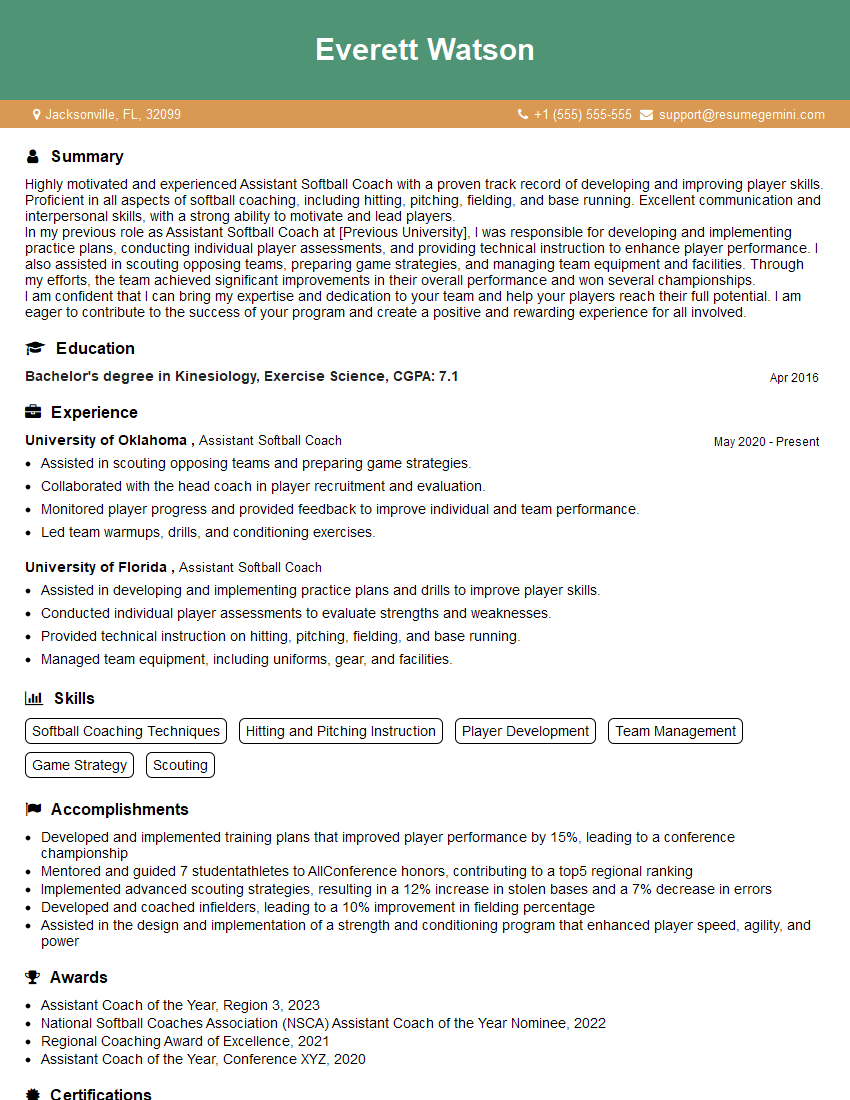
Mastering Hitting and Pitching Instruction is crucial for career advancement in the sports industry, opening doors to diverse roles and higher earning potential. A strong resume is your first impression – make it count! Create an ATS-friendly resume that highlights your skills and experience effectively. ResumeGemini is a trusted resource that can help you build a professional and impactful resume. They offer examples specifically tailored to Hitting and Pitching Instruction to give you a head start. Invest time in crafting a compelling resume; it’s your key to unlocking exciting career opportunities.

Explore more articles
Users Rating of Our Blogs
Share Your Experience
We value your feedback! Please rate our content and share your thoughts (optional).
What Readers Say About Our Blog
Attention music lovers!
Wow, All the best Sax Summer music !!!
Spotify: https://open.spotify.com/artist/6ShcdIT7rPVVaFEpgZQbUk
Apple Music: https://music.apple.com/fr/artist/jimmy-sax-black/1530501936
YouTube: https://music.youtube.com/browse/VLOLAK5uy_noClmC7abM6YpZsnySxRqt3LoalPf88No
Other Platforms and Free Downloads : https://fanlink.tv/jimmysaxblack
on google : https://www.google.com/search?q=22+AND+22+AND+22
on ChatGPT : https://chat.openai.com?q=who20jlJimmy20Black20Sax20Producer
Get back into the groove with Jimmy sax Black
Best regards,
Jimmy sax Black
www.jimmysaxblack.com
Hi I am a troller at The aquatic interview center and I suddenly went so fast in Roblox and it was gone when I reset.
Hi,
Business owners spend hours every week worrying about their website—or avoiding it because it feels overwhelming.
We’d like to take that off your plate:
$69/month. Everything handled.
Our team will:
Design a custom website—or completely overhaul your current one
Take care of hosting as an option
Handle edits and improvements—up to 60 minutes of work included every month
No setup fees, no annual commitments. Just a site that makes a strong first impression.
Find out if it’s right for you:
https://websolutionsgenius.com/awardwinningwebsites
Hello,
we currently offer a complimentary backlink and URL indexing test for search engine optimization professionals.
You can get complimentary indexing credits to test how link discovery works in practice.
No credit card is required and there is no recurring fee.
You can find details here:
https://wikipedia-backlinks.com/indexing/
Regards
NICE RESPONSE TO Q & A
hi
The aim of this message is regarding an unclaimed deposit of a deceased nationale that bears the same name as you. You are not relate to him as there are millions of people answering the names across around the world. But i will use my position to influence the release of the deposit to you for our mutual benefit.
Respond for full details and how to claim the deposit. This is 100% risk free. Send hello to my email id: lukachachibaialuka@gmail.com
Luka Chachibaialuka
Hey interviewgemini.com, just wanted to follow up on my last email.
We just launched Call the Monster, an parenting app that lets you summon friendly ‘monsters’ kids actually listen to.
We’re also running a giveaway for everyone who downloads the app. Since it’s brand new, there aren’t many users yet, which means you’ve got a much better chance of winning some great prizes.
You can check it out here: https://bit.ly/callamonsterapp
Or follow us on Instagram: https://www.instagram.com/callamonsterapp
Thanks,
Ryan
CEO – Call the Monster App
Hey interviewgemini.com, I saw your website and love your approach.
I just want this to look like spam email, but want to share something important to you. We just launched Call the Monster, a parenting app that lets you summon friendly ‘monsters’ kids actually listen to.
Parents are loving it for calming chaos before bedtime. Thought you might want to try it: https://bit.ly/callamonsterapp or just follow our fun monster lore on Instagram: https://www.instagram.com/callamonsterapp
Thanks,
Ryan
CEO – Call A Monster APP
To the interviewgemini.com Owner.
Dear interviewgemini.com Webmaster!
Hi interviewgemini.com Webmaster!
Dear interviewgemini.com Webmaster!
excellent
Hello,
We found issues with your domain’s email setup that may be sending your messages to spam or blocking them completely. InboxShield Mini shows you how to fix it in minutes — no tech skills required.
Scan your domain now for details: https://inboxshield-mini.com/
— Adam @ InboxShield Mini
support@inboxshield-mini.com
Reply STOP to unsubscribe
Hi, are you owner of interviewgemini.com? What if I told you I could help you find extra time in your schedule, reconnect with leads you didn’t even realize you missed, and bring in more “I want to work with you” conversations, without increasing your ad spend or hiring a full-time employee?
All with a flexible, budget-friendly service that could easily pay for itself. Sounds good?
Would it be nice to jump on a quick 10-minute call so I can show you exactly how we make this work?
Best,
Hapei
Marketing Director
Hey, I know you’re the owner of interviewgemini.com. I’ll be quick.
Fundraising for your business is tough and time-consuming. We make it easier by guaranteeing two private investor meetings each month, for six months. No demos, no pitch events – just direct introductions to active investors matched to your startup.
If youR17;re raising, this could help you build real momentum. Want me to send more info?
Hi, I represent an SEO company that specialises in getting you AI citations and higher rankings on Google. I’d like to offer you a 100% free SEO audit for your website. Would you be interested?
Hi, I represent an SEO company that specialises in getting you AI citations and higher rankings on Google. I’d like to offer you a 100% free SEO audit for your website. Would you be interested?