The right preparation can turn an interview into an opportunity to showcase your expertise. This guide to Horse Racing Regulations and Ethics interview questions is your ultimate resource, providing key insights and tips to help you ace your responses and stand out as a top candidate.
Questions Asked in Horse Racing Regulations and Ethics Interview
Q 1. Explain the difference between a foul and an interference in horse racing.
In horse racing, both fouls and interference involve contact or actions that impact another horse, but they differ in severity and intent. A foul is a more serious infraction, usually involving careless riding that jeopardizes the safety of other horses or riders. It often implies a level of recklessness or disregard for the rules. Think of it as a deliberate or negligent act that causes harm or significant disruption. An interference, on the other hand, is a less severe incident where contact occurs, but it may be accidental or unintentional. It might be a slight bump or jostling that doesn’t necessarily endanger other horses but still impacts their racing performance.
Example: A foul might be a jockey deliberately forcing their horse into another, causing a fall. An interference might be a slight brush of shoulders between two horses battling for position.
The distinction is crucial because the penalties differ significantly. Fouls often lead to more severe sanctions, including suspensions for the jockey or disqualification of the horse, while interference may result in a warning or a less severe penalty, depending on the severity of the impact.
Q 2. Describe the process for handling a suspected doping violation.
Suspected doping violations are taken extremely seriously and follow a rigorous process. First, a sample is collected from the horse post-race. This sample is then sent to a designated laboratory accredited by the relevant racing authority for testing. If the tests reveal prohibited substances, a formal investigation begins, involving interviews with the trainer, jockey, and stable staff. Evidence such as medication records, witness statements, and stable security footage are gathered. The investigation is overseen by an independent panel or stewards. The accused then has the opportunity to present their defense and provide any relevant evidence. The panel then reviews all the evidence and makes a determination. If found guilty, penalties are imposed, as outlined in the racing authority’s rules.
Q 3. What are the key provisions of the rule regarding whip use?
Rules regarding whip use aim to balance the need for jockeys to encourage their horses with the welfare of the animals. Key provisions typically include:
- Limitations on the number of times the whip can be used: A maximum number of allowed strikes is typically stipulated.
- Restrictions on where the whip can be used: Strikes to the horse’s hindquarters are often prohibited, focusing on the shoulder area.
- Limitations on the force of the whip: The rules might specify the force allowed, often prohibiting excessive or brutal use.
- Prohibition of excessive or abusive use: Rules explicitly prohibit the use of the whip in a way that is deemed cruel or inhumane.
Penalties for breaching whip rules can range from warnings and fines to suspensions for the jockey.
Q 4. How would you handle a dispute between jockeys regarding a finish line decision?
Disputes between jockeys regarding finish-line decisions are handled by the stewards’ panel. Jockeys involved in a close finish can lodge an objection with the stewards immediately after the race. The stewards review the photo finish, video replays, and listen to the statements of the involved jockeys and any witnesses. The stewards assess whether any rules were broken (foul or interference) and make a ruling based on evidence. Their decision is final. For instance, they might uphold the original order of finish, alter the order, or even disqualify a horse if a foul occurred.
Q 5. Outline the penalties for a trainer found guilty of illegal medication use.
Penalties for trainers found guilty of illegal medication use are severe and can include:
- Fines: Substantial financial penalties.
- Suspensions: Periods of time where the trainer is banned from training.
- License revocation: Permanent loss of training license.
- Disqualification of horses: Any horses trained by the guilty party involved in the offense may be disqualified from races.
- Criminal charges: In some cases, depending on the severity of the offense, criminal charges might be pursued.
The penalties will depend on factors like the type of medication used, intent, and the trainer’s past record.
Q 6. Explain the role of the stewards’ panel in ensuring fair racing.
The stewards’ panel plays a pivotal role in upholding the integrity of horse racing. They are responsible for ensuring fair racing by overseeing all aspects of the race, from the start to the finish. Their duties include:
- Enforcing the rules of racing: They monitor the conduct of jockeys, trainers, and other participants, punishing breaches of the rules.
- Investigating incidents: They thoroughly investigate any incidents, like objections and suspected foul play, during or after the races.
- Making decisions on objections: They hear evidence and make decisions on race-day objections and appeals.
- Maintaining order: They ensure that the racing environment is safe and orderly.
- Protecting the integrity of the sport: They work to prevent cheating and ensure fair competition.
Their decisions are based on the evidence available and the rules of racing. They are independent and unbiased, contributing significantly to the trust and credibility of the sport.
Q 7. What are the ethical considerations regarding the welfare of racehorses?
Ethical considerations regarding racehorse welfare are paramount. The wellbeing of the horses must always be prioritized. Key ethical considerations include:
- Safe and humane training practices: Horses should be trained responsibly, avoiding excessive pressure and ensuring their physical and mental health.
- Proper veterinary care: Horses must receive regular veterinary checkups and prompt treatment for any injuries or illnesses.
- Appropriate nutrition and housing: Horses must have access to proper nutrition, adequate shelter, and suitable living conditions.
- Respectful handling: All interaction with horses must be respectful, avoiding cruelty or mistreatment.
- Responsible retirement plans: After their racing careers, horses need a plan for safe and comfortable retirement.
- Drug testing and medication policies: Rigorous drug testing and medication policies are needed to protect horses from harm.
Ultimately, the ethical treatment of racehorses reflects the values and integrity of the sport, and responsible stakeholders prioritize the health and welfare of these magnificent animals throughout their lives.
Q 8. Describe the procedures for investigating a claim of race fixing.
Investigating a claim of race fixing is a serious matter, requiring a thorough and impartial process. It typically begins with a formal complaint, often from a jockey, trainer, owner, or even a concerned spectator. This complaint is then reviewed by the relevant racing authority’s integrity department. They’ll initiate an investigation, which might involve:
- Gathering Evidence: This could include reviewing race recordings, examining betting patterns (looking for unusual spikes or drops in odds), interviewing jockeys, trainers, owners, and stable staff, analyzing race performance data, and even reviewing phone records or communications.
- Witness Statements: Statements are taken under oath, with careful consideration given to witness credibility and potential biases. Inconsistencies or conflicting testimonies are meticulously analyzed.
- Expert Analysis: Experts in areas like veterinary science, biomechanics, and statistics might be consulted to provide objective assessments of the race and potentially identify irregularities.
- Disciplinary Hearing: If sufficient evidence of wrongdoing is found, a formal disciplinary hearing is convened. This hearing follows established legal procedures, allowing the accused parties to present their defense and challenge the evidence presented against them.
The entire process is designed to be fair and transparent, aiming to protect the integrity of the sport. A finding of guilt typically results in severe sanctions, as detailed in the next answer.
Q 9. What are the different types of sanctions that can be imposed for rule violations?
Sanctions for rule violations in horse racing vary widely depending on the severity of the offense. They range from relatively minor penalties to lifetime bans. Common sanctions include:
- Fines: Monetary penalties, often proportionate to the seriousness of the infraction.
- Suspensions: Temporary bans from participating in races, often for a specified period.
- License Revocation: Permanent loss of a racing license, effectively ending a person’s career in the sport.
- Disqualification of Horses: Removing a horse from a race and re-allocating winnings, often due to breaches of medication rules or equipment irregularities.
- Loss of Prize Money: Forfeiture of prize money won in a race due to a rule violation.
- Reprimand: A formal warning, often issued for minor offenses.
For example, a trainer found guilty of administering a prohibited substance to a horse might face a lengthy suspension, a hefty fine, and potential loss of their license. A jockey found guilty of race-fixing could receive a lifetime ban from the sport. The severity of the sanction is carefully considered by the governing body based on the evidence presented.
Q 10. How do you reconcile the demands of competitive racing with the welfare of the horses?
Balancing competitive racing with horse welfare is a crucial and ongoing challenge. It requires a multi-faceted approach:
- Strict Veterinary Regulations: Regular veterinary checks, pre-race examinations, and post-race assessments are essential to identify any signs of injury or illness. Rules regarding medication and permitted substances are meticulously enforced.
- Race Day Monitoring: Stewards and veterinarians closely observe horses throughout the racing day to identify any signs of distress or lameness. Horses displaying signs of injury are immediately withdrawn from the race.
- Training Standards: Regulations and guidelines regarding training methods aim to prevent overexertion or inappropriate training practices that could jeopardize horse welfare.
- Track Conditions: Maintaining the track in optimal condition minimizes the risk of injury. Regular inspections and maintenance are paramount.
- Retirement Plans: Emphasis is placed on ensuring that horses have a suitable retirement plan after their racing careers, with options for retraining or rehoming to suitable environments.
Think of it like a delicate balancing act. The thrill of competition is vital, but it can never come at the expense of the horses’ well-being. It requires constant vigilance, collaboration between stakeholders, and a commitment to improving welfare standards.
Q 11. Explain the concept of ‘integrity’ in horse racing and its practical applications.
Integrity in horse racing encompasses fairness, honesty, and transparency in all aspects of the sport. It’s about ensuring a level playing field where the outcome of a race is determined by the skill and talent of the horse and jockey, not by manipulation or deceit. Practical applications include:
- Strict Enforcement of Rules: Maintaining rigorous rules and regulations, and consistently enforcing them, creates a culture of compliance and discourages unethical behavior.
- Independent Stewards: The presence of impartial stewards to oversee races and investigate any potential irregularities ensures fair play.
- Transparency in Wagering: Clear and transparent wagering systems deter manipulation and promote confidence in the integrity of the sport.
- Drug Testing: Rigorous drug testing programs help to prevent the use of performance-enhancing substances and ensure a level playing field.
- Data Integrity: Maintaining accurate and reliable data on horse performance, ownership, and racing history is crucial for ensuring fairness and transparency.
In essence, integrity builds trust. It’s what gives fans confidence that the results they see are genuine and that the sport is run ethically. Without integrity, the sport loses credibility and its appeal.
Q 12. How do you ensure compliance with the rules and regulations within a racing stable?
Ensuring compliance within a racing stable requires a proactive and multi-layered approach:
- Clear Communication of Rules: All stable staff must be fully aware of and understand the rules and regulations applicable to them. Regular training sessions and updates are crucial.
- Record Keeping: Meticulous record-keeping regarding horse medication, training regimes, and movements is essential for traceability and compliance audits.
- Internal Audits: Regular internal audits help identify potential areas of non-compliance and rectify them promptly.
- Designated Compliance Officer: A designated person responsible for overseeing compliance matters within the stable can help ensure adherence to rules.
- Open Communication: Creating a culture of open communication where staff feel comfortable reporting any concerns or suspected violations is vital.
Imagine a stable operating like a well-oiled machine, with clear processes and responsibilities. This proactive approach to compliance doesn’t just prevent rule breaches, it also protects the reputation of the stable and ensures the well-being of the horses.
Q 13. Discuss the legal framework surrounding horse racing rules and regulations.
The legal framework surrounding horse racing rules and regulations is complex and varies somewhat from country to country. However, generally, it involves:
- Statutory Legislation: National and/or state laws often provide the foundational legal framework for horse racing, including licensing requirements, rules of racing, and penalties for violations.
- Regulatory Bodies: Regulatory bodies, such as racing commissions or racing authorities, create specific rules and regulations, often with the force of law, that govern aspects such as race conditions, medication, and licensing.
- Case Law: Court decisions interpreting existing laws and rules form a body of case law that clarifies and refines the legal landscape.
- Contracts: Various contractual agreements (e.g., between owners, trainers, jockeys) play a role, often incorporating aspects of the rules and regulations.
- Administrative Procedures: Clear procedures for investigations, hearings, and appeals are established within the regulatory framework to ensure fairness and due process.
Breaches of these rules can lead to civil or criminal penalties, depending on the nature and severity of the violation. The legal framework is designed to ensure fairness, protect the integrity of the sport, and safeguard the welfare of horses.
Q 14. What is the role of the racing secretary in ensuring fair racing practices?
The racing secretary plays a crucial role in ensuring fair racing practices. They are responsible for the smooth and efficient administration of the race meeting. Their responsibilities include:
- Race Programming: They plan the race card, ensuring a balanced program and consideration for horse class and suitability.
- Entry Management: They manage entries, ensuring eligible horses are included and that declarations and weight assignments are accurate.
- Draw Procedures: They oversee the draw process, often using a computerized system to ensure randomness and fairness in stall assignments.
- Rule Enforcement: They help enforce rules related to entries, declarations, and race conditions.
- Information Dissemination: They are responsible for providing clear and timely information to participants, spectators, and other stakeholders.
In essence, the racing secretary is a key figure in maintaining the integrity of the race day and ensures that everything runs smoothly and fairly for all involved. Their meticulous attention to detail prevents irregularities and ensures transparency in the whole process.
Q 15. How would you address a situation where a horse is injured during a race?
Horse safety is paramount. If a horse is injured during a race, the immediate priority is the animal’s well-being. The race would be stopped immediately, and veterinary personnel would be summoned to assess the injury and provide necessary care. This involves a rapid assessment of the extent of the injury, immediate first aid if possible, and then transport to a suitable veterinary facility for comprehensive treatment. The severity of the injury dictates further action – minor injuries might allow for on-site treatment and a return to the stables, while more serious injuries could require transport to a veterinary clinic and potentially long-term rehabilitation. Race officials would also conduct an investigation to determine if any contributing factors led to the injury, such as track conditions or interference from other horses. Transparency with the public is also crucial; a concise update on the horse’s condition would usually be released.
Example: Imagine a horse suffers a leg fracture during a race. The race is halted. Veterinarians rush to the track, assessing the fracture and determining the best course of action. This might involve immediate pain relief, splinting the leg, and then careful transportation to a veterinary clinic where surgery may be necessary. Following the race, an investigation would look into whether the accident could have been prevented, such as reviewing race footage for evidence of interference, or examining track conditions to eliminate any potential hazards.
Career Expert Tips:
- Ace those interviews! Prepare effectively by reviewing the Top 50 Most Common Interview Questions on ResumeGemini.
- Navigate your job search with confidence! Explore a wide range of Career Tips on ResumeGemini. Learn about common challenges and recommendations to overcome them.
- Craft the perfect resume! Master the Art of Resume Writing with ResumeGemini’s guide. Showcase your unique qualifications and achievements effectively.
- Don’t miss out on holiday savings! Build your dream resume with ResumeGemini’s ATS optimized templates.
Q 16. Explain the significance of the weight scale and its role in ensuring fairness.
The weight scale is fundamental to ensuring fairness and competitive balance in horse racing. It accounts for the age, sex, and perceived ability of the horse. Horses are allocated a specific weight they must carry during a race; this is called the ‘weight carried’ or ‘weight for age’. Heavier weights are assigned to horses considered superior based on their past performances and potential, thus leveling the playing field. This prevents stronger, older horses from having an unfair advantage over younger, potentially less experienced contenders. A complex formula, often developed by handicappers, is used to calculate the weight assigned to each horse, considering various factors.
Significance: The system ensures that every horse has a reasonable chance to win, regardless of its inherent physical capabilities. Without the weight scale, races would likely be dominated by the fastest and most robust horses. It’s about creating an even competition where skill, training, and strategy play a significant role, alongside inherent equine capabilities.
Q 17. What are the key considerations when assessing the fitness of a horse to race?
Assessing a horse’s fitness to race requires a multi-faceted approach, combining veterinary examination, recent performance records, and training history. Veterinary professionals will check for any signs of lameness, respiratory problems, or other health issues that might compromise the horse’s welfare during a race. Recent race records and training logs offer insight into the horse’s performance levels, enabling an assessment of its current form. A comprehensive review ensures the horse is not pushed beyond its capabilities, thereby safeguarding its health and safety.
- Veterinary Examination: This includes a thorough physical examination, potentially including blood tests and other diagnostic procedures.
- Training History: Examining the horse’s training regime, intensity, and progress over time.
- Race Performance: Reviewing previous races to ascertain the horse’s consistency, stamina, and overall performance.
- Overall Wellbeing: Assessing the horse’s mental and physical state. Is the horse calm, responsive, and exhibiting normal behavior?
Ignoring these factors could result in serious injury to the horse and potentially compromises the integrity of the race.
Q 18. How would you manage a situation involving an unruly owner or trainer?
Managing unruly owners or trainers requires a firm but fair approach, prioritizing the preservation of racing integrity and the welfare of the horses. Initial steps involve a verbal warning, documenting the unacceptable behavior. Persistent or serious violations could lead to escalating disciplinary measures such as fines, suspensions, or even permanent expulsion from the racing industry. Clear communication, setting expectations, and documenting every step of the disciplinary process are crucial. It’s critical to ensure that all actions are taken within the framework of established racing regulations and legal considerations.
Example: An owner continually berates race officials after a loss, making inappropriate comments, or demonstrating unsafe behavior in the paddock. This would be documented and reviewed. A first written warning would be issued, followed by a suspension for continued infractions and finally, expulsion if the behavior persists.
Q 19. Describe the process for reviewing race footage to identify rule infringements.
Race footage review is a crucial element of maintaining the integrity of horse racing. Stewards use high-definition cameras strategically positioned around the track to capture every moment of the race. This footage is reviewed frame-by-frame to identify potential rule infringements, such as interference between horses, improper riding tactics, or violations related to the starting gate. Slow-motion playback allows for precise analysis of even the briefest interactions between horses and riders. Software tools might assist in analyzing metrics such as speed, distance, and relative positions of horses.
Process: Typically, a panel of stewards reviews the footage, along with any race-day reports or official inquiries. This detailed process aids in determining guilt or innocence, and any penalties are applied according to the specific rules violated.
Q 20. What are the reporting procedures for suspected rule violations?
Reporting suspected rule violations typically involves a formal process of reporting to the appropriate stewards or racing authorities. This might involve submitting a written report, providing eyewitness accounts, or submitting photographic or video evidence. There are clear channels for such reports, and they are usually subject to strict confidentiality protocols until the investigation is complete. A well-defined reporting structure safeguards the integrity of the racing industry by providing a clear pathway for concerns to be raised and acted upon.
Example: If a jockey is suspected of using prohibited substances, a formal written report outlining the suspicion and any supporting evidence would be submitted to the stewards for investigation.
Q 21. How do you balance the commercial aspects of racing with the ethical treatment of horses?
Balancing the commercial aspects of racing with the ethical treatment of horses requires a conscientious and responsible approach. Profitability is essential for the sustainability of the industry, but it must never come at the expense of the horses’ welfare. Stringent regulations concerning horse care, training practices, and veterinary oversight are vital in ensuring ethical standards are upheld. Transparency regarding horse management, training methods, and any health concerns is also crucial to build public trust. Independent oversight bodies and regular inspections play a significant role in monitoring adherence to these standards. The adoption of a ‘Horse First’ philosophy, where the well-being of the horse is the ultimate priority, underpins the ethical framework of modern horse racing.
Example: While prize money is a significant incentive for owners and trainers, regulations restrict the amount of training a horse undergoes before a race, prohibiting excessive workloads which could lead to injury. This approach demonstrates a balance between the commercial aspects (prize money) and the ethical concerns (horse welfare).
Q 22. Discuss the challenges in maintaining the integrity of horse racing in a globalised environment.
Maintaining the integrity of horse racing globally is a significant challenge due to the sport’s decentralized nature and the potential for cross-border manipulation. The sheer volume of races across different jurisdictions with varying regulations makes consistent oversight difficult. Consider the possibilities: a corrupt official in one country could facilitate doping or other forms of cheating, impacting races internationally, potentially even influencing major betting markets.
Another challenge lies in harmonizing rules and enforcement. What constitutes a serious offense in one country might be overlooked in another. This disparity creates loopholes that unscrupulous individuals can exploit. The ease of international money transfers complicates matters further; illicit betting syndicates can operate across borders, making tracing and prosecution complex. Finally, technological advancements are a double-edged sword. While technology improves monitoring and data analysis, sophisticated methods for cheating also emerge, requiring a constant arms race in terms of detection and prevention. Effective international cooperation and a standardized approach to regulation and investigation are crucial to combat these challenges.
Q 23. Explain the different types of equipment that are subject to regulation in horse racing.
Numerous pieces of equipment are regulated in horse racing to ensure fair competition and the safety of both horses and riders. These include:
- Whips: The type, size, and manner of use are strictly controlled to prevent cruelty and ensure a level playing field. There are specific rules regarding the number of strikes allowed, and excessive use can lead to penalties.
- Bits: These mouthpieces controlling the horse’s head must conform to safety standards, and restrictions are often placed on the type and design to prevent the infliction of pain or injury.
- Blinders (or blinkers): Used to restrict a horse’s peripheral vision, these have regulations ensuring they don’t impair vision to a dangerous level and don’t cause undue stress.
- Shoes and plates: Rules dictate the materials, design, and attachment of horseshoes to prevent interference or injury to other horses or to the horse itself.
- Riding apparel: This includes saddles, protective vests for jockeys and other safety equipment. Standardization in safety measures ensures that all participants are protected against risks.
- Electro-mechanical equipment: The use of any electronic or mechanical devices that could potentially enhance performance is strictly prohibited and subject to rigorous testing. This includes things like electro-stimulating devices or any other form of unauthorized technology.
The specific regulations governing equipment vary by jurisdiction, but the overarching principle is to create a fair and safe environment for all.
Q 24. What are the ethical responsibilities of a racing official?
Racing officials bear a significant ethical responsibility to uphold the integrity of the sport. This encompasses several key areas:
- Impartiality: They must make decisions based solely on the rules and evidence, free from bias or influence from external parties including owners, trainers, jockeys or betting interests.
- Fairness: Their actions must ensure a level playing field for all participants. They must be consistent in their application of rules, treating everyone equally regardless of their reputation or connections.
- Transparency: Their decisions and investigations should be open and accountable, allowing for scrutiny and promoting public confidence.
- Confidentiality: Handling sensitive information regarding doping, investigations, and potentially compromising situations requires discretion, protecting the reputations of those involved until due process is followed.
- Professionalism: Maintaining a high standard of conduct is vital, demonstrating integrity and expertise in all aspects of their role.
A failure to uphold these responsibilities can severely damage the sport’s reputation and erode public trust. Consider a scenario where an official shows favoritism to a specific stable; this could not only lead to unfair outcomes but also undermine the entire system of fair play.
Q 25. How would you explain complex racing rules to a non-racing expert?
Explaining complex racing rules to a non-racing expert requires breaking them down into simple terms and using relatable analogies. For example, imagine a race as a highly regulated competition like a track and field event but with horses instead of runners. We have lane assignments (the running line), starting gates, and finish lines, just like a track race.
Then, explain the concept of a ‘rule violation’ using everyday examples: Just like cutting in line or using performance-enhancing drugs would be disallowed in a marathon, certain things aren’t allowed in horse racing for fairness and safety. These might include using illegal drugs to enhance horse performance, using improper equipment that gives an unfair advantage, or dangerous riding tactics that endanger other horses or jockeys. The penalties for these violations vary from fines to disqualification and even suspensions for the trainers or jockeys involved, similar to penalties in other sports.
It’s also helpful to use visualizations like diagrams to explain concepts like the ‘order of finish’ or the placement of horses during different stages of the race. Keeping it simple, focusing on core principles, and avoiding unnecessary jargon is key to effective communication.
Q 26. What resources would you consult to stay updated on the latest racing regulations?
To stay current on racing regulations, I rely on a multi-faceted approach:
- Official rule books: Each racing authority (e.g., the Jockey Club in the UK, various state racing commissions in the US) publishes its official rule book, which is the ultimate source of information.
- Regulatory body websites: These websites often include updates, news, and interpretations of the rules. They may also offer educational resources and training materials.
- Industry publications and journals: Specialized magazines and journals often report on rule changes, case studies of rule violations, and legal interpretations.
- Professional networks and conferences: Attending industry conferences and networking with colleagues helps keep abreast of current best practices, legal updates, and changes to regulatory frameworks.
- Legal counsel: When dealing with complex or ambiguous situations, consulting legal professionals specializing in horse racing regulations ensures accurate interpretation and advice.
Continuous learning and engagement with the racing community are vital for staying abreast of developments in this constantly evolving field.
Q 27. Describe your experience in handling sensitive information related to racing investigations.
My experience in handling sensitive information related to racing investigations has emphasized the critical importance of strict adherence to confidentiality protocols. This includes ensuring that information is only shared with authorized personnel on a need-to-know basis, securely storing all documents and electronic data, and following established procedures for handling requests for information, even from those in positions of authority. For instance, I’ve been involved in situations where preliminary findings in a doping case needed to be treated as strictly confidential to avoid compromising the integrity of the investigation and to ensure fairness to all parties involved before formal charges were filed.
Maintaining a detailed audit trail of all actions and communications related to sensitive information is paramount for ensuring accountability and transparency. It is also crucial to always seek appropriate legal counsel when handling particularly complex or legally sensitive information, ensuring that all procedures are followed strictly to ensure legality and fairness.
Q 28. How would you react if you witnessed a potential rule violation during a race?
If I witnessed a potential rule violation during a race, my response would be guided by a clear, systematic approach:
- Immediate Observation and Documentation: I would carefully observe the incident, noting the details as accurately and objectively as possible. This might include the time, the horses involved, the specific actions that appear to violate the rules, and the location on the track.
- Report to Supervisor: I would immediately report my observations and any supporting evidence (video recordings, witness statements etc.) to my supervisor or the designated authority for handling such matters.
- Gather Evidence: Depending on the nature of the potential violation and the resources available, I might assist in gathering further evidence. This could involve reviewing video replays, interviewing witnesses, or taking photographs.
- Maintain Objectivity: I would avoid making any judgments or accusations, focusing solely on providing a detailed account of the events I witnessed.
- Follow Procedures: I would follow established protocols for the investigation and reporting of potential rule infractions. This might involve the creation of a written report, participation in interviews, or testimony in an official hearing.
My actions would be guided by a commitment to impartiality and upholding the integrity of the sport. The goal is not to punish but to ensure that the rules are followed fairly and consistently.
Key Topics to Learn for Horse Racing Regulations and Ethics Interview
- Rules of Racing: Understanding the fundamental rules governing horse racing, including weight scales, race classifications, and starting procedures. Practical application: Analyzing a race scenario to identify potential rule infractions.
- Medication and Drug Testing: Knowledge of permitted and prohibited substances, the testing process, and penalties for violations. Practical application: Evaluating a hypothetical doping case and determining appropriate sanctions.
- Stewards and Inquiries: The role of stewards in enforcing regulations, conducting inquiries, and making decisions on race-related incidents. Practical application: Assessing the fairness and justification of a steward’s ruling.
- Welfare of the Horse: Regulations concerning horse health, safety, and humane treatment. Practical application: Identifying potential welfare concerns in training practices or racing conditions.
- Integrity and Ethics: Understanding the principles of fair play, preventing corruption, and maintaining the integrity of the sport. Practical application: Evaluating ethical dilemmas faced by participants in the horse racing industry.
- Licensing and Registration: The process of licensing trainers, jockeys, and other participants. Practical application: Explaining the requirements for obtaining and maintaining a license.
- Wagering and Betting Regulations: Rules and regulations governing betting on horse races, including procedures for handling disputes and preventing fraudulent activities. Practical application: Analyzing a potential betting irregularity.
- International Regulations: Familiarity with international standards and best practices in horse racing regulations. Practical application: Comparing and contrasting regulatory approaches across different racing jurisdictions.
Next Steps
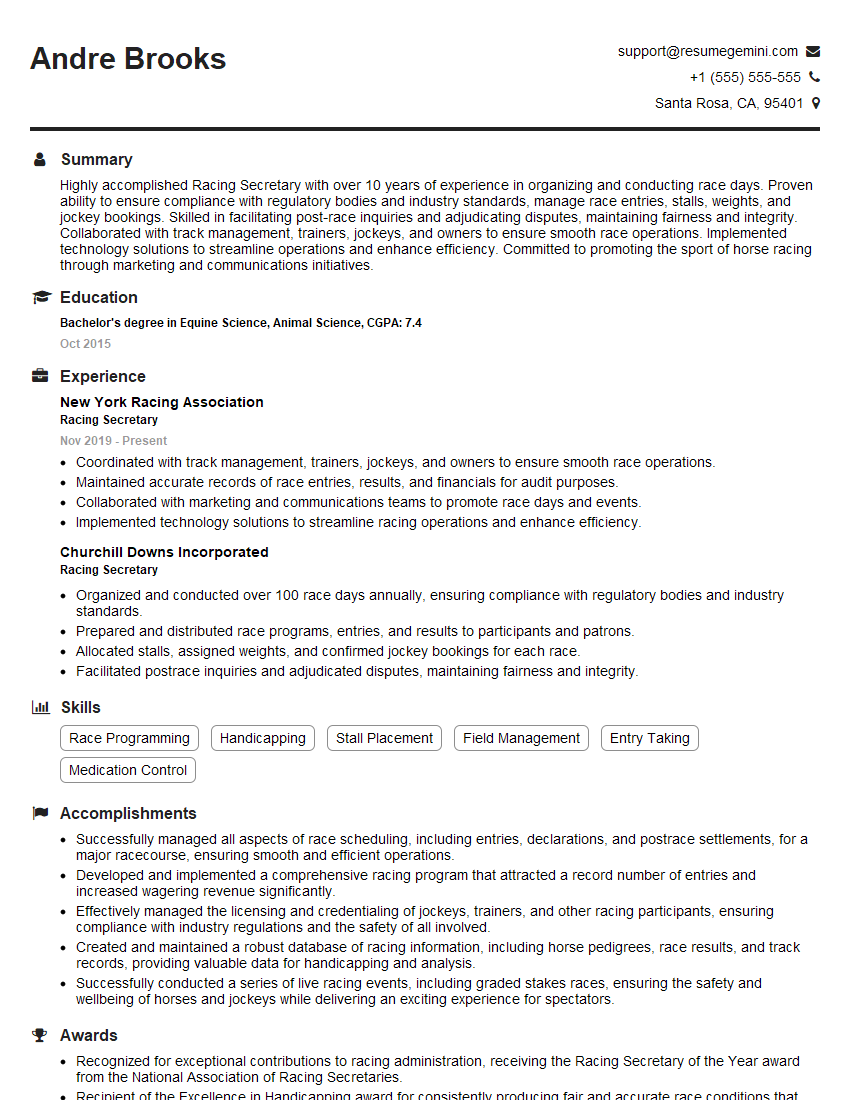
Mastering Horse Racing Regulations and Ethics is crucial for career advancement in this dynamic industry. A strong understanding of these principles demonstrates professionalism, commitment to integrity, and a deep understanding of the sport. To significantly enhance your job prospects, create an ATS-friendly resume that highlights your relevant skills and experience. ResumeGemini is a trusted resource for building professional resumes, ensuring your application stands out. Examples of resumes tailored to Horse Racing Regulations and Ethics are available to help you craft a compelling application that showcases your expertise.


Explore more articles
Users Rating of Our Blogs
Share Your Experience
We value your feedback! Please rate our content and share your thoughts (optional).
What Readers Say About Our Blog
Very informative content, great job.
good