Are you ready to stand out in your next interview? Understanding and preparing for Identifying Defects and Discrepancies interview questions is a game-changer. In this blog, we’ve compiled key questions and expert advice to help you showcase your skills with confidence and precision. Let’s get started on your journey to acing the interview.
Questions Asked in Identifying Defects and Discrepancies Interview
Q 1. Describe your experience identifying discrepancies in large datasets.
Identifying discrepancies in large datasets requires a systematic approach combining automated tools and human expertise. My experience involves leveraging scripting languages like Python with libraries such as Pandas and NumPy to perform data cleaning, validation, and anomaly detection. For instance, I’ve used Pandas to identify inconsistencies in date formats, missing values, and outliers across millions of rows. Furthermore, I utilize data visualization techniques like histograms and scatter plots to visually identify patterns and anomalies that might be missed by purely algorithmic approaches. In one project, analyzing customer transaction data, I discovered a significant discrepancy in regional sales figures by identifying outliers through box plots, which ultimately pointed to a data entry error in a specific branch’s reporting system.
Beyond automated checks, I employ manual review of statistically significant outliers or unusual patterns flagged by the automated process, ensuring no crucial inconsistencies are missed. For example, I might manually inspect records with unusually high or low values after the initial automated analysis to understand the root cause and validate the findings.
Q 2. Explain your process for verifying data accuracy and consistency.
My process for verifying data accuracy and consistency involves a multi-step approach. It starts with defining clear data quality rules and expectations based on the data source and intended use. These rules can include data type validation, range checks, referential integrity checks (ensuring relationships between tables are accurate), and uniqueness constraints. I then implement automated checks using scripting (e.g., Python, SQL) to validate the data against these rules. This automated process flags potential inconsistencies and discrepancies.
Next, I employ exploratory data analysis (EDA) techniques to visualize and summarize the data, identifying potential problems visually. This might involve creating frequency distributions, correlation matrices, or other relevant visualizations. Finally, I perform a manual review of the identified inconsistencies and discrepancies to determine their root cause and implement appropriate corrective actions. This could involve data cleansing, updating source systems, or even rejecting invalid data points. For example, if a database field is supposed to contain only numerical values, my validation script would flag any non-numeric entries. I then investigate to identify the source of the problem (e.g., a data entry error or a flaw in the data import process).
Q 3. How do you prioritize defects based on severity and impact?
Prioritizing defects involves a structured approach considering both severity and impact. Severity refers to the intrinsic seriousness of the defect, while impact assesses its consequences on the system or end-users. I typically use a defect severity matrix that categorizes defects based on these two factors. For instance, a critical defect might be categorized as a ‘Showstopper’ with high severity and high impact, needing immediate attention. A minor defect, like a cosmetic UI issue with low severity and low impact, might be addressed in a later release.
This matrix aids in prioritizing defects for remediation, ensuring that critical issues are addressed first. For example, a data corruption issue impacting core functionality would be prioritized over a minor spelling error in a help document. Regular re-evaluation of priorities is also crucial as the project evolves and new information becomes available.
Q 4. What techniques do you use to root cause defects?
Root cause analysis is crucial to preventing future defects. I employ various techniques, including the ‘5 Whys’ method, fishbone diagrams (Ishikawa diagrams), and fault tree analysis. The ‘5 Whys’ involves repeatedly asking ‘why’ to uncover the underlying cause of a defect. For instance, if a report is inaccurate, I might ask: Why is the report inaccurate? (Incorrect data source). Why is the data source incorrect? (Data entry error). Why was there a data entry error? (Insufficient training). Why was there insufficient training? (Lack of resources). Why was there a lack of resources? (Budget constraints).
Fishbone diagrams help visualize potential causes categorized by different factors like people, methods, machines, and materials. Fault tree analysis follows a top-down approach, starting with the defect and working backward to identify its root causes. By systematically investigating using these methods, I can address the root cause rather than just the symptom, leading to more effective and lasting solutions.
Q 5. How familiar are you with Six Sigma methodologies?
I am quite familiar with Six Sigma methodologies, particularly DMAIC (Define, Measure, Analyze, Improve, Control). I’ve applied DMAIC to various projects, focusing on data-driven problem solving. The ‘Measure’ phase aligns directly with my expertise in identifying and quantifying defects, using statistical methods to understand defect rates and patterns. The ‘Analyze’ phase leverages root cause analysis techniques like those I described previously. I’ve used control charts in the ‘Control’ phase to monitor process stability and prevent future defects. For instance, in a previous project optimizing a customer service workflow, I used Six Sigma principles to identify bottlenecks, reducing call handling times and improving customer satisfaction.
My experience extends to using statistical process control (SPC) tools within the Six Sigma framework to monitor defect rates and ensure process stability. This includes using techniques such as control charts and process capability analysis.
Q 6. Describe a time you identified a critical defect that was overlooked.
In a previous project involving a large e-commerce platform, I identified a critical defect related to order processing that had been overlooked. The system was incorrectly calculating shipping costs for certain product combinations, resulting in significant financial losses for the company. Initial testing hadn’t uncovered this issue because the specific combination of products triggering the error wasn’t included in the test cases.
I discovered the defect by analyzing the system logs and identifying a pattern of unexpected order cancellations. By carefully examining the log entries, I pinpointed the faulty calculation logic in the shipping module. This wasn’t immediately obvious, requiring thorough log analysis and a careful review of the system’s logic. My detailed report highlighting the financial ramifications led to the immediate prioritization and fixing of the issue.
Q 7. How do you handle disagreements about the severity of a defect?
Disagreements regarding defect severity are handled through collaborative discussion and objective evidence. I encourage open communication, presenting data and analysis to support my assessment. This might involve showcasing the impact of the defect using metrics, such as the number of affected users or the potential financial losses. If the disagreement persists, I advocate for escalation to a senior stakeholder or a dedicated defect review board. This board typically consists of representatives from different teams (development, testing, product management) who can objectively assess the severity and impact, ultimately reaching a consensus.
The goal is to ensure that the defect prioritization reflects the actual risk and impact, fostering a data-driven decision-making process.
Q 8. What tools and technologies do you use to identify and track defects?
Identifying and tracking defects requires a robust toolkit. My approach involves a blend of tools tailored to the project’s specific needs and development methodology. For instance, in agile environments, I heavily utilize Jira or Azure DevOps for bug tracking. These platforms allow for detailed defect descriptions, assigning owners, prioritizing issues, and monitoring their lifecycle from creation to resolution. For more complex systems or embedded systems, I’d leverage dedicated testing tools like TestRail for test case management and integration with automated testing frameworks like Selenium or Appium. Static analysis tools like SonarQube are invaluable for identifying potential code-level issues early in the development process. Finally, I always use a version control system, like Git, to track changes and link defects to specific code commits, facilitating easier debugging.
- Jira/Azure DevOps: For ticket creation, assignment, tracking and reporting.
- TestRail: For comprehensive test management and execution.
- Selenium/Appium: For automated testing of web and mobile applications.
- SonarQube: For code quality analysis and identifying potential vulnerabilities.
- Git: For version control and linking defects to code changes.
Q 9. How do you document defects and discrepancies for future reference?
Meticulous documentation is crucial. My defect reports follow a consistent structure. Each report includes a unique ID, a clear and concise title summarizing the issue, a detailed description of the defect, steps to reproduce it, the expected behavior versus the actual behavior, severity (critical, major, minor), priority (urgent, high, medium, low), screenshots or screen recordings, and the affected environment (browser, operating system, device). I also ensure that the report includes any relevant logs or error messages. All this information is stored in our designated defect tracking system (like Jira or Azure DevOps), which provides version control and audit trails, ensuring traceability and accountability. For complex defects, I might include a mind map or flowchart to illustrate the flow of events leading to the issue.
Example: Defect ID: 12345, Title: Login Button Not Responding, Description: The login button on the home page fails to respond when clicked...Q 10. Explain your approach to communicating defects to stakeholders.
Communication is key. My approach to communicating defects emphasizes clarity, timeliness, and the appropriate communication channel. I tailor my communication based on the stakeholder’s technical expertise and their role in the project. For developers, I provide detailed, technical reports with logs and code snippets. For project managers, I focus on the impact and priority of the defect, providing a concise summary and estimated resolution time. For clients, I use plain language, focusing on the user impact and the steps being taken to resolve the issue. I frequently use email, project management tools, and in-person meetings to ensure everyone stays informed. Regular status updates, especially on critical defects, keep stakeholders engaged and informed of progress.
I believe in proactive communication, especially for critical bugs. I prefer to present the defect, the suggested solution, and potential impacts all at once, rather than a piecemeal approach.
Q 11. How do you ensure the accuracy of your defect reporting?
Ensuring accuracy is paramount. I use a multi-faceted approach. First, I rigorously follow the steps to reproduce the defect multiple times to confirm consistency and rule out any environmental anomalies. I use screen recordings to document the process objectively. Second, I cross-reference my findings with logs, error messages, and code reviews to validate the root cause. Third, I collaborate with other testers to verify the defect and eliminate bias. Finally, I maintain clear and concise documentation, which is reviewed by peers before submitting the final report. This peer review process acts as a valuable quality check and ensures accuracy and completeness.
Q 12. Describe a time you had to escalate a defect to a higher level.
In a recent project, we discovered a critical defect in the payment gateway integration, leading to failed transactions. Initial troubleshooting pointed towards a configuration issue, but attempts to resolve it at the development level were unsuccessful. Given the severity (financial impact) and the inability to resolve it within our team, I escalated the issue to the senior architect and the client’s technical lead. This involved a detailed presentation outlining the steps to reproduce the defect, evidence of our troubleshooting efforts, and the potential risks of delay. This collaborative approach led to the swift identification of a deeper, more complex issue in the third-party library, which required patching and careful coordination with the vendor. The successful escalation and collaborative problem-solving prevented significant financial losses and protected the project’s reputation.
Q 13. How do you balance the speed of delivery with the need for quality?
Balancing speed and quality requires a strategic approach. It’s not a trade-off, but a delicate balance. We use techniques like risk-based testing to prioritize critical functionalities, focusing testing efforts where they have the greatest impact. Automated testing is crucial here for quick regression testing after code changes. Continuous integration and continuous delivery (CI/CD) pipelines aid in early defect detection and faster feedback loops. But equally important is a culture of quality built into the development process, which includes code reviews, pair programming, and adherence to coding standards. Clear communication and shared understanding of priorities are essential to manage expectations effectively.
Q 14. How do you handle pressure when identifying and resolving defects under deadlines?
Pressure is inevitable in software development. My strategy involves prioritizing tasks based on their criticality and impact. I use time management techniques like the Pomodoro Technique to maintain focus and prevent burnout. Furthermore, I actively communicate with my team and stakeholders about any roadblocks or challenges. Transparency helps prevent misunderstandings and allows for collaborative problem-solving. If necessary, I will openly communicate the potential impact of rushing and advocate for a realistic timeline if it is not possible to deliver without compromising quality. Ultimately, I understand that delivering a slightly delayed, high-quality product is more valuable than a rushed, buggy release.
Q 15. What are some common causes of defects in your field of expertise?
Defects, in my field, arise from a multitude of sources, often interconnected. Think of it like a complex machine; a single faulty part can cause a cascade of failures. Common causes fall into these categories:
- Human Error: This is the most frequent culprit. Mistakes in design, coding, manufacturing, testing, or documentation can all lead to defects. For example, a simple typo in a software code can cause a system crash, or a misinterpretation of a blueprint can lead to a faulty component in a machine.
- Process Issues: Inefficient or poorly defined processes create opportunities for defects. Insufficient training, inadequate tools, and lack of standardized procedures are major contributors. For instance, if the assembly line lacks quality checkpoints, defective parts might pass unnoticed.
- Material Defects: Using substandard materials or materials that don’t meet specifications directly impacts the final product. Imagine building a house with weak foundation materials – structural defects are inevitable.
- Environmental Factors: External conditions, such as temperature fluctuations or humidity, can sometimes affect product quality and lead to defects, particularly in sensitive industries like electronics or pharmaceuticals.
- Design Flaws: A poorly conceived design, lacking in thorough testing or consideration for real-world usage, can contain inherent defects that manifest later. A classic example is a software application with a design flaw that causes it to freeze under high usage.
Identifying the root cause of a defect, rather than just the symptom, is crucial for effective remediation and prevention.
Career Expert Tips:
- Ace those interviews! Prepare effectively by reviewing the Top 50 Most Common Interview Questions on ResumeGemini.
- Navigate your job search with confidence! Explore a wide range of Career Tips on ResumeGemini. Learn about common challenges and recommendations to overcome them.
- Craft the perfect resume! Master the Art of Resume Writing with ResumeGemini’s guide. Showcase your unique qualifications and achievements effectively.
- Don’t miss out on holiday savings! Build your dream resume with ResumeGemini’s ATS optimized templates.
Q 16. How do you measure the effectiveness of your defect detection processes?
Measuring the effectiveness of defect detection is crucial for continuous improvement. We use several key metrics:
- Defect Detection Rate (DDR): This measures the percentage of defects found during testing or inspection compared to the total number of defects present. A higher DDR indicates a more effective process.
- Defect Density: This measures the number of defects per unit of code, module, or product. Lower defect density signifies improved quality.
- Mean Time To Failure (MTTF): This metric, commonly used in hardware, indicates the average time a product operates before failure due to a defect.
- Mean Time To Repair (MTTR): This metric helps assess the efficiency of the repair process after a defect is detected. A shorter MTTR indicates a more efficient process.
- Escape Rate: This is the percentage of defects that escape detection and reach the customer. A low escape rate is a sign of a robust quality control system.
Regular analysis of these metrics allows us to pinpoint areas for improvement in our processes and identify recurring issues. We use data visualization tools like charts and dashboards to track progress over time and identify trends.
Q 17. Describe your experience with different types of defect tracking systems.
My experience spans several defect tracking systems, each with its own strengths and weaknesses. I’ve worked with:
- Jira: A widely used Agile project management tool with robust defect tracking capabilities. It’s particularly useful for collaborative environments and allows for detailed defect reporting, workflow management, and integration with other development tools.
- Bugzilla: A powerful, open-source bug tracking system suited for large-scale projects. It’s known for its extensive features and customization options.
- Azure DevOps: Microsoft’s comprehensive platform offering integrated tools for planning, development, and testing, including a sophisticated defect tracking system.
- Smaller, custom-built systems: In some cases, organizations use internal, customized tracking systems tailored to their specific needs and processes.
My proficiency extends beyond simply using these systems; I understand how to configure them for optimal performance, create effective workflows, and extract meaningful data for analysis.
Q 18. How familiar are you with ISO 9001 standards?
I am very familiar with ISO 9001 standards. I understand its principles of quality management, including the emphasis on continuous improvement, customer focus, and process-based approach. My experience includes working within organizations certified to ISO 9001, where I played a role in ensuring compliance by contributing to the implementation and maintenance of quality management systems.
I know how ISO 9001 directly impacts defect detection and prevention, particularly through its requirements for establishing effective processes, monitoring performance, and conducting regular internal audits. A key aspect is the documentation and traceability of processes to ensure that defects are identified, documented and addressed appropriately. This framework is essential for maintaining consistent product quality and customer satisfaction.
Q 19. How do you stay up-to-date on industry best practices for defect detection?
Staying current in defect detection is crucial. My strategies include:
- Industry Conferences and Workshops: Attending conferences and workshops allows me to network with peers, learn about new technologies and methodologies, and gain insights into best practices.
- Professional Organizations: Membership in relevant professional organizations provides access to publications, training materials, and networking opportunities.
- Online Resources and Publications: I regularly read industry journals, research papers, and online resources to stay abreast of the latest advancements.
- Training Courses: I actively seek out and participate in training courses on advanced defect detection techniques and tools.
- Mentorship and Collaboration: Learning from more experienced colleagues through mentorship and collaboration is invaluable in broadening my knowledge and skillset.
Continuous learning is vital in this rapidly evolving field to ensure I employ the most effective techniques and tools available.
Q 20. What are some common challenges in identifying defects, and how do you overcome them?
Several challenges complicate defect identification:
- Complex Systems: In intricate systems, tracing the root cause of a defect can be challenging due to the interactions of multiple components. This requires meticulous analysis and a thorough understanding of system architecture.
- Intermittent Defects: Defects that occur sporadically are difficult to reproduce and diagnose. Advanced debugging techniques and tools are needed to pinpoint these elusive issues.
- Hidden Defects: Some defects may not be immediately apparent, only surfacing under specific conditions or after prolonged use. Robust testing strategies are necessary to uncover these hidden issues.
- Human Bias: Testers may unintentionally overlook defects due to bias or fatigue. Implementing strategies like peer reviews and diverse testing teams can mitigate this.
- Time and Resource Constraints: Thorough defect detection often requires significant time and resources. Balancing thoroughness with project timelines can be a delicate act.
To overcome these, I employ various strategies including root cause analysis, advanced debugging techniques, automated testing, diverse testing approaches, and efficient project management techniques that prioritize quality control measures within realistic timelines.
Q 21. Describe your experience with statistical process control (SPC).
Statistical Process Control (SPC) is a powerful tool for monitoring and controlling process variation. My experience with SPC involves using control charts (like Shewhart charts, CUSUM charts, etc.) to track process metrics over time and identify any shifts or trends indicating potential defects.
For example, in a manufacturing setting, we might use SPC to monitor the weight of a product. By plotting the weights over time on a control chart, we can quickly identify if the process is drifting out of control, indicating a potential defect in the manufacturing process. This allows for timely intervention to prevent widespread defects and maintain consistent product quality.
I understand the principles of control limits, process capability analysis, and how to interpret control charts to make data-driven decisions regarding process improvement. Beyond simple control charts, I also have experience with more advanced SPC techniques for analyzing complex datasets and uncovering deeper insights into process behavior. This allows for proactive identification and prevention of potential problems, saving time, resources and increasing overall product quality.
Q 22. How do you use data analysis to identify trends and patterns in defects?
Identifying trends and patterns in defects often begins with collecting and organizing defect data. This could involve data from bug tracking systems, testing logs, user feedback, or even customer support tickets. Once collected, I use various data analysis techniques to unearth insights.
For example, I might use statistical methods like frequency analysis to determine which types of defects occur most often. A high frequency of ‘NullPointerExceptions’ in a Java application, for instance, suggests a problem with null checks in the code. I could then visualize this data using tools like histograms or bar charts to easily identify these high-frequency issues.
Furthermore, I leverage time-series analysis to understand if defects are clustered in specific time periods. This could highlight a correlation with recent deployments or specific feature releases. For example, a sudden spike in crashes after a new mobile app update would warrant immediate attention. I often employ techniques like moving averages to smooth out noise in the data and better identify trends.
Finally, correlation analysis helps uncover relationships between different variables. For example, are defects related to a specific operating system, browser version, or hardware configuration? This helps prioritize areas requiring further investigation and preventative measures.
Q 23. Explain your experience with root cause analysis techniques, such as 5 Whys.
Root cause analysis is crucial for preventing defects from recurring. The 5 Whys technique is a simple yet effective method I frequently employ. It involves repeatedly asking ‘Why?’ to drill down to the root cause of a problem.
Example: Let’s say a website is experiencing slow loading times.
- Why? Because the database query is taking too long.
- Why? Because the database index is inefficient.
- Why? Because the database schema wasn’t properly designed.
- Why? Because the database design wasn’t reviewed thoroughly before implementation.
- Why? Because of insufficient time allocated for design review.
Through this process, we’ve identified the root cause: insufficient time for database design review. This allows us to address the issue at its source rather than just treating the symptoms.
Beyond the 5 Whys, I also utilize other techniques like fishbone diagrams (Ishikawa diagrams) to visually represent potential causes and their relationships and fault tree analysis for more complex systems where failures can cascade. The choice of technique depends on the complexity of the defect and the information available.
Q 24. How do you collaborate with other teams to resolve defects?
Collaboration is key to effective defect resolution. I regularly work with development teams, testing teams, product owners, and even customers to resolve defects.
My approach involves clear communication. I use bug tracking systems to document defects accurately, including steps to reproduce, error messages, and screenshots. I actively participate in meetings and provide regular updates on the progress of defect resolution. I also proactively seek feedback from other teams, particularly developers, to ensure my analysis aligns with their understanding of the codebase.
In situations involving complex defects, I might facilitate collaborative debugging sessions, where members from different teams work together to trace the problem. A shared understanding of the problem, and a collaborative solution, is more likely to produce a lasting fix.
Q 25. How do you ensure the reproducibility of your defect findings?
Reproducibility is paramount. To ensure the reproducibility of my defect findings, I meticulously document every step of the process. This includes:
- Detailed steps to reproduce: Precise instructions on how to trigger the defect.
- System environment details: Operating system, browser version, hardware specifications, etc.
- Data inputs: Specific data used to reproduce the defect.
- Screenshots and logs: Visual evidence and technical logs to capture the error.
- Version control information: Specific code version or software build associated with the defect.
I also utilize automated testing where possible to reliably reproduce and retest the fix. This ensures that the defect is truly resolved and won’t resurface in future releases. A well-documented, reproducible defect report minimizes ambiguity and facilitates quicker resolution.
Q 26. What metrics do you use to measure the quality of your work in identifying defects?
Several metrics help gauge the quality of my defect identification work.
- Defect detection rate: The percentage of defects I identify relative to the total number of defects present.
- Defect density: The number of defects per unit of code or functionality. Lower density indicates higher code quality.
- Time to resolution: The time taken to identify and resolve a defect. Faster resolution translates to quicker delivery of quality software.
- Accuracy of defect reports: The percentage of correctly identified and reported defects.
- Number of recurring defects: A low number shows effective root cause analysis and preventative measures.
By tracking these metrics, I continuously improve my defect identification process and strive for higher efficiency and accuracy.
Q 27. Describe your experience with different types of testing methodologies (e.g., unit, integration, system).
My experience spans various testing methodologies, each serving a different purpose in the software development lifecycle.
- Unit testing: I’ve worked extensively with unit tests, verifying individual components of the codebase in isolation. This helps identify defects early on, before they become integrated into larger systems.
- Integration testing: This involves testing the interaction between different units or modules to ensure they work together seamlessly. I use various techniques to test interfaces and data flows between components.
- System testing: At the system level, I conduct end-to-end testing, simulating real-world user scenarios. This is crucial to identify defects that might not be apparent in unit or integration testing.
- Regression testing: After code changes, I ensure that new features or bug fixes haven’t introduced unintended consequences. Automated regression tests are a crucial part of my workflow.
Furthermore, I’m familiar with other methodologies like acceptance testing (verifying the software meets user requirements) and performance testing (assessing the software’s responsiveness and stability under load).
Q 28. How do you handle situations where the root cause of a defect is unclear?
When the root cause is unclear, a systematic approach is necessary. I begin by gathering more data and exploring alternative analysis techniques.
This might involve:
- Expanding the scope of investigation: Investigating related systems or components.
- Involving experts: Consulting with developers, architects, or database administrators to gain deeper insights.
- Conducting more thorough testing: Running additional tests under varying conditions to isolate the defect.
- Analyzing logs and metrics: Scrutinizing system logs, performance metrics, and other relevant data for clues.
- Employing advanced debugging tools: Using debuggers, profilers, and other tools to pinpoint the source of the error.
Sometimes, even with diligent investigation, the root cause remains elusive. In these cases, it’s crucial to document the unresolved issues clearly and prioritize mitigation strategies to prevent the defect from impacting users. It’s equally important to learn from these challenging situations and refine our diagnostic procedures for the future.
Key Topics to Learn for Identifying Defects and Discrepancies Interview
- Data Analysis Techniques: Understanding various methods for analyzing data to identify inconsistencies and anomalies. This includes statistical analysis, trend identification, and outlier detection.
- Root Cause Analysis: Mastering techniques like the 5 Whys, fishbone diagrams, and fault tree analysis to pinpoint the underlying causes of defects and discrepancies, not just the surface-level symptoms.
- Defect Classification and Prioritization: Learning to categorize defects based on severity and impact, allowing for effective resource allocation and prioritization of fixes.
- Documentation and Reporting: Developing clear, concise, and accurate documentation of identified defects, including detailed descriptions, supporting evidence, and suggested resolutions. This includes understanding different reporting formats and audience considerations.
- Quality Control Methodologies: Familiarity with various quality control methodologies and their practical application in identifying and preventing defects, such as Six Sigma, Lean, and ISO standards.
- Problem-Solving Approaches: Developing a structured approach to problem-solving, including defining the problem, gathering information, developing solutions, and implementing and evaluating the chosen solution.
- Software and Tools: Understanding the use of software and tools commonly used in defect identification and analysis (mentioning specific tools is optional, but general categories like data visualization software or project management tools could be helpful).
- Communication and Collaboration: Effectively communicating findings and collaborating with teams to address identified defects and discrepancies.
Next Steps
Mastering the art of identifying defects and discrepancies is crucial for career advancement in many fields, significantly enhancing your problem-solving skills and demonstrating your attention to detail. A strong resume showcasing these abilities is essential. To increase your chances of landing your dream job, create an ATS-friendly resume that highlights your relevant skills and experience. ResumeGemini is a trusted resource for building professional and impactful resumes. We provide examples of resumes tailored to showcasing expertise in identifying defects and discrepancies to help you present yourself effectively to potential employers.
Program Manager Resume Sample
Quality Control Manager Resume Sample
Production Supervisor Resume Sample

Project Manager Resume Sample
Compliance Officer Resume Sample
Supply Chain Analyst Resume Sample
Research Analyst Resume Sample
Accountant Resume Sample
Internal Auditor Resume Sample
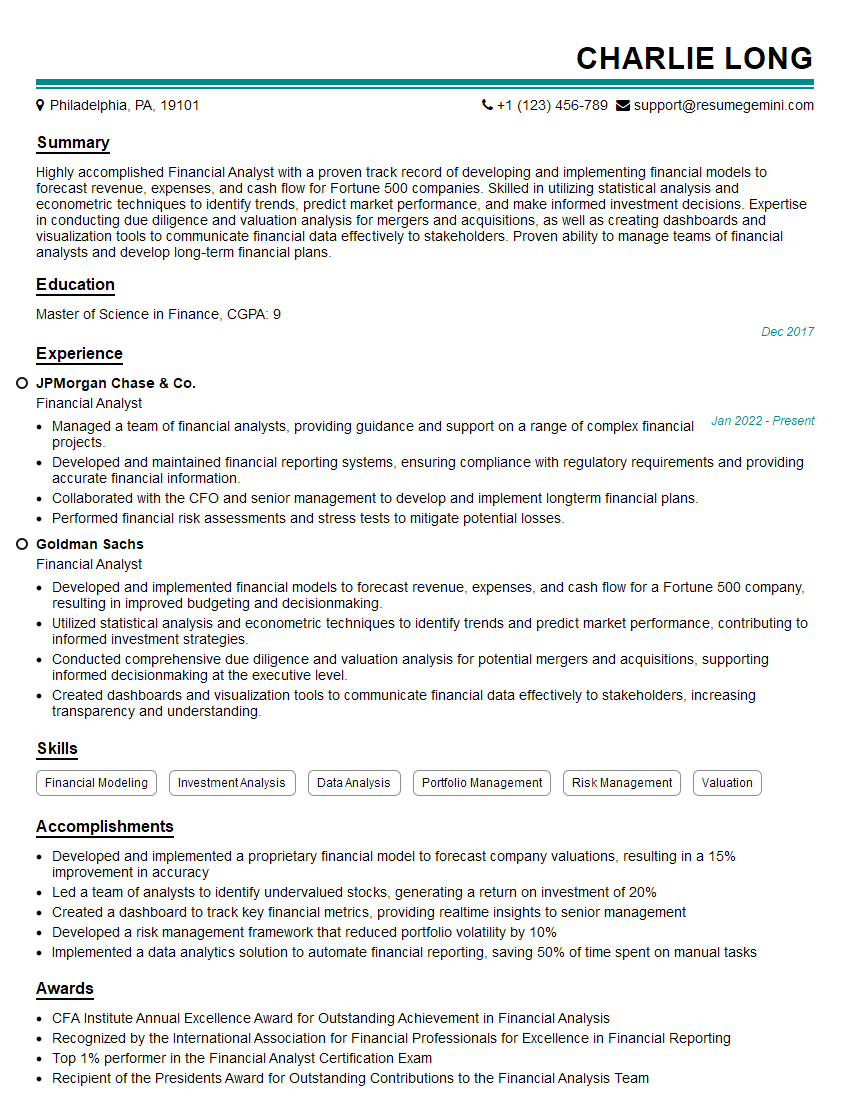
Financial Analyst Resume Sample
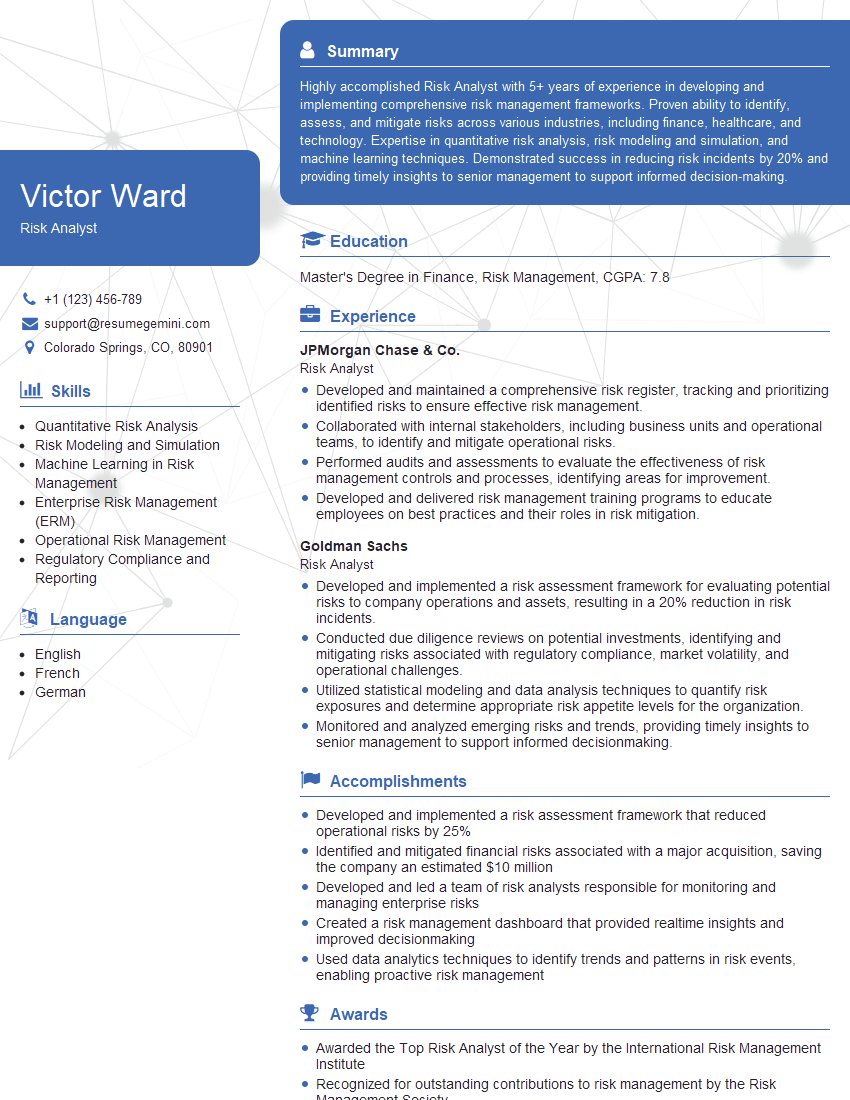
Risk Analyst Resume Sample
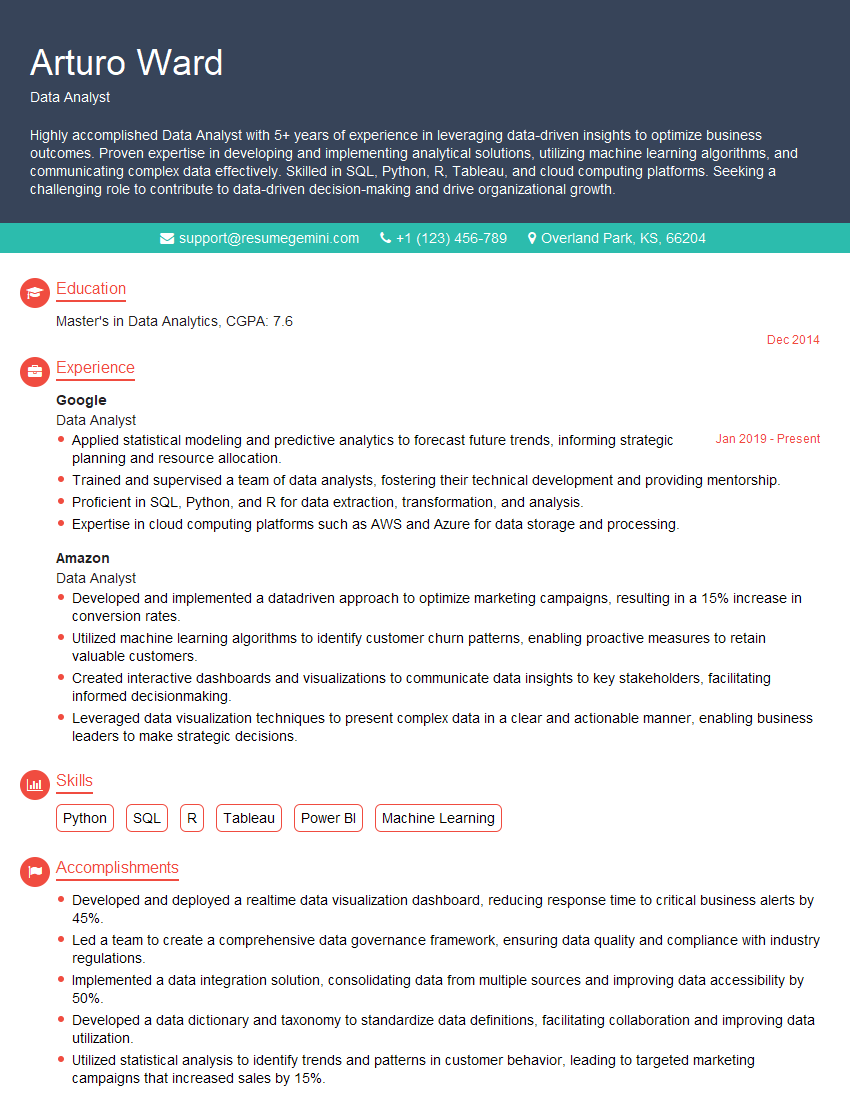
Data Analyst Resume Sample
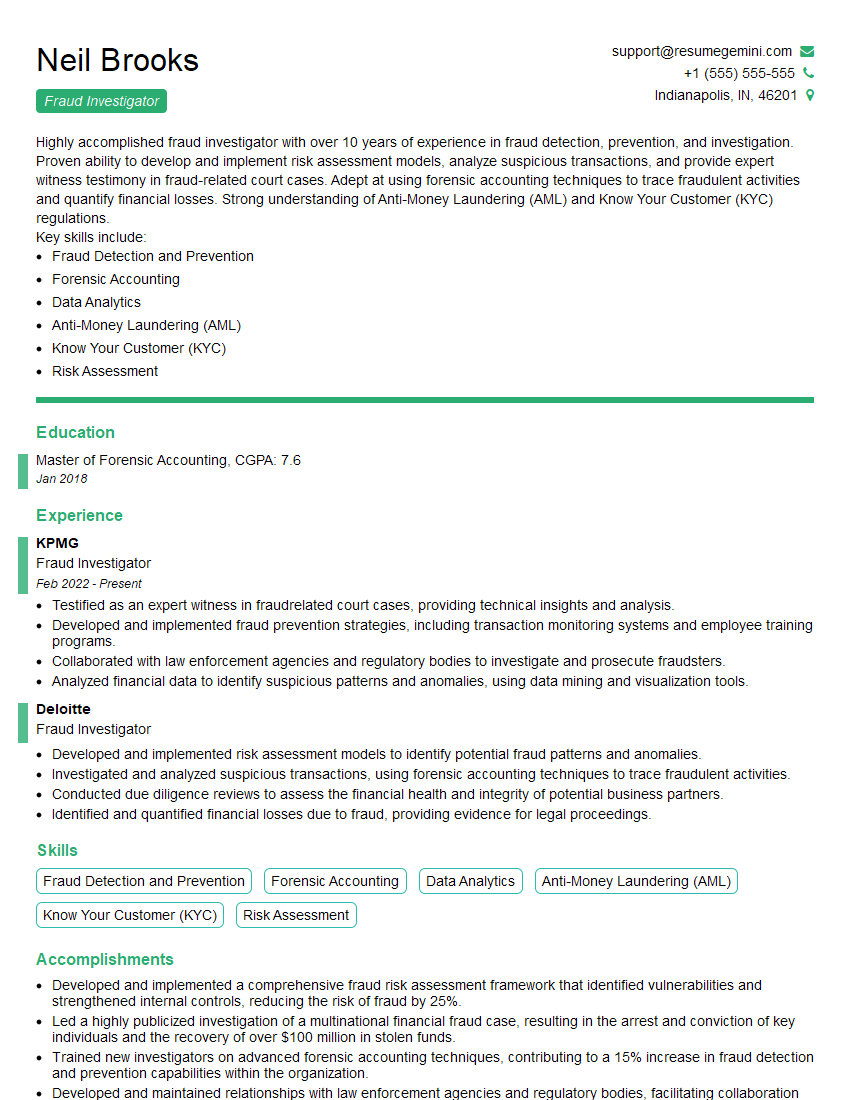
Fraud Investigator Resume Sample

Software Tester Resume Sample
Test Engineer Resume Sample
Quality Engineer Resume Sample
Operations Analyst Resume Sample
Manufacturing Engineer Resume Sample
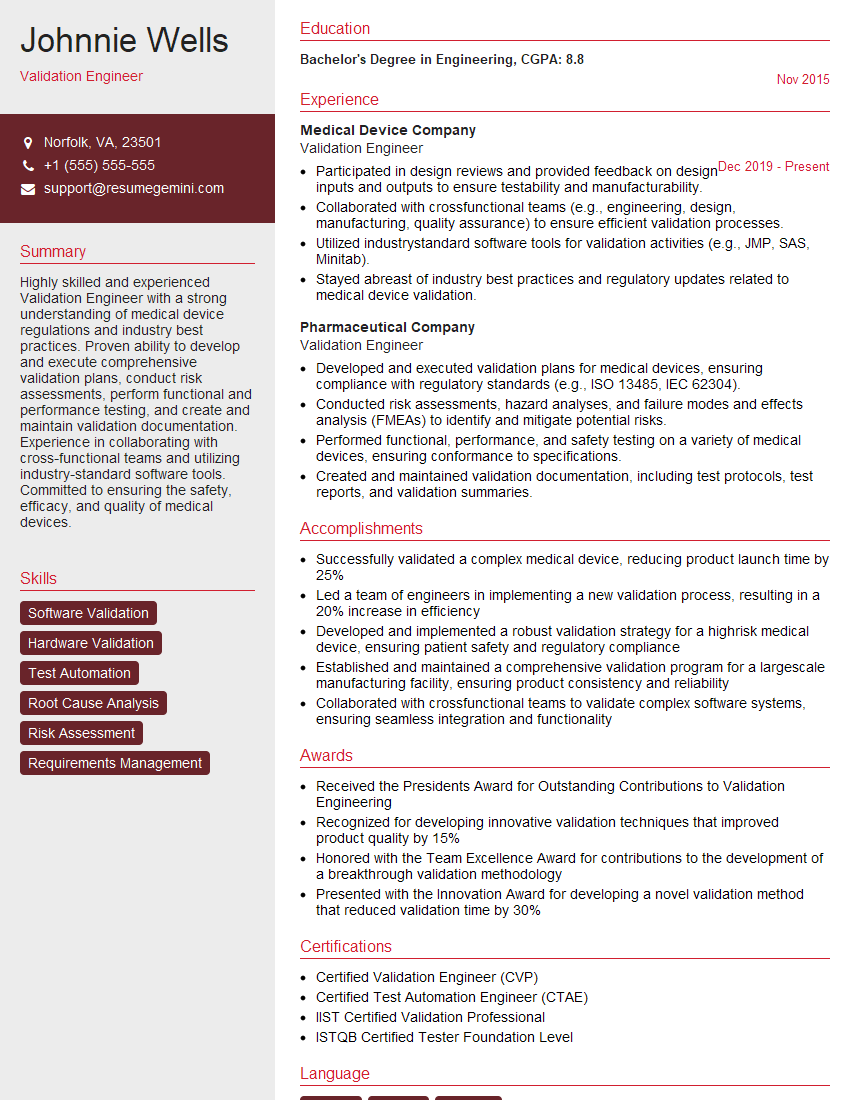
Validation Engineer Resume Sample

Quality Control Inspector Resume Sample
- Program Manager
- Quality Control Manager
- Production Supervisor
- Project Manager
- Compliance Officer
- Supply Chain Analyst
- Research Analyst
- Accountant
- Internal Auditor
- Financial Analyst
- Risk Analyst
- Data Analyst
- Fraud Investigator
- Software Tester
- Test Engineer
- Quality Engineer
- Operations Analyst
- Manufacturing Engineer
- Validation Engineer
- Quality Control Inspector
Explore more articles
Users Rating of Our Blogs
Share Your Experience
We value your feedback! Please rate our content and share your thoughts (optional).
What Readers Say About Our Blog
Attention music lovers!
Wow, All the best Sax Summer music !!!
Spotify: https://open.spotify.com/artist/6ShcdIT7rPVVaFEpgZQbUk
Apple Music: https://music.apple.com/fr/artist/jimmy-sax-black/1530501936
YouTube: https://music.youtube.com/browse/VLOLAK5uy_noClmC7abM6YpZsnySxRqt3LoalPf88No
Other Platforms and Free Downloads : https://fanlink.tv/jimmysaxblack
on google : https://www.google.com/search?q=22+AND+22+AND+22
on ChatGPT : https://chat.openai.com?q=who20jlJimmy20Black20Sax20Producer
Get back into the groove with Jimmy sax Black
Best regards,
Jimmy sax Black
www.jimmysaxblack.com
Hi I am a troller at The aquatic interview center and I suddenly went so fast in Roblox and it was gone when I reset.
Hi,
Business owners spend hours every week worrying about their website—or avoiding it because it feels overwhelming.
We’d like to take that off your plate:
$69/month. Everything handled.
Our team will:
Design a custom website—or completely overhaul your current one
Take care of hosting as an option
Handle edits and improvements—up to 60 minutes of work included every month
No setup fees, no annual commitments. Just a site that makes a strong first impression.
Find out if it’s right for you:
https://websolutionsgenius.com/awardwinningwebsites
Hello,
we currently offer a complimentary backlink and URL indexing test for search engine optimization professionals.
You can get complimentary indexing credits to test how link discovery works in practice.
No credit card is required and there is no recurring fee.
You can find details here:
https://wikipedia-backlinks.com/indexing/
Regards
NICE RESPONSE TO Q & A
hi
The aim of this message is regarding an unclaimed deposit of a deceased nationale that bears the same name as you. You are not relate to him as there are millions of people answering the names across around the world. But i will use my position to influence the release of the deposit to you for our mutual benefit.
Respond for full details and how to claim the deposit. This is 100% risk free. Send hello to my email id: lukachachibaialuka@gmail.com
Luka Chachibaialuka
Hey interviewgemini.com, just wanted to follow up on my last email.
We just launched Call the Monster, an parenting app that lets you summon friendly ‘monsters’ kids actually listen to.
We’re also running a giveaway for everyone who downloads the app. Since it’s brand new, there aren’t many users yet, which means you’ve got a much better chance of winning some great prizes.
You can check it out here: https://bit.ly/callamonsterapp
Or follow us on Instagram: https://www.instagram.com/callamonsterapp
Thanks,
Ryan
CEO – Call the Monster App
Hey interviewgemini.com, I saw your website and love your approach.
I just want this to look like spam email, but want to share something important to you. We just launched Call the Monster, a parenting app that lets you summon friendly ‘monsters’ kids actually listen to.
Parents are loving it for calming chaos before bedtime. Thought you might want to try it: https://bit.ly/callamonsterapp or just follow our fun monster lore on Instagram: https://www.instagram.com/callamonsterapp
Thanks,
Ryan
CEO – Call A Monster APP
To the interviewgemini.com Owner.
Dear interviewgemini.com Webmaster!
Hi interviewgemini.com Webmaster!
Dear interviewgemini.com Webmaster!
excellent
Hello,
We found issues with your domain’s email setup that may be sending your messages to spam or blocking them completely. InboxShield Mini shows you how to fix it in minutes — no tech skills required.
Scan your domain now for details: https://inboxshield-mini.com/
— Adam @ InboxShield Mini
support@inboxshield-mini.com
Reply STOP to unsubscribe
Hi, are you owner of interviewgemini.com? What if I told you I could help you find extra time in your schedule, reconnect with leads you didn’t even realize you missed, and bring in more “I want to work with you” conversations, without increasing your ad spend or hiring a full-time employee?
All with a flexible, budget-friendly service that could easily pay for itself. Sounds good?
Would it be nice to jump on a quick 10-minute call so I can show you exactly how we make this work?
Best,
Hapei
Marketing Director
Hey, I know you’re the owner of interviewgemini.com. I’ll be quick.
Fundraising for your business is tough and time-consuming. We make it easier by guaranteeing two private investor meetings each month, for six months. No demos, no pitch events – just direct introductions to active investors matched to your startup.
If youR17;re raising, this could help you build real momentum. Want me to send more info?
Hi, I represent an SEO company that specialises in getting you AI citations and higher rankings on Google. I’d like to offer you a 100% free SEO audit for your website. Would you be interested?
Hi, I represent an SEO company that specialises in getting you AI citations and higher rankings on Google. I’d like to offer you a 100% free SEO audit for your website. Would you be interested?