Unlock your full potential by mastering the most common In-process Inspection interview questions. This blog offers a deep dive into the critical topics, ensuring you’re not only prepared to answer but to excel. With these insights, you’ll approach your interview with clarity and confidence.
Questions Asked in In-process Inspection Interview
Q 1. Describe your experience with various inspection methods (visual, dimensional, etc.).
My experience encompasses a wide range of in-process inspection methods. Visual inspection is fundamental, forming the basis for many other checks. This involves carefully examining the product for surface defects, cracks, scratches, or dimensional inconsistencies visible to the naked eye or with magnification tools like microscopes. Dimensional inspection is crucial for ensuring products meet specified tolerances. This often involves using precision measuring instruments like calipers, micrometers, and height gauges to check critical dimensions such as length, width, diameter, and thickness. I’m also proficient in other methods like functional testing (verifying the product operates as intended), destructive testing (e.g., tensile strength testing to determine material properties), and non-destructive testing (NDT) methods like ultrasonic testing or X-ray inspection, to detect internal flaws without damaging the product. For instance, in a recent project manufacturing precision ball bearings, visual inspection revealed minor surface imperfections in some batches, leading to a deeper investigation using a CMM (Coordinate Measuring Machine) for precise dimensional analysis and pinpointing the root cause to a slight misalignment in the manufacturing process.
Q 2. Explain your understanding of Statistical Process Control (SPC).
Statistical Process Control (SPC) is a powerful methodology used to monitor and control manufacturing processes. It uses statistical methods to identify variations in a process and determine whether those variations are due to common (random) causes or special (assignable) causes. Think of it like this: imagine you’re baking cookies. Some variation in size and color is normal (common cause) due to slight differences in ingredients or oven temperature. However, if suddenly all your cookies are burnt (special cause), you know something is wrong with your oven or recipe. SPC uses control charts to visually represent process data over time. These charts typically plot a measured characteristic (e.g., part diameter) against time or sample number. Control limits, calculated statistically, are plotted on the chart. Points falling outside these limits signal potential problems requiring investigation. Common control charts include X-bar and R charts (for average and range), p-charts (for proportion of defects), and c-charts (for number of defects per unit). By implementing SPC, we can detect problems early, preventing the production of non-conforming products and reducing waste. In a previous role, we utilized X-bar and R charts to monitor the diameter of injection-molded parts. Identifying an upward trend exceeding the upper control limit allowed us to intervene and adjust the molding machine’s parameters before widespread defects occurred.
Q 3. How do you identify and document non-conforming products?
Identifying non-conforming products involves a systematic process. First, the discrepancy is noted during the inspection process – this could be a visual defect, dimensional deviation outside the specified tolerances, or a failure in a functional test. Next, the non-conformance is documented meticulously. This typically involves completing a non-conformance report (NCR) that details the type of defect, the quantity of affected units, the location of the defect, the time of discovery, and any corrective actions taken. The NCR also includes a unique identification number for tracking purposes. The defective products are then segregated to prevent them from entering the supply chain. Often, a root cause analysis is performed to determine the underlying cause of the non-conformance, preventing its recurrence. For example, if a batch of printed circuit boards shows inconsistent solder joints, an NCR would detail the fault, batch number, and then initiate an investigation into potential causes – perhaps inconsistent solder paste application or a malfunctioning soldering machine.
Q 4. What are your skills in using measuring instruments (calipers, micrometers, etc.)?
I am highly proficient in using various measuring instruments, including vernier calipers, micrometers, height gauges, dial indicators, and other precision measurement tools. I understand the principles of measurement uncertainty and how to minimize errors. My experience includes using these tools to measure linear dimensions, diameters, thicknesses, angles, and other geometrical characteristics with accuracy and precision. I also have experience with more advanced measuring equipment, such as CMMs (Coordinate Measuring Machines) and optical comparators for complex part geometries and high precision requirements. For instance, I regularly use micrometers to measure the thickness of thin metal sheets to ensure they fall within the specified tolerances of ±0.01 mm. Calibration and proper maintenance of these instruments are also critical, and I strictly adhere to established procedures.
Q 5. How do you handle discrepancies between inspection results and production data?
Discrepancies between inspection results and production data are a serious matter. They indicate a potential problem in either the inspection process or the production process, or both. My approach involves a thorough investigation to pinpoint the root cause. This typically begins with a careful review of the inspection procedures, including the measurement techniques, equipment calibration, and the interpretation of data. Next, the production data is examined for any anomalies or inconsistencies. This could involve checking production logs, machine parameters, and raw material specifications. If the discrepancy is significant, a root cause analysis is conducted, using tools like the 5 Whys or a fishbone diagram to identify the underlying causes. Depending on the findings, corrective actions might include recalibrating equipment, revising inspection procedures, or making adjustments to the production process. For example, if the inspection data shows a higher defect rate than the production data suggests, it points to a potential issue with the inspection process – perhaps inadequate training of inspectors or a faulty measuring instrument. Addressing this requires retraining or equipment calibration, respectively.
Q 6. Describe your experience with different types of quality control charts.
My experience includes using various quality control charts such as X-bar and R charts, p-charts, c-charts, and individuals and moving range (I-MR) charts. X-bar and R charts are used for monitoring continuous data, like dimensions or weights. P-charts are utilized when monitoring the proportion of defective items in a sample, while c-charts are used for the number of defects per unit. I-MR charts are useful for monitoring individual measurements when sample sizes are small. The selection of the appropriate chart depends on the type of data and the objective of the control process. Understanding the interpretation of these charts, including control limits and trends, is essential for effective process monitoring and improvement. For instance, in a previous role, we used p-charts to monitor the percentage of defective circuit boards produced. By analyzing the chart, we identified a period of elevated defect rates, which led to an investigation into the root cause and subsequent process improvements, resulting in a significant reduction in defects.
Q 7. What is your experience with root cause analysis in a manufacturing environment?
Root cause analysis is a critical skill in a manufacturing environment. It’s about going beyond merely identifying a problem to understanding its underlying cause, preventing recurrence. I employ a variety of techniques, including the 5 Whys (repeatedly asking “why” to uncover the root cause), fishbone diagrams (identifying potential causes categorized by different factors such as manpower, machinery, materials, and methods), Pareto analysis (focusing on the most significant causes), and fault tree analysis (analyzing potential failures and their contributing factors). The choice of technique depends on the complexity of the problem. For instance, if we consistently have issues with a specific type of welding defect, I’d use a fishbone diagram to brainstorm potential causes: improper welding parameters, faulty welding equipment, inconsistent material properties, or inadequate operator training. This collaborative approach, involving production staff, engineers, and quality control personnel ensures a thorough investigation and effective solution implementation. Once the root cause is identified, corrective actions are implemented, and the effectiveness of these actions is monitored to ensure the problem is truly resolved.
Q 8. Explain your understanding of different sampling techniques.
Sampling techniques in in-process inspection are crucial for efficiently evaluating product quality without inspecting every single unit. The choice of technique depends on factors like the production volume, acceptable defect rate, and the cost of inspection.
- Random Sampling: Each unit has an equal chance of being selected. This is ideal for large production runs where bias is to be avoided. Imagine inspecting a batch of 1000 widgets; you might randomly select 50 for inspection.
- Stratified Sampling: The population is divided into subgroups (strata), and samples are randomly selected from each stratum. This is useful when there’s known variability within the production process. For instance, if widgets are produced on three different machines, you’d sample from each machine’s output to account for potential machine-specific variations.
- Systematic Sampling: Units are selected at regular intervals. For example, inspecting every 10th widget off the production line. While simpler than random sampling, it’s susceptible to bias if there’s a periodic pattern in the production process.
- Cluster Sampling: Samples are drawn from naturally occurring groups or clusters. This is cost-effective for geographically dispersed production or when inspecting batches of materials. Think of inspecting samples from different pallets of raw materials.
The optimal sampling technique requires careful consideration of the specific context and aims to balance cost-effectiveness with the desired level of confidence in the inspection results.
Q 9. How do you ensure the accuracy and traceability of your inspection data?
Accuracy and traceability are paramount in in-process inspection. We achieve this through a multi-pronged approach:
- Calibration and Verification: All measuring equipment undergoes regular calibration against traceable standards to ensure accuracy. Calibration certificates are meticulously maintained.
- Documented Procedures: Standard Operating Procedures (SOPs) dictate each step of the inspection process, including data recording methods. This ensures consistency and minimizes human error.
- Unique Identification: Each inspected unit is uniquely identified (e.g., serial number, batch number) linking the inspection data to the specific item. This creates an audit trail.
- Data Management System: Inspection data is electronically recorded and managed using a secure database. This system provides data integrity, facilitates data analysis, and allows for easy retrieval of historical inspection records.
- Audit Trails: All changes made to inspection data are logged, including who made the changes, when they were made, and the reason. This enhances accountability and transparency.
For example, if a defect is identified, the unique identifier links it back to the specific production batch and machine, allowing for prompt corrective action and prevention of recurrence.
Q 10. Describe your experience with using Computer-Aided Inspection (CAI) systems.
I have extensive experience using Computer-Aided Inspection (CAI) systems, including CMM (Coordinate Measuring Machines) and optical inspection systems. CAI significantly enhances the accuracy, speed, and objectivity of inspection.
In a previous role, we utilized a CMM to inspect complex machined parts. The CAI system automatically captured thousands of data points, providing far more precise measurements than manual inspection. The automated report generation saved significant time and reduced the risk of human transcription errors. The system also allowed for statistical process control (SPC) analysis, which provided valuable insights into the manufacturing process and helped identify potential areas for improvement.
Furthermore, experience with optical inspection systems enabled high-throughput visual inspection of printed circuit boards (PCBs) for defects like shorts, opens, and solder bridges. The software’s automated defect detection capabilities drastically reduced inspection time and improved consistency compared to manual visual inspection. The image analysis capabilities generated detailed reports with images for each detected defect, aiding in root cause analysis and process optimization.
Q 11. What is your experience with corrective and preventive actions (CAPA)?
Corrective and Preventive Actions (CAPA) are vital for continuous improvement in manufacturing. My experience involves identifying the root cause of defects and implementing corrective actions to prevent recurrence.
The process typically follows these steps:
- Defect Identification: Documenting and analyzing the defects found during inspection.
- Root Cause Analysis: Utilizing tools such as 5 Whys, fishbone diagrams, or fault tree analysis to determine the underlying cause(s) of the defects.
- Corrective Action: Implementing immediate actions to address the identified defects (e.g., rework, repair, or rejection of non-conforming units).
- Preventive Action: Implementing long-term solutions to prevent similar defects in the future. This may involve process changes, operator training, equipment upgrades, or material substitutions.
- Verification: Monitoring the effectiveness of the corrective and preventive actions to ensure the problem is resolved and doesn’t recur.
- Documentation: Meticulously documenting the entire CAPA process, including all findings, actions taken, and verification results.
For example, if consistent dimensional errors were detected in a particular part, a CAPA investigation might reveal worn tooling as the root cause. The corrective action would be to replace the tooling, while the preventive action would be to implement a more robust tooling maintenance schedule.
Q 12. How do you maintain a clean and organized inspection area?
Maintaining a clean and organized inspection area is crucial for accurate and efficient inspection. It minimizes the risk of contamination, errors, and accidents.
- 5S Methodology: I implement the 5S methodology (Sort, Set in Order, Shine, Standardize, Sustain) to maintain a clean and organized workspace. This involves regularly decluttering the area, arranging tools and equipment logically, cleaning the workspace, standardizing cleaning procedures, and maintaining the improved state.
- Designated Areas: Tools, materials, and inspected units are stored in designated areas to avoid clutter and confusion.
- Regular Cleaning: The inspection area is cleaned regularly, including equipment, work surfaces, and the surrounding area. This prevents contamination and ensures a safe working environment.
- Waste Management: Proper disposal procedures are in place for scrap materials and waste generated during the inspection process. This minimizes environmental impact and prevents hazards.
- Visual Management: Visual cues such as labels, color-coding, and signs are used to improve organization and streamline the workflow.
A clean and organized workspace not only improves efficiency but also contributes to a safer and more productive working environment.
Q 13. What are your experience with different types of inspection reports?
My experience encompasses various types of inspection reports, each tailored to the specific needs and level of detail required:
- First Article Inspection Reports (FAIR): These reports verify that the first production run of a new part meets specifications. They include detailed dimensional measurements, material certifications, and visual inspection results.
- In-Process Inspection Reports: These reports document the inspection results throughout the manufacturing process. They often include summaries of defects found, number of units inspected, and any corrective actions taken.
- Final Inspection Reports: These reports summarize the inspection results at the end of the manufacturing process, indicating whether the product meets all specifications and is ready for shipment.
- Non-Conformance Reports (NCR): These reports document any instances where product or process deviations occur. They provide details about the non-conformance, the root cause, corrective actions, and preventive actions.
- Statistical Process Control (SPC) Charts: These charts track key quality characteristics over time to identify trends and potential problems. They are valuable tools for monitoring process stability and improving product quality.
The choice of report type depends on the specific inspection and the information required for decision-making.
Q 14. Describe your understanding of tolerance and specifications.
Tolerances and specifications are fundamental concepts in manufacturing. Specifications define the desired characteristics of a product or process (e.g., dimensions, material properties, performance criteria). Tolerances define the allowable variations from these specifications.
For example, a specification might state that a shaft should be 10mm in diameter. The tolerance might be ±0.1mm. This means that any shaft with a diameter between 9.9mm and 10.1mm is considered acceptable. Values outside this range are considered non-conforming.
Understanding tolerances is crucial for determining whether a product meets its design requirements. Tight tolerances often mean higher manufacturing costs, but they result in higher product precision. Loose tolerances are more cost-effective but may result in less precise products. The appropriate balance depends on the application and cost constraints.
Tolerance analysis is a critical part of the design and manufacturing process, and often involves the use of geometric dimensioning and tolerancing (GD&T) standards to define and communicate tolerances clearly and unambiguously.
Q 15. How familiar are you with ISO 9001 or other quality management systems?
I’m very familiar with ISO 9001:2015 and other quality management systems. My experience spans several years, working in environments that strictly adhere to these standards. ISO 9001 provides a framework for establishing, implementing, maintaining, and continually improving a quality management system. It emphasizes a process-based approach, focusing on customer satisfaction and continuous improvement. I understand the core principles, including customer focus, leadership, engagement of people, process approach, improvement, evidence-based decision making, and relationship management. In practice, this means I’m proficient in documenting procedures, conducting internal audits, managing non-conformances, and participating in management reviews. I’ve personally contributed to the implementation and maintenance of ISO 9001 certified systems, ensuring compliance across various inspection processes.
Beyond ISO 9001, I have experience with other quality management standards like IATF 16949 (automotive) and AS9100 (aerospace), demonstrating adaptability to diverse industry requirements.
Career Expert Tips:
- Ace those interviews! Prepare effectively by reviewing the Top 50 Most Common Interview Questions on ResumeGemini.
- Navigate your job search with confidence! Explore a wide range of Career Tips on ResumeGemini. Learn about common challenges and recommendations to overcome them.
- Craft the perfect resume! Master the Art of Resume Writing with ResumeGemini’s guide. Showcase your unique qualifications and achievements effectively.
- Don’t miss out on holiday savings! Build your dream resume with ResumeGemini’s ATS optimized templates.
Q 16. Explain your understanding of process capability analysis.
Process capability analysis is a crucial statistical method used to determine if a process can consistently produce output within pre-defined specifications. It helps us understand whether the process is capable of meeting customer requirements and identifying potential areas for improvement. The most common metric is Cp and Cpk, where:
- Cp (Process Capability Index): Measures the inherent variability of a process compared to the tolerance range. A Cp of 1 indicates that the process variability is equal to the tolerance range; values greater than 1 are desirable, indicating greater capability.
- Cpk (Process Capability Index – considering centering): A more comprehensive measure considering both variability and centering. It accounts for how well the process average aligns with the target value. A Cpk of 1 or higher is generally considered acceptable.
Imagine manufacturing a part with a specified length of 10mm ± 0.1mm. Process capability analysis would help us determine if our manufacturing process consistently produces parts within this 9.9mm to 10.1mm range. Low Cpk values might indicate that the process needs adjustment (e.g., machine recalibration, improved raw materials, operator training) to reduce variability and improve centering around the target.
The analysis involves collecting data, performing statistical calculations, and interpreting the results to make informed decisions about the process’s suitability.
Q 17. How do you prioritize your tasks during peak production periods?
During peak production, prioritization is key. My approach relies on a combination of urgency and impact. I use a system that prioritizes inspections based on several factors:
- Criticality of the product: Inspections for parts vital to the final product’s functionality or safety take precedence. Think of critical components in an aircraft or medical device.
- Potential risk of defects: Inspections with a higher probability of revealing critical defects are given priority.
- Customer deadlines: Meeting immediate customer demands is critical. Inspections that directly impact on-time delivery are prioritized.
- Process bottlenecks: I focus on identifying and addressing potential inspection bottlenecks that could hold up the entire production line.
I use tools like Kanban boards or simple spreadsheets to visually track tasks and their priorities. Communication is also essential; I proactively inform colleagues about any delays or potential issues.
Q 18. What is your approach to continuous improvement in an inspection role?
Continuous improvement is fundamental to my inspection role. I approach it using a data-driven, proactive strategy. This involves:
- Data Analysis: Regularly analyzing inspection data to identify trends and patterns of defects. This could involve using statistical process control (SPC) charts to monitor process performance.
- Root Cause Analysis: When defects are found, I employ techniques like the 5 Whys or fishbone diagrams to identify the root causes and implement corrective actions.
- Process Optimization: Suggesting and implementing improvements to the inspection process itself. This could involve streamlining procedures, upgrading equipment, or improving training programs.
- Automation: Exploring opportunities to automate parts of the inspection process to improve efficiency and reduce human error. This could involve using automated vision systems or other technologies.
- Collaboration: Actively collaborating with other departments (engineering, manufacturing, quality) to share insights and implement improvements across the whole production process.
A recent example involved identifying a recurring defect through data analysis. By implementing a new calibration procedure for the measuring equipment, we significantly reduced the defect rate.
Q 19. Describe a time you had to deal with a difficult or ambiguous inspection situation.
I once encountered a situation where a batch of components showed inconsistencies during visual inspection. The dimensions were within tolerance, but some exhibited a subtle discoloration. The specifications didn’t explicitly mention discoloration, creating ambiguity. My approach involved the following steps:
- Documentation: I meticulously documented all observations, including photos of the affected parts.
- Consultation: I consulted with the engineering team to understand the potential causes of the discoloration and its impact on the final product’s performance.
- Testing: We conducted further testing (including material analysis) to determine the root cause and whether the discoloration affected functionality.
- Decision Making: Based on the findings, we decided to isolate the affected batch and implement corrective actions to prevent recurrence. The engineering team revised the specifications to explicitly include color standards.
This situation highlighted the importance of thorough documentation, collaborative problem-solving, and the need for clear, comprehensive specifications.
Q 20. How do you handle pressure and tight deadlines in your inspection work?
Handling pressure and tight deadlines requires organization, prioritization, and effective time management. I utilize several strategies:
- Prioritization: I focus on the most critical tasks first, those with the highest impact on deadlines.
- Time Management: I break down large tasks into smaller, manageable chunks, using time-boxing to allocate specific time slots for each task.
- Communication: I maintain open communication with my supervisor and colleagues to manage expectations and proactively address potential delays.
- Delegation: Where possible, I delegate tasks to others to optimize workload and efficiency.
- Stress Management: I practice techniques like mindfulness or taking short breaks to maintain focus and prevent burnout.
In a high-pressure situation, maintaining a calm and methodical approach is crucial to avoid errors and ensure accurate inspections.
Q 21. What is your experience with different types of non-destructive testing (NDT)?
My experience with Non-Destructive Testing (NDT) includes several common methods:
- Visual Inspection (VI): This is a fundamental NDT method that I use extensively. It involves careful visual examination of components for surface defects such as cracks, scratches, corrosion, or dimensional inaccuracies.
- Liquid Penetrant Testing (LPT): I’ve used LPT to detect surface-breaking flaws in non-porous materials. It involves applying a dye penetrant, a developer, and then inspecting for indications of leakage.
- Magnetic Particle Testing (MT): I have experience with MT, which is suitable for ferromagnetic materials. It uses magnetic fields to detect surface and near-surface discontinuities.
- Ultrasonic Testing (UT): I’m familiar with UT principles, though my hands-on experience is limited to interpreting UT reports generated by specialists. UT uses high-frequency sound waves to detect internal flaws.
While I am not a certified NDT specialist for all methods, I have a strong understanding of their principles, applications, and limitations. I know when to call upon certified NDT inspectors for complex inspections requiring specialized expertise.
Q 22. How do you ensure the integrity of your inspection findings?
Ensuring the integrity of inspection findings is paramount. It’s a multi-faceted process that begins with meticulous planning and extends through to robust documentation and verification.
- Calibration and Validation: All measurement equipment is regularly calibrated and validated against traceable standards. This ensures accuracy and reliability of data collected.
- Standard Operating Procedures (SOPs): We strictly adhere to documented SOPs for every inspection task, minimizing human error and ensuring consistency across inspections. Deviations are documented and investigated.
- Checklists and Traceability: Comprehensive checklists guide each inspection step, creating a traceable audit trail. This allows us to easily reconstruct the inspection process if needed. Unique identification numbers are assigned to inspected parts or components.
- Independent Verification: Critical inspections often involve a second, independent review to verify findings and minimize bias. This cross-checking significantly enhances the reliability of our conclusions.
- Data Management System: Inspection data is meticulously recorded and stored in a secure, auditable database, preserving its integrity over time. This system also helps identify trends and potential areas for improvement.
For instance, in a recent project inspecting turbine blades, independent verification revealed a minor discrepancy in measurement readings on one blade. This led to a recalibration of the specific measurement device, preventing further inaccurate readings and potential failures.
Q 23. Describe your experience using different types of measurement equipment.
My experience encompasses a broad range of measurement equipment, from basic tools like calipers and micrometers to sophisticated technologies such as CMMs (Coordinate Measuring Machines) and vision systems.
- Calipers and Micrometers: I’m proficient in using these for precise linear measurements, ensuring accuracy within established tolerances.
- CMMs: I have extensive experience operating CMMs for complex three-dimensional measurements, generating detailed reports for dimensional analysis and geometric inspections. I’m also comfortable utilizing different probing techniques and software packages associated with CMMs.
- Vision Systems: I’m familiar with using vision systems for automated optical inspection, identifying defects in surface finish, geometry, and other critical features. This often involves setting up and programming the systems based on the specific requirements of the part or component.
- Ultrasonic Testing Equipment: I’ve utilized ultrasonic testing (UT) equipment to detect internal flaws in materials, assessing components for cracks, porosity, or other hidden imperfections. This includes interpreting the resultant waveforms and reports.
For example, in one project, I used a CMM to inspect the intricate geometry of a medical implant, ensuring its dimensions met the stringent requirements for safety and functionality. In another project, a vision system helped to automate the detection of scratches on a high-precision lens, drastically improving efficiency.
Q 24. How do you identify and mitigate potential risks in the inspection process?
Risk mitigation is a crucial element of the inspection process. It begins with a thorough risk assessment that identifies potential hazards and vulnerabilities.
- Hazard Identification: This involves analyzing the specific components or processes being inspected, considering potential risks such as equipment malfunction, human error, or environmental factors.
- Risk Assessment: Each identified hazard is then assessed based on its likelihood and potential severity. This often involves a quantitative approach using risk matrices.
- Mitigation Strategies: Based on the risk assessment, appropriate mitigation strategies are implemented. This might involve additional training for inspectors, improved equipment maintenance, implementation of safety procedures, or the use of additional inspection techniques.
- Contingency Planning: A contingency plan is developed to address unexpected issues or deviations from the planned inspection process. This ensures that inspections can be completed safely and efficiently, even under unforeseen circumstances.
For instance, if we’re inspecting components in a high-pressure environment, we’d implement strict safety protocols, use specialized equipment suitable for high-pressure applications, and provide inspectors with thorough training on safe operating procedures. Our contingency plan would include emergency shutdown procedures and evacuation plans in case of equipment failure.
Q 25. How do you train and supervise other inspectors or technicians?
Training and supervision are critical for ensuring consistent and accurate inspection practices.
- On-the-Job Training: New inspectors receive comprehensive on-the-job training, starting with basic techniques and progressively moving towards more complex inspection tasks. This often involves shadowing experienced inspectors and participating in practical exercises.
- Classroom Training: Formal classroom training covers relevant theoretical concepts, including metrology, material science, and inspection techniques. This ensures a solid foundation for inspectors.
- Regular Competency Assessments: Inspectors are regularly assessed to ensure they maintain the necessary skills and knowledge. This might involve practical examinations and performance reviews.
- Mentorship Program: Experienced inspectors serve as mentors for newer team members, offering guidance and support throughout their development. This fosters a collaborative and supportive learning environment.
- Continuous Improvement: We encourage ongoing professional development by providing opportunities for training on new techniques, technologies, and industry standards.
I often mentor new inspectors, guiding them through the practical aspects of inspections and helping them develop their problem-solving skills. This not only improves their performance but also reinforces my own understanding and expertise.
Q 26. What are your experience with data analysis and reporting related to inspection data?
Data analysis and reporting are integral to effective in-process inspection. We utilize statistical methods and data visualization techniques to extract meaningful insights from the collected data.
- Statistical Process Control (SPC): SPC techniques are employed to monitor process stability and identify trends that indicate potential problems. Control charts are used to visually represent process performance over time.
- Data Visualization: Inspection data is presented in clear, concise reports using charts, graphs, and tables. This makes it easy to understand and interpret the findings.
- Root Cause Analysis: When defects or inconsistencies are identified, root cause analysis (RCA) techniques are used to determine the underlying cause of the problem. This helps prevent recurrence.
- Data Mining and Predictive Analysis: In some cases, more advanced data mining techniques may be used to identify patterns and predict potential failures, enabling proactive corrective actions.
For instance, by analyzing historical inspection data using control charts, we detected a trend of increasing defects in a specific welding process. This led to a thorough investigation and ultimately, adjustments to the welding parameters, significantly reducing defect rates.
Q 27. How do you communicate inspection results effectively to different stakeholders?
Effective communication of inspection results is vital for ensuring timely corrective actions and preventing production delays. My approach involves tailoring the communication to the specific audience.
- Formal Reports: Comprehensive, detailed reports are prepared for management and other stakeholders, providing an overview of the inspection findings, including statistical data and recommendations.
- Verbal Briefings: In-person briefings are held with supervisors and production personnel to discuss critical findings and immediate actions required.
- Visual Aids: Charts, graphs, and images are used to illustrate key findings, making the information easier to understand, even for those without a technical background.
- Data Dashboards: Interactive dashboards provide real-time monitoring of key inspection metrics, enabling prompt identification of issues and immediate action.
In a recent situation, I presented a concise summary of critical findings to the production manager, enabling immediate adjustments to the production line and preventing significant rework. A more detailed report was subsequently issued to engineering and management for longer term process improvements.
Q 28. Describe your understanding of the relationship between inspection and overall production efficiency.
In-process inspection plays a crucial role in overall production efficiency. By identifying defects early in the manufacturing process, it prevents costly rework, scrap, and delays.
- Reduced Rework and Scrap: Early detection of defects reduces the need for costly rework and minimizes the amount of scrapped materials.
- Improved Product Quality: Consistent and accurate inspection leads to higher product quality and enhanced customer satisfaction.
- Preventative Maintenance: Inspection data can highlight potential equipment issues, enabling preventative maintenance and reducing downtime.
- Enhanced Process Optimization: Analyzing inspection data helps identify areas for improvement in the manufacturing process, leading to enhanced efficiency and productivity.
- Cost Savings: The overall cost savings from reduced rework, scrap, and downtime significantly enhance production efficiency and profitability.
Think of it like a quality control check during a car assembly line. Finding a faulty engine part early on prevents a cascade of problems and associated costs later. Similarly, in-process inspection ensures early detection of defects, leading to more efficient production and a higher quality final product.
Key Topics to Learn for In-process Inspection Interview
- Inspection Planning & Procedures: Understanding the importance of pre-inspection planning, defining inspection criteria, and adhering to established procedures. This includes developing checklists and documenting findings.
- Statistical Process Control (SPC): Applying SPC techniques like control charts (e.g., X-bar and R charts) to monitor process variation and identify potential issues before they escalate. Practical application involves interpreting chart data and identifying out-of-control conditions.
- Measurement Systems Analysis (MSA): Understanding the principles of MSA to ensure the accuracy and reliability of measurement instruments and techniques used during inspection. Practical application includes gauging system capability and identifying sources of measurement error.
- Root Cause Analysis (RCA): Applying RCA methodologies (e.g., 5 Whys, Fishbone diagrams) to identify the root cause of defects or non-conformances found during inspection. This involves effectively communicating findings and recommendations for corrective actions.
- Quality Control Documentation & Reporting: Mastering the proper documentation and reporting of inspection findings, including creating clear and concise reports that highlight key findings, recommendations, and corrective actions.
- Common Inspection Techniques & Tools: Familiarity with various inspection techniques (visual inspection, dimensional measurement, functional testing) and tools (calipers, micrometers, gauges) used in different manufacturing processes. This includes understanding the limitations of each method.
- Corrective and Preventive Actions (CAPA): Understanding the CAPA process and how it relates to in-process inspection. This involves participating in CAPA investigations and implementing effective solutions to prevent recurrence of issues.
- Relevant Industry Standards & Regulations: Demonstrating awareness of industry-specific standards and regulations relevant to in-process inspection (e.g., ISO 9001, AS9100).
Next Steps
Mastering In-process Inspection significantly enhances your value to any manufacturing or quality control team, opening doors to exciting career advancements and higher earning potential. To maximize your job prospects, creating an ATS-friendly resume is crucial. ResumeGemini is a trusted resource that can help you build a professional and impactful resume, designed to get noticed by recruiters. Examples of resumes tailored to In-process Inspection are available to guide you through the process.
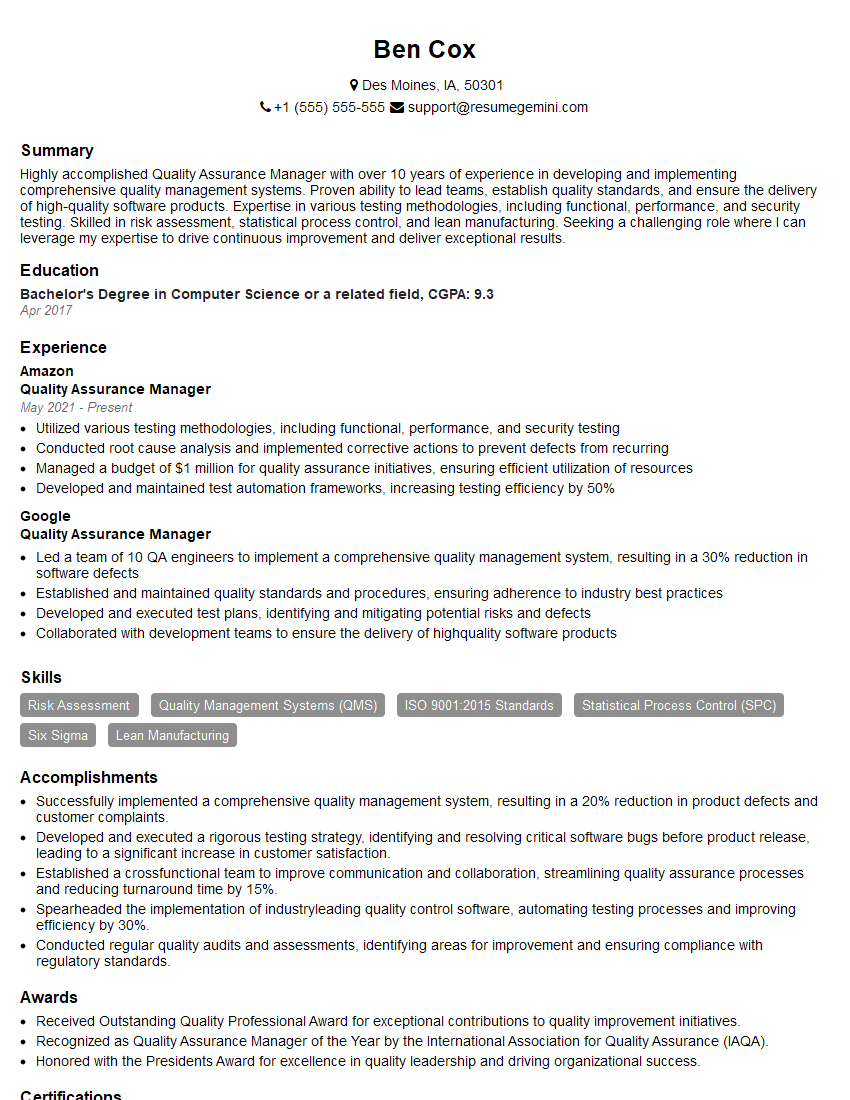
Quality Assurance Manager Resume Sample
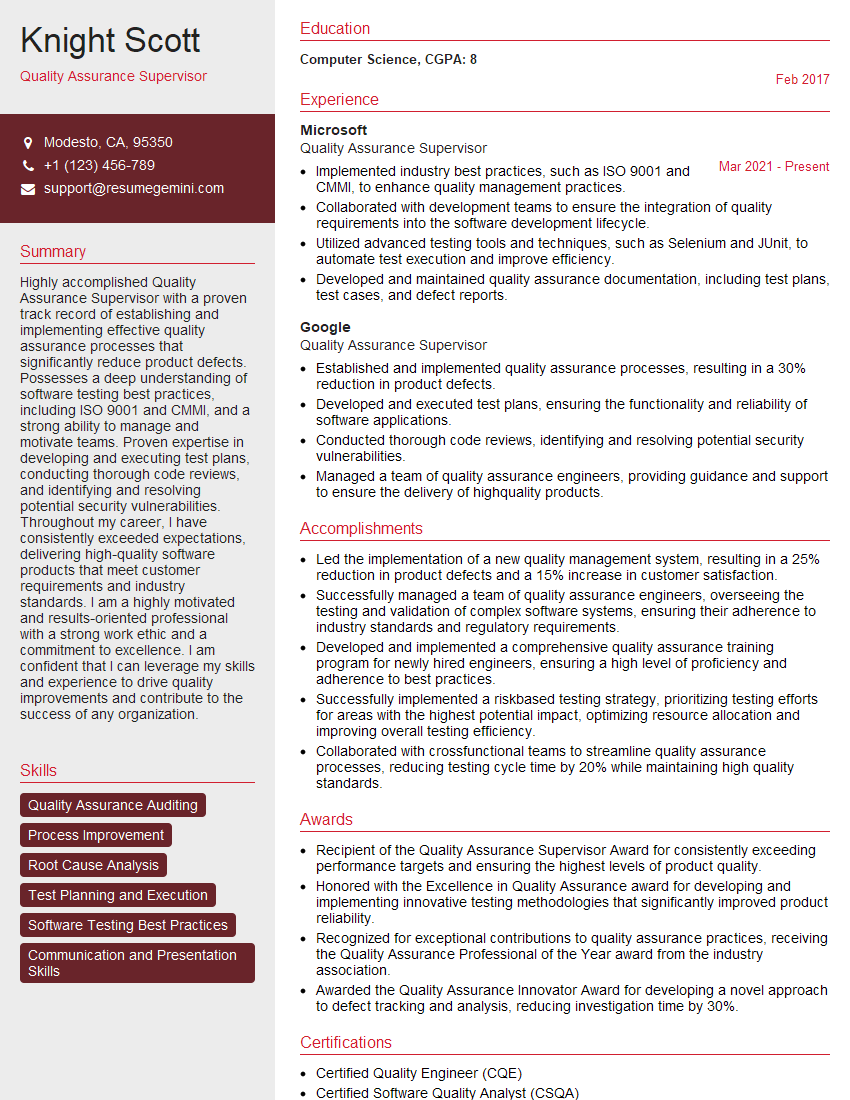
Quality Assurance Supervisor Resume Sample
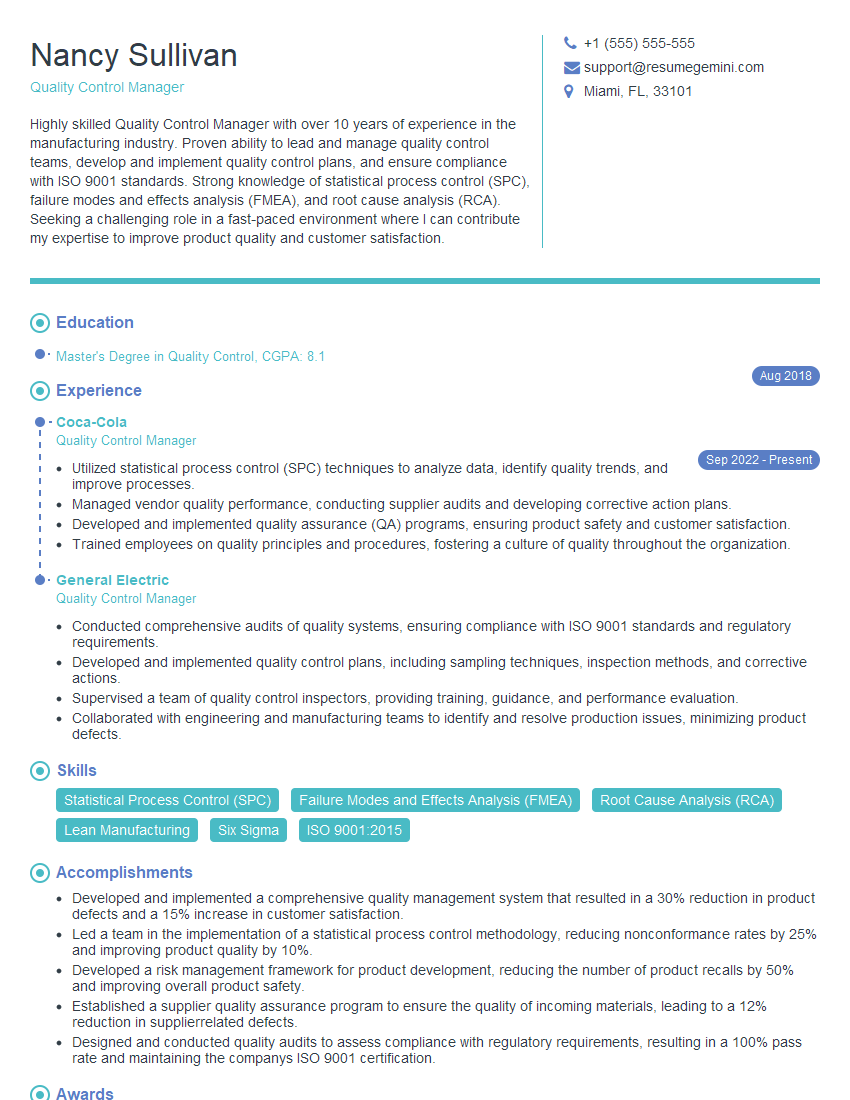
Quality Control Manager Resume Sample
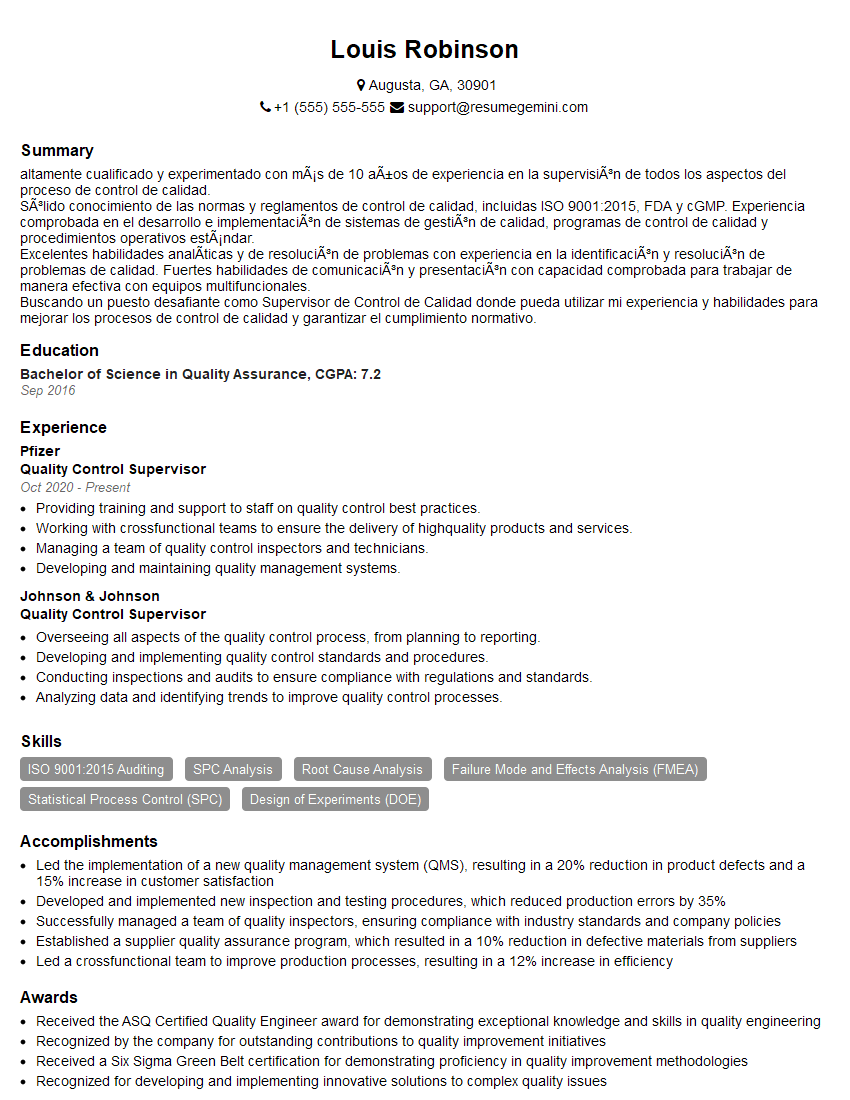
Quality Control Supervisor Resume Sample
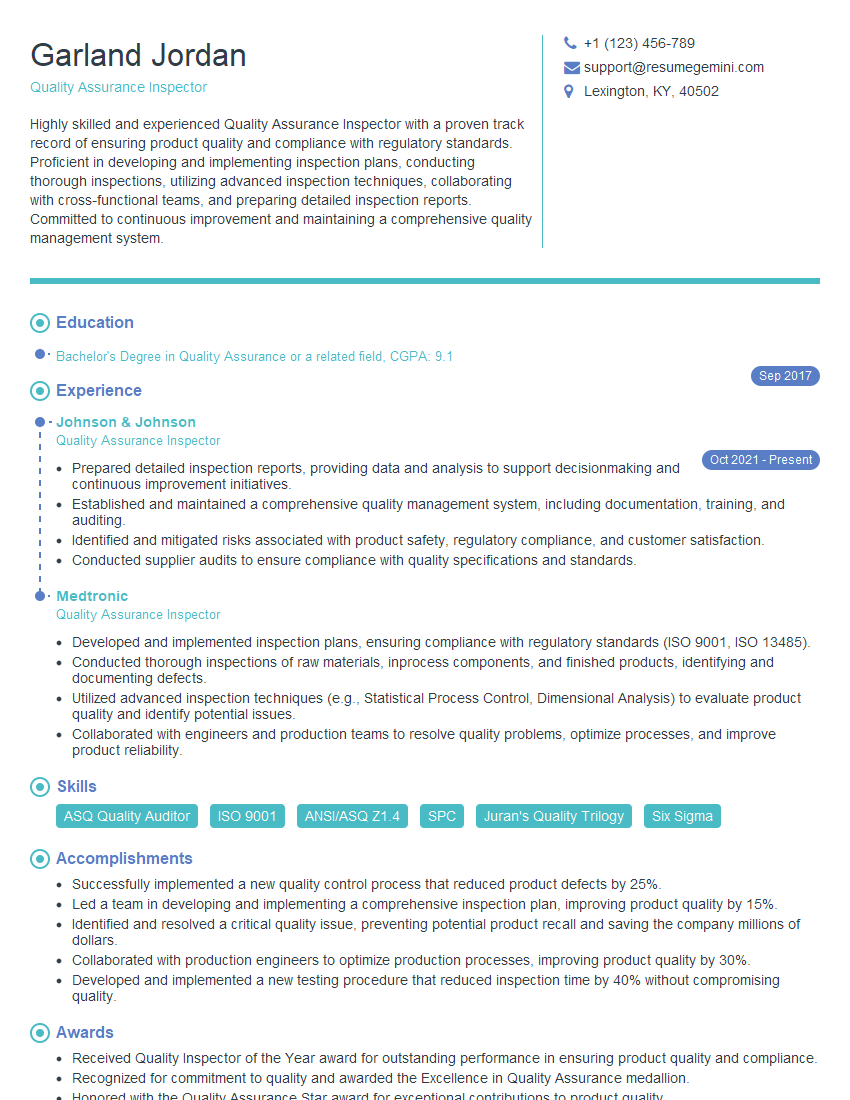
Quality Assurance Inspector Resume Sample
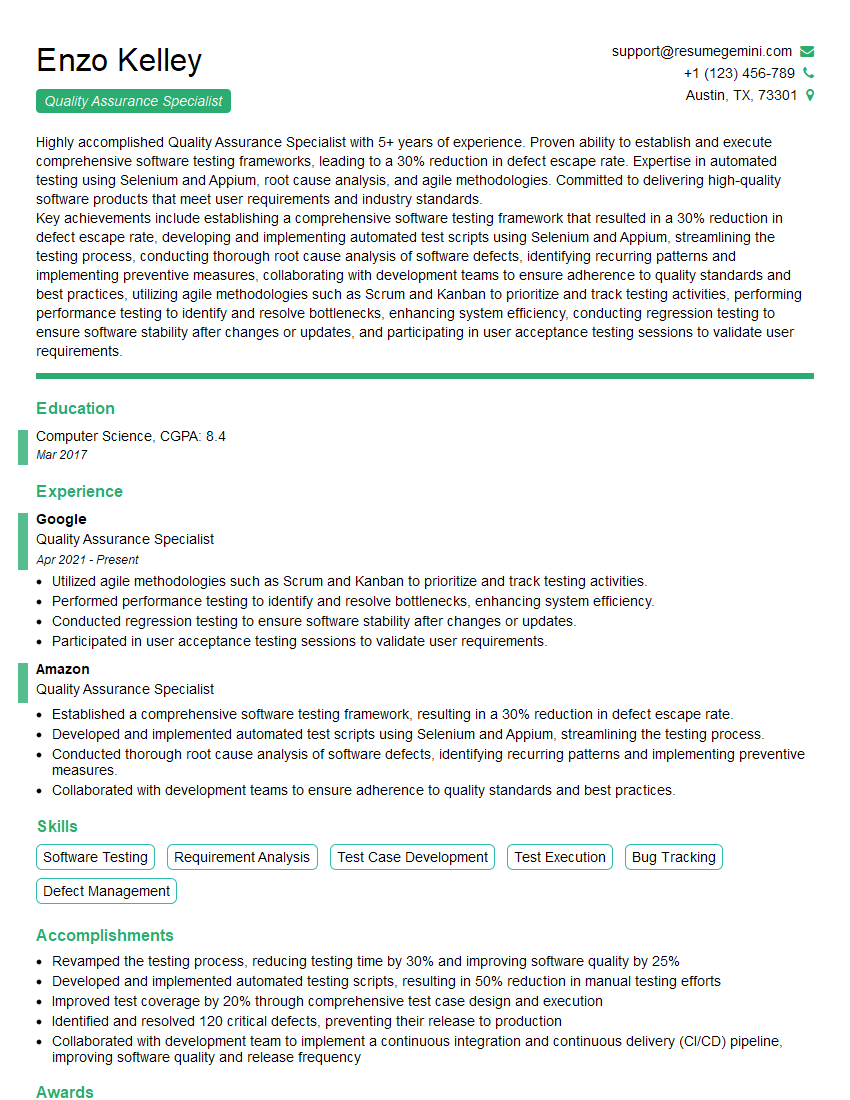
Quality Assurance Specialist Resume Sample
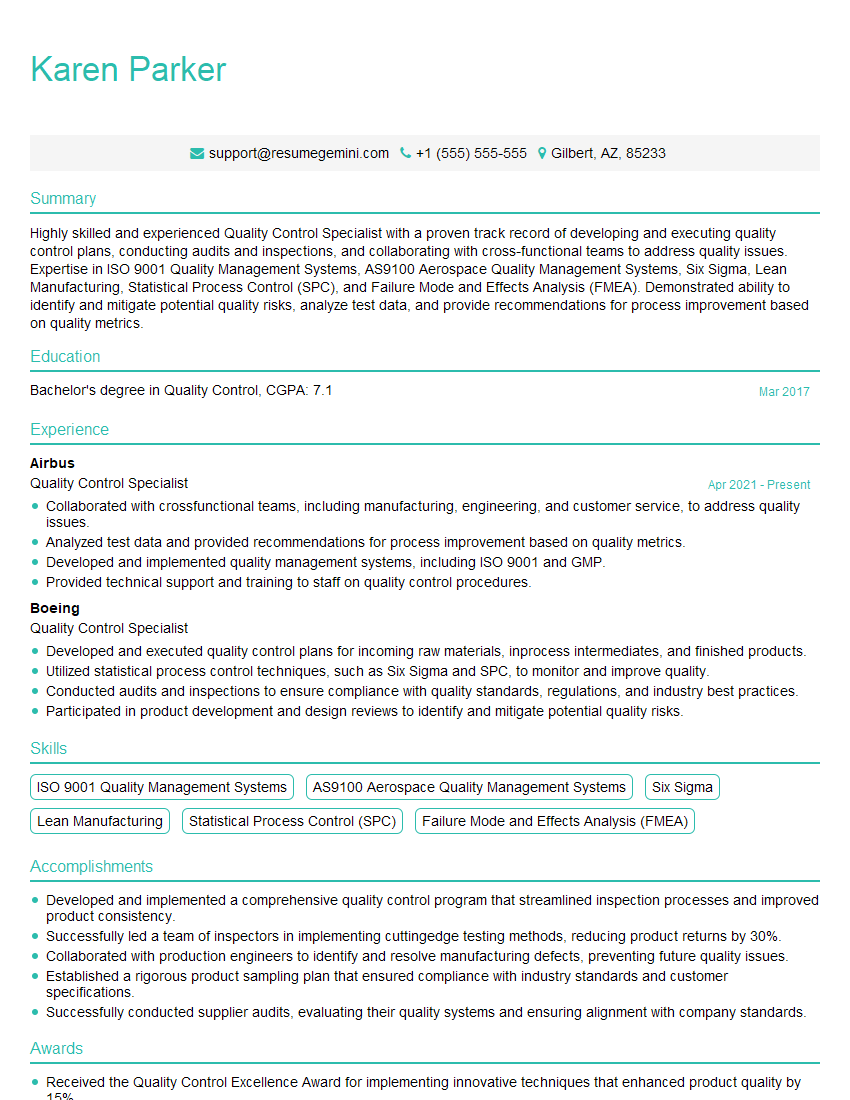
Quality Control Specialist Resume Sample
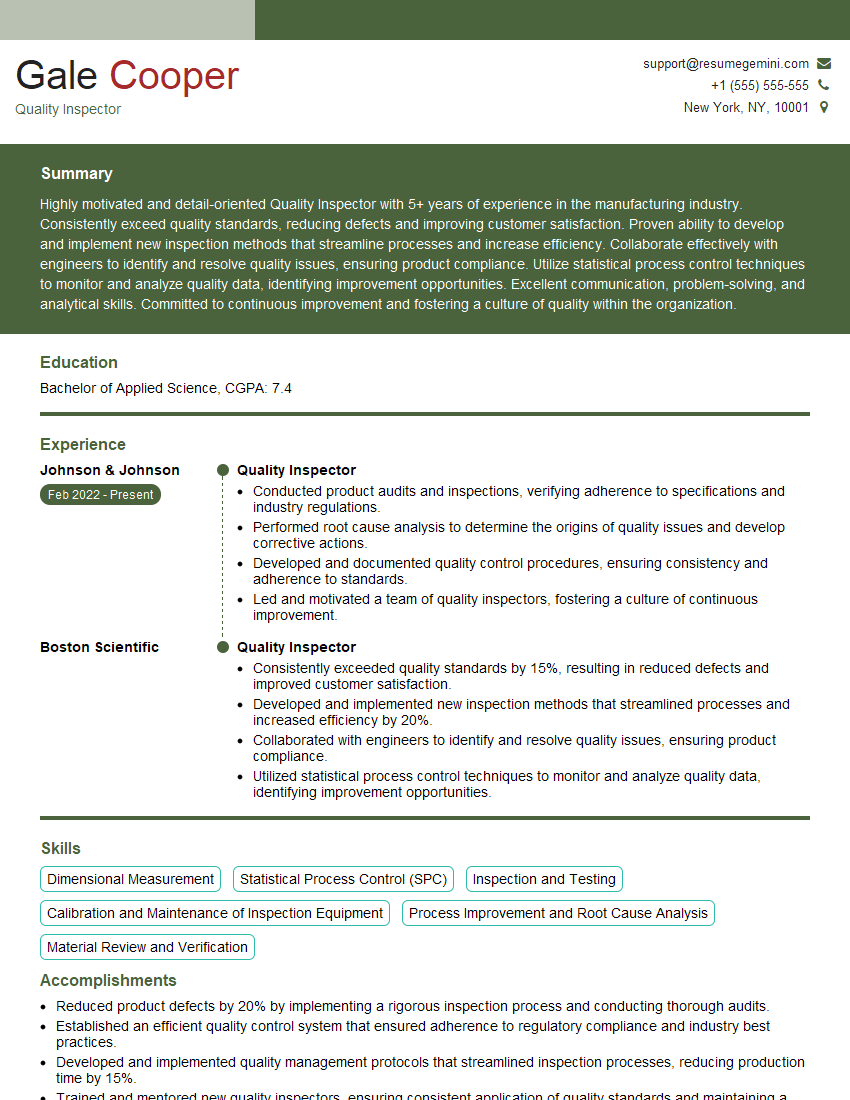
Quality Inspector Resume Sample
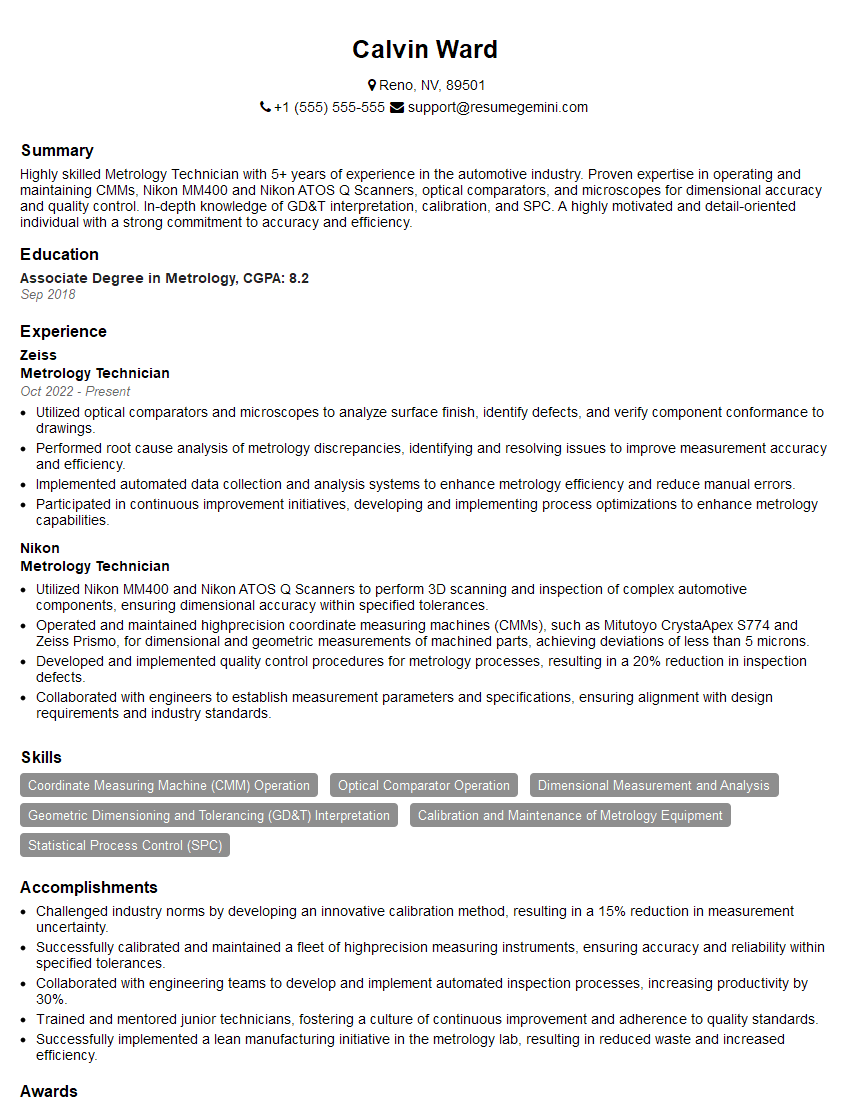
Metrology Technician Resume Sample
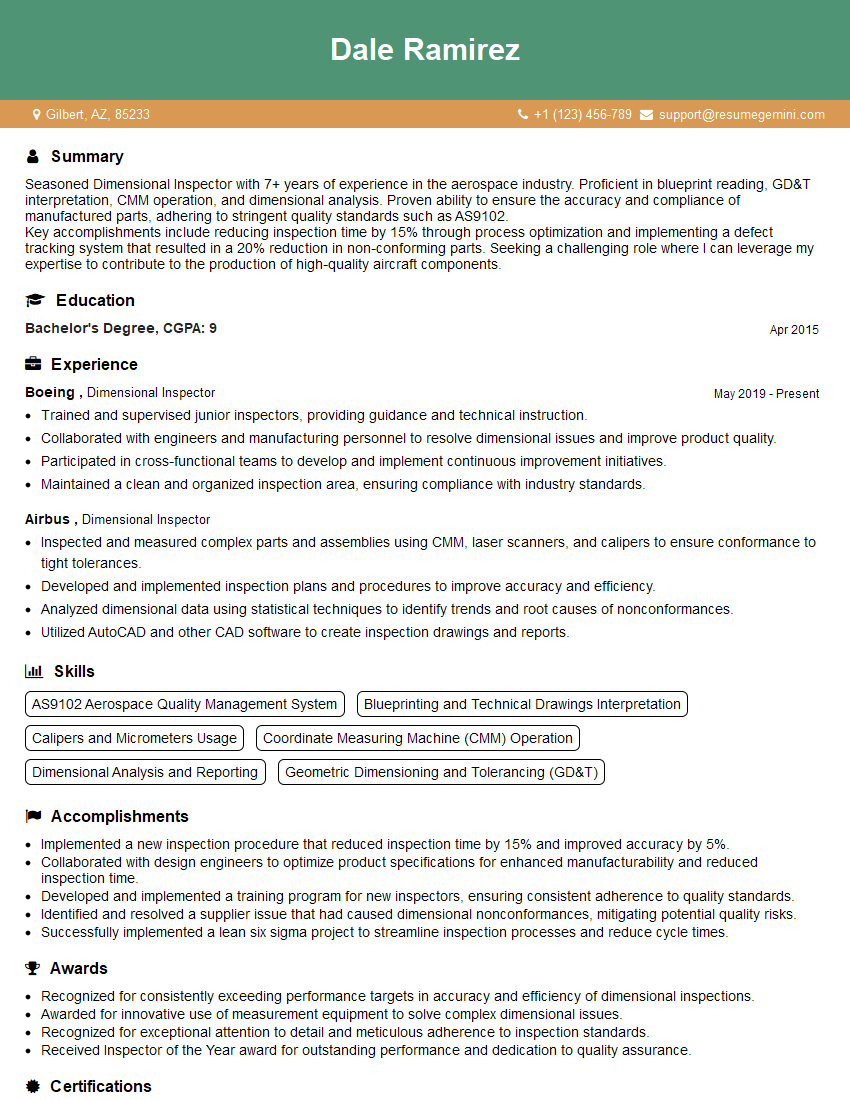
Dimensional Inspector Resume Sample
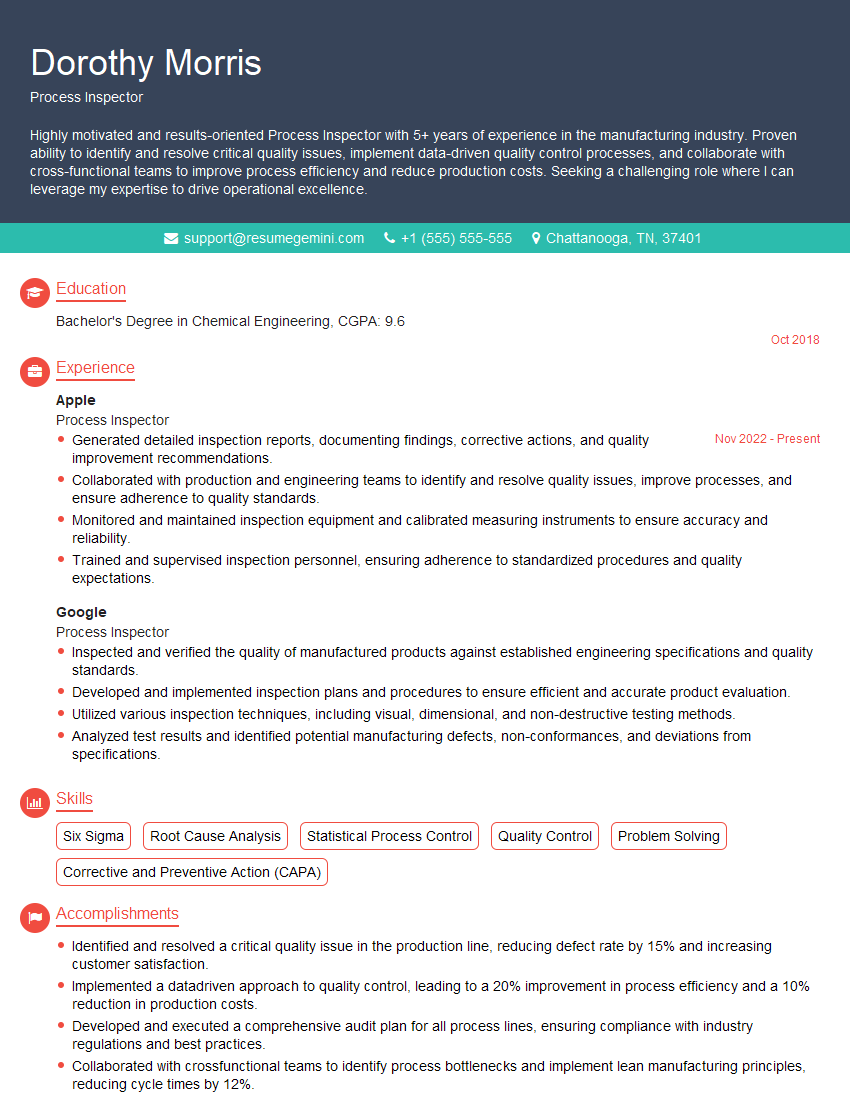
Process Inspector Resume Sample
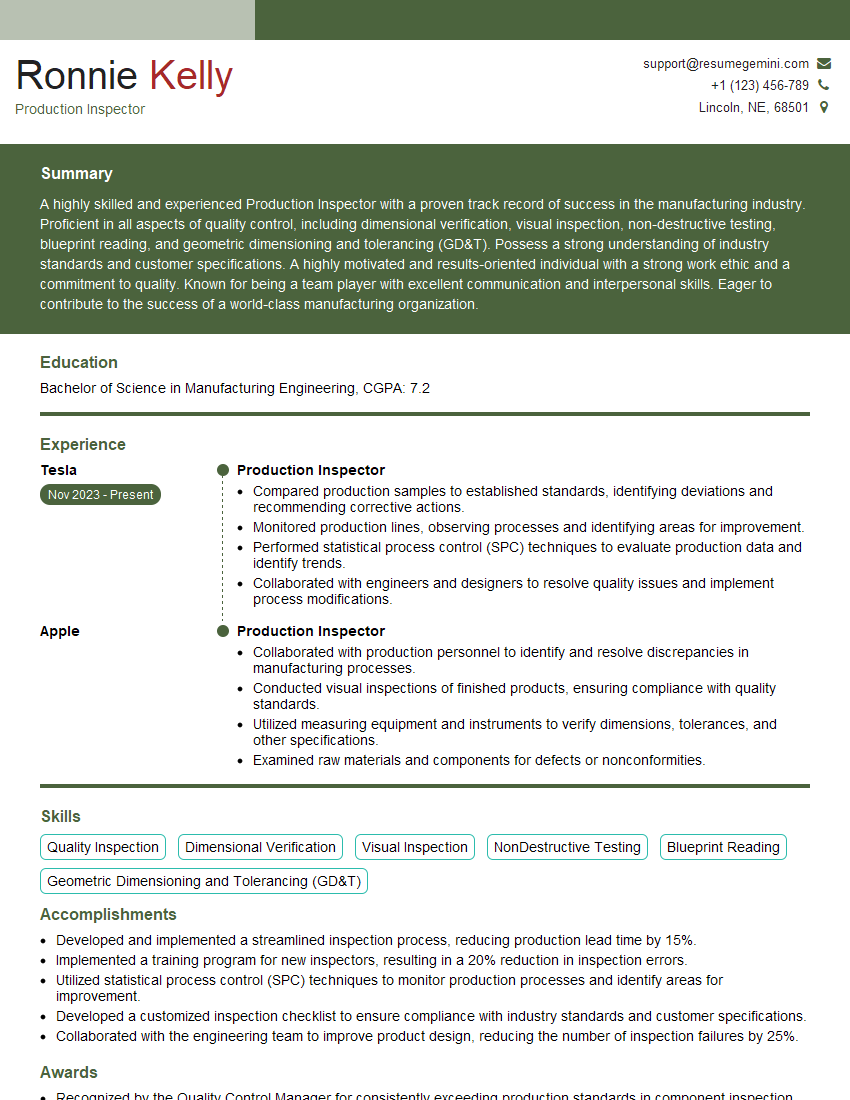
Production Inspector Resume Sample
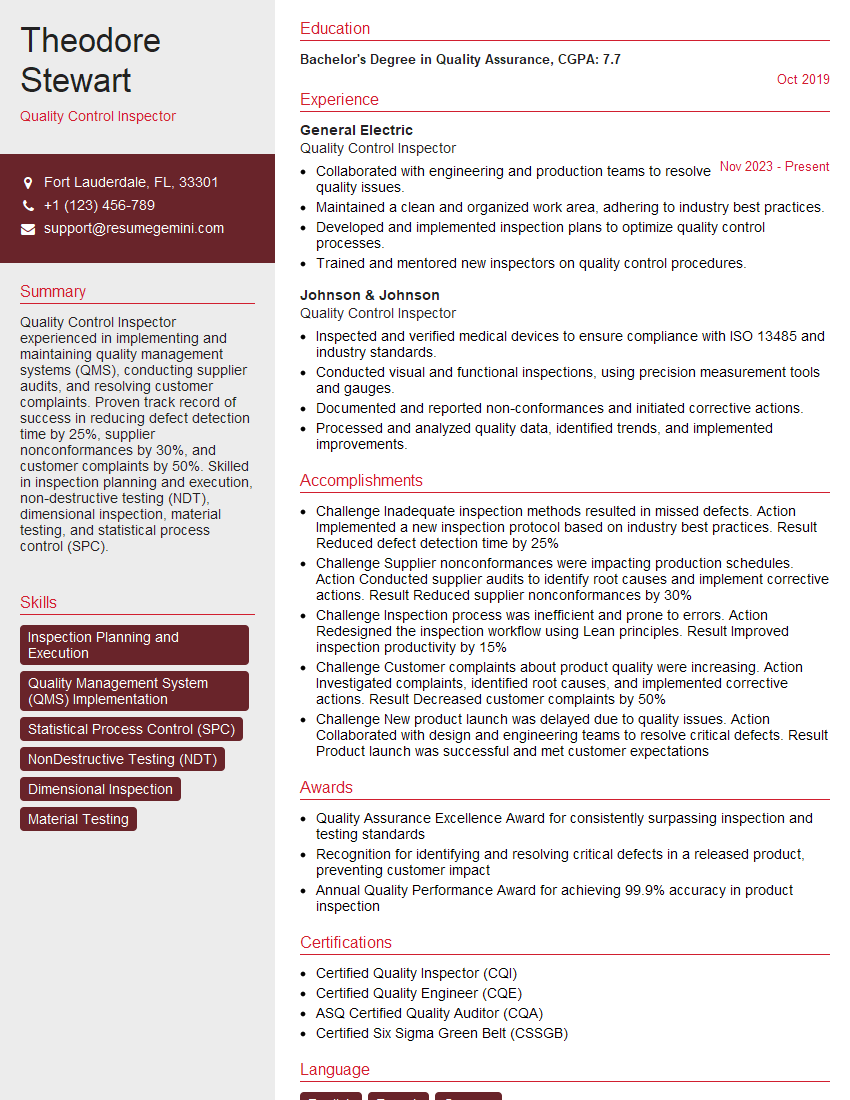
Quality Control Inspector Resume Sample
- Quality Assurance Manager
- Quality Assurance Supervisor
- Quality Control Manager
- Quality Control Supervisor
- Quality Assurance Inspector
- Quality Assurance Specialist
- Quality Control Specialist
- Quality Inspector
- Metrology Technician
- Dimensional Inspector
- Process Inspector
- Production Inspector
- Quality Control Inspector
Explore more articles
Users Rating of Our Blogs
Share Your Experience
We value your feedback! Please rate our content and share your thoughts (optional).
What Readers Say About Our Blog
Attention music lovers!
Wow, All the best Sax Summer music !!!
Spotify: https://open.spotify.com/artist/6ShcdIT7rPVVaFEpgZQbUk
Apple Music: https://music.apple.com/fr/artist/jimmy-sax-black/1530501936
YouTube: https://music.youtube.com/browse/VLOLAK5uy_noClmC7abM6YpZsnySxRqt3LoalPf88No
Other Platforms and Free Downloads : https://fanlink.tv/jimmysaxblack
on google : https://www.google.com/search?q=22+AND+22+AND+22
on ChatGPT : https://chat.openai.com?q=who20jlJimmy20Black20Sax20Producer
Get back into the groove with Jimmy sax Black
Best regards,
Jimmy sax Black
www.jimmysaxblack.com
Hi I am a troller at The aquatic interview center and I suddenly went so fast in Roblox and it was gone when I reset.
Hi,
Business owners spend hours every week worrying about their website—or avoiding it because it feels overwhelming.
We’d like to take that off your plate:
$69/month. Everything handled.
Our team will:
Design a custom website—or completely overhaul your current one
Take care of hosting as an option
Handle edits and improvements—up to 60 minutes of work included every month
No setup fees, no annual commitments. Just a site that makes a strong first impression.
Find out if it’s right for you:
https://websolutionsgenius.com/awardwinningwebsites
Hello,
we currently offer a complimentary backlink and URL indexing test for search engine optimization professionals.
You can get complimentary indexing credits to test how link discovery works in practice.
No credit card is required and there is no recurring fee.
You can find details here:
https://wikipedia-backlinks.com/indexing/
Regards
NICE RESPONSE TO Q & A
hi
The aim of this message is regarding an unclaimed deposit of a deceased nationale that bears the same name as you. You are not relate to him as there are millions of people answering the names across around the world. But i will use my position to influence the release of the deposit to you for our mutual benefit.
Respond for full details and how to claim the deposit. This is 100% risk free. Send hello to my email id: [email protected]
Luka Chachibaialuka
Hey interviewgemini.com, just wanted to follow up on my last email.
We just launched Call the Monster, an parenting app that lets you summon friendly ‘monsters’ kids actually listen to.
We’re also running a giveaway for everyone who downloads the app. Since it’s brand new, there aren’t many users yet, which means you’ve got a much better chance of winning some great prizes.
You can check it out here: https://bit.ly/callamonsterapp
Or follow us on Instagram: https://www.instagram.com/callamonsterapp
Thanks,
Ryan
CEO – Call the Monster App
Hey interviewgemini.com, I saw your website and love your approach.
I just want this to look like spam email, but want to share something important to you. We just launched Call the Monster, a parenting app that lets you summon friendly ‘monsters’ kids actually listen to.
Parents are loving it for calming chaos before bedtime. Thought you might want to try it: https://bit.ly/callamonsterapp or just follow our fun monster lore on Instagram: https://www.instagram.com/callamonsterapp
Thanks,
Ryan
CEO – Call A Monster APP
To the interviewgemini.com Owner.
Dear interviewgemini.com Webmaster!
Hi interviewgemini.com Webmaster!
Dear interviewgemini.com Webmaster!
excellent
Hello,
We found issues with your domain’s email setup that may be sending your messages to spam or blocking them completely. InboxShield Mini shows you how to fix it in minutes — no tech skills required.
Scan your domain now for details: https://inboxshield-mini.com/
— Adam @ InboxShield Mini
Reply STOP to unsubscribe
Hi, are you owner of interviewgemini.com? What if I told you I could help you find extra time in your schedule, reconnect with leads you didn’t even realize you missed, and bring in more “I want to work with you” conversations, without increasing your ad spend or hiring a full-time employee?
All with a flexible, budget-friendly service that could easily pay for itself. Sounds good?
Would it be nice to jump on a quick 10-minute call so I can show you exactly how we make this work?
Best,
Hapei
Marketing Director
Hey, I know you’re the owner of interviewgemini.com. I’ll be quick.
Fundraising for your business is tough and time-consuming. We make it easier by guaranteeing two private investor meetings each month, for six months. No demos, no pitch events – just direct introductions to active investors matched to your startup.
If youR17;re raising, this could help you build real momentum. Want me to send more info?
Hi, I represent an SEO company that specialises in getting you AI citations and higher rankings on Google. I’d like to offer you a 100% free SEO audit for your website. Would you be interested?
Hi, I represent an SEO company that specialises in getting you AI citations and higher rankings on Google. I’d like to offer you a 100% free SEO audit for your website. Would you be interested?