The right preparation can turn an interview into an opportunity to showcase your expertise. This guide to Industry Best Practices and Standards Compliance interview questions is your ultimate resource, providing key insights and tips to help you ace your responses and stand out as a top candidate.
Questions Asked in Industry Best Practices and Standards Compliance Interview
Q 1. Describe your experience implementing ISO 9001 standards.
My experience with ISO 9001 implementation spans several years and diverse industries. It’s not just about ticking boxes; it’s about embedding a quality management system (QMS) into the very fabric of an organization. I’ve led teams through the entire certification process, from the initial gap analysis and documentation creation to internal audits and management review meetings. For example, in a previous role at a manufacturing company, we implemented ISO 9001:2015, focusing on improving our process for managing customer orders. This involved documenting every step, from order placement to delivery and after-sales service. We utilized a process mapping technique to visualize workflow and identify bottlenecks, resulting in a 15% reduction in lead times and a significant decrease in customer complaints. Another key aspect was training employees on the new system and fostering a culture of continuous improvement, which we achieved through regular internal audits and feedback sessions.
Beyond the specific implementation, my experience also covers maintaining ISO 9001 certification, managing corrective and preventive actions (CAPAs), and continuously improving our processes. I understand the importance of aligning the QMS with business objectives and using data-driven decision-making to enhance overall quality and efficiency.
Q 2. Explain the importance of a robust compliance program.
A robust compliance program is the cornerstone of a successful and ethical organization. Think of it as an organization’s immune system, protecting it from legal, financial, and reputational risks. Its importance lies in several key areas:
- Risk Mitigation: A strong program proactively identifies and addresses potential compliance issues, preventing costly fines, lawsuits, and reputational damage. Imagine a pharmaceutical company failing to comply with FDA regulations; the consequences could be catastrophic.
- Operational Efficiency: By streamlining processes and ensuring consistent adherence to standards, compliance enhances operational efficiency and reduces waste. Think of a company that avoids costly rework due to a well-defined quality control system.
- Stakeholder Trust: Demonstrating a commitment to compliance builds trust with customers, investors, and regulatory bodies. This trust translates into increased market share and investor confidence.
- Competitive Advantage: Proactive compliance can position a company as a leader in its industry, attracting customers who value ethical and responsible business practices.
In essence, a strong compliance program isn’t just a ‘nice-to-have’; it’s a crucial component of long-term organizational sustainability and success.
Q 3. How do you identify and mitigate compliance risks?
Identifying and mitigating compliance risks requires a structured approach. I typically use a risk assessment framework that involves the following steps:
- Identify Potential Risks: This involves reviewing relevant regulations, industry best practices, and internal processes to pinpoint potential areas of non-compliance. This often involves brainstorming sessions with subject matter experts and referencing risk registers.
- Analyze the Likelihood and Impact: Once identified, each risk is assessed based on its likelihood of occurrence and potential impact on the organization. This often uses a matrix to visually represent the severity of each risk.
- Develop Mitigation Strategies: For each identified risk, a mitigation strategy is developed to reduce its likelihood or impact. This might involve implementing new controls, revising procedures, or providing additional training.
- Implement and Monitor: The mitigation strategies are implemented, and their effectiveness is monitored regularly through audits and key performance indicators (KPIs).
- Review and Update: The entire risk assessment process is reviewed and updated periodically to reflect changes in the regulatory landscape and the organization’s operations. This is a continuous process, not a one-time event.
For example, in a financial institution, a key risk might be money laundering. Mitigation strategies could include implementing robust Know Your Customer (KYC) procedures, enhanced transaction monitoring, and employee training on anti-money laundering regulations.
Q 4. What are the key elements of a successful compliance audit?
A successful compliance audit is more than just a checklist; it’s a comprehensive evaluation of an organization’s adherence to relevant regulations and best practices. Key elements include:
- Scope Definition: Clearly defining the scope of the audit, specifying the areas, systems, and processes to be reviewed.
- Planning and Preparation: Developing a detailed audit plan that outlines the audit objectives, methodology, and timeline.
- Evidence Gathering: Collecting sufficient and relevant evidence through document review, interviews, observations, and testing.
- Evaluation and Reporting: Analyzing the collected evidence to determine the extent of compliance and preparing a comprehensive report documenting findings, conclusions, and recommendations.
- Follow-up and Corrective Actions: Implementing corrective actions to address any identified non-compliances and monitoring their effectiveness.
- Competent Auditors: Ensuring that the auditors possess the necessary skills, knowledge, and experience to conduct the audit effectively and objectively. This often involves certifications and ongoing professional development.
A well-executed compliance audit provides valuable insights into an organization’s compliance posture and helps to identify areas for improvement, strengthening its overall risk management framework.
Q 5. Describe your experience with regulatory compliance reporting.
My experience with regulatory compliance reporting involves preparing and submitting various reports to regulatory bodies, ensuring accuracy, completeness, and timeliness. This includes understanding the specific requirements of each reporting mandate, gathering the necessary data, and using appropriate reporting tools and software. For instance, in a previous role, I was responsible for preparing and submitting annual reports to the Environmental Protection Agency (EPA) regarding the company’s emission levels. This involved meticulously tracking and analyzing environmental data, ensuring accurate reporting and maintaining all supporting documentation. Another example involves preparing financial reports in accordance with Generally Accepted Accounting Principles (GAAP) or International Financial Reporting Standards (IFRS), ensuring accuracy and transparency for stakeholders.
Beyond simply submitting reports, I also focus on proactive communication with regulatory bodies, ensuring transparency and proactively addressing any questions or concerns they may have. This helps to build a positive working relationship and avoid potential compliance issues.
Q 6. How do you stay updated on changes in industry regulations and best practices?
Staying updated on changes in industry regulations and best practices is crucial for maintaining compliance. My strategy is multi-faceted:
- Subscription to Regulatory Updates: I subscribe to newsletters, journals, and online resources that provide updates on relevant regulations and best practices. This includes government websites, professional organizations, and industry publications.
- Networking and Professional Development: I actively participate in industry events, conferences, and training courses to stay abreast of the latest developments and network with other professionals in the field.
- Monitoring Regulatory Agency Websites: I regularly check the websites of relevant regulatory agencies for updates, announcements, and guidance documents.
- Internal Communication: I maintain open communication channels within my organization to ensure that all team members are aware of any changes that may impact compliance.
Continuous learning is essential in this field, as regulatory requirements and best practices are constantly evolving. Regularly updating knowledge ensures our compliance programs are always current and effective.
Q 7. Explain your understanding of Sarbanes-Oxley (SOX) compliance.
Sarbanes-Oxley (SOX) compliance is a critical aspect of corporate governance, particularly for publicly traded companies. SOX aims to protect investors by improving the accuracy and reliability of corporate disclosures. My understanding encompasses the key provisions of SOX, including:
- Internal Controls over Financial Reporting (ICFR): This involves establishing and maintaining a robust system of internal controls to ensure the reliability of financial reporting. This requires regular testing and documentation of these controls.
- Section 302: Corporate Responsibility for Financial Reports: This section holds company executives responsible for the accuracy and completeness of financial reports.
- Section 404: Management Assessment of Internal Controls: This requires management to assess and document the effectiveness of its internal control system over financial reporting.
- Auditing Requirements: SOX mandates independent audits of financial statements and internal controls, ensuring an external verification of compliance.
Implementing SOX compliance requires a comprehensive approach, involving collaboration between management, internal audit, and external auditors. I have experience in developing and implementing SOX-compliant processes, conducting internal audits, and working with external auditors to ensure compliance. Understanding the specific requirements of SOX for different industries is crucial for a successful implementation.
Q 8. How do you handle non-compliance situations?
Handling non-compliance situations requires a systematic approach combining immediate action with long-term preventative measures. First, I identify the nature and extent of the non-compliance. This involves gathering evidence, determining the root cause, and assessing the potential impact. Then, I implement corrective actions to rectify the non-compliance immediately. This could involve anything from updating a process to retraining staff. Simultaneously, I initiate a root cause analysis (RCA) to understand why the non-compliance occurred in the first place. This might involve interviewing relevant personnel, reviewing documentation, and analyzing data. Based on the RCA findings, I develop preventive actions to minimize the risk of recurrence. This could involve implementing new controls, improving training programs, or updating policies. Finally, I document the entire process, including the corrective and preventive actions taken, and any lessons learned. For instance, if a data breach occurs due to weak password policies, the immediate action is to contain the breach and inform affected individuals. The RCA might reveal insufficient security awareness training. The preventive action would be to implement stronger password policies and deliver comprehensive security awareness training to all employees.
Q 9. What is your experience with internal controls and their role in compliance?
Internal controls are the backbone of compliance. They are processes, policies, and procedures designed to ensure that an organization’s objectives are achieved, risks are mitigated, and compliance with regulations is maintained. My experience involves designing, implementing, and auditing various internal controls across different organizations. For example, in a previous role, I helped implement segregation of duties to prevent fraud and ensure accurate financial reporting. This involved mapping out key processes and identifying areas where overlapping responsibilities could lead to errors or malicious activity. We then restructured roles and responsibilities to ensure that no single individual had complete control over any critical process. Another example is the implementation of robust change management processes to ensure that any alterations to systems or processes are properly authorized, tested, and documented, preventing accidental or unauthorized changes that might lead to non-compliance. The role of internal controls in compliance is crucial, as they act as a preventative mechanism, helping to identify and address potential compliance risks before they become major issues.
Q 10. Describe your experience with data privacy regulations (e.g., GDPR, CCPA).
I have extensive experience with data privacy regulations, including GDPR and CCPA. My expertise encompasses understanding the requirements of these regulations, implementing data protection policies, and conducting data protection impact assessments (DPIAs). For instance, under GDPR, I have helped organizations implement data minimization principles, ensuring that they only collect and process the minimum amount of personal data necessary for specified, explicit, and legitimate purposes. This involved reviewing data collection practices, identifying unnecessary data points, and revising data collection forms. With CCPA, I’ve assisted companies in establishing procedures for handling consumer data requests, including rights to access, deletion, and opt-out. This included developing clear and accessible processes for handling consumer requests, implementing secure data storage and processing methods, and providing appropriate training to staff on data privacy compliance. I also have experience conducting DPIAs, identifying and mitigating potential risks to individuals’ privacy related to data processing activities. For example, if a company is planning to introduce facial recognition technology, a DPIA would be conducted to assess the risks and identify appropriate safeguards to protect individual rights.
Q 11. How do you ensure compliance with industry-specific standards?
Ensuring compliance with industry-specific standards involves a multifaceted approach. It starts with identifying all applicable standards relevant to the industry and the organization’s activities. This might include ISO 27001 for information security, HIPAA for healthcare, or PCI DSS for payment card processing. Next, I conduct a gap analysis to determine the organization’s current compliance posture against the requirements of these standards. This involves reviewing existing policies, procedures, and controls and identifying any discrepancies. Based on the gap analysis, a comprehensive compliance plan is developed, outlining the steps needed to achieve full compliance. This might involve implementing new controls, updating existing policies, providing training to staff, and conducting regular audits. Finally, ongoing monitoring and reporting are crucial to ensure that compliance is maintained over time. This includes regular internal audits, external audits (when required), and ongoing review of the compliance plan itself to ensure it remains relevant and effective. For example, if a financial institution is required to comply with SOX (Sarbanes-Oxley Act), a thorough review of internal controls over financial reporting is necessary, coupled with regular audits and documentation to demonstrate compliance.
Q 12. Explain your approach to risk assessment and management related to compliance.
My approach to risk assessment and management related to compliance begins with a thorough understanding of the organization’s operations, regulatory landscape, and potential risks. I utilize a risk-based approach, which prioritizes the most critical risks based on their likelihood and potential impact. The risk assessment process often involves using established frameworks such as NIST Cybersecurity Framework or ISO 31000. I identify potential risks that could lead to non-compliance, such as data breaches, regulatory fines, reputational damage, and operational disruptions. Once identified, I analyze the likelihood and potential impact of each risk. This often involves using quantitative and qualitative methods to determine the level of risk. Based on the risk assessment, I develop mitigation strategies to address identified risks. This could involve implementing new controls, improving existing controls, or transferring the risk through insurance or outsourcing. I continuously monitor and review the effectiveness of these strategies to ensure that they remain relevant and effective. The entire process is documented to provide transparency and accountability. For example, if a high likelihood and high impact risk is identified (e.g., a potential data breach due to outdated systems), the mitigation strategy might involve upgrading the systems, implementing multi-factor authentication, and conducting regular security awareness training.
Q 13. How do you communicate compliance requirements to different stakeholders?
Communicating compliance requirements effectively involves tailoring the message to the audience. For senior management, I present high-level overviews focusing on strategic implications and financial risks. For example, I might highlight the potential cost of non-compliance, such as fines or reputational damage, and the potential return on investment from compliance initiatives. For operational staff, I provide clear, concise instructions and training materials focusing on their specific roles and responsibilities. This might involve creating role-based training modules, checklists, and job aids. For external stakeholders (e.g., customers, regulators), I use formal communication channels and clear, legally compliant language. I frequently use a multi-channel approach, employing emails, newsletters, training sessions, and presentations to ensure all stakeholders receive consistent and easily understandable information. Clear and consistent communication is key to ensuring widespread understanding and buy-in to compliance initiatives, ultimately increasing the likelihood of successful compliance.
Q 14. What metrics do you use to measure compliance effectiveness?
Measuring compliance effectiveness requires a robust system of metrics and reporting. I typically track metrics like the number of compliance incidents, the time taken to resolve incidents, the effectiveness of preventative controls, and the overall cost of compliance. Key performance indicators (KPIs) can include the percentage of employees trained on compliance policies, the number of audits conducted, and the number of non-conformances identified. Data visualization tools, such as dashboards, are used to monitor these metrics and identify trends. Regular reporting to senior management provides a clear picture of the organization’s compliance posture. This data-driven approach ensures a proactive and continuously improving compliance program. For example, if the number of data breaches is increasing, it indicates a need to review and improve data security controls. Analyzing the root causes of these incidents can identify areas needing improvement, leading to targeted action and a more effective compliance program.
Q 15. Describe your experience with compliance training programs.
Compliance training is crucial for fostering a culture of adherence to regulations and best practices. My experience encompasses designing, delivering, and evaluating training programs across various sectors, including finance, healthcare, and technology. I’ve worked with both off-the-shelf and customized programs, tailoring content to specific roles and regulatory requirements. For example, in the financial sector, I developed a program on anti-money laundering (AML) regulations, incorporating interactive modules, case studies, and assessments to ensure understanding and retention. In the healthcare industry, I’ve focused on HIPAA compliance, emphasizing practical applications and real-world scenarios to help trainees understand the implications of non-compliance.
- Needs Assessment: I begin by thoroughly assessing the specific compliance needs of the organization and its employees, identifying knowledge gaps and tailoring the training to address them.
- Content Development: I create engaging and interactive training materials, utilizing a variety of methods such as videos, presentations, and hands-on exercises. I always focus on practical application and avoid overwhelming trainees with overly technical jargon.
- Delivery Methods: I’ve used a variety of delivery methods, including in-person workshops, online modules, and blended learning approaches, optimizing for audience engagement and learning style.
- Evaluation and Feedback: Post-training assessment and ongoing feedback mechanisms are crucial. I use a mix of tests, quizzes, and performance reviews to assess effectiveness and make improvements for future iterations.
Career Expert Tips:
- Ace those interviews! Prepare effectively by reviewing the Top 50 Most Common Interview Questions on ResumeGemini.
- Navigate your job search with confidence! Explore a wide range of Career Tips on ResumeGemini. Learn about common challenges and recommendations to overcome them.
- Craft the perfect resume! Master the Art of Resume Writing with ResumeGemini’s guide. Showcase your unique qualifications and achievements effectively.
- Don’t miss out on holiday savings! Build your dream resume with ResumeGemini’s ATS optimized templates.
Q 16. How do you utilize technology to enhance compliance processes?
Technology is indispensable for enhancing compliance processes. I leverage various tools to streamline workflows, automate tasks, and improve accuracy. For instance, I’ve implemented compliance management software to centralize policies, procedures, and documentation, ensuring easy accessibility and version control. This software often includes features such as automated reminders for regulatory updates, audit trails for tracking compliance activities, and reporting dashboards for monitoring key performance indicators (KPIs). Furthermore, I utilize data analytics tools to identify trends and patterns in compliance data, allowing for proactive risk mitigation. For example, analyzing data on near misses can reveal weaknesses in our existing compliance programs, allowing us to implement preventative measures.
- Compliance Management Software: Tools like Archer, ServiceNow GRC, and MetricStream provide centralized repositories for policies, procedures, and training materials, automating workflows and reducing manual effort.
- Data Analytics: Analyzing compliance data helps identify areas needing improvement. For example, tracking the number of compliance violations can highlight training deficiencies or process gaps.
- Automated Reporting: Automating report generation ensures timely and accurate reporting to regulatory bodies.
Q 17. Explain your experience with conducting root cause analysis of compliance failures.
Root cause analysis (RCA) is critical for understanding and preventing future compliance failures. My approach follows a structured methodology, typically using frameworks like the ‘5 Whys’ or Fishbone diagrams. I start by clearly defining the problem, gathering relevant data, and interviewing stakeholders to identify contributing factors. I’ve used this process to investigate issues ranging from data breaches to violations of internal policies. For example, when investigating a data breach, I systematically examined the incident, determining the root cause was a failure in access control protocols, rather than simply a technical failure. This led to the implementation of stronger access controls and more robust employee training on security protocols.
- Define the Problem: Clearly articulate the compliance failure, including the scope and impact.
- Gather Data: Collect information from various sources, including logs, interviews, and documentation.
- Identify Contributing Factors: Use a structured methodology, like the ‘5 Whys’ or Fishbone diagram, to identify the root causes.
- Develop Corrective Actions: Implement solutions to address the root causes and prevent recurrence.
- Monitor and Evaluate: Track the effectiveness of the corrective actions and make adjustments as needed.
Q 18. How do you ensure the accuracy and completeness of compliance documentation?
Ensuring accuracy and completeness of compliance documentation is paramount. My approach involves using version control systems, implementing robust document management processes, and regularly auditing documentation. I utilize a combination of electronic and physical filing systems, with clear labeling and indexing to facilitate easy retrieval. Regular audits ensure that all required documentation is up-to-date, accurate, and readily accessible. We use a checklist to ensure all critical documents are included, and all revisions are meticulously tracked and signed off. This allows for easy tracing of changes and demonstrates compliance with archival requirements.
- Version Control: Using systems like SharePoint or Google Drive ensures that only the most recent version of a document is used.
- Document Management System: A centralized system simplifies document storage, retrieval, and access control.
- Regular Audits: Scheduled reviews and audits ensure accuracy and completeness, catching inconsistencies early.
- Access Control: Limiting access to sensitive documents based on roles and responsibilities ensures data integrity and security.
Q 19. Describe your experience with developing and implementing compliance policies and procedures.
Developing and implementing compliance policies and procedures requires a collaborative and systematic approach. I start by analyzing the applicable laws, regulations, and industry best practices, then translating them into clear, concise, and actionable policies. I work closely with stakeholders across different departments to gain consensus and ensure the policies are practical and enforceable. The process includes drafting the policies, conducting stakeholder reviews, and finally disseminating and training employees on the new policies. I’ve found that using simple language and real-life examples improves comprehension and acceptance. For instance, when developing data privacy policies, I incorporated relatable scenarios to illustrate how employees could avoid accidental data breaches.
- Needs Assessment: Identifying relevant laws, regulations, and industry best practices.
- Policy Drafting: Creating clear, concise, and actionable policies in plain language.
- Stakeholder Engagement: Collaborating with relevant departments to ensure buy-in and practical implementation.
- Dissemination and Training: Effectively communicating policies to employees and providing comprehensive training.
- Monitoring and Review: Regularly reviewing and updating policies to ensure their effectiveness and relevance.
Q 20. How do you handle conflicts between different regulatory requirements?
Conflicts between regulatory requirements are common, particularly in multinational organizations. My approach is to identify all applicable regulations, prioritize them based on risk and impact, and develop a compliance strategy that addresses all requirements while mitigating potential conflicts. I often consult with legal counsel to understand the implications of conflicting requirements and develop strategies to comply with the most stringent standards. When there’s no clear precedence, I’d prioritize the regulatory requirements that pose the highest risk to the organization. Documentation of this process is crucial for demonstrating due diligence.
- Identify Applicable Regulations: Thoroughly research and identify all relevant regulations from different jurisdictions.
- Prioritize Requirements: Assess the risk and impact of non-compliance for each regulation.
- Develop a Compliance Strategy: Create a strategy that addresses all requirements, mitigating potential conflicts.
- Consult Legal Counsel: Seek expert advice on complex or ambiguous situations.
- Document the Process: Maintain a detailed record of the decision-making process.
Q 21. What is your understanding of ethical considerations in compliance?
Ethical considerations are central to compliance. A strong ethical foundation ensures that compliance is not merely about adhering to rules but also about acting with integrity and promoting responsible behavior. This includes transparency, fairness, accountability, and respect for individuals’ rights. Ethical dilemmas can arise, and navigating them requires careful consideration of all stakeholders’ interests and a commitment to doing what is right, even when it’s difficult. For example, identifying and reporting potential unethical behavior within an organization, even if it involves challenging colleagues, is an important aspect of ethical compliance.
- Transparency: Open and honest communication with all stakeholders.
- Fairness: Treating everyone equitably and consistently.
- Accountability: Taking responsibility for one’s actions and decisions.
- Respect for Rights: Upholding the rights and dignity of all individuals.
- Whistleblowing Mechanisms: Establishing safe and effective channels for reporting unethical behavior.
Q 22. Describe your experience with external audits and inspections.
External audits and inspections are crucial for validating the effectiveness of a compliance program. My experience spans various industries, including finance and healthcare, where I’ve collaborated extensively with auditors from both regulatory bodies and independent firms. This includes preparing for audits, providing documentation, participating in walkthroughs, and addressing findings. I’m proficient in understanding the audit process, identifying potential vulnerabilities, and proactively mitigating risks before they become issues.
For instance, during a recent SOC 2 audit (System and Organization Controls 2), I led the internal team in preparing documentation for the Trust Services Criteria (TSC), specifically focusing on security, availability, processing integrity, confidentiality, and privacy. We implemented a robust remediation plan addressing minor findings, which resulted in an unqualified report.
Another example involved a regulatory inspection focusing on data privacy compliance. My role was to guide the organization through the process, ensuring full transparency with the inspectors and proactively addressing any questions or concerns. This experience honed my ability to navigate complex regulatory landscapes and maintain a consistently compliant operational framework.
Q 23. How do you ensure the ongoing effectiveness of a compliance program?
Ensuring the ongoing effectiveness of a compliance program requires a multi-faceted approach that integrates proactive measures, ongoing monitoring, and continuous improvement. It’s not a ‘set it and forget it’ process; it’s a dynamic system that needs regular attention.
- Regular Risk Assessments: Conducting periodic risk assessments (at least annually) identifies emerging threats and vulnerabilities. This allows for a proactive approach rather than a reactive one.
- Policy and Procedure Updates: Compliance regulations constantly evolve. Regularly reviewing and updating internal policies and procedures ensures alignment with the latest standards.
- Training and Awareness: Employees are the frontline of compliance. Regular training keeps them informed about relevant regulations and their responsibilities in adhering to them. This could involve interactive modules, workshops, or even gamified learning experiences.
- Monitoring and Reporting: Implementing systems for monitoring key compliance metrics (e.g., incident reports, audit findings) provides valuable insights into the effectiveness of controls. Regular reporting to senior management keeps them informed and engaged.
- Audits and Inspections: Internal audits can identify weaknesses before external audits highlight them. Regular self-assessments are crucial to maintaining a strong compliance posture.
- Continuous Improvement: Implementing a corrective action plan to address identified issues, no matter how small, is essential. This should include documenting the steps taken to prevent recurrence.
Think of it like maintaining a car – regular checkups, oil changes, and repairs prevent larger, more costly problems down the road. Similarly, a proactive approach to compliance minimizes the risk of serious breaches and penalties.
Q 24. What is your experience with the use of compliance management software?
I have extensive experience leveraging compliance management software to streamline and enhance compliance efforts. Such software provides centralized repositories for policies, procedures, and training materials, making access readily available and ensuring consistency. This allows for better tracking and management of compliance obligations.
For example, I’ve used software like Archer and ServiceNow to manage risk assessments, track policy acknowledgements, and schedule training. This centralized approach not only improves efficiency but also provides a comprehensive audit trail for demonstrating compliance. The software’s reporting capabilities allow for regular monitoring of key compliance metrics, enabling quicker identification of potential issues.
Beyond basic features, I have expertise in integrating software solutions with other enterprise systems, enhancing data analysis and decision-making. This includes using APIs to automate workflows and create a seamless user experience. My experience extends to selecting, implementing, and training others on the effective use of these software tools.
Q 25. Explain your understanding of the relationship between compliance and corporate governance.
Compliance and corporate governance are intrinsically linked. Corporate governance provides the overall framework for ethical and responsible conduct, while compliance ensures adherence to specific regulations and standards. Compliance programs are a crucial component of a strong corporate governance structure.
Think of corporate governance as the house, and compliance as the plumbing and electrical systems. A well-designed house (strong governance) is essential, but without functioning systems (compliance), the house won’t operate effectively. Poor governance leads to a lack of direction and accountability, which increases the likelihood of non-compliance.
Effective corporate governance establishes clear roles, responsibilities, and accountability for compliance. The board of directors sets the tone at the top, promoting a culture of ethical conduct and compliance. This, in turn, influences the design and implementation of the compliance program. Without strong governance, a compliance program is unlikely to be effective in the long run.
Q 26. How do you measure the return on investment (ROI) of a compliance program?
Measuring the ROI of a compliance program isn’t always straightforward, as it focuses on preventing negative outcomes rather than generating direct revenue. However, several key metrics can provide valuable insights.
- Reduced Fines and Penalties: The most direct measure is the avoidance of regulatory penalties. This is a tangible benefit that easily quantifies the program’s value.
- Improved Operational Efficiency: Streamlined processes and reduced errors resulting from improved compliance contribute to increased operational efficiency and cost savings.
- Enhanced Reputation and Brand Value: Demonstrating strong compliance enhances an organization’s reputation and brand value, potentially attracting investors and customers.
- Increased Stakeholder Trust: Strong compliance builds trust with stakeholders, including employees, customers, investors, and regulators.
- Reduced Litigation Costs: A proactive compliance program minimizes the risk of legal challenges and reduces associated legal fees.
Calculating the ROI involves comparing the costs of the compliance program (personnel, software, training) with the avoided costs of non-compliance. While not all costs are easily quantifiable (like reputational damage), a comprehensive approach considering both tangible and intangible benefits helps demonstrate the overall value.
Q 27. Describe a time you had to deal with a significant compliance challenge. How did you solve it?
In a previous role, we faced a significant challenge related to data privacy compliance when a new regulation was introduced with a very short implementation timeframe. The existing systems and processes were not fully compliant with the new requirements.
My approach involved a multi-step strategy:
- Rapid Assessment: We conducted a swift assessment to identify the gaps between our existing state and the new regulatory requirements. This involved cross-functional collaboration with IT, legal, and operations teams.
- Prioritization: Given the tight deadline, we prioritized the most critical areas needing immediate attention based on risk assessment. This allowed us to focus our resources effectively.
- Solution Development: We developed a phased implementation plan to address the gaps, including technical upgrades, policy changes, and employee training. This involved using agile methodology to adapt quickly to changing needs.
- Communication and Collaboration: Regular communication and collaboration with all stakeholders ensured everyone was informed and aware of the progress.
- Monitoring and Evaluation: Post-implementation, we closely monitored the effectiveness of the new processes and made adjustments as needed. This iterative approach ensured the solution remained compliant and effective.
This experience highlighted the importance of adaptability, cross-functional collaboration, and a proactive approach to addressing compliance challenges, even with short deadlines.
Q 28. How would you explain complex compliance issues to non-technical staff?
Explaining complex compliance issues to non-technical staff requires clear, concise communication, avoiding jargon and using relatable analogies. The key is to focus on the ‘why’ – the reasons behind compliance requirements and their impact on the organization and individuals.
For example, when explaining data privacy regulations, I avoid technical terms like ‘data masking’ or ‘differential privacy.’ Instead, I use analogies like protecting personal information similar to protecting one’s home: locking doors, securing windows, and being mindful of who has access. I relate consequences of non-compliance to real-world scenarios that are easily understood, making the importance of compliance resonate more effectively.
I utilize visuals like flowcharts and infographics to illustrate processes and simplify complex information. Interactive training sessions and role-playing scenarios can be highly effective in reinforcing understanding and making learning engaging. The focus is always on empowering employees to understand their roles and responsibilities in maintaining compliance, emphasizing the collective responsibility for protecting the organization’s reputation and avoiding potential risks.
Key Topics to Learn for Industry Best Practices and Standards Compliance Interview
- Data Security and Privacy: Understanding regulations like GDPR, CCPA, HIPAA, and how they impact data handling, storage, and access within your industry. Consider practical application scenarios involving data breaches and incident response.
- Software Development Lifecycle (SDLC) and Compliance: Familiarize yourself with different SDLC methodologies (Agile, Waterfall) and how compliance requirements are integrated throughout each phase. Think about how to ensure code quality, security testing, and documentation adhere to standards.
- Risk Management and Compliance Frameworks: Explore frameworks like ISO 27001, NIST Cybersecurity Framework, or COBIT. Understand how to identify, assess, and mitigate risks related to compliance, focusing on practical application in a real-world setting.
- Auditing and Compliance Reporting: Learn about the processes involved in compliance audits, internal controls, and generating compliance reports. Understand how to demonstrate adherence to regulations and standards to auditors.
- Ethical Considerations and Professional Conduct: Explore the ethical implications of non-compliance and the importance of professional responsibility in maintaining standards. Consider case studies illustrating ethical dilemmas and their resolutions.
- Industry-Specific Standards: Research and understand the specific regulations and best practices relevant to your target industry (e.g., financial services, healthcare, etc.).
Next Steps
Mastering Industry Best Practices and Standards Compliance is crucial for career advancement. It demonstrates your commitment to professionalism, ethical conduct, and your ability to contribute meaningfully to a secure and compliant work environment. A strong understanding of these principles will significantly enhance your interview performance and overall job prospects.
To further strengthen your candidacy, create an ATS-friendly resume that highlights your relevant skills and experience effectively. ResumeGemini is a trusted resource that can help you build a professional resume tailored to your specific industry and experience. Examples of resumes tailored to Industry Best Practices and Standards Compliance are available to help you get started.
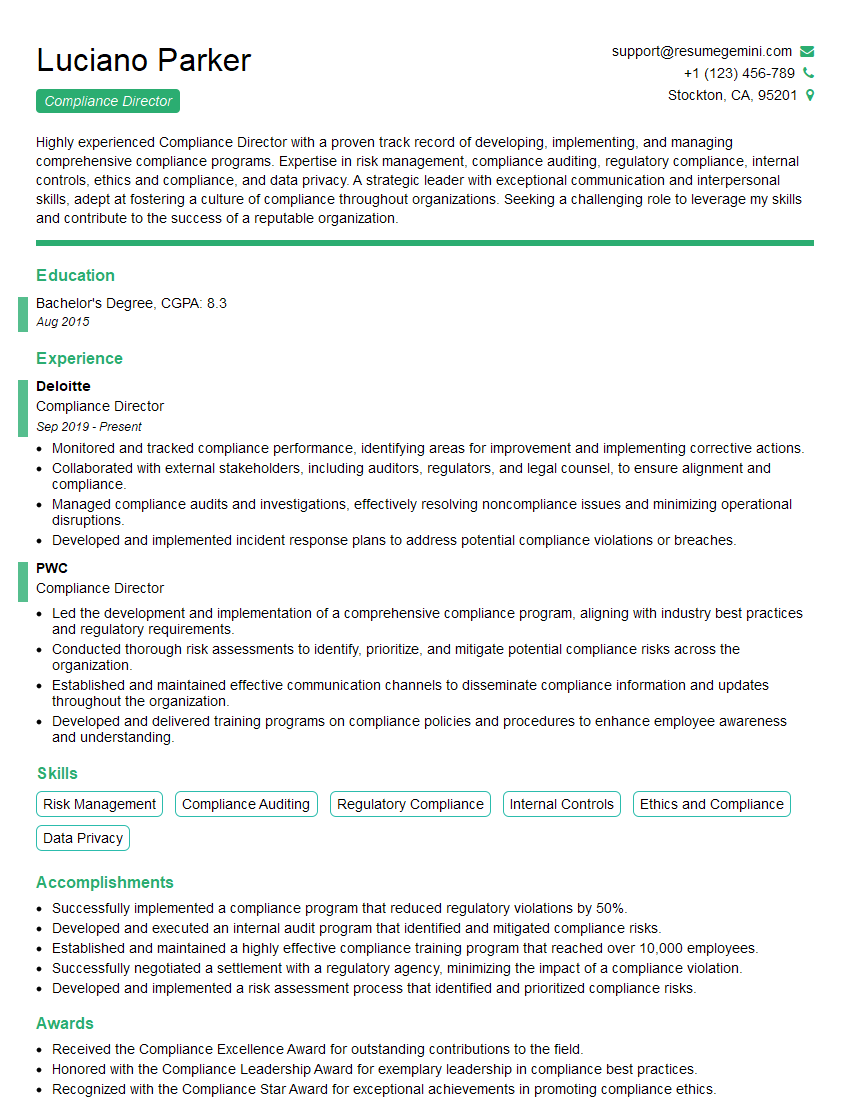
Compliance Director Resume Sample
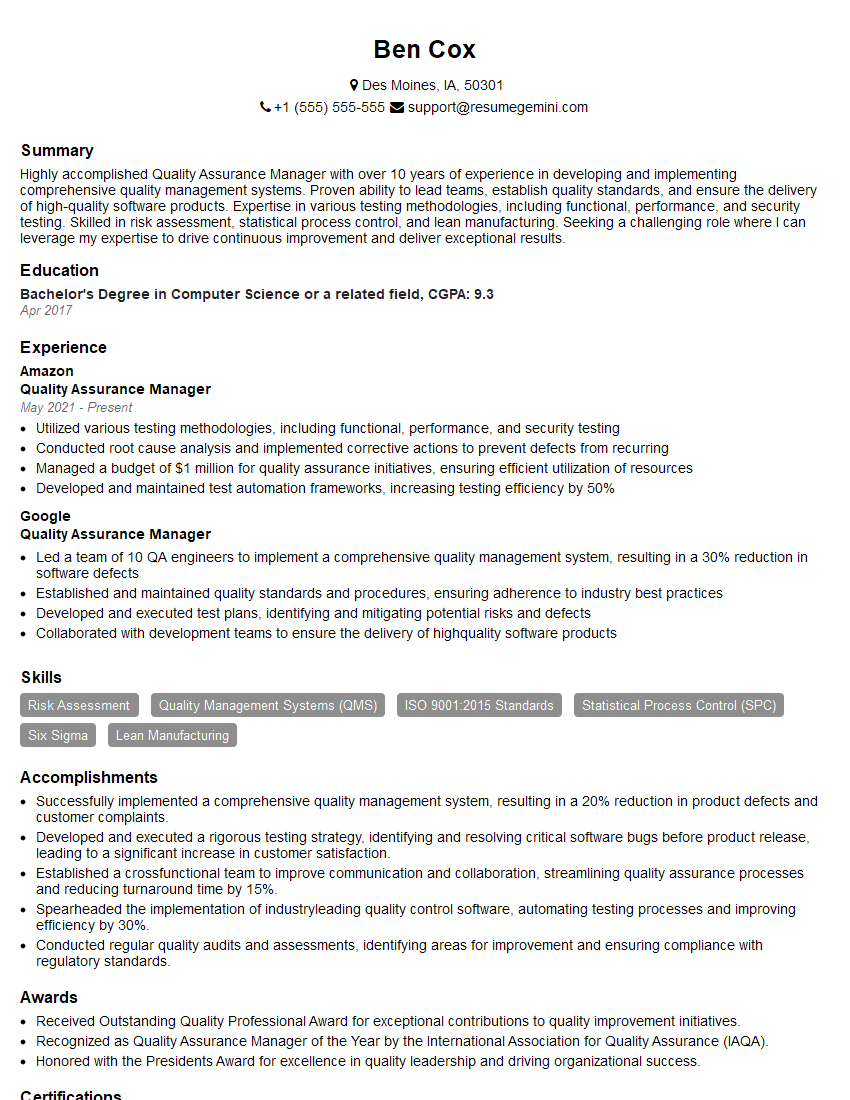
Quality Assurance Manager Resume Sample
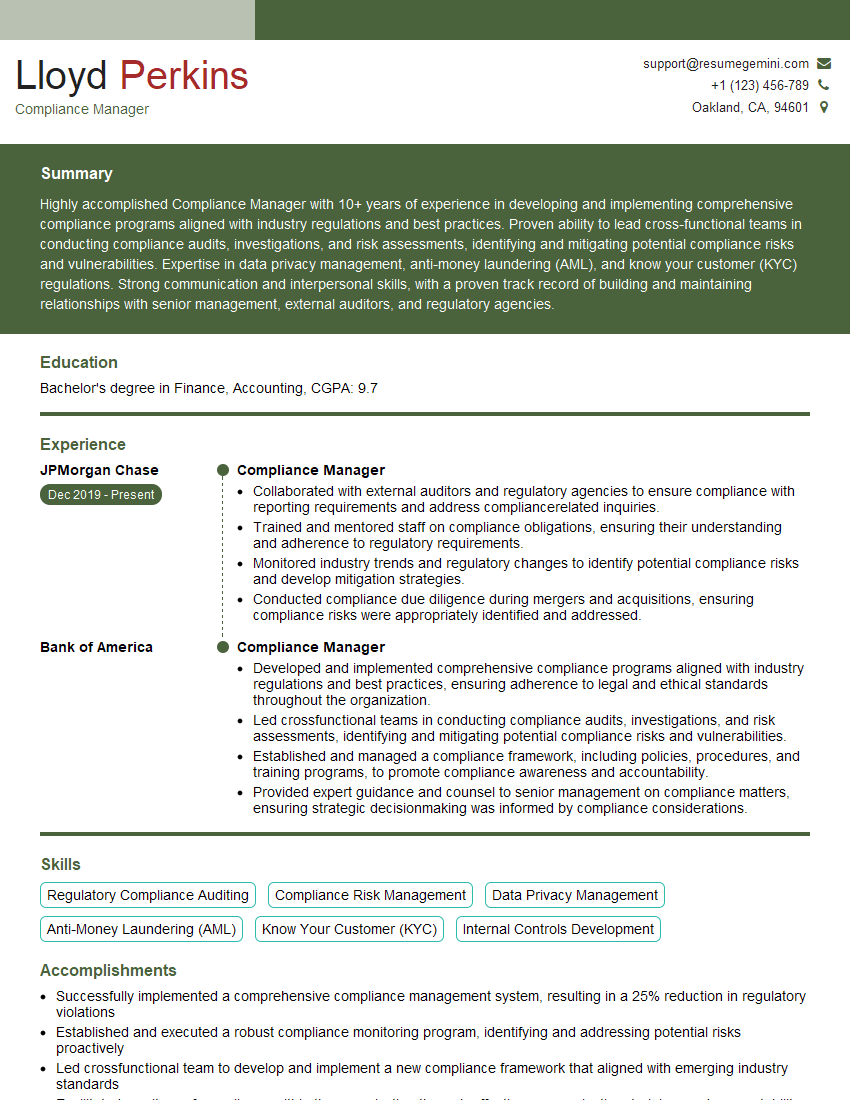
Compliance Manager Resume Sample
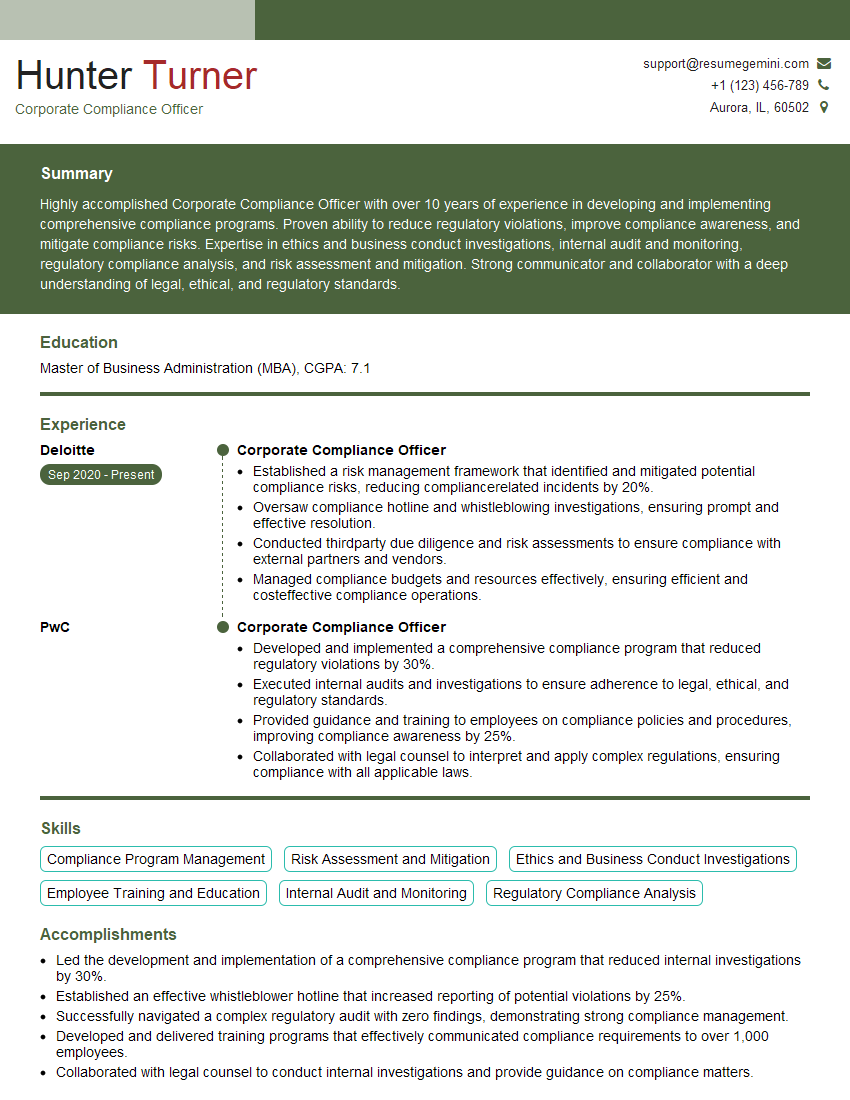
Corporate Compliance Officer Resume Sample
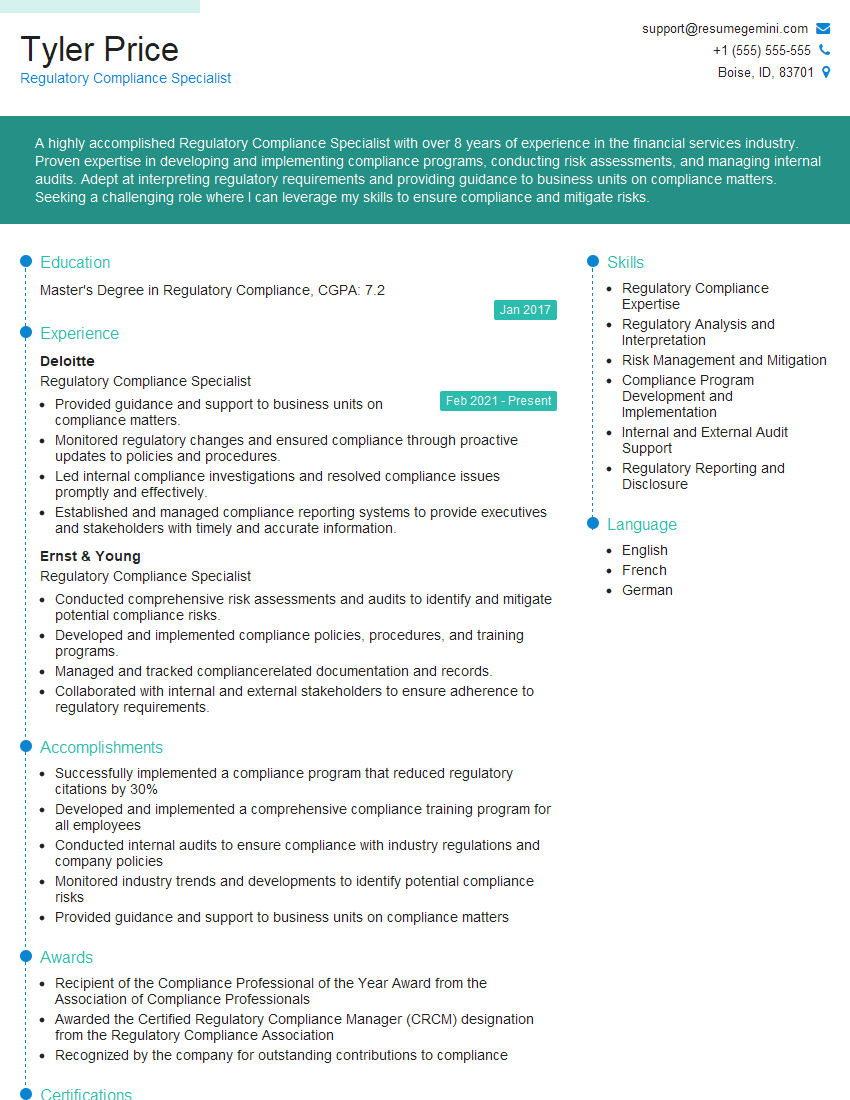
Regulatory Compliance Specialist Resume Sample
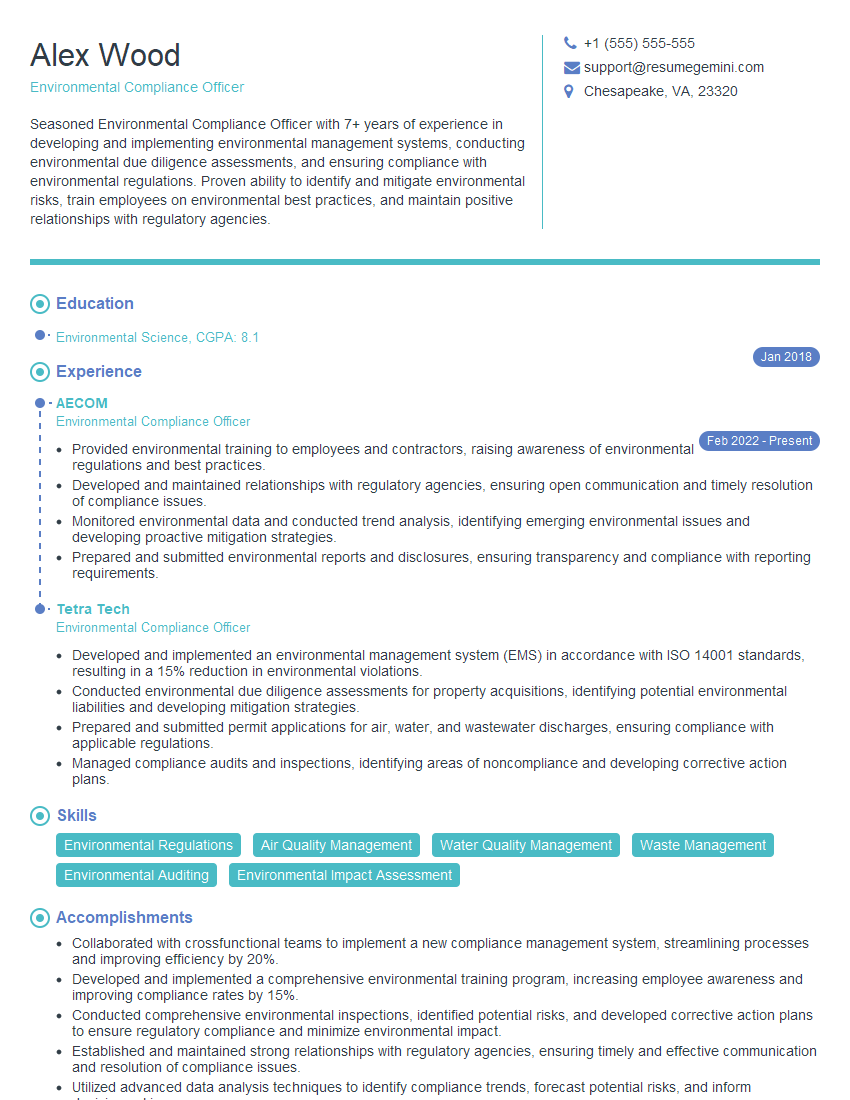
Environmental Compliance Officer Resume Sample
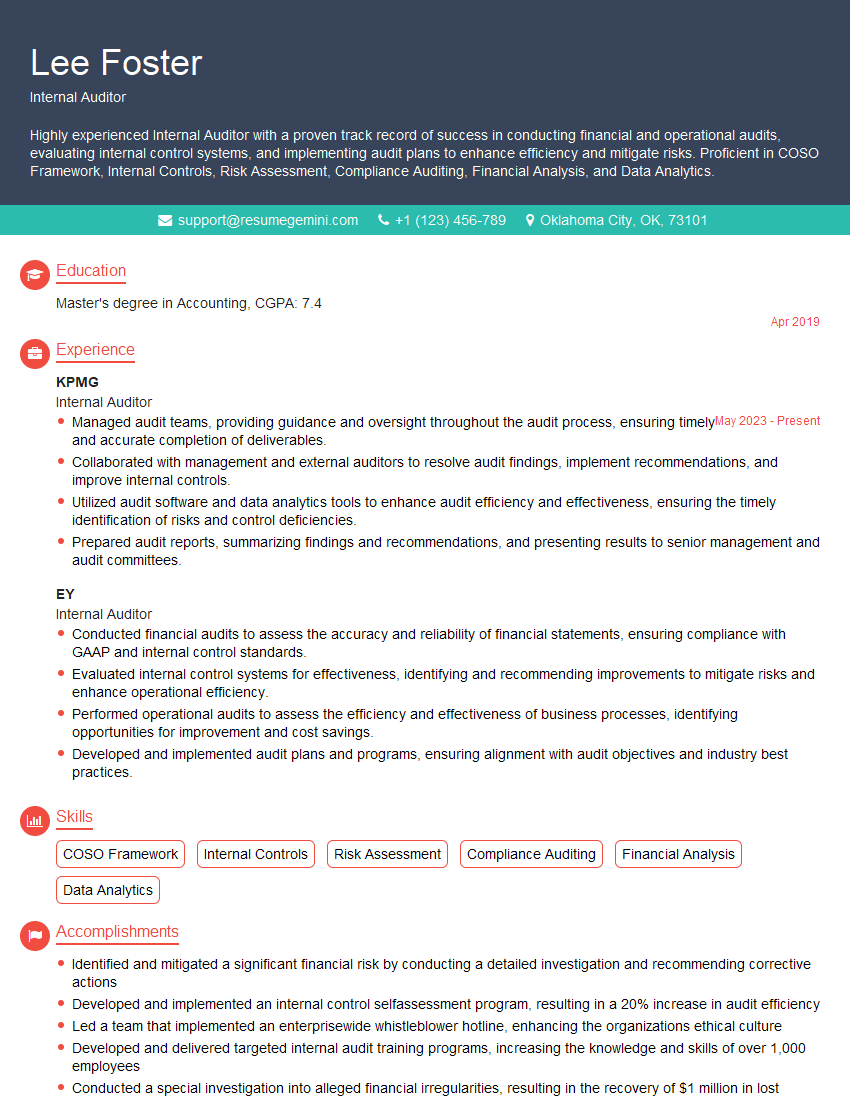
Internal Auditor Resume Sample
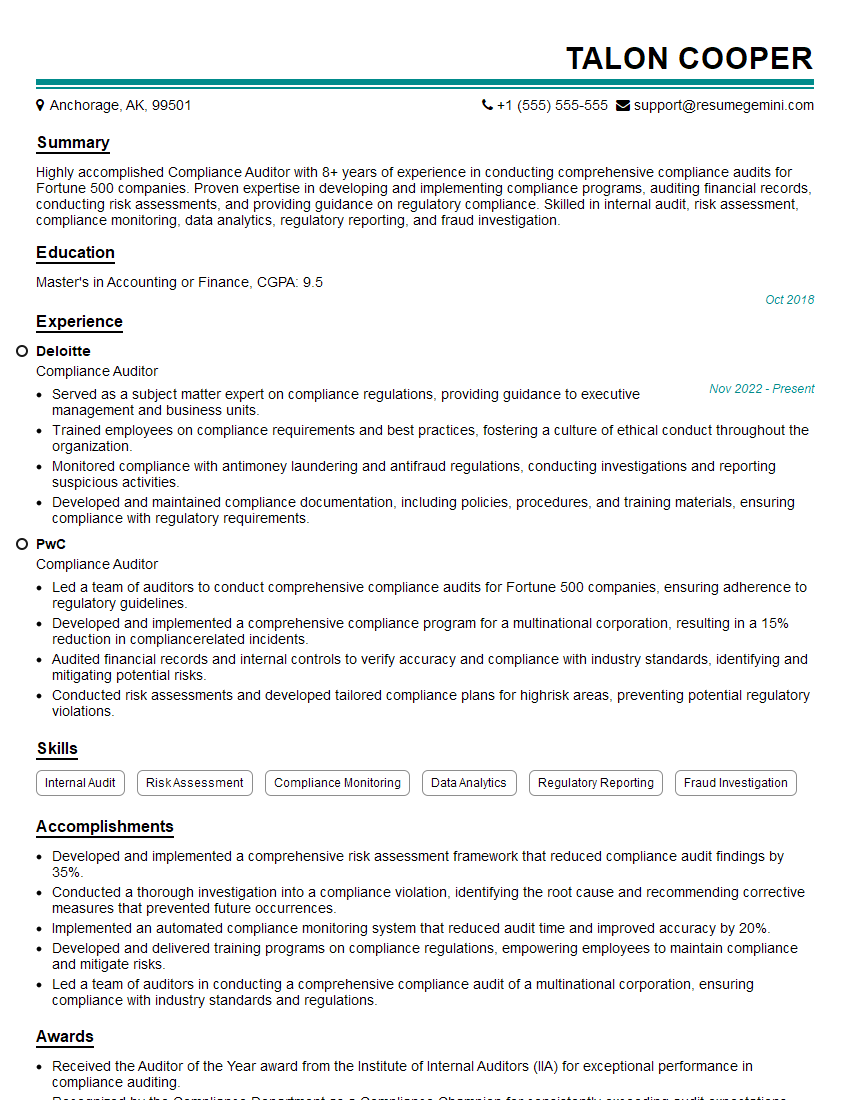
Compliance Auditor Resume Sample
Explore more articles
Users Rating of Our Blogs
Share Your Experience
We value your feedback! Please rate our content and share your thoughts (optional).
What Readers Say About Our Blog
Very informative content, great job.
good