The right preparation can turn an interview into an opportunity to showcase your expertise. This guide to Infrastructure Automation (e.g. Terraform, Ansible) interview questions is your ultimate resource, providing key insights and tips to help you ace your responses and stand out as a top candidate.
Questions Asked in Infrastructure Automation (e.g. Terraform, Ansible) Interview
Q 1. Explain the difference between imperative and declarative infrastructure as code.
The core difference between imperative and declarative infrastructure as code lies in how you describe the desired state of your infrastructure. Think of it like baking a cake:
Imperative: This is like giving a recipe with exact, step-by-step instructions. You specify how to build the infrastructure. Ansible, with its focus on configuration management tasks, is primarily imperative. You define the exact commands to run on each server, in a specific order. For example, you might explicitly tell Ansible to install a package, configure a service, and then restart it.
Declarative: This is like providing a picture of the finished cake. You describe the what – the desired end state – and the tool (like Terraform) figures out how to get there. You define the resources you need and their configurations, and Terraform manages the creation, modification, and deletion. For instance, you declare a virtual machine with specific CPU, memory, and networking settings, and Terraform handles the creation process in the underlying cloud provider.
In short: Imperative focuses on the process; declarative focuses on the desired outcome.
- Imperative Example (Ansible):
yum install httpd -y; systemctl start httpd; systemctl enable httpd - Declarative Example (Terraform):
resource "aws_instance" "web" { ami = "ami-0c55b31ad2299a701" instance_type = "t2.micro" }
Q 2. Describe your experience with Terraform state management.
Terraform state management is crucial for tracking the infrastructure's current configuration. The state file is a JSON document that stores the details of all resources managed by Terraform, including their IDs, attributes, and relationships. I've used various strategies to manage this effectively throughout my career:
- Remote Backend: For collaborative projects or complex infrastructure, I always utilize a remote backend like Terraform Cloud, AWS S3, or Azure Storage. This provides version control, collaboration features, and ensures that multiple team members can access and update the state safely. We use locking mechanisms to prevent concurrent modifications.
- State Locking: Essential to prevent conflicts when multiple people or processes modify the infrastructure simultaneously. The remote backend usually handles this automatically, but it's crucial to understand how it works and troubleshoot any locking issues.
- State File Versioning: Using a remote backend inherently integrates version control. This allows for rollback to previous infrastructure states in case of errors or needed changes. This has been invaluable in debugging issues and recovering from mistakes.
- Regular Backups: Even with a remote backend, I recommend regular backups of the state file. This provides an extra layer of protection against data loss or corruption.
- Sensitive Data Handling: Never store sensitive data directly in the state file. Utilize environment variables or secrets management tools for sensitive credentials and configurations.
For example, in a recent project, we used Terraform Cloud as the backend to manage a multi-region infrastructure. This provided seamless collaboration and version control, significantly reducing the risk of errors and improving team efficiency.
Q 3. How do you handle Terraform module dependencies?
Handling Terraform module dependencies requires careful planning and structuring. Modules promote reusability and organization, but mismanaged dependencies can lead to build failures. My approach involves:
- Clear Module Structure: Organize modules logically, perhaps using a directory structure that reflects the application architecture. This aids in readability and maintainability. For example, I might have a
modules/networkdirectory for all network-related modules. terraform.workspacefiles: for managing and switching between various environments (dev, test, prod).requirements.txt: Although not directly a Terraform feature, this can manage the version of modules used. Similar to managing Python packages, we can ensure that we are always using compatible versions.- Version Pinning: Always specify the exact version of each module in the
main.tffile to prevent unexpected changes due to module updates. For example:module "example" { source = "github.com/hashicorp/example-terraform-module?ref=v1.2.3" } - Dependency Graph Visualization: Tools can visualize the module dependency graph, showing relationships and potential conflicts. This helps identify and resolve circular dependencies before deploying.
In a recent project, we had a complex set of modules. By carefully versioning and organizing them, we avoided many potential conflicts, leading to a faster and more reliable deployment process.
Q 4. What are the best practices for writing Ansible playbooks?
Writing effective Ansible playbooks involves adhering to best practices that enhance readability, maintainability, and scalability. Key principles include:
- Idempotency: Playbooks should be written to be idempotent – meaning they can be run multiple times without causing unintended side effects. This ensures consistency and reduces the risk of errors during deployments.
- Modularity: Break down complex tasks into smaller, reusable modules (Ansible Roles, as discussed later). This improves organization and allows for easier code reuse across projects.
- Clear Naming Conventions: Use consistent and descriptive names for roles, tasks, and variables to enhance readability and maintainability.
- Error Handling: Implement robust error handling mechanisms to gracefully handle failures and provide useful debugging information. Using
whenstatements to prevent actions on specific conditions is also important. - Version Control: Store your Ansible playbooks in a version control system (e.g., Git) to track changes and collaborate effectively.
- Testing: Thoroughly test your playbooks before deploying them to production environments to minimize risks.
- Documentation: Clearly document your playbooks and modules to make them easier to understand and maintain. Use YML comments effectively.
For example, instead of having a single playbook that performs many tasks, I would split it into several modules for different aspects of the configuration (database setup, web server configuration, etc.). Each module would be self-contained, testable, and reusable in other projects.
Q 5. Explain the role of Ansible roles and how to structure them effectively.
Ansible roles are a powerful mechanism for organizing and reusing playbook tasks. They encapsulate related tasks and variables into a consistent structure, promoting code reusability and maintainability.
Effective Role Structure:
tasks/main.yml: Contains the main tasks to be executed.vars/main.yml: Defines the variables for the role.defaults/main.yml: Contains default values for variables (overridden by vars/main.yml or the playbook's variables).handlers/main.yml: Contains handlers, which are tasks triggered by specific events (e.g., a file change).files/: Contains files that need to be copied to the target systems.templates/: Contains Jinja2 templates that allow for dynamic content generation.meta/main.yml: Contains metadata about the role, including dependencies.
By adhering to this structure, you create highly organized and reusable roles that simplify complex automation tasks. Imagine deploying a web server: you might have separate roles for the web server itself, database setup, and security configurations. Each role would follow this structure, making management much simpler.
Q 6. How do you manage Ansible inventory files for complex environments?
Managing Ansible inventory files for complex environments requires a structured approach to ensure maintainability and scalability. I typically use dynamic inventory scripts which allow for more complex setups.
- Dynamic Inventory: Instead of manually managing a static inventory file, I leverage dynamic inventory scripts (written in Python) that fetch host information from various sources like cloud providers (AWS, Azure, GCP), configuration management databases, or even custom APIs. This provides a centralized and automated approach to inventory management.
- Group-Based Organization: Organize hosts into logical groups (e.g., webservers, databases, application servers). This allows you to apply playbooks selectively to specific groups of hosts.
- Variables: Use variables within your inventory to parameterize host configurations (e.g., different versions of software for different environments).
- Version Control: Store your inventory scripts and static inventories in a version control system to track changes and collaborate effectively.
For instance, in a recent project, we used a dynamic inventory script that retrieved host information from AWS EC2, allowing us to automatically update our inventory as new instances were launched. This eliminated the manual process of updating the inventory file, improving efficiency and reducing errors.
Q 7. Compare and contrast Terraform and Ansible.
Terraform and Ansible are both powerful tools for infrastructure automation, but they serve different purposes and have distinct strengths.
| Feature | Terraform | Ansible |
|---|---|---|
| Primary Focus | Provisioning and managing infrastructure (IaC) | Configuration management and application deployment |
| Approach | Declarative | Imperative |
| State Management | Centralized state file (critical) | No central state file (agent-based) |
| Infrastructure Types | Clouds, VMs, networks, etc. | Servers, applications, databases, etc. |
| Typical Use Cases | Creating and managing cloud resources, networking | Configuring servers, deploying applications, managing software updates |
| Complexity | Can handle complex infrastructure deployments | Suitable for both simple and complex deployments |
In essence: Terraform builds the infrastructure (the foundation of your house), and Ansible configures and manages the software and applications running on that infrastructure (furnishing and maintaining your house).
Many projects benefit from using both tools together. Terraform can provision the VMs and networks, and then Ansible can configure and deploy applications onto those provisioned resources. This combined approach provides a comprehensive solution for infrastructure and application automation.
Q 8. Describe your experience with version control systems (e.g., Git) in IaC.
Version control systems (VCS), primarily Git, are the backbone of any successful IaC workflow. They allow us to track changes, collaborate effectively, and revert to previous states if needed. Think of it like having a detailed history of your infrastructure, enabling easy rollback to working configurations if something goes wrong. In my experience, I leverage Git extensively for branching strategies, pull requests, and code reviews. For instance, I might create a feature branch for a new environment or infrastructure update, rigorously testing it before merging into the main branch after code review. This ensures that all changes are tracked, documented, and reviewed, reducing the risk of introducing errors. Furthermore, using tools like GitLab CI/CD or GitHub Actions allows for automated testing and deployment directly from the VCS, ensuring a streamlined and efficient IaC process. This automation significantly minimizes manual errors and speeds up the deployment pipeline.
Q 9. How do you troubleshoot infrastructure issues using IaC tools?
Troubleshooting infrastructure issues with IaC involves a systematic approach. I begin by examining the logs generated by the IaC tools (e.g., Terraform's plan output or Ansible's playbooks) to pinpoint the exact error. This often reveals the root cause directly. If the logs are inconclusive, I leverage the state files (Terraform) or inventory (Ansible) to compare the desired state with the actual state of the infrastructure. This helps identify discrepancies between what was intended and what was deployed. For example, if a server is reported as missing, the state file can tell me if it was never created or if it was unintentionally destroyed. Finally, if the problem is not apparent in the logs or state files, I use remote tools like ssh to access the affected resources directly for deeper investigation. For instance, if a service isn't running, I'd check the service status and logs on the server. The IaC configuration itself is reviewed next to ensure it accurately reflects the intended state, looking for misconfigurations or typos that may have been missed during earlier stages.
Q 10. Explain your approach to testing IaC code.
Testing IaC code is crucial to prevent costly errors in production. My approach involves a multi-layered strategy:
- Unit Testing: Testing individual modules or components in isolation to ensure they function correctly. This is typically done using tools like Terratest (for Terraform) or pytest with Ansible modules.
- Integration Testing: Testing the interaction between different components to verify they work together seamlessly. This could involve deploying a small subset of the infrastructure using a dedicated test environment.
- End-to-End Testing: Testing the entire infrastructure as a whole in a test environment that closely mirrors production. This verifies that everything works as intended, from the network configuration to the application deployment. This often involves automated tests to verify functionality, like network connectivity or service availability.
- Linting and Static Analysis: Using tools like `terraform validate` or Ansible-Lint to check the code for style, best practices and potential errors before deployment.
For example, in a recent project, I used Terratest to test a Terraform module that provisioned a VPC and subnets. The tests verified the correct number of subnets were created, that security groups were properly configured, and that network connectivity worked as expected.
Q 11. Describe a challenging IaC project you worked on and how you overcame obstacles.
One challenging project involved migrating a legacy application running on physical servers to a cloud-based environment using Terraform and Ansible. The challenge stemmed from the complexity of the application and its dependencies, alongside the lack of comprehensive documentation for the legacy infrastructure. To overcome this, I started by thoroughly documenting the existing infrastructure's architecture and dependencies. This involved painstakingly analyzing the physical server configurations, network diagrams and application logs. Then, I broke down the migration into smaller, manageable modules in Terraform, focusing on one aspect of the application at a time. Ansible was used to deploy and configure the application within the newly provisioned cloud environment. A robust testing strategy, with unit, integration and end-to-end phases, was essential to ensure a smooth transition. Throughout the process, regular communication and collaboration with the application team were key to success. The project delivered a significantly more efficient and scalable environment while minimizing downtime.
Q 12. How do you ensure the security of your IaC code?
Security is paramount in IaC. I employ several strategies to ensure the security of my IaC code:
- Principle of Least Privilege: Granting only the necessary permissions to resources and users. This minimizes the potential impact of a security breach.
- Secret Management: Using tools like HashiCorp Vault or AWS Secrets Manager to securely store sensitive information such as passwords and API keys, avoiding hardcoding them directly into the IaC code.
- Regular Security Audits: Conducting regular reviews of the IaC code for security vulnerabilities. Tools like Snyk or other security scanners can automate this process.
- Immutable Infrastructure: Creating infrastructure that is immutable and managed by code. This reduces the attack surface and makes it easier to manage and audit the infrastructure.
- Code Reviews: Employing code reviews to identify security issues that might have been overlooked during development.
For example, instead of hardcoding database credentials, I always use a secret management solution to fetch credentials at runtime. This prevents accidental exposure of sensitive information in version control.
Q 13. What are some common pitfalls to avoid when using IaC?
Several common pitfalls to avoid include:
- Drift: Manual changes to the infrastructure outside the IaC process, leading to discrepancies between the desired and actual state. This can be mitigated through regular state comparisons and automated checks.
- Overly Complex Code: Creating overly complex and hard-to-maintain IaC code. This can be prevented by following modular design principles and adhering to coding best practices. Smaller, well-defined modules are easier to manage and test.
- Insufficient Testing: Failing to properly test IaC code before deployment. This can lead to unexpected issues in production. A comprehensive testing strategy, as mentioned earlier, is key.
- Ignoring State Management: Neglecting proper state management can lead to inconsistencies and make it difficult to track changes and manage infrastructure. Maintaining a reliable and accurate state file is vital.
- Ignoring Security Best Practices: Not incorporating security best practices into the IaC process, leading to security vulnerabilities. The points regarding secure secrets management and least privilege are crucial.
Q 14. Explain your understanding of Infrastructure as Code (IaC) principles.
Infrastructure as Code (IaC) is the practice of managing and provisioning infrastructure through code instead of manual processes. It treats infrastructure as software, enabling automation, version control, and repeatability. The core principles are:
- Version Control: All infrastructure configurations are stored in a version control system (like Git), allowing tracking of changes and rollback capabilities.
- Automation: Automating the process of creating, updating, and deleting infrastructure resources.
- Idempotency: The ability to run the IaC code multiple times without causing unintended changes. This ensures consistency and reduces errors.
- Declarative Configuration: Defining the desired state of the infrastructure rather than the steps to achieve it. This allows the IaC tool to determine the best way to reach that state.
- Modularity: Breaking down the infrastructure into smaller, reusable modules to enhance organization and maintainability.
- Testing: Implementing thorough testing procedures to validate the infrastructure's functionality and security before deployment.
IaC offers numerous benefits including increased efficiency, reduced errors, improved consistency, and enhanced collaboration. It's essentially the foundation for modern, scalable, and reliable cloud infrastructure management.
Q 15. How do you manage secrets in your IaC deployments?
Managing secrets securely in Infrastructure as Code (IaC) is paramount. Exposing sensitive information like API keys, database passwords, or certificates directly in your code is a major security risk. Instead, I leverage dedicated secrets management solutions integrated with my IaC tools.
- Dedicated Secrets Management Services: Services like AWS Secrets Manager, Azure Key Vault, or Google Cloud Secret Manager are my preferred approach. These services provide encryption at rest and in transit, access control, and auditing capabilities. My IaC code then retrieves secrets at runtime using their respective APIs. For example, in Terraform, I'd use the
aws_secretsmanager_secret_versiondata source to retrieve a secret. - External Vault Solutions: Tools like HashiCorp Vault offer a centralized secrets management platform that can be integrated with various IaC providers. Vault allows for fine-grained access control and robust auditing features, making it suitable for complex environments.
- Environment Variables: For less sensitive information that doesn't need the same level of security as API keys, I sometimes use environment variables. However, I would never store highly sensitive data this way. Environment variables are often used for configuration parameters that change between environments (dev, test, prod).
It's crucial to adopt a least privilege approach – only granting access to secrets as needed and regularly rotating them. I also implement strong logging and monitoring to track access and detect any suspicious activity.
Career Expert Tips:
- Ace those interviews! Prepare effectively by reviewing the Top 50 Most Common Interview Questions on ResumeGemini.
- Navigate your job search with confidence! Explore a wide range of Career Tips on ResumeGemini. Learn about common challenges and recommendations to overcome them.
- Craft the perfect resume! Master the Art of Resume Writing with ResumeGemini's guide. Showcase your unique qualifications and achievements effectively.
- Don't miss out on holiday savings! Build your dream resume with ResumeGemini's ATS optimized templates.
Q 16. Discuss your experience with different IaC providers (e.g., AWS, Azure, GCP).
I have extensive experience with AWS, Azure, and GCP, each offering unique strengths and challenges for IaC. My choice depends on the project requirements and client needs.
- AWS: I'm highly proficient in using Terraform with AWS, leveraging its rich provider offering. I'm comfortable managing a wide range of services, from EC2 instances and S3 buckets to more complex architectures like VPCs and Kubernetes clusters. I've worked on projects involving automating the deployment of serverless applications using Lambda and API Gateway.
- Azure: My experience with Azure includes using Terraform and Bicep to manage resources. I understand the nuances of Azure Resource Manager (ARM) templates and have automated the deployment of virtual machines, storage accounts, and Azure App Services. I've worked on projects implementing infrastructure-as-code for Azure Kubernetes Service (AKS).
- GCP: Similar to AWS and Azure, I've utilized Terraform and Deployment Manager to automate GCP infrastructure. I have experience managing Compute Engine instances, Cloud Storage, and Cloud SQL databases. I've also built CI/CD pipelines for deploying applications to Google Kubernetes Engine (GKE).
Irrespective of the provider, I prioritize using best practices such as modularity, reusability, and version control to maintain consistent and manageable IaC code across all platforms.
Q 17. How do you handle resource conflicts in IaC?
Resource conflicts in IaC happen when two or more deployments try to modify the same resource simultaneously, leading to unexpected outcomes. There are several strategies to prevent and handle these conflicts:
- Idempotency: Ensuring your IaC code is idempotent—meaning it produces the same result regardless of how many times it's run—is the primary defense. This eliminates conflicts caused by repeated executions. Terraform's state file is essential for this.
- Locking Mechanisms: Some IaC tools offer locking mechanisms to prevent concurrent modifications of the same resources. Terraform's locking feature (using the backend configuration) prevents concurrent state file modifications. This is critical in team environments.
- Resource Ordering: Careful planning of resource dependencies is crucial. Ensure resources are created and deleted in the correct order to avoid conflicts. Terraform's dependency graph handles this automatically.
- Version Control: A robust version control system (like Git) is essential to track changes, collaborate effectively, and easily rollback to a working state if conflicts arise.
- Conflict Resolution: If conflicts occur despite preventive measures, the first step involves carefully analyzing the state file and logs to understand the root cause. Manual intervention might be needed to resolve the conflict by either deleting conflicting resources or merging configurations.
Proactive planning and careful testing greatly reduce the likelihood of resource conflicts. Regularly reviewing and updating your IaC code to maintain consistency is vital for long-term success.
Q 18. Explain your familiarity with different IaC deployment strategies.
Various IaC deployment strategies exist, each with its pros and cons. My choice depends on the project's complexity, speed requirements, and risk tolerance.
- Blue/Green Deployments: This involves maintaining two identical environments (blue and green). The new code is deployed to the green environment, tested, and then traffic is switched from blue to green. This minimizes downtime and allows for easy rollback.
- Canary Deployments: A subset of users are routed to the new deployment first to test its functionality in a production-like setting before rolling it out to the entire user base. This approach minimizes risk.
- Rolling Deployments: The new version is incrementally deployed to a set of instances while the old version is gradually decommissioned. This is a less disruptive method, suitable for applications with high availability requirements.
- Recreate Deployments: This strategy involves completely destroying and recreating the infrastructure. While this is a less common deployment strategy, it is sometimes preferred for simple deployments where recreating infrastructure is easier and more reliable than updating it in place. It's particularly useful to ensure consistency.
I often combine these strategies, for example, employing a blue/green deployment with a canary release to a small subset of the green environment before switching over completely. The selection depends on the nature and complexity of the application.
Q 19. What are the benefits of using IaC over manual configuration?
IaC offers several key advantages over manual configuration:
- Reproducibility: IaC ensures consistent deployments across different environments (development, testing, production) by automating the entire process. This eliminates the human error inherent in manual configuration.
- Version Control: Changes to infrastructure are tracked in version control systems (like Git), allowing for easy rollback to previous states and auditing of changes. Manual configurations lack this capability.
- Automation: Automating the deployment process significantly speeds up the deployment cycle, reducing time to market and improving efficiency.
- Infrastructure as Code: Treating infrastructure as code allows developers to integrate it into existing CI/CD pipelines, making the process more streamlined and automated.
- Cost Reduction: IaC helps in reducing costs by identifying and correcting inefficient or redundant infrastructure components and preventing human error which is often costly to fix.
- Improved Collaboration: IaC promotes collaboration among development and operations teams. Everyone works with the same codebase, resulting in better communication and coordination.
Imagine having to manually configure a complex system with hundreds of servers and network devices. It's error-prone, time-consuming, and incredibly difficult to manage. IaC makes this manageable, reliable, and repeatable.
Q 20. How do you ensure idempotency in your IaC code?
Idempotency in IaC means that applying the same code multiple times will always result in the same final state. This is crucial for ensuring reliability and avoiding unintended changes.
- State Management: Tools like Terraform utilize a state file to track the current infrastructure's state. The code compares the desired state (defined in the IaC code) with the current state and applies only the necessary changes to achieve the desired state.
- Resource Lifecycle Management: The IaC code should explicitly define the desired state of each resource, handling creation, updates, and deletion. This ensures consistent behavior regardless of the number of times the code is executed.
- Testing: Thorough testing of the IaC code is essential to verify its idempotency. Running the code multiple times in a test environment and verifying that the infrastructure state remains consistent is key.
- Resource Attributes: Ensure resources are identified by stable, unchanging attributes. If you rely on volatile attributes such as auto-generated names to uniquely identify resources, then it might result in issues where the code may try to delete or recreate resources unnecessarily.
Without idempotency, repeated deployments might lead to inconsistencies, potentially breaking your infrastructure. It's a cornerstone of robust and reliable IaC.
Q 21. Describe your experience with CI/CD pipelines for IaC.
CI/CD pipelines are essential for automating the deployment and management of IaC. My experience includes designing and implementing pipelines using tools like Jenkins, GitLab CI, and GitHub Actions.
- Version Control Integration: The IaC code is stored in a version control system (like Git), allowing for code reviews, branching, and merging. The CI/CD pipeline is triggered upon code commits or pull requests.
- Automated Testing: The pipeline includes automated tests to validate the IaC code before deployment. This ensures the code is functional and does not introduce errors or conflicts.
- Infrastructure Deployment: The pipeline automates the deployment of the infrastructure using tools like Terraform or Ansible. This ensures consistency and reduces manual intervention.
- Deployment Strategies: The pipeline supports various deployment strategies such as blue/green deployments, canary deployments, or rolling deployments, depending on the application's requirements.
- Monitoring and Logging: The pipeline integrates with monitoring and logging tools to track the health and performance of the deployed infrastructure. This provides insights into potential issues and helps with troubleshooting.
A well-designed CI/CD pipeline for IaC significantly improves the speed, reliability, and efficiency of infrastructure deployments. It allows for faster iterations, reduces errors, and enables continuous improvement.
Q 22. How do you monitor and log IaC deployments?
Monitoring and logging IaC deployments is crucial for ensuring reliability and identifying issues quickly. My approach involves a multi-layered strategy, combining the capabilities of the IaC tool itself with dedicated monitoring and logging services.
Firstly, I leverage the built-in logging features of tools like Terraform and Ansible. Terraform's terraform apply command, for example, provides detailed output of the deployment process, including resource creation, updates, and any errors encountered. Ansible playbooks also generate logs detailing the execution of tasks and their outcomes. These logs are invaluable for debugging and troubleshooting.
Secondly, I integrate with cloud provider logging services such as AWS CloudTrail, Azure Monitor, or Google Cloud Logging. These services provide a centralized view of all activities within the cloud environment, allowing me to track changes made through IaC and identify potential drift or unauthorized modifications. I often configure these services to send alerts based on specific events, such as failed deployments or unexpected resource modifications.
Finally, I use dedicated monitoring tools like Datadog, Prometheus, or Grafana. These tools allow me to monitor the health and performance of the deployed infrastructure, correlating metrics with IaC deployments to identify performance bottlenecks or failures that may be related to configuration changes. For example, I might create dashboards visualizing CPU utilization, memory usage, and network traffic, and set up alerts that trigger if these metrics deviate significantly from predefined thresholds.
By combining these three layers – IaC tool logging, cloud provider logging, and dedicated monitoring – I gain a comprehensive understanding of my infrastructure's health and the impact of my IaC deployments. This holistic approach helps ensure that any problems are quickly identified and addressed, minimizing downtime and maintaining a robust and reliable system.
Q 23. Explain your approach to managing infrastructure drift.
Managing infrastructure drift – the divergence between the desired state defined in IaC and the actual state of the infrastructure – is a critical aspect of IaC management. My approach involves a combination of proactive measures and reactive strategies.
Proactively, I emphasize the importance of regular scans and comparisons. I utilize tools that automatically compare the desired state (defined in my Terraform or Ansible code) against the actual state of the infrastructure in the cloud provider. Popular tools include Terraform Cloud's state management features, Ansible's state management capabilities, or third-party solutions like Cloud Custodian. These tools help identify any discrepancies – for example, a manually-modified server configuration or a resource added outside the IaC process. The frequency of these scans depends on the criticality of the infrastructure; for production environments, daily scans are often necessary.
Reactively, when drift is detected, I aim for automated remediation whenever possible. Instead of manually correcting the infrastructure, I try to incorporate the detected changes back into my IaC code and then re-apply the IaC configuration. This helps ensure consistency and maintainability. For example, if a manual change to an EC2 instance's security group is detected, the IaC code would be updated to reflect this change and then applied to bring the instance's security group in line with the desired state. However, manual intervention might be necessary in some cases, requiring careful documentation of the changes to maintain version control and avoid future drift.
To avoid future drift, I promote a culture of utilizing IaC for *all* infrastructure modifications. This minimizes the chance of manual configurations leading to inconsistencies. Additionally, version control of IaC code becomes paramount, allowing rollback to previous known-good states if drift causes issues.
Q 24. What are your preferred methods for automating infrastructure provisioning?
My preferred methods for automating infrastructure provisioning heavily rely on Terraform and Ansible, depending on the specific needs of the project. These tools offer a powerful combination of declarative and imperative approaches.
Terraform excels at managing infrastructure as code in a declarative manner. I define the desired state of my infrastructure using HCL (Hashicorp Configuration Language), and Terraform takes care of provisioning and managing the resources. This approach is highly beneficial for managing complex and multi-cloud deployments, ensuring consistency and repeatability. For example, I can easily define and provision VPCs, subnets, security groups, and EC2 instances across different AWS regions using a single Terraform configuration.
Ansible, on the other hand, utilizes an imperative approach, defining the steps needed to configure and manage the infrastructure. Ansible is particularly useful for managing configurations on already provisioned servers and for automating tasks such as software installation, configuration management, and application deployment. I frequently use Ansible to deploy and configure applications on EC2 instances that have already been provisioned by Terraform.
Often, I use a combined approach leveraging the strengths of both tools. Terraform handles the provisioning of the foundational infrastructure (servers, networks, etc.), while Ansible takes care of the configuration and deployment of applications and services on top of this foundation. This hybrid approach offers a robust and flexible automation strategy.
Q 25. Describe your understanding of different cloud provider services (e.g., EC2, Azure VMs, Compute Engine).
My understanding of cloud provider services spans across major platforms like AWS, Azure, and Google Cloud. Each provider offers a similar set of core compute, storage, and networking services, but with different implementations and naming conventions.
- AWS EC2: Amazon Elastic Compute Cloud provides virtual servers (instances) with various configurations (CPU, memory, storage). I have extensive experience using EC2 instances, leveraging features like auto-scaling groups, security groups, and Elastic IP addresses to manage availability, security, and cost optimization.
- Azure VMs: Azure Virtual Machines offer a similar service to EC2, providing virtual machines with different sizes and configurations. My experience includes configuring Azure VMs with appropriate network interfaces, storage accounts, and managing their lifecycle through Azure Resource Manager (ARM) templates or IaC tools.
- Google Compute Engine: Google's Compute Engine provides virtual machines in a comparable fashion. I've utilized Compute Engine instances for various projects, leveraging features like managed instance groups for scalability and preemptible instances for cost optimization. I'm comfortable working with Google Cloud's networking services, such as Virtual Private Clouds (VPCs) and Cloud Load Balancing, in conjunction with Compute Engine.
The core differences between these services often lie in their APIs, pricing models, and specific features. My expertise allows me to effectively choose the most suitable service based on project requirements and cost considerations, regardless of the underlying cloud provider.
Q 26. How do you handle infrastructure scaling using IaC?
Handling infrastructure scaling with IaC involves leveraging the auto-scaling capabilities of cloud providers and integrating them with your IaC code. This ensures that your infrastructure automatically adapts to changing demands, optimizing resource utilization and cost.
In AWS, I often use Auto Scaling Groups (ASGs) in conjunction with Terraform. I define ASGs in my Terraform configuration, specifying the desired capacity, minimum and maximum instances, and scaling policies based on metrics like CPU utilization or request counts. Terraform ensures the ASGs are correctly configured and manages any changes to the ASG configuration. When demand increases, the ASG automatically launches new instances; when demand decreases, it terminates idle instances, keeping costs in check.
Similar approaches exist in other cloud providers. Azure provides Azure AutoScale, which can be integrated with ARM templates or IaC tools like Terraform or Bicep. Google Cloud offers Managed Instance Groups, managed through the Google Cloud API or Terraform, providing auto-scaling for Compute Engine instances.
Beyond simple auto-scaling based on metrics, more sophisticated strategies can be implemented, such as scaling based on scheduled events or custom metrics. These strategies allow for more granular control and optimization of resource usage, ensuring the infrastructure aligns precisely with actual demand. The key is to define clear scaling policies within your IaC code, maintaining version control and traceability of all configuration changes.
Q 27. Explain your experience with using templating engines in IaC (e.g., Jinja2).
Templating engines like Jinja2 are invaluable in IaC for creating reusable and dynamic infrastructure configurations. They allow me to generate infrastructure code based on variables and parameters, significantly reducing redundancy and improving maintainability.
In Ansible, Jinja2 is the default templating engine. I use Jinja2 to create dynamic configuration files, such as server configuration files or application deployment scripts, parameterized by variables like environment names, server roles, or application versions. For example, I can define a single Jinja2 template for a web server configuration file, and then use different variables to generate distinct configurations for development, testing, and production environments.
# Example Ansible Jinja2 template (nginx.conf.j2) user {{ nginx_user }}; worker_processes {{ nginx_worker_processes }};
This snippet shows a simple Jinja2 template for an Nginx configuration file, where variables like nginx_user and nginx_worker_processes are passed dynamically when the template is rendered. This avoids having to maintain separate configuration files for each environment.
While Terraform doesn't directly utilize Jinja2, the use of variables and modules effectively serves a similar purpose, allowing for parameterized infrastructure deployments. I combine the power of Terraform's declarative approach with dynamic configuration via variables to generate repeatable, yet adaptable, infrastructure across various settings.
Using templating engines is not just about reducing code duplication; it's also about increasing security and reducing errors. By parameterizing configuration, you avoid hardcoding sensitive information like passwords directly into your infrastructure code, and you can reduce manual errors through automated configuration generation.
Key Topics to Learn for Infrastructure Automation (e.g., Terraform, Ansible) Interviews
- Fundamentals of Infrastructure as Code (IaC): Understand the core principles and benefits of IaC, comparing and contrasting different approaches.
- Terraform Deep Dive: Master Terraform's core concepts including state management, providers, modules, and best practices for writing efficient and maintainable code. Explore advanced features like workspaces and remote backends.
- Ansible Mastery: Gain proficiency in Ansible playbooks, roles, tasks, and modules. Understand inventory management, handling different operating systems, and implementing idempotency.
- Version Control (Git): Demonstrate a strong understanding of Git workflows, branching strategies, and collaborative development using Git for managing infrastructure code.
- Cloud Platforms (AWS, Azure, GCP): Familiarize yourself with at least one major cloud provider and how IaC tools integrate with its services. Understand cloud concepts relevant to infrastructure automation like resource management and networking.
- Networking Fundamentals: A solid grasp of networking concepts (subnets, VPCs, routing) is crucial for effectively automating infrastructure deployments.
- Security Best Practices: Understand security considerations in IaC, including secrets management, access control, and compliance regulations.
- Problem-Solving and Debugging: Be prepared to discuss troubleshooting techniques for common IaC issues, demonstrating your ability to analyze errors and find solutions.
- Testing and CI/CD: Understand the importance of automated testing in IaC and how to integrate it into a CI/CD pipeline.
Next Steps
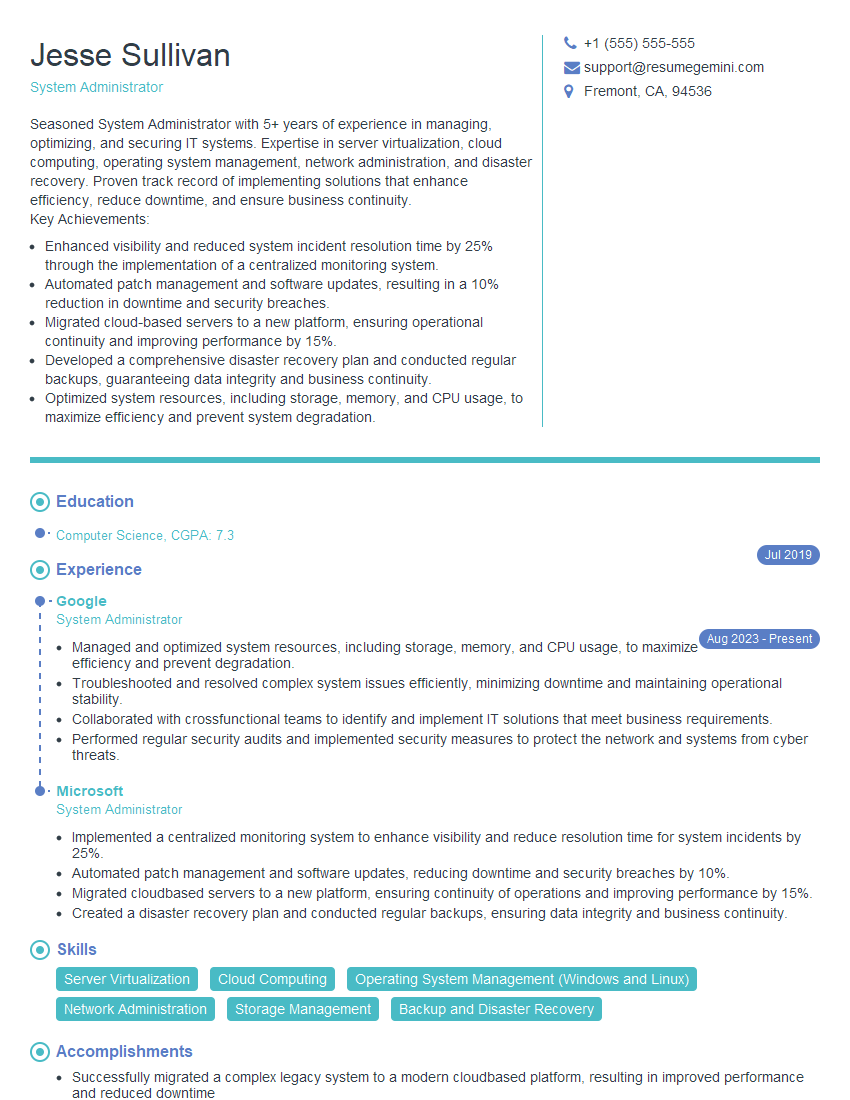
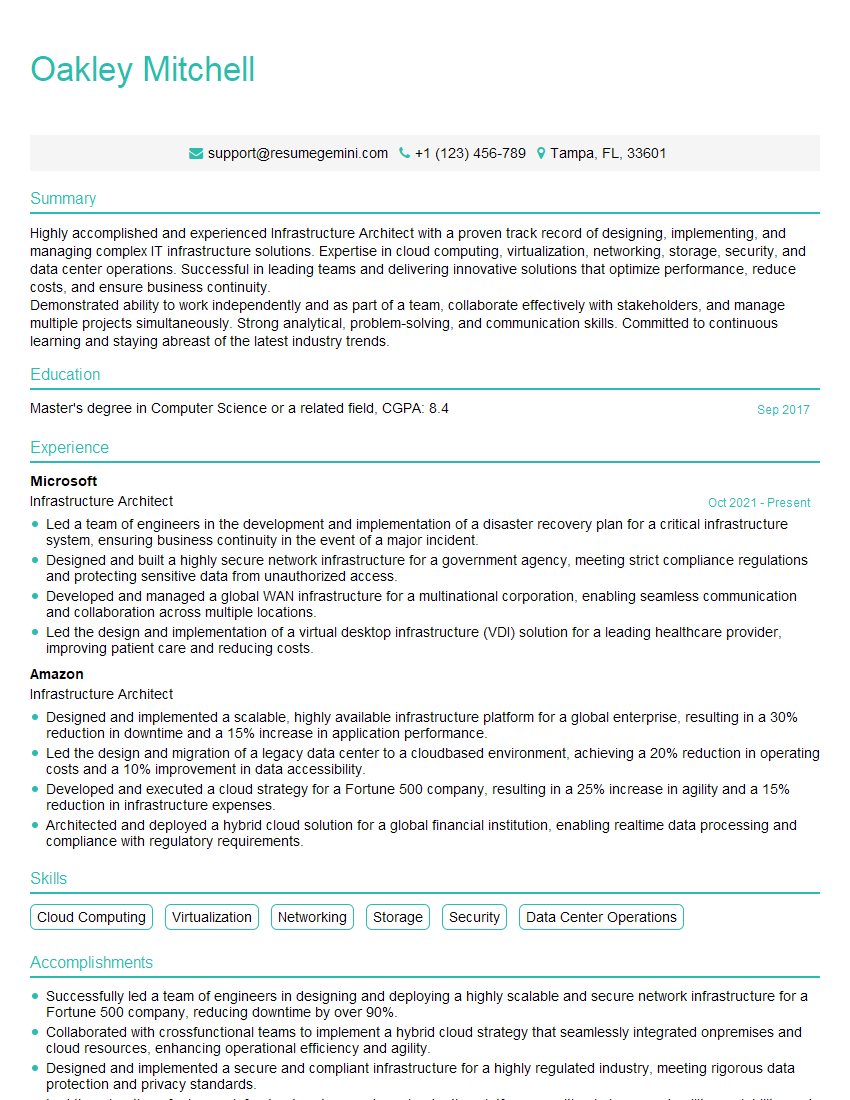
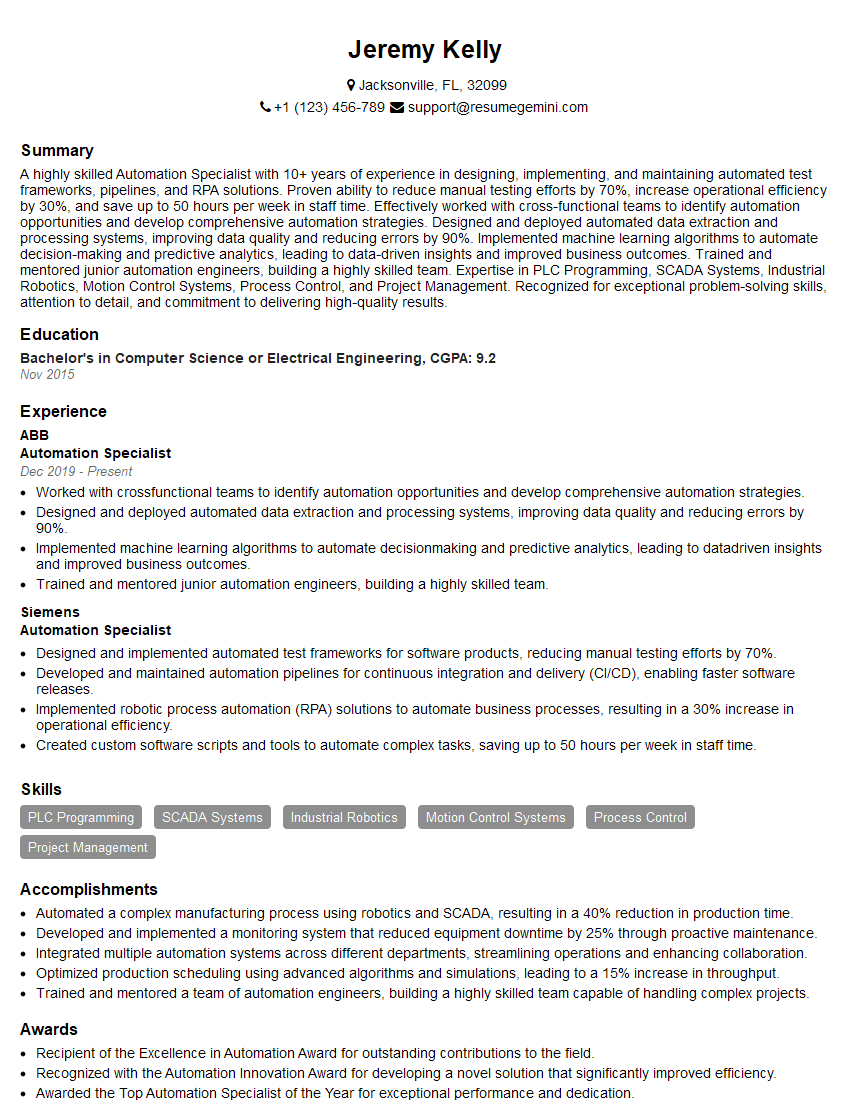
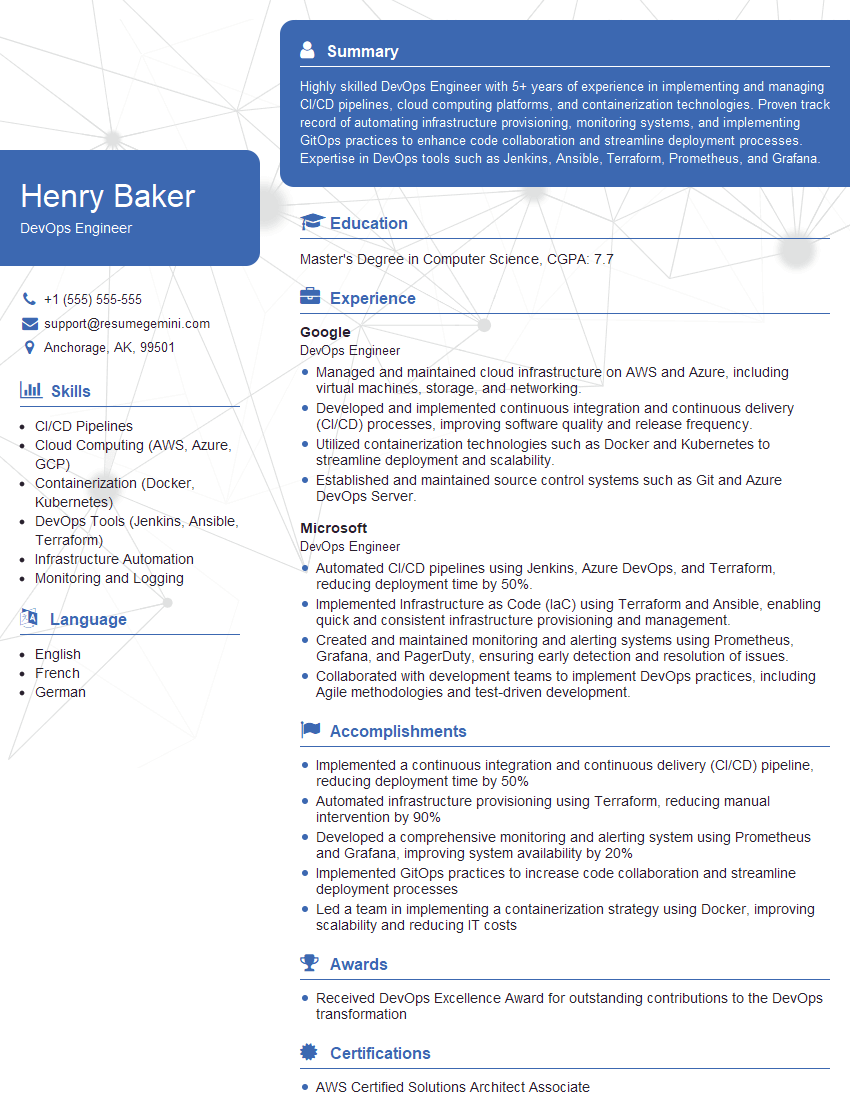
Mastering Infrastructure Automation with tools like Terraform and Ansible is vital for a successful and rewarding career in DevOps and Cloud Engineering. These skills are highly sought after, opening doors to exciting opportunities and increased earning potential. To maximize your job prospects, create an ATS-friendly resume that effectively showcases your expertise. ResumeGemini is a trusted resource to help you build a professional and impactful resume that will get noticed. We provide examples of resumes tailored to Infrastructure Automation roles using Terraform and Ansible to help you get started.
Explore more articles
Users Rating of Our Blogs
Share Your Experience
We value your feedback! Please rate our content and share your thoughts (optional).
What Readers Say About Our Blog
Hello,
we currently offer a complimentary backlink and URL indexing test for search engine optimization professionals.
You can get complimentary indexing credits to test how link discovery works in practice.
No credit card is required and there is no recurring fee.
You can find details here:
https://wikipedia-backlinks.com/indexing/
Regards
NICE RESPONSE TO Q & A
hi
The aim of this message is regarding an unclaimed deposit of a deceased nationale that bears the same name as you. You are not relate to him as there are millions of people answering the names across around the world. But i will use my position to influence the release of the deposit to you for our mutual benefit.
Respond for full details and how to claim the deposit. This is 100% risk free. Send hello to my email id: [email protected]
Luka Chachibaialuka
Hey interviewgemini.com, just wanted to follow up on my last email.
We just launched Call the Monster, an parenting app that lets you summon friendly ‘monsters’ kids actually listen to.
We’re also running a giveaway for everyone who downloads the app. Since it’s brand new, there aren’t many users yet, which means you’ve got a much better chance of winning some great prizes.
You can check it out here: https://bit.ly/callamonsterapp
Or follow us on Instagram: https://www.instagram.com/callamonsterapp
Thanks,
Ryan
CEO – Call the Monster App
Hey interviewgemini.com, I saw your website and love your approach.
I just want this to look like spam email, but want to share something important to you. We just launched Call the Monster, a parenting app that lets you summon friendly ‘monsters’ kids actually listen to.
Parents are loving it for calming chaos before bedtime. Thought you might want to try it: https://bit.ly/callamonsterapp or just follow our fun monster lore on Instagram: https://www.instagram.com/callamonsterapp
Thanks,
Ryan
CEO – Call A Monster APP
To the interviewgemini.com Owner.
Dear interviewgemini.com Webmaster!
Hi interviewgemini.com Webmaster!
Dear interviewgemini.com Webmaster!
excellent
Hello,
We found issues with your domain’s email setup that may be sending your messages to spam or blocking them completely. InboxShield Mini shows you how to fix it in minutes — no tech skills required.
Scan your domain now for details: https://inboxshield-mini.com/
— Adam @ InboxShield Mini
Reply STOP to unsubscribe
Hi, are you owner of interviewgemini.com? What if I told you I could help you find extra time in your schedule, reconnect with leads you didn’t even realize you missed, and bring in more “I want to work with you” conversations, without increasing your ad spend or hiring a full-time employee?
All with a flexible, budget-friendly service that could easily pay for itself. Sounds good?
Would it be nice to jump on a quick 10-minute call so I can show you exactly how we make this work?
Best,
Hapei
Marketing Director
Hey, I know you’re the owner of interviewgemini.com. I’ll be quick.
Fundraising for your business is tough and time-consuming. We make it easier by guaranteeing two private investor meetings each month, for six months. No demos, no pitch events – just direct introductions to active investors matched to your startup.
If youR17;re raising, this could help you build real momentum. Want me to send more info?
Hi, I represent an SEO company that specialises in getting you AI citations and higher rankings on Google. I’d like to offer you a 100% free SEO audit for your website. Would you be interested?
Hi, I represent an SEO company that specialises in getting you AI citations and higher rankings on Google. I’d like to offer you a 100% free SEO audit for your website. Would you be interested?
good