Interviews are more than just a Q&A session—they’re a chance to prove your worth. This blog dives into essential Institutional Policy Development interview questions and expert tips to help you align your answers with what hiring managers are looking for. Start preparing to shine!
Questions Asked in Institutional Policy Development Interview
Q 1. Describe your experience in developing and implementing institutional policies.
My experience in developing and implementing institutional policies spans over ten years, encompassing roles in both the public and private sectors. I’ve been involved in the entire policy lifecycle, from initial concept and needs assessment, through drafting, stakeholder consultation, approval, implementation, monitoring, and evaluation. For example, at my previous role in a large university, I led the development of a new policy on data privacy and security, which involved extensive consultation with IT departments, legal counsel, faculty, and student representatives. This process included analyzing existing legislation, best practices, and risk assessments to craft a comprehensive policy that aligned with the university’s values and legal obligations. Another significant project was the implementation of a revised policy on academic integrity, which required significant training for faculty and students, alongside the development of new reporting mechanisms and disciplinary procedures. This involved close collaboration with student affairs and the legal department.
Q 2. Explain the policy-making process within a large organization.
The policy-making process in a large organization is typically complex and iterative, often involving multiple departments and stakeholders. It usually follows these steps:
- Problem Identification and Agenda Setting: Identifying a problem or opportunity requiring policy attention. This often involves data analysis, stakeholder input, and strategic planning.
- Policy Formulation: Developing policy options, considering various perspectives, and conducting cost-benefit analyses. This is a crucial stage for weighing competing priorities and potential impacts.
- Policy Adoption: Gaining approval for the chosen policy through a formal process, such as committee review, board approval, or legislative action. This might involve public hearings and lobbying.
- Policy Implementation: Translating the policy into actionable steps, developing guidelines, and allocating resources. Training and communication are vital at this stage.
- Policy Evaluation: Assessing the effectiveness of the policy in achieving its intended goals. This involves data collection, analysis, and feedback from stakeholders. The findings might lead to policy revision or termination.
Think of it like building a house – you wouldn’t start constructing without blueprints (policy formulation), and you’d certainly inspect the finished product (policy evaluation) to ensure it meets the specifications.
Q 3. How do you assess the effectiveness of a particular policy?
Assessing policy effectiveness requires a multi-faceted approach. We look at:
- Quantitative Measures: Tracking measurable outcomes such as reduced costs, improved efficiency, increased participation rates, or changes in behavior. For example, if a policy aims to reduce energy consumption, we would measure kilowatt-hour usage before and after implementation.
- Qualitative Measures: Gathering feedback from stakeholders through surveys, interviews, or focus groups to understand their perceptions of the policy’s impact. This might reveal unintended consequences or areas needing improvement.
- Comparative Analysis: Comparing outcomes with similar organizations or initiatives to understand whether the policy is performing better or worse than expected.
- Compliance Monitoring: Tracking adherence to the policy to identify gaps in implementation or areas requiring additional support.
A robust evaluation uses a mix of quantitative and qualitative data to get a holistic picture. It’s not just about numbers, but also about understanding the lived experiences of those affected by the policy.
Q 4. What are the key steps involved in conducting a policy impact assessment?
A policy impact assessment (PIA) systematically examines the potential consequences of a policy before it is implemented. The key steps include:
- Scoping the Assessment: Defining the policy’s objectives, scope, and target population.
- Identifying Potential Impacts: Considering both intended and unintended consequences, including economic, social, and environmental impacts.
- Data Collection and Analysis: Gathering data from various sources to assess the likelihood and magnitude of each potential impact.
- Impact Prediction: Using various analytical techniques to forecast the likely effects of the policy.
- Consultation and Stakeholder Engagement: Seeking input from affected stakeholders to refine the assessment and ensure diverse perspectives are considered.
- Report Preparation and Dissemination: Presenting the findings in a clear and concise manner to inform decision-making.
Think of it like a pre-flight check for an airplane: you wouldn’t take off without ensuring all systems are working correctly. Similarly, a PIA helps identify and address potential issues before a policy is launched.
Q 5. How do you prioritize competing policy goals?
Prioritizing competing policy goals often involves a structured approach, such as using a decision matrix. This involves:
- Identifying competing goals: Clearly defining all the objectives the policy aims to achieve. For example, a policy might aim to improve public health while minimizing economic costs.
- Assigning weights to goals: Determining the relative importance of each goal based on strategic objectives and available resources. A weighted scoring system can be used to quantify this.
- Evaluating policy options: Assessing how well each policy option addresses each goal using metrics such as cost-effectiveness and feasibility.
- Selecting the optimal policy: Choosing the policy option that best balances the competing goals based on the weighted scores and other considerations.
This process makes the decision-making transparent and justifiable, facilitating buy-in from stakeholders.
Q 6. How do you identify stakeholders involved in a policy process?
Identifying stakeholders requires a proactive and inclusive approach. This involves:
- Mapping stakeholders: Creating a visual representation of all individuals, groups, or organizations that are affected by, or can influence, the policy.
- Analyzing stakeholder interests: Understanding how the policy impacts each stakeholder’s objectives and concerns. Some stakeholders might benefit while others might be negatively affected.
- Assessing stakeholder influence: Determining the power and capacity of each stakeholder to impact the policy’s success or failure. This includes considering their resources, networks, and political influence.
- Developing engagement strategies: Planning how to engage stakeholders based on their interests and influence. This may involve consultations, surveys, workshops, or public forums.
A well-defined stakeholder map ensures that all relevant voices are heard throughout the policy process, leading to a more equitable and effective policy.
Q 7. Describe a situation where you had to negotiate a compromise on a policy issue.
During the development of a new environmental sustainability policy for my previous organization, there was significant disagreement between the operations department, which prioritized cost-effectiveness, and the environmental affairs team, which advocated for more ambitious targets. The operations department argued that stringent environmental regulations would lead to significant cost increases and potential job losses. The environmental affairs team, on the other hand, emphasized the organization’s moral and legal responsibility to reduce its environmental footprint. To reach a compromise, we facilitated a series of workshops and negotiations involving representatives from both departments, as well as external environmental experts. Through data-driven analysis demonstrating the long-term cost savings associated with energy efficiency and waste reduction, we were able to build consensus around a more ambitious yet financially viable set of targets. The final policy included a phased approach to implementation, allowing the operations department time to adjust and invest in new technologies while still achieving meaningful progress towards our environmental goals. This demonstrated that compromise is not about sacrificing principles but about finding creative solutions that benefit all stakeholders.
Q 8. How do you manage competing interests when developing policy?
Managing competing interests in policy development is a crucial skill requiring a structured approach. It’s rarely a matter of simply choosing a ‘winner,’ but rather finding a balance that addresses the core concerns of all stakeholders. Think of it like conducting an orchestra – each instrument (interest group) has its own unique melody, but the conductor (policy maker) needs to harmonize them into a cohesive piece.
- Identify Stakeholders: The first step is meticulously identifying all stakeholders, including those directly and indirectly affected by the policy. This could include government agencies, businesses, non-profit organizations, community groups, and individuals.
- Understand their Interests: For each stakeholder, we need to understand their perspectives, needs, and potential objections. This often involves qualitative research methods like interviews, focus groups, and surveys.
- Facilitate Dialogue: Creating a forum for open and honest dialogue between stakeholders is essential. This might involve workshops, public forums, or targeted consultations. The goal is to foster understanding and find common ground.
- Negotiation and Compromise: Policy development frequently involves compromise. It’s about finding solutions that accommodate, as much as possible, the valid concerns of competing interests. Sometimes this involves prioritization based on impact and feasibility.
- Transparency and Accountability: The entire process should be transparent and accountable. Decisions should be justified and documented, ensuring fairness and promoting trust.
For example, when developing a policy on environmental protection, balancing the interests of environmental groups advocating for stricter regulations with businesses concerned about economic impacts requires careful negotiation and potentially innovative solutions, like offering tax incentives for environmentally friendly practices.
Q 9. How familiar are you with regulatory compliance and its impact on policy?
Regulatory compliance is paramount in policy development. It’s the framework that ensures policies align with existing laws, regulations, and legal precedents. Ignoring compliance not only leads to legal challenges but also undermines the credibility and effectiveness of the policy. Think of it as building a house – you can’t ignore building codes; otherwise, the house is unsafe and potentially illegal.
My familiarity extends to understanding specific regulations relevant to different policy areas. I’m adept at identifying potential compliance issues early in the policy development process, through thorough research and consultation with legal experts. This ensures policies are legally sound and enforceable. A failure to consider compliance might lead to unintended consequences, costly litigation, and erosion of public trust. For instance, a policy impacting data privacy must strictly adhere to laws like GDPR or CCPA, otherwise the organization faces significant legal and reputational risks.
Q 10. Explain your understanding of cost-benefit analysis in policy development.
Cost-benefit analysis (CBA) is a systematic approach to evaluating the economic efficiency of a policy. It compares the total costs of implementing a policy against the total benefits it is expected to generate. Essentially, it answers the question: ‘Is the policy worth the investment?’
A comprehensive CBA involves:
- Identifying Costs: This encompasses all direct and indirect costs, such as implementation costs, administrative expenses, and potential opportunity costs (what could have been done with the resources if the policy wasn’t implemented).
- Identifying Benefits: This includes both tangible and intangible benefits. Tangible benefits are easily quantifiable, such as increased revenue or reduced healthcare costs. Intangible benefits, like improved public health or enhanced environmental quality, require more creative assessment methods.
- Quantifying Costs and Benefits: This is often the most challenging part, requiring robust data collection and potentially sophisticated modeling techniques.
- Discounting Future Benefits: Because benefits often accrue over time, we need to discount future benefits to their present value to compare them fairly with current costs.
- Sensitivity Analysis: We should also conduct a sensitivity analysis to assess how the outcome changes with variations in key assumptions.
For example, a CBA for a new public transportation system would weigh the costs of construction, maintenance, and operation against the benefits of reduced traffic congestion, improved air quality, and increased economic activity.
Q 11. How do you handle ethical dilemmas related to policy implementation?
Ethical dilemmas in policy implementation are inevitable. They arise when the implementation of a policy conflicts with established ethical principles or values. Handling them requires a robust ethical framework and a commitment to transparency and accountability.
My approach involves:
- Identifying the Ethical Conflict: Clearly define the ethical dilemma and the competing values at stake.
- Stakeholder Consultation: Engage with relevant stakeholders to gather diverse perspectives and insights.
- Ethical Frameworks: Apply relevant ethical frameworks, such as utilitarianism (maximizing overall well-being), deontology (adhering to moral duties), or virtue ethics (focusing on character and moral values), to guide decision-making.
- Transparency and Justification: Document the decision-making process, clearly outlining the ethical considerations and justifications for the chosen course of action.
- Monitoring and Evaluation: Continuously monitor the policy’s implementation to identify and address any emerging ethical concerns.
For instance, a policy aimed at increasing efficiency in a government agency might lead to job losses. This presents an ethical dilemma that requires balancing the need for efficiency with the impact on employees. A responsible approach would involve providing support for affected employees, such as retraining and job placement assistance.
Q 12. Describe your experience with data analysis for informing policy decisions.
Data analysis is fundamental to effective policy development. It helps in understanding the problem, assessing the impact of interventions, and informing evidence-based decision-making. I’m proficient in various data analysis techniques, from descriptive statistics to advanced econometric modeling.
My experience includes:
- Data Collection and Cleaning: Gathering and preparing data from diverse sources, ensuring data quality and accuracy.
- Descriptive Statistics: Summarizing and visualizing data to understand patterns and trends.
- Regression Analysis: Investigating relationships between variables to understand causal effects.
- Impact Evaluation: Using quantitative methods to evaluate the effectiveness of policies.
- Data Visualization: Creating clear and compelling visualizations to communicate findings effectively to both technical and non-technical audiences.
In a recent project involving education policy, I used regression analysis to study the relationship between school funding and student achievement. The findings were instrumental in shaping recommendations for resource allocation.
Q 13. What is your understanding of risk assessment in the context of policy development?
Risk assessment in policy development is the process of identifying, analyzing, and evaluating potential risks associated with a policy’s implementation. It helps anticipate and mitigate potential negative consequences. It’s about proactively identifying potential hazards before they materialize, similar to a ship captain navigating through stormy waters – charting a course that avoids dangerous reefs and storms.
A comprehensive risk assessment typically includes:
- Identifying Potential Risks: This involves brainstorming potential problems that might arise during policy implementation, considering factors like economic, social, environmental, and political impacts.
- Analyzing Risk Probability and Impact: Assessing the likelihood of each risk occurring and the potential consequences if it does.
- Evaluating Risk Levels: Combining probability and impact to determine the overall risk level for each identified risk.
- Developing Mitigation Strategies: Creating plans to reduce the probability or impact of identified risks.
- Monitoring and Evaluation: Continuously monitoring the implementation process to identify and address emerging risks.
For example, in developing a new public health policy, a risk assessment might consider the potential for public resistance, logistical challenges in implementation, and unintended consequences.
Q 14. How do you communicate complex policy information to non-specialist audiences?
Communicating complex policy information to non-specialist audiences requires clear, concise, and engaging communication. The key is to translate technical jargon into everyday language while maintaining accuracy and avoiding oversimplification. Think of it like translating a scientific paper into a captivating story.
My approach involves:
- Know Your Audience: Understand the audience’s background knowledge and tailor the message accordingly.
- Use Plain Language: Avoid jargon and technical terms whenever possible. Explain complex concepts using simple analogies and examples.
- Visual Aids: Utilize charts, graphs, and infographics to make information more accessible and memorable.
- Storytelling: Frame the information within a narrative, highlighting real-world examples and human stories to create a connection with the audience.
- Interactive Communication: Facilitate two-way communication through question-and-answer sessions, feedback mechanisms, and opportunities for dialogue.
For example, when explaining a complex tax policy, instead of using technical terms, I’d use real-life scenarios to illustrate how the policy affects different income groups. Visual aids, such as a simple chart showing the tax brackets, would further enhance understanding.
Q 15. How do you ensure policy aligns with the organization’s strategic goals?
Aligning policy with strategic goals is paramount. It ensures that every initiative contributes to the overarching organizational vision. I approach this by first thoroughly understanding the organization’s strategic plan, identifying its key objectives, and then assessing how existing and proposed policies support or hinder the achievement of those objectives. This often involves:
- Strategic Goal Mapping: Creating a matrix that links each policy to specific strategic goals, identifying potential synergies and conflicts.
- Impact Assessment: Conducting a comprehensive analysis of the potential impact of each policy on the achievement of strategic goals, using both quantitative and qualitative data.
- Policy Prioritization: Prioritizing policies based on their alignment with strategic priorities and their potential impact. Policies that directly support core strategic goals receive greater attention and resources.
For example, in a previous role at a university, we were focused on increasing student retention. We mapped existing policies related to academic advising, financial aid, and student support services against this goal. This revealed gaps and areas for policy improvement, leading to the development of a new comprehensive student success plan.
Career Expert Tips:
- Ace those interviews! Prepare effectively by reviewing the Top 50 Most Common Interview Questions on ResumeGemini.
- Navigate your job search with confidence! Explore a wide range of Career Tips on ResumeGemini. Learn about common challenges and recommendations to overcome them.
- Craft the perfect resume! Master the Art of Resume Writing with ResumeGemini’s guide. Showcase your unique qualifications and achievements effectively.
- Don’t miss out on holiday savings! Build your dream resume with ResumeGemini’s ATS optimized templates.
Q 16. How do you adapt policy to accommodate changing circumstances?
Adapting policy to changing circumstances is crucial for maintaining relevance and effectiveness. Policies are not static documents; they must be dynamic and responsive to internal and external changes. My approach is a cyclical process that includes:
- Regular Reviews: Establishing a formal policy review process with predetermined timelines. This allows for periodic evaluation of policy effectiveness and identification of areas needing updates.
- Environmental Scanning: Continuously monitoring changes in the regulatory landscape, technological advancements, and best practices in the field. This helps to anticipate potential challenges and opportunities.
- Feedback Mechanisms: Implementing robust feedback mechanisms from stakeholders (staff, students, external partners) to capture concerns and suggestions for improvements.
- Agile Policy Development: Embracing iterative policy development, allowing for flexibility and adjustments based on experience and feedback. This means that policies are seen as living documents subject to improvement based on data and stakeholder input.
For instance, during the COVID-19 pandemic, our institution’s remote work policy needed rapid adaptation. We used a fast-track review process, drawing on staff feedback and expert advice to address immediate concerns about security, access, and equipment needs. This led to swift policy updates that effectively supported our workforce during a time of unprecedented change.
Q 17. Explain your experience in stakeholder engagement and consultation.
Stakeholder engagement is central to successful policy development. I believe in a collaborative approach, ensuring that all relevant voices are heard and considered. My experience involves:
- Identifying Stakeholders: Systematically identifying all relevant stakeholders, from staff and faculty to students, alumni, and external partners.
- Consultation Methods: Employing a variety of consultation methods, including surveys, focus groups, town halls, and individual consultations, depending on the stakeholder group and the complexity of the policy.
- Communication Strategy: Developing a clear and consistent communication strategy to inform stakeholders about policy changes and solicit feedback.
- Feedback Analysis: Thoroughly analyzing feedback received, prioritizing suggestions based on their impact and feasibility.
In a previous project concerning the implementation of a new grading system, I organized multiple focus groups with faculty, students, and administrators. This allowed for open dialogue, addressed concerns proactively, and resulted in a modified system that better reflected the needs and perspectives of all stakeholders.
Q 18. Describe a situation where you had to defend a policy decision.
I once had to defend a policy decision regarding the implementation of a new mandatory training program for all employees. Some staff members resisted, citing concerns about time constraints and perceived irrelevance of the training. My approach involved:
- Data-Driven Argumentation: I presented data demonstrating the program’s positive impact on employee performance and risk mitigation in similar organizations.
- Transparency and Open Communication: I held several meetings to address concerns, explaining the rationale behind the policy, and providing opportunities for feedback.
- Addressing Specific Concerns: I individually addressed concerns raised by staff members, finding solutions to their challenges, such as offering flexible scheduling options or providing personalized support.
- Highlighting Benefits: I emphasized the long-term benefits of the training for both individual employees and the organization as a whole.
Ultimately, by proactively addressing concerns and providing clear, data-backed justifications, I was able to gain buy-in from the majority of staff and successfully implement the program. The program’s subsequent success further vindicated the policy decision.
Q 19. How do you measure the success of an institutional policy?
Measuring the success of an institutional policy requires a multifaceted approach. It’s not enough to simply assume a policy is working; you need data and evidence. My approach typically involves:
- Defining Key Performance Indicators (KPIs): Identifying measurable indicators that directly reflect the intended outcomes of the policy. These KPIs should be specific, measurable, achievable, relevant, and time-bound (SMART).
- Data Collection Methods: Establishing robust data collection methods to track the KPIs, including surveys, statistical analysis, and qualitative feedback.
- Benchmarking: Comparing the results against benchmarks from similar organizations or against previous performance before the policy implementation.
- Regular Reporting: Regularly reporting on progress towards achieving the KPIs to stakeholders. This informs future policy adjustments and ensures transparency.
For instance, if the goal of a policy is to improve student satisfaction, KPIs might include student satisfaction survey scores, retention rates, and graduation rates. Tracking these metrics over time allows for an objective assessment of the policy’s effectiveness.
Q 20. How do you deal with resistance to policy changes?
Resistance to policy changes is common and often stems from a lack of understanding, fear of change, or perceived negative impact. Addressing resistance requires a sensitive and strategic approach:
- Understanding the Resistance: First, I strive to understand the reasons behind the resistance, engaging in open dialogue with those affected.
- Addressing Concerns: Addressing specific concerns and offering solutions where possible. This might involve adjustments to the policy, additional training, or improved communication.
- Building Consensus: Involving resistors in the decision-making process, making them feel heard and valued. Collaboration can transform resistance into support.
- Phased Implementation: Implementing the policy in phases, allowing time for adjustment and feedback. A gradual approach can mitigate resistance and increase buy-in.
- Clear and Consistent Communication: Maintaining clear and consistent communication throughout the process helps manage expectations and build confidence.
In a past experience involving a shift in departmental structure, I actively sought input from those resistant to change, ultimately modifying the plan to incorporate their feedback. This collaborative approach not only minimized resistance, but also enriched the final plan, resulting in better outcomes.
Q 21. How do you ensure the transparency and accountability of policy implementation?
Transparency and accountability in policy implementation are vital for building trust and ensuring effectiveness. My strategies for achieving this include:
- Clear Policy Language: Ensuring policies are written in clear, concise, and easily understandable language, avoiding jargon.
- Accessibility: Making policies readily accessible to all stakeholders, through online portals, printed materials, and other relevant channels.
- Implementation Plan: Developing a detailed implementation plan with clear timelines, responsibilities, and metrics for tracking progress.
- Regular Reporting: Regularly reporting on policy implementation progress to relevant stakeholders, highlighting both successes and challenges.
- Feedback Mechanisms: Establishing mechanisms for ongoing feedback and monitoring, allowing for adjustments and improvements as needed.
- Auditing and Evaluation: Conducting regular audits and evaluations to ensure compliance and effectiveness, providing evidence of accountability.
For example, we implemented a system for tracking policy implementation progress using a project management software. This allowed for real-time monitoring of tasks, deadlines, and resource allocation, increasing transparency and accountability among all involved parties. This ensures that stakeholders have a clear understanding of the policy’s progress, thus contributing to the overall effectiveness and trust in the process.
Q 22. What strategies do you use for policy monitoring and evaluation?
Policy monitoring and evaluation are crucial for ensuring effectiveness and achieving desired outcomes. My strategy involves a multi-faceted approach combining quantitative and qualitative methods.
- Quantitative Analysis: This involves tracking key performance indicators (KPIs) defined during the policy’s design phase. For example, if a policy aims to reduce hospital readmission rates, we’d track the rate before, during, and after implementation. Statistical analysis would then determine the policy’s impact.
- Qualitative Assessment: This involves gathering feedback through surveys, focus groups, interviews, and case studies to understand the policy’s impact on different stakeholders. For instance, we might interview patients to understand their experiences with the new hospital readmission reduction program and healthcare providers to assess their perspectives on its implementation.
- Regular Reporting: I advocate for the development of regular progress reports, highlighting achievements, challenges encountered, and recommendations for adjustments. These reports are critical for transparent communication and accountability.
- Independent Evaluation: To ensure objectivity, I often recommend independent evaluations conducted by external experts who can offer an unbiased assessment of the policy’s effectiveness.
Ultimately, this comprehensive approach allows for data-driven decision-making, enabling necessary adjustments to improve the policy’s impact and ensure its long-term success.
Q 23. Describe your experience with policy writing and documentation.
My experience in policy writing and documentation spans over [Number] years, encompassing diverse policy areas including [List policy areas, e.g., healthcare, education, environmental regulations]. I am proficient in crafting clear, concise, and legally sound policy documents. My process typically follows these steps:
- Needs Assessment: Thorough research and analysis of the problem the policy aims to address.
- Goal Setting: Defining specific, measurable, achievable, relevant, and time-bound (SMART) goals for the policy.
- Drafting: Writing the policy document using plain language, ensuring clarity and avoiding ambiguity. I pay close attention to the logical flow and structure of the document.
- Consultation: Seeking feedback from stakeholders, including those affected by the policy, to ensure buy-in and address potential concerns.
- Revision: Incorporating feedback and making necessary revisions to the document.
- Legal Review: Ensuring the policy complies with all relevant laws and regulations.
- Finalization and Dissemination: Publishing the finalized policy document in an accessible format, ensuring its wide dissemination to all relevant parties.
For example, in developing a policy on workplace harassment, I would meticulously research existing legislation, conduct surveys to understand the current situation within the organization, and consult with legal counsel to ensure the final policy is compliant and effective. The final document would be clear, concise, and readily understood by all employees.
Q 24. Explain your understanding of the legal frameworks relevant to institutional policies.
Understanding the legal frameworks relevant to institutional policies is paramount. My knowledge encompasses various aspects, including:
- Constitutional Law: Policies must align with the fundamental principles enshrined in the constitution.
- Statutory Law: Policies must comply with relevant statutes and legislation at the federal, state/provincial, and local levels.
- Administrative Law: This governs the processes and procedures through which policies are developed, implemented, and enforced.
- Case Law: Court decisions interpreting laws and regulations directly influence policy development and implementation.
- Contract Law: Understanding contract law is crucial when policies involve agreements with external parties.
For instance, a policy regarding data privacy must comply with regulations like GDPR or CCPA, depending on the geographical location. Ignoring these legal frameworks can lead to legal challenges, financial penalties, and reputational damage. I consistently ensure thorough legal review of all policy documents before their implementation.
Q 25. How do you utilize technology to support policy development and implementation?
Technology plays a vital role in modern policy development and implementation. I utilize various technological tools to enhance efficiency and effectiveness:
- Policy Management Software: These platforms streamline the policy creation, revision, and distribution process, ensuring version control and easy access for all stakeholders.
- Data Analytics: I leverage data analytics tools to analyze policy performance, track KPIs, and inform evidence-based decision-making. This allows for data-driven insights into policy impact and necessary adjustments.
- Collaboration Tools: Tools like project management software and online communication platforms facilitate seamless collaboration among stakeholders involved in policy development, enabling efficient feedback loops and streamlined workflows.
- Online Surveys and Feedback Mechanisms: These enable efficient collection of stakeholder feedback for more inclusive and responsive policy-making.
For example, using a policy management system allows for efficient tracking of revisions and ensures everyone is working with the most up-to-date version of the policy, reducing confusion and streamlining the overall process.
Q 26. Describe your experience with budgeting and resource allocation related to policy.
Budgeting and resource allocation are critical aspects of successful policy implementation. My experience includes developing and managing budgets for various policy initiatives, ensuring optimal resource allocation to achieve desired outcomes. This involves:
- Needs Assessment: Identifying the resources required for effective policy implementation, including personnel, technology, training, and materials.
- Budget Development: Creating a detailed budget that outlines anticipated expenditures and revenue streams.
- Resource Allocation: Strategically allocating resources to different aspects of the policy, prioritizing activities that will yield the greatest impact.
- Budget Monitoring: Regularly tracking expenditures to ensure that the budget is adhered to and resources are utilized effectively.
- Reporting: Providing regular reports on budget performance to relevant stakeholders.
For example, in developing a budget for an employee wellness program, I would carefully assess the costs associated with different program components (e.g., gym memberships, health screenings, workshops), identify potential revenue streams (e.g., employee contributions), and prioritize activities based on their projected impact on employee health and productivity.
Q 27. How do you ensure the long-term sustainability of a policy initiative?
Ensuring the long-term sustainability of a policy initiative requires a holistic approach that addresses various aspects:
- Stakeholder Engagement: Building strong relationships and securing ongoing support from all relevant stakeholders is crucial for long-term success. This includes actively involving stakeholders in the policy’s design and implementation phases.
- Flexible Design: The policy should be designed with adaptability in mind, allowing it to be adjusted to changing circumstances and evolving needs. Regular review and updates are essential.
- Capacity Building: Investing in training and development to equip individuals with the necessary skills and knowledge to implement and maintain the policy effectively is key. This creates a sustainable institutional capacity.
- Resource Mobilization: Securing diverse and reliable funding sources is essential to ensure the long-term financial viability of the policy. This might involve exploring grant opportunities, collaborations, or alternative revenue streams.
- Performance Monitoring and Evaluation: Continuous monitoring and evaluation of the policy’s effectiveness allows for timely adjustments and ensures the policy remains relevant and effective over time.
For example, embedding a policy’s implementation within existing organizational structures and processes, rather than creating a separate, siloed program, will enhance its longevity. Regular evaluation helps to adapt to changing contexts and avoid obsolescence.
Q 28. How do you stay informed about current policy trends and best practices?
Staying informed about current policy trends and best practices is critical for my role. My strategies include:
- Professional Networks: Active participation in professional organizations related to institutional policy development, attending conferences and workshops, and engaging with colleagues.
- Academic Literature: Regularly reviewing academic journals and research reports to stay abreast of the latest research findings and policy innovations.
- Government Publications and Reports: Monitoring government websites and publications for updates on policy changes and initiatives.
- Online Resources and Databases: Utilizing online databases and resources to access policy documents, reports, and best practice examples.
- Policy Think Tanks and Research Institutes: Following the work of leading policy think tanks and research institutes to gain insights into emerging policy trends.
For example, subscribing to relevant newsletters, attending webinars, and participating in online forums allows me to stay updated on current events and share knowledge with peers from around the world.
Key Topics to Learn for Institutional Policy Development Interview
- Policy Analysis Frameworks: Understanding different models for analyzing policy effectiveness, including cost-benefit analysis and stakeholder analysis. Practical application: Critically evaluating existing policies for strengths and weaknesses.
- Stakeholder Engagement and Collaboration: Mastering techniques for identifying, engaging, and managing diverse stakeholder groups throughout the policy development lifecycle. Practical application: Developing strategies for effective communication and negotiation with diverse interests.
- Policy Implementation and Evaluation: Understanding the challenges of translating policy into action and establishing mechanisms for ongoing monitoring and evaluation. Practical application: Designing robust implementation plans with clear metrics for success.
- Legal and Ethical Considerations: Familiarity with relevant laws, regulations, and ethical principles governing policy development. Practical application: Ensuring policies comply with legal requirements and promote fairness and equity.
- Policy Writing and Communication: Crafting clear, concise, and persuasive policy documents tailored to different audiences. Practical application: Developing effective communication strategies to disseminate policy information and garner support.
- Data Analysis and Research Methods: Utilizing quantitative and qualitative data to inform policy decisions and assess impact. Practical application: Conducting research to support policy recommendations and demonstrate effectiveness.
- Strategic Planning and Foresight: Developing long-term strategies and anticipating potential future challenges related to policy implementation. Practical application: Proactively addressing potential risks and opportunities associated with policy changes.
Next Steps
Mastering Institutional Policy Development opens doors to impactful careers, influencing organizational direction and shaping positive change. To significantly boost your job prospects, invest in creating a strong, ATS-friendly resume that showcases your skills and experience effectively. ResumeGemini is a trusted resource to help you build a professional and compelling resume that gets noticed. We provide examples of resumes tailored to Institutional Policy Development to guide your creation process, giving you a significant advantage in the job market.
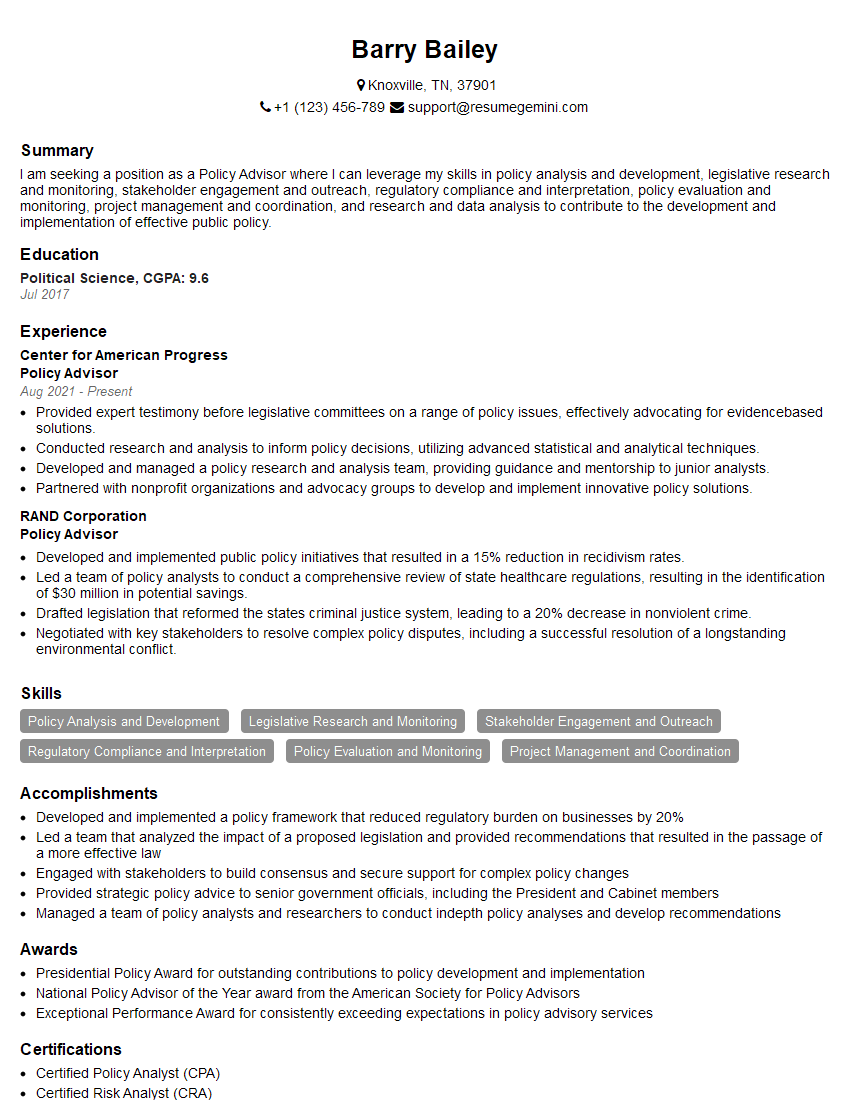
Policy Advisor Resume Sample
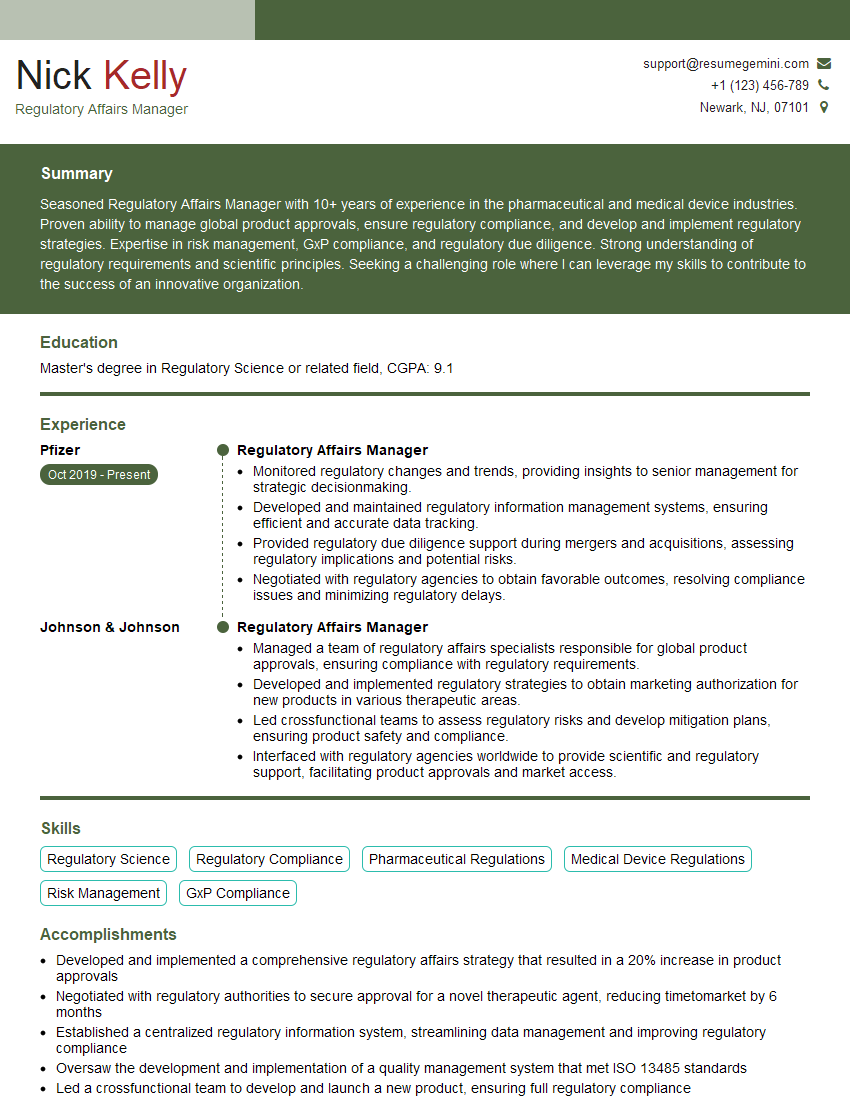
Regulatory Affairs Manager Resume Sample

Compliance Officer Resume Sample
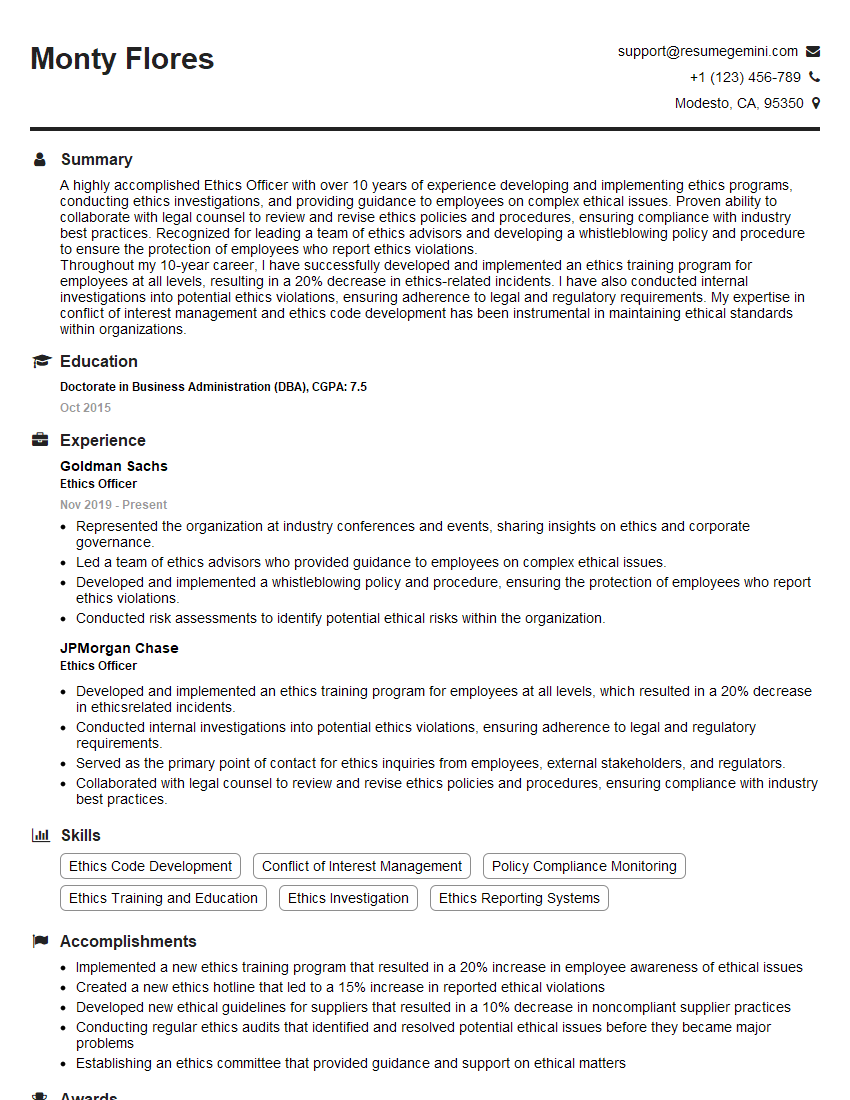
Ethics Officer Resume Sample
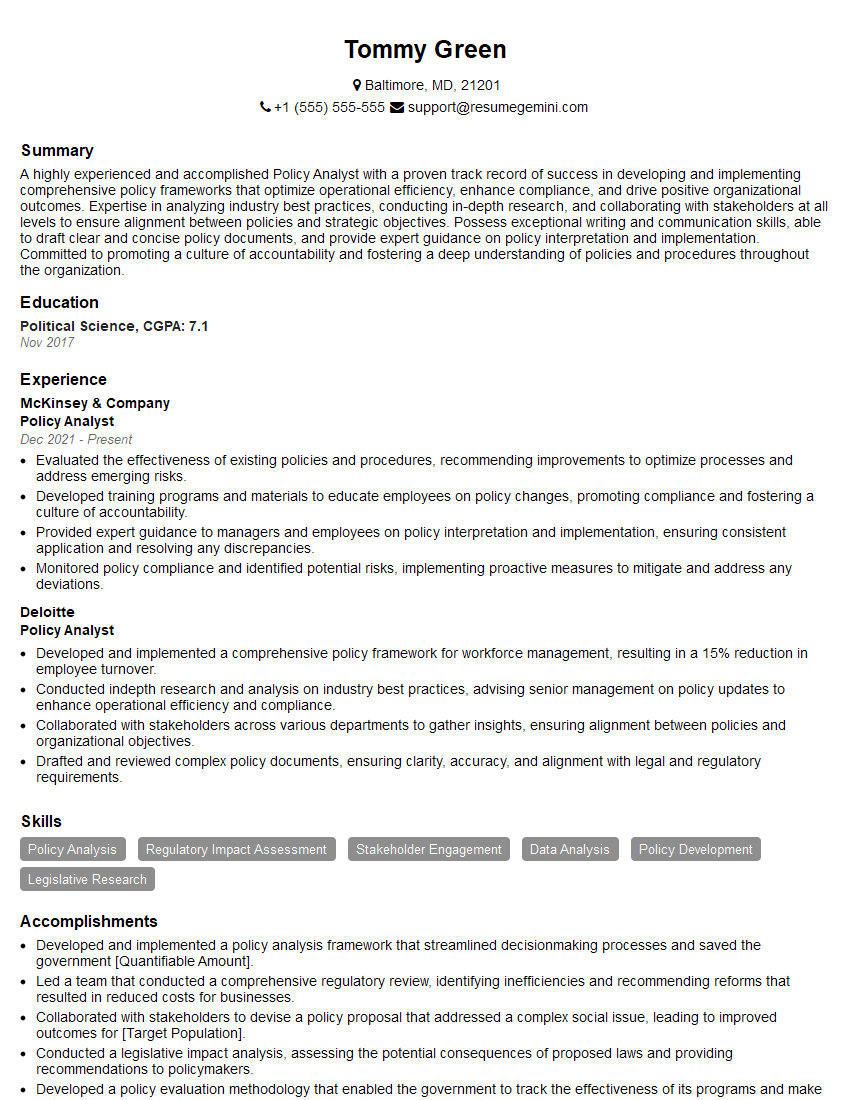
Policy Analyst Resume Sample
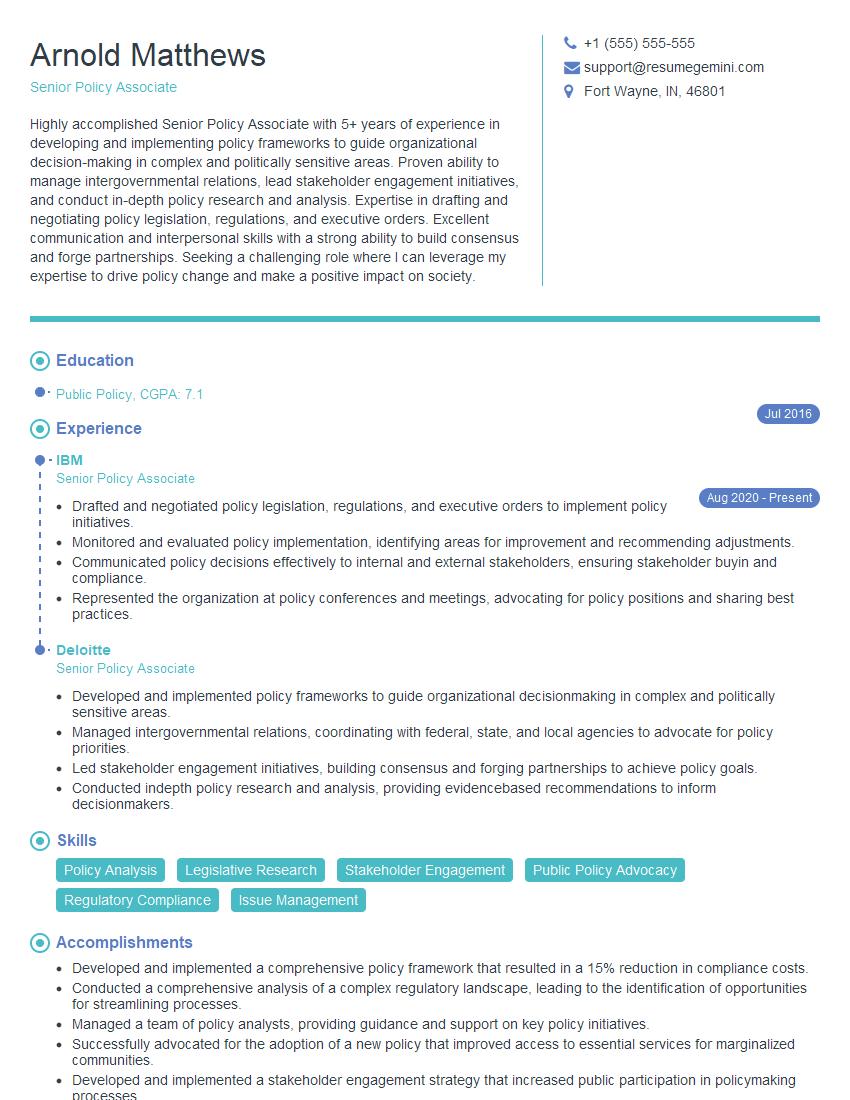
Senior Policy Associate Resume Sample
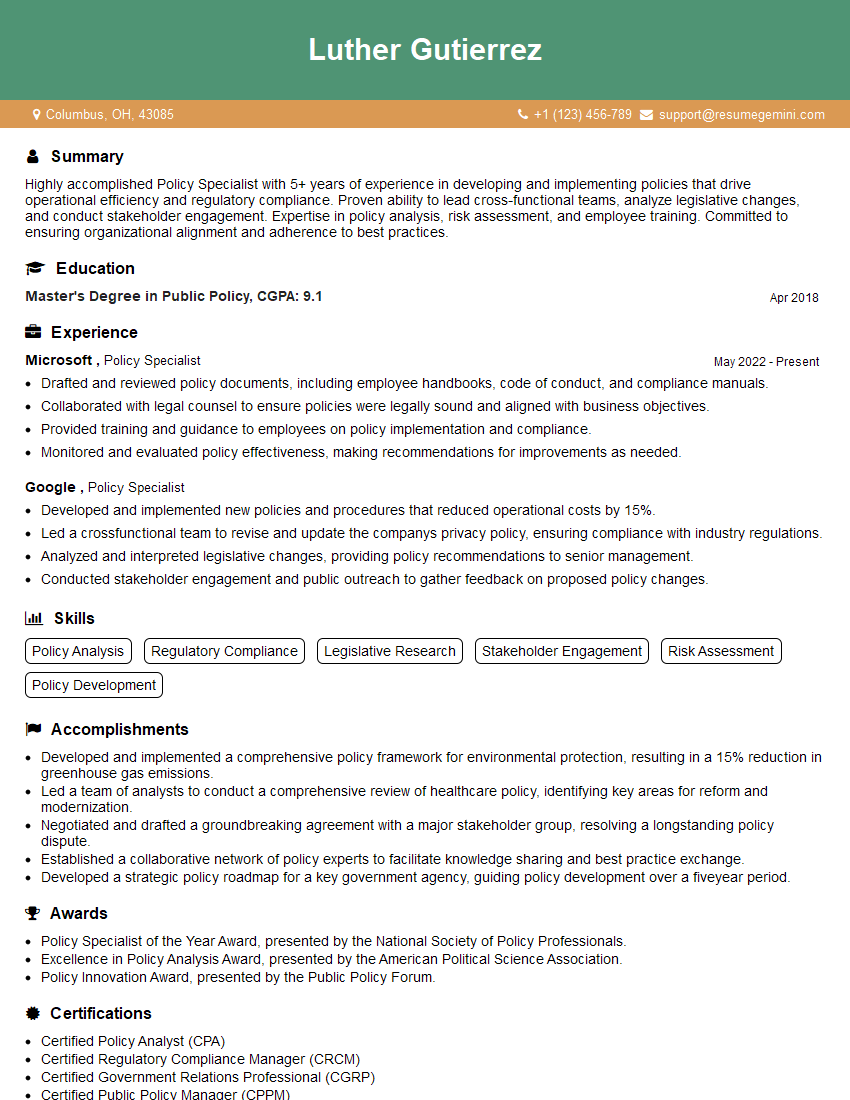
Policy Specialist Resume Sample
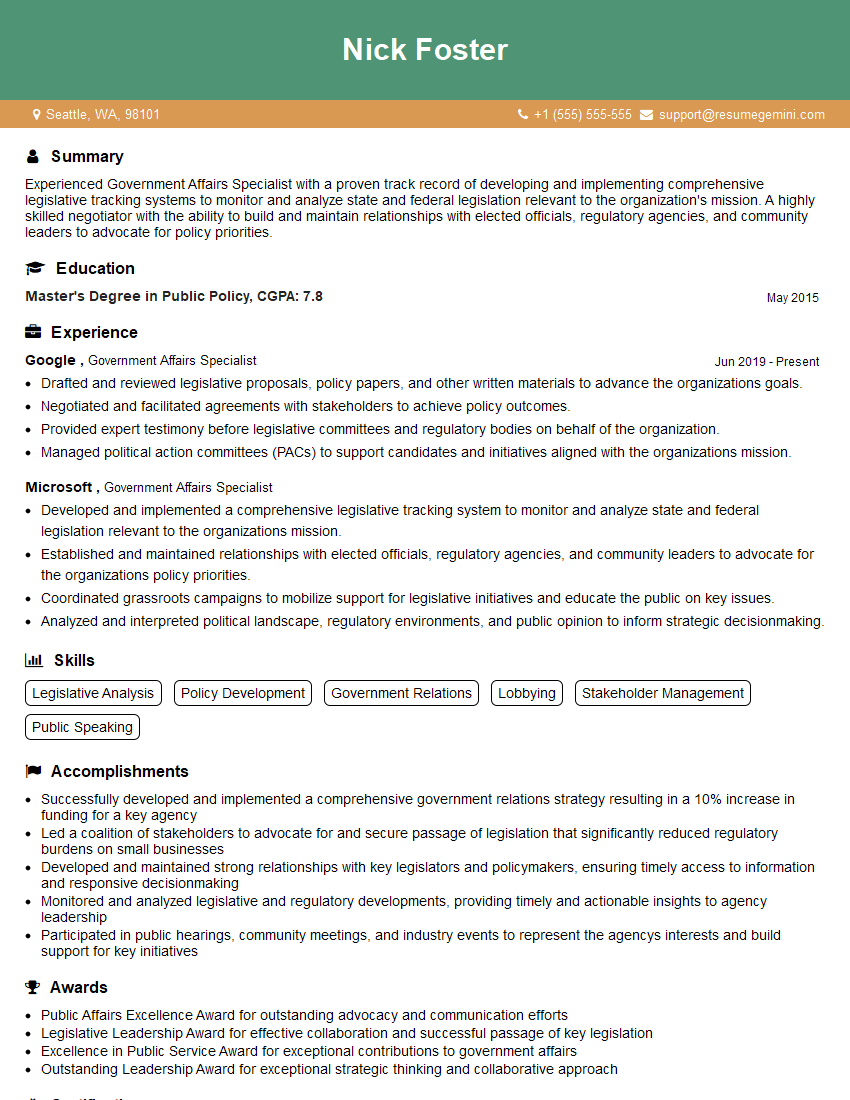
Government Affairs Specialist Resume Sample
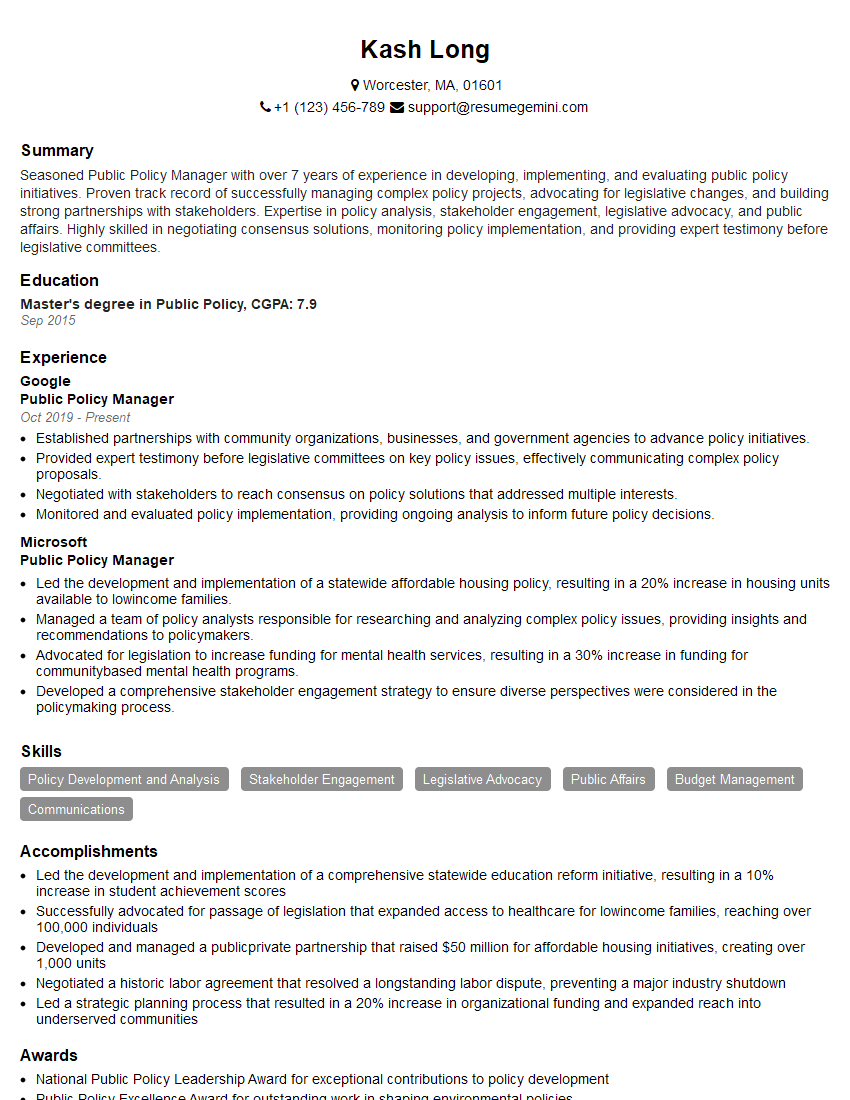
Public Policy Manager Resume Sample
Policy Implementation Manager Resume Sample
Government Relations Manager Resume Sample
Explore more articles
Users Rating of Our Blogs
Share Your Experience
We value your feedback! Please rate our content and share your thoughts (optional).
What Readers Say About Our Blog
Attention music lovers!
Wow, All the best Sax Summer music !!!
Spotify: https://open.spotify.com/artist/6ShcdIT7rPVVaFEpgZQbUk
Apple Music: https://music.apple.com/fr/artist/jimmy-sax-black/1530501936
YouTube: https://music.youtube.com/browse/VLOLAK5uy_noClmC7abM6YpZsnySxRqt3LoalPf88No
Other Platforms and Free Downloads : https://fanlink.tv/jimmysaxblack
on google : https://www.google.com/search?q=22+AND+22+AND+22
on ChatGPT : https://chat.openai.com?q=who20jlJimmy20Black20Sax20Producer
Get back into the groove with Jimmy sax Black
Best regards,
Jimmy sax Black
www.jimmysaxblack.com
Hi I am a troller at The aquatic interview center and I suddenly went so fast in Roblox and it was gone when I reset.
Hi,
Business owners spend hours every week worrying about their website—or avoiding it because it feels overwhelming.
We’d like to take that off your plate:
$69/month. Everything handled.
Our team will:
Design a custom website—or completely overhaul your current one
Take care of hosting as an option
Handle edits and improvements—up to 60 minutes of work included every month
No setup fees, no annual commitments. Just a site that makes a strong first impression.
Find out if it’s right for you:
https://websolutionsgenius.com/awardwinningwebsites
Hello,
we currently offer a complimentary backlink and URL indexing test for search engine optimization professionals.
You can get complimentary indexing credits to test how link discovery works in practice.
No credit card is required and there is no recurring fee.
You can find details here:
https://wikipedia-backlinks.com/indexing/
Regards
NICE RESPONSE TO Q & A
hi
The aim of this message is regarding an unclaimed deposit of a deceased nationale that bears the same name as you. You are not relate to him as there are millions of people answering the names across around the world. But i will use my position to influence the release of the deposit to you for our mutual benefit.
Respond for full details and how to claim the deposit. This is 100% risk free. Send hello to my email id: lukachachibaialuka@gmail.com
Luka Chachibaialuka
Hey interviewgemini.com, just wanted to follow up on my last email.
We just launched Call the Monster, an parenting app that lets you summon friendly ‘monsters’ kids actually listen to.
We’re also running a giveaway for everyone who downloads the app. Since it’s brand new, there aren’t many users yet, which means you’ve got a much better chance of winning some great prizes.
You can check it out here: https://bit.ly/callamonsterapp
Or follow us on Instagram: https://www.instagram.com/callamonsterapp
Thanks,
Ryan
CEO – Call the Monster App
Hey interviewgemini.com, I saw your website and love your approach.
I just want this to look like spam email, but want to share something important to you. We just launched Call the Monster, a parenting app that lets you summon friendly ‘monsters’ kids actually listen to.
Parents are loving it for calming chaos before bedtime. Thought you might want to try it: https://bit.ly/callamonsterapp or just follow our fun monster lore on Instagram: https://www.instagram.com/callamonsterapp
Thanks,
Ryan
CEO – Call A Monster APP
To the interviewgemini.com Owner.
Dear interviewgemini.com Webmaster!
Hi interviewgemini.com Webmaster!
Dear interviewgemini.com Webmaster!
excellent
Hello,
We found issues with your domain’s email setup that may be sending your messages to spam or blocking them completely. InboxShield Mini shows you how to fix it in minutes — no tech skills required.
Scan your domain now for details: https://inboxshield-mini.com/
— Adam @ InboxShield Mini
support@inboxshield-mini.com
Reply STOP to unsubscribe
Hi, are you owner of interviewgemini.com? What if I told you I could help you find extra time in your schedule, reconnect with leads you didn’t even realize you missed, and bring in more “I want to work with you” conversations, without increasing your ad spend or hiring a full-time employee?
All with a flexible, budget-friendly service that could easily pay for itself. Sounds good?
Would it be nice to jump on a quick 10-minute call so I can show you exactly how we make this work?
Best,
Hapei
Marketing Director
Hey, I know you’re the owner of interviewgemini.com. I’ll be quick.
Fundraising for your business is tough and time-consuming. We make it easier by guaranteeing two private investor meetings each month, for six months. No demos, no pitch events – just direct introductions to active investors matched to your startup.
If youR17;re raising, this could help you build real momentum. Want me to send more info?
Hi, I represent an SEO company that specialises in getting you AI citations and higher rankings on Google. I’d like to offer you a 100% free SEO audit for your website. Would you be interested?
Hi, I represent an SEO company that specialises in getting you AI citations and higher rankings on Google. I’d like to offer you a 100% free SEO audit for your website. Would you be interested?